Ask ChatGPT


 Coffee House Shots
14 Nov 2026 · 31m · 13 chapters
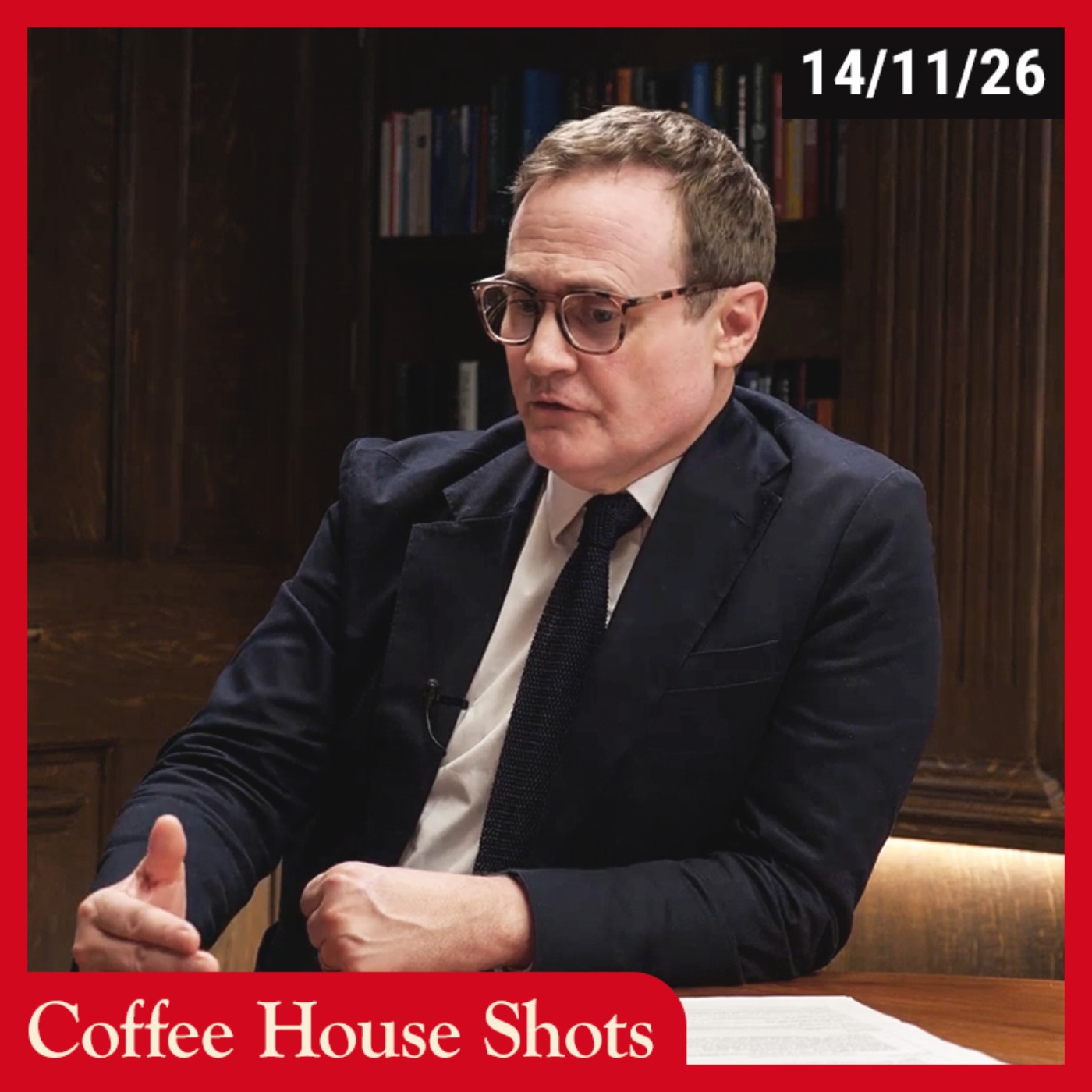
Tom Tugendhat (shadow foreign secretary) argues China is a bigger long-term threat than Russia, criticises COP as captured by Chinese influence, and calls for reform of UN/NATO and a stronger “second pillar” with Canada/Australia/NZ alongside the US.
Tom Tugendhat is a UK Conservative MP and former security/foreign policy figure; interviewed by Tim Shipman (Spectator).
COP mainly serves Chinese commercial interests; the post-WWII rules-based system is being dominated by China/Russia; UN can be reformed via the next UN secretary-general selection; NATO must update but remains vital; America is a “non-discretionary” security partner (intelligence, nuclear, defence); Russia is a “mafia state” but China’s economic/strategic subversion is more existential.
Russian submarine/infiltration near UK waters; Chinese IP theft and “students bullied” in UK universities; Chinese diplomats subverting UN bodies (including over the Chagos/ICJ); support for Ukraine focused on getting through winter; Iran/US base-use distinction.
Written by AI. May contain mistakes.
Discussion on the current state of Tory foreign policy and its implications.
“in what is a very changing world and a lot of pressures on the government.”
Tom Tugendhat discusses the need for reform in the UN and global governance.
“And is that all that architecture, does that need changing or do we just acknowledge that it doesn't work and kind of sit it out?”
Exploration of NATO's role and the importance of strong alliances.
“You know, the Estonians, the Baltics, you know, the Lithuanians, Latvians are spending more on defense as a percentage than almost anybody else.”
Analysis of Russia's current strategic position and threats posed to Europe.
“We can point to different ups and downs, if you like.”
Tom Tugendhat outlines the various ways China poses a long-term threat.
“I mean, you know, we have been through so many iterations of this.”
Discussion on how China's power and wealth surpass Russia's while it influences global strategies.
“We're seeing this again and again and again.”
Exploration of the UK's financial state and the impact of welfare spending on growth.
“We're broke because we're not taking the opportunities of things like the CPTPP, the so-called Comprehensive and Progressive Trans-Pacific Partnership, which is the deal...”
Importance of the UK foreign office as a promoter of British interests globally.
“There is time to turn this around, but we need to be serious about it.”
Discussion on the misconceptions around Europe versus domestic problems within the UK.
“I don't think you understand what rejoining the European Union means and what leaving meant to us or to the Europeans, because we're not going through that again.”
Reflections on the implications of potentially rejoining the EU and its domestic relevance.
“What I don't think is fair is that that's what I thought.”
Discussion on the relationship between the UK and the European Convention on Human Rights.
“Those sort of sullen, wealthy kind of middle class people who you're trying to, you know, that's the first target of Kevin Kednock's current strategy.”
Analyzing the UK's stance on Ukraine and the challenges posed by peace negotiations.
“of large elements of the ECHR in 2013 and again in 2015.”
Explore the complexities of Russia's aggression and the real challenges of achieving peace.
“but under a separate treaty, the Budapest Agreement, by the United States, Britain and France and Germany as well.”

Get the gist, explore an idea or ask about something said.
 Claude
On Coffee House Shots, what are the key points of this episode?
Searching your listeningAutomatic transcript. May contain errors.
0:00This podcast is sponsored by Raymond James. In an increasingly standardised wealth management industry, Raymond James' high-touch, service-first way of working sets it apart. It puts people at the heart of everything it does. Advice that's as unique as you. That's the power of personal. Please remember, investing involves risk and you may get back less than you invested.
0:24The holidays are busy enough without worrying about missed calls or customers. But just because you're swamped doesn't mean people stop calling. And if nobody picks up, that call goes to your competitor. That's why over 90 ,000 companies choose Quo, the business phone built for busy teams. Smart call routing sends calls to the right person. Shared numbers let your team cover for each other. And an AI agent picks up when nobody can, capturing every lead, so nothing falls through the cracks. Money is on the line. Always say hello with Quo. Try Quo for free. Plus, get 20 % off your first six months when you go to Quo.com slash tech.
1:04That's Q-U-O dot com slash tech.
1:16Hello and welcome to Coffeehouse. I'm Tim Shipman, the Plus Pludger of The Spectator, and I'm delighted to be joined for one of our periodic long-form interviews by Tom Tuganat, now installed as the shadow foreign secretary, a man who has done many roles and took a bit of time out but has come back, nailed his colours to the Bedenock mast. Very much so. Tom, we've not had a chance to talk about, you know, where you see Tory foreign policy now in what is a very changing world and a lot of pressures on the government. I'm keen to talk to you about how you think you might sort of drum up some votes on this.
1:50But while we're talking, the Prime Minister is winging his way to COP. Would Tory prime ministers be heading off to COP? We remember Boris Johnson getting very excited about COP when he was hosting it. But would we do the same now? COP is one of those things that, you know, you ask about Tory foreign policy. COP really demonstrates the difference, right? Because what COP has become is not a way in which we get together and talk about, you know, how we're actually going to achieve difference. It's actually a way in which China influences the rest of the world to make sure that we buy more of their electric cars and solar panels.
2:24It's not working for anyone except China. And this is what we need to change because we've got all these legacy institutions that were built for a world in which the countries that were dominating, that were driving them were liberal, democratic, the United States. It was us. It was European states. It was, you know, Canada and Australia and so on. And now it's not. Now it's been these organizations are being dominated by China in the case of COP or by Russia. Or, in fact, we've just heard about Iran going on to one of those UN committees again today. So, you know, time and again, what we're seeing is we're seeing a very different.
2:59I think we had Colonel Gaddafi running committees. It's not that long. Not in some other parts of the international system. It was a lot less common. But look, this is the point, right? We've come to the end of the road on some of these areas. And the whole point, you're absolutely right. Foreign policy isn't traditionally a vote winner. Quite rightly, people are much more interested, like you and I are, about whether our kids have got a good school and whether there's a hospital nearby. Those sort of things are things that drive us. But if you want those things, then you need to have a trade policy that works for you.
3:30If you need a trade policy that works, you need to have international agreements that support it. You need to have the ability to shape those. And at the moment, I'm afraid, what we have seen is a pattern of, bluntly, yesterday's thinking, sort of 1990s, 2000s thinking, that has frozen us into a pattern that has left countries like China or Russia dominating these international institutions and us being pushed around by rules that we're not shaping anymore. So are you saying that the whole kind of rules-based system post the Second World War, that kind of architecture of United Nations and all its sort of attendant agencies and all these other multinational bodies, is this just not an age of multilateralism anymore?
4:11And is that all that architecture, does that need changing or do we just acknowledge that it doesn't work and kind of sit it out? Well, I mean, there are some real opportunities to reform the UN right now. For example, there's a new UN Secretary General who has to be in place by the 31st of December, or at least the current one finishes on 31st of December. I suppose you could gap it, but you shouldn't. Depending on who you're going to choose, you're going to get a different result. So we've got, you know, we've got a candidate from Argentina. I mean, frankly, that would be, bluntly, an extraordinary decision if the UK were to tolerate that, given the challenges we've had.
4:42We know what will be on every debate. There'll be a lot of debates about Las Malvinas. I think you might find that the UN started to have a very different position on the sovereign rights of peoples in isolated communities like the Falkland Islanders. If we had an Argentine secretary general, it would be absurd. You know, but we've also got a UAE candidate who's, you know, she's from an old Palestinian family, but she's got actually pretty good support in Israel. So, you know, you've got different people who have different approaches to the UN. That shaped some of it. But you've also got a ton of other institutions that just need a bit of reform and they're getting there.
5:19I'm thinking of NATO. Actually, it's doing an incredibly important job. Does it need to update? Yeah, it does. That's normal, right? All organisations do. And Jeff is an important part of that from our perspective, the joint expeditionary course. Which is basically the Baltics and the sort of north of the people. Yeah, it's the sort of Viking states, if you like. It's those of us. People we'd regard as our mates in Europe. Well, the people who were murdered by Vikings like we were have now got together and decided that, you know, it's probably best to behave like Vikings. Yeah, well, we're pro longship, but not pro the causes of longship.
5:51And the and so, you know, there's a whole that's a collection. We're all pretty serious about Russia. We're all pretty serious about our intelligence collection, about standing up for each other. You know, the Estonians, the Baltics, you know, the Lithuanians, Latvians are spending more on defense as a percentage than almost anybody else. the polls are rearming in incredibly impressive ways. So there's a lot really good stuff going on there. And then you look at other things, you know, where you can see that there is an opportunity, but we're not really taking it. And that's where you look at some things like Canada, Canada and Australia and New Zealand.
6:20And you look at the fact that actually, legally, we've got a hell of a close history. Many of our laws built it up together, you know, you can see how you could look for a deeper capital markets, you could look for various different forms of regulatory alignments that allow people to prosper in... It sounds a bit like Mark Carney and the middle powers all getting together. Where should Britain position itself in this world where America looks less reliable, the Chinese and the Russians are both threatening, the Iranians are a pain in the backside in the Middle East, Europe will come on to Europe, I'm sure.
6:51Let's just be quite clear. We are an actual partner of the United States, and that is a non-discretionary relationship, and it's one that's non-discretionary for the very simple reason that's built up over the past 100 years in intelligence, in nuclear, in defence, in a whole series of things. So we've got to maintain it. We've got to develop it. We've got to deepen it. Does it go through ups and downs? Yeah. Right. Sewers, Vietnam. We can point to different ups and downs, if you like. It's not very difficult to do so. There's a lot of people are now saying, actually, we need to accept that we're, you know, America's a number, blah, blah, blah, blah.
7:21Really, we need to make alternative arrangements. You're fundamentally not. First of all, that's just not true. Right. I mean, it's just simply not true. Look at the intelligence partnership between the National Security Agency and GCHQ. Look at the relationship between the CIA and SIS. Look at the way in which our militaries work together. Our satellite intelligence community, you know, it's just not true. It is true that this administration in the US has caused some challenges. But you know what? Other administrations have caused different challenges at different points. You know, the withdrawal from Afghanistan, for example, under the Biden administration did not make for an easy time as we were rather bounced into it for a whole series of reasons.
7:57But the truth is the Americans have maintained their pillar of security for a whole series of reasons. It's us who have let the side down on that in various different ways. And so building up with Canada and Australia is recognising that actually it's good for us and good for the United States to have a second credible pillar. It means that actually we're not all entirely reliant on them, but it also means that they have somebody else who they can partner with properly rather than just sort of hoping they'll tag along. Do you see that as something within NATO or as a separate kind of entity? No, that would be a separate sort of thing.
8:31Canada, obviously, is a NATO partner or a NATO ally, rather. But Australia is a NATO partner, so it's not a full member. It's not part of the North Atlantic. It's almost like militarising the Five Eyes to a degree. Well, I think it's more than that, actually. I think it's financialising the Five Eyes. And I think it's regulating, by which I mean aligning the Five Eyes in terms of manufacturing and things like that. It's trying to find ways to make the reality of human life align with the reality of bureaucratic existence, if you see. The reality is Brits marry Canadians, Australians and New Zealanders more than they marry anybody else.
9:06There's a reason for that, right? We're cousins already, if you like. We're close already. And so having that relationship recognised in the financial markets, in the economic markets, as well as the military, actually in terms of Five Eyes, it's already recognised. waste. Talk to me about where a Conservative government will position itself, though, in terms of vis-a-vis China. I mean, you know, we have been through so many iterations of this. You're obviously, you know, you were sanctioned. You've been quite hawkish on this issue. I mean, from your point of view, in the public mind, the perception is that Russia was a bigger threat than China.
9:36Do you think that's right or not? Yeah, look, I mean, let's be clear. Russia is a mafia state. It's basically a petrol station with a gang that runs it. That's it. Putin has so raped and broken that country that, frankly, as a strategic threat, it's been emasculated. As an immediate tactical threat, it's extremely violent. So, you know, we can't take our eye off the ball. It genuinely is a threat to, obviously, to Ukraine, but also to countries like Poland and Estonia and Latvia and Lithuania. There's a perception in this country that it's a threat, but not actually an immediate danger. I mean, the government are telling people to stockpile, you know, stuff at home, canned food and all the rest.
10:15Who do you think they're talking about? They're talking about Russian hacks of our industry. Of course, but the public doesn't seem to be taking it seriously and sort of saying load up on bog roll doesn't seem like a terribly good way of convincing the public that this is a serious proposition. Someone said to me once, if you look at a map, they seem a long way away. But if you look at a globe, they're really not. Yeah. And, you know, they come over the high north and, you know, they're straight over Norway and into Scottish waters. I mean, that's, you know, just look at the map and just look at the first sea lord was talking about it yesterday or today.
10:44in Norway, the level of Russian infiltration into our waters, mostly by submarines, over the last year or two has been up, I think he was saying 40, 50%, something like that. And it's just this persistent rise in Russian threat levels. Bluntly, we don't have the resources to do a great deal about it physically. Is it more a case of information and being a bit blunter with the public about what's really going on here? Should they just be telling us every day, we've had an incursion by these planes? We've had this spy ship hovering over our cables? Some of it's been pretty poor. Is that just too embarrassing?
11:16Because we don't have the Royal Naval forces we need to try and keep the channel and the North Sea clear of this. Well, there's a range. There's a range of answers to that. And the first is we need to get back spending properly on defence. And thank God Kemi has set out how we're going to do that. James Cartlidge has been looking at the mechanics of it. You know, where do you spend the money? Who do you who you contract? And how do you get it in process? The shipyards are pumping out ships as quickly as we need them. That's a huge element of it. The second element is there's an intelligence element, which is about being able to, as the new chief of SIS put it recently, play their game too.
11:50And she's extremely... Which means retaliatory cyber strikes and that kind of thing, essentially. It means making... Because we're very coy about whether we're doing that, which of course we are. It means making sure that we respond appropriately and demonstrate that this dog's got teeth. Yeah. And that we do need to be doing seriously. And the third thing, of course, we need to be doing is supporting our allies. And there's a huge amount we do there. I mean, there are allies who are very, very easy to work with, like Estonia, absolutely fantastic, brilliant intelligence service, fantastically professional military, really, really tough and absolutely no problem at all with them.
12:21There are others who are a bit trickier and you need to, you know, you need to balance the relationship in a slightly different way. But, you know, when you're when you're working with people like the Estonians or the Poles or whatever, who know what the reality of the threat is, you know, the reality is we are far more powerful than Russia and we can deter. but we need to be serious about it. You know, you don't deter if you're not serious. It feels like you think that's controllable in a way that maybe China is more existential. Yeah, I think that's right. By controllable, I don't mean that there's no risk.
12:49I don't mean that they're not already putting bombs or lighting fires in British factories, which they are. You know, that's why I introduced the International Security Act, as you know. And it doesn't mean that they're not going to try and do something incredibly stupid with, I don't know, drone attacks on the UK in some way. All of that is possible. I think it's unlikely, but it's possible. And we need to be prepared for it. China is different. And the reason China is different is because it's less acute a threat, but much more significant in the sense that what you're seeing today is you're not just seeing theft of intellectual property.
13:23We know about that spying effectively, but stealing secrets. So it means that, you know, the latest whatever car, you know, looks almost identical to the latest Range Rover, but it's a quarter of the price or whatever. It doesn't just mean that, you know, the guy who built the wind turbines last week is now being undercut by a factory that's doing it for a third of the price because they've stolen the technology, you know, this week. You know, we're seeing all of that, but we're also seeing things that are even more insidious. We're seeing Chinese students being bullied, to be fair, that many of them are not doing it willingly, but being bullied into trying to silence debates in British universities.
13:57interfering with our own freedom of speech. We're seeing Chinese diplomats trying to subvert different UN bodies, including the ones that are claiming jurisdiction over things like the Chekhov Islands, so the ICJ, in that case, Russian and Chinese judges, which are trying to bully us into changing our strategic laydown. We're seeing this again and again and again. And the thing about China is it is bigger, it is more powerful, it is richer. And so unlike Russia, which is effectively firefighting in order to distract from its own domestic failures, China is expanding or trying to. Yeah, I mean, the bottom line is that we're basically broke in this country and China is a huge market.
14:38Are you saying that a future Tory government would deal with this materially differently? Yeah, there are various ways of dealing with this differently. In fact, it was one of the reasons why I was very pleased at a conference. It was Alex Burkhart, James, me and Helen Wakeley speaking together because the truth is we're only broke if we choose to be broke. We're broke because we're spending enormous amounts on welfare to a degree that this country cannot afford, which is, by the way, not only constraining our growth and harming our defence, but is actually imprisoning young people in this country into a life of servitude to the state, which is deeply unhealthy to them.
15:13We're broke because we're not taking the opportunities of things like the CPTPP, the so-called Comprehensive and Progressive Trans-Pacific Partnership, which is the deal... You're practising that in front of the mirror this morning. I've known it well, which is the Pacific deal that includes countries like Chile, Peru, you know. Well, Big Song and Dance was made of us getting into it. Yeah. Not much seems to have ever happened about it. Well, that's because we haven't doubled down on what we need to do. I mean, because joining is only stage one. Once you're in, you then actually ought to make use of the terms and the rules.
15:44And that's where, you know, we've got to turn our foreign office into the absolute front row of promoting Britain around the world. You know, it's got to be the chief marketing officer, the chief, you know, the chief advocate. And I'm afraid, bluntly, they've always been useless at doing trade side of things. And, you know, traditionally they're seen as the representative of foreign countries in Britain rather than vice versa. Well, that was the old joke, isn't it? You know, who do you work for? And people's points of whatever, whichever country is like, no, you work for Britain. And the truth is, you know, we've got to be clear.
16:14We cannot afford the sort of navel gazing sort of academic approach to these things. your job is to promote Britain to make sure Britain succeeds. Because I come back to your point, we're not broke, but we could be if we do not make the choices that we need to. And that's why when Kemi sets out or when Helen sets out the changes in the welfare spending, she's not doing it to be mean or to be harsh or whatever. She's doing it because we absolutely need to make these decisions. If we do not make these decisions, we're going to be in very, very serious trouble. There is time to turn this around, but we need to be serious about it.
16:45And, you know, it's also why Kemi's absolutely right about the net zero thing. And we come back to COP because the truth is for the last 10 years, we've convinced ourselves that somehow if we go on a diet alone, the whole world will get thinner. They're all down at the all you can eat buffet while we're on a starvation diet. This is ridiculous. We need to be absolutely clear. Either the world works together or we don't. But the idea that the UK should suffer alone is ridiculous. Well, the suffering alone was Ed Miliband's policy as energy secretary. He's now in charge of our foreign policy. I mean, you guys weren't too impressed with the sanctioning of Israel and the way that he went about that.
17:24What do you make of him as a foreign secretary and how do you combat what he is advancing? Look, it's really struck me how the focus of our foreign policy has gone from, you know, an attempt to promote Britain's national interest into a sort of ideological passage of, you know, virtue signaling results. And it's really dangerous. And it's dangerous because people look at us like we're a bit strange. We haven't quite realized what the job is. others look at us like we're uncertain allies and fair weather friends you know others look at us like we're easy marks and i mean you've got contacts everywhere i mean what you're effectively saying is that your friends in washington and in the gulf are wondering what not only so i've spent quite a lot of time in in europe in continental in eu europe if you like uh over recent months and a number of them who you know not entirely hostile to some of the ideas are going really You know, they're not quite as rude as our American friends are or our Gulfy friends, some of whom have used some, you know, really quite special language.
18:35Some words I didn't know in Arabic, but had to look up and it extended my vocabulary in new and interesting ways. But even some of our European friends are like, hang on a minute, this isn't consistent. And it leads to people asking, you know, really difficult questions. I mean, you know, Prime Minister is talking at the moment about some sort of rejoining the European Union. Don't worry, I was coming to that. And they're looking at us going, I don't think you understand the question. I don't think you understand what rejoining the European Union means and what leaving meant to us or to the Europeans, because we're not going through that again.
19:13In public, they're saying, oh, we'd be delighted to have you back. Some of them say, we'd be delighted to have your money back. That's one of the things. Well, the president was being honest. But look, you voted Remain. you weren't just a Remainer. You were quite a proactive one with the sort of group of Conservatives who largely have left the party now or were sort of drummed out by Boris. I mean, do you feel you made a mistake by being quite so sort of questioning of the result and the outcome? No, I never questioned it. Because you are sort of, you know, a lot of people think this guy could have led the Tory party if he hadn't been so pro, if not, you certainly weren't pro-rejoined, but you were very much in the kind of, this is all a bit of a disaster club.
19:52and that's not the vibe of the Conservative Party these days. So I don't, first of all, I don't accept that. I think you're right that that's how I was perceived. I think that's fair. What I don't think is fair is that that's what I thought. My view, and it remains my view, and funnily enough it's the same view I have for rejoining, is Europe was not the be-all and end-all of our problems. Our problems were domestic and I'm afraid the last 10 years have shown me nothing more than the fact that... We've had the freedom to screw up and we have the degree. And we have a degree. What's that Boris line, you know, every day is a day from new opportunities and more opportunities for more failure or something like that.
20:28And on some, far too many areas, I think that's sadly what's happened because the fundamental problems with this country are not in that sense to do with Europe, but to do with us. Are we going to liberate capital? Are we going to allow young people to start businesses and grow them? Are we going to trap people into a welfare state? Are we going to enable older people to, you know, seek the opportunities to grow their families in the ways that they want? You know, these are all domestic questions. They're not European questions. They're domestic. And the idea that rejoining is going to somehow cure them is complete rubbish.
21:01It's total rubbish. Do you think it will happen in your lifetime? No, no, no. I'm absolutely certain it won't. And it won't for several reasons. The first is that, you know, for all that Andy's talking about it now, Le Pen is likely to be elected in May 27. You really think President Le Pen is going to be? Yes. Oh, welcome. Exactly. What's happening in Germany? I mean, even if you don't think the AFD wins, the chance of having a single dominant party governing Germany in the next five years appears to be small. Now you've got France and Germany with a, let's be polite, tricky relationship with Brussels under those circumstances.
21:36Who's going to do the negotiations for Britain rejoining? Nobody. So this is complete rubbish. This is, again, Andy vibe-coding his way through foreign policy. But is this not quite clever politics from Burnham? Because the Tory strategy, as explained to me by a bazillion of your colleagues at the conference, was effectively, we talk about the economy, which is what you've been doing, not about Europe, all about the economy, all about domestic issues. That's what you hope wins back the sort of people who voted for Tony Blair, David Cameron, and probably voted Lib Dem last time. Don't much like the smell of reform, don't much like socialism and high taxes.
22:09So they might look at you if you talk about the economy a lot, then you can get back some of the reform people. But the more the government talks about Brexit, the more that reopens the sort of gap between the Conservatives and those potential voters who are broadly Remainers, aren't they? Those sort of sullen, wealthy kind of middle class people who you're trying to, you know, that's the first target of Kevin Kednock's current strategy. What I love about talking to you, Tim, is you take principles and turn them into tactics. The truth is what we're doing here is we're trying to turn them into tactics because that's what I was told was your, well, not into tactics.
22:41This is our strategy, I was told repeatedly. Simply repeating what I was talking about. All I can tell you. And I know you're not telling me it's not the strategy. You're going to tell me it's a principled strategy. I'm going to tell you it's the principles of conservatism are to promote the domestic interests of the British people. And that means growing the economy. It means liberating people to spend the money that they've earned. It means making sure that they're protected in need, but they're not trapped into some sort of welfare slavery. And all of these are the principles that Kemi has set out and Helen has set out and others have set out in various different ways.
23:15And we've got to get back to that because if we don't, then frankly we can, if you like, we can distract ourselves with another 10-year psychodrama over Europe or we can get into some sort of bizarre sort of fest over various sort of identity politics. But we're not going to make anybody healthier, wealthier or safer. You're mostly in the David Cameron camp, which is not another one. Yeah, I'm very much in the not-another-one camp. But if there was another referendum, if Burnham puts that in a manifesto and we have that in the next parliament, well, I'm tempted to agree with you, but you're the politician and I'm asking the question.
23:48So if there was another referendum, how would you vote? There's no way I could vote to join again now. There is no way. And let me just tell you, for the very, very simple reason, voting to remain in 2016 and rejoin in 2026 is not the same question. It's like divorcing your wife in 2016 and expecting her to take you back in 2026. I mean, I don't know about you, but my wife wouldn't be that patient or tolerant, frankly. and I wouldn't get a very welcome reception. What we need to focus on is what is actually good for Britain. And at the moment, look at it. The Europeans are completely wrong on artificial intelligence.
24:19They're completely wrong on data. They're completely wrong on genetically... These are great Brexit benefits for Britain, aren't they? Yeah, they are. They are. But they weren't there in 2016. Yeah. So, you know, it's not a... The world's changed, essentially. The world's changed, right. The world has changed. And has the world changed on membership of the ECHR, do you think, as well? because, again, people would say at least you're coding. I know. The vibes of Tom Tugendhat is that he wouldn't want to leave the ECHR. But I'm told even quite mainstream people like Alex Jork are now kind of saying, Yeah, he is.
24:49Not sure about this. Yeah, because Alex is right. Look, I love the people who would be regarded as the sort of Lib Dem faction of the Tory party are actually now. I wouldn't buy that. Alex and I have always been Tories. But anyway, I mean, look, you know, I was the first who said we should be opting out of large elements of the ECHR in 2013 and again in 2015. I think I put you to sleep in several of my speeches. I heard the word derogation more than I needed to. I think the fog of law and clearing the fog of law. And at that point you started and woke up. But that was stuff essentially about protecting the special forces, which we're still dealing with now with this Northern Ireland bill.
25:20Correct. But it was not just about that, actually. It was about the ability of the Britain to act abroad, but it had implications about stuff at home. And frankly, you know, one of the great joys of having been out of cabinet for the last two years, is I've been able to do a few other things. One of the things I've done is I've been going to see friends in various other parliaments across Europe and around the world. And one of the things we've been talking about, or I've been asking them about, is, look, the ECHR really isn't working for us. We've got this bizarre rights culture, which is imposing rights on the British people, which we haven't accepted in terms of migrants and so on.
25:55And this is now becoming a very serious problem for Britain. Can we talk about changing it? And what's interesting is about two or three years ago, you started, started to have a conversation that was like, yeah, I can see the problem from people in the German parliament and the French parliament. You could begin to have that conversation. That conversation is finished. And it's finished because they are now so focused on either their own domestic instability in the German context or what's going to change in the European context. Should it be Le Pen or should it be Mélenchon? I mean, everybody expects it to be Le Pen, but you never know.
26:27that people are simply not having that conversation. In fact, I had this conversation with senior members of the Greek government and the Italian government, when was it? About two or three months ago. And they were like, look, I get your point. We can't. We just don't have the bandwidth to deal with it. And the problem is once you got into that situation, other countries have a backstop. And their backstop is a constitution or a constitutional law or some form of sort of super-arching, overarching. And we just have whatever the judges say. We've got whatever the judges say. And that's why Alex Chalk is going, this just doesn't work.
27:00And he's right. Two last things quickly. Are you satisfied with what the government is doing to help Ukraine? And are you fearful that, do you think there'll be a peace deal in the next year? Forced upon Zelensky? Let me answer that. I am very pleased that the government is doing basically the right thing on Ukraine. Their support is very clear. Satisfied? No. I'd always rather we all did more and we all did better. So I'm just cautious of that. But I don't want to be critical at all of what they're doing. I think they are entirely focused on the right thing, which right now is getting through the wind.
27:33Bluntly powerless if the Americans decide to pull the plug. Not entirely, but it would be really damaging. Yeah. Okay. I mean, there are other things we can do, but it would be really, really damaging. And I don't think we should underestimate that. that these peace talks, supposed peace talks, which are happening in Abu Dhabi, are really challenging. And the reason they're really challenging is because it is being suggested that both sides must get a win out of this. You know, Russia has invaded a country whose borders were guaranteed not only by the United Nations, but under a separate treaty, the Budapest Agreement, by the United States, Britain and France and Germany as well.
28:19And here it's being suggested that they should be able to get a win out of violent aggression. That's really difficult. It's unpalatable, but it's the reality of it. Well, it may be the reality to an armistice. I don't see it as the reality of a peace deal. And I've got to be honest, I don't see it as the reality of a peace deal for another very simple reason. Putin doesn't want peace. For the very simple reason that he's like a shark. If he doesn't keep swimming, he's going to drown. If he doesn't keep attacking, he's going to be murdered. This is a man who has stolen, depending on the estimates, something between, you know,$300 and$600 billion off the Russian people.
28:58He's squirreled away in various different places through various different oligarchs. He is possibly the richest man in the world. Depends on what you think Elon Musk does. Depends on the price of AI shares right now. And it's Tesla and whatever else exactly, SpaceX. But, you know, this is a man who simply has no way back. And the only way he can maintain power is through violence. And he has to repress at home. And if he represses at home, guess what? He exports violence abroad. And that's just what he does. So the idea that we can somehow do a peace deal with him and it'll all go away, it's just not true.
29:31And that's why, frankly, we come back to the real challenge that we've all got is, do we know who our friends are? Do we know who our enemies are? And are we being honest with ourselves and the British people? And I'm afraid too often we've heard words and phrases that leave me deeply worried that this government, this administration doesn't really understand that the devil is real, the devil is out there and that he's trying to kill us. And we need to be absolutely clear that we stand in defence of Britain. And on Iran, everyone basically seems to agree the war's been a disaster. Kimi Bade not gave Donald Trump a blank check, didn't she, at the beginning of the war?
30:08No, I don't think she did. What she was talking about was the use of bases. And I think, frankly, the problem is this is again where this government has come into a really ridiculous position because they've eventually come round to the policy that Kemi was advocating at the beginning, which is, of course, the Americans can use their bases. You know, Iran has genuinely been threatening, actually more than threatening, acting aggressively towards U.S. interests, either U.S. military installations in the area or against allies for whatever it is now, 40, 45 years. There's no question about that.
30:40So under the argument, is this self-defense? It's very hard to argue that it's not, right? So America's right to use our bases shouldn't be particularly in any great doubt. Does that mean we should join in or we think it's a good idea? No, but that's a different question, right? Whether or not they have the right to use our bases and whether or not we think it's a good idea that they do this operation at this time in this way are two different questions. They got conflated because what Keir Starmer was trying to do is to mask his legalism under some sort of strategic doctrine. There was no strategic strategy there at all.
31:15It was pure bureaucracy governing British domestic interest. It was completely absurd. It's the same as we see in Chagos, where he's willing to believe that some piece of paper trumps the sovereign right of the British people for protection. How? Why? That's completely absurd. And so what Kemi was doing was try to set out Two things. One is we're an ally of the United States. They've got bases here. Do they have the right to use them in self-defense? Yes, they do. The second is, do we think this is a good idea? No, we don't. But that's an American decision now and not ours. Tom Tuganhat, thank you very much indeed.
31:49And thank you to all of you for listening.
32:18We'll see you next time. fast now and pop the champagne later. Cash now, more later. Now available nationwide. Start your offer at opendoor.com slash ACAST. Profits calculated after fees and costs, eligibility and offer price may vary.
In this special edition of Coffee House Shots, Tim Shipman is joined by shadow foreign secretary Tom Tugendhat to discuss Britain's place in an increasingly dangerous world. Why does he believe China poses a greater long-term threat than Russia? Has the government lost sight of Britain's national interests? And why, despite voting Remain in 2016, would he now refuse to vote to rejoin the EU? They also discuss the future of NATO, the war in Ukraine, the European Convention on Human Rights and Britain's relationship with Donald Trump's America.
This episode is brought to you by Raymond James. Combining deep insights into who you are with our financial expertise, that’s the power of personal. Investment involves risk.
Become a Spectator subscriber today to access this podcast without adverts. Go to spectator.co.uk/adfree to find out more.
For more Spectator podcasts, go to spectator.co.uk/podcasts.
Contact us: [email protected]
Hosted on Acast. See acast.com/privacy for more information.