 Ask ChatGPT


The UK’s welfare crackdown proposed by Kemi Baden-Ock, framed around upcoming Alan Milburn’s welfare report and Labour vs Conservative plans.
Oscar Edmondson (host), James Heal (reporting from the event; discusses Milburn and welfare policy details), Michael Simmons (adds energy/COP context and comments on Rosebank and energy prices).
Conservatives promise about £36bn welfare cuts by tightening eligibility for mild/mental health payments, plus about £14bn from sickness/disability benefits, and about £9.5bn by ending foreign-nationals access outside the EU settlement scheme and reinstating the two-child benefit cap. Debate centers on “hand up not hand out,” skepticism about evidence-based policymaking, and whether cross-party consensus is possible.
proposed benefits card limiting spending on “alcohol and cigarettes,” and concerns about ADHD/disability criteria and human impacts.
Written by AI. May contain mistakes.
Discussion on Kemi Badenoch's press conference and proposed welfare cuts.
“Kemi Baden-Ock did a presser this morning trying to wrestle the agenda onto this issue, one where Labour have been complacent.”
Analyzing the implications of proposed welfare policies and the political landscape.
“And KMNOK, again, very confident in delivering those and filling the space, perhaps, that 12 months ago was occupied by Nigel Farage.”
Transition to discussing energy policy and the upcoming COP conference.
“And can it kind of withstand the fluctuations, the ups and downs of trends, economic, home and abroad?”
Evaluating Burnham's energy strategy amidst political scrutiny and events.
“I mean, I can understand why listeners wouldn't be abreast of that, because there seems to be very little fanfare about it, especially this year.”

Get the gist, explore an idea or ask about something said.
 Claude
On Coffee House Shots, what are the key points of this episode?
Searching your listeningAutomatic transcript. May contain errors.
0:00This podcast is sponsored by Raymond James. In an increasingly standardized wealth management industry, Raymond James' high-touch, service-first way of working sets it apart. It puts people at the heart of everything it does. Advice that's as unique as you. That's the power of personal. Please remember, investing involves risk and you may get back less than you invested.
0:30With Gemini, Google's AI is built right into the premium versions of tools we already use, like Gmail, Docs, and Sheets. No new tools or extra logins, just personalized AI for the way we work. That means less time on the work around the work and more time finding the stories worth talking about. Get AI tools for work. Upgrade to Google Workspace with Gemini at goo.gle slash workspace with Gemini. That's goo.gle slash workspace with Gemini.
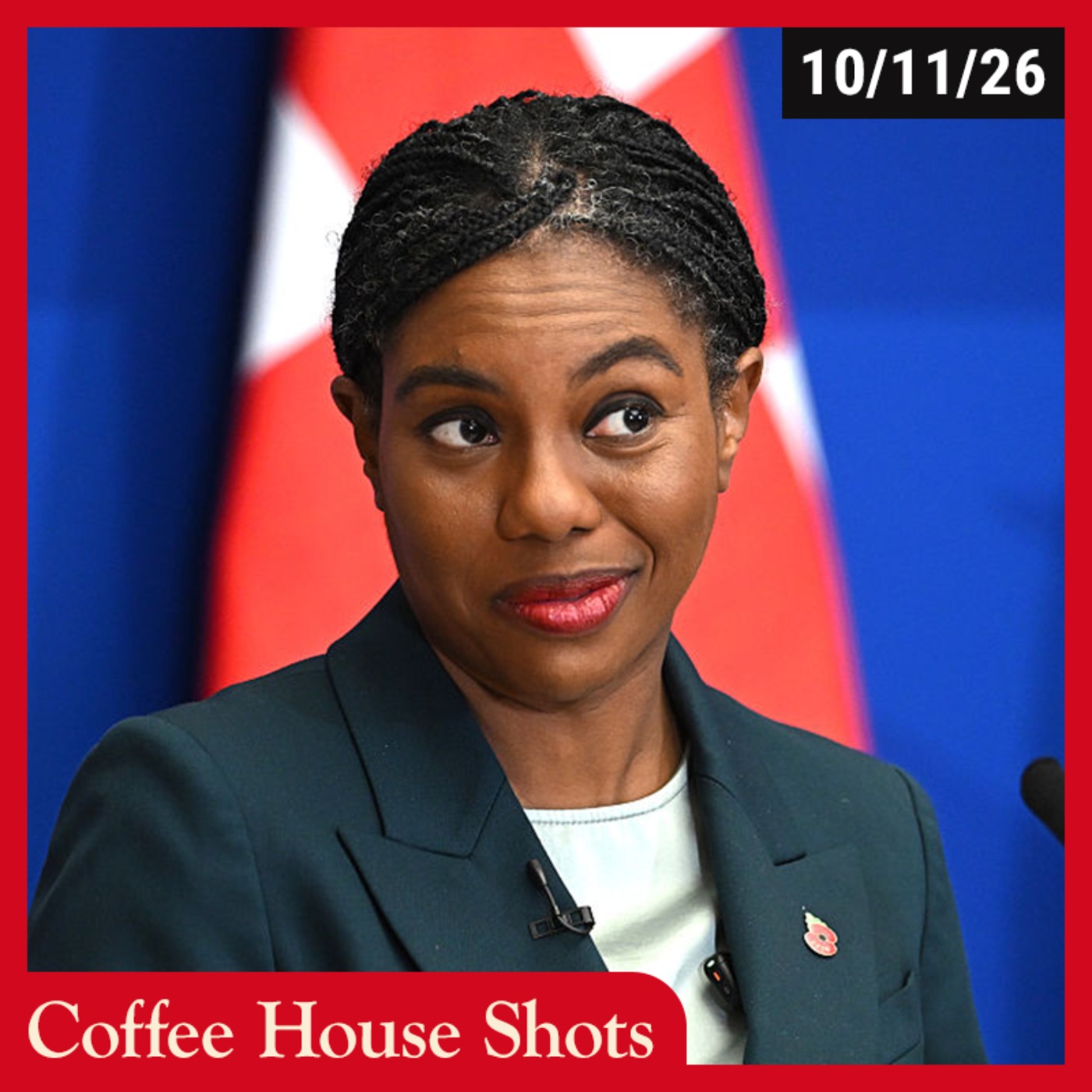
1:02Hello and welcome to Coffeehouse Shots, the Spectator's daily politics podcast. I'm Oscar Edmondson and I'm joined today by James Heal and Michael Simmons. And welfare is the topic of the day. Kemi Baden-Ock did a presser this morning trying to wrestle the agenda onto this issue, one where Labour have been complacent. And alongside Helen Waitley, she's finally set out their stall on how to bring the bill down. This, of course, comes in the context of what we were all expecting, the Milburn report to be published very soon. James, you were there. Can you take us through some of the detail? So£36 billion or so in welfare cuts is what they're promising.
1:35They've produced this document that says it's going to forecast cuts to spending from not offering the standard rates of payments for mild or mental health conditions, so basically scaling back the criteria, the eligibility by which you can claim that. There's also£14 billion or so in sickness and disability benefits, and then£9.5 billion cut by ending access for foreign nationals outside the EU under the settlement scheme, and also reinstating the two-child benefit cap. Tories of welfare, this is classic red meat. And all it was, I think, was Cain Bay Nox setting out a stall, channeling Blair in a way.
2:04Lots of praise for Alan Milburn. My issue isn't with Alan Milburn. We want to give a hand up, not a hand out. I think Helen Watley almost said one point. Also, critically suggesting, you know, I leave my party, he follows his. So she made the quite reasonable point, and I think it landed well in the room, that no one in my party wants to increase welfare, we want to decrease it, which cannot be said for the Labour Party. So really, we're all expecting Alan Milburn next week. He spent a number of months serving as a human shield for this government. Next Tuesday, we see what's underneath, and we're expecting to see some government plans on welfare come out quite quickly after that, suggesting, as with most consultations, it's not so much evidence-based policymaking as policy-based evidencemaking.
2:38But she made the point today saying that, look, Alan Milburn addressed the shadow cabinet. We don't have any issue with him specifically. It's more about sort of these things about disability benefits and the criteria for that. I think there is a point there. I mean, Helen Waitley said we're not twice as ill as the countries were eight years ago. the question will come when it comes to crunch and my question uh sadly was not picked today along with politico and an outrageous speckrasia you know going on but was for instance there's one thing they wanted doing is having a benefits card which would be you have the money on that and you can only pay for certain things rather than alcohol and cigarettes the fripperies etc now this was announced 12 years ago by in duncan smith and i spoke to someone afterwards who worked on the proposal so what's going to be different this time so well we've got better candidate selection it'll be tougher so this is the whole thing about sort of triumph of the will you know will be able to push things through this time.
3:21And I'm not quite sure it's going to be convincing. But hey, Tuesday, they've set the agenda. And KMNOK, again, very confident in delivering those and filling the space, perhaps, that 12 months ago was occupied by Nigel Farage. I might be going a bit mad, but I swear we've had this conversation like three times this year. She did say, she said, you know, I know you've said this before, but I'm going to keep saying it because Labour is getting worse. But like, Oscar, you introduced this by saying, finally, we have the Tories' welfare position. But they've done like three press conferences. They had it at the conference as well, in fact.
3:50And before the conference, right, Helen Waitley announced some big review. Kemi did a big welfare thing before. So my case with this is it's always like the proof is in the pudding. As James has said there, it's very easy to say, you know, we'll have stricter candidates. But when you get there, if the Tories are to win power again, are they going to deal with the Ken Lote problem? Are they going to deal with the problem when it's all well and good suggesting these cuts? It's all well and good saying we're going to get rid of benefits for ADHD. We're going to have cards instead of cash, blah, blah, blah, blah, blah.
4:19But as soon as you get like the one harrowing, harrowing kind of story about how someone's been affected by their benefits being taken away, backbench MPs have a track record on both sides of not standing their ground. So there's an opportunity for all parties, I think, to hide behind Milburn. And I think the Tories would be wise to also hide behind Milburn. And maybe we'll make some progress there if we get it cross party. and I think I said this on the podcast the last time we were talking about welfare, is they are too far apart at the moment if we're to sort this out. Because I think Labour MPs generally seem not prepared to countenance any cuts at all.
4:59And the Tories have the opposite problem, which is, I don't know what Will Milburn's going to suggest in his final report next week, but it's very likely that there'll be an initial increase in spending. because let's say if you don't want to give benefits for things like anxiety and depression, well, you need to increase support for things like anxiety and depression. So the costs go up, but if it all works out in the long term, the costs come down. Are our politicians going to be able to come together and support that? Well, quite. And the issue is so far, one of which is, of course, as soon as you put that money in, the Tories and opposition parties will immediately just say, putting even more into welfare.
5:38And then second of all, the question that comes across so often, particularly the last 10 years post-Brexit policymaking, is what stability are we going to have? Is this got genuine kind of cross-party consensus on this? And can it kind of withstand the fluctuations, the ups and downs of trends, economic, home and abroad? And the answer is probably no. So let's see. I'm very dubious about whether we're going to see, under Andy Burnham, the great reset we so badly need in welfare. But as Michael says, we can but try and wait for Milburn. And I think that was what Kerry Vendor was doing today. She was a pre-emptory shot.
6:08It's going to be a skirmish that begins next week. and I think she's trying to set her red lines. It was very notably absent from the budget, wasn't it, welfare? And you can kind of see that, I mean, that tax seems to have paid off. I'm looking at the latest polling and Labour are up 1.27%, Conservatives are down minus 3 to 21%. You know, there just doesn't seem to be, as huge of an issue it is, there doesn't seem to be any particular appetite for any kind of welfare change. That's probably the calculation they've made. Well, quite, and I think that actually taking these things one step at a time rather than allowing these big events to form opposition and crystallise behind that and get a rebellion going is curtailing.
6:44And I think it's very interesting that so many of the people who were involved in the welfare revolt last year have been brought back into government, people who lost their jobs in reshuffle of September 25, who were a bit surly, have now got some posts. Annalise Mitchell is now Chief Whip. So I think that they're trying to put off the conversation. The question is, can that keep working? It seems to be working for him. And I'm very all too aware of how in 2019, people on left-wing equivalents, this podcast, sat round and went, Boris Johnson can't just stand there with an oven and say it's oven ready and then you can't.
7:08And then the whole thing, the pieces are in flux and they change. Burnham can keep doing that. The question is whether, given that we now can't have an election before Christmas and May would be the next sort of opportunity, how will everyone keep holding hands and joining behind him, even at a time when some of the Labour ventures are questioning things like downplaying COP, for instance? Yeah, and another reason for the problem you set out there, Oscar, is I think too many politicians still see this purely as like an economic and fiscal issue. They don't see it as the human tragedy it is. And that matters way more than the amount we're spending on it.
7:40Until we see this as an issue that, you know, who cares what the spending bill is that we know is unaffordable and we'll have to sort out. It's the fact that we are breeding a generation of kids that start at age four or five when they first go on ADHD to have this life of dependency and benefits and never working. Forget the economic costs. That's a staggering waste of human potential. And I think politicians are not quite there with seeing that yet. And hopefully Milburn gets them there. Well, James mentioned there, Michael, COP, which is, of course, happening tomorrow. I mean, I can understand why listeners wouldn't be abreast of that, because there seems to be very little fanfare about it, especially this year.
8:17But it's a good opportunity, Michael, to talk about Britain's energy policy. We've still got this ongoing battle around Rosebank. But I think I'm right in saying you've got some potentially good news looking ahead to winter. Yeah, well, I've got some good news looking past winter, shall we say, because let's hope we're getting Rosebank. All the reporting is that the Chancellor and the Prime Minister want to approve it. Obviously, Ed Miliband is still kicking off. I was told when we put Just Start Oil on the cover that he'd extracted some kind of promise from the Prime Minister that it would be blocked.
8:52But let's see what happens there. The good news is that off the back of the midterm elections, the oil price and crucially for us, the gas price have been falling. I was looking at the oil price just before we came on air and it's just under$90 a barrel of Brent crude. And that's the lowest it's been since August. And that's because all the suggestions coming out of America are that Trump is going to wind things down. But it's more than that. I think if you speak to economists in banks, they've been saying for a while that they thought that prices were going to come down a bit over the winter and the kind of inflation expectations were being mispriced.
9:34Because even with everything that was going on in Iran, actually quite a lot of oil was still moving around in the Gulf. So that kind of suggested that the oil price was too high. The reason why that's not quite good news for winter just yet is because even if the gas price was to collapse the rest of this week, the prices of our energy bills are still going to go up in the winter because of the way that companies buy their gas. They buy it in advance at the prices that it was then. So the energy price cap when it goes up in the winter is based on gas that's already been paid for at those higher prices.
10:13so yes we're still going to see a spike in energy prices and a spike in inflation as we go into the winter but hopefully at the start of next year it comes down quite quickly one little thing to add to that where i think the government may have made things slightly worse for us when they didn't need to is although we've experienced resurgent inflation this year there's been one nice surprising category which has been food inflation and because of the competitive nature of our supermarkets food inflation has kept um relatively low there was one month a month where it was negative it's been below the two percent overall inflation target and that's good for all of us but i've just read today that um prices of essential food and groceries have shot up 2.6 percent last month which the industry is blaming on the government's be ready campaign where they encouraged everyone to stockpile so the things that you're stockpiling have shot up in price.
11:09So maybe a slight ungoal for the government there. And James it does feel like such a long time ago that we were hosting COP and Boris Johnson was leading the charge. Now not even the Green Party are leading on green issues. How do you evaluate Burnham's stance on energy so far and the attitude towards COP coming up? I think what's quite striking is actually you are seeing those kind of voices on the left being quite critical of Andy Burnham for downplaying it, some reporting in the Guardian suggesting that today. But what is quite telling to me is that even Green voters, according to polling, suggest that they like Andy Byrne more than Zapolansky right now.
11:42So I think that for now, it's probably the right track that they're on kind of straddling both pro-climate but also pro-jobs rhetoric on things like Rosebank and Jackdaw. As I say, at the moment, I think the Labour Party are giving Byrne the benefit down on a huge swathe of areas. Whether that keeps coming, you know, and they're a bit suspicious about these decisions pile up, inevitably, we know what traditionally have as prime ministers, their popularity goes down. I do think it'll be key. interesting obviously we've got the COP this week we've got the G7 yesterday at the Foreign Ministers meeting quite a sort of surly looking Ed Miliband next to Marco Rubio after that thrashing in the midterms last week and then we've got the EU summit next week so I think that we will see more of this focus and again for all the issues that Burnham is quite keen to talk about we talk about the mayor as both positive and negative thing foreign affairs I think will probably take an increasingly dominant role as time goes on Thank you so much James, thank you Michael and thank you very much for listening
12:37Thank you.
13:06Google's AI is built right into the premium versions of tools we already use, like Gmail, Docs, and Sheets. No new tools or extra logins, just personalized AI for the way we work. That means less time on the work around the work and more time finding the stories worth talking about. Get AI tools for work. Upgrade to Google Workspace with Gemini at goo.gle slash workspace with Gemini. That's goo.gle slash workspace with Gemini.
Kemi Badenoch has today set out plans to slash £36 billion from the welfare bill, as the Conservatives seek to get ahead of the government’s much-anticipated welfare review. But are the Tories offering anything new? And can Andy Burnham succeed where Labour has previously struggled to deliver meaningful reform?
Oscar Edmondson is joined by James Heale and Michael Simmons to discuss the political challenges of welfare reform, whether there is any hope of cross-party consensus, and what to expect from Alan Milburn’s upcoming report.
Plus: with COP31 underway in Türkiye, is Burnham quietly retreating from Labour’s green ambitions?
Produced by Oscar Edmondson and Abigail Brierley.
This episode is brought to you by Raymond James. Combining deep insights into who you are with our financial expertise, that’s the power of personal. Investment involves risk.
Become a Spectator subscriber today to access this podcast without adverts. Go to spectator.co.uk/adfree to find out more.
For more Spectator podcasts, go to spectator.co.uk/podcasts.
Contact us: [email protected]
Hosted on Acast. See acast.com/privacy for more information.