In short
Feeling like an “outsider” and reframing it as a psychological and creative advantage; how early life patterns (repetition compulsion, class anxiety) shape later striving and belonging.
Guests
Russell Kane, comedian, writer and actor; known for stand-up, panel/radio work, social media videos; training as a Shakespearean actor (Romeo and Juliet in August).
Key claims
“Outsider” feelings can be learned early and replayed; he deliberately seeks outsider situations (e.g., Shakespeare training) to prove himself. Class anxiety drives vocabulary “card” learning and fear of being “found out.” Becoming/learning is a motivation and confidence-builder; outsider status can be a “superpower” that adds missing perspectives.
Notable examples
childhood being called “boy,” father’s belief he couldn’t succeed (no university funding), moving out at 19, meeting Chloe at a Vauxhall rave leading to sociology A-level and top UK exam results, later learning words like “impudent” and burning cards around age 28, and using acting/exercise/model-cover challenges to build confidence.
Written by AI. May contain mistakes. Listen to the episode to check what was said.
Chapters
Tap a time to open that second in VOExploring 'Made in China'
0:30 to 1:04
An introduction to the discussion about the concept of 'Made in China'.
“When you hear the phrase made in China, what do you think?”
Introducing Russell Kane
1:24 to 2:26
Kimberly welcomes comedian Russell Kane to discuss feeling like an outsider.
“And my lovely listeners, I'm really excited to welcome you into the Complex studio today as I've got a very special guest with me.”
The Nature of Being an Outsider
2:26 to 3:56
Russell shares his experiences and thoughts on feeling like an outsider.
“Russell, can you tell us a little bit about yourself?”
Childhood Experiences and Outsider Feelings
3:56 to 6:30
Discussion on childhood experiences that influenced Russell's perception of himself as an outsider.
“What do you mean when you think of the term outsider?”
Repetition Compulsion in Relationships
6:30 to 7:38
Russell and Kimberly discuss patterns in relationships and the concept of repetition compulsion.
“I'll be twice as good as you to show that I'm as good as you.”
Masculinity and Parental Influence
7:38 to 9:10
Exploration of Russell's relationship with his father and societal expectations of masculinity.
“So you mean physically and emotionally personality wise you were opposite to your dad?”
Social Perception and Class Dynamics
9:10 to 10:40
Discussion on social class and how it shapes perceptions of belonging.
“He was literally a weightlifter, metal worker, and bodybuilder, and bouncer.”
The Burden of Masculine Expectations
10:40 to 12:18
Russell reflects on the expectations of masculinity set by his father and society.
“were like anyone who was on benefit because the working class sort of carved up in the 80s by Thatcher into the upper working class who owned their own council houses and their money and the scum that signed on.”
Transitioning to Manhood
12:18 to 14:00
Discussion on ritualistic transitions to manhood and their implications.
“You were on a council estate, but then you, the family, not you directly, gets ideas above your station.”
The Influence of Fatherhood
14:00 to 15:27
Exploring how paternal relationships shape aspirations and identity.
“Yeah, but also you were called boy, and you were told I did that and it didn't work.”
Show all 17 chapters
Navigating Adolescence and Outsider Status
15:28 to 18:26
Discussing adolescence, societal pressures, and the journey to self-acceptance.
“So is it right that, because earlier on you said, I didn't feel like an outsider at the time.”
Rebellion and Finding Freedom
18:27 to 22:10
The story of rebellion against family expectations and discovering personal freedom.
“Then me and my dad had this big argument when I was 19.”
A Catalyst for Change
22:11 to 23:28
A transformative encounter that shifts the trajectory of one's life choices.
“I like that girls think I'm gay, but I'm not.”
Overcoming Class Barriers through Education
23:29 to 27:58
Learning strategies to bridge the gap in vocabulary and education.
“Six months later, I was sitting the exam in June.”
Exploring the Outsider Experience
28:00 to 30:58
Discussion on personal experiences of feeling like an outsider and the drive for self-improvement.
“that I wasn't really a person with these words.”
Embracing Otherness as a Strength
30:58 to 34:34
Conversation about the power of embracing one's differences and the value they bring.
“Because it's very human to want to assimilate and to want to fit in and to want to conform.”
Redefining Imposter Syndrome
34:34 to 35:12
Reframing the concept of imposter syndrome as a positive outsider perspective.
“but also to use other people's experiences to expand our own view of the world.”
Transcript
Automatic transcript. May contain errors.0:00This BBC podcast is supported by ads outside the UK.
0:30Kimberley Wilson:at Whole Foods Market. When you hear the phrase made in China, what do you think? I'm Tristan Redman. And I'm Asma Khalid. And together we host the Global Story podcast from the BBC. And today on our show, we look at the origins and evolution of made in China because it actually wasn't inevitable. What we're talking about is the world's largest communist nation is at the beating heart of the capitalist system. For more, listen to the Global Story on BBC.com or wherever you get your podcasts.
1:03Kimberley Wilson:This programme contains some strong language and sexual content. Hello and welcome. I'm Kimberly Wilson. I'm a counselling psychologist and this is Complex. A psychology podcast that helps you make sense of all the muddle of information that's out there about our mental health. And my lovely listeners, I'm really excited to welcome you into the Complex studio today as I've got a very special guest with me. We're going to be talking about feeling like an outsider and why that can actually be good for you. My guest is a renowned comedian, a writer and an actor and you might know him from his famously vigorous stand-up routines or from the many videos he posts on social media.
2:05Kimberley Wilson:It's Russell Kane. Welcome. Yes, welcome. Thank you for having me. You're welcome. I've been promoted to the second Russell of comedy after number one is on vacation. I think you've been promoted to the top Russell. I can't take Howard's crown yet. I am trying to get into his hard drive. There's got to be something in there. He's too nice. Russell, can you tell us a little bit about yourself? I'm obviously doing a lot of stand-up. I do that three to five times a week, even when I'm not touring. Doing lots of panel show, radio, all of this stuff. I write short stories. I like creating jokes. I like creating characters.
2:39I just love creating things. I love performing things. I don't know any other way to express myself or be. But I'm also finishing my training as a Shakespearean actor, ready to do Romeo and Juliet in August. So yeah, I'm looking forward to that.
2:55Kimberley Wilson:The way you describe it is almost as if it's actually kind of bursting out of you. It would be more difficult for you not to than it is for you to follow through. Indeed, when I've not done a... I go on holiday, but when I've not done a stand-up comedy gig for a few days, I get a sort of creative mastitis of my comedy teats if I haven't milked off some creativity. How's that for an image? Well, it's quite a... I mean, it's quite a timely one. I am eight months pregnant, So these are things that I'm thinking of. Do you know when my wife gave birth and she was just like, here it is, I'll take it.
3:28So we were at home and the baby was upstairs asleep and a crow landed on the conservatory roof and went, ah! And as the crow went, ah! Both her boobs went, whoosh, and shot milk across the room. So I've seen a human milked by a crow.
3:44If we were in the 19th century, you'd be unpacking that image now, wouldn't you?
3:46Kimberley Wilson:I mean, I'm so tempted. I know. But we are here to explore the notion of being an outsider with you. So let's dive straight into it. What do you mean when you think of the term outsider? There was an advert on TV a little while ago, and it was for diversity, and I'm not very diverse. Well, unless you count the fact I'm a peasant, and I've got flat feet and a perforated eardrum. They're my diversity credentials. But I must be more diverse than I feel, because I watched this advert, which was not supposed to be aimed at me, and it was about this woman describing her experience of going into various buildings and feeling like when she walked in the room she wasn't part of the room and her voice wasn't welcome.
4:27She was outside the discourse of that room, even though she had the qualifications to belong there. And I thought, that's how I felt my whole life. I didn't dare say it. But that's how I always feel. When I'm walking into a new environment, that I'm the lucky outsider being included in the middle class thing or the educated thing or the wealthy thing or the male thing. I have no male skills. I hate football. I can't push a shelf up. I can't join any of that stuff. But I'm not gay. I'm straight. I think someone was having a laugh when they made me straight at the last minute. Let's make him like girls.
5:05So I'm always slightly outside. If I publish a book, or you shouldn't be publishing a book because you don't go to a proper university, blah, blah, blah. So that's probably why I've ended up in comedy because it's a democratic force that as long as you're funny, no one really gives a toss. You described this, your sense of being an outsider,
5:26Kimberley Wilson:obviously very subjectively. Do you think that that's how people would see you? If you walk into the room, as you say, you walk into a room and it's a room full of wealthy people or middle-class people, How do you feel you are perceived by the people in that room? It's changed as my life's gone on. Obviously now as a sort of, I've got so much experience and critical respect in stand-up. It could be me stood next to Catherine Ryan, Sarah Millican, Rob Beckett, Romesh Ranganathan. We're all from completely different walks, ethnicities, genders. So I'm fine in those rooms now. But interestingly, like all childhood feelings, you seek to recreate them, whether they're beneficial or not.
6:09You sort of have these tapes installed in you. So I throw myself this year at Point of Recording into Shakespearean acting. And that's going to produce a kind of, oh, it does. Under all the posts, did you go to RADA? I ain't going to go and watch that. So I purposely created yet another situation where I'm a complete underdog, outsider, don't fully belong. And it's like I want to say, screw you, I do belong. Watch me gain my membership. I'll be twice as good as you to show that I'm as good as you.
6:38Kimberley Wilson:Okay. So you have... Which I won't be, of course, because Ian McKellen's amazing. So you've identified that this is a feeling from childhood. Probably, yeah. Until the moment you asked me that, that thought had not occurred to me, that I might be seeking to replicate that on purpose for the thrill of feeling outside. Well, not even a thrill, because actually we call it the repetition compulsion. basically something that hasn't quite been worked out thought about understood processed early on we have this internal compulsion to replay it over and over and over again almost as if your mind is saying come on keep up let's work it out so that's the thing that happens when i don't know if you're in a series of relationships that end after three months and you're like i don't know what happens but every time i get to three months i just check out and this is kind of pattern that psychologists are fascinated by is what is it about that time period or what is it about that moment of intimacy what is it about that something that's happening in you that keeps being replayed there's two things there number one just by coincidence the example you've given i suffered for years with the opposite unable to whether it's healthy or not for a person in their 20s to be single and shag around i was literally went from one long-term relationship that lasted three to five years to the next one and i'd be single for a week go to a party, sleep with someone regardless of how unmatched we were even if I didn't physically fancy her three year relationship so that was a pattern as well whether it's linked I don't know as a child I was sort of born as opposite to my dad as I could be to be honest with you when I did the 23andme.com to research my ethnicity because I'm so dark I was like what's going on?
8:25Kimberley Wilson:So you mean physically and emotionally personality wise you were opposite to your dad? Everything Did you have any siblings? Yes I've got one brother but he's very mentally ill ill. He's living in assisted living schizophrenia. Okay, so just the one sibling. Yeah. Sorry to hear that. Yeah. But it meant that really in terms of a model of masculinity and a model of how to be a man in the room, your dad was really it for you. But at the same time, unlike all the other boys on my postcode, I'm not like trying to get the violin out or anything. And I had a good childhood really but my postcode was up until quite recently number one for knife crime and gangs and all of that but because I had that dad there was no way I was ever gonna steal anything do anything wrong he was aggressive not physically depressed angry toxic racist angry bowl of BNP voting meat but was a provider a protector and like a house of lords on any dodgy behavior I did So, I mean, you're describing a kind of archetype of masculinity when you describe your dad.
9:34He was literally a weightlifter, metal worker, and bodybuilder, and bouncer. Friends with Rambo, kind of. That thing. He manufactured, do you know what a nunchuck is? Mm-mm. I make them, not legally, and sell them down the pub, boy. So he'd go down the pub, he'd sell the nunchucks to some of the villains, and then get out a jar of pickled eggs he'd made. He went to the pub where some of the people that did some of the famous robberies from the 80s and 90s. and he had me for a son the poor sod we just couldn't we had no common language when did
10:04Kimberley Wilson:that become apparent either to you or to him i look at photos of my dad holding me as a baby and i find them curious to look at the notion that he once held me in that sort of tender emotionally literate way but he obviously did didn't struggle to express his emotions which is why I don't struggle to express mine would cry at et would cry at films okay also my dad believed you're a man at 11 and my dad did believe that he used to say it to me all the time so that's when I had to get my first job as well okay I was gonna say something from the 1800s I got a paper route my pocket money stopped at 11 on my 11th birthday he had no time for people that signed on benefits were like anyone who was on benefit because the working class sort of carved up in the 80s by Thatcher into the upper working class who owned their own council houses and their money and the scum that signed on.
10:55Yeah and we're all next to each other in the same street of course so we bought our own council house next door and that caused division.
11:02Kimberley Wilson:Division people around you responded I mean thinking about this kind of outsider. We were slightly socially ostracized which my dad loved. Look at them living in the castle because we were allowed to do up our house because we bought our council house. So you were right to buy? We were end of terrace so my dad literally built the same size structure next to it. And my dad wanted Doric pillars. He applied for planning permission for Doric pillars. Oh my goodness, yes. You know, the white fluted ones. But that was denied by the council. We literally overheard the neighbour talking about us. She was like, yeah, they think they're cut above, don't they?
11:34He's got a Mercedes now. Have you seen that? And Dave went, speak up, doll, I can't hear you. And then they went into the front gardens and had an argument.
11:42Kimberley Wilson:Okay, so we have all of these intersections. I'm going to do it in concentric circles. So within the home, there's a way in which you, in your innate constitution, do not live up to the standard of masculinity that had been set by your father. And anything I did was not masculine enough. I remember when I was 12, I did a bike ride with my friend, and we rode 30 miles in a day. I couldn't believe it. We had the little odometers. And I went back, and my dad did his top off, and I went, we've done 30 miles today. I used to cycle that every day at school and back, boy. I was boy. He never, ever used my name.
12:15Hardly ever said Russell. Boy, that was my name. Boy, even when I was 25, 26, boy.
12:21Kimberley Wilson:I'm going to come back to that. So we step outside of the home. You were on a council estate, but then you, the family, not you directly, gets ideas above your station. According to the neighbours, I just thought we'd made it. I thought we were rich. I have no negative memories of that feeling of being other. I felt, you know, like a 17-year-old with his first gold chain. That's what that house felt like to me. see but I don't think that this is irrelevant to this conversation about being an outsider right I don't think it's irrelevant that my dad was abandoned by his own dad as well because that was the constant that was one of his favorite tracks his dad walked out on him when he was two and took all the toys to give to the new family he'd secretly created uh the descendants of which I sometimes speak to online so yeah my that was my dad obviously had no guidance as how to be a dad because it wasn't shown to him which he used to love tell him I never had a dad I remember just thinking i wish i had the courage to say you lucky bastard and because i'm thinking i wanted to come back as i wasn't come back to this kind of notion that you were boy even into your 20s and and what you just described about him losing his father very early on kind of chimes in with this idea which is not strictly just between you and him as individuals but it's a broader story about families and what it takes for a boy to become a man the death of his father in all literature in all shakespeare in all everything and the king is dead long live the king that was my experience of my father dying i just went and then i literally started stand up that month that same month bizarrely i'd scheduled the gig one of the last dinners it might even have been the last dinner we went out for i'm doing stand-up next month yeah i tried that it's a load of shit I wouldn't bother and then he just pegged it on holiday so he got one last little negative comment in and then died before I could prove him wrong and I think this is really it's such a key and core component you're absolutely right that we see it a lot in literature I see it a lot in the therapy room which is that for a boy to transition into manhood in some way you know whether it's he's more athletic than his dad was or he's smarter than his dad was or whatever it is whatever kind of quality or characteristic but there can be these relationship dynamics where the father will not allow it where the the son isn't permitted to be able to triumph in any way above him you know we hope that fathers say you know like the way a teacher says i want my student to do better than me and we hope that fathers can say that he did say he did say sentences like all the time so i think he wasn't someone that did that didn't want me to he's just someone that believed it was impossible.
15:04Kimberley Wilson:Yeah, but also you were called boy, and you were told I did that and it didn't work. Always, always, the negative, always. So you weren't explicitly told, but you were told in these oblique ways that it wasn't possible for you. The biggest inheritance he gave to me, didn't leave much in the world, but I was able to do these stories about him and the things that made me get a successful comedy career. So I don't think I would have done that if he was alive, I wouldn't have had the courage. Yeah, because comedians are very often outsiders, aren't they, in their individual milieus, that the comedy emerges, the ability to tell jokes or the ability to kind of identify, to be the class clown, or the need to tell jokes and make people laugh, emerges quite often as a compensation or a coping mechanism or a way of surviving.
15:50100 % like that, yeah.
15:55Kimberley Wilson:So is it right that, because earlier on you said, I didn't feel like an outsider at the time. Growing up, it didn't feel like a negative. It was a good other. It was a good other. It was like we were the posh ones, dropped in, showing off. But all of those things were kind of outside of your control. They were incidental. Correct. Were there any things that you did that were kind of more deliberate that made you an outsider, or a choice where you stepped out of your own volition? So obviously I've been born with a higher energy level than most humans. Naturally, extrovert in expression. I'm introvert when I recharge.
16:28So I've always been funny, show off, like that. So born that way. And I was intelligent. I was like top of the class, primary, top of everything. But where I grew up, as soon as you get to secondary school, if you want to survive and you're a male, you better invert your value systems pretty quick. You better get laid first. You better be the best at fighting. And you certainly better not be good at English or math so you're going home with bruises. So to survive in that jungle, I pushed all of that down. So I end up with pretty crappy GCSEs.
16:57Kimberley Wilson:So actually that was that suppression of your either natural curiosity, your tendency to be kind of very active, your intellectual capacity was an attempt at assimilation. I think it wasn't conscious. It was more the other way around. In an attempt to be popular with the people that held the power, I did the things they did. And then my dad sat me down at 16 and went, you're not going to university. Well, you can, but I won't pay at all. My money is mine. I earn it. If you want to go, you will pay for it. So it was about the money, not a kind of disdain for intelligence or a disdain for education?
17:29It wasn't disdain, it was a disbelief that sitting around reading books would lead to a proper income.
17:34Kimberley Wilson:Okay. Just not an understanding that it particularly, it wasn't like I wanted to study chemistry or engineering. I wanted to read English and do drama and he probably, he's a form of protecting me. And he said I won't pay for it, so I can't go then. So at 16 I realised that every time I was like, we went on a lad's holiday and I read a Penguin classic by the pool. and everyone found it hilarious. I didn't get any, obviously, no pum pum on that trip. But I noticed I got a lot of attention as the funny one. So I started to cultivate this. The only rebellion around my way, dealing drugs and doing this is not rebellion because it's what everyone else did.
18:09Being an electrician or a lagger like my dad was, that's not rebellion. What rebellion was, was I might wear eyeliner to a party or something or read a book. So I realised, oh, I get a bit of reaction out of my dad when I do that. and I started to sort of fall back into that as a behavioural rebellion. Then me and my dad had this big argument when I was 19. I was working in a watch shop in London selling watches, which I hated, and I started seeing this girl and I don't want to say out of the mood, but for reasons to do with race and all that stuff, my dad wouldn't allow this girl to come into the house.
18:43So I just said, Dad, I'm paying rent. I surely should be allowed to have a cup of tea with a female guest of my choosing respectfully in the lounge and I'll never get what he said and he went it's my fucking house you don't get to do fucking anything I don't decide and I went I'm moving out today and I went upstairs got a bag went to work with my bag went home to my nan's and I never moved back and my nan
19:09Kimberley Wilson:maternal or maternal maternal my mum's mum absolutely awful mother she didn't raise my mum or any of the siblings the baby dropped out she threw it to her mum my great nan who raised my mum and then she went off and shagged the next guy alcoholic absolute rebel grey hair like this lives in the dressing gown stick with hair on I think she's 60 when I move in with her she might not have even been 60 and did you just tell her what was the conversation? I just phoned her I went nan dad said this she's pissed so she's yeah yeah part of her would have liked how much it would have annoyed my dad she'd be drunk by 11 o 'clock so you have to get her at 7 can't come and move in tonight love you live with me so I moved in with my nan and she was exactly what I needed all she would do is whatever would piss off I'll be the opposite to anyone else and I just got lucky because round my way that's get a trade do this do that so she didn't actively encourage in me read books but she sort of showed me just take the world do it all these rules and cages we live in are made up including the one that I'm a poor white boy therefore I have to have a poor white boy life is a made up story doesn't exist She just let me do whatever I want.
20:18I'd come in from work. There'd be a toad in the hole, some chips and some weed because she had arthritis. There you go, love. Her actual words were, it's in the drug cup in the cupboard. How was your day at work? And I'd have to put a pound in the telly to watch it. We had a rental telly and we would sit there and get a bit baked together. And then my life changed because I wasn't over the park anymore. My friends had a safe space to go. Instead of them walking around, maybe getting involved with other teenage boys, is we just sat around watching Channel 4. We had a roof. So you're, I mean, this is kind of extraordinary,
20:51Kimberley Wilson:because when we think about kind of development and how people kind of are shaped by their environments and the things that make a difference and the things that don't, and sometimes it can just be a single moment that shifts a trajectory or gives you an idea, or one person that shows you that something can be slightly different. And what you're describing in your nan is, actually she was far from perfect in a kind of psychological sense and you know i don't want to downplay any of the difficulty that you went through being with her but part of the conditions that she created or that she lived in was this kind of freedom that's the word it was a permission to go with something and bugger the consequences she gave you permission to be different that's it I look back on that time, I don't remember difficulties.
21:43I've got no negative memories. It was someone showing me that there are no rules, but she'd ruined her life with that notion. Whereas I was learning, there is no white working class experience. They're only stories that have been told to us by everyone else. And then I had a bit of luck as well. There was an intersection with all of this bubbling up inside me. Maybe I'm not just, poor white boy, maybe I'm not this. Maybe, why am I different? Why do I like reading on holiday? I can be cam. I like that girls think I'm gay, but I'm not. And it's all bubbling up. Then I go to this rave. I'm in Vauxhall, dancing under these arches.
22:20And this girl came over to me, 5 '11", and just put her number in my hand, out of the smoke. And she went, I love the way you dance. Call me. And I was like, let's wind up, innit? So I got straight back that morning, called her. She's like, my name's, let's call her Chloe. I'd love to have sex with you. and so we start in this amazing sort of chemical rave scene relationship and have a summer of love and she starts university in September so instead of going back to her mum and dad's house or my nan's I was able to stay in student halls and then I woke up in student halls she went, I was like, when's your first lesson?
22:59it's not till midday, I'm going to get a coffee and then why don't you come back after work? I've only got one lecture today and I'm having cider with Ollie we're doing a crime and punishment and I was like, I'm getting on a train to earn nine grand a year selling watches to people I hate. I'm made of the same stuff, flesh, I'm homo sapien. Absolutely no. No. And that day, an exact moment, my spider bite moment, I wrote down in my diary, I will go home tonight and change my life and I immediately sent off for a single A-level, sociology, for obvious reasons. Couldn't afford the internet. arrived in a box, unpacked it.
23:38This is your two-year course. Six months later, I was sitting the exam in June. Highest grade in the UK that year. Won an award. Went to the House of Commons. It was like someone reached behind my head and went, mate, you do realise this isn't plugged in? What? And they were... Everything I read, I learnt. Absorb, absorb, Dickens, Austin, Zola. This is not 10 years old. This is 19. Very late. Everything I read, blah, philosophicalism, postmodernism, blah, Roland Barthes. straight to uni when i got there i was way behind everyone because they were all had done well so i
24:11Kimberley Wilson:had to catch them up and i think you're absolutely right there's this kind of moment of extraordinary luck or serendipity or kismet whatever you want to call it right that um when you had had this conversation with your dad about university he basically said no uh it's not happening you were in a place where university was a an other world yes and you were on the outside looking in correct and it was everything was muted you kind of knew it existed but you didn't you couldn't really hear the conversation that was happening that's how i felt and then you meet chloe and it's as if she opens the window and says this is yeah this is what it's like brilliant description of what my experience was like and suddenly it's not part of the immediate culture you were in but it's no longer inaccessible there's a way in it was just the idea i don't have to set an alarm at 6am and read books and grow and people care about what I said.
Read the full transcript
25:03That to me was so appealing. So you've found your way in. Yeah.
25:08Kimberley Wilson:You're doing English. You're surrounded by people for whom university was an expectation. Correct. So what was your outside experience there? Well, I got there and realised that although I had jacked up my intelligence, you can't by osmosis magically have a larger vocabulary. so they would use long words that I didn't understand because I hadn't been reading between 11 and 16. I had the odd Penguin Classic to show off or the odd John Grisham, but I'd only been reading a year. So I got there and was immediately popular and girls liked me for the first time in my life. I'd never had any female...
25:45Kimberley Wilson:What was so great about you? I was show-off, funny, different, didn't care, and it was always parties at mine. I decorated my room in student halls. I was just a bit of a ledge, basically. but inside I felt intellectually inferior and other completely because I don't forget how I would describe the children in the novel as obstreperous and I was like I've never heard that word in my life and not only that but I felt like I wouldn't have the right to use it because of my accent and you see this all the time Has your accent changed? A little bit Interestingly it's come down for this interview because you're accessing where I was I've noticed I keep slipping like that because it's where I used to be.
26:28And I feel like if someone like me uses a word like obstreperous or concatenation, we're a working class person showing off. And I really felt that. Was that an internal thing or was it reinforced externally? Internal. Internal, but it's true. If Alan de Botton or John Humphreys or someone uses that word, no one questions their choice of a polysyllabic word. But if you sound a bit Essex or London, you're using it like you would use a gold Rolex. I really felt that. And it's not imagined. No, no, no. It is the case. There's a huge amount of class anxiety. So listen to what I did next. I used to get up an hour too early than everyone else and I was partying.
27:11And I started from A, Joan Austin, and I rode through to Zola reading all the books I should and could have read in my formative years. And every time I encountered a word I didn't know the meaning of, an English word, I took an index card and I learnt the word. Card number one was impudent, ironically, from Pride and Prejudice. I had to learn its cognates, impudent, impudent, impudence, impudently. And I had to learn the diacritic alphabet. So I had to teach myself all the diacritic. So I didn't say, I could have said impudent, made an idiot of myself. And I ended up with hundreds of these cards and I manually brought my vocabulary up to middle class.
27:48And I only stopped using the card when the word occurred to me naturally in thought or conversation. Then it went out. And I burnt those cards when I was about 28 because I was terrified of anyone finding out that I was fake, that I wasn't really a person with these words.
28:06Kimberley Wilson:This is so interesting. I did something very similar. I didn't quite learn the full pronunciation, but I certainly would write down the words I was unfamiliar with and would learn them. Shameful. I felt shame. I felt like the window you described beautifully, I'd sort of broken into and no one, oh, you must be a real student. I broke in through the window that the psychologist opened for me. thing that there's you know words are for everyone you know in real terms but yes i think you're absolutely right there's this kind of feeling that um and it comes in to all of the kind of class anxiety and the class competition and that you're you're either trying to be something you're not or that you're trying to look down on someone rather than you know i'm trying to be something i'm not that's what my internal dialogue was trying to say i was just like sorry buddy you can say what you like i'm going to learn these words and i'm going to show you sort of in competition with myself who i am i have not been able to switch that off since sometimes i wish i could why am i learning all of acting and playing romeo this year why this kind of not just a work ethic but a kind of striving to just a relentless striving constant state of becoming i always have been and have remained the office junior that has just joined everything and how what is the quality of that though is that about um i love learning and it's just it's expansive and i feel a sense of kind of fouisson and joy about it or is it and it might be both or something else there's a kind of deep insecurity in there somewhere that I'm still trying to reconcile.
29:53It's 70 % the first one you said and the other one is I wouldn't call it insecurity but there's a proving, a proving which you probably would call an insecurity but it's a proving to myself, seeing if I can do it, seeing if I am as good as the confident part of Russell's brain is going to be Romeo even though I never went to RADA. Then again, I went to a shit comprehensive, didn't have A-levels, and I got a first. I never watched stand-up comedy. I started doing it, and I won the Perrier Award. It's a pattern I keep doing. Being outside, going in, embracing my outsideness, learning all these skills and executing it in an original way by virtue of being outside.
30:30So I've turned the insecurity into a superpower.
30:36Kimberley Wilson:so you've taken that drive that striving and channeled it into a really wide range of pursuits and created a person or persona who is very different from who we might expected him to be from his childhood. What do you put that down to? Because it's very human to want to assimilate and to want to fit in and to want to conform. I think it's just, I don't know, it makes me feel alive when I'm trying to grow something new. And it all comes back to that same pattern from when I did that degree. I walked in, probably sort of blagged my way in there and just with hard work and studying new things, I start to try and do what they're doing, even though I feel like I haven't really got an invite.
31:33And you've seen the pattern twice this year. It's not like something I used to do with, as I've said, the Romeo and Juliet stuff and then. So I was doing an interview for a fitness magazine and they said, because I was over 50, they're like, do you think you could get in shape to be a cover model? And I'm like, is that possible? Let's find out. What an amazing experience at my age to do something like that. It's just amazing.
31:54Kimberley Wilson:Did it change anything for you? How did it feel? I just felt so confident. And obviously my wife loved it. I was like, do you want to shag a cover model tonight? All that stuff. It was just a brilliant experience. It's very hard. I would never do it again. It was absolute hell, all the tricks you have to do for the shoot day. But exercise is something I use to keep my mind straight. I've got a lot of excess energy. But yeah, this becoming, I think that's what I'm addicted to, this becoming. And you can't be in a state of becoming if you're already part of the tribe, if you know what I mean. So maybe that's a really important point because I guess thinking about the listener and someone who might be thinking, actually, I feel that when I walk into spaces, I don't belong or that I don't sound right.
32:39Kimberley Wilson:I don't look right. I don't have the credentials to be in this space. Is there anything from your experience that you could say that might be a starting point or an encouragement for them? Yes, definitely. I think the more voices we have, the more interesting conversation we have. Full stop. It makes sense that if your voice is other and you work in an advertising agency, for example, and we're having a brainstorm about body wash, if I'm a larger man with stretch marks, I'm going to have different things to contribute to that conversation that the creative director they might not have even thought of.
33:16So be confident in your otherness, bringing something of quality to the conversation that is missing. It is a superpower. You're sitting on gold. Don't worry about the sneers and the eye rolls. You have that power within you to bring a voice that they cannot. If they've gone Eton, Oxford, Cambridge, they all think the same. They think the same. Posh parents, posh school. So you've got a gift. It's just society, because of its prejudices, is not acknowledging your gift. So be smug in knowing you possess this gift and work out how to express it in a healthy way so that people hear your voice.
34:00Kimberley Wilson:Russell, thank you. And what I love about a conversation like this is how we have the opportunity to see the macro in the micro. So you are one man with one story. but actually what you're describing are really big themes that lots and lots of people can relate to. And I think there are lots of ways in which it would be easy to assume that you and I have nothing in common. But I think if we can set our assumptions and maybe our egocentric point of view aside, it gives us the opportunity to kind of see ourselves in each other's stories, but also to use other people's experiences to expand our own view of the world.
34:41I think, yeah, people should reframe the word imposter to outsider and realise it's a gift. There's an energy in that word. Someone who's outside wants to get in. They want to open a window. It's an energising term. It's a neutral term. It's a preposition. You are simply outside. There is an invitation to come in. And it's for you, not for someone, yeah, does he like me? It's your invitation to use your energy and your resilience and creativity and faculties to gain entry.
35:11Kimberley Wilson:Gorgeous. Beautiful. Thank you.
35:19Kimberley Wilson:Okay, we are coming to the end of the episode. Russell, thank you so much for being my guest today. Oh, you're welcome. I loved it. Thank you. Thank you. And thank you to everyone listening. I hope you've really enjoyed our conversation and please be part of it. Tell me what you want me to talk about. email us your stories in a paragraph to complex at bbc.co.uk. Please note that I can't answer you personally so if you have a concern about a medical or mental health issue then I'd strongly urge you to seek expert help and if you want details of further support with some of the issues raised in the podcast you can find them at bbc.co.uk forward slash action line and the link is also in the show notes on BBC Sounds.
36:07Kimberley Wilson:And that's it. Thank you to my guest, comedian, writer and actor, Russell Kane. And thank you to the lovely production team at Loftus Media. Producer, Kirsten Lass. Assistant producer, Katie-Jan McClark. That's me. Executive producer, Rami Zabar. Technical producer, Ruben Huxtable. Studio engineer, Matt Hewer. sound engineer Ruth Rainey and at BBC Sounds Assistant Commissioner Izzy Lee Poulton and Commissioning Editor Rhian Roberts. I'm Kimberley Wilson. Thank you very much for listening. Take care and go gently. Thank you.
37:19that's with Kyle Smith-Bino joining us. And then we'll be learning about Francis Galton and the racist, discredited pseudoscience of eugenics with Desiree Birch. We'll meet many medieval saints in their bone boxes with Rachel Paris. That's your Dead to Me. Listen first on BBC Sounds.
37:40Kimberley Wilson:Is the American dream still possible? I'm Asma Khalid, one of the hosts of the Global Story podcast from the BBC. One of the most successful exports the United States has ever sold the world is the American dream, that tantalizing promise of a better, freer, richer life. But is it still attainable? I feel like the American dream is alive but not well. For more, listen to the global story on BBC.com or wherever you get your podcasts.
From the publisher
Kimberley and Russell Kane – successful comedian and podcaster – explore what it’s like to be an outsider. He believes outsiders should recognise their own strength and says organisations should be bringing the outsider in.
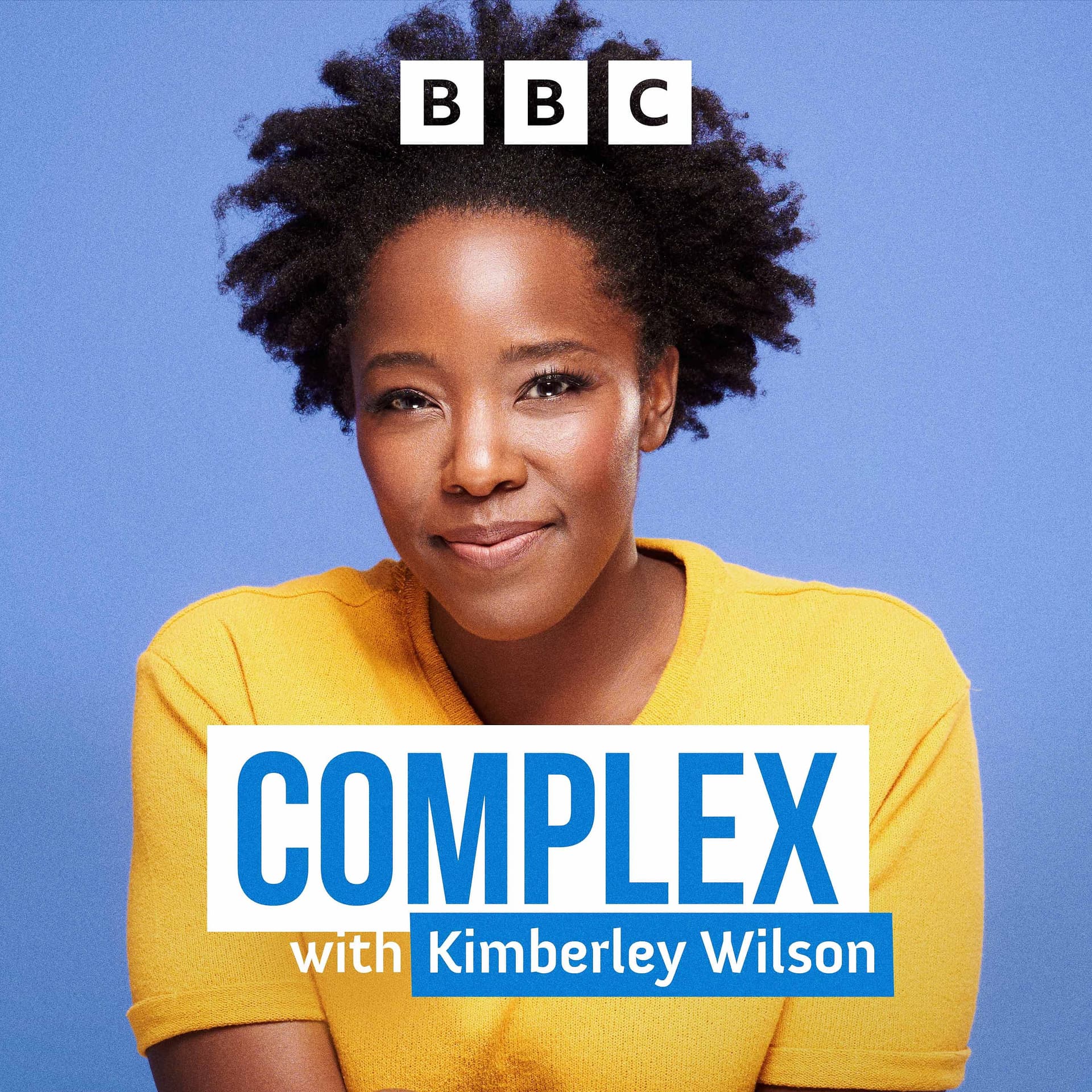
Kimberley Wilson, chartered psychologist, is on a mission to sift through all the information and misinformation that’s out there around our mental health. She invites expert guests - trained psychologists, psychiatrists and psychotherapists - to help her share insight and some valuable tips. You can get in touch with the show. The email address is complex@bbc.co.uk. We might use what you tell us but we will do so anonymously. If you don’t want your email to be included in the podcast, then please remember to let us know.
Kimberley is not able to answer emails personally. If you are concerned you have a medical or mental health issue, then please contact your GP or seek expert help. Please also take a look on the BBC Actionline page: https://www.bbc.co.uk/actionline/ where you can find details of organisations offering information and support for common issues.
Complex is a Loftus Media production for BBC Sounds. Producer: Kirsten Lass Assistant Producer: Katie Chandler Clarke Researcher: Grace Revill Executive Producer: Rami Tzabar Tech Producer: Reuben Huxtable Sound Designer: Ruth Rainey Digital Lead: Richard Berry Podcast artwork photography: Darren Skene And for BBC Sounds: Assistant Commissioner: Izzy Lee-Poulton and Commissioning Editor: Rhian Roberts