
In short
Consumer VC Podcast Episode Summary
Episode Title
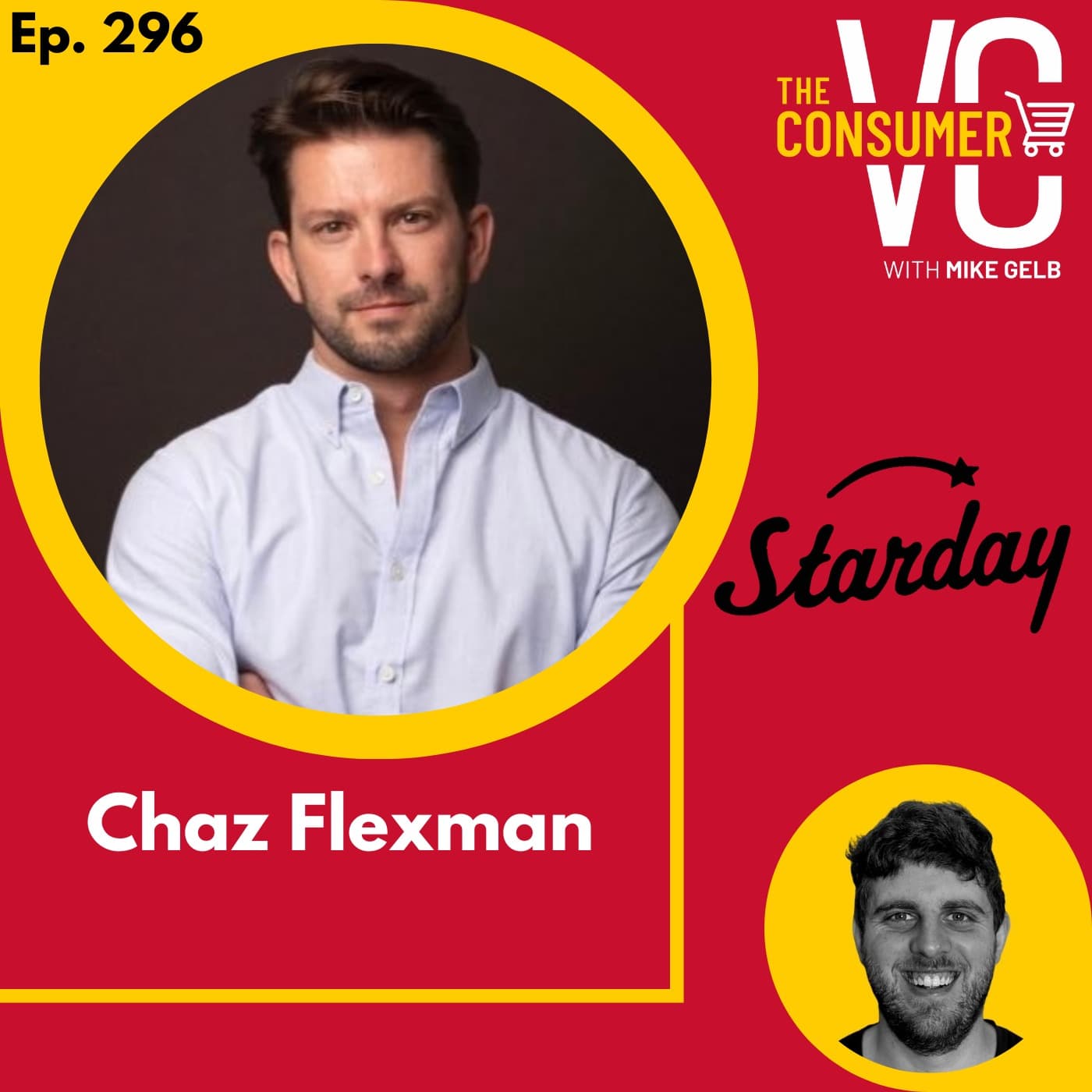
Chaz Flexman (Starday Foods) - How He's Building The Next Food Conglomerate With Data Science
Guest
Chaz Flexman - Founder & CEO of Starday Foods
Episode Description
In this episode, Mike Gallup interviews Chaz Flexman, the founder and CEO of Starday, a next-generation food conglomerate utilizing data science to predict product-market fit and create food brands. The conversation covers Flexman's transition from Pattern Brands to food, product creation strategies, data-driven decision-making, and retail partnership building.
---
Key Insights
Transition to Food Industry
- Background: Flexman has a tech-oriented background, previously involved in software and hardware at Wink, a smart home platform.
- Reason for Shift: His interest lies in the tangible nature of food products and the ability to use data science for predicting market trends and consumer preferences.
Mission of Starday
- Focus on Data: Starday aims to build a food conglomerate that leverages data to understand consumer demands and create tailored food products.
- Business Model: Positioned as a B2B2C company, Starday partners with retailers to reduce assortment risk while enhancing category performance.
Innovations in Brand Creation
- Data-Driven Approach: Starday employs data science to identify consumer needs and market opportunities, contrasting the traditional founder-driven narrative in CPG (Consumer Packaged Goods).
- Ontologies and Consumer Needs: The company creates frameworks around core consumer demands (e.g., gut health, sustainability) and uses data scraping, NLP, and proprietary partnerships to gather insights.
Product Development Process
- Consumer Testing: Starday tests product samples through consumer feedback to ensure acceptance before mass production, focusing on attributes like taste and texture.
- Iterative Feedback Loop: By implementing a stage gate model, they refine products based on consumer input, leading to successful adaptations like the chickpea protein in their Kabea brand.
Market Strategy
- Retail Partnerships: Starday targets big box retailers for scaling, ensuring immediate visibility and access to mass consumers.
- Importance of Data: By understanding psychographics of target consumers, Starday can influence product placement and marketing strategies effectively.
Challenges and Industry Dynamics
- Investment and Fundraising: Flexman discusses the complexities of fundraising for a multi-brand strategy, stressing the need to educate investors about their unique data-driven approach.
- Big Food's Limitations: He critiques traditional CPG companies for being heavily supply chain-driven, lacking adaptability to consumer-centric demands.
---
Key Takeaways
- Data Utilization: Starday's core strength lies in using data science to drive product decisions rather than relying solely on traditional entrepreneurial instincts.
- Iterative Development: Continuous feedback and adjustment are integral to Starday's product development, allowing them to minimize risk in new launches.
- Retail Focus: Building strong relationships with retailers is crucial for driving consumer awareness and achieving market penetration.
- Consumer Insights: Understanding broader consumer psychographics rather than singular pain points allows for more effective branding and product positioning.
Additional Thoughts Flexman emphasizes the importance of knowing the consumer's voice and adapting product offerings based on real data rather than assumptions. This approach positions Starday as a forward-thinking contender in the food industry.
---
Podcast Sponsor Vauban from Carta - A platform for launching and managing venture investing, providing SPVs and fund vehicles. Visit their website for more information.
Stay Connected For more insights and updates, follow Mike Gelb on Twitter [@mikegelb](https://twitter.com/mikegelb) and subscribe to the newsletter at [theconsumervc.com](http://www.theconsumervc.com).
---
Conclusion This episode with Chaz Flexman illustrates a modern approach to building consumer brands in the food sector, blending technology with traditional retail practices to create a robust framework for success.
Written by AI. May contain mistakes. Listen to the episode to check what was said.
Transcript
Automatic transcript. May contain errors.0:00This episode is brought to you by Vobin from Carta. Vobin from Carta is the easiest way to launch and run your venture investing. They offer SPVs and fund vehicles for GPs at all stages of the journey, from your first syndicate to operating a multi-million dollar venture fund. If you're interested in investing in startups, stick around after the episode where I chat with Gabriel Shin from the Vobin from Carta team, who shares his perspective and tips about how to start investing and how Vobin from Carta can get you set up. The link to Vobin from Carta's website is in the show notes. Where did the name Sarday?
0:35What was inspired by the name? Was it The Weeknd? No, it wasn't. I was not actually looking for a theme song. We had a different name that we're incorporated under. And for some reasons I won't go into, realized we needed to change that name shortly before launch. And it was kind of making sure that this name worked for trademark and as a consumer brand. But it's really around like, great, we're building a constellation of brands. Our partners are our star partners. It had some depth to it that led us to kind of like, oh, that's a great name that can encompass a whole lot of different brands and products underneath it.
1:08Hey, I'm your host, Mike Gallup, and this is the Consumer VC Podcast, where we discuss the intersection of venture capital and consumer innovation. If you're enjoying the show, also subscribe to the newsletter at theconsumervc.com, where you're going to receive all new episodes straight to your inbox, and a weekly recap of all the consumer deals that are happening. All content and episodes are for informational and entertainment purposes only and is not investment advice. This episode is brought to you by Vauban from Carta. Vobin from Carta is the easiest way to launch and run your venture investing.
1:39They offer SPVs and fund vehicles for GPs at all stages of the journey, from your first syndicate to offering a multi-million dollar venture fund. If you're interested in investing in startups, stick around after the episode where I chat with Gabriel Shin from the Vobin from Carta team, who shares his perspective and tips about how to start investing and how Vobin from Carta can get you set up. The link to Vobin from Carta's website is in the show notes. Our guest today is Chaz Flexman, who is the founder and CEO of Sarday. Sarday is a next generation food conglomerate that uses data science to predict product market fit and create new brands.
2:15We discuss why he left pattern brands to go into food, how they create and launch new products very cheaply, how they think about data and trends and different categories to enter, and also how to build relationships with retailers. Without further ado, here's Chaz.
2:35Chaz, thank you so much for joining me here today on the show. How are you? Doing well. Appreciate you having me on. Thanks for your time. So you left Pattern Brands, which was an aggregator holding company focused on brands for the home. I know you come from a software tech background. Why CPG? Why food? Yeah, so I originally kind of got into the hybrid of software and hardware when I ran a company called Wink, which is a smart home platform. Kind of Alexa, pre-Alexa, but we made a couple of our own products and definitely fell in love with the haptic feedback loop of seeing a product you made in someone else's hands.
3:12It's just like it's really kind of powerful, you know, incredible feedback loop, which I really enjoyed, but also love how the combination of software really brings an element of data and thought and, you know, kind of complexity to it that I've always really enjoyed. And so I've kind of straddled, you know, between the two for a lot of my career. after I left Pattern I joined up with the folks over at Equal Ventures they're at CTH Fund out of New York and they're a very thesis driven fund and we're writing this kind of memo around you know the future of F &B and retail and I was like sure let me like scrub it and help you I kind of joined as a venture partner and not sure if I wanted to go back into venture full time but I'm just happy to help kind of fill out this thesis and about a month or two into it I was like oh I don't want to invest in this like, I want to go build it.
4:08Like no one's going to walk in the door with a better background than me. And this feels like kind of a summation of everything I've done in my career to date. And so started incubating it with them over the course of 2020 and then off the races. I think why food, there's a couple of things. Like one, it's really trend and data driven, like attribute driven. So you can use data to really like drive a lot of your decision making. And that wasn't something that was like prevalent today. Meaning, you know, while it wasn't a consensus thing or consensus approach. It was one I thought there was, you know, a lot of opportunity to kind of create change and more predictable outcomes.
4:40And two, again, it's just that haptic feedback loop. I mean, one of my favorite moments from this company has been when a friend of mine in Nashville went to a kind of have wine and drinks at a friend's house and they were serving gooey. It just happened. It's like, oh, it's my buddy's bread and sent me a photo of it. And just seeing that and hearing from consumers and how much they love the product is just second to none. Can you talk a little bit more about when you were at equal, what that original thesis was? Truthfully, it's pretty spot on to what we've built to date. You build a BenX great F &B conglomerate using data at the core of how you understand pent-up consumer demand and bringing brands to market that you know are going to work and predicting product market fit.
5:20I'd say the only thing that we've realized more and more over time is that we're a B2B2C company. So we partner with big retailers to help make sure that we're solving their assorban risk with our products, but also giving them category lifts, meaning similar velocity about higher what's on shelf and at a slightly higher price point that consumers are willing to pay for. I fundamentally believe that you build your bed online, you build your business in retail, and that's only kind of doubled down on that philosophy as we've kind of gone along. I really appreciate that. I know that part of also the reason why you started Sarday as well was due to some of the principles and methodologies that you saw happening in vertical SaaS and kind of applying it to food.
5:59Can you give like a breakdown of like what that means in this kind of third generation is, as you put it, of vertical SaaS? One of our investors is Fiji, the CEO of Instacart. We were having this conversation at some point and she's like, Chaz, you know, I used to run advertising at Facebook and coming to F &B, I thought everyone's going to be doing what you're doing. It's like, yeah, it's not rocket science. It's just taking all the stuff we know from consumer software and applying it to F &B. And truthfully for us, we think about like the product is the process, the output is just the brand.
6:24The data models that we built, like, you know, are kind of the core intrinsic value and the brands are what comes out of it. So analogy I like to give is Ford with the Model T. You know, the Model T, like they invented the assembly line. The output was the Model T that was, you know, more reliable, better priced, more, you know, a better car. But the true innovation was actually on the assembly line side. So we think about it from the same way. The core underlying data model lets us create a more predictable sort of outcome and predict product market fit. And that's where it is. That being said, you know, I always get the question like, well, why don't you sell your software?
6:58And truthfully, F &B is littered with companies that are trying to sell data into F &B. And the reason for that is it's a very barbelled industry. You've got like the Nessies of the world that while they might spend$100 million on Nielsen, don't like really use data at all in terms of their decision making around what products to build or how to run their business. And then you've got like a bunch of smaller brands that, yes, they might pay for spins just to see how their products are selling, but don't have the balance sheets to actually really pay for software. there's no like real strong SME market which means you know if I know a brand can can do 50 million dollars or 100 million dollars or 200 million dollars like why would I want to sell that data to someone else instead of like use it ourself to then go build those brands and capture the value.
7:40You know that makes sense in terms of in terms of why you would actually want to build those brands yourself as opposed to just being a part of maybe like someone else's stack per se as they're building up their own brands. Can you walk me through a little bit about how you are leveraging data science, as you say, to like de-risk a product market fit or to find product market fit and figure out which types of products you actually want to launch? Of course. So, you know, like what's been historically done with like spins or Nielsen or IRI, they basically just kind of tell you basket share or like what's happened in the past of like nut butters, jellies, and jams.
8:16We start with a core consumer need and build around that. So it's like that's something like anti-inflammation or gut health or top nine allergen free or sustainability. And we create these ontologies around them, which is kind of the umbrella under which the data lives. We use third party data APIs. We do web scraping. We've got some proprietary data partnerships. We kind of suck that in and then use like NLP on top of TikTok or Instagram because consumers aren't talking about products or their consumer need like they are nut butters, jellies and spread. So you've got to use a bunch of NLP to understand kind of what they're saying and how that's related.
8:53We run a bunch of models to kind of say, like, great, what are the core attributes or product categories that are then associated with this core consumer need? And let that, you know, really kind of dictate where those opportunities lie. A great example of that is low FODMAP. Our third brand, Kazumi, is a low FODMAP rice blend. There's more demand online for low FODMAP than there is for collagen. You know, it's the normal prescribed diet to fight IBS and bloating, particularly within women. And yet there's only a couple of brands that are on the market servicing it today. And so we can use that data to really make sure that we're finding like pent up consumer demand.
9:30We then create a PRD just like you would in software and, you know, work with our R &D firm to go spin up a couple thousand samples and do blinding consumer testing through a third party service to test for taste and texture and all those kind of key attributes. Because this is a repeat purchase at the end of the day and, you know, consumers have to love it. And so it's not, you know, it's not just like 10 of my friends be like, Chaz, this tastes great. Lastly, if you think about walking down the aisles of a Target or a Kroger and you see a box of chiskets that's sitting on a shelf, to us it's just an adding of that sitting on a shelf, an adding with kind of only five main variables of diet, health, ingredient, cuisine, and then brand.
10:05So we can start running a multiple variety of tests just like you would in consumer software to figure out like, great, if I call something dairy-free versus vegan, how does that change pent-up consumer demand? or you know there's a set of attributes you might have to have like non-gmone gluten-free there's ones we call them the mba's the most valuable attributes that give you the right to win so think um halo top with 250 calories per pint have they been like the low sodium brand probably wouldn't have worked but we can test into a lot of that you know that consumer demand and understanding everything from um you know flavors to the color of the box to like those attributes for instance you'll see on kuzumi with low fodmap it's actually a secondary attribute not the top MVA attribute.
10:45That's because we can actually look at where something is in its adoption curve and say, like, great, this isn't ready for, like, the primetime attribute, but, you know, as gut health is more of that, like, hook to consumers, kind of orient around that. But all of this kind of, like, flies in the face of how most F &B brands are built, which is normally around that kind of founder narrative of, I have allergens as a kid, so I'm going to get, like, an allergen-free cookie brand, and that's, like, the qualitative insight that's going to lead me to the promised land. where, you know, I don't think my taste buds represent mass America.
11:16I don't think I've got any God given insight. I, you know, I'm actually the last person to try all of our products because I don't think my taste buds matter. And so it's really making sure that data is at the core of driving, like where and what we build and let consumers tell us. So, so you kind of start, I mean, as you say, you kind of start with like what like the macro problem is that you're looking to solve and then see like kind of evaluating what the pent up consumer demand, doing a bit of analysis in terms of what other brands are there and if there's an opportunity to introduce a new one if there is only a small number of brands that are serving that consumer.
11:48Our model is really prioritizing a couple of things. It's one, trend relevance. Is this going to be something that continues to build over time or is it just a blip? Popularity and then correlation to consumer intent. How do you define in terms of if something's going to be a trend versus just a blip? Yeah, and so we're running a bunch of LLMs and regression models to see how we think this should play out historically versus certain areas of time versus in the future. We score what we call events, which are these different independent data points, and give it a ranking and scoring system to actually tell us what's the highest probability of success versus something that might be more of a slower burn.
12:26That's helpful. I think also you're saying how traditionally we've had a number of incredible founders on the show talk about this, how usually it's, it's usually a pain point from them, or maybe one of their friends, or, or maybe a, a sibling or a child or a cell or a family member, that they're not able to kind of have this product in market. So then they decided to go build it and then maybe realize that, wow, there's actually maybe a lot big, like, like, obviously, I mean, obviously, that's why they build it. But there's a much bigger audience here of consumers that are in the need that where where you're kind of more looking on the outside externally, thinking like what is kind of like the common consumer or like mass America is kind of needing for.
13:13Exactly. I also, you know, I think, and there's all credit to those founders and anyone taking the risk to go build something. I think sometimes those end up being a little more like a random walk down Wall Street, like some work, some don't. And we're trying to use data to make it like predictable success, right? It's like once I repeat that we can do this multiple times over with a consistent ability to predict product market fit at the end of the day. Because again, I don't think my taste buds represent Mass America, but I think consumers will tell you what they want if you know how to listen.
13:41Well, how also do you define as Mass America? Because, you know, and especially a lot of the opportunities that are like, or a lot of the companies that are coming on the show and also start days, like usually these are like premium, more expensive brands. And usually you're not, you know, for, you know, maybe like the everyday American. Secondly, how do you actually think about in terms of just MassAmerica in total and the overall TAM? It's something that retailers struggle with, which is like, look, just because something is selling well in 60 doors of Gelson's, does that mean it's necessarily going to work in MassAmerica?
14:10Like, maybe, maybe not. and so we kind of think about it as like building a an archetype and persona and psychographics actually around those core you know kind of the 12 retailers that really matter that drive most of the velocity understanding really great what are the psychographics of that consumer you know are they working out for strength management and stress management but not working out for weight management which might mean that like in a certain retailer products that are diet culture aren't actually going to work. And so there's, you know, something like keto might actually not be a fit.
14:44And so if you actually focus on like those kind of core retailers that matter, you can develop psychographics around it and who those audiences are, you know, across mass America. And so, yeah, you know, it's also one of those things that like if you can sell something for, you know,$20 in Air One, that's wonderful, but that doesn't necessarily mean an Indianapolis mom of two is going to buy it. And that's where you get to real mass and scale. And so we do a bunch of testing on price points where we, you know, run a bunch of traffic to our site. We'll A-B test different price points and see like where those conversion percentages change um to you know say like the great that's your market clearing price of what consumers are willing to pay uh we also spend up fake brands all the time to try and test them with that uh that core kind of mass market audience versus again just uh saying like hey this is what's worked on on the coast because that doesn't necessarily translate to you know middle america does this at all um when you think about launching new brands and thinking about if it's right for mass america i mean as you said just because it maybe works a product works and you know 20 galson stores doesn't mean it's going to work in kroger does that mean that when you think about um that you actually have a preference in terms of which which distribution channel you actually want to start in we think about starting with big box kind of from day one you know our first brand gooey rolled out in every kroger in america um you know it's going into target and hyvee and um yes we're getting into natural on the east coast just because that's got a really strong presence there but it's not saying we're starting with that local then regional, then specialty, and hopefully you're going to get to big box.
16:06But big box is what ultimately drives scale, right? That's where people do most of their grocery shopping. And that's where you get real velocity and real revenue from. And that's, you know, quarter like, you know, where we want to be building for is that kind of mass America. How much does it cost your initial run to actually like create a new product? Yeah, I mean, we can basically build a brand in less than six months for less than 200K. And so we think of that like R &D cost is like our CAC. And so, you know, if we're going and signing up a couple thousand doors, you know, those initial loaded NPO is only payback with gross margin because we can get to a gross margin profile at scale, you know, quite well.
16:41So we're not kind of slowly rolling out through different kind of stages of scaling up production. We're able to kind of go into mass production, you know, kind of right away. That means we've got to do a lot more work on the front end for on the R &D and development to making sure, you know, our formulations work at scale. but also means like we get to, you know, revenue and margins, you know, a great market profile faster. So do you do your own, your own manufacturing? No, we partner with various co-men and then a third-party R &D firm, but also have R &D in-house as well. Now you have four brands, is that right?
17:14Correct. From doing those trials, you say, you know, once you maybe produce, you'll produce, once you maybe roll up a brand or start a brand, you'll introduce a brand and do market research maybe on like 2 ,000 consumers and see if this brand has legs. How many brands have you maybe started and you're like, actually, this is not going to work? Or has it been done so far? The testing that we do is actually on the product itself, right? To get like taste and lecture and those key attributes. But what we've actually found, I thought probably at the beginning, we're going to have to kill a bunch of brands.
17:48We've actually found is because we have a stage gate model, just like it would in software, we ended up like iterating and going back. So like Kabea is a great example of this, where we got it into consumers' hands, and the scoring and feedback just wasn't strong enough. It wasn't bad, but it just wasn't overwhelmingly positive. So we went back to the model and said, great, let's go stack some attributes on this to see if we can find more of a hook. And we found this chickpea protein because we found consumers wanted more protein in their diet, but wanted non-soy protein in their diet. So we found this chickpea extrusion to make that part of the crunch of Kabea, but now offering us 15 grams of protein that's not soy-based.
18:23and we ran it back through the testing again. It's like now one of our highest scoring NPS products that we've made. And so it's more kind of iterative feedback loops where the cost of failure is a lot lower. There's also plenty of stuff that comes out of the data model that's just not feasible, right? Something might say adaption soups. And Lena, my co-founder, who's a three-star Michelin chef, food scientist, she's created the first gluten-free flour brand. So you can look at something and be like, hey, adaption soups, for instance, adaption's really bitter. You're not gonna be able to cover that flavor.
18:52So that's not going to work. So let's kind of throw it away. So it's really kind of a humans in the loop sort of thesis where, you know, you've got to understand like feasibility and viability, which go hand in hand. Are there macro trends that you might, or rather a problem that maybe is very attractive in terms of like, there's a lot of interest in this problem within food that you actually don't think is really like, is really more like the fad side than a trend side? I guess let me tweak your question a little bit. So we've done a lot around sustainability. And most of the brands that have come out are very much like nail on head, like alt-meat.
19:30And consumers, while there is a core part of the population that definitely wants that, to activate mass consumers, that might not always be the fit for them. So it's about how do you ingrain sustainability in ways that increases the actual audience size of consumers who are willing to pay for that. So that could be things like GUI with palm oil-free. That's ways to introduce sustainability while still being a core mass market product. or habea you know being like people want more protein their diet they want um you know plant based offerings but they don't want soy and so it's you know it's an offering that like gets people into the category and expands it versus just kind of nail on head of like oh we need to be alt meat or alt protein got it so just kind of not as like um like a direct kind of like in your face of like this is you know like a plant burger for example versus like a normal burger per se exactly uh and so it's kind of activating that consumer through like secondary dots which we think can have more of an impact because you're getting people, you know, to actually make sustainability part of their, you know, their spend, uh, without it just being like, Oh, I just want a plant-based burger of nail on head.
20:30Like I said, how, I mean, you, you categorize as well, Sarday from the, from, from the get-go is kind of more like a B2B2C, um, type business where you're selling to the retailers. And then of course the consumers are buying the brands, which totally get like, are you also doing like, how do you also think about like pull marketing, initiatives to actually drive consumer demands for your product that actually then they actually go buy? Yeah. So I think the core of the data model, we're getting to the why behind the consumer purchase. And to be understanding the why, that means you can, if you think about kind of the brand architecture, that's kind of like the core of the brand architecture that you're building around.
21:04It also means we can run that same NLP on TikTok to say, great, who are influencers that are talking about these products in the same way that we know is going to resonate with audiences? Or on the shelf danglers or out of home that we're running, knowing the core hooks of like why consumers are buying for GUI, like low sugar is kind of the core hook there. And so if you get to that why behind the brand, it lets you kind of activate the marketing side and be much more kind of pointed with it. And to take advantage of tools, whether that's Instacart's, you know, kind of ad platform, because you know the related search terms or, you know, the messaging that you need to have on your landing page of aisle to drive, you know, bogos and driving people in store to try the, try all the product.
21:42And it's really kind of using that why and those hooks throughout kind of all the different marketing, you know, tactics that we do. Usually kind of like the story for, for consumer brands is, um, not always, but you kind of start online, um, uh, you get demand and then, and then you kind of go, um, on the channel, um, after you have a certain amount of sales online. Um, and it seems like in this scenario, you're actually kind of starting, um, per se in retail. Is that, is that relatively correct or no? We kind of do it concurrently. So we can, you know, show retailers a product that's like ready to go, uh, even before it's launched.
22:15You've got to remember retail is focused on like line review cycles. So like they might not be opening up a category for six, seven months until you can go pitch in. You know, they select who it is and they close it for the next 12 months. And so it kind of depends on the line review cycle. And then when we have a brand that's ready, you know, I think we use DTC largely just for data capture around a bunch of the testing that we're running. We think about Amazon or like a Thrive Market as, you know, kind of a brand awareness and kind of building that hail effect. and then getting into big box as fast as possible.
22:48But our first brand we signed before it was even live with Kroger. So we've definitely seen retailers that lean in at times and are willing to say like, great, we believe and understand the data model and we want to participate. Got it. And so it's using those channels to convince retailers that, hey, this is first of all a trend and secondly, why we are the brand that's actually solving this problem. Yep, exactly. That's awesome. I remember reading an article and you saying how you wanted to build, that you're building maybe more of the Ford versus the Unilever. What exactly do you mean by that?
23:23Yeah. Again, it's that kind of the analogy I gave around the assembly line and the Model T. Tech is their underlying data models that we're building. The output's just the brand. And so it's really kind of starting. It's not just like saying we're going to be a house of brands. We want to build the next Nestle. We want to build the next great F &B conglomerate. but we want to use with data at the core that's driving the decisions to give consumers what they love. We talked a bit about how emerging brands usually start, right? It's usually maybe their own pain point usually, or like a family member or someone they knew a pain point.
23:56How do you think about innovation from like the corporate level and what are they doing wrong in your mind? Yeah. So one of my board members, Rick, jokes that he was the problem. He's a former consultant. And so Big Food is, for the longest time, been supply chain driven, right? They've had consultants that have told them to go put$100 million in your CapEx to get 10 % better throughput of your core ingredients. Go do multi-year derivative deals on those ingredients to lock in the prices for years. And that's why most of the things that they launch are supply chain driven, not consumer driven.
Read the full transcript
24:30No consumer is asking for Jiminy and sausages to make blueberry flavored Jiminy and sausages. or camels to launch soup sauces. Right? And, you know, but if you're Jiminy and sausages and, you know, consumers now want alt meat and gluten-free, it's like, what are you going to do? You put$100 in your CapEx and now you're kind of stuck with that. You kind of kick the can down the road to the next person. Similarly, like they're very much stuck in that intuition age. If anyone's seen the movie Moneyball with Brad Pitt and Jonah Hill, it's kind of like when Jonah Hill walked in and there was a group of scouts and they're talking about player recruitment, like, oh, that's a 5-2 player.
25:06I know a great swing when I see it. He's like, no, no, no. We need on-base percentages because if you got a base, you score runs. And let's use data to drive those decisions on who we bring under our roster. That same sort of thing is here where we think that instead of being driven by the supply chain, you can use data. And that's just something that Big Food Fundamentally doesn't know how to do. At the core, they don't have a CDP. They don't understand who their core consumers are. They're not using data in their products. It's a lot of you saying, great, a tad blueberry flavoring because we can push through more of our core products onto retail shelves and call it innovation.
25:40When I also think about leveraging data, especially in CBG or just maybe consumer brands more generally, at least from an investment side, I think about Circle Up and what they did when it comes to looking at data and reading what are they going to be the next breakout brands. Did you happen to have any learnings in observing their story? Sure. So Ryan called back to a personal investor and a friend. And so I think is one of the smartest folks in this space. You know, he would say, you know, if you think about a horse race, they needed to like both, you know, pick the jockey, pick the horse and like, you know, who's going to win place and show.
26:16And making sure that they're getting into the right entry price to get at the right exit price and that this thing was going to work. We more need to know, like, we're in the we've got the horse with the right attributes that it's going to perform well in the race and be top three. I mean, you know, there's like a power in niches where like, you know, some of this might be a$50 million brand. It might be$150 million brand. You know, if I could predict the invisible asymptote for any of these things, I'd go buy a lottery ticket because that's like, that's nearly impossible. And so I think we learned a lot about like, hey, you need to understand those things like most valuable attributes or like the characteristics that are driving, you know, consumers to buy.
26:49It's also why, you know, they've obviously used, I forget if it's called Halo or what it is, but they sell as like a B2B software. And one of the things we saw is like, look, this industry is very barbelled, right? Where you've got a lot of small brands that don't have balance sheets to really pay for data, other than maybe spins to seeing how their products work. And again, you've got the big nesties of the world that, yes, spend a ton of money on Nielsen, but don't like use data and it's not kind of, you know, part of what they're buying. but there's no like SME kind of market here. And so that's where, you know, a lot of database companies kind of go to die.
27:24It's like, well, if we can, why would I sell our software for 10K to someone when I can capture more value by actually building the brand ourselves and starting that way? And so I think it's, you know, understanding like, you know, we're not selling our software to someone else. We're contributing ourselves and capturing value that way. Got it. So just, so I guess like part of the learning from CircleUp was let's use all this data and kind of leverage it for ourselves for building new brands, as you said, not to actually sell this as like an additional service for others. How do you also, thinking about building new brands, how do you think about focus?
27:57How do you think about how many brands to actually launch and maybe what like the overall calendar year looks like? Sure. I mean, we've done four brands in the last basically 18 to 20 months, which I think when I was raising original seed, people were like, oh, you can't build multiple brands. Well, you know, I think there's always a question of like how many SKUs do you need to go and how broad does any one brand need to go? And like, especially the different inflection points. So like we don't really think about adding additional SKUs until a brand's been on retail shelves for at least six months, just because that's when we have enough signal to figure out like, great, where should we expand that into?
28:30I think as we start to partner with retailers more, we're like, hey, we can use our data to say like, great, this is all the places that you should be built. You should have brands. And we can show you in the data, like this is holes in your portfolio because, you know, you don't use data well and B, you're overrun with smaller brands that are pitching you that you don't know if they're going to fit, we can be that partner D where we go launch a dozen brands in categories that matter. And so I think the more that we have our retail partners locked in and truly partnered, and they're saying like, great, let's get out of category review cycle, but into let's build brands that service that needs of your consumer.
29:09And again, these are our brands, not their own house brands. that will let us kind of build more and more because we've got that go-to-market kind of done or kind of locked in, if you will. And then on top of that, since you would be building more and more brands, then that just increases your leverage because obviously you're just feeding them more and more brands and kind of building more pipe. Exactly. We don't have like a hard number of like how many we want to do a year. I think we'll probably do between two and six next year. You know, we just launched two this year. And so it's figuring out what's the right cadence with our partners on the go-to-market side.
29:45In your mind, how long does it, do you believe, take to build a beloved brand? I think there's stages of it, right? There's building consumer awareness. There's activating households, having them trial your product. It's why you run TPRs or BOGO campaigns. And so that if you walk down the aisles of a Kroger or a Whole Foods or a number of other retailers, how many of those brands do you actually, know and love? Or have you ever been to their website? And the answer is not very many. There's always a couple, but maybe it's Bonza or Goodles or Magic Spoon. But there's not many that you recognize that are owned by Kraft or Hershey's or Nestle.
30:27And so I think because they're a lower AOV product, it's very different than a pattern where it's a higher AOV product. You've got to build more brand awareness to convert. Where a lot of it is making sure you've got the right things on shelf and consumer awareness of the product to get them hooked in buying because you know once you get someone on your product they're they're going to be with you for years um because you're giving them the product that they want was that at all transitioning from from a pattern to start a where obviously very very different type of products pattern much more durable products um shifting towards consumables just what do you think about the overall the operating obviously very different businesses but just for you personally was that kind of a big shift for you Yeah, it was one of the ways I, because we can build brands that are so, to market and so quickly, and because it's so attribute driven, is where these data models actually like, oh, this works a whole lot better than, you know, if it takes you 18 months to build a CPG brand, and they're very much design driven, so you can't get a lot of, you know, data, you know, back into your development cycles.
31:27That doesn't mean it's none, there's plenty of learning from pattern there. But you can do influence it a whole lot more because they're shorter production cycles. And then again, knowing that retailers are what really drive volume and that getting placement on shelf and optimizing that ad unit of your packaging on shelf is incredibly important. It gives it to lower AOV kind of snap decision when a person's walking down an aisle. What were some of the challenges when you did fundraise? Or how did that process go? because as you kind of pointed out earlier, I think investors kind of want you building one product.
32:01They want you to focus on building one product. I think partially the reason is because the majority of the great exits happen through strategics and strategics usually only require one brand. Of course, this is a very different scenario because you're building a holding company. Just how was that whole process for you? I mean, no matter how many times I've done fundraising, it's never fun. and given me, you know. There's no funded fundraising. No. Look, like what we're building today isn't consensus, right? And I think that's what venture is for. Like saying we're using data to build brands is not a consensus statement.
32:36I think if you fast forward five years, it's going to be consensus. Like it becomes like, of course, why would you build it any other way? And two, like, you know, we're building the next Nestle, but we're also like a data science company. We've got to like kind of really scrub in. but it also means we can create more equity efficiency, which is what venture is meant for, by getting to a level of scale faster, to a gross margin profile faster, where it makes venture money make sense. And so I think it's one of those, we've got a great set of investors that have been believers from day one. I think it's always an education process with new investors where they can't just look at us as a software company, they can't just look at a CPG company.
33:16And so it's really kind of doing the work to understand like, great. one of the things my time at Andreessen taught me is there's two ways of looking at venture one is like why won't this work or if this does work how big does it become and like if we do this right we're an end of one outcome in F &B we're a multi-billion dollar company versus just selling a brand for$100 million or$150 million which is kind of more traditional in that single product line and just making sure that people understand like great if we continue to be right and continue to build like we're building an end of one outcome and that like fits the power law curve of venture capital You're developing a new brand.
33:49How do you think overall about that story of the brand? Since it's not, as you say, the traditional way, which it's usually very personal. It's usually an entrepreneur that has maybe a family member. Maybe it's them. Maybe it's someone that they know that may be struggling with this particular problem and they want to solve it. How do you think overall about story in your brands when you're creating one? Since it is very tech heavy. Yeah, I mean, look, I think we're trying to get there in the same way that narrative as well, which is the why behind the brand, right? And what's that underlying core consumer need that's not being met today?
34:25And making sure that the brand that we build, you know, we have a wonderful partner on the brand side, Camille Baldwin, who runs, it's called Outdoor Cats, but she was the former head of brand at Gin Lane and the head of brand at Pattern and part of the founding team as well. where it's like, look, we're giving her a ton of insight to then go build up brand architecture and voice and visual and copy around to make sure it's a why that's resonating with consumers and that we can go build around and really kind of hammering home on that. And so it's, again, I think it's two ways to kind of get to the same ultimate conclusion, which is that why a consumer should care.
34:57What's one book that's inspired you personally and one book that's inspired you professionally? Personally, Richard Branson's How I Lost My Virginity, the story of a virgin. It's one of those, I read it in one sitting and kind of realized I needed to get on the front foot of life and like go after the things I wanted and not just hope that it's, you know, how the cards are going to unfold. And so that's that was like one of those moments like that's where I gave me the courage and the fortitude to go break into venture capital back in 2011 and really kind of going after like, great, this is what I want the next step in my career to be.
35:32I'd say the two business books that have really influenced me a lot recently are The Everything Store, which is the story of Amazon, and then the book on Disney. I'm going to blank on the name of it now. I read it a lifetime, which is just an incredible story about leadership and how that kind of happened over time. That's great. We had a few guests mention these three. So excited to add your name to them. This is awesome. Final question. Where did the name Sarday? What was inspired by the name? Was it The Weeknd? No, it wasn't. I was not actually looking for a theme song. We had a different name that we're incorporated under.
36:16And for some reasons I won't go into, realized we needed to change that name shortly before launch. And it was, you know, kind of making sure that, you know, this name worked for trademark and as a consumer brand. but it's really around like, great, we're building a constellation of brands. Our partners are our star partners. There was just like, it had some depth to it that led us to kind of like, oh, that's a great name that can encompass a whole lot of different brands and products underneath it. Chaz, really appreciate you taking the time. Wonderful. Appreciate you having me on. And there you have it.
36:44It was a pleasure chatting with Chaz. Chaz, thanks again for coming on the show. Gabriel, thank you for joining me today. How are you? Yeah, really great. Thanks for having me, Mike. No, it's a really, really appreciate it. So when someone wants to invest, whether they've started their own fund, their emerging manager, or they and they have LPs, or whether they're an angel investor, how do they typically get started? What should what should they be thinking about? Yeah, that's a great question. So yeah, our platform makes it easy for people to pull funds together and invest in early stage startups.
37:16There's a number of reasons. someone would use SPVs or want to create a venture capital fund. So for angels, I would say the most important part is diversifying your portfolio. So instead of putting 10K checks into a single company, you can diversify by putting your eggs in various different baskets using an SPV. So that's a predominantly popular use case to kind of diversify your angel investing. As you know, it's a highly risky asset class. So instead of being concentrated in one single asset, it allows you to invest in multiple. So that's a use case there. Cool. So how does Vobin kind of make it easy?
38:02And what do you need to think about on the admin side in order to actually set up, whether you're angel investing, whether they're setting up like an SVV or a fund? Yeah. So fundraising is a pretty difficult task. whether you're a founder, angel, or, you know, a venture capitalist. So with our product, you know, we have all the ancillary services incorporated into the platform using a digital platform. So, you know, we handle the legal documents to create a separate legal entity. We have a banking partner that is incorporated into the dashboard. We'll onboard the investors. You'll have real-time information of how your fundraising process is going.
38:43And then we'll handle any administrative aspects such as reporting, any taxes, and ultimately the distribution at an exit scenario. So, you know, if a company goes IPO, if a company gets acquired, you know, how does that capital flow back to the investors? So, you know, we handle all of that. So our clients can focus on, you know, finding great opportunities, networking, building relationships, and building those investor relationships, which takes a lot of time and effort, as anyone who's been fundraising will know. If you are loving the show, I highly recommend checking out the newsletter at theconsumervc.com where you'll receive all new episodes straight to your inbox and a weekly recap of all the consumer deals that are happening.
39:27I'm also doing some more events, so you'll also be the first one to receive information about those.
39:39Oh, oh, oh, oh
From the publisher
Our guest today is Chaz Flexman, who is the founder & CEO of Starday. Starday is a next-generation food conglomerate that uses data science to predict product-market fit and create food brands. We discuss why he left Pattern Brands to go into food, how they create and launch new products very cheaply, how they think about data and trends and different categories to enter, and building relationships with retailers.
***Sponsor***
This issue is brought to you by Vauban from Carta. Vauban from Carta is the easiest way to launch & run your venture investing. They offer SPVs, and fund vehicles for GPs at all stages of the journey - from your first syndicate to operating a multi-million dollar venture fund. Their end-to-end platform automates your back-office and manual workflows so you can focus on what matters: finding the next unicorn & building investor relationships.
Click Here to Get Started - https://structurer.vauban.io/