
In short
Consumer VC Podcast Episode Notes
Episode Title
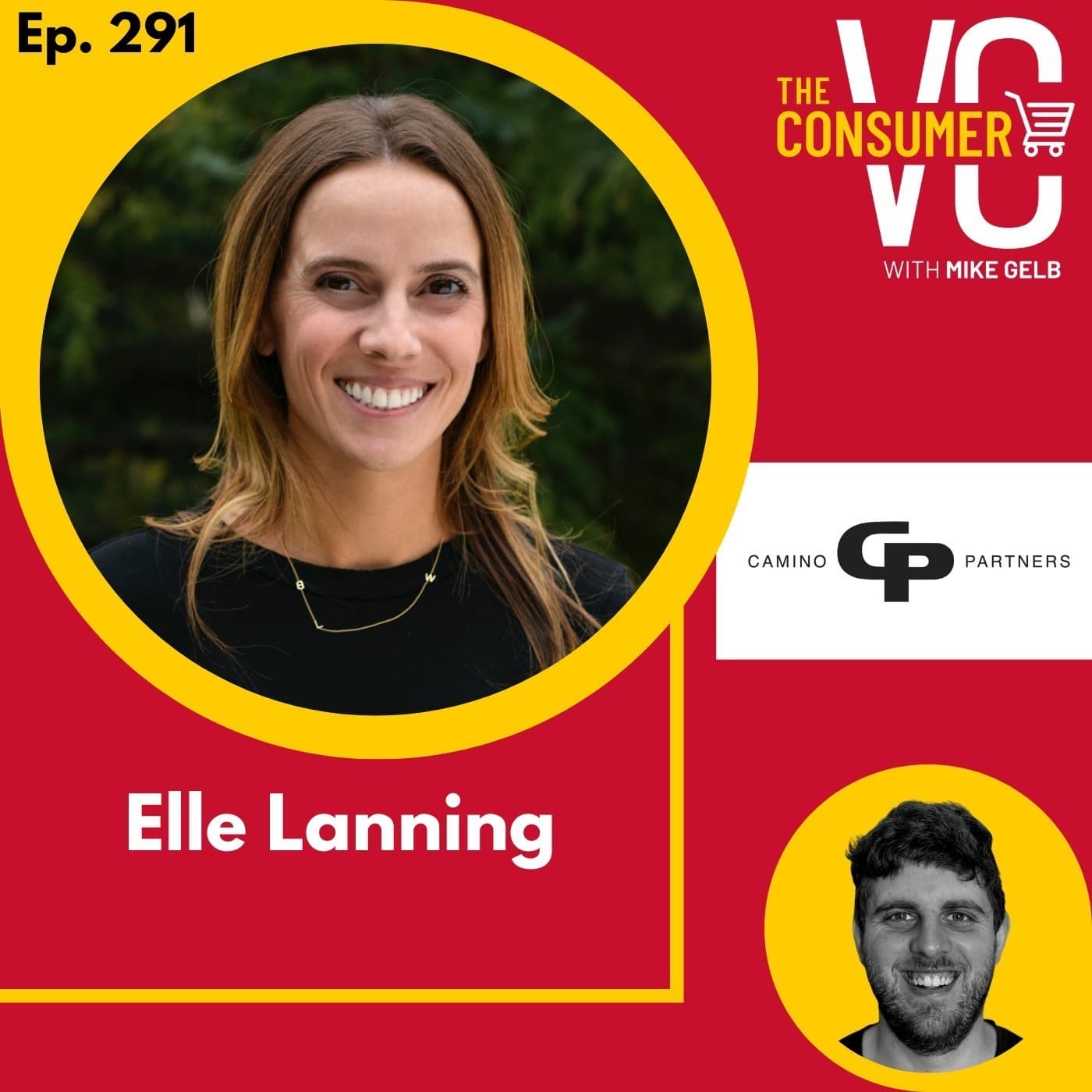
Elle Lanning (Camino Partners) - What KIND Snacks Got Right, What Differentiation is in CPG, and How to Back The Right Founders
Episode Description
Mike interviews Elle Lanning, Managing Partner at Camino Partners, a $350 million investment platform founded by Daniel Lubetzky, the founder of KIND Snacks. The conversation covers Elle's experiences at KIND, insights into successful consumer packaged goods (CPG), how Camino Partners was established, and what they seek in CPG brands.
---
Key Points Discussed
- Introduction to Elle Lanning and Camino Partners
- Elle Lanning: Managing Partner at Camino Partners.
- Camino Partners: Focuses on helping entrepreneurs build value-driven businesses, with a portfolio that includes brands like Somos and CAVA.
- Founded by Daniel Lubetzky, who emphasized building connections and social responsibility through business.
- Elle's Journey to KIND Snacks
- Transition from pharmaceutical sales to food marketing, influenced by lifestyle alignment.
- Joined KIND during its early growth stages, where she was drawn by Daniel's unique vision of connecting people through food.
- What KIND Got Right
- Product Differentiation: KIND's fruit and nut bars stood out due to clear packaging and unique manufacturing processes that weren't widely replicated in the U.S.
- Mission-Driven Brand: The brand's larger purpose resonated with both the team and consumers, inspiring a motivated workforce.
- Ownership Culture: Employees treated as owners with equity stakes, leading to a committed team culture.
- Challenges in the CPG Space
- Managing company culture as a work in progress and the importance of strong leadership.
- Evolving talent strategy as the company scales, requiring different skills at various growth stages.
- Navigating increased competition and maintaining quality standards in a growing category.
- Camino Partners' Investment Strategy
- Focus on both incubating new brands and investing in ready-to-scale businesses.
- Typical investment size around $20 million.
- Emphasis on building relationships and providing active support to portfolio companies.
- Market Trends and Insights
- Caution with Plant-Based Trends: Acknowledgment of market saturation and the need for differentiation in offerings.
- Global Consumer Insights: Growing interest in authentic international cuisines and the evolution of grocery store layouts to reflect diverse culinary influences.
- Brain Health Products: Recognition of increasing consumer interest in food for cognitive health, but with caution against hollow marketing claims.
- Thoughts on Consumer Investment Landscape
- Importance of being selective due to current market conditions favoring tech sectors over consumer goods.
- The necessity of aligning investments with larger consumer trends to ensure viability and growth.
Conclusion
The discussion emphasizes the importance of product differentiation, mission-driven culture, and strategic leadership in building successful consumer brands. Elle's insights into the evolving landscape of CPG investment highlight both the challenges and opportunities present in the current market.
---
Key Takeaways
- Successful brands balance product differentiation with a strong, mission-driven culture.
- Investing in the consumer space requires a nuanced understanding of market trends and consumer preferences.
- Building strong partnerships with entrepreneurs is crucial for long-term success.
---
Additional Resources
- Podcast Website: [Consumer VC](http://www.theconsumervc.com)
- Host Twitter: [Mike Gelb](https://twitter.com/MikeGelb)
*These notes summarize the core discussions and insights conveyed during the podcast episode, providing a comprehensive overview for anyone interested in early-stage consumer investing and the dynamics of the CPG market.*
Written by AI. May contain mistakes. Listen to the episode to check what was said.
Transcript
Automatic transcript. May contain errors.0:00This episode is brought to you by Vobin from Carta. Vobin from Carta is the easiest way to launch and run your venture investing. They offer SPVs and fund vehicles for GPs at all stages of the journey, from your first syndicate to operating a multi-million dollar venture fund. If you're interested in investing in startups, stick around after the episode where I chat with Gabriel Shin from the Vauban from Carta team, who shares his perspective and tips about how to start investing and how Vauban from Carta can get you set up. The link to Vauban from Carta's website is in the show notes.
0:45Hello, I'm your host, Mike Gelb, and this is the Consumer VC podcast, where we discuss the intersection of venture capital and consumer innovation. If you're enjoying this show, I highly recommend you also subscribe to my newsletter at theconsumervc.com, where you're going to receive all new episodes straight to your inbox and a weekly recap of all the consumer deals that are happening. All content episodes are for informational and entertainment purposes only and is not investment advice. This episode is brought to you by Vobin from Carta. Vobin from Carta is the easiest way to launch and run your venture investing.
1:19They offer SPVs and fund vehicles for GPs at all stages of the journey, from your first syndicate to operating a multi-million dollar venture fund. If you're interested in investing startups, stick around after the episode where I chat with Gabriel Shin from the Vobin from Carta team, who shares his perspective and tips about how to start investing and how Vobin from Carta can get you set up. The link to Vobin from Carta's website is in the show notes. Our guest today is Ellie Lanning, who is the managing director at Camino Partners. Camino Partners is a$350 million business building and investment platform that helps entrepreneurs create enduring value with values as their compass.
1:57It was founded by Daniel Labetzky, who is the founder of Kind Snacks. Some of the Camino Partners' portfolio includes Somos, Kava, and Belgian Boys. We discuss Ellie's time working at Kind, what Kind got right and how they grew, how Camino Partners came together, and what they look for in CPG. Without further ado, here's Ellie. Really enjoyed talking with her.
2:26Ellie, thank you so much for coming on the show and taking the time. How are you? I am good. I'm good. I'm actually just, we had a 65 degree day yesterday that turned into snow this morning. So I'm recovering from that, but. Oh my gosh. Where are you based? I'm in Boulder, Colorado. Boulder, Colorado. Okay. Wow. Wow. That's quite the extreme. That's quite the extreme. So I want to start kind of at the very beginning. and how did you start working at Kind? So I guess if I go back, I studied marketing in college. I left thinking I wanted to parlay that into kind of what I knew growing up, which was more in the pharmaceutical and medical device arena and do sales.
3:16Uh, so I, I tried that and I very quickly discovered, um, that having a career that had very little alignment with my life and lifestyle was not going to be one that, uh, worked for me. And I was living in San Diego actually at the time. And this was when, um, you know, Kashi was like really, I would say pioneering the emerging food space. And so I, which did have a lot of alignment with my lifestyle. So I set my sights on working there. Um, and I ended up joining, uh, the marketing experiential marketing and communications agency that was doing all of that early work for Kashi. Um, and so I spent, uh, several years there really working across Kashi bare naked, got to do work with honest tea, pop chips, great, you know, great brands that were changing the food landscape at that time.
4:22And it coincided with the timing where Daniel was starting to build out the kind team. So he had, for the first, call it handful of years, really worked with a small and mighty team of generalists, kind of trying to see and prove out if he had something with the concept. And so once, you know, you started to see the makings of what the potential was, he started to invest in hiring team with kind of differentiated skill sets. And so I actually took the initial interview with him to test if I had marketable skills. I wasn't like genuinely interested in the opportunity. You know, the brands I was working with at that time were, you know, bigger, had more consumer resonance at that time.
5:21But then I went and met with him and I had met with many founders in my time prior to him, but he was just very unique. You know, I show up thinking I'm exploring this like food marketing job and was trying to understand what he was seeking to achieve. And he's like, we are going to break down barriers between human beings. We are going to make them see their shared humanity. And I thought, well, that is something I know very little about. I might know how to help you sell some of these snack bars if that's kind of part of it. And so it turned into kind of a series of conversations with him that had me deciding to make the leap and, you know, help build behind his vision.
6:16That's amazing. That's amazing. Obviously, what Kind has grown into, it's really quite incredible. um you know there's of course so many you know cbg brands out there um what do you think since you worked at kind for over 10 years and um you were obviously very much in the thick of it what do you think were like maybe the three things that you thought kind got particularly right that actually made it so successful well i'll start first and i'll start with this i won't necessarily say these are in order of priority because they all had to happen together. But I'll start with this one because I actually think it's a bit overlooked today.
7:03And that one is the product itself, right? And so when you look at how we started with the fruit and nut bars, you know, what kind is most known for the clear packaging you see and understand what you're eating, Um, that was not only a product type that, you know, wasn't available here in the U S. Um, but it was also a product type that wasn't being manufactured here. And, and it's a surprisingly difficult, um, item to manufacture. And so here you had this product where the, the branding and the packaging around it, you know, that really kind of hit on the consumer trends and tailwinds. But then what you also had with that is a runway, a really clear head start, because once you have that, others will come, right?
8:09It's just a matter of time. And so if you find that in easy to replicate, easy to recreate products, your, you know, your runway is much shorter. And so for, you know, for me starting there in 2010, I say, you know, the first four or five years where I was, you know, a part of building the kind brand, which became more of our moat, the only thing that looked like kind on shelf was kind. Um, and, and you knew, we knew that others were working on manufacturing similar items. It's just that that took, uh, quite some time because it wasn't, you know, a ready-made manufacturing process here. And so I start with that being really important.
8:59And, you know, Daniel talks about when he's advising people, he talks about these, um, three phases of like your own journey to launch a business. And it's the creative, right, where you're dreaming up and building the idea, the critic. And that's where I some people I often see people skip that step. And that critic is like, why and what could go wrong with this? Right. And so I think like, when I tie that to product, you know, entrepreneurs today need to be really honest with themselves as to like, do they have an incremental benefit product or service? Or do they have a truly differentiated one?
9:47Because trading on kind of marketing and brand building alone is a really tough road. And so I think, you know, he definitely went through that phase in his like critic journey. And then, you know, what he says is once you answer that very, you know, very true and kind of self-reflective way, then you become the crusader. And that's where like nothing, nothing stops you or gets in your way. So that I would say was the product piece of the equation. Um, the other piece of it, um, that I would highlight, and it goes back a little bit to what I was saying about my initial interview with him, which, you know, was very unexpected.
10:34The, the reason for this brand and business being was always much bigger than the products that it was selling. And so it gave us a one, I mean, that like ignites team, you know, to like wake up every day and not only think about selling healthy foods, but to think about like bringing people together, connecting people across differences. How can our brand play a role in that. Like there's, there was a much bigger opportunity set that, that set up for us by being on that journey from like the very early days. So I think that was an important kind of one of the three things, if you will. And then the last one I would say was the culture.
11:26So we built a, and, you know, we were, this was one of the most important things to us in the everyday, right? Because it's something you have to focus on every day, but we built an ownership culture that, you know, was supported both kind of structurally, like everyone was an owner, had an equity stake in the business. We've won together. And then there were behavioral pieces of it, right? In terms of how you reinforce that. And so our kind of anchor tenants for our culture was this idea of hungry and kind, and that the balance of those is really where like the, the unlock was. And so, you know, how do you have a, how do you give way to a team that's waking up every day, like feeling like this is not a company they're working at.
12:20This is their company that they are waking up and advancing every day. And that difference just really helps you to outperform the next. No, that's, that's extremely helpful. So it seems like in terms of maybe the three things, or maybe even four things were the differentiation of product, they weren't, no one was producing that product in the States. Also, no one was, No other bar was actually featured, that product that was more like nut based. And as well as on the brand side of things, no one was going kind of clear with their labeling. And actually, you can actually see the bar, which is very unique.
13:02It made kind really stand out. And the other two that, you know, I really love that really kind of interact with each other of you had this greater mission, this kind of bigger for product, which ignites a team. and as well as when you also have ownership and you have that ownership model that also brings in the culture and it also ignites the team because then everyone's kind of on the same mission that actually they want this product to obviously it's not just a salary you're also really you're actually kind of attached to this this product um as well which is which is awesome um what are some of the things that you also saw like kind work through or maybe was were like challenging during the kind experience when you were there that you want to now, you know, as an investor, you want to kind of pass it along to founders?
13:50So I would say, well, the culture piece is, that is like, that's a work in progress. That is a, like every day. I mean, you have to start with what leaders and company owners that really care. But that is something that I think, you know, we were focused on helping our companies with because that's just an everyday endeavor. And I think, you know, the other thing that I would say in that, that was something is, you know, it's hard to foresee. like when I joined kind, I could have never imagined the kind that is today. We kind of always talked about like you got to base camp and then you could see, you know, a new kind of plane or horizon, then you get to that next.
14:50And so, you know, what is, what is like very difficult in that when you are a fast growing company is how do you construct your talent strategy with that in mind. You know, there's very few people that can, that are, they're really valuable at the early stage, but then when something scales to be, you know, half a billion, a billion dollar retail company, like it's different types of talent, it's different needs and challenges. And so we certainly, I think, struggled with how do you evolve and like still really honor and respect the people, the key talent that got you from point A to point B. And then now when you're moving from point B to point C, you know, I think oftentimes there is some self-selection in that that happens, but then there are tough decisions that you have to take in that.
15:46So I think, you know, that was certainly some of the harder moments for us in our journey. uh the other thing that i would say is uh it goes back to you know like the first four or five years that i was a part of kind the only thing like it on shelf was it but then boy that fifth and sixth year the number of things like it on shelf you know it exploded it was like this potential like death by a thousand cuts era where you know what we had to figure out was like how do we stay out ahead? How do we deal with a different type of competition? How do we deal with things that are really trying to draft off of all that we've been building for the last several years?
16:34And, and, you know, another thing was like, some of those things looked a lot like it, but did not match in quality, which is bad for the category, people come in and try it, and then may never come back. And so what is, you know, how does that reshape your toolkit? Like when you're a category of one that goes to a category of call it lookalikes, what is that strategic toolkit? How does your consumer messaging change? How does your selling strategy and customer messaging change? And how do you ensure that your business still comes out of that on top? Um, that was certainly a piece of it. It's like, there were, there were pivotal moments where it's like, you lost a big account.
17:30And like, you know, I, I told, um, I told Daniel, as we were going through like a transitioning from managing the day to day, like I had some reflections on the, the biggest things I learned from him. And it's like, Oh my gosh, you know, this idea of like, get back up, get back up, get back up. That is a guy that probably wasn't my natural wiring. It is through osmosis of, you know, partnering with him for 13 years. And so you're going to have those all the time. And how do you quickly frame what it is, what does it mean for your business? And then how do I counteract it? And that might be like trying to win back that customer, that might be building more deeply and competitive customers such that they have to bring you back in.
18:25And so you're going to have a number of those kind of setbacks on the path as well. No, those are all, I mean, excellent points. I also can only imagine, you know, when you finally seen you maybe onto something onto a new type of category or onto just a product differentiation that's working. And then it's kind of a gut punch to see all these other brands kind of come up in the same category. And especially if they're not like the right, you know, quality that actually the actual damaging side, which I didn't think about how that actually damages the category in the long run. And it could be detrimental.
19:07It's also a funny balance to play because you also don't probably don't want their problems, their products to be too good as well. Um, so it's, um, but, but, but just kind of understanding that and, and how you actually deal with that and, um, not get kind of too down and out that that's happening. Um, that makes a lot of sense. Um, so how did, um, so Daniel like launches, um, Equilibra, right? And so what's, um, what was, what's kind of the journey of, uh, being part of Equilibria And also why the rebrand now or like the difference between what you initially set out to do or the name versus now with Camino?
19:50So Equilibra was, I would say, something that we kind of set up and named as we were still heads down in the majority shareholders and day to day management of kind. Um, and so it was, you know, something that we set up and we were parking some capital and assets with, um, but still like our full-time job at that time was continuing to grow and build kind. Um, and so then, you know, we, we formed a strategic partnership with, um, Mars that was really born from a place of like the next phase of growth for kind was on a global scale. We took and tried to do that in a couple markets our own. And we realized that we wouldn't be able to do it with the level of speed that the opportunity required and the resources.
20:47And so we looked for a partner that was kind of values aligned that had existing global infrastructure and that led us to Mars. And then as of end of 2020 into 2021, we transitioned, we're still involved and stakeholders there and have an advisory role. I say we're both, you know, spiritually aligned with kind always will be, but then have a stake and continued alignment and support that team there. But then we were able to turn and say, OK, you know, what what is it that we want to spend the rest of our time on now as there is more time? And so that got us to do some work as to really kind of putting on paper what our philosophy is about business, what our key kind of learnings were.
21:50And a lot of that equilibria didn't translate to that well. Um, and really what we took from that is that there isn't, you know, and, and when we were on the operator side, we were kind of sold often like a playbook approach. Um, and that's not real, you know, like certainly there's, uh, transferable lessons, but what works for one brand and business does not mean like applied to the next. It will be a recipe for success. And so we really got to this idea of like, everyone will have its own unique journey, its own twists and turns, its own set of critical decisions. And that, because we took our kind journey that way, is the reason why kind became kind.
22:45Because we didn't subscribe to playbooks. We didn't subscribe to, you know, a, we called it the and philosophy, like your mind so often forces an or, but if you can stop and say, it's not either or like what's the and here. And so because we didn't subscribe to this idea of playbooks or answers from, you know, what's happened from those ahead, you know, our journey unfolded the way it did. And so Camino, which means journey in Spanish, which is, you know, Daniel's native language, felt like the best translation of that and really communicating to this idea, this idea to entrepreneurs, founders, managing teams that, you know, we're excited about that.
23:34We're excited to step into your journey, to join you on your journey, to be an informed and informative partner along the way. But we're not going to bring you like a playbook. We're not going to tell you do this the way we did it at Kind. We're going to give you our lessons and we're going to draw from those what works for your business or doesn't. I think that's a really great point about no playbook. what I kind of feel like when, you know, I, for example, just came off of doing this panel in Austin last week. And there were three entrepreneurs, all like fantastic, fantastic people on stage telling about their journey, stuff like that.
24:21And what was really cool is I talked to one entrepreneur and said, it's so interesting how they think about building their businesses, because my approach is completely different. And I feel like when you actually learn someone else's journey, it actually is a learning for you because it's a great learning for you of like, okay, this resonates. And this is actually very similar to what I think for maybe my brand or what I'm building, it makes sense to do. Or this part maybe doesn't resonate, period, or maybe doesn't make sense for this. So it's almost like when you have these conversations, it's almost like learning more about yourself and in terms of what you're building, which is really cool.
25:01Well, like I would give you a great example. So, you know, kind, we did a lot of what's called field marketing. We had a lot of like feet on the street, local ambassadors sampling the product. And so, and we weren't the first to do that, but a lot of people are like, well, kind did field marketing. We should do field marketing. And I tell people, do you know why kind did field marketing? because we learned about our consumer funnel and nine out of 10 people who tried Kind would buy and repeat purchase. So that made sense for us. That wasn't us saying, oh, well, this brand did field marketing, so we should do it.
25:44It was saying like, that is the most, if you can get someone to try this product, you've got like X number of annual purchases from them. It's a very efficient approach. And so that's where, you know, I step back and I try to like help under, you know, break down what people know about their business, the consumer interaction with it, et cetera, because it might not be a trial issue. It might be an education issue. It might be. And so that's why I think, you know, oftentimes this like playbook approach isn't nuanced enough, I guess. Yeah, no, that's a great, really great point. Really great point about that there really isn't one right way to scale or to grow a brand and maybe paying attention too much of what someone else did and maybe copying that.
26:44Maybe it'll work, but probably it is, as you say, a lot more nuanced than doing that per se. I'd love to dive in a little bit more about Camino Partners. It's a$350 million fund, but you also as well incubate companies. How do you think about splitting the incubating versus actually investing? On the investment side, what typically is your average check size? So as you mentioned, we're unique in that we're kind of business builders and, you know, partners and hopefully accelerators of other people's businesses. And so on the building side, you know, the first brand that we've incubated and are co-founding and launching is it has a very, I say, unique set of ingredients.
27:41Those ingredients are co-founders that we've had a lot of time and seat and experience with, right? So Miguel, who's the CEO, was the CMO with us for several years at Kind as we were more scaled. Rodrigo, who is a co-founder and head of product, there was, um, with kind for, oh my, I mean, at one point he, he was one of the early generalists at one point he was doing product development, legal marketing, you name it. Um, and then as we became a more specialized company, he did product development. Um, and then you have Daniel as the third co-founder. And so you've got this idea of time in seat and experience together that I think helps form kind of speed of trust.
28:41Then you had what we saw as like a real kind of market white space. And so what we looked at there was how much Mexican cuisine had really advanced and become more true to what you would experience in Mexico, in the restaurant space here in the US. But then if you went into the store and saw it on shelf, you know, Rodrigo and, and Daniel and Miguel would tell you like, when you're in Mexico, you don't get offered a hard or a soft taco, like those hard shells tacos don't exist. That's American Mexican. And so this idea of like what how you were able to experience their culture in a restaurant setting they had so much pride for how far that had come and then such disappointment at their culture not being represented on the store shelf pair that with our experience building food businesses and you've got kind of speed of trust you've got market opportunity that plays against our existing skill sets.
29:51And so that's where, you know, that's much more of an investment of our time in the upfront than it is of capital, because you're not talking about, you know, things where you're, you're just talking about smaller drips of capital to, to get something like that off the ground. So I think for that, on that side, we think of like the way we really think about it is a bit of like a road tested kind of founder and entrepreneur that, you know, hopefully we know somewhere through our existing network and connections that has an idea that is, um, that we believe that there really is kind of white space and differentiation.
30:40Um, and that, we believe we have strong values alignment with, because the only thing I can guarantee you is that things will not go to plan. So like, we got to be able to do that well together. And it's an emotional, like starting a business from scratch, it's an emotional journey. And so, you know, that's like, that's probably that piece of it is even more valuable than the capital and how you support each other in the early days. On the other side of things, we are looking for what we call more ready to scale businesses. And so these are, you know, businesses that have already really kind of proven and found early demand vectors that we see the potential to go across multiple channels.
31:43And that really, the name of the game is going to be keeping your foot on driving that demand, but building the infrastructure and the practices within the business to keep up with that, which was, you know, true to our experience at Kind. And in those businesses, we're trying, again, it's a deployment of our time as one of the higher value things that we bring to the table, we're not, you know, showing up for a quarterly, a quarterly board meeting where I, in the case of like Belgian boys, you know, I meet with Anouk weekly, um, and we're sorting through kind of what are the biggest things on her plate as, you know, she's a first time founder CEO.
32:29How can I help to triage those? How can I think about where our team is, uh, aiding her team? How can we think about like talent gaps that she has? So it's a very active and engaged partnership. And so with that, we have to be able to deploy enough capital to then have reason to deploy that time. And so our average investment size we target is 20 million. No, that's really helpful. And the first company you were talking about, by the way, that was Somos, right? That's Somos, correct. Cool. And with Somos - Hopefully you tried that at Expo. I didn't. I didn't. Unfortunately, I'm so sorry. I'm so sorry.
33:08I definitely I. It's okay. I'm sorry for you. Yeah, I know. I know. I, I, I clearly, clearly I just didn't do expo, right? Clearly I didn't. But next time, next time. But with Somos, now that was incubated while you were still at kind, right? Under kind of kind with, I just had like this partnership with, with Mars or no, No, no. So that is, that has no connection to kind other than the fact that the two co-founders were people that we had worked with that kind, but like Miguel, Miguel had left kind and was at Cholula. And so that was kind of getting back together with him. Rodrigo had left kind, was in Mexico, which is actually where we produce all of that food.
Read the full transcript
33:57So he was, had moved on to other things. So the, the heritage, you know, it has some talent from different stages, but it has no like entity connection to kind or Mars. Got it. Okay. No, that's, that's really helpful. Um, how, how do you also, and also it's, it's, it's really interesting because you either are incubating, you're right there, you know, in the beginning or you're at the gross age, it seems right where you're at the 20 million, It seems like you don't really touch, per se, the seed or the Series A, per se, unless maybe it might be one of your own companies that are incubated, but you might not go outside and take a minority position in a company that you haven't incubated in that range, which is quite an interesting strategy.
34:47um on the on the incubation side i i really loved how you talk about somos and really like like the problem that you saw and as well as also talking a little bit about the difference between like tex-mex american mexican food and you know maybe traditional mexican food which i also appreciate um how do you what's that process like though when you're thinking about as well incubating maybe future companies. Is it an entrepreneur that kind of comes to you all that maybe you've known for a long time, like in this case with the entrepreneurs that were part of SOMOS that you knew them for a long time, they worked at Kine for a long time, and they come with you an idea and then you all eventually build a product together?
35:32Or is it you or Daniel might have an idea for it you maybe start building the company or seeing, and then you might go and also maybe find an outside partner to come in and maybe run that company? We think of it through both. I would say we're kind of open for business in both ways. And it is funny because Daniel and I do have this debate around, you know he probably leans towards us being the ideators and I probably lean towards building on the thinking of the ideator because I think founders are like I think it's hard to replicate Right. And so this idea of like a hired founder is kind of tricky.
36:37And the way that I see, you know, bridging it is that as we have as we have the ideas internally, like we would be very, very early in bringing someone in. Right. And so like if if the spark happened, you know, in Daniel's mind, in my mind, in any of our team members minds, that would be the spark. But then what it actually gets built into being, you know, we want someone who feels authorship, ownership, etc. of that because we understand and respect like just how important that is for what's ahead. Okay, no, no, it's really useful that you, you think about it in both ways in terms of you all being the ideator.
37:30Although I see your point that if you are the ideator, it's hard to kind of outsource per se a CEO, even if they are, you know, like the co founder. it's different of course to do that if a company already has sales already is in the growth stage then you can bring someone in that really understands maybe the category or has built a brand before or has maybe been part of another brand's journey in a senior capacity but understand from the very beginning to have that buy in that's pretty challenging to do how are you also thinking about on maybe the growth on the growth side of, on more of like the growth stage investment side of things.
38:16How are you thinking about today's market as well in consumer? I know like consumer is, this has been said like a lot on the show that like consumer is, you know, not the most popular of things to invest in, especially when you compare it to kind of tech, which is, you know, part of the goal of the show. Spamable margins, yeah. Yeah, exactly, exactly, exactly. You actually have marginal costs, who knew? But how are you thinking about like these times currently and investing? It's interesting. I would say, you know, we're proceeding with caution and we're just trying to be really kind of thoughtful and smart in our study of the opportunities.
38:55I think, you know, one of the things that I would say, and I, you know, you went to Expo, I was there as well. you know someone asked me like what my big takeaway there was and you know part of it is that there's too many small businesses going after not big enough trends right and so I think that's some of the challenge certainly from the investment side is that you know if you're could you give an example of like trends that you actually don't think are very large well I think like I would say, you know, you, you've seen it a bit and I know everyone's like, Oh, this is, you know, what everyone's been like crapping on the past year or whatever.
39:38But I actually saw it starting to happen last year. I would say, I felt like every third booth was a plant-based meat offering. I was like, you know, it has become novel now to have something in its real form. It's become novel to eat meat as me. You're now walking a show like that. You are much more likely to eat plant-based meat instead of a real meat option. So, um, and I think that I I'm not, you know, some people would say there's like no market there. I think that there is a market there. I think the, the size of the market and it's actual, it's actual growth rate is is smaller and slower than what, you know, what people probably felt as they were innovating three or four years ago.
40:34And so what, you know, what I would say has happened there is you have too many brands and too many offerings for not a big enough consumer base. You know, the other thing, like, I, you know, I lived through a time when I first started in the industry where it was like, there was some green washing, then there was like gluten-free washing, you know, gluten-free water, like, oh my gosh, how did you do that? But I think you're starting to see that too with plant-based. And so like, you know, last week I saw plant-based gummy bears. How big is that consumer market? How many people are consuming gummy bears that say, I need a, I need a plant-based option.
41:23And when I'm making that choice, like I'm not thinking when I eat gummy bears, you know, I'm allowing myself, I'm allowing myself to not think if I am eating gummy bears. So I think there, there are things where you see these, you know, these kind of core trends, like extrapolated in a very weird way where, um, it's hard to say kind of like what market size there would be there. And what I think is challenging as an investor. So I wouldn't say that we would never invest in plant-based meat. I do think, I think it's an important part of the future. I think it's a category that should exist. I don't think, and I'm a proponent of consumer choice, but it reaches a point of diminishing return.
42:16And so I think there's too much consumer choice in that market right now that needs to shake itself out. And that's a that's a daunting task for an investor to pick the winner. Yeah, I think that's a great point. I mean, what I what I wonder, and I'd love to kind of hear your thoughts on the subject of meat, will kind of culture meat? Is that really what's going to per se of these alternative kind of traditional, you know, traditional meat, the cow, the chicken will like cultured meat. Will that actually be the one that actually prevails over like plant based meats in the long run? Once like once the technology is there?
43:02I don't know. This is where like I'm a simpleton, you know, like one of the beauties, I think it totally depends on like your philosophy. Right. And so like we, uh, you know, kind was basically like, we would have been a great friend to the caveman, you know, like we basically were a more convenient, like, uh, way to forage like nuts and seeds since the beginning of time. Right. Those have been good things like the earth made it, it made it like for humans to survive sound nutrition. Um, and so in some ways we had a very like simple nutrition philosophy that was tied into that way of thinking.
43:50Um, you know, I think it's Michael Pollan's like, uh, eat food, not too much, mostly plants. And so I think like that's been true for, you know, longer. I mean, you can't trace back to like an ancestor that that wouldn't have been true for. And so I think we're or me and then kind was certainly built in that way, or more simple in that thinking. So I actually think that there's some interesting, like one of the propositions in that space that I like a lot is this business Abbott's butcher where, you know, you look at her ingredient deck. Um, I feel like I could make that out of my own pantry. Now I couldn't, cause I don't know the processing pieces of it, but like, and, and it's culinary and it's not, I don't know.
44:47I like my food to be more like culinary, simple, real ingredients that I fall off a little bit when it gets into the science. That's personal preference. Yeah, no, no, it's, it's interesting. So at our last in 2022, we did a South by Southwest event in Austin with, um, Jason Karp and Jason also was, I would say, um, not like directly quoting him, but I would say that that was one of our main discussions, you know, kind of like tech food versus, you know, non-tech food. And he, and he was just because, I mean, he was less interested, I would say in tech food, just because we don't know how good it is for you in the long run.
45:33Right. And so, and so that was, It just sounded like a parallel with what he was saying. Well, the other thing that I would say, yeah, the other thing that I would say as it relates to food, it's funny because you're saying that just jogged a memory for me. So my brother works in medical devices and he and his one of his business partners got this investment opportunity in a food company a few years ago and they called me like. so how do we like how should we diligence this how do we look at this how do we evaluate this opportunity and the first thing I said to them was and because it was food tech uh I said have you tried it and they were like no and I said well people believe it or not still really want food to taste good yes so the like yes the first screen like that should be your first step but But it's funny to say that because that I think in some of this craze has become a little bit overlooked too.
46:40Like people still want food that tastes good. 100%. I think on a more lighter note, since we're talking a little bit about being bearish maybe on plant-based meats, what were some of like maybe trends that maybe you were actually bullish on during Expo that you were and you were kind of maybe it could be surprised to see or just just overall, you know, this is kind of very, very open, but but but just your overall thoughts. So I would say, you know, if last year I saw kind of this abundance of plant based meat that, again, I'm not bearish about. I just would say a different growth path than originally, a different explosion of it becoming mass than or inflection point rather.
47:31It's a great way to put it. And not to say that there might not be winners, there will definitely be winners of companies that do really well. It's just, it's just a question of how big the market will actually, how big and when, how big and when. Yes, exactly. Yep. And so I would say where, where you saw that subside a little bit, I definitely saw more come in in way of like, I'll call it the global consumer. Right. And so and I think that's a very interesting space. As you look at just the, you know, the macro trends and the diversification of our domestic population, you can see more of that in the future.
48:15And it's interesting because I like to sometimes like close my eyes and imagine, you know for us like in Somos there's still this like what's called the ethnic aisle right and it's got like maybe at one end like Mexican offering somewhere in the middle it splits to like Asian and Thai and and it's kind of like this this aisle that the retailers are still really trying to figure out. Because contrast that to like, why is Italian not really considered ethnic here, right? And so if you start to kind of think about those things and like, imagine what a shopping experience could be like in, you know, maybe 10, 10, 15, 20 years time where we are just much more like global in our cuisine.
49:17Right. And the store kind of represents that. And, um, so I think you're starting to see, um, a lot of that kind of take, uh, get some footing. And that's certainly an area that we're excited about and interested in. The other thing that I saw a lot, um, and is also exciting, but then requires, I think further study because, uh, I think it's a easy area to, you know, have some hollow marketing claims. Um, but it was, um, brain health and, you know, food as a source for brain health. And I think that is an area, again, when you look at the macro trends, when you look at the number of people who are going to be over 65, when you look at the prevalence of dementia and cognitive, you know, impediments, and then you start to think about, you know, I'll say my generation that's assuming a caretaker role.
50:26And then the way we start to think about preventative care. Um, and as we're assuming that kind of caretaker seat, I think that there is a ton, um, you know, to be unlocked there. Um, but I would say we approach, like I approached that space with a lot of caution because, you know, we don't want like placebo science. That's not good for anyone. But that was an area I started to see many more like brick to forehead kind of offerings in that space. Yes, I very much agree with you. I also thought there was a lot of companies that are quite thought were interesting that had really interesting um kind of indulgent snack products that had a bit slightly like a better for you um uh angle um for them or or part like one one that i um like even like a like like a like a hot like a um like a pizza bite that was gluten free for example that i thought was absolutely delicious um absolutely delicious um and so I also thought that was quite an interesting trend as well.
51:48Of course, there's other examples as well to that, but I thought that was really interesting. Thank you so much for coming on. This was such a fun conversation. Yeah, thank you. I'm sorry about my boring background. I might end up painting my wall as I look at yours. No, not at all. Not at all. Not at all. Really, really appreciate you coming on the show. Thank you. There you have it. It was a pleasure chatting with Ellie. Ellie, thank you so much again for coming on the podcast. If you are interested in investing in startups, but you don't know where to start or how to do it, please stay tuned for my conversation with Gabriel Shin from Vobin from Carta that helps you launch your own fund.
52:26Gabriel, thank you for joining me today. How are you? Yeah, really great. Thanks for having me, Mike. No, it's a really, really appreciate it. So and what are typically like the fees that are associated with whether you set up a Vobin account or even if you if you want to, you know, run your investment portfolio off of Vobin or another one? What's what's typically your the cost that you're going to incur? in current? Yeah, from a cost perspective, we're extremely price competitive. So if you went through the traditional route, you'd have to go to a fund lawyer, you'd have to go to a high street bank or a major bank to get a bank account for the investment vehicle.
53:11And then you'd have an administrator kind of administer the SPV until there's an exit. Overall costs can be north of you know, 20K. When you go through a platform like Vauban, you know, we charge about 8K, which includes the lifetime administration of the SPV, including the legals, the banking, the investor onboarding, and the administration. So relatively cost effective, I would say, you know, in terms of deal size, it can be anywhere from 50K allocations on upwards. How does that 8K kind of get broken down? Is that if you're like a pretty active, I guess, like if you're a pretty active investor, maybe you're not using the platform for just one investment, you're using for several.
53:54Does that come up? Does that kind of turn out to like 8K annually, or maybe part of that 8K annually? Or how does it kind of work as a function? Yeah, definitely. So it's a transactional fee. So once you have significant interest from investors wanting to invest into the allocation or the company that you're fundraising for, it'd be paid on the back end. So once you've successfully fundraised, so there is no economics upfront. It's only once you've successfully fundraised, which is extremely beneficial. There's no downside risk for you to create an SPV. So there has been, you know, clients where, you know, they're structuring an SPV, but, you know, their anchor investor falls through or, you know, it's super competitive and, you know, the lead VC just takes the full round for themselves.
54:41So they're not left carrying the bag of, you know, creating a legal entity and, you know, bearing the costs. So it's only paid once you've successfully fundraised. And it's a one-time fee, which covers the lifetime administration. So, and that's one-time fee. So that would be you have to pay 8K every time, for example, you set up like a new SPV. Yeah, that's correct. So it'd be one time fee for that single investment vehicle. And then, you know, if you're looking at the lifetime administration for venture capital investments, it can be anywhere from seven to 12 plus years. So, you know, we we'd manage it through until then.
55:20If you are loving the show, I highly recommend checking out the newsletter at the consumer vc.com where you'll receive all new episodes straight to your inbox and a weekly recap of all the consumer deals that are happening i'm also doing some more events so you'll also be the first one to receive information about those
From the publisher
Our guest today is Elle Lanning, Managing Partner at Managing Director at Camino Partners. Camino Partners is a $350m business-building and investment platform helping entrepreneurs create enduring value with values as their compass that was founded by Daniel Lubetzky, the founder of KIND Snacks. Some of Camino Partners’ portfolio includes Somos, CAVA and Belgium Boys. We discuss Elle’s time at KIND, what KIND got right, how Camino Partners came together and what they look for in CPG brands.
****Sponsor****
This issue is brought to you by Vauban from Carta. Vauban from Carta is the easiest way to launch & run your venture investing. They offer SPVs, and fund vehicles for GPs at all stages of the journey - from your first syndicate to operating a multi-million dollar venture fund. Their end-to-end platform automates your back-office and manual workflows so you can focus on what matters: finding the next unicorn & building investor relationships.