
In short
Podcast Episode Summary: Future of Food Tech with Ashley Hartman and Andrew Bluestein
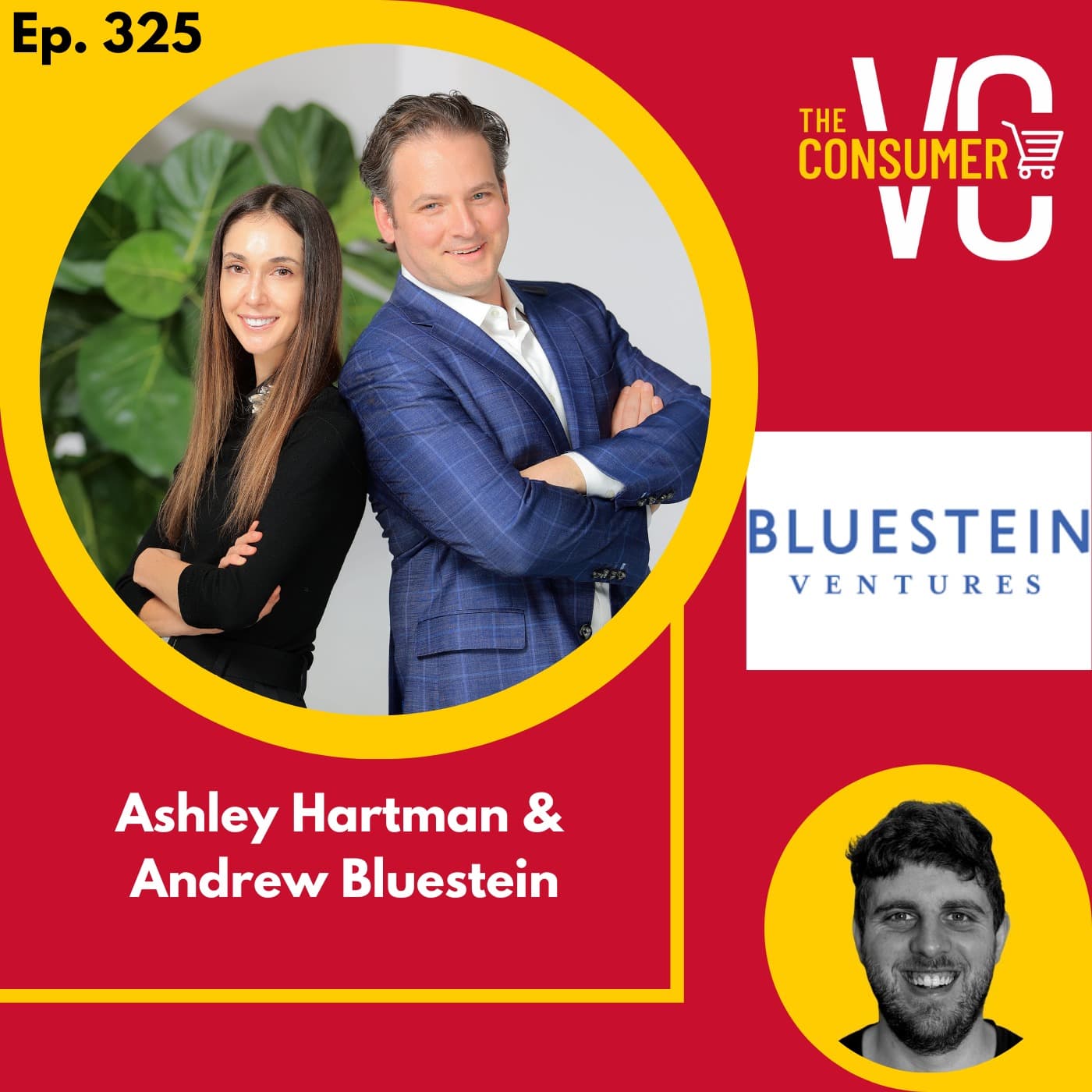
Overview In this episode of the Consumer VC podcast, host Mike Gelb interviews Ashley Hartman and Andrew Bluestein, managing partners of Bluestein Ventures. The firm focuses on the future of food, investing in high-growth consumer brands, proprietary food tech, next-gen commerce, and value-add digital technology. They recently raised a $45 million third fund, and the conversation revolves around various topics including their investment strategies, trends in the food industry, and the future of plant-based meat.
Key Points Discussed
- Bluestein Ventures Background
- Transition: Originally a family office, Bluestein Ventures transitioned to a VC firm to involve external investors (limited partners) to enhance their investment capabilities.
- Investment Focus: The firm targets high-growth consumer brands and innovative food technologies with a mission to improve the food industry’s sustainability and nutrition.
- Fundraising Insights
- Fund III Details: Raised $45 million, oversubscribed from a $40 million target. The size is tailored to their seed-stage investing focus.
- Investment Strategy: Plans to invest in 20-25 companies, typically providing $2-5 million in initial funding.
- Investment Themes and Categories
- Diverse Portfolio: Investments span across software, hard tech, and consumer brands with a strong focus on food-related sectors.
- Risk and Reward Dynamics: Different business models are assessed for their potential returns, factoring in cash efficiency and entry point valuations.
- Industry Trends
- Food Industry Digitization: A significant trend is the increasing digitization in the food industry, including e-commerce and technology-driven supply chain improvements.
- Consumer Preferences: Rising health consciousness among consumers is reshaping demand, with an emphasis on sustainability and wellness.
- Insights on Plant-Based Meat
- Market Sentiment: Mixed reviews on plant-based meat's taste and health benefits. The hosts remain optimistic about its long-term potential driven by changing consumer attitudes—especially among Gen Z.
- Three Criteria for Success: Successful plant-based products must meet taste, price, and nutrient density standards.
- Retail Concepts like Foxtrot
- Operational Challenges: Foxtrot, an innovative retail concept, failed due to execution issues, despite having strong initial metrics. The importance of unit economics and operational efficiency is emphasized.
- Future of Retail: The potential for smaller, convenience-oriented grocery concepts remains, provided they maintain high productivity per square foot and operational effectiveness.
- Founder's Perspective
- Investor-Founders Alignment: Emphasis on the importance of cash efficiency and strategic growth over aggressive scaling.
- Long-Term Investment Philosophy: The venture capital business requires a focus on long-term compounding returns, rather than immediate success.
- Recommended Reading
- Ashley Hartman's Picks:
- *The Righteous Mind* by Jonathan Haidt – Understanding moral foundations and decision-making.
- *Untethered Soul* by Michael Singer – Managing inner thoughts and achieving mental peace.
- Andrew Bluestein's Picks:
- *Playing to Win* by A.G. Lafley & Roger L. Martin – Strategic frameworks for business success.
- *Obstacle is the Way* by Ryan Holiday – Embracing challenges as pathways to success.
- *Doubling Down* by his parents – Insights into managing dual-career households.
Conclusion The episode provides valuable insights into the evolving landscape of food tech and venture capital, with a focus on innovation, sustainability, and the importance of operational efficiency in driving success. The conversation also highlights the role consumer trends play in shaping investment strategies within the food industry.
For more details and updates, listeners are encouraged to subscribe to the podcast and the newsletter at [The Consumer VC](http://www.theconsumervc.com).
Written by AI. May contain mistakes. Listen to the episode to check what was said.
Transcript
Automatic transcript. May contain errors.0:00Hello, I'm your host, Mike Gelb, and this is the Consumer VC. podcast, where we discuss the intersection of venture capital and consumer innovation. This show is brought to you by Propeller Industries. Propeller Industries is the leading strategic finance and accounting partner for venture stage companies. If you're enjoying the show, please subscribe on YouTube or whichever platform that you're viewing this content. And if you want the full experience, subscribe to my newsletter at theconsumervc.com, where I share fundraising updates and you'll receive all new episodes straight to your inbox.
0:31All content and episodes are for informational and entertainment purposes only and is not investment advice. Our guests today are Andrew Blustein and Ashley Hartman, managing partners of Blustein Ventures. Blustein Ventures invests in the future of food. Now, what does that mean? They focus on investing in high growth consumer brands, proprietary food tech, next gen commerce and value add digital technology. They just raised their third fund, a$45 million third fund, which is huge, especially in today's market, which is really hard to fundraise. where we discuss the transition from family office to VC firm, investing in inventory and technology businesses, the differences between Fund 3, Funds 1 and 2, what happened with Foxtrot, which was one of their investments, and the future of plant-based meat, and much, much, much more.
1:18Without further ado, here are Andrew and Ashley.
1:28Ashley and Andrew, thank you so much for joining me. How are you both doing? Doing great. Excited to be here. Happier now that we're on the podcast. Ready to go. Oh, wow. That's so nice to say. I'm so, so thrilled that you're both on the show. Ashley, a second time guest, one of the few second time guests. Thank you. And Andrew, welcome to the show really excited to have you on um so you're just both by with congratulations especially in this market congratulations you're just both coming off a fresh fundraise of 45 million for fund three with your fund blue sign ventures tell me because the origin of blue sign and i'd love to like learn more i know we covered a little bit on on your episode ashley but would love to to to learn more about the origin of a blue sign but blue sign originally was a family office and and And now you're transitioning or you're bringing on external investors, LPs.
2:23Why make that transition from a family office to a venture fund? Yeah, for sure. So let me kind of give you some of the origin story too, which I think dovetails into that question, which is we started BlueSide Ventures a little over 10 years ago now. And I was coming out of a career in the consulting industry, had done some work in and around the food industry and ended up teaming up with my family. Both my parents had very successful careers. At the time, my mom was the CEO of a company called Ingredion, which is a Fortune 500 food ingredient manufacturer based here in Chicago. My dad also was a lifelong consultant and had done work in the food industry as well.
3:04And as a family, we saw, you know, big, you know, shifts happening in the food industry. My mom was leading a transformation at Ingredion, and we were seeing this broader, which first was consumers were starting to change what they were consuming. Health and wellness becoming a much bigger driving factor for consumption habits. Sustainability also starting to kick in more. And at the same time, consumers were finding new ways to get their food. The whole digital economy was picking up steam around delivery and new channels of consuming media. And then you've got this massive food industry, which is$4 trillion when you add up all the different pieces, starting to digitize itself and how it operates.
3:47Being based here in Chicago, there's, you know, the hub of the food industry, there was a ton of opportunities to get involved. And so first couple of years, we really just started investing here in our backyard. And over time, we started expanding out and Ashley joined us a couple of years into the journey and has now been with us for the last seven years. And we, you know, continue to build out this operation and have now over the last 10 years on over 50 investments in and around the food industry across the value chain, everything from consumer software and food technology, really to say with a mission of how do we make the food industry better, more nutritious, sustainable as a whole.
4:29And as we started out just doing it as a family, we really started to build a larger community around what we're doing and aspire for greater impact. So maybe, Ashley, you can kind of pick up the story a little bit on how we thought about the fund and kind of what led to the decision to really kind of take that leap. Yeah. So it was a very intentional decision. And really, it was around two reasons for raising the fund. One, we, as Andrew mentioned, we're big ecosystem builders. And it's super important, especially in the food industry, because you need collaboration to make change. If our mission is to transform the food system, we need a lot of stakeholders to help us do that.
5:07So we wanted to create an ecosystem of LPs to make us stronger and make our portfolio companies stronger. And then second, we wanted to be able to better capitalize our portfolio companies. Our check size just wasn't matching up to the availability in rounds and also the need for companies to have the right capital structure to expand and scale. And so that's especially important right now, as you mentioned, Mike, in this capital constrained market. So we're really happy to have a fund to deploy. No, for sure. And congrats, congrats. It's amazing. And in terms of the$45 million, was that the initial target?
5:43Why was that kind of the amount that you thought it made sense giving your thesis and also the stage that you want to invest in, why that made sense? And how, broadly speaking, do you plan on deploying the capital? Yeah, great questions. So we chose$40 million as our target fundraiser and oversubscribed to$45 million. So happy about that. But we really didn't want to go much more than that because of the stage we invest in, which is seed stage. And in the earliest stages, you know, you want to make sure to right size your fund size for capital that a company needs. So you have to make sure that they have the right capital and their capital structure to set them up for success.
6:22Yeah. And broadly, just how we think about, you know, the portfolio construction is, you know, we tend from a fund perspective to invest in about 20 to 25 companies. And so as you mentioned, usually we're coming in at that first kind of institutional round, let's say two to five million dollars of capital. And, you know, as we size our first check to think about either us as a lead investor or us as a co-lead or, you know, kind of a second or third investor. So it's kind of sizing up for what we think is the capital, but also us buying the right ownership and thinking broadly, obviously, within a fund, getting a diversification and exposure to a wide enough range of opportunities in the space that really we can build out here over the next three to four years as we build out that portfolio.
7:13I know that everything regarding your fund in terms of what you invest in, the commonality, the common thread is that it has to be about food, right? In terms of an all kind of up and down the supply chain of food, it could be even retail concepts, but it really has to do with food. Can you break down how you think about in terms of different buckets that you invest in? And if there has been any transition from funds one and two to now in terms of maybe that you might over index on or maybe under index on in terms of what you believe are, what you both believe are big opportunities? Yeah, so I think we definitely look at food as being kind of this central nexus.
7:58And interestingly, when we raised, we got some reactions from people like, hey, well, that's a nice niche strategy. And we say, well, you know, the food industry kind of touches about 25 percent of the economy. So, yeah, I don't know what's niche to you. And that's because food really is touches so many different parts of the economy. And so we always, when we set out to build Blue Side Ventures, we wanted to have this broad purview to what's happening in the industry. Because we're really, you know, as we think about early stage, we have to be thesis driven, right, in terms of thinking about where the world is going.
8:33How is the consumer changing? How is the industry changing? How are the technologies changing? But they're all really interrelated, as Ashley used the word, the system. And so the ability to look across the supply chain and see where we think the world is going allows us to find unique investment opportunities, whether it's a consumer, a software or hard technology. We're pretty much business model like Nosted in trying to kind of think about where is the innovation happening. And if we take something like better nutrition, that could be a product. It could be a commerce offering that brings, you know, a new way to configure, you know, food service or retail to get there.
9:15It could be software tools that are, you know, helping CPGs improve their products or helping kind of consumers better, you know, touch on, you know, evaluate their things. And then it could be new technologies that, you know, help us kind of improve the food system or, you know, how we make food or how we process it. But so it's really, you know, as I mentioned, it's broad. So we really are looking at all different parts. I'd say, you know, there isn't necessarily a predetermined weighting. You know, we look, we do think there's value in diversification because if you just go all in on one theme, like we went all in on plant-based meats, right, you know, two years, three years later, all of a sudden you kind of start running out of opportunities and, you know, you question if you made all the right bets.
10:00So you do want to have kind of diversification. And, you know, we're kind of trying to, I think, in each area, find the biggest opportunities where you can try to find venture-like outcomes for those buckets. Well, can you talk to me a little bit about, since you are business model agnostic and you invest in inventory-based businesses, you invest in brands, you also invest in, obviously, food tech brands too, as well as technology as well, like software, pure software businesses as well, right? within uh to food that actually betters the food ecosystem these businesses um can be quite different in terms of in terms of what the hopeful outcome is right um like a software business um where venture investing in software could look quite different to venture investing when it when it comes to inventory-based businesses or or thinking about you know kind of uh uh brands uh consumer businesses, right?
11:03I mean, I would say that software is a bit more maybe power law, that you have more of a power law dynamic. You might have less of that when it comes to investing in consumer brands. You might, for example, it might more look not from a... And I'd love to see if you agree or disagree with me, but from a consumer brands perspective, when investing in brands, it might look a bit more like a private equity portfolio where you have, not in terms of ownership percentage, but in terms of what the ideal outcome is, where you might have more companies that actually become successful, but the returns might not be as high as that outlier
11:51if you're investing in pure software businesses, for example, and they kind of had these power law dynamics. So I guess my question is, how do you think about when you actually make investments since you are investing in different business models in terms of actually delivering ROI and making sure that you maybe have enough bets within that particular business model type, whether it's software that then maybe you can achieve that outlier success since many of them might go to zero. So while balancing that maybe with like inventory-based businesses, that could be a bit more that might not have those same dynamics.
12:34It's a great question. And it's a mix. That's why we create a portfolio and we create a portfolio across the supply chain because it is a mix of that risk reward. And that's what we're trying to do when we kind of put this portfolio together. But for us, it all comes down to cash efficiency. And then also where you come in is your entry point valuation. So you can make venture-level returns regardless of where you play across the supply chain when you keep those two factors in mind. So, for example, we had an investment in a company called Factor 75. It's now the number one prepared meal delivery company.
13:07Sold to HelloFresh at the end of 2020. That was a home-run venture-level outcome because they did not raise a lot of capital. They figured out their unit economics very quickly. So they were very cash-efficient, and we always raised money at the right valuation. And so kind of right sizing that capital structure and the entry point valuation enabled us to have the flexibility to exit for, you know, ultimately$277 million, not$3 billion, and still have that venture level return. So that's kind of what we keep in mind when we're investing across the supply chain is, yes, we are a venture fund. We need to make venture level outcomes.
13:44That means we have to think deeply about the capital structure and where we come in from valuation perspective. it. Yeah, I would just add is I think with each of these different business models, I think, I think I, you know, agree with Ashley, right? In the sense of the outcomes that we're trying to get out of them are the same. The journeys, the way they're funded, the milestones are very different across them, right? So a consumer business, certainly we're going to, at the earliest stages, be evaluating, you know, their revenue and, you know, their traction in the market, while a food technology and a seed stage were likely just evaluating the quality of the technology and the scope of the market opportunity.
14:25And they may be years out from actually getting to market. Now, that business may have true technology, IP, potential defensibility at scale, where a consumer business may be trading more around its brand and the quality of its community and the quality of its product differentiation at scale, which may be harder for differentiating. But no matter what, at the end, you're trying to build great businesses. And I think this is where venture gets a little bit off. If you're just focused on one single business model, one single way of doing things, you end up kind of just saying, well, oh, it's a power law.
15:06Let's just like, this one may not work out, but let's make this bet. We have to make this bet. And not realizing that, oh, like these businesses are just going to get bought for their IP and something like that. At some point, you know, people want to generate cash flow off of, you know, whatever you're building. And so the pathway to get there is very much different over time. But ultimately, you're trying to get to, you know, a similar outcome. And, you know, things like for an inventory based business. Yeah, there's working capital financing. There's more alternative financing. There isn't that in a food tech business, right?
15:43You're going to be more dependent on different things. So our points being here is I think they all are very different businesses. By comparing and contrasting, it tries to force us as investors to find the best of each bucket and not to necessarily settle for a second or third tier investment level just because we're constrained to kind of building a deep enough portfolio against a confined thesis. No, that actually makes a lot of sense. What I also appreciated thinking about it for consumer businesses, non-food tech businesses, but consumer businesses, kind of high growth brands, maybe we call it.
16:26But in that you might not achieve the level outcome that maybe you would in a food tech business when it comes to what maybe the final valuation is or what the maybe overall exit is, what that valuation is. At the same time, they might be raising a considerable less amount of money in order to achieve that. So you might be able to exit if everything goes incredible for the overall valuation might be in the hundreds of millions rather than the billions. But at the same time, that CPG company has actually not raised nearly as much. So from an investor's perspective, you're still able to achieve venture-like returns.
17:09Totally. And just requires a lot of discipline. Yeah. Yeah. How do you kind of have those conversations with consumer founders? Is that something that kind of comes up in terms of these high-growth consumer companies? What is the overall fundraising strategy for the future? Or how deep are you looking to go when it comes to actually raising equity? And also, how also in these types of businesses do you think about debt as well? Yeah, I mean, I would say, let's just talk about the current funding environment and what that means for every single business we're talking to. because I think this applies to consumer, but it applies to everything.
17:49Right now, cash efficiency is king. And one of the most valuable commodities or resource that a startup has is the length of time it has before it runs out of money. And I think too many founders focus a little bit on, well, I got to grow fast. I got to grow fast. Well, yes, we want growth. But you also, there's value of things take time. And the longer you have to prove things out, the better you are to kind of position yourself for future funds. And there aren't enough investors out there who are telling the entrepreneurs, hey, slow. You know, you got to be mindful on how you're spending your money and things that matter are the efficiency of your business.
18:35And how does this obviously materialize your consumer businesses? The profitability as it relates to your product, right? Gross margin is going to be obviously a key thing. What's the productivity you're getting out of retail locations? How you're effectively using promotions? Where are you spending your marketing dollars? Does it really make sense to be spending significant dollars online if all your sales are coming from retail? Or if you are sending your money online, what are the returns of that marketing ad spend? So all these things come to saying, hey, we need to get a plan in place that really prioritizes efficiency and prioritizes runway and pushes you to really build a great business from the beginning and build those skill sets because that will pay off over time.
19:23The growth really can compound over the years if you start doing the right things from the beginning. And then if you start doing that, raising capital becomes a lot easier because you start reducing the risk, which maybe that's helpful for equity fundraising, but also starts to bring in different sources of capital where people may be able to look at a business and say, hey, we have, for example, one of our coffee businesses, Busy Coffee. that's a cold brew coffee company. They have their own facility that they make the cold brew out of the Twin Cities. And they've been able to access very attractive financing to help support both the manufacturing side, the equipment side, as well as kind of the inventory side.
20:10And combine that with a little bit of equity capital and run a business that is close to break even and eventually profitable, right? All of a sudden, to Ashley's point earlier, you don't need to actually get to the pathway and the size of the exit because they have to be different. So certainly we want to be able to be in a best position, but you have to have a good business first to get access to attractive financing. But it's all about creating alignment up front with the entrepreneur. And I can't predict where things are going to go a few years in and we create a long relationship with our entrepreneurs.
20:47But I do understand I want to understand the earliest stages, how you want to build the business. Like, are do we have alignment? Like, are you thinking about being cash efficient? How quickly do you want to get to attractive gross margins? Like, how are you thinking about building the business and what are the pieces you're putting together to make that happen? To kind of combine your vision with this reality around operations, because you have to be super operationally driven to succeed in the food industry. So, you know, these deep conversations give us a great understanding at the upfront of how a founder is thinking about building the business and whether we're the right investor for them.
21:24And we might not be. And that's fine, too. On the operations side, do you both or love to hear your thoughts in terms of when it makes sense for a company to, of course, talk about inventory businesses, when it makes sense to vertically integrate and you actually own your own manufacturing versus contract manufacturing. And if you do have a preference for one or the other when you're looking at a business. I think it really depends on the business and how you are thinking about building it and where your moat or your innovation or whatever you're doing that's proprietary comes from. Sometimes that comes from the manufacturing and that requires you to vertically integrate.
22:00So Andrew mentioned Busy Coffee. Their proprietary technology is around the way they make their cold brew coffee. It forced them to set up their own manufacturing. Other companies don't need to do that. Vive Organic, for example, was a two ounce wellness shot. They merged with Suja Juice. They didn't, you know, the formulation and the go-to-market strategy was their innovation. They were able to do that with co-manufacturing, required a lot less capital. They were able to optimize our margins over time. So we're really agnostic to how a company builds the business, but it has to make sense for your strategy and how you're going to win at the end of the day.
22:37Yeah, I think product differentiation and what underlies that differentiation is one of the most, I think the aspects of consumer that is under, that is not talked about enough to think about what really makes, you know, there are differences, you know, we get this question a lot. What makes busy cold brew coffee different than other? Why? Why is it really the best cold brew? We're highest caffeinated product on the product. It's very smooth. We're competing against Starbucks and Stoke. We know some insights on how they make their product. Some of it's basically taking instant coffee and adding water to it.
23:18We're making a traditional cold brew coffee process. And consumers, we know that if we can get that product on people's into their bodies, right? It's a caffeine. It's a drug, right? We know that if we can get people to do that, we will grow the business because we have a differentiated product. We needed ourselves to make that from the beginning because no one else would be able to do it. Now, over time, as we scale, are there opportunities to find a co-packer who could help us scale since now that we have the process down? That's something we can consider. And sometimes you can start something in co-pack and find a partner, but then say, hey, we need to actually own this thing to truly dial it in.
23:59Factor, for example, did start out using some prepared food companies to do the co-packing. That really helped us be capital efficient from the beginning and really figure out what we need to do to do a product. But to get long term, to get to the right margins and to really own quality, we needed to own that. And so we did kind of backwards integrate into that. So, again, I think that's actually the point. It's kind of like what's the right key for your product? what's right for kind of best for scaling the business. No, that's great. I appreciate the call out on the instant coffee, Andrew. But how do you think about, how do you think about as well when you're investing on the brand side, how as well, since, you know, as you pointed out, there needs to be, you know, some revenue already kind of generated or some proof points that there is demand for the product that you're creating.
24:58How do you think about as well sales channels? Do you have like a preference, for example, if the brand is doing extremely well on Amazon or D2C or do you have a preference if they're actually doing really well in wholesale? Is there a preference that both of you like to see when it comes to which sales channel a brand is utilizing? I think that, I think this is ebbed and flow a little bit. I think, you know, certainly for a period of time, direct to consumer was kind of, you know, the great channel to kind of really be able to do early testing and really do it. I do think for a lot of products, and it kind of depends a little bit on the product set, but retail ultimately is, you know, a great, the great kind of scale in this industry, right?
25:45And so we do see a lot of businesses now that maybe has some interesting traction online. But the question therefore is, is this going to work in retail? And if they have no retail, that's going to be kind of a key thing to really kind of think through. And is it a product that can translate to retail? Because there are some that can't. Similarly, I'd say that there may be some businesses that come to us that are strong in retail, but only strong in Whole Foods or something like that, or in independents. And you're asking the same type of question is, how could this thing scale down market and something like that?
26:16So it's kind of like it's context specific to say, OK, with what this product is, where is the early traction? How does this brand, you know, let's just say$100 million be the number to think about. Right. How does this ultimately get to 100? Could it get to$100 million online? Right. There are definitely, you know, factor. Right. It was an online only business. You know, there are supplement businesses that are online only that are able to do that. So we're not opposed to direct to consumer only. But, you know, if we think, hey, direct-to-consumer is only going to be a$10 to$20 million business, then you better be able to think about how this thing is going to really grow and scale in retail.
26:50And particularly if, you know, the margins are online, right? If you're a beverage product, great, you're showing us that direct-to-consumer works. But ultimately, can you win on the ground game of beverage is probably going to be the bigger proving ground. So, again, it's a little bit, it depends. But, you know, we're kind of open to kind of what shows the strongest story of traction. In today's world, you have to be omnichannel. It's impossible to think about it in silos. So I think every company virtually that we look at is, even if they're online, they have to think about wholesale and retail.
Read the full transcript
27:25And if they're retail and wholesale, they've got to think about how they nurture a community online and drive them to purchase. So I think it's just another channel you have to think about. Just like you think about Kroger differently than you think about Publix and Whole Foods, direct-to-consumer becomes that separate channel. Amazon becomes a separate channel. Thrive becomes a separate channel. So it's really what is your channel strategy rather than kind of segmenting the two. Yeah. I mean, a couple of years ago, I had on a private equity guy and he was saying that one of the big opportunities that he sees, Well, when he analyzes, you know, uh, food brands was, was, can you kind of cross that chasm from going from natural to, you know, conventional?
28:10And then if you're able to do that, then that could be a really, really be, um, a huge business. Um, and so also having like the proof points, um, that, okay, maybe you're doing well in natural, but can you actually, can this actually be like a mass product too? Um, uh, does that actually make sense? How do you think about maybe distribution channels and also seeing if a company can be successful in natural or in the premium sector in grocery, but also able to maybe go beyond that and be a product that maybe not the top 1 % or 5 % or 10 % would enjoy, but a product that actually can go much deeper than that.
28:59I think for us, obviously, I mean, I'd say kind of just the outset, like we invest early stage. So these are kind of like hypotheses we have. And we would not invest in a company if we didn't think it could cross the chasm. Like we're not investing in kind of niche, small products that can't actually make that work. So we do look for as much as we can proof points that this can scale. A lot of it comes down to price and how premium is your product over the standard kind of that a consumer is buying in the category today. And then the second piece we look at is, you know, what does your consumer base look like or what is your early engaged audience look like?
29:41So I'd mentioned Vive earlier, and they had done a really great job of really building that playbook in Southern California. and they weren't just in natural. They were in coffee shops. They were in natural. They were in like a conventional store or two. So we could understand that that was working. Obviously, it was working regionally. And our bet was, okay, you could take this regional playbook and you could replicate it across the US. But that gave us confidence that it would be able to cross the chasm. But obviously, that doesn't automatically happen. It requires a lot of luck. It requires a lot of the market kind of moving in your direction and requires a lot of operational expertise to be able to expand.
30:25Yeah, the one example I give to is we're invested in a company called Real, which is a sustainable paper goods company, has bamboo toilet paper, bamboo paper towels now. And, you know, that was a business where certainly coming in at the premium end of the market, It's starting direct-to-consumer. And I think the big question is how much price sensitivity or willingness is there as a consumer to up to a more sustainable source? So it's unlikely for a foreseeable future this is going to be priced in line with traditional kind of pulp-based. But the company, though, has been able to prove over time as they've first direct-to-consumer in retail.
31:11It's been a very successful product at Target. They continue to now build out from there, right, is they're showing that there is a consumer demand at a premium price point, right? So the key thing is what I don't like to see is when a brand comes in and says, hey, we're going to price competitive with bad margins, right? Because that sets the business up for being unsuccessful. Like, great. Start with, like, your price costs that much? Fine. Price it high. prove that consumers are willing to pay that because there are premium consumers. And then as you get scale, find ways to get the cost down.
31:47Because when you are start becoming a 10, 20,$30 million brand, there are different manufacturers that will start working with you. And there may be technologies and ways, right? So obviously Reels continue to think about how do we innovate in our production to get the cost down. And that's what happens over time. A lot of the products that are at scale in the market that are so cheap, it's because they've been in the market for 40, 50 years and are at scale assets. So you can't always expect a new brand to be price competitive. But over time, with the right investments and as you prove out the consumer demand, it's possible to get price down.
32:24So it is possible. You do as an investor, someone has to say, what's it going to take to get there? And ultimately, a bet sometimes that, yeah, we think there's enough of a market and you can innovate enough to get down there. Those are great points. I think always it's really hard to increase your price. It's really easy to bring down your price. You've marketing, you've sales promotions. Maybe you price high and you run some sales promotions to actually get the customer in the door. That makes sense to me. But to actually start off as your price to be lower without that being a clear sale, then it's always hard, I think, once you're in market in terms of actually raising your prices.
33:10And I think that certainly with everything that's happened over the past couple of years as well on the supply chain side and with I've heard some companies being short of ingredients or short of packaging, that you really have to think about what the pricing is and maybe have to go a little bit higher just to ensure that you can actually grow in a sustainable way and actually be profitable. And then you can retool, rethink once you get to scale. Yeah, I think taking the shortcuts to accelerate growth are where a lot of brands and companies get in trouble, right? And I think this is where, again, you have to build good businesses from the beginning and take the long view.
33:57And too many entrepreneurs, I think, they're trying to figure out something to just get people excited. And it's like, no, do prices the right way. Build the right margin structure. then figure out your business around it. Don't just kind of try to go so fast because you think that's what investors want to see because what you, you know, investors are going to look at you and say, well, that's great, but your margins are pretty terrible, right? I don't want to fund that, right? I don't want to fund, there's products I take off the shelf that we've screened that I know that they are paying me to take the product when it's on promo.
34:29And like, I don't want that to be my dollar, right? I'd rather that be someone else's dollar. This episode is brought to you by Propeller Industries. If you run a high growth business and you're focused on profitability, extending your runway and improving your operational efficiency, you probably need a finance and accounting whiz that will grow with you. Well, instead of hiring someone full-time, what would be cost-effective is working with Propeller Industries. Propeller Industries is a leading strategic finance and accounting partner for venture stage companies and has partnered with over a thousand startups and high growth businesses across consumer products, consumer tech, and enterprise.
35:06Some of the brands that they've worked with are Liquid Death, Olipop, Hims, Farmer's Dog, Away, MoviePass, and Giphy. Propeller also provides specialized support for fundraising and M &A with transaction advisory services. Propeller's TA team of former investment bankers and investors can step in on more of a project basis when pursuing full-scale financing and M &A. There's a link to Propeller Industries in the show notes if you want to learn more information. As a company scales, right? And let's say gets up to, you know, a hundred million in revenue, right? What are the main metrics that you actually look out for that this is a, um, or I guess, you know, as a company scaling, really, what are you kind of tracking or the main kind of financial metric that you believe is most important, um, to ensure that that company maybe will be sustainable, uh, profitable, or, um, or even, you know, in your case as well that could attract like a really great exit.
36:02Yeah, I'd say that, you know, the fundamentals of a business as it scales, you know, I think it starts to become much more financially driven, right? What are your margins? What are your operating margins, right? What is, if you're investing, you know, how much capital are you investing? How easy or difficult growth is I think one of the biggest challenges of a scaling brand is hitting the plateau points, right? Unfortunately, you see too many brands, right? They get to 20 million and they can't break through. They get to 50 million and they can't break through. And oftentimes there are warning signs, right?
36:40Which is, you know, you can look at the velocities, right? You can look at what is the return on ad spend, you know, online, right? Those are the indicators where if you as a board, right, are really zeroing in on kind of what makes this business, you know, one factor with scaling, right? Every week, we will look at, you know, how much were we spending on customer acquisitions? What were our retention curves looking like? You know, how was, you know, what was our contribution margin on our products, right? Those were three of the most fundamental metrics around the business. And as long as those metrics kept holding, and we were performing, we knew we could keep scaling.
37:18And as we increased marketing spend, right, the cost of customer acquisition obviously would be a key question was, would that scale? And so oftentimes with certain businesses, it's really zeroing in on those leading metrics. And that leads to whether it's building a great business. And I think as a business truly scales, what ultimately comes to say is how big is this market opportunity now? How big can this business get? How productive are their sales and marketing channels? And can you not just get to 100, but can you break through that to even large? All these markets are very large, right?
37:54We don't have to struggle with addressable markets, but it's can a brand really break through those potential plateau points? And that's what you're kind of monitoring, particularly from an investor perspective. That's really helpful. Shifting gears a little bit. one area that you've invested in on the food tech side is plant-based meat and also plant-based dairy companies. Plant-based meat has received quite a few mixed reviews over the past few years. Can you give us a bit of a pulse where we're at today when it comes to innovation within plant-based meat? What you find interesting, what you don't find interesting in plant-based meat and why overall you're bullish on the category?
38:36I know that it's a pretty broad category because there's a lot of different kind of ways that people are doing it. But why you're pretty still bullish on the consumer sentiment of plant-based for the future? I do think that we are still at the early innings of the category. And now we're going through kind of this trough of despair. And I think where we've fallen down as a market is we haven't seen anything that's hit really the triumvirate of taste and texture, price and nutrient density. Those three things have to be hit in order for it to succeed. And so for us, it's a very high bar given the market right now.
39:19And it's not like we're prioritizing plant-based alternatives to meat or dairy, but we're only investing companies if we think they can achieve those three criteria. And so I think that's where you're going to get power and you're going to get the next wave of growth. Because I do think Gen Z, which is the generation that will be behind us, is going to be consuming these in higher quantities, presuming you can actually hit that trifecta. So Gen Z is more focused on the environment than any previous generation, and they're consuming less meat and dairy than any previous generation. So like, for example, 8 % of Gen Z reported purchasing conventional cow's milk compared to 37 % of baby boomers.
40:05So I think that's like kind of a sign of where the market will go over the next few years. But nobody, no consumer is going to compromise. And I think you've got to hit those key criteria for a consumer to pick up a product and keep buying it. Yeah, I would just add is I think we're the category is today. I mean, we're still very much interested in the long run. I think, I think there's, there is a certain element of wait and see a little bit to see kind of where, you know, where is the category going to go? How long is it going to take? Because I think there's, yeah, there's certain players in that space that are not going to exist or going to change, change their mark.
40:51Right. And it was a category that somewhat got competed away against each other, We don't need 10 different plant-based chicken nugget companies. Maybe we need two or three. What's going to happen to those five or six that raise a bunch of money and are probably no longer going to exist? There needs to be a little bit of that. I think to some extent, the consumer conversation needs to evolve. I think anytime something gets hyped, you get the negative Nancy's that come to the market. But as continued innovation happens in that space, it's going to continue to grow. I mean, you know, I think it's, you know, 16 % of, you know, plant-based dairy is 16 % of the overall dairy.
41:32You know, plant-based meats is still sub 1%. So, you know, there's a long ways to go. And we think with continued innovation, that will happen. But, you know, it's got to be the right bet. And I think what Ashley, you know, mentioned is, you know, you just can't throw money after bad products. It's got to be great products. Mike, curious to hear your thoughts on the industry. I think it's interesting. I think that certainly there's been some concern sentiment around how, you know, plant based meat is, is really heavily processed versus, you know, real meat. And I do think that process has kind of become like a dirty word, even though, you know, in some ways, what does process mean?
42:14Right? Because it's such a broad kind of term. um i think you know i i will say that one of like a memorable interview that i had was i interviewed jason carp in austin texas a couple years ago and what i thought was an interesting concept that he was talking about was better for the planet versus better for you and sometimes there's misalignment between the two something that could be better for the planet might not actually be better for you and don't want to misrepresent him or anything. But I would say that some of the conversation was, you know, from his point of view was sometimes if it's better for the planet doesn't actually mean it's better for you.
43:01And maybe with some of the food tech stuff, it's still, we still don't really have all the data if it's actually better for you versus the alternative when it comes to meat and um so i still think with with that sentiment that i i do agree with both you that i think that we are in the early innings um of of plant-based meat um my thing that i that i think about when it comes to plant-based meat is really the price the the price side of it obviously it has to taste good it has to taste delicious um i'm i'm actually quite curious i'm interested in in the companies that actually don't try to make plant-based meat tastes like meat actually tastes something something different but it actually is delicious but it's not actually trying to replace the meat um what i have a hard time is on the price side i feel like sometimes plant-based meats is just way more expensive than normal meat and i understand like this is a this is you know food tech tech tech is very intensive and takes a lot of time to actually make this and where i'm at is can you actually get the price where it actually where it actually is comparable to a piece of meat i don't think we're we're quite there yet when it comes to price i'm curious how both of you think about price because um i still when i find you know even at you know food at food joints whenever you when you have a plant-based alternative you're usually paying extra for it for example it's very very small example but um i uh but for me like i i don't it's it's hard for me to justify in terms of paying extra for for plant-based meat if I know that maybe it might not taste as good as meat and everything, even though it might be better for the planet.
44:42And the jury's maybe still out if it actually is better for you. So those are my thoughts. I think 100 % you kind of hit that like holy grail I was talking about, right? Like why would I pay more for something that doesn't taste good and it's not good for me? So like you've got to have – like no one's going to compromise that much for a product. So you've got to hit that trial. I'm willing to pay more for something if it tastes really good and it's healthy for me. Or I'm willing to maybe pay price parity and take a little bit of compromise on the taste and maybe a little bit of compromise in nutrient density.
45:16If you can hit all three, that's the holy grail and that's what we're looking for. So you hit the nail on the head there. Yeah, I would say that, you know, and I think with our new fund, one of the things we're most excited about is really advancements in nutrition and the concept of, you know, food as medicine as really being a major driving factor. We think the consumer is going through a fundamental change in how they think about what they put in their food, in their bodies, right? I think Better For You was a starting point, but I think in the next five to 10 years, we're only going to take this to another level because consumers are much more knowledgeable about their bodies.
45:53People are wearables. They got whoops and auras. People are taking frequent blood tests. We're going to think there's going to be advancements in the microbiome that's going to unlock the value of understanding your gut. They all know in consumer. And at the same time, this concept of health is wealth. right consumers what do they care about right they care about their energy they care about their mood they care about doing as much as possible in a given day and if you are frankly eating bad stuff that is inflammatory that drains your energy that screws up your sleep you're not going to keep doing that like the the people who are you know if you look at not just the biohackers but this is like people in the middle right and you know this is why you're seeing non-alcohol and such a growing trend in consumers because people realize, yeah, this stuff is really affecting my life.
46:46Right. And so I think when you bring this back to the plant based thing is if you can give better products, people will pay for it. I think price is kind of a crux. You know, there are people who go to steakhouses and spend literally 60,$70 for a 12 ounce steak. You know, good meat is not cheap. I don't know where people think that, you know, now highly processed, antibiotic, heavy, you know, Meat that maybe is not the best for you is also... There's a lot of cheap options out there. Don't forgive me. And yes, if you're trying to get to a billion dollars of plant-based revenue, yes, price point may ultimately be something you got to get to.
47:24But to get to a really good, I think, plant-based business that has a great product, I think let's get a great product. And then, again, let's figure out price over time with scale. That makes a lot of sense. I mean, it's true. I mean, great meat tastes, I mean, great meat is, you know, very, very expensive too. I think what on the health and wellness side, since we've, you know, there certainly has been, right, a huge trend in terms of what people really thinking about what they're actually putting into their body and also rethinking, you know, what the standard American diet is and if it is actually, you know, good for you, right?
48:04And I think a lot of people would say standard American diet was not, is actually not a great plan to approach your diet if you want to eat healthier. I think that, but I think sometimes I do think that when better for you, it can come out as better for the planet or better for you in terms of what you're digesting. And I think also convincing the consumer that, hey, what you're actually digesting, what you're actually taking, that's maybe a plant-based form. I think we've seen maybe a bit of a setback a little bit from, you know, from that it's, you know, highly processed or what have you in terms of the ingredient choices that are currently there.
48:47I think once you can marry the two, and I think that this is like the future that hopefully we're all hoping for, right? That you can actually marry the two where actually something is better for you. And also, it also kind of appeals. And then also, consumers know that and marry that from that's also better for the planet. I mean, sign me up. That sounds great to me. Well, thinking of like all these different categories, I understand in terms of diversification for which categories, how you also think about different categories, whether it's, you know, software, whether it's food tech, whether it's brands.
49:28How also do you think about the duration of your fund? Because you might have food tech companies that, you know, you've said might not actually commercialize and come to market for, you know, a few years. Then you also have consumer brands that have already commercialized. Hopefully they have some revenue before, or I guess they need to have some revenue, right, before you make a bet on them. But so how overall do you think about how to actually return, like the actual fund cycle for Fund 3? Yeah, sure. I mean, it comes back to, I think I mentioned earlier, but this kind of mix of risk and reward.
50:03And so we want to have investments that return quicker. And that's usually ones that have more proof points to start. And then, you know, later investments are maybe larger moonshots, maybe take longer, have more IP associated with them. And then we expect those to kind of be a longer life cycle. But we are a seed stage fund and we have, you know, a long duration. And so hopefully our investors are in it for the long haul because that's what they signed up for. Yeah. Yeah. I mean, we tell them like the point of venture is long term compounding returns. It's really hard to do that in any other asset class.
50:40And certainly it's even hard to do it with Inventor. So that's what we aspire to. It's hard at the earliest stages to predict how fast or how long certain things are going to be, what the exit markets are going to be, the exit cycles. Frankly, just we need to focus as investors is how do we invest in great businesses and help those people build great businesses and then, you know, let the exit markets kind of take their hold. And certainly, hopefully, if we're investing in great businesses, we'll have investors who are excited and patient to go along the ride with us. Cool. That's really helpful.
51:19Thank you. Yeah. I mean, certainly, VC is a long ride in terms of when you're actually with these founders and actually making investments for all these companies to kind of play out. Um, it's just, it's, it's kind of interesting. I mean, I had on someone that was investing in deep tech, for example, which probably, um, maybe might look similar to, you know, food tech in that, um, for, you know, the first few years, you really don't have anything in terms of revenue. And then all of, all of a sudden it kind of shoots up, um, and it kind of scales actually very, very quickly. Um, so it's kind of interesting just to see some of the differences between, um, that kind of model versus investing in a consumer brand that maybe is a bit more linear when it comes to the growth and how that kind of folds together from an investor perspective into returns.
52:16I know you all were investors in Foxtrot. I know we experienced a tragedy over the past last few weeks with Foxtrot closing down, which was awful to see. Really bad. Of course, awful for employees, awful for brands whose products were in Foxtrot. And also, of course, as investors too. But at the time, why did a retail concept like Foxtrot make sense as a venture investable business? Yeah. I mean, I agree with you. It was super disappointing for food and Chicago. And it's just a good lesson that we've been talking about this kind of throughout the session here around how a strong brand just can't route run bad execution at the end of the day.
53:08Like, you know, you can have the strongest brand in the world, but you've got to have operational focus. And that's, it's super important. So I do think Foxtrot was a really important innovative retail concept. It had a very unique customer experience that was unmatched. It provided a really strong place in the market, as we can see that everyone is depressed now that it's not here. I have to rethink where I go for coffee all the time now. So it was this new corner store that combined emerging hot products, food service and alcohol. And it was really unique in that it was multi-day part. You know, you had morning, day and night and multi-category.
53:49And so they, at the earliest stages when we invested, had really strong unit economics and potential for really strong unit economics across their store fleet. But retail is hard and you need to figure out your four wall unit economics before you expand. And if you raise too much capital at the height of the market and aren't cash efficient, that can cause some misaligned incentives and expansion probably too quickly. But coming back to kind of what we were talking about earlier, like I think you have to just stay disciplined and you can have a really strong venture outcome if you have an innovative concept and cash efficiency and actually figure out union economics.
54:28So I think Foxtrot had the potential to do that. They just hit the nail on the head. Yeah, I just had from like a venture level outcome, right? I mean, Starbucks, you know, McDonald's, Chick-fil-A, you know, these are massive businesses. And the number of restaurants, yeah, Cava, Sweetgreen, you know, and the number of restaurant chains that are out there that are in the 250 to 500 location that people have never even heard of. we've got some restaurant technology investments and, you know, I hear things like Dickie's barbecue. I'm like, I've never seen a Dickie's barbecue while I live in Chicago.
55:05Right. We don't, we don't, we don't, you know, uh, maybe dad go down to the Southwest. I see that type of stuff. Right. Or then, you know, so, so I think, you know, when retail is a, is a major, you know, major market, you can get venture like outcomes out there. Uh, it's a four wall unit, you know, economic driven business, uh, something that can be fundable too, right. There's, there's different expansion opportunities of franchise, not franchise. So it definitely falls within the venture landscape. And I think it's there. But I think the one thing of that segment versus some of the other ones is that it can be unforgiving when you make bad real estate choices or you tie yourself into long-term leases or long-term opportunities that can really kind of be a drain on capital.
55:53And if you're opening up stores, they have to be good stores. So you got this balance of, hey, I want to open up a bunch of stores, but they got to be good stores. And if you don't do that, you can put yourself on that side. So it's a difficult category, but I can say that about every single business. I think something we forget about startups is they're all hard. If they were easy, there would be many of them being successful. And so we're here to take on tough challenges. And it really, it sucks when it doesn't work out. Like, you know, it sucks for everyone involved. I feel for, you know, everyone who's put so much into it.
56:34So unfortunately, failure can be a bit ugly. And, you know, I'm so hopeful, though, that, you know, long term innovation can win out. Do you, I mean, you've named a few examples, you know, of retail concepts that have, of course, become household-made brands, you know, Starbucks, Chick-fil-A. With, like, the Foxtrot-type model, this kind of, you know, modern... I've only been to a couple of them, I'll be honest, because I'm here in LA. But modern kind of convenience store, coffee shop that... I mean, I love my experience in coffee, in Foxtrot when I've been. Um, but do you, do you think that this could be with this, um, with grocery or retail concepts of the size where it's not, you know, a full on grocery store?
57:26It's, it's, it's much smaller. Um, but, but, and it has, um, a lot of, you know, more premium brands, um, uh, per se that are, that are in it rather than, um, and kind of more, you know, up and coming brands, better for you brands, um, that are considered, um, in, in, uh, that it's in its aisles. Do you think that this concept could actually still work, knowing what you know now? A hundred percent. It all comes down to the productivity per square foot. And the productivity per square foot in their stores that were working was really high and really attractive. And so then it's about optimizing the store and all the kind of, you know, bottom line labor costs, et cetera, to make sure that it's a profitable store.
58:21And I think they had ample opportunity to do so. They just, you know, made some poor execution decisions. Yeah. I mean, I think that it was a complex concept with, you know, a cafe with a convenience in-store element. With that, you got to think about how the two live together. I think there were a lot of great synergies of the model, as Ashley mentioned, all the different day parts and how they kind of intertwined with each other. But that still needs to be honed over time and what that really looks like. I mean, if you look at even these retail concepts, they are constantly evolving. You go into Starbucks today and it's barely even a coffee shop now.
59:03You know, it's a, you know, it's a milkshake business with a bunch of refreshers and some heated up frozen food, you know, and some cake pops. You know, it's like that business is so evolved. And you know what? They're facing challenges right now. They just had one of the worst earnings in the last, you know, 10, 20 years. And, you know, there's some chirping going on there. So it's a, you know, retail requires, you know, kind of that evolution. I think, you know, I do think that Foxtrot, the configuration of it definitely makes sense. And you look at, you know, you know, Arowana's, you know, what's happening in the kind of grocery side, right?
59:38I mean, I, you know, I don't know the insides of that business, but, you know, if done well, it can really be powerful. And, you know, I think that there are with unique differentiation, different consumer experiences that can be very powerful and, you know, can be executed well. For each of you, I know, Ashley, I've asked you this question before, but I'm going to ask it again. And of course, Andrew, since you're a new guest, you haven't received this question yet. But what's one book that's inspired you professionally and one book that's inspired you personally? I'm an avid reader, so I will never run out of recommendations.
1:00:14Okay, great. That's good. I wasn't out my first time around. So I can answer again if you want me to. Yes, go for it. Go for it. Go for it. Okay. So professionally, I'd say The Righteous Mind by Jonathan Haidt. It is a book about how other people think. And he examines the origins of morality and moral foundations and how people just make moral judgments and choices. And so we often think that we make our decisions rationally and we come from a very rational perspective, but we all really do place kind of, it's really more about like instinct and group dynamics. And so we place different weight on different kind of moral foundations.
1:00:55So from this, I know it sounds like maybe it's not a professional thing, but I always assume that wherever people come from is rational. So whether I'm talking to founders, or I'm talking to other investors, or our portfolio companies, I, this was an enlightening book for me to understand, okay, how, what weight are they placing on their different priorities? and how are they different from what I would expect so that I can problem solve and really kind of come to a win-win solution, you know, across my interactions. So that's one book that's helped me tremendously professionally. And then personally, I'd point to Untethered Soul by Michael Singer.
1:01:32It's a little bit of a woo-woo book, so you have to be in for that. But he simplifies how to quiet your inner monologue in your mind and harness your kind of internal energy. Um, so it's helped me kind of stop that mental chatter just to be an observer of myself without kind of filtering it through this narrative. So those are two extra books I'll point to. On my side, I'm not as much of an avid reader, so I may be fully exhausting this question. Uh, but I actually, and I have two professional ones and one personal, so I'm cheating a little bit, uh, professionally, um, one book just foundational.
1:02:10So I started my career in I worked for a business called The Monitor Group, which was a consulting firm that Michael Porter started. And one of the guys there eventually wrote a book with H.J. Lafley, who was the CEO of P &G at one point called Playing to Win. And it really walks through the seminal kind of foundational strategic framework that we used at the company at Monitor, which is about where to play, how to win, how to configure. and we've adopted that ourselves here at BlueSign to kind of build a platform for startups on go-to-market strategy around vision, playbook, and the engine, right?
1:02:46Which is really comes into like all the different pieces you need to get to product market fit. So I think it's a great strategy book. The book is very easy to consume. And I think a lot of startup entrepreneurs would kind of, I think, benefit from that read. So that's one profession. The second one on more the esoteric of the emotional side of professionals, a book by Ryan Holiday called Obstacle is the Way, which we as a team read as part of our book club. And, you know, I think the more and more we do investing in startups and the journeys of business, it is obstacle is the way. And we get to ride many different...
1:03:31Every startup is a roller coaster. We ride many with them. The reality is that the central point of that book is that you're going to find set obstacles. And if you as a person, those obstacles need to give you energy. You need to have a mindset of, we'll get on a call with the founder and this problem happened. Co-founder divorce, product issue, customer issue, you name it, right? I expect you to give me bad news. The only option is for us to think forward. And so obstacle is the way. We need to kind of move forward. You need to be able to channel that positively if you really want to be successful.
1:04:10And so I think that was a great just, I have to say, unfortunately, I say obstacle is the way too many times for all the challenges we face. So that one thing personally, and I'm like pseudo talking my own book here, but it's not my own book. It's my parents' book. But my parents wrote a book called Doubling Down. I forget the tagline, like the secret success to dual career couples. So both my parents were high, powerful executives. They had both amazing careers and in their retirement decided to write a book around what it was like for them on how to manage a dual career household and to do it successfully.
1:04:50Because I think if you ask them, you know, where their pride is, it's not just their professions, but having done an amazing job, you know, building a great family, and I can certainly test that. But this is really not a topic that many people talk about, right, is which is like, how, what is it like? How do you really, and I think it's not just about dual careers, but really, some of the foundational elements of, you know, great marriages and great partnerships in life. And I think there's some great lessons. And I've had many friends who've read it, and they've actually said this was actually really good.
1:05:23And so I do want to give them some publicity because... I will agree with that. It's a quick read, and it's super helpful because no other book talks to a couple, right? Everyone talks to the wife or the husband and what you can do individually, but how do you build a life together is super important. This is great. I don't. think i think we've had playing to win on before um i don't think we've had the other books mentioned and doubling down sounds um phenomenal because i agree that it's a subject area that that we don't really talk about or or or touch on so that's that's amazing yeah if anyone wants a signed copy just you know you know reach out to me and i'm sure i can arrange that you got some connections you got some connections got some connections just trying to get the gospel out of society.
1:06:15I'm not sure we've run a profit on that book yet. So I'm just trying to help them out a little bit. There we go. There we go. Well, Ashley and Andrew, thank you both so much for your time. This is so much fun. Thank you. This was a blast. So, so appreciate the place you fit in this industry. And there you have it. It was incredible having Andrew and Ashley on the podcast. Thanks again for coming on the show. If you're enjoying the show, please subscribe on whichever channel that you're listening from. That really helps. And if you love this show, check out the newsletter at theconsiderbc.com. Hopefully it's helpful.
1:06:49Hopefully you dig it. Thanks again for listening.
From the publisher
Our guests today are Andrew Bluestein and Ashley Hartman, Managing Partners of Bluestein Ventures. Bluestein Ventures invests in the future of food. What does that mean? They focus on investing in High-growth consumer brands, Proprietary foodtech, Next-gen commerce, Value-add digital technology. They just raised a $45 million third fund – which huge congrats to them for doing so. We discuss the transition from family office to VC firm, investing in inventory businesses and technology businesses, the difference between fund 3 and funds 1 and 2, what happened with Foxtrot, future of plant based meat, and much much more.
Thank you to our Partner –– Propeller Industries Industries https://www.propellerindustries.com/
Propeller Industries is the leading strategic finance and accounting partner for venture-stage companies.
0:00:00 - Intro
0:03:32 - Trends in Food Industry Digitization (35 Seconds)
0:07:14 - Food-Centered Investing Strategy Discussion (65 Seconds)
0:13:38 - Supply Chain Investing and Business Models (78 Seconds)
0:27:45 - Channel Strategy for Expanding Food Brands (75 Seconds)
0:38:10 - Plant-Based Meat (59 Seconds)
0:41:52 - Debate on Plant-Based Meat Benefits (91 Seconds)
0:50:59 - Investing in Great Businesses (77 Seconds)
0:57:47 - Optimizing a Complex Store Concept (67 Seconds)
1:02:09 - Strategic Framework in Business Startups (54 Seconds)
Subscribe to Our Newsletter:
https://www.theconsumervc.com/
Subscribe on Spotify:
https://open.spotify.com/show/4Hjm74ZMqodx5UmAeWAOJF?si=e0bd72bc48b341ab
Subscribe on Apple Podcasts:
https://podcasts.apple.com/gb/podcast/the-consumer-vc-venture-capital-i-b2c-startups-i/id1484646914
Follow on Twitter:
https://twitter.com/MikeGelb
Follow on Instagram:
https://www.instagram.com/mikegelb/
Follow on TikTok:
https://www.tiktok.com/@consumervc