
In short
Podcast Episode Summary: Consumer VC - Episode Featuring Terri Rockovich
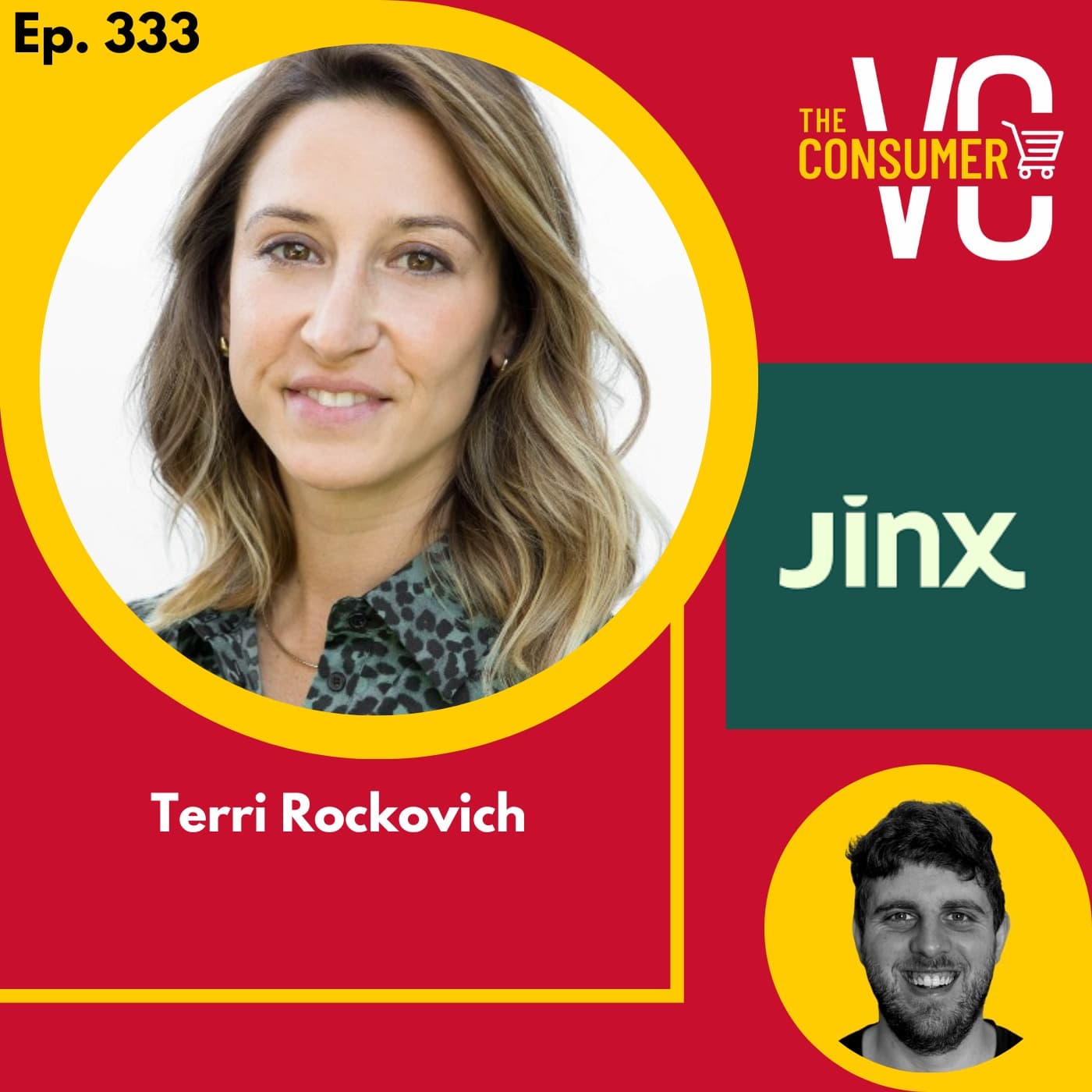
Episode Overview Title: How Choosing the Best Food for Your Dog Can Add Years to Their Life & The Problem with The Legacy Pet Food Market Guest: Terri Rockovich, Co-Founder & CEO of Jinx Host: Mike Gelb Sponsor: Propeller Industries Date: [Date of the episode if available]
This episode features an in-depth conversation with Terri Rockovich, the founder and CEO of Jinx, a premium dog food brand. The discussion revolves around the evolution of the pet food market, the challenges the legacy brands pose, and how Jinx aims to innovate within this space.
Key Points Discussed
Background on Jinx
- Founding Inspiration:
- Terri's lifelong love for animals and a personal experience with her dog's health issues led her to create Jinx.
- The lack of suitable options in the pet food market for dogs with specific dietary needs was a significant motivator.
- Product Offering:
- Jinx offers premium kibble, homemade toppers, and beef crumbles, formulated by pet nutritionists and veterinarians.
- Focus on high-quality ingredients, such as premium proteins and superfoods.
Market Analysis
- Challenges with Legacy Brands:
- The pet food market is saturated with options that often confuse consumers.
- Most legacy brands have been slow to innovate and often do not cater to modern dietary expectations for pets.
- Consumer Trends:
- Millennials and other demographics are increasingly treating pets as family members, leading to a higher willingness to spend on quality pet food.
Business Strategy
- Pricing Strategy:
- Jinx aims to be an "entry premium" brand, offering high-quality products at competitive prices.
- Focus on providing a fair price point to foster brand loyalty, especially during economic fluctuations.
- Distribution Strategy:
- Rather than starting with specialty pet stores, Jinx opted for mass retailers like Walmart to gain broader access.
- Utilizes both direct-to-consumer and retail channels to optimize reach.
Product Development
- Formulation Process:
- Emphasis on palatability and digestibility, ensuring that dogs enjoy the food and have healthy responses.
- Utilizes a variety of testing methods to confirm taste satisfaction among different breeds.
- Co-manufacturing Approach:
- Jinx collaborates with established manufacturers to produce their products, emphasizing a commitment to U.S. production.
Growth and Future Outlook
- Funding and Growth:
- Terri discussed raising capital, including a Series B round of $17.5 million to support growth and innovation.
- Focused on maintaining growth momentum while managing operational efficiency.
- Trends to Watch:
- The rise of hybrid feeding, where dog owners mix various food types to enhance palatability and nutritional value.
- Ongoing willingness of consumers to trade up for better quality products.
Key Takeaways
- Jinx is positioning itself as a leader in the premium pet food market by addressing gaps left by legacy brands—namely quality, pricing, and distribution.
- The company’s focus on high-quality ingredients and consumer education is crucial for its brand strategy.
- Future growth will depend on innovative product offerings that cater to evolving consumer preferences.
Conclusion The conversation with Terri Rockovich underscores the importance of understanding consumer needs in the increasingly competitive pet food market. Through thoughtful product development, strategic distribution, and a focus on quality, Jinx aims to redefine what premium pet food means for modern pet owners.
For further insights, you can follow Mike Gelb's newsletter at [theconsumervc.com](http://www.theconsumervc.com).
Written by AI. May contain mistakes. Listen to the episode to check what was said.
Transcript
Automatic transcript. May contain errors.0:00Like we are the consumers. We know exactly what needs to be better. We know exactly where we can win really confidently. And that allows us to continue to optimize our business and our product portfolio in a way that I think really speaks for itself. And I think that Chris would agree that when he gets Dodger ready for mealtime, that is the most excited that Dodger gets. Like being able to eat great food and get excited about it and like and share those moments is just it's really special. And it's something that I know I do with my own dogs. It's like we have a new baby in the household. And so she's definitely first priority.
0:47But we do have a morning routine and it goes walk and then feeding. And they rely on me and I rely on them. And it's such a source of joy. And I think everybody, regardless of their personality or their profile even, can really relate to that. Hello, I'm your host, Mike Gelp, and welcome to The Consumer VC, where we focus on the intersection of venture capital and consumer innovation. This show is brought to you by Propeller Industries. Propeller Industries is a leading strategic finance and accounting partner for venture stage companies. Now, I know this is free content, but if you're enjoying it, please subscribe on whichever channel that you're listening on.
1:31That's my one favor to ask of you. Whether that's YouTube, Spotify, Apple, that'd be great. And if you're really loving this show and you want some more content, check out my newsletter at theconsumervc.com. I send a weekly recap of all the latest consumer deals that are happening, all the latest news for the emerging consumer ecosystem, distribution news, new product launches. that's at the consumer bc.com and you'll also get emails of when the latest podcast episodes are released too so check it out the consumer bc.com and click subscribe please note that all content and episodes are for informational and entertainment purposes only it is not investment advice thank you jerry stab for the intro to our guest today terry rokovich who is the founder and ceo of jinx Jinx is a dog food brand that offers premium kibble, homemade toppers, and beef crumbles.
2:23They're made by a team of pet nutritionists and veterinarians. We discuss her time working in digital marketing, the opportunity she saw in pet, what is entry premium, and how she compares Jinx to others in the market, since it seems like there's a lot of other premium pet brands that have come to market, why she raised multiple rounds of capital for Jinx, how she thinks about her different sales channels, D2C versus Walmart and other retailers, how she also thinks about pricing for different sales channels as well, and also the future of this category. Without further ado, here's Terri.
3:10Terri, thank you so much for joining me today. How are you doing? I'm great. Thank you for asking and thank you for having me. Oh, thanks so much. Thanks so much for joining me here today. I know we've had this on the books for some time and I apologize that I've had to reschedule a couple of times. So thanks for still be willing to come on the podcast. Of course. Life introduces a lot of stuff and so I'm very used to rolling with the punches. I appreciate that. Really appreciate that. So let's start from the beginning of Jinx. what was the gap in the pet food market that convinced you there was room for another premium brand in pet food?
3:52And as well as what even attracted you in the first place to pet? Sure. So maybe I'll start from the top in the sense that I've been an animal lover my entire life. And so I didn't necessarily realize that that was something I should pursue professionally. It was something that I liked doing personally in terms of rescuing and rehabilitating animals. And that's been a pretty common theme from the very early stages of life through now. And so it should have been maybe a more obvious factor in identifying the industry or the category that I wanted to be in. But I was really presented with the opportunity to work for a digital agency, which exposed me to small brands and enterprise level brands, gravitated towards the small ones because you can make more impact there.
4:44And then it took me three startups to be fully inspired to start my own company in a category that I care deeply about. and as it relates to the white space I had a dog at the time who had a host of different health issues and in addition to those health issues and health drama he had a picky palate and a sensitive tummy and so as a consumer it was really confusing and frustrating to me that there's quite literally hundreds of brands that existed and none of those brands worked for my dog And so what I try to do is think about creating a better product with better pricing and better distribution.
5:25And obviously, that's way easier said than done and requires a lot of capital and a lot of thoughtfulness as it relates to bringing something into market that we can objectively say is superior to all of the other bags and legacy brands. But I consider Jinx to be entry premium. And so on the better product piece, we can really objectively compete with legacy brands in the space based on digestibility, palatability and stool quality results. And that is something that nobody can argue with regarding the scores that you get for how your food tests. And then we also wanted to create something that felt just generally more appropriate for the modern dog.
6:12And that is a proportionally appropriate diet in terms of nutrient distribution. And so something that just feels appropriate is easy to process and won't leave the dog feeling tired, won't leave the dog feeling too energized, and also won't leave the dog fat or obese, which can then lead to a host and series of different health issues. We use high quality ingredients. And so those are premium proteins as the number one ingredient on the label. We use superfoods for functional purposes. And then we use probiotics for digestion and gut health. And why I bring all of those things up is because we as humans understand why those things are good for us.
6:55And so when we're buying grass-fed beef or Atlantic caught salmon or cage-free chicken, we really then understand how that transfers to making the same high-quality selections for the people and the pets that we love that can't necessarily choose for themselves. And so that really wraps the better product piece. Better pricing is pretty straightforward. But when you think about buying a premium diet, especially for a multi-pet household or dogs over, let's call it 40, 50 pounds, you can really be spending a lot. So hundreds of dollars a month just on your pet's food. I know for Blitz specifically, I was doing a lot of hybrid feeding because he was so picky.
7:40But I was spending more on Blitz than I was spending on myself in terms of groceries. And I don't think I'm the only person that does that. So we wanted to make sure that we were building an aspirational brand with a really high quality product, but was really being available not only in many channels, but at an attainable price point. And so adding that value component to a premium brand that sits at the top of the shelf in the aisle and can compete with other brands is like a really critical part of, I think, you know, getting the consumer to try and like and favor a new brand. And then the last piece is just better distribution.
8:20So we have a really strategic channel strategy. It looks a lot different as a brand that entered the category and didn't kind of scale through the traditional route, which is neighborhood and independent pet, specialty pet. And then if you're lucky and you survive those environments and build a lot of brand affinity and customer loyalty, then you make your way into some of those bigger forums, bigger commerce forums. But we really wanted to bypass some of those channels and focus on mass environments like Walmart, Target, Tractor Supply, and then some of the larger grocery chains. And then obviously to satisfy the younger demographic, have a really great representation on e-commerce channels.
9:05Wow, there's a lot there. And thank you so much for kind of painting a picture in terms of how you got started. Well, of course, you being a lifelong pet lover, and as well as going through that experience with your dog, which obviously I'm very empathetic towards. I remember just telling you, like, I had a dog that had lymphoma and unfortunately didn't make it and passed away only when he was six years old. I think a great place to kind of start is first, what pet food the legacy brands, what typically they offered when it came to pet? And also, and I know that you mentioned that with Jinx, the focus was high quality proteins, superfoods, probiotics.
9:57But take us a little bit, if you step back in terms of what some of the legacy products kind of offer. And also maybe how concentrated the overall pet indifood is. Is it just a few companies, for example, that kind of dominate the market share? Is it many companies? companies how quickly as well is that turning from some of from Jinx and other premium brands in terms of taking market share from legacy um uh uh pet brands uh would love to kind of just like paint a picture in terms of what the kind of current offerings were when you were going through that period with your dog sure so I would say you know we started the company six years ago um and unfortunately for both consumers and dogs not a lot has changed there are an abundance of options.
10:43And frankly, it's really confusing for the consumer. If you just walk down the pet food aisle in a grocery store or in a mass retail store, you quite literally get inundated with options. And all of the marketing claims are essentially saying the same thing. And so from a consumer perspective, it's just really confusing, especially if you're looking for something new for your dog. And so in terms of optionality, tons of options, let's call it hundreds and thousands in some cases, depending on the retailer of options, but it's all consolidated at the top. So strategic CPG has these pet portfolios that perform very well because the category in the industry continues to grow in a really compelling and compounding way.
11:28But most of those brands have some type of presence or even ownership from these larger CPG companies. So as you might imagine, a smaller brand trying to compete with legacy brands just from a sheer distribution and budgeting perspective is very, very hard. And we knew that going in, which is why we chose the path of being venture funded, not only so we could get the formulation and the R &D and the product testing right. But so once we launched our brand, we would be able to compete by offering trial experiences, creating some type of ambassadorship in the aisle to educate the consumer, spending on lower funnel marketing, and then obviously leaning into any and all merchandising opportunities that we have.
12:20But in terms of stepping into what was a very noisy and congested category. Most of the legacy brands kind of have this like Goldilocks problem, which is either too little or too much. There wasn't really a brand that was just right and really serviced the largest addressable population of dogs and worked for dogs of different ages, breeds and sizes. So as we were going through the formation of the company and really thinking about our nutrition philosophy that not only and selfishly worked for our own dogs, but would work for the mass market. And most consumers, we really wanted to make sure that we were providing proportionally appropriate diets so that really like we could feed an abundance of dogs with a better diet.
13:11That was the only thing that made this challenge worth pursuing from my perspective. and so we kind of have this positioning that is like specialty for the masses so you've been in a petco or a pet smart or a pet supplies plus they have really high filters for the products that they put on their shelves and they sell to consumers and so we wanted to make sure we passed all of those filters and we could sit on any pet specialty shelf but that product is available in mass channels and at a price that is really tolerable for the average consumer. And so that's how we kind of pulled apart from the legacy players is creating a diet that was compelling for a large audience and worked for most dogs that had better health benefits, stronger ingredient labels, and more health benefit claims, but also tasted delicious for the dog and was affordable for the consumer.
14:09And so we weren't trying to necessarily alienate anybody, which is a problem with more of the new age brands that offer fresh and raw and rock coated and freeze dried and air dried options, but instead solve for the masses and really put a healthier alternative on shelves. So consumers could start shopping with that brand. How did you also think about learning product as well and learning, for example, what the right formula was and also where to even source your approach to even sourcing the right ingredients or products in the right ground. Because I know, Terry, you have an incredible background in marketing, at ModCloth and Casper and Outdoor Voices.
14:54And what I also find unique is that a lot of what we're talking about is on the product side too, right? And the ingredient side. So what was your strategy in terms of, or, or your, and I'm sure extended from your curiosity with your own dog, but, but how did, what was kind of the steps that you took in order to understand product and the supply chain side to actually building out Jinx? Sure. So the first thing we did before we raised a single dollar was to really start networking within the industry and within the community. And so we knew that we were bringing a certain skill set to the table, hailing from Casper most specifically, but mostly digitally native brands.
15:42We were trying to start a CPG company with a consumables focus, and none of us were scientists, formulators, veterinarians, or animal nutritionists. And so we assembled a nutrition Council at the onset of this business that really served as strategic partners to help us think about why we were doing this, what the nutrition philosophy looked like, how we brought that to life, and then how we sourced manufacturing partners and ingredient procurement partners to make sure we were putting the best possible diet on shelves and delivering against our main mission, which is to elevate the way that pet owners care for and connect with their animals.
16:23Apart from, of course, it taking up a lot of CapEx, but since this is quite a new product and quite different to the old guard when it comes to pet food, when did it make sense for you to use a network of manufacturers and co-manufacturers versus actually trying to actually vertically integrate and build out your own manufacturing plant? Sure. So our entire manufacturing practice is based on co-manufacturing. It would require hundreds of millions of dollars and frankly, a skill set we don't have to build and staff our own factories. And then really even think about like the distribution and logistics aspect of how to get that product from said factory to our retailers.
17:13We have had a commitment from day one, and that has been to produce in a domestic network. It makes things more expensive, but you also then reduce the risk of things happening overseas where they're frankly out of sight or where there's less oversight. And so we really wanted to commit to being U.S. made and manufactured and only work with leaders in the category. So we had the privilege by way of adding some folks with incredible expertise and reputations in the industry to our nutrition council of getting introductions, flying to the Midwest, going on factory tours and sitting with the executive team to really then evaluate the partners that would be best for our business at the time of launch and through scale.
18:04And so we take our time. We're incredibly thoughtful and diligent when selecting those partners. But we do have those filters and requirements that keep the business domestic. So in the U.S. and then, you know, really allow us to feel comfortable and confident that we've got the right safety protocols in place so that we can really deliver food without any type of problem. So contamination issues or recall. And actually, our very first full-time hire outside of the founding team was a manufacturing and food safety expert. Because if you can't get that piece right, then to me, that is kind of the biggest concern within the business.
18:50And so we continue to invest in having a best-in-class assurance quality program, both internally and externally. So with our full-time employees who have that domain expertise, and then also with our co-packers, co-manufacturing partners, ingredient sourcing partners, and so on. What was it like convincing manufacturers to work with you? Because high nutritious food for humans, that's something that's been around for a long time, producing high nutritious food for humans. where, as you pointed out with the incumbents, it wasn't high nutritious foods that they were actually producing. And for pet, how as well were you able to convince manufacturers that we want to produce high nutritious foods for pet?
19:40There is a market here. Because I know now the market seems to have kind of exploded with a number of, with Jinx and obviously a number of brands. But that is still a pretty recent phenomenon. It is, yeah. And listen, I can't claim that it was a cakewalk at all. We visited a lot of facilities and spoke to a lot of different partners. But I will say, you know, myself and my two co-founders, we look and sound a lot different than the people that are the CEOs, COOs and CSOs of existing legacy pet food companies. And so I think that helped to set us apart. And when we walked into those rooms, we had so much, albeit blind, confidence about what we were building because we were the consumers and we were solving for our own pain points and frustrations.
20:34And furthermore, you can't argue with the trends and the data and the numbers. And so we knew that millennials were the most attractive cohort from a consumer standpoint regarding how much they're willing to spend and how deeply they want to make the right decisions to keep their pets happy and healthy. They're delaying major life milestones, like getting married and having kids in service of really taking their time and having pets and making sure that they're able to take care of those animals in a real way before they make those big life decisions. And so all of the trends were working in our favor.
21:11And frankly, I think we just looked and sounded a lot different in those conference rooms than other pet food executives. One of the interesting parts about pet is with pet food, you don't know. Not that taste doesn't matter, but it's a lot less. You might be a lot less concerned with with taste. It's it's as long as the animal eats the product and consumes the product, then great. You can pack it in with a ton of nutrients. It's not like, you know, human food where taste is like, no matter how nutritious a product is, taste is kind of is is king. It's it has to taste good in order for anyone to to kind of eat the products or or for most people, at least taste is is usually the first thing that people look look for.
22:06When you're doing formulations and testing and nutrition and thinking about nutrition, how do you even think about what is the right combination that works for a dog? Is it let's pack as many nutrients here as possible because taste might not be as much of a factor in as long as they're consuming it and we're packing in as much, you know, high amount of protein, probiotics, that, and then this is great. How do you think about that? Sure. So palatability is one of the top three things that we solve for when we are either going through a brand new formulation process or if we're optimizing a diet.
22:51And that is because some dogs, more than you might think, have palatability preferences and or picky palates. So our philosophy was it doesn't matter how healthy the diet is. If the dog won't eat it, then there's no purpose, right? We're not going to be able to continue to win that repeat business. And so palatability is actually one of the primary things that we solve for. And making sure the food is delicious is tested through PAL studies. And we make sure that we not only meet, but be head-to-head tests of the legacy players in the space that have been doing this far longer than we have. Because taste and flavor profiles are such an important part of the dog getting excited for mealtime and then finishing their bowls.
23:42That makes a lot of sense in terms of also running tests as well to make sure that, of course, the animals are, of course, eating it and enjoying it as well and consuming it. And I guess for, for palatability, I'd imagine that your, your test, your test is over different breeds, different, even size of, uh, size of, uh, of animals to make sure that it's kind of, um, across, uh, across, you know, all the spectrum that it actually is, um, that, that dogs are actually eating it. Right. Yeah. 100%. And to be honest, I have two big dogs now and they'll eat anything. So they're not great data points for me.
24:23but Blitz, my dog who really inspired me to start this company and do it in the vein of creating a healthier alternative than what existed in current pet food aisles was really like the pickiest dog. He would turn his nose up at human food if it like wasn't the right temperature, if it didn't have the right smell and so he ended up being like the inspiration for creating something that tasted delicious on its own without any mix-ins. And so we very confidently produced something that could do just that, but with the full understanding that people really are hybrid feeding. And so they're mixing and matching in a lot of cases just to make sure that they're changing it up to keep the dog interested, but not in a way that's disruptive to their digestive system.
25:15Are there any dog breeds that are actually a lot harder to crack in terms of that are a lot more picky or a lot more particular when it comes to food? Yeah, this is a generalization. But I would say small dogs are usually pickier. It's like dogs over 50 pounds, large dogs, big breeds. They're typically the ones where they're hungry, in some cases ravenous by the time they wake up for the day and they're going to eat whatever's in front of them. This episode is brought to you by Propeller Industries. If you run a high growth business, and your focus on profitability, extending your runway and improving your operational efficiency, you probably need a finance and accounting whiz that will grow with you.
25:58Well, instead of hiring someone full-time, what would be cost-effective is working with Propeller Industries. Propeller Industries is a leading strategic finance and accounting partner for venture stage companies and has partnered with over a thousand startups and high growth businesses across consumer products, consumer tech, and enterprise. Some of the brands that they've worked with are Liquid Death, Olipop, Hems, Farmer's Dog, Away, MoviePass, and Giphy. Propeller also provides specialized support for fundraising and M &A with transaction advisory services. Propeller's TA team of former investment bankers and investors can step in on more of a project basis when pursuing full-scale financing and M &A.
26:36There's a link to Propeller Industries in the show notes if you wanna learn more information. After you figured out what the formulation was and the product, and after you did your testing, with and finalizing what that formulation was in the right mix and that, hey, these dogs off across breeds and through our testing, they're really enjoying this product. And then also it's it's it's it's also has a lot of great nutrients. I know that you that you mentioned you thought about Jinx and the opportunity to be entry entry premium where you're not paying hundreds of dollars a month for one dog in order for it to eat right.
27:20It's premium food, it's quality food, but at the same time, really kind of price conscious and available for mass. I know you just got into Walmart or recently got into Walmart, which is phenomenal. How did you approach pricing? And especially, I'd imagine that you're probably comparing yourselves to the incumbents and how they're pricing. What percentage increase were you thinking about doing that actually made sense that is that kind of entry premium price? Sure. So let me give you kind of the full spectrum answer here, which is like context absolutely matters. We launched our business into the height of a pandemic through a direct to consumer business model.
28:05So the pricing was its highest at the launch and onset of this business because we needed to make the unit economics work. And then also there was, frankly, a lot of demand and not enough product because a manufacturing cycle can take anywhere from 30 to 60 days. And so the marketplace was all over the place. And so the direct-to-consumer pricing strategy was high such that the unit economics could work within that environment. How that has evolved over time is we expanded into retail. And so we launched our first large retail partnership with Walmart in March of 2022. And again, at that time, inflation was a very big part of the conversation.
28:58And so you have this small brand stepping into a crowded category where price competition is really high. And frankly, there are bigger brands taking price advances very frequently. So in some cases, every quarter, in some cases, twice a year. But really, inflation was bleeding into and affecting the consumer. We chose to hold firm on our price point because there is no way we can continue to compete with those big brands by making smaller bags and raising our prices, which is really effectively what they were doing. Consumers are smart and they know that that stuff is happening. And so we really wanted to build favorability and affinity by remaining really fair from a price point perspective.
29:51And then part of this larger positioning strategy of specialty for the masses is not only having a trusted product in the right channels with modern and relatable positioning, but also having a really compelling price value equation and being a slight discount to the most premium brands. and then just a little stretch up from the brands that fall below us. And so right now what's happening in the category as these kind of macroeconomic conditions continue to affect people's budgets is that there is trading up if consumers can understand the value of trading up. So they're willing to stretch. They're not willing to stretch that far.
30:33But a comfortable stretch, a few more dollars per bag is something most consumers can absolutely tolerate. And so we've continued to really anchor the brand and making sure we get that price value equation right. When you did go into Walmart, did that... I've talked to brands that started off in conventional and didn't go to the natural channel, for example. And they've said that it's actually made them a lot more price disciplined and really kind of think a lot more about their margins. Whereas going from, for example, the natural channel where consumers might have more discretionary income on spend into conventional, it can be a lot tougher just because, of course, more opportunity in terms of number of stores and just much larger accounts.
Read the full transcript
31:30but at the same time, it's a lot more price competition maybe. Going into Walmart, was that kind of a wake-up call in some ways when it came to how to actually price Jinx? It was. Without getting maybe too tactical, Walmart has a commitment to their consumers, which is everyday low pricing. The acronym for that is EDLP. It very much so drives our starting price points and list pricing for all of our retailers. And so you're kind of working in this tops down way where Walmart is at the top with EDLP pricing. A lot of that value obviously translates and gets passed on to the consumer. And that's why Walmart is winning, despite all of the rockiness and waviness that is our economy.
32:24And so I think that, you know, with a retailer like Walmart that sells over 30 percent of pet food sold in North America, they are doing something right. They are making the consumer happy. They continue to be a growing category again within turbulent times, whereas there are other, you know, commerce channels within the space that cannot claim the same thing. And so we very much so, you know, let them advise us in terms of what that value needed to look like to be compelling to the consumer as a newer brand in the space. And we're really happy we did it because our growth speaks for itself. And while we took an alternative route to retail distribution and kind of working from the tops down with the largest retailer in the world, it's really opened up doors in a way that I think happened on a fast timeline.
33:18And we know it would have taken much longer, honestly, probably 10 years plus to get the type of distribution we have right now if we would have worked through kind of some of those smaller community-based or neighborhood-based pet stores, navigated through pet specialty. and then eventually made our way into the mass environment. When you got into Walmart, what was the metrics that kind of spoke out that made it maybe interesting as a supplier, a brand that Walmart wanted to work with in your mind from Walmart's perspective? Yeah. So I would say we were doing the majority of our volume through the direct-to-consumer business.
34:02And the beauty of that is because we have a 360 degree relationship with the customer and we're able to track and measure everything. We had some really compelling stats as it relates to new customer growth, customer retention and repeat behavior, lifetime value of all of the customers that we had acquired through the first 18 months of the business, and then overall brand reception. So affinity, favorability, recall, and so forth. And again, those stats kind of speak for themselves as it relates to how people are thinking about this brand, how they're repurchasing, how they're adding things to their cart to continue to build out the nutrition scheme for their pets.
34:48And I think those were probably the items that were most attractive to Walmart and other retailers as we were thinking about making the shift from online to offline. Oh, that's really helpful. What's been, now I know that you've raised, I believe you raised a series B. Is that right? That was your last round. That was right. Congratulations on the, I think 17 and a half million. Is that right? Yes. Yes. Congratulations on that. Thank you. For each round, what has been your framework when it comes to raising capital and, and also, and how do you even decide that we, that you want to raise, for example, another round of venture?
35:27Because I do think in consumer businesses, sometimes consumer businesses might raise a seed, a series A, and then maybe stop. And that's enough for them. But so what overall has been your ideology for equity raises and also when to raise those equity raises? Sure. So I would say our growth has been the primary driver of capital needs. So we specifically, I would say, as we made the decision to pivot the business from this direct-to-consumer model through retail partnerships, we have seen absolutely tremendous growth when looking at quarter-on-quarter performance and then year-over-year performance.
36:13And so on a soft year, we're growing 40 percent and this year we'll grow over 105 percent. And so growth has been the key function that is really informing our cash needs. And frankly, we don't want to take our foot off the gas. And so we have really strategically structured financing in a way that allows us to lean into the biggest opportunities, keep our foot on the gas and continue to get really impressive distribution gains and productivity gains and do that through new retail launches, new product innovation, strategic partnerships, off-shelf merchandising opportunities, increased trade spend, and so forth.
36:58And just that list of loan requires millions of dollars. And that doesn't even kind of include like inventory. So that has been, I would say, the primary driver for considering raising new capital. How also do you think about retail strategy overall? I know that one of the big themes maybe in this world is profitability and managing that profitability versus growth. And I think that there's been a lot of commentary on with retail, how long to give a new channel and whether that channel is profitable or not profitable and when you should even get out of a channel. when you're analyzing new channels to go into new accounts to go into what does that what does that analysis look like into determining we want to go into this give it a shot and then b how long do you give that channel to know if it's actually working or not from like a velocity and even and even a profitability i know profitability is like down the road but even like from like a profitability perspective so when we launched into walmart and then you know a few months later launched on Chewy.com, we had zero retailer data points, right?
38:14So we understood benchmarks in the category and really measured ourselves against those benchmarks. But it was kind of like a fly by the seat of your pants and just make sure like the numbers are growing and moving north and to the right. And so I would say like the first six months of really launching some of these strategic retail partnerships where just like hustle, grow, stay focused, make sure the product is getting where it needs to be, when it needs to be there. Now, after a little over two years in retail, we have this omni-channel distribution strategy. We understand what online productivity looks like versus offline productivity.
38:59We understand the differences between two mass players like Walmart and target. And frankly, it's just easier to build strategies knowing that those data points continue to inform our growth plans in a real way. But I would say that we typically give a new retailer about six months to perform. And performance varies on a retailer by retailer basis. But again, part of the capital needs conversation is making sure we have enough cash on hand to make sure those retail launches are really set up for success. So it's installing the brand in a nuanced and differentiated way. It's sending brand ambassadors in aisles to educate the consumer and have them flip that bag over and read the first 10 ingredients on the food that they're used to feeding versus the food that we're offering.
39:53Or spending on marketing their media programs that they're building out within their own ecosystems, merchandising and off-shelf programming, shelf signage, all of those things, we really have built a playbook around and we continue to use that playbook as this kind of launch implementation tool or asset that gives that retailer the best chance of working. And what I can confidently say is as we've kind of finessed that playbook, we've never pulled out of a retailer. And so we've been able to make everything work from a productivity standpoint. And that continues to get us distribution wins to help us grow our business.
40:33How did you, for example, partner with Chris Evans? And I believe he's also an investor in the company. Why did it make sense to have him involved in terms of actually being one of the stories of Jinx? Sure. So you're absolutely right. Chris was first an investor in our Series A during the fall of 2021. And then once we sent his dog, Dodger, product, he really wanted to figure out how to get more involved. And so we kicked off a more formal endorsement partnership in 2022. And he's been such a critical asset in growing our brand. And so not only does he share the same passion for his dog, but also rescue dogs on the whole.
41:21And, you know, in meeting with him and getting to know him on a more one-to-one personal level, it is exactly the type of human we want representing our brand and really kind of speaking on behalf of our brand because he has the same type of relationship with his dog Dodger as we have with our dogs, right? And at the end of the day, dogs are not only like our most intimate companions, but they see everything behind closed doors and continue to support us like the good, the bad and the ugly. And so really like the celebration of that relationship was something that we immediately bonded over. And we knew that he was the right person to structure an endorsement partnership with.
42:04He's been an incredible partner to us through these different growth stages for our brand. And frankly, as we look at partnering with other high profiles or even just taking investors in and allowing them to be on the cap table, we want that like-minded spirit and high energy around what we're building because people really believe in it. And I constantly say this, but I really mean it. I don't know how you can build a successful brand or market a successful product if you don't use it. We are the consumers. We know exactly what needs to be better. We know exactly where we can win really confidently.
42:48And that allows us to continue to optimize our business and our product portfolio in a way that I think really speaks for itself. And I, you know, I think that Chris would, you know, Chris would agree that when he gets Dodger ready for mealtime, that is the most excited that Dodger gets, like being able to eat great food and get excited about it and like, and share those moments is just, it's really special. And it's something that I know I do with my own dogs. It's like, we have a new baby in the household. And so she's definitely first priority, but we do have a morning routine and it goes walk and then feeding and they rely on me and I rely on them.
43:35And it's such a source of joy. And I think everybody, regardless of, um, you know, regardless of their, their personality or, or their profile even can really relate to that. I also love just how, you know, it seemed like organic it was as well that Chris, you know, wanted to get involved and, and everything. I don't know if you have any, any comment or, or, or, or thoughts on, cause we do have, you know, a lot of celebrity or, or, or talent, um, talent that, that are involved in brands that are part of the, that are part of brands affiliated with brands that, that might also, um, you know, add, uh, put some of their story with, um, coupled with a brand.
44:17And I would just, this is more general, but in terms of your kind of approach to partner with talent or people that have influence, what are kind of your thoughts in terms of what you've seen when it comes to CPG and as well as what kind of works and what not when it comes to partnering with someone that actually is a celebrity? So, I mean, I think that the creator-led brands are really fascinating. And, you know, it's almost like most of what these guys and girls touch like really is gold. And they're able to make it work because they've built these really loyal fan bases and these large communities at scale that are very influenced by the products they're using, the brands they're promoting, and the marketing that they're doing on behalf of those brands and those products.
45:15And so I think the creator led movement is like a really, really interesting one and something that's going to continue to be like a huge disrupting factor in some of these legacy categories with such antiquated ways of thinking about innovation and marketing. Um, and then in terms of just figuring out like who is the right fit for your brand, I mean, it's, it again goes back to like the best, the best salesperson or brand ambassador, brand advocate for a brand is the one using the product and even better if they're using the product every day and can speak to kind of the really tangible benefits of that product or of that service.
45:58And so, um, I love it. I think that I've discovered a lot of products and brands that I can really stand behind because I really trust the person that's endorsing them. And I would go as far as suggesting that those people really believe in what they're doing and that's why they're doing it. We've even incentivized a lot of our brand ambassadors or advocates or endorsement partners with equity because it's like when we win, you win. So it's not just a cash conversation and it really is a structure that incentivizes that human being to work hard to make sure that this is successful. What have been a couple of the most challenging moments when it comes to actually building this company?
46:44So listen, there's a lot to choose from. As you guessed, there's been so many challenging moments throughout the past six years of going through the formation stages and then launching this brand into a global pandemic, surviving the pandemic, and then figuring out how to make retail work. We've raised in total a little over$55 million. And each time we went out and conducted a fundraise, there was a completely different economic condition with the most recent conditions being pretty turbulent. And so there's truly endless things that I could bring up. I think one of the most recent challenges is becoming a new mom and figuring out how to show up as the best version of myself for my daughter and my company and my family and my dogs.
47:38It's really hard to be great at everything. And frankly, that's so exhausting. And so this new challenge has really required better time management, understanding priorities and where I can make the greatest impact as a founder and as a CEO. And then also just task delegation, like really trusting the team to do things better than I can do them and more thoughtfully than I can do them. And so I would say that's kind of what I'm grappling with now and kind of trying to perfect as I start to get a little bit more normalized and balanced in this new world that I'm navigating. But that alongside, you know, selling the dream and really like building conviction with external stakeholders or shareholders is something that continues to be just really like, I would say, a persistent challenge in the business, whether it's through fundraising or taking on a new manufacturing partner or selling in innovation to retailers.
48:53you have to have such high conviction over what you're doing and why it's different and why it's going to win. And so, you know, those hurdles are ones that we're constantly jumping. And at the end of the day, like in-person conversations always resonate the best and then the product speaks for itself. And so in any conversation, regardless of who I'm speaking to, I always ask for a shipping address and any known allergies for their pet, because I know once they get that box and once they open the bag and once they see their dog's reaction to our product, like I don't have to sell anything. And so, um, so I would say like, those are probably like the either most recent or most consistent challenges that I faced as a CEO.
49:37What's been your approach for on the delegation side, how, what's been your approach for hiring when it comes to your team? Um, which of course, you know, huge, huge part of being a CEO is, is delegation and also hiring, you know, phenomenal people that are going to be there for hopefully a long time. And that can really make an impact. So what's been your approach to hiring? Sure. So I would say slow and steady. I worked at three startups before I started my own and I saw a lot of growth, right? And some of that growth included hyper-expansion and contraction. And that kind of whiplash within an organization of any size really impacts, I would say, overall culture and mentality and employee sentiment.
50:27And so even though it's been uncomfortable at times because we have a really small team and everyone is either at or over capacity in most instances, we've tried to be just really thoughtful and intentional about opening up new roles, slowing down the hiring process and the interview process, because we want to make sure we put enough filters in place where someone's stepping into the organization with a really clear line of sight into what they're doing, why they're doing it, and what the expectations are from a performance standpoint. And also just the culture, right? Startups aren't for everybody.
51:04They are hard and they're constantly changing. And there's pivoting that's happening. And some of that change is really uncomfortable for a lot of people. And so we try to be slow and thoughtful about who we hire and why we're hiring. And then I would say just like a personal practice after hiring hundreds of people throughout my career has been like, look for people that think differently than you. And why I say that is because we don't need a room full of people that are all doing and saying the same things or even that look the same. So diversity and differentiation and kind of like first principle thinking and feeling confident, you know, in a debate or being a contrarian or sharing respectfully a different perspective is something that lights me up and creates really great energy if harnessed in the right ways throughout an organization.
51:59What do you think looking towards like the future. What consumer behavior shifts in pet parenting that maybe you've seen that maybe you're most excited about within the next three to five years? There's a lot. Pet is a really exciting category for a lot of reasons. But I think, you know, more specifically, gone are the days where we treat our pets like pets. And our pets have become family members. And there's been this really significant shift in why and what we buy to care for them. And so our mission at Jinx has always been to elevate the way that we care and connect with our dogs and do that through offering purposeful products and creating really like a single destination or ecosystem.
52:49So your pantry isn't filled with a host of different players that might be disruptive to your dog's digestive system. But really creating this product portfolio where you can mix and match and trust that all of the products are made with high quality ingredients and, you know, in most cases work for most dogs. And so we really will continue to design products in that spirit. So things that really cohesively work together and can be mixed and can be matched. So consumers can shop with a single brand that they trust. And then another, you know, another trend that I think started to emerge through the pandemic and has been really sticky is hybrid feeding.
53:33And so it's a real thing and a growing use case where dogs are getting meals, not food. And so we're serving them a base diet that's layered with things like toppers and sauces and extra protein and wet or fresh mix ins. And so for those dogs that have picky palates or for those dogs that you want to change it up without really like shifting the base diet or shifting to an alternative protein source, we are trying to create a portfolio that is a driving force in offering that optionality. I'm doing that through an innovation roadmap that feels very connected to our purpose and our vision and our mission, and then creating as much noise as we can about this holistic feeding philosophy.
54:33Hybrid feeding, that sounds just releasing more skew. It sounds just operationally really taxing and quite complex. Do you think that's quite a huge opportunity? I do. Yeah. I mean, because at the end of the day, like our co-packer network, I would say is well over 10 different partners and the management of that network requires a lot of diligence. And so our ops team was one of the smallest teams within the organization for a really long time. And since we've scaled beyond this kind of main meal offering, we've really needed to build some density and depth into that team to make sure that we are operationally shored up.
55:21And with that, you know, we're able to stay in front of things and really run seamless programming as it relates to the back end of the business. and in terms of this business do you do you think that it's it's going to be one where you're actually going to have you know a lot of skews for example and sale distribution is going to be quite kind of spread across the different skews or do you think that it's going to be um you know is it do you have you already seen like a couple hero products actually that actually table the majority of sales we definitely have hero products or power skews um and i think it depends on you know how you define a lot.
56:01I think that there are really big brands that typically sit within that legacy cohort that have hundreds of SKUs and you don't know what the difference between the treats are and the main meal options are. And so we're not trying to create any more confusion for the consumer. The SKUs that we do have are designed very intentionally and designed in a way where you can kind of mix and match across formats or across categories even. And so, you know, I would say we'll stay under 50 SKUs. If there's something that's not working, we discontinue it, or we really focus on optimizing it. And for the things that are working, that's where we really like go deep and think about line extensions, because that's what the consumer is indicating they want.
56:50What's one book that's inspired you personally and one book that's inspired you professionally? So I have a lot. I'm sitting here in my office looking at my bookshelf. And there's a ton of options. And I'm a big advocate of reading. I only do one book at a time. I'm so impressed with people who can read more than one book at a time. But for me, I have to go back and reread things for it really to be retained. And I would say in this instance, I have read this book and gifted this book to a lot of people. And it has extensions into how you can think about both your personal and your professional life.
57:33But it's Essentialism by Greg McKeown. And it is something that has served me in so many different eras of myself. And it's really just helped me think about this constant exercise of eliminating the non-essentials from your life. And then that allows you to focus your energy on making a bigger impact on the things that matter most. And it's had so many applications personally and professionally for me. Essentialism, that's a phenomenal book. I know that's also my brother absolutely loves that book. That's one of his favorites. Terry, this has been so much fun. Thank you so much for your time.
58:15I really appreciate it. And thanks for telling us a lot more about Jinx. Thank you for having me. I had so much fun. And there you have it. It was a pleasure to have Terry. Terry, thanks again so much for coming on the podcast. If you're enjoying this show, check out the newsletter at the consumer VC.com. Well, you'll be the first to know about all new episodes that are happening. And you'll get a weekly recap of all the latest consumer deals that are happening. Thanks for listening.
58:48you
From the publisher
Thank you to our Partner –– Propeller Industries https://www.propellerindustries.com/
Propeller Industries is the leading strategic finance and accounting partner for venture-stage companies.
Thank you Jerry Staub for the intro to our guest today is Terri Rockovich, Founder & CEO of Jinx. Jinx is a dog food brand that offers premium kibble, homemade toppers, and beef crumbles and are made by a team of pet nutritionists and veterinarians.
We discuss:
- How legacy brands create their dog food
- The inspiration behind Jinx
- Her nutrition philosophy for pets
- Sourcing the right manufacturing partners & convincing them to work on Jinx
- Approach to testing if the product tastes good
- The reasons why she raised venture money (most recently a Series B)
- How she launched online
- Why Walmart has been a great partner for a premium brand
- Jinx’s market positioning compared to other premium dog food brands
- Approach to launching SKUs & new products
- How she thinks about celebrity partnerships & more