
In short
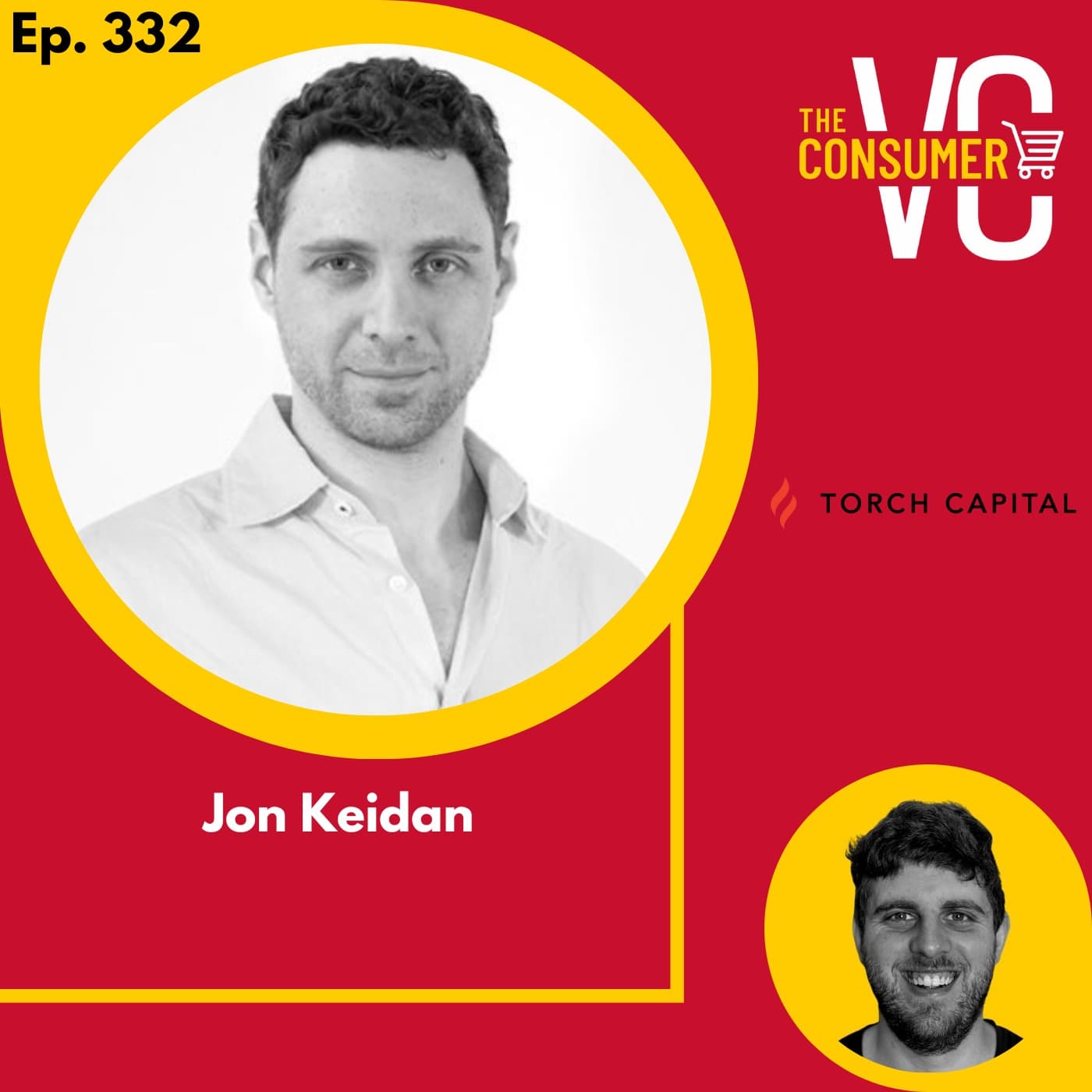
Podcast Summary: How He Went From the Music Industry to VC, Investing in Tech vs. Brands, and When Down Rounds Make Sense with Jon Keidan
Podcast Overview
- Title: Consumer VC: Venture Capital I B2C Startups I Commerce
- Host: Mike Gelb
- Guest: Jonathan Keidan, Founder of Torch Capital
- Focus: Early-stage consumer investing and insights on venture capital.
- Episode Duration: Approx. 1 hour
- Key Topics: Transition from music industry to venture capital, investing strategies, founder dynamics, and market insights.
Episode Highlights
- Transition from Music Industry to Venture Capital
- Background: Jonathan Keidan shares his unique journey from managing talent in the music industry to becoming a venture capitalist.
- Similarities:
- Both roles involve recognizing and nurturing talent.
- Working closely with artists/founders emphasizes partnership and shared success.
- Differences:
- In VC, the investor manages multiple companies rather than focusing deeply on a few talents.
- Investment Focus: Technology vs. Inventory Businesses
- Keidan discusses the nuances of investing in technology versus consumer product (CPG) businesses.
- Key Takeaways:
- Technology: Generally offers higher returns and scalability.
- Inventory Businesses: More capital-intensive, lower margins, and require different operational management.
- Investment Strategy: Preference for tech-driven companies that solve consumer pain points.
- Importance of Founders
- The characteristics of successful founders are critical for investment decisions.
- Key Qualities:
- Experience, even from failures, can provide valuable insights and resilience.
- Passion and clear communication regarding the product and customer relationships are paramount.
- Trust and Customer Engagement
- Building trust with customers is essential for long-term success.
- Companies that focus on maintaining a strong connection with their customer base can navigate challenges more effectively.
- Example: Acorns, which prioritizes educating consumers about wealth growth rather than focusing solely on revenue.
- Funding Strategies and Market Insights
- Discussion on changing market dynamics and the impact on funding strategies.
- Current Trends:
- Valuations have decreased significantly since 2021, leading to a more sustainable investment environment.
- Early-stage investments are now focused on proving core business metrics before scaling.
- Torch Capital's Unique Strategies
- Fund Structure: Transition from Fund 1 ($66 million) to Fund 2 ($116 million) was driven by the need for more reserves and the ability to make impactful investments.
- Innovation: Introduction of "Torch Kindling," allowing smaller investments to build relationships with early-stage companies.
- Evaluating Investment Opportunities
- Emphasis on understanding market pain points and the ability of founders to address these effectively.
- The importance of a number of metrics, including customer acquisition costs, product market fit, and overall market demand.
Key Concepts
- Consumer Trust: A significant driver of business success that influences customer loyalty.
- Venture-Backable Brands: Not all consumer brands are suitable for venture capital; understanding market dynamics is critical.
- Founder Dynamics: Past experiences and a founder's passion can often predict their future success.
Conclusion
Jonathan Keidan's insights as a venture capitalist demonstrate the shifting landscape of early-stage investing, emphasizing the importance of understanding both the market and the founders behind the brands. With an evolving focus on technology and sustainable investment practices, Torch Capital seeks to navigate these changes effectively.
Further Resources
- For updates and episodes: [Consumer VC Website](http://www.theconsumervc.com)
- Follow on Twitter: [Mike Gelb](https://twitter.com/MikeGelb)
Written by AI. May contain mistakes. Listen to the episode to check what was said.
Transcript
Automatic transcript. May contain errors.0:00It doesn't have to have had success. They can have failures that can be equally as powerful. So I just say experience because I think some of the most powerful companies that have been built have been from founders that had failed before or failed twice. And they learned all these things. But the two points around that are they have experience and you can ask them about it. And you can also really have data to deep dive into sort of how they handle the challenges that they handle. And why did they think it didn't work or it did work? And why do other people think it didn't work or it did work?
0:31The danger with a successful outcome is, are they still hungry? But I feel we're pretty good at assessing that. And you can hear in their voice and their chip on shoulders. You know, Josh Wolf always talks about chips on, Josh Wolf from Lux Ventures, chips on shoulders, put chips in pockets. We firmly believe in that. And they still have something to prove. You know, maybe it's a mediocre exit and they just, they didn't win what they wanted to win. So we look at all of those, but there is a big advantage to a founder who's that experience founding companies, good, medium, or bad, then it's someone who's completely untested.
1:22If you're enjoying this show, please subscribe on YouTube, Spotify, Apple, or wherever you're listening to this podcast. And if you really like the show, I highly recommend checking out the newsletter at theconsumervc.com. You'll receive a weekly email. That's all the recap of the latest consumer deals that are happening. And you'll be the first to know when a new podcast episode is launched. All content episodes are for informational and entertainment purposes only. It is not investment advice. Our guest today is Jonathan Keaton, who is the founder of Torch Capital. Torch Capital invests in visionary founders using technology to revolutionize how consumers and businesses operate.
2:00Their portfolio includes Sweetgreen, Recess, Savage X, Fenty, Good Weird, and Little Water. Previously, he was in the entertainment industry and was running and founded and ran an artist management company. We discuss the similarities of venture and entertainment, the differences between Fund 1 of Torch and Fund 2, why he shifted his focus away from consumer brands and into consumer infrastructure, when down rounds make sense, and analysis of this current market. Without further ado, here's John.
2:36John, thank you so much for joining me here today. How are you doing? Doing great. Good to be here, Mike. Thanks for having me. Thanks so much for coming on the show. So I know the first part of your career you spent with recording artists and music artists. How can you compare? And now, of course, you're spending a lot of your time with founders, helping founders build their companies. Talk a little bit about how do you compare working with recording artists, building out their entire careers, whether it's the actual music itself, whether it's guiding them on the concerts and touring side, versus consumer founders where you're actually building their businesses.
3:09In terms of personalities, how are they kind of similar or how are they also different? So it's funny. I don't think there are a ton of managers who've made the circuitous route from being a manager in music or in talent, then through business school, McKinsey, operator, founder, then to venture. So I've gotten to sit in a number of seats. And weirdly, they're surprising a lot of similarities, especially for not in general, but for early stage venture and being a talent manager. I think, look, you're both looking for talent, both positions. You're looking for talent, see things before other people do, have an inkling into a market opportunity and a vision that you share with a founder or an artist on where they want to build and fit and how that fits in.
3:54And then you help them build their audience. I mean, there are a lot of similarities there. And a manager, unlike an agent, and Mike, I know you used to be at an agency, it's very, you know, your primary client is the agency and then the artist. As a manager, you're just working for the artist and you're really their business partner in thick and thin. And you're rolling up your sleeves and you're all, everything you make is 100 % dependent on their success. And so you really are tied, incentivized together. You don't have quite that amount of incentivization with early stage venture because you own a minority position.
4:27But the ethos is the same. And I think what makes a great early stage investor is finding something, an opportunity before anyone else sees it and connecting those dots. And then really being a deep partner to that founder and helping them build that vision and what they're trying to do. And use your experience and network and relationships and advice to help guide them and be a support structure for them. Yeah, back in agency life, when I was in the music industry, what we kind of thought of managers were, they were the ones that get the 2 a.m. calls from the artists that when, and agents don't really kind of get those calls, right?
5:06They kind of, they much more deal with the agency. Oh yeah, I've gotten artists out of jail, all of it. Yeah, all of it. No, exactly. And I guess what some of the difference is, is that when you're a talent manager, you're working maybe with one, three, five artists at once, right? But very, very extremely hands-on in terms of guiding their actual career itself. and on the VC side, as you kind of say, you're a minority investor. So you're going to be making, you know, a lot of, kind of a lot of bets, depending on the strategy, obviously, but a lot more bets than you are with on the talent manager side.
5:42And so you're going to be spending maybe less time with founders themselves, whereas artist management, I'd imagine you're devoting a serious, you know, a lot of time towards them. So, yeah. Yes, that is true. Except, you know, I think you're still spending a lot of time, but it just depends a lot more. Not all companies and founders need help or are at inflection points at the same time. And so that, although artists are needy all the time. So I guess that does help make it more scalable where you have baby companies and then your baby companies grow into mid-stage companies and growth late-stage companies.
6:20They all need different things at different times. So you are able to spread yourself out a little bit more. But that's also why it's critical to have a really well-honed team. And at Torch, I thought about that when we started and Sam Jones and Katie Reiner and then eventually Chris Harper. You know, the idea was if we're all good and it's a young team and we grow together and we learn from each other's mistakes and we see how situations evolve and we learn from each other's successes, you can really build that muscle memory scaled more than just one or two partners, but really across the firm.
6:51And we're training our associates now similarly and getting great effects. So you could create the knowledge and that ethos beyond just the top line of a venture fund if you're thoughtful about that and you know how to build a team and you think through that ahead of time. So why start Torch Capital? Why become a venture capitalist? I know you were also, in addition to, you know, arts management, you also were an operator. You also were a founder with Inside Hook and also working with Jack Welsh. But why lean in and actually become a VC? and also specifically why focus on consumer? So I think a couple of things.
7:27I mean, obviously coming from the entertainment industry originally, always consumer was always top of mind. And then when I went through business school, went through McKinsey, and then started working in the startup world, I actually started in ed tech and then got to digital media. But thinking about how consumer behavior changes and what excites people and what gives them new possibilities and new experiences has always been at the forefront of what I love, what I'm passionate about. And so it was a very natural element. And at Inside Hook, where we were, just for people who don't know, Inside Hook was, it still is, I shouldn't say it was, we sold it in 18, but it's a digital media publisher, lifestyle recommendations for the busy guy.
8:09So it's guys in their 30s, 40s, and 50s, sort of around travel and wellness and style and things to do with your friends or your family or significant other. And as a result of having that, we had to build that brand from scratch and really get this very hard audience to capture busy guys on board. And also we had a client base of big brands, but also emerging consumer brands like the Caspers and Warby's and Harry's and Dollar Shaves that we got to work with. And so I was able to see sort of how technology and online capabilities could really connect brands and consumers. And I really love that.
8:47And then in terms of venture, as I was starting to see the New York tech ecosystem pop up and then the LA ecosystem pop up and had great relationships in those worlds, I'd meet founders. And I got the same butterflies that I got when I had the same sort of feeling when I saw an artist. I knew when they had it and I saw like what I understood the vision of what they're trying to do. And and so I started writing angel checks and I loved it. And it was very fun. And also, I was lucky enough to be an early investor in Acorns and Sweetgreen and DigitalOcean and Compass and ZocDoc and Sir Kensington.
9:21So a lot of great brand builders who built incredibly big companies, market leaders. But I got to watch it from scratch and getting to know them and watching those journeys. I loved every part of it. And again, it reminded me of being a manager, having a portfolio rather than being in venture versus just being focused on one singular company and going really deep into that. I enjoyed having the experience of meeting all these fascinating people, building incredible companies and all the various twists and turns and variables that go alongside that. How did you know that they had it? What was the kind of, when you were angel investing and you were investing, you know, these companies that turned out to be substantial brands and, you know, incredible businesses, how did you, what was your thought process when you just started investing?
10:08So I remember the first check I ever wrote was to Cyrus Masumi and ZocDoc. And we become friendly because we started seeing each other around through tech and through social friends. But it was right around when he was starting the company, I met him. And he was so passionate about what he was doing. I clearly saw the value proposition, which is it's impossible to find a doctor. Like, how do you know who takes your insurance? Who has hours that fit? Who is a good reference to recommended, geographically located? And so I completely understood. And the way he was thinking through the technology side to help create that capability, I got it.
10:42I mean, I firsthand had experienced that issue being from McKinsey and living in different places and so on. And so every time I spoke to him, he was just like, all he wanted to talk about was the end product and the capabilities he was going to be able to generate for the consumer. And he had such a clear perspective. And it was like rabid focus at the same time being highly flexible as you, you know, come into walls or things don't expect the way you could do. And, you know, and in a positive way, aggressive. He's like, we're going to get in every 50 state a ZocDoc up in like two years. And I remember everyone told him that was impossible.
11:15and he'd fly out on a dime to a sales team and sit on the sales, you know, doing calls with them. That level of passion and getting in the details, but keeping that big vision. And again, something he was, he was solving a pain point I understood. Those are sort of the elements that I really responded to. At what point did you decide then, okay, I've now made a few angel techs. Maybe some of these companies are, are performing quite well. When did it actually make sense to actually launch Torch? So it was sort of an evolution. I wasn't like, oh, I want to be a venture investor. In fact, I really said I didn't for a long time.
11:48But it wasn't really until 2018 when we realized we were going to sell the company that I started having to think about what I should do next. And at that point, I had some of these angel checks that had turned into very big growth companies, some hot companies, some late stage companies. And I stayed very close to those founders and was still giving them advice and still able to add value, despite me just being an angel investor, even in the growth stages. like I introduced Acorns to Dan Schulman when he took over PayPal, which led to his M &A team and corporate dev team looking at the company.
12:22I knew his interests. I knew where he wanted to take PayPal because we talked about it. I knew him from when he was at Amex. And so I made that introduction and they ended up leading the first growth round in Acorns that changed their whole trajectory. And so being able to add value, really getting excited about these ideas, always intellectually stimulated, going back to that role of being a manager, which is sort of a support structure, the one you can call late at night. If there's an issue, let's talk through it. If there's great news, how can we optimize it? I loved all of those roles. And so it led very clearly to me saying, okay, well, if I want to do these roles, what does that turn into?
12:56Well, that really is a venture investor. And then it's like, do I want to start a fund or do I want to join a fund? And I was like, I'm an entrepreneur. There's only one way to do this. And a way that I'd want to do it would be to start one. Got it. Got it. What I do find quite interesting about your portfolio is that you invested in inventory businesses, you know, sort of Kensington's, for example, and even, you know, Sweetgreen is an inventory business. And then you, as well as... Yeah. Beekeepers, a bunch of others. Yeah. And then, and then as well as you, you obviously invested in technology businesses too, software, pure software businesses as well.
13:28And usually the trajectory of those two different business models can be quite different. I think, especially in CPG, it could, you know, a great return could be maybe half a billion, half a billion bucks, where, where in a, where in a, in a pure software business, it could be, we really, you, you have the word unicorn thrown around and that's kind of the minimum in terms of what you, what you, what you hope that the company actually achieves when you're underwriting and as you, and, and really actually principally thinking about not so much when you're angel investing, but also when you have a fund and And you actually then are thinking about as well, okay, how do we model this out and structure this in terms of what should be the ROI or the hope that the ROI is per each company?
14:15How did you think about investing in inventory businesses versus software businesses? Because it could be that software businesses might be a bit more power law, for example, and inventory business might not be so power law. Or maybe I'm wrong there. No, I think you're right. Well, okay. So the short answer is we have almost no inventory businesses in fund two. We have a few ones in fund one. And it's been, you know, quickly just for the reasons you said, they're capital intensive. They take a lot longer. They're much more competitive. And your end multiples are much lower. So on every other reason, you know, why would we do that unless there's something really fast growing or fundamentally different, which for the most part we haven't found.
14:56And so we've really not invested in that. We focused on tech. You know, the one the one that we did do that's gone very well is Recess, which is a beverage company. And they're going to do they're having a very big year and they'll have a huger next year. And I think that's a very interesting founder and CEO and really thought about that company and their place in the market a little bit differently. And even that that's taken a long time, you know, in tech world, it's five years to sort of get to really high growth. You can get there much sooner in other companies such as Acorns and Rowe and some other ones that we did.
15:27So, yeah, the short answer is, yeah, I agree, which is why we do mainly think about how technology is changing consumer behavior and the tech platforms that will serve those changes, whether it's in healthcare, fintech, future of work, SMBs, because more consumers are starting businesses than ever before in history. And it's the fastest growing part of the U.S. economy, are consumers starting businesses. So those are the sort of bigger macro trends we're looking at and where we think technology can be a massive accelerator. Do you think that inventory businesses can be venture-backable? I know that you mentioned Risa as an example, so you do think so.
16:02But we'd love to elaborate more in terms of when it actually makes sense to invest in a consumer brand where it is when you consider it as venture-backable. Or even what does venture-backable look like investing in a consumer brand? Consumer brand meaning an inventory business. It could be CPG, it could be apparel, but one where it's really moving inventory. So I think they can be investable, but where things really got off kilter and you saw a lot of very bad results is when you value them and expect the same trajectory as tech businesses, because that's completely a no-no. That's a very bad mistake.
16:38And you can have some amazing businesses get built where no one makes any money. So where they are backable, I think, is one of three phases. You either do it really early at a low, low valuation, because there's a ton, a ton of risk. and that's hard. You got to pick and then there's so many things that go into it and in some ways it is more complex than tech because you have so many aspects of manufacturing, supply chain, shipping to retailers, D to C. There's just so many moving parts that are physical aspects that leave a lot to go wrong and are expensive to push through. So a lot of risk but you can get big rewards if you can pick them early.
17:15I don't feel as confident being able to pick them early even though I've done it a few times and maybe I got lucky or maybe the market, the arenas I was investing were a little less competitive. The second phase is sort of first signs of growth, which is probably around the A round. And that's meaning you've launched, you're showing traction, you have data, you have trajectory, but almost equally as importantly, you have an idea of how the founders, just because you build a great product, doesn't mean you really understand all those intricacies of how to operate inventory business. And like I said, as explained, There's lots of complexities.
17:45Of course, there's product and engineering and distribution and marketing on a pure tech side. But this is this is a lot harder. And just because someone builds a great product doesn't mean they know how to how to maneuver around that. And we've seen really that's the that's the live or die at that second phase of traction of can you get to the next phase, which is take product market fit and really economically, which is the key thing, economically manage the company and the margins as you scale to get to the next level. And I think that can knock out another 70 percent of successful founders who can get a company to a 10 or 15 million dollar revenue basis on a product company.
18:24The third stage is high growth. They've proven this out. They've been able to scale it. They have a good management team. They're on top of all these different aspects. And then you're looking, obviously, at a lower return multiple, but much less risk. And that's where the growth funds come in. That's where Al Catterton comes in and BMG and some others. So I think there are three ways to do it, but you have to value it the right way at every phase. And you can't expect the same sort of trajectory in return as you can from a tech business. Yeah, that's fair. I mean, it is quite interesting just hearing as well as what other people think about investing in consumer brands because I've heard that on consumer brands right now investing, it's part of it is how...
19:11I mean, obviously, there's very, very different trajectories that a brand can take. But some of the early stage VCs are, okay, if we invest in this brand, how little capital can we actually... Does this company actually have to raise? And can they get a pretty good result from actually taking very little capital, not having, for example, to raise a Series B or Series C or even get into private equity? And then can you actually get a pretty meaningful result as an early, say, venture capital firm if they achieve a$400 million exit or a$300 million exit just because they've raised such little capital that your ROI as an investor is pretty strong?
19:50So that's one. Yeah. Those are one of the key challenges, but like I said, one of many. And I think that, again, is a reason why we are razor focused on the tech side and not really focused on the inventory side. There could be exceptions, but that's by and large, that's one of the many reasons we do that. And I think as an early stage investor in inventory, you have to be able to have the reserves to follow on. Otherwise, you'll just get squashed to a very small amount. And you really do need to raise those subsequent rounds. Very few inventory type companies have the type of margins where they can continue to buy inventory and operate the company and spend on marketing without raising more rounds.
20:34And so that's the rub there, which makes that part of it tricky. Yeah, it's true. I mean, what I always think is kind of interesting, and don't worry, I promise we'll get to technology very, very shortly. But what I thought was kind of interesting is we saw these huge valuations, of course, when, of course, CPG and other consumer products were valued at enormous valuations and zero interest rates, which in a zero interest rate environment or a very low interest rate environment, you could use debt, for example, to actually do a lot of the financing on the inventory side. Instead, maybe they were using debt as well.
21:15I'm sure they were, but also they were raising big rounds too when debt was actually very, very cheap. This market really, really difficult because debt is, of course, a lot more expensive. So you might actually opt to raise more rounds of equity instead of going to debt markets. Or I mean, now companies do have more access to debt markets just with some of the fintech companies that are out there. But I do think that how companies have used debt in the past and as well as how companies could use it today. I think that is quite interesting in terms of using it as a catalyst for growth. On the tech side of things, how do you think about different markets that you actually want to enter?
21:55Is it more top-down? Because I know that you're in fintech, you're in healthcare, consumer infrastructure, focusing on the S &B side as well, which can be considered consumer. I mean, I see Shopify commercials and I'm like, well, is that a consumer company or not a consumer company? Because you wouldn't be advertising on a TV commercial if it wasn't a consumer company. So there is this kind of gray area here. But how do you think about which, I guess, areas you actually want to spend time in? And is it a bit more of a thematic top-down approach in terms of understanding different industries? or is it a bit more bottoms up and talking to a lot of founders and then saying, okay, this is the right maybe founder in this area that we want to play or this is the unique insight that I wasn't really thinking about that I really want to spend more time in?
22:56So again, it's a combination. I mean, I think at this point when we started, we didn't know where we were going to spend our time. And so we built an incredible base of LPs and advisors who could help us get up to speed on various sectors so you could help us evaluate companies and then help those companies. But what quickly became apparent, if you think about consumer behavior and the biggest opportunity, the most pain points, which is the hierarchy of how we evaluate companies is pain points, and they have to be critical and chronic and hopefully cycle resistant on the economic side. Healthcare, I mean, by a long shot.
23:27I mean, we all have, no matter how wealthy you are, it only gets worse if you're not. But even the most wealthy, there are so many pain points of inefficiency, of inconvenience, of bad outcomes, of bad recommendations. Just every aspect of it, top to bottom, right to left, needs an overhaul and needs help. And so we realized how big that market was, how big the pain points there. I mean, I had invested in ZocDoc, but I can't say really went into healthcare deeply after that. It really wasn't until we started Torch that the more we uncovered, the more research we did, the more we looked at companies, we realized how powerful technology could be to dramatically help people and have a real impact.
24:04And so healthcare quickly became apparent. We invested in Roe, one of the biggest investors in Roe, Roman. We did TIA, the women's healthcare company, Solace, the concierge emergency medicine company, Little Otter, the mental health platform for kids and families. We have a lot. That's just the consumer facing side. And we realized, again, you could create accessibility, You could create affordability. You could create convenience, efficiency, better outcomes, all with technology's help. And so that's how we got there. And then similarly, financial services. I mean, if you think about what technology has enabled in the last 10 years, it's mind blowing.
24:43You know, the average everyday American was not sophisticated, couldn't even conceive of participating in the market, whether it's trading like Robinhood or putting money away and letting your money compound like Acorns. they didn't have the money, they didn't have the know-how. I think it was always sort of a walled garden through RIAs, maybe if you're lucky, but if you can't afford that or you don't have enough assets for that, you still should be able to participate in the markets. And so the democratization of finance that's been created by both the learning through the marketing of these companies and the capabilities these companies have provided is unparalleled in history.
Read the full transcript
25:18And so that's a really fascinating, another massive fascinating market. And then there's all sorts of downstream and specific type of opportunities underneath that. And so that was a big one. Future of work. I mean, you know, we think about LinkedIn. LinkedIn is so web 1.0. It's still critical. It's a core part, but it doesn't operate the way a modern company should when you think about recruiting and connecting with people. So example there, we backed a company, a very talented entrepreneur named Eleanor Morgan and a company called Liftoff, where she's thinking about the consumer behavior of social recruiting, meaning you're a founder and you ask some friends, hey, do you know anyone good in marketing for this position or engineering for this position?
25:56How can you actually program and institutionalize that and properly incentivize people? So they do what they do anyway, but they do it in a more programmed approach and are properly incentivized, which can be thousands and thousands of dollars. It could be budgets unleashed that normally go to recruiters, but they can go to your friends and your friends' friends. And so these are all examples of massive pain points that are chronic, critical, and aren't dependent on any economic cycle. So that's sort of how we looked at where are the biggest opportunities. And then what are the companies we're seeing across our plate?
26:30What are our networks showing us that we think are really interesting? This episode is brought to you by Propeller Industries. If you run a high growth business and you're focused on profitability, extending your runway, and improving your operational efficiency, you probably need a finance and accounting whiz that will grow with you. Well, instead of hiring someone full-time, what would be cost-effective is working with Propeller Industries. Propeller Industries is a leading strategic finance and accounting partner for venture stage companies and has partnered with over 1 ,000 startups and high-growth businesses across consumer products, consumer tech, and enterprise.
27:04Some of the brands that they've worked with are Liquid Death, Olipop, Hymns, Farmer's Dog, Away, MoviePass, and Giphy. Propeller also provides specialized support for fundraising and M &A with transaction advisory services. Propeller's TA team of former investment bankers and investors can step in on more of a project basis when pursuing full-scale financing and M &A. There's a link to Propeller Industries in the show notes if you want to learn more information. How do you think and how do you analyze companies from a marketing perspective and lens in terms of if there needs to be education and anything the company is doing a good job in terms of educating the customer.
27:46I know that you had fintech, for example, and financial services as an example. But how do you think about the marketing aspect and judging and analyzing the company in that lens if you're looking to make an investment, and as well as the product itself, especially at the early stages? What do you want to see and what are things that you're actually okay not seen, not kind of come to fruition at that stage? So I think, you know, we really think is the power of brand and us, the power of brand is the power of trust. And I learned this starting in the music business. I worked with Dave Matthews really early and, you know, they're very quickly, well, it wasn't quickly.
28:22They were early, but they'd been around a while. It was before they broke through, but they were still playing colleges, but they were very established playing colleges. And they made a, I was around when they did this. They were very clear that, look, we're not rock stars. We're not celebrities. We're musicians. And what as musicians, we care about our audience above the music industry, above being famous, anything else. And it was a very cognizant thing to think about because all the rest of their decisions, not creative, creative, they did what inspired them. But in terms of how they related to their audience and how they put out music and how they toured was building, deepening that trust and building that relationship with their audience.
28:59And that I have pulled that thread all the way through to any company we look at. And by far the biggest winners did this the best. And so what that means is what's, of course, delivering on your value proposition, being great at customer service, all those sorts of things, but you come step back and it's really, how are you marketing? How is that evolving? How are you speaking to your different customer segments? There's so many things you need to think about with that, but it all comes back to the headline is brand plus trust. So marketing is built out of there. And when we're looking at founders and evaluate evaluating them it's one of the first things we think about so for example if you ask a founder how their company's doing and they're like oh we just raised this round at this price from this fund that's a terrible answer because they're so far removed from what is going to make that company successful that's a means to an end if their answer is like hey we're doing great we've got revenue here and we're improving margins that's a good answer that's a fine answer but if they're not talking about any of those and you know those are going well because of the top priority for them is the end customer product.
30:01And around that, wrapped around that marketing and how you're messaging that product, that's the bullseye for us. And so if you talk to Jeff and Noah at Acorns, the founders and CEO of Acorns, all they want to do is talk to the product and talk about how the products are being received and the changings they're making and the new capabilities they're creating. If you're talking to Z at Rowe or Cyrus at ZocDoc back in the day or Rob Refkin at Compass, all of them, the sweet green founders, unbelievable. All they wanted to talk about is how they were innovating and fixing and improving and creating for their end customer base.
30:34And that you can tell very early on if a founder has that in their DNA. And that immediately makes us more interested because even if the model isn't right, if the space is right and they have that in their DNA, they very often will find the right path to a successful company that has impact. that's a great it's a it's a really great response i mean how it's it's interesting i had another i mean i had another investor on and she was saying how she was she angel invested but also also was a venture partner for um for another fund and she made a recommendation for a for a company for them to invest in and they're actually about to move forward on the company and she actually then said i actually don't think you should invest in this company and the reason why the the reason why was because there was a problem with the product this was an inventory product but still there was a problem with the product and maybe happened there was a defect that maybe happened on 10 of the orders or something something along those lines and and how it wasn't actually so much there was a defect in the product defects happen in inventory inventory businesses are really hard to do anything even hardware businesses are are obviously extremely challenging.
31:49But it was how they were actually communicating with their customer. They weren't saying, hey, we have an issue with our supply chain, or we have an issue with and kind of being very loud and direct about it. They were kind of just doing it on these like one on one basis. And it wasn't it wasn't actually it should have been it was if it was, you know, 1 % fine. But this was it was it was it was big enough of a problem that it should have been more kind of like front and center in terms of how they actually communicated with their customers. And that was actually, that was a little bit of a red flag for her and that company.
32:29Yeah. I think not, again, I say ultimately it's all bundles is a pyramid. The top line, the peak is trust. And anything that hurts trust with your end customer is bad. It's very simple. and anything that builds it, they're maybe willing to flow with you and be like, all right, I really like your product. I appreciate the honesty. I'm going to stick around and I'll wait and you're over communicating so they can manage their expectations. No one wants to be kept in the dark and the more they like you, the more that will hurt if you do that. So I agree. I think that's a very bad sign of how a founder is thinking about building that trust because if they're not focused on building that trust, at some point that trust is going to break And that could be very detrimental to everything from hurting a company to killing a company.
33:14Because word spreads fast. Yes, 100%. I understand when you're talking to founders that that's kind of what you want to see first off. How deeply are they concerned about solving this pain point for their customers? Or really just getting a pulse on their customer. That's their main maybe focal point, especially at the early stages. How do you make sure that they're kind of walking the walk and kind of peel back when you actually do due diligence if you are interested in investing that these companies actually are customer centric? I know that term kind of gets thrown out a lot, but how do you think about that?
33:53As I said, it's something that we're very focused on from the beginning. You can have a great idea and a great product, but if you don't think you're thinking that way well enough, it's not a fit for us. It starts with deep conversations over time with the founder. It goes on to really understanding their vision, how they're thinking about things. And then it really, it depends how far along. If a company's launched, we can go a lot into sort of how they dealt with different challenges they faced on building the product, how they were testing it, how they were beta testing, et cetera. It goes to reference calls and just thinking about like what their background and what peers have said about them, whether they're at another startup or for a company.
34:31And by the way, not all negative references are bad. I mean, if they're like, you know, if we're talking to them and they're at a company and they were over indexing on spending too much time with the customer and spending other times on things that was negative at that particular company, to us, that's a positive. So we're really thinking through our lens of what makes sense. But we do a lot of it's really just through talking to the founders and understanding their perspectives, understanding how they've dealt with things in the past and what their vision for the company is. And when they frame that vision, you know, if they're like, we want to build a unicorn.
35:03Well, that's that's a that doesn't make sense. But but if they're like, we want to build this for this base and we're starting here and it can grow there. I mean, I remember Z, you know, talking about launching and building Roman or Ro. he was saying, look, ED and hair loss is our first vertical, and we're going to take all the learnings and hopefully the acceleration that we know that's a big market and we can hit it effectively, which they did in spades. But we want to use that as a wedge to create a much bigger verticalized healthcare infrastructure that can then be used to help manage the patient journey from the second they come on our site to medicines in hand and be able to really help that shape quality control outcomes and serve them in all these other ways that we couldn't before.
35:50But we need a wedge product. And so that was a vision that both married a much bigger company idea with very customer centric lens. And that's one of the reasons we got so excited about that company so early and quadrupled down in it over time. No, that's great. I appreciate these examples. Is it easier to invest in founders who have had previous success starting companies? Yes and no. Yes, from the perspective of you have a lot of data. And by the way, it doesn't have to have had success. They can have failures that can be equally as powerful. So I just say experience because I think some of the most powerful companies that have been built have been from founders that had failed before or failed twice.
36:35And they learn all these things. But the two points around that are they have experience and you can ask them about it. And you can also really have data to deep dive into sort of how they handle the challenges that they handle. And why did they think it didn't work or it did work? And why do other people think it didn't work or it did work? The danger with the successful outcome is, are they still hungry? But I feel we're pretty good at assessing that. And you can hear in their voice and their chip on shoulders. You know, Josh Wolf always talks about chips on, Josh Wolf from Lux Ventures. chips on shoulders, put chips in pockets.
37:07We firmly believe in that. And they still have something to prove. Maybe it's a mediocre exit and they didn't win what they wanted to win. So we look at all of those, but there is a big advantage to a founder who's that experienced founding companies, good, medium, or bad, then it's someone who's completely untested. I know that your big kind of indicator when investing in early stage startups, it's around the customer love and really maybe building community, would you say, and that brand from the get-go. I'm wondering how you also think about the monetization of the business too, and if at all, that's in odds when it comes to building the actual brand and community.
37:50I remember reading a bit about what you said about Reddit, for example. And Reddit had, they have a huge, you were kind of saying, and tell me as well if I'm getting this totally wrong, but Reddit has Reddit has a, um, uh, a amazing core customer, uh, uh, set of, of core customers, which is a lot of people. And they of course love evangelists and powerful. And of course, yeah, evangelists. Exactly. And of course, and of course, Reddit goes public and, and you were saying that, that they're going to have to, that they possibly have to make, you know, financial and strategic moves, but, and that might actually come at odds.
38:29for example, with that core customer. And I would say at the early stages, how do you think about the actual monetization side, making sure it's in alignment as well with the customer to make sure they don't actually get off the platform and actually still have that customer love? Because it does seem sometimes a little bit push-pull. It definitely is push-pull. And that's again, why we want such customer-centric founders, because they're looking through that lens. I'll give you another story about Acorns. Mission-driven, grow your wealth. We want everyday Americans to be able to grow their wealth.
39:01And so there were many opportunities along the way of different things in fintech that popped up that were hot that they decided not to do, even though they would have made a lot of money. Credit, for one example. Credit doesn't help you grow your wealth. It can actually deteriorate your wealth. So they made a conscious decision not to put out an Acorns credit card. They had a debit card, but that's different. And they did a lot of education around that and how to use that most effectively, but you're not, you're not owing interest. You're not taking out balances. You can't afford things like that.
39:27So I think part of it is just having your mission really clear as a North star and what's best for your end customer. They, that will pay off in rewards in the long run. I also, I think of the case of Reddit. They've actually ended up managing it really well. I've been super impressed and surprised because they weren't just customers. They were fans. They believed in, in the community. They believed in the mission. It goes back to the music business. It's like loving a band and putting your heart and soul and money and support and telling your friends. And then they get really big and then they quote sell out.
40:02You know, it's a very famous analogy. Everyone has friends who loved an artist and then they got big and they felt they sold out. And some didn't Pearl Jams and Dave Matthews, who still continue to tour and be successful, even sort of more off the grid, off radio and so on, not in the press, but like just nailing it with their customers. I think that's a really good analogy to this. And so the trick is not just what's always economically beneficial in the short, medium term, but if you follow what's good with your customer base in the long run, that will generally lead you the right way. There are going to be painful decisions.
40:37There's certain products you're going to have to cut off. There's certain short term things that you may have to change that may not be very popular. But then it goes back to transparency. If you're communicating, hey, listen, we love doing this. There's no way we can make this viable, you know, this product or this line or this service. We are going to give you a heads up now. We're going to have to make some painful changes. We want your feedback. We would, you know, we're all ears if you have a way we can do it differently or better. But as of now, we're going to have to make these changes.
41:06You make the changes. again, if overall you've treated your customers well, they will follow you and be more inclined to not just drop you. And part of that's communication and storytelling and narrative. And that's things that Torch really is always thinking about, but also helps a lot with our companies as they hit these various junctions. But that's really a critical point is just making rational decisions and then communicating that, like why this is good for you in the long run or we can't afford to continue to do your core product if we have these affiliate products that aren't working let them know that and i think that's as we've done very carefully that's comm strategy uh is an incredible part as you grow and you're facing these issues but that's that's that's the way to do it and reddit i haven't paid as close attention in the last month or two but the stock price has done well and i think they've so far navigated how to monetize their audience.
42:01And I think the CEO gets credit on this because he and his team have clearly been able to articulate it well enough because the fans of that loyalty are very prickly and they don't like change and they don't like things that may not benefit them. They don't care about your Wall Street stock price. They care about the product and the opportunity you're giving them. And so you have to be very, very thoughtful and have a two-way relationship with them to do that effectively. So I think Reddit, when I said those comments, it was before we saw how things panned out. And right now, so far, they've been really good at it.
42:34I think it's going to be a great example in corporate history of how you take a prickly audience that you were sort of under-monetizing them and balance between what Wall Street needs to see and what your audience needs from you and making it work on both sides. Totally. Totally. And I think this is where a lot of social media companies as well, social media engagement companies, where it can be tricky, right because because you of course want the stock price you of course want the the valuation to keep increasing um at the same time it's it's monetizing uh the people that actually use the product and so and it can sometimes and you don't ever you you you want to be when you actually use something you you kind of want to be a fan right i mean you are a fan uh and and of course all's a problem you don't want to be okay this is just you know making money off it it's kind of a funny space um why Talk to me a little bit about for fund two, it's$116 million.
43:29You went from$66 million to$116 million. Why did you, I guess, land on$116 million as the right fund size for investing in season series A? Yeah. So great question. And$116 million was not the number that we tried to land on. It was$100 million. And we were fortunate enough to go over and subscribe. And the first fund wasn't supposed to be$66 million or$67 million. It was supposed to be 50 and the same thing. So that's just how things ended up playing out. I think the more core part of your question is why did we want a bigger fund? And so there are a couple of reasons what we learned in the market.
44:05Our strategy stayed the same. It's 25 core positions. It enables us to have enough focus to be able to really help our companies, but enough breadth so you never know exactly where the big hits may come from. What happened in fund one was we had a lot of hits. I mean, we very quickly, we had, I think, 40 or 45 % for follow-on and 50, 55%, 60 % for new company capital. And when we had like seven companies that ended up being breakouts and four or five behind them that were doing really well, we started to run out of reserve money really fast. And I'm like, a bigger fund would help us a lot with that and enable us.
44:41We split it 50-50. It gave us more to do new deals, but also gave us more for reserves. And so we ended up having to reach into management fees and sell some secondary, which in hindsight was really smart. We also had an exit that was helpful to recycle. But we didn't want to be in that position again. We realized we needed a bigger fund to do the strategy effectively, but not too big. And I think so our thinking there, and it's been from the tenant, is when I looked at VC, again, I wasn't coming from ventures, coming as an operator and a founder. And I looked around and I'm like, bigger doesn't sound like better.
45:12It's much harder to turn and get returns. You're incentivized to deploy capital maybe a little less judiciously if you have a bigger fund because you have to get money out the door in a certain amount of time. And you have less time, therefore, to focus on all the companies that you want to do. So for me, early stage venture, I look at the union squares and the first rounds as inspiration. They kept their fund sizes tight for a very, very long time. They never raised billion-dollar funds. And I think the fact that they, through multiple cycles of tech, they've been able to consistently put returns on the table.
45:45I think a lot of that is due to that focus and that singular mindedness. So we wanted to keep our fund sizes tight, sub$200 million without a question. And ideally for us, I think it's$1 to$150 ,000. Hindsight,$20 ,000,$20 ,000. I think we're in the right spot now. And so the other part of that, it gave us a little flexibility. Another thing we did was we saw A's were getting bigger. When A's got crazy in 21, we're not writing, you know,$8 million lead checks in$80 million A rounds. But we were looking to write three, four, maybe$5 million checks in a 50 million post round. And we could still lead A's.
46:19We need a little bit more capital to do that. On the top end, when you think of the C to Series A spectrum. But we also saw competition increasing for all those companies that were too early for a core investment from Torch. And normally, you know, back in 18, 19, you'd say, hey, I really like your idea. Let's stay in touch. We'll be helpful. We'll brainstorm with you. We're happy to make intros. And when it's time to raise your next round, we want to see it at the table. But as things got more competitive, if you weren't on that cap table, things moved too fast and you were out, even if the founders really liked you.
46:50And so we wanted the capability to take smaller bets. And so we created something called Torch Kindling, like Kindling Get the Fire Started, which is a carve out from the main fund. It's part of the new company capital, New Deal Capital. But it was designed so we could write much smaller checks, not leading, following on pre-seed funds, following on angels. But we could establish a relationship with the founder and the other investors ahead of a seed and start working for them. And if things went well and we liked each other, we'd be in a really strong earned position to be part of that seed round.
47:23And so also having a bit of a bigger fund gave us a little bit more of a pool of capital to be able to carve this out and really help create a lead gen program for the core fund. And that's helped in spades. I mean, I'd say a lot of our top companies in Torch 2 are really came started in the Kinlan program. Cool. That's a very unique strategy. How much have valuations come down from the top of 2021 to now? Oh, my God. A lot. In early stage, enormous amount. I mean, first of all, it was an outrageous. It was so ridiculous. You see some of those crazy multiples now in AI and sort of the AI infrastructure world and the top growing AI application companies.
48:04But they have a lot to prove before they can show. They show they have traction with the new technology, but they have a ton to prove before they fill out those valuations. So that's crazy. And we're not participating in that world right now. We're doing AI, but it's got to be back into our what is our lens? What are we focused on? And so normally a deal like that is between seed round of a 10 to 20 million dollar valuation, depending on how far and how much traction there is. We're generally and we're back in that spot. I mean, that's what it was when I was there in 18 and 19 and angel investing in 17 was actually lower than 16 and before.
48:40But I think that's a good risk reward ratio of and same amount of dilution. It's normally, you know, 15, 20, maybe 22 percent. But it's not these huge rounds. And there's another benefit to that, which I talk a lot about, which is the lower round size. So its valuations have dropped a ton. I mean, they were in the like, you could have seed rounds in the 50s and 60s and 21. That's just ridiculous. It's just too much money, way too hard to prove. And as the industry recalibrated, that was a noose around those companies next. They either had to do down rounds or they ran out of business because they couldn't even come close to fixing that cap table easily.
49:19And they had nearly the traction to support those valuations. So I think everyone saw those horror stories. Founders came down to earth. Venture funds came down to earth. And now we're, I think, in a good spot. And so the first part is valuations. The second part is the round sizes is down. And I think that's really important. Raising too much too early is a death sentence. It enables you to get distracted over higher. You're not focused on every second and every dollar on mission critical. How are we getting, proving out market traction, product market fit? Because the A rounds or the bars raise so much.
49:54Lower valuations, much harder to get in this environment. You have a lot to prove. And so by having a lower valuation, having less money to prove it, you're just focused on the core part of the business. And that's all the founders should be focused on. And until they prove that out, they shouldn't be getting distracted. And I've seen a lot of the distraction been squeezed out of the system and the founder quality and the way they're managing brand new companies where there's no roadmap and they just have to figure it out as they go has been much more effective than it was a few years ago. So how are you able not to participate in the$50 million valuations of 2021, let's say, for a seed round?
50:29Because when I talk to VCs, they talk about, oh, those times they were crazy and they were running huge checks. But I wasn't kind of part of that per se. I wasn't involved in kind of those rounds. Were the companies that you invested in, they weren't as maybe attractive companies that actually had those type of valuations? Were they a bit like outside the network or what? Well, I think, look, as I said, this goes back to the beginning of our discussion. Our job as early, early stage investors is to find stuff before other people do. And if you're participating in those rounds, likely you're in the VC echo chamber.
51:07And that's not a bad, that's not a terrible thing. And we collaborate with other VCs all the time. But you haven't found it first. There are a lot of folks who find stuff first. I think Box Group is a great example of that. They find stuff super early, run many deals with them, really talented team. And granted, they have a very different strategy. They have a much more broad based strategy where they're writing tens and tens of checks, maybe a hundred checks per fund, different strategy. But they do really look to find stuff early and take risk. And I think when you got to those rounds, you were finding stuff that had been picked over or was so hot.
51:38Unless you can back that up with a huge fund, it's very hard for that to be economically viable. So in some ways we were smart, but I'd also say we were protected by our strategy, which dictated by our fund size, which goes by why fund size is so important. We weren't going to write a$5 million check in a 50 million round on a$66 million fund or even$100 million fund. It just wasn't, there's no way you can do the math and we can model it out. You're not going to get the outcomes you need. So are there a couple of times we did something a little bit like that? Yes, we definitely participated in some seed rounds that probably were too highly valued.
52:13But the vast majority of them weren't. And it was because we found companies earlier. Before, you had that intense centrifugal force and the pressure of all these funds bidding against each other. Our goal was to get the company in line, get it in good shape. And if we did our job, you'll start to see that. and it happened for the right reasons, because the company's proven something out. It's not just an idea and a founder. And we're seeing that again. I mean, we just had two multi-term sheet A rounds done of companies we invested in within the last year, but at normal valuations, and they were less pressured to prove out all this crazy stuff.
52:49They just had to prove the next three steps to get them to the A. They did it. And then the A funds were circling and all came around. And they weren't stupid valuations, but they were good-sized A rounds. and appropriate size A rounds. And so that recalibration back to the pre-21 levels, I think is healthy and we're seeing it and you could still find stuff of value and you sell those companies, really get traction and then get those good A rounds. And then if they do the next level well, they get the good B rounds. So we're seeing things much back to a normalized state, except for crazy AI. And like I said, we're not in that game.
53:23You're not participating in AI, okay. No, no, we have AI companies, but we're getting in at 10 to 15 million valuations And it's not an AI company. It's a company that's solving a pain point and using AI as an accelerator. In one of the areas that you're invested in. Yeah, yeah, yeah. Exactly. John, what's one book that's inspired you personally and one book that's inspired you professionally? In terms of professionally, and some of it's also personally, some of the best books I read on business. And also, I love reading about people who did impossible things. Um, so David Geffen, who was a manager and then built a publishing company and through multiple worlds of music and culture changing, he did risky business and he was a movie producer and he built this into an empire and all the insane things he did, but insane things he accomplished.
54:11like things like that. Richard Branson is another one. A lot of the entertainment, today there are Mavericks. Elon Musk is capital M Maverick. But in business, generally there are fewer. There are much more Mavericks in entertainment and media. And so coming from that world, those types of books, The Operator is the one about David Geffen. It's incredible. You can't believe it. If you didn't read it, you never could believe what these guys were able to pull off and pull off successfully. And it's a mix of grit and smarts and looking at things the way other people didn't and zigging when others were zagging.
54:45So those types of books are incredible. Steve Ross built Time Warner. He's another one. No one talks about him in the business world anymore. Probably most legendary, fascinating business cases ever. So those both personally of saying it's okay to be different. It's okay to look at things differently and having the guts to do it, but also what are the things they did that were really smart that other people didn't see on a business level that can help inspire you? So it really goes to a mix. But I was thinking about that question and I was really thinking back to both in the music business and as I was leaving it, as I was thinking about how I wanted to pursue my career and where I saw the opportunities in the world, a lot of the things those guys in music were doing is really where tech is now, where there's all of these new opportunities and capabilities and you just have to connect the dots differently.
55:33and be really smart about it and realistic. Totally, totally. No, I love that you mentioned David Geffen. I always love his story about UCLA and intercepting the letter from UCLA that actually graduated when he was an intern, when he was a mailroom clerk at William Morris. Just amazing the amount of drive this guy had. Unbelievable. Yeah, relentless, relentless. Absolutely relentless, yeah. John, this has been so amazing. Thanks so much for your time. I really appreciate it. Pleasure. Thanks for having me on. Great questions. And yeah, we'd love to do it again as the next chapter of Torch comes around or the next chapter of Consumer, which I think AI is about to bring upon us.
56:17And there you have it. It was terrific time with Jonathan. Jonathan, thanks so much again for coming on the show. And a special thanks to Repeller Industries. If you run a high growth business and you're focused on profitability, extending your runway and improving your operational efficiency, you probably need to finance an accounting whiz that will grow with you? Well, instead of hiring someone full-time, which is very expensive, what would be much more cost-effective would be working with Propeller Industries. Propeller Industries is a leading strategic finance and accounting partner for venture stage companies and has partnered with over a thousand startups and high-growth businesses across consumer products, consumer tech, enterprise, as well.
56:55Some of the brands they've worked with are Liquid Death, Olipop, Hims, Farmer's Dog, Away, MoviePass, and Giphy. If you're enjoying the show, please subscribe on whichever channel that you're listening on. Thanks for listening.
From the publisher
n this episode with Jonathan Keidan, founder of Torch Capital, we dive into his journey from talent management in the music industry to early-stage venture capital. Jonathan shares how nurturing emerging artists parallels supporting founders, offering unique insights into spotting potential and overcoming challenges in both fields. He reveals key lessons learned from triumphs and setbacks in building impactful companies.
Thank you to our Partner –– Propeller Industries https://www.propellerindustries.com/
Propeller Industries is the leading strategic finance and accounting partner for venture-stage companies.
(0:00:00) - Building Companies and Working With Founders
(0:10:23) - Investing in Technology vs Inventory Businesses
(0:14:48) - Investing in Consumer Brands and Tech
(0:29:06) - Founder's Focus on Building Trust
(0:38:57) - Funding Strategy and Market Insights
(0:51:14) - Navigating Early-Stage Investing Strategies
Subscribe to Our Newsletter:
https://www.theconsumervc.com/
Subscribe on Spotify:
https://open.spotify.com/show/4Hjm74Z...
Subscribe on Apple Podcasts:
https://podcasts.apple.com/gb/podcast...
Follow on Twitter:
/ mikegelb
Follow on Instagram:
/ mikegelb
Follow on TikTok:
/ consumervc