
In short
Consumer VC Podcast Episode Notes
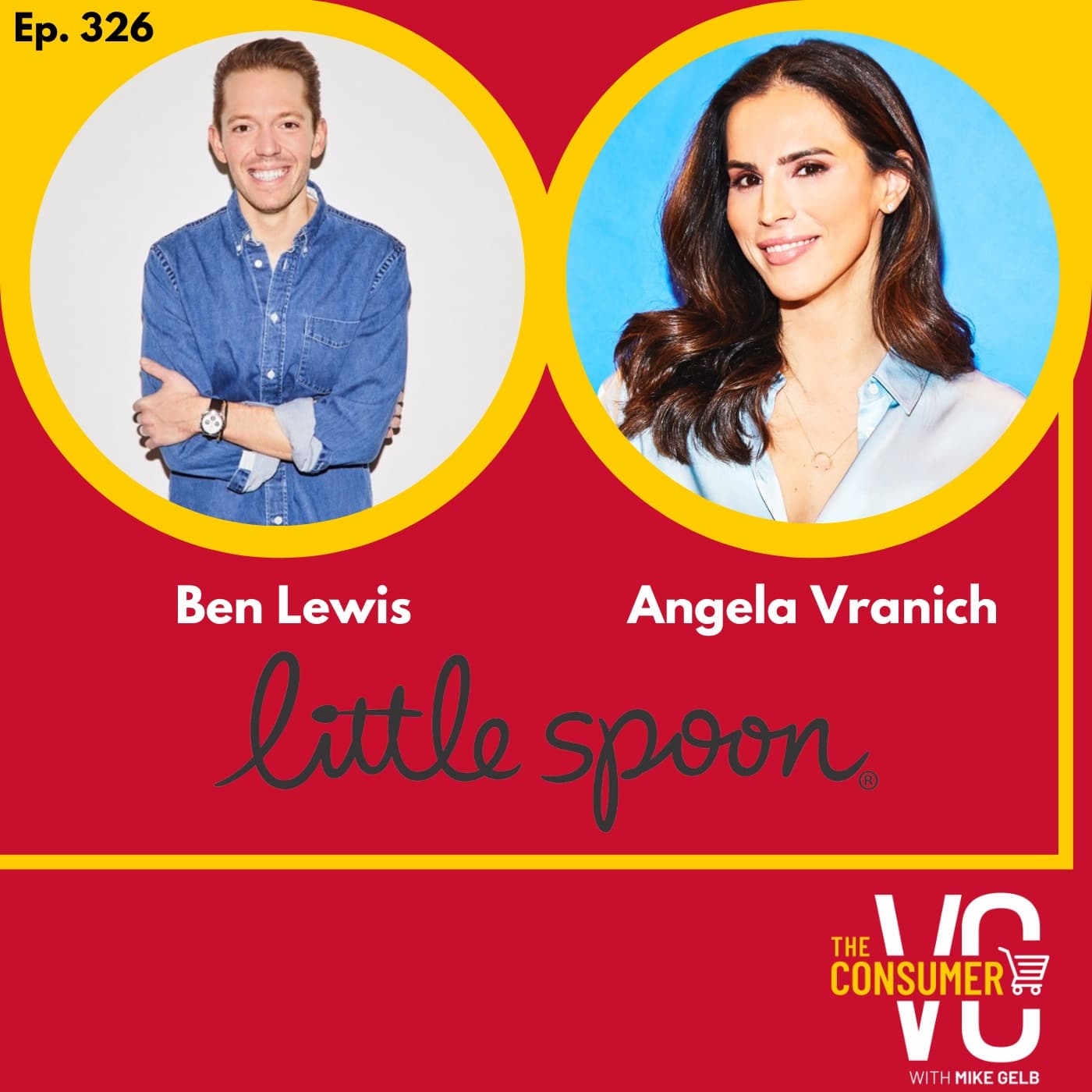
Episode Overview Title: How They Built a Direct-to-Consumer Baby Food Brand and Scaled to Selling Millions of Products Each Month with Angela Vranich and Ben Lewis From Little Spoon Description: Angela Vranich and Ben Lewis share their journey as co-founders of Little Spoon, a direct-to-consumer baby food brand. They discuss the evolution of their personal relationship into a business partnership, the challenges of entrepreneurship as a couple, and their approach to revolutionizing the baby food industry.
Key Guests
- Angela Vranich - Co-founder of Little Spoon, responsible for product innovation and marketing.
- Ben Lewis - Co-founder of Little Spoon, CEO with a background in operations.
Discussion Highlights
- Building a Partnership
- Personal and Professional Dynamics:
- Angela and Ben's partnership began in high school, evolving into a romantic and then a business relationship.
- They discuss the advantages and challenges of working with a spouse, emphasizing trust and shared vision.
- Complementary Skill Sets:
- Ben focuses on operations while Angela handles marketing and product development.
- Their distinct roles have allowed for efficient collaboration and clear division of responsibilities.
- Entering the Baby Food Market
- Market Gap Identification:
- The baby food industry had seen little innovation for decades, dominated by legacy brands like Gerber.
- They recognized a demand for fresh, clean, and healthy baby food that mimics homemade products.
- Initial Product Offering:
- Launched with 10 SKUs aimed at babies aged 6 to 12 months.
- Products included pureed baby food using cold pressure processing technology to maintain freshness.
- Direct-to-Consumer (DTC) Model
- Choosing DTC Over Retail:
- Initially considered retail but opted for DTC to better address consumer needs and maintain control over branding and customer relationships.
- The modern consumer is likely to research and purchase baby food online, making DTC a more strategic choice.
- Subscription Model:
- While not initially planned, they pivoted to a subscription model to provide ongoing value and convenience to parents.
- Allows for tailored product offerings as children grow and transition through different eating stages.
- Product Expansion
- Evolving Product Line:
- Expanded from baby blends to include toddler meals (Plates) and bite-sized foods (Biteables).
- Aimed to keep families engaged throughout various stages of childhood with additional product categories.
- Financial and Marketing Strategies
- Balancing Growth and Profitability:
- The company focuses on disciplined financial management, ensuring that marketing expenditures yield a clear return on investment.
- They prioritize customer acquisition costs and adjust spending based on performance.
- Navigating Market Challenges:
- Acknowledgment of rising customer acquisition costs and adapting strategies accordingly.
- Emphasis on building strong customer relationships and leveraging data to inform marketing decisions.
- Industry Trends
- Growing Competition:
- Since Little Spoon's inception, the landscape of baby food options has expanded, leading to increased competition.
- They view this as positive for consumers, as it leads to better choices and innovations in the sector.
Key Takeaways
- Partnership Dynamics: Successful business partnerships often stem from shared values, complementary skills, and clear communication.
- Consumer Insight: Thorough market research and an understanding of consumer needs are crucial for identifying gaps and opportunities in the market.
- DTC Model Benefits: Direct engagement with consumers can enhance brand loyalty and streamline product feedback and innovation.
- Financial Discipline: Maintaining profitability while pursuing growth requires careful management of resources and strategic decision-making.
Conclusion Angela Vranich and Ben Lewis provide invaluable insights into the challenges and rewards of building a successful DTC brand in the competitive baby food industry. Their journey highlights the importance of innovation, partnership, and customer-centric strategies in achieving sustainable growth.
---
For more episodes and updates, visit [The Consumer VC](http://www.theconsumervc.com) and follow Mike Gelb on [Twitter](https://twitter.com/MikeGelb).
Written by AI. May contain mistakes. Listen to the episode to check what was said.
Transcript
Automatic transcript. May contain errors.0:07Um, you know, business is a partnership. is through, you know, living and breathing your business. And, um, and so, you know, why not do it with someone who, you know, you, you, you love and trust and, and know inside and out and, and live with. So, you know, we're, um, you know, and there, there's probably some notable downsides of building a business with your spouse, um, but, uh, maybe for another time, but, uh, but over a drink perhaps. But, but, you know, I think that there's so many advantages to it as well. And, and I think a lot of it just comes back to like what it takes to build a successful business and to really, you know, get something off the ground and scale it.
0:54It takes a lot of time and grit and persistence and hours and, you know, having your partner be along that same track with you. And it's a really cool, powerful thing. I mean, I don't even know how we would do it otherwise, because I think we wouldn't have the same level of sort of appreciation about what each other, what each of us are putting into it and going through. And so, yeah, it's just like super helpful. I think it's honestly in a lot of ways a competitive advantage. Hello, I'm your host, Mike Gelb, and this is The Consumer VC, where we discuss the intersection of venture capital and consumer innovation.
1:40This show is brought to you by Propeller Industries, the leading strategic finance and accounting partner for venture stage companies. Now, I know this is free content, but that doesn't mean I don't have a favor to ask. If you're enjoying the show, please subscribe on YouTube or whichever channel they're listening name from. And if you want the full experience, subscribe to the newsletter at theconsumervc.com. I'll send fundraising updates all in the consumer space, and you'll also receive new episodes straight to your inbox. All content episodes are for informational and entertainment purposes only and is not investment advice.
2:15Our guests today are Angela Vrenick and Ben Lewis, the founders of Little Spoon. Little Spoon creates clean and healthy options for babies and kids at every eating stage with no corners cut and delivers over a million products for families doorsteps each month. That is wild. Now we discuss why they were so focused on the DTC channel, their approach to mapping out their supply chain early on and also financing their growth, where they're at today and where they're headed, how they think about growth in the future, whether it's DTC or in retail. Without further ado, here are Angela and Ben.
3:01Ben and Angela. Angela and Ben, thank you both so much for joining me here today. How are you? Great, Mike. How are you? Nice to be here. Nice to be here. Doing well. Doing well. So let's start from the very beginning. What made each of you curious about consumer brands and what got you both into working with consumer brands? In what variety? Yeah. So, I mean, I'll start. I kind of always been, always sort of thought of myself as being an entrepreneur. I feel like it was sort of, I didn't know, I had no idea what I wanted to do when I was a kid, but I knew that it was something for myself. I knew I wanted to build something.
3:42I kind of accidentally entered the world of sort of CPG and consumer brands back in beginning of end of high school beginning of college I started a bottled water brand with with a couple of friends who I went to high school with and we were like literally just making deliveries out of the backs of our cars and kind of just started out as this, this little, this little project that we got into one thing led to another, we got into Whole Foods. And that was sort of like, my mind was blown, right? That was sort of like the entry point into this, this whole world. And then that kind of led me down a few different, a few different paths.
4:26And I mean, basically just got really sucked in, I guess, in some ways into the world of food and beverage and really always gravitated towards sort of the brand side. I mean, as a consumer, I definitely am someone who's, you know, like, I love going to the grocery store. I love like literally seeing what's on the shelf, seeing what people are buying, understanding sort of the different sort of niches that that brands are filling. And, um, and so, you know, why we, why Little Spoon is maybe, uh, a different, a different conversation. We can kind of walk you through the opportunity and why we, why we decided to start this.
5:12Um, but, um, but I would say if it wasn't Little Spoon, it would probably be something else in this, in this world. Um, just because it was sort of, it got me, The bug got me. Yeah. And I mean, Ben and I are a couple and we've known each other, it feels like forever. So we've known each other since the end of high school. So I knew him when he had his bottled water brand in high school and watched him start several other companies in the food space after that. And when I was in college, I started a marketing company for natural and organic food and beverage brand. So that was kind of my first lens into the natural products industry and really got me, you know, looking at, at different foods and tracking trends.
5:56And, um, you know, I knew I always wanted to start something of my own, but I would say that was kind of my first foray into the space. And yeah. Yeah. So, I mean, I know, um, um, that's, that's awesome. I know that, uh, you, you, you both were, you know, a couple in, in high school and, and, and of course we're, you know, uh, partners all the way up. Um, now obviously you're, you're, you're both married and, And that's amazing. Why did you both kind of navigate towards each other as well on the business side too? And how did that kind of come about with, you know, being a couple and then also starting a business when eventually became Little Spoon?
6:34Yeah, I mean, it's kind of all we know because we've been doing this for so long. I mean, obviously, there was a life before Little Spoon, but we're so all in on this.
6:51And we launched the brand six years ago. We were, of course, working on it before that. And so we've been doing this for a while. And obviously when you're building any business from the ground up, you know, let alone, you know, a consumer brand, you got to go all in. It's, you know, it really takes a lot to, I mean, in a lot of ways you are kind of devoting a big chunk of your life to building. And so I think we, I'd like to say that we thought it all through fully before we got into this, but that would probably be giving ourselves a little too much credit. I think that ultimately, though, at least sort of in reflection, the awesome thing about building a business with your partner in life is that business is a partnership.
7:51And again, you're building something. You're taking it from literally an idea to you're creating something out of nothing. And the only way to do that outside of just pure luck is through living and breathing your business. And so, you know, why not do it with someone who, you know, you love and trust and know inside and out and live with? So, you know, we're, you know, and there's probably some notable downsides of building a business with your spouse, but maybe for another time, but over a drink perhaps. But, you know, I think there's so many advantages to it as well. And I think a lot of it just comes back to what it takes to build a successful business and to really get something off the ground and scale it.
8:44It takes a lot of time and grit and persistence and hours and having your partner be along that same track with you. And it's a really cool, powerful thing. I mean, I wouldn't, I don't even know how we would do it otherwise. Cause, um, I think, you know, we wouldn't have the same level of sort of appreciation about what each other is, you know, what each of us are, are, um, putting into it, putting into it and going through. And so, yeah, it's just like super helpful. I think it's honestly, in a lot of ways, a competitive advantage. That's amazing. Um, well, how, how, when you both decided, okay, we're both going to start this business together.
9:25How did you think as well about responsibilities, making sure that as well, you know, Ben, you don't kind of interfere with maybe Angela's domain and like, and kind of vice versa? I think our skill sets are pretty complimentary of one another. So, you know, Ben is really wonderful. I mean, he's the CEO of the business and he has a great background in, you know, the operations side of the business. He really brought a ton of knowledge to the table. I was more you know into the marketing side of things the brand side of things the product innovation the product creation side of things so I think our skill sets really balanced each other nicely and we really just both fight naturally found you know our paths within the company there there wasn't too much like shared territory yeah I think a lot of like no for sure I think a lot of you know what was shared of course was like the the vision the mission like you know really kind of uniting around some like shared beliefs and a plan but but yeah in terms of day-to-day um even like even in the earliest days and and certainly now um our roles have always looked and still look you know completely completely different from one another um and so Angela's yeah very like she was you know the one that that like developed our initial all the packaging, all the, the, the branding, the, the recipes, I mean, doing all literally the R &D herself in our kitchen.
10:51Um, and I was doing all the, you know, less exciting, less fun stuff, like, you know, capital ops, all the, all the stuff that it takes to actually get it off the ground. Um, so yeah, we, we were, we made a really good team in the beginning for sure. So speaking of, you know, getting the business off the ground from the very beginning, Why did you want to enter the baby food arena and go head to head against Scribbr? What was the insight that kind of brought you to do this? And also, how did you even learn about the baby food industry? Great question. All good questions. So I'll start by saying, and if it's not obvious, I'll say it.
11:40We actually don't have kids. which people find to be kind of funny, a little bit ironic, right? Starting a baby food company, don't have a baby. But, you know, we had, as we talked about, both of us were kind of in and around the food space, saw very clearly that there was a gap in this market. There was, I mean, baby food literally is a category that had not changed in a hundred years. I mean, Gerber, you mentioned, right? They're the sort of incumbent, you know, the big incumbent. Gerber started in the 1920s, essentially creating the very idea of baby food, right? Packaged baby food, you know, in a jar, sold in a grocery store.
12:30And, you know, still to this day, despite so many things, you know, if you look at any other food and beverage category, certainly, or really just the broader consumer landscape, almost every category in every industry has been disrupted. But baby food, you know, at the time when we were just, you know, kicking this idea and opportunity around, baby food was just this space that hadn't changed. I mean, like we were astonished by how little had changed, how little disruption. Meanwhile, I mean, you know, funny, like little anecdote was at the time, you know, we were sort of scratching our heads wondering how and why there were like 10 companies selling fresh pet food and not a single company that had, you know, that was offering a fresh, a fresh option for babies.
13:25And then, and it wasn't just baby food, by the way. I mean, we, you know, that was what we started Little Spoon with. Um, and we'll kind of tell you about our evolution of the business, you know, how the business has evolved and, and, and, and which is a lot over the years. Um, but it was also really notable as, as well, that, that all the, you know, look across the, the kids' food landscape, you look at, you know, companies, um, like Lunchables, um, right. That have been around for decades. Um, so many other legacy brands, you know, look at like, whether it's in the vitamin space or in the frozen food space for babies and kids, like the bar was just so incredibly low.
14:07And meanwhile, you know, I think it's very, it's, it's, you know, an obvious thing to say, but every parent wants the best for their kids. I mean, every, you know, every parent, whether you're, you know, high income, low income, high education, low education, you know, New York City or Arkansas, like you want the best for your kids. And, and I think that also the understanding and awareness about the importance of food as it relates to health and how, you know, we look at our, you know, the, you look at like childhood obesity and stuff. And I mean, you know, we could talk for hours about, about, about the food system and everything.
14:49I mean, not to get too deep, but like, it was just so obvious to us that like there was this market had just not kept up with the times and um and one of the things that was very you know exciting and interesting going back to the pet food example which um you know what what started out as some somewhat of a head scratcher turned into like it clicked it was really obvious it became obvious why there were so many companies in the fresh pet food space is because a lot of, you know, a lot of folks that before they're ready to start families, before they're ready to actually like, you know, get married and, and start, you know, you know, like have kids and build a family often are having, um, often are, you know, getting a dog.
15:38Right. And that's kind of a very natural evolution. It's certainly one that, um, we did and we can relate to. And, um, a lot of, I mean, that was just, that was, that's just like, that's a, that's a societal norm. And so the, the, the light bulb moment was like this, the same sort of consumer segment that has driven the disruption in the pet food space. And those were, that was still very early days in that market. That same consumer is probably, you know, some number of years out from being ready to have, you know, babies and kids and build a family. And we know the types of sort of values and needs and wants and expectations that this generation of parents have.
16:21It just simply wasn't being met by the big legacy brands in the market. Yeah, it also seems to like an understanding of, okay, if parents, if, you know, pet parents want, want their pets to eat healthy, healthy, nutritious meals, right, then probably they're going to want to even 10x that for their, for their actual kids, right, and make sure their actual kids are, are actually eating healthy, nutritious meals. So totally, totally get it from like that lens. So talk to me a little bit about too, what was the initial product set that you launched with and really the part in the kind of age group from a baby that you really wanted to kind of first focus in on and target?
17:07Yep. So we launched with an initial set of 10 SKUs, so 10 baby blends or baby food purees. And we're really targeting that, you know, 6 to 12 month old baby. Babies typically start eating purees around 6 months and wean off, you know, around 11 or 12 months whenever they start solid table food. So launched with initial set of 10 SKUs, but it became clear very, very quickly that we needed far more offerings because kids typically start with a single ingredient puree. They'll move into some simple combinations and then they'll move into textures. And then parents want to keep introducing new and exciting.
17:49And that's just within that baby puree stage, right? Our baby blends product. Right. Not to mention all the other sort of use occasions and eating stage evolution that that kids have as they go from sort of the six-month-old baby to the nine-month-old baby to the toddler and so on. It's, you know, those needs are constantly changing. So, yeah, we could definitely walk you through sort of how we evolved the product offering over time because it's changed considerably. But one thing I'll just note, when Angela mentioned baby blends, You know, we this was our this was our first product category, like she said.
18:35And and really the sort of very simple way to explain how that differed from what was in the market is it was it was made fresh. So we leveraged basically like a cold pressure processing technology that. at the time was becoming popular with a lot of like cold pressed juices and hummus and dips and salad dressing brands they were all utilizing this cold press technology to really take products that were found traditionally in the inner aisles of the grocery store that were you know shelf stable and bringing them to the refrigerated set so um we utilize that technology to really make like a fresh baby food product that was reminiscent as if a parent were to make you know purees and fruits and vegetables at home themselves.
19:20It seems like a pretty off the ground, it seems like a pretty tough business because you have a multiple amount of like SKU assortments or product assortments for the children, for the kids. And it's not actually like a long period that people would use your product. I know the product now has expanded and I certainly wanna talk about that. But it so, you know, eventually they might, you know, churn maybe like three, six months afterwards from that. But so you have to have enough variety for parents to be introducing new types of new types of foods for their kids. Is that is that right? Yes, that's exactly right.
20:07So, you know, we launched with that initial set of 10 SKUs and today we have, you know, around 50 just in our baby blends, like baby, pureed baby food line alone. And that's one of seven categories that we offer today, right? So you can imagine, yeah, like 10 SKUs to 50, one category to seven, you know, all in all we've got, you know, upwards of what, 120 SKUs across our, you know, full range of products. And that's really been a huge driver of growth for us, right? It's like being able to be that, you know, really what I would describe and what I would say is really kind of the first and only of its kind in terms of being an end-to-end system or platform of products so that, you know, somebody can come to littlespoon.com when their baby's having their first bites of food and we will basically, you know, they can, they can stay with us as their kid, as their, as their baby grows.
21:12You know, again, the baby becomes a toddler before, you know, it, the toddler becomes an older kid. And then, you know, that same family maybe has a second kid, third kid. And so we're, they're able to stay on our platform and we're able to continue to serve their needs as the kid, as the kid grows. But, but also just through, you know, other use occasions. You know, we have gone from, you know, we not only have our meal offerings, but we've got, you know, we're a wide array as well of sort of more occasional products. Our smoothie pouches, for example, are, you know, we've got snacks, we've got, you know, puffs for babies.
21:54We've got a whole bunch of stuff that really keeps our, you know, keeps our customers more ingrained and allows us to get, you know, frankly, a lot more ingrained in our customers' lives, which has been, you know, not only very rewarding in terms of the connection that we've been able to, you know, build with our customers, but of course, you know, from a business standpoint, it's enabled us to build, you know, a really powerful, a really powerful business through our product offering. Can you walk us through how you expanded in terms of the different time periods for a baby and a child's life?
22:32I know that the initial use case was purees or from the moment a baby was able to actually start eating and maybe wean off the bottle or was having purees in conjunction with bottles. But what was the next age group that you all wanted to target and why? Yeah, so I mean, the natural next age group that we wanted to target was your toddlers. So we really wanted to make sure that we were keeping our baby customers within our ecosystem and serving up products to them that made it easy to help that transition from curate to table food. So it's interesting, actually, the next product that we launched after our baby blends, we launched the baby food in 2020.
23:18Sorry, we launched the baby food in 2017. And the next product we launched was in 2020. And that is our product line that's called Plates. And so Plates are ready to heat meals for toddlers. So everything from macaroni and cheese with hidden butternut and carrots in the sauce. We have our chicken super nuggets that have kale, cauliflower, and carrots hidden inside of them. More global flavors. We have chicken tikka. We have chicken dumplings. All types of, you know, we have about 30 ready-to-heat plates for toddlers. So we launched those in 2020. It was a great success. But one interesting thing that we saw was that parents were still kind of dropping off when their babies were around 12 months.
24:02And they were finished with the baby blends. And then they were picking back up on the plates maybe, you know, six or eight months later. So we saw that there was still kind of this gap there. And we realized, you know, the plates were maybe a little too advanced for a child just weaning off purees. So last year we launched a line of products to kind of fill in that gap, which is our line of biteables. And so those are really tiny cut to size fruits and animal proteins that are really designed to help children. vegetables really designed to help children um you know develop their motor by motor skills pinch or grasp chewing chewing things gnawing on things and so um we found that since we've we've launched that product line we really see parents coming to us going from you know the blends to the biteables and now to the plates and of course as Ben mentioned earlier we also have a line of smoothies which are fruit and vegetable purees in a pouch we have a line of shelf stable snacks that are targeted more towards school age, as well as build-it-yourself lunches.
25:04So really creating products to keep people within our ecosystem and carry all the way through. This episode is brought to you by Propeller Industries. If you run a high growth business and you're focused on profitability, extending your runway, and improving your operational efficiency, you probably need a finance and accounting whiz that will grow with you. Well, instead of hiring someone full-time, what would be cost-effective is working with Propeller Industries. Propeller Industries is a leading strategic finance and accounting partner for venture stage companies and has partnered with over 1 ,000 startups and high-growth businesses across consumer products, consumer tech, and enterprise.
25:41Some of the brands that they've worked with are Liquid Death, Olipop, Hymns, Farmer's Dog, Away, MoviePass, and Giphy. Propeller also provides specialized support for fundraising and M &A with transaction advisory services. Propeller's TA team of former investment bankers and investors can step in on more of a project basis when pursuing full-scale financing and M &A. There's a link to Propeller Industries in the show notes if you want to learn more information. Was subscription kind of... I know that you all boast... I mean, you all have millions of subscribers, which is so impressive and absolutely incredible.
26:19was the was the goal from the very beginning to think about this product as a subscription type product where you actually then kind of uh parents keep subscribing throughout the kids um out out of child's development or or did that kind of come a little bit later when when thinking about yeah so it's interesting i mean subscription you know in the subscription i guess the short answer is we were not, we were not set on subscription in, in the beginning. Um, in subscription, you know, after we decided that we were going to build this business as a D to C brand on, you know, an e-commerce brand, um, which, you know, wasn't, you know, day zero.
27:05I mean, that, that was, we, we were sort of, we, we were evaluating, you know, do we want to go D to C? Do we want to go retail? And we did toy around with going retail, but that's, we can come back to that if we have time. But, but in terms of the D to C piece, yeah, subscription was, was definitely not something that we were set on. It was, but it became clear that we have a product offering that was really, truly conducive to subscription. And I think that, you know, You see today a lot of companies that offer their product as a subscription, I think mostly because they want to be, because they think that's the right business decision.
27:55That's fine, but I don't think that you build a great brand by being subscription for the sake of being subscription. I think that, you know, subscription is obviously can be a great business, but it really has to, you know, it's like, what does your customer want? What fits their life? And, you know, they're really solving the, you know, the pain point here. And we knew that, you know, this was the type of our product offering. I mean, even in the baby blend stage alone, let alone, you know, with all the other products, having a subscription really allowed it, you know, really allowed us to, you know, fulfill our mission even better.
28:35which, you know, our mission is to make it easy for parents to keep their kids healthy, you know, making their life a little bit easier by having something that is on autopilot, that they can, you know, just stay on a platform, you know, that we can tailor the offering to the kid at different eating stages. Like we know, you know, if you tell us that your kid is five minutes old and they've never tried solid food before, we're going to give you a different set of products and a different, you know, we're going to make different recommendations than we would if you tell us that your kid is nine months old and, you know, has been eating purees for months.
29:20And so just being able to really kind of tailor the experience and then, you know, keep that customer really engaged and provide value back through the subscription offering outside of the convenience itself. But, you know, educate them and just make things, again, just like a little bit easier along the way. So, yeah, for us, subscription wasn't a foregone conclusion, but it was something that, you know, just made a ton of sense. Well, I'd love to also back up that. I mean, that makes sense also from maybe from a data perspective. you maybe see parents, customers coming back for more and continue shopping.
29:57Why not make this a subscription product as well just to actually ease them and to make it a lot simpler for them so they don't always have to kind of come back each time. So definitely, as you expanded into different age ranges, that totally makes sense in terms of a subscription product. Why DTC from the get-go? Why not retail? I know, Ben, you had experience within retail. Why did you both decide that D2C was the best channel? So it was, I mean, it was a bit of a winding path to get to that decision. You know, it was definitely something we gave a lot of consideration to. We were, I mean, in full transparency, we were originally planning to launch Little Spoon in retail.
Read the full transcript
30:49And D2C was kind of, you know, going to be something we were going to do sort of in tandem to that. And there was a whole set of reasons why we ultimately the retail kind of we ran into a couple of speed bumps that felt really problematic at the time. But actually looking back on it, it ended up being sort of the best thing, the best problems that could have ever happened because it really forced us to take a hard look at the merits of retail versus D2C. And so, you know, we decided to build out the D2C side of the business. We kind of had some active conversations going on the retail side. In fact, I mean, we had some very large retailers that had wanted to bring our products in and, you know, ultimately decided that, you know, D2C was going to be the best way to build this business.
31:56And the reason isn't, there's a whole variety of reasons as to why we made that decision. I think one of them at the time, though, was, you know, fresh baby food. No one was selling fresh baby food. It didn't exist. There was no destination for fresh baby food in the grocery store. So if we were to sell our product in the grocery store, it might get stuck in the produce section or with the juice or with the yogurts. And so if someone's walking in to seek out your product, there's a good chance that they're probably not even going to be able to find it because it's going to be hidden. It's not going to be in a consistent place every time that they're walking into a grocery store.
32:35And when we took a step back, it was like modern and parents are really educating themselves online. Baby food is a premeditated purchase. They are doing their research. They know exactly what they want to buy before they're walking into the grocery store. And if they're doing their research online, we want to be the first thing that they see whenever they're Googling what baby food should I feed my child. And we want to make it easy for them to buy our product. And so that was really kind of the thought behind, okay, I I think direct-to-consumer is going to be the way that we built this business to really make it convenient and easy for the modern parent.
33:10And not only that, we'll have a direct relationship with them. So we'll be able to educate them along the way as we launch new products. We'll be able to tell them very easily about these new products. It really just made a ton of sense the more we thought about it. Yeah. No, that makes sense in terms of from the beginning on retail versus D2C. I believe now you're still exclusively DTC. Is that right? We are exclusively DTC, yeah. So why, it is quite interesting in this climate in terms of what you kind of hear out there in that, oh, we want omnichannel brands, for example, how that's kind of become the range.
33:50And DTC brands going in towards retail and maybe different sales channels and not just selling exclusively on DTC. But it seems like you all almost double down on DTC. with the subscription side and with your overall platform. I understand from the beginning why doing D2C over retail maybe makes sense. I'm just curious now in terms of today, why it still makes sense D2C when it seems like brands are looking for other channels to actually sell their products in. Yeah. Yeah. I mean, it's a great question. Look, I think that we are, DTC has worked really well for us. I realize it's very, DTC is, you know, I think there's pros and cons.
34:39I mean, DTC is a very difficult and competitive business. Retail is a very difficult and competitive business. And they're difficult in different ways. And so we have been sort of just of the belief that being focused and doing one thing really well, like owning that online space is the winning approach in this market. And that's not to say there's not also a winning approach in retail that, you know, others are sort of trying to figure out. And it's not to say that we might never decide to go into retail either. But, you know, our focus, you know, over these last six going on seven years has been really, you know, listening to our customers, which, by the way, is 10 times easier to do when you actually have a direct line with your customers and they have a direct line to you.
35:51And so, you know, listening to our customers, just to kind of double click on that. I mean, just, you know, as you mentioned, I mean, we have like, we've delivered more than 50 million meals. We're feeding, you know, about 2.9 % of babies in the US right now. That's a lot of families on the Little Spoon platform that we're directly engaging with. These are people that we, you know, like they text us, we text them. We have deep, you know, not saying SMS is the most novel thing, you know, in 2024, but we have these like really deep connections with each and every one of our customers. We don't have to wonder who's buying our products.
36:31We don't have lagging data on our sales. We see it in real time. And so we're able to like listen and react very, very quickly. We can, we can very quickly, you know, kind of establish proof of concept around an idea and launch something, you know, get traction on a new product or the new product category very quickly because we not only, you know, are we in this, you know, we have this direct relationship with our customers. So it's easy to, you know, hear their needs and respond to their needs. And then, of course, also sort of capitalize on that through on the business side. Um, but, um, it just, it allows, I think us to move really a lot faster, um, than we would otherwise would if we were to be, you know, traditionally, you know, more of a traditional kind of retail business.
37:38And again, that's not to say, you know, that approach also couldn't work and it does, and it certainly does work. Um, we know it does, but, um, but it's just a different, It's a bit of a different animal. And we really like what we have going on over here. Yeah. I mean, I think it's very rare in an amazing way to have a food and beverage company of your size that's been able to exclusively sell D2C and actually make it work. Because a lot, I think of food and beverage, I know that that's a large category or if people want to call it a category, several categories. But it's really hard to excel D2C-wise just because you may not be able to actually generate from the actual overall basket.
38:25It may not actually be worthwhile selling online versus retail. Of course, over the past few years on the marketing side for D2C has faced a couple of big challenges, especially with CACs going up and also with the 14.5 update, everything that's happening there. How do you overall think about your approach to marketing and CAC in terms of, do you feel like you've had to cut the amount of spending you've had to do over these past couple of years or maybe ramp up because it's going really well? How do you approach your marketing the past couple of years? Yeah, it's, it's, um, I mean, it definitely hasn't been easy out there.
39:12Um, and you know, we, I think come back, I come back to some of the same principles that we, you know, sort of we tell our team and we, we, we, we think about internally and, and, and even thought a lot about in the early days. Um, but much more so now at scale is, is, you know, we having, I mean, we think of our marketing spend largely, and I think that you're probably referring primarily to like performance marketing, marketing, you know, paid acquisition, right? Meta, Google, TikTok, all those things, right? All of that, any dollar that we're spending in that arena needs to deliver a very clear return on investment.
40:05And we are very disciplined about how we sort of rationalize decisions around marketing spend to know that there is a direct impact associated with every dollar that we spend. So we need to believe that if we're going to deploy a dollar or incremental dollar into a marketing channel, that that channel or that the collective mix of our marketing is going to yield, you know, some amount more than that dollar investment in pure contribution margin profit, right? And pure profit dollars. So like every company has their own economics, but, you know, for us, it's, you know, and, you know, over time, I mean, the bar has kind of gone up and up and up.
40:54I mean, self-imposed. We want to continue, you know, as the business grows, we sort of, you know, think it's only fair that we're holding ourselves to a higher standard as time goes on in terms of improving the efficiency of the business overall. that even if CAC is going up, you need to find other ways to combat that, whether that's, you know, increasing your average order value, whether that's increasing the frequency that your customers are purchasing from you, whether that's improving retention or all the above, right? All of these things help to, you know, offset that acquisition cost. And so we look at customer acquisition as really being an investment.
41:42It's sort of like a machine that we can put a dollar into and get, call it$2 out or$3 out or whatever. Different time intervals yield different sort of returns, right? But we are always looking at the positive return associated with our, of our marketing investments. And so that's kind of the sort of general point of view, I think, you know, and it's great because again, being full EV2C, we, that is, we can be experts in that. We can, we know we are, we know we're getting it right. And we have all the data and we, not to say there's a lot of, I mean, there's a lot of unknowns and it's kind of like shifty territory these last couple of years, a lot of things have changed and will continue to.
42:36But as long as we're doing our jobs right and we're staying on top of the trends and on top of the business and sort of being smart about our decisions and being measured with the level of investment we're making, we can really, you know, we can build a real sustainable, you know, a sustainable and profitable business through D2C. um like it can be done and we're doing it and um and other companies have done it too it's just um there just aren't you know frankly aren't a lot of us i mean to your point um uh who have have really kind of stayed you know sort of stuck it out and have been you know i've been able to build something of like real meaningful scale um as a pure play ddc on the fundraising side of things.
43:25Why did it make sense for you all? Well, I would say when did it make sense for you all to first take in outside capital and fundraise? And initially, what did investors find intriguing about Little Spoon? So, I mean, I'll take the first part of the question. You can take the second part if you want. But in terms of raising outside capital, I think it wasn't really something like we, we, we, we knew that there was a really big opportunity here. And the only way that we were going to be able to, you know, like tap into the, this opportunity in a meaningful way was to, was to, was to bring in some outside capital.
44:15I mean, we, you know, put in money of our own in the, in the very, very beginning just to you know like literally you know develop the products and got things off the ground just tamale factory yeah just get going back to that tamale factory um you know some of the early early early days like that that those you know it was self-funded but we're talking pretty small amounts of money in the scheme of things um so we knew that we needed to you know we knew that we needed some, some support, um, financially to be able to, to be able to like really get it off the ground. So, um, and so, yeah, I mean, we, it wasn't really a matter of like, if it was just more like how, who, when, um, and figuring out the specifics.
45:01I mean, you know, it, we didn't raise a lot of money right out of the gate. I mean, um, it was, you know, I think like a million and a half dollars, um, initially and then, um, sort of little drips and drabs from there until we raised, until we raised like our sort of proper like seed round, which was the first time we took in, you know, any institutional money. So, so yeah, I mean, it was, it was, you know, different points in time, kind of different perspectives, but I would say we knew that, you know, there was a really big opportunity here, a really big business to be built. And, you know, keep in mind, again, we were going up against big incumbent brands like legacy brands like Gerber, who, you know, of course is owned by Nestle, you know, a lot of other very large players that we, you know, even our, even our few million dollars was not, wasn't a, even a rounding error to them.
46:03So, you know, we needed at least a little bit of capital just to get, to get this off the ground and kind of prove it out before we could really scale the business and actually take in meaningful investment to double, triple down. And I think what intrigued especially our early investors the most was really our fresh take on this baby food product that had not been disrupted at all. So we were really taking baby food but making it fresh as though parents were making it home themselves, which is a product that did not exist at all. And at this time, and especially at this time in the natural products industry, you know, the juice categories were exploding, dips, salad dressings.
46:45It was like really like this new frontier for fresh foods. And a lot of similar companies were getting investment and people were really excited about that. And so I think initially that's really what made our first investors very excited about Little Spoon. how how has it seemed like landscape has changed a lot since um since you all first started like in terms of a number of um of uh brands that maybe are offering fresh or or better for you uh uh food for for babies how do you think about the landscape today it's definitely changed a lot you're absolutely right and it's um and and it's about time because like again this was just this space hadn't had seen so little change over such a long period of time that I think if you think about like looking at the change the rate of change in the last sort of five to ten years is I mean it's it's it's kind of long overdue and so we definitely don't think of it as a bad thing we think of it as like a win for parents.
47:56We think that there's room for, you know, a whole bunch of companies to provide better options for parents today. And so, yeah, I mean, like we don't view it as a bad thing. I also think, you know, what we are offering is really an intent solution. So parents can come to us for, and we are the only company that's doing that, the only kids' food company that's doing that. So parents can come to us for their children's first bites and really stay with us all the way until their school age. So we look at the landscape as, you know, we have category level competitors. Yes, there are some, you know, a lot of other companies that have propped up in the baby food space or the fresh, you know, kids meal delivery space.
48:38But there's really not one company that is offering that end to end solution in the way that we are. Yeah, that that makes that makes a lot of sense. It also kind of ties back into why it makes sense to be DTC as well. just so that then you can actually have that kind of lifespan there. Where that if you're in retail and you're in multiple different kind of categories, then it's a bit more maybe spread out rather than, you know, a kind of a seamless experience and kind of understanding all the different categories that you are. Of course, that's one of the advantages with DTC. Yeah, for sure. You nailed it.
49:13I mean, that is one of the things I think that has served us really well being DTC. I think if we were, if we were, you know, if we had just remained only focused on Davy Food all these years, I'm sure that we would have launched in retail a long, long time ago because, right, at a certain point you sort of saturate the market, you, you, you know, you need those other channels to help bolster your business and grow. And, you know, fortunately we've been able to grow, you know, 50, 60, 70 % year over year, every single year for the last, you know, five years. And that has been solely DTC. And a lot of that has been through this product expansion and the seamlessness of our platform, which, again, to your point, really is so conducive to a DTC model.
50:15Totally, totally, totally. That makes a ton of sense in terms of why remaining DTC with all the different categories that you're in. One of the other kind of things that gets thrown around, especially in today's market, is this kind of growth versus profitability. I know that for DTC brands, that's certainly something that's been kind of top of mind the past few years since we've seen a little bit of a change in terms of maybe the growth trajectories of some DTC brands. How do you think about this? How do you think about these two kind of concepts based off of Little Spoon and maybe balancing, having to balance that, or if you do have to balance those two things?
50:55I think the balance is really, really important. It's probably more of an art than a science in some respects. And the weighting of the balance is sort of case by case. I mean, what may have made sense for us back in 2017, 18 was a little bit different than, you know, how we think of the world today. But the one thing that hasn't changed is the fact that there's two things always need to be top of mind to an entrepreneur. And I would say the one thing from a Littlespoon perspective that hasn't changed is that we've always been very financially disciplined, I would say. whether you know in the early days that meant just being you know really scrappy it meant you know really sort of like rationalizing every dollar that we spent you know in a you know pretty extreme way even at times and I think that that really has like that has left an imprint on the company like we still operate with some of those same principles and like roic is a good example going back to that conversation about performance marketing um you know it's if we you know if we if you if you have you think about the you know you think about your marketing spend right um and you have a which is which is you know unsurprisingly you know for most for many for many brands um especially growth stage companies whether you're online or in retail but um marketing spend is a big it's a big expense it's one of your biggest um if you have if you if you have an ability to measure the effectiveness of your marketing spend.
53:02And you know that, you know, every dollar that you put towards a channel or put into this sort of marketing funnel is going to yield, you know, some multiple of that in the future. And you know that sort of with, you know, thousands or millions of data points over a long period of time in like very sort of battle tested forecast methodologies, you have, you know, almost like with certainty know that your investment is going to yield, you know, a good result in the future. And so, you know, we have managed to strike a balance, like a very careful balance between growth and profitability, especially as the company has scaled, um, by making sure that we, um, are still applying kind of like common sense, um, common sense, like, you know, frugalness or whatever you want to call it, um, to, um, you know, everything that we do, um, as a business.
54:19But, um, when it comes to some of these like bigger, uh, these bigger line items in our, um, on our, you know, in our PNL, making sure that we, um, can really know confidently that, Hey, if we're going to increase our spend here, um, we know what it's going to yield us. And, um, like if you, if you make that kind of part of your uh you know like like part make that like in culturally and uh functionally embedded in your in your business and in the decision making of kind of every day your team is also thinking about these things um it's super powerful and it makes the balance between profitability it like starts to shift from that sort of more art territory into more of a science territory um so it's a blend of the two and at different stages maybe it's more art than science but for us now it's largely science and um and so and and you know so we um we are yeah we're we are like definitely you know profitability is is ultimately like critically important and you know i uh am am proud to say that we are profitable as a company.
55:35Um, and yet we're still growing, you know, at the rates that I mentioned. Um, but it wasn't easy to get here and it does take a lot of, like, it does take a lot of discipline to do that. And, um, you know, again, even going back to the beginning, I mean, um, the, the way that that discipline manifests itself was very different, but it just also meant like making really common sense decisions about like how we price our products, how we, you know, set up our supply chain and how much we're willing to spend to acquire a customer. You know, it's not endless. Like if our CAC, like it happens, I mean, if our CAC goes above a certain amount, like we shut it off, we pull back.
56:16We are not like just rolling with the punches that we need to acquire this many customers to grow. Like maybe there are some months where we're pulling back. And so we're sort of doubling down when it works and pulling back when it's not. And overall, on the whole, you're able to actually really strike that very delicate balance between these two often pretty conflicting forces of growth and profitability. Yeah. No, that makes sense. First of all, I mean, congrats on being profitable. That's so hard to do. And I feel like, especially for GC brands, that's incredible. And yeah, I can understand that it's kind of a balancing act.
56:55But at the same time, if you really kind of understand on your P &L, everything that's kind of going on, and as well as being able to decide, okay, we're spending way too much here when it comes to our marketing costs and being very, very disciplined. For example, then same time, you can hopefully get there. Obviously, depending on the situation, as well is obviously depending on what the margins are for the business. Well, Ben and Angela, thank you both so much for your time. This has been a lot of fun. Mike, thank you so much. Yeah, great chatting with you. And yeah, thanks for having us on.
57:31And there you have it. It was so great having Angela and Ben. If you're joining the show, please subscribe on whichever platform that you're listening on. And if you're really enjoying the show, sign up to the newsletter at theconsumervc.com where I'll share the latest news and fundraisers that is happening in the consumer space. and you'll be the first to know when each new episode drops. Thanks for listening.
From the publisher
Our guests today are Angela Vranich and Ben Lewis, the dynamic duo behind Little Spoon, as we explore their journey from high school sweethearts to co-founders of a revolutionary baby food brand. Listen in as they share how their early fascination with consumer brands led them to the natural products industry, and how their personal relationship evolved into a successful business partnership. Angela and Ben provide a candid look at the challenges and rewards of building a business as a couple, the motivations that fueled their entrepreneurial spirit, and the key partnership principles that have guided their journey.
Thank you to our Partner –– Propeller Industries https://www.propellerindustries.com/
Propeller Industries is the leading strategic finance and accounting partner for venture-stage companies.
(0:00:01) - Building Little Spoon With a Partner
(0:10:31) - Revolutionizing the Baby Food Industry
(0:19:15) - Expanding Product Line for Growing Kids
(0:32:56) - Direct-to-Consumer Success in Marketing
(0:46:21) - Balancing Growth and Profitability Strategy
Subscribe to Our Newsletter:
https://www.theconsumervc.com/
Subscribe on Spotify:
https://open.spotify.com/show/4Hjm74ZMqodx5UmAeWAOJF?si=e0bd72bc48b341ab
Subscribe on Apple Podcasts:
https://podcasts.apple.com/gb/podcast/the-consumer-vc-venture-capital-i-b2c-startups-i/id1484646914
Follow on Twitter:
https://twitter.com/MikeGelb
Follow on Instagram:
https://www.instagram.com/mikegelb/
Follow on TikTok:
https://www.tiktok.com/@consumervc