In short
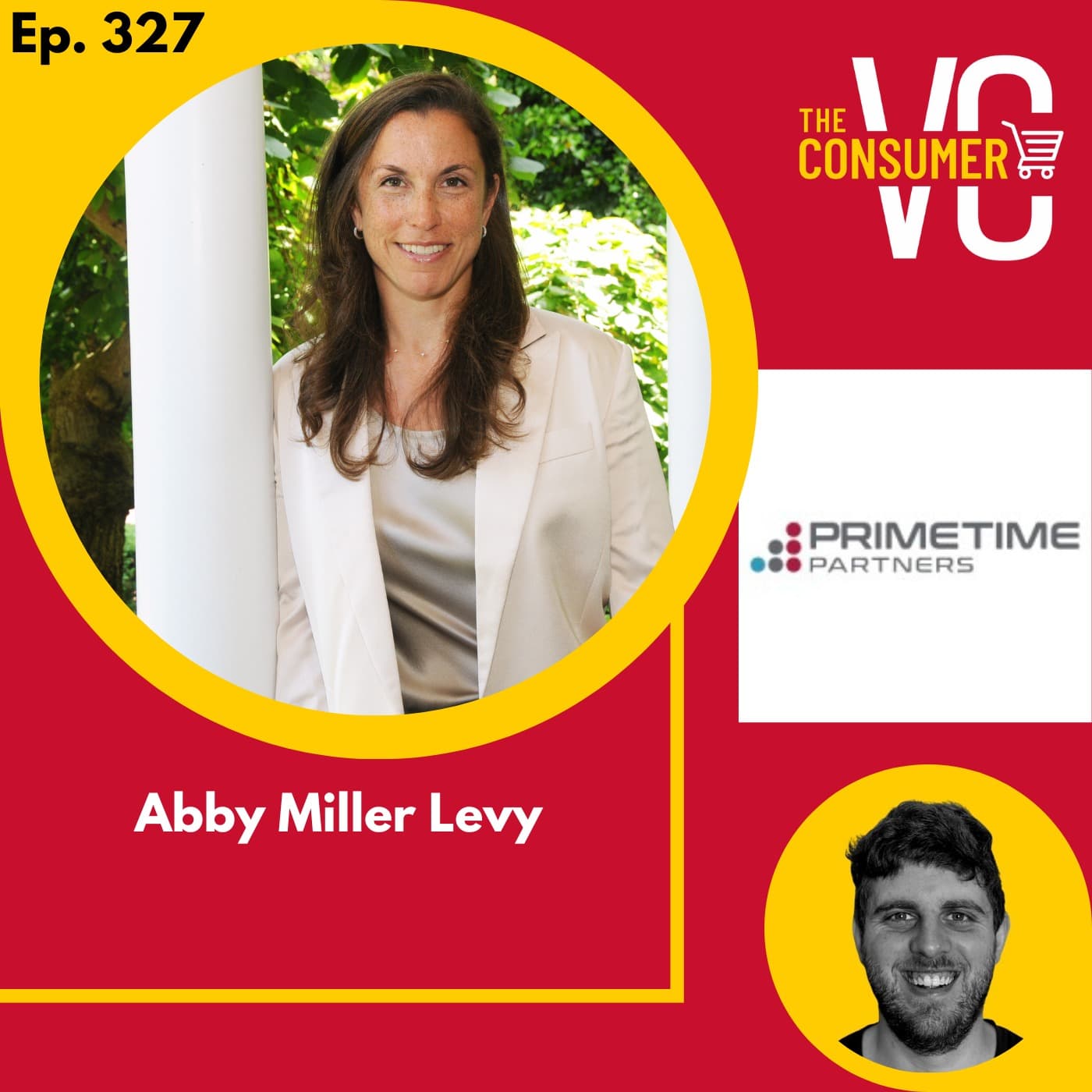
Podcast Episode Summary: Investing in the Future of Healthy Living with Abby Miller Levy
Podcast Overview Title: Consumer VC: Venture Capital I B2C Startups Episode Title: Investing in the Future of Healthy Living with Abby Miller Levy Host: Mike Gelb Guest: Abby Miller Levy, Managing Partner and Founder at Primetime Partners
The podcast focuses on early-stage consumer investing and venture capital, particularly in the B2C sector, with insights from venture capitalists and disruptive founders.
---
Key Themes and Discussions
Introduction to Aging and Entrepreneurship
- Personal Motivation: Abby Miller Levy's journey into venture capital was driven by personal experiences watching her aging parents struggle with a lack of suitable options and opportunities in their later years.
- Frustration and Opportunity: Abby identified a gap in the market for services and products designed for older adults, questioning why entrepreneurs had largely overlooked this demographic.
The Need for Entrepreneurial Innovation
- Connecting Aging with Entrepreneurship: Abby emphasizes the need for entrepreneurial solutions to redefine aging, moving away from the notion that it is solely a governmental responsibility.
- Starting a Venture Fund: Instead of building a single business, Abby decided to launch a venture fund to support multiple startups addressing aging-related challenges.
Key Concepts in Healthy Aging
- Health Span vs. Life Span: There's a growing need to extend not just life expectancy but also the healthy years of life, or health span.
- Longevity Predictions: Studies indicate that a significant portion of the population will live to 100, necessitating new approaches to health care, retirement, and housing.
Investment Focus Areas
- Health Tech Investments: Primetime Partners allocates two-thirds of its fund towards health tech, emphasizing the need for a shift from a "sick care" to a "well care" system.
- Key Areas for Investment:
- Brain health
- Weight management
- Proactive health care
The Role of Personalized Medicine
- Cynogenics Case Study: Abby discusses an investment in Cynogenics, a longevity clinic focused on personalized health care through regular blood tests and tailored health recommendations.
- Preventative Health Care: Emphasizes the importance of understanding one's health and the potential for democratizing access to personalized medicine.
Regulatory Landscape
- Telemedicine Growth: The COVID-19 pandemic accelerated regulatory changes that made telemedicine more widely accepted and reimbursed, creating opportunities for innovation in health care delivery.
- Family Caregiver Support: Regulatory developments are increasingly acknowledging family caregivers, who play essential roles in the care of older adults.
Challenges in Marketing and Building Brands for Older Adults
- Ageism in Marketing: Abby highlights the underrepresentation of older adults in marketing strategies, despite their significant consumer spending power.
- Building Trust: Brands targeting older demographics need to build trust through partnerships and community engagement rather than simply focusing on product features.
Future Opportunities
- Workforce Longevity: There is a need for solutions that support older workers, allowing them to remain in the workforce longer.
- Housing Solutions: Innovations in co-living and community-based housing models for older adults are crucial for improving their quality of life.
- Risk Management and AI: The potential for AI to predict health issues and manage risks related to aging is an exciting area for future investment.
Lessons from Previous Experiences
- Community Building at SoulCycle: Abby reflects on the importance of creating community experiences that foster loyalty and recognition in business offerings.
- Thought Leadership from Thrive Global: Emphasizes the importance of having a strong message and point of view to drive change and engage audiences effectively.
---
Conclusion and Key Takeaways
- Market Potential: There is a significant opportunity for innovation in products and services for older adults, driven by demographic changes and increasing life expectancies.
- Investment Strategies: Focus on early-stage investments that engage with the aging population through health tech and community-driven models.
- Social Responsibility: The imperative to address ageism and improve the overall experience of aging is not only a business opportunity but a societal necessity.
Abby encourages entrepreneurs to connect with her at Primetime Partners to discuss ideas and solutions targeting health span and wealth span challenges for the aging population.
For more insights, updates, and future episodes, listeners are encouraged to subscribe to the newsletter at [theconsumervc.com](http://www.theconsumervc.com).
Written by AI. May contain mistakes. Listen to the episode to check what was said.
Transcript
Automatic transcript. May contain errors.0:00I have been very interested in the topic of aging prompted by my own personal experience of watching and supporting my parents as they age. And I was pretty dismayed that the experience is lacking the robustness of offers that exist at other life stages. We have always thought about aging and older adults as really the government's responsibility, what entrepreneurs can bring to the table. And so I said, where's the entrepreneur in this? Why are we not seeing amazing companies being built and designed for to redefine how we age? And so that's how I got started in this kind of connecting aging with entrepreneurship.
0:32Instead of starting a single business, maybe I should start a venture fund to back dozens of businesses. That's kind of how I got interested in this space. It started from my own personal experience, frankly, to frustration, to identifying a solution. Hello, I'm your host, Mike Gelb, and this is The Consumer VC, where we discuss the intersection of venture capital and consumer innovation. This show is brought to you by Propeller Industries, the leading strategic finance and accounting partner for venture stage companies. Now, I know this is free content, but that doesn't mean I don't have a favor to ask.
1:04If you're enjoying the show, please subscribe on YouTube or whichever channel that you're listening on. And if you really love the show, I highly recommend subscribing to the newsletter at theconsumervc.com. There, I send fundraising updates of all the latest deals in the world of consumer and even brand expansions that are happening. You'll also receive new episodes straight to your inbox. All content and episodes are for informational and entertainment purposes only. It is not investment advice. Our guest today is Abby Miller-Levy, who is a managing partner and founder of Primetime Partners.
1:37Primetime Partners is an early stage venture capital firm focused on the aging sector. Previously, Abby spent her career helping businesses and consumer brands grow as an operator. She was a senior executive at SoulCycle. She also co-founded Thrive Global with Ariana Huffington. I'm very excited for this episode. This episode is a breakdown of investing in the aging sector. Without further ado, here's Abby.
2:05Abby, thank you so much for joining me here today. How are you? It's great to be here, Mike. Thanks for having me. Oh, really, really appreciate you spending time today. So talking from the very kind of beginning from your primetime partner's journey, what was the aha moment or the attraction to actually starting your own venture capital firm and primetime partners and also focusing on this particular consumer segment? I have been very interested in the topic of aging, prompted by my own personal experience of watching and supporting my parents as they age. And the big aha moment was about five years ago when I recognized that my father, who had been retired for about 15, 20 years previously, that there wasn't as much kind of of a role for him in our society when you're not in the working role.
3:03And so it just beg the question of in our 60s, 70s, 80s, 90s, you know, because as healthspan and lifespan increases, we're going to have potentially up to a 50 year retirement. What does that look like? What does that mean? And so it kind of started with this question for how should my dad spend his time to then really a deep dive into what does aging, the experience of aging really mean. And I was pretty dismayed that the experience is lacking kind of the robustness of offers that exist at other life stages. And a big reason for that is that, well, part of it is ageism, of course. But another part of it is that we have always thought about aging in older adults as really the government's responsibility.
3:47and as the government's responsibility, you know, that's very different than what entrepreneurs can bring to the table. And so I said, where's the entrepreneur in this? Why are we not seeing amazing companies being built and designed for, to redefine how we age? And so that's how I got started in this kind of connecting aging with entrepreneurship. And then it became pretty obvious that as opposed for me as a former entrepreneur, I'd started a business before with Ariana Huffington. I'd always been in kind of smaller growth businesses like OXO and SoulCycle. So instead of starting a single business, maybe I should start a venture fund to back dozens of businesses.
4:24And it was great because I floated this idea by a good friend of mine from business school, John Patrickoff. And he said, wait, that's what my dad wants to do. And Alan Patrickoff is a notable venture investor. He started first the private equity firm, Apex, which is now a global multi-billion dollar firm, as well as he started Graycroft, the large venture firm. So Alan and I teamed up. We had known each other previously since he had been on my cap table at Thrive Global. And so we teamed up to start the business. So that's kind of how I got interested in this space. It started from my own personal experience, frankly, to frustration, to identifying a solution.
5:01I really appreciate that, how that went from personal and then all the way to actually seeing a real opportunity within this segment. Can you talk a little bit about when you were thinking about what experiences were actually missing for your father and also for other people of that age? What do you actually mean in terms of experiences that you would have liked to see and how that actually develops into maybe real problems that are actually worth solving? So if you think about, you know, this question of longevity, it's really a question of both health span and wealth span. Those are really the two biggest challenges as we start to push, you know, our numeric age that we live to.
5:49There was a study done recently by a Danish research firm that said that 50 % of people born after 2007 in the developed world are going to live to be 100. Like, think about that. Like, think about I'm turning 50 this year. That means I'm only at the halfway point if really we're going to move towards this centenarian society. And so that's a very big deal in terms of how we need to rethink how we take care of ourselves, our health, how we need to rethink retirement, retirement savings, wealth, experience. rethink our employment, how long are we working, rethink housing, do we have the right housing stock and way to be living in our 90s and 100s.
6:28And so it was really just this notion that across every industry, every category of our economy, that aging into 100 is going to have a profound implication. So that's kind of the starting premise, right, which is there's this big dislocation coming from living longer. So what does that actually mean? We do about two thirds of our funds health tech, not life sciences or biotech, but health tech investing. And so what that means is really that we're in this place of needing to figure out how we actually do increase health span by making sure we live healthier years, just not longer years. So advances in science have gotten basically over the past hundred years have gotten us living 50 years longer, but only half of that healthy.
7:15So we still have a long period of time where we're sick. So a lot of our investments and what we're looking at is how do we switch our healthcare system from a sick care to a well care? How do we make sure there's not only care capacity, we have a care shortage in our country and globally, not just care capacity, but healthier, healthier aging overall. So healthier aging is kind of one of the themes that we invest around. It sounds pretty generic, but it can be really pinpointed into a couple key areas around brain health and weight and a lot of other proactive care. How do you, how would one increase the healthier years of their life?
7:55Because certainly, you know, when it comes to totally see that obviously as a macro that from the macro perspective that we're living a lot longer. And I'd imagine, you know, a lot of those years, a lot healthier as well within the longer lifespan. But how have you found through investing, through talking with, you know, experts, you being an expert yourself, how, what are kind of like the specific areas that actually could increase, you know, healthier years based off of all the different conversations and all the research that you've done? Yeah. I mean, listen, longevity is like been the cover of The Economist and Business Week and Blue Zones on Netflix and major author, major doctors having New York Times bestsellers like, you know, Peter Atiyah and David Sinclair.
8:40And, you know, this whole, I'd say, scientific approach to longevity. And there's a lot of that that is very valid. But, you know, at the core of it, there's a few basic things that pretty much everyone agrees with. You know, if you look at blue zones and again across and a lot of it's common sense you know what you eat how you exercise sleep stress alcohol you know all of those things that we all know well and good to do but it's interesting one of our investments is in a business called cenogenics cenogenics is a has about 22 clinics across the u.s that are longevity clinics they specifically work with their clients um on a program that is very much focused, not just on both on health, but on healthier aging.
9:30And the core of that, Mike, I think you'd be interested to know, is really starting with quarterly blood draws. In other words, what we've learned, especially with the advances in microscopic and kind of genomics, is that we can, as opposed to your annual PCP visit or primary care doctor visit, there you go in 15 minutes, they listen to your blood pressure, they knock your knees, they ask if you're feeling okay, you see them next year, you really have to understand your body, your body's chemistry, especially at a cellular level, which is why having full panel of blood work done regularly, which is what Cynogenics does, and that uses that to make recommendations.
10:06They do the blood panel, they do a lot of other testing to understand how your body works and gut health and all of these things, so that you have a personalized prescription. Yes, sometimes it is medication, but you have really a personalized approach to what is specific to your body. And so if I had only a few recommendations, other than the generics, like the generics of how you live a healthy life, is that, you know, the more you can track and understand your body, then the more you can, can, can make recommendations take, for example, hormones. Um, I, you know, menopause is a topic that we invest in at prime time.
10:42And it's been a big topic within, um, femtech investing. Uh, and that is because while only a portion of women, uh, have babies, almost all women go through menopause. Uh, and so the target, the TAM is quite big. Um, and so within that, um, there is this question of, and back to Cynogenics is personalized medicine. How do we think about our hormone makeup? So with the personalized medicine, understanding your hormone levels for both men and women. Men and women both need testosterone. Men, women need estrogen, of course. And, you know, part of the opportunity when you talk about healthy aging is just understanding your body to then be able to invest in the products and services to support your healthy aging.
11:33One thing that really, really struck me was the quarterly blood testing as well, that actually makes sense. When I think about the annual physical, I think that probably a lot of, hopefully a lot of people participate and actually get their annual physical done. I've been told by doctors, some doctors have told me, you're too young to get an annual physical, that you actually should just do it once every few years, which I thought that was kind of strange. But I mean, I get an annual physical, but I think that was kind of interesting was you point to that a company that they invested in that is, is talking about quarterly blood testing.
12:10When you think about, you know, a duration of a person's life, when does it actually make sense to do maybe to, to increase the amount of, of testing of that person to really understand in order, in order to engage in, um, I assume preventative health where then, where then you kind of understand what you're, what, what you maybe have before, before it's maybe too far along, which, uh, which of course can, um, which, which of course is much better. But how, how do you think about going from maybe like an annual, physical, and early quarterly, when does it actually make sense in your mind or should always be kind of quarterly?
12:43You know, listen, I'm not a doctor. I'm not medically trained. But what I would say is that owning your health, understanding it, that's why the aura ring and whoop and all of these things have been really fantastic. The glucose monitoring, you know, all of these things that are super helpful for you to get a baseline on your health. And so I I think it's the baseline when you're younger that's super important, plus the genetics. You need to understand what is genetically in your family, which is why whenever you go to any doctor, they always ask you for your family's medical history. And you'd be surprised the number of people that don't know.
13:25They don't ask their parents, what did your parents die from? Like, you know, do you know everything that your grandparents had? Probably not. And so I think when I mean talking about own your health and we think about healthy aging, I think there's a piece of this that is about just having the information and then what you do with it. Then you've got all the behavioral stuff of the choices you make day in, day out. And then we've got a lot of environmental issues around mental health, not environmental, but the issues that are really in some ways impacting, especially a younger generation, social isolation, mental health, stress, financial insecurity.
14:04these are real health issues. They're called social determinants of health. Um, and they have an impact as well on your health. And so how you can manage some of those things, but to answer your question, I think it's totally fair in your annual physical to ask for a blood pound. Um, and you should know, that's, that's, that's, um, that's really helpful. Uh, and yes. And I, and I can understand that it obviously is very determinant on, on, on, on who the person is, as well as their own history in terms of how often you obviously should go or not go. The other interesting thing, and as long as we're kind of getting personal on this, is that majority of people do not use their available health care benefits.
14:48So in my world, Medicare age 65 plus, there's about$6 billion of unused Medicare benefits that Medicare enrollees are not using. There's about$30 billion of federal, state, and local healthcare subsidies like food, you know, food programs and transportation programs. And so for a younger audience to really look into their health plan that their employer offers them and understand all the different things you have available to you. In fact, we've made an investment on the B2B side in a company called Duos Health, which helps individuals navigate their health plans, their benefits of their health plans.
15:25And we also invested in a business called Connie Health, which is a Medicare Advantage brokerage, which helps Medicare age individuals, age 65 plus, pick the right health care plan for them so that they can optimize their benefits that they get. And so I think part of this is that, you know, none of us actually want to engage with our health plans. You know, think about it. Do you have you downloaded your health plan app? Do you know all the things you have available to you? Most of us don't. And that's a loss. That's really a loss. That's a great point that I think when it comes to picking and choosing a health plan as well, I also think that there's a lot more information about picking maybe the right health plan for you that actually makes sense for you and your family.
16:17And then also not really thinking about what other options are, or even have you actually utilize everything that's actually in your health plan. So that makes the last sense. How do you think about the current regulatory landscape for aging care services and technology? Is there any regulations or policies that have maybe enabled or hindered innovation within this space? It has been awesome tailwinds. Mike, I got to say. So the big kind of elephant in the room is that Medicare spend is about a trillion dollars a year. And it's growing at 8.4 % a year. So here we have a very big piece of the U.S.
17:02economy. In fact, all of health care spend is forecast to be 50 % of our federal spending by 2060. So 50 % of every taxpayer dollar federally is going to go towards health care by 2060. And so that creates a tremendous amount of regulatory pressure to figure out how to reduce costs, slow down health care costs, et cetera. So that has been the major driver. I wish it was quality, but it's not quality. It's really cost that is driving regulation. So what that means is that things that can reduce the cost of care are getting approved from a regulatory perspective. So let me give you a few examples.
17:47One, which was a necessity during COVID, was the reimbursement of telemedicine. Before COVID, telemedicine was only used as a, you know, in specific examples, as kind of a, if you can't meet in person, then we'll use telemedicine. fast forward during covid it had to be approved and reimbursed from a regulatory perspective for for most use cases and now the question was once covid was over was that a short-term regulatory change and we're back to in person the answer is no the the yes a lot most people have gone back to in person for some of it but i'm sure you've had a bunch of telemedicine you know have had have seen doctors over over video over the past a year or two um as have i and i think that's pretty common for Americans.
18:32And so that's an example of a regulatory change that stuck because ultimately telemedicine is more efficient, better quality in terms of being accessibility for people in remote rural areas, as well as cost savings. Another area of regulatory support has been around family caregiving. Family caregivers, what that basically means is it means that you are not a professionally trained certified caregiver, but you are taking care of a loved one, whether that's an older parent or a spouse or even a disabled child. And in our world, there's about 50 million family caregivers in the U.S. taking care of a loved one.
19:09Think about that 50 million. You know, it's like one in every seven Americans is a family caregiver. And so some of the regulatory change there has been around how you can reimburse or somehow compensate family caregivers for the time they're spending effectively as, you know, in some ways as as healthcare workers or kind of healthcare aides in the system. So there's been positive regulatory support there. And then there's been a whole other bunch of things, as we talked about earlier on the quantified self, being able to measure your heart rate, your glucose, a lot of what we call remote patient monitoring, a lot of changes there.
19:45So there's a lot of different examples where there's been regulatory tailwinds, particularly on the healthspan side. And then on the wealth span, the biggest regulatory change has been Secure Act 2.0, which has mandated the need for 401ks for employers of a certain size. And, you know, we have globally a trillion dollar savings gap. In other words, the average American needs about 1.4, and the data keeps shifting a bit, but around 1.4 million dollars to retire, assuming they retire in their 60s. And the average American as$100 ,000 in their retirement accounts. This is all averages. So think about that shortfall.
20:25And there's not many ways to change that shortfall. You can work longer, so we got to work longer, but you also need to start saving earlier because of compound interest and corporate matching. So getting 401ks, and actually it's interesting, Mike, I get asked all the time since I run a fund on longevity, what's my advice? And people always think I'm going to recommend some pill or potion or some funny ingredient to add to their diet. But the number one thing I always say is I say, max out your 401k, like whatever the maximum amount you can put in, do it. From a wealth span perspective, talk to me a little bit about maybe the opportunities that you see as an investor to actually help bridge that gap in terms of getting it to, I guess, you know, maybe it's education from, from, from bringing that up from, from a hundred K to, you know, 1.4 million to, to retire.
21:15Because then you have to imagine and target a different customer set to people that are retired, actually targeting people that are much, much, much earlier in order to encourage them to actually utilize their 401ks. What's the opportunity from an investor perspective? From an investor perspective, there's a bunch of startups in the retire tech. Again, I love it. You can put any noun plus tech together and it's a new category. But in the retire tech space, so there's companies that help with retirement planning. We have an investment in one called Retirable, which, you know, 50 % of Americans don't have a retirement plan.
21:55And it's never too early once you have 401ks and you've been, you know, never too early, meaning like in your 40s, to start to think about your retirement plan. And so that kind of advisory, kind of retirement advisory 2.0, 3.0 businesses, that's an interesting space. Another space in the kind of world of thinking ahead for retirement is actually the 401k space. So there's been a fair amount of innovation on different types of retirement plans, like a portable retirement plan and SEPs. And so there's kind of some new products out there. And then how those new products might be good for hourly workers or solopreneurs.
22:38So in other words, 401ks used to be just Fidelity and Vanguard and design for large corporate America. We're seeing a lot of innovation in the solo to small business side. And that's actually one of our investments in a company called Penelope in that space. And then the other piece we've been super interested in from a retirement perspective is really how you plan for your future health care costs. Most Americans, their number one concern financially is future health care costs. when they're, sorry, older for older adults. And one of the things is that you need to plan for your future care needs in the home.
23:1790 % of Americans think that in-home care, like having a professional home health aid in the home for you is covered by Medicare. It is not. That is a private expense. If you would like someone to come into your home and you need someone to come into your home to help you with your activities of daily living. And because of that, there's kind of this need for long-term care 2.0, as we call it. One of our investments is a business called Home Care Genie. And that's what they do is they really help you think about how to plan for and have insurance against future home care needs. So those are just a couple of the things as we think about financial longevity and wealth span.
23:52And then, of course, there's all like, you know, estate transfer and end of life, you know, kind of death tech, if you will, that also exists in our sector. In terms of Medicare, why do you look at a company that's trying to innovate within care, for example? How do you think about it in terms of who you're actually maybe selling to from a customer perspective? If their savings is, for example, only, you know, 100K, let's say on average, right? Is it that you're trying to actually get involved or is this even possible to get involved in the Medicare programs with some of these companies? And then this is one of the benefits of being on Medicare, one of the companies that you actually invest in?
24:40Or is it also directly selling to consumers the actual products? The commercial viability for a startup is mainly through an enterprise partner like a payer, which is a Medicare Advantage plan, or a hospital provider, or a life insurance company, or even AOL, which, by the way, is 23 million older adults that are clicking on AOL.com every month because there's about, you know, they still have this amazing business from their email and web business. And so most startups need to go through a affiliate or a channel to get to the end user. And that's not because older adults aren't online. You know, 59 % of boomers use social media.
25:29About 167 million Americans, 50 plus are on TikTok. So, you know, there's a lot, a lot of use of social media, but not a lot of buying it. And so most the playbook for how you launch a D2C brand is different when you're talking about an older audience so far than a younger audience. And so that is why most of our companies do sell, we say, B2B2C is because that's the channel that can get access to them most easily. But it also is not reflective of where the market's moving. every day in the U S 12 ,000 people, 12 ,000 turn 65. And think about that. Those 65 year olds are all digitally native. They were 30 when the internet was invented, right?
26:24Like they're, they're, they're, they're going to be shopping and engaging and doing things online very differently, um, than an older cohort. So I think we're about to see a lot more DTC businesses take off. because the marketing channels are starting to be more developed. But that D2C channel, when it comes to services, would that still look like B2B2C in that see if you actually maybe qualify through Medicare or different kind of programs? Or do you think that will be actually paid directly online or some type of combination? I think it'll be some type of combination. I mean, the reason why the payers or the Medicare Advantage, you know, channel has been the easiest way to get to the consumer is because it's free for the consumer.
27:14If it's included in the plan, then it's free. So that has always been, although it's very hard to convert that channel because, you know, your health plan is like Charlie Brown's mom, like, wah, wah, wah. Like, you know, who listens to your health plan? And then, of course, you also have to get into that health plan, too. You actually have to sell it into that health plan. And I imagine that's also pretty, pretty difficult to do. Yes. So I think that, however, one of some of the areas we are seeing a lot of traction on the D2C side is around, first of all, email marketing and affiliates. That continues to do really well.
Read the full transcript
27:53Retirable and Home Care Genie, two of our fintech companies, do really well in those channels. PR. So PR is super effective. Womaness, which is one of our businesses in the kind of mature women's health, you know, both kind of menopause and on. PR drives, you know, drives a lot of their traffic. And then just really good direct marketing. Carewell, which is a business we've invested in in the e-commerce space. they're just awesome at being able to do direct marketing through multiple channels. So it's not that it can't be done. It just is, there's not as many case studies, to be honest, yet. So you obviously do, can do direct marketing, but in terms of actually, you know, paying for the service, that would be, it would maybe be already included in like your Medicare plan or a different plan, right?
28:53Well, I listen, it depends on the topic, right? So, you know, the average American that's a family caregiver, that audience I was talking about, they spend$7 ,000 out of pocket on supplies. So that's, that's an out of pocket cost. And so they're, they need to get it somewhere. Why shouldn't they buy it at our, you know, portfolio company carewell.com versus, you know, Amazon, like, you know, why, you know, that's an example of a, of a pure play e-commerce vertical that's designed for caregivers. So it definitely, there's out-of-pocket spend happening all the time outside of the insurance industry.
29:27And so it's just a question of whether there's a brand and building brands in the space. I think that would be the difference that I feel is different, is really there's not household brands yet when it comes to products and services geared towards an older audience. This episode is brought to you by Propeller Industries. If you run a high growth business and you're focused on profitability, extending your runway and improving your operational efficiency, you probably need a finance and accounting whiz that will grow with you. Well, instead of hiring someone full time, what would be cost effective is working with Propeller Industries.
30:04Propeller Industries is a leading strategic finance and accounting partner for venture stage companies and has partnered with over a thousand startups and high growth businesses across consumer products, consumer tech, and enterprise. Some of the brands that they've worked with are Liquid Death, Olipop, Hims, Farmer's Dog, Away, MoviePass, and Giphy. Propeller also provides specialized support for fundraising and M &A with transaction advisory services. Propeller's TA team of former investment bankers and investors can step in on more of a project basis when pursuing full-scale financing and M &A.
30:36There's a link to Propeller Industries in the show notes if you want to learn more information. When you think, though, of out-of-pocket spend, totally understand that they kind of have to spend it. When you have, though, if the average savings that a person has is like$100K versus the$1.4 million that maybe they actually need to have, does that make it challenging as an investor to when a company maybe comes to you and it's a product or service and they think that people are going to pay out-of-pocket? for you to actually analyze if they actually would pay for this product or service out of pocket, just because the amount that a typical person or let's say American has actually saved is a hundred grand versus 1.4 million.
31:20So they're just going to be a bit more cautious. They don't really quite have the disposal income that they typically should in order to pay for the service. so two comments on that one is that um we're very cautious about um the generalizations because this is such a uh diverse audience so when people talk about older adults typically they say age 65 plus that's pretty usual cut off but when you think about the segmentation both on wealth on health on on preferences it's like saying age zero to 40 is the same consumer demographic. Like it's just a very heterogeneous market. So within that market, there are absolute pockets of spend and behavior that would be very appealing to private pay, out of pocket, whatever you want to call it.
32:13So point one is you got to segment the audience. And there's a lot of different segments. And then point two is that I think what you said around kind of the willingness to pay, there is a psychological shift as we age and a fear of asset decumulation. It's a fancy way of saying running out of money. So there already is on the willingness to pay reluctance to change your spending behavior or increase your spending behavior because of this normal fear of running out of money, even if you had more than the$1.4 million dollars in the bank. And so what brands need to do to be able to build the trust and build the, I'd say, relationship is a little bit higher, I think, for this audience than a younger audience because of this issue of asset decumulation.
33:04In other words, when you're not making more money and it's just, you know, you've got a leaky bucket of spending, it's very disconcerting. Those are all very fair points. And not to kind of just lump them, lump everybody, I guess, in a bucket just based off of a savings that there certainly are, that you certainly need to segment the audience. How do you think, because you've built many brands over your career, SoulCycle, for example, comes to mind, which is iconic, but how do you think about building brands when you look at brands to invest in that are serving the elderly? uh, the elderly, the elderly market, um, or retirees.
33:50How do you think about that? How that's different maybe from building a brand that's focused maybe on, on, on, on younger generations? Uh, I think about it in a couple of ways. One is I typically get frustrated, uh, and I get frustrated because while, uh, you may not know that about 27 % of consumer spend in the U S is spent by women over the age of 50. So huge, huge opportunity, huge demographic spend. And yet only five to 10 % of marketing budgets are earmarked for the 50 plus consumer. We are not marketing to this audience. We are not helping brands because we're not talking about them. Um, and we are not spending marketing dollars against them.
34:36Advertisers just aren't looking to reach this woman yet. Um, and again, that marketing spend of just who, you know, how it's targeted really belies, I think the, uh, obviously, you know, to get political, you know, ageism in our, in our media, but I think it's also an oversight in terms of the potential of the spend. Um, but in terms of those brands that I think are doing a good job, um, first of all, you don't market on age. Uh, you know, that's the thing, you know, if you think about, you know, Most commercials that are trying to represent what aging looks like. In fact, Shutterstock did a study with the American Society on Aging to show just how, I think it was something like 90 % of the photos show two Caucasian people with gray or silver hair holding hands on the beach.
35:27Like that is our image of aging. And then you think about what actually, I mean, our friends who are 60, you friends who are 60, what do they look like? Do they look like that? No. You know, friends who are 70, 80, like that's not what aging actually looks like. And so the brands that I think do a good job do not market to stereotypes. They, they really aren't focused on the age story. They're focused on the kind of aspiration of what you want to achieve and the life stage you're in. So I think that's kind of one thing is like, you can't market to age unless it's a very specific, you know, Medicare product because you have to be 65.
36:07And then the second piece is really borrowing trust. Particularly the senior segment of the market is very used to the brands they know. It's very hard for a new brand to break in. And when I say borrow trust, that means affiliate marketing, co-marketing, building a partnership so that brand is kind of already a piece of your offering because they offer a service to your clients or customers. But definitely focusing on brand and trust is a lot more important than feature and benefits. Do you think part of the reason that it's 20 % of consumer spend is from women 50 plus, part of the reason why they aren't marketed to nearly as much as the rest of the population is because companies might feel like they already have brands that they know that they trust and love or what do you?
37:03I think there's a bit of that. So I think there's a concern around their willingness to pay and willingness to buy. I also think historically it's been hard from a marketing channel to reach this audience, which again is changing now that the fastest growing group on Facebook are women over the age of 50. So the marketing channel is an issue. And then I think there was a little bit of a perspective of LTV. Why would I want to acquire a 70-year-old customer and their LTV when I can acquire a 20-year-old customer? And we're dramatically seeing that aging and changing. And actually, you might find this interesting.
37:40One of the industries that's changing that is actually the beauty industry. You want to talk about a case study in making money in longevity. Anti-aging skincare has been the most lucrative part from a margin and an LTV perspective for beauty brands. And you're seeing them. I just had a conversation with a Fortune 100 beauty company who says, we need to learn how to speak to a 50-year-old woman. We don't know how to do that because she's now buying products into her 70s and 80s, and she's going to change brands and she's going to try new things, and we got to figure out how we talk to her. So I do think brands are understanding that this demographic shift on which I've based my whole fund is relevant to their business.
38:25yeah i mean it's that's that's pretty interesting we had on a previous investor that really focuses on gen x beauty and and brands that are kind of built for for gen x which i think is is very much in that in that boat i know gen x can see you a little bit younger sometimes but um yeah but but but yeah right right kind of there uh for it um what um and so and in terms of the fund and in In terms of how do you think as well, because I know that you invest in obviously technology companies and as well as you invest in consumer brands as well. And these can be, and this is kind of a topic that I've asked quite a few investors that invest in both technology companies and also brands or rather inventory businesses.
39:13How do you think about it from an ROI perspective? Because it can look quite different. it can look quite different, a tech company versus an inventory business. If a tech company does well, I know that this is very general, but if a tech company does well or is considered an outlier, it's a billion plus valuation, let's say, from an inventory-based business, it's really hard to achieve that, that tends to not happen. A$300,$400 million exit is an incredible exit. How do you think about balancing these two different business models, obviously different margin profiles and different types of businesses when it comes to building out your entire portfolio?
40:06We would love everything to be like a 20X multiple, of course. And so yes, I agree that software, SaaS businesses, no inventory, few people, high margins. Those typically have a better return profile than some consumer businesses. And so the way we deal with it is twofold. One is we're early stage. And so being early stage investors, as long as the valuation is teens-ish where we invest, the typical consumer exits, we still make a lot of money. So part of your answer to your question is stage. I think the other part of it is understanding who's going to value and want this business on the other side.
40:52And one of the things we've learned across our consumer facing businesses is that because there are so few companies that have done a good job at engaging an older audience, those that are doing a good job, that that's really an asset. So essentially, the fact that they built an audience, that becomes an asset overall. And Carol is a great example of that. So we think that there's even more value than a in this category of a consumer business because of the fact that there's it's oftentimes hard to reach or engage the audience. So it kind of you get to get a premium, if you will. And the last thing I'll say is that, you know, we're here to make money, but we're also here to make sure that we are building a ecosystem of businesses that can redefine how we age.
41:41And so we will take some diversity in business models to make sure that we can do that. In fact, one of our investments is in a cremation business. And so you'd say, wait, how is a cremation business a venture-backable business? Well, it turns out it's called Earth and it is a environmentally sound human composting business. Basically, it has a process and a patented IP process where it can quickly and environmentally friendly decompose a body into soil. Is that a venture backed business? Well, there's, you know, locations, there's, you know, there's CapEx because you need the equipment. But yeah, it's a technology that they can ultimately license to others and or we invested early enough that the exit multiples look pretty much like SAS multiples.
42:38So we range from health tech SAS to to to earth and cremation. But that's really, that is pretty interesting too. Just a variety of different types of business models that you're willing to invest in. Because it could be that, I'd imagine from a modeling perspective, it might be easier to model just one type of business model, for example. So that's pretty awesome. And in terms of early stage, from a consumer perspective, What does that typically mean from a metrics guidelines? So we invest in seed and series A. Sometimes those names don't mean anything anymore because there's been so many different ways that entrepreneurs capitalize their business.
43:27but if you just think about seed metrics seed is uh we have a team we have a product and we have some proxy for demand whether it's a single customer it's a pilot it's a wait list we know that there this is that this works because we have some signal of demand now we'd like some money to go to the next stage so seed is really around for us strong team product that is best in class and wins, and then some evidence of demand. Series A is you have all those things, but instead of evidence of demand, you actually have a sales motion. You've figured out your channel, your go to market. And so that's a lot harder to gauge, particularly in healthcare, where deals and pipeline takes a really long time to make it through the gauntlet that is our healthcare systems, you know, vendor process.
44:20But I think that's where the metrics are more around, you know, a couple of million in ARR as a repeatable sales motion and a product that seems to be winning out over competitors. So it's kind of, it's not that much rocket science. But I think the piece we've looked at in our, you know, we invested in 36 companies in fund one, we've looked at 2000 businesses over the past four years. And what we like to talk about is really commercial velocity, not product market fit. Because there's a lot of product market fit in our space, a lot of solutions that are desperately needed, but it doesn't necessarily lead to commercial velocity.
44:58And so that's what we're focused on. What are changes? And I imagine you have a whole list of changes, but changes in the experiences, because I know that this kind of stemmed from the experiences that you saw your father didn't have. But the experiences, what changes in the experiences or additional experiences you would like to see for retirees and the elderly that you like to see within the five or 10 years? What are the kind of biggest problems that you think are worth solving that you still haven't maybe found a company that's actually solving it? This is an awesome question, Mike. It's like, if I could wave a magic wand and find, you know, 10 pitches in my inbox, what would they be?
45:41I think one of them would absolutely be around workforce longevity. In other words, how do we keep people in the workforce longer? What is the HR tech that we need to help people understand that they should be working longer and get employers to see how they can design what we call flex tirement, how we can design multiple paths, because we cannot be retiring in our late 50s and expect to have financial longevity into 100. So I think we would love to see more on that topic of kind of employer facing workforce workforce development around an older workforce. A second area is actually on housing.
46:2290 % of Americans want to age in place. In other words, they don't want to move to senior living. But the reality is that they're aging alone and aging alone is not good. It's not good from a health perspective or mental health. So how can we think about new, almost like the Golden Girls? How do we think about new co-living, selling your house to live in a community? What are all the kind of 2.0 prop tech solutions that we should be thinking about in terms of aging. I think a third piece is really on this preventative care and knowing your own health. I love our business, Cynogenics, the longevity clinic business.
47:00It's great, but that is designed for a very affluent consumer. How do we democratize this precision medicine, this, you know, personalized medicine, how can we democratize that? Um, and I think we're going to see a lot more businesses around that. And, and that is very exciting. Um, so those are, um, a couple of the things, I mean, then taking a page from my OXO days, uh, when I was running product at OXO, I mean, the, the whole from fashion to, um, to, you know, assistive equipment, you know, think walkers, et cetera, like there's not an inch of like fashion appeal of any of the products, the physical products that are kind of meant to be designed for aging with needs.
47:50Now, not, not all older adults have, have physical needs, but if they do, let's have beautiful stuff. Let's have, you know, you know, we, we need to really work on that piece of it. Um, and then, uh, the last kind of magic wand piece, I'd say, and there's tons more, would definitely be in this area of, I know it's not as sexy, but risk management and risk stratification. How can we use AI and technology to predict health issues? Not, you know, full stop. And the technology's there. We're using AI in so many other predictive capacities. We need to be continuing to apply it to predicting, you know, cognitive decline, predicting imbalance and falls predicting.
48:41I mean, obviously cancer. I mean, like, you know, there's just we have to keep pushing the envelope on using the what the innovations in technology to be applied to these topics around healthy aging. I appreciate that. No, that's that's very, very well said. what what did you learn most working at soul cycle and building out their out of whole their out of home business i mean soul cycle is such a fantastic brand uh and the pieces and and again it was like going to it's like taking a course in community building um of just you know what that means and how you do it um so a couple of things that i learned at soul cycle um you know One is the kind of experiential products really are sticky.
49:31And so how, even if you have a product that's not an experience, whether it's a physical product, a software product, a service, how do you design magical experiences within that? So if you are a SoulCycle writer and it's the week of your birthday, at the end of class, they come in with a birthday cake and they sing happy birthday to you. You are forever loyal because someone acknowledged you. It's the recognition and celebration. How can we turn a lot of things geared towards older adults with more recognition and celebration versus fear marketing? So I think experiential marketing with those elements of celebration is something that's really important.
50:11The second piece around this kind of notion of having a leader, you know, the SoulCycle instructor, he or she, what we call the talent, their job is to be the leader and to really build, be a community builder. And so how when you're creating products and services for this audience, do you build community? We have an investment in a business called Get Set Up, which is live peer-to-peer learning for seniors. And they do the same thing. They have a team leader within the classroom or within the experience that's really building that community. And so I think people think community just happens.
50:49It's like this kind of ground up. Oh, all of a sudden there was a community. No, communities are designed, built and led. And so, you know, we've seen that time and time again in our experiences of the businesses that have communities of older adults. And then I think the last thing I would say that I've definitely learned at SoulCycle is data, data, data. You'd be amazed at how much our weekly analysis of every studio, every instructor, you have to manage your business very closely watching the data. and it kind of gets back to my point on predictive analytics. Like if you have a historical data set, as soon as there's an aberration, just like with your blood work, you can take action.
51:35And so SoulCycle, thanks to the CEO, Melanie Whelan, was an incredibly data-driven business. So those are some things that I've taken with me. What did you learn most from Ariana Huffington at Thrive Global? She is a fantastic human being. I learned a few things. One, I learned a lot about thought leadership. In other words, having a point of view and making that point of view known. Ariana, when we started Thrive, there really wasn't a conversation around burnout in the workplace. And that was really her first couple of years was a consistent messaging around there are solutions to burnout, the cost of burnout in the workplace and the solutions that Thrive Global has.
52:18And so her ability to stand up in any audience and really deliver the message again, again, again, that is what you have to do. And that's something I've taken to our role at Primetime Partners for my partner, Alan and myself, is to be thought leaders in the space. means you need to have a point of view, be data driven, and just anyone you talk to, just keep hounding the message. So that was one piece. I think a second piece is really this optimism that Ariana has around human behavior. Thrive Global's business is based on what we call micro steps, or the ability for people to make little changes.
52:56And I think you've got a lot of people in healthcare and particularly in aging who are pessimistic, um, who just say, listen, you know, aging sucks. We're going to die. You know, like they just have this pessimistic outlook. Ariana has an incredibly both positive outlook, but, um, activist, like really like, you know, we can make change and here's how you do it. And it's very, I'd say science driven in that perspective. So I think I brought that to me when we look at what we invest in as well as the narratives of those businesses and their positioning in the market is around the positivity. And then I think the last piece that I have to say is Ariana is amazing at business development.
53:39The way she connects people so generously. I'll never forget she was speaking at a really large, in a very large, I don't know, there's probably a couple thousand people listening at an event. And at the end, she just gives out her personal email address. She's like, if you have ideas, you know, here's how you reach me. Think about that from a BD perspective, your ability to build the network of people and to make those connections. Um, granted, she had a team of people helping her, you know, follow through on the backend. But I think that that generosity of network and of connections is both authentic to her on a human level.
54:18Um, but also very practical when you're building a business. And so, you know, I've definitely taken those, those lessons and so many more, you know, forward with me in my career. Amazing. Amazing. My final question for you, what's one book that's inspired you personally and one book that's inspired you professionally? A book that's inspired me, um, personally is, uh, and it's probably because it's my favorite genre. I love historical fiction. Um, but there's a author named Edward Brotherford who wrote Alaska, London, Ruska, all of these epic stories of kind of a family through time over kind of a couple thousand years.
55:01And I think the reason why I really love that type of book is because it really helps you think about legacy and the fact that we are just one piece in this long continuum of history. And so on the one hand, I run a fund focus on longevity. And I think about, wow, I have 50 more years to live, but it also is really good to have the perspective that we just are here for a short amount of time and how we want to spend our time really needs to be put in the larger chronology of our existence. And so that's why I love historical fiction is it does that for me. Professionally, hands down, the book is called This Chair Rocks, A Manifesto on Ageism by Ashton Applewhite.
55:48And she wrote an amazing book that explained both that ageism is prevalent in our society, how we got here, and some tips and recommendations on how we can start to unwind it. I mean, ageism is honestly one of the only isms in DEI that isn't an ism. We're not paying attention to it. And so I really, that book kind of changed my orientation to even notice my own behavior, how I am ageist and how to change that orientation personally and then for our companies. Because ultimately that's the only way we're gonna be able to build the infrastructure we need as a society is if we value the experience of aging.
56:35I love that notion I really do and also I don't think I've had anyone mention these books on the show so you are very original Abby thank you very much but thank you so much for coming on the podcast this was so much fun so much fun so much more to come I really again and I'm Abby at PrimetimePartners.com if anyone wants to reach me to talk about or have ideas on startups and HealthSpan and WellSpan would love to hear from you. And there you have it. It was a pleasure having Abby on the podcast. Abby, thanks again for coming on. If you're enjoying the show, I highly recommend subscribing to the newsletter at theconsumervc.com.
57:17Then you'll receive weekly updates of all the investment news relating to consumer and you'll be the first to know when a new episode drops. Thanks for listening.
57:33Alright.
From the publisher
Our Guests Today is Abby Miller Levy, the visionary founder of Primetime Partners. In this enlightening episode, Abby shares her journey from personal frustration with her aging parents to spearheading a venture capital firm that is revolutionizing opportunities for older adults. Discover How Abby and renowned venture investor Alan Patricof are fostering entrepreneurial innovation to transform the aging experience, highlighting key startups that tackle this pressing challenge.
Thank you to our Partner –– Propeller Industries https://www.propellerindustries.com/
Propeller Industries is the leading strategic finance and accounting partner for venture-stage companies.
Subscribe to Our Newsletter:
https://www.theconsumervc.com/
Subscribe on Spotify:
https://open.spotify.com/show/4Hjm74ZMqodx5UmAeWAOJF?si=e0bd72bc48b341ab
Subscribe on Apple Podcasts:
https://podcasts.apple.com/gb/podcast/the-consumer-vc-venture-capital-i-b2c-startups-i/id1484646914
Follow on Twitter:
https://twitter.com/MikeGelb
Follow on Instagram:
https://www.instagram.com/mikegelb/
Follow on TikTok:
https://www.tiktok.com/@consumervc