
In short
Consumer VC Podcast Episode Summary
Episode Title
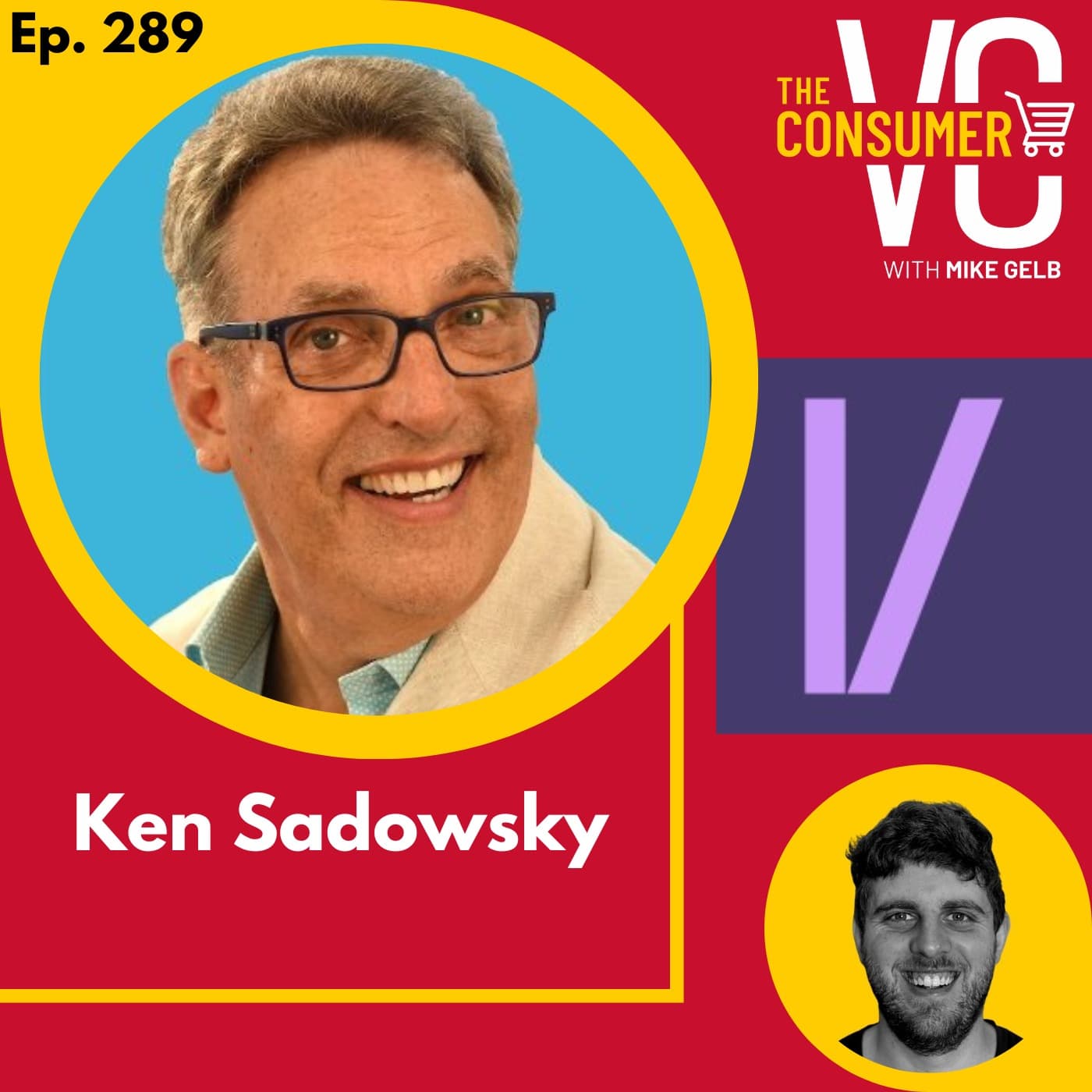
Ken Sadowsky (Verlinvest) - What He Saw In Vita Coco and Vitamin Water Early, Beverage Trends He's Bearish On and How to Evaluate Entrepreneurs
Host
Mike Gelb
Guest
Ken Sadowsky, Beverage Advisor at Verlinvest
---
Overview
In this episode, Mike Gelb interviews Ken Sadowsky, known as "The Beverage Whisperer," who has extensive experience in the beverage industry. The discussion focuses on Ken's professional journey, the beverage market's current landscape, and the crucial traits found in successful entrepreneurs.
Key Topics
- Background of Ken Sadowsky:
- Grew up in the beverage industry through his family's distributor, Atlas Distributing.
- Early distributor for Vita Coco and served as the Director of Energy Brands (Vitamin Water, Smart Water).
- Currently a Beverage Advisor to Verlinvest, the investment arm of Anheuser-Busch InBev.
- Opportunities in Beverage Market:
- Discussion on emerging trends and consumer preferences.
- Identification of brands and products that resonate with today’s “better for you” movement.
- Fundraising and Investment Strategies:
- Importance of patient investors and adapting strategies based on market response.
- Insights into managing brand growth and navigating the fundraising landscape.
---
Detailed Insights
- Ken’s Journey in the Beverage Industry
- Initial Involvement:
- Started his career in the late 80s with Atlas Distributing, focusing on expanding their product lines.
- Transitioned from family business to advisory roles, notably with Vitamin Water.
- Experience with Vitamin Water:
- Initial struggles with the brand before achieving success, emphasizing the importance of patience from investors.
- Collaborative efforts of the Vitamin Water team as key to its eventual success.
- Evaluating Founders and Brands
- Traits of Great Entrepreneurs:
- Resilience and determination to succeed.
- Ability to pivot based on market feedback and advice from mentors.
- Investment Focus:
- Preference for founders who are deeply committed to their projects, willing to adapt, and can communicate effectively with investors.
- Current Trends in the Beverage Industry
- Growing Consumer Awareness:
- Increasingly educated consumers focusing on health, particularly regarding gut health and the role of probiotics.
- Critical Trends:
- Skepticism around prebiotics versus probiotics; a notable shift in consumer interest towards effective and proven health benefits.
- Fundraising Approaches
- Recommended Strategies:
- Advising companies to raise funds sufficient for 12-18 months rather than large sums upfront to maintain equity stakes.
- Timing for Retail Expansion:
- Importance of establishing a brand’s presence in local markets before scaling up to national retailers like Walmart and Target.
- Case for Celebrity Endorsements:
- Discussed the pros and cons of involving celebrities in branding, emphasizing that endorsements should come from authentic interest in the product.
---
Conclusion
The conversation with Ken Sadowsky provided valuable insights into the complexities of the beverage industry, the qualities that define successful entrepreneurs, and strategic advice for emerging brands. His emphasis on patience, adaptability, and consumer engagement serves as a guiding principle for entrepreneurs and investors alike.
Additional Recommendations
- Books Recommended by Ken:
- "Shoe Dog" by Phil Knight
- "The Codebreaker" by Walter Isaacson
Podcast Resources
- For more episodes and updates, visit [The Consumer VC](http://www.theconsumervc.com).
- Follow Mike Gelb on Twitter: [@mikegelb](https://twitter.com/mikegelb).
---
This structured summary captures the essence of the podcast episode, highlighting key insights and discussions, providing an accessible reference for listeners and industry enthusiasts.
Written by AI. May contain mistakes. Listen to the episode to check what was said.
Transcript
Automatic transcript. May contain errors.0:00This episode is brought to you by Vobin from Carta. Vobin from Carta is the easiest way to launch and run your venture investing. They offer SPVs and fund vehicles for GPs at all stages of the journey, from your first syndicate to operating a multi-million dollar venture fund. If you're interested in investing in startups, stick around after the episode where I chat with Gabriel Shin from the Vobin from Carta team, who shares his perspective and tips about how to start investing and how Vobin from Carta can get you set up. The link to Vobin from Carta's website is in the show notes.
0:45Hello, I'm your host, Mike Gelb, and this is the Consumer VC Podcast, where we discuss the intersection of venture capital and consumer innovation. If you're enjoying this show, also subscribe to my newsletter at theconsumervc.com, where you'll receive new episodes straight to your inbox and a weekly recap of all the consumer deals that are happening. This episode is brought to you by Vauban from Carta. Vauban from Carta is the easiest way to launch and run your venture investment. They offer SPVs and fund vehicles for GPs at all stages of the journey, from your first syndicate to offering a multi-million dollar venture fund.
1:19If you're interested in investing in startups, stick around after the episode where I chat with Gabriel Shin from the Vauban from Carta team, who shares his perspective and tips about how to start investing and how Vauban from Carta can get you set up. The link to Vauban from Carta's website is in the show notes. Thank you, Clement, for the introduction to our guest today, Ken Sadowski, or as Forbes dubs him, The Beverage Whisperer. If someone comes on the show and their nickname is The Beverage Whisperer, it's good to assume that this episode is going to be all about beverage. Ken was actually born into the beverage business.
1:54His grandfather started the beverage distributor, Atlas Distributing, and he was the first to distribute Viva Cocoa and also became the director of Energy Brands. Energy Brands was the maker of Vitamin Water, Smart Water, and Fruit Water, which they eventually sold to Coca-Cola for$4.1 billion. Now he's a beverage advisor to Verl Invest, which is Anheuser-Busch and Bev's investment art. We discuss his story, what are the opportunities within Beverage Today, a trend in beverage that he's actually pretty bearish on and how to identify truly great entrepreneurs. Without further ado, here's Ken.
2:36Ken, thank you so much for joining me here today. How are you? I am fine, thanks. Happy to be in the Miami sun. Yeah, I bet. I bet. That's great. That's great. I've heard wonderful, wonderful things about about Miami. I haven't been there in a long time. So why is it from the very beginning? I know that your grandfather founded Atlas Tributing. It seems like you've been in beverage or the CBG space for your entire life. But what kind of was, just because you kind of grew up in the business, was that something that you always, you thought wanted to do? I did. My grandfather was ahead of his time.
3:13And what I mean by that is he was distributing alcohol before 1933, as it were. So he was a little bit ahead of his time. But I always did like the industry. My father was a second generation owner of that distributing company. It's still there today. I'm just not there as a part of it anymore. But I was there for 20 years and it was almost all enjoyable. That's awesome. That's great. So what was your particular role during your time, 20 years at Atlas? And where do you feel like maybe it being such a company that was founded and working in the 1920s and what have you, what kind of needed to be adapted or thought about to bring into the more modern age?
4:06Sure. Well, I mean, I started in the late 80s and my father had taken on one product line called Original New York Seltzer. And then I sort of developed the rest of the soda division at my family business, which was in central Massachusetts. And as all states have their nuances from the repeal of prohibition, Massachusetts had one where there was a no chain law. So for New York Seltzer to get into the kind of stores like the Safeways of the World and Kroger's, they were regional and local at the time in Massachusetts. But I had to go knock on all those doors individually with the help of the supplier reps.
4:54But it was a whole new account base for that company, Atlas Distributing. So it was challenging in a lot of ways to have all these new customers. But it was also felt like having the sort of shackles taken off of my wrists because there weren't as many rules and regulations in selling New York Seltzer. And then sort of quickly thereafter, we became a Snapple distributor. So it was a great learning experience. It was an expansion of the account base for my family business. That's awesome. When did you get into or how did you get into kind of advising brands? I'd imagine particularly on the distribution side.
5:37Sure. I would say that the pivot point in my career came when Darius Bykoff and Mike Rapoli from Vitamin Water asked me to join their board. And that was Vitamin Water. and it was really just a, it was an honor to be on that board. And I sort of felt like, I know I've used this example a lot throughout my career, but it's getting dated now. But it sort of reminds me in the end of what Larry Bird said when he retired from the Celtics. And he was at a big long table press conference with Red Auerbach, general manager, president of the team. And, you know, basically what Bird said was, don't tell Red this, but I would have played for nothing.
6:27And I sort of felt that way with everything that I learned from the vitamin water experience. It was, you know, a great reward, both intellectually and monetarily. But that was the pivot point. That was when I left my family business and I had met the people from Verlinvest in the board meetings. And that's kind of how I got to where I am today for the most part, I would say. Got it. No, that's really interesting. So what was kind of part of the reason why you left the family business? And I'd imagine that was probably a pretty hard decision to make. And also, how did you even think about what you wanted your role to be?
7:13I know you've been advisor for a lot of brands, but what does it actually also mean? Well, leaving my family business was definitely a tough decision, but there were three owners at the time. And when I left, there were two. So it wasn't really like a difficult transactional situation. It was more an emotional, you know, my grandfather started the company and, you know, what, what's, uh, who will carry the torch. But at the end of the day, there's a lot of businesses that don't survive third, fourth generation due to external factors. So this was just an internal decision that I made. And I made it rather, I would say, expeditiously, not capriciously, but expeditiously.
8:00And then I think the second part of your question was, what does it really mean to be an advisor? I would say with beverage brands, which is what I exclusively advise, I have just an operational background, but I've always been interested in things that were sort of marketing focused. So the sales is more discipline and execution. The marketing is where I guess you use the part of your brain that you don't necessarily have to as just a straight out operator. So I've been fortunate that one side I sort of like to do, and the other side keeps me thinking and curious. And then there's also, obviously, there's a lot of other things that make a distributorship or a beverage company tick.
8:48But, you know, I'm not good at everything. I know my limitations. What specifically, just thinking about these ways and obviously maybe your superpowers or ways you're helpful on the marketing side and on the ops side, for Vitamin Water specifically, what was it about that brand? that and also what was that brand when you met um the founders of of vitamin water where were they currently and what did you kind of see in that brand what made you particularly excited about it well you know it was i guess intuitively or unknowingly i was betting on the people because i had taken on gogo energy drink from darius which had like japanese anime way ahead of its time, like in the 90s.
9:39And then that didn't work. And this was in an era, unlike today, when you could just take out of code product and donate it to a food bank. Now they want to make sure that everything is in code and it is a different ballgame, even in the world of donations. But we donated GoGo Energy Drink to the Worcester County Food Bank, got in fruit water, which is by product composition, what Hint is today. So I guess in a way it's appropriate that I'm on the board of Hint Water as well, because I'm a fan of that type of product. And fruit water was way ahead of its time also in the 90s. And then when fruit water didn't work, Darius basically said, we have one more that we have coming and we really like this one.
10:33and it's called vitamin water. And so, I mean, if I remember what those first bottles look like, and it was three flavors and one of them was, I guess, kindly, I could say it was Mountain Dew color. If I wanted to be unkind, I could tell you it was sort of urine color. And it was, it was called Complex B and we used to call it Complex P. But anyway, yeah, that was, That was the earliest thing. So what I say is I really think I was the first vitamin water distributor because I was with Darius for previous iterations. Now, he had also created this water called Glossier, which turned into Glassow, which turned into smart water.
11:20But he was doing that more in the natural channel. And so for the DSD work, it was the go-go and then fruit water and then vitamin water. what were kind of some of the things because you you talked about how gogo was a baby a bit too early for its time and flavored water obviously knocked it out of the park with vitamin water but um what was it about vitamin water in your mind some of the characteristics and the brand that really um that allowed it to you know um uh be um to work in in all all different types of sales channels and be what vitamin water actually became? Sure. Well, what I would say is, first of all, it didn't work right away.
12:07It sort of fits and starts and would work in some areas and not in others. And I mean areas geographically as well as classes of trade. So it was an interesting thing. And really, in retrospect, one of the things that I've learned that I carry through today is vitamin water had patient investors because there were times when the brand didn't grow. There were a lot of years when it did grow. And then there were times when it didn't grow. And it was really up to the patients of the investors to watch Darius operate. And look, it wasn't just Darius. It was the team that he had taken in and Mike Rapoli drove that bus.
12:54So those were really the two driving forces. But then, you know, Rohan Oza came in later and was a really insightful marketer. And also Carol Dollard making the best flavors. And, you know, Mike Venuti gets a lot of credit as well because he had to manage the cash. He was the CFO. So that was really the five-headed horse, if you will, that made vitamin water from a C-suite. what it was. No, that's really helpful. How also, when you think about what companies to take on as an advising role or as an investor role, what types of elements do you look for? I remember you saying how it really starts with a founder.
13:43And what types of traits, how do you analyze maybe founders that could be really good operators and really have an incredible vision that not to say like maybe have an incredible vision, but maybe it's a little bit too early or late or what have you, but how do you kind of make decisions around who you actually wanna work with? Well, look, I mean, I've been fortunate because I can pick and choose the people with whom I wanna work. So that's the first thing. But in terms of who that person is, he or she is somebody that is going to make their project work or die trying. And then in terms of the product itself, I get the most pleasure from working in white space.
14:30Like for the people that, you know, when I show them, hey, this is my new thing, and they sort of look perplexed and curious, I look at that as the personal challenge. challenge so those are kinds of you know that that's where the reward is at the end of that process um that you know if it's becoming a household name or more people go oh yeah i remember that product um so those are the those are the things that i guess i glean the most satisfaction from do you find yourself be a bit more thesis driven in in terms of hey i think that this, for example, is a white space and right now a pretty nascent space.
15:10Let me go and find who is the best entrepreneur building this space or maybe building the most compelling brand to your mind. Or do you kind of like let the entrepreneur kind of educate you on a space that you're not really quite aware about? Well, I mean, if I remove the chronological component of what you just asked, what I would say is it's definitely the person over the product, because there are a ton of examples that I could give you about entrepreneurs that showed me a deck and, you know, by the time the product came out or 18 months after the product was in the real world, they had pivoted and made some really insightful changes.
15:58So that's why to me, it's the jockey over the horse, so to speak, but also, you know, somebody that knows when to be sort of contentious with their advisors and board and mentors and someone who, you know, has the adaptability to say, you know what, they've seen this before and I haven't. So while certain inputs have changed, i.e. time, certain core competencies still work today. That makes a lot of sense. Since you're obviously picking the jockey of the horse, because as you say, pivots do happen. I've heard some of your case studies around certain pivots that happened with some of your companies.
16:46And it was, you know, at the end of the day, betting on the founder, it's kind of the founder's company. But when you are deciding, since you're in such a great position where you can make choices on who you don't want to work with, what are some of maybe even like the questions or ways you're able to kind of build that confidence and conviction in the founder that actually then makes it interesting for you to want to work with that person? Yeah, I mean, I wish I had a blueprint for that. It's sort of, some of it has to do with my available bandwidth. Some of it is how we get along because there's got to be a lot of banter.
17:27I mean, it is a relationship in a way. So it's got to be something that I and they enjoy spending time on and with each other. Got it. Got it. No, that makes a lot of sense. How also do you think around trends as well? Is a particular trend in beverage right now that you're quite interested in? Well, I mean, I always get surprised of the particulars, but in terms of the general, you know, it's better for you. And then how does today's youngest consumer define better for you? And some of the ways that I really am amazed at certain things are like the way food technology enables things to get better.
18:21Sometimes it's better flavor. Sometimes it's better functionality. But in all these ways, it's never not been an exciting time to be in the beverage space, but it's really an exciting time now. I mean, hopefully, I don't want to use the word post-pandemic, but emerging from the pandemic in whatever the new maskless, masked world is, I just think that there's a lot of fascinating stuff happening. No, that's great. That's great. I mean, I guess within kind of better for you, it seems like the consumer is obviously getting a lot more educated or particular about certain ingredients that's in beverage.
19:07And I mean, is there a couple kind of nuances or trends that you're particularly kind of excited about currently? Sure. What I would say is that the newest manifestation of gut health to me is really important because I do think that if we as humans have a healthy microbiome, we can fight off a lot of sickness and or disease. but I think there's a lot of ways of approaching how one gets to the probiotic space. Like I think there's a lot of sizzle around prebiotic. I'm not sure there's so much stake there. Okay. So not, not as much sold when it comes to prebiotics, maybe in drinks or at least like the current, the current kind of wave of it.
20:02Is that, is that fair to say? Fair to say. Yes. Okay, cool. Um, um, that's, that's interesting. How, how also do you think when it comes to a beverage brand and you're looking at, you know, um, being advisor to a beverage brand, we, we, we've seen some beverage brands raise huge amounts of money, right. Um, in the past couple of years. Um, and of course there's, there's a lot of beverage brands too, that are, you know, um, maybe, uh, struggling to raise as, um, struggling to raise or, or only able to raise a certain amount and have to be very kind of more, maybe much more efficient in terms of how they're actually spending their money.
20:37what does it make sense for a beverage company to actually raise, if they are able to raise, like a pretty significant round and kind of maybe go national really early as opposed to, all right, let's actually start off regionals, see how our velocities are regionally and kind of then kind of expand to different regions, kind of maybe like one brick at a time per se. Sure. Well, in general, I'm an advocate of the latter scenario that you outlined. The caveat to that is, you know, if it's a natural product, one can go to some of the influential natural national retailers, i.e. Whole Foods and Sprouts is getting more national or at least beyond a regional footprint, I would say.
21:24And then, of course, you know, one of the outcomes of the pandemic was the direct-to-consumer e-com component. So if a brand can really delve into the data and slice the data in such a way that they can see geographically where their product is doing well, that's another sign that there's permission to go maybe faster, I guess, speed or alacrity. But generally, I believe in the, you build it sort of one region at a time and go deep in that region. Because if you can make your mistakes of early onset distribution, then those are the things that help you as you get to be from a local to a regional to a national brand.
22:14So that's one of those core competencies that has worked in my mind for all of the brands that I've been a part of. So kind of going very deep, maybe in a particular channel or focusing on maybe one channel or focusing on one region per se, rather than trying to go maybe off the bat, out the gate, maybe raising a lot of money in order to do so. Is that roughly right? There are situations where there's not one playbook for every brand, but what, you know, it's, I guess, I think of several companies that have been successful and they've had co-founders and one of the co-founders runs the business, leads the team, and the other one is more a cerebral type of founder.
23:03And they go out and shake the money tree, as it were. And so when there's a scenario that works like that, what I find is it's better to just raise the money that you need for 12 or 18 months and then go back and do it again. And obviously, presumably you've proven your thesis and what you've raised that money for. But if you go out and raise too much money too quickly, the founder or founders wind up with less equity in their business. And then at some point they've raised money to the point where they're just the janitors holding the keys and the founder. That's not a healthy scenario either.
23:47Yeah. I mean, that's a great point. I think also too, that you also have to think as well, what's maybe the exit, not that you should be thinking about this at the early stages, but what ultimately is kind of the exit potential for the company too, right? Like if you go out and raise, you know, a lot of money, but you know, a successful, healthy, you know, beverage, a really good beverage exit, we could be like, you know, half a billion, you know, 500 million or 400 million or whatever, or what have you, which is a great outcome. I mean, you've also been involved in billion-dollar outcomes, so those are, of course, unbelievable outcomes.
24:22But if that's kind of like the typical successful exit, then you also have to be thinking, okay, I have to make sure I also don't over-raise per se, because then I can actually put my company in a very awkward spot. Sure. I mean, the success in an exit gets defined in a number of different ways. But yes, for the most part, you want to be as careful as possible as the founder entrepreneur company directors have a fiduciary responsibility to do the right thing for all shareholders. And with beverage, it is expensive to raise the marketing needle. So there are big buckets of money that can be used, but it doesn't apply to all beverage companies.
25:15So again, to me, it's prudent to just raise what you think you need to get into the next 12, 18 months and then go about it again, as long as you're executing on your plan. Earlier, you talked a bit about what made Vitamin Water also pretty successful was the team around Vitamin Water was also pretty patient. It wasn't just kind of this success out the gate, overnight success story. They did have maybe some periods of being flat or not kind of growing at the degree that you would think. As an advisor, how do you think about patience? I know we talked about in terms of the fundraising perspective of only raise as much as you need to to get by the next year, two years, and where you believe that you can be for the next two years.
26:14How also do you think about patience? And if you're advising a brand that maybe off the gate, maybe their velocities aren't performing the way that you thought they would? Well, look, I mean, if velocities aren't where they are aren't where they're supposed to be, then maybe you didn't invest in the right brand or the right founder or the right project. I mean, it's something like, look, I've had those too. But I think, you know, people that know me and have heard me do these kinds of interviews know that one of my favorite axioms or adages is, I guess it's not an adage. I'm not that old yet, but some things are on goal frames, not timelines.
27:02And that's why the type of money that entrepreneurs take, founders take in, is really important because like for Verlinvest, they're very patient. You know, they are not on a clock of, hey, it's 60 months in, we need liquidity. So those are some of the nuances that it's incumbent upon founders to find the right money. First, they have to find money. Then as they get better, it's really important to find the right money. I think that's a great point in that also when founders are fundraising, know what the investor timelines are as well, right? That when actually do you kind of want to put your money out or what have you in the business?
27:48And, you know, if it's on a shorter timeframe, then, you know, because as, you know, as maybe you say, and also other investors and advisors that I've had on the show, you know, say, you know, like a brand is built over, you know, it could take a decade, it could take 15 years, takes a long time to build a CBG brand. And so also, you know, kind of asking that question of when you actually, um, um, your kind of trajectory, um, as an investor, I think that that's also really important. Yep. I agree. How also like we, we've seen, of course, a trend in, um, in beverage for, you know, I mean, I mean a long time, but, uh, but it seems like every, every kind of celebrity has their own beverage brand or there's a lot of, you know, celebrities that, um, that are kind of partnering with founders and maybe being like the spokesperson for the brand.
28:42But of course, it's an exchange for equity. What are your thoughts? And when would you, if you were advising a founder, albeit every case scenario is different, but when would it make sense to have maybe a celebrity partner or someone with influence as part of the brand? It's a good question. And you alluded to the answer in that it is a case by case basis. So I could say you were leading the witness, but it's where I would have gone regardless. So anyway, what I would say is there are components that I always see that I like. They don't always work, but I always like them. One of the things that I like is when the celebrity approaches the brand or the founder because they either met the founder through their network or they are using the brand.
29:41So those are the most natural ways of doing those relationships when it's, you know, a big talent agency approaching a brand saying, you know, here's our money bag. If you give us a big money bag and then we'll give most of that money bag to the celebrity, that's not the way these things typically pan out in a positive direction. The second thing I would say is a brand has to be of a scale where they can take advantage of the celebrity endorsement. Like, you know, if you get a real A-list celebrity and people are willing to go out and put dollars behind celebrity A's carrying this bottle or can of your product, you darn better be in 50 ,000 supermarkets and Walmarts because otherwise you're not going to be able to monetize even with e-com, DTC, all that other stuff.
30:49You have to be ready. You have to have systems in place if you're really going to sign some monstrous celebrity. so what i know you said 50 000 stores but um but what what kind of do you feel is kind of the minimum um because i i see founders like early stage founders um you know um that are interested in you know having maybe a celebrity involved in the company and what have you but to your mind um because you're you're saying it has to be kind of a more established maybe um uh not kind of early more in the growth stage company but what does that kind of mean like what what tangibly in your mind is kind of the minimum you have to be in order for, again, case by case basis.
Read the full transcript
31:30But for your mind, what kind of makes sense? Well, again, it's the caveat to what I'm about to say is it really is a case by case basis. And the other thing that I would say is if you were in a non-ready to drink format where you could ship light packages all over the place, like I think about a stick format of a powdered whatever ingredient. But I still think you should be at a, just pick a number,$25 million. Or, you know, it might be just like, let's call it a one or two or maybe even 3 million case brand. Are you also advising companies? I know obviously you are the beverage whisperer, but are you also advising companies that are outside of beverage?
32:23And if so, what has been the biggest learning from you with that category? Well, I mean, first of all, my friends would tell you that after about 7.30 at night, I turn into the beverage mumbler because I've been drinking.
32:44But I guess what I would say is I have had my proverbial head handed to me when I've strayed too far off of beverage. I've invested in snacks. I've invested in some other things. And it was before I had the thesis of you better bet on the people. Like there were just brands. And then I sort of tagged along with other savvy investors. But we didn't understand what we were doing. I didn't understand it. Therefore, I couldn't be as helpful. and I don't want to say I was scorched earth because I would do it again, but in investing in non-beverage, I've learned what not to do more than I've learned what to do.
33:32Okay. That's great. That's great.
33:40What's one book that's inspired you personally and one book that's inspired you professionally? Hmm. Okay. Well, I'm just going to go to my recent past, I guess. I really liked Phil Knight's Shoe Dog. Really. And that's, you know, I'm a basketball player and a big basketball fan. So that sort of crosses a bridge of personal and professional. And then I guess being a Tulane alum, I've been aware of Walter Isaacson for a long time and both his book on Steve Jobs that I really found fascinating. But during the pandemic, I thoroughly enjoyed The Codebreaker. In fact, I bought a bunch of them, copies for other people and handed them out to people.
34:31And it's a thick thing. I'm sort of glad I did it on audible and kindle, but, uh, but it was a great book. No, I, I appreciate these. Um, shoe dog is our number one, uh, book that's been recommended, um, on this show. Um, and also we have a couple of people that, that talked about Walter, uh, Walter Isaacson's book on, uh, Steve jobs. Uh, so, um, that's, that's great. Yeah, but just to just to, I guess, add to that, The Codebreaker is the book that he wrote about Jennifer Doudna when she had won the Nobel Peace Prize for, I'm going to get wrong, the discipline of science. But she basically was working on mRNA after she trained on both coasts, like Harvard and Stanford kind of thing.
35:27And she started on DNA. And it was a Harvard professor, I think, named George Church, who said, you know, RNA is really the workhorse. DNA gets all the credit. RNA does all the work. And of course, mRNA is the piece of our recent history, very prescient in finding the vaccines for COVID-19. Wow. That's amazing. That's amazing. I definitely need to add that to my book list. um what um i guess back back to beverage and i i uh i know this is probably a difficult question to answer but what actually needs to kind of cross over to kind of go from um because you know there's so much opportunity and kind of better for you which i know is you know uh uh where a lot of investors and advisors are are paying attention to um what in your mind since you've advised and see so many uh brands that have been able to do this what are elements of a brand that actually that um that need to maybe exist uh to actually go from the natural channel into actually conventional grocery?
36:50Sure. Well, I think when a brand really does a good job of identifying their earliest consumers, I guess the core consumer, that is, you know, where is that consumer going to discover the brand at retail? It can be discovered, obviously, through all forms of social media and that kind of thing. But as it gets done in that natural channel, let's just say, then when a brand succeeds in crossing over to the more consumer, that's when you get into traditional retail. Now, that timeline or goal frame volumetrically has accelerated because there are certain national retailers that now don't want to have the natural people taking all the credit for building these brands.
37:42And yet there are other giant retailers that say, look, we're not going to build your brand, but we're happy to pour lighter fluid on it. We will be the accelerant that takes your brand to the next level. Once you prove to us that you know why your product is selling, that involves, again, core competency things like where does it go in the store positioning? What's the price that consumers are willing to pay? and then making sure that it has point of sale. So what I call my three Ps, pricing, positioning, point of sale, all of those things have to be in place and then you've got a successful recipe.
38:24And then, and obviously, as you say, you need to have that retailer on board because it seems like when it comes to conventional, like Walmart's becoming a lot more interested and Target and some of these more big box retailers in terms of actually bringing in better for you brands earlier.
38:47But sometimes you might be, even if you see Walmart calling or Target calling, it might actually be too early for your brand to actually go into their stores. When do you think it actually maybe makes sense to actually introduce conventional as part of your sales mix? Sure. Well, I don't want to say that those bigger retailers are more sophisticated, but what I would say is generally they're less tolerant and more velocity driven. What you don't want to do as a brand is go into a store, not have raised enough money or gotten the recipe down for your brand to succeed, and then fail in those big stores because you never get a second chance to make a first impression in those stores.
39:36Therefore, it's really incumbent upon a couple of things that we spoke about earlier. One is having that local to regional strategy and getting all of those components down so that you can speak to the largest retailers and say, here's where we will succeed. The look of the leader is these four things, and then we have a really good chance of succeeding. And conversely, as a brand owner, there are times when you have to tell, you alluded to Walmart, mentioned Walmart. you have to tell the world's largest retailer, like we're not going to tell you no because we're not stupid, but we can tell you not now because we don't have all of the ammunition that it's going to take to succeed in your stores.
40:34Yeah, no, that's a great way to also kind of position it to the biggest retailer in the world. So Ken, this has been so much fun. Thank you so much for your time. Thank you, Mike. great stuff and there you have it it was terrific chatting with ken and hearing his thoughts about beverage gabriel thank you for joining me today how are you yeah really great uh thanks for having me mike no it's a really really appreciate it so now do you have to be a uh accredited investor in order to start um angel investing or or if you're interested in setting up an account on bobin yeah Yeah, no, that's a really great question.
41:10So if you want to be a lead dealmaker who has on one side deal flow, on the other side, a network of investors, and you're kind of merging those two together using an SPV, you don't necessarily need to be an accredited investor. Anyone can create a deal. If you are investing into a high-risk venture capital investment, you do have to be an accredited investor. And this is predominantly due to protection by the regulators to protect a retail investor investing a large portion of their net worth into a very risky asset. accredited investors in the US is roughly anyone who earns more than 250K on an annual basis or have a net worth of over a million dollars.
41:58Yeah, that's helpful. So if you did want to experience, get involved in diversifying your own, your asset pool in terms of what you invest in and think that alternate investment startups might be interesting to you, even if you're not uncredited, you could actually start doing SPVs if you wanted to, if you're kind of the lead dealmaker and actually pool all the money together. Is that roughly right? Yeah, that's correct. So yeah, I think there's a lot of people in the VC ecosystem who has on one hand access to deal flow and on the other hand, you know, access to a bunch of investors. You know, an SPV works extremely well trying to bridge those two together.
42:43So we have clients who are, you know, ex-operators or ex-entrepreneurs who've worked in the industry for quite some time, built out their network, built out their founder communities and things like that, and want to monetize off some of the deal flow that they have in hand. If you are loving the show, I highly recommend checking out the newsletter at theconsumervc.com where you'll receive all new episodes straight to your inbox and a weekly recap of all the consumer deals that are happening. I'm also doing some more events. So you'll also be the first one to receive information about those.
From the publisher
Thank you Clement for the introduction to our guest today, Ken Sadowsky, or, as Forbes dubbed him “The Beverage Whisperer”. Ken grew up in the beverage business. His grandfather started the beverage distributor Atlas Distributing and he was the first to distribute Vita Coco and also was the Director of Energy Brands Inc., makers of Vitamin Water, Smart Water and Fruit Water, which they eventually sold to Coca Cola for $4.1 Billion. Now he’s a Beverage Advisor to Verlinest, which is Anheuser-Busch InBev’s investment arm. We discuss his story, what are the opportunities within beverage today, if there’s a trend that he’s not sold on and how to identify great entrepreneurs.
****Sponsor****
This issue is brought to you by Vauban from Carta. Vauban from Carta is the easiest way to launch & run your venture investing. They offer SPVs, and fund vehicles for GPs at all stages of the journey - from your first syndicate to operating a multi-million dollar venture fund. Their end-to-end platform automates your back-office and manual workflows so you can focus on what matters: finding the next unicorn & building investor relationships.