In short
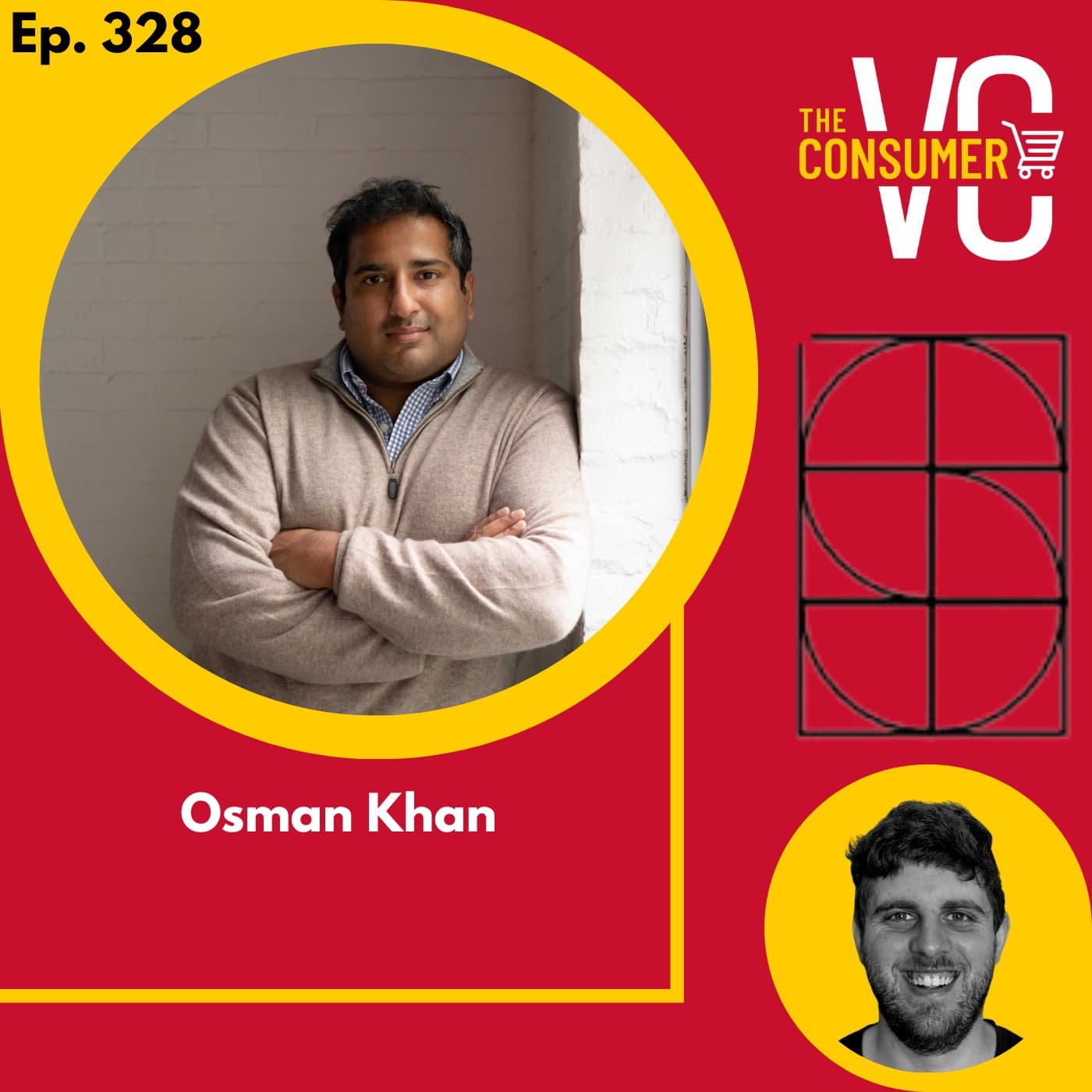
Podcast Summary: Turning Science into Consumer Brands with Osman Khan
Podcast Overview Podcast Title: Consumer VC Description: Consumer VC explores early-stage consumer investing and venture capital, featuring insights from top venture capitalists and founders of disruptive consumer-facing companies. Topics include consumer trends, fundraising strategies, brand strategies, and operational efficiency.
Episode Details Episode Title: Turning Science into Consumer Brands with Osman Khan, CEO of Squared Circles Episode Description: Osman Khan discusses how his venture studio, Squared Circles, is revolutionizing product development through the intersection of AI, science, and consumer innovation.
---
Key Points Discussed
Introduction
- Host: Mike Gelb
- Guest: Osman Khan, CEO and co-founder of Squared Circles
- Main Focus: The role of AI and science in identifying consumer product opportunities and the unique approach Squared Circles takes to brand incubation.
Squared Circles Overview
- Purpose: A consumer-focused venture studio that incubates brands based on scientific principles.
- Current Ventures: Launched three companies: Magic Molecule, Algae Cooking Club, and Freaks of Nature.
- Technology Utilization: Combines bioscience intellectual property (IP) and generative AI to create targeted consumer product experiences.
Differentiation in the Market
- Competitive Edge: Focus on merging scientific innovation with consumer needs, ensuring products are not only scientifically advanced but also appealing and market-ready.
Integrating AI in Product Development
- AI's Role: Enhances the early-stage concept validation process, allowing for faster testing of ideas through generative AI tools.
- Market Pulse Testing: Utilizes AI for landing page creation and A/B testing to gauge consumer interest and pricing willingness.
Consumer Research and Product Iteration
- Research Methods: Engaging experts and direct consumer feedback to refine product concepts before launch.
- Incremental Testing: Focus on gathering feedback from various sources to make informed decisions about product viability.
Trends in Consumer Products
- Sustainability: Discussed the importance of incorporating sustainability into product lines and the challenges it presents.
- Market Opportunities: Highlighted areas of interest such as health & wellness, food tech, and destigmatization of health topics for men.
IP Partnerships and Deal Structures
- Collaboration Approach: Squared Circles partners with established IP providers rather than creating their own, focusing on the commercial viability of the science.
- Negotiation Factors: Discussed critical components including cost of goods sold, exclusivity, and potential upside for both Squared Circles and the IP partners.
Building Trust with IP Partners
- Establishing Credibility: Initially challenging but improved with successful launches and established relationships, fostering trust in the brand's ability to commercialize IP effectively.
CEO Recruitment and Management Strategy
- Hiring Strategy: Emphasis on finding entrepreneurial-minded leaders who think like founders and are passionate about their product categories.
- Performance Measurement: Importance of setting clear expectations and performance metrics for CEOs to ensure alignment with company goals.
The Conscious Maximalist
- Research Findings: Presentation of a study exploring consumer behavior patterns regarding sustainability and health.
- Consumer Duality: Identified tension between being "better for you" and "better for the planet" and how it influences product acceptance.
Key Takeaways
- Incremental Change: Consumers tend to prefer products that are slightly better rather than completely revolutionary due to cost concerns.
- Balancing Innovation and Commercialization: Product development must consider both the novelty of the product and its market acceptance.
- Building Effective Teams: Emphasizing the importance of team dynamics and leadership in scaling a startup effectively.
Recommended Readings
- "The Five Dysfunctions of a Team" by Patrick Lencioni – A guide on team dynamics and effective management.
- "Good to Great" by Jim Collins – Insights into building great companies based on sound principles.
---
Closing Remarks
- Host's Note: Acknowledgement of the importance of the insights shared and encouragement to subscribe for future updates and episodes.
This episode provides valuable insights for both aspiring entrepreneurs and established business leaders looking to innovate in consumer markets through science and technology.
Written by AI. May contain mistakes. Listen to the episode to check what was said.
Transcript
Automatic transcript. May contain errors.0:00The single biggest challenge we have when it comes to CEOs is you want to ensure that someone is thinking about this as a founder, not an employee. And it's the hardest thing to find, right? Because we all know that the best success cases of founders are those who are willing to go through walls to make their, you know, sort of startup a success. And the reality is the more we can enable that and find the people who sort of exemplify those qualities, the greater likelihood of success for our own business. Hello, I'm your host, Mike Gelb, and this is a Consumer VC, where we discuss the intersection of venture capital and consumer innovation.
0:29This show is brought to you by Propeller Industries, the leading strategic finance and accounting partner for venture stage companies. If you're enjoying the show, please subscribe on YouTube or whichever platform you're viewing this content. And if you want the full experience, subscribe to my newsletter at theconsumervc.com. You'll get a weekly recap of all the consumer deals and news that's happening, and as well as be the first to know when we have a new podcast episode. So that's theconsumervc.com. All content and episodes are for informational and entertainment purposes only. It is not investment advice.
1:04Our guest today is Osman Khan. Osman is the CEO and co-founder of Squared Circles. Squared Circles is a consumer-focused venture studio that incubates brands grounded in science, and they've already launched three businesses, Magic Molecule, Algae Cooking Club, and Freaks of Nature. Squared Circles uses bioscience IP, and they partner with IP providers in order to launch brands. And they also use generative AI to create highly targeted product experiences. We discuss that incubation process, how they actually partner with IP providers, what are the deal structures between Squared Circles and the IP providers, different consumer categories that they actually find interesting where there is opportunity for innovation, and how they build products that can be commercialized, licensing opportunities, and as well as how they think about distribution channels.
1:56This is a really fascinating, fascinating, fun conversation. Really enjoyed my time. But before we start, I want to tell you a bit about our industries. If you run a high growth business and you're focused on profitability, extending your runway and improving your operational efficiency, which it seems like given the current marketing conditions, a lot of companies are focusing on these three things. You probably need a finance and accounting whiz that will grow with you. Well, you could hire someone full time, but it might be more cost-effective to work with Propeller Industries. Propeller Industries is a lead strategic finance and accounting partner for venture-stage companies.
2:32They've partnered with over 1 ,000 startups and high-growth businesses across the consumer products, consumer tech, and enterprise sectors. Some of the brands they've worked with are Liquid Death, Olipop, Hims, Farmer's Dog, Away, MoviePass, and GIFT. So check out propellerindustries.com and tell them that Mike sent you. And now, on to my conversation with Osman.
2:54osmond thank you so much for joining me i know we've had to reschedule a couple times really due to me so thanks so much for bearing with me and it's an absolute pleasure to have you on the podcast how are you doing i'm doing really well thank you so much for having me mike it's an honor to be on oh it's an absolute privilege having having you on let's start let's start with you know ai and science and also of course we're going to talk a plentiful about about squared circles. But for squared circles, how do you use AI and science in order to identify new consumer product opportunities? And also, how do you think about different categories as well that you all want to play in?
3:28It's a fantastic question. So I'll take each of them sort of somewhat separately. So AI and the role of innovation, then we can talk about science, and then maybe categories is the last part. So look, I think AI, we want to ensure that it's not just proverbial lipstick on the pig, if you will, that there's actually some real merit to how we use it. And I think there's a lot of tools that you could probably apply to help an innovation studio. For us, AI really comes into play at the earliest innings of when we think about a potential concept that we ultimately then want to incubate. So if you sort of roll back the clock five or 10 years, if you had a concept or something and you wanted to test out whether that concept had validity, most people would hire a designer, right?
4:11You stand up a landing page, you do a bunch of ads, maybe you do some marketing tasks, et cetera. And that would arguably take a couple of weeks, maybe a couple of months, and you'd be thinking about different approaches to how to do that. I think with generative AI, we now have the ability to do that in a matter of weeks versus what arguably would have taken months before, right? So you can use AI to mock up a landing page. You can use AI to even clone an entire webpage. We can do product renderings. We can do marketing messages, right? And so for us, you know, to go from, okay, we all think that there's an ability to create something and whatever have you, right?
4:45Algae oil or a skincare brand, right? That's one thing. But the question is, how do you start to get some, what we all call early smoke tests and signals that this is something that actually needs to be in the world, right? And so the earliest innings of when we have a concept, we will use a bunch of generative AI tools to just get some market pulses and signals to be like, okay, is this something we should go deeper on? and what we're really looking for is do you get a sense of willingness to pay do you get some sort of conversion and again they're not the most compelling signals because you're sort of early in the journey but it just sort of gives you some reads very quickly.
5:18Can you walk me through in terms of like if you happen to have an example in terms of how to actually identify a market pulse is it you know you actually put some of the ad spend behind it do you talk to do you talk to people that are already kind of in market or in the industry or what's What's kind of like that process in order to just do a, or to collect enough data where you actually do have a market pulse? Yeah. So I would say it's really three things, right? So one is, look, at the end of the day, whether we're omni-channel or not, right? In the world we live in, you sort of want to try to start direct-to-consumer, especially when you play in the consumable sector.
5:57So for us, the first is really being able to stand up a landing page and get a couple of smoke signals around interest, conversion, and willingness to pay. Right. And so the most obvious question, though, we always get is, well, if you're creating a dummy brand regenerative AI, is that really going to be like the actual brand experience and how much push or pull will you get versus the real thing? Right. Or like we run these tests for 30 or 45 days and, you know, we all know that it takes a couple of months to really dial in on the algorithm. So are you actually getting the best results that you want?
6:26And my answer is always the same. Right. Again, I'm not looking for perfect. the world of innovation is all about incremental, right? And so if we get some people to convert, and we get some people to then put down their credit card, at least early signals will tell you that you're in the right strike zone, right? But if you run these things for 60 days, and you get crickets, then it's probably not something that perhaps early on is really going to be worthy of testing in some shape or form. So call that sort of signal number one. Signal number two is really talking to experts, right? I think there is absolutely no substitute for We're qualitatively talking to people who live and breathe this field from like a science expert standpoint.
7:02And so getting their pulse on, do you think that there's an actual opportunity and gap? Is there a neat space here that we want to fill? And perhaps the way we're thinking about it, does that actually fill some sort of a demand? So that's number two. And then the third is what I would say is sort of qualitative consumer, right? And so I think a lot of people tend to design products in isolation and thinking about who the consumer actually is and what they want. And so thinking about the early machinations of what your consumer would be or who they are from a demographic standpoint, psychographic standpoint, and honestly just having a bunch of conversations, right?
7:36Like there is no substitute for actual engagement interaction. And so maybe talking to 10 or 15 people and being like, look, how was your journey? What did you go through? What do you think? Would this be helpful? Not. And then again, at the end of it, it's sort of usually somewhere between six to 10 weeks, six to eight weeks. you sort of combine the learnings from all three of those and we say okay look is there enough here to sort of move forward or not on on the landing page side of things is it also a type of type of thing where you you think that the product actually there isn't maybe a need in the market maybe you have um i maybe maybe you've gotten some market feedback or you or you think when you talk to scientists and you and you actually see um and you actually kind of as you do your market research and you identified as a real opportunity here.
8:21From the landing page side of it, are you also using AI in terms of trying to understand what the brand aesthetic would actually be or what the branding would be and actually launch, for example, maybe 10 different landing pages, each different types of brands, each different like its own aesthetic or own brand positioning? Is that also how you leverage? Because you said landing page and I imagine that you might not be just spinning up one landing page. And imagine you're probably spinning up several and actually using them as a way of A-B testing against each other. Is that right or no? That's 100 % right.
8:56And I think the goal is, again, we want to make sure that we never get too precious about any one landing page or ad experience, right? Because you're trying to test multiple things in parallel. And the question is, how can you use the tools more reactively versus, you know, because again, generative AI, as we all know, like you put one prompt, you'll get one set of outputs and you sort of change the prompt even marginally, you'll get a completely separate different set of outputs, right? And that's fine. Like we're okay if like we're testing a few different iterations and revs, because I think it's about, again, just getting reactions to different types of output versus being like, okay, this is the absolute brand positioning we're going down.
9:32We know that ultimately we're gonna have to do a bunch of work to define the consumer inside of the brand positioning. But yeah, it's multiples, not one static output. How, how is, I know that these things are changing so often so quickly, but how is generative AI at this point in time, its ability to actually create like a brand position, for example? I mean, obviously I know it's, I know it's obviously what the inputs are, you're going to get the better outputs, but how do you think about that, that aspect in, in, in, in terms of where we're at currently? I think, I think, you know, if I was sort of thinking about like scale of one to 10, like 10 was like, it gave you the perfect output.
10:07And one was like, something that was completely useless. I think we are at like a four or five. I think generative AI gives you like a foundational base to start with, to sort of combine a bunch of different people's thinking about what an output could look like. But there is no substitute yet for then actually going in and doing deeper work around, you know, is this the brand aesthetic we want? Is the font type that we're looking for? Is it the right logos and names, et cetera, right? And so I think it's giving you enough to work off of where perhaps you could then actually work with a designer or a brand, you know, a brand agency to sort of refine it and edit it on the margins, but we're not getting solutions that are ready to go, so to speak.
10:43Do I think the world will move there? Sure. And obviously as sort of these platforms get smarter and smarter and have more inputs, but I don't think we're there yet. Since we're not there yet on landing page side, are you using generative AI in order to actually create, in order to achieve as a starting point to actually maybe, maybe get inspiration or ideas in terms of what, what a different aesthetics or that you could do with a possible brand. And then you're going out and actually building out these, these bands themselves, but it kind of is like a Kickstarter? Exactly. That's the way to think about it.
11:14So just to sort of step back for one second. So the way we generally tend to innovate, it's across four stages, right? So what we're talking about is using generative AI and what we call the concept phase, which is essentially concept testing, right? After that, we go into like market research, and then we do consumer research, and then we build a product, right? And assuming you get through all three stage gates, then you generally tend to feel like you're ready to actually build something towards launch. And so So at every stage, you're getting a series of inputs that ultimately define what we believe the final product will be like.
11:43Right. Because if I test a willingness to pay in concept, but then I develop a formulation a bit later on. Right. Because I haven't developed a formulation or the product as yet. You'll learn more as you go along as to what is actually doable and possible. Right. So think of every stage as like a series of inputs and then we'll define eventually what the brand identity strategy would look for. But we have a series of outside partners who then take all that information and help us create a cohesive brand narrative. How do you think as well about, you know, before it even gains the landing page, the landing page in terms of, you know, product, how do you even think about the actual category itself that you actually want to dive into and actually the product itself?
12:17I know you have many partners, especially on the science side, too. So talk to me a little bit about that relationship from the product development side, R &D side, and as well as you all picking categories and picking products that you actually want to build brands. Totally. I think it's a little bit more of like a fluid process and maybe, no pun intended, a little more art than science. And the reason I say that is because I think we have sort of areas of opportunity that are exciting to us and themes within them in which we're building. And I would say, generally speaking, it's food and beverage and health and wellness, right?
12:52And then within food and beverage, we're really thinking about food tech, like what are actual platforms that can create multiple products, not just an incremental innovation on existing, right? So it's not about a marginally better for you peanut butter cup or a better chip. It's like, how can you actually have true revolutionary technology that can allow you to create multiple products? And then within health and wellness, I would say a lot of work around the microbiome and skincare. We do a ton in kids' child's nutrition, which is a big theme that we have. And then the last one is really around the destigmatization of health and wellness topics for men.
13:28So if you think about erectile dysfunction and hair loss for sort of the last decade, what are going to be all the sort of things that come over the next decade. So that's happening on one side, right? So we have these themes and we have these wellness areas, et cetera. And as we develop a concept or a problem and need state that we want to solve for, we're then looking at potential IP partners that can help us bridge the thing that we want to build, right? So that's happening on one side. On the other, there's probably 50 plus different unique IP partners, new partners that we're talking to that have come along the way, right?
14:00And as they're developing their own solutions, what I think a lot of folks in the IP space are realizing is that if you're a great scientist, you probably don't need to also then build your own brands. And you might as well work with someone to help commercialize that because at the end of the day, you want to do the science better than anybody else and then keep selling to other partners. So we probably get a handful of inbounds every week, every month about someone having a unique piece of IP where they're like, look, would you be interested in partnering with us to create some sort of a consumer product around it?
14:26And so to the extent that that IP fits into one of the themes that we're talking about over here, there's sort of a little bit of a mixing and matching going on, right? And so that's sort of the IP and the product stuff that sort of sits and stack together. It's so interesting to me because we've seen quite a few brands that were combined, right? They have the IP and they actually started off with the science, with the technology, and as well as be able to commercialize that and obviously build the brand. And it kind of happened in conjunction. Whereas you all, which I think is really quite unique about what you all do, is that you actually work with or collaborate with people that are actually already building the IP.
15:06You don't actually build the IP itself. You actually kind of seek out the best of the best that are already building that IP, or that actually is like use cases that are interesting enough for you where you think, okay, let's analyze this and see if we can actually build a pretty big business, or it has to be a pretty big business in the consumer space that's solving a real problem. Can you talk to me a little bit about that relationship between squared circles and as well as these IP providers? Because I know that at least online, it says that you're licensing these products. Talk a little bit about what that deal structure is and as well as almost that relationship between the IP and then also you all.
15:48Yeah, it's a fantastic question. Look, I generally summarize it as there's three things that are important to the IP partner. And then there's three things that are important to Squared Circles. And we're trying to find the optimal sort of solution and path for both, right? So on the squared circle side, three things that when we work with an IP partner, we care about the most. The first is, is the technology in a place that it's already commercializable in a way where the cost of goods sold will make sense for us. And that's important because there's an element of how much margin is the IP partner embedding into what they're offering us on top of what the cost of goods sold is.
16:24And so we're always trying to make that margin as low as possible because the more we can get it at a cost of goods sold that makes sense for us, we can pass the pricing on to the consumer and then the ultimate price of the product makes sense. And so there's a little bit of a negotiation there of what that can be. That's number one. Number two is field of use and exclusivity. And I think this is probably the one we spend the most time on, because as you think about us trying to build a consumer product, we want the widest remit on the field of use that we can get for the type of product we're building.
16:53Because if you go back to my example about the food and beverage, right, we might be starting in one category. But if the food tech has the opportunity to extend it to other categories, I want like a broad field of use and all that. And the reason that's important to us is at the end of the day, if you think about what I said, if these ingredient suppliers are then working with other partners, what we don't want to end up is in a competitive space, right? Where they're then enabling someone else to do the same thing. Or now we've invested all this resource and capital to build a consumer product.
17:20Now they have something else they're supporting. So that's number two. And then number three is really we want the longest sort of period of exclusivity, right? The period of exclusivity is as important as the time of exclusivity. Because if you think about ultimately, hopefully, that there's a path to exit to these businesses, the first question we always get asked is, well, when does your exclusivity arrangement end? Or how long do you have MOQs for? What sort of that arrangement look like? Because if you're a potential acquirer, the first thing you're thinking about is, well, if I buy this company, right, am I then going to have to go and renegotiate terms or will the exclusivity lapse and all of a sudden the underlying IP is sort of lost this whole equation, right?
18:03So when we think about an agreement with a science partner, those are three things that we're trying to essentially optimize around. If you flip the equation and look at it from their perspective, the field of use is important to them, but they're trying to keep it as narrow as possible because they want to then be able to go sell their ingredient wherever it is to multiple people. They want to maximize their margin, but they're okay compromising on margin if they get higher minimum order quantities. Right. Because as a B2B player, you are focused on revenues. Right. Like you have a demand and a mandate that you have built an IP and a piece of science that you then want to commercialize and obviously generate the most revenues possible.
18:42So the negotiation always ends up becoming, well, OK, fine. If we reduce the margin, how much of the stuff are you actually buying from us? Right. And in what shape or form, et cetera. And then the last one is really what we talk about is is upside. So what I mean by upside is more often than not, IP partners want to know that there's a royalty or are they an equity partner on the cap table? Because if they're giving on those first two points, then they want to know that if we win, they win. Right. And so revenues to a certain extent, if we're just operating on an MOQ basis might be capped. But if we're outsized performing well, then obviously the equity value or the royalty can be, you know, a hockey stick for them as well.
19:22And again, we tend to be a little bit more, you know, sort of protective of the equity and the cap table early on. So it's a little bit of like the give and get around that. So those are really the three things on both sides we're working around. So do you, from your last point, then do you strive more so for like a royalty per se with the IP partner instead of being like an equity partner in the actual business? We do. I think where we've found equity relationships helpful is if the IP partner is willing to unlock some potential opportunity for distribution, right? Like in the world we live in, it's like it's never been, quote unquote, easier to get on shelf, digital shelf, retail shelf.
20:01It's like, can you get off the shelf, right? Like how can someone actually help you sell better or get into those doors? And so to us, like, look, 100 % of zero is still zero, right? So equity is only meaningful if you're actually able to unlock certain things. And so we're willing to give up equity if we believe that our IP partner can then help us unlock distribution. Royalty is just easier, right? Because we're all in the same boat. If revenue and sales go up and you guys are enabling that, then we can agree on a fixed royalty pool. But again, it's still not the same as the amount of equity you could potentially make if something sells for a couple hundred million dollars.
20:34I'd imagine you have to build a lot of trust with these IP partners because you want exclusivity on their ingredients, on their products that they're producing. and they have to have a lot of trust that you can actually sell and actually generate that royalty. Or if it is an equity deal, then of course that the company could be sizable. How do you go about generating that trust that, hey, we actually really believe in this product. We actually are the ones that can commercialize it and turn this into, and actually help solve this problem that you identified for consumers. But how do you make sure, how do you kind of build that trust with the IP partner?
21:13You know, I'm not going to lie. It took a long time because at least the first couple, when we first started Sport Circles and we didn't really have a track record, you know, in terms of like being an innovation studio, people were kind of like, what? Like, what are you guys talking about, right? I think, honestly, it's incrementally gotten easier because there are more and more data points of things we've already done, right? And I think the value of showing people the rigor of the process we go through to get conviction goes a long way, right? So now we have three companies launched, so we can point to those and the way we've worked with IP partners.
21:44So the next incremental IP partner gets a little more comfort, number one. Number two, we've thought through the process and the rigor of what we do and the conviction of how we research and how we think about hiring, etc. So that gives them comfort. And honestly, I think number three is our sort of overall partner ecosystem. And what I mean by partner is our board members, investors. We just were very fortunate to close around with Al Catterton for a growth equity. I think as these things start to happen, they give a lot of credibility to IP partners that this isn't a startup that's going to go belly up in a year.
22:15We thought through the paths to scale in the right way, and that there's a right set of partners around here making sure that everything goes well. And it's usually those three things that go the long way. But again, ultimately, it's early stage startup risk. And so they're somehow getting comfortable with that based on what we've already done. Have you ever been tempted to invest in a company from an IP that is not commercially viable right now, but you think could be an incredible game changer down the line? It doesn't make maybe quite sense for Square Circle to get involved from making a commercial just because maybe right now the technology is not there, but actually become an investor in those companies?
22:51Mike, it's like you're reading my mind. We literally probably have this conversation like once a week, right? Because it's true, right? You get these incredibly talented individuals creating stuff right out of a university lab. They've raised a couple hundred grand as a grant or something, and they're on to something early. And we had this discussion once a week as partners where we're like, if we own the IP or we add a dismajorative proportion of it and we can negotiate the exclusivity early on, the amount of opportunity that would unlock for us is tremendous. this. I think where we get hung up though, right, is, is like just how long is it going to take before it is commercializable?
Read the full transcript
23:30Because sometimes these things are happening in a bit of a black box, right? And unless we become real experts in one field, which, you know, we've talked about sort of developing a real advisory board in one area or whatever, our biggest fear is that you put in X hundred thousand dollars today, but then it's two years of additional dilution before you ever even see this thing out of the gates. Now, the ownership is, is not really what we're solving for. It's the ability to scale around it. But it's just the unknown sometimes about how long scientific trials can take, how long FDA approved for something, depending on what it is.
24:00And it's those unknowns that give us a little bit of a grief. But I think in a year or two, you could absolutely see us doing that more often because owning the IP faster in some shape or form will unlock tremendous scale for us. Yeah. I mean, it's quite interesting because I've had on investors that, consumer investors that invest in deep tech and, you know, physical products, you know, food, whether it's food tech, whether it's, whether it's even durable products, whether it's, but, you know, physical products. And obviously with like deep tech, whenever, whenever there's a, whenever there's a lot of challenge on the technology side, it's not, it's not just a, and I, I also interview a ton of consumer brands, not just a consumer brands, but a, a deep tech company, the trajectory typically is pretty different.
24:48You usually have zero, zero, zero, zero, zero, and then you can grow maybe quite rapidly. And then of course, the expectation is because since there is maybe real IP, since there is quite a lot of differentiation in the product, that you really maybe own the market a bit more in a way that you might not be able to if your product just wasn't that differentiated and could be maybe copied. But I think what makes Squared Circle is like an interesting proposition is because you're almost de-risking that because you're not actually producing. You actually don't have years of maybe zero, right? Because you're actually really just focused on the actual commercialization part and actually right there from Square One.
25:38I'm just kind of curious. I know you raised 40 million in your first round, which is incredible. What was it like just talking to investors to try to get them to wrap their head around what you all are doing and how it's quite different? Because I'd imagine that it makes sense in terms of why investing in squared circle is a compelling proposition, just because if you're going to invest in maybe deep tech companies, you're not having you... How do I say this? You don't have to maybe wait maybe 15 years, for example, for that to pan out. Maybe you're waiting a fraction of that or maybe the normal fund cycle.
26:24How did you all think about this when you're talking to investors or am I totally off here? No, no, you're not off at all. I think the conversations for us really became meaningful, I think because there's two reasons, right? One, I think is specific to our model and the types of investors we're going after. And one, I think is really, it was a sort of tailwind in the market overall, specifically in the consumer space, right? And what I mean by that is, look, I think it's staying the obvious that like early stage consumer funding has contracted a lot, right? And I've been talking about this for a while with a bunch of different folks.
26:56And so I do wholeheartedly believe that venture studios, especially in consumer, will actually become like an early stage asset class, right? And so you think about early stage funds, venture studios will fill the void in some shape or form where early stage funds existed, one, because they're less scalable, they're becoming less invested, early stage startups are getting harder fundraisers. So if you think about that, right, that there's fewer opportunities in the early stage from a direct investment standpoint. At the same time, though, late stage funds are realizing that their return models have gotten contracted because everyone's sort of moving up market.
27:35People are all chasing the same deals. And so what's happening for a lot of growth funds is what used to be 3x returns on consumer is now becoming one and a half X, right? Because it's everyone sort of chasing the same thing. And so what we saw with a lot of the conversations we were having with consumer funds, right, was that they were essentially coming to the perspective that rather than starting their own early stage fund where you have to mark to market individual assets, you could invest like a growth equity fund into a venture studio as a single investment, but then have a diversified asset portfolio, right?
28:06Without having to then think about the individual assets that you're marking to. So it gives them early stage risk, but without necessarily all the underlying early stage issues, if you will, if you were going to run an early stage fund, right? And so this was just happening over and over again, where we're having these conversation with a bunch of these consumer funds. The other, I think, reason why we were able to sort of have really meaningful conversations with a bunch of investors and get some traction, including Alcaton, obviously, was I think this focus on consumables, right? So I think when you look at consumer, there's a lot of folks who say they operate in consumer, but it's really actually consumer tech.
28:45So it's like prop tech, health tech, fintech, right? If you think of the number of studios that are actually doing consumables. And I talk about really CPG, like once you're whittled it down, it's, it's few and far. Right. And so our thesis had always been as consumer founders and partners, we had seen outsized social and economic outcomes when great consumer products were built with science. Right. And we were involved in companies like Tonal and Neutrophil, right. In different capacities as sort of advisors, partners, investors, And like every time we were seeing the story play out. And so our perspective was brand, like you can have all the AI in the world.
29:23It doesn't deny the need to like eat and consume and wear and drink. Right. And so we know that great brands will continue to evolve and be built. And if we can do that right, there's a very, very credible path here for outsized return for investors that may not exist. Right. So it was sort of those two things that we went out with market with this thesis. And of course, then everything else below it. Right. the science, the focus on the conscious max, and things we'll talk about later, the whole story really resonated with a bunch of the folks we spoke to. This episode is brought to you by Propeller Industries.
29:54If you run a high growth business and you're focused on profitability, extending your runway, and improving your operational efficiency, you probably need a finance and accounting whiz that will grow with you. Well, instead of hiring someone full-time, what would be cost-effective is working with Propeller Industries. Propeller Industries is a leading strategic finance and accounting partner for venture stage companies and has partnered with over a thousand startups and high growth businesses across consumer products, consumer tech, and enterprise. Some of the brands that they've worked with are Liquid Death, Olipop, Hems, Farmer's Dog, Away, MoviePass, and Giphy.
30:28Propeller also provides specialized support for fundraising and M &A with transaction advisory services. Propeller's TA team of former investment bankers and investors can step in on more of a project basis when pursuing full-scale financing and M &A. There's a link to Propeller Industries in the show notes if you want to learn more information. If you can touch on how you think about for your brand's fundraising and also bringing in maybe other venture partners from like a Series A perspective, maybe they raise a Series A, Series B, and that sort of thing. because one of the critiques of a venture studio model is that the amount of ownership is really then hard that the venture studio owns, excuse me.
31:18It's really hard then for a VC to then get involved in the deal to actually then to actually be energized by it because they're not able to actually secure the right percentage that they need to in the company. Are you able to just touch on how you think about your model for each of your brands? Totally. So I have a little bit of a sub-edit to I think what you said. Your point is spot on. I think where we found VCs have an adverse reaction to the model is really in the ownership of the CEO, right? Because what happens is, if I just told you that there were two co-founders on the cap table and one owned 60 and one owned 40, right?
31:55You probably wouldn't bat an eyelash. When I tell you that the co-founder is the venture studio and then the CEO is the other person, but the venture studio, that co-founder that's the venture studio isn't actually going to run this company for the next 10 years, right? We have a board seat, et cetera. But it's that CEO that you're sort of underwriting. That's where the model gets skewed, right? Because the VC is looking at the ownership of the CEO in this equation. And they're like, okay, they own 20%, right, for argument's sake. And so by the time we get through a series A, series B, they might own 5%.
32:25And that means now my stake as the VC is going to get diluted because we're going to have to raise the size of the equity pool. And sort of it builds upon that, right, et cetera. So I think it really comes from how they think about the ownership of the CEO. I think our perspective is this. Very simply, until you get to a Series A, most venture studio investments are actually not right for outside capital partners because of exactly the dynamic you talked about, right? we take our playbook from sort of like the original og studio model which is you come up with the idea you fund it right you incubate it you scale it and then when we believe we have enough conviction we hire a great ceo probably three to six months before launch who can then imprint their own perspective and vision on the business and we give them what we believe is still a meaningful chunk of the cap table but more importantly you give them the capital right to then go build and do all the things and so it's sort of like time box and sandbox entrepreneurship right they haven't have to do a lot of the stuff maybe that a traditional founding team would do.
33:21And they have all these resources and tools, et cetera. But at that seed stage, I agree with you. Like a VC looks at that and they're like, well, you know, we're used to seeing co-founders that own 60 % of the business versus 20 % of the business. And so it doesn't make sense. I do think when you get to series A, you've unlocked scale, right? And you sort of de-risk the proposition for everybody and you can have a very different conversation. Can you define series A in your mind? I know that's a tough thing to define, but especially in this market, what are maybe from a revenue perspective or other metrics that you then consider, okay, we're at the Series A stage?
33:59In this environment, cashflow positivity, run rate, run rate, right? Of 10 million in revenues. So you're basically doing somewhere between 700 and a million a month. And then for us, right like you and we try not to we have this joke sort of we don't believe in growing into margins you either have them or you don't right and it's like maybe on the mark on the you can incrementally tweak the margin by a couple basis points right here and there but like you're never going to get 10 points of margin over three or five years but more importantly that you're the margins that we stated that we were going to have have been proven out especially as you get into retail right because that's the biggest x factor in terms of so we believe if you can done those three or four things right?
34:41Your revenues are tracking to this sort of run rate number. Your margin profile is what you said it was going to be on a blended basis with online and retail. And you were cashflow positive because we just do not believe that there's any version of the world anymore where consumer business will get funded that are loss making to an extended basis. We believe that that gives you a credible story for a series A. That's super helpful. Thank you. And I appreciate, honestly, you being very direct and laying out. That's great. Well, first of all, how do you find CEOs for your companies? And when does it make sense to actually have a CEO?
35:17I presume, just as you described it previously, that the CEO is actually outside the venture firm that you are actually finding as one other venture studio that came on said, the Michael Jordans before they were Michael Jordans to run your companies. But how do you think about actually finding the right CEOs? or rather are already Michael Jordan's? Yeah. I think, you know, I always say if they're already Michael Jordans, they're few and far that they need a venture studio. Let's be honest. Seriously, right? Like, you know, you can sort of go do whatever you want. You can probably figure it out yourself.
35:49I will say there is a subset where they are the Michael Jordans or they're established entrepreneurs. And we had this happen. They just, but there's a series of things they don't want to do anymore if they're going to build again, right? Like they know how to short circuit a bunch of different things, but like they get that having someone build a brand for them or thinking about the digital strategy to go to market is helpful. And you can align the economics, right, to make sure that because they're doing it for the second or third time, they get all the benefits they want in that equation. What I would say is for us, there's sort of this like profile that we're going after.
36:26I would say it's generally someone who's been in and around a startup at a very early stage. And candidly, we actually find that those where it was unsuccessful is even more helpful than where it was successful. And the reason for that is two things. One, they kind of know about all the things that went wrong. Right. And then like as they're getting the second shot at bat, they're thinking about those areas of failure. Two, sometimes they have a chip on their shoulder, which we love. It's like they want that success. Right. and that ability to prove themselves. And you kind of want that. And the reason that those two factors together are super important is the single biggest challenge we have when it comes to CEOs is you want to ensure that someone is thinking about this as a founder, not an employee.
37:09And it's the hardest thing to find, right? Because we all know that the best success cases of founders are those who are willing to go through walls to make their, you know, sort of startup a success. And the reality is, the more we can enable that and find the people who sort of exemplify those qualities, the greater likelihood of success for our own business. And so I would say, again, this is a little bit more where it's a needle in a haystack. We spend a lot of time talking to a lot of people, thinking about what the right fit is. But at least in the couple of CEOs we've already hired, those are sort of like the great skill sets that we've found.
37:38Do they have to have experience in the category that they're building? Not category and experience they're building, but we want passion for what they're building in, right? And so I don't like, let's just use, you know, Algae Cooking Club as an example, right? The CEO who runs that business for his Kaz didn't actually have a food and beverage startup before, but he's been in and around food startups and building food brands for 15 years. His father was a food entrepreneur. His sister is a food entrepreneur. When he was at an agency, he built the brand ecosystem's identity for a number of food.
38:13He was a finalist on MasterChef. And so he's been in and around food his entire life and sort of lives and breathes the identity and DNA of what we're doing. To us, that's fine, right? Like that is incredibly meaningful, impactful because he's living the philosophy of what we're trying to build every single day. Is it more useful to have a CEO that's more maybe brand marketing background or kind of comes from that world and really is an expert in that area versus an operations supply chain focused CEO? You know, so I think it's very startup dependent and it's like, what's the problem you're trying to go after and what the skill sets need?
38:50I think this notion of the unicorn CEO for our model, at least in like venture studio land, is somewhat of a fallacy, right? Because you just don't get it, right? It's like everyone has a superpower and you want to play off of that strength versus like trying to optimize for weakness. So I think it's very much startup dependent, but you cut the equation the right way, right? It really is. We find those two types of profiles. Either there are folks who are more on the brand and marketing creative side or more of those who are operational. And then that actually defines where Squared Circles leans in after we hire them as we try to supplement the gaps depending on where they play best in their own capacity.
39:24How do you think about as well, sometimes CEOs are really, really good at going from zero to one or one to two or one to three. but when I get to a certain point, then maybe it might make sense to actually transition and to bring on another CEO, for example, maybe someone who might be a bit more seasoned. How do you think about, because I know you mentioned previously that when you think about a CEO, it's okay, this is gonna be the person that actually runs the company for 10 years. And sometimes that's when the VC firm's like, okay, we need to really know this person and be really, really comfortable with this person.
40:01How do you think about that as it pertains to CEOs? And how do you then think about hiring and as well as thinking about that person for the trajectory of the business? It's such a great question. I think, I'd love to tell you we had a perfect answer for it. I think honestly, part of it is expectation management with the CEOs. Like we are very honest, right? We're all getting onto this journey together and we're gonna live and learn. By the way, I think a lot of people learn more about how studio works, right? And like what they get, what they don't get and sort of the model because it's very different to building your company in isolation as like a traditional startup co-founder role.
40:35And so I do think a big part of it is, look, we will learn about each other as we go along and we set up an economic structure that incentivizes them to want to stay around. But at the same time, you know, they understand that their equity is only as valuable as having the right people around the table to continue to build and scale. So I think it's very much an upfront discussion that says, look, there may come a time where if we've like grown or we need to change the leadership style, you understand that that's going to be a part of the discussion. We haven't had to do it yet. So thankfully, it's sort of the people that are building with us continue to be great in the roles that are.
41:09But I think it's an honest understanding, right? And it's sort of one that this might be a discussion we have to have depending on what it is. That's the upfront piece of it. I think the other is you have to get really regimented about measuring for performance, right? Performance of the business, performance of the CEO, setting really clear standards for what performing in the role means. Because I think it's very easy at an early stage startup to be like, oh, it's all a little fluid and we'll figure it out as we go along. But I think the more you can regiment and outline upfront, because then you have something to point back to, which is like, this is working or this isn't working and we do need to make a change or not.
41:44The more opaque it is, the harder that transition and switch becomes. What is the period where you actually go out and hire a CEO? When in the phase of the business, I know you said, when you're raising a series A, that'll be 10 million in revenue run rate, if it makes sense for the company to even raise a series A. But for a CEO, when does that actually transition come from being run by you all and then run by a CEO? So we tend to bring CEOs in usually three to six months before we're about to launch a company, right? Oh, okay. Yeah, yeah. And then essentially, think of like the pre-launch is CEO with training wheels.
42:23And then the minute it launches, they're out, right? We've given them the capital and they're doing what they're going to do. The reason for bringing them in a couple of months before launch is because what we found is that if you wait until launch to hand off sort of a fully baked business, so to speak, to somebody, they will end up treating it more like an employee versus a founder. Right. And the more you can enable them to imprint their own vision of what we're building. Right. They can influence the brand strategy. They can think about the team that they're going to build, the financial model, the go to market plan.
42:55And the more ownership they feel over it, the greater the success that they will continue to treat this like a founder versus just being an employee. And so generally speaking, I would say somewhere between three and six months. We're erring more towards like six months, which is you're far enough along where we've figured out the things that we want to build. And we've probably, you know, eliminated most of the landmines. But we're early enough where the CEO can still opine a lot of things that we're going to do ahead of launch. Got it. No, that's that's really helpful. I want to also spend some time to talk a bit about the conscious maximalist.
43:27It's your research paper that they all put that there, which is excellent. Why did you decide to create the conscious maximalist? And what were some of the things that were the most surprising to you? So it was really born out of, honestly, like three co-founders looking at ourselves as like what types of products were speaking to us? Where were we seeing opportunity? why are their interests and passions you know aligning or misaligning in certain ways and it sort of sent us down so we did a lot of work um four squared circles we did a lot of work in different capacities with the team at the hofstad institute they're sort of one of the leading folks on all things consumer behavioral research they do a lot of like behavior psychographics understanding um you know aptitudinal studies etc and when we were sort of thinking about like, well, who are we building for, right?
44:19In the early sort of innings of squared circles, there was this idea that we should be building to a certain extent for ourselves, right? Like what are we interested in and what problems are we solving for ourselves? And is there a bigger swath of people like us to some extent out there? How will we think about them? And what we, this sort of term came first, and then we designed a research study to see like if this actually had legs around it too. And forget about the term conscious max, right? But what we were seeing was very fundamentally these, these two tensions in ourselves. One was, you know, as you rightfully said, we all want to do something that's better for you and better for planet, right?
44:53Like we want a product that improves mind and body, but then has a component of sustainability to it. But every time we looked at these products, the thing was like, the issue that we kept coming back to was, well, does this product actually, you know, taste better or feel better or look better than what's exact, what's sort of out there already, right? And there was this tension, which is like, it might be better for you and better for planet, but does it actually solve these maximal and belgist tendencies that exist? And so that was what catalyzed. And then we partnered with the Hofstad Institute.
45:25They surveyed 3000 Americans to really understand these preferences between consciousness and maximalism, sorry. And to just sort of segment the landscape accordingly. And it became this, this massive body of work that we now use when We think about potential incubations to both drive our research, but also think about eventually who we're building for. How do you think as well about people that maybe want to be conscious of the environment and want to, and really come from a place of a very good heart, but maybe their actual actions in terms of, and also their personal behavior, it's not so much, it actually doesn't really reflect in terms of what they say.
46:06I imagine that can be kind of complex for you all as you're thinking about products and thinking about categories in terms of what to actually go into. But let's just hear your thoughts and terms about talking the talk and walking the walk. Totally. I think, and I forgot to answer something you asked earlier, which was one of the biggest learnings because I think it sort of dovetails in this question, which was, so we had this hypothesis that as long as you sort of heralded this better for you, better for world mission, And people would pay for these products as long as it did what it was supposed to.
46:37And shockingly, what we found is like, on average, people won't pay more than 15 or 20%. Right. So it can have this mission and it could be better for you and it could be better for and it could. But if it's 20 % or more in cost than what I'm going to do otherwise, I'm like, I'm good. Right. Like, I'll just I'll wait for the planet to figure itself out. And so there's this implicit ceiling, right, on what you can achieve and what you can do. And so you identify the question you're asking, right? The conscious max was about 43 million people that we identified. There was a sub audience that we called a passive activist, right?
47:11And which was exactly the kind of individuals you're talking about, which is they understand the need to do it, but they have these implicit floors in terms of like walking the walk and talking the talk, which is they're looking for incrementally better solutions, right? Versus like a wholesale change. And so our view is always that, right? If we can do a little bit better, that's great. If we can make a wholesale change, obviously the best, but that price component is super important to keep in mind, right? And so we're trying to optimize on the margins there to find a solution that, look, maybe it's not 100 % plastic, it's upcycle plastic, right?
47:43And it's regenerative in some capacity, but perhaps it's not completely GMO. And so I think if you can find these interim steps and still be mindful of the experience of the consumer and the price point, you end up with a better solution for everybody. I'd imagine that is also helpful when you're evaluating IP in terms of, okay, this actually is really compelling IP. This is amazing. At the same time, to make this commercially viable, we would have to sell it at 100%, maybe higher prices than what's currently on the market for a competing product. So I'd imagine it gives you some type of benchmark in terms of, okay, can we make the actual economics work, even if it is a very compelling product or idea?
48:29That's 100 % right. And we always talk about that there's sort of this paradox, right, between the perceived innovation of something and the commercialization potential. And they actually run as inverse because the more something's commercializable, it's probably more of a commodity versus an innovation, right? And the earlier, the more innovative it is, the less commercialized it is. And so there's sort of this like, you know, like X, Y, like perfect sweet spot that you're trying to find where the perceived innovation is still novel enough where we can create great solutions. But to your point, spot on, right?
49:00We can find incremental benefit in the margin structure where we don't have to overprice it and consumers will still actually buy it. Do you ever come across a piece of technology or IP that you think is amazing that maybe actually might be 100 % more expensive or double the price of convenient products? But you actually are able to be creative about how you can actually bring down the unit costs where it actually could make sense to bring that down to 20%, 30 %? It is. It's true. So I think it's really hard to do if the ingredient itself is the hero product, right? So I'll give you a great example.
49:41In Checkerspot, right, with an algae cooking oil, we work with Checkerspot, a tremendous partner for the algae oil. In that business, the oil is the product, right? So long as, and they've been tremendous, we've found a way to make it, you know, almost near parity with premium olive oil. like if the product was 100 % margin on top, like it just wouldn't work, right? Because you'd be selling something at like way too high of a cost versus whatever else. I think there are other ingredients where they are a constituent in an overall formulation, right? And so what we're trying to figure out there is can we modify the inclusion level to get to a place where the overall margin work, but you're not dialing up the cost of any one ingredient too much where then the total value of the product is that high.
50:26Does that make sense? So it's like you're sort of looking at individual components versus the hero thing. And so where we're able to use something as part of an overall formulation, you find that you can then sort of play with the margins a little bit to get to a bit more palatable price point. No, that makes a lot of sense in terms of what IP, the percentage of that IP ingredient within the overall product itself, if it's small enough that, okay, maybe this is way more expensive than if we're to use another one that doesn't have a commodity. But at the same time, it's also only a very small part of the product.
51:02Very important part. Maybe you can use it in marketing. It's very, very compelling. But in fact, it's actually a very, very small part where it actually, we actually then we will still have to sell at higher prices, but it won't be as high. Exactly right. One thing that really stuck out to me too was in The Conscious Maximalist, you talk a bit about how new brands only really address one source, which is of consumer attention, not multiple sources. So, and a great example that you all pulled is plant-based meat and how when plant-based meat first came out, a lot of people thought it was a very healthy, better for you, better not, better for you, like actually you consuming it, obviously it's better for the planet, better for you actually consuming it.
51:51But then, and sales, of course, you know, soared from there. And but today that figure stands as, you know, 38 percent that that consumers actually think that plant babies, plant based meat is plant based meat is healthier than meat. What's your I'm just I'm just kind of curious because I I go to, you know, quite a few conferences. I go to like Expo West, for example, and there's a lot of a lot of really interesting and very, very tasty plant based meat brands there. I'm just kind of curious overall what your opinion is of plant-based meat in the future and how and if and how plant-based meat can actually get around being known for, generally known for in specific groups, not known for, but generally known for being highly processed ingredients and high sodium levels.
52:40Yeah. I mean, look, I think when people start to convince themselves that they can eat two Whoppers at Burger King because it's plant based meat and like all of a sudden they're doing a better fear, like we might have gone wrong as a society at some point. Right. And so, like, I think it's always this question of like, what are we trying to solve for a certain extent? Look, I am much more bullish on the nature of cultivated meats, right? Which is like you're sort of taking cultivated cells and taking meat from that because the impact on the planet is still less. Because I do believe changing behavior, right, is a lot harder than perhaps in that environment than changing the underlying mechanism or technology, right?
53:19I think if what we're trying to solve for is livestock footprint, we might get a better job by actually finding better ways to produce meat but still doing the meat. Now, there's a question of should we eat that much meat and is that good for you or bad for you? I get all that. But I think it's are we trying to change these behaviors altogether or are we trying to change the planet? I think doing both in this sphere is really hard. And so we might need to pick one swim lane. I'm a lot more bullish on let's find better ways to make meat that don't have the same ecological impact and footprint. Because, look, the reality is most plant based.
53:54If you are a meat eater, like plant based meat is not going to solve that craving. Right. Like it's just it's really not like you should just eat vegetables. Like what are we doing trying to find this like weird middle ground? Right. And so I think that's who you're trying to cater to is what respect. And conversely, like speak to so many friends who are vegetarian and they're like, I don't get why you're trying to give me a burger that's looks like it's bloody. Right. Like what are we talking about? Like either I'm eating vegetables or I'm eating meat. Like I don't need to see blood in my plant based burger.
54:24So I think where we went wrong is in trying to mix and match the goals. oh and also too i mean just on the plant-based burger front the some of the and this is of course just you know um uh it's not everybody but some of the vegetarians i know and pescetarians that i know the only time they actually have a a plant-based burger is really when it's a person is cooking a barbecue who eats meat they come over and then they have you know plant-based burgers and kudos to them you know they're they're they're actually giving plate-based burgers over that but they're like i never eat this stuff that's the only time i actually consume it and i never actually consume it myself um uh you know uh if if if i want a burger because i don't i don't eat burgers so um and again that's very very very very small sample size but i thought that was also quite like an interesting point too that um uh for a use case among among at least in my friend circle plant-based meat, which I thought was kind of interesting.
55:25I mean, also, how do you think about better for you, better for the planet? Because of course, these can be really at odds. I interviewed one that I know, sorry, listeners. I know I bring up this conversation a lot, but one of the conversations that I think stood out on this podcast is one with Jason Karp that said, sometimes better for you might not actually be better for the planet and vice versa. Sometimes what looks to be better for the planet. Obviously, for example, plant-based is better for the planet, right? Cows aren't getting killed and or chickens aren't getting killed and what have you.
55:58But at the same time, it might not be, it might be highly processed ingredients, high sodium leads to high sodium levels. You could also make the argument that meat is also maybe not great for you. But how do you kind of wrangle this in terms of when you're identifying opportunities, making sure that, it's better for you, the individual, but also better for the planet. Because sometimes like that is actually a really hard, it's a hard proposition to do. It's a hard product to actually create, no matter how much science you have. I completely agree. I think there's sort of two components to this.
56:33I think there's the consumer behavior part. And then there's like the reality of building products in the world, trying to solve these two goals. The consumer behavior part, I think if it's not better for you and the consumer doesn't actually have a good experience, unfortunately, the better for planet doesn't matter. And what I mean by that is that like, if I'm going to give you a food product, if it actually doesn't taste good, right, or I don't think it's better than what I have already, I don't care if it's going to do something for planet because we are in consumables or in the consumables world, sensorial driven, right?
57:04Feel, form, taste, functionality, all of that, right? The brand experience, everything. And if it's not better, like, yeah, like the planet great, but like, I'm not going to pay more or change my behavior for it. So I think that part we always have to keep in mind. And I think when we develop brands and products, we're trying to make sure, this is why we talked at the top of the call about consumer testing and putting stuff in the hand of people or getting reactions, because you want to make sure that it's something that's actually better than what it is. And then we can figure out all the planetary messages that are.
57:33The flip side, I agree with you. I think there are two tensions that are really tough to wrangle, right? Like, you know, just to use an edge case, we were looking at a brand. It was a skincare product that had a lot of subscription components to it. So the product itself was better for you, right? It had a number of different benefits to sort of mind and body. The challenge is that it was many layers of single-use plastic, and then they had a subscription component to it that was also plastic, right? And so now you think about this tension that it's a sustainability element to it, but we're actually putting in more plastic into the world than we ever took out.
58:11Right. And so I could argue that it's still a good mission, right? Like they are creating a product that actually helps people, but it's not necessarily sustainable in any shape or form. Right. It's like everything in it is non-compossible. It will end up in landfills, et cetera, et cetera. And it's not better. So I think there's, there's layers to it. And I do think it's really hard to solve both, especially when you're thinking about the behavior, the price, the element, but if it's done right, I think it's tremendously powerful. So I tend to, I agree with you and I agree with Jason that it's, they're not always going to go hand in hand and it's hard to reconcile, but if you can do it, it's a magical thing.
58:49Yeah. I mean, if you could do it, that's, you know, a massive, a massive opportunity for sure. For sure. What's one book that's inspired you personally and one book that's inspired you professionally? One book that's inspired me. So So professionally, and I actually, when we hire a CEO, I give them a copy of this book. And it's called, it's Patrick Lencioni's book, The Five Dysfunctions of a Team. And the reason for that is he does a tremendous job of sort of distilling how people build teams and think about leadership and management. And he talks about the qualities of a team building. And I think, you know, for any of us who've sort of been around building businesses, et cetera, like launching has never been easier, right?
59:38Like you can get something up and running pretty quickly. The question of how you scale and build businesses is really one of how do you build the right team to actually influence what you're going to do? And so it's something we spend a lot of time on. You know, you and I talked about hiring CEOs, et cetera. I just it's it's something I think it's a Bible that every entrepreneur and CEO should read at least understand as they sort of build these books and sorry, build their teams in some shape or form. Books that have inspired me. That's interesting. I feel like more readings recently have been both overlaps on on professional and inspiration together.
1:00:13I recently dusted off good to great, you know, Jim Collins, which is like, how do you build great companies? is always a timeless classic. So it's probably sort of in that professional, inspirational vein, which, you know, again, it's a reminder of what it takes to build great businesses and something that obviously we're trying to do with Square Circle. So it's probably that just because it's a little more recent. Love it. Love it. No, no, no, no. These are awesome suggestions. That's amazing. Osman, this is so much fun. Thank you so much for your time. I really appreciate it. Mike, thank you so much for having me on.
1:00:43I really appreciate it. It was a pleasure. If you're enjoying this show, I highly recommend subscribing to the newsletter at theconsumervc.com. Then you'll receive weekly updates of all the investment news relating to consumer, and you'll be the first to know when a new episode drops. Thanks for listening.
From the publisher
Join us as we explore the cutting-edge intersection of AI, science, and consumer innovation with Osman Khan, CEO and co-founder of Squared Circles. Discover how his venture studio is revolutionizing product development and redefining the future of consumer brands.
Thank you to our Partner –– Propeller Industries https://www.propellerindustries.com/
Propeller Industries is the leading strategic finance and accounting partner for venture-stage companies.
00:00:00: Intro
00:07:30: How does Squared Circles differentiate itself from other companies in the industry?
00:10:35: How does Squared Circles integrate sustainability into its products?
00:12:32: What are your plans for global expansion, and how do you approach new markets?
00:19:30: Can you share a success story that you believe exemplifies the impact of Squared Circles?
00:26:00: How do you manage and scale the company’s operations as it continues to grow?
00:28:15: What strategies do you use to attract and retain top talent?
00:33:00: What are some of the most significant trends you’re seeing in your industry right now?
00:41:00: How do you ensure that your leadership team remains aligned with the company’s vision?
00:46:00: What are some of the key lessons you’ve learned throughout your entrepreneurial journey?
00:57:00: How do you measure success, both personally and for Squared Circles?
Subscribe to Our Newsletter:
https://www.theconsumervc.com/
Subscribe on Spotify:
https://open.spotify.com/show/4Hjm74ZMqodx5UmAeWAOJF?si=e0bd72bc48b341ab
Subscribe on Apple Podcasts:
https://podcasts.apple.com/gb/podcast/the-consumer-vc-venture-capital-i-b2c-startups-i/id1484646914
Follow on Twitter:
https://twitter.com/MikeGelb
Follow on Instagram:
https://www.instagram.com/mikegelb/
Follow on TikTok:
https://www.tiktok.com/@consumervc