
In short
Podcast Summary: Consumer VC - When to Invest in Consumer Technology with Vanessa Larco at NEA
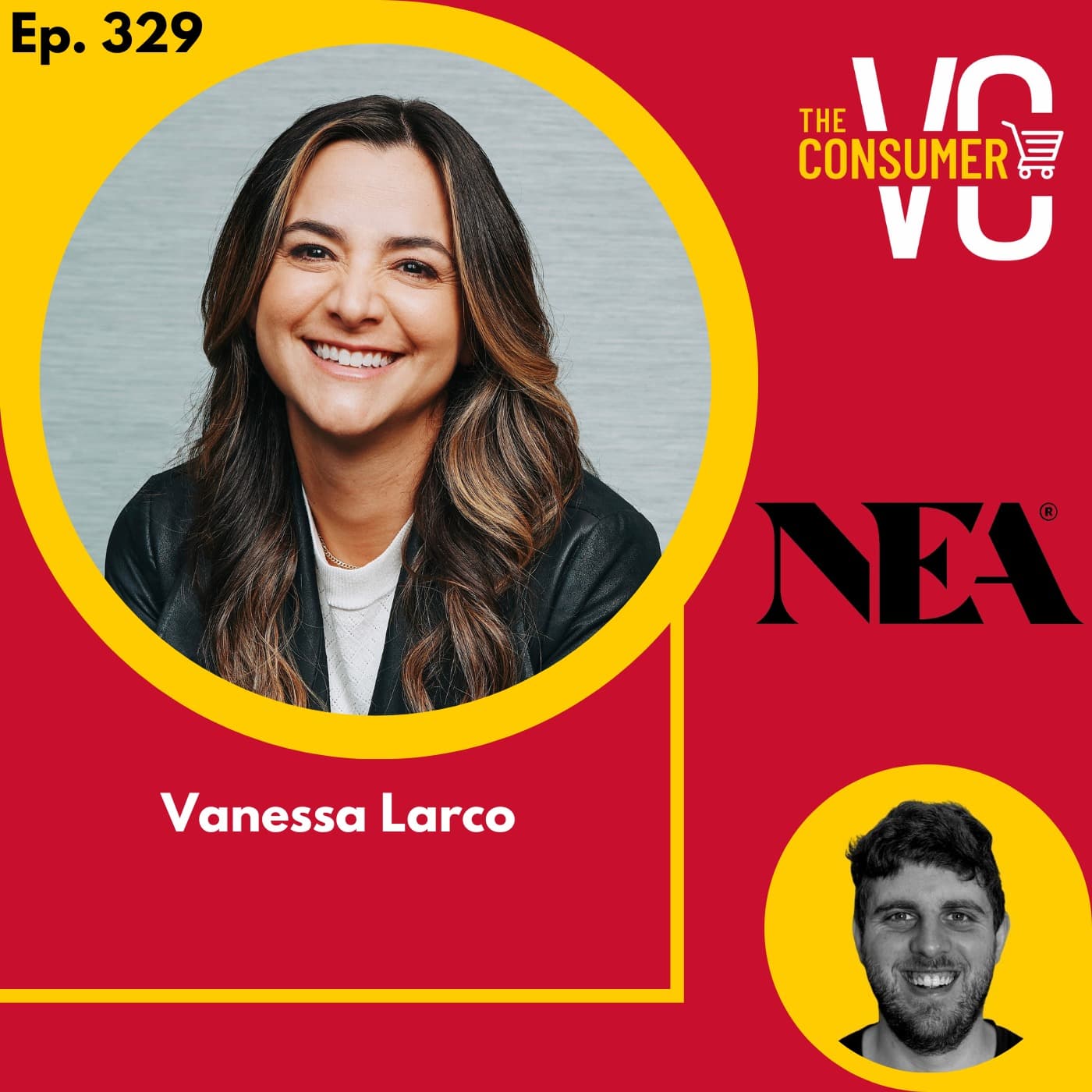
Episode Overview In this episode, host Mike Gelb interviews Vanessa Larco, a partner at NEA, where they delve into her career journey, investment strategies, and insights regarding consumer technology. Vanessa brings her extensive background from Microsoft and the gaming industry to the discussion, covering the evolution of technology, metrics for success in consumer businesses, and the implications of AI in the consumer market.
Key Highlights
Guest Introduction
- Vanessa Larco: Partner at NEA, with a history in developing groundbreaking technologies at Microsoft, including the Xbox and early touchscreen devices.
Career Journey
- Early career at Microsoft focused on touch technology and the development of the Microsoft Surface.
- Discussed challenges of creating a touchscreen interface without a mouse.
- Transitioned to gaming with Xbox Kinect, facing hurdles in speech recognition technology.
- Emphasized the importance of user experience and the challenges posed by hardware and software integration.
Investment Philosophy
- Vanessa’s investment ethos revolves around understanding consumer passion projects.
- Notable investments include Robinhood, Mejuri, and Greenlight.
- Emphasizes the importance of metrics in consumer businesses:
- Distribution: How products reach consumers, often measured by Customer Acquisition Cost (CAC).
- Monetization: Evaluating profit margins.
- Retention: Focus on user engagement and long-term customer value.
Insights on Consumer Technology
- Discussed the critical balance between growth and profitability in the consumer space.
- Stressed the need for businesses to maintain a focus on user experience, stating that the consumer experience becomes a significant competitive advantage in a crowded market.
The Role of AI
- Explored the transformative potential of AI in consumer technology.
- Emphasized that companies should focus on clear use cases rather than technology for technology's sake.
- AI could enable new business models or improve existing ones significantly, but the foundational problem-solving aspect must remain central.
Advice for Founders
- Founders should be prepared for a marathon journey, with new challenges arising at every stage of growth.
- Emphasized self-care and surrounding oneself with trustworthy, supportive individuals throughout the entrepreneurial journey.
Important Metrics Discussed
- Distribution: How effectively a product reaches consumers.
- Monetization: Profitability and margins of products sold.
- Retention: Keeping customers engaged long-term.
Key Takeaways
- Success in consumer technology requires adapting to ever-evolving market conditions and metrics.
- A strong user experience is crucial in retaining customers and building brand loyalty.
- AI has the potential to reshape business models but should be applied with a clear understanding of its role in solving consumer problems.
- Founders must be resilient and expect ongoing challenges as they scale their businesses.
Closing Thoughts Vanessa Larco’s insights illuminate the intricate landscape of consumer technology investment, emphasizing adaptability, understanding consumer needs, and the critical role of user experience.
---
Additional Information
- Podcast Link: [Consumer VC](http://www.theconsumervc.com)
- Newsletter Subscription: [Subscribe Here](https://www.theconsumervc.com/)
- Follow Mike Gelb on Twitter: [@mikegelb](https://twitter.com/MikeGelb)
This episode provides valuable lessons for aspiring entrepreneurs and investors alike, highlighting the nuances of building and investing in consumer-facing companies in today's technology-driven world.
Written by AI. May contain mistakes. Listen to the episode to check what was said.
Transcript
Automatic transcript. May contain errors.0:00three metrics and it's still true for all companies three metrics but we were like hyperoptimizing for the three virality slash distribution, monetization, and then we needed retention, right? Like we needed people to retain because that was their CAC to LTV equation. So we put in all these viral gates, like we needed to get viral because that would bring out our CAC down. And then we needed to monetize because that would bring our, monetize and retain that would bring our LTV up. And we were just constantly balancing LTV to CAC, LTV to CAC, because that's how you kept going. And I used to have this curve that I would draw and maybe I can do it in my hands, but basically CAC rises, right?
0:37Over time because you acquire most enthusiastic customers at the beginning really cheaply. And then over time you have to spend and spend and spend to acquire like the people that are more skeptical, right? So that CAC goes up. And then you're, um, in gaming, the truth is that like your ARP or like your average revenue per user actually goes down. At the beginning, it's really high. Cause again, these are people that love social games and want to spend on social games and will spend a lot of money on social games as you get the more skeptical users that are more expensive to acquire they also uh spend less in your games because they're less into the gaming thing so that their LTV is lower at the point where these two curves intersect that's like the death point for your game that's when like the game stops like you can't acquire anymore because your CAC and your LTV are break even and then that's it's over so the whole time Every day we went into the office, the whole point was like, how do we change the slopes of these curves so that our game lives on another day?
1:35How do we keep CAC down? How do we squeeze it down? How do we keep LTV up so that they never intersect? Hello, I'm your host, Mike Gelb, and welcome to the Consumer VC. If you like conversations with VCs about the latest in consumer innovation, you're in the right place. This show is brought to you by Propeller Industries, the leading strategic finance and accounting partner for venture stage companies. Now, I know this is free content, but that doesn't mean that I don't have a favor to ask. If you're enjoying the show, please subscribe on YouTube or whichever platform that you're listening on.
2:10And if you want the full experience, subscribe to our newsletter at theconsumervc.com. You'll receive a weekly update of all the news surrounding the emerging consumer ecosystem. and you'll be the first to know when a new podcast episode drops. Now, our guest today is Vanessa Larco, who is a partner at NEA. NEA is one of the largest VC firms. They have 25 billion under management and one of the most iconic VC firms ever. Previously, I've actually had one of the firm's founder, Chuck Newell. So definitely check out that episode if you want to learn more about NEA. Vanessa started her career in the gaming industry, but doesn't invest in gaming, which is quite interesting.
2:53Some of her consumer investments include Mejuri, Kindred, and Greenlight. We discuss what is tricky about investing in gaming companies, metrics that matter in consumer, and can you still have a billion-dollar outcome in consumer inventory businesses, and much, much, much more. Without further ado, here's Vanessa.
3:16Vanessa, thank you so much for joining me here today. How are you doing? Hey, Mike. Good. Thanks for having me. Oh, it's an absolute pleasure. I want to start very early on in your career. I mean, you were making the first Microsoft Surface that, of course, had touch. Can you walk us through why Microsoft, first of all, decided to create? I know it's obvious now, right? But why Microsoft wanted to create a touchscreen computer, a computer where you can actually navigate through touch, and also some of the complexities that you had to deal with in creating the actual touch control? Yeah. So Microsoft for a very long time believed in touch technology.
3:58I mean, they had, I remember Bill Gates like in the, I don't know, maybe early 2000s, maybe had a tablet with like a stylus. And it was big and clunky, but like it was, they didn't call it a tablet at the time. It was called something else, but they tried, right? And we had Palm Pilot. Palm Pilot was kind of like a mini tablet with its mini stylus and so i think people have been wanting to do touch handhelds interact more interactive devices that weren't keyboard mouse for a really long time before surface emerged and the story was that like the founders of surface kind of sketched out how this like table would be this multi-touch super collaborative thing uh on like a napkin and And it got greenlit and they like spun out a mini team to build and prototype it.
4:47It ended up being really a magical experience. It was like Mission Impossible style mind-blowing when you first interacted with it. Because there weren't very many colorful, animated, like you put your finger down and bubbles would explode from your finger touch. There was just so much delight baked into that experience that we were like, you know, I'm sure someone's going to want to buy this table that's really cool. And so we built really cool technology that was fun and delightful without a ton of thinking around who would be the buyer for a$14 ,000 table. But we sold a bunch. We sold to like casinos.
5:27We sold to some restaurants and bars in Vegas. Like we sold, I think, to like a cruise line. Like it was very novel. It had this novelty factor. But my job was to develop the controls, like the right-click menus and the pinch to zoom and the swipe to turn. These are controls, right, for developers to use when they build applications for the Surface device. And that was a really hard task because developers were like, well, how many of these devices are there? And how am I going to make money if I put my app? There was no App Store. There was no concept of App Store at the time. So they were like, how am I going to make money building an app for the Surface?
6:05and we'll pay you. And they're like, yeah, I'll just port over my Windows application to Surface. And yeah, it'll have a little triangle mouse, but just have people drag it around the screen. And we're like, no, no, no, no. We want to design something totally different. Like no mouse, because you have 10 fingers. So your app needs to support 10 touch points at any given. And their heads just, they were just like, what are you talking about? How do we design an app without out a mouse. Like, I don't understand what that even looks like. So we had to develop our own internal apps that were like, had really interesting design paradigms to then show developers like what it could look like if there was no such thing as a right click menu.
6:48And yeah, it was, it was really interesting. It was really interesting to like, try to talk to people about where design is going who ultimately had no financial incentive to jump on board. So there was a really good lesson there, by the way. The table went away and it turned into a tablet, which makes a lot more sense. Yeah. I mean, and also this was something that was, you know, new and also like, you know, hard to imagine as well of that, that, you know, this was actually becoming the future because it wasn't, it wasn't quite there yet. What did you kind of learn about that experience when it comes to, you know, just, just UI when it comes in, in hardware hardware super hard i remember like we designed something cool and the hardware team's like it not gonna work we're like no man so we'd go back and like design something like what are this like it not gonna work we're like dang it hardware make things work for us um it's really hard to design software and hardware at the exact same time um so i learned that lesson the hard way and then i think the interaction design is just tricky there's like but one of our designers I mean this might be not politically correct anymore but he's like they'll be like okay well we'll hire more designers to figure this thing out and he's like look nine women can't make a baby in a month like some things are just gonna take time and I think when you're designing a new paradigm design just takes iteration and it takes time and it takes like you start here and we're like well that's not quite right so then we iterate and iterate and we're like you know what let's throw the whole thing away that was a bad idea to start with let's start with a new idea and these things just take time is yeah no that that makes that makes um totally totally and i mean kind of grouping that you know hardware software that's i mean i i cannot only imagine how how challenging that is um uh from uh from that perspective and i know that you you then i know that you then you know worked at worked at xbox and as and as well as um on there um and also on you know the new kind of way to communicate, which was, you know, through, through speech to actually tell, you know, through speech to actually communicate with a device to talk to me a little bit about some of the challenges when it came to, um, when actually, when you were actually creating, you know, speech, speech technology.
8:58Yeah. Okay. So first of all, V ones, the first version of anything is super fun because typically there's no precedent and that's really exciting. Um, it's also really hard because again, there's no precedent. And so for speech recognition for Kinect, for Xbox Kinect V1, it was one of the first Fartalk devices. We called it Fartalk because there's close talk speech recognition. And then the only Fartalk speech recognition technology we had was CAR. It was like the car audio where you talk to your car. And that's like a very, like there's very few commands. It's pretty set forward. And you also have a, sometimes had a screen on your car that would tell you like what things you could say to it.
9:41So we're like, okay, this is different because this is not like transactional. You're going to play video games and we need voice recognition for media and entertainment. And it's in your living room in a highly social place. And so we're like, well, how do you make this fun and whimsical? And how do you make it not weird for you to be sitting on your couch talking to your Xbox? And through all of our user interviews, people were like, yeah, no, that's weird. Like I just, I look like a weirdo. I'm talking to my Xbox. And you would wake it up by saying, Xbox, play movie. And they're like, yeah, that's weird.
10:12I'm like, no, it's fun. So we played around with like different sounds to like make it sound like, like it woke up. And this is like fun. And then we'd give you like this feedback to encourage you to keep going and keep talking. And we'd have these little animations on your screen. And we tried all kinds of things to make it seem less weird. But again, it was a design challenge. How do we teach people what you can say to the device? at the time it couldn't do like natural language processing we were very limited we didn't most of our users on xbox weren't on xbox live like they were not connected to the internet so we couldn't do speech recognition in the cloud we had to do it on device and the device was almost 10 years old so we had very old hardware and very limited memory so there's only so many commands we could load on the device and so we were had like technology constrained we had cost constraints and we had like design constraints.
11:04And so it was, it was gnarly, but it was really fun to think through what it would look like. And then when Alexa came out, like my head exploded, like, whoa, a Fartalk device with no screen that can do natural language processing. This is bonkers. Um, so yeah, it's been fun to see how fast technology has evolved, especially in the home for consumers. Did you, did you think that when it came to, because totally understand from the use case of, or, or, you know, customers or fans of, of Xbox saying that, no, that's just really weird to actually talk to Xbox and say, Hey, wake up Xbox. I want to play you now.
11:41But did you, did you always have an inkling that, you know, even though the feedback was weird, that this was maybe where we were going, or this was one type of way to actually communicate with technology? Yeah. I, I thought that like we would interact with technology, with gestures, with speech, with touch, with keyboard, with mouse. And I still believe that that to be true. And I think, um, it's more like immersive tech and you start blurring the lines. I think the trick is finding the right controls for the right tasks. And so like, yeah, maybe controlling your TV with voice is not great, right?
12:22Like if you're like next channel, next channel, like that's way more obnoxious than just hitting like the button on your remote. So you do have to really evaluate like what's the task at hand and what's the best medium to achieve that task. But the technology is pretty limited right now. Like speech recognition is getting better, a lot better. um gestures has kind of frozen like we haven't made any progress since xbox maybe now with the x with apple vision it'll revive a bit and that takes off maybe we'll like get the next gen of gestures um but i still think gestures is really interesting and i'm still very inspired by like the minority report screen with like the originally one with tom cruise like zooming into things and spinning things and like you know like i i still think that there's some information that's better manipulated with gestures than with mouse um and voice we're just yeah and well it felt like maybe gestures or or uh that they kind of maybe saw like a rise and like a fall quite quickly because people didn't really or more so that um where you actually are kind of fully fully immersive and you actually were able to um you know move around and play a game moving on we kind of saw like a rise of that quite quickly and then maybe then maybe there wasn't as much investor interest a few years ago.
13:43Is there an immersive technology that you don't think is going to take off the way? I know that gestures, we still think that we're pretty early on with, but is there, I guess, an immersive technology that you don't think is actually going to, that you maybe aren't as bullish on? No, I just think that it has to be an intersection of it makes sense for us to use this interaction model or this immersive technology with like this really cool thing that we want to do and like that has to let us up to that cool thing and then it has to be a great end-to-end experience right and if it's not a great end-to-end experience nothing else matters if it's a great end-to-end experience but it's like a million dollars well that doesn't that's not attainable so there's like there's like a whole list of things like it's amazing to have some real like innovative technologies take off.
14:40There's like a litany of things that have to like fall perfectly into place for something to get adopted and take off. But I think for a lot of this stuff, like it's possible. It's just like how many of those things have already lined up and how many are still left to line up is the real question. And that's just timing, I think. That makes sense. And also that, you know, the overall experience has to be amazing or the technology actually has to line up. It can't be, there's certainly a difference when if there's a lag or delay or even if the gestures, it's actually not picking up the gestures or what have you.
15:24What is, I know that you kind of transitioned a little bit from building new technologies in order to maybe focus on gaming, if that's fair to say. Can you talk to me a little bit about how did you think about creating new games for iOS and a little bit about that transition? Okay, so the transition felt a little more natural because I'd been at Xbox, but I worked on the platform team. And again, I worked speech recognition, but my job was not just build speech recognition experience on the platform, but then convinced developers, again, like Surface, to go use speech recognition in their games, right?
16:06So then I went out and met with all these game developers and would try to understand, like, what games are you building for Kinect? And in their case, it was, like, very clear how they're going to make money. They sell the CD-ROMs at the time. So we're like, okay, now they're convinced that they can make money off this, but now how do they bake it into their games? So I spent a lot of time with game developers in game studios trying to get them to build stuff for Kinect. so when I decided to leave Microsoft um I wanted to go I wanted to move to the Bay Area I wanted to go work at startups so like that was like criteria number one criteria number two and at the time there was this like explosion of social gaming companies and everyone at Xbox was like really annoyed by them they were all like oh that's like cancer these are the worst games ever how are they making so much money how are they getting tens of millions of users and my ears worked.
16:56I'm like, Ooh, that sounds like disruption. That sounds like you guys are threatened. I should like, if I want to move to the Bay area and I want to work at a startup, I should go work at a gaming startup, a social gaming startup, because that seems like it's disrupting console gaming. I was wrong, but, uh, I moved to the Bay area. I took a job at Playdom and, and we were building Facebook games and I learned a ton cause I came in with this like Xbox mentality of everything has to be magical and everything has to be perfect. And like, there's no timelines. Like we, we had timelines, But we were all like all about the creative process.
17:28And I get to play them and they're like, we A-B test everything. It's a mathematical equation. There's no, like, we don't value creativity. We just like take a game, reskin it with a new theme, test out the theme. If it's a low cost requisite acquiring a user on Facebook, that's our theme. And then we just like optimize, optimize, optimize, A-B test, A-B test, A-B test. And I was like, what is this world? But I was fascinated by it. and it was so profitable. And I was like, wow, we're making a lot of money here, like a lot of money. And I learned a lot about AV testing and data-driven decisions and moving fast and breaking things and all like the Silicon Valley, the MVPs, the whole thing, the lean startup method, all the things that were like all the rage in 2010.
18:19And then it all came crashing down pretty hard. Facebook killed the ability for us to manipulate the news feed. The Facebook in-app game currency was also killed. Like so many things dried up. We burned out our users because our experiences ended up becoming spammy and not fun. So we ended up having pretty shitty experiences. And it just died. Like the whole industry just kind of like, just like gone. uh and that was hard i was there on the upswing and i was there like for a lot of the way down um and so i learned some valuable lessons of like yeah there's a time and a place for data driven decisions and there's a time and a place to lean hard into experience and brand and design and the question is when do you lean into which and that's the that's the art of the whole thing yeah i mean that it kind of seems like from that experience working working working there and and seeing like the rise and also the fall, it was the kind of valuing virality over creativity or, or, or, you know, and like the actual op is it, is that for the site?
19:23Three metrics. And it's still true for all companies, three metrics, but we were like hyper-optimizing for the three virality slash distribution, monetization. And then we needed retention, right? Like we needed people to retain because that was their CAC to LTV equation. So, um, we put in all these viral gates, like we needed to get viral because that would bring out or CAC down. And then we needed to monetize because that would bring our, monetize and retain that would bring our LTV up. And we were just constantly balancing LTV to CAC, LTV to CAC, because that's how you kept going. And I used to have this curve that I would draw and maybe I can do it with my hands, but basically CAC rises, right?
20:00Over time because you acquire most enthusiastic customers at the beginning really cheaply. And then over time you have to spend and spend and spend to acquire like the people that are more skeptical, right? So that CAC goes up and then your um in gaming the truth is that like your ARP or like your average revenue per user actually goes down at the beginning it's really high because again these are people that love social games and want to spend on social games and will spend a lot of money on social games as you get the more skeptical users that are more expensive to acquire they also uh spend less in your games because they're less into the gaming thing so that their LTV is lower at the point where these two curves intersect, that's like the death point for your game.
20:40That's when like the game stops. Like you can't acquire anymore because your CAC and your LTV are break-even and then that's, it's over. So the whole time, every day we went into the office, the whole point was like, how do we change the slopes of these curves so that like our game lives on another day? You know, like how do we keep CAC down? Like how do we squeeze it down? How do we keep LTV up so that they never intersect and that was the whole thing that was the whole thing those the those three metrics and as well as what actually happens as you stretch it uh and actually acquired you new users the relationship between cac ltv what what have you learned i know that you don't invest in in gaming at at nea um i would say that what what have you learned from i guess these experiences that actually makes gaming incredibly hard to actually start a gaming studio or to actually launch a hit game today?
21:38Nobody knows why something goes viral. Why does one meme go viral and other memes don't? And it's not because they're spot on. There's a lot of spot on memes that don't go viral. It's the same concept. You can build a beautiful game. You can build an incredible game and it just never hits. And so I think the hard thing for me is I was in gaming for a really long time. I can tell you, I can look at a game that's a hit and tell you why it's a hit. I can look at some games that aren't hits and tell you why they weren't hits. But I can look at, but then if you show me an amazing, beautiful game and say it didn't hit, why?
22:11I don't know. Like sometimes I like genuinely, I'm like, it's beautiful art, great sound design, really great game economy, very well balanced, amazing gameplay. I don't know. Like maybe your acquisition strategy wasn't good. They're like, nope, we went through all the channels. I'm like, I don't know. Like, I don't know. I don't know. I don't know why it's not a hit. And then sometimes I look at games that are like hits, one hit wonder, like they're hits for like a moment in time. And I'm like, why this? Like, why this? It's like, it's like off. Like, it's not that great. I don't know. And it's also like songs, like some songs are hits and some songs are dud and some songs that are hits on the radio, you're like, this song sucks.
22:53Why is it a hit? I don't understand. And so, I mean, that's why I don't invest in gaming because if I knew I could reliably spot a hit with accuracy, I would just be building games right now. I wouldn't be investing in them. I would just go be doing it. I don't know. When there's a hit, they're so profitable. They're so profitable. Like for my little dinky Play Dumb game, we got to like 24 million in ARR in like four months off a 600K budget. And then I remember joining my first enterprise company and they'd been at it for seven years. And they're like, our revenues crossed 10 million ARR. I'm like, I'm sorry, how long have you been at this?
23:33They're like seven years. I'm like, and you're just here? They're like, well, we had to build it. And then I'm like, oh my God. Like in gaming, one of our studios got to a hundred million ARR in six months. Like, man, is this how the rest of the world? And they're like, yeah, sorry. Like what you experienced in gaming that's not the real world it takes years and years and years and years and years and like most people don't get to 100 million AR in their first year and it's like oh in gaming that's a thing that's a real thing you get to 100 million dollars in revenue in a year in gaming is that still is that still possible today I think so I mean I haven't spent a lot of time in the gaming industry since yeah yeah yeah I would like games that are hits make so much money so much money um so yeah if i knew what it would take to generate 100 million revenue in a year like mike it's been great being on your podcast i'm out like i'm gonna go do that right now like you know totally so i know so i know after after being gaming you then you then went to uh uh and and worked at Twilio and Box.
24:42Then that landed you at NEA. Why did you decide to become an investor? That's a good question. It was never part of my plan. I love building and shipping products. I think there's no greater joy than working really hard on something and then seeing your dashboards light up and seeing people use your product and getting the feedback. That is just awesome, awesome, awesome feeling. So I never thought I would leave that. I think NEA caught me at a really good time, which was it was right after a big launch that my team and I had worked on at Box. And I wanted to do something big and bold and risky again, like what the project had just taken on.
25:20And it wasn't extremely obvious to me like where I'd get like I didn't see anything that felt like a step function in risk and learning for me professionally in product. I mean, I talked to a lot of companies and I looked at a lot of things internally in box. And I just, I don't know. I was like, okay, if I leave box, I will be splitting the monolith at another midsize company. I'm like, no thanks. I just did that. Not doing that again. Or I can be like the first head of product at an early stage company. And I was like, well, if I'm going to do that, I'd rather start my own company. But I didn't have an idea.
25:58or I can go be like middle to bottom management at a huge company like Meta and Google. And I was like, that doesn't exactly sound like it's my cup of tea. So I just didn't know what I wanted to do. And NEA was like, hey, you know, I got to them over the years. They offered me to come join. And at first I said, no, I'm like, I'm not an investor. I'm a builder. And then Pete Censini and Forest Basket and Scottsendale. They were like, look, we'll teach you everything we know. And I was like, that's a pretty damn good offer. Like getting to learn from some of the greatest people who have promised me to teach me everything they know.
26:39Like, how do you say no to that? So I was like, okay, I'll go do this venture thing. I'll do it for two years and then I'll go back to building products. And gosh, it's almost been eight years. It'll be eight years in October and I'm still here. It's amazing. That's amazing. Congrats. What have you, because I know that you're, See, looking at your portfolio, seems like you're a generalist. If that's fair to say, you invested in enterprise SaaS companies. You've also invested in consumer companies. What's your overall viewpoint or approach to investing since you're investing in multiple different categories?
27:14Well, I would say that I'm... I would... My major, I call it major and minor. My major is B2B apps, formerly known as SaaS, right? But then I can't help myself on the consumer side. And I joke with my colleagues, I'm like, I'm a good consumer investor because I'm not supposed to be investing in consumer. So every time I do a consumer deal, it is one that I've like, I can't stop thinking about it. I'm obsessed with it. And I'm going to go to war for it because if I don't win this deal and if I don't get to work with this company, I am not going to get over it for a very long time. And so because I'm not supposed to invest in consumer, the deals I've done are ones that I have like enormous conviction in.
27:56And that's really fun. But they're all apps that are all like technology enabled in one way or another. But across both, for me, it's the user experience. Like the thing I obsess over is retention and engagement metrics and seeing people love a product. whether it's an enterprise product or a consumer product, just that product love is what makes this job for me really fun. This episode is brought to you by Propeller Industries. If you run a high growth business and you're focused on profitability, extending your runway and improving your operational efficiency, you probably need a finance and accounting whiz that will grow with you.
28:38Well, instead of hiring someone full-time, what would be cost-effective is working with Propeller Industries. Propeller Industries is a leading strategic finance and accounting partner for venture stage companies and has partnered with over a thousand startups and high growth businesses across consumer products, consumer tech, and enterprise. Some of the brands that they've worked with are Liquid Death, Olipop, Hems, Farmer's Dog, Away, MoviePass, and Giphy. Propeller also provides specialized support for fundraising and M &A with transaction advisory services. Propeller's TA team of former investment bankers and investors can step in on more of a project basis when pursuing full-scale financing and M &A.
29:16There's a link to Propeller Industries in the show notes if you want to learn more information. Love that. So talk to me on the consumer side of it. What are examples, and obviously you can use your portfolio, but what are some examples of the reason why you actually ended up loving the company or just really couldn't stop thinking about it? The truth is I, most of the time I just deeply relate to the problem they're solving and I want to see a solution to that problem. It's like not the most sophisticated thesis, but if I look across like what's the common denominator, it's that. I'll start with Robinhood.
29:52I met those founders in like 2015, way before I joined NEA and they told me about Robinhood. And at the time I was like scrambling to get up to speed on like financial literacy and investing because I'd started saving money and it was all in cash. And I'm like, this is dumb. I need to figure out how to invest my money. And I didn't have enough for like a wealth manager. Like that'd be like comical, right? And I didn't want to put it in like mutual funds because I saw the fees and I'm like, no. So I was reading books and trying to learn it myself, like books. And then also like some blogs I'd come across, right?
Read the full transcript
30:32And I was like, okay. So I opened an account on Fidelity and I'd have like a hundred bucks to invest at a time at best. And it sucked because it's$7 commission fee. So I'm like, okay, so I buy a share of something and then$7 has to go for that commission. So then I found in Fidelity, they had these 50 ETFs that had zero commissions. So like, that's all I would buy. And like, it was the 50 ETFs I could buy with zero commission. That's all I would, that's all I had in my Fidelity account. And so when I met Bajan Vlad And they were like, yeah, we're getting rid of commission fees. You can trade on Robinhood, any U.S.
31:07equities, zero commissions. I was like, what? I don't have to be limited to 50 – like anything? They're like, anything. I'm like, how do I get in on this? How do I get me off the wait list I want in now? And I interviewed to work there. I was obsessed with it. And they gave me an offer to be head of growth, but I want to be head of product. And they're like, Deju's the head of product. So I was like, okay, that's true. so I didn't end up joining and then when I joined NEA I ended up joining the board of Robinhood because the founders and I had this great relationship um but yeah that to me I was like oh my god I like this is I need this like I I'm where do I sign like and every consumer company that's in my portfolio it's the same thing Majuri I had enough money to buy myself some jewelry um Um, and I like didn't know where to buy jewelry.
32:04Like I wanted real gold, uh, but like I can't afford Cartier. I couldn't afford gold Tiffany. Like, where do you go Macy's to go buy gold? Like, where do you buy gold jewelry? And so, um, my friends from Miami were all talking about this company, Majuri, that they had bought their necklace and their hoop earrings from. And then I saw it pop up on a 500 startup list. And then I met the founders and I saw them grow this business and this brand. and everybody I talked to loved the product. And when they showed me their metrics at the Series A, it was insane. Like the repeat rates, the margins, like the product's love.
32:37It was, and the sophistication around how they built their business was so impressive. And I didn't win the Series A. Like Felix beat me to it. They issued a term sheet way faster and so they won that one. But the B, I was like, I'm not gonna lose this. I'm not going to lose this deal. Like I have to. And then I see – and it was like torture because I didn't get the A. But then I would see them everywhere and hear everybody talking about it. It was just like a needle. I felt like my heart was just like needles everywhere, right? It was just like every single one was just like one other needle added.
33:14And I was like, this is so painful. I have to work with this company. And then like, I don't know, Kindred, which is my most recent consumer. I led the series A, incredible founders also. But even for me, like I have three kids. When I travel, we like to stay at Airbnbs or in homes because we need a kitchen, right? And we need like a bathtub and we just need a little space because we have very young kids. Airbnb is like wildly unaffordable right now. Like I don't know if you try to stay at an Airbnb for like three or four days, which is what I have when we take vacations. It's bananas. us. And so Kindred came.
33:54They're like, yeah, Airbnb is unaffordable, but people like staying in homes. So we're going to do this asynchronous home swapping thing. So yeah, you could go stay in New York for a week for like 500 bucks. I was like, wait, wait, wait. I can stay in New York for a week for$500. How does this work? And they explained it to me. I'm like, whoa, this is really smart. And like, where do I sign up? I need this in my life. And so, and then I was at a wedding and someone who I didn't know was at the table and they were talking about how they signed up for kindred and it's been amazing and i'm like kindred yes that's kindred like yes it has me too me too um and it was a very competitive series a and i was like i i gotta work with this team like i will not get over it if i don't get to work with this team yeah jesse's been on the podcast she seems absolutely terrific from from kindred and also so interesting how with the home with the home swapping how even to think about you know supply and demand how they actually need to match as well.
34:50Right. Because of course, when you obviously let, you know, are going someplace else, someone then, you know, takes, takes your home. So it's, it's a really kind of interesting model as well, just from like with, with that dynamic with, with supply and demand, which is quite different. Obviously it's like an Airbnb or, or, or really anything else that's, that's in the market. It's true. I mean, none of these businesses are easy. Like pulling off Robin Hood was not easy. And there was like so much, I mean, very public ups and downs over the years. Not easy to build a business at scale and succeed at what they set out to do.
35:30Majuri also like not trivial to build what they're building, actually very complicated. You think of like supply chains, you think of mining gold, mining diamonds, like the whole thing. From the raw materials, gold is one of the key commodities that are traded. They're buying actual gold. So we're looking at the gold prices on a daily basis. I mean, it's a very complicated business. But if you can pull it off, it's a really great business. Same thing with Kindred. It is not trivial to build with their building. It is logistically difficult. It is difficult from a branding. It's difficult from marketing.
36:12It's difficult on so many angles. So that's when the founder piece comes into play. And so I not only have to like believe and love the product and the market, but I also have to believe that these founders can execute because none of these businesses that are exciting are easy. Totally. Totally. I'd love to also, because I know that you said that one of the big, apart from the founder, one of the big, one of the big things that you look for when it comes to a company or is it on the consumer side it comes from maybe a a personal pain point that that you then are you know intrigued by and it's hey if it's not only my personal pain point maybe there's a you know uh let's back into this and maybe there's a huge market here but how how also from like the experience perspective since i know that is um huge for you that the the entire customer experience and and and also maybe the interface as well.
37:09Once you see a company and maybe a company that is serving a personal pain point, you've just so beautifully gave us with these three examples. How do you then realize that, okay, these are actually the best companies in the space or what I believe is the best companies in the space and that are going to win? Well, the thing that's interesting about consumer that doesn't hold for enterprise is a lot of the time they're like they're really the only ones doing it like at the time robin hood was really the only person the company that was like you know what we're gonna do we're gonna do trading with zero commission everyone's like what how um so there was no like there was no competitor right uh at majority there was a lot of competitors but once they broke out it like the way they were doing it and how they were doing like a lot of things.
38:01There was like nothing that really was similar. And Kindred, like, I mean, I think there's a couple of copycats now, but when I first met them, like there was nobody doing this in the US. There were some like parallels or interesting things in Europe, but nothing in the US that was doing this this way. Greenlight, debit card for kids. I mean, it's been tried in the past multiple times and failed, but at the time I saw them, they were the only ones in the market trying to do this thing in the US. And it made a lot of sense of like, why now? It was tons, like for all these companies, there was a big fat why now.
38:40And yeah, so I think in consumer versus enterprise, like the why now matters a lot more. And most of the time people have tried your idea before and had failed, but why now there's like a different reason why you will actually succeed this time. And there's probably no one else doing it. Like most people are like, eh, it's been tried 10 times before you, it's going to fail again. So no, there's not like, there's no one else. Once you succeed, there's like a hundred copycats right after you. And that's, I think, where the user journey, the experience, the brand, it's really authenticity and trust.
39:16Like that's going to end up being your moat, right? And I think it's, I think it's a real moat in consumer. Like if someone, like your experience buying a majority product or your experience trading that first stock with Robinhood and not getting charged commission and you're like, whoa, this is awesome. I went from like$7 commission to no commission, um, to like, you know, kindred, you stay in your first kindred home. Like you hear how people describe their first time staying in a kindred home. And like everyone describes these, all these experiences, like it's magical. It's just magical. Like making that first trade and not getting charged seven bucks, like mind blowing going to the kindred home and it's so warm and welcoming and like i'm taking care of the cat and watering the plants and i'm happy to do it because i feel so lucky to be in this home like the way people describe these products people just like love them and then that that's your moat because when there's a copycat people are like oh it's not authentic it's not genuine so i do think there's a moat to the whole like experience thing yeah no that for sure for sure How also do you think about business type?
40:28And because I know that, you know, you predominantly invest in B2B SaaS, but even type of business, like thinking about like Maguri and thinking that, you know, they are like an inventory based business and inventory based businesses are just very different to, you know, software businesses, even though, you know, if they utilize, you know, software in order to sell like the DC channel, they're still, you know, inventory based businesses. I know NEA has a long history about investing in inventory businesses, but as an investor and how you think about your overall portfolio and as well as the returns, inventory businesses can be quite different to software businesses.
41:07How do you kind of juggle these two things when it comes to inventory and software? And maybe is it that big of a deal? Yeah, it is a big deal. um different businesses have when they exit they have different multiples on revenue so as an investor as a venture like that's actually what i'm really thinking about is how is this going to be valued on the way out and as long as you're applying the right multiple on valuation when you invest you should be okay assuming the growth rate is there um but yeah inventory businesses like one the margins have to look much better than the average inventory business, right?
41:47So like first things first, the margins have to be 50 % up. Like you just need margins that are healthy, i.e. look kind of similar to like software margins, right? Like you want them up there. Like you don't, it'd be hard pressed to like be in a business that has very, very low margins that'll stay low. Like that the business is always, like they're excited to be at 10 % margins. Like that's probably not a venture investable business. You need higher margins. And then you want to look at growth rate. Like it needs to be, have some reason why it's going to grow like a venture business, right? So like you look at SaaS and you're like, well, it needs to grow at this rate.
42:27You look at some consumer needs to grow at this rate. And so, yeah, I think the hurdle for inventory-based businesses, or I don't know if it was brick and mortar or whatever, the metrics need to look pretty similar to like a software business and that's a high bar. So like, will I invest in another inventory business? If another one has these types of metrics, yes. Have I seen many with these types of metrics? No. And so I look for growth rate. I look for margins. I look for repeat rates, right? So I want to see that people are repeat purchasing or retaining like you would expect them to retain if it were a software business.
43:06So yes, I invest in many different types of businesses, but their business profiles all have to look kind of similar when you look at just the numbers. And the valuation we assign to them has to be in line with how the market would value them later on, which like inventory businesses get valued different than like a marketplace business. Yeah. Well, that's what I'm kind of curious about too, because inventory-based businesses, you know, it's really hard for an inventory based business that to actually achieve, like, for example, a billion dollar valuation. Whereas not that it's, of course, also really challenging for software businesses to do that, even though we've seen, you know, a lot of unicorn they become and then maybe go in the past couple of years.
43:50But, but, but typically for, you know, for inventory based businesses, it's very hard to kind of achieve that kind of threshold, which that I've been kind of told by some investors, that's kind of like what we look for, right? Like that is what, that's what kind of underwriting for in order to achieve that. So do you, when you do look at inventory businesses, do you look at it in terms of the same light? Or are you a bit more concerned about if it's not a billion dollar valuation that you hope that they're able to get to? Is it, okay, how are we're going to be very, very kind of concerned or very zoned in on in terms of how much you're actually going to be fundraising and on the dilution side?
44:32Look, no, there's no way I'll invest in a business that I don't think can have an exit that's over a billion dollars. There's just no way. Oh, okay. Well, our fund size, like it doesn't lend itself. I can't, I have to invest in something. Doesn't make sense. That's over a billion. Doesn't make sense. So I have to believe that this can get to revenue scale where it's valued at over a billion dollars. If you look at inventory businesses, if you look in my portfolio, their revenue scale, gosh, if my SaaS companies were at that revenue scale, they'd be public. They'd be public companies right now.
45:09So the bar is different, right? My inventory business is by and large way ahead on that front, but it's a different type of revenue. It's valued very differently. That revenue is valued differently than a SaaS revenue. And so, but all that is to say, given their like their growth rates and their margins and their, where they are in scaling, like I, you know, you, it's not crazy to think that those types of outcomes are possible. But the bar is just really high. The bar is super high. So that's why they're, I wouldn't, I would say like the category is venture investable, but for like the top 1%.
45:52Yeah. No, that's really helpful because one of the, I guess, debates for inventory businesses that's come up is, does it kind of look like in terms of what the returns should be for them? Does it look more like a private equity type of return model where you're trying to get maybe a 3 to 5x return on your investment instead of a venture return, which is like maybe, let's call it 10x plus, if that's fair to say. Uh, so, uh, just because it's very, very hard to achieve, uh, that, that billion dollar threshold that you kind of need. Yeah, it is. It's, it's very hard. Um, so I think it, it depends on the company.
46:36It depends on their growth rate. It depends on like the quality of the revenue they have. What were the margins? How much that came from repeat? How much of that is stable revenue? Um, so yeah, it's super hard. Like I think it's some very small percentage of it can lend itself to venture based on their growth. But the majority of it is maybe private equity and the majority of it might just be a great lifestyle business. Like a very profitable, super exciting lifestyle business. And there's absolutely nothing wrong with that. In the beginning, when you talked about gaming, you talked about how gaming is based off of three metrics, virality, monetization, and retention during your time working for mobile games or iOS games.
47:18When it comes to consumer, what would you say are maybe the three metrics that you look for? I mean, it's still the same thing. Well, it's not virality, but it's distribution, right? Like, how do you distribute? When Instagram, like when brands started catching on to the power of Instagram and micro-influencers and influencers, like that was a unique distribution channel, right? And so I think where you can distribute a lot of product pretty efficiently for very low cost because it was a pretty underutilized or undiscovered distribution channel. And so a lot of companies were able to build big followings and big businesses because they were able to double down on this distribution channel that was untapped, right?
48:04So all that is to say, like, distribution channel is super important for any business. Consumer, enterprise, doesn't matter. But, like, distribution, how do you get this thing in the hands of people? Or otherwise known as, like, CAC if you want to put a number on it. How much does it cost you to get this product into people's hands? So distribution is a really important metric. Then you still have modernization. Like how much money can you make off it? And a lot of that is like margins too. Like how much money do you keep after you sell a unit of this thing? And then the last is retention. Like you have to retain your users because, you know, if you're paying to acquire them and you don't break even on – I highly recommend trying to break even on first transaction or within the first year or within the first couple months if you can.
48:45But most business models rely on like renewals for this business model to work. And so you've got to retain your customers. And the retention piece is a lagging indicator. Engagement is the leading indicator. And so you want to build amazing things in your product to keep people engaged and coming back. And I think a lot of product managers' time is spent all on the engagement metric for a lot of good reason. It's like the core of your thing. Like if nobody likes it, they're not going to pay you for it. If they don't pay you for it, then you can't afford to acquire them. So it all starts with like build something great, you know?
49:16Totally, totally. Totally. I think, you know, especially in today's market, there's been a lot of chatter about growth versus profitability. Does it make sense to actually, you know, kind of have your destiny and actually becoming profitable? Or does it make sense to still really strive in terms of achieving growth? In your mind, especially as you think about from your lens as a VC investor, how do you think about this kind of balance between growth and profitability? I mean, in an ideal world, you'd be able to grow really fast, two to three X profitably. But like, that's, that's, man, that's really hard.
49:54That's like, it's not impossible. I've seen it, just not often. And most of the times I don't see it because they're like, I don't need venture money. Like I can do this profitably. I don't need your money. So like, all right, fair. I don't, so I don't get to see the most of it when it does happen. But there are some businesses that like, well we have to spend um to grow at this rate but the trick is you have to believe that at some point you can rein it in and still keep growing and make money so like I think we lost that part of the equation which was yes spend to grow but if at some point you can't spend can you still keep growing can you become profitably when you need to and we just got so far away from that like so far away.
50:38We were like, you never have to be profitable ever. And I'm like, well, well, like you kind of want to be able to have a line of sight to profitability. So like, if you need to pull that parachute, you can pull the parachute. Right. But if you've spent so much to grow that the parachute will never deploy, like that is, that's not okay. And so what I say is like, yes, if you're taking venture money, the expectations, you're going to grow like a venture company. so you're not to spend to grow but you don't want to spend so much that you completely lost sight of what profitability would look like at any given moment yeah that's um that's a very very that those are those are very very good points um i'd love to as well here switching gears a little bit but we'll let me hear your view about you know ai in in the consumer world since of course ai is maybe the next is obviously the next theme or, or, or the current theme that, um, uh, that, that's good.
51:34That really has changed, um, uh, computing and, and, and also how we, how we, how we research or, or, and, and a lot of different kind of, uh, uh, use cases for it, but how, what's your lens in terms of what's investable when it comes to, to AI or even like the, or, or unique use cases in terms of problems that, that AI can solve as relates to consumer? Well, the one thing, the one lesson I learned at Surface was like, don't build technology for technology's sake. I think there's a lot of like really cool demos and really cool things people are building with AI that don't have like a really good end-to-end use case or don't have a really clear pain point at solving.
52:12So I think, look, AI is going to be everywhere. It already is everywhere. The adoption of it has been phenomenal, but people aren't like, oh, I'm an early adopter of AI. No, it's just like high school kids getting their homework done by chat GPT. It's, you know, me trying to plan an itinerary for a trip with my family. And I just, I'll use perplexity for that, right? Like I'll, and it's, it's just, it's creeping into all kinds of things. And I think it'll continue to do so and it'll be everywhere. And so I think it's going to do great things and be disruptive for travel. I think it's going to do great things and be disruptive for personal finance.
52:50I think it can I think it can just be everywhere and it is already getting everywhere but I also think the one thing people aren't talking about is I think it's going to enable entirely new business models so I think could you build a business with just four people that's 100 million in error with AI? Maybe, maybe not today but maybe in a couple years or maybe there was a business model that was wildly unprofitable made no sense five years ago. But if they use a bunch of AI tools off the shelf, maybe it can have really interesting margins all of a sudden. Maybe it could be a really profitable business all of a sudden.
53:28And so what I'm excited about, yes, I'm obviously excited about AI first forward apps, but I'm almost more excited about people that are like, I'm solving this problem. I don't know. I'm a travel agent. I'm this, I'm that. But in the background, behind the scenes, I'm using a shit's in AI to make this thing work, right? Like I'm making this business actually operate with really interesting margins or I can give this really interesting experience or super customized experience for a user because I'm using all this like AI stuff in the background. Like I'm not an AI company, but I leverage AI. And so what types of companies are going to come about or going to be interesting because they're built using the AI tools that other companies are building?
54:12And so I'm most interested about that, like really excited to see what new business models and what new categories get created because people can use this technology to build these companies. What I find fascinating there is what's then, with the new business models, what would be maybe the role with venture capital within some of these new business models? Where you actually have companies that are really small actually using AI to actually build these incredible businesses that they might not actually, maybe they might not need venture capital to build these businesses. Maybe they won't. But some will.
54:46Some won't. But that's always been the case. Some will, some won't. and some may need the capital going or not maybe they're really profitable if they stay in their state or in their hometown but they want to expand globally and hey turns out you need some venture capital money for that um so maybe maybe the businesses won't need it up front but maybe they'll need it to go big or maybe they don't need it up front but founders may want to sell some secondary or maybe they need they want to go public or there's a million different reasons along a founder's journey where it might make sense or might not make sense to take venture money.
55:19So I don't know. I think, I think venture will still have a role to play in tech innovation. What's one book that's inspired you personally and one book that's inspired you professionally? So one of the books I really like that I think about all the time to this day is from good to great. Um, it's just really interesting thinking about how to turn good companies into great companies and what that like those factors were because all my companies want to achieve greatness and I would say like a lot of them are great at this stage, but they need to continue being great at the next stage, not the next stage, not the next stage.
55:55And the game changes from C to series A, from A to B, from B to C. It's like the whole set of challenges completely shifts overnight and you're like in a new ballgame. So like there's new rules to the game every two years, every two to three years. And From Good to Great just has some very applicable lessons, I think. um the five temptations of a ceo i really like i thought that book was great and i just went through it really fast i like would sit in my parking lot at home just like like i didn't want it i didn't want to end i didn't want to get like shut off um so i really like leadership books i'm fascinated by the quality of leaders like why do people follow certain people holds true in politics too like why do people vote for certain people when i'm just like i I don't get it.
56:42So just deconstructing like what makes someone lead and what makes a bunch of people follow. And so all the books I can get my hands to just really understand the psychology of following leaders. I find it really, really interesting. I appreciate that. Good to great. And also five, 10 days into the CEO. I think we've had a couple of past guests that I mentioned from good to great. And then five, 10 days into the CEO. I think that, I think that's the first one. So Vanessa, very, very, very original. um thank my final question for you is what's what's one what's maybe your one piece of advice that you have for four founders that are that are currently building um it's always hard it's always hard uh so it's a marathon it's truly a marathon like i look back what's been funny is i've been doing this for a long time eight years i feel like it's a long time almost eight years and um it's always funny because the CEOs are like well I just need to make it through the seed stage the seed stage is the hardest when I get to series a I'll have tens of millions or 10 million plus in the bank and then things will get so much easier and then like nope whole new set of problems that are just as hard as not harder and they're like okay but if I just if I could just get to my series b and raise like 20 to 25 million and have that in the bank then like then my competition should subside and these things will get easier and blah blah blah I'm like, yep, those things do get easier.
58:06But then you're going to get a heaping level of surprise and the next new things that are super hard. And then like, okay, but if I just make it to my Series D, then I can hire a really experienced executive team that can help me with this stuff and it should get easier. I'm like, yep, those things get easier, but then you unlock the whole new set of even harder problems. And so it takes stamina. It takes perseverance. It's such a long game. It never gets easier. It only gets more interesting. So I would just say like, take care of yourself, surround yourself with people you really trust. Um, and the people who want to see you win, um, and give yourself some grace.
58:46Like you're, you're gonna, you're gonna make mistakes. You're gonna make the wrong decisions, but like be kind to yourself because it's a very long road. Great, great piece of advice. Yeah. Problems always, always arise new problems, even though when you think, oh, if I just have this one person or if this one thing went right, there's always new problems to solve. Vanessa, thank you so much for your time. This has been a lot of fun. Yeah, thanks for having me. And there you have it. It was terrific time with Vanessa. Vanessa, thanks again for coming on the podcast. If you're enjoying The Consumer VC, sign up at theconsumervc.com to our newsletter.
59:20There you'll get all the latest consumer deals that are happening, and you'll be the first to know of all new podcast episodes. Thank you.
59:38Oh
From the publisher
Our guest today is Vanessa Larco, Partner at NEA. She shares her journey from pioneering XBox at Microsoft to navigating the social gaming boom with Playdom and making her mark in venture capital. Discover her investment ethos centered on consumer passion projects, successful investments in companies like Robinhood and Mejuri, and her insights on AI's transformative potential across industries. This episode is filled with valuable lessons and expert knowledge from Vanessa's diverse career.
Thank you to our Partner –– Propeller Industries https://www.propellerindustries.com/
Propeller Industries is the leading strategic finance and accounting partner for venture-stage companies.
0:00:00 - Intro
0:03:23 - Microsoft's Early Touch Screen Technologies
0:05:36 - Designing Surface Device Controls Without Mouse
0:09:11 - Xbox Connect Speech Recognition Evolution
0:14:33 - Innovative Technologies and Timing
0:17:12 - A-B Testing and Data-Driven Decisions
0:23:10 - Profitability and Growth in Different Industries
0:26:55 - Investing Across Different Categories
0:29:53 - Robinhood Revolutionizes Commission-Free Investing
0:36:33 - Identifying Winning Consumer Companies
0:54:15 - Venture Capital in Tech Innovation
Subscribe to Our Newsletter:
https://www.theconsumervc.com/
Subscribe on Spotify:
https://open.spotify.com/show/4Hjm74ZMqodx5UmAeWAOJF?si=e0bd72bc48b341ab
Subscribe on Apple Podcasts:
https://podcasts.apple.com/gb/podcast/the-consumer-vc-venture-capital-i-b2c-startups-i/id1484646914
Follow on Twitter:
https://twitter.com/MikeGelb
Follow on Instagram:
https://www.instagram.com/mikegelb/
Follow on TikTok:
https://www.tiktok.com/@consumervc