
In short
Podcast Summary: Conversations with Tyler - Andrew Ross Sorkin on Market Bubbles, Banking Rules, and the Real Lessons of 1929
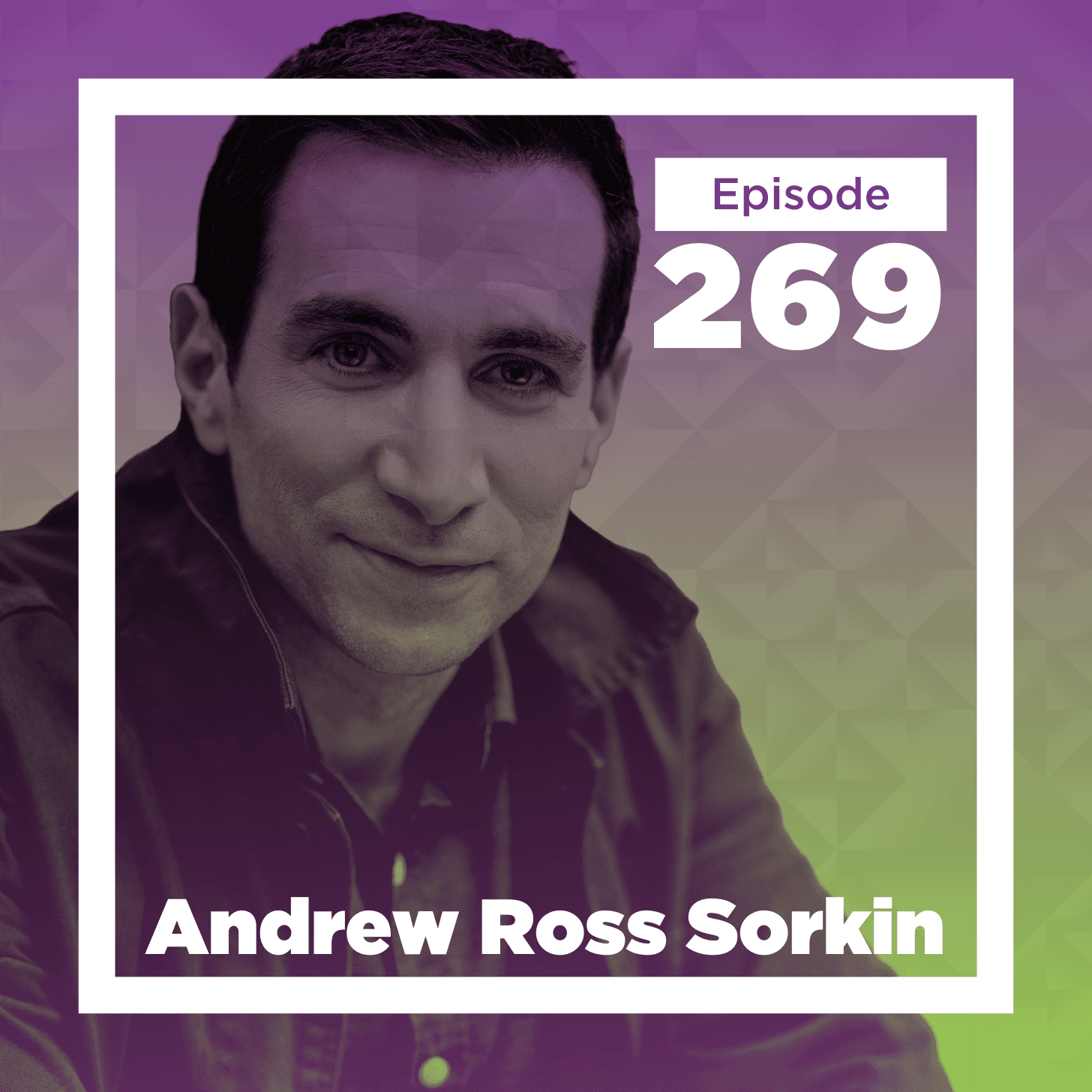
Episode Overview In this episode of *Conversations with Tyler*, host Tyler Cowen interviews Andrew Ross Sorkin, an award-winning journalist and author of the book *1929: Inside the Greatest Crash in History and How It Shattered a Nation*. They delve into the complexities surrounding the stock market crash of 1929, the economic policies of the time, and how these historical events resonate with contemporary financial issues.
Key Themes and Discussions
Market Speculation and Historical Analysis
- Stock Prices in 1929: Sorkin argues that the stock prices before the crash were indicative of excessive leverage and speculation. Cowen counters, suggesting that these prices could have been justified given the long-term potential of the American economy.
- The Role of Speculators: Cowen reframes the narrative around speculators, arguing that they may have been correct in their optimism about the future, while the panic that followed was more detrimental.
Policy and Economic Decisions
- Herbert Hoover's Policies: Sorkin expresses a nuanced view of Hoover, suggesting that some of his decisions exacerbated the economic downturn, despite his intention to instill confidence in the market.
- Federal Reserve Actions: They discuss the Federal Reserve's hesitance to raise interest rates in the face of speculation, highlighting the political pressures faced by central banks.
Comparisons to Recent Crises
- 2008 Financial Crisis: The conversation draws parallels between 1929 and the 2008 financial crisis, discussing whether the latter truly constituted a "bubble" and the role of debt in driving housing prices.
- Leverage and Debt: Sorkin emphasizes the importance of leverage in both historical contexts, likening the situations where individuals over-leveraged themselves in both eras.
Banking Regulations
- Glass-Steagall Act: They critique the Glass-Steagall Act, questioning its effectiveness in preventing financial crises and discussing the conflicts that shaped its formation.
- Bank Consolidation: Sorkin advocates for more bank consolidation to mitigate risks, while recognizing the challenge of serving local communities effectively.
Evolution of Financial Culture
- Attitudes Toward Debt: The change in societal attitudes towards debt from the moral stigma of the early 20th century to the acceptance of leveraging in modern times is explored.
- Risk and Regulation: The discussion touches on the nature of risk in modern finance, including the rise of private credit and the implications for financial stability.
Personal Insights from Andrew Ross Sorkin
- Career Path: Sorkin shares his journey into journalism, reflecting on the early motivations that led him to write for *The New York Times* at a young age.
- Future Interests: He expresses an interest in the phenomenon of tulip mania as a potential new topic of exploration, while balancing his family and career commitments.
Key Takeaways
- Historical Perspective: Understanding past financial crises helps contextualize current economic challenges, highlighting the recurring themes of speculation and policy missteps.
- Complexity of Banking Regulations: Reforming banking regulations requires a careful balance between ensuring stability and allowing for necessary credit flow in the economy.
- The Role of Individual Accountability: Sorkin notes a shift in attitudes towards the personal accountability of investors from the 1920s to today.
Conclusion This episode of *Conversations with Tyler* provides valuable insights into the lessons from the Great Depression and their relevance in today's financial landscape. Cowen and Sorkin highlight the importance of understanding the intricate dynamics between speculation, policy, and market psychology in both historical and contemporary contexts.
---
For further exploration, listeners can access the full transcript and video of the episode through the *Conversations with Tyler* website.
Written by AI. May contain mistakes. Listen to the episode to check what was said.
Chapters
Tap a time to open that second in VOUnderstanding the 1929 Market Bubble
0:46 to 2:14
Discussion on whether the stock prices before the 1929 crash represented a true bubble.
“But most importantly, he has a new book out, 1929, Inside the Greatest Crash in History and How It Shattered a Nation.”
Speculators vs. Skeptics
2:15 to 4:25
Exploration of the role of speculators and their impact on the market during the late 1920s.
“But if we look at 30-year returns, we find in American history, like any 30-year period, stocks do quite well, 6 % to 7%.”
The Domino Effect of Policy Choices
4:26 to 7:25
Analysis of Herbert Hoover's policies and their contributions to the Great Depression.
“But I think if you were looking in that moment at some of the policy choices that he made, many of which I would argue were mistaken and actually hastened and made things worse.”
Leverage and Its Consequences
7:26 to 8:34
Discussion about the role of leverage in market crashes, comparing 1929 and 2008.
“And in particular, back then, people buying stock on margin.”
Personal Stories of the 1929 Crash
8:35 to 11:15
A personal anecdote illustrating the psychological impact of the 1929 crash on investors.
“It wasn't that the people were selling their stocks because out of panic or fear.”
The Role of Public Utility Shares
11:16 to 14:00
Exploration of public utility shares and their significance during the stock market run-up and crash.
“Why do you think public utility shares played such a big role in both the run-up and the crash?”
Understanding Crisis Management
14:00 to 15:01
Explore the strategies for preventing and managing economic crises.
“It's like, oh, let this crash, whatever.”
Lessons from Historical Financial Policies
15:01 to 18:07
Learn about the implications of historical banking policies and their effectiveness.
“at Princeton and took some of those lessons into the 2008 financial crisis, where then he did decide to flood the system with money.”
Shifts in American Debt Perception
18:07 to 19:15
Discover how the perception of debt in America transformed in the early 20th century.
“were going to have the same kind of support that the strong banks had.”
Examining the Glass-Steagall Act
19:15 to 21:38
Analyze the complexities and misconceptions surrounding the Glass-Steagall Act.
“So Roosevelt was not as crazy as he sounded.”
Show all 27 chapters
The Debate on Glass-Steagall's Legacy
21:38 to 22:51
Discuss the arguments for and against the legacy of the Glass-Steagall Act.
“It actually led me to find some fascinating stories about the fact that Carter Glass was not really interested in breaking up banks like J.P.”
The Influential Figures of the 1920s
22:51 to 24:48
Learn about key individuals and their impact on American society during the 1920s.
“But I never took the position as a reporter writing this and analyzing this at that time.”
Cultural Landscape of 1920s New York
24:48 to 28:05
Explore the cultural and social life in New York during the 1920s.
“these views were espoused, some of these, by the way, this was before the crisis, before the crash, he started this campaign effectively in May of 1929, just three months after Hoover took office.”
Philanthropy of the 1920s vs Today
28:05 to 29:59
Explore how wealthy business leaders of the 1920s approached philanthropy compared to modern times.
“I'm not sure how woke these CEOs were at the time.”
The Case for Banking Consolidation
30:00 to 31:38
Discuss the implications of banking consolidation and its potential benefits for the financial system.
“And while that may turn out to be fabulous business in the end, we'll see.”
Challenges of Private Credit Markets
31:39 to 33:38
Analyze the rise of private credit markets and their impact on traditional banking.
“But as a result of that, I would probably also force some of those banks to effectively serve communities and provide loans and other things that they would otherwise not provide.”
Debating Narrow Banks and Credit Access
33:39 to 36:18
Examine the concept of narrow banks and their effect on credit availability in America.
“It's regulated in other ways, but it's not protected by what we would consider our core regulatory structures.”
Implications of Private Credit in Investments
36:19 to 38:21
Discuss the potential risks and benefits of private credit in venture capital for retail investors.
“I do worry that because the stable coins are going to require the backing of these treasury bills, that effectively you're taking that out of the market, which means less credit to the system ultimately.”
The Lottery Ticket Mentality in Investing
38:22 to 42:00
Explore the mindset of investors who treat speculative investments like lottery tickets.
“very modest, diversified, non-stock picking levels, I don't consider the disclosures to be worth very much at all.”
The Nature of Greed and Financial Risks
42:00 to 43:20
Explore the relationship between greed and financial risk-taking.
“I don't know if you saw the movie Wall Street 2.”
Lessons from Market Crashes: 1929 and 2008
43:20 to 45:24
Learn about public accountability and government actions during financial crises.
“And actually, you could look at it in the context of what happened in 2008 too.”
Central Bank Independence and Political Influence
45:24 to 47:26
Discuss the challenges of central bank independence amidst political pressures.
“But keep in mind, they're always sitting down with the Treasury secretary, right?”
Early Career and Breaking into Journalism
47:26 to 49:25
Hear about Sorkin's beginnings in journalism and his early aspirations.
“Did the Knicks have any real chance of winning an NBA title this season?”
Staying Informed in a Fast-Paced World
49:25 to 51:20
Discover how Andrew Ross Sorkin manages to stay updated on financial news.
“And I would just write the article and we would see where the chips fell and the chips broke my way.”
Navigating Fame and Public Recognition
51:20 to 53:10
Understanding the dynamics of fame and personal interactions with fans.
“It's hard for me just to say, you know what, I'm going to go to Japan for a week.”
Lessons from Television and Storytelling
53:10 to 54:47
Insights into the creative process behind TV shows and their production.
“to make sure that they have a great moment if they can.”
Future Aspirations and Writing Projects
54:47 to 55:48
Explore Sorkin's future ambitions and his next writing endeavors.
“First, what do you want to learn about next?”
Transcript
Automatic transcript. May contain errors.0:26Hello, everyone, and welcome back to Conversations with Tyler. Today I'm chatting with Andrew Ross Sorkin. He's an award-winning journalist for The New York Times and a co-anchor at Squawk Box, CSNBC's signature morning program. He's also founder and editor-at-large of Dealbook, published by The New York Times. He's the best-selling author of Too Big to Fail, co-producer of a film adaptation of the same, nominated for 11 Emmy Awards, and he is also co-creator of the drama series Billions on Showtime. But most importantly, he has a new book out, 1929, Inside the Greatest Crash in History and How It Shattered a Nation.
1:08Andrew, welcome. Thank you so much for having me. It's a privilege. The 1929 stock prices right before the crash, were they really a bubble? Doesn't America have an amazing century to come? And arguably, those prices were too low. And the so-called speculators are the heroes of this story. Oh, goodness. What a place to start. Yes and no. In some ways, so many of these companies clearly represented the future. You think about an RCA and radio and the future of radio and what that represented. But, you know, three years later, I think RCA was sitting at three dollars and on a split adjusted basis had been up in, you know, multi hundred dollars.
1:55So, yes, that you could argue that they were betting on a future that truly was, you know, better than people thought. But, you know, the chasm between 1929 and frankly, you know, the end of World War Two was a long and tortured period. no? Sure. But if we look at 30-year returns, we find in American history, like any 30-year period, stocks do quite well, 6 % to 7%. And most of the gains come just in a few of the years, in the 30-year period. That seems to be the case, even if you bought at the peak in 1929. By 1959, you would have had a real return, something like 6%. A lot of the gains coming later, but that's not unusual.
2:41And even then, like World War II, that it was so bad, seems like a super unlucky event. So ex-ante, you might have expected something even better. No, look, for sure, it has paid to be a professional optimist, a professional speculator, if you will, way more over the course of the last hundred years than it has ever paid to be a professional Cassandra or professional skeptic. No doubt. The question is what the time horizon is always. And so if you are looking out 30 years, Tyler, you're 100 % right. If you're looking out five years or 18 months or two years or even a decade, at least in the context of 1929, you'd look wrong.
3:25By the way, interestingly, in 1928, Charles Merrill, who had founded Merrill Lynch, was telling people to get out of the stock market. And by the way, some people thought he was brilliant in that all of a sudden the crash happens in 1929. But the truth is between the beginning of 1928, when he said this, and September of 1929, the stock market was up like 90%. So you would look at what he said and say what a mistake that was. But as you point out in the book, people like Irving Fisher, also Herbert Hoover, they said the lower later prices were the ones that were wrong. No one was denying prices had fallen.
4:03I call them the negative Nellies, the people who get upset. They're upset for reasons that aren't good enough. Why not say the speculators were basically right? They were the good guys. The negative Nellies were the problem. When Fisher and Hoover criticized them, said we need more confidence, that basically Fisher and Hoover were correct, even though nowadays it's just standard practice to dump on them. Well, look, I actually have more sympathy and empathy for Herbert Hoover than I think most do. But I think if you were looking in that moment at some of the policy choices that he made, many of which I would argue were mistaken and actually hastened and made things worse.
4:40I mean, to me, the crash of 29 was really the first domino of then a series of dominoes that led to the Great Depression. It wasn't that the crash itself was somehow a straight line. It was a series of decisions that were made in some cases that weren't made by Herbert Hoover, by the Federal Reserve, by a whole bunch of people in Washington and elsewhere that led to ultimately unemployment of, you know, 25 percent in 1932 and, you know, 9 ,000 banks, I think, by 1933 failing. Sure. But it's one thing to say Hoover made some policy mistakes. Clearly true. Big, big bad ones. But it doesn't mean Hoover was wrong in saying that the low prices were caused by too much worry.
5:23It seems that the Great Depression was as bad and as international as it was, was quite unusual and surprising. That World War II was so catastrophic was quite unusual and surprising. And that Ex-Auntie Hoover, on that particular point, nonetheless was mostly correct. Well, but the question, and I think about this in terms of narrative and people talk about story stocks. You know, he in the 1930, 1931, 1932 had this view that he could almost jawbone the American public to believe. He thought that this was a psychological problem and that if he could just tell people to put a smile on their face, that somehow they would put a smile on their face and that they would become believers.
6:07And I think that's a very hard thing to persuade an entire country of in these kind of moments. And then when you marry that concept of trying to persuade people to be happy when they're not happy with some poor policy choices, it becomes very difficult. By the way, I think we're living with this in the last couple of years. There was a period of time where inflation was super high and we had a president, President Biden, who used to tell people all the time, you know, don't worry about that. You shouldn't be thinking about that inflation. People would say, what are you talking about? I feel it.
6:39You can tell me all day long that things are better than they really are, but I'm the one living with these costs. And I think that's very similar in some ways to what people were feeling at least back then. If we look back to 2007 or 2006, can't we now today say in most parts of the country there was not a housing bubble? Like the high prices were basically correct, maybe a smidgen ahead of their time. But they've come back in then some, most parts of America, maybe not every single part. And again, the people who said there was a housing bubble, they seemed so wise at the time. But now they're just wrong.
7:15And that's not even having to wait 30 years. Well, yes and no, in that so much of those prices were being inflated with debt, I would argue to you. And I would say that that was, you know, if the 2008 financial crisis was a function of too much leverage and debt in the system that effectively brought forward this remarkable growth, a somewhat similar story was taking place in the 1920s, both in terms of the euphoria around the technology, whether it was automobiles or telecommunications or radio. But all that was powered by leverage. And in particular, back then, people buying stock on margin.
7:51Right. And it's the leverage that allows these prices to get ahead of themselves in some ways, even if they are accurate over the longer term. And this gets to a liquidity story. But surely it's begging the question to say that the debt is inflating the prices. If the homes really are going to be worth much more, to borrow to buy a house is exactly the thing you ought to do, at least if you don't have to sell the next year. and the people who borrowed money were the right ones. The negative Nellies who panicked in 2008, 2009, they were the wrong ones. They got the prices wrong. Still seems true to me.
8:29Let me try something out because I feel like I may be losing this debate with you, but I'm going to try. So if you go back to 1929 and the parallel to 2008 is actually, I think, apt. It wasn't that the people were selling their stocks because out of panic or fear. That's not what was happening. They were selling the stocks because they had taken out too much money and were at too much leverage. And so when stocks fell by November 13th of 1929 by 50 % from their high, it wasn't just that the equity value had dropped by 50%. It was that they They were levered 10 to 1, and the bank had called them and said, excuse me, you need to pay us.
9:13And therefore, they had to liquidate not just their stocks, but oftentimes their homes. And a very similar kind of scenario played out in some ways in 2008 with the subprime mortgage and loans because people's homes were underwater. They didn't have enough money to pay the mortgages. I mean, I think that, again, leverage plays a very unique role in all this. So the prices may ultimately be right in sort of a long-term way, but how you get to those prices and how people could afford to even pay them the first time around can undermine the value in these temporary moments. There's no doubt particular people were too levered, say, in the 20s.
9:53But the U.S. economy as a whole, it seems, was less levered then than it was in most of the post-war era. I've looked for different estimates of, you know, total debt as a percentage of GDP. I'm not sure any of these are reliable, but I came up with something like 165 percent, you know, government, private, corporate, everything, which is higher than average for that time, but not crazy high. But again, certainly particular people made big mistakes, as is true all the time. No question. I would look. I think today you look at the amount of debt that consumers have taken on, that the government's taken on.
10:27I mean, it's just wild on a relative basis to what was happening in 1929. But I think some of that individual basis drove so much of what was happening in the economy and the sort of roaring 20s ethos that it really became almost a generational shock for those ordinary Americans that had played the stock market for the first time and lost. I mean, by the way, this is not a this is one anecdote. It's not in the book, but it's a personal one. My grandfather happened to be a messenger boy down there in October of 1929, as it happens, with his brother who was 16 years old. and they watched people literally, they watched a person, they used to tell us the story, jump out of a window.
11:08I believe in, this is late October, early November of 29. And my grandfather lived 91 years and never bought a share of stock his entire life because of that. And now you could say that that's just one story and that all of these are individual stories, but I think there was a lot of people who were so scarred by that period of time that it actually did change the trajectory to some degree of even how investments were made, at least for some period of time at that point. Why do you think public utility shares played such a big role in both the run-up and the crash? Is that a sign that it had to do with interest rates or it means something else?
11:47It's a good question. And the truth is I don't have a great answer for you. To some degree, I wonder whether they were pushed up in large part because people thought that they were reliable, sort of, they were utilities. That's what people thought that they were at a time when everything else was sort of go-go, and therefore they were inflated at the same time. During the stock run-up in the 20s, should the Fed have had a different interest rate policy? You know, should they have raised rates to supposedly dampen the speculative fervor? Well, so this to me is so interesting, and I so want to hear what you think about this.
12:20I actually was thinking about you at one point when I was writing this book, because if you go back and read the diaries of some of the board members of the Fed during this period, two things became apparent. One is they were scarred by what they did in 1920-21 because they had raised interest rates and they had been blamed for effectively upending the market and the economy briefly. Of course, it came back actually quite quickly. But they were so new, the Fed had just been created in 1913. They used to sometimes call it a, quote, experiment. It was still an experiment to some of them, that I think that they were very anxious about the political ramifications.
13:00Benjamin Strong, who was no longer alive by 1929, he passed away in 1928, he used to write back in 1925 about the possibility of them getting hauled up in front of Congress and what that would mean if they did something that effectively turned the economy over. So here we are in the spring of 1929. They know that speculation is getting out of control. They desperately want to tamp it down. And there's a battle going on about whether to raise interest rates and buy how much. But to the extent that they were talking about that, the view, I think, was that they would have to raise them so much that they were almost pretty much convinced themselves that to really tamp speculation down, you'd have to raise interest rates so much that you by default would tip the economy.
13:42And they didn't have the courage to do that. If I had been alive back then, I would have agreed with those people, correctly or not. But I think that's a pretty good argument. And the notion that 1920 to 21 saw such a quick recovery, again, one would have been wrong, but the rational thing to have expected would be once again the same. It's like, oh, let this crash, whatever. We'll come back in a year or two. Now, ex post, you know, you can always say exactly how it should have gone. But ex ante, that would have been my reasoning. That may be, but I think there's always two issues in a crisis.
14:17It's can you prevent the crisis on the front end? And then what do you do once you're in a crisis on the back end? And so it's interesting that not only did they not choose to try to do something to prevent it demonstrably on the front end, and maybe you would have been very rational to have chosen not to do anything. But on the back end, when there was a debate about, you know, could you lower interest rates, flood the system with money? Obviously, the gold standard comes into play there and becomes very complicated. But there was obviously discussions about moving off of that, and that would have ultimately been the right thing to do and probably would have been the right thing to do earlier than they did.
14:54And for the most part, they sat on their hands. The good news is Ben Bernanke, I think, learned a lot of these lessons when he was doing his Ph.D. at Princeton and took some of those lessons into the 2008 financial crisis, where then he did decide to flood the system with money. And while politically it might have been, you know, a problem insofar as I think there's a lot of questions about bailouts and what the Fed did in that context, I think on a practical economic basis, it worked. I think two things I would have done is have something like deposit insurance to begin with and then do what Sweden did and get off the gold standard as quickly as is necessary.
15:32And then I think it would have been quite a mild downturn had one done those two things. And the Fed shouldn't have to be worrying about what's the right interest rate because they don't know, just like they don't know now. Right. They cut rates again. As we're speaking, what it was yesterday. Some people think there is speculative fervor in the stock market. This is debatable, but it might be true. And they're cutting rates. I don't think they know. But what about, I'll just go back to 929 for a second in terms of, you know, had there been bank capital requirements, for example, that would have changed some of this dynamic.
16:04Had there been, you know, restrictions on margin loans and maybe the amount of leverage people could capture? I mean, people were walking into brokerage houses all over the country, you know, which had sprung up like Starbucks is on the corners. And you'd give them a dollar and they'd give you$10. And I always wondered to myself, had somebody just stood up and said, we're not doing that anymore. Two to one, three to one, we're good with that. After that, this is not allowed. There are things, you know, by the way, Carter Glass, you know, in this book, he's trying to impose a tax on trades. I'm not saying any or all of these things would have prevented it, but possibly there were measures you could have taken.
16:43And for lots of reasons, obviously, they weren't. But it's hard to know how much to restrict credit, especially in a time when people are realizing the future will be much wealthier, because then borrowing makes sense. I've had plenty of mortgages on houses where, you know, the value of the debt was relatively high compared to my academic income. But I thought, well, my career will get better. It did. It worked out. I might have been wrong. But simply with deposit insurance or something like that, the money supply doesn't collapse in the sense that, you know, Friedman pointed his finger at. And you probably have a recession, but I just think you get through it and the exchange rate floats.
17:19You have no international transmission of deflationary pressures. And again, things are fine and you leave the credit market alone. I'm not opposed to bank capital requirements, but I don't know how much capital these small, often non-branched banks could have raised in that environment. So I don't think that's the best answer. So interestingly, you know, Carter Glass and Hoover, interestingly, and by the way, even Roosevelt did not want to implement the FDIC. This idea of deposit insurance was super unpopular, both Republican and Democrat, because they believed that it was going to effectively allow banks to almost become too big to fail.
18:01in the context that you would basically be supporting everybody and those that were weaker were going to have the same kind of support that the strong banks had. The other thing I was going to mention is we all live with debt today as if it's like it's water. It's part of our system. Prior to 1920, 1919, it was a moral sin for many Americans to take on debt. People didn't do that. You were sort of the dregs of the universe if you were a debt holder. And that really shifted, I think, in 1919 when John Raskob, who was running General Motors at the time, wanted more people to buy cars. And he said, how are we going to get people to buy more cars?
18:42We're going to lend them the money to buy the cars. And that really sort of shifted the mindset around debt. That's why I think this whole period in the 1920s is such a remarkable decade, because it really was a shift in the way we did everything that in so many ways actually represents how we live today. And keep in mind, when I say something like deposit insurance, I mean that quite literally. So quite late into the 20th century, a lot of European nations, they don't have formal deposit insurance. They have the equivalent of it through different kinds of bank bailouts. They make sure depositors are made whole.
19:14But the kind of explicit numerical commitment that the FDIC made, say even Germany thought was a bad idea until relatively recently. So Roosevelt was not as crazy as he sounded. But if you simply have some kind of bank lending and recapitalization program so the money supply doesn't go bust, that would have been good enough whether or not it's exactly the FDIC, at least in my opinion. How is it that you were influenced by Alex Tabarrok on Glass-Steagall? I saw that in the notes to your book. Alex and I are co-bloggers, of course, but I'm curious what the exact transmission is. The transmission was that as I was really trying to get underneath the construction of the Glass-Steagall bill, this is the bill that was passed in 1933 to effectively break up the banks, right?
20:03the casino side of the bank, from the commercial side of the bank. This is what ultimately leads, for example, J.P. Morgan to spin off one of its units to become what turns out to be Morgan Stanley in 1935. I wanted to really understand how that bill was constructed. And, you know, you would often hear from people like Elizabeth Warren and others about this bill in 2008, which, of course, was sort of upended in the Clinton administration, being responsible for the fact that we even had a crisis. And so I was trying to really get under the covers of that story and the story of Carter Glass. And as I was doing that, I was fascinated to learn that the Glass-Steagall bill was not as pure as I think most people in the public thought it really was.
20:49It was not that he unto himself had decided that this bill was going to look very much like the bill that was put in place in 1933. In fact, to some degree, the bill was as corrupted as ever. Parts of the bill were ultimately written by effectively a member of the Rockefeller family who owned Chase. And it was done in large part to shiv, if you will, J.P. Morgan, its competitor. And he, your fellow blogger, did some remarkable work and wrote a paper about a bit of this. And it turned out to be a fabulous treasure map for me as I went back to try to excavate some of the archival material, letters and other things to really get underneath this.
21:38It actually led me to find some fascinating stories about the fact that Carter Glass was not really interested in breaking up banks like J.P. Morgan at all. and, in fact, had sided so dearly with J.P. Morgan. And some people thought that he was in the pocket of the bankers, in fact. The whole Glass-Steagall Act just seems like a big mistake to me. You know, there's that paper by Raghu Rajan, I think it's 1994, with Krosner, where they show the whole conflict of interest story was never supported by the data. It was basically imagined. They ran this with controls. There's another later paper by Krosner and Raghu that showed the same.
22:14I mean, shouldn't we just say that was a bad idea based on mistakes? Well, look, I have never been convinced by the argument that Glass-Steagall somehow saved us, either saved the banking system or would have saved the banking system in 2008 either. I mean, when you go back and look at the banks that failed first in 2008, Lehman Brothers, Bear Stearns, none of them would have come under the Glass-Steagall bill to begin with. Now, maybe later down the domino line, when you start to think of Citigroup and Bank of America and some of the others that ran into trouble, you could argue that Glass-Steagall might have made things marginally better.
22:51But I never took the position as a reporter writing this and analyzing this at that time. I remember actually getting into a great debate with Elizabeth Warren about this very topic. I have a few general questions about the 1920s. Obviously, you did an enormous amount of work for this book. Putting aside the great crash and the focus of your book. But what is it you learned about the 1920s more generally that most surprised you? Because you learn all this collateral information when you write a book like this, right? So many things. The book turned into a bit of a love letter to New York in terms of the architecture of New York.
23:25I don't think I appreciated just how many buildings went up in New York and how they were constructed and what happened. That fascinated me. I think the story of John Raskop, actually, who was to me the Elon Musk of his time, somebody who ran General Motors, became a super influential investor. He was a philosopher king that everybody listened to at every given moment. He ultimately constructs the Empire State Building, which is probably the equivalent of SpaceX at that time. He had written a paper about creating a five-day work week back in 1929, November, as all of this is happening, not because he wanted people to work less and be nice to them because he thought there was an economic argument that if people didn't have to work on Saturdays, more people would buy cars and gardening equipment and do all sorts of things on the weekends and buy different outfits and clothing.
24:14And then I would argue, actually, his role in taking his fortune, he got involved in politics. He was a Republican turned Democrat. He spent an extraordinary amount of money to secretly try to undermine the reputation of Hoover. And I would say to you today, I actually think that part of the reason that Hoover's reputation is so dim, even today, is a result of this very influential, wealthy individual in America who spent two years paying off journalists and running this sort of secret campaign to do such a thing. And when you go back and really read the press and try to understand why some of these views were espoused, some of these, by the way, this was before the crisis, before the crash, he started this campaign effectively in May of 1929, just three months after Hoover took office.
25:00It's striking to me how forgotten Raskob is today. There's a lesson in there about people who think they're doing something today that will be remembered in 100 years' time. It probably won't be, even if you're a big, big deal. It's remarkable. I mean, he was a very big deal. He famously used to tell everybody everyone ought to be rich, and he was trying to develop back then what would have been something akin to one of the first mutual funds, levered mutual funds, in fact, because he also wanted to democratize finance. So let's say you're back in New York. It's the 1920s. You're you. Other than walking around and looking at buildings, what else would you do back then?
25:37Like I would go to jazz concerts. What would you do? Oh, my goodness. You know what I would do? But I'm a journalista, so you'll appreciate this. I would have been obsessed with magazines. This was really the era of the first real era of magazines and newspapers and the transmission of media, the sort of mass media in this way. I would have been fascinated by radio. I think those things for me would have been super exciting. And the truth is, I imagine I would have gotten caught up in the pastime of stock trading. I mean, it is true that all these brokerage houses are just emerging everywhere and people are going to play them as if it's a pastime.
26:14And remember, I always wonder whether prohibition played a role in why so many people were speculating, because instead of drinking, what did they do? They traded. Sure. How were business leaders different back then from the current crop? I mean, clearly in many, many ways. But what stands out to you as someone who knows a lot of top business leaders now and who has studied very intensively top business leaders back then? Oh, goodness. I actually think they're very similar. I actually think they're shockingly similar. I mean, here I am saying that, you know, John Raskob feels like Elon Musk. I think that so many of these individuals feel like modern day characters.
Read the full transcript
26:55Charlie Mitchell, who ran National City, who becomes Citigroup. You know, Charlie was the equivalent of a Jamie Dimon of his time, but maybe looks more akin to a Jensen Wong in terms of just his sort of sunny disposition towards everything all the time. I think they're still driven by the same things, which is, you know, at some level, I've always thought that people are driven by an insecurity, a FOMO, a YOLO kind of hole that they're all trying to fill. Money is just sort of one example of how they measure it all. I don't think that they're all that different, in fact. Do you think they're even more woke today?
27:32Are they even more woke today? Or is that also the same, that there's maybe the appearance of being more woke, but ultimately attitudes on gender or race are, you know, more similar than one might think or not? Oh, goodness. You know, I can't even I'm struggling to relate the word wokeness to the 1920s. You know, interestingly, Carter Glass, well, I think I told you before, was sort of akin to an Elizabeth Warren. The truth is he would have been a racist Elizabeth Warren because he was from Virginia. He was trying to bring segregation back to America, in fact. I'm not sure how woke these CEOs were at the time.
28:14I mean, the sort of upstairs-downstairs situation among the elites and the wealth in terms of where they lived and how they lived and who worked for them and the various servants and others, I don't think you'd think that they were that woke back then. So that's one difference. Did they do philanthropy better? So you have the Morgan Library in New York, everything Carnegie did, which seems quite remarkable. Are today's wealthy business leaders living up to that track record or somehow they're failing to? That's a fascinating question, too. You know, I think, first of all, a number of those people in the 1920s actually were not that philanthropic yet and then, of course, lost so much of their fortune that they were really never in a position to be that philanthropic.
28:58I remember coming across an article as I was working on this book with the headline, it was in 1929, our second billionaire. That was the title. And it was Henry Ford. Our first billionaire was Rockefeller. These are, of course, not inflation adjusted figures. These were real. And I'm not sure that the actual sort of leaders, whether it was a John Roscoe or a Mitchell or any of those characters, frankly, were that philanthropic in part because they were new money in the 1920s. It was sort of a new thing and they were not philanthropic yet. Maybe they had ambitions at some point to become such, but then the crash happened and most of them, frankly, lost it all.
29:42So I don't know. I mean, you look at, obviously, Bill Gates, very philanthropic. And then you have people like Jeff Bezos, who's engaged in some philanthropy, Elon Musk, but both of those, Elon and Jeff Bezos, I think, think that they're using their fortune to go to space. And while that may turn out to be fabulous business in the end, we'll see. I think they thought of it first, at least, as their own version of helping humanity. I know there's lots of people who have lots of different views of both Elon Musk and Jeff Bezos. But without speaking for them, I think if you actually talk to them, I remember talking to them years ago, that was at least the initial conceit, that they were helping humanity if they could do this.
30:29Should we have allowed interstate branch banking back then? So the U.S. essentially bans it. Canada has it, right? No Canadian banks fail in the Great Depression. Couldn't we have been in that position? Oh, so I, sacrilegious to say in America, if it was left to me, if I was king for the day, I would consolidate most of the banks and make the country look much more like the Canadian banking system. I think it is slightly insane that we have allowed local banking to happen at the sort of scale that we do, because I do think it presents a risk to the system that's likely unnecessary. And I've never fully, you know, jumped on board with the argument that, you know, these local banks can serve their communities so much better than the larger banks.
31:14But I also recognize, you know, as you do get banking consolidation and the like, that there will be communities that probably will be underserved. And so is there a way to thread that needle to do both? Let's say we make you king for 10 years today. How would you change U.S. banking regulation? Oh, goodness. I probably actually would do just what I said. I think that I would probably have more consolidation in the banking space. But as a result of that, I would probably also force some of those banks to effectively serve communities and provide loans and other things that they would otherwise not provide.
31:51And then, of course, I'm sure that you and others would say, but Andrew, if you put together these types of policies to do things that would otherwise be economically irrational, you know, economically irrational things or things that we can't conceive of will happen. So I would probably struggle in that regard. What would you do? Well, I'm not sure, but let me first point out, there's been a lot lot of consolidation since 2009, right? There's hardly any new banks. One of them is like an Amish bank, right? Very small number of new banks. The too big to fail doctrine has crowded a lot of deposits into the four biggest banks.
32:23Given where we ended up, maybe that's inevitable. But you want even more consolidation than that? I don't think I need huge amounts of consolidation to that. But I think that you look at Silicon Valley Bank as a good example, or Signature Bank as a good example of what happens in an environment where you have sort of smaller banks doing things that aren't necessarily the right things without the sort of backstop that you'd prefer. Now, you could argue that the government turned out to be the backstop, the FDIC turned out to be the backstop, and it worked. So maybe we're in a good position. The other thing, though, that I do worry about, and I also be very curious about where you land, is we now are living in a very bifurcated world as it relates to the loan market and credit market in America, which is really post-financial crisis 2008, the private credit business has just exploded.
33:15And so if you're a company seeking credit, you're oftentimes not getting it from the bank. You're getting it from, effectively, the shadow banking system. Some of that shadow banking system is attached to the insurance industry in certain ways, potentially presents all sorts of risks that I'm not sure we all understand. Yeah, I agree with that. This is my biggest worry. I don't think I know how to solve it. So formal banks are about 20 % of lending. So 80 % is other stuff. It's regulated in other ways, but it's not protected by what we would consider our core regulatory structures. And the more you impose capital requirements on banks, FDIC, premia, other regulations, you just make that smaller.
33:55It's already trending downwards. That's why I'm reluctant to induce these banks to do more local community lending. Ideally, you'd like maybe the banking system to shrink more slowly than what it's doing. And the stuff you have left, I don't think you can insure it, really. You hope it's well enough capitalized. You can't bail out everything. I don't think we have any idea what to do about it. But what's your thought on that dilemma? This is probably my biggest concern, and I just don't know what the inflection point would be that could turn it into a problem in a demonstrable way. I don't fully appreciate or understand how connected we think the private credit funds are to the banks themselves.
34:41Some of these funds are effectively leveraged by dint of the banks. Some of them have liquidity lines back to the banks. You could argue that the private credit funds should be less risky insofar as there's a better duration match around those loans. They're not going to be called by the day. You know when they're going to be called in hopefully five or 10 years or whatever the length of the fund and the loans are. But if it all comes undone at one moment, what happens? That's like a horror movie to me, but I don't know. I don't know the script of that movie or what that book would read like at the moment.
35:20John Cochran wants more narrow banks. Do you agree or disagree with him? It depends. How would you define more narrow banks? Something like near 100 percent backing with either T-bills or very high quality commercial paper. Well, here's a different question. If you do that, what happens to credit in America? It dries up at some local points, right? Right. And I think you and I would both agree that credit is the lifeblood of the system. And you do want, by the way, you want some speculation in the system going back to where we started this conversation. You need speculation in the system to create that innovation.
35:58I'm not here to tell you that, you know, you don't want that. It's the question is, how do you prevent it from, you know, becoming euphoria and crazy and too much? Now, as you know, through the Genius Act, we're going to run stable coins through what are, in essence, narrow banks. Good idea, bad idea. Or should we just let them hold all sorts of other assets and be riskier? This is a great question. I do worry that because the stable coins are going to require the backing of these treasury bills, that effectively you're taking that out of the market, which means less credit to the system ultimately.
36:31But the alternative also feels risky. I don't know. It seems like two choices. It's not a Hobson's choice. It's just a difficult choice. I imagine over time that we will loosen those standards. That's what I imagine. I imagine this is sort of the first baby step so that people can say these stable coins are safe. And then over time, we will maybe shift gears slightly. What do you think? I think I agree with that. And it will be necessary. And even with high debt and deficits, you know, there's only so many T-bills to go around and we want to use them for everything. and so does the rest of the world.
37:08You don't want to get into T-bills paying a rate of zero. The real economy is intrinsically risky for obvious reasons and financial engineering can only make it so much safer. I mean, that's the ultimate dilemma. And it seems to me New Deal banking regulation is finally truly obsolete and we just don't know what to replace it with. Okay, I got one for you. Yeah? Talking about the Genius Act, what do you think of the idea that we're going to have private credit in venture capital and private equity funds effectively in either retirement counts or available to retail investors without the sort of commensurate or similar disclosures that we've typically had for publicly traded companies.
37:50So these are going to be funds that are going to have private assets in them. They'll have a NAV, a valuation ostensibly, at least in my mind, unfortunately being measured by the manager of these funds. So I would like to see more disclosure personally and auditing and the like. But there are also going to be these interesting semi-liquid funds, which is to say it's going to look like a stock. You could buy it on any day, but it's not clear you could sell it on any day. I think it's inevitable. And if I invest, which I do only at very modest, diversified, non-stock picking levels, I don't consider the disclosures to be worth very much at all.
38:31I have some faith in diversifying. And I think markets are not entirely efficient, but to throw darts and diversify, you'll do almost as well as you can do any other way. And we let people bet on football games, right? A lot of people now are going broke with sports gambling. So to tell people, well, you can bet on football games, or you can buy Bitcoin, which at least used to be super volatile, but you can't own shares in these funds because they don't meet some what is obscure to the voter SEC requirement about disclosure and liquidity, people think you're crazy, right? Over time, I think that distinction goes away.
39:06Yeah, but I'll tell you something interesting that happened to me. And maybe, I don't know if you've had a similar experience. In 2020, there was a real phenomenon around SPACs. You remember these blank check companies? Of course, yeah. Everybody was excited about SPACs. They were the new lottery ticket. And I would go on television or write articles almost in a paternalistic way and say, folks, be careful. You may not understand what the sponsors are really getting, the fee structure, what the alignment or frankly, lack of alignment was between the promoters of these things and actually the duration which they have to hold them relative to how long you'll have to hold them and some of the projections that they're making and all these things.
39:44And people would say to me, Andrew, stop trying to protect me. I want to buy the lottery ticket. And by the way, you're not protecting me, you're protecting the man by saying these things. And the truth is that they were like lottery tickets in that most lottery players lose. And so I recognize that people should have access to the lottery ticket. I get that. By the way, I often buy lottery tickets as crazy as that sounds, especially when, you know, it's like super power ball and it's a billion dollars or something. And I feel like an idiot that I'm doing it, but I do it anyway because it's, you know, it's a dollar to dream.
40:19But I don't know what the right answer is in this regard. You're making the argument we don't need the disclosures or the disclosures is sort of unimportant, at least on the margin. And I'm concerned that if people don't understand what's going on inside these things, they're going to buy the lottery ticket and they're going to lose. I think we need stronger social norms that any new thing, whether it's sports gambling or something in crypto or whatever. It is gambling of some sort. And people just have to realize that and that we're going to let people twist in the wind, so to speak. I don't know any other way to do it.
40:55You're like Andrew Mellon, Tyler. You're like Andrew Mellon. But there's so many risky things. You can't stop them. They'll go overseas if they have to. Crypto has done that, would do that, could do that. I don't see what the alternative is. I'm not opposed to these disclosure laws. I just don't think that extending them to more parts of the economy is going to make us safer. How do you feel about prediction markets? I mean, people are not just gambling on who's going to be the next mayor of New York City. They're gambling on where Taylor Swift and Travis Kelce are going to get married. And I can't figure out whether that's a good thing or a bad thing.
41:31It's one way to spread the norm that anything new in finance is like gambling, treated as gambling. Assume that it is money you are willing to lose. That's what I would do, just as a matter of stated policy. And you need the private sector to cooperate more. But government can take some role in simply spreading this message. But Tyler, I will tell you one of the great lessons for me, and this is true of 1929, covering the financial crisis and the like. We, we, humanity, us, people, we're not great at self-regulating ourselves. We're not great at control. That's what greed is. There's a great line.
42:06I don't know if you saw the movie Wall Street 2. not nearly as good as Wall Street 1. And there's a scene in the movie where Shia LaBeouf looks at, I think it's Josh Brolin, and says, what's your number? As in, what's your number to feel independent or financial freedom? Or when would you stop? When would you feel like you got to the top of the mountain kind of thing? I remember that, yes. And he looks back at him, and he doesn't give him a number. He says, more. But those are the people we don't have to worry about, right? if there's something like a public option, a series of safe assets, T-bills, FDI-insured checking accounts or some equivalent thereof, I think that's the most we can do for people.
42:50People can take risky decisions with their careers, with how they drink, with the drugs they use. They do all the time. In a way, the financial risks are often the least important of the ones they take. These people don't become rational just by electing them to office and putting a hat on them that says government, right? So if you think people are bad at risk, our government is terrible at risk. Oh, I completely agree with that assessment. But, you know, you go back and look at what happened, frankly, in 1929. And actually, you could look at it in the context of what happened in 2008 too. Interestingly to me, in 1929, when people lost money, for the most part, at least initially, they blamed themselves.
43:34There actually was personal accountability. If you go look at what Groucho Marx famously lost his home during this. He actually had to mortgage his home because of mortgage loans. And while he blamed the broker, if you will, to some degree for suggesting he buy some of these stocks, he ultimately blamed himself, which I think is a very different approach to life than we have today, where there's always finger pointing. It's never our own fault. It's everybody else's fault. Now, is that a human condition? What is that? The Fed. Has the United States Fed ever been independent as a central bank? I think the lesson of what was happening in the 1920s and reading all those diaries suggests that they never were, that they were always concerned about the politics in some regard.
44:17Back then, it wasn't that Hoover was, you know, manhandling them per se, but they were conscious of what the political implications would be. Obviously, we've had a whole number of situations over the past 100 years now or nearly 100 years where actually we have had presidents manhandle, in fact, physically manhandle the head of the Fed. And now we have President Trump doing the same. My preference would be that we don't have those things. And my preference would be we don't have those things for a different reason, though, which is that oftentimes you have to make super politically unpopular decisions.
44:50And if the politics in the moment are going to influence you, you can't do it. And this was why I actually give great credit to Ben Bernanke, because Ben Bernanke did things in that moment. And frankly, Hank Paulson, too, that were very politically unpopular. They were against everything that any conservative Republican would be doing at that time. And yet they did them anyway. And by the way, give credit to President Bush for not pushing them otherwise. But think about what would happen if we had a crisis and either a president or somebody else who had a very different view of how to handle it.
45:23I agree with much of what was done. But keep in mind, they're always sitting down with the Treasury secretary, right? And these decisions are made jointly, which I would say is inevitable, not a complaint I have. But once you see that, you see the same during COVID, right? Treasury fed, they worked together. So all the hand-wringing over central bank independence, I don't want Trump being the one who pushes it around. But I find a lot of the hand-wringing a little out of place or not contextualized properly. Well, look, the thing that I think is more concerning now, which is slightly different, is that President Trump has talked about the Federal Reserve having a, quote, majority on the Federal Reserve as if it's the Supreme Court.
46:05And by the way, even a couple of years ago, we never talked about that. in such a sort of political context. And maybe he's just speaking the quiet part out loud. I mean, maybe that's what's really happening here. But, you know, if you have a political majority on something like the Fed, and then you use that political majority to effectively, by the way, you could potentially even replace all of the presidents of the regional feds as well, leveraging that quote unquote majority, it could create, you know, a lasting, you know, decades-long generational shift based on politics in terms of what our economic policies are to some degree.
46:43But if someone says, look, we have, what,$37,$38 trillion in debt, some of that will be inflated away. None of us like that fact, but it's inevitable. It probably partly should be inflated away given that it's there. And that's what matters. And Trump having the majority, whatever. To me, it's objectionable. But I just think the fiscal position, which ultimately, at least in theory, is the responsibility of Congress, is the actual villain here. You and I, if I could high five you over our link here, I would high five you because I completely agree that we need to get our house in order. And I have no great optimism that we have any intent to do that anytime soon.
47:25For our last segment, a few questions about you. Did the Knicks have any real chance of winning an NBA title this season? I have been a long-suffering Knick fan back from the age, I don't know how old I was, back when Patrick Ewing was still playing. And I still have great hope, but I have been disappointed too many times to make a prediction at this point. We got so close, got so close last year. When you were in high school, you started submitting articles, including to the New York Times. Yes. How did you know to do that? What led you to that point? Because a lot of people would have told the high schooler, that's silly, don't do it.
48:03But in fact, you succeeded with it, right? Because I didn't know any better. That's why. A little bit of naivete when you're young, I think, actually can go very, very far. I had started a sports magazine when I was 15 years old. And that actually led the New York Times, interestingly, to write a little tiny article about me when I was, I think, 16. And I thought anything was possible back then. And so I started writing these letters to this particular reporter at The New York Times who I desperately wanted to work for when I was 18 years old. And I would call him up on the telephone and leave voicemails and all sorts of things.
48:36There were people who told me that I was crazy and it would never work, but that somehow, magically, they let me in the building. And he knew you were 18. He knew I was 18. But the truth is that the person who assigned me my first article to write, I had gone there playing to Xerox, Staple, and get this gentleman a lot of coffee. That was what I thought the job was. I had no intention of putting two words together, let alone a sentence. And there was a woman there, an editor who had no idea how old I was. I had my suit on. I had my tie on. She overheard me talking about this thing called the internet back in 1995.
49:10This is back when we would write the word modem, comma, a device that transmits data over a telephone line. And she thought I was a real person in the building. And she assigned me a steward. Right. And I somehow convinced Stuart Elliott, who was my sort of sponsor and mentor at the time, that I wasn't going to tell her how old I was and why I was there. And I would just write the article and we would see where the chips fell and the chips broke my way. Obviously, you're a very busy person. And also, you need to imbibe a lot of financial news about many different topics. Do you have any tip or advice on how it is you manage to do this, what would seem to be much better than how other people manage?
49:48No, I'm just – I mean, look, I'm very – I was born curious. I am addicted probably to my great detriment to X, formerly Twitter. I follow all sorts of people. I read the Wall Street Journal and the Financial Times and Business Insider and I go to the Drudge Report and I go here and there. And I mean, I'm just constantly trying to absorb things. I'm reading academic papers. And the truth is I do benefit. You know, I started this thing called DealBook back in 2001. And we have a great team. And we live in a Slack channel all day. I think playing with different stories all day, meaning we're constantly giving each other new ideas, new things to read.
50:33And so that's sort of how I take in the news. And then we have a team of producers at Squawk Box. So I'm sort of a beneficiary of a whole bunch of systems. How much do you rely on chat groups? Not as much as I should. I know you have a bunch of chat groups, and I wish I lived more inside WhatsApp than I do. And I've been invited into a couple of interesting ones, but I've never really engaged as much as I should. And that's maybe because I've been trying to finish this book for too long. How much do you rely on travel? Like, oh, I want to learn about Japan. I'm going to get on a plane. I'll spend a week there, meet with people.
51:10Or do you do it more at a distance? Yes and no. So I have the one real conundrum of my existence is that I am not as spontaneous as I wish I could be because of the TV show and really feeling like I need to be in New York on the set most days. It's hard for me just to say, you know what, I'm going to go to Japan for a week. But I do try to travel around the world throughout the year, and I sort of do make these sort of pilgrimages. But I have to plan them out, you know, months and months in advance. In terms of the question, like how many people recognize you in airports? Do you feel you're more than optimally famous?
51:51Like Fareez Akaria tells me, in half an hour, 10 people might recognize him. That, to me, seems like more than optimally famous. Are you at that level? You're optimally famous? You're not quite yet famous enough? How do you view this? I'm not sure what the great benefit of fame is yet. I find that there's great joy when people come up to me in the street or on the subway or in the airport and tell me they've read a book or they watched Billions or they read an article or something that they loved. I love that joy that I get. I get from them having that joy. I find it more awkward when I'm having dinner with my family and somebody comes up and wants to take a selfie.
52:30or if you're ever at the gym and people, you know, walk over to you or it's a little awkward. And so I don't know. I'm not sure if I'm optimally set up or not. You know, I love it's a high five and it's a great moment and I'm by myself or whatever. Great. But then there's other times where it can be a little, you know, a little awkward. But the truth is that I always think about myself in these instances. There are people that I admired for whatever reason over time. and, you know, I see them in a restaurant myself or I see them at the airport and I look at them or want to go over to them. And I always don't want that experience to be awkward for the other person, even if it's awkward for me.
53:08So I feel like I then have to try to make sure that they have a great moment if they can. With Billions, you had a significant foray into non-news TV. And while it involves finance, it's not financial in the sense that most of your work is. What surprised you most about that experience? learning like a TV show and how it works. Oh, goodness. First of all, the enormous credit goes to Brian Koppelman and Dave Levine, who co-created the show with me, and they were our showrunners. You know, I think I just marveled at the fact that it's like a remarkable circus that gets sort of built for, you know, six or nine months.
53:46You know, hundreds of people who are engaged in this, you know, enterprise, creative enterprise, both in terms of writing of the scripts to the acting, to the crews, to the various different directors that direct each episode. I mean, I think actually that was an interesting surprise for me early on, actually, that typically in television, virtually every episode is directed by a different director. So the whole experience was actually a great sort of learning experience for me, just in terms of how all of this can be done. And I will say, I'll give you one other. How much a story can be changed for the better in an editing room after it's shot.
54:24It's not just what's shot that day. It's what can be done and crafted later on in terms of creating that narrative. Actually, I think I learned that actually when Too Big to Fail was made into a film. I had an opportunity to sit in the editing room out in LA for a while, and I was just mesmerized by how extraordinary things could happen. Two final questions, a bit of a pair. Your book is out. You've done plenty of interviews. First, what do you want to learn about next? And second, what will you do next? Oh, my goodness. So I've become kind of obsessed actually with tulips because of this experience.
55:01No joke. I kind of actually do want to go back to understand exactly what happened. I don't know if you could recreate a kind of 1929 or too big to fail book about the tulip craze, because I don't know if the archives exist. But what I will do next, my wife has told me, I have three children, and my wife has told me that I am not allowed to write another book until they go to college. So I'm going to hopefully spend a lot more time with them. And maybe I'll be plotting my tulip story. The Peter Garber paper on tulip mania has a lot of data. You might want to look at that. I'll start there. Your book again, 1929, Inside the Greatest Crash in History and How It Shattered a Nation.
55:44Andrew Ross Sorkin, thank you very much. This was so much fun. Thank you, Tyler. Thanks for listening to Conversations with Tyler. You can subscribe to the show on Apple Podcasts, Spotify, or your favorite podcast app. If you like this podcast, please consider giving us a rating and leaving a review. This helps other listeners find the show. On Twitter, I'm at Tyler Cowan, and the show is at Cowan Convos. Until next time, please keep listening and learning.
From the publisher
Andrew Ross Sorkin sees the crash of 1929 as a tale of excessive leverage and irrational speculation, but Tyler wonders: maybe those sky-high 1929 prices were actually justified given America's remarkable century ahead. Maybe the real problem was the "Negative Nellies" who panicked afterward rather than the speculators everyone blamed. For that matter, isn't 2008 looking less and less like a bubble with each passing year?
Tyler and Andrew debate whether those 1929 stock prices were justified, what Fed and policy choices might have prevented the Depression, whether Glass-Steagall was built on a flawed premises, what surprised Andrew most about the 1920s beyond the crash itself, how business leaders then would compare to today's CEOs, whether US banks should consolidate, how Andrew would reform US banking regulation, what to make of narrow banking proposals and stablecoins, whether retail investors should get access to private equity and venture capital, why sports gambling and new financial regulations won't make us much safer, how Andrew broke into the New York Times at age 18, how he manages his information diet, what he learned co-creating Billions, what he plans on learning about next, and more.
Read a full transcript enhanced with helpful links, or watch the full video on the new dedicated Conversations with Tyler channel.
Recorded October 30th, 2025.
Other ways to connect
- Follow us on X and Instagram
- Follow Tyler on X
- Follow Andrew on X
- Sign up for our newsletter
- Join our Discord
- Email us: cowenconvos@mercatus.gmu.edu
- Learn more about Conversations with Tyler and other Mercatus Center podcasts here.
Image Credit: Mike Cohen