
In short
Podcast Episode Summary: Austan Goolsbee on Central Banking as a Data Dog
Episode Overview
- Podcast Title: Conversations with Tyler
- Episode Title: Austan Goolsbee on Central Banking as a Data Dog
- Release Date: March 3, 2025
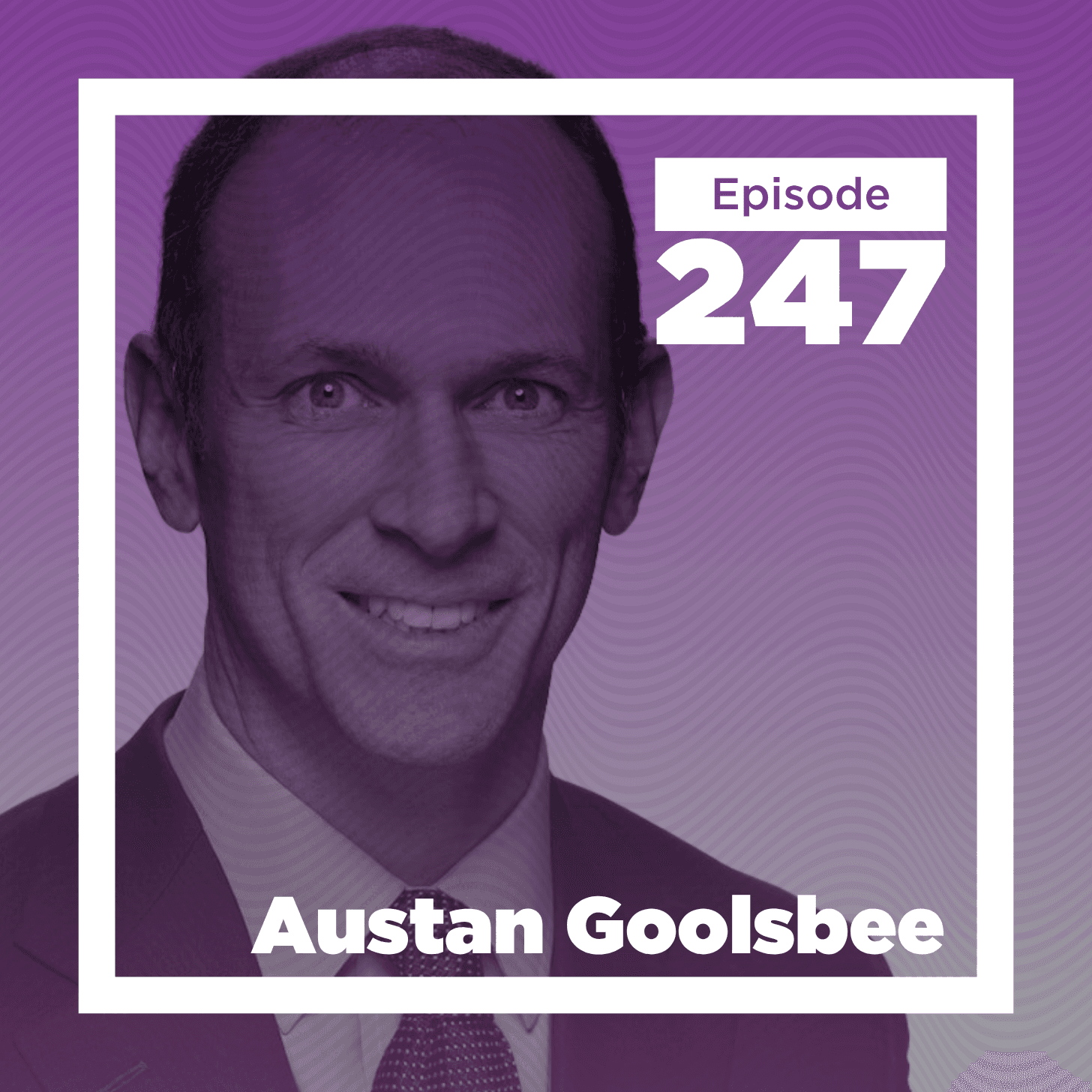
- Guest: Austan Goolsbee, President of the Federal Reserve Bank of Chicago and former chair of the Council of Economic Advisers under President Obama.
Key Themes and Discussions
- Data-Driven Economics
- Goolsbee emphasizes the importance of being a "data dog" in economic decision-making, contrasting this with the dichotomy of being a "hawk" or "dove."
- He highlights the necessity of understanding causality and identification in macroeconomic analysis.
- Inflation Analysis
- Goolsbee discusses frameworks for understanding inflation, particularly the relevance of supply and demand shocks.
- He is skeptical of traditional monetary policy rules, arguing that they may not account for unique supply shocks, especially post-pandemic.
- Monetary Models and M2
- The episode delves into the limitations of the old models connecting money supply (M2) with price inflation, noting the impact of financial innovations and changes in payment technologies.
- Goolsbee argues that current economic conditions require a more nuanced understanding of money's role.
- Post-Pandemic Economic Dynamics
- The conversation addresses the complexities of inflation in the post-pandemic economy, including the interplay of demand and supply-side factors.
- Goolsbee raises questions about the traditional view that inflation is primarily driven by demand, proposing that global factors and supply-side challenges also play significant roles.
- Role of Central Banks
- The discussion touches on the evolving landscape of banking, particularly concerning shadow banking and the implications for financial stability.
- Goolsbee expresses concerns about how regulatory frameworks might be lagging behind financial innovations like stablecoins.
- Artificial Intelligence in Economics
- Goolsbee reflects on the potential and challenges of AI in productivity enhancement and economic forecasting.
- He cautions against over-optimism about AI's immediate impact, suggesting that productivity growth from AI may take time to materialize.
- Future of Central Banking
- The episode explores the future of central banking in the context of evolving technologies, including Central Bank Digital Currencies (CBDCs) and their implications for community banks.
- Goolsbee acknowledges the tension between innovation and regulatory oversight, highlighting the need for careful consideration in the face of rapid financial developments.
- Personal Anecdotes and Humor
- Goolsbee shares lighthearted stories, including his experience debating Ted Cruz, illustrating his quick thinking and humor in high-pressure situations.
Key Takeaways
- Economic Models: Traditional models may not fully capture the complexities of contemporary economic dynamics, necessitating an adaptable and data-informed approach.
- Inflation Understanding: Both supply and demand factors must be considered in analyzing post-pandemic inflation, challenging the notion that demand alone dictates price levels.
- Regulatory Challenges: The rise of shadow banking and cryptocurrencies presents significant regulatory challenges that central banks must navigate carefully to ensure financial stability.
- AI's Evolving Role: AI holds promise for enhancing economic analysis, but its integration must be approached cautiously to avoid over-reliance on uncertain predictions.
Conclusion Austan Goolsbee's conversation with Tyler Cowen highlights the intricacies of modern economics and central banking, emphasizing the need for a data-driven approach and a nuanced understanding of inflation dynamics in a rapidly changing economic landscape. The discussion also underscores the challenges that arise from financial innovations and the prospective role of AI in shaping future economic policies.
Written by AI. May contain mistakes. Listen to the episode to check what was said.
Transcript
Automatic transcript. May contain errors.0:04Conversations with Tyler is produced by the Mercatus Center at George Mason University, bridging the gap between academic ideas and real world problems. Learn more at mercatis .org. For a full transcript of every conversation, enhanced with helpful links, visit ConversationsWithT Tyler .com.
0:28Hello everyone and welcome back to Conversations with Tyler. Today I'm very happy to be chatting with Austin Guzby. Austin is one of my favorite economists. He always thinks like an economist is how I would put it. He has had a long standing teaching post at the University of Chicago served in the Obama administration and now is president of the Chicago Fed. Austin, welcome. Tyler, thank you for having me and what a treat for me. This is, I really appreciate it. What is it in academic macro economics or just economics that you found surprisingly useful being a Fed president? I was a data guy, as you know, in the, in the field of economics.
1:12And as soon as I got there, there's all this pressure of from the press and from others, are you a dove or you a hawk? And I used to say, look, I'm not one of the birds. I'm in the data dogs, you know, and the first rule of the data dogs is there's a time for walking and a time for sniffing and knowing the difference between those. And I would say that discipline of academic economics getting into the data is super useful. And then we're used to thinking about causality and identification, and I do think we could use a little more of that in the macro context. But so you're trying to figure out the connection between the money supply and the rate of price inflation.
2:01What's the first mental model you put on as a hat? You might disregard it when the day to tell you otherwise, but where do you start? It kind of sniff around. I'd say there are multiple models. There's some people and embodied in the machinery of the furbus Official Federal Reserve Bank model is probably a kind of a canesian inflation comes from overheating I'd say the old -style Money supply is what's correlated with inflation a lot of those Relationships between M2 and inflation or or that sort of thing feel a little antiquated, they kind of broke down in the data. But why are those wrong? Like, what's the theory in your mind?
2:45You're trying to teach me, I'm in your class. I think there's two, let me finish one thought, and then let's come back to what's wrong about it. I still like the most of all the basic supply and demand framework, and that before you can conclude anything, you've got to get a taste of, is this a supply shock or is this a demand shock. And in a way, a lot of the machinery of central banking and macro analysis, let's call it, is oriented around demand. And I'm not disputing that in the past, that has been the source of the most frequent business cycle variations. But I've tried to caution everybody in weird moments like when you're getting major developments on the supply side, whether they're labor supply or supply chain or productivity growth or a number of things that are hitting the supply side, maybe all bets might not be off, but the training sample LLM version of being a central banker is going to be prone to hallucination problems because it's going to give you things that are wrong because supply shocks might be driving inflation not demand.
4:06So then go back to your other question of, well, what's wrong with taking M2 and why would it no longer be as correlated with price inflation? And I think that a lot of that is because of financial innovation that we have at great pride and I love the cash vault at the Chicago Fed. They don't like it if I say exactly how much money is in there. I'll just say many tens of billions of dollars of cash are in that vault and we run hundreds of millions a day in and out. There was a time when that cash use was central to the payments of the United States and bank accounts and checking accounts and writing a physical check.
4:54Again, central to the function of the financial system. And as we've spread to electronic payments and credit cards and debit cards and that sort of thing, it has made, I guess, in the old model, you would say it's radically changed the velocity of money. And so it wasn't just m equals p y, it was m times v. So if m is moving around and v is moving around at the same time, you're going to get a little, you're going to get a little mixed up interpreting to over indexing on that theory. Okay. So if the instability comes from the velocity side, that means that we should favor a monetary growth rule to target the growth path of a nominal GDP, m times v, right?
5:39Yeah, man. Now you're going to get me a trouble, Tyler. But here's the thing. You can just say yes, right? You're not in trouble with me. I'm not going to say yes. I'm not going to say yes because, remember, I don't like making policy off accounting identities. There's no economic content in accounting identity. And if you are trying to design a rule, that rule may work if the shocks are the same as what they always were in previous business cycles. But I called it the golden path when we came into 2023 you'll recall the Bloomberg economist said there was a 100 % chance of recession in 2023. They announced at the end of 2022 That's when I came in to the Fed system is the beginning of 23 and that argument was rooted in Then the past, there had never been a drop of inflation of a significant degree without a very serious recession.
6:41And yet in 2023, there was. Inflation fell almost as much as it ever fell in one year without a recession. If you are, if you over index too much on a rule that implicitly is premised on that everything is driven by demand shocks, you just, I just think you want to be careful over committing. But I'm a little confused at the theoretical level. On one hand, you're saying M times V is unidentity, but on the other hand, it drives inflation dynamics. It's why I started back from, I bring a micro sentiment to the thinking about causality and supply and demand. And I said that you want to bring us to a let's let's agree on a monetary policy rule.
7:34And I'm inherently a little uncomfortable. I want to see what the rules say, but I fundamentally don't want us to pre commit to any given rule in a way that's not robust to shocks. Now you mentioned the post pandemic inflation and the role of the supply side. When I look at that inflation, I see prices really haven't come back down. They've stayed up and I see service prices are also quite high and went up a lot. So I tend to think it was mostly demand side. Now why is that wrong? Okay, there's two parts to that. I won't say why it's wrong, but here are my questions. if you're a firmly, uh, this all came from demand guy, a, you got to answer why did inflation begin soaring in the US when the unemployment rate is over 6 % or we could turn it into potential output terms if you want, but output is below our estimate of potential.
8:36Unemployment is way higher than what we think of as the natural rate. and inflation is soaring, that already should make you a little questioning. I can say them too. You may not like it. Them too, and up 40 percent over a few year period, right? Okay. Two, the fact that the inflation is taking place simultaneously in a bunch of countries of similar magnitudes that did not have the kind of aggregate demand fiscal or monetary stimulus that we had in the US is also a little bit of a puzzle. And then the third is if you don't think it was supply, then you kind of need to have an explanation for why when the stimulus rolls off, Okay, and this everything about the stimulus is sort of delta from last year.
9:35So we pass a big fiscal stimulus. We have substantial monetary stimulus that rolls off the inflation doesn't come down. And then in 23, when the supply chain begins to heal, you see inflation come down. So those three things kind of suggest there's a little bit of a puzzle if you think it was all demand. No, I don't think it was all demand, but you mentioned other countries. Switzerland and Japan, they import a lot, right? They were more restrained on the demand side. They had much lower rates of price inflation. That seems to me strong evidence for being more demand than supply. Wait a minute, wait a minute.
10:16I'm waiting. You're you're breaking, you're going to bring in Japan. And, and, and you're going to try to claim that Japan's low inflation is the result of something in COVID. I mean, Japan had lower inflation all along for decades before they were going through deflation. But if it was mostly supply, a supply shock would have gotten them out of the earlier deflation, right? A demand shock would not have. Well, let's back up and try to look at big countries that are not export oriented, that are primarily domestically driven. Like the United States, I think imports of what 10, 12 % of personal consumption, you take Nigeria, you take India, you take a series of big economies that are primarily domestically driven.
11:06Why was inflation high in all of these places simultaneously? I do think there's a puzzle. I don't think it's a 100 % supply. I do think there was a serious demand component, but you still got to explain when the demand stimulus rolls off, inflation doesn't go down, and then when the negative supply shock rolls off, inflation does go down. So I'm sort of back into my, I'm still curious about it, but I find the argument that this This was predominantly or entirely demand, unpersuasive, for some of those reasons. Let me try a question from the other extreme. Why does money matter at all? Isn't it a very close substitute for T -bills?
11:57You're paying interest on reserves. You balance that rate with other interest rates. There are slight differences in terms of maturity and liquidity profiles. But it could be like the proverbial swap if two nickels for a dime. So maybe money just doesn't matter. Could you teach me why that's wrong? I don't like you you're bringing me into I need to ask you to teach me via throng I know you've you've raised this before and it's not really an answer to say The market seems to feel like they're not the same that there are safety There's some yield to safety that we don't quite understand I'd say and it becomes more relevant perhaps in a world where people are creating money -like deposits all over the place.
12:45You know, we got stable coins, as well as the use of credit cards, debit cards, a whole bunch of things that look kind of like old -fashioned bank accounts or checking accounts. I guess the long answer is the definition of a money -like deposit. Why is it different from explicit money? I don't totally know, but that part of me wants to caution you back from going back to M2 in a world like that, where there are imperfect substitutes for money. But it's weird that we economists can't explain it, right? Yeah, probably. It's probably weird. But look, you're going to find yourself back into the data dog caucus and out of the pure theory.
13:38To stable coins increase, you know, the true money supply or the rate of price inflation It is a kind of intermediation say they're backed fully by treasuries. Let's say it's for real. It's not fraud Okay, now you just sent a chill of you just sent a chill down my spine when you said it's backed by treasuries So they have the treasuries in there. Yeah, 100 % reserves and someone creates a stable coin I'm liking the sound of that. I'm liking the sound of that and I'm just a little nerf. I'm not a I'm not Anticrypto, there's a lot of Anticrypto, but I am nervous. If you tell me you're going to create money -like deposits that people are going to put their money in there and they can take it out whenever they want.
14:23I feel like either A, there better be some deposit insurance or B, there better be some pretty serious restrictions on what the assets backing that or restrictions on what the what the entity can do with the money or else that thing ends in bank runs and tears. We kind of have 500 years of financial history that tell us that. So I'll come back to stable corn. I'm just a little nervous about that. You ought to be very nervous. We'll come back to stable coins. But if you look at banking as a whole, I've seen figures that formal legal banks are about one -fifth of the lending total. Private equity is more important.
15:05The real sector of the economy. That's not FTIC insured. A lot of that is in fact runs prone as we learned in 2008. So you've just got to be hyper -super -nervous. Yes, that's the very essence of financial stability, the conundrum of financial stability that we face as a society and as central banks around the world are exactly this, that there is an official banking sector that we have oversight of, and then there's a shadow banking sector, which is getting bigger and bigger every year, and can be prone to runs, and that runs, and what is the role of a central bank as a lender of last resort in an environment where it doesn't play?
15:53By trying to keep banks special, haven't we created a world where 80 % of the lending is outside banks Which is much harder for the Fed to deal with even if you should sometimes step in and that at the current margin It's counterproductive to keep banks illegally special because we drive more and more business out of banks That was two different statements one is the how is that a problem and the second was the was the normative of, it isn't useless and we shouldn't do it. Jeremy Stein is an old friend and I'm a massive admirer of his work. When he was a governor at the Fed, he highlighted exactly this that we have to strike a balance and financial stability of if you squeeze really, really hard on one side, there can be regulatory arbitrage and can lead to activity to shift to the area where we don't control and oftentimes don't even have the information.
16:50I agree with you that part. I don't know if I would go so far as your second statement that therefore it's counterproductive oversight, raising capital ratios is on official banks. It's not effective because because it leads to shadow banks. I mean, we went through very early. I arrived at the Fed and then the Silicon Valley Bank events happened. And I was there back in 2009 when the big banks were the centerpiece of the problem. And the fact that in March of 23, the big banks were not the problem. I think a lot has to do with all of the efforts that were put in place to raise capital at those larger banks.
17:39And we can argue about whether it was done right, but you got to admit it made you feel better that it wasn't the biggest official banks that were facing critical deficiencies in capital. On the great financial crisis, I have a question. I'm curious how you frame this. In 2009, I was convinced we had had a housing bubble. Today, I look at real estate prices and I think most of the country didn't, maybe suburban Orlando did. But the prices were right and we had some anti -bubble panic and that was the problem. That's the fascinating point. But what's your view? I hadn't thought of it that way. My view has been more part of the job of the Reserve Bank presidents is we have a district.
18:24Our district in Chicago is kind of hard of the Midwest. Most of Wisconsin, Iowa, Illinois, Indiana, Michigan. So I'm out talking to business people. I'm talking to individuals and overwhelmingly what you hear is despair. I would even call it despair about the cost of housing, that housing they can't move. And this is not just in cities where you could argue a lot of it maybe has to do with building codes and zoning. We went out to the Iowa Farm Bureau and in rural Iowa, I asked them, what's the biggest problem. They said attracting workers. And I said, why is it so hard to attract workers? They said because they can't afford to buy housing here.
19:10So I've spent a long time trying to think that through. And it's not wrong that it's just more extreme. The last couple of years, the house price inflation has been radically higher than goods price inflation. So if you just kind of compare buying a house to buying stuff at Costco or Target, there have been a big differential. But what's important is that's not new in the last three years. That's been going on literally for decades. Okay, so if you take the 12 years before COVID, house price inflation was 3 .5 % or 4 % a year and goods price inflation was actually deflation of around 1 % a year.
20:04So the relative price of housing has been rising for 5 % per year for a decade and a half. And it doesn't take a PhD by any means to recognize that something compounding at 5 % a year is going to add up to a big number. So I think it goes to your question of well, maybe it wasn't a bubble. I don't fully understand why the relative price of housing has been trending upward like this. I find it hard to explain. I have a paper you might have seen with Chad Severson that's about negative productivity growth in the construction industry over long periods of time, which is itself a puzzle. Maybe that's part of it.
20:49But some component of it may be regulatory in nature. But as I say, you see it in rural areas too, where the land use regulation is not as prevalent. I think that's a real puzzle. On the construction productivity puzzle, what do you think is the main reason for that? That it's negative. If it were zero, that would be a little easier to understand. But we're forgetting how to build homes. Yeah, somehow we're forgetting. We're doing it worse. And we tried it every way we could think of to analyze this. Maybe it's just mismeasurement. So we got evidence on the physical number of homes and the value of those homes that you could deflate by the very localized price deflators at the best at zero.
21:38And it mostly looks like we're getting worse at it. And Ed Glazer was an old friend of mine, and I know you're a fan of his work as well. He believes that it is very much tied to land use regulation and other regulations on the construction industry. But if you go back to the 1970s or 60s, they were moving in a modular direction. Think of it as a kind of higher brow pre -fab housing, turning construction more into manufactured good and that the regulations in some sense have forced an inefficient scale on our producers, but I don't know. We documented it, we showed what it was not, but we were able to find a smoking gun for what it was.
22:31Now, in your role in running the Chicago Fed, which is like running a corporation, right? What is it from micro -economics that you have found especially useful or helpful? Because you face a lot of managerial problems. But if nothing you do, headlines about the Fed, right? Yeah, it's true. The first thing to know about the Reserve Banks is there is a professional COO called the first vice president. And Chicago's first vice president is a woman named Ellen Brahmogen, who is the best. Everyone says, amazing. I was at an early meeting. Well, I've been at the Fed for, I don't know, maybe five months.
23:12And one of the other presidents said, seemed like he was being nice. He said, you know what seems like? Seems like it's going great. You've been really doing a good job. I said, thank you. And he said, or that's what I was thinking. And then I realized, Ellen is your first vice president and Anna is your research director Anna Paulson. How big of an idiot would you have to be not to look like you were doing a good job? And as the lecturers, there's something to that. The micro theory of delegation, I think is important. And things that have a marginal cost of zero, it's fine if you do more of those things.
23:51That's kind of the idea of what is a cost, what is an opportunity cost, and what is a marginal cost? Are some of the most important micro -economic ideas that I think we can apply to management? So what would be an example of something with a marginal cost of zero. Well, if you look at marginal cost of zero things, opening meetings to include others and having folks work together, sharing of information can often have very low cost, if not literally zero, and strong benefits is in the same way in our growth models, knowledge is a public good. Information can have a very low marginal cost and can help us facilitate working together.
24:45And so I've tried to emphasize those internally. Now we live in an age of fiscal pressures as you know and recent experience with Doge has shown that even if the amounts of money at stake are small, people will go after highly visible targets. do you think say 10 years from now that will have so many different federal reserve branches that each have their own research staff in any large numbers? Well, that's what you mean might they kill that system? Or someone? Right. That's a system we have. And someone might ask, why does the federal reserve bank of Dallas need as many research staff as it has?
25:25Okay. So then let's back up to a little bit about how the Fed is created and it was made in 1913 So it's a little bit clujy and like every politically created thing It involves some compromises, but there are a couple of pieces I think of genius or at least very durable important contributions about how the Fed is is built that we should not lose Okay, the first thing to note is is, we have a hybrid federal system in which, yes, there is a chair and there are seven governors that are political appointees, named by the president, confirmed by the Senate. In 1913, as today, people were deeply uncomfortable with the idea that either Washington, D .C.
26:20or or just a combination of those two would control the US financial system with no input from the rest of the country. So they didn't set it up that way. They added 12 reserve banks from around the nation to be part of the FOMC and we go and we sit around the table. There's 19 people. Seven of them are political appointees. Twelve of the people sitting around the table are not political appointees. They're chosen by boards of directors out in the flyover states like us, where business leaders, civic leaders, and people from the region choose to have representation. I think it's critically important that we maintain that kind of monetary policy independent and thought that it's not just New York City and Washington, DC that are coming with one perspective.
27:18And you probably seen some of the analyses over the years that a lot of the new ideas about monetary policy, about banking and supervision came out of the reserve banks. And that's why we have our own research departments. And that's why we take very seriously the The idea that when we go to the FOMC meeting, I love hearing what the other presidents and the governors have to say. I said with no irony, I consider the FOMC to be the world's greatest deliberative body at this point, no offense to the US Senate or to anyone else. It's an amazing group. And if you're an econ nerd, you go into that room and it is just about the coolest thing.
28:05There is on this planet, you know, the shades come down. There's a giant table and they go around the table and Jay Powell is going to say, here's what I see in the economy. And then it's going to go to Chris Waller and it's going to go to the, you know, President Barkan and President Blastick, you know, what are you saying? And I think that's really important. So if we put ourselves on a path that we're going to go chip away at that and that somehow it would be more efficient to hammer away and get rid of the national representation on the FOMC. I think that'd be a terrible mistake. I like the structure of the committee.
28:44I think that's excellent. But if someone said to me, well, there should only be five feds with the staff, but say you should have complete access to all of them. If macro is mainly about data rather than new theories, and I agree with that, five staffs should be enough. It's not like the old days where you needed them in the soda school, run it, or is it Absolutely. Lewis, but then why any? Why not just one? Why not say, hey, to hear the data sets will give you all the data sets. We only need one opinion. You of all people, Tyler, you know how dangerous that is. Well, if we need to let some flowers bloom because monocultures are prone to group thing.
29:21That's why I say five. You could talk me down to three perhaps. Look, as I say, the thing was invented, there's two of them in Missouri at the time, 1913. It's like baseball teams, right? Nothing in this. Yes, it's kind of like baseball teams, but in an era where almost all the teams are in New York City, you know, baseball is the worst for it. What should the regional feds be doing, manage, usually, to prepare for the arrival of AGI, or just very strong A .I. Whatever you want to call it? I don't know. I'm still curious and I hope we will. Let's have a little extended discussion about AI and what does it mean for productivity and how real is it?
30:04The thing that banks do, I always say it's kind of a handful of things and it's five basic functions, one of which is monetary policy and I consider that the opposable thumb, you know, that's what separates us from the animals. And you got monetary policy and then there's directing the payment system of the United States. People probably don't understand, unless they get into it, that the plumbing of the financial system, the wired transfers, ACH direct deposit fed. Now there's a whole bunch of payment system things that are operated by the fed system that are critically important. The biggest thing in terms of employees is bank supervision and regulation and oversight to make sure that our official banks are safe and sound.
30:56We're a bank to banks, so the fourth is financial services like we send cash for their ATM machines. We do a whole bunch of financial services for the member banks. And then the fifth is to participate, be upstanding members of the community. We have a community development function. We have a regional economics focus. We are absolute experts in Chicago, for example, on the auto industry. We have by far the most auto production and the highest manufacturing intensity of all the districts. So we have expertise in that. And I think all five of those are quite important that we maintain them. Where AI fits in, I could see it fitting in in supervision and alerting you at least red flagging.
31:49Here's a place to look more. As of now, though, there is a rule for bidding the use of AI tools for general Fed usage. And I understand it. If you take secret information, confidential information, and start plugging it into these, and it starts getting out, I think that would be a problem. But you could put this on your hard drive, right? We're very close to being able to do that. The Fed is incredible data. You could take everything all the Fed's now about banking failures, build an AI, keep it on the Fed hard drive, and they would do much better than any human in predicting bank failures. Maybe that's a hypothesis.
Read the full transcript
32:34I had this theory, before we ever started talking about LLM models, I had this theory with academics on the job market that would come in with a structural I .O. paper. And I believe that down deep in the human psyche, there are what I always called the fundamental human. Some people believe in magic and some people fundamentally don't believe in magic. And how it would play out is if a person had a paper that was so complicated that you could not understand it, there would be some people would say, wow, was that job candidate impressive? If they had such a machinery, I couldn't even tell what was going on.
33:18And then there would be people like Gene Phama who would say, that guy was a complete bullshitter. I couldn't understand anything that they were saying. And that idea of do you believe in magic or not believe in magic? Now transpires a little bit into the AI world. So you might believe in magic, Tyler, if you think that that will automatically be in near term better than any human. And the only caution I would have is back up to 2023. And the ask the question, could, could an LLM replace the FOMC and do it better? And I have some severe qualms that it could because you're only as good as the training sample.
34:11And the training sample, what has said, as you went into 2023, inflation's way too high. What should happen? What is going to happen? The LLM would have said it's a lead pipe cinch guarantee. You need to jack up the interest rate and have a massive recession. Otherwise inflation will not come down. And it's only the thinking, hey, wait a minute, I might there be a supply shock here. They were getting a positive supply shock of massive labor force participation increase, you know, more flexible labor markets. So disabled workers can come into the workforce, women are coming back into the workforce.
34:51The LLM would not catch that. I want you to talk me into the correct view on a central bank issue, digital currency. and let me explain to you my dilemma. It seems on one hand if the Fed or other central banks, if they do nothing, stablecoin simply proliferate. You lose control, there are prudential issues, maybe eventually money supply issues. If you do something and say create a CBDC through the Fed, there's the risk of disintermediating community banks, regional banks, smaller banks, and Americans seem to hate the idea for reasons that to me are partly irrational, maybe so much justified. So what exactly is the right view to have on this?
35:36I find myself torn. You must think about this. I've seen you ask. I've seen you ask Mark Carney and others about this very top. The first thing I'll say, I'm at Chicago Fed. We don't set policy on stuff like that. That's Washington has to set the policy. Yeah, but they ask you for advice. You're an end economist. Congress has to set that policy. I think the thought that grandma is going to have a CBDC and forget her password and the Fed is going to have a like a customer service line that grandma's going to call and say, how do I get my password back? I don't know. I don't say that. That seems pretty far from the from the world that the Fed's gonna focus in.
36:26CBDCs that are a wholesale thing, I at least have more understanding and some of the central banks do that, but there I kind of wonder how different is that from wire transfer? What does it mean? What does a wholesale? I mean retail, like we have retail stablecoins. A true CBDC, yeah, like a $10 bill. But did you think? Do you advocate postal savings accounts or government run bank alternatives? There are countries where they where they have that and I kind of feel like you're It's worth approaching that space. It's worked okay in the past. I suppose I'm willing to live with the proliferation of stablecoins But all the paths make me nervous All the best make you know that.
37:18And you might prefer grandma calling on the Fed line. You might prefer to managing all these stablecoins and grandma emailing her rep or grandma's AI emailing the rep saying, Hey, you know, I couldn't get my stablecoins back because the private supplier screwed me. What's the Fed going to do about this? That's not a fun phone call either. That's not a fun phone call either. I agree with that. to the extent that there are none In a way it's back to our thing of what's a bank and what's not a bank and Your argument is in some sense stable coins are shadow banks and the disintermediation of community banks or or the like will be Will create a lot of upheaval and there will be a lot of jockeying in a world like that and I agree The thing is the risk so far associated with cryptocurrency makes me nervous.
38:19Again, I want to reiterate, I'm just at a reserve bank. We don't set policy on this. Congress has to set this policy and in conjunction with the Board of Governors, Washington sets the policy here. I find the prospect that the stable coins, if we're going to go back to the free banking era in the United States, they end the second bank of the United States and we go through decades where anybody can start a bank. And if you go look at the free banking era, it is an era of massive numbers of bank failures and recurrent financial crises. You're the panic of 1847, the panic of 1857, a close to panic in 1860, massive numbers of recessions.
39:11In the flavor of person shows up, starts a bank, they're supposed to be backed by the equivalent of treasuries, but they start the bank, print their own money, and get out of town. that seems problematic to me to be in the space and anything where you're going to have cyber attacks and fraud associating the Fed's name with it. We just need to be careful. In a way, the Fed will always be the funny dutty of the financial system. And that's how it should be. You might have seen my colleague at University of Chicago, Eric Boudich had this paper about Let's call it the blockchain and centrally controlled versus not centrally, not control, but central oversight crypto versus non -central oversight crypto.
40:08And it kind of, it's just a theory paper, but it goes off of the idea that everybody collectively agrees to history, what happened and who made a transaction. That's the essence of what's happening on the blockchain and that the attack, the potential attack that if you could get 50 % plus one of the miners of the blockchain to say, no, no, there was a transaction and all of that, all of that coin is actually, they sent it to us for nothing. You could get 51 % of the instantaneous flow, and that would allow you to snipe a tack, a giant stock of crypto. That's a very interesting paper. Oh, I know that piece.
41:00It's great. It's a great challenge. You know that. I get that problem, but just concretely, you know, Tether is chartered abroad, right? What are you all going to do about it? There's no great firewall in the United States. I will set the policy. But they come to you for advice like what do you tell them they should do tether? I know the US government Well, there's US government do everything you can to make sure that they have the assets that they claim to have But can we do anything their charter to broad was it came in islands or that's so the question of What's inside the safety net and what's outside the safety net is a super important problem you probably know or I was very close friends with Paul Volker and he was a mentor to me and really one of my personal heroes.
41:49And we went through the analysis of the financial crisis of as we went through 07 and into OA and barasturns and the financial crisis and the response. And he early, early on identified this question that it's all going to come out to some point soon. They're going to be like, who gets rescued and who doesn't? And anything that's too risky has got to stay outside the shadow of rescue. if you want to think of it that way. And if it's risky, it can't get it, where I start to get nervous. And as I say, I'm not anti -crypto. I like innovation and financial innovations. If we start attaching risky things to the payment system, now I'm getting nervous, because we know that in financial crises, We must make sure that people can still make their payments that they they're not getting evicted and they make their house payment or they can buy groceries or they can buy whatever.
43:01If stable coins started turning into actually the money that we're using and they are turning into that. They want to but I don't know if they are but to the extent that they start to do that I think we got to take seriously the risk that that poses to financial stability. That's the argument though for CBDC because otherwise they can proliferate abroad. If there were a Fed stable coin, you would crush the market, right? That would dominate. Maybe. I don't think it's a maybe. I mean, people that love to use a well -run Fed stable coin. Well, you added the well -run and then we're back to, well, would you be gramma be calling the Fed or retail stablecoin asking for, how what's the log in again?
43:49You know, it's so if you can manage a payment system and prudential supervision of US banks, you can run a stable coin. Maybe, but like in our operation of payments, we're fundamentally a behind the scenes plumbing operation where you have a bank and that bank sends wire transfers a lot of times on the Fed rails. But you don't know that that's that's going over the fed rails and that I think that's fine. Like that's this is critical national security financial infrastructure in my view. And I understand why the fed operates that and look, it's Edmund Burke. There is there is daylight. They'll they'll twilight be long.
44:36There is a difference between day and night. And there's somewhere in there where a central bank should be doing it. And there's somewhere that the central bank clearly should not be doing it. And I don't know exactly where that line is, but I like safe. How much do you think strong AI will boost rates of economic growth or productivity growth? Any number you care to give? High uncertainty, right? But if you had to make a stab at a number over what time? the next 10 to 20 years. Not next year. It's zero for next year, right? I think could be a decent I gave a speech at Stanford that was kind of about the topic.
45:18We have seen over the last two years a pretty remarkable surge in productivity growth faster than the pre -COVID trend. And on the first glance a lot of people said, yeah, of course it's faster than trend because it's going to bring us back up to the trend of where we would have been and then it will slow down. But it didn't slow down yet. It may still, but we're actually up above the pre -COVID trend extended to the future. And there are several explanations that the economists have come up with for that, most of which are one time explanations like people started working hybrid or working from home and that raised productivity by X%.
46:03If you're a believer in that and you you talked to Nick Bloom, a Nick Bloom's in his head. He absolutely believes that, but that's a one time. The labor reallocation and people suddenly we had the great resignation and people could reallocate to jobs that they're better suited to again, one time. At increasing the level of business dynamism, new firm creation went from whatever, 100 ,000 to 150 ,000, mostly one time. Only a new technology has the potential, I think, to slowly work its way through the economy, going from sector to sector. And if AI is a general purpose technology like computers, like electricity, like telephones, that sort of thing, those played out over decades.
46:55And there's work done here at Chicago Fed looking at the industry concentration of this surge of productivity. Is it broad -based or is it concentrated in certain industries? And the answer is it's concentrated in certain industries. And despite the skepticism of economists that AI is not big enough yet to explain, it looks to be concentrated in a bunch of tech related AI intensive areas. So if true, it's entirely possible that this goes like computers, where first you saw the productivity growth in the computer production sector, then five, 10 years later, you saw a surge of productivity in the computer using sectors.
47:44And then after a decade or more, Walmart incorporates IT into the inventory management system. The rental car companies, people are equipped with hand -held computers that are coming out and checking in and checking in your car and you get productivity that spread through there. So could be a high number, but so far, I think the adoption rate is not high enough to explain very big. And there is a risk of over anticipation of productivity growth that if equity value surge and business investment surges in AI infrastructure, structure type capital investment on the anticipation of the bounty that is to come.
48:40I think there's a high danger that that can, and you encounter the overcapacity, the capacity constraint problem that we always face in the short run when you get a surge of demand. Or if wealth effect leads to a big increase in consumption here and now based on these high equity valuations. again, you can get overheating if you're not careful. If I gave say a 50 question quiz to new assistant professors at top 20 departments, and I gave the same quiz to O1 Pro. How many of the professors do you think could be the O1 Pro? At what? Getting the quiz right. What's the quiz? What's the quiz? Some's micro, some's macro, some's econometrics.
49:29You and I draw up the quiz. Yeah, if this is a Buzzfeed listicle, then whoever's looking on Buzzfeed is going to succeed the best on the quiz analysis. If it's judgment, I still fundamentally, I'm skeptical of magic. And I think in my experience where the, where the greatest opportunities arise in the run are on things where in a way there's not a correct answer. The hallucination problem, I think is actually an extremely damaging problem for a lot of applications of AI. And I've seen you describe the joy that you felt in the being able to ask about historical. What was the cause of the war and that it would answer questions.
50:26But how do you balance that off of what if it's giving you bogus answers? I think I won't lose an eight slash say then what's in J store? Okay, I hope that's true. I don't know the hallucinating to J. Stor, we ride a dawn, you know, this, that's a hill I'll die on. But the thing is, you are old enough to remember, as am I, before there were laser printers, there were those dot matrix printers. Sure. And the thing is the essence was adding more and more dots and the advocates for a, of dot matrix printers, they would say, this is so, there's so many dots you can't even and tell that this is not a typewriter.
51:19Only the thing is you could. You would look and say, no, no, look, this is better than it used to be, but I can tell this isn't a typewriter. No, you can't, that it says, no, you can't. It's indistinguishable. If I say to AI's biggest advocates, here have been some exciting use cases, but here have been ones that I've found troubling, they usually, if your first reaction is to say, well, what version did you use? That's to me kind of the dot matrix printer problem. So you're going to steer me to O1 Pro. All we're going to identify is that I'm too cheap to shell out the money for the higher and higher levels.
52:03The Fed won't pay it for you. It's true. I'm going off of these older ones that are free or cheap. But I don't accept that it's like, ah, well, if you just upgrade to the higher priced one, then those hallucination problems would stop. So far, they've got to work on that side of the equation. Otherwise, it still could have amazing impacts, but it's just there are some things for which making a mistake is kind of an unforgivable error. You see what I mean? Like, you got to change the penalty function in that thing. But you put aside opinions on AI. Just think of your knowledge as an economist, economist, nutrition.
52:46You can just run a few AI models and aggregate and get rid of almost all the hallucinations that way. You can do that now. It costs a little more. But it's obvious you can get hallucinations now as much as you want. You're getting dangerously close, I think, to the position that if we have enough observations then we have solved the causality problem. If we get enough observations, we'll just be able to predict anything with 100 % accuracy. And I don't know if it flies too close to the sun. I'm not sure what just happened there, did I? Red hearts. Was that motion? The created hearts. I think that's from your system.
53:29The Chicago Fed loves us. It's my heart. I believe that you better be careful. And here's my second question about AI and its impact on productivity. How much of the improvement in AI? I'll tell you the thought experiment I like to do is to ask what jobs would be replaced with the AI that exists right now, not extrapolating it forward because a lot of the grandest dreams for AI and rapid adoption, I think are premised on extrapolating a growth rate. And to the extent that some of the improvement in AI is not coming from improvements of AI theory or new algorithms, but instead from bigger and bigger datasets and more and more computing power, data sets and computing power have diminishing returns that will kick in pretty quickly.
54:36So it would be who of us to remember that there was a time 15 years ago when self -driving cars were improving so rapidly that people were predicting that within five years there would not be a single professional driver in the United States. And then basically what happened is the rate of improvement didn't go negative. It didn't go to zero. It just slowed way down. And now we're having some self driving taxis in different cities, but we're nowhere near what 15 years ago there was a group of of real advocates who said by 15 years from now, people are going to be like, Dad, what do you mean? People used to drive their own car.
55:21How don't we're people? We're still a long, long way from that. How should we reform the MBA, business graduate education? You're an expert on that. I'm only an expert in that I taught the MBAs and I taught a class on platform competition and I had hundreds and hundreds of students over the years. And the MBA, I found the MBAs to be very data -minded and very intellectually curious. Now, it might be the University of Chicago MBAs are a high -powered group. I think the market for MBAs, as you know, all the pressures on the opportunity cost side, trying to shorten the programs, there are new masters programs and finance and management and things that are one year in nature or a year and a half in nature.
56:15But I think the MBA, whether you use it as a market test, what does the market demand? Or you just go look at the content of what people know. I think it's a pretty, pretty well functioning market. It's a valuable degree and it teaches a lot of skills. Final question. What's the story of how you beat Ted Cruz as a debater? And he was a national champion, as were you, right? But how was it you won? Well, I was big at speech debate. It wasn't high schools speaking and then went to college. And I was a year older than Ted. My partner and I, we were the national team of the year. And Ted and his partner were second.
57:01And the thing is I kind of had kryptonite on poor Ted, which was when we would debate, you don't debate face to face. There's a judge. and Ted was an excellent debater, and his greatest strength was plotting. We'll say this, and that'll lay a trap and get them to say this, and then we'll respond, you know, in this way. And his weakness was thinking on his feet, and especially if he got mad. So I would, to the judge, kind of start teasing. I would tell jokes at Ted's expense and many of our rounds would end with Ted red in the face right how dare you say that I'm gonna We got him again, you know, so that was the that was the secret Austin ghoulsby.
57:52Thank you very much Tyler you called to Chicago. I'm gonna have to take you on the food tour I have for many decades followed your advice and I got some great places out here that are gonna be right up your alley That would be great, thanks so much. Thank you.
58:11Thanks for listening to Conversations with Tyler. You can subscribe to the show on Apple Podcasts, Spotify, or your favorite podcast app. If you like this podcast, please consider giving us a rating and leaving a review. This helps other listeners find the show. On Twitter, I'm At Tyler Cowan, and the show is At Cowan Convos. Until next time, please keep listening and learning.
From the publisher
Austan Goolsbee is one of Tyler Cowen’s favorite economists—not because they always agree, but because Goolsbee embodies what it means to think like an economist. Whether he’s analyzing productivity slowdowns in the construction sector, exploring the impact of taxes on digital commerce, or poking holes in overconfident macro narratives, Goolsbee is consistently sharp, skeptical, and curious. A longtime professor at the University of Chicago’s Booth School and former chair of the Council of Economic Advisers under President Obama, Goolsbee now brings that intellectual discipline—and a healthy dose of humor—to his role as president of the Federal Reserve Bank of Chicago.
Tyler and Austan explore what theoretical frameworks Goolsbee uses for understanding inflation, why he’s skeptical of monetary policy rules, whether post-pandemic inflation was mostly from the demand or supply side, the proliferation of stablecoins and shadow banking, housing prices and construction productivity, how microeconomic principles apply to managing a regional Fed bank, whether the structure of the Federal Reserve system should change, AI's role in banking supervision and economic forecasting, stablecoins and CBDCs, AI's productivity potential over the coming decades, his secret to beating Ted Cruz in college debates, and more.
Read a full transcript enhanced with helpful links, or watch the full video on the new dedicated Conversations with Tyler channel.
Recorded March 3rd, 2025.
Help keep the show ad free by donating today!
Other ways to connect
- Follow us on X and Instagram
- Follow Tyler on X
- Follow Austan on X
- Sign up for our newsletter
- Join our Discord
- Email us: cowenconvos@mercatus.gmu.edu
- Learn more about Conversations with Tyler and other Mercatus Center podcasts here.