
In short
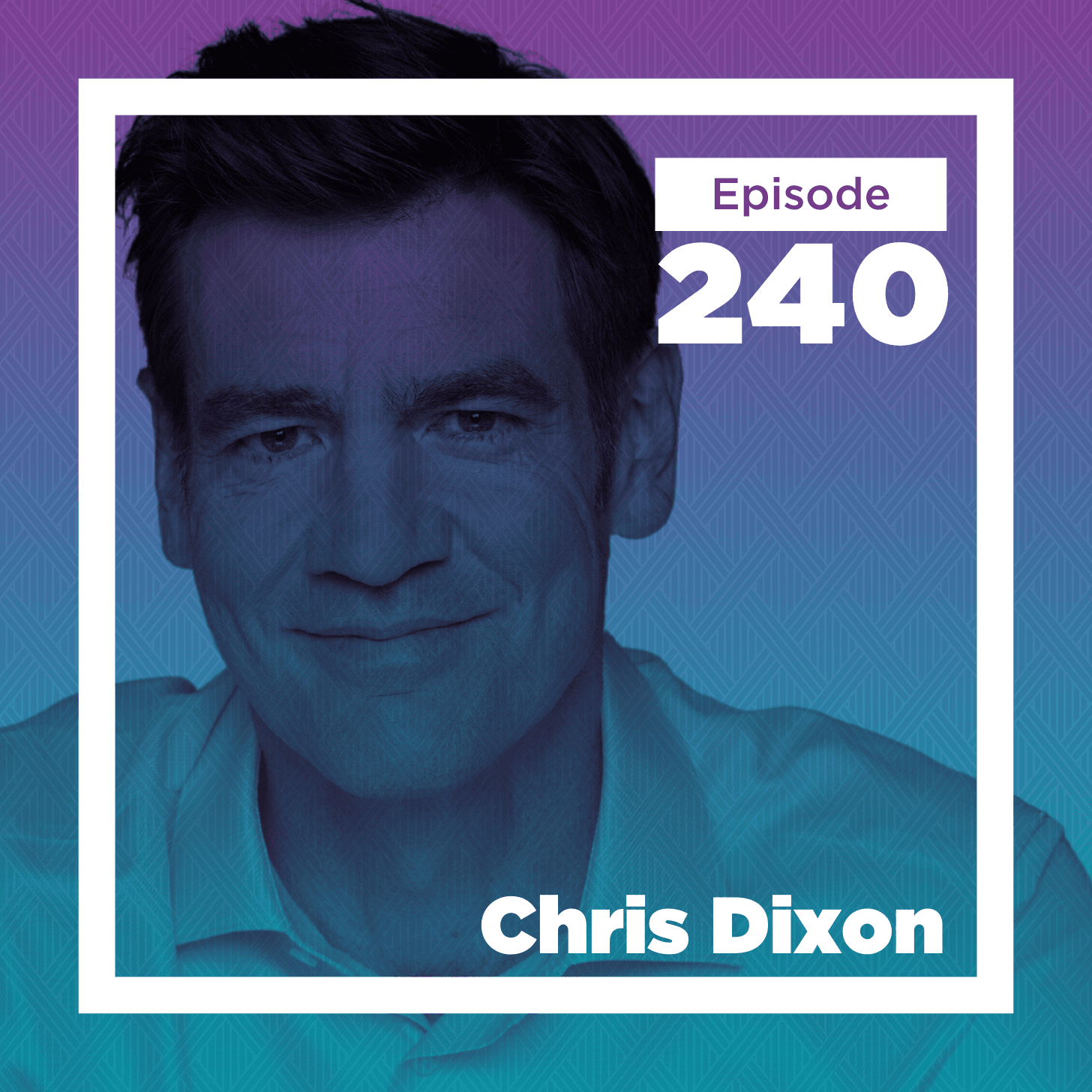
Podcast Summary: Chris Dixon on Blockchains, AI, and the Future of the Internet
Podcast Title: Conversations with Tyler Host: Tyler Cowen Guest: Chris Dixon Release Date: March 26, 2025
Overview In this episode, Tyler Cowen engages with Chris Dixon, a general partner at Andreessen Horowitz and author of *Read Write Own*. The discussion dives into the evolution of the internet, the dominance of large platforms, and the transformative potential of blockchain technology and artificial intelligence (AI).
Key Themes and Discussions
The Current State of the Internet
- Consolidation of Power:
- The internet has shifted from a decentralized network to one dominated by a few major platforms (e.g., YouTube, Spotify).
- These platforms have high "take rates," meaning they retain a significant portion of revenue generated from creators (e.g., YouTube takes 50%, Spotify takes around 30%).
- Economic and Control Effects:
- The dominance of these platforms limits economic opportunities for individual creators and leads to challenges regarding content control and platform governance.
- Platforms employ algorithms that dictate content visibility, leading to issues like de-platforming and content moderation.
The Case for Blockchain
- Decentralization as a Solution:
- Dixon argues that blockchain technology can restore autonomy to creators by eliminating intermediaries and lowering transaction costs.
- Blockchains can provide competitive advantages similar to traditional corporate networks while maintaining societal benefits of decentralized protocols.
- The Role of Smart Contracts:
- Smart contracts on blockchains can offer incentives and manage funds without the need for traditional management structures, potentially creating a more equitable economic environment for creators.
The Impact of AI
- AI's Influence on Content and Economics:
- AI technologies like ChatGPT and Copilot threaten traditional web services (e.g., Stack Overflow) by providing instant answers and reducing traffic to these platforms.
- The conversation touches on the potential for AI to disrupt various sectors, including venture capital and content creation.
- Ethical and Regulatory Concerns:
- Questions arise about the regulation of AI, the implications of AI-generated content, and the potential need for frameworks to manage AI's integration into industries like finance and media.
Future Predictions
- Social Networks and User Experience:
- AI could reshape user engagement, potentially leading to a concentration of power among a few platforms if not balanced by decentralized alternatives.
- The conversation speculates on the future of media consumption and the importance of maintaining diverse content sources.
- The Role of NFTs:
- Non-fungible tokens (NFTs) could represent digital ownership and property rights for AI-generated content, creating a new landscape for digital assets.
Philosophical Underpinnings
- Philosophy in Decision-Making:
- Dixon shares insights into how philosophical concepts influence his thinking in venture capital, particularly in relation to understanding knowledge and the flexibility of thought.
- References to key philosophers (e.g., Hume, Kant) highlight the interplay between philosophical inquiry and practical decision-making in tech investments.
Key Takeaways
- The dominance of large tech platforms presents significant challenges for creators and the internet's original decentralized vision.
- Blockchain technology holds the potential to revitalize the internet by enabling decentralized ownership and reducing reliance on intermediaries.
- AI's rapid advancement necessitates careful consideration of regulatory frameworks to ensure it serves the public good without exacerbating existing inequalities.
- Engaging with philosophical ideas can enhance understanding and decision-making in the rapidly evolving tech landscape.
Conclusion This episode provides a comprehensive exploration of the intersection between technology, economics, and philosophy, as Chris Dixon articulates his vision for the future of the internet powered by blockchain and AI. The conversation emphasizes the need for a balanced approach that fosters innovation while protecting creators and ensuring equitable access to digital resources.
For a deeper dive, you can read the [full transcript](https://conversationswithtyler.com/episodes/chris-dixon/) or watch the [full video](https://youtu.be/CPwiK0dRFRg).
Written by AI. May contain mistakes. Listen to the episode to check what was said.
Transcript
Automatic transcript. May contain errors.0:04Conversations with Tyler is produced by the Mercatus Center at George Mason University, bridging the gap between academic ideas and real world problems. Learn more at mercatis .org. For a full transcript of every conversation, enhanced with helpful links, visit ConversationsWithT Tyler .com. Hello everyone and welcome back to Conversations with Tyler. Today I am chatting with Chris Dixon, who is a general partner at End recent Harwitz. He has a long -standing history in the tech field. He started off in a way as a blogger, and we now have out the paperback edition of Chris's recent book, a very stimulating and provocative read.
0:47It is called Read Right Own, building the next dera of the internet. Chris, welcome. Thanks for having me. Let me ask you a very fundamental question, so people can see where you're coming from. So if I listen to music today, not on my stereo, I'll go to YouTube and Spotify. What's wrong with that arrangement? How is it you think we can make it better? Yeah, I mean, so the kind of core thesis of my book and kind of the core thesis of my career now, is that the internet began as a decentralized network, which what that meant was that if you created a website, well, let's say you were a musician and you created a website and you sold your music you would sell directly to the consumers and there would be no one sits no intermediary in between taking money from that transaction Challenge with things like Spotify and YouTube and just generally the structure of the modern internet is that you've had these Services pop up which you know are very dominant.
1:41It's very consolidated sort of 90 % of the internet traffic runs through less than 10 services and companies. And they have very high what we call take rates on the internet business. The take rate is the percentage of money flowing through the system taken by the network intermediary. Right? So YouTube actually is the most generous of the social networks. They give roughly 50 % to the creators and take 50 % for themselves. Now that's actually a low take rate on the internet in any other area of the economy. As I'm sure you'd know, 50 % for an intermediary is generally a very high rate. Spotify is 30%.
2:16They also, but then of course musicians, there are, you know, many other layers of fees on top, including the music labels. Spotify's own statistics. It's on their website. I guess they're glad about this. They think it's a good stat. It's something like, I think I don't remember exact number. It's like 8 ,000 of the 8 million artists make more than $50 ,000 a year. So a very, very small percentage make something like the average American living. And so the question is is that because people are paying for music? That's not, people are paying for music. People are, you know, advertisers are spending a ton of money on YouTube.
2:49I mean, you know, Metta and Google and these companies are making a ton of money. The problem is, primarily, in my mind, primarily economic that we've now sort of these, and I go through this, by the way, in detail in the first part of my book. I kind of go through the history of the internet and how this happened. But we basically, this, in my mind, and why I got into the internet was, it was meant to be, it was a very exciting vision. I mean, of course, it came out of academia and government and things, but this vision that you'd have an internet that sort of owned and operated by the people that use it, where sort of if you visualize a network, the money is flowing to the edges of the network.
3:18There are all these great ideas like there's a famous blog post by Kevin Kelly called a thousand true fans and the idea was because you're removing intermediaries, you know, musicians and creative people can now make a living with only a thousand customers. If you do the math, if someone's paying $10 a month and you have a thousand of them as 10 grand a month, that's 120 grand a year, that's a pretty good living for somebody doing something they love. That was always the vision, that's what I got excited, I got started in the 90s, and the internet was like that in the 90s, and it was like that in much of the 2000s, and then, and I go through this, I think because of the incentives of the way these services were set up, because of venture capital, because of a bunch of things, you essentially had a bunch of incentives to consolidate in network effects, of course, that these services is get more valuable than more people that are on it, which has a winner take all effect.
4:08And we ended up in a place, you know, you look around about 10 years ago and we got to a place where there's roughly five to 10 services that are dominating the internet, taking all the money, taking all the economics and also have control. That's a whole separate topic. This is, you know, going to the topics of like de -platforming and rules and if you go on YouTube, there's all these debates around demonetization. So in the book, I go through this. It's kind of the history of the internet, how this happened and then what are the effects? There's economic effects, there's governance or control effects, and I think more broadly this, what it does is, for example, as you mentioned, YouTube and Spotify, it creates real challenges for creative people.
4:45Now throw in artificial intelligence, which I think is obviously an amazing technology and incredibly powerful and I'm generally very excited about what it will do, but I think left unchecked on its current trajectory will likely lead to even further consolidation and rewards companies with large amounts of data and capital and things like this. And so the reason that I'm involved with blockchains and crypto is I see blockchains as a potential counterbalancing force to those consolidation trends. But there is a reason why the older internet dwindled, right? For me as a listener, Google, Alphabet, they've upgraded YouTube in some very significant ways.
5:21The search function is amazing. The algorithm to me is useful. It used to be you had to download a YouTube video and then you'd watch it much later. And now it's all seamless and great. Why aren't I just better off in this new world and I left the decentralized internet behind? And my music listening today is much better than it was 20 years ago. So kind of my argument just structurally is kind of a thesis antithesis synthesis. So the first, and that's read right on, the first year of the internet, were what you're referring to, were protocol networks. So that was the worldwide web and email. These were decentralized networks, but no company behind them, not owned by anyone.
5:58and they're really just kind of standards, sort of like a language is a standard. And actually the case study I used in the book is RSS and sort of the fall of RSS, like RSS is still around but in a very niche way. But at one point it was, let's call it 2008, I was there, I was blogging about this at the time. It was a legitimate kind of contender, like you could have imagined a world where you were getting your YouTube and Twitter and all these other services through a decentralized protocol. Not RSS as you imagine it, like just like a bad visual interface, but as the underlying structure and then you build graphics and streaming and all these other things in it.
6:32So why didn't that happen? And I think to your point, it didn't happen because it wasn't good enough. It wasn't, it didn't offer the same user experience. And so you're absolutely right about that. Like these services won because they were better. And look, one of the big reasons they were better was, and I have again a case study of this in the book, is subsidization. So YouTube, for a very long time, and to this day in some areas, is subsidizing video hosting costs, which is very expensive. I mean, so I've seen this from the other side. I work in venture capital for, I've networked in it for, I don't know, I've been investing for almost 20 years.
7:05These companies like YouTube and Twitter, they raise a lot of money. What do they spend that money on? A lot of it is for subsidizing the hosting costs because the basic idea right is these are winner -take -all markets. They have network effects. So what you do is you subsidize along the way. Let's imagine, YouTube came out in 2005. You're sitting there in 2007. You're a video blogger. You have two choices. So you can set up RSS and pay hosting costs or you can go to YouTube and do it for free. And that was one of the big value propositions of YouTube early on. And if you used it back then, I did.
7:35And that subsidization is something that those protocol networks, there's no company behind it. They can't offer subsidies. RSS couldn't offer subsidies. It's like a, there's no. But isn't there some op -re -re reason to expect the centralized service to spend more innovating and innovate more rapidly than the decentralized service? precisely because there is some monopoly profit there? Well, I think there's a couple of things. I think if I could get to maybe just briefly to blockchains, I think what I think of blockchains are as a new architecture for building internet services where there is no intermediary, decentralized is another way for saying no intermediary, where you have very low take rates and you have sort of, the way I think of blockchains is the benefits of protocol networks, of the old networks like the societal benefits in that the money flows to the edges, the controls by the community.
8:22But blockchains are able to do some of the things you're describing. So a blockchain can offer incentives. A blockchain can have a treasury, right? This is the architecture of a blockchain. They have a thing called smart contracts. And a smart contract, this is something that sort of hard people look at their heads around, but it's not a company or a person. It's literally a cup piece of code that owns tokens and money and can use that money to do things like the YouTube subsidization. My kind of core argument is that protocol networks are better for society, corporate networks, as I call them, like YouTube, have a lot of advantages as you're describing, like competitive advantages.
8:56And blockchain networks done right can ideally be the best of both worlds. They can have the societal benefits of protocol networks, but the competitive advantages of these corporate networks. Now to your point, anything that's decentralized, there are some coordination costs. And I think like a good case study, there would be Linux versus Windows, right? So, you know, Linux is now, I don't know what the percentages are, but I think it's well about 90 % of the operating systems or Linux, if you rewind to the 90s when it was starting out, it was a mess. It was on a list serve and a bunch of uncoordinated people.
9:28Now you did have a very important bully pulpit leader in Linus, but it was sort of an uncoordinated mess. And she's right, there is overhead in coordination costs. You don't have hierarchical management structure that can be very efficient. The flip side and why I think Linux 1 is that open source benefits from what's known as composability. And that's the idea that anyone in the world can write a piece of software once, put it on GitHub as a public resource. And then anyone else can use that as a Lego brick to build another thing. I say in the book that composability is too software as compounding interest as the finance.
10:03You know, it's this thing where like you basically just keep one person build something and you never have to build it again and you reuse it and you build a Lego bricks up. And I think that's one of the main reasons that open source has taken 90 % plus market share, AWS, every embedded device you have, every data center, Android devices, and so forth. So you're right, there's a difference how to trade -offs. It's tougher to coordinate building a decentralized protocol or a blockchain protocol. On the flip side, you have other benefits. You have lower take -rays, you can offer incentives through tokens, you can benefit from composability, everything is open source and reusable.
10:40But there is, you know, legal free entry in the sector and people can go to and recent harwits. They can go to you personally and ask for VC money to do something like I recall a bunch of people told me I should try mastodon, which was decentralized. I did. I didn't like it. Most people didn't like it. That's now a bunch of years ago. No one has come to me in at least five years and said, Oh, Tyler, you need to try this new decentralized service. Like, well, why isn't that happening? What's the benefit the service might be offering me that's like concrete? Yeah, I have a section on mass. I mean, I think there's architectural flaws and the whole thing.
11:18And it's, for example, if you've used it, there's this whole concept of servers and you have this very challenging problem of coordinating across servers and it's very fragmented. So that might be a separate topic. Look, I think a broader thing is that let's talk about is when I think about where block chains are getting adopted, if you look at where they're successful right now, it's mostly in financial applications. So stable coins, for example. I think that the numbers are kind of shockingly high if you Google visa stablecoin dashboard visa is I think a pretty neutral party they have a dashboard the tracks it It's three and a half trillion dollars in stablecoin transactions last month, right?
11:51And that's been steadily going up. You know, these are people sending this sort of stablecoin just for your audience is a Something like it could be a dollar or a euro, but it's backed by an asset in the bank So there's tether USDC There's a bill that just made it through past the Senate Finance Committee and is going to be put it on the house hopefully in the next six weeks and hopefully past that will, that will, is congressional legislation to put, you know, full rules around stablecoins. And I think, well, you know, all of this growth has been happening before there was that kind of clarity.
12:21And I think that could really accelerate it. So, but there is, I'm going to say this is that, look, I mean, so it made me, I think there's really interesting things you can do with blockchains and social networks. But the reality is in 2025, it could just be that we have social networks, the network effects are strong, and the area is to focus on when you have new architectures, like blockchains, maybe other areas, in software there's a phrase, green field, brown field. Right? Green field is, do you have some breakthrough, AI or crypto or whatever? Do you go after existing use cases and make them better, or do you go after new use cases?
12:53And so what you're describing is more brown field. Like it may just be that some of the wars are fought and they're over. There's 3 billion people using Facebook apps, and at some point the network effects are so strong that even if you come up with something that's much better, it may just be a challenge. I'm sure some of your challenge on something like Macedon is just that your friends aren't there, network effects. So I guess to your question, I mean, I'm very excited obviously about blockchains in this new architecture and I think, you know, we make investments in a lot of different areas because we like to experiment and try and sort of try a bunch of things, but I think right now the most likely areas where we're going to see increased adoption are in these areas where things are more broken.
13:34I would say that's in payments, financial services. Then I think there's a lot of interesting stuff happening also at the intersection of crypto, blockchains and AI. With stablecoins, once the Trump people are no longer in office, it's four years from now, but what do you think their regulatory counter -reaction will be like? With stablecoin issuers, they are subject to runs. right? There's nominally 100 % reserves, but there's no guarantee. There are 100 % reserves for in the legislation and the USDC has 100 % reserves. Tether is debated because they're not audited in the US and people don't know, they say they do, but the bill would actually require 100 % reserves.
14:13But why isn't the equilibrium that I have my stable coins overseas where they're not regulated, and de facto the sector is not 100 % reserves and there's a lot of runs. Why isn't that what ends up happening? Well, what we're hoping to do is that, I mean, in the bill, there'll be all sorts of things. So for example, if you go to Coinbase, there'll be restrictions on offering on registered stablecoins. But that's a US -based firm, right? There'll always be foreign firms, Estonia, Argentina, wherever that will offer me a better deal precisely because they're not 100 % backed. It'll be a higher return.
14:48I won't care about the social risk I generate by putting my funds into a more run -prone firm. Why don't we have to worry about that? What my hope is and what often happens, right, is so first of all, I mean, I'm not expert on every aspect of the proposed stablecoin bill, but there are reciprocation kind of requirements, so that other countries want to access them and participate in our financial services and KYC and AML. They're expected to have similar rules that historically our financial services regulations tend to propagate to a lot of other countries. So my hope would be that the US does something here and a lot of other countries follow that lead and that becomes the norm.
15:27And there'll be rules like you can't call something a stable coin, you can't get it on a registered exchange. And so that would be my hope. In crypto, there's no question there are scams and there are bad things. And I'm sure there will be in the future. I think that the best solution to it is to have smart regulation that incentivizes or requires things to be built in the proper way in a way that avoids things like bank runs. Now, by the way, the bank run thing, like just to be clear, like there were a bunch of stablecoins in the past, like Terrell Luna, which had a bank run and collapsed. That was not asset backed by dollars.
15:56That was a sort of circular thing that was backed by its own token and I had a bank run thing. So that has happened, as you say, the hope would be that the sort of these existing ones and the new ones and the regulations around them would require full one -to -one asset back and then therefore make big money possible. But circa 2025, we've seen a lot of international cooperation break down. So the WTO basically doesn't work. The UN, I would say, has not worked in some while. Intellectual property law that still works. Agreements on trying to end various wars, those are not working. So it seems unlikely to me that the US could convince the world in essence to copy our stablecoin regulation.
16:40Even if we try to use Swift, you know, we've pushed the Swift incentive on countries very hard. It's shown its limits. Again, why don't we just end up with these significant corners where the most profitable stablecoins are outside of what the US wants to do with them? Well, I think it's partly also what do you want to do with the stablecoin? Like who's using the stablecoin? So I'll just give you an example. Like the strike founders, I think of Stripe as a very smart financial services firm. And who by the way, were not particularly, like they had done crypto like 10 years ago and then I really soured on it.
17:10And I think you know Patrick and John pretty well. Sure. They had actually really soured on it and when I saw them would say, oh, you know, crypto. So they are, you know, like go watch them. I just watched them on the all -in podcast a few weeks ago. They acquired this company called Bridge, the stablecoin company. And they're, and they actually in their annual letter, they just put out they called stablecoins of the room temperature superconductor, which of course is a holy grail kind of thing. They're using it for, like I don't know, I don't have their financial statements in the thing, but as they describe it, they're using it for things like treasury management.
17:40So I believe they used the example they gave us SpaceX moving money from one jurisdiction to another. A very popular use case is international invoicing. You're an importer and you have to send out 50 invoices to various countries, you can now do it in a fully digital way with very low fees and very quickly. The strike founder, one of the interesting things they said is it's not just the lower fees. So just to give you a sense on the fees, this is as of a year and a half ago, basically, because the infrastructure in crypto has gotten better. You now basically, on things like base, which is an L2 and Salona, have hit the, what we've thought of as long as the target, which is one second, one penny, to transfer things.
18:18That's where we kind of are now, technically. If you go out, your viewers, if they want to check me, they can go download the Coinbase wallet and try it and you can see it. And so one of the big benefits of Stripe Founders talked about is that you can now, because it's fully digital and to end sort of like email, you can fully automate the whole thing. So like a big problem for example, with invoicing is invoice fraud. People send you an invoice and it's like a fake place to wire to. Now you just, it's fully digital. Stripe has effectively was like a reputation network. One computer sends a request to the other.
18:47The other one checks it. It checks it against Stripe's database. Is this a white listed address? and does the whole thing end to end low fees internationally. So to your question, like sure, will there be people at the fringes who do, who wanna maximize yield? Sure, there's always that kind of behavior. Probably it's the internet, like the internet has edges. The question is can we marginalize it? And can we, and will these legitimate companies like Stripe and look at what I'm hoping, stablecoin bill passes, you know, I think Visa will enter, MasterCarb will enter, PayPal will enter, Fidelity's already said they're gonna enter, Bank from America said they're gonna enter.
19:19I think you're going to have every bank probably issuing, I hope, a stable coin the way you have a measuring credit cards. You know, these all have users and customers. The banks will have a button that says send a stable coin. So what I'm hoping is that there's enough legitimate actors around this who create a network effect that to your point that yes, there will be that stuff, but it will be marginalized, right? And that world should we infer that the federal reserve loses control of the money supply, create a stable coin. It's backed by a T bill. And a funny way, it's like a private open market operation, right?
19:50And I'm fine with that. I'm not sure the Fed controls the money supply today. But does that become a macro issue? Yeah, I feel like I'm talking to a famous economist. I'm on your territory now. It's dangerous because I'm not in the economy. But I've been figured this out myself either to be clear. I'm genuinely asking various people. I asked Austin Gulsby the same question because I don't know. Yeah, I mean, it's like, I mean, I believe that the last I saw stablecoins are 4 % of, they hold 4 % of treasuries. If this grows a lot, it already is meaningful, but it will be meaningful. One is I think of it more in terms of payments and all the things, payments and then all the adjacent things you can do around payments versus a bank account and replacing folks like banks in the Federal Reserve, the control of money supply.
20:40That's where I think the focus should be. and not like I believe in the current drafts of the bill, you can't offer yield to the consumers. And I think that's something the banks are fighting for. So this is still a political thing going on. But they don't want that because they think if you can offer essentially a treasury bill, like a yield and the consumer gets the yield that that will become more attractive than bank accounts. I think this will also be a question is this, optimize more around payments or more around kind of savings use cases. I would also argue the other national security interests here, and you've had others write about this in various editorials, is it's another way to popular as a dollar.
21:21It's a way, you know, it's already we've seen the demand for it, and if we legitimate it, it presumably will make hopefully the dollar more popular and increase its status or maintain its status as a reserve currency. Fractional banking stuff, I probably have to defer to that as I can speculate a little bit, but it's from an amateur perspective. When the AI is trade with each other, do you think they'll prefer Bitcoin or stablecoins? That's a good question. We actually just made an investment. It's an agent sort of stablecoin infrastructure for AI agents. We haven't been like officially announced yet, but I guess I can talk a little bit.
21:57And the idea is sort of, a lot of things with AI, there's the technical side, but there's also the legal side. How do you deal with KIOIC, AML, and liability? And all those kinds, there's a lot of questions to come up if you have an AI going out and doing stuff and spending money. And so that's actually turns out to be a really interesting area of innovation. And the person we just invested in is sort of a better end of that world, the sort of the regulatory money world. Yeah, but to your point, I mean, if you're trans, you know, one of the knocks on Bitcoin as a payment system right as a volatility, you don't want to, you know, have something that changes value a lot when you're paying for something.
22:32But if it's a machine, a machine, presumably they can do that in milliseconds or microseconds and volatility becomes a mood issue. There's a guy, David Marcus, who was the, he ran the Leber Project, his Facebook, and spun out. And we funded his startup, it's called Light Spark, it's doing exactly what you're describing, which is sort of a payment system built on top of Bitcoin. And his argument is Bitcoin's preferable, because it's not the dollar, that a lot of countries will want some, it's sort of the only crypto asset that is credibly, globally neutral, that no country sort of sees as, sort of a US thing or some other country thing, and therefore should be kind of the currency of the internet.
23:10And I guess an interesting argument. I wonder sometimes if the AIs won't create their own crypto tokens and say, well, basically, the seniorage from Bitcoin has gone to early humans. We can design one better because they're already smart, but they're going to be really smart. And we'll have to learn how to trade their stuff. People have done experiments like that, But yeah, once they have sort of emerging capabilities, I guess it all depends on what we allow them to do and what systems we plug them into. But if there's anything where there's a clear cookbook, and you can do it digitally online, no one built crypto for the AI's, but if you had wanted to build a money for the AI's, I'm not sure you could have done much better than crypto.
23:52I think that's right. How will AI change how the web is organized? Will it just be totally different in five years? That's a great question. A couple of things I'll say on that. And all of this obviously in the context of, you know, like our firm does a lot of AI and invest meeting on very, I think it's generally a great thing. The technology is amazing and impressive in every day. You see new amazing things and I, you know, there's these debates around whether it's going to slow down. I, my guess is it's not going to slow down just if so many smart people and so much money and so many different ways in which it can improve, you know, it was pre -training and out.
Read the full transcript
24:25It looks like it's reasoning and so, you know, it's like, and they'll probably come up some other method in a year that does that. And we haven't even begun to scratch a surface around like humanoid robots and having gone deep on video and other forms of media and modalities. I think one thing I think a lot about though is the sort of economics of the internet. And specifically, I have a chapter in the book on this. I think of the internet as having kind of an implicit covenant right now between, so you have these five to 10 companies, Facebook, Google, Amazon, et cetera, who control most, it's like 90 % plus of the traffic in the money.
24:58And just to take Google as an example, there's sort of a, then there's the rest of the internet, the sort of long tail of the internet. There's, you know, my blog, your blog, cooking site, a travel site, whatever it might be. For 25 years or so, there's been this implicit covenant between the kind of distribution centers like Google and the kind of content providers like us, right? And that, and that covenant is, hey, you let us sort of fair use, you let us take a snippet of your content, index it, put it in our search results, and we'll sort of, or let us let people share it on my social network or whatever it might be.
25:31But the trade is, we'll put a link there, and you'll get some traffic back. And then you can have ads or subscriptions or make it free or whatever you choose to do, right? So that's been kind of the equilibrium state that evolved. It wasn't like a people sat down and decided that, but it evolved into that. And it's worked reasonably well. I think, it's worked more to the favor of the distribution side to the Google's Law world. And you see that in like, you know, we're per Murdoch Fox sued Google over it. A bunch of, I think Facebook just removed news in Canada because they're upset about it. So it's not that happy, but it sort of worked.
26:01Okay. What happens in a world where you just get the answer and there's no need for a link, right? Which is kind of the world we're in now. I don't know. But I'm using, I'm probably using, you know, Claude and chat GPT and all these things more than I'm using Google. And I read fewer books also. It's not just media sites. Why read a book when you can ask for a 10 -page printed report on the history of Edward III. Yeah, exactly. Books are a whole nother thing, but just the rest of the internet. I'm not going to click, why am I going to click through? Look at Stack Overflow. I actually used to be on the board of Stack Overflow.
26:32They got acquired, and I loved the service. Stack Overflow is a programmer, Q &A site. The traffic is down, I think, I don't know, 80 % now. Because of what basically happened is the AI's went out, trained on Stack Overflow on get hub and then created these amazing services like Copial and Cursor, right, which are by the way, amazing. I usually use these on the weekends and stuff. I use Cursor. It's an unbelievable product. It, you know, type of English sentence and get code out of it. But it obviates the need to go to these websites, right, and the traffic is down. And my concern is Stack Overflow is the canary in the coal mine, right?
27:08This is the first thing to go. Of course. But what if, you know, what are we in five years? are we ending up with just sort of the rest of the internet atrophying and we have five to ten services and you know looking this is all it will all like I love the I stuff it's better I use it but I worry that we're going to sort of look around in five years and realize we just re -created sort of a structure that looks like you know broadcast TV in the 1970s you have four channels right and sort of the beauty of the web the serendipity the diversity the ability for somebody to just spin up a blog and this is like how a lot of my career got started.
27:46I think you've been blogging for what, 20 years or something every day. Is that kind of the ability to do that going to be lost because there's now no way to sort of get discovered anymore because links aren't really needed. So I mean, on the one hand, look, it's great for people. I'm by no means anti -AI or technology, but I do think we need to think about, and I'm a little bit surprised more people aren't thinking about what kind of internet do we want. and are we creating the right incentive systems to maintain that? And like, by the way, more broadly, like, look at these, just today, the new chat GPT was a 4 -0 image thing came out, which looks amazing.
28:20It's gorgeous, yes. And there's going to be, I'm sure, more great stuff like that. Like, what are we, you know, I mean, look, it's all, again, it's great, but like, what's our plan for graphic designers? What's, maybe it'll be emergent, and new jobs will pop up, and what's our plan, you know, in two years, we're going to have the ability to make a Hollywood movie, one person, you know, what's our plan for all of these other jobs, parts of the internet, parts of the, you mentioned books. Like, look, I agree with you too. It's easier to get that thing out in a third, and in other hand, do you want to, do we want a shrinking book industry?
28:52I think it's already kind of shrinking too much in my opinion book, the book industry, and do we want that to go further? I don't know. Let's say a media company calls you in. Somewhere like Atlantic, the economist, New Yorker, I'm sure you know these products, of course. And they say, well, this is happening. We'd like some commercial advice from someone who knows the sector. I mean, what would you tell them to do? Yeah, I mean, it's hard because I think it's a systems problem. It's a tech problem in the systems problem. I'm not sure that a single node in the system like the Atlantic. So it's really a structure.
29:23Yeah, it's a tough, I mean, look, I think the problem. But does personality -driven content survive? Like is that the innovation rather than so -called facts? Well, okay, like one very common pattern with technology is death of the middle barbelling. Right. And so just to give you give your maybe you'll you probably know this but to give your listeners context What that means is you know you have so the internet pops up and before the internet you had a lot of mid -size retailers Like JC Penny and Sears and other sort of you know those kinds of things internet pops up and what happens is You get this barbelling effect where you either want to be really really big like Amazon and Walmart and take advantage of scale Or you want to be a boutique high -touch high -brand value Gucci you know, Hermes and so forth.
30:08And in fact, the two, right, the two sort of biggest winners of this era from a stock perspective were Amazon and LVMH, which is a private equity style rollup of those high -end brands, right? And what and who lost, it was the people in the middle, right? It was Kmart Sears, all those sort of companies that went bankrupt. Why does that happen? Because technology tends to unbundle, like because basically they were Kmart and Sears were kind of this artificial bundle in a sense of distribution, merchandising. You could bring the stuff to them, but not all the way to them. The way Amazon does. You had a little bit of service.
30:41You had all this stuff in the middle. Once you had this new tack, you could kind of unbundle this and you can go all scale or all high touch. I think the same thing has happened in media. We've had a barbelling effect. The winners have been either like 32nd dopamine hits of TikTok and Instagram Reels, or three hour podcast, right? Or high -end severance and high -end long -form contents, right? And what's suffered generally has been the 30 -minute sitcom, the middle, right? The 30 -minute game show, right? So it's either, and that matches human needs, right? Like you're in line for to buy something and you want a couple dopamine hits and you watch TikTok and then you wanna lean back and get something and you wanna three hour, I think it surprised a lot of people how popular three -hour podcasts are.
31:25like Joe Rogan and Lex Friedman, right? And that's because that's sort of that's the other kind of need. And this turned out these 30 minute things, which is they're kind of artificially because of the constraints of the medium of TV and things. So I think to your question, like I haven't, I don't have like deep thoughts on this, but I think that my default answer for media would be you're gonna have a barbelling effect. You're gonna have highly automated scaled out AI driven content. And so somebody comes up with a new Star Wars thing and you have a whole, you know, reddit community and they're all building these AI -created serial movies and things.
31:57My expectation is you'll have, on the flip side, you'll have rising demand for very bespoke human things. That could be, like we've seen, live concerts have become more popular. The sphere of machine -creative music, fine art, bespoke and captured books. I don't know. People say this all the time, that chess is now more popular than ever, even though AI's better than humans and chess. Like there is, in the end, we're monkeys who like other monkeys and like, you know, like, there is this sort of fundamental human nature that doesn't change. Machines can do very powerful things and can be useful, but I think, you know, that would be my naive default assumption is that is that I think the other really interesting thing with media that I think about.
32:41So when film came along, like the first cameras in photography, you know, there was these famous essays like Art and Age of Mechanical Reproduction, but Benjamin and like there was all this kind of discussion of like what is the future of art now that we can Take a picture like where's the what's the role of the artist a representational artist and of course You know that the rise of photography coincided with art becoming abstract and you know all those sort of modern art movements And so in some sense the camera did replace the representational art, but another thing happened, right, which is a new medium was formed, which is a photo and you take a series of photos and you make a film, right?
33:19And so you had two things happen when the camera developed, right? You had the old medium get sort of replaced and of course the high art then sort of pivoted into abstract art. But then you had a brand new medium that simply couldn't exist before, right? And that was filmed. and a whole industry created around it. So one thing I like to think about is, when I think about media is, so maybe AI will be like the camera and it will replace it. It'll replace illustration. The role of the illustrator will go away and AI will replace it. But on the flip side, maybe we'll enable a new sort of AI -native form of media that couldn't have existed before.
33:56What will AI competition for A16Z look like? You have an AI competitor. What are they like? Yeah, well it's funny. It's a good point. I mean, look, I think what is venture capital, right? Venture, I mean, that's a good So question like there's there's there's different sort of a venture capital today as a bundle of services It's obviously this sort of choosing what we raise money and then we go sort of there's some picking aspect of like choosing what to invest in And I think in that picking aspect, I think AI could do a very very good job and probably be humans in a lot of ways in the near future There's another aspect, and this is I think one of the smart things about what, you know, the founders of the firm Ben and Mark did, is there's a very human aspect to what we do, right?
34:37There's a high -touch human aspect. So a lot of what we do is, and a lot of how we think we succeed is we create a culture in a group of people where entrepreneurs decide they want to work with us. Again, we provide all these sort of things, and we spend a lot of our fees that we make instead of on our own salaries on a set of people that help them, right? And so - But can't AI's do that? They're great therapists, right? Yeah, they can, but at some point you always need, like I said, you're always going to need somebody to design and, or at least for some foreseeable future, you're presumably going to need someone to help you build and design the robots and think of us as playing the role of advisors to the people that are that are building the robots and hopefully there will be some role for that at least for some period of time.
35:18If an AI applied for funding, let's say it was legal in terms of the bank transfers. I mean, would you consider the proposal? I think in a, I think right now they're limited and they can't, they just can't do stuff. Like they can't open a bank account, they can't send money. But yeah, I think it's, I think it's super well. They'll do it with crypto, right? And maybe this is in two years from now, you'll get a proposal from an AI and you'll get the AI quote unquote on the phone, the zoom code. I don't even know how you would do it. Maybe you just refer to your AI. No, we've been, I mean, we've been actually talking about it.
35:50semi -series. I mean, we haven't done anything yet. I also had this like Mark and Jason I were talking about, you know, should you, you know, should there be like a nonprofit that's built on a blockchain that, you know, is sort of like what, were you involved with the fast grants thing? Yeah. Yeah, yeah. So like I thought that was really interesting and inspired by that. But imagine fast grants, but it's a blockchain version that uses AI to give out the grants as an example. Like, that's actually something that we were just, I mean, it was just like a brainstorm. I'm not, it's like a serious idea, but, but that type of thing, right?
36:17Like, you could call it faster grants, That's right. I thought what you do was really inspiring. I actually wrote out a business plan. I haven't done it. It was like you have a Dow. This is an entity on a blockchain, an autonomous entity on a blockchain. It's like, think of them and endowment does. If you go to Yale or Ford Foundation Endowment, first time I learned this is when I raised venture capital, I walked in there and I'm like, Ford Foundation, aren't there this organization that gives away money? Well, they have this other side, which invests money. So endowment's are sort of two things, right?
36:50There's invest the money and give away the money. And they're very different and like the invest the money, they wear suits and give away the money they don't. And it's just like two different organizations. And so the idea was could we create a blockchain, autonomous AI entity that is like an endowment. And so half of it is like investing. And you're investing in tokens and this and that. And the other half is giving the money away all of fast grants. Right? So that's actually an idea. I think it's pretty cool. And if someone did it, I'd be excited to help out. I haven't gotten around to it. But I do think that might be like a future thing.
37:17And so, and the idea, right, what's cool about an endowment is if it invests well, it can kind of just snowball and just get have more and more money and then you use the kind of some portion of the returns Every year to give that out and hopefully it just becomes this kind of self -sustaining thing the way that the like university endowments have If I ask you how will AI change politics? What's the most confident prediction you have? Well, you know generally on the I'd love to ask your question on this I I say, well, a couple of things. One, I think there's going to be a lot of political drama around AI in the next couple of years, first of all.
37:50This is not AI -changing politics, this politics, potentially changing AI. Maybe it's a little bit of a different question. I think that you're going to be issues around copyright, safety. I believe these are not going to be settled in the court. They will be settled in Congress. They are too important. I just sort of went through this with crypto. We just had four years of regulatory struggles in the courts. Now it's probably decided in Congress. and I think ultimately the same thing will happen in AI because it's just too important. So I just think that that's one topic. I guess I would say another thing is I would say is I wonder, one thing I think about is how many problems in the world are intelligence problems versus political or coordination or regulatory problems.
38:30So building housing is a hot topic right now. Does more intelligence help us build better housing? Probably the opposite, because the smarter people will be harder to stop it. So I would argue, right, housing is more of a regulatory or you could argue a collective action problem, probably, I would say collective action, I think it's a collective action problem, right? You know, does AI help with that? Maybe, you know, I don't know. I think AI can do a lot of really, really interesting things. I do think a lot of the most challenging things we have in the world right now and a lot of the kind of gating factors to productivity growth, economic growth are actually, and just human well -being.
39:07I believe are kind of collective action problems, coordination problems, getting people to agree on something. You know, hey, I could look at the internet, how did the internet change politics? The internet changed politics by changing the way information flows, right? And I think we're only beginning to see the effects of that. I think one way to think about the internet is, like, technology always has sort of first order and second order effects, right? So like the first order effect of the automobile was you can get from point A to point B faster. The second order effect was suburbs, trucking highway system, you know, sort of all the next 50 years, right?
39:40The first order was like go somewhere faster. That's 1900 and 1930 or something. And then I don't know when it was. And then like the next era was like all of the sort of second order things, right? So I think of the internet, the first order thing with social media, I can tell people I had a burrito for lunch or something like this. The second order is you suddenly have a whole different political dynamic, right? You can have an insurgent political movement like like Trump or Bernie Sanders or something that comes, you know, that sort of bucks the system and counters the establishment. You can have a whole narrative universe that counters, you know, you have COVID and you have the establishment's world and then you have the podcasting version of it and it, you know, it restructured how information flows and you people obviously will debate whether that's a good or bad thing, but it's clearly had that.
40:22And I think we're in the very beginning of that of how the, you know, my view is like we're probably, you know, really the social media didn't become a mainstream thing until smartphones probably, I mean mainstream is a sense of like 3 billion people probably until 2012 or something. So we're still relatively early in that development. Now AI, I think a big question, like for example, maybe it's very possible in five years that people get all their news and political information from an AI. Who created that AI? Was it created by someone with a political agenda? Was it open source? I think AI, open source, AI, If I can pick one issue that will make the AI future better, my own belief is that we have very strong open source AI so that we can have it, people can have a choice, it can be audited, it can be open, our kids will be top AI, the news will be formed by AI.
41:13So, to your question on politics, politics is downstream of culture and information flows and AI will reshape that and who controls that reshaping? To me, seems like the key question. As you know, not many countries have serious AI companies, and even those in Europe may or may not last, right? They're not obviously mega -profitable. So let's say you're the government of Peru, and you can turn over your education system to some far and maybe American AI's. You can turn over how your treasury is managed to the AI's. you can turn over your national defense to the AIs, and none of these are Peruvian companies, most likely.
41:56And the final analysis, are we even left with the government of Peru, or is it in some sense been pseudo -privatized to the companies that are running the structures and indeed to the A .I. itself? Well, this goes to open source, right? I think the answer is... But even open source is managed by someone, right? Like a version of DeepSeek is embedded in perplexity. That's worked great. It's still someone's company. I think you have a great question. I do think it's different if they can get the open weights of deep seek and the Peruvian people and government can fine tune or change those weights and decide on.
42:31I do think that matters. So just, I'm not trying to dodge your question, but I do think the architecture there really matters, right? Are you getting, maybe not every country has the ability to do that. But maybe without open source, we only have two countries left in the world, US and China. If you want an argument for open source, economic planning seems like an obvious thing that you would involve AI in. That seems like one of the first things you'd want to do in government eventually is have AI do set your interest rates to the extent your central planned economy decide on your production schedules and pricing and such.
43:08If you bought an AI, an economic planning AI module off the shelf presumably would be pretty opinionated on how to do that. And the person who creates those opinions would have immense influence. Again, though, I think those countries will insist that one of the reasons that open source will eventually be a dominant, one of the two dominant model, it will be competitive with proprietary AI is partly because of the questions like this. I think these governments and a lot of companies will demand open source. But even then, it seems there's room for intermediaries. So if you just passed deep seek or or llama over to a relatively poor government, you know, again, take the case of Peru, they need a McKinsey -like entity, which is maybe the AI company itself to come in, tell them how to use it, how to integrate it with their systems.
43:55Does this mean American soft power has just won? Like it's either America or China. Yeah.
44:04Look, I think there's a, I think there's a, it might be a good thing too. You know, if everything in Peru is run by American AI companies, the quality of life will be much higher. I think they may not like it. I do, you know, what I think Peter Teal said, crypto is what he say, crypto is libertarian and AI is, you know, socialist or calm. I mean, I think what he meant was, I don't think either of those is right. I think the twist I would put on it is AI, it tends to be centralizing. It tends to be consolidating power, I do think. And I think you're making that point, which is the people that produce these things, if they're very powerful things that manage much of the world, being one of the countries and companies that produces them seems to give you immense power.
44:47I think that's what makes the China move into deep -seek and thing very interesting. There's a number of interesting things about that. One is the fact that they are so competitive so quickly, and with a relatively small team and all the other things. I mean, I guess we shouldn't be surprised. There's a lot of brilliant people there. But the second one is a strategy. It seems like, you know, sort of taking this kind of counter strategy of doing open source and we'll see if that lasts. And like what we haven't seen yet, I would expect India is gonna have some interesting stuff. You know, Russia, I mean, there's a lot of smart people in the world.
45:16And the fact that deep seek with what is it, like, 150 people, I mean. Right. And maybe, look, it may also be there's another, I think there's another thing which we may be trending towards, which is AI is incredibly important, but it's also just kind of a commodity. The foundation models, it doesn't mean they won't be businesses. They'll be businesses at the, I think actually the emerging consensus sort of, and at least the people I talk to, is that the value you're going to have cloud providers, like AWS and such, and you're going to have, of course, end user applications, like Cursor and whatever, some lawyer will have their law firm thing, and every vertical will have their product.
45:55But it may just be the foundation models end up being like, you know, Pytorps or whatever, like, you know, math libraries. Essentially, it's large -scale statistics. It requires heavy engineering, of course, to do the training. But the sort of tricks and secrets end up propagating and a bunch of people know them. You know, it sort of becomes kind of very large -scale statistical analysis of data source sets, right? And just a lot of people have it. It may be. What do you, if that comes about? What do you think is then the dimension that determines which companies dominate? So one argument could be, well, meta and Elon, they just have a lot of resources.
46:33They can be in this for a long time. Another argument is, well, OpenAI has the most powerful branding with chat GPT and so on. But what's your commercial intuition on what other factor steps into play? One framing I would say is, so if you compare the internet to mobile, Both were smartphones. The rise of the internet in the 90s, the rise of smartphones, late 2000s or early 2010s, both were massively important tech movements. A big difference was with the internet, I would say something like 90 % of the net new value, sort of market cap value, went to startups, went to new organizations that didn't exist before the internet, Amazon, Google and such.
47:12Right? With mobile on the flip side, 90%, I have something like 90%, I haven't done exact study, went to incumbents. Right? The biggest sort of pure mobile startup is probably Uber. I think it's like a hundred, whatever it is, $150 billion. There was Snapchat, Instagram got off for a billion. But the vast majority of market cap kind of value actually went to incumbents. If you look over that, what it did for Apple, Google, Facebook, and all the other Amazon, they all did fine in that era. They created mobile apps. They leaned into it and their user base went from whatever desktop was at the time, you know, home desktop.
47:47It's called 400 million to four billion. So a 10x and if you look at the stock, by the way, the best, it's very hard, almost no venture firms over the 2010s be the strategy of buying Apple stock. Or the boss to Celtics. So like that turned out to be the winner of the mobile era with incumbents. And so I think one way to frame your question is, will AI be like mobile or like the internet? Will it be a techno? And the concern would be the concern, quote unquote, I work in venture capital on bias, the concern, we've invested in small companies, the concern would be it's more like mobile and that it just ends up reinforcing the strengths of the big companies, Google and Microsoft and Facebook, they have more data, they have more money for the training, they have the infrastructure, they have the distribution, how is somebody going to create a competitive Facebook?
48:37They'll just make, you know, Lama's already great and they'll pump it through all their channels and so we'll Google and they have more data and so forth. So that would be the sort of the, I don't know, the degenerate outcome from the venture capitalist perspective. It's like, it could be great for the world though. You know, it could be, I think it's, I think a lot of this will be consumer benefit, consumer surplus, I think, and that's good. And I'm happy about that. And we'll always find things to, you know, there'll always be some vertical thing or some other thing for VC soon best. And so I think that might actually be a really good societal outcome.
49:09Do NFTs have a future? One of the things a blockchain allows you to do is to create digital assets. This is one of the unique things that you can create a Bitcoin as a digital asset that exists on a blockchain. Those digital assets can be either fungible or non -fungible. Fungible means interchangeable. It's like a currency. Any Bitcoin can be exchanged for another. Non -fungible means it's a distinct asset. Do blockchains have a future? Of course, I believe yes. And then on those blockchains, when you have some assets that are fungible and some that are not, I think definitely. When people think NFTs, they think, people buying JPEGs, that may or may not come back.
49:49The idea that people will have digital assets that, for example, could represent a movie ticket at NFT, it can represent physical, a lot of people are doing a lot of people doing this now, where they represent like a pair of tennis shoes or a piece of fine art or some other housing deed or some other, if we have a future, which I hope for and I'm pushing for of people transacting with digital assets on blockchains, I think very much if some of those will be non -fungible. And I think some of them will be also purely digital. We're seeing a bunch of these people doing make video games and you have a sword or a gun you can buy and it's NFT and you can resell it and do other things.
50:27And so as the digital world becomes more and more important, you'll have virtual worlds,
50:35you'll have many more variations of things like that, you will have, I think, digital assets in those worlds, and I think a better... you can have those either locked inside of the game owned by the game maker, or you can have them on a blockchain, where the user can move them around and control them. I think that's a better architecture. So the answer is yes, but in the true sense of NFT, not in the kind of caricatured sense that people think about associating with the 2021 bull market. It won't NFTs become the property rights system for the AIs? I think that's going to be a good outcome. I think it's the right way to do.
51:10Basically, what I've raised my books called Read Right Own is that Read and Write is a common phrase referring to the first two errors of the internet. And my argument is that if this if blockchains are successful, this error will be about ownership, digital ownership. And so blockchains enable digital ownership, and that ownership can be something digital, something that's digital that represents something non -digital, like a, I mean, not digital, like I was going to say stablecoin, whatever, like something in a bit, something off blockchains like in a bank, maybe something in the purely digital world.
51:38I think it's the right way to do to represent digital ownership. One way to think about the internet today is it's sort of this world in which there, you know, it's sort of like imagine the offline world where you could never own something and every time you go to a new venue, you have to change clothes and use all their stuff and you can't take it anywhere else. This is weird structure on the internet now. You go to Twitter and you gain followers and yet they own your followers and they, you You can't take them with you and you go to play a game and everything stuck inside that game. And the idea is sort of one of the ideas with the blockchain world is we can we can shift that power back and the user can actually sort of have this persistent inventory of things that they own and control.
52:12That's what a crypto wallet is. And you can take that to different services. And you unbundle the ownership of the data from the provision of the service. What's your favorite book in philosophy? I've actually been getting back into philosophy lately. I did it philosophy years ago in grad school, favorite book, man. Do you read, do you, into philosophy? Of course. Yeah. Plato's dialogues, quine, word, and object, parfid, reasons, and persons, no sick. Those are what come to my mind right away. Yeah, so I did analytic philosophy. I actually was in a grad school program and dropped out. I did analytic philosophy.
52:46So actually, a quine was one of my favorites on that word and object and like two dogmas of empiricism and all those kinds of things. I like Donald Davidson, no Zick. I love Anarchy State and Utopia. Reading that with Rawls is a great pairing. I used to love Vic and Stein, so you know, both early and later. Oh, yeah. Yeah, yeah. I was into logic, so like Frega, Russell. But now, this is a grad school. Now I'm actually... I'm trying to finally understand continental philosophy. I never understood it. And I've actually spent the last three months in sort of a philosophy phase. I've been watching a lot of videos, highly recommend.
53:16You know, Brian McGee, I mean... Sure, yes. I watched all of his videos. This guy Michael Sigru is a Princeton professor. Great videos and continental philosophy. I'm in reading That's 10 pretentious. Look, I'm not saying I understand this or I'm an expert on it But I'm struggling and reading it. I'm trying to read being in time right now. Hi, DeGur and so I I could say when I did analytics, I mean probably like Vic and I would like Kripke I fell Kripke I liked his books a lot Nelson Goodman was one of my favorites Fact fiction for I funny enough I just bought it again fact fiction forecast Cripkey, there's a naming and necessity.
53:49Is this kind of legendary book on reference and language? I've never been persuaded by that one. It always felt like sleight of fan to me. He's very, very smart. He might be the sharpest philosopher. But I like the book on Vidkenstein better. He basically invented modal logic. Kind of, you know, that story. He was like a heist. He was 15 years old, I heard. Yes. He's like a true progeny. Well, naming and necessity, I mean, like a lot of philosophy, you have to take it in the context. Like naming and necessity. I think of it as a response. Gosh, I'm forgetting all the whole history of it, but it was kind of a, as I recall, it was a response to the descriptive theory of reference, like Russell, you know, so you would have, anyways.
54:28And so it's kind of like you have to read, I think you have to take these things in appearing. I was just actually last night I was with a group of people. I got a lecture on philosophy and it was great because he went through, it was Hume Kant, Hegel Nietzsche. And like, I don't want to go too much into vlog, but I, but like I've always struggled with Kant and, and then he, but then he went into Hegel and explained the sort of Hegel kind of struggle with Kant in the same way that I did and then improved on it. And so for me, these are always, and I'm not trying to go into the details of this too much, but the point is for me, a lot of it has to be taken in like as a, as a dialogue between thinkers over multiple periods and so.
55:06Are you getting anything out of Heidegger? because I sometimes say I've looked at every page of that book, but I'm not sure I've read it. It's a good question. And I have a friend who's really into it and we spent a lot of time together and he's trying to teach me. Yeah, I guess I would also, if you want, I'll send you some videos that I think are really good. That'd be great. So that they've helped me a lot. I've always got it from an intellectual history point of view. If you want to follow the history of postmodernism, so there's like Heidegger and then Derrida and just sort of, you know, what's going on in the academy today with, you know, relativism and, you know, discourse and hermeneutics and just like, yeah, I think there's modern political implications to that were really probably kicked off by Nietzsche and Heidegger, right?
55:50And so, I've always sort of understood in that sense. I think what I struggle with, and I understand him as a theory of psychology, I think of like describing the experience of the design and being in the world and like to me it's an interesting theory of psychology sort of how do I experience like you're thrown into the world you don't know that this whole idea is really appealing to me like the and then just that whole kind of story he tells you thrown into the world ready at hand versus present to hand I think this idea of like knowing how versus knowing that sort of different kinds of knowledge is a very interesting idea do you do watch John Verveki no I highly recommend he's got a 50 part video at 55 zero you'd like him He's a philosopher, cognitive science, really smart guy, and he's got a 50 -part video on the, it's called Awakening from the Meaning Crisis.
56:35I've watched like 30 of them or something. And the idea is sort of, you know, that modern world, we sort of lost religion and lost philosophy, and now people are seeking meaning in their lives, and they're finding it through drugs, and I don't know what video games and whatever, and that we should go back and look at all the great thinkers, and see how do we find meaning, and sort of his mission of it, but he's very, he's very sophisticated on the philosophy stuff. And he goes through the 50 parts, it's like Aristotle, Plato, you know, Buddha, Jesus. Like it's just like literally every great thinker, and how do they think about how you find meaning in life?
57:10Very, very interesting. Oh, and so a big part of his thinking is sort of there's many different ways of knowing, and one of the things that we've done in the modern world is we've forgotten that there's more than just propositional knowledge, more than just knowing that. There's knowing how, right? There's knowing, and like religious traditions are very good at knowing at embracing multiple kinds of knowledge. That's why you don't just have, right? Like this is a mistake that the Redditor makes about analyzing Christianity. Look at as a set of propositions, but in fact, it's a form of life. It's about a community, community co -development in meaning, rituals, and like, you know, so I think the Heidegger stuff is very interesting on those topics of like different kinds of knowledge.
57:48And I guess I just am very interested in like, you know, we all, you and I, I'm sure, have this sort of default naturalistic, physicalist, scientific worldview. And I'm interested in sophisticated thinkers who have a different worldview and trying to understand it. And I think about John Von Neumann had this great phrase, he's like, you don't, someone asked me about set theory, he said, you never understand set theory, you just get used to it. And I think that's true of a lot of these other alternative philosophies is like, it's not like he's going to be like one argument, you're going to read a pediger, and you're going to be like, oh my god, I, my worldview changed.
58:21Like you just kind of have to submerge yourself in it. That's what I'm trying to do. Like a year that just kind of keep keep seeing it from different angles and then hopefully you eventually get kind of a good shawl switch and you start to see the world maybe through different lines. And if you had to say not what you like in philosophy as philosophy but what in philosophy has stuck with you when you make venture capital decisions? What would you say? One thing I like about philosophy is like the mood, just like the literally the moves they make it's almost like a chess game, right? They're just very nuanced argument style.
58:56I only recently hesitated, I don't know how much you want me to go down this path, but like, no, babies, nerdies, you want. Well, you're familiar with the concept of a periodic concept. Sure. Okay, so this is just a really interesting, so Hume comes, actually, it's really in lock, but the Hume comes along and says, okay, let's analyze how we get knowledge. And he says, there's really just two ways you get knowledge. You get knowledge through what he called relations of ideas or matters of facts. So it's sort of, you know, math, right? It's just like you can kind of, you could sit in a room and think about the numbers and decoder.
59:26All bachelor's are on marriage, the famous example. Like it's embedded inside of the words that to be a bachelor is to be unmarried. That's relations of ideas. And then there's empirical matters of fact, right? And that's things we go out and see in the world. And so, Hume asked this, you know, the famous skeptical question, okay, well, that's the case where does something like induction fit in, right? Where does causality fit in? Where does time and space fit in? Because they're neither, you know, purely true based on the relations of ideas. And it would be circular if we learned induction through induction, right?
1:00:00Like, how do we know that, you know, the sun will rise tomorrow? Well, it's always risen in the past. Well, how do we know the future futures will be like future pass and kind of go through the whole skeptical argument, right? And then Con comes along and says, okay, that's right. But what that means is there, there are other preconditions for knowledge, which is a really interesting move because what he's saying is, I mean, this is the trend, what a transcendental argument is, right? It's not kind of going from premises to conclusion. You're going from premises to preconditions to those premises, right?
1:00:30So I'm just giving you example, like that move, that kind of plasticity of thought, like that is just a very like I almost when I first saw that I was like can you do that like you can go and like so he says look you can't fit I'm not sure you can do it to be clear well no I know that he's not either but he's like you can't fit causality is cons favorite I think but then induction a whole bunch of things that we just that are our modes of intuition you can't fit them into Hume's two buckets and so then he argues of course you know 300 pages and very nuance that they're that therefore there must be another bucket right there must be this other precondition of thought, the modes of intuition.
1:01:03And then he derives this whole kind of beautiful system outside of, out from that. And then, you know, Hagle comes along and changes some of the preconditions. So I think just the, I just feel like I learned when I did it at least in grad school, just like this kind of freedom. And I guess I use a plasticity, I don't know, just like the kind of the, like you kind of learned how to do these moves and meta moves, like intellectually that I find really interesting. And it just forces you to really think, like you can just sit there. I've spent like an hour just sitting there and trying to understand these ideas.
1:01:33And sometimes I feel like I don't. And it just really forces kind of intellectual honesty on you. I don't know. So it's almost like meta. Like honestly, I've read philosophy for years and I don't know if I've ever actually gotten any conclusions. I think it's just like you can sort of see both sides. And you can, I could feel like I can argue both sides. I feel like that about a lot of things and like politics too and things I feel like I can argue. I can give a pretty good argument for a bunch of different things. And, you know, I don't know. I think you get better at analyzing and understanding all the things, and that philosophy helps you with that.
1:02:06I don't know if you actually get answers. Before we say goodbye, I'd like to recommend Chris's book again, Read Right Own, Building the Next Era of the Internet. Chris Dixon, it's been a pleasure. Thank you. That was a lot of fun.
1:02:22Thanks for listening to Conversations with Tyler. You can subscribe to the show on Apple Podcasts, Spotify, or your favorite podcast app. If you like this podcast, please consider giving us a rating and leaving a review. This helps other listeners find the show. On Twitter, I'm Attyler Cowan, and the show is At Cowan Convos. Until next time, please keep listening and learning.
From the publisher
Chris Dixon believes we're at a pivotal inflection point in the internet's evolution. As a general partner at Andreessen Horowitz and author of Read Write Own, Chris believes the current internet, dominated by large platforms like YouTube and Spotify, has strayed far from its decentralized roots. He argues that the next era—powered by blockchain technology—can restore autonomy to creators, lower barriers for innovation, and shift economic power back to the network's edges.
Tyler and Chris discuss the economics of platform dominance, how blockchains merge protocol-based social benefits with corporate-style competitive advantages, the rise of stablecoins as a viable blockchain-based application, whether Bitcoin or AI-created currencies will dominate machine-to-machine payments, why Stack Overflow could be the first of many casualties in an AI-driven web, venture capital’s vulnerability to AI disruption, whether open-source AI could preserve national sovereignty, NFTs as digital property rights system for AIs, how Kant’s synthetic a priori, Kripke’s modal logic, and Heidegger’s Dasein sneak into Dixon’s term‑sheet thinking, and much more.
Read a full transcript enhanced with helpful links, or watch the full video.
Recorded March 26th, 2025.
Help keep the show ad free by donating today!
Other ways to connect
- Follow us on X and Instagram
- Follow Tyler on X
- Follow Chris on X
- Sign up for our newsletter
- Join our Discord
- Email us: cowenconvos@mercatus.gmu.edu
- Learn more about Conversations with Tyler and other Mercatus Center podcasts here.