
In short
Podcast Notes: Gaurav Kapadia on New York City, Investing, and Contemporary Art
Podcast Information
- Title: Conversations with Tyler
- Host: Tyler Cowen
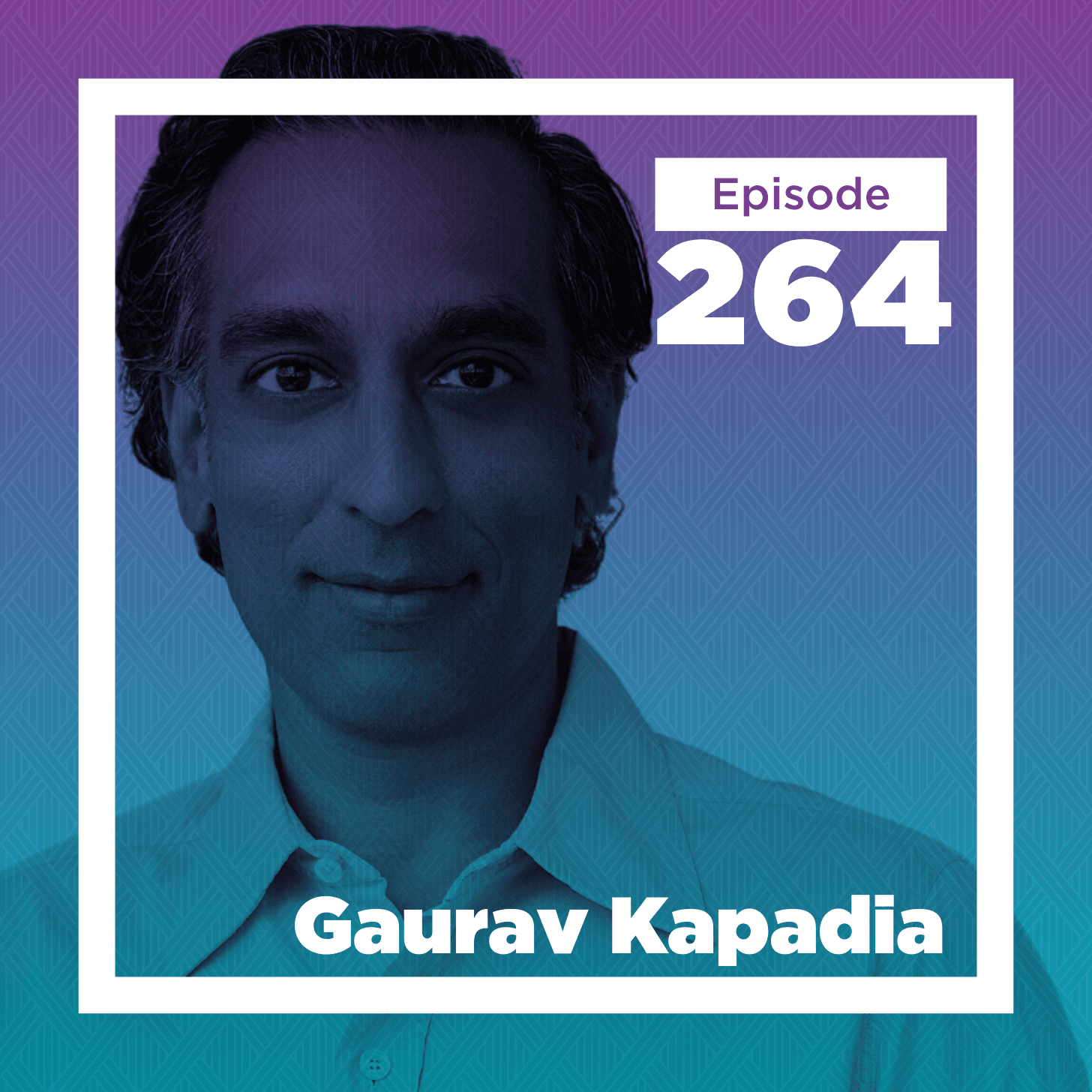
- Guest: Gaurav Kapadia
- Air Date: October 8, 2025
- Episode Summary: Gaurav Kapadia discusses his investment philosophy, urban development in New York City, and insights into contemporary art, marking a rare opportunity to hear from an investor who typically shuns publicity.
Key Themes and Discussions
Early Life and Background
- Flushing, Queens: Gaurav’s upbringing in a two-family home turned four-family home; learned about property management from a young age.
- Judgment and Quality: Gaurav has a unique ability to assess quality across various domains—cities, investments, and art.
Insights on New York City
- Queens' Growth:
- Growth without significant new infrastructure; existing transit like the 7 train supports development.
- Suggests increasing housing density as a solution to improve the borough.
- Urban Planning:
- If made "dictator" of Flushing, Gaurav would focus on increasing housing density, allowing for more development and residents.
- Discusses Robert Moses as both a hero and a villain for his impact on infrastructure and urban development.
- Mayoral Elections:
- Underrated NYC mayors: Mike Bloomberg for long-term initiatives.
- Challenges in attracting high-quality candidates due to perceptions of the electoral landscape in NYC.
Investing Philosophy
- XN Investment Firm: Operates with a focus on concentrated investments in a small number of companies with a long holding period.
- Investment Approach:
- Emphasizes understanding businesses beyond numbers (spreadsheets).
- Avoids sectors where his firm cannot achieve a competitive edge, such as healthcare.
- Mentorship and Development:
- Importance of having mentors and fostering curiosity in young investors.
- Lessons learned from previous experiences, including working at BCG to understand corporate dynamics.
- AI in Investing:
- Anticipates AI will allow for faster, deeper analysis, freeing up time for more qualitative judgments.
- Skepticism towards companies' claims about AI savings.
Contemporary Art and Collecting
- Artistic Choices:
- Collects works primarily from American artists around his age.
- Influences from notable artists such as Kara Walker, Rashid Johnson, and Salman Toor.
- Art as Judgment Exercise:
- Collecting art sharpens judgment and taste, building skills transferable to investing.
- Art should not be viewed solely as an asset class but as a means of exploring cultural and personal connections.
- Museum Operations:
- Critiques on museum fundraising practices; emphasizes the importance of mission over donor interests.
- Advocates for more accessible art displays and community engagement.
New Ventures
- Magazine ‘Totei’:
- A magazine celebrating craft and craftsmanship set to launch in both digital and physical formats, aiming to highlight the value of dedication in various fields.
Final Thoughts
- Optimism in Society: Gaurav expresses a sense of optimism regarding the future of American society despite current challenges, emphasizing innovation and resilience.
- Future Learning Goals: He wishes to better understand the practical aspects of policy-making in local government to effect positive changes.
Timestamps
- 00:00:00 - Intro
- 00:01:32 - Queens and NYC's geography
- 00:08:36 - New York City mayors and electoral politics
- 00:13:22 - Building a career in investing
- 00:18:50 - XN's investment philosophy
- 00:24:35 - Maintaining founder energy in investment firms
- 00:30:45 - The sociology of finance in NYC, London, and UAE
- 00:32:21 - How AI is reshaping investing
- 00:36:53 - Museum operations
- 00:42:21 - Favorite artists
- 00:50:39 - Tastes in art and the evolving canon
- 00:57:22 - Totei, a new venture
Conclusion This episode offers deep insights into Gaurav Kapadia's multifaceted approach to investing, urban development, and contemporary art, revealing his unique perspectives and the thought processes behind his judgments. Through his experiences, Gaurav illustrates the interconnectedness of various domains and the importance of a nuanced understanding in both investment and cultural appreciation.
Written by AI. May contain mistakes. Listen to the episode to check what was said.
Transcript
Automatic transcript. May contain errors.0:03Hi listeners, this is Tyler. Thanks to your support, Conversations with Tyler is celebrating 10 incredible years. We've brought you over 250 conversations with some of the world's sharpest minds, from Margaret Atwood to Steven Pinker to Sam Altman and countless others. Together, we're making the world wiser and more appreciative one episode at a time. But here's the thing. We can't do this without you. Your tax-deductible contribution keeps these conversations coming. New episodes every other week, sometimes more often than that. Full transcripts, live shows, and listener meetups. And to thank you, we've got some amazing donor benefits if you can give before January 1st, 2026.
0:50At$50, get exclusive 10th anniversary swag and a signed message from me. At$250, hear your name on our year-end episode, if you wish. At$750, sponsor a transcript. $1 ,500 gets you into a virtual Ask Me Anything with me. $5 ,000 gets you dinner in the D.C. area with me and other listeners, and I do promise the food will be good. Donate$25 ,000 and you'll get a private one-on-one dinner in the D.C. area with me. Every dollar matters. Please head to the link in the show notes to learn more and make your contribution today. Thank you for listening and for helping to make this podcast possible.
2:05Hello, everyone, and welcome back to Conversations with Tyler. Today, I'm very pleased and honored to be speaking with Gaurav Kapadia. I was introducing Gaurav at another event not too long ago, and I think I said something like, he is the most underrated anonymous person I know of. Or maybe I could have said he is the most anonymous underrated person I know of. He is a New Yorker, has lived here most of his life. He runs an investment firm called XN. I described him recently to someone else as one of our generation's Warren Buffetts. Bakarov has very much shied away from publicity, so we're very happy to have him on our show.
2:46You can think of him as a generational investor, but he does much more than that. He is intricately involved in the affairs of New York City. He is an avid collector of contemporary art. He serves on the boards of trustees of the Mellon Foundation, the Whitney Museum of American Art, the Trust of Governors Island, the Institute for Constitutional Advocacy and Protection, and he's a member of the Council on Foreign Relations. In my introduction to that other event a while back, I think I also said that Gaurav is someone who is unique, that he has this eye for judging quality in a deep sense that he can apply to cities, to hires, to artworks, and also to investments, and that breadth across the board is something quite remarkable about him.
3:32Gaurav, welcome. Well, thank you, Tyler. I am blushing. We're going to get to you, but I always love hearing you talk about New York City because you think so clearly about it and you know so much about it. So you grew up in Flushing, Queens, right? I did. A very simple question I have. As far as I can tell, Queens' GDP has gone up a great amount since you were a kid, but there hasn't been much new infrastructure. And everyone's telling us infrastructure, infrastructure. Like, how has Queens done so well? Well, I think one of the reasons Queens has done pretty well, first of all, it's obviously New York has done very well.
4:04And so one of the very logical outgrowths is people move to the outer boroughs. And so while there's not been a lot of new infrastructure, there has been a pretty decent amount of existing infrastructure. You know, the 7 train is obviously how you get to both the U.S. Open and Shea Stadium, but it's also the train I took to get to school every day. And so around transit hubs, you end up having a lot of development. And so I think, and it's, you know, Flushing is one of the closest outer cities in an outer borough to the center of Manhattan. So that I think is a big part of its success. Let's say we make you dictator of Flushing.
4:41What would you change to make it even better? I haven't been to Flushing as much as I probably should since I left Flushing. But I think one of the most important things you can do everywhere in New York City is build more housing. And I think Flushing, in the periods where it grew very quickly, they added a lot of housing stock via buildings and tearing down old single family homes that were kind of past their prime, that is stalled as it has everywhere. But I think increasing density would be the best thing to do. So those old Archie Bunker style homes, they should mostly be gone and we need to change the laws for that to happen?
5:14Yeah. You know, it's funny. Actually, I grew up in one of those Archie Bunker-ish style homes. So my relation to New York City is pretty unique and pretty chaotic, as I like to say. But my parents, when they moved to America, they decided rather than pay rent, they would what's now called house hack. So they ended up buying a two-family home, very small. They lived in the basement and they rented out the other two apartments. Over time, they turned that two-family home into a four-family home. And as my family gained more and more wealth, we moved up in the floors. And so I think that's like a really interesting thing because you took something that was actually really zoned for two, you know, basically four people, and actually like 15 people were living in it.
5:59So we saw that density firsthand. Now, as someone who grew up in New Jersey, the borders of New York City have never made that much sense to me. So I look at Brooklyn. I think by some measures it might be, what, the fourth largest city in the U.S., if it were alone. I look at Staten Island. It feels like it should belong to us, not to you. I agree, I agree. Like, how would you redo the borders? Well, I think the other thing that's missing is it's kind of an unnatural end from Long Island to Queens. You just, there's no natural borders. Now, on the flip side, I think to some extent, New York City is much more logical than other cities where they just have urban sprawl.
6:33Because you have, in Manhattan, you have the rivers on both sides. And so you have like the five boroughs have a great deal of both identity, but connectivity to one another, which is one of the reasons I think New York is amazing. But let me tell you another hypothesis, and I'm myself often torn. So if you look at the ratio of largest cities in a country to the size of the country, New York is actually remarkably small, given that America is so big. Yeah, is so big. Whether it's New York or L.A., they're both pretty small compared to, say, Vienna as a fraction of Austria or, you know, pick almost any other country.
7:05So should we be aiming for an outcome where New York City is just much bigger to meet this regular relationship? Or are we, like, optimally relatively small? I think the best thing for America would be actually New York is smaller in proportion. Smaller. Smaller in proportion. And give away Brooklyn. Make Brooklyn. Well, I wouldn't say that. I would say maybe strengthen the middle of the country. Creating much more population density, higher GDP across America would serve all of America well. New York's pretty crowded as it is. Robert Moses, hero or villain, or both? Both. And where do you side on the debate?
7:41What margin do you want to push people on? To like them more or like them less? Probably like him less. Why? Look, on one hand, it was a master class in wielding power, of course, power broker. And so there's so much interesting things there. But the lack of due process as we go 50 years later, 100 years later, is starting to show in where infrastructure is built, ability to expand, et cetera. And so from that perspective, I think a balance would have been more appropriate. So more due process? Slightly more. But if we want to make it easier to redo Queens and we have more due process, don't those two things work at odds against each other?
8:20Yeah, they are at odds at one another. I would say, though, having one person decide the taste for the whole city is also probably not the best use of time. So, of course, it's a balance between the two. As you know, one of my big focuses is reducing regulation, reducing administrative burden where it doesn't make sense, but keeping it where it does make sense. And I think, as an example, parks and highways, highway systems, having some thought as to where they go is very logical. Now, sometimes I hear from my right-leaning New York City skeptical friends that the city relies heavily fiscally on some quite small number of taxpayers.
8:57Sometimes the number 200 is cited and that if some fraction of them left, everything would fall apart. Is that true? Not true? So let's take a big step back, right? So New York is amazing to me in many ways because it is the only major city really that I know of in America that's not a company town. Everyone thinks this is their company town. It's the financial elites think it's their company town. Artists think it's their company town. Musicians think it's their company town. Broadway actors think it's their company town. That, I think, is one of the great strengths of New York. Now, as you point out, we do have the highest number of high earners of any city in New York as well.
9:35So obviously, given how high the tax rates are, there's a disproportionate impact on the city's finances as people stay. So I've heard also numbers like 200 and numbers like 400 or 1 ,000 people drive a vast preponderance of revenue. I would say, though, that is actually better than some of these other cities that rely on just one or two people. So New Jersey, obviously, very famously, when David Tepper left, they ended up having a budget shortfall. I think Bentonville would probably have a problem if Walmart left. And so while it is, of course, quite narrow, I think the city has much more of a stable base than people realize.
10:13Who's been the most underrated New York City mayor? Well, Mike Bloomberg by a country mile, because if you look at his popularity, it's actually quite low. But the amount of impact that he's had on the city is extremely high. And so I would say in certain circles, he's extremely highly rated. in popular imagination in New York. He has pretty low ratings, and that always has surprised me. And why is he not more popular? I think people take for granted the long-term initiatives he put in place and assume they would have just shown up anyway. But it took a lot of hard work to get there. Now, I don't intend this as commentary on any particular individual, but what is it that could be done to attract a higher quality of candidate for being mayor of New York?
10:59It's a super important job, right? It's one of the world's greatest cities, arguably the greatest. Why isn't there more talent running after it? You know, it is something that I've thought about a great deal. I think there's a bunch of little things that accumulate. But the main thing that happens in New York City is people automatically assume they can't win. And so because it's such a big and great city. And I think hopefully what actually the last few presidential elections and also the current mayoral election has taught people that anyone could win. And so I think that in and of itself is going to draw more candidates as we go forward.
11:35But what happened as an example this time is people just assumed that one candidate had the race locked up. So a lot of good candidates, even that I know, decided not even to run. And so it turns out that that ended up not being the case at all. And so now that people put that into their mental model, the new Bayesian analysis of that would be like, oh, more people should run. The second thing, New York has a bunch of very peculiar dynamics. It's an off-year election, and the primaries are at very awkward times. And I believe there's a history of why the primary shifted to basically the third week of June, which there's a very low turnout the third week of June in New York City when the private schools are out and an off-year election.
12:15So you're able to win the Democratic nomination and therefore the mayoral election with tens of thousands of votes in a city this big. That is absolutely insane. And so a couple of things that I would probably do would be to make the primary more normal, change the election timing to make it on cycle, an even number year. So you'd have to figure out how to do that. Potentially have an open primary as well. So if we apply the Gaurav Kapadia judgment algorithm to mayoral candidates, what's the non-obvious quality you're looking for? Optimism. Optimism. Optimism. And is it scarce? Extraordinarily scarce.
12:54I think there's much more doomerism everywhere than optimism. And at the end of the day, people are attracted to optimism. And if you think about the machinery of the city and the state, having a clear plan, I mean, of course, you need all the basics, right? You need to be able to govern. It's a very complicated city. There's many constituents. But I think beyond that, you have to have the ability to inspire. And for some reason, almost all of the candidates over the last couple of cycles have really not had that, with the exception of probably one, the ability to inspire. And so I think that is the most underrated quality that one will need.
13:25I have my own answer to this question, but I'm curious to see what you say. What is for you the weirdest part of New York City that you know of that doesn't really feel like it belongs to New York City at all? I actually, it depends on how you embrace and define New York. I embrace it and define it as super weird from time to time. So I think everything belongs. And so I don't have a Bay Ridge doesn't belong or Gowanus doesn't belong or Staten Island doesn't belong in that way. I think it's all part of the same soup. But City Island, to me, it feels like New England. People don't go there. It's sort of formally part of the Bronx, but it's past the Bronx.
14:04It's almost vaguely maritime. I would agree with that. I don't spend a lot of time in City Island. I only went once. But I think that's a totally sensible perspective. I thought I was in New Bedford or something. Right. I can see that. most underrated part of New York City? The most underrated part of New York City is the Bronx. I think people will think about it for Yankees games, you know, outside of the Bronx, but there's a huge cultural identity. There's great cuisine. I think the whole borough of the Bronx is super underrated. A lot of music has come from there, right? For sure. Now we're sitting here at your investment company, XN.
14:39So I have quite a few questions about investing and about you. But just to start, how good an investor were you at age 23? I thought I was way better than I was. And so I think there was, to some extent, so I started my investment career when I was 23 years old. But I have had the passion and DNA of an investor since I was probably 9, 10, 11, 12 years old. I mentioned my parents and I grew up in a two-family house that became a four-family house. I actually became the de facto landlord collecting rent checks, negotiating late payments, all this stuff when I was very early, like 10, 11, 12 years.
15:14With the people renting. With the people renting in the homes. And you really have a great sense of humanity when you are a landlord in Queens in transition. But I also very quickly had both an entrepreneurial instinct and a curiosity and analytical instinct. When I was 23, obviously I didn't know anything, but I thought I knew enough. And so the great thing I had was a combination of hard work and enthusiasm and knowledge, but also mentors who would kind of constrain that quality in me and make sure your channel's in the right way. So you were very wise in picking mentors. That was a big advantage you had?
15:50I think I was very lucky that the mentors picked me. But that's endogenous, right? So the mentors see something in you, and you do something for the mentors to see that. Like, what was your key insight in how to get these very good mentors? I think, one, by nature, I'm an extremely curious person. And that actually attracts a certain type of other person who really likes engaging in curiosity. It happens to, I think, attract great mentorship as well, right? Because if you're deeply engaged and always want to know more and pull the thread, people have a reason to engage with you. And so that is an interesting thing.
16:26I think both on mentors and mentees and peers has been like a significant quality. I have a passion for a lot of things, but especially investing that, you know, really does come through when people spend time with me. It's not like I could have been, you know, a doctoral candidate, a management consultant, like almost like I think it's pretty clear that being an investor is a very logical outcome and people are attracted to that. But you were at Boston Consulting Group for a little while, right? And that was frustrating? Well, I think there's an important reason I was at the Boston Consulting Group, which is probably a lot of people don't know.
17:04I studied finance at Wharton because I knew I wanted to be an investor when I was like 15, right? So then I said, well, what's the best place to go? Best place to go was Wharton. Applied early, went there, and actually had a wide variety of experiences through my college career. I worked at the State Department, actually on economic sanctions policy, of all things. still have my security clearance. I worked at an investment bank. And at the end of that period, I interviewed a bunch of places. And I was lucky enough to get offers from Goldman and Blackstone and BCG. And after thinking about it for a long time, I made a decision that basically no Wharton student would have made at that time was to go work at BCG.
17:41It paid one third the amount of money. But there's a couple of reasons why. One, I had a lot of finance experience through my college career and through my internships. And I realized that I didn't really know how the world worked or how businesses work in any reality. And so I took it as a detour on purpose to learn more about how corporate environments work, how leadership functions, because I thought it would make me a better investor. Now, the funny thing is, I remember this almost like it was yesterday. The Goldman person, I called and said, hey, by the way, I'm gonna go work at Boston Consulting Group.
18:09And he told me at that time, you are making the worst mistake of your career. I hope you remember this phone call, which of course has been ironic. But then the BCG experience worked out incredibly well to some extent. So you learned how things work? I learned how things work. I learned how corporations work, which if you're an investor like me, it's actually a really important thing, right? Because investors have this handicap where they just assume that what's on a spreadsheet is how organizations work. But that's obviously not how organizations work. There's much more complicated dynamics around how to do that.
18:40Now, of course, being a strategy consultant is not the same as being an executive. But it just gave me a slightly different lens, which I believe actually ended up accelerating my competitive advantage early in my investing career. And that's when you met Rishi Sunak? You worked with him? We didn't work together, but I think it's one of these interesting things. So both Rishi and I were analysts roughly the same level at two different firms that were very interesting and long-term focused. Rishi and I became close through that interaction of looking at the same companies. In that case, back in 05, 06, we were both heavily involved in the railroad industry in the first railroad renaissance.
19:16And so we ended up spending so much time at rail yards and meeting the management teams of these companies. And then, as I like to say, he made something of himself. And XN, a few years ago, I think you all reported you had only 21 investments. The number is still close to that now? Yeah. XN is, I think, a phenomenal place and a weird place for that reason. We do two things. We do concentrated public markets investing. Kind of rhymes with what Buffett has done. And then we do, I would say, opportunistic, best-in-class private investing. That's about a third of our capital. On the public side, we rarely have more than 10 or 15 investments because there are very few good ideas.
19:57And so we concentrate capital on that. That has always been a consistent. And there are sectors you won't invest in because you don't understand them? Yeah. Like my goal in everything, and this goes well beyond investing, is to be the best at what we do. There's a few things I just don't think it would be possible for us to be the best at what we do. Healthcare, as a very broad statement, which is actually a huge percentage of global GDP, we basically say there's just no chance in the world that XN is going to be able to be the best healthcare investor in the world because of the combination of regulatory, scientific research that you need.
20:29So we basically just exclude that. At a conceptual level, what makes the sector relatively transparent to you? Where you can use a combination of business analysis, logic, valuation and tie things together in a way that allows you to generate differentiated conclusions than what consensus would be. And so oftentimes, the thing I like to say about our investments is that they're obvious in retrospect. At the time, they're really hard to make. But if you can almost write the narrative in advance and say, in a few years, it'll be very clear that we're going to need a lot more power for data centers or that we're massively short housing stock or things of that nature.
21:12And so when you can do that with certain sectors and certain industries, I think industrials in particular, media in particular, lend themselves really well to that, some areas of technology to be able to kind of, with high fidelity, plot the future. So you invested in Figma pretty early on? Well, not so early on, but we did invest in Figma. But it's gone well, right? What can you relate about your thoughts at the time? So I would say there's lots of different ways to be a good investor. There's, you know, what people like Citadel do, which is very short cycle, very short oriented, which I think is excellent, which is having very high fidelity on short term data points.
21:49There's what great private equity firms do, which is having really good long term signal and financial leverage on kind of LBOs. What we do is a little bit different, I would say. And I think Figma will play a part into it. But honestly, there's so many investments, whether it's General Electric, which has been one of our larger investments over the years, which is basically, can you articulate an extremely good risk reward where the downside is relatively bounded and the upside is potentially unbounded, but you can forecast what that looks like? I think Figma was particularly interesting at the time we made the investment because they had the antitrust authorities that just blocked their acquisition by Adobe.
22:31And so for roughly half the price Adobe was going to pay, with a significant break free on the balance sheet, you got a best in class asset with an extraordinary founder mode leader that was compounding earnings at a very high rate. And that had one foot in the future. And so the asymmetry was very attractive, right? You had a significant net cash balance sheet. You had a very high confidence of what the growth rate was going to be. And you had also confidence in the leadership that they'd be able to navigate a complicated environment. Now, you don't have to name the company. But if you think of a case where you didn't invest, but almost was going new, could you talk us through what leads you at that final moment to pull the plug and say, no, we're not going to do that?
23:10Yeah. And look, by the way, I think the important thing about investing is that there are way more mistakes than wins. And you almost need to be comfortable with that from the outset. Otherwise, you'll never be able to be comfortable with yourself. I think there's two types of errors, right? There's the investments you didn't make that did really well. But oftentimes, they went really well for the wrong reasons. And so you pull the plug because you didn't have confidence in your thesis. But some other thesis shows up, and the stock does extremely well. Honestly, I don't lose one second sleep over those because that was unpredictable, right?
23:43For us, we have to focus on our process. And that process will engender really good outcomes. The mistakes I kind of lose sleep over are where they are more passive decisions than active decisions, where we are really close, but for whatever reason, we decided not to engage on a given topic. And that is something that we're always continuously trying to improve in our process. Because you don't know enough about the topic or the sector. Or we get distracted or things are busy or, you know, there's lots of reasons why. Now, remember, as I mentioned, we only own 10 to 15 public positions at a given time.
24:14We own even fewer private positions at a given time. So the bar is extremely high, right? So if you think about our holding period, plus how few positions we own, we're only adding one or two or three ideas in the corpus every year or so. So we keep a super high bar, which I think is really, really important in investing. But then you can't have FOMO about the things that you missed. We're never going to get everything right. We just have to make sure the things that we get are right. In the tech world, one hears all the time about founder energy or the founder mode. Does that imply to investing companies?
24:47Oh my gosh. So tell us how. Look, I think there's something in the water where people feel investing companies aren't entrepreneurial. I think the best investment organizations are obviously entrepreneurial. And so I think though, because there are such low barriers to entry in investing, there's a lot of mediocre investment organizations that don't have that founder entrepreneurial energy against it. I think one of the things that I try to do every day is to make sure we have that entrepreneurial energy against it. But if you look at all of them, right, Sequoia has a ton of entrepreneurial energy.
Read the full transcript
25:17Andreessen Horowitz has a great deal of entrepreneurial energy. Blackstone has so much entrepreneurial energy. It's actually kind of surprising how commercial and entrepreneurial people are. I think we are somewhat unique, though, in our industry is that we have a maniacal focus on getting better and reinvention and having kind of that founder-led culture of innovation and open-mindedness. And how do you hire to stop your company from becoming too soft or too complacent? Everyone wants smart people. There's a lot of competition in finance, also from the tech world. Yeah, I would say, look, it has to start with the founder.
25:53And so one of the things about many organizations, this could happen to any professional service organization, investment firm or lawyer, is the top gets lazy, right? And so that culture kind of seeps all the way through. So the number one thing you have to do is keep the rope tight. We have this cultural mantra around rigor and kindness. And so we keep that always. And so if I ever slow down, everyone will see it. But the number one thing I do is surround myself with people who will tell me the truth to make sure if I am slowing down, that they will say, hey, you have to remember the commitment we all made to each other and keep that energy high.
26:29But the other thing is, I think too many investment firms select purely by resume and financial modeling skills and GPA. I think obviously that's important. but David Chang has this like amazing. This is the chef, David Chang. The Momofuku David Chang. The Momofuku David Chang. Who's great, right? He's the best. But one of the great things I've learned from David is he has this concept of you have to be good enough and then you have to have something special on top. And so what that means, like the average investment firm will pick someone who has a 4.0 from Wharton or Harvard and then went to Blackstone and then is ready for their next challenge and they'll be fine.
27:09I think what we end up doing is that, of course, we do. But we look for that extra spark, that extra gear, that extra curiosity, that extra ingenuity. And that, by the way, we look for that at every position at the firm, right? So we have a little less than 50 people. Of them, 10 to 12 are investment professionals. The rest are non-investment professionals. They help support the investment process. But the other mistake that a lot of organizations make, in my opinion, is they lower the bar for the non-investment side. We keep the bar high on everyone. So that creates an energy and a culture and a dynamism about what we do that I'm very proud of at XS.
27:44So you have an open plan office here. Yeah. People claim that's bad. I've never been persuaded, but defend an open plan office. Why is it good? I always knew it was going to be good. We've had one forever. I think it's particularly good today and where investing is going. The world is way more interconnected than ever. And very simply, who would have thought of a world five years ago, 10 years ago, where you have to have a conversation about software, power, and semiconductors all together. And so the open plan allows the organization to basically use the Socratic method, talk to one another, create sparks of curiosity that we can pull the thread on.
28:28If we all worked in individual offices, I think you end up with a much more complicated way to analyze companies, much more siloed. And I think we as a firm, but the world at large, is becoming much more connected. And for a brief while, you retired from investing, right? And then you came back. What's that story? I had like an incredibly fortunate early part of my career. So I was a young partner at a place called TPG Axon, which was an incredible hotbed of talent. I think some of the best investment talent I've ever met all worked there. And then we all ended up doing our own things. I started a firm called Sorbonne with a partner.
29:02And then I ended up leaving that firm. I wouldn't say I retired from investing. I retired from managing outside capital. which is a very different thing. This office that we're sitting in today, XN was the name of my family office at the time because I actually loved investing. And I just wasn't sure if we had a path to doing it as successfully as I wanted with outside capital. So for a couple of years, myself and my colleagues here, we managed basically my money with the same philosophy that we run XN in. But that was incredibly satisfying because the spark and the purity of the intellectual challenge of investing kind of came back to me.
29:38To be honest, towards the end of my time at my previous firm, I was less enthusiastic about the process and the excitement of investing than I certainly am today. And so going through that family office process really helped to underscore and bring me back to the joy of investing. Sociologically, how does New York City finance differ from London finance? So you've done things in both worlds, right? There's a feel to it in London. It's different. Yeah, it's a little more buttoned up and much more banker-like than entrepreneurial. And I would say America, I would say New York and California have a little bit more of the, less the banker energy and more the swashbuckling investor energy.
30:22And so even in New York, right, a lot of the history of the finance in New York were like pure swashbucklers. And so you have a little bit of that energy, even though we don't do the same thing at all. I don't do the same thing as Paul Tudor Jones at all. I don't do the same thing as Henry Kravis at all. But taking really big bets, being out there, it kind of seeps into the culture here. Whereas almost in the UK, it's the opposite is true, or had been true when I was there. And how is UAE finance evolving in that regard? I think it's evolving extremely quickly. I think it, of course, started with large sovereign wealth funds.
30:56But now, because of the amount of wealth that's being created, you're having a much high... Well, there's two things that are happening. The very favorable tax regime relative to the UK and European tax regime are attracting non-US citizens in droves to the UAE. Basically, no income tax, no capital gains will do that. We obviously, as Americans, can't do that. And the second thing is there's a tremendous amount of wealth being created in the region. And so you have this influx of talent, and then you have this influx of capital and this maturation of capital. And so, you know, I had never been to the Middle East prior to three or four years ago, and I've been many times since then.
31:31and it changes dramatically every single time I'm there. There is a very high degree of optimism and entrepreneurial energy there now. How does AI affect how you think about investing, companies, sectors? There's a good chance it spreads everywhere, right? How do you take that into account? And I would say Tyler has been like almost my coach in this because he has really encouraged me. I think we're a very modern organization and I'm a pretty modern person, but to really embrace the max case of what AI can do. I'm pretty optimistic as to what AI can do in an investment organization, but going back to, I think you need a lot of entrepreneurial energy to force it through.
32:11SEC regulated investment firms, there's just a ton of detritus within it. And the thing about AI is you have to push forward and push through it. Now, I think there's gonna be a couple of proximate effects. I would say on investing and then running an investment management organization are two different things. The proximate effects, I think, on investing are going to be, it's going to allow better, faster, more in-depth analysis much more quickly. And so, so much of our analyst time is spent on initial evaluations of companies. And so, I expect that in the next very short run, within the next year, to be able to have a lot of leverage from AI.
32:48That allows actually our analyst and myself and other partners here to spend most of our energy applying judgment and taste to the kind of the corpus of facts. And right now, one of the things I always like to say is if Julian Robertson came to my office and opened up my desktop, he would know exactly what to do. It's Bloomberg, it's Excel, it's et cetera. I think that's about to change really dramatically with custom tooling, custom analysis, et cetera. So that's on the investing side. I think one of the other things that is also non-intuitive is a lot goes into running an investment organization.
33:23Legal, the compliance burdens are off the charts, operations, tax, et cetera. I think there's a huge opportunity in making the quality of life and accuracy much better there. So I think there's going to be a twofold impact. But I also think most investment organizations do not have the wherewithal to go through change. But it's because yours is in founder mode that you think they do, hope they do. Yeah. And there's other organizations that are, I think, in founder mode, I think they will as well. Like, I think Thrive will. I think a lot of organizations will that have embraced this. But if you look at the history of our sub-industry within, so public markets investing, some private investing, the general industry pressures encourage you to not innovate.
34:10And so it really takes a lot of effort to innovate. And so founder mode, I think, is going to be really important in that. So there's a headline I read, I think, yesterday. JP Morgan is going to spend some large amount on - Two billion to get two billion savings. Yeah. And when you read that, what do you think? Nothing. Nothing. Yeah. That is a headline. Yeah, I think nothing. I think, first, I will say a couple of things. A lot of people, and this is not JP Morgan, obviously, it's an incredible organization, but a lot of people are in the headline generating business. as we talked prior, we're in the results generating business.
34:42And so in periods of technological change, that separates a great deal. And so there's a lot of headlines I would ignore. I would also say it's like very early. We are way earlier in the evolution of AI. So I'm very skeptical that a lot of companies like financial institutions are spending as much as they claim to be yet, because the use cases and the integrations are still very early in process to do. And what do you use AI for personally? Well, so one of the ways I've historically learned is, so, you know, we go back, I've always been a really curious person about more than just finance, quite a lot of things.
35:18I used to hire tutors. So if I wanted to learn about art, I'd email the art history department of a local university and they'd send me a master's student, I'd pay them, and they'd create a custom curriculum for me. I felt like I didn't know enough about Shakespeare. I did the same thing. I think already using AI as a knowledge augmenter is amazing. So that's how I personally use AI right now. If I want to go in depth in a subject matter, general or specific, it's my first port of call. Now, I have many questions about museums and art, and I know you're on the board of the Whitney, so I'm not asking you about the Whitney because it might be awkward for you to speak about that on the record.
35:59But if I go to most art museums and I see the gift shop and the restaurant, used to be those are always too small. Are we now at the point where those are too large? Or what's your opinion? There will never be a museum gift shop too big for me, is my general opinion. No, I think it varies deeply by institution. But I think one of the things, as an example, MoMA has done via MoMA store outside is they've taken the sensibilities of the museum and brought it to a lot of other places. And I think that's kind of one of the core purposes of a museum. And so, no, first of all, I haven't been to a gift shop or restaurant that's not extremely crowded.
36:38So it seems like they should be. So they still should be larger. What's the most common fundraising mistake that art museums make? So I think it's worthwhile. And when I was looking at the marginal revolution comments, I think people may not understand how museums work and operate. And so one of the ways I think about my schema of the way museums work is that they're public good that's largely financed by private capital. And so almost all museums operate at an operating deficit. And so that's like the number one thing that I think people should realize, which is these amazing cultural institutions all over the world are financed by people who want to bring that more into the world.
37:16It's not a for-profit endeavor. It really is like a part of a public good. Within that, there's obviously fundraising that you need to do. That pressure has gotten way more acute over the last, I would say, pre this administration, but just in general. Inflation has taken a toll. Admissions are a relatively small portion of the operating budget. And so there's going to be more and more pressure on doing a few things, including deaccessioning work. So selling work that are in the collections, raising capital from large donors. I think the biggest mistake a museum could make, especially like a public institution, is to have fundraising override the mission.
37:58To have donors, including donors like me, who I think my judgment is pretty good in these matters, overly influence program, overly influence community. I think that is the biggest mistake that institutions make. And over time, they always regret it. Should museums put more works out on the walls? I see so much blank wall space, and I know it's low status to put pictures on the way to the men's room, but I want them to do it. Should they do it? I think you bring about, I would say, a broader question, which is 1 % of most museums archive is ever on display. I think that personally is a tragedy.
38:33I think there is a huge opportunity in a digital world and an increasing physical world to take more of your work and bring it out to the masses. I think the best museums are working really hard to create interactive things online so you could see and study lots of works. I think what the V &A did, I'm not sure if you're familiar with what the V &A Museum did with their storage in the UK. It's outside of London. They created a beautiful site, a museum unto itself of storage. And I think that's like a brilliant idea. And so should they put more works on the wall above my pay grade? Should the museums be using their very significant archives and collections and bringing more out into the world digitally and physically?
39:15Absolutely. How will AI reshape art museums and the world of art? Putting aside AI-generated images. Yeah, well, actually, in quite a number of ways, I think one of the really interesting use cases that I've seen is allowing any language visitor to have their own personalized in-depth tour of a museum. And so if you just think about, because there's so many museum experiences where you just like go and walk in a circle, because it's like too crowded, you can't engage, you don't know as much about the art or the artist. It's like the captions are too small, all the stuff, right? Or you don't speak the language of the museum or, you know, whatever the case may be.
39:52I think that's going to be like an amazing set of promising instruments, which is you can use AR plus AI to understand the context of work much more broadly. Now about the Whitney, what is the biggest or most important strength of the Whitney that say even people who go might not know about? Their commitment to community. I think one of the mistakes, community access, and really, they're extraordinarily principles driven. Really a big believer in artistic freedom. A really big believer in the museum should be for everybody. Anyone under 25 can show up and go to the museum for free. That's like amazing.
40:32And so I think there's cultural tenets. They have a very specific mission. It's the Whitney Museum of American Art. It's almost all contemporary art. It's very different than the Museum of Modern Art. And so they hew very closely to the mission, but they also hew very closely to the principles. Now we're sitting in a room with a wonderful work by Kara Walker. She's a favorite contemporary artist of mine. How would you articulate what makes this Kara Walker special? There's a lot of Kara Walker that I like, but it's a bit generic. I feel I could see the same thing 200 times. Maybe you do over time.
41:04And some works really stand out. How do you think about why this one is amazing? Yeah, the je ne sais quoi of what makes an art piece stand out in someone's practice is something that I've been trying to refine my engagement of since I've been collecting. I think in this, people can't see the work, but in this particular work, it is so meticulously crafted. It is so clear what the point is. And it is so beautifully put together, even though it's a really complicated subject matter. It's visually arresting. And so I think in this case, that's what works here. What to you is special about the work of Rashid Johnson?
41:42Rashid is a really incredible person. So I know there's a lot of questions about art. Maybe I'd just like clarify a little bit about my approach to art collecting. So one of the things I want to say, to some extent, I want to make sure people understand, I certainly try not to be the cliche of the finance guy who gets into art. I actually fell in love with art before I fell in love with investing. And so I have been collecting since I was broke very early. When I got serious about collecting, I was 29 years old, and I made a really specific decision. The number one thing I identify is as an American, and I wanted to collect American art.
42:18The second thing I did was I wanted to collect artists of my generation. So when I was 29 years old, when I started really collecting, I decided I'm going to have a really specific collection. And that collection is going to be artists my age, 29 at the time, 44 today, plus or minus 20 years. I wasn't collecting any nine-year-olds, but I wanted to keep that criteria going all the way through. Rashid obviously fits really squarely within that. And we've been very lucky to become really good friends over time. But one of the most amazing things about his work is that in addition to being visually arresting, it is so intellectually complex that it stays with you.
42:59It is a portrait of a lot of feelings, a lot of anxiety, a lot of insecurities that I think we all have. And then it kind of keeps coming back to you. And so there's so many things I love about him as an artist and as a person. But I think his ability to take risks and exploit the really uncomfortable, like rise to the top. Because he could talk about someone who could coast where she could just make anxious audience paintings for the rest of his life and live a very comfortable living. he's decided not to do that. Myself and a few of our friends went to see, he put on a production of The Dutchman in a sauna in New York City, right?
43:36He directed a play in an amazing, like, that's a real risk for an artist that's a painter. He's making these really complicated installations. That's also a real risk. He's making movies. So he's pushing his practice. He's making himself uncomfortable. And as a viewer of the art, you also feel a lot of that energy. Does buying art and evaluating art make you a better investor in companies? 100%. In a different way than you think, or maybe I don't know exactly how you think, but here's how I think about it. It does a couple of things. I don't believe in art as an asset class. I never have, never will.
44:09I believe it is ultimately intellectual exercise that exercises the right side of my brain and gives me more context about the world around me. I think investing is ultimately about judgment and developing your own taste. And art collecting or any collecting or any connoisseurship is kind of the same way. So it forces you to really examine what's important, to really examine what makes something outstanding, to not just take somebody else's judgment and taste and apply it to yourself, but to develop your own. And so all of these soft skills that you develop along the way, I think, help in all domains.
44:48Salman Tour, why is he an interesting painter? Salman Tour, for those of you who don't know, there's two articles I'd encourage. There's a New York Times article about his work, and there's a New Yorker article about his work. Salman, I find both interesting in a general manner and a very specific manner as well. I am very drawn to virtuosity and excellence. and I think he is technically one of the most talented painters ever. He's incredible. The second thing is I'm fascinated by his practice. He paints and draws entirely from memory. He does not use a reference image. It's all in his mind's eye and he takes this technical virtuosity and puts it on canvas or wood in a way that's almost like mind-boggling, the level of detail, the level of excellence, the level of precision.
45:35And so it's really refreshing to see someone almost with the technique of an old master's working on a contemporary work. So I think he's extraordinarily talented in a general artistic manner. I would say, for me, it's actually also been really meaningful because Indian American, the first work I saw of Salman Tour, he had a series called The Weary Traveler or The Traveler, which was about basically people who look like me going through TSA post 9-11. And if any of you have traveled to me through TSA, it's not the most pleasant experience or certainly wasn't post 9-11. And so just seeing the feelings that I often felt on a painting were like absolutely crazy to me.
46:14Now, there's something in Jain philosophy that emphasizes the importance of multiple perspectives. Do you think you got any of that from your upbringing? I got a lot of it from, I don't think I got a lot of it, that specific thing from Jainism, but I got a lot of that from my mother. My mother, she's, I guess like now that I think about it, I'm a lot like her, but she would be very interested in being expert in a variety of fields just because she thought it would make her a more complete person. She started as a data scientist. When she retired, she started a jewelry company. You know, from that, she actually moved to China when she was 68 years old.
46:50She moved to a random city in China without telling us and went to art school there. So there's a little bit of that that kind of runs through my, there's a lot of that that runs through my veins. And so maybe she got it from her Janeism and her Jane upbringing, but I think that's where I got it from. And to go back to this finance idea of the trade you didn't make, what's an example of an artist who has a good reputation, who fits the criteria where you collect, but you haven't bought a work from that artist? And how do you think about why you haven't? Mark Grosjean probably fits that criteria, I think, pretty well.
47:22Well, it's just, you know, with art, you have to, in my experience, it's not just buying the criteria. The criteria narrows the funnel. But then you have to say, like, what does it mean? Do I get it? Do I love it? Can I live with it? How do all of these things add up together? And, you know, Mark's work, I know people love it. It just never stuck with me. There's so many other artists that I think are harder for other people. That kind of goes back to one needs to develop their own taste and judgment about whatever the topic is, whether it's investing, whether it's art, whether it's real, whatever the broad topic is, you need to put on clothes that are comfortable for you.
48:05And so for me, I have a very, I've developed a confident sense of what I like and what I'm drawn to, what I love. And so I stick with that. How is the artistic canon going to evolve? So if someone asks you about the 1960s, you say Andy Warhol, Roy Lichtenstein, Frank Stella, and so on and so on. And whether or not we all agree, it's pretty clear there's a list of names from that period. If you think about today and the generation you're collecting from, is the canon just going to stay a mess? Or is there going to be a winnowing where 20 years from now there'll be like 7 to 10 names who stand out above all others?
48:43How's that happening? You know, the funny thing is, first of all, I'm not an art historian, right? No, you're in it. You have skin in the game. I have skin in the game. You really care. But I think if you look at every period, in that period, it was kind of unclear. There's always a winnowing. And so there's always almost like a Cambrian explosion that winnows down into the people that were most important. I think you're actually starting to see it now where, you know, artists more and more, when you separate the commercial aspect of someone's art and the critical aspects, they are kind of coalescing around a smaller group of names than you would have started with 10 or 15 years ago.
49:19I expect that to continue, but honestly, my ability to predict who those names are, I'll have educated guesses, but I'm not going to be perfect at it. But let's say I ask you for one, and it's not that you're saying they're your favorite, right? But most likely to end up in the canon 20, 30 years from now. I think Dana Schutz. I think Dana Schutz is a really important painter, really pushed boundaries, very smart, very cerebral, very talented. I think she's likely to end up in the canon. It's probably underrated today vis-a-vis that. I think Rudolf Stengel is not underrated, but I think is highly likely to be an extremely important artist, as is Christopher Woolf.
49:57So I think you are starting to see more and more of that. I would bet Rashid and Salman, who you referenced, end up there as well. What makes the Rubelle collection amazing? I didn't say it was amazing. the museum in Miami is very good it is very good I would say I and that you know I haven't spent enough time at the new Rubelle but my favorite place that no longer exists in Miami was the Delacruz collection where you can go there and it was both accessible and exciting it was not too intimidating and you know I'm it's such a tragedy that it closed the new branch of the Rubelle. It opened with a great exhibit, and what's in there now is not very good at all.
50:40So I'm, I suppose, bearish on it at the moment. Yeah, I think there's one thing also, there's a lot of bad art. This is not a comment on the Rubelle, but I think any institution that shows a lot of art, there's often a lot of bad art. Do you think there is what you might call an arbitrage in current art markets? Some people say, well, if you love textiles, they're really much cheaper than paintings, and you can get more aesthetic value for the dollar you spend. You may or may not agree, but that's just an example of a claim about an arbitrage in art markets. Some people say drawings. Do you see one?
51:12Some people say old masters. I think Tom Hill famously bought old ancient bronzes to complement his contemporary art collection. The one thing I would just say about the art market right now, we're in a mega reset as a lot of the mediocre works and mediocre galleries exit stage left, and you're left with just higher quality, higher fidelity work. I do think this concept of like, what is the best value is complicated in art because I'm not sure that that should matter. I think in the pursuit of art, if you don't think of it as an asset class, which I view it as an intellectual pursuit, the dollars are less important.
51:55So you're not trying to arb the Dana Schutz drawing versus the Dana Schutz painting, which, you know, theoretically one could do. But maybe you can afford only one of them, right? Yeah. But I think it's also okay if you could afford none of them. And I think if you can appreciate them, which is, I think, obviously the vast majority of people. And so that being said, I do think there's probably a tremendous, this may be controversial, but I think there's a whole amazing group of white male artists that are probably overlooked and their huge values in if you care about that, that I think will be very, very important in art where there is like a lot of value in the contemporary art market.
52:34Now we have some mutual friends and I won't name names, but believe it or not, they somewhat scorn contemporary art. I believe it. Although they're highly, highly intelligent. What is it you think they're missing? How would you articulate that? What I would, you know, it's interesting. I think some of the friends you're talking about and not even the specific people, but if you broaden, are essentially Silicon Valley futurists. And I would say, broadly speaking, they have been, I would say, both disdainful and confused about the attraction of contemporary art. And I would say some of them are even disdainful or confused, especially much younger ones about the role of institutions and cities, as an example.
53:14I'd say a couple of things. One, not everyone needs to like everything, which is like the most important thing, right? I kind of feel everyone does need to like everything, but go on. Yeah, well, you know, I think it's important to channel some creative energy into something that's more meaningful for the person. Now, the interesting thing, of course, you've seen Silicon Valley is a lot of the OG.com founders have found themselves on the very deep end of contemporary art all of a sudden. And so as they have evolved and their lifestyles have evolved, whether I think Jeff Bezos and there's others went from relatively low participation in the art market to extremely significant participation in the art market.
53:51And so maybe it's just an evolution and a point in time. So that is definitely one theory of the case. I think a more accurate theory of the case is I do think that if you look across all culture, over all time, art was an important part of certain aspects of society, but not all aspects of society. And so I think you're just seeing that because you and I live also between two worlds, right? And so we're just get the magnified version of it. You have a new project. It's called Totei, T-O-T-E-I. Tell us about it. So I love craft and craftsmanship. It's one of the things I'm passionate about. And I wanted to, very simply, Totei is a - Totei, sorry.
54:33Totei is a magazine that celebrates craft and craftsmanship. So there's a lot of questions there. Like, A, why do you care about craft and craftsmanship? B, why would you start a magazine in a complete digital age? And I have a few theories that I wanted to exploit and that led to Tote. One is I think while not everyone appreciates contemporary art, almost everyone at a high level that I know appreciates dedication and craft. And I think there's just far less resources in exploring the art of craft, the art of dedication, the art of engagement and getting really good at something in a very broad way.
55:14So I wanted to create a forum to make sure a lot of craft, and that's not necessarily, but it's not necessarily not like quilt making in certain regions. It means stand-up comedy. It means design. It means anything where you put a huge amount of effort to get better, to create a great product at the end. So I was thinking about how to express that. And I had a few ideas, which we were exploring. And I said, you know, we should create a magazine. You should create both a digital and physical version of a celebration of craft. And so that's what we started. And so it's going to be a pretty serious endeavor.
55:48It'll launch in digital format later this year and physical format next year. So late 2025. Yeah. And it will appear regularly or be? The digital piece will appear regularly. The physical piece is probably be two to three times a year. It's a pretty heavy lift to do it. I mean, of course, if you are doing a magazine on craft and craftsmanship, it better be a really good magazine. And so the amount of effort we put into every issue is extremely high. And if someone just Googles T-O-T-E-I by the end of the year, it'll be there for them. Yeah. And you can go to tote.com now, sign up for the early versions of the newsletter.
56:21But I think it's going to be fun. The interesting thing is I put it out into the world. It's super resonant with people, all sorts of people, college students, comedians, artists, investors who take great pride in their craft. My craft is investing. I take great pride in how we do that craft. And everyone feels seen when you put a spotlight on another craftsperson. If we think about the general public, I hear a lot of pessimism about the general American public, even the educated side. Well, people read less or they know less about certain things. if you think of their artistic literacy, whether it's in craftsmanship or contemporary painting or just art museums in general, whatever else might be in New York City, what's your assessment of where we're at?
57:10Is it dire? Is it great? I think you're at a positive inflection point, is my read of the situation, which is there's a shocking amount of aggregate pessimism everywhere right now. I think part of it is still after effects of COVID. Part of it is we have a complicated economic environment where there's haves and have-nots. There's a lot of complexity. It's obviously a really turbulent time in the world. And that all feeds into, I think, some of the pessimism out there. I think there's all that people are reading less. They're in less relationships. There's all of those things. But I think by and large, as I look at it somewhat dispassionately, there's huge reasons for optimism, especially as an American, where while it is complicated, there's a lot of great things happening here.
57:52And the reason I think we're at a positive inflection point is I think some of the ways to make it better versus just complain have started to make its way into the ether. I do think, you know, it's interesting. I was at a conference recently, and there's so much tumorism about AI as an example. But I think like one of the main proximate effects is highly optimistic. Increased knowledge, decrease in, you know, not joyful, et cetera. And so I think we're about to see a series of innovation that drives from pessimism to optimism, or at least say so. Final question. Other than craftsmanship, what is it you hope to learn about next?
58:31It can be a sector, a painter, a part of New York City, anything. Like, what is it you wake up some Sunday morning and it's like, yeah, I got to learn about this? Oh, that's a great question. What will I learn about next? I want to spend a lot more time, this is going to be super nerdy, but digging into how, well, I've done some of it, as you know, but how we can make practical policy, like understanding how the guts of things get done in local and statewide government. and federal government so we can push the ball forward. I think there's actually probably, going back to our Robert Moses conversation, there's probably a lost art of making things work that I want to re-engage in.
59:11So myself as a concerned citizen, others can make things a lot better. And that's probably like a kind of technical, kind of boring thing that you can engage in, but be very excited about. Gaurav Kapadia, thank you very much. Thank you.
59:26Thanks for listening to Conversations with Tyler. You can subscribe to the show on Apple Podcasts, Spotify, or your favorite podcast app. If you like this podcast, please consider giving us a rating and leaving a review. This helps other listeners find the show. On Twitter, I'm at Tyler Cowen, and the show is at Cowen Convos. Until next time, please keep listening and learning. Thank you.
From the publisher
Help us keep the conversations going in 2026. Donate to Conversations with Tyler today.
Gaurav Kapadia has deliberately avoided publicity throughout his career in investing, which makes this conversation a rare window into how he thinks. He now runs XN, a firm built around concentrated bets on a small number of companies with long holding periods. However, his education in judgment began much earlier, in a two-family house in Flushing that his parents converted into a four-family house. It was there where a young Gaurav served as de facto landlord, collecting rent and negotiating late payments at age 10. That grounding now expresses itself across an unusual range of domains: Tyler invited him on the show not just as an investor, but as someone with a rare ability to judge quality in cities, talent, art, and more with equal fluency.
Tyler and Gaurav discuss how Queens has thrived without new infrastructure, what he'd change as "dictator" of Flushing, whether Robert Moses should rise or fall in status, who's the most underrated NYC mayor, what's needed to attract better mayoral candidates, the weirdest place in NYC, why he initially turned down opportunities in investment banking for consulting, bonding with Rishi Sunak over railroads, XN's investment philosophy, maintaining founder energy in investment firms and how he hires to prevent complacency, AI's impact on investing, the differences between New York and London finance, the most common fundraising mistake art museums make, why he collects only American artists within 20 years of his own age, what makes Kara Walker and Rashid Johnson and Salman Toor special, whether buying art makes you a better investor, his new magazine Totei celebrating craft and craftsmanship, and much more.
Read a full transcript enhanced with helpful links, or watch the full video on the new dedicated Conversations with Tyler channel.
Recorded October 8th, 2025.
Other ways to connect
- Follow us on X and Instagram
- Follow Tyler on X
- Follow Gaurav on X
- Sign up for our newsletter
- Join our Discord
- Email us: cowenconvos@mercatus.gmu.edu
- Learn more about Conversations with Tyler and other Mercatus Center podcasts here.
Timestamps
00:00:00 - Intro
00:01:32 - Queens and NYC's geography
00:08:36 - New York City mayors and electoral politics
00:13:22 - Building a career in investing
00:18:50 - XN's investment philosophy
00:24:35 - Maintaining founder energy in investment firms
00:30:45 - The sociology of finance in NYC, London, and UAE
00:32:21 - How AI is reshaping investing
00:36:53 - Museum operations
00:42:21 - Favorite artists
00:50:39 - Tastes in art and how the canon will evolve
00:57:22 - Totei, a new venture