
In short
Podcast Summary: Conversations with Tyler - Episode with Rebecca F. Kuang
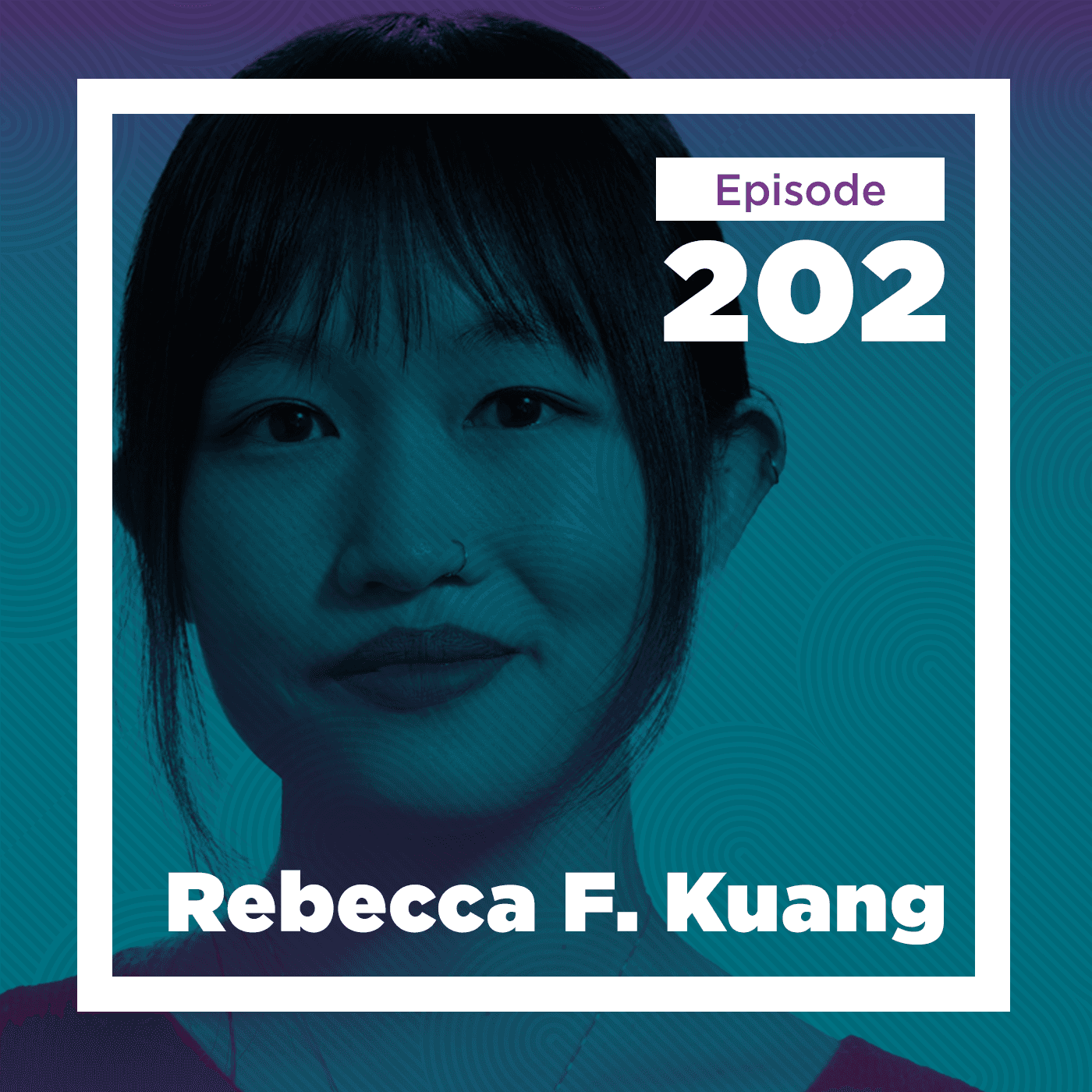
Episode Overview Title: Rebecca F. Kuang on National Literatures, Book Publishing, and History in Fiction Release Date: September 15, 2023 Host: Tyler Cowen Guest: Rebecca F. Kuang, author of *Babel*, *The Poppy War* trilogy, and *Yellowface*
In this episode, Tyler Cowen engages in a deep and richly informative conversation with Rebecca F. Kuang, a rising star in contemporary fantasy and science fiction. Kuang discusses her insights on Chinese literature, her experiences in the publishing industry, and the interplay between history and storytelling.
---
Key Topics Discussed
- Chinese vs. Western Science Fiction
- Resistance to Generalizations: Kuang emphasizes the diversity within both Chinese and Western science fiction, arguing that broad generalizations fail to account for the nuances and variations within each.
- Trans-Pacific Influences: There is a significant cultural exchange and influence between Chinese and Western authors, which complicates the categorization of literature.
- Key Works to Explore: Kuang recommends *Folding Beijing* as a pivotal work for understanding Chinese science fiction.
- Literary Canon and Importance
- Kuang discusses the criteria for what makes a story "important" and reflects on works that she hopes will be read in the future, such as Piranesi by Susanna Clarke.
- Footnotes in Literature: The use of footnotes is a topic of interest, with Kuang mentioning authors like Mark Z. Danielewski and Nabokov who have effectively utilized footnotes.
- Publishing Industry Insights
- Challenges for New Authors: Kuang highlights the struggles of entering the publishing industry, pointing out the need for livable wages and more diverse gatekeepers in the editorial process.
- Changes Desired: If in charge, she would raise entry-level salaries and increase the opportunities for aspiring writers to enter the industry.
- Personal Experiences with Readers and Tours
- Kuang shares her mixed feelings about book tours, indicating that while they can be exhausting, meaningful interactions with readers make it worthwhile.
- Writing Process and Education
- Teaching and Mentorship: Kuang reflects on her experiences with writing instructors who helped her identify problems in her work without imposing solutions.
- Debate Background: She credits her debate experience for her public speaking skills and ability to connect with audiences.
- Historical Context in Writing
- Kuang touches upon the historical events that shape her narratives, specifically mentioning the Treaty of Versailles and its impact on China.
- Cultural Representation in Literature
- The episode explores the representation of non-Chinese characters in Chinese literature and the challenges of cultural translation.
- Future Projects and Aspirations
- Kuang discusses her ongoing academic pursuits and how they intersect with her writing, as well as her future travels and literary explorations.
---
Key Takeaways
- Diversity of Voices: The conversation underscores the importance of recognizing the diversity within national literatures rather than boxing them into stereotypes.
- Importance of Translators: The role of translators in shaping the perception and success of literary works across cultures is emphasized.
- Community Engagement: The impact of reader interactions on authors’ experiences illustrates the reciprocal relationship between writers and their audience.
- Historical Narrative: Kuang's interest in historical contexts enriches her fiction, adding layers to her storytelling.
---
Conclusion Rebecca F. Kuang's insights challenge listeners to think critically about literature's cultural dimensions and the intricacies of the publishing industry. Her passion for storytelling, combined with her academic pursuits, showcases the potential for literature to bridge cultural divides and foster understanding.
For a complete listening experience, you can access the full episode and transcript on the [Conversations with Tyler](https://conversationswithtyler.com/episodes/rebecca-f-kuang/) website.
Written by AI. May contain mistakes. Listen to the episode to check what was said.
Transcript
Automatic transcript. May contain errors.0:00Hey everyone, this is Jeff producer of Conversations with Tyler. I wanted to let you all know about some upcoming events we've got going on with the show. First, we have a live conversation with Tyler podcast recording with Peter Teal in Miami on February 21st. Registration is open, but seats are limited. So click that link in the show notes or go to ConversationWithTilor .com to register for this event. It's our first live show in a while and it's with our very first conversations with Tyler guest. Peter Teal, it's going to be a good one. Next, I'd be seat you to sign up for our email newsletter.
0:35Why? Because you'll be the first to know about our live shows and listener meetups. We announced two listener meetups in New York and San Francisco and the New York one filled up before we could promote it on the podcast. And the San Francisco registration is not yet open. So if you subscribe to the newsletter, you'll be the first to know when registration opens, both for that San Francisco listener meetup and for any events we have in the future. If you missed out on the New York City event, never fear we will be back, but all the more reason to sign up for that newsletter. And if you do make it to any or all of these live shows that would be quite an accomplishment, I look forward to seeing you there along with Tyler and the rest of the CWT team.
1:19So sign up for the newsletter, register for the events, and we'll see you in New York City, Miami, and San Francisco.
1:31Conversations with Tyler is produced by the Mercatus Center at George Mason University, bridging the gap between academic ideas and real world problems. Learn more at mercatis .org. For a full transcript of every conversation, enhanced with helpful links, visit ConversationsWithTyler .com. Hello everyone and welcome back to Conversations with Tyler. Today I'm here with Rebecca Quang, who is a New York Times number one best -selling author with her earlier book, Bobble. Her latest work is Yellow Face, which I loved. Stephen King described it as the following, quote, this is a great read, crime satire, horror, paranoia, questions of cultural appropriation.
2:18Plenty of nasty social media pylons, too. But basically, just a great story. Hard to put down, harder to forget. My friend, Henry Oliver, described it as, quote, immorally entertaining. She also has a fantasy trilogy of the Poppy War, which is not quite a young adult novel, but maybe not a young adult novel, also. And she has master's degrees in Chinese and contemporary Chinese studies from Oxford in Cambridge and is now getting a PhD in East Asian languages and literature from Yale. Rebecca, welcome. Thank you so much for having me. I'm very excited to chat. If you had to describe in general terms how you think Chinese science fiction is different from Western science fiction, how would you explain that to an educated Western reading audience?
3:12I really resist these broad generalizations of national literatures because you always find a lot more diversity within a genre, within a national literature than you do differences between two national literatures, I think. So it's really hard to talk about significant ways in which Chinese science fiction is different from American science fiction because there's no broad quality that you could subscribe to American science fiction either. And there's also a lot more trans -Pacific movement than people realize. There's so much translation going back and forth and authors are mutually influenced by one another.
3:55It's well documented that the Otsashima's heavily influenced by the golden age of Anglophone science fiction like Arthur C. Clark. My fiance is really in 2001 a space Odyssey right now and it's Seacoles and he was a big fan of Lensichin's the three -body problem trilogy, and he's telling me he can see where the Clark influence comes from. So, and somebody who really likes to get into the nitty -gritty right of how literary movements comes to be, and those specific, trans -Pacific, multicultural influences, I hate making claims like, oh, all Chinese fiction is this way when clearly it's not in so many writers within those movements occupy very different social positions, have very different post styles and have different concerns with what they're trying to accomplish in their fiction.
4:43Why is folding Beijing an important short story? I liked it. I thought it was smart. It was critically acclaimed. What is our standard for important? People remember the idea that there's three layers of Beijing that correspond to socio -economic status but have a physical instantiation. There's nothing I know of like that in Western in science fiction? Oh really? When I read folding Beijing, I was amazed. I thought this is incredible. I need to read more Chinese science fiction was my immediate response. If I had to send a person to one place to learn Chinese science fiction, assuming they're not going to read three volumes or three body problem, I'd send them to folding Beijing.
5:25But where would you send them? Someone wants to start. What do you tell them? I mean folding Beijing is a fine place to start. I do really like that story, so I'm not red -roof stirring shock that you call it important. I will say there's also an interesting way in which what is canonical or what is deserving of critical acclaim or what gets the inglifone audience really relies on the role of the translator and the venue and the literary economics of it all right so we We talk about Liu Tsi -Shi and in Hao Jingfang, and their work we can't leave out of a picture can Liu, who is both a critically acclaimed writer of science fiction and fantasy in English and a critically acclaimed translator.
6:10And there's a lot of inks filled on this already, so I'll just direct readers to go look up his work. But I think a lot of this Chinese language science fiction comes to us mediated by what Ken has decided is interesting and it occupies that platform and gains an audience rightfully deserved because Ken has decided to introduce it to the audience. So I'm thinking a lot about the economics of how techs travel and what gets platformed and what doesn't. So without arguing that I don't think that these works are interesting or important or innovative, I think. We also have to consider why is it these authors that have been put in front of us.
6:50Why do you think that is? Well, their work might just be good and can might have found it interesting and worthy of our attention. What's the most surprising thing you've learned about Chinese fantasy literature? It's not one of my objects of study, so I couldn't say. What is it that you think from Western fantasy? In recent times, people will still read 50 or 100 years from now. So clearly Tolkien will last, right? What else will last? I really hope that Susanna Clark -class, I'm a big fan of her work. I hope Piranesi becomes one of those immortal works of fiction. I loved Piranesi, but very few of my friends have read it.
7:31I'm surprised by that. It's also short, as you know. Do you think that Piranesi was a lot less accessible than Jonathan Strangelis? I think it's much more accessible. But there's something about long books that attract a certain kind of person that's quite an extreme minority, but can give something a durable reputation. And Piranasi somehow doesn't attract that person. That's true. I love Piranasi. I like it more than Jonathan Strange. I was very surprised to see that it has gotten such a mixed reception, though. I think Jonathan Strange is more palatable on a genre front. You go in knowing what it's gonna read like, you go in expecting a certain kind of story, but Pyrrhenaceae challenges you and either you're along for the ride or you don't, but to get back to your original question I really hope that stories like that last.
8:21Jonathan Strange is historical and a somewhat expected way, right? That's not what's original about it. Yeah, that's true. In Pyrrhenaceae is doesn't follow an exact template and if you go in thinking that it's going to be like Jonathan Strange and Matt precisely onto some historical metaphor or even have that much of a linear plot than you may be disappointed but if you read to be transported I think into a different frame of mind then you come away delighted and enchanted. Which other authors do you feel use footnote so well other than yourself. Mike Danielisky. You mean House of Leaves? That's right.
9:04I actually haven't finished House of Leaves. My fiance loves it. He thinks it's one of the scariest movies he's ever read, but that's part of why I can't finish it. I always get a third of the way through and then become too frightened. And for my mind's not in a good place, so I put it down, but it's such a massive book that if you put it down, you'll have to start from the beginning to tackle all over again. I felt I was reading a great book but never felt that I wanted to keep on reading and I was not sure if that meant through something wrong with me or something wrong with the book Maybe a little bit of both Has been a book the right time.
9:40How about pal fire? I love pal fire for my birthday this year one of my friends Rodrigo got me the special edition that has the can chose printed on index cards so you can go through the index cards as you're reading the narrative proper or you know the notes of on the poem and once I have a bit of spare time I'm going to sit down and read pale fire the way that perhaps the book of intended with the index cards in hand. There's a very good guide to it by Brian Boyd which if you don't already know I would recommend. Okay. I don't like footnotes in David Foster Wallace. Do you agree or disagree?
10:22I still haven't read any of his novels. I read the essay about cruises and enjoyed that greatly, but I don't have a position on his fiction. Now a lot of your latest yellow face deals with the book trade being a best -selling author. What concretely would you change about publishing in the book trade? If we put you in charge of it, the change has to be broadly sustainable. So it can't be utopian, like every author gets a million dollar advance, but what would you do? You know, nobody has asked me this question in part because it seems so utopian. I think I would increase entry -level wages to make publishing jobs livable in cities like New York and London and I say this because based on conversations with friends who are either part of the HarperCollins Union or folks who are trying to enter the publishing industry and become one of those gatekeepers, one of those people who can decide which manuscripts are valuable, worthy of getting a platform worthy of being put in front of readers, everyone circles back to the same problem that it's nearly an impossible industry to enter unless you have previous connections or more importantly inherited world family wealth, some situation that lifts you live in London or New York without worrying too much about your income because entry level wages are really so atrocious and this trickles up right when we think about the editors, specifically the acquiring editors who are deciding which new talent is worthy of getting a book deal, worthy of being put on bookshelves.
12:06It's unfortunate that the makeup of that room has largely seemed unchanged year after year and there are many reports on industry statistics that back this up. It's a very imaginous group of people who are deciding which books to buy and we want that to change. We want different editors selecting stories, proving them and cultivating them for leaders, then it has to be a livable industry to enter in the first place. So there would be both higher wages and more people looking through the manuscripts. So like higher P and higher Q. So what authors are less? Well, maybe some authors can are less, but this is a related conversation.
12:52It's not just that the amount of the advance is not livable. And I say this for the average book deal, right? Obviously, I'm in a very lucky position now where my advances are sizable. But if you look at the average advance that's paid out and you subtract the agent fee and you subtract taxes, if you're writing a book a year, you probably aren't making enough to live on. And then you think about the schedule according to which an advance is paid out. So you don't get your entire advance upfront. Currently, the advances are divided into, I think they're paid out in fifths now, which means that you get a fifth, say you get a hundred thousand dollar advance.
13:36You might get twenty thousand paid immediately when you sign the contract, which by the way can take months, sometimes over a year to negotiate. I have I've had contracts take over years. You don't get the money right away. And then you get another fifth upon delivering acceptance of the manuscript and that comes at the end of the editorial process. You get another fifth when the book actually comes out on publication date. They get another fifth 12 months and then 18 months after the fact. And this whole process can stretch out over two to three years. So it might seem at the start that 100 ,000 is quite a lot of money.
14:12But if you're realistically making about 30 ,000 a year, then you can't just write and make a living. You have to be doing something else at the same time. What do you enjoy most about going on Book Tour? I just turned in an essay to British Vogue about all the things I hate about going on Book Tour, which is the indignities of travel and worrying about making my flights and worrying about showering and and composing myself before I come downstairs and say hi to booksellers, but I think the thing that makes it all worth it is interactions with the readers, right? I wonder if you feel this way when you do public events.
14:51You can be exhausted, your face can be strained from smiling, you can wish you were in bed, but then somebody comes up to you and has a conversation and you remember why you went on the road in the first place. That's great fun for me. I have relatively few complaints about it, but I also am in a different position than you are and Have another income I can fall back upon and I think whether you do it as a man or do it as a woman. You're also treated differently Especially by your readers That's probably true people have been very kind to me on tour though, so we really don't have too much to complain about what makes for a good writing instructor I should probably have a quick answer to this given that I really enjoy teaching and I hope to teach writing.
15:39You are a writing instructor, right, part time. I am. Yes, I've given lectures on craft, but I think that's a bit different. You can be good at lecturing about craft and you can deliver talks to an audience, but I'm thinking about writing instructors who work with you over the same period of time and read and critique your work. And I've only worked with one of these Jean Cabellas who runs the Odyssey Writing Workshop, which used to be a six -week sci -fi fantasy writing workshop and New Hampshire, but now has become a year long, more accessible model. And I think she was absolutely fantastic.
16:19So I'm just trying to figure out exactly what it was about her approach that I found so effective. and I think one thing is that she recognized that she was very good at isolating the problem, but gave you space to generate the solution. People say this about editors as well, when editors point out flaws in manuscript. They're almost right about the problem. They're a point of data that says, the sentence, this plot twist, this piece of character development and it's not sticking, not resonating. But the solutions they offer aren't necessarily the right ones. And Jean was very good at explaining to you where structurally things had fallen apart and then stepping back and letting you figure out how to fix it.
17:04Because you can't fix it in the voice of somebody who thinks they know their story better than you, you have to find an organic solution that helps you express what you are trying to say all along. So I think that would make for a good writing instructor. or someone who's not too overbearing basically. There's a lot of history in your novels, early on in yellow face, you mentioned, I think the Treaty of Versailles. Was China treated fairly and the Treaty of Versailles? Well, the Chinese certainly didn't think so, and it kicked off a whole lot of domestic protests that led to a lot of people would argue in some sense of national awakening, the development of national consciousness, rally around the flag motivating effect, but certainly the Chinese did not get what they were hoping for from the Treaty of Versailles.
17:57And was Woodrow Wilson at fault? Was it the internally corrupt Chinese warlords who were willing to sign off on all kinds of things and hand rights to the Japanese? How did it all go so wrong? Oh, you'd have to ask a historian that I only know the effect. I thought you were a historian. No, I actually did history as an undergraduate once I realized, well I started off doing international economics and then I came back and realized I only wanted to do history, but then as I did my master's degrees, I realized that in studying history, I was drawn towards narratives and the stories people told about historical events and literary history, much more than I was interested in things like military history.
18:40There was a time when I thought I would become a military historian and obviously I'm not. So now I do literature, I came back and applied to study modern Chinese literature specifically the modern sign of the literature. There's a distinction between sign of the Chinese which really has to do with, are we talking about writers who are writing in Chinese but not necessarily for or from the mainland? And so now I look at the history of literary movements and how historical events are represented but I could not tell you much more about the Trudy of Versailles. Do you know what your dissertation will be on?
19:17I don't, and I think it's good that I don't, because I am in one of my last years of absolute freedom and exploration, which is the year that I study for my qualifying exams, which means that I have about 50 texts that I have to read for three subfields, which is 150 to 180 texts total and this is spread across modern sign of literature, Asian American literature and Asian American history. And the hope is that at the end of all this intensive reading and thinking and drawing connections, I will have solidified the questions that I will write my dissertation on. But right now I'm still mocking around and having fun and and casting about the new ideas.
20:03I did just finish Kua Su's, a floating China men, which is a text that thinks very much about the Trans -Pacific Imagination, who has the authority to talk about China, who do we consider a Chinese expert or an expert on China, and how do those imaginations of foreign countries change over time? And I think those are some of the questions that I gravitate towards and might end up disartating about. China, as you know, has a large population, quite a high rate of literacy. Some of the world's best and most amazing bookstores. But there aren't many Chinese novels known outside of China. And why do you think that is?
20:43Is it a translation problem? Is it cultural differences or large? Or what's your account of that? Like not many people have read Soul Mountain or Mojang, or not that much, right? the way they might have read Rushdie or my foos or other Western writers, but nonetheless from different countries. Well, do you think the dominance of English as a language of literary prestige has anything to do with it? I don't because plenty of people say Readmark has or Vargas Yosa or many other Latin American authors board his most well -read educated say Americans would have read them or people in England. But again, you get into Chinese fiction, or if you look at a classic work dream of red chamber, other than people with some kind of background in China or Chinese studies, I know very few people who've read dream of red chamber, some would say that's the greatest Chinese novel or even the greatest novel of all time.
21:41Is it that the modes of storytelling are different or were too closed or what do you think? I've actually never thought about this comparison. It wouldn't have been my instinct to argue that more educated or literate, anglophone readers would have read Marquez or Borges than they would have the Chinese Nobel laureates. But I don't know, we don't have the data on that or maybe somebody does. I don't have it at hand right now. My instinct though is to make an argument about translation, and global literary prestige and linguistic inequality. And there's a whole host of theory and literature about this.
22:25So none of this is really original argument. And it gets back to a paradigm called world literature, which means a lot of different things. But broadly, when we think about literature is produced in different languages and the movements within those and we compare them on a global stage and look at what's gaining a readership, what isn't, what is moving through translation, what isn't, and in which languages we associate with literary prestige. This is clearly influenced by history geopolitical movements and doesn't just boil down to, oh, our good works being produced, but what roots have been created for those works to travel and what kind of reception have they been anticipated to receive before they even had the opportunity to travel.
23:13So the kind of theories of literary economy and literature I'm thinking of really start with Pascal Casanova's, the world's Republic of Letters, and she makes some good points about the Latin American authors here and how they have traveled in translation and she also brings up the fact that you see a lot of writers from formerly colonized territories becoming her term self -translated men, right? Men who deliberately choose to move into English or to get closer to the literary center of the Anglophone and Cassanova doesn't talk specifically about the Chinese case, but a lot of people employing her framework later do.
23:56So you may also be interested in Julia Lavel's work on China's quest for the Nobel Prize. Why, In fact, it takes so long for any Chinese writer to win a Nobel Prize in literature. And I've quoted a lot of existing literature here, but the point basically is it's not that good works are not being produced in Chinese or that they're being produced in narrative frames or writing styles that are indecipherable or unattractive to anglophone audiences. is I think that kind of cultural determinism is a little bit silly. I do think that there just aren't enough roots of translation and roots through the market so that the average Anglephone reader either hears about these works or has access to them from a publisher that's poor to significant amount of marketing money into them.
24:48I do think that most of the readers I know who are curious about reading outside of English have heard of Moyen and have heard of Galafingian and the dream of the Red Chamber, but maybe my circle of acquaintances is much more China focused than the average circle. I think people have heard of them, but actually read them compared to say PAMUK. It seems to me obviously many fewer readers when it comes to the Chinese works. And PAMUK is from Turkey, Islamic background. It's not obviously something that would take off in the United States. But I would think, you know, the ratio of people who've read Pa Mook to any Chinese writer would be at least five to one.
25:31It's the people I've known. Why do you think the three -body problem took off the way it did? Well, it is very good, right? But I think the hardness of the science fiction in volumes two and three is immediately recognizable. Even to people who were not science fiction fans, but have seen a lot of cinema, I am I'm surprised volume one did so well. It's my favorite of the three volumes, but it's maybe the most Chinese. The narrative is not too an American, I extremely linear. It can be confusing. And that people ever got - You have to ask you to be specific on what you mean when you say the narrative is the most Chinese.
26:10I'm just curious. It could be the translation, right? It's all I'm reading it in English. But volume, maybe two in particular, but both two and three, there's something very the Arthur C. Clarke about them, as you mentioned. And volume one is the kind of uncovering of a lot of different strands of the story, and a lot of mysteries at the beginning. And it becomes clear by the end, but you can start the book, read the first half, and then feel the need to reread the first half again to understand what's going on. Not true of volumes two and three. Would be my sense. Now if it were somehow only volumes two and three, I would obviously expect it to be popular, but I'm surprised volume one was not more of an obstacle.
26:50I had only read volume one for a while and then I read volumes two and three later on after became more of a global phenomena and I really loved volume one. I think it's my favorite, yeah. The aliens plot twist was spoiled for me very early on so I went in knowing who the tricelareans were and what everything was gearing up to ward so I wasn't confused. is for the first hundred pages, but I've heard from other people that you're actually not supposed to know that they're aliens and it's supposed to be a great shock when you find out. Are you reading these in Chinese or in English? Both and I was going to ask you which of the translations was your favorite?
27:33I didn't know there was more than one so I'm pretty sure I read the one you see in all the bookstores. Oh sure there is a single official translation for each one of them, but there are different translators for the novel. Oh yeah. Without revealing who translated what, which translations did you like the best? Obviously I can't compare to the originals. Two strikes me as oversimplified, but the original might be as well. So I prefer one. It seemed closer to the original. That's quite subjective from a great distance point of view. What do you think? So one and three are by Ken Liu and two is by Joel Martin -Syd, who since done several of Lissitian's other works.
28:15And I like all of them. I think I have a slight preference for Ken's literary style. And it might be because he's also quite an accomplished writer of his original fiction. I do not like the prose in Chinese. Or I guess I wouldn't say I actively dislike it. I just find it incredibly utilitarian. He's clearly more interested in the ideas than he is in writing very beautiful. elegant descriptive sentences. I think this comes through especially in his character work. I mean, you must have had this... Oh, well, let me ask you, what do you make of the non -Chinese characters and how they're represented?
28:55Well, I get a kick out of it. So, I enjoy it, but I think I enjoy it because it's not entirely accurate. It's a Chinese view of how western establishment people ought to be running around and talking to each other. So for me that's fantastic. I thought it was entertaining as well. I guess the point I was going to make is that he uses shorthand and cardboard caricatures of characters much more than he's really interested in the interiority of much of his secondary cast and I think this is related to his prose being very simple and unadorned and really just interested in the science ideas. And I think Ken's done a very good job with this simple prose and rendering it elegant without significantly distorting the voice or adding a kind of lyricism that wasn't there to begin with.
Read the full transcript
29:48Have you seen the Chinese series? I think it is for television. No, people have told me it's boring. It is now on YouTube with subtitles, which is not how I would prefer to watch it. There's a Netflix -Americanized version of it coming, which I fear for, and probably won't watch, but I'll look out for the reviews. What is it you do to follow what's new and coming out in China that's interesting to you? This is actually something I need to figure out because I am scaling back significantly from all social media and following people whose opinions I respect and seeing what's trending used to be my way of following not just what's coming out in China but what's going on all over the world.
30:36And I know that longer fine Twitter is a very interesting place to be. I've recently read a lot of literature about how it would help us if we slowed down. I don't know, there's this term, slow news that I really can't define for you. but boils down to being much more careful about the ideas that we're ingesting and turning them over and reading thorough comprehensive coverage than quick takes. But I have yet to figure out exactly what those sources should be. I'll take recommendations if you have them. No, I have zero. I mean, I count on people like you. Maybe you tweet something or it's in one of your talks, one of your interviews, but I have no sources anymore and I don't go to China anymore.
31:16I'm afraid too, frankly. Well, you see my great advantages that I have Chinese family members, and I also have Chinese classmates and colleagues at a department that focuses specifically on these topics. So I can just wander into a department talk or ask people what they're researching, but I would like to find some new sources and newsletters and podcasts that aren't just the hottest underdeveloped new take on Twitter, but that's the work in progress for me. What surprised you most about your recent Taiwan trip? Hmm. This is a great question because a lot of things were delightful and new and interesting, but I'm trying to sort through preconceptions about what life would be like and if any of those was proven false in a really significant way.
32:09This is hard because I'd previously been to Taiwan in 2017, I don't have to say. So I knew a bit about what I was going to get into. It surprises me each time how retro it feels. That's what I would say. So the first time I went there, I think, was 1988 or 89. And if I go more recently, of course it's different, but it's not nearly as different as I would expect. It's not different in the way that either, say, South Korea or even Thailand would be different. It looks to me early 1990s somehow and that it hasn't, it has changed an enormous amount. But in terms of the externals, I'm always surprised how little it's changed.
32:58Well, I can't compare with the 80s and 90s, so I couldn't say. I will say one thing that comes up with in conversations with all my friends in Boston for asking, oh, what's Taipei like is that the public transportation is just so vastly superior to most public transportation in the US. I mean the Jowing System comes regularly, frequently, there's a little sign that tells you at five second intervals how long until the next train, people line up, they queue to get on the train. There's actually little lines drawn on the platform so that people politely wait their turn, people don't eat or drink.
33:41Oh, I, yeah, actually, okay, here's my answer from what surprised me the most. I knew there were rules about no eating or drinking on the subway, but I thought this was just things that could have an odor right or could possibly make a mess. So we were on the red line headed to Beto and the old lady across from me. So I take a sip of water and she says you can't do that. And I'm stunned, first of all, that she's talking to me, but also that you can't even drink water on the subway. But apparently this is a rule. And supposedly most people are lax about it, and not everybody will get it falling.
34:16Your grill, like that old lady that didn't but that road did surprise me. I'm not sure what the reasoning is. It surprises me how Japanese, a lot of Taiwanese infrastructure feels, including the subway, the way the electric lines are laid out the way many of the streets or corners or intersections look and feel. It's more Japanese in origin than I would have ever thought until I went. Would you prefer the food in Taipei or Beijing if you had to choose? I haven't lived in Beijing since 2015 so I couldn't say I do think the food in Taipei was incredible and I miss it every day. I very much like Western Chinese food and Sichuan and Yunnan and those to me are better represented in Beijing may have changed since I've been there but I don't think it has if anything there's probably more of it so I would vote for Beijing.
35:11It's the one place in China where you can get food from almost all other parts of China. Maybe. I do remember eating very well when I was in Beijing but I was especially delighted delighted with the soybean pudding and Taipei because that's a little difficult to get here in the state. So you're called that even at the local dim sum restaurant you could only get it on Sundays at specific hours and Taipei it's everywhere and it's so inexpensive and there were weeks where I had a progress every single day and it was marvelous. Going back to the distant past, what is it about the 1830s in Victorian England that you find so interesting?
35:51Everyone has such a preference for the late 19th century when we think about the Victorian era and contemporary film and novels that are set in the Victorian era. They're all post -the -industrial revolution. They're post -ickens. They're post -the inventions of all sorts of technologies that linger in our imagination as the steampunk Victorian era aesthetic. So when I was drafting Babel and doing some research into what technology's existed, what my character's life sort of been like, I was at first disappointed to find that I couldn't rely on shows like Penny Dread for, right, things said in the late 19th century because a lot of that stuff had not been invented yet and the reason why is because the Industrial revolutions really kicking off in the early half of the 20th century.
36:47And as I sat with that for a while, I realized I should not be so disappointed to be on the early end of the Victorians, but rather that this too is an era of incredible change and also the start of incredible social inequality. And this is when the movements that later, disraeli and gate skill and Dickens were describing, meaning this is the seed of all that tremendous social change. Why do you think that British imperialism worked so much better in Singapore and Hong Kong than most of the rest of the world? What do you mean by work so much better? Well, Singapore today per capita. It's a richer nation than the United States.
37:29So it's hard to think, well, I'd rather go back and redo that whole history. If you're a Singaporean today, I think most of them would say, well, we'll take what we got. But it was far from perfect along the way, but it worked out very well for us. People in Sierra Leone would not say the same thing, right? Hong Kong did much better under Britain than it had done under China, and now that it's back in the hands of China, it seems to be doing worse again. So it seems Hong Kong was better off under imperialism. It's true that there is a lot of contemporary nostalgia for the colonial era and that would take hours and hours to unpack.
38:10I guess I would say two things. The first is that I am very hesitant to make arguments about historical counterfactual such as, oh, if it were not for the British Empire, Wood Singham Port have the economy does today or would Hong Kong have the culture it does today because we don't really know, but also I think these broad comparisons of colonial history are very hard to do as well because the methods of extraction and the pervasiveness and techniques of colonial rule were also different from place to place. So it feels like a kind of useless comparison to say, oh why has Hong Kong prospered under British well -well India, hasn't, et cetera.
38:55But it seems if anywhere we know it's Hong Kong, you can look at Guangzhou. It's a fairly close comparator. Until very recently, Hong Kong was much, much richer than Guangzhou. And without the British, it would be reasonable to assume living standards in Hong Kong would have been about those of the rest of southern China, right? It would be weird to think it would be some extreme outlier. not not others of those happened in the rest of China. Isn't that close to a natural experiment? Not a controlled experiment, but a pretty clear comparison? Maybe. Again, I'm not a historian, so I don't have a lot to say about this.
39:33I just think it's pretty tricky to argue that places prosper solely due to British presence when, you know, without the British there are lots of alternate ways. things could have gone and we just don't know. Your book Yellow Face, quite a bit of the plot revolves around what one might call a co -authored novel. Why are there not more co -authored novels? There's plenty of co -authored works in scholarship, right? Often to the benefit of the work. Certainly, movies television by their nature are co -authored. A lot of great music, most great music is done in groups, right? rather than, oh, just Bob Dylan, though he's wonderful.
40:16What is it about fiction that makes co -authorship so difficult? Perhaps just that writers aren't possible to work with, and we'll become possessive and act like divas about their creative territory. But, well, I don't play in a band, so I don't know if writing music as part of a group is different in that everyone has their designated roles, like the vocalist focuses on the vocals, the guitarist focuses on the guitar, et cetera. Maybe watching that Beatles document you would help with this, actually. But the problem with co -writing a book is that it's really hard to designate who's in charge of what when all the pieces are constantly in flux and at least my writing process means that anything can change it, any given moment, a sentence that I really like and act three, you might mean that I go back and change any number of things about act one.
41:13And first of all, logistically, that just makes it a nightmare for the other person to keep announcing that you've changed your mind about the direction of the book. But unless you're writing a book such as, for instance, this is how you lose the time war, which is told in a pistol -air format where the two co -authors just wrote the two different perspectives of the two main characters. Aside from cases where the narrative chunks are very clearly delineated, I think it becomes almost impossible to merge your voices into an organic hole while taking into account the multiple changes and creative differences that are going to crop up along the way.
41:56I mean, I'm so territorial and personicity about my work that I refuse to show or readjust to anybody until there's a fairly clean initial version that we can then hack apart and make edits to, but if somebody asks me to co -write a novel with somebody else, I mean only one of us would be alive at the end of the process. But you could appoint a dictator, right? Someone in charge have that settled by contract. One of you pays the other, some share of the royalties, and you could have the final word. So I've co -authored plenty of things, never fiction, not deliberately fiction at least, and they've all worked out great, in fact.
42:35I'm sure that it's much easier to do with nonfiction, and I also can only speak for my own relationship to writing. I'm sure there are lots of other authors who would happily work with co -authors, but it is such an intimate process that involves a deep understanding of every character and also deep understanding of yourself, I think that I become a different person with each novel I write and everything is a bit like therapy in a sense. Not that I'm exactly chronicling my emotional journeys, but they have to do with what's troubling me at the time and what questions are acutely bothering me and to split this psychological burden across two people would mean that not only do we have to clarify our relationships to the text, but we'd also have to clarify our relationships to each other.
43:26So yeah, we would end up killing each other or getting married, I think. And I'm already getting married, so that's not interesting to me. Another theme in yellow face. Why is it that the internet brings out the mean side of people so much? Why do you think this is the case? I've thought about it a long time. I don't feel I understand it very well, But it could be that we're naturally somewhat mean and judgmental. And there's something softening about face -to -face contact. But it's the absence of the face -to -face contact that matters, not because it's the internet. That's the closest I've come to an answer.
44:08That our internet selves are not so far from our real selves. And the other is an adjustment that we're used to making to live in civilized society. I think that's right. There is the protection of anonymity. If you're just a string of letters, you can spew whatever you want and not deal with the consequences the same way you would if you were sitting next to somebody in real life. I think another complicating factor is that the internet is so distracting and it doesn't encourage us to think in nuance or to slow down or consider multiple sides of a problem. It is an immense amount of stimulation all at once that it rewards quick, easy, reductive judgments.
45:00I mean this is how many tweets go viral, right? They're very funny but they also use a shorthand to capture some kind of emotion or quick judgment statement about a problem and usually it's problems that resist and are very vulnerable to these quick judgment statements. And when you look at everything in binary reductive terms, then of course, tribalism becomes a threat and it's easy to devolve into the easiest, coolest judgments about others rather than considering that even people you disagree deeply with might have a point. From one of your short stories, Star Wars, the Empire strikes back.
45:45Why don't Imperial Walkers have a lower center of gravity? I don't know. You have to ask their engineers. I understand almost nothing about the manufacture of spaceships. They have these long spindly legs, right? And they fire these very weak charges. And presumably they're shooting at things on the ground, right? so they don't need to be up that high if anything that makes the charge as weaker. I don't know. I just think it looks really fun on screen. I think there's something to be said for spaceships or alien craft that resemble animals to us because it's an easy pattern that we can fit them to in terms of how they move and how we assess them as threats.
46:30And also importantly, it gives an easy solution for low -tech rebels to attack. Some questions about your own history. How do you feel it influenced you to grow up in Dallas? Well, for a long time, I had a bit of a southern twang in my English and my parents were very tickled by this. Well, first I had a pretty obvious Chinese accent and then as I spent more time in American public schools, I lost that and developed quite a text and accent. And they thought it was the funniest thing in the world. So sometimes they would have dinner parties and invite your Chinese American friends and they would ask my sister and I to come downstairs and recite a Pledge of Allegiance of the most exaggerated text and accent we could.
47:20And everyone thought it was great fun. So there's some deeper point here about identity and accents and linguistic play, but that's just the first thing that comes to mind. How is it you think that doing so much debate influenced your writing? I am still friends with a lot of debate coaches, a lot of the folks who I competed against or was on a debate team with, they still work in debate education and they coach debates. So we actually have a lot of conversations about how we think it benefits high schools, is how it trains us to think what debate is good for and also what debate is not good for.
47:59I think there are two main benefits I took from debate. The first is that I've never been afraid of public speaking, at least not since ninth grade, and this is a tremendous advantage, especially if you're being sent out on BookTor. It is really good not to get stage fright before you step about in front of hundreds of people. And the second thing I took away from debate is this kind of electric sense of knowing when you've connected with an audience, because especially in the final speeches, right? When you have to tie everything together and you only have three minutes to make all your most important points.
48:38And especially later on in a tournament where the rooms might be packed with spectators, you have this spidey sense of when a sentence you've just uttered resonates with the crowd. You can feel the crowd's energy. You know exactly what to say that we'll get people on your side who know how to phrase things and then most concise and affectively compelling way, which is not to say I'm always very good at this, but I always knew when I had done it successfully. And I think that translates into writing compelling fiction because you know when you're boring the audience. You know when you've gone on too long about a tangent that nobody really cares about.
49:17You have that ticking clock in the back of your head and you know you've got to come around and get right to the point, the core, the center, the electric sentience that the reader is really there for. And I don't strike that chord all the time, but I know when I have, and I think debate has been very valuable in inculcating that instinct. But there are, well you didn't ask this, but I think there are lots of things that debate is not good for. What is that not good for? Well, you simply can't affirm or negate most of the resolutions that high school debaters are asked to talk about. And I think to be encourages thinking about these statements in terms of the truth and in terms of who's right or wrong rather than what are all the sides of the statement and how can we sift through all the voices and conversations going on to arrive at a compromise that benefits the most people.
50:14And since the point of debate is to win, right, you are naturally not thinking about, well, what are the things my opponent is right about? This is not a good instinct to take into college. It will make you the asshole and discussion seminars if you are only concerned with being right and getting the crowd on your side rather than seeking the truth, and especially not good for public office, I think it's devastating actually when we have public figures who are more interested in putting each other down and proving that they've done more research, they're more clever, they have equipping your terms of phrase rather than pursuing some kind of collaborative search for the truth.
50:57You once said that your writing is inspired by place and a sense of place. What does that mean? Oh, that's really simple. I just end up writing stories about where I am, what I'm eating, what I'm looking at, or I'm walking, what language I'm living in, what stories I'm hearing, and I think all right, those are inspired by where they are. So when I was writing the popular trilogy, or at least when I started, I was living in Beijing. Then when I started writing Babel, I was at Oxford when I wrote yellow face this was doing mid -2021 so we were all at home and largely existing on the internet which was the worst place to be and now I'm writing a book.
51:41That is normally set in hell but psychologically set in a PhD program. Rates of depression amongst graduate students, they measure as being very high today in the United States and also I think in England. Why use that? It feels like it should be this wonderful time in one's life. You get to work with ideas. There's some chance you're not pressured to earn money. Not true for everyone, but for many people. And yet rates of serious depression can be 25 % or higher. I mean, you're in graduate school now. How do you think about what's going on there? Do you work with graduate students now? all the time, absolutely.
52:22And I don't feel it's true of the ones I have contact with. But when I meet others, I hear about it plenty and other institutions. To me, my own institution feels very high morale for whatever reasons. Do you have a guess about why your students might be different? I think they have somehow a greater sense of purpose of using economics to improve the world. and less a sense of, well, I need to write this 90 -page paper and make it perfect or no one will give me a job. And missing out on some of that latter form of social anxiety is in some ways bad for them, but it keeps them happier and actually fairly productive.
53:02So I think sense of mission is the difference. That's interesting. I am tempted to agree with you that grad school should be the happiest time of your life, and that really grad students don't have all that much to complain about because when you think about the setup, you're being paid to just read and talk and research about the questions that are the most interesting questions to you in the world. That's why you would have entered the fields and there are very few obligations other than teaching. And again, teaching should be a great pleasure because you get to enter the classroom and talk about that, which is most interesting to you.
53:43That being said, there are a lot of reasons why grad students I know today are deeply depressed and pessimistic about their future prospects and the first is that the job market is awful. I mostly know humanities students, right? People who study English literature or comparative literature or philosophy or American studies, etc. And I'm curious if you disagree This might be one difference between the grad students I know and economists, which is that if they don't get a job in which they're able to teach and research those subjects, then there aren't a lot of other All academia prospects where they can put those skills to good use.
54:27I mean I can think of vanishingly few tenure track jobs in English and even fewer industry jobs that value the ability to critically read. I don't know, Jane Austen, right? So maybe that's part of it, knowing that they are spending their 20s in a field that will not reward them and means that they probably will have to start completely over in a different career once they've graduated. I agree that's a difference. Let's say one thinks about you and writing. So I've never counted the number of pages you've written, but it's a pretty high number, right? And I know plenty of other graduate students, they have trouble writing anything at all.
55:08That's not you. So what's the thing in you that makes you so extreme and different from a lot of other people who have trouble writing? Well, for me it's a compulsion. So if I'm not writing, then I don't feel right. I feel extremely unsatisfied. I am the kind of person who's really bad at being on holiday. And if I go on holiday that it must be a productive holiday, the kind where I am up and walking and roaming the city from sunrise to sunset and absolutely exhausting myself because I do very badly at sitting around and twiddling my thumbs and I think there is a great pleasure in creation and playing around with words and figuring out how not just to express myself but to summarize is strains of history or retell myths or anecdotes that I've heard in the past.
56:08And this is just such an ongoing compulsion that if I stop then that doesn't feel like rest or a default to normal, the normal state is writing. And I think I'm just built like this and it's not a productivity hacks and people really want to write. And other people have other hobbies and passions and things that are pleasurable to them. I tell people who want to write, they should try to write every single day without exception. They don't all like hearing that and obviously it's not how every writer works but it's a good initial test to see whether you really want to be a writer. You're writing side which has been very successful.
56:51You're scholarly study side. How do those two asymptote together into something that you will keep on doing? Thank you. Have a take on that. This is an ongoing problem for me because... Is it a problem though? Sorry to interrupt. It's something that I'm trying to figure out. There doesn't seem to be a lot of value in having published five, six novels on the job market in the fields that I would like to get hired in. So there seems to be a significant trade -off between focusing on my fiction career and doing well in my studies. I'm also at a period in my studies where it's sink or swim, either I commit now or I don't, because you can kind of muddle through and undergraduate degree while having your soul focused elsewhere.
57:46And I think this is even true for master's degrees in the first few years of the PhD program. but reading for your qualifying exams and writing a dissertation, I think involves the all -encompassing focus that I'm used to bringing to my manuscripts and they demand that I'm thinking about those problems every second of every day. At the same time, I'm on contract for at least three new books at the moment, so this makes scheduling very difficult and the only way I've been able to strike some kind of balances in between is to become a devotee of Cal Newport. I don't know if you've had Cal Newport on the podcast.
58:25No, but I know him. I know he's worked. I recently read digital minimalism because I was fed up with social media. I found it very compelling and then I read deep work too. And I know lots of people have strong feelings going about all those books. I think I'm the kind of person who that advice is very helpful for the kind of extremist approach to deep work And this is just what I do now. I have gotten pretty strict about whose emails I answer when I answer emails Who I make time for and who I don't so that I'm able to spend the most productive and focused hours of my day Which is from 9 to 12 in the morning writing fiction and then as the hours trickle on after that of my brain becomes more and more tired.
59:10I shift to tasks that are less and less engaging until by the end of the day. I'm just firing off. Yes, thank you. Sounds good in my inbox. We have the same most productive hours to do the moment also. Do you at all worry if your writing is inspired by a sense of place and you stop moving around a lot which might happen in your life that you'll asymptote into a single style of writing or that's something you would welcome. Because all your books are in quite different styles, genres. Some of them you couldn't easily categorize, right? Will you ask some tote or does it become a big thing moving outwards in all directions at once?
59:50This is not a worry for me because I never intend to settle in one place. I like the sense of adventure too much. And even if I'm based for nine months of the year at some academic institution that still leaves the summer to explore and learn and think in new languages. I very much make it a priority to have the flexibility to pick up everything and move to a different city at any stage in my life. And this is what I've structured a lot of my life around having that ability to learn and become a new person and shed my skin every few years. So this is not to worry to me because it is the thing that I've made all my decisions to allow me to do.
1:00:34Ask two questions and they're related. First, if you could be a tourist of sorts going back into the past, you spend six months in a time and place of your choosing. You automatically know the language. You have whatever immunological protections you might need. Where do you spend that six months? I am fascinated by the Cold War psyche and this might be because we're reading Watchmen right now, which is a comic book that I'd slept on for many years and I hadn't realized what a Cold War work of fiction it was, but I was born in 96, right? So I know from that period is mediated through film and from novels and it's just such an extraordinary mindset to think that any moment now the whole world might go extinct to be told at school that if you duck under your desk you might survive a nuclear blast and I would really like to just walk around and talk to people to understand how people felt and how people were living.
1:01:40Some of that you can still pick up by talking to older people now of course you can't live in it but it's not completely gone. Yeah, that's true. And last question, you get to spend six months in the future somewhere now. Imagine you're relieved from your, you finished up at Yale, done whatever, and you can pick six months and live there somewhere you haven't lived yet. Where do you pick and why? The next place, so to speak, unconstrained. Well, I'd like to go somewhere really speak Chinese, because I don't spend enough time living in Chinese and when I was in Taipei this past summer and living it in it for most hours during the day, I felt that pathways were being unlocked in my brain and my ability to read and an interpret text was improving by huge margins but I've already lived in Taipei so I can't say that I might just go on a backpacking trip for six months across all of the cities and villages in Taiwan that I haven't been to.
1:02:46And I've only been to Taipei. I haven't been to Tai Nargosham or any of the other major regions. So it's a bit of a cheating answer, but these are very new places for me. So that's what I would want to do. And also something that is a realistic journey for me in the near future. The rest of the country is very different from Taipei. I think at least the parts I've been to. Anyway, Rebecca, Becca, thank you very much. Her new book loved it yellow face. Out this year and she tells us over time, there will be at least three more books coming. I'm sure many more. Thank you. Thank you so much. Thanks for listening to Conversations with Tyler.
1:03:26You can subscribe to the show on Apple Podcasts, Spotify, or your favorite podcast app. If you like this podcast, please consider giving us a rating and leaving a review. This helps other listeners find the show. on Twitter, I'm Attyler Cowan and the show is At Cowan Convuse. Until next time, please keep listening and learning.
From the publisher
Rebecca F. Kuang just might change the way you think about fantasy and science fiction. Known for her best-selling books Babel and The Poppy War trilogy, Kuang combines a unique blend of historical richness and imaginative storytelling. At just 27, she’s already published five novels, and her compulsion to write has not abated even as she's pursued advanced degrees at Oxford, Cambridge, and now Yale. Her latest book, Yellowface, was one of Tyler’s favorites in 2023.
She sat down with Tyler to discuss Chinese science-fiction, which work of fantasy she hopes will still be read in fifty years, which novels use footnotes well, how she'd change book publishing, what she enjoys about book tours, what to make of which Chinese fiction is read in the West, the differences between the three volumes of The Three Body Problem, what surprised her on her recent Taiwan trip, why novels are rarely co-authored, how debate influences her writing, how she'll balance writing fiction with her academic pursuits, where she'll travel next, and more.
Read a full transcript enhanced with helpful links, or watch the full video.
Sign up for our Live Event in Miami with Peter Thiel.
Recorded September 15th, 2023.
Other ways to connect
- Follow us on X and Instagram
- Follow Tyler on X
- Follow Rebecca on X
- Sign up for our newsletter
- Join our Discord
- Email us: cowenconvos@mercatus.gmu.edu
- Learn more about Conversations with Tyler and other Mercatus Center podcasts here.
Image credit: John Packman