
In short
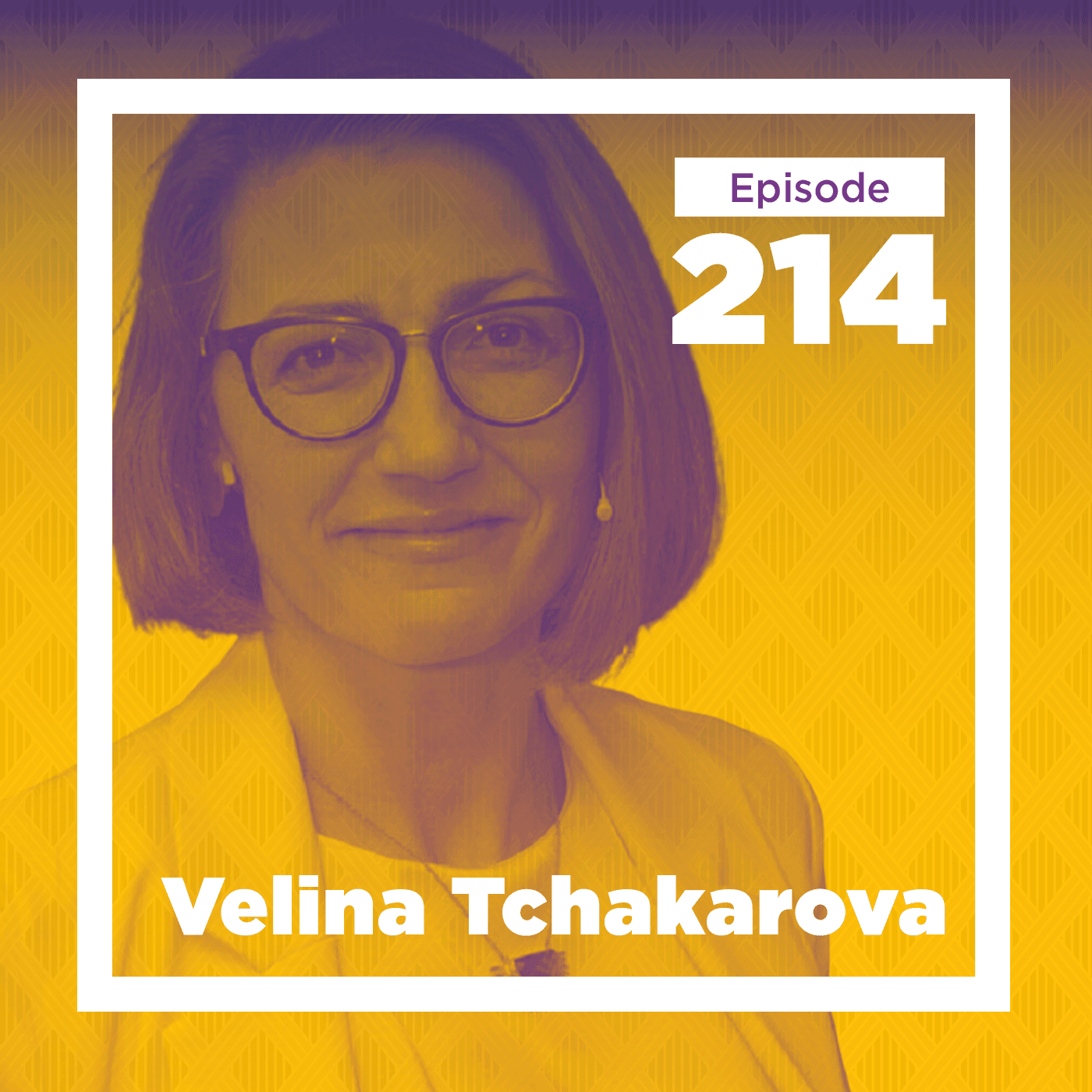
Summary of "Conversations with Tyler" Episode: Velina Tchakarova on China, Russia, and the Future of Geopolitics
Episode Overview In this episode, Tyler Cowen engages with Velina Tchakarova, a geopolitical strategist and founder of the consultancy FACE. They discuss various geopolitical topics, including the influence of China and Russia, the current state of Eastern Europe, nationalism in Bulgaria, and the complexities of modern warfare.
Key Topics Discussed
Balkan Wars and Their Relevance Today
- Balkanization: The term reflects the fragmentation of a region into smaller, often hostile states, relevant in today’s geopolitical landscape.
- Nationalism: Nationalistic sentiments are resurging in the Balkans. Political parties are increasingly leveraging these historical narratives, reminiscent of agendas from the last two centuries.
- Modern Implications: Events like the Balkan Wars still inform current geopolitical dynamics, with analysts drawing parallels to present-day conflicts.
Bulgarian Nationalism
- Current Demographics: Bulgaria faces a demographic crisis, with declining birth rates and significant emigration, affecting nationalistic aspirations.
- Future of Nationalism: Despite these challenges, nationalism remains a potent force, although the idea of a “greater Bulgaria” is no longer a viable political pursuit.
Geopolitical Influences and Alignments
- Proximity to Russia: Historical and cultural ties drive Bulgaria and Serbia's relations with Russia, while countries like Czechia maintain a more distant stance.
- Cultural Roots: Personal and cultural connections, including religious ties and historical events, significantly influence nations' alignments with Russia.
China and Taiwan
- Assessment of Potential Conflict: Tchakarova argues that a Chinese military attack on Taiwan is unlikely. Instead, she suggests a long-term strategy of subtle political and social subversion.
- Risks of Military Action: The difficulty of a military invasion and potential backlash against the Chinese government should they fail in such an endeavor leads Tchakarova to favor a more gradual approach.
International Law and Its Erosion
- Current State of International Law: Tchakarova describes a global system where the strong dominate and the weak suffer, indicating that international law is often disregarded in favor of power politics.
- Emerging Conflicts: She foresees a rise in military conflicts worldwide, with significant volatility expected in 2024.
Future Scenarios
Putin's Next Moves
- Russian Expansionism: Tchakarova outlines a scenario where, following territorial gains in Ukraine, Putin may target neighboring states, including the Baltic countries, testing NATO's resolve.
- Potential Use of Nuclear Weapons: While the risk of nuclear conflict is present, Tchakarova believes conventional military strategies will dominate, with the possibility of tactical nuclear use in specific contexts.
Tchakarova's Approach to Geopolitical Analysis
- Scenario Planning: Tchakarova emphasizes the importance of long-term foresight over predictions, focusing on macroeconomic trends and geopolitical dynamics to guide strategic decisions.
- Sources of Intelligence: She utilizes a variety of credible sources and networks to inform her assessments, differentiating between public discourse and her consultancy work.
Key Takeaways
- The geopolitical landscape is shaped by historical narratives, cultural ties, and demographic factors, especially in Eastern Europe.
- Nationalism remains a potent political force despite changing demographics and external pressures from larger powers like Russia and China.
- A nuanced understanding of international relations, coupled with long-term scenario planning, is crucial for anticipating future geopolitical shifts.
- The erosion of international law raises significant concerns about the future of global stability and the potential for increased conflict.
Conclusion Velina Tchakarova offers a comprehensive analysis of contemporary geopolitical dynamics, rooted in historical context and cultural understanding. Her insights into the strategies of powers like Russia and China provide valuable perspectives on future conflicts and alliances within the global order.
Written by AI. May contain mistakes. Listen to the episode to check what was said.
Transcript
Automatic transcript. May contain errors.0:03Hello everyone, this is Tyler. We want to hear from you about the show. In the show notes, there's a link to a short survey where we want to learn more about you. Why do you listen to the podcast? What do you think is under or overrated about the show? Is there someone you would just love to hear me interview? Your feedback will help us understand our listeners so we can produce better episodes, as well as future live events and listener meetups. Again, please find the link at the top of the show notes to fill out the survey. And thank you. We very much appreciate your feedback.
0:44Conversations with Tyler is produced by the Mercatus Center at George Mason University, bridging the gap between academic ideas and real world problems. Learn more at mercatis .org. For a full transcript of every conversation, enhanced with helpful links, visit ConversationsWithTiler .com.
1:06Hello everyone and welcome back to Conversations With Tyler. Today I'm very happy to be chatting with Valena Chakarova, who is a geopolitical strategist with long -standing experience, she is founder of a group, Face, which stands for For a Conscious Experience, I first learned of Valena by reading her on Twitter. Valena, welcome. Thank you. Thank you very much for being with you, and I look forward to a highly interesting conversation. Now you're from Bulgaria, so I've long wondered. The first and second Balkan wars. the preceded world war one. Do they still matter today or what did we learn from them?
1:48Well, of course they matter in a sense because you are probably familiar with the term Balkanization and unfortunately the term Balkanization that means splitting a country into smaller parts in order for external powers to interfere, to play you know different political actors off against each other and that kind of thing is still very much relevant and it's being used and applied to other regions, to other parts of the world. It matters also in terms of sentiments and in terms of, you know, if you like moods, if you take a look at the political landscape in most of the, let's say, Balkan countries, we still call our region the Balkan region even though that outside there is described it as South -East Europe mostly.
2:35You will find all of these sentiments being kind of you know reflected in various political groups and parties. We have nationalists in most of these countries which are getting stronger by the day and are running for you know for elections and are using actually agenda and narratives that have been known for the last 200 years. All you know, it's yeah, unfortunately quite quite relevant and even let me use another example the incident the helicopter crash From yesterday where the Iranian President and the four the foreign minister has to weigh was used as an example by some Analysts already I would just use the reference here that it could be the next arrival moment now again we have Balkan Wars and then we had also, as you know, the big moment, the biggest black swan as being described by Professor Nasim Talib, the Sarajevo moment from 1914, that was an unanticipated event which eventually resulted in the first world war.
3:46So even now, this reference is being used as Sarajevo moment is something that is defined as a black swan even and that could lead to a major military conflict, if not even, let's say, another world war. So all these kind of things are still kind of relevant even though they are not having the same influence or scale as it used to be the case 200 years ago. Now Bulgarian nationalism in the past, as you know, it's so often been about dreams of a greater Bulgaria, and there are Bulgarian minorities and Albania, different parts of the Balkans, and this notion of creating something like a Bulgarian world, or some Stefano Bulgaria with larger borders.
4:34But with current demographic collapse in Bulgaria, migration to the EU, other places, low birth rates, what is the future of Bulgarian nationalism? Does it have a future at all? I think that the second part of the question is easier to be answered. Yes, nationalism as I already outlined is always going to have some sort of solid ground in the whole region including Bulgaria and again right now we have a very strong sentiment, nationalistic sentiment that is also finding a political reflection and we have elections in June for a parliament since the coalition government between the conservatives and the Liberals has as part of ways.
5:16But coming to the first part of your question, these sentiments will be politicized and instrumentalized, but they will not find a common denominator among the population in Bulgaria. The dream of let's say San Stefano Bulgaria, or if you like, you know, big Bulgaria, including parts of other countries, neighbors is over. This is not going to come back specific in the case of Bulgaria. I will argue actually in the case of the other neighbors as well. Unless we see a major process that right now I don't see happening in the short term of let's say disolvenment of the European Union because, along as this country is a part of the European Union or a candidate for the European Union, this kind of conflicts will always find a kind of solution mechanism within the institutions and there will be enough incentives for broader part of the parties and actors, you know, to find a common denominator.
6:23So yes, even countries like North Macedonia and we saw that, there were immediately conflict, a kind of a verbal conflict between North Macedonia and Greece because the newly elected president of North Macedonia didn't use the full name but used only the name of Macedonia. These kinds of sensitivities will remain, but again, they do not find a common denominator even in these countries. Now, going back to the demographics, I think this is a bigger issue, because right now, probably the most famous person right now, who is making the case, the strong case of shrinking demographics all over the world, with a few exceptions, of course, because Africa and Southeast Asia will still see at macro level kind of positive demographics.
7:13But in general Bulgaria is probably one of the fastest shrinking, you know, democratically shrinking countries in the world, not just in Europe. And here we have a very, very, you know, serious issue that is a systematic and a structural issue that goes back to 30 years of political mismanagement corruption. And, you know, precarious I would say socio -economic indicator, so it's not just about the missing birth rates, it's also about the skyrocketing death rates in this country, and more or less three million, three and a half million people who have sought their happiness and tried to find a look outside of the country, which is quite telling.
7:56Are the countries in the Balkans the right size? Are there too many of them? So if we go back to the Balkan wars, well first Bulgaria and a number of other countries take from the Ottoman Empire, then you turn around and basically a year later, countries take from Bulgaria. Is there any stability in that region without an outside Hedjaman? There is a stability outside the influence exercise by Hedjaman. For instance, through the balance of several external powers. This is the case right now. So we do not have a Hedjamanic power in the region right now. We have, let's say, if you like a balanced act of several external and very powerful actors.
8:39That's not just the European Union, it's due to economic cloud. It's also Russia still very much active in the region. And we have also Turkey, which is also, of course, quite active. And we have the United States and China also trying to play their leverage in the region. So you see that it's not one specific hedgemon. That's always been the case, by the way, if you would like to go back to the Balkan Wars, if you would like to go back to previous periods of the Balkan region, you would find out that once again it was a competition of several empires and each of these empires was trying to get a chunk of this region for itself and practically through this balancing act, these small states were trying to capitalize on their own interests.
9:25And this is a continuum, a geopolitical continuum that is still very much in play in this region. Why do you think it is say that Bulgaria and Serbia remain closer to Russia, even with Putin? Or if you compare Czechia and Slovakia, Slovakia seems much closer to Russia, or at least some parts of Slovakia, than Czechia does, what predicts which nations in Eastern Europe will have this attraction to the East? First and foremost, I would say it's cyclical. It's not just, you know, you don't have a recipe that reflects on the realities on the ground, you know, one on one. You have a very strong cultural, personal, cultural and historical roots.
10:04Of course, specifically in this region, you have religious and also post -imperial roots in the case of the Russian Empire that has been, you know, I would argue that what we see right now with Russia's continuum of the Russian Empire, DNA. And practically I use this golden rule of the closer, the better, you know, in terms of influence and in terms of penetration and subversion, the closer to the core, the bigger the influence. We saw this clearly also during the Cold War with Bulgaria being probably the most affected and highly influenced satellite with almost no saying in whatever topics. And at the same time, if you look at the policies and actions of Soviet block satellites, such as Poland or Czechoslovakia at the time, you will see that they had much more space to act and there were more, there were prompt more turmoil, internal turmoil, even Hungary, if you consider their moments of turning against the Soviet Union.
11:11This hasn't been the case with Bulgaria. In the case of Serbia, because again, you cannot use a common denominator. You cannot just say that these two, because they were geographically and still are geographically closer, they would be more influenced by Russia. Because in the case of Serbia, being still in a very, very specific situation following the collapse of Yugoslavia, trying to find external partners that support the leadership at the same time facing new realities with the buildup of the other states, Slovenia, Croatia, Bosnia, Montenegro, and so on and so forth. Of course Serbia was in a dire need to have a very strong supporter and it has found the supporter in the face of Russia.
12:01In the Bulgarian case, This is more historic. It has a sentiment in the Bulgarian population, even up until today, that has to do with emancipation of the Bulgarian state, the third Bulgarian state, following the Russian -Turkish war from 1878, and then practically because of the Russian Empire, Bulgaria could regain its state And the first czar of Bulgaria was also practically from the Russian Empire with Alexander Battenberg. So we had a very different, you know, mode of development and at the same time, influence, you know. Today we have, for instance, political parties in Bulgaria that are still very much, let's say, rooted in the same mindset that one needs an internal friendship with Russia, that this is the only way forward, even on behalf of the social democrats, you will find this kind of voices.
13:04We have a Bulgarian president who is very much also pro -Russian, even though that he will deny it. So you see that this kind of layers of influence and penetration to some extent are very, very, you know, are manifold. You will have some that are taking place on a free, let's say free base out of political convention or out of individual, you know, convention, but you will have also some instrumentalized influences. I wouldn't use any generalization for the region except as I said this golden rule that could be applicable that of course geographic approximation is certainly an indicator that will tell you a lot about how an external and powerful player would behave towards the smaller neighbors and will try to of course increase its leverage via via different mechanisms and actions and This goes through cultural ties, through personal business ties, but also political and economic projects.
14:13So it goes also via instrumentalization of dependencies, raw materials and all of these kind of things. Let me give you another example, just to end this topic. If you go to Serbia nowadays and ask the, and you know, just conduct a poll in the Serbian population and ask who is, you know, one of the biggest investors in Serbia. You know, a lot of people will tell you that this is Russia, which is actually not the case. It's not factual, because still the European Union is, in fact, the biggest institutional investor in the country. But it tells you a lot about perception, how Russia is being perceived, in terms of its strong -crowing, you know, in the country.
14:57Maybe we'll come back to Bulgaria, but let me try some questions about the broader world. Why is it you think China will not attack Taiwan? They claim it is theirs, and arguably in five to ten years, they'll be able to neutralize our submarine advantage from the U .S. with underwater drones and surveillance of our submarine presence. At that point, why don't they just move on Taiwan and try to take it? Well, I do understand that there is a lot of analysis coming out right now, especially on behalf of the military experts, not only in the United States, but also in other parts of the world, pointing to this realistic scenario that we may see a military attack by China on Taiwan, but not later than 2027 and why 2027, because it is being anticipated as the year when China will be able to catch up militarily with the United States.
15:52And I do not share this assessment. I just Don't see why China will have to take such a big risk in achieving something that it can achieve in a much smarter and more efficient way. What do I mean by that? I call this approach a debt by a thousand cuts. That would mean that China could spend a little bit longer in a slow but steady political, social, economic and societal penetration of Taiwan. And we could argue it's the old Soviet playbook. It could be done in a more subtle way, using plausible deniability. Taiwan is still the most successful democracy in the Indo -Pacific. That means also it is vulnerable to this kind of penetration where you can practically use agents provocateurs on the ground.
16:58You can buy up a lot of institutional or individual players. You can start doing all this subversion process in a, let's say, longer time frame, but it could bring about bigger success than actually risking military intervention, which is not giving you, I would even say, 50 -50 % of success. The terrain of Taiwan, if we compare it with the most sophisticated war that's going on right now, It's much more difficult. You have a very, very limited window to attack in the case of Taiwan. This window of opportunity is limited only to probably two periods in the whole year, which of course is also known by everyone in the region.
17:58And that particularly means defense of Taiwan. one, you have window of opportunity in April and then in October. So you cannot take any time in the year. It is sophisticated military attack that cannot be conducted on the whole of the island. And even though the China is catching up militarily right now, I think that the mindset of the Chinese leadership, the way how the Chinese leadership is, you know, is actually conducting strategy does contradict such risky endeavor again because time is on China's side. And China only needs to really prepare this sum of minor actions in a longer period of time.
18:46This is what I would actually do as a strategist, which would promise a much better percentage of success than like I said an adventurous military attack. Now we may argue that under unanticipated circumstances for the political leadership think of a situation where the political stability in China is shaken, where the Chinese leader Xi Jinping is somehow put into the corner to take a very, let's say, ad hoc decision on the matter because of certain circles of the hoax, of the military hoax. Of course we have this kind of possibility as well. It could be a black swan event, something that has happened in China and this makes him take this decision in order to draw the attention away from internal problems.
19:44and foreign policy adventures are always kind of, you know, gathering the public support. So it's not 100 % to be excluded, but in my scenario, I would actually point to rather, as I explained, this debt by thousands could approach rather than military attack on Taiwan. Are we now in a world where the laws of war are basically obsolete? So Putin is acting in Ukraine without restraint, killing civilians. The conflict in the Middle East, whatever one might think of it, there's clearly a lot of disagreement about it. So the ICC, the morning of this recording, is bringing charges against Netanyahu in the Israeli government.
20:29The United States government does not really recognize that as legitimate. Do we have international law anymore at all? Well, we have international law, but in the world of, you know, reality can geopolitics, the strong do what they want and the weak suffer what they must. And this is the principle, unfortunately, that more or less overrides international law norms and rules. And right now in this gray area of a inter -ministerial international system, so the old international is crumbling down, and the new international system is trying to be born. So we are in this, let's say, a stadium of an emergence of a new global system, in which each and single field, including the international law, we see it also with international organizations, such as the United Nations, the United Nations Security Council, is a perfect example for it, where we have clear bipolarization, bifurcation of the club between China and Russia on the one hand and United States, France and UK on the other.
21:41And the same goes for all these international bodies. And that is to say that they are being, of course, used on both sides. And at the same time, they are being misused, unfortunately. That is the reality. We are right now. We are in a dispute of international relations where the number of international military conflicts and wars hasn't been that high since the end of the Cold War. So it's the highest number of military conflicts and wars. We have a lot of, as you said, casualties. I argue we are going to have even more tensions and more military conflicts in the next years to come. with this year, 2024 being extremely volatile.
22:28And in a sense, I'm not surprised that we are in this situation where both sides are trying to instrumentalize legal norms, rules, standards. But to no avail, because in the end, up until we do not have, let's say, a new winner or new emerging blocks with their reading of international law, with their understanding of organizational principles, with their structures. We will be in this crazy zone of interpretation and misinterpretation, and practically there is almost no common ground in between. We do see that there is no more global, you know, policeman, a power that can decide over the end of military conflicts or wars.
23:21At the same time, we also see that more or less, not in the ratings that are coming from both sides are equally being instrumentalized because on the one hand right now you mentioned the case of the Middle East. In fact, I argue that the war between Israel and Hamas probably will find its way by the end of this year as compared to some other tensions that will be still ongoing and like the war for instance in Ukraine, which will still be ongoing in the next several years. But here we have a clear case where you see that the West, United States, European Union powers are supporting Israel and countries like China, Russia are actually supporting the Palestinian question.
24:08And I argue that in the end, probably this kind of balance, balancing act will be the positive influence on finding a two -state solution for this conflict with devastating humanitarian consequences for the Palestinian people without a doubt. Let's say that Putin manages to take and then keep something like a third of Ukraine, and then there's an uneasy truce. What would Putin do next? Is it Suwalki Gap? Is Lithuania? Is it Eastern Estonia? Is it Moldova? Play out the scenario in that case. Okay, so first, let's start with the calculus what Putin wants. I would like to give you my assessment as to what's going on there and what's been going on there for quite some time now.
24:53Now, first and foremost, Putin wants the whole of Ukraine, not just one -third of Ukraine or 20 % right now, Russia controls around 18%. No, they want all of it. And if it's necessary, they will just make, you know, 10 to 15 years planned how to slowly but surely subjugate the whole of Ukraine. That means in a similar way how it's been proceeded since 2014, you had practically a serious of military actions followed by ceasefire followed by some kind of negotiations then followed by military actions and reason repeat tactics. This was the case for almost 10 years. And due to this kind of strategy, Russia was able to military really control Eastern Ukraine and then it could see the opportunity to make a move.
25:56Of course, I have to say that in my assessment from December 2021, I was pointing to a scenario in which I was absolutely sure that there will be a war, but I actually even called this war a limited military operation. And I thought, this was my mistake, that the war will start in the east and south of Ukraine. I did not think that Putin will make an all -in move in 2022. I must say, it was a mistake on my side. Because, as I said, I was seeing this as a 10 to 15 years plan how to slowly subjugate the country. Why did he make Owen move and he practically launched the Fuske War from five directions?
26:47Well, I think it's so early to make all these assessments, but certainly I would argue the regional environment and situation prior to 2022 and also the global environment. That means think of the US withdrawal from Afghanistan, then think of elections in key European countries in 2021. There was a political vacuum until new governments were built. We had key election in Germany. This is, as you know, meanwhile, the key provider of support for Ukraine. So we had worst energy crisis in 2021 already, looming in Europe. And we had the worst actually indicator for food prices. This is the FOW index that was reaching already levels of 2011 in December.
27:45So all of these were, you know, regional and global environment indicators that probably led also to this decision. But more importantly, what Putin got was also this, assurance of comprehensive, if you like full scale, comprehensive support coming from China. He has been building up this models with Andy with Xi Jinping since 2013, when Xi Jinping came to power. And he knew that by launching a Foscow War, and this is my personal assessment, of course, he would not just trigger the systemic competition between United States and China, China at that time was not ready for that kind of fast -speeded competition, which meanwhile as we know has accelerated to the point of the introduction of tariffs and the decoupling has really really been triggered but also you know to in a sense put in correctly bet on China that China was even if not agreeing with the whole decision would actually support Moscow in this endeavor as it turned out.
28:56So going back now to your question, I just wanted to make this clarification. What would be the next steps, right? What would be the next on his agenda? Now again, first and foremost, what is on his agenda is that he will not give up on attacking Kieff and attacking, you know, Odessa and trying to get as much as possible from Ukraine. And if He's not able for whatever reasons we cannot debate now about technical issues of you know the technicalities of the war Russia has been adapting but Russia has also made a lot of mistakes Ukraine has been adapting in the war, but in reality right now There are attacking the second largest city Korkiv but obviously there also attacking Odessa and like I said my Expectation is that they will be attacking Kiev again.
29:46So let's assume even if partially successful or fully successful, but let's assume putting succeeds in getting large part of Ukraine and then we have some sort of negotiations, some sort of ceasefire and then negotiations and like I said this is the best case scenario from Russia's point of view because every time when there were ceasefire agreements and any kind of negotiations in this case this will also legitimize the Russian territorial gains. This ceasefire has always been violated. So in a sense, this is actually placing to the cards of Russia. I mean, this is the main question. Will Russia actually attack other countries in Europe?
30:34Am I understanding correctly your question? Display NATO, right? So if Putin hates NATO and holds a grudge against NATO, he'll want take some marginal action that will split the NATO coalition, not so dramatic that everyone is against him. So something like, say, send an army group into Eastern Estonia, claim there's ethnic turmoil, side with the Russian minority, tell a bunch of lies, and then work to subvert the Baltics. Is that in the cards to come next or not? Yes, absolutely. If I were him, or if I were to consult him and you know he's successful in his in his action so far why would he not try it I mean first and foremost the Baltics I think that they already understand high risk of such situation in fact we have to split it in two parts the one part being neighboring countries like Moldova and Georgia and there I would also go for you know territories because I have already the military presence.
31:34I have already, I mean from Russia's point of view. Territories like Transnistria, which is neighboring Odessa and practically will enable Sanitir Cordon with the European Union, but also in Georgia with the sweeping borders in South Ossetia. For instance, in Abkhazia, I would just go for these territories because this is, you know, about status and about great power exercise. And in the next step, I would actually consider doing something like this, like an attack on the Baltic because first and foremost, there will be a certain regional environment that will allow it. What do I mean by that?
32:12If let's say the members of NATO and the European Union are somehow in conflictual blocks because of the future of you know these organizations, I mean we do not talk about 2024 obviously. But in the next years in the European Union as a bloc will undergo major shifts and a lot of troubles and you know the member states will probably not be so coherent in their positions all the time and the same goes for NATO especially if we have a very very different US leadership so under these circumstances provocation like this would mean to test the article five, to let's say to use the opportunity to show that the article five of NATO is not really going to be activated.
33:02This is a possibility. I would say right now from today's point of view, it is absolutely possible and to some extent probable but not plausible. But in the next few years, depending on the success of Russia in Ukraine, and I mean the time frame of 2025 -2026, I would not exclude, as I said, such possible and probable act by Russia, for instance, on the Balticom. Not so much on Poland, I do not take this really seriously as some analysts appointing a tech on Poland. I would also think that Poland may actually seek to get nuclear weapons. So in the case, if Poland decides to go nuclear, this question will be automatically answered as to whether Russia would be eager to attack Poland.
33:53No, I know this is a highly speculative question, but if you had to guess, where would strategic nuclear weapons most likely be used next? What would be your pick? First and foremost, I want to stress that the risk of the use of nuclear weapons has not grown bigger. With all the nuclear blackmail, with all the threats that nuclear weapons will be used, coming from Russia, we saw a president in the international relations, you know, modern times that country, obviously a great power, tries to legitimize territorial gains by the threat of the use of nuclear weapons. But this risk, the risk of the realistic use of nuclear weapons hasn't grown bigger.
Read the full transcript
34:44That's the first thing that I really want to stress that I still don't see actually nuclear war taking place. Okay, second point. Russia has a lot of conventional weapon systems that is obviously already using against Ukraine, and it doesn't need actually the technical nuclear weapon against Ukraine. But it doesn't have to be Ukraine, and I mean a strategic nuke. So say North Korea, if they're approaching some kind of strange endgame, or if American forces are doing badly in the South China Sea and were tempted to take out a fleet of Chinese warships using a nuke or of all the scenarios you can imagine, which is the one that would surprise you least?
35:26Maybe actually the use of tactical nuclear weapon by Russia against Ukraine. If you're outlying all these scenarios, I just do not anticipate the United States using in the nuclear weapon. Think of all the military defeats that the United States had experienced over the decades. And they still did not use the nuclear weapon, be it Vietnam or Afghanistan or whatever kind of military endeavors they had. North Korea, I think that North Korea would not go for the nuclear weapon because the moment when they decide this, They will be annihilated not by one, but by two critically important players because the whole lifeline for North Korea is coming from China and by extension from Russia.
36:20And neither China nor Russia will actually allow small player in the international relations to use the nuclear weapon because there is a scalability in the international relations. You are allowed as a smaller player to do some steps to create some havoc in the regional environment if it's in the interest of some of your supporters, as it is the case right now in North Korea. Why is North Korea perceiving all this technological transfer and hold the whole political and diplomatic support from countries like China and Russia? Well, it's obvious because activating the North Korean cart plays into the carts of Beijing and Moscow because North Korea creates tensions in the Indo -Pacific and overstretch the attention of the US leadership.
37:15It also complicates the situation with South Korea and South Korea together with Japan are the most important Indo -Pacific allies of the United States. So, so long as North Korea plays its card smartly and in its allowed let's say scope of activities things will be fine But I just don't see why North Korea would be actually eager to use nuclear weapon Maybe just because we are at the level of speculation, right? We are at the level of speculation one region that would probably see nuclearization will witness more nuclearization is actually the mineralist because Iran has never been closer to getting the nuclear weapon and given the most recent escalatory pat between Israel and Iran, Israel has the nuclear weapon Iran still doesn't have the nuclear weapon we may argue that this could be one such scenario.
38:15Again, I don't consider it to be probable, but because you want me to speculate, I will do this with big pleasure just to, you know, for the sake of intellectual exercise, to let's say outline a scenario in which Israel would consider using the nuclear weapon for the sake of not allowing Iran to do so. A question about your work at face. So we're recording a day after the Iranian helicopter crash. And we don't know what happened. It might have just been a helicopter crash because of bad weather and fog. But surely you have clients calling you, messaging you, picking you, wanting to know what's going on.
38:56What is it you do in the course of the day to be able to respond to them coherently? Like what concrete steps do you take to have a message that is more interesting or more informative than what they might see on Twitter? Well, first and foremost, what I post on Twitter is not what I actually discuss with my clients of the record. That's very important because I have networks, I have 25 years of professional background and I have networks of people who have proven track of analysis and assessment and are very often also on the ground. So what I do is to, of course, get as credible information as possible.
39:38And my clients usually ask exactly these kind of questions as you do right now. Will there be in the case of the example you gave? Will there be an escalation between Israel and Iran? Will there be a political turmoil in Iran following this helicopter crash? Will there be an ex -military, let's say, episode between Israel and Iran? What will be the a skating effect beyond the region or the question that you ask about the military conflict and the possible military attack onto a one. There's this question that come out almost every day. But you know, practically what I post on Twitter is linked to information I read.
40:22These are open source analysis and mostly assessments by other colleagues or articles being published and I just read, go to these sources and I post and comment. That's not the same as when you have to give an answer to a client. For instance, who has certain exposure in a particular region or has an investment portfolio and this investment portfolio is, for instance, affected by certain military conflicts and so on and so forth. So it's a very different way of, let's say, consulting Twitter, which is now exists just for fun. This is my rescue from the day because the whole day I just read and read and read.
41:03A lot of sources, a lot of information. I have a lot of chat rooms on various platforms, telecommunication platforms. Of course, with the time I can easily identify whether the source is credible or not. I use five different languages, so it's very, very kind of diverse way of getting information. I know, for instance, when it comes to a certain conflict or certain region which, you know, sources to use and which platforms are credible. That is a very, very different kind of approach. If, for instance, a common user on Twitter will just check on Twitter and start reading through the sources. So thanks to this kind of long -term experience, it's very easy for me to track and understand what is credible, what not.
41:56But this is only one of several pillars of my activities at face. So yes, I have private clients within face, but these are individuals from different backgrounds, different professions who mostly interested in this world of geopolitics and do do not have the same amount of time to read and to go through all these sources and they just rely on my assessment for specific topics. Now I must also highlight that the daily business of politics is not my main field. My main field is actually the long term, 10 to 15 years macro perspective. I actually draw scenarios for the future of international relations and for the future of the relations between great powers, for instance China, United States, or Russia, China, or India, China, and so on and so forth.
42:55For the next 10 to 15 years, thanks to trends and risk analysis. And this is something that is derived from the daily business of politics, but in fact, is a different methodology. And this different methodology is not helpful for, let's say, technical developments. It is helpful if you, for instance, consider long -term oriented investment based on the right from this macro analysis. What do I mean? Let me give you one example. If now people are talking about semiconductors, right, and an investment in semiconductors would be very smart investment, I have invested in semiconductors six, seven years ago, knowing knowing that there will be actually a bifurcation of the global system and one of the critical areas of it will be semiconductor.
43:47So having the trend projections, the long -term track projections in mind helps you to get the big picture in the long run. If you are, of course, patient and if you really want to play this game, you know, the long game. And this is where I'm located mostly, not at a tactical level. Do you find prediction markets or metaculous useful at all? I do not do any predictions. That is the whole point. They're information sources. You could incorporate into say a 10 to 15 year forecast. Or do you just think that don't contain much extra information? So the big difference is that predictions, for instance, you have like this big prediction houses when it comes to elections, for instance, right?
44:31and they try to predict the outcome of elections. And contrary to predictions, I anticipate possible futures. I do foresight, not predictions, not forecast. So I cannot forecast anything. What is foresight? Foresight is practically to, you know, thanks to the daily observation of events and developments to categorize these events and developments into trends to assess a possible trend projection that will point to a certain direction in which, for instance, the global system goes. What do I mean by global system? Because I'm really focused on the macro perspective. In my case, the global system, this is my own concept that I've been working with since 2014.
45:18And that is that practically all the relevant socio -economic networks you take global finance, system you take global energy system you take the global finance, trade, economy, agriculture. So this most relevant socio -economic systems that have emerged specifically because of globalization, the last globalization wave following the collapse of the Soviet Union into Introduction of the most of the countries into a let's say a global capitalist system So they are now meanwhile more or less intertwined and looking at the interactions between these networks and looking at the way how These systems are undergoing transformation gives me some answers as to you know in which direction goes.
46:10Let me give you an example. Most of the analysts you would agree have been pointing at this for the last 20 years, though it's multi -pularity. So the biggest cliché that we've been hearing is that we are sliding into a multi -pularity order. We have several big centers of power, several great powers and so on and so forth. And I just, I've never bowed into this. And since 2014, when I started looking at this macro perspective based on this global system concept I've developed, I saw that practically we have only two centers of power and everything in between is in this grey zone that is osculating between United States on the one hand and China on the other.
46:57Now Russia argue has taken side already in 2014. In fact, Russia has been saved by China following the first intervention in Ukraine and following the first launch of Western sanctions when Russia was facing a serious, almost precarious economic situation was saved by China. Now meanwhile, most of these middle powers are still avoiding taking sides. They want to capitalize from both worlds. The classic example right now is the case of India. India is acting as a bridge, as a geopolitical bridge between the two antagonists trying to take the best of both worlds. It is very, very difficult to bring this long -term picture that is to play out in the next five or ten or fifteen years to the daily business of politics.
47:56why? Because people are just not following. They just don't have the time to follow all these trends and then don't have the time to, you know, go into all these specific systemic processes. So when I was talking about bipolarity in 2015 or when I was talking about the dragonbear, since 2014, the dragonbear being this modus vivendi of China and Russia, as modus operandi to coordinate without the necessity to enter any strategic alliance. You know, people were not interested because it did not really affect daily life of politics. But now you would agree that China, Russia, access or whatever kind of articles are almost coming out on a daily base and we are already talking about the coupling and we are already discussing this kind of bipolarity.
48:54This is the point. So we have 10 years of time spent that I have been investing every day into trying to get the trend projections correctly, but it is absolutely not possible to convince anybody else of the correctness of this assessment. So long as the reality doesn't, you know, kick in and proves you right. And this is what was happening at least with most of my assessments. And this is how I am right now not stuck in 2024. I'm already in 2030, 2040 and so on and so forth. So most of my assessment is actually helping clients to prepare for the long term perspective. I'm not a consultancy like most of these consultancies providing these daily, you know, briefs and analysis telling you about the dynamics in a specific country, explaining you the constellations between the political actors and whatsoever, which is equally important.
49:56I'm not denying the importance on the opposite. It's just that what I do is so rare and you know, right now a lot of, I'm observing a lot of consultancies like the big consultancies, Goldman Sachs and so on and so forth are trying to enter this business of foresight, geopolitical foresight with big teams and trying to foresee the future. But in the end, I would argue it's a methodology that is not so easily to be conducted. And especially it's not easy to be conducted because you have to free yourself from any kind of biases, personal biases, and you have to have a model. Now we may argue some have developed indexes like the two political risk index that is now being, let's say, published by the Federal Reserve.
50:46They try to track back different headlines in various newspapers and magazines and then they you know based on the number empirically they just point to the severity of a geopolitical risk like it happened with the you know with the Russians who were against Ukraine. We have different kind of metrics algorithmic and empirical one. My approach is very qualitative one and it's really based and derived from what I just explained to you. Felina Chacarova, thank you very much. Thank you. Thanks for listening to Conversations with Tyler. You can subscribe to the show on Apple Podcasts, Spotify, or your favorite podcast app.
51:30If you like this podcast, please consider giving us a rating and leaving a review. This helps other listeners find the show. On Twitter, I'm At Tyler Cowan, and the show is At Cowan Convose. Until next time, please keep listening and learning.
From the publisher
Take our Listener Survey
You could try playing out the four-dimensional chess game of how the global order will shift in the next 10-15 years for yourself, or you could hire Velina Tchakarova. Founder of the consultancy FACE, Velina is a geopolitical strategist guiding businesses and organizations to anticipate the outcomes of global conflicts, shifting alliances, and bleeding edge technologies on the world stage.
In a globe-trotting conversation, Tyler and Velina start in the Balkans and then head to Russia, China, North Korea, and finally circle back to Putin’s interest in the Baltics. She gives her take on whether the Balkan Wars still matter today, the future of Bulgarian nationalism, what predicts which Eastern European countries will remain closer to Russia, why China will not attack Taiwan, Putin’s next move after Ukraine, where a nuclear weapon is most likely to be used next, how she sources intel, her unique approach to scenario-planning, and more.
Read a full transcript enhanced with helpful links, or watch the full video.
Recorded May 20th, 2024.
Other ways to connect
- Follow us on X and Instagram
- Follow Tyler on X
- Follow Velina on X
- Sign up for our newsletter
- Join our Discord
- Email us: cowenconvos@mercatus.gmu.edu
- Learn more about Conversations with Tyler and other Mercatus Center podcasts here.