Ask ChatGPT
 Core Memory
12 Nov 2026 · 1h 5m · 33 chapters
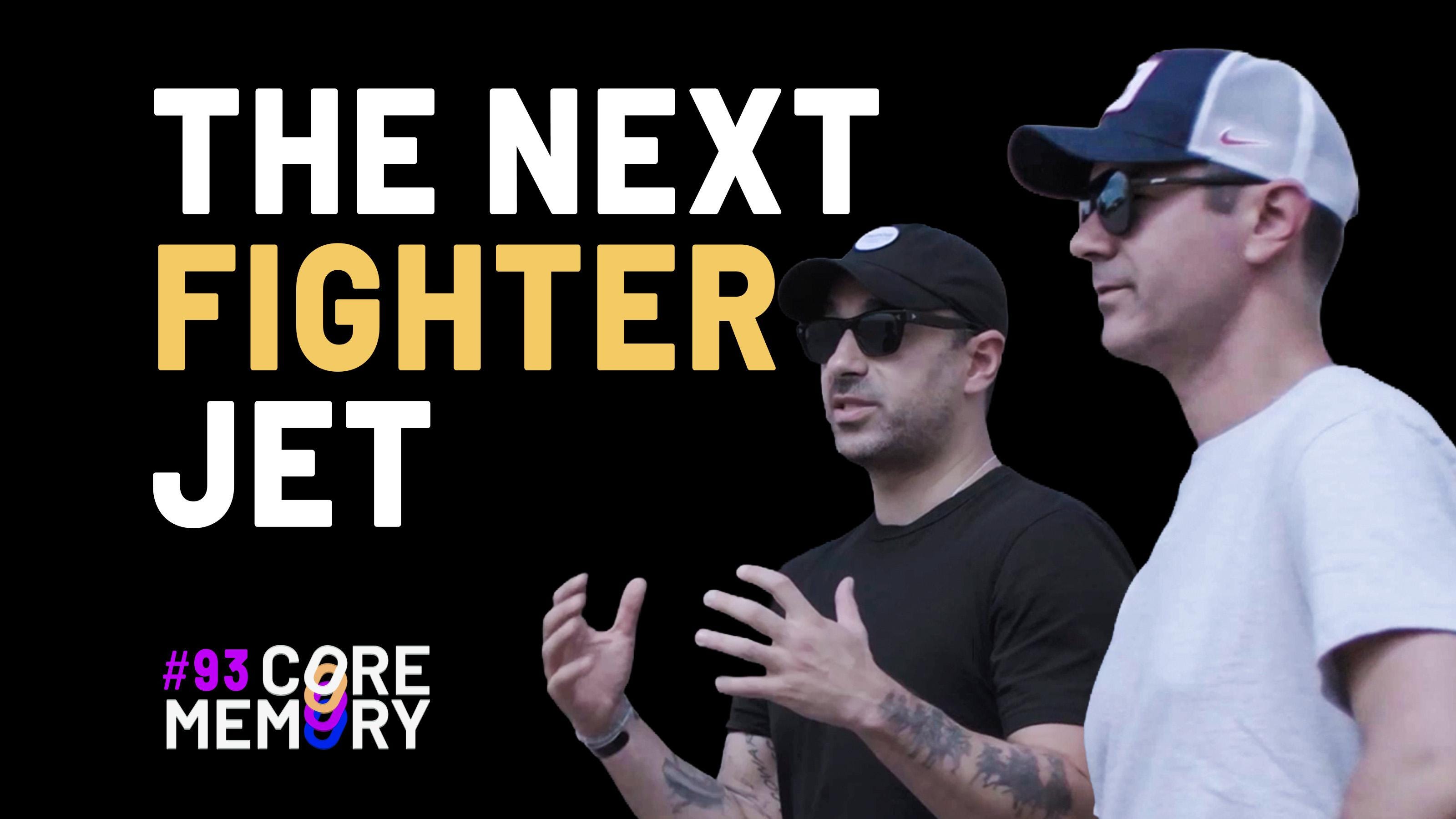
Interview with Sky founder/CEO Mikkel Vestergaard Frandsen about high-altitude “HAPS” platforms (60,000 ft) that stay over regions for long periods to deliver mobile broadband, enable detailed imaging, and support other missions like wildfire early detection and methane leak monitoring. The episode also covers his path from Denmark to Africa, building mission-driven material-science companies, and how those experiences shaped Sky.
Mikkel is Danish-born; his family made corporate/military uniforms (started 1957). He moved to Lagos at 19 importing trucks/engines from Germany, left after a 1993 coup, then built and bought a subsidiary focused on UN/aid-related supplies for refugee camps. He later helped found/scale LifeStraw (guinea worm eradication partnership with the Carter Center) and Permanet (insecticide-treated mosquito nets).
Sky is not a traditional rigid airship; it’s a non-rigid, helium-based stratospheric platform that uses wind “station-seeking” (not GPS station keeping). It can stay up for months, uses solar + batteries, and offers telecom synergies vs towers and satellites. He invested $100M personally; Sky raised ~$200M+.
LiveStraw’s particle filtration tied to guinea worm reduction to ~10 cases; Permanet nets reaching 1B distributed and malaria declines. Sky’s Japan demo flight from New Mexico to Japan (~3.5 weeks transit, ~2 weeks duration) and planned Peru service demo.
Written by AI. May contain mistakes.
Discover the purpose and technology behind Sky's high altitude platform systems, including a trip to Japan.
“Tell us a little bit about where we are right now.”
Learn about Mikkel's upbringing in Denmark and the family business making military uniforms.
“But so you, I assume, somewhere in Canada, but I assume you were born in Denmark.”
Hear about Mikkel's business experiences in Nigeria at a young age and how it shaped him.
“that worked with Africa and primarily sort of UN tenders for refugee camps, blankets, tents, that sort of stuff.”
Explore Mikkel's shift from the family textile business to a mission-driven company focused on Africa.
“And I was importing trucks and truck engines from Germany and sold it off before it had to go through customs.”
Learn about Mikkel's innovative products like LifeStraw that address public health issues.
“see some of its struggles, things that need fixing.”
Understand the role of material science in developing products that improve health and safety.
“And in Safe Drinking Water, that started with a partnership with the Carter Center about eradication of guinea worm.”
Learn about the impact of innovative products on public health and economic growth.
“a year to the Carter Center, because that's the entire consumption that they need on an annual basis right now.”
Explore how businesses can align profit motives with social good.
“So that's through the late 90s, early 2000s.”
Understand the vision and mission behind the Sky project and its scientific basis.
“Okay, so let's talk about how Sky starts to form in your head is something you want to do.”
Learn about the advantages of stratospheric airships over traditional satellites.
“And so 2014, I mean, at that time, we are starting to hear about Google pursuing these connectivity balloons, meta, pursuing stuff like this.”
Explore the various payload options for stratospheric platforms.
“I mean you could take, the nice thing about this is you could take up different payloads.”
Understand the operational advantages of stratospheric platforms over balloons.
“And for them to stay over Mount Kenya, they would change altitude, find new wind directions and new wind speeds, and eventually come back to the same area.”
Learn about the energy efficiency and maneuverability of stratospheric platforms.
“They are for about eight weeks of the year when you have the spring turnaround or the fall turnaround.”
Discuss the competitive landscape between stratospheric platforms and satellite technology.
“we can pack a lot of solar panels on the top of the aircraft.”
Delve into the benefits of lower altitude antennas for connectivity.
“It feels to me like SpaceX really has met that need in most cases.”
Explore the vision for a ubiquitous high-speed internet network.
“Satellites at the same time are struggling with user densification.”
Discuss the potential scalability and operational duration of stratospheric platforms.
“the hybrid space architecture that governments are trying to build.”
Learn about innovative uses of stratospheric platforms for wildfire management.
“or ships in the port or trains in the tracks.”
Discuss the technological advancements that differentiate new platforms from traditional airships.
“Not a lot because I don't feel a strong association with the airship.”
Explore the potential of stratospheric infrastructure for 6G and national services.
“It's the logical layer that you use to deploy national cloud services, quantum key distribution.”
Discuss the personal investment and timeline challenges in aerospace ventures.
“And that led to three very large telecom, multinational telecom corporations being interested in us and eventually all three of them invested.”
Learn about the business model focused on providing infrastructure as a service.
“We pay for all the R &D, but have it outsourced to four other countries that each have their segment that they make for us, and then it comes together with us.”
Understand the planned missions and regional strategy for global operations.
“Would you have to be at airports all over the world?”
Delve into advancements in materials used for stratospheric vehicles.
“So when do you think you hit that point?”
Discover the recruitment strategies and team-building efforts in the aerospace sector.
“Well, this is where the proprietary stuff comes in.”
Learn about the upcoming service demonstrations and technology validation efforts.
“Otherwise, those PhD pre-med honors would have not.”
Understand how stratospheric flights will operate and their implications for connectivity.
“defined speed for broadband, showing that we can do it indoor, which is a vast difference from what satellites can do.”
Learn how altitude affects signal reach and device interaction.
“And showing that we can do it with expected levels of interference with other networks.”
Discover the balance between adventure and responsibility in entrepreneurship.
“you kick out the helium and it just falls to the ground.”
Explore the intersection of exploration trips and climate action.
“Certainly a sense of exploration, that unequivocally.”
Understand the challenges and advancements in stratospheric aircraft technology.
“And I know we talked about it before, but you still, if I'm being brutally honest, just on the satellite front, I just feel like it really has gone so much faster and farther than anyone would have expected.”
Learn about the ambitious plans for launching stratospheric devices by 2032.
“flatten out with some of those constellations at this point.”
Discover why New Mexico is a strategic location for aerospace initiatives.
“And you think we're mostly running out of the U.S.”

Get the gist, explore an idea or ask about something said.
 Claude
On Core Memory, what are the key points of this episode?
Searching your listeningAutomatic transcript. May contain errors.
0:00Mikkel Vestergaard Frandsen: This interview is slightly embarrassing, and I will both tell you and show you why shortly. But it is a discussion between me and a man named Mikkel Vestergaard Frandsen. He is the founder and CEO of a company called Sky. If you're watching this, you will see what Sky does, which is build huge airship-like vehicles. Airships are a subject of fascination and interest to me and others. And we are in a moment when people are trying to bring the airship back. Sky says what they're making is not exactly an airship. It does not have a rigid structure. It is slightly like a blimp, but it's a large inflatable object that is designed to fly many thousands of miles.
0:49Mikkel Vestergaard Frandsen: The one that is behind us in this interview ends up a couple weeks later flying to Japan as part of a test run. Sky is trying to use these airships to put telecommunications equipment over places. You might not be able to get high-speed internet in certain locations, and so this would hover above a city or a region and deliver high-speed internet. You could obviously put a camera on this thing and take very detailed images that would be more detailed than what a satellite can gather. And because these ships can stay over an area for a long time, they can take more images, different images than a drone, which has to pass over quickly and go by.
1:39Mikkel Vestergaard Frandsen: So this is something people have been chasing for a while. Companies like Google and Facebook, Meta, have experimented with this type of technology and then kind of given up. Sky is still going. They think there's large parts of the world that can't be reached by satellite internet or fiber optic cables. And so they are going to deliver high-speed internet through these airships that use the wind patterns to do what's called station keeping. They call it something slightly different. Sky likes to call everything a little something different. But the essence is that you use the wind currents and you go back and forth and you stay over an area for a long time.
2:23Mikkel Vestergaard Frandsen: This interview is embarrassing because it was incredibly hot in the hangar where we filmed. Sky had these ice vests that the workers could put on. That was for people doing actual manual labor. I put on an ice vest just to do this interview because it was very hot and I was sweating a lot. Mikkel was not. He seems to have ice in his veins and is a much cooler human than I am. And so you'll see me sweating. You'll see me with the Zeiss Fest. I enjoyed it. Please leave us a review or a like on Spotify or Apple, wherever you get this podcast, or just tell your friends. It would be immensely helpful to getting more people to know about the show.
3:11Mikkel Vestergaard Frandsen: With that, we will also have a full video episode coming on our YouTube channel about Sky and our time hanging out, watching people build this thing and get it ready for flight. And I am Ashley Vance, and this is Core Memory. Here we go.
3:43Tell us a little bit about where we are right now. We're in New Mexico. We are close to a city called Roswell. and we're here because we're going to fly a haps high altitude platform systems we're going to 60 000 feet and from there we're going to travel to japan to japan do a mobile broadband demonstration
4:08Mikkel Vestergaard Frandsen: yes then fly back here so some people will just be listening to this podcast i recommend you view it on youtube or spotify just so you can see what's behind it so it looks like an airship but you guys call it a high altitude platform system. And on this journey to Japan, it might leave in about a month-ish? Yeah, three and a half weeks probably, weather permitting. And it'll take about two weeks. I think so. That's what we expect. Traveling on the winds and the stratosphere. Okay, so we're going to talk a lot more about this, but I want to weave a story of your life to get to how we ended up here.
4:46And I think it will surprise people.
4:49Mikkel Vestergaard Frandsen: We're going to start with military uniforms and I promise we're going to end up at an airship. Okay. Along the way. But so you, I assume, somewhere in Canada, but I assume you were born in Denmark. Born in Denmark. Okay. And the family had this, your grandfather had this business of making military uniforms. The only reason I asked about Denmark was that it seemed like they made Swedish military uniforms just from what I was reading. So I think there's something lost in translation here from Danish to English. uniforms was corporate clothing. Corporate clothing. So you go into a hotel reception, they're all dressed the same.
5:25Okay. The company would show up at hotels or supermarkets and dress the staff, essentially.
5:31Mikkel Vestergaard Frandsen: So when did your family, when did your grandfather start that business? 1957 on an$800 Marshall Aide loan. Okay. Yeah. And he was making these uniforms all over Europe? He started as a weaving company. Okay. But then eventually the area where it was became a residential area. and he was forced to close that down and it then became a sewing unit. And that was focused on the uniforms. And that was in the mid 80s. We made that shift right around the time when my dad took over. Okay. And then from that into a time when I had returned from Nigeria, where I started my first business in the early 90s and then got involved in the family business.
6:21Built a subsection of the family business that worked with Africa and primarily sort of UN tenders for refugee camps, blankets, tents, that sort of stuff. And bought that out in the mid 90s and built it to some of this. Yeah, yeah.
6:39Mikkel Vestergaard Frandsen: Now we're going to get it all day. So you're fast forwarding past a couple of bits I wanted to talk about though. So you mentioned working in Africa. What I was reading ahead of interviewing you is that you're at 19, you're in Lagos in Nigeria doing some kind of car and car parts importing business. This is the way it was described on the Internet. So how do you get from Denmark to Lagos running this business? I grew up in an environment that was very organized and very safe and everything was paid for. and education is paid for and health care is paid for. You even pay the salary to study because it's considered a job.
7:24It's very different from what we experience here. But it gave me a desire to try and go out where the ice was a little thinner. And when you're 19, a business plan is not all that thought through. I ended up in Lagos. It was the biggest market in Africa, or Nigeria was at that time, with 25 % of the African population. I thought, that's where I go and start a company. And I was importing trucks and truck engines from Germany and sold it off before it had to go through customs. So I was standing in the Freeport auctioning. And I did that for about a year, and then a military coup came, and I was sent packing back to 1993 when Balonguida decided to take over.
8:09And it's not a good business environment when the army is constantly fighting the police.
8:17Mikkel Vestergaard Frandsen: I've been to Legos, and I cannot imagine running an import-export business at 19. It's such a frenetic, chaotic place with everybody hustling. I feel like you were just being scammed left and right. It was good training ground for later in life. I've become very good at sniffing out when people are not going to live up to their commitment or when people are not necessarily having the best intentions. Lagos was a good training ground for that. You mentioned this transition with the family business from your grandfather to your father to you. When I was reading about this, it seemed like very quickly you were still in your 20s when you bought out the business from your father.
9:06I was 24.
9:07Mikkel Vestergaard Frandsen: Okay, so how do you pull that off from 19 to 24 to be able to buy your father out from the family business? You've got to put it in the context of the size of the family business. The revenue was a little less than$5 million. Okay. It was in the textile industry. It was not hugely profitable. So it was not a massive undertaking. and I don't think anyone would have expected that it would necessarily grow a hundredfold in the following 10 years. And so, yeah, I've got a good deal. And you mentioned textile business and then we're going to talk about some of the areas you got into, but you go to Africa, it sounded like you fall in love with the place, you see some of its struggles, things that need fixing.
9:54Mikkel Vestergaard Frandsen: And so my read was that you shift, you have this textile business and you're like, well, how could we use this to maybe be more helpful and go after some specific causes? And my sense was, I mean, you shift the business into this very, I guess it's not like fully philanthropic, but a mission-based type company. Yeah, there were two phases to that. One, the first one was I was 20. I was sent packing in Nigeria, came home. My father really wanted me to join the family business. I wanted to work with Africa. the conversation was relatively short it was along the lines of join the family business but i want to work with africa fine we'll make a subsidiary of the company that uh that works with africa you'll run that okay uh i just couldn't see myself growing old selling shirts in sweden yeah uh it was not what i was cut out for okay and and so i ran that subsidiary uh for a couple of years and then bought it out.
10:56I didn't buy the whole family business. I just bought the subsidiary out that I had built myself. Gotcha, okay.
11:01Mikkel Vestergaard Frandsen: And what was the first... And the rest of the family business then went belly up three years later. And then you're quite well known for making products like this, LifeStraw, which helps drink non-potable water. You've made, it's Permanet, I think, which is these mosquito nets. What was the first product that you guys set out to make along these lines? So it really came about when we started moving from textiles to material science and wanting to use material science as a platform for the avenues we wanted to venture into. And that was primarily public health, food security, and safe drinking water.
11:47This is the 90s? This is the 90s. Okay. Yeah, late 90s. Okay. And in Safe Drinking Water, that started with a partnership with the Carter Center about eradication of guinea worm. And we built something as simple as a particle filter into a drinking straw and saw how we very rapidly, this is not the work of one company, we were just following the dust of Jimmy Carter's feet. but very rapidly eradicated guinea worm from south asia brought it down to only six countries in sub-saharan africa and and last year it it was down to 10 cases in total from three and a half million where we started so likely the second disease ever to be eradicated that's something you can be really excited about vaccines the first disease to be eradicated without the use vaccine but the second ever to be eradicated the first one was smallpox 60 years ago yeah this is a massive uh achievement not eradicated yet we have we have 10 countries we have we have we had 10 cases last year yeah in in two countries um there's six in total because it's also spread to animals primarily dogs and cats uh but we're fairly confident we'll get there and uh we're fairly confident we'll get there in a reasonable number of years.
13:17Mikkel Vestergaard Frandsen: And that's primarily through live straw or a bigger, more industrial system? So this is, uh, the cornerstone in that eradication program is the, uh, is the handheld filter that is live straw that you draw water through. Okay. Okay. As you drink it. And so basically you can like, I mean, we could show people, I guess you can pour water in something like this and it has oh like maybe you should show us no go ahead it's got uh it's got this the straw right in it so you put water in here you could put any water in here and then there's this filtration system that's going to take all the nasty stuff out and you just distribute these as far as you can yeah we don't right now we donate about a million filters a year to the Carter Center, because that's the entire consumption that they need on an annual basis right now.
14:13And it's not just to get rid of the last 10 cases. It's also to avoid resurgence of cases where it's spread to animals. Okay.
14:26But so the jump from that particle filter to live straw was essentially, wow, if we can do something as massive as potentially eradicating a disease from the face of the planet with something as simple as a particle filter. Imagine if we also took virus, bacteria, parasites out. And that was the birth of life's choice you know today. Okay.
14:47Mikkel Vestergaard Frandsen: Okay. And then the permanent similar vein of trying to keep mosquitoes and malaria off of people. The permanent also was born out of material science. We managed to build the insecticide molecule into a polyester fiber and control the migration of the active molecule to the surface of the fiber over time. So if you make something like a bed net out of it, it kills the insect on impact. But because we can control the surface concentration, it's safe for the people who sleep under it. So imagine that you roll this out in hundreds of thousands or millions through villages where people are otherwise too sick to go to work or too sick to go to school if they survive, this has not just an impact on life saved, but also the impact on people who go to work and go to school and GDP as a result of that.
15:45So there's a huge human cost, but also growth penalty throughout sub-Saharan Africa because of infectious diseases like malaria. And three years ago, we celebrated net number 1 billion that we distributed. And have seen in the process how malaria rates have gone from 1.3 million, mainly children dying every year, to last year, less than 600 ,000. Again, not the work of one company. but we have been instrumental in getting to scale. And there was an article in Nature recently that contributed our invention with about 70 % of that effort. Okay.
16:34Mikkel Vestergaard Frandsen: This episode is brought to you by Brex. I spend all of my time inside of the world's most ambitious companies making rockets, semiconductors, robots. Very often the business is struggling and then all of a sudden things click and take off. Then the company's expenses spin out of control. They either have to clamp down, start counting pennies, or cross their fingers, hope for the best that the quarter or the year comes out okay. Brex was built to handle exactly these situations. It helps you move fast, spend smarter at the same time. They've got credit cards, banking, expense management all in one place.
17:12Mikkel Vestergaard Frandsen: They've got AI technology looking over everything, taking care of tasks for you. No more chasing down receipts. We use Brexit Core Memory. It has been a godsend in giving me back so much time. Giants like Anthropic and Zoom use Brexit as well, and so do tens of thousands of startups. You should use Brexit, and you can find out exactly how to do that by going to brex.com slash core memory. So that's through the late 90s, early 2000s. Sky starts. Up until today. Yeah, and it's still going. And then Sky starts around 2014. Yes. And how, I mean, the one part I was confused about was, I mean, you have this, it's a booming business.
17:59Mikkel Vestergaard Frandsen: I mean, the numbers are huge, a billion nats. When we were driving out here, I actually had not heard about Lifestra before, but I told all the guys in the crew. And they're like, oh, my God, this product's so famous. and how did you, you should get out of the office. I know I should, I should. So how were you, so it's like philanthropic on some sense, but also you're, you're making money along the way with your, with your, yeah, I don't think there should be any conflict between doing business and doing good. And in fact, there are a lot of synergies in it, especially because the good you do is financially sustainable so you can scale it.
18:35And so I enjoy building businesses that have a measurable impact while not compromising at all on your revenue potential. Okay.
18:45Mikkel Vestergaard Frandsen: Okay. Can I duck into the AC for one minute? Sure. Is that okay? Yeah. Are you baking? I'm fine. I used to live in Lagos. I got animated. What? Put it on an ice vest. Yeah. Should I? Yes, yeah, why not? I'm gonna try it. Yeah. I wanna try the ice vest. There we go. Well, that's nice.
19:18Mikkel Vestergaard Frandsen: I have ice vest in. So just so people know, we're in this hangar in Roswell. It's like 100 something degrees outside and it's quite toasty in here. You have no problem if people give you a little grief or ask questions about about is this philanthropy are you making money you think this is the way to do it to make it all sustainable i think it's one of the ways to do it i don't think it's an answer to everything because i inherently don't think that a business can be entrusted with public equity uh but there are certainly innovations and scale that can only come from business. Okay, okay. Okay, so let's talk about how Sky starts to form in your head is something you want to do.
20:00Mikkel Vestergaard Frandsen: I mean, it ties into the history of the materials, of the science, and then it also ties into some of the missions that you've been doing, you know, in all the stuff that we talked about. Yeah, there is. And so in the lead up to
20:202014, I'd had a conversation with my board of directors around maybe instead of having the usual entrepreneurial 16 hour a day working day, maybe I should have a normal working day, spend some time outside the company, join some external boards and just get some inspiration. and that was fun. I did some committee work in an economic advisory capacity for my prime minister in Denmark, did some committee work for NASA, other stuff in the upper echelons of the pharmaceutical industry. And yeah, it was interesting. It got a lot of inspiration. And some of the things that had bothered me in public health and food security and safe drinking water was how siloed it was that at the top, if you go to the World Health Organization, those who work in malaria rarely talk to HIV, rarely talk to nutrition.
21:22And in the field, it's not often that much better because on a Monday, that clinic that has a doctor and two nurses is left empty because they're chasing the per diem of a World Bank handwashing program. On a Tuesday, the clinic is left empty because they're chasing the per diem of a UNICEF measles program and so on and so forth. So there was massive inefficiencies in the system from top to bottom because it was so siloed. And so I was looking for a way where I could find sort of my new opportunity to scale with a new platform where I wasn't so beholden to the siloed nations or siloed versions of the donor community, the development community, the philanthropy community.
22:10Okay. And so, yeah, the idea of this platform came about. Not my idea. I read it in the NASA report. Okay.
22:17Mikkel Vestergaard Frandsen: And that they were looking to make a stratospheric balloon. It was the report was suggesting more of a platform for science. It was talking about the stratospheric airship. Yeah. Go to 65 ,000 feet. You're above the jet stream. You're way above air traffic. You're you're there's very little wind. You're 95 to 97 percent through the atmosphere. You can look up with great accuracy, birthed stars, study black holes, look at asteroids or collision course with Earth. So very much that platform for science. And I was reading it and thinking, sure, but you can also look out. Have a real change in methane leaks monitoring, oil detection of wildfire, ocean conservation in the form of illegal fishing and that sort of stuff.
23:08Yeah, trafficking prevention. And obviously, last mile connectivity as well. A few others were working on that already, as you know. But that was super appealing because one platform could lift and power so many different instruments that you would automatically just break down all silos. You would have this Swiss Army knife of a thing hanging up there that was under no circumstances a one-trick pony, which, you know, admittedly, many satellites end up in that situation.
23:34Mikkel Vestergaard Frandsen: Yeah. Okay. And so 2014, I mean, at that time, we are starting to hear about Google pursuing these connectivity balloons, meta, pursuing stuff like this. It's kind of early days, but nothing like Starlink had really been fully announced, but satellites are heading in this connectivity direction. And so it just seems in hindsight, the Google and Meta, they've kind of given up on their aspirations around this type of thing. But you obviously still think the need is there. Well, they gave up because the form factor, the platform was not appropriate for the stratosphere. OK. Right. The main attempts that were there were with fixed wing aircrafts.
24:23And they end up in a coffin corner. because they have to use propulsion to stay up. We don't. We use our buoyancy. We only use any kind of forward motion to stay over air operation. And then at the same time, they have much less real estate for solar panels and far less opportunity to lift batteries. And so while they turn into a glider at night and often come into landing, we go through the night with full power. Okay. And that's a massive difference.
24:56Mikkel Vestergaard Frandsen: And there's this whole, I ended up getting into airships. I was covering Sergey Brin's project called LTA, Lighter Than Air, in Mountain View, California for a couple of years. And so airships traditionally have this rigid structure. I mean, this technology goes back more than 100 years. The sky used to be full of airships. Germany in particular excelled but also the United States, France, even Russia as well and it is a technology that sort of died out I mean people point to the Hindenburg but I think just as planes got better and better and these were used for military purposes they could be shot down quite easily so they they went from being quite prevalent in the skies to fading relatively quickly and then now we've had this this resurgence a bit through Sergei there's a company called Airship Ventures in Los Angeles and a couple other startups.
25:52Mikkel Vestergaard Frandsen: Walk us through how this is different. You don't have the rigid structure. You're filling this with a mixture of air. This is only pressure. Only pressure, right. We're very different from the category airship. We can't exist at low altitudes. We can't carry people. We're designed to function at 60 ,000 feet or higher, really. And the purpose essentially is to go up and stay up and stay over an area of operation for a very long time. So think of us essentially as a geostationary satellite, but superimposed on the surface of the planet. So you get with this not the opportunity to transport people, but you get the opportunity for instruments to experience space-like conditions without the cost of going to space and without the complexity of being in orbit.
26:48Right. That's what you get here. So drones, you can fly anywhere.
26:52Mikkel Vestergaard Frandsen: They could go very low, but they can't stay over a point of interest for a long period of time. Satellites can stay over a point of interest, but are extremely expensive, relatively rare, and you really have to work hard to get them to point where you want them to point. You've got to know people. Yep. And so this gives you this mix of the best of both worlds in some senses where you can be relatively close, you can stay over a point, and then hopefully, if you're able to mass produce these, it's not as rare as a satellite and it's a bit more accessible. I think that's a great point. In contrast to drones, we stay up.
27:30In contrast to low-Earth orbit satellites, we stay over the same area, and we do that roughly 30 times closer to the surface of the planet than a LEO satellite. And the only other platform that can stay over the same area is a geostationary satellite but we're 1800 times closer to the surface of a planet than a geosatellite.
27:50Mikkel Vestergaard Frandsen: And there's other people that have approached this with balloons, stratospheric balloons. Worldview, I think they're based in Arizona so just nearby and have same similar idea. I mean you could take, the nice thing about this is you could take up different payloads. You could put a camera at the bottom of this, you could put telecommunications gear, any sort of sensor that somebody wants to hang off the bottom. And so as you saw, Worldview, I think, started a similar time or maybe a bit earlier even. I think it started earlier than last. Okay, so what's the advantage or disadvantage of this versus a stratospheric balloon, which is doing quite similar things?
28:28A vastly increased ability to stay over the air of operation. That is the difference. The reason why someone like Loon ultimately decided to seize existence was because their last attempt at demonstrating telecom services was over Mount Kenya. And for them to stay over Mount Kenya, they would change altitude, find new wind directions and new wind speeds, and eventually come back to the same area. But the area that they circulated was from Kenya in over Uganda, up over Sudan and Somalia out to Comoros, Madagascar, in over Tanzania and back up to Kenya. And they ended up needing more than 100 units in the air in order to guarantee that one was over Mount Kenya.
29:20That was what dismantled that business model. Plus, if just one of those countries don't give you flight permission, in their case, that was Tanzania, that's kind of a showstopper. In our case, because we can stay over the area of operation, we don't have that issue. And so our economics are infinitely greater.
29:42Mikkel Vestergaard Frandsen: So Worldview always tried to make the case to me that they were quite good at staying over a spot. They are for about eight weeks of the year when you have the spring turnaround or the fall turnaround. Okay. And so why is this design? I guess just to explain to people, I mean, in the stratosphere, it is fascinating. You get above a lot of the weather, and we have studied the winds up there. And there are these, for lack of a better term, sort of freeways heading different directions, and you can get on one and go the other way. And when Worldview would explain it to me, how they tried to do what you're talking about, which is called station keeping, staying over this one area, that they would use software and all these algorithms and the knowledge of these wind currents, and you kind of hop one way and then you either rise up or lower down and you hop the other way for a little bit.
30:32Mikkel Vestergaard Frandsen: What makes this more maneuverable in those scenarios? So conceptually, we have solar panels for daytime with battery for nighttime. And because we launch in a fully inflated, under pressure condition, we can pack a lot of solar panels on the top of the aircraft. So we have solar panels for daytime, battery for nighttime. we use that to combine with an aerodynamic shape point into the wind and having the power feed an electric fan in the on the aircraft which with very little forward motion allows us to stay over an area of operation it is not station keeping that keeps us over a gps coordinate but it's station seeking that allows us to stay within an area of operation okay and and with the surface level agreements that we're negotiating with our clients as long as we do that for 90th percentile or something like that that's good with them that's not as um high a service level than a tower but it's better than a satellite yeah and so that's our sweet spot we'll have a video on our main channel about that shows the solar panels like some of the more the mechanics but just for people listening i mean there's solar panels on top then you have a bank of batteries and at the back there's this electric motor but when you if you're going from here to Japan wind is doing the majority of the work for traveling that long.
32:01Oh sure yes yes and then from that perspective we're truly wind driven.
32:04Mikkel Vestergaard Frandsen: And then you're using the propeller more to to guide these shifts as you're trying to station seat. Completely accurate. Okay okay and I mean we've talked about this before I have to admit I still I remain a little bit skeptical on some of the connectivity stuff just because Starlink I think has grown bigger at least than I would have expected faster and SpaceX is able to launch far more satellites than anyone's been able to do historically and so so that business got very big very quick it's extremely convenient why would we still you know because I think when you started this company a lot of it made sense it's like you're not going to reach somebody with fiber optic cables there's just a certain class of people it's very hard to get high-speed internet to, so let's figure out how to do that.
32:52Mikkel Vestergaard Frandsen: It feels to me like SpaceX really has met that need in most cases. Let's unpack that. Okay. We're under no circumstances pitching ourselves against any satellite constellation. To the contrary, we offer significant synergies to satellite constellations. And the reason for that is that you have two reasons for that. You have a direct relationship between the altitude of your antenna, is the antenna on a tower or in the stratosphere in space, and the population density under that antenna that you can serve because there's a direct relationship between the altitude and the antenna and the amount of traffic you can put under that cone.
33:34Ultimately, unless space entrepreneurs get to a where they bring space closer to the surface of the planet, they will always be in each product struggling with densification. You do see some known constellations that are aiming at moving their fleets closer to the surface, from 340 to 290 miles, as far as I understand. That's still a far cry from the 12 miles we're at. Adding to that, that to maintain signal strength, your power consumption grows with a cube of the distance, and we're still 30 times closer to the surface of a planet, we have some rather significant advantages in physics. Again, not pitching us against a satellite constellation, but essentially saying, and I think one of our investors, SoftBank, put it very well in the investment thesis, which was in the press release when they invested in us, was traditionally you would use a HAPS to help telcos go out where traditional technology, towers and fiber optic cables, wouldn't be economically sustainable either because of income or population density.
34:54Satellites at the same time are struggling with user densification. So you have towers and fiber optic cables being very good in urban settings, satellites being very good in extreme rural settings, but from roughly 25 people per square kilometer, which up until 2017 was the average population density on the planet, and till one and a half, two people per square kilometer, if I'm very generous with satellites, you really don't have much. Right. And so and so the ability to build that ubiquitous network where Towers and Stratosphere and Leo and for that case, also Mio are constantly locked in together and cooperating with each other.
35:42that is the future and in fact you can't really build 6g without it where the promised land of 6g all the real-time services for atomic uh automatic automatic vehicles whether they drive or fly sure right so that was the investment thesis that still stands so we're heading to
36:02Mikkel Vestergaard Frandsen: this world where we've got autonomous vehicles we've got drones i mean i wrote about this in my last book. So I buy into this theory. I mean, I think we need this ubiquitous high-speed internet fabric that is going to be this glue for the modern world. And you're saying that it's going to have to take a mix of satellites, cell towers. And governments around the world agree with this because the ubiquitous network that the private sector is trying to build is a carbon copy of the hybrid space architecture that governments are trying to build. Because of that layer cake that you need for constant, resilient connectivity, Leo constellations don't necessarily have a good answer when being asked about redundancy.
36:51Mikkel Vestergaard Frandsen: So if everything goes according to plan, sometimes when I write about satellite internet, you know, it was like half the world, 3.5 billion people cannot be reached by high-speed internet today satellites are serving some of that now i mean how many of these do you envision a million of that of the people of people okay so in your idealized future um like how many of these would be up in the air where would they be we're looking for a proliferation of this we and and it and and while i have does that mean thousands while i have great people um working on the regulatory aspects of this. My mind is on the normative aspects.
37:35I want to create a new normal. I want to make this as normal as seeing cars in the street or ships in the port or trains in the tracks. And so, yes, we absolutely should be thinking thousands.
37:48Mikkel Vestergaard Frandsen: And you would send them off and they would stay, like each one would stay up for how long? Well, we've already shown that we can stay up several months. Okay. And so we got to improve from there as we go forward. So, okay. I'm just trying to picture this all in my head. I mean, you would be, I don't know, let's pick a number. I mean, let's say 5 ,000. Let's start there. And so you would be controlling this fleet of these ships, and it sounds like you would like them to stay up for a year or more. We would be controlling them as you control a satellite fleet today. Okay. Okay. And so people, I guess you wouldn't see them either, would you?
38:23You would really need to know where they are and pull out your binoculars. Yeah. Yeah.
38:27Mikkel Vestergaard Frandsen: Okay. and you feel like we really could orchestrate something like that where I guess I'm thinking about in terms of maintenance and these things coming back and getting new ones up and going and managing. I don't know. It feels very sci-fi and difficult. Oh, no, you wouldn't necessarily think about maintenance. At the end of life, which is essentially when it runs out of lifting gas, it will come down and you'll take it apart and retest all the subsystems and whatever passes the test will go back on the next. But the idea is that it stays up as long as possible rather than coming down to be refilled and go up again.
39:06Mikkel Vestergaard Frandsen: Okay. You guys, you can do connectivity. Obviously you can do imaging. What other sorts of payloads do you imagine people putting on this? Also, some of the things that we're really interested in contributing with is something early detection of wildfire. But I think that's perhaps too simplified because there's a lot of things that we can do within wildfire. First, LiDAR map a state so you know what is most likely to ignite first. Where will it travel once it ignites? And so you can reposition both ground assets and airborne, preposition both ground assets and airborne assets. And then you park your haps over, let's say, the four or five most likely areas to ignite and alert responders the moment something ignites.
39:57And you stay up there, your eyes and connectivity for all the responders. But you also offer high precision P &T at the same time. So you can provide flight corridors and accuracy for any of the responders. And obviously, in the aftermath of that, there's going to be a need for assisting insurance companies and others.
40:20Mikkel Vestergaard Frandsen: Okay. So it's really four phases of this that a, and we don't look at it as much as an aircraft. We look at it as more of stratospheric infrastructure because of the permanent location that we're looking for. And how much did you get into, like, the airship history when you were doing all this? Not a lot because I don't feel a strong association with the airship. It's simply because of the vast technological difference that we have here. If you take the Goodyear blimp and scale that to our size, it will be 12 times heavier. We really have pushed materials to the extreme, including used some of the best materials known in new ways.
41:02Okay. And so both the basic research and the applied science that has gone into this is pretty awesome.
41:10Mikkel Vestergaard Frandsen: I just think about it. I mean, I think some people hearing what you're laying out, it would seem bizarre to have all these floating in the sky. The only reason I bring up the airship thing is there really was this time in the 20s, 30s, there were hundreds of airships. It was just a totally normal thing to see tons of these in the sky in certain parts of the world. Like this is possible. Yeah, and I think that they were great. They were just not used in the right way. And a powered LTA is not necessarily that efficient in the lower parts of the atmosphere. There you want fixed wing with full throttle.
41:47Whereas in the upper areas of the atmosphere, this is absolutely perfect.
41:51Mikkel Vestergaard Frandsen: And you couldn't do it with this craft, but you have no interest in the future of doing humans, cargos. Oh, we wouldn't even have control of this aircraft if we go to the lower atmosphere. So if you've looked into sort of the future of connectivity and autonomous vehicles, then I think you would also logically come to the conclusion that the stratospheric layer, because you can stay over an area of operation and you can do so within the boundaries of a sovereign nation, that is the logical layer that you use to deploy the promises of 6G with the real-time services. It's the logical layer that you use to deploy national cloud services, quantum key distribution.
42:35So I think that there's a lot that is telco related, but there's even more that's telco adjacent that I think is hugely interesting for a stratospheric layer and stratospheric infrastructure to start contributing to. Okay.
42:50Mikkel Vestergaard Frandsen: You guys have raised$200 million? A little more than that. A little more than that. And how much have you personally put into this? I put in$100 million in the early rounds, and then we raised$126 million in Series C. So you've made a huge personal bet on this. I'm all in. Yeah, yeah. And I know aerospace, everything, takes longer than expected. I ask this next question with all due respect. Go ahead. Aerospace is hard. It always takes longer than people think. You guys started in 2014. I think at one point you talked about doing commercial missions around 2022. Yeah, I mean, is this taking longer than you thought it would?
43:34So we did commercial demonstrations that were paid by clients in 2022. And that was what I talked publicly about back then. And that led to three very large telecom, multinational telecom corporations being interested in us and eventually all three of them invested. And that meant that, and you and I spoke a little bit about this yesterday, that I essentially only had one KPI, which was time to market. And from there on, we built three maturation programs, ascent dynamics, which was getting reliability and launch in ascent and getting safety into position when we get to the stratosphere. We completed that in 23.
44:18In 24 was all about control dynamics, which was relocation from point A to point B in the stratosphere, building evidence of station seeking capability and the ability to fly through the night. till the sun comes up the next morning. You're still at the same altitude. You're still over the same area of operation. And that's essentially called closing the power loop. And in August of 2024, we became the first ones to do that. Then we went into our endurance program, which was a series of flights to understand a baseline for endurance and what to invest in in order to move that from months to a year or further.
44:59That endurance program closed a quarter later than we had anticipated. Other than that, we've been pretty sweet on time. And that's very unusual for the aerospace industry. We are good at implementing.
45:12Mikkel Vestergaard Frandsen: Okay. You're moving into making, maybe not your own sensors is not the right word, but your own payloads as well, right? Some of them we're making ourselves. Yeah, for telecommunications and... Yeah, that is largely bespoke to us. We pay for all the R &D, but have it outsourced to four other countries that each have their segment that they make for us, and then it comes together with us. Okay, okay. And, I mean, how much, I don't know, can we put any numbers around this on how much things cost? I guess you guys are charging telcos for missions. You're charging people who want to take pictures for missions.
45:48Mikkel Vestergaard Frandsen: I was just trying to figure out the business model behind all this. Yeah, so... Or do you want to become a service provider? No, I don't really have that intent. I'm more interested in being more of an instant infrastructure. And the business model is essentially infrastructure as a service
46:10where in the early days, at least, the telco will, against a monthly fee, pay for a platform that's over an area of interest or an area of operation. And that, of course, monthly fee, we're in the middle of negotiating right now. So that would be somewhat premature for me to let out. But the economics of this is good. The interesting part is that the economics are getting infinitely more interesting once we switch to becoming a multi-mission or multi-purpose platform. because we absolutely have the payload capacity and the ability to power a payload bay that services, connectivity, early detection of wildfire, methane leaks monitoring, so on and so forth at the same time.
47:06And so back to the ability to break down silos, this is really where this one becomes that big equalizer that I was always hoping to build.
47:16Mikkel Vestergaard Frandsen: We're in Roswell, you build the machine in Moriarty, New Mexico. Yes. And the goal would be what? I mean, you would have... we're at an airport right now. Would you have to be at airports all over the world? Not necessarily. It's slightly easier for coordination, but not necessarily. Okay. Obviously, you would want these not just in the U.S., sending them out all over the world. We'd be building these facilities, not on a national basis, but on a regional basis. Okay. Yeah. And how many missions will you do this year? This year, we're only doing three missions. Three missions. So when are we? And so the program we're in right now is service demonstration.
47:57Mikkel Vestergaard Frandsen: OK. And we are we are having a flight to Japan in about three and a half weeks. Yeah. Then after that, we're having a flight from here to Peru with a client in Latin America. and then we're in the midst of negotiating a third flight right now. You and I were talking last night. I mean, you're saying three, four years ago, still had to prove out some of the technology to yourselves, but you feel like you're at this point now where if the demand was there, you guys could ratchet up manufacturing these ships.
48:35Let me put some precision to that. We definitely are at a point where the platform is proven. We are still at a point where we are proving or demonstrating the payload. And that means that as for the platform, the need for innovation has moved from the platform to manufacturing. And so we can absolutely start servicing where we are moving from building one at a time to start in parallel production. But scale production still takes some innovation in manufacturing. Right. Lots of things to figure out. Yeah. So when do you think you hit that point? We have started making those investments. Okay.
49:26Yeah.
49:26Mikkel Vestergaard Frandsen: Let's talk about some of the innovation on this and going back to the earlier parts of our chat. The reason I brought up the family business was because there is materials advances in all this. It's kind of at the heart of it, right? What are you going to make this craft out of? Whether it's been safe drinking water or food security, public health or aerospace, my sweet spot and my comfort zone has always been in material science. And so it wouldn't be a surprise that the bulk of the IP on this HAPS is in material science. So it needs to be able to, on the inside, it needs to be able to keep helium and not leak.
50:06Mikkel Vestergaard Frandsen: Yep. The outside, I imagine, has to deal with the radiation of the sun. It's got to deal with tremendous fluctuations in cooling and heat. Yep. You've got to keep the air in. I mean, are those the basic tasks where you're trying to? Well, you always want to balance the ratio between air and helium, especially during ascent. you want to be able to hold on to helium as long as possible through membranes and torturous path. You want to be able to manage your thermal complexities in the surface chemistry. And you also want to be able to resist UV and ozone. So those are the sort of the top five complexities that you have in the material science area.
50:51And while at the same time, you're under super pressure. And so let me throw that in as an additional complexity, because you've got to be able to build something that holds on to a lot of pressure and at the same time have a lot of margin in that structural integrity and weighs very little. And so the whole fabric that you see on this aircraft per area, say per square meter, probably weighs around the same as an average shirt. Right.
51:26Mikkel Vestergaard Frandsen: And the fins are extremely light. The cloth and the fins will be about one fourth of that. Okay. Do you say anything about what it's made out of, the fabric? Well, this is where the proprietary stuff comes in. Right, right. Yeah, yeah. Okay. Now I just know if you'd give us some hints. Yeah, so these are ultramolecular fibers. We have coated them to make them even stronger. There's probably some carbon nanotubes in there. There's probably some vapor-deposited aluminum. There's probably multiple layers of films that are very, very thin. but how and what they do and and all that I'll probably refrain from who did you find to work on that was a people that you had met over your career doing all this kind of stuff or you went hunting for a specific set of people in the United States in Europe both okay both yeah the starting point was the network in in material science and existing companies and so So employee number one in Sky was actually the CTO of one of my other companies.
52:47And that was good to get off the ground to get started. On the apply side, we shopped in a lot from the spawning world, especially from America's Cup. And any day in the hangar here, you'll find people from Team Artemis, Team Oracle, Team New Zealand, because there is that strong overlap between the extreme performance relative to weight and be as fast as possible, where you can't weigh much and you got to fit it within this box. And it's largely the same materials.
53:26Mikkel Vestergaard Frandsen: Are you an engineer at heart? How deep do you get? No, I went back to school when I found out I was the least educated person in my company. So it was, I needed to get some street cred. Otherwise, those PhD pre-med honors would have not. So you went what? If you were 19 and Legos, did you do like an undergraduate? No. No. And did you go back and do that? Yeah, I went back to school and did a master's. Okay. When I was 27. Okay. And when you guys do the campaigns, I mean, it sounded like you sleep here. you're in this building for the... There are some long nights and there are nights where you don't make it home.
54:06Yes, I don't want this to be a cliche of sleeping in the office, but that has happened. But my ops leadership and my safety team are very clear that if I don't stick to crew rest, I'm caught out of the decision. Yeah.
54:27Mikkel Vestergaard Frandsen: You said before you went to your board with this conscious plan of maybe I don't have to be one of these CEOs that's just going, you know, 18 hours a day over and over and over and I could step back and have this big picture. I do see you working all the time around here, but then you've brought up a couple times that you just mentioned the cliche of the person sleeping in the factory. My sense is you think we maybe glorify the workaholic CEO a bit too much? No, I think that there is an absolute need to put in an extraordinary effort if you want to achieve great things. but in an environment where you also need to be safe i don't want to turn it into a heroic event that you sleep in the office yeah okay when this when this flies to japan will it land in japan no no so you guys kind of deflate it or will it fly back it'll fly back yeah okay okay Yeah.
55:39And then we're performing service tests there, showing that we can back all into the client's core network directly from the stratosphere, that we can go to any unmodified smartphone with FCC defined speed for broadband, showing that we can do it indoor, which is a vast difference from what satellites can do. And showing that we can do it with expected levels of interference with other networks.
56:07Mikkel Vestergaard Frandsen: that you can reach a device that's inside sorry you that you can reach an indoor device yeah yeah okay okay yeah so just because it's that much closer it can because it's that much closer and we come in with that much more signal strength and and all the all the device sees is another tower we just happen to be in the stratosphere okay i i actually did not realize that that's a huge difference yeah because we fly under the 3gpp protocol okay okay or beam under that and will Will it land here or do you just kind of auto deflate it? Can you reuse these or are you... No, no. These are a single use.
56:44And that's why the purpose is to stay up as long as possible rather than going up and coming down.
56:48Mikkel Vestergaard Frandsen: Okay. Okay. When you... But once we dismantle it, a lot of this will go back into tests and see if it can pass a certain threshold for reuse. So what happens? It comes back to the United States, you kick out the helium and it just falls to the ground. Does it fall to the ground here in Roswell? or um that's he that is one of the plans okay yeah and can you still recover the payload yeah we come down about the speed of a parachute so yes okay yeah okay okay so and and you're also i mean you're you're part of this explorer's club are you an adventurer
57:25there's i mean depends on how you how you define that i would definitely call myself an adventure. I think that starting out as a very young man in sub-Saharan Africa was a sense of adventure. I realized later on in life what an enormous responsibility you have as an entrepreneur that sets out to save hundreds of thousands, potentially millions of lives. And so I think at some point the sense of adventure got overtaken with a sense of responsibility. Today I'd like to say it's both, that it's both responsibility and a sense of adventure. Certainly a sense of exploration, that unequivocally.
58:13Mikkel Vestergaard Frandsen: You just got back from Svalbard right? Yes. I've been to Svalbard, so what were you doing there? I was there with the explorers club. Were you off finding polar bears were you checking out the satellite dishes yeah we actually did go and check out the satellite yeah yeah but it was it was a mix of just finding that inner inspiration in in a desire to continue that fight for the climate okay it was also a a meeting for the board of trustees of the explorers club that i participated in and so that was the merger of those two okay well i just couldn't tell if you're one of these people you go to the south pole and see how long you can survive and the i got married on an article okay so yeah okay yeah okay um i still actually my wife and i got married in an is the right way to put it yeah so yeah and you i mean i feel like you've been a little under the radar you have the luxury in some sense i think you're the family business is private yeah still so you're not getting analyzed in the same way as a public company in some senses and um i just feel like i feel like sky's been a little you know when somebody puts a hundred million dollars of their own money into an aerospace effort it tends to get a ton of attention but i feel like you've been like a little under the radar but you guys have been building up to this point where you're starting to yeah let me unpack that um historically there has been a lot of attempts to build stratospheric aircrafts perhaps stratospheric platforms and they haven't they got a lot of different things and it always started with a lot of promises and a lot of fanfare and very little flying if any in fact the u.s government we were when we started out we were able to identify about 12 billion dollars that the u.s government has had put into building the quote-unquote stratospheric airship and nothing was up there yeah and so uh very deliberately decided to fly first and talk afterwards yeah instead of talk first and then hope you can fly yeah yeah i mean you know me look i love aerospace everything i think what you've built is extremely cool i have covered some of these stratosphere balloons these airships they've tended to end it's very difficult business yeah yeah and so we're talking to you because we've graduated from testing at this point yeah Yeah.
1:01:02And I know we talked about it before, but you still, if I'm being brutally honest,
1:01:10Mikkel Vestergaard Frandsen: just on the satellite front, I just feel like it really has gone so much faster and farther than anyone would have expected. And it's going to make life difficult for you guys, even though I see the use cases you're talking about. Yeah. It's hard when you have to explain to people all the pros and cons to get them to buy-in. You know what I mean? I know what you mean. And we certainly, we have certainly experienced when we go out to investors that they're saying, how can you, how can you compete with the Leos? And it's not until we go and speak with strategic investors that have their own towels and fiber optic cables that have their own space assets, like our three core investors have, that they are and are intimately familiar with limitations of both, that they're saying, absolutely, the stratosphere is the only true scalable alternative to Leo constellations, which in fact isn't all that scalable.
1:02:11And you're seeing some of the number of users flatten out with some of those constellations at this point. But I need to stress it's not an either or. It's not a one against the other. There's a huge need for both. And at the end of the day, whether you're in the stratosphere or in space, none of us are going to fully fulfill the global demand for connectivity. Okay. And so you need the many layers, even in what is called data centers in space. That's highly likely going to end up as hybrid space architecture for edge computing. Okay.
1:02:56Mikkel Vestergaard Frandsen: And you talked about the three missions this year. We talked a bit about when this gets to more of a mass manufacturing standpoint. Just walk me through the idealized version over the next five years. I want a picture in my head how many of these there are and how we get there. We're right now building a plan to get 1 ,000 in the air by 2032. 1 ,000 in the air by 2032. Okay. That was very specific. And you think we're mostly running out of the U.S. or that's a mix of launching? That's a mix. Yeah. Okay. This place here will cater to the nearby region. Okay. We expect five or six large lawn sites globally.
1:03:41Mikkel Vestergaard Frandsen: Okay. Okay. Do you think the company will be like headquartered in New Mexico for the foreseeable future? Is this? Yeah. Was this just to help you get started here? because New Mexico, you can kind of do things you can't do other places? New Mexico has been great to us, and we're talking to them about that right now. Yeah, yeah. Okay. Well, thank you for letting us come here. I love seeing these things get built. We've been talking for a while, so this is a treat to actually get to see it in person. And, yeah, I hope it all works. It's nice to have you here. Thank you. Thanks, Michael. You're much cooler than I am.
1:04:19Mikkel Vestergaard Frandsen: the core memory podcast is hosted by me ashley vance and or kylie robison or both of us together it is produced by me and david nicholson our theme song is by james mercer and john sortland and the show is edited always by the john sortland thank you so much to brex for all your support and thank you most of all to everybody for listening or watching we love you please leave us a like a review a subscribe all those tremendous things thank you and we'll see you again
This week’s guest is Mikkel Vestergaard Frandsen, the founder and CEO of Sceye. (It’s pronounced like “Sky.”)
Mikkel is a fascinating dude. His family started a sewing business in Denmark back in 1957. Over the years, Mikkel helped transform the company and parlayed its materials expertise into some very well-known humanitarian efforts, including the PermaNet for fighting mosquitoes and malaria and LifeStraw for potable water.
We talk about all this on the podcast, but, if you’re watching the episode, you’ll see that the focus is on the giant airship-looking thing in the background, which belongs to Sceye.
Sceye has created what it calls a High-Altitude Platform System. (It’s a mouthful, and we won’t fault you for calling it a blimp or an airship, although people in these fields will fault you.) This inflatable craft can travel for thousands of miles and then keep its position over a particular location for very long periods of time. It’s meant to beam down telecommunications and internet services to people who can’t be reached by other means, and/or to take photographs and video, and/or do whatever a machine dangling underneath it can do.
The aircraft can get closer to its targets than, say, a satellite and can also be present for much longer periods of time than, say, a drone.
The airship behind us in this episode ended up flying to Japan for a test run. SoftBank liked the results enough to order a fleet of HAPS for nationwide mobile broadband across Japan.
I’m into airships. Like, really into airships. As proof, I will link to this mini-documentary we made on them for Bloomberg instead of linking to something else on the Core Memory YouTube channel, which is really where you should go for all your science and technology video needs.
I’m also skeptical that these things can have a big enough market to justify all the cost and effort that go into making and flying them. Mikkel takes offense at my position and sees a future full of thousands upon thousands of HAPS in the sky. We’re into what Sceye is doing and hope Mikkel proves us wrong.
SPONSOR
This podcast is sponsored by Brex, the intelligent finance platform built to help companies spend smarter and move faster. Learn more here.
Timestamps
0:00 Intro4:38 From Denmark to Lagos11:06 LifeStraw and Mosquito Nets19:54 The Leap Into Aerospace24:57 Airships, Balloons, and Staying Put32:12 What About Starlink?39:06 Watching Wildfires From Above42:51 A $100 Million Bet49:26 The Fabric That Holds Helium55:27 Broadband Straight to Your Phone59:18 Flying First, Talking Later