 Ask ChatGPT

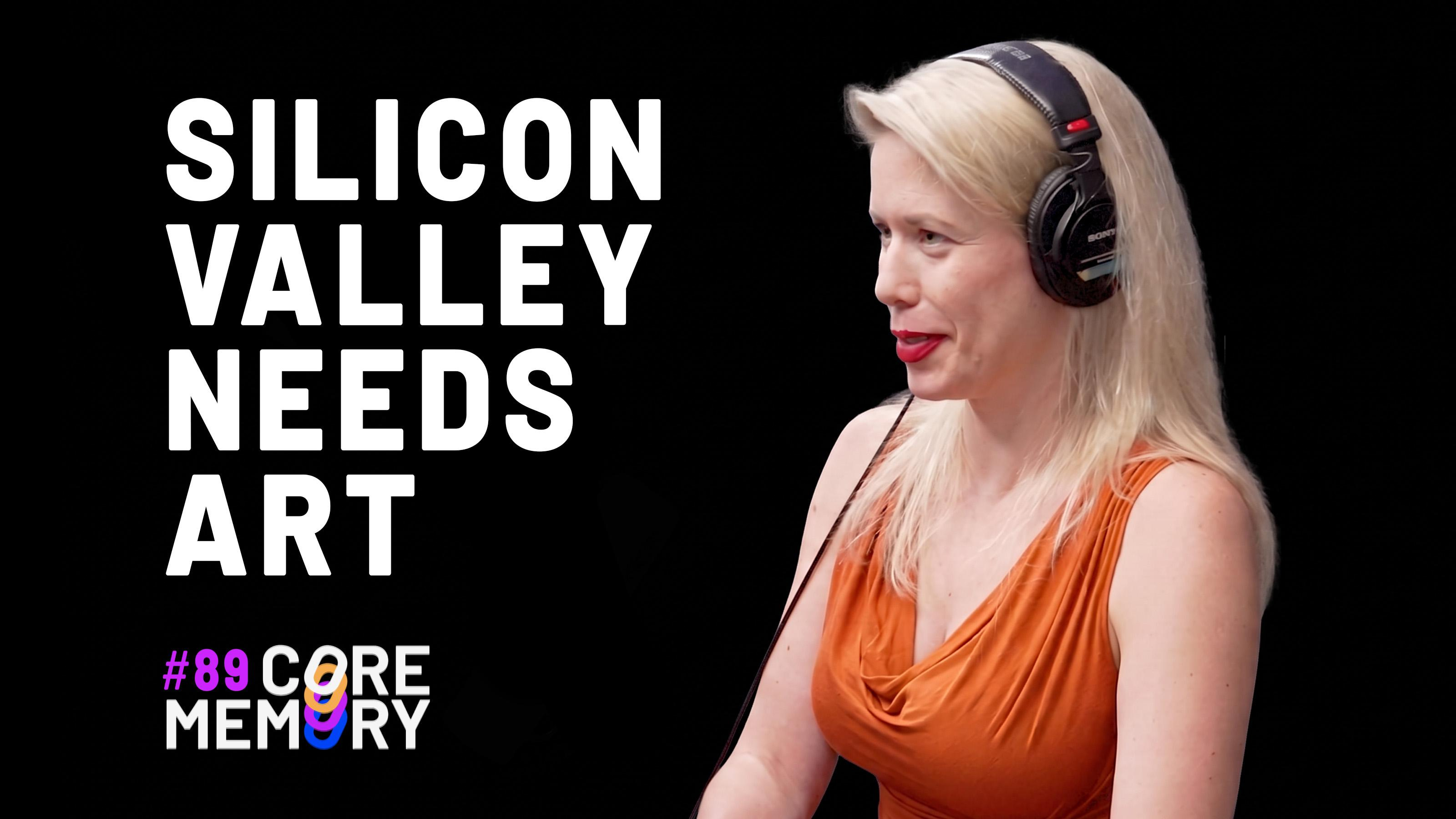
Anna Gát, founder of Interintellect, discusses how to improve technology-and-society conversations through structured dialogue. They debate why people “hate tech” and “hate AI,” whether that fear is warranted, and how engineers’ growing influence is reshaping society. They also cover Elon Musk’s writing style and X/Twitter’s changing role in intellectual life.
Hungarian-born writer and screenwriter (mid-thirties). Grew up around TV production in Hungary; parents were major TV creators. Trained in philosophy/languages; later studied dialogue science (neuro-linguistics, early NLP). After a 2015 domestic violence catastrophe, she rebuilt her life from scratch, then founded Interintellect (initially AI tools, later “analog” dialogue systems). She hosts salons and guides others to host.
Structured “living-room sized” conversation settings can prevent toxicity at scale (no toxic incidents in seven years). Good dialogue is a technology problem solvable via setting, role modeling, and classical dramaturgy. X once enabled meritocratic discovery; now group chats/Discord are harder to break into. Tech optimism is often dismissed by hype/fear; she’s more optimistic after observing Interintellect’s results.
Interintellect’s platform for literary salons/workshops; her 2019 viral essay and waiting list; DM’ing Sam Altman after a New Yorker interview; Elon Musk’s “syntax” as a proxy for analytical skill; anti-data-center activism as a potential civic problem.
Written by AI. May contain mistakes.
Anna discusses her background, her move from New York to the Bay Area, and her philosophical approach to technology.
“And so you're going to enjoy this discussion.”
Anna describes the founding of Interintellect and her research on the science of conversation.
“And bringing this intellectual discourse to technology.”
Discussion on the techniques used in Interintellect to foster quality conversations and engage participants.
“Can we do at scale, materially better dialogues for people without intervention?”
Anna shares insights about her family's legacy in Hungarian television and the impact of fame.
“So I wanted to go, I did want to go a little biographical.”
Exploration of Anna's experiences growing up in a dictatorial regime and its influence on her views on language and communication.
“Basically, I think he sat down and on these VHS tapes watched a bunch of American sitcoms to try to decide, you know, the history and the format.”
Learn about the complexities of language and subtext in oppressive regimes.
“And I think it does, first of all, like dictatorships and dictatorial structures do multi-generational harms to families and people misunderstand how well they are able to keep an oppressive narrative outside their home.”
Hear Anna Gát's inspiring journey from personal trauma to entrepreneurial success.
“And this is all leading up to, I believe, your move to the US around this time.”
Explore the dynamics of Silicon Valley's culture and its impact on innovation.
“Yeah, I mean, you talk about how quickly it happened, right?”
Discussion on the value of artistic projects in the tech investment landscape.
“it in New York than it is in Silicon Valley where you go to the people and you're like, well, you know, you'll be lucky to get your money back on this documentary.”
Insights on the changing landscape of social media and its impact on conversations.
“thank you for being interested in my uh childhood this is i really want i think it's really weird and interesting but i don't you know i'm like are people interested and then you are so that's great No, I'm into it.”
Exploring the contrasts between European and American cultural perspectives on the future.
“Maybe this is a first world problem that you get to be bummed out about the future.”
Discussing the public's fears and optimism surrounding AI and technology.
“And it was so, I like living in other people's universes for bits of time and just seeing how that works.”
Anna shares her experiences with tech, optimism in innovation, and challenges faced.
“And I find myself having become even more of an optimist running inter-intellect in ways that I didn't think I would ever.”
A conversation about integrating culture and humanities into the tech landscape.
“On the data center stuff, you think that's misguided, this pushback?”
Emphasizing the importance of community and shared knowledge in understanding AI.
“You can put your feet up and have a glass of wine and you're not rushing anywhere.”
Explore the value of community knowledge and collaborative discussions.
“then it's joint conversation, group inquiry is what is going to put you into a more relaxed attitude.”
Discuss the relationship between language, physicality, and LLMs.
“So one way to look at LLMs is that we've mathematically solved language.”
Learn how AI tools assist in writing, research, and editing.
“Do you think, how do you, do you have a sense, do you think the LLM, when I use them now, I mean, they still very much lack this soul and character to the writing.”
Discover the nuances of translating texts using AI.
“Like, I can't get Claude to write a full inter-interact salon listing, even though that's like three paragraphs.”
Examine the privacy implications of using AI for personal data.
“And they gave me this text without ever hearing or reading me in Hungarian ever that really felt like I, as if I had written it, but then it was edited by like a really good editor.”
Analyze shifts in cultural consumption and attention spans across generations.
“I always immediately default to going all in on everything.”
Explore how future generations might engage with knowledge and culture.
“I gave a talk here in SF a couple of days ago.”
Discussion on the rising interest in long-form narratives among younger audiences.
“So clearly there is some kind of hunger for long form, for sustained attention, for longer journeys, whether that's a computer game or a really long TV series or, I don't know, reading War and Peace.”
Exploration of the growing backlash against AI in tech and societal implications.
“And I don't know, like Pamela Pavlishek, who investigates internet native emotions and how human emotions are changing by being online, by texting with people.”
Debate on the responsibilities of tech builders towards culture and society.
“In almost all cases, the alternative is terrible.”
Discussion on the necessity of long-term thinking in tech and cultural investment.
“I think one good thing that the tech industry is learning from AI, and this is completely under discussed, is that it gives us long term thinking.”
Anna shares her deep appreciation for Tom Stoppard's play 'Arcadia' and its themes.
“It was like a Harry and Sally situation just with laughter.”
Exploration of the themes of probability, love, and humor in 'Arcadia'.
“And it created two classics inadvertently and indirectly.”
Discussion about the impact of Tom Stoppard and Kurt Vonnegut on creativity.
“You needed precedents and previous inventions to enable future inventions.”
Conversation about moving from New York to Silicon Valley and the cultural implications.
“The parents did the unthinkable and put him on a boat to save his life during the Holocaust.”
Discussion on the challenges of writing while managing a podcast and work.
“optimistic but also very pragmatic I'm very pragmatic are you still doing movie stuff?”
Dialogue about Emma Goldman and the interest in socialist themes in writing.
“And you want somebody who was born in a socialist country and has a very specific opinion about that to take a look?”

Get the gist, explore an idea or ask about something said.
 Claude
On Core Memory, what are the key points of this episode?
Searching your listeningAutomatic transcript. May contain errors.
0:00Ashlee: This week's episode is a little bit different. We're doing a intellectual deep dive into technology and society, and we're doing it with Anna Gát. She is the founder of Interintellect. It's a platform for having deep, thoughtful, meaningful conversations. on has developed a type of system over the years for having dialogues that are hopefully fruitful and that help people add some intellectual texture to their lives. As such, we go through the tech industry, why people hate it, why people hate AI. Is this a good thing? Is this a bad thing? Is it warranted or not? We get into Elon Musk's writing style.
0:48Ashlee: We get into one of my favorite topics, which is engineers taking over the world and what this means for society. All kinds of juicy topics, and Anna has big thoughts on them all. She is Hungarian by birth and a writer and and screenwriter, um, by training and intellectual, uh, in her mid thirties, she basically changed her whole life to go chase after this inter intellect idea due to some, some personal tragedy and drama in her life, which we get into a bit in the show. Um, she's just a cool, cool cat who has a big following online and, and among intellectual circles in Silicon Valley and beyond.
1:36Ashlee: And so you're going to enjoy this discussion. I am Ashley Vance. This is Core Memory. Here we go.
1:58Ashlee: First of all, Ana, thank you so much for being here.
2:02Anna Gát: Thank you so much for having me.
2:03Ashlee: It was a treat. I have all these friends that tell me I should be interviewing you.
2:08Anna Gát: Really? Oh, thank you, friends.
2:10Ashlee: I reached out. Yeah, I got lots of messages as well. Really? Yes. Wow. And so you're usually in New York, but you're doing some kind of a couple weeks in the Bay.
2:19Anna Gát: That's correct.
2:20Ashlee: Yeah.
2:20Anna Gát: I'm actually on the fence about this a little bit because I'm based in New York. I've been living there for two years because if you're a European Jew, that's where you have to start. There are rules. That's like level zero. And now I'm thinking maybe I should come here.
2:35Ashlee: This was going to be one of my questions.
2:38Anna Gát: I'm feeling a strong pull and I'm emotionally conflicted about it because this is like so far away from home. Every time I walk around in San Francisco, I'm feeling like I have a lot of friends here. You know, my investors are here. A lot of people I work with are here. But I might as well be in New Zealand in terms of like cultural proximity to where I'm from. I'm Central European. I'm technically from the Shire of Europe. if the Shire was something that commits horrible mistakes in wars and gets invaded all the time. We have like two hills and two rivers, one of which we don't like. So that's my like geographical backdrop.
3:14Anna Gát: From Hungary. Yeah, I'm Hungarian. So here I'm like, you know, Alice in Wonderland. Like you guys have everything. It's amazing.
3:20Ashlee: All right, let's get into that in a second. But just briefly before we do that, I intro'd you, but I was like curious. I mean, how do you, how do you, you have an unusual life. How do you describe what you do?
3:34Anna Gát: Well, it depends who's asking, right? I usually say that I'm a philosopher and a technologist. And if somebody is like, what's that? We don't understand.
3:44Ashlee: You lost us like five words ago.
3:47Anna Gát: Then I say that my background is in philosophy and languages. And I run a technology startup.
3:54Ashlee: Yeah. Okay. And obviously, you get a lot of attention for these salons, this art of conversation and all of that. I mean, that's part of this. And bringing this intellectual discourse to technology. Is that fair?
4:10Anna Gát: Yes. I mean, it was always my goal to build something where other people can run events that are not kind of poisoned by politics, that are not just about networking. They don't have a clear goal. That's the European side of me. And yeah, I run Interintellect. Anybody can host their own literary salons, workshops, book clubs there. It's going really well. We do very beginner-level stuff for young people. And we also now have the biggest publishers and the biggest thinkers, writers using our platform proactively. And you guide people on how to make these successful. So I don't know how long I should go back.
4:49Ashlee: This isn't really the heart of what I'm interested in your ideas. But anyway, now I just got to...
4:54Anna Gát: I mean, you're a host as well. So I think we are colleagues in this sense. So my background is in languages and philosophy. But my career since my late teens used to be in film and drama. So I wrote plays. I worked with screenwriters and wrote screenplays as well. It was like European art house level stuff. But I also worked on more like bigger budget stuff as a script doctor. And, you know, around 15 years ago, I started becoming very interested in the science of dialogue. And I started researching like neuro linguistics, like what happens in the brain when two people are talking. I started looking at like super early level NLP and what AI was doing at the time in terms of like languages and communication.
5:41Anna Gát: And it was basically the understanding that since Aristotle, we had understood how to create good conversations in drama, but science is just catching up to this ancient knowledge to be able to mathematize it and express it through technology. I thought, okay, that's great. I spent 15 years trying to have fictional people have better conversations. And what if I did something that can do that for real people? And so InterInsect was born first as an AI company, and I was building, at the time, very heuristics-based tools to help people have better dialogues. And then at some point, I thought, this is too early.
6:18Anna Gát: AI is too early for this. I'm just going to do super analog. InterInsect literally started with an Excel sheet and my insomnia, and I built it that way. Can we do at scale, materially better dialogues for people without intervention? And so I started hosting. I mean, today we've done this like tens of tens of times. We haven't had any toxic incident during any of the conversations for seven years. So I know that something in the kind of human engineering algorithm really beautifully works. But it's all theater. Like I take everything from Aristotle and classical dramaturgy. This is creating a set and setting a play and then let people play in that.
7:01Anna Gát: and somehow the result is really good.
7:04Ashlee: But you're not hosting all of these. So how do you push the other people in the right direction?
7:09Anna Gát: I don't push them. It's the magic. I host a lot of events myself on the platform. So I do a kind of role modeling, as VCs would say. It's really important. A lot of people, when they want to come on Interins Act and start their hosting career, they want to build their community, they want to build their praxis, they first come to a couple of my events. and then of course I experiment and play with the genre a little bit but they see the the basic which is a living room sized group of people who usually don't know each other there is a big topic or a big person present something that you know removes whatever is being discussed from your immediate self a little bit that helps people you know have a little bit of space for the discussion and then there is a way of doing it so that everybody joins in and everybody becomes a really good conversationalist, which is the magic part.
8:08Ashlee: Yeah, it's like a lost art and I see the children growing up. I have two boys who are actually quite personable and can strike up the conversation. I noticed their peers, not like I'm trying to compare them fully to their peers. I just noticed that these young kids are not the best conversationalists these days.
8:29Anna Gát: Well, just send them to inter-interact will help.
8:33Ashlee: So I wanted to go, I did want to go a little biographical. You come from a part of the world that's like near and dear to my heart. When I was, oh God, how old was I? I mean, I did a semester abroad in the Czech Republic at school. and that I did many months around the same time of backpacking through Europe. And Budapest was like this. When I went to visit there, it was a revelation for me. I was a Russophile growing up as a teenager and deeply into the Soviets and had read all this Soviet literature. So just to kind of get to see some of the remnants of this, it was cool for me. I know it comes with a lot of baggage, but it was cool to see for me.
9:15Ashlee: Budapest and then Prague kind of became my two favorite spots. Prague's a little different these days than when I went to visit. I did my semester abroad in 99, so it was like it still was like a little more still a few more less touristy and a little more. You had the Gordy Park. Yeah. Yeah, I enjoyed that. They did not like tourists. They didn't like Americans. It was nice. If you spoke a little Czech, you Like the world would open up to you and it was cool. But so you grew up in this like quite famous family that's making a television, like an extremely popular television show, right?
9:55Anna Gát: Yeah, that was kind of wild. I always tell people here that my parents were super famous, but in a tiny country nobody cared about. So you learn a lot about fame and public life through the prism that there is fame and it's so relative. In my sub-stack essays, I write a lot about fame and how I myself approach it. So my grandfather was a big film star during communism. One of my grandfathers, basically the regime picked him to be the everyman, the kind of Sean Penn style roles always went to him. He died when my mom was very young, so I never had a chance. We never overlapped. And my parents, my dad had passed away and my mom is still active in her career.
10:36Anna Gát: They spent their entire careers in television making TV shows. They had a couple of really big hits, I don't know, comparable in the U.S. to The Golden Girls or something like that, like that level of, you know, a basic tenet of culture,
10:51Ashlee: pop culture or pop culture history. I mean, wasn't it like 80 % of the population was watching these shows? Oh, no, 100. There was one TV show.
10:59Anna Gát: So you either watched my mother in the 80s on Saturdays or nothing, or you didn't watch TV. Okay. These were the two options.
11:06Ashlee: There was one channel. Yes. Okay, okay. Yeah. And it was what? Like a sitcom or a drama?
11:12Anna Gát: So they did a comedic police show throughout the 80s. And then my dad did, I think his best TV show was just around the time of the change of the regime between 1989 and 1991, which took place in the army. but sadly like the whole concept was the compulsory enlistment that still was going on during communism and then basically communism disappeared underneath them and they still did one more season because it was absolutely hilarious I think that's a masterpiece and then they stopped because this compulsion this societal compulsion just went away and then my dad also did throughout the 90s, the first and to this day kind of the only big Hungarian sitcom.
12:04Anna Gát: Basically, I think he sat down and on these VHS tapes watched a bunch of American sitcoms to try to decide, you know, the history and the format. And that ran, I think, throughout the 90s. So I grew up on the set. I grew up with the child actors there and saw how it's being pulled together.
12:22Ashlee: So how did they, I, they're, okay, so your mom's an actor. Yeah. And your dad's directing and writing.
12:29Anna Gát: He was a producer and director. Okay.
12:31Ashlee: And then, so. Show creator. And how, I mean, he must, they must have been confined in what they could say initially. Or no, were they pushing?
12:40Anna Gát: That's interesting. So in the 80s, yes. And I do remember, I actually wrote about this in an essay, three prologues to language, that one of my first interests in drama and dialogue science and dialogue writing was not even the fact that my parents were making these shows. I did learn, and I'm happy to talk about what you learn when you grow up that way. It was more that in the 80s, when I was still in kindergarten, there was this absurd vibe where parents, adults were afraid of children, which you never really see. Maybe during the craziest woke era, you would see something like that. So I don't know, say you have a child who's five years old and at home with your wife, you say that that article is clearly written by a propagandist or that actress is only in this movie because, I don't know, she is with this big party officer.
13:32Anna Gát: or you would say that, you know, this hospital is falling apart because we went there to get a flu shot and, you know, there are like deer grazing in the quarters and the child is listening at the dinner table and you have to somehow ensure that the child is not going to go in and talk about it at kindergarten because then the kindergarten teacher hears it, who is maybe a big party operasnik and they will report on you and you lose your job and nobody goes to university anymore in your family ever. So I remember this weird tension. And I think it does, first of all, like dictatorships and dictatorial structures do multi-generational harms to families and people misunderstand how well they are able to keep an oppressive narrative outside their home.
14:16Anna Gát: It actually poisons your relationship with your children, with your wife, like everything. It's a full texture coverage in society. And so I remember that tension and always being told not to say things or say things differently when I'm engaged with adults. And I think that was my first kind of peek behind the curtain, that there is this thing we call language, and it seems like the truth, but that people might be, like there's subtext. I think I realized very early that there is subtext and that my parents are very, very aware of it.
14:50Ashlee: And were your parents, were they trying to push buttons with their show or they were just trying? It wasn't that kind of show. they were just making entertainment. Like, was it a commentary, I guess, on the times?
15:05Anna Gát: I think through comedy, a lot of things are permissible. But I think it's very important for Americans to understand that during the Soviet regime, people didn't know, people could not faith them that it could ever go away. So I was working on a movie when I was still a screenwriter about the Chernobyl disaster and its coverage within the Hungarian evening news and the media. And I interviewed all these newsmen who worked like they were the morrows, you know, of Hungarian, the Hungarian media between like 85 and 89 or 1990. And, you know, I was very interested in the moral quandary of having professional excellence in such circumstances, because they were really the best, best, best, best, best, but the wider system was horrible.
15:56Anna Gát: So what is your talent serving? I was very interested in the movie. And one of the things that they always said was that even in, I don't know, September 1989, so one month before the Hungarian Republic was announced on the 23rd of October 1989 on a balcony, they could not imagine that it's falling apart. The same way as we can't imagine that, I don't know, the United States would fall apart ever, right? And if somebody comes and says that, you say it's Lindy or that, you know, it has survived so many other things. And I think one thing that you learn as an Eastern European is that anything can go away.
16:34Anna Gát: And if we like something and if we want it to stay, not saying that communism was like that, but there are good things in the world, like apolitical conversation spaces, then you have to have a couple of people who do this as a job to fight for their continued existence.
16:48Ashlee: Yeah, yeah. I mean, it's one of the reasons I'm so interested in that part of the world. It feels like they're just always, for centuries now, just in the cut between Russia and Germany. We are the halfway house.
17:01Anna Gát: Like Hungary's like right the invadable corridor. And, you know, I mean, there are noble aspects of that as well. Like Hungary had a prime minister in 1940 who committed suicide over this very dilemma, moral dilemma, because he didn't want to give the railway up for the Germans to transport weapons across the country. Because then your country basically becomes a target, right? Like a bombarded target, and he didn't want to endanger the population. There was no way out. He killed himself.
17:35Ashlee: Yeah. So when you were growing up, then some people would just recognize your parents on the street then.
17:41Anna Gát: Oh, my God. Absolutely. And my parents were paranoid about it. And ever since then, I feel really sorry for all famous people. It's terrible.
17:49Ashlee: Yeah. And then especially. I mean, you get a reservation more easily, but that's literally where it stops. In the Soviet times, I mean, you just take on extra risk, too, by being of note.
18:01Anna Gát: Yeah, they were very, very much kind of visible in the system. But I also think that because of that, they kind of left them alone because, you know, they weren't doing direct harm. It was all just quote-unquote comedy. Yeah, very interesting. I think everything I do in my adult life, it basically comes from these inspirations in a way that I'm still exploring.
18:25Ashlee: This episode is brought to you by Brex. I spend all of my time inside of the world's most ambitious companies making rockets, semiconductors, robots. Very often the business is struggling and then all of a sudden things click and take off. Then the company's expenses spin out of control. They either have to clamp down, start counting pennies, cross their fingers, hope for the best that the quarter or the year comes out okay. Brex was built to handle exactly these situations. It helps you move fast, spend smarter at the same time. They've got credit cards, banking, expense management all in one place.
19:04Ashlee: They've got AI technology looking over everything, taking care of tasks for you. No more chasing down receipts. We use Brexit Core Memory. It has been a godsend in giving me back so much time. Giants like Anthropic and Zoom use Brexit as well, and so do tens of thousands of startups. You should use Brexit, and you can find out exactly how to do that by going to Brexit.com slash core memory. So you get in, I mean, you've had, like you mentioned, this varied career. and when I was buried up to a point
19:41Anna Gát: and I started inter-insack 10 years ago and I haven't slept since and it's just been that one thing but yeah before that it was crazy
19:46Ashlee: yeah I mean that was kind of there was a quote that I found somewhere in here about about maybe I'm fast forwarding too much you wrote you wrote I went on Twitter in 2018 because I had nothing I had lost everything and I thought okay I woke up one day and I thought I don't care one thing I have is myself. And this is all leading up to, I believe, your move to the US around this time. So what happened? Why did you wake up in 2018 and have nothing?
20:19Anna Gát: I basically had a major life cataclysm in January 2015 because of a domestic violence incident that blew up my whole family. And I lost everything. I left basically with a suitcase. I got stuck in England at the time. I was doing very badly. I lost a lot of my friends and family members. And I basically restarted my whole life, put it back together. I had complete PTSD for a year, so I didn't have thoughts. And that was great because I could read any scientific book I wanted. I'm serious. My brain had no resistance. It was like an empty bucket. it and i was just like shoveling coding and biology and whatever i could find um into it it
21:05Ashlee: was great it was an intellectually very interesting time you had no thought you had no i had no i had no thought at all for nine months okay it was amazing in some weird way your brain just shut
21:16Anna Gát: down it just shut down completely and so i just fed it like crazy i was like it will come back online at some point it's like rebooting and it did and eventually it came back and i became a completely different person so um that was very interesting um and then basically the past 10 years i put my life back together um at first i was working in like babysitting catering really customer service basic basic jobs which actually are super useful now as a founder like i can train my customer service team because i literally have done that job i did it when i was like poor poor like traumatized immigrant um in london um and then in 2016 um i had the realization of what i had to do i didn't want to be a founder beforehand i just wanted to work at a place that is like inter-intellect and it didn't exist and i was like oh no i have to become a startup founder so i sat down read a bunch of things about it like what is a startup where are startup founders um and and i basically like two days later i i registered a company um i also was reading this article.
22:17Anna Gát: There was a New Yorker interview that Sam Altman gave in, I think, October 2016. And I was like, wow, this is how you make a real difference in the world. It's startups. It's not a production company. It's not a think tank.
22:31Ashlee: That was the Y Combinator story.
22:34Anna Gát: Yes. And it was very funny because the first time I ever came to America when I was 35, Sam was my first meeting because I was like, you have to meet me because you changed my life with this weird article with this weird interview and that's why it's so important to always give interviews you never know who's going to read it how'd you get in touch with him i called dm'd him
22:53Ashlee: on x oh yeah yeah and you met him here in the bay area yeah and he was still at yc and i i brought
23:00Anna Gát: him um far from the tree by andrew solomon which is one of the best books on um changing the life of younger people or beginners um and then a one and a half two-year period started when i got a job in London working as a night editor on finance news. So I would go to work at 1030 in the evening and finish at 630 in the morning. I would sleep a few hours and then I'd be at InterInSact for one and a half years. First as the app and then as the platform for the community and hosting. And then slowly but surely it gained traction. I went on Twitter or X, as you mentioned. I was like, well, I don't have anything anymore.
23:34Anna Gát: I used to have a status and famous parents and nice clothes. And now I'm sitting in this bed sit basically in London. And I have a suitcase and another suitcase for my books. Let's see what I'm made of. And after this experimentation, a couple of visits here, when I got to sit down with people and ask for guidance, I realized, OK, this is how Interintech is going to be. And then I just started raising money and kicked it off. And then five minutes later, the pandemic started.
24:02Ashlee: Yeah, I mean, you talk about how quickly it happened, right? and that you were amazed that this was possible. There is still this funny thing about Silicon Valley where, I mean, you're reaching out to Sam as a total stranger. I've always found this the whole time I've been reporting. It feels different to other industries. Completely different. Where, like, I don't know. Maybe it happens. I'm not sure, like, a big pharma CEO or, like, you know, the head of Exxon is just taking random meetings from people who reach out very often. And I'm not sure why tech still is that way as it's gotten bigger and has a shape that's a little more similar to these other industries.
24:42Ashlee: But it still seems to exist.
24:43Anna Gát: I really believe in that. I mean, of course, tech is a very imperfect industry. It has people with various different incentives. And when we say tech, you can use it as a kind of Rorschach test where anybody can confirm their previous biases and think whatever they want. But I find that a lot of things that we say about America in any era is only really true about a specific part of the country. You know, there was a time in the 20th century when people equated New York City with starting from zero, right? When all the immigrants went to New York and you could move into, I don't know, tenements and then one generation later get a law degree.
25:23Anna Gát: There was a time when, you know, Hollywood was the American dream and people used becoming a star kind of metaphor for the American journey. I do think that that's Silicon Valley today. You don't, I always say that things that used to stop dates for me, you know, bring in investment and business for me in Silicon Valley. Because here it's like, oh yeah, she's a little bit weird. That's really good. We've been looking for somebody weird. There is money in this. And I just deeply value it. I think for all bizarre people, you need a place where that's somehow a competitive advantage. And right now that's Silicon Valley.
26:02Anna Gát: And people are, like I invest in, I mean, I'm sure you do that too. Like we are looking for the well-adjusted insanity that contributes to society and the future.
26:13Ashlee: I look for that in my stories. Tell me. I've never become an investor type. No, I mean, I was a journalist. Oh, you can't for ethical reasons? It definitely couldn't when I was at the New York Times or Bloomberg. And then it's probably like a little bit of a grayer area now just because, well, I could do whatever I want, I suppose. But, yeah, I just tried never to get anywhere near investing in anything I'm going to write about. And so.
26:38Anna Gát: That's clever.
26:39Ashlee: I write about a lot of stuff. So it's limiting. But it's sad. It's the thing I know the most about. Yeah, that's true. And I have, I don't think it's absurd to claim a proven knack at identifying some like folks who are going to do pretty well. So it could have been useful.
26:56Anna Gát: I invest in aerospace because I wanted to become an expert in something as an angel investor that has nothing to do with my day job.
27:03Ashlee: I saw that. I saw you were in Airship Ventures, I think. Or what? They're in Los Angeles, aren't they?
27:09Anna Gát: There are a couple of really cool things there, yeah.
27:11Ashlee: Yeah, making an airship. Aerospace is probably like the worst place you could invest. It's like the highest risk.
27:17Anna Gát: You know, I think the chances for me to become a great investor are like not impossible, but down the line. So now I'm just falling my heart.
27:26Ashlee: Okay.
27:26Anna Gát: Let's see what happens.
27:28Ashlee: Okay. So you're in London. You start reaching out. People like this weird person. Yeah. And then you're coming.
27:33Anna Gát: Not everybody, of course. But I did. Enough people. And this is 2016-ish, and you're pitching this idea of creating this discourse, this intellectual boost to things.
27:49Ashlee: In my experience, the tech, if I'm trying to raise money for a documentary or something that's like more in the arts world or that comes with this intellectual trappings, it's much easier for me to do it in New York than it is in Silicon Valley where you go to the people and you're like, well, you know, you'll be lucky to get your money back on this documentary. That's sort of the goal is to end up with a really nice film, get your money back, and then we'll have some fun. you could go to premiere you can see your name and you'll have made this art you know and i find silicon valley people have a very hard time wrapping their head around why that would be of any value so but when i look at your investors i mean people like biology and some other folks um these are very much you know full-on full-on tech uh figures in this world so yeah i mean And did you find, obviously you found people were into this unconventional idea that doesn't immediately have the look of like a hockey stick growth SaaS company or something like that.
28:55Anna Gát: Yeah, I mean, first of all, in 2016 and 2017, basically into 2018, so two and a half years or two years, I was doing just my own research and experimentation. So I did a pretty big private research on text messaging, on Twitter, Valance. Like I relied a lot on what Spotify was doing with music and how to understand from lyrics and cadence the sentiment of different songs. And I thought that I could do that on language. And nobody really was doing this at the time. I was invited to give talks at X, or at the time it was called Twitter in London. It was a new area. Everybody was focusing on blocking at the time.
29:44Anna Gát: So this was the era when, you know, the New York Times and the kind of established media branch in the U.S. was very convinced that the Internet is helplessly toxic and harmful. And the best thing we can do for people is to build walls and give them shields that they can switch on anytime they want. Nobody trusted that, I don't know, Twitter would itself build these tools or Instagram, you know, later on built their tools as well. And so, you know, I was, I always wanted to do something positive because I, you know, coming from academia and coming from cinema, I know that if the setting is right, people will have very, very fruitful conversations with each other and they will do deep association.
30:26Anna Gát: Like on Interinterlect, we have so many marriages, babies, books, co-written, people moving to each other. So clearly setting leads to good conversations at scale. And then that leads to real change in people. And so I had a lot of domain knowledge. And by the time I realized that this was going to be something, something like Interinterlect, which was mid-2019, I wrote a viral essay that just went crazy. I put on a waiting list on the internet and it just went crazy. And I was like, okay, so this is what people want. It was counterintuitive to me because I'm Eastern European, so I really wanted to do an app and suffer.
31:07Anna Gát: And this was fun. So I was like, I can't do something as a job that is fun for me. How am I going to suffer every day? And so I had to resolve that internally. And then I started reaching out. So I had a lot of proof of concept and I started just running it for free myself a lot, a lot, a lot, a lot. And by the time my two rounds came, I was basically doing the only such company that is surviving and thriving and growing and where the core idea never went away.
31:42Ashlee: Okay, okay.
31:43Anna Gát: But Balaji wants me to, he wanted me to turn it into a DAO. And for a while, every single text message that I exchanged with Balaji was like, hey, how are you? You should turn interns into a DAO. Okay, hey, how are you? Have you considered turning Internet Tech into a DAO? And I was like, is this a bot? Have you built a bot? I love Balaji. We are collaborating over the summer with the network school. But obviously, a lot of my investors have a lot of ideas of what we should be doing. And I hope that I will have the scope to be able to try a lot of these ideas.
32:14Ashlee: Okay. He used to hate me.
32:16Anna Gát: Really? Why? Clubhouse incident?
32:18Ashlee: No, I used to make fun of him on X because I think I said that his tweets were like, I forget what I said, something about sort of deranged fortune cookies. Aw. He would put out these. He's so smart. Yeah, yeah. He definitely is on some things. He would put out these, you know, just his big proclamations and everything. And then.
32:44Anna Gát: He's the prophet, you know.
32:45Ashlee: Then he made fun of me for having a female name. And then he blocked me. That's very mature.
32:52Anna Gát: But then he's come back.
32:53Ashlee: The last year, he's just...
32:56Anna Gát: Only Taleb blocked me. I feel left out.
32:58Ashlee: Yeah, yeah. He's a big blocker, I think. But then Balaji reached out. He's like just a couple weeks ago. He's doing great stuff.
33:07Anna Gát: I should have him on the podcast.
33:10Ashlee: It'd be interesting. It looks like couples therapy.
33:14Anna Gát: He's going to have Esther Farrell mediating trying to resolve this thing. I imagine he probably doesn't even know why he didn't like me originally. Yeah.
33:22Ashlee: All right, pod friends. I am here to tell you about Send, Cut, Send. They are a manufacturing phenomenon. Whether you're working on your own car or you're a giant automotive company, a rocket maker, if you need metal cut, machine, or bent, you're going to Send, Cut, Send. they'll do it for you right and they will do it for you fast go to send cut send.com slash core memory for a 15 discount on whatever you're trying to make we love send cut send go visit them today okay i'm gonna i'm gonna change directions on you a little bit i wanted to set the stage but then
34:00Anna Gát: thank you for being interested in my uh childhood this is i really want i think it's really weird and interesting but i don't you know i'm like are people interested and then you are so that's great No, I'm into it.
34:11Ashlee: But then I just wanted to explore some ideas with you. Okay. And so I just want to kind of bring people up to speed, give a little flavor of where you're coming from. What would you say, like, given your interest, okay, given your journey and the role that X played in it, and then also your fascination with conversation and dialogue, how would you rate X in this moment in time in 2026? and its value to our world?
34:43Anna Gát: I had a lot of conversations about this with my friends and also in the internet select Discord. A lot of people are extremely mad at Elon and they find that X, Twitter is no longer the same. I really like it. I feel like criticizing X is a little bit like criticizing New York City. It's still the best place. Like, yeah, maybe this one theater closed or whatever subway line is now directed in a different direction, it's still unparalleled. My worry, actually, because, you know, you read up this quote by me where, you know, a 34-year-old woman who used to have a life and now she lost it and she's, like, building a new life.
35:27Anna Gát: In 2018, you could go on X on Twitter and rebuild. Like, it was a very meritocratic system. If you were interesting and you had something to say, you were hardworking and people saw that you were consistent and not super unstable or not beyond the pale, at least you could get a job. You could find your spouse. You could, you know, inter-intellect in many ways was born out of Twitter communities. You know, we just like expanded it and gave it a different format. I'm not sure you could do that anymore. Almost all my intellectual life these days that is not inter-intellect related is in group chats.
36:03Anna Gát: I think if you're a young person, maybe the way of winning today or entering is to get into a group chat. But even that is just like 200 people. The chances of being discovered there or going viral, there's just like a much harder journey.
36:18Ashlee: Why is it harder now on X?
36:21Anna Gát: Because the algorithm works differently. Because a lot of people left or they are inactive. um i'm not saying that if you're hyper talented at responding and getting in touch with people you can still win but i don't think that it is at the scale as it was for like my generation
36:40Ashlee: entering tech so you had a place where you could show off is probably not the right word but show what you could do get a little bit of attention and fast forward your life to some degree yeah
36:51Anna Gát: like in the french cafe where you could like hang out with sartre and whatever and if you said nice things in the cigarette smoke, then they would publish you or something. Twitter was really like that in the glory period when I was using it for this purpose. I think today that's probably discords, which I know less about because I run our own, but I spent last time on other discords, but it's in group chats. And to get into a group chat, I mean, it's already a gated thing. You can't just fight your way in. Yeah.
37:22Ashlee: You brought up Elon. How do you feel about Elon?
37:25Anna Gát: I have to say, okay, this is like just, I'm just sharing this because this is a public platform. And why would I not share something really embarrassing about myself? I am a complete sucker.
37:35Ashlee: Are you about to tell me you have one of his children?
37:38Anna Gát: If I do, I don't know about it. So well done, Elon. I didn't notice. I, as a linguist, I'm completely obsessed with men with good syntax. And Elon has an amazing syntax. Like his use of the English language is just superb. Obviously, it's a proxy for high intelligence and analytical skills, et cetera, et cetera. So I'm a little bit forgiving. You know, clearly he's doing some things that I don't agree with or I don't understand or that seem very kind of knee-jerk reactions to things. I'm also not, you know, in the business of encouraging fascism to take over social media. So maybe he should be more careful there, Elon, if you're listening.
38:19Anna Gát: But his syntax is to die for. like we have to we have to give this to the guy you're not wrong you're refreshing my memory now
38:26Ashlee: i remember when i was working on the the book and i was always struck by his writing style i was struck by his emails they're very efficient he he's very um he hardly ever makes a uh error of punctuation he actually gets really upset if somebody is writing to him does make one his
38:45Anna Gát: Sub clauses, A plus.
38:47Ashlee: Yeah, yeah. Consistently. He does have, he's got a very distinctive way of communicating. And he clearly takes pride in his writing when he writes those big master plans and all these things.
38:58Anna Gát: It's a mathematical skill proxy. So if you listen to, I love watching interviews with great mathematicians. Even sometimes their English is not extremely developed. Like they have a limited vocabulary. But their syntax is so strong because it's a mathematical skill. that they will come across as really proficient English speakers. And so when Elon speaks, I feel the kind of numerical areas in my brain flare up because it's like the formula is perfect. And I really, as a private pleasure, I really enjoy that. So I think it was 2024, you wrote about this difference between the conservatives and the liberals, this view of the liberals think the past was sort of bad
39:45Ashlee: and we want to head to a more glorious future. The conservatives.
39:48Anna Gát: The public nostalgics.
39:49Ashlee: Yeah, and the conservatives want to hold on to what was and times used to be better and how this had transitioned to this world where it's kind of like the autists versus what's the second group?
40:01Anna Gát: Oh, I don't know if I remember. There was a two by two.
40:04Ashlee: The public nostalgics. Yeah, yeah, yeah. Yeah, so, and...
40:08Anna Gát: Yeah, the argument was that a group that's, or a dichotomy, a division line that's maybe more important right now in America than left and right is whether you're a public nostalgic or not.
40:21Ashlee: And it's kind of like, do you think the, how do you feel about the future and tech and where we're heading? So I think that was from a 2024 essay. Is this still something, I was hoping to get into this if it's still top of mind to you.
40:34Anna Gát: Yes, it was the conservatives were saying that the future, sorry, the conservatives were saying that the past was good. The public nostalgics were saying that the future will be bad. And then the artist culture was saying that the future will be good. And the wokes were saying that the past was bad. That was the two by two. Now I remember. Yeah. That was kind of shocking to me when I started coming to America a lot. And now I'm in the process of relocating and, you know, being based here primarily. I did not expect this much public nostalgia in America as I do. I remember going to these East Coast conversations where extremely healthy, wealthy, well-educated people who are clearly winners of the liberal world order, you know, they went to school.
41:28Anna Gát: They figured out even if they had student loans, they have to pay them back. They have great jobs, a MacBook, an Apple, watch, a Tesla, whatever serves them. And they were extremely negative about the future and without being positive about the past. And I just felt that that's kind of shocking. I started being curious about the intellectual honesty of it, whether they can really think this or this is something with which you gain followers or get tenure. I'm still not fully sure. I find it very, very strange. Maybe this is a first world problem that you get to be bummed out about the future. You know, if you come from an up and coming country, all the good things for you are in the future.
42:15Anna Gát: So you better work for it. It's definitely the most shocking thing to me about American culture. types of philosophies that Europeans have long abandoned, like first-generation Frankfurt school critical theory, are flourishing here. And people expect to read books written in 1948 as a trauma reaction to a massive unprecedented defeat and destruction in the Second World War and trying to live on in that in the aftermath, they are used in a flourishing America to try to interpret today's world and it's just it doesn't work that was not why it was written
42:56Ashlee: it's shocking i mean i'm really into this idea and for a bunch of reasons um i guess as a journalist you are supposed to be somewhat cynical or or um skeptical by nature you know and i have all those bits and pieces i get either celebrated or bagged on for being you know generally optimistic though in my in my coverage i've always been like an optimist at heart it's just sort of where i'm at i get fascinated by the people who are pushing things forward in interesting ways i get i get i just am into people who are passionate about whatever they're working on i don't really place a ton of judgment like when we made the movie on brian johnson or whatever it was it was really less concerned about whether what he was doing made a ton of sense or not.
43:48Ashlee: I was just more into this person who had just gone all in on this big idea. And it was so, I like living in other people's universes for bits of time and just seeing how that works. And so I'm always battling with this a little bit. I cover Neuralink a lot and it's a pretty good example where I think the average person, at least that I run into, defaults to like Elon's evil, putting a chip in someone's brain is for sure evil elon putting a chip in someone's brain is like the you know it's so cool the height the height of evil but then i i hang out with these patients um you know and you can you can see this technology yeah um is helping all that just put the chip in so i mean but you know like like the general public is definitely not they definitely are not bullish about AI or any of really the titans of this industry.
44:44Ashlee: And so I was very curious about like, yeah, where your head was at on this. I mean, isn't, is some of this justified because these people have proven themselves to be just like everyone before them, greedy and power hungry and trolling on things. And, and, and AI does obviously seem frightening in many ways, even by their own you know descriptions and admission but i feel like this is a major this is um at this particular moment in time we my sense is that the united states is mostly very anti-tech and and we happen to be living in moments where it's the most awesome it's ever been yeah an alien intelligence coming to life in the midst of all this so yeah i was kind of curious where you think people are at.
45:34Anna Gát: That's so interesting. And I find myself having become even more of an optimist running inter-intellect in ways that I didn't think I would ever. I mean, obviously, I'm Eastern European, but I come from a very proactive family that, you know, where I saw my parents every Sunday sit together with their film crew and just like build something and then go and shoot it and then it would be on everybody's TV. So I come from that level of thought, creativity, immediate action. Let's see what happens. Let's iterate. But, you know, I started Interinteract in a very tech negative moment when, you know, the AI question was not so much to the forefront in the public eye.
46:13Anna Gát: It was within EA circles, obviously, and the rationalist circles and some other, you know, university departments. But as I mentioned, you know, I would have been pushed to build shields and blocking algorithms and stuff like that at the time. That was what other female founders at the time were, you know, raising money for. And I kept doing interinsects. I was like, I'm sorry to say, but I think the press is wrong. Like, I don't want to be beheaded about it, obviously, but I'm seeing this with my own eyes. And I see that this is not how toxicity happens or is amplified and I'm just building my own systems and it's working and maybe I'm blind but like I'm sitting here all day and looking at these things and it is working and now I've been sitting and doing it you know for seven years in the same format and it is working and it detached me greatly from like hype opinion of the moment so that's kind of my personal framing about whatever to believe, you know, fear mongering coming from the press.
47:19Anna Gát: I do think that with regard to tech optimism, I'm always unsure whether that's a very loud minority who has kind of ludicism as an instinct to things, or that's really a widespread problem. I think anti-data center campaigning is widening the problem into like local communities in America and messing with local governance or is possibly messing with it. I really hope that we will have more stories like what you are doing where here's this person, they had an idea, they were insane enough to actually execute on this and now it's working and the world is better. Maybe not coming from Elon, He has a whole, like a gigantic, you know, aura to work with that is very positive for some people, very negative.
48:12Anna Gát: But like, what about all these people here in Silicon Valley who just wake up every morning, go to work and build the future, literally? Like you come here and you feel like you're 15 years ahead.
48:24Ashlee: On the data center stuff, you think that's misguided, this pushback?
48:29Anna Gát: it's clearly an ambivalent area and you have to be very careful about it but demonizing um trying to give america a competitive edge in a multipolar world i don't think that's long-term
48:43Ashlee: good for america i do wonder what people want us to make at all anymore i mean if we if we
48:50Anna Gát: we don't have brooklyn uh brooklyn uh farmers market and community dancing yeah yeah if you
48:56Ashlee: listen to them so it'll be i guess it'll be very interesting what would happen to the country if
49:01Anna Gát: we can't we're not allowed to do anything i mean i'm you know the bridge between um the humanities and academia in many ways and the tech world and i get the the prejudices of both side both sides and i have to say that you know maybe the most optimistic thing i'm doing with my life is making tech more cultured and just like feeding people Goethe and, you know, Hume and the arts and history and econ all day on the platform. And they come back for more and they, you know, a lot of people make money hosting these. It is working and it's actually much harder to bring the humanities people on board.
49:41Anna Gát: I think tech, because exactly what you mentioned, that people can come here and make their fortune there's an inherent openness because silicon valley wants to win they're like whatever you're giving me that will make me smarter faster stronger more empathetic like more aware of like what people want they will take it and i'm practical in this way i mean i think this is why i had to
50:03Ashlee: live europe okay okay i'm gonna ask a very i'm gonna ask a long-winded question i'll try to try
50:08Anna Gát: Is it an essay?
50:09Ashlee: Go for it. So my general working theory is that, call it since, I don't know, 1982, kind of like the arrival of Apple and Microsoft, we have been dominated by this world where the engineers have become the most powerful, wealthiest, influential figures. And so clearly you have different generations where J.P. Morgan, the bankers dominate things, different groups dominate. We happen to be in the one where the engineers have taken over and not to generalize grossly across all these people, but I've interviewed many of them. There is a pretty good common bond of wanting things to go efficiently to shape the world in this.
50:54Ashlee: They all were really like Star Trek fans. They have this vision of where they want the future to go. Everything in our life from like Uber, you know, DoorDash, all these things. I mean, you see the world operating more and more efficiently in this image. It takes me back sometimes to Don Quixote, which was one of my favorite books. And there's like an argument you could make where Sancho Panza kind of represents this very capitalist, time is money type attitude that had taken over society and Don Quixote.
51:31Anna Gát: Make it make sense.
51:31Ashlee: Yes, like very rational. And Don Quixote represents this figure lost in time who's trying to restore some of the magic and the uncertainty and the sparkle of the world. There's a book called The Re-Enchantment of the World that gets into some of these ideas. And so, yeah, you know, and then I've spent all this time. I will shut up in a second. I spent all this time interviewing these AI leaders of our time, the people actually developing the models. They, too, are not only from this engineering class, but are autists in many cases. in many cases they are extremely mathematical yeah um often child prodigies or doing these math olympiads i'm not talking about just kind of like good at math i'm talking about the best yeah and so you know you could make this argument sort of like sancho where the world is tilted so far this one way to this engineered mathematical um clinical sort of model and we're just heading there even even faster and more directly and all the things that you really care about plays and poetry and novels and and um all this more artistic ways of thinking just give way and get lost in all this and the people who really have the power um i know you're saying they do care about this but maybe writ large yeah yeah i don't know i i always i like to joke that i'm bringing the decadence to
53:02Anna Gát: the table. So, you know, an intern tax salon is the last thing you will do on that day. It's in the evening. You can put your feet up and have a glass of wine and you're not rushing anywhere. And that's kind of the relaxation level at which good insights and connections happen. And I'm very proud to do that. I think, you know, the best things in life kind of make no sense. They have no fixed timeline. Sure, there is a more efficient way of getting the core information out of the brothers Karamazov. But do you really want to do that? Or do you want to enjoy the time it takes for you to go through that journey?
53:42Anna Gát: A little bit like when you visit a city. Sure, you can bingo card your way around Paris. Or you can just go there for a week. Make sure that you see the important things. But the point is the time spent and that you will be a new person by the end of it. And so I always felt that if I want to bring this respect towards our elders, which is culture, right? It's a type of respect towards our elders into technology, which, by the way, I greatly respect. I mean, I live and work in this industry because I think this is the best industry to work in. But if I want to open them and loosen them to be able to just admit curiosity about the classics, about, you know, the great mysteries of the human psyche or how, you know, language is not just formulaic, it has musicality to it.
54:37Anna Gát: And humans do, I don't know, phatic communication and endear each other and put each other in the mood. Then it's kind of my responsibility to bring that. I'm very grateful and excited when tech people want to work with me. I mean, 60 % of inter-intellect is engineers. A lot of people are there. They are reading very heavy books. They are extremely, you know, approaching everything with intellectual humility. Amazing conversationalists, truly grateful, you know, to be able to be in the presence of the elders in that sense. But it's my responsibility. So I've never been one to sit around like, oh, maybe something will fall into my lap.
55:11Anna Gát: I think that's like immigrant power. I'm like, you know, I have to preach the gospels and show the work. So, you know, I always say that Interintract works because every event is good. Not all of them are great. Obviously, greatness is a different distribution. But you know that whatever you click on, it's going to be really good quality. And so people can just like drop in and they will have a great experience. It's like, I don't know, great short form journalists like David Brooks, right? Like not every David Brooks is life changing, but you kind of know when you click on his thing that is going to be a certain level and a certain format.
55:48Anna Gát: And I think in times of uncertainty, when we have literally no blueprint, even if you're super familiar with classical literature, classical literature and history, you don't really know how to deal with AI. then it's joint conversation, group inquiry is what is going to put you into a more relaxed attitude. No individual perhaps understands what's going on and no amount of reading autobiographies of warlords of the past will enlighten you about it. You can trust the community in this, the human community that there are people working on the big things. They are also curious, in some sense lost.
56:35Anna Gát: You know something I don't, I know something you don't. You can create a group of 10 people and everybody will bring completely unique knowledge to the table. And I see as my job, the creation of these spaces where the 10 people are actually interested and willing to come. And then throughout a very inefficient amount of time, say 90 minutes or two hours, they are happy to actually share their ideas and listen to each other.
56:58Ashlee: So one way to look at LLMs is that we've mathematically solved language. Does that take some of the romance out of language for you?
57:11Anna Gát: I love using LLMs. I use them a lot. We have great debates. I have learned stuff from them about language and how they use language. I see human language as very physical. so it's a very temperature vibes resonation based affair you know language is something that shortens distance like I can tell you actually careful and I don't have to actually go there and stop you from by accident stepping off a cliff right I shorten the distance some people take up space with their speech some people narrow it get closer we hurt and endear each other with words it creates a sensation on your skin in your, a resonation in your, your ears.
57:54Anna Gát: Um, and I don't think LLMs, even if they become physically embodied, um, I don't think that they will be able to feel that. And so it's never mutual. Um, and from, I mean, this is theater, right? Like when you're installed by a play in the, in the auditorium, that's a physical sensation. You're like aligning neurally with other people and you, you're, you're like biochemistry changes in the moment, responding to the language. And so I think that, you know, I'm exploring AI products. I think everybody working with language is building something right now. And that's amazing. And we all should, but nothing will replace physical proximity and language is physical proximity.
58:36Ashlee: Do you think, how do you, do you have a sense, do you think the LLM, when I use them now, I mean, they still very much lack this soul and character to the writing. I mean, I assume they will get much better but i don't know maybe there's some sort of limitation what's your how do you use them what do you use them for um all kinds of things i will use them for research on stories for if i have a guest coming on the podcast um extremely helpful if i'm writing a long story and something like biotech and i need a refresher on how induced pluripotent stem themselves work or you know something like that where yeah i'm not using their language but i'm definitely borrowing a little bit just from it's much quicker to get back up to speed excuse me um i created agents to to be editors for my my work i have the luxury of being able to put entire books into the LLMs.
59:42Ashlee: And so, um, they can train on a lot of my writing. And, and if you're honest with them, I think I try to tell them my foibles and, and to watch out for those, you know,
59:53Anna Gát: don't let me do that.
59:54Ashlee: Well, cause I, you know, now since starting my own company, I don't have like a team of editors and, and, but I do have 20 years of them reprimanding me for certain things. And so I can put that in. So a bunch of things like that, all kinds of stuff, like at home and everything. But it's on the writing where Claude is actually quite good at now. It keeps getting better and better of writing things that are like not grossly bland. But I don't see any of that sparkle. I can tell it doesn't have the feel of a great writer or anything like that. And I still am not convinced it will as such. But I had Sam and Greg here.
1:00:36Ashlee: And, you know, if I talk to Dario, I think they're 100 % convinced it will in short order. Like when you talked about Elon's syntax, you know, it's like.
1:00:44Anna Gát: Oh, my God, yeah.
1:00:45Ashlee: But like, yeah, is it going to.
1:00:46Anna Gát: Man with good syntax. That's like unparalleled. It's really interesting. So I sometimes try with Claude to imitate my writing style. Like I have a lot of essays and stuff. I haven't yet written a book in English. It's coming. But, you know, there's some kind of textual data. And it never works. Like, I can't get Claude to write a full inter-interact salon listing, even though that's like three paragraphs. Because it will just be a little bit off. And I would feel like, oh, I would be embarrassed if people thought that I wrote this. So, like, using that adjective, that's, like, way over the top.
1:01:20Anna Gát: But one thing that I felt, like, I had a recent experience where I was like, oh, my God, wow. that was with the new opus, where I wrote a piece on my sub stack American innocence called Radical Common Sense. This is something I'm very, very interested in philosophically. And, you know, as I work with a lot of authors, I'm seeing that some of them have an ambition to create a radical common sense driven book or idea, and some don't care. And so I was exploring this idea and kind of ended up back at Aristotle. And it was very interesting. And I used Claude to proofread it. So I'm a very big typo maker, and I will put a typo into a one-letter word.
1:02:04Anna Gát: No problem. Give it to me. As I was like, Claude, please clean this up. Don't change it. Just tell me what I, you know, messed up. And then it gives me like a two-kilometer-long list. But then after it was done and I published it, I was like, okay, Claude, translate this into Hungarian. Just like, I don't know, I was just curious. And it was like 4 a.m., you know, I had been just writing and publishing it. I was like, whatever, let's do it. And it gives me back this text, like an attached doc that I had to download saying, okay, so I went and translated it into Hungarian, but I was trying to like match how you would use the Hungarian language.
1:02:42Anna Gát: And so it'd make it a little bit erudite and like some big words, but like not super douchebaggy. I was like, okay, thanks for thinking there about me. That's relaxing and comforting. And they gave me this text without ever hearing or reading me in Hungarian ever that really felt like I, as if I had written it, but then it was edited by like a really good editor. And they were like maybe, you know, five page document. There were, let's say six instances where I would have changed the language because it was a bit archaic or too slangy. You know, Hungarian is a very small language, so they just don't have enough stuff on the internet to train with.
1:03:20Anna Gát: But it was astonishingly good. I was like, if I was, you know, when I was teaching at university in Budapest, if a student had submitted this, I would have thought that this is a 70-year-old great journalist cosplaying in some kind of a Drew Barrymore move, trying to fit into this classroom. It was very good and then edited well so i was that was i had like a physical reaction when i opened that text like oh my god
1:03:47Ashlee: in hungarian this is a really big deal yeah so it's okay but i mean you're you're so in the
1:03:52Anna Gát: literature and and um yeah i'm a tough audience for it i asked it like how do you talk to me like how do you see my language and it gives some very interesting feedback yeah and this this excites
1:04:02Ashlee: here or this frightens you?
1:04:05Anna Gát: I only ever get frightened of LLMs when I consider the privacy implications. Like, you know, I feed everything I eat into chat GPT to calculate my calories, which maybe it's unhealthy. And please, if you're listening and you are concerned for me, find me on X and, you know, I'm open to suggestions. But like, you know, it knows how much cottage cheese I had at like 10 a.m. on a Wednesday. Is that good? Where does that go? I think that's the stuff that is not yet ironed out. And we are very much ahead and rushing ahead in how much we trust these systems. And we haven't had those big fallouts yet in society that all the other communication systems had to solve through intense political scrutiny.
1:04:50Ashlee: I always immediately default to going all in on everything. Yeah, me too. It's got my DNA already. it's got like all of my tax records it's got everything i'm already fucked yeah you're like
1:05:02Anna Gát: whatever let's see what happens yeah i'm like that too and cottage cheese because i'm eastern
1:05:07Ashlee: european so love sour cream and cottage cheese i just want to know what it could do um since starting this company i have paid way more attention to the metrics around things like how many people are watching our youtube videos for how long and looking at youtube shorts and Instagram and TikTok and all these things that I really didn't have to pay that much attention to before. I would just make them and then it was up to Bloomberg or whoever to see if they were successful or how the metrics were. And what I... I mean, you're doing amazingly. It's huge. That's very kind of you. The depressing thing that I discovered is that we're definitely not heading towards a time where people are spending more time thinking about things for reading books, watching long movies, watching...
1:05:54Ashlee: Just wait, Ashley. Just wait.
1:05:56Anna Gát: I'm here. Convince me.
1:05:57Ashlee: Convince me. Convince me. I mean, everything I see is quite alarming. You know, we spend all this effort making these documentaries and, you know, people don't stay for the first 30 seconds of the video. YouTube just obliterates it with the algorithm and you're out. So if I want to do some, if we want to do, our team is a lot of quite renowned documentary filmmakers and we like to do artsy, different. We don't like the episodes to be the same all the time. We like to express ourselves and the algorithm is brutal on you. You need to immediately tell somebody exactly what this episode is about and just keep on moving.
1:06:39Anna Gát: Oh, for narrative movies, that's such a terrible, like that's terrible news, right? I mean, where is a good screenplay, right?
1:06:47Ashlee: Well, so the deeper I've had to be in it as a result of running a business, the more alarming it all is. I see my kids. One of them's a big reader. The other one's not. I see for the younger one. I don't think people, Gen Z, these kids, they barely, honestly, I sound like an old person, but they don't read books. We are old. Yeah, they don't. I feel like book I write books I think books are like dying
1:07:19Anna Gát: I'm also about to write a book so I think a lot about this I've noticed that a lot of times people have a dip in culture about something and then we proclaim that that thing is forever when I was younger the narrative was that we are going to be just super seismic country and everybody will be eating seven burgers a day and we will all die at age 45 because our brains will explode with all the fake meat um that we stuffed into it um and i'm not really seeing that happening i don't know about you um i i let's see what happens i think that there is a time and place for um what i call seated knowledge um or seated dinner.
1:08:10Anna Gát: There is a time for eating, standing up from the fridge directly. And that's also great. And I want people to have that in their lives, because otherwise it would be very, you know, hard to manage modern life. And then there's also a time when you sit down and actually want to have a conversation with somebody and want to hear what's up with them and what they're working on. A book is a longer encounter. We are clearly constantly trying to find the time for it. But at the time when a new TV series comes out on Netflix, and if it's good, people will literally sit down and watch it for 17 hours.
1:08:42Anna Gát: I'm not really easy to convince that people don't have sustained attention. So I'm curious how in the arms race between the creators and the audience, which has been, I'm pretty sure Hummer was like, you know, depressing over the campfire. that people are not really listening these days about the part about the women, only battles. They only want the battles. Okay, guys, let's skip Clitamnestra and we just go right to the head bashing. We're constantly trying to find a place for culture. As a culture maker, I think it's my responsibility. So instead of moping about and being like, oh, people are not reading, I was also a generation, millennials, we were supposed to murder culture.
1:09:27Anna Gát: You're welcome, by the way. And, you know, just me bringing up that we also built Airbnb is not always helpful. So I'm curious how Gen Z will get the seated knowledge. Because that's just a necessary component of human life. Like you will get it from somewhere. And I want to see where they go. There are a lot of Gen Z are on inter-internet. I gave a talk here in SF a couple of days ago. It was fully sought out, mostly with Gen Z people. I'm doing a festival in two days here in San Francisco again. 70 % of sign-ups are young people. So clearly there is some kind of hunger for long form, for sustained attention, for longer journeys, whether that's a computer game or a really long TV series or, I don't know, reading War and Peace.
1:10:23Ashlee: Having this outsider's view on the United States. along those lines. I mean, do you think we're on the... No Pop-Tarts. No Pop-Tarts.
1:10:33Anna Gát: If I tweet that I'm having a Pop-Tart, I was kidnapped. I'm in North Korea right now.
1:10:39Ashlee: That's my one rule.
1:10:41Anna Gát: No Pop-Tarts.
1:10:42Ashlee: Do you think we are... You write sometimes about complacency, about the luxury of, you know, like we talked about earlier, getting to complain about the future. She's so great.
1:10:55Anna Gát: You want the world so peaceful that people can be complaining.
1:10:58Ashlee: So that part, I think, is good. And then you have this other element going on where there is this major backlash against AI in the tech world. And we saw, you know, maybe this thing, Sam Altman had his Molotov cocktail thrown at his house and a bullet.
1:11:16Anna Gát: And people published the photo of his house, which was completely shocking to me.
1:11:20Ashlee: Yeah. I mean, you know, one could suspect that's the beginning of a bigger backlash that has more oomph to it. You've lived through a country and a part of the world that has gone through these sorts of things. What do you kind of like expect the next few years to happen? Do you think Gen Z, maybe it's not Gen Z, Do you think some portion of the population actually has the energy to express themselves on their techno fears? Or do you think we're all too complacent and things are going to just move along quite smoothly?
1:11:55Anna Gát: So one of the positive things that I'm seeing is social media for younger people becomes very old coded. So, you know, in my work, I speak to a lot of authors and they sometimes some of them, you know, investigate these questions. And I don't know, like Pamela Pavlishek, who investigates internet native emotions and how human emotions are changing by being online, by texting with people. You know, she has three daughters who are, I think, late teens, and they don't use social media. For them, Instagram is millennial, and millennial for them is old. That's like 40 years old grandmas. You know, like the same way as, you know, Gen Z wouldn't go on Facebook.
1:12:35Anna Gát: So there is this healthy rebellion from every new generation against whatever was happening to the generation beforehand. Maybe blatant anti-AI sentiments that spread on social media and the emotional contagion will become outdated that way. I am a very big proponent of taking responsibility for what is your responsibility. For me, that's bringing culture into tech and winning more people over to seated knowledge and the life of the mind. And for AI builders, it's to explain to the public clearly what they are doing, what the social benefits are. If they are anticipating major labor market disruptions and needs for retraining for vast segments of the population, well, we hope we won't have a world war where we can, you know, just channel young men into the horrors of war, which is what happened during the last big retraining in this country.
1:13:37Anna Gát: So they better think ahead. everybody knows how much money these people have which is i think good like they are building something very important and that's how the market responds but then do your social duty not everybody is responsible for everything but they are definitely responsible in how their completely unprecedented creation will meet the world yeah um i don't think they're
1:14:03Ashlee: very good at that for the reasons i talked about before i don't think they're let's teach them that
1:14:07Anna Gát: I mean, there's no, I always, I think my mantra, and this is the same for like helping people to learn how to read books and bringing them this kind of togetherness that comes with the seated knowledge is what is the alternative? In almost all cases, the alternative is terrible. So we might as well do the job.
1:14:25Ashlee: I think this is what I was getting at a little bit in my long-winded question. is that like in this, when I made that New York versus Silicon Valley comparison and this engineering mindset, I think it's hard to sometimes get these people interested in things that they cannot quantify and immediately attach an exponential to. And so -
1:14:47Anna Gát: I brought Sam Altman, a 2000 page log book the first time I met him. So, you know, there is something everybody can do.
1:14:54Ashlee: Sam's actually - I know, I know, I'm joking. Like, well, and like Patrick Collison. I mean, I see people on Twitter saying they just caught him in a bookstore with like Jane Austen's entire collection. But when I say that...
1:15:07Anna Gát: Imad also, Amjad, like a lot of great founders are absolutely pro-culture and they take it very seriously.
1:15:13Ashlee: But, you know, if I go and I'm like, I want to make a documentary on Frances Arnold. She's an undercover Nobel Prize winning scientist. And you may or may not get your money back. It won't even be that much money. It'll be like$2 million. you know yeah it'll be like oh well why would i why would i do interesting well i heard about
1:15:32Anna Gát: these things called non-profits i heard that that's very good for culture yeah yes yes yeah
1:15:38Ashlee: yeah i just yeah i mean i think you're you're proving an interesting question i don't know
1:15:43Anna Gát: how much time you want to spend on it but clearly um you know europe has a very different way of financing culture and a lot of a lot of it goes through um the government and especially in like bigger European countries, local government, right? So if you're a German, you can apply to your own Bundes, say you live in Bavaria, and you want to shoot a movie in Bavaria, there's an actual parliament that you can go into and get tens or hundreds of thousands of euros if you win whatever tender there and shoot your movie there. And then you can like co-produce it with somebody from Saxony and combine their your money with them.
1:16:19Anna Gát: In America, obviously, you know, private philanthropy is a really, really, really big part of cultural production and output. I think a lot of culture is not profitable, and that's great. You can argue and build a symposium discussing why people are less willing to pay for culture. Well, because good cultural producers, artists, writers are doing kind of, you know, unpricable amounts of talented work. It would be impossible. You don't want to go to a symphony and pay$5 ,000 for two-hour concerts. But if you really calculated it per person, that's how much everybody should be paying because you're listening to maybe the best violinist in the world.
1:17:07Anna Gát: And so we need bigger institutions, cultural institutions that have financial stability that is at least in a delayed relationship with the market, if not completely cut off from it. And, you know, I hope that people like Patrick, Sam, et cetera, et cetera, will actually stabilize these institutions, pull a lot of capital there and invest in the long term future. I think one good thing that the tech industry is learning from AI, and this is completely under discussed, is that it gives us long term thinking. Like when I was younger and I first entered into technology, nobody was thinking long term.
1:17:42Anna Gát: I mean, this is the Alex Karp mantra. Everybody was just like next gambling app or whatever. Then enter the EA, enter the rationalist movements into building AI. And suddenly you have people who are reading Derek Parfit and trying to fix what happens in 300 years. I'm also building Inter-Intelag to be kind of the Royal Society of the Arts and exist for hundreds of years. That is patient capital. I think, you know, all of us here in Silicon Valley, we are working on building these long-lasting cultural institutions. So nobody cares how much money your documentary makes. They see it as an objective public good that it should exist.
1:18:22Anna Gát: And they have plenty of other ways of making money.
1:18:25Ashlee: You're way more optimistic on this part than I am. I don't think you should leave New York for Silicon Valley. I don't think Silicon Valley is that open to the arts. I mean, this is not Florence for a number of reasons, but if you go look at San Jose and San Francisco during the last 30 years of all these billionaires coming to life, you'll notice that the opera houses and theaters are not exceptionally different.
1:18:57Anna Gát: Let's give them this as homework. Guys, get to work.
1:19:02Ashlee: But I'm keeping an eye on time when I was researching you. And yes, I do kind of like use, you know, I do my own thing. What did Claude say about me? Well, Claude really wanted me.
1:19:14Anna Gát: I want to see if it says the same. By the way, most people who end up now in intern science in the community tier, they come from ChatGPT. Yeah. So thank you, ChatGPT, for recommending us. I really, really appreciate it. You're making us some good business.
1:19:28Ashlee: They kept pushing me. you must have written an essay about tom stoppard's arcadia oh yeah i adore that play okay because it kept pushing me there i remember reading that as a teenager and i remember going to see it in new york i adore tom stoppard deeply i'm at this like stage of my life where i read so much as a young person yeah like everything but i can't remember like almost any of it now it's really quite depressing and i remember loving arcadia all i remember from it was this like mix of timelines through history of these people in this house inhabiting sort of like the same world from different perspectives but why why is arcadia why do you love it so much
1:20:13Anna Gát: people should read it okay first of all yeah people should watch it yeah i think there's a new production you should see it in the theater but obviously that's not available for everybody um if you live in london and you're listening to us you can go to the national theater and watch the not the original 1993 production but 1994 um and you can you can see the the production book and they can take care of you at the archives very beautifully arcadia is one of the funniest things i've ever read um i first read it on a double decker in london i was sitting upstairs and i was laughing so much and like weeping on the book like tears of laughter that one other person i'm sitting there came up to me i was like i'm saying what are you reading like i want to read this too.
1:20:55Anna Gát: It was like a Harry and Sally situation just with laughter. I was like, yeah, this is Arcadia. You should read it. It also happened to me with a Ferenc Molnar play, Play at the Castle. I was hysterically laughing similarly. I really, really love comedies. Arcadia is a play investigating the scientific concept of probability and predetermination. it came out of an epiphany that Tom Stoppard, who had a lot of private inclinations toward science and mathematics, he was reading James Gleick's 1988-87 book, Chaos, and became super, super interested in this. I'm good friends now with James Gleick, and he's still the biggest Arcadia fan.
1:21:39Anna Gát: And it's just so amazing for him that both Mike Lee's 1993 movie, Naked, and Arcadia, same year were inspired by the book Chaos. Oh, that's cool.
1:21:48Ashlee: Yeah, it's a big book.
1:21:50Anna Gát: Yeah, and it's a pop-sci book. And it created two classics inadvertently and indirectly. So Arcadia opens in the early 1800s. So we are at the time of Lord Byron and Goethe. Women are not really wearing corsets right now, and that leads to all sorts of private life complications because this obstacle is removed. and it's like a country house and everybody's a little drunk all day because they start drinking wine in the morning and there are picturesque sceneries outside with lambs and whatever. So things happen. And in the kind of cavalcade of it, we sometimes switch to current era, which at the time was 1993, to the lives of literary researchers investigating that period.
1:22:39Anna Gát: So you start this very exciting journey, jumping back and forth between the researched and the researchers, where, you know, you just burn a letter and change history. And constantly, like in A.S. Bayat's masterpiece, novel Possession, they are investigating written relics that are incredibly vulnerable, even in a country house where they keep rigorously the library. And it's hilarious. There is a young mathematical genius girl modeled on Ada Lovelace. There's Lord Byron, who has a crush on too many people at the house, and the too many is N plus anything. It's phenomenal. It's very funny. It is a perfect exploration of literary theory and the ridiculousness of it, if I may.
1:23:33Anna Gát: And mathematical invention and how difficult it was to invent at the time when a compute was not there. There's a famous sentence in the play where they are asking how come the girl came up with this algorithm, but she couldn't finish it. And the scientist character in the 1993 plotline says, you cannot open a door until there is a house. And it gives you this, you know, certainty about why certain timelines in scientific invention were as they were. You needed precedents and previous inventions to enable future inventions. It's a very deep and beautiful play, ultimately about love.
1:24:18Ashlee: I love that. Thank you. Tom Stoppard and Kurt Vonnegut, they hit me at sort of the same age and I just love the mix of humor. Vonnegut. Yeah.
1:24:30Anna Gát: I love him too, yeah. Physicist also. A physicist turned into novelist.
1:24:35Ashlee: Yeah, and just super clean and not overriding and just very funny and to the point and satirical. Stoppard, for a while, I read everything. I just love him. Yeah, Rosencrantz at Guildenstern. Yeah. It's one of my favorite movies, too. It's amazing.
1:24:57Anna Gát: Also mathematical, right? It starts with the toss of the coin and just the first 200 lines of the play just head, head, head, head. And then the guy turns into the stage and says, there is an art in the building up of suspense.
1:25:13Ashlee: So good. So good. And Stoppard was Czech, right? At least a little bit.
1:25:17Anna Gát: He didn't know. He was a Jewish refugee. The parents did the unthinkable and put him on a boat to save his life during the Holocaust. and he grew up more British than the British. And, you know, in his work, there is this very interesting, exciting tension that he's the outsider.
1:25:38Ashlee: Yeah.
1:25:38Anna Gát: He's the outsider.
1:25:39Ashlee: Yeah. Okay, this has been amazing. I'll leave you with just like one last question then. Okay, so you're thinking about... You're thinking about...
1:25:47Anna Gát: You're thinking that I'm too optimistic. I love it.
1:25:49Ashlee: No, no, no. No, I don't actually. I mean bits of it. but not real large. So you're thinking of moving possibly from New York to Silicon Valley. And there isn't a bit of... If I go to New York or Los Angeles, I do like that it's not tech all the time. You can tip in and tip out. It can be oppressive here, but what would you be seeking if you were to move here over in New York, just being right in the thick of it all?
1:26:22Anna Gát: I would make tech more cultural
1:26:27Ashlee: okay I mean I feel like we should do this
1:26:29Anna Gát: I think so I have a very concrete plan how to do this optimistic but also very pragmatic I'm very pragmatic
1:26:37Ashlee: are you still doing movie stuff?
1:26:41Anna Gát: the last piece I wrote was 10 years ago I adopted a novel into play
1:26:48Ashlee: well I mean we're trying to make documentaries and script and stuff I would love to help.
1:26:53Anna Gát: I really, really miss it. And actually one of the, I mean, I'm sure you know that as well, running Core Memory, I mean, enter into that kind of eats my entire life, right? And it's even a challenge to write an essay. But I really miss it. And I think a little bit of social pressure would, you know, tilt the question toward more writing.
1:27:12Ashlee: Do you know who Emma Goldman is?
1:27:14Anna Gát: The writer at MI Times?
1:27:16Ashlee: No, no, no, no, no.
1:27:17Anna Gát: Oh, that's Emma Goldberg. You mean the ancient socialist? Yeah. Yes.
1:27:21Ashlee: Yeah. Yeah, anarchist, socialist.
1:27:23Anna Gát: Yeah, I just wrote an essay on Rack Time, the book, and she's a main character in it.
1:27:28Ashlee: Okay, we have a screenplay. About her? Yeah, which I would like to see.
1:27:32Anna Gát: And you want somebody who was born in a socialist country and has a very specific opinion about that to take a look?
1:27:38Ashlee: I'd be happy to. Happy to. Yeah. She's one of my favorite figures in history.
1:27:44Anna Gát: Sorry, Emma Goldberg, NY Times journalist. We love you.
1:27:48Ashlee: Quite a bit.
1:27:49Anna Gát: Because you said you worked at NY Times and I was like, I'm sure that what he means cannot be Emma Goldman. But it is. Ashley Vance, everybody.
1:27:59Ashlee: Anna, thank you so much for coming. Thank you so much. And yeah, well, if you move out here, hopefully we'll see you more.
1:28:06Anna Gát: We'll celebrate.
1:28:07Ashlee: Okay. Thank you. Thank you. The Core Memory Podcast is hosted by me, Ashley Vance, and or Kylie Robison, or both of us together. It is produced by me and David Mickelson. Our theme song is by James Mercer and John Sortland. And the show is edited always by the John Sortland. Thank you so much to Brex and SendCutSend for all your support. And thank you most of all to everybody for listening or watching. We love you. Please leave us a like, a review, a subscribe, all those tremendous things. thank you and we'll see you again
We’ve heard a lot of moonshot ideas on this podcast, but this week’s guest may have the most impossible one yet: making tech more cultured.
In this episode, Ashlee sat down with Anna Gát, a Hungarian philosopher, playwright, and founder of Interintellect, a platform for hosting intellectual conversations online. She calls herself “the bridge” between the humanities, academia, and the tech world, which in practice means getting engineers to read Goethe.
Gát grew up on a TV set in communist Hungary. Her parents made the country’s biggest shows in an era when there was one channel available on Saturdays. In 2015, a family crisis left her starting over in London with two suitcases, one of them for books. She rebuilt her life on Twitter, DM’d Sam Altman, and got him as her first meeting on her first trip to America.
Before Interintellect, Gát did just about every wordcel job you can do: playwright, screenwriter, script doctor. She holds graduate degrees in philosophical aesthetics and linguistics, currently splits her time between SF and NYC. The company that would become Interintellect began in London in 2016 as an AI tool for helping “humans have categorically better conversations.” On the side, she angel invests in aerospace.
The two get into why X was once the French café that could publish you and is now a place you can’t get discovered from, why the East Coast’s healthiest, wealthiest people are so convinced the future is doomed, and the duty AI builders have to explain themselves. Gát also admits, on the record, that she’s a sucker for Elon Musk’s syntax. Ashlee tries to convince her that kids don’t read books anymore. She tries to convince him Silicon Valley should fund symphonies.
IN THIS EPISODE
Interintellect — https://www.interintellect.com
The Hope Axis — https://twitter.com/TheHopeAxis
Anna on X — https://x.com/TheAnnaGat
OUR SPONSORS
BREX
The Core Memory podcast is sponsored by Brex, the intelligent finance platform built to help companies spend smarter and move faster.
We run on Brex and so should you. Learn more about Brex right here.
SENDCUTSEND
You know who else makes stuff for America? That would be SendCutSend. If you want to celebrate our great nation by building a metal part, then head on over to SendCutSend where you’ll get a 15 percent discount thanks to Core Memory on whatever you’re trying to build. We believe in you.
TIMESTAMPS
0:00 — Intro
2:56 — The science of dialogue
6:34 — Growing up famous in communist Hungary
13:06 — Nobody saw 1989 coming
16:43 — Losing everything in 2015
20:57 — Silicon Valley as the new Ellis Island
28:38 — Balaji's DAO campaign33:42 — Elon's syntax
39:18 — Why does America hate tech?
46:25 — Engineers took over the world
53:20 — Have LLMs solved language?
1:01:29 — Are books dying?
1:06:51 — No Pop-Tarts
1:10:46 — Who funds culture?