In short
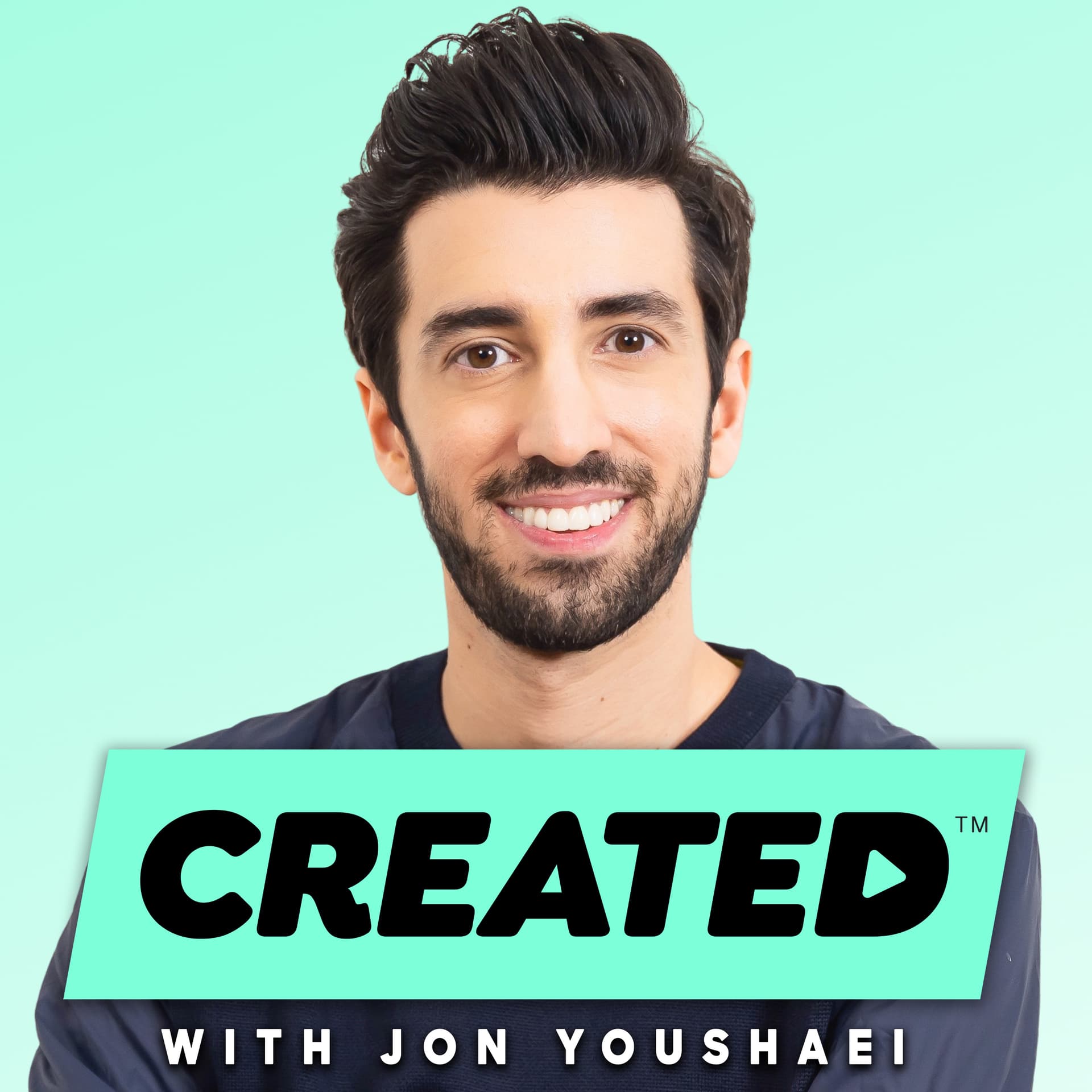
Podcast Notes: Created with Jon Youshaei - Episode with YouTube CEO Neal Mohan
Podcast Overview
- Title: Created with Jon Youshaei
- Host: Jon Youshaei, ex-YouTube and Instagram employee
- Guests: Neal Mohan (YouTube CEO), featuring insights from MrBeast, Logan Paul, and Cleo Abram
- Focus: Insights on the Creator Economy, updates from YouTube, and strategies for creators to grow.
Episode Details
- Episode Title: I Asked YouTube's CEO Your Hardest Questions
- Release Date: [Insert Date Here]
- Main Topics: YouTube updates, monetization strategies, AI content concerns, and new features aimed at supporting creators.
Key Discussions
- Updates to Gain More Views
- YouTube announced 30+ updates to help creators increase visibility and audience engagement.
- Discussion on the algorithm's role in promoting smaller creators alongside established ones.
- Support for Smaller Creators
- Neal emphasized YouTube’s ongoing commitment to supporting smaller creators:
- Allocation of recommendation slots to new creators.
- Features like collaboration tools to boost visibility for those involved.
- Monetization Strategies
- Introduction of new monetization features:
- Dynamic ad placements allowing creators to swap out branded content based on performance metrics.
- Enhanced tools for brand collaborations, including a Creator Partnerships Hub to connect creators with brands.
- AI and Content Creation
- The impact of AI on content creation was a significant point of discussion:
- YouTube’s perspective on AI-generated content and its potential for monetization.
- Differentiation between quality AI tools and lower-quality automated content.
- Age Verification and Privacy Concerns
- The introduction of AI-based age verification raised concerns about privacy and viewership:
- Discussion of potential impacts on creators’ earnings and audience engagement.
- Neal reassured that robust privacy measures and user options are in place.
- Future of YouTube as a TV Platform
- YouTube’s growing presence in the streaming space discussed:
- Emphasis on improving the television viewing experience.
- Vision for enhanced user interaction through AI and voice features.
Notable Features Announced
- Ask Studio: A tool for creators to analyze video performance and retention metrics.
- AI Clipping: Converts long-form videos into shorts by identifying highlights.
- Collab Tool: Enables creators to collaborate and increase each other's audience reach instantly.
- Dynamic Ad Placements: Allows for flexible ad opportunities in videos.
- Creator Partnerships Hub: Marketplace connecting brands with creators.
- Auto-Dubbing with Lip Reanimation: Enhances viewer experience by making translated content more natural.
- Hype Feature: A voting system to promote videos from smaller creators.
Key Takeaways
- YouTube is actively working on features that ensure both new and established creators can thrive on the platform.
- The integration of AI solutions is seen as a tool to enhance creativity rather than replace traditional methods.
- The focus is on creating a more equitable landscape for creators, ensuring that even those with smaller audiences have the opportunity to succeed.
Conclusion This episode provided a wealth of insights into YouTube’s strategic direction under Neal Mohan's leadership, highlighting significant updates that focus on creator growth, monetization, and the integration of AI in content creation. Jon’s questions encapsulated the concerns and hopes of the creator community, making this discussion particularly relevant for anyone invested in the YouTube ecosystem.
Written by AI. May contain mistakes. Listen to the episode to check what was said.
Transcript
Automatic transcript. May contain errors.0:00I talked to about 80 creators for this interview. How's it going, Neil? I got a fun one for you. Hey, Neil. It's been a wild couple years for YouTube. What's up, Neil? Logan here. Oh, man. I want to ask you their toughest questions. We are the world's first and largest creator economy, and I intend to make sure that we remain that way. I had a first look at these new features that YouTube is about to launch. I just prompted a video about LaBuboos. I deepfaked myself. Honestly, Neil, I feel guilty about that video. I don't think a piece of content should be penalized just because it was created with AI.
0:35I pulled these videos from different eras of YouTube, 2010, 2015, 2025, from now Mr. Beast spending millions on their videos. I've been through all these eras. If I'm being honest, I had to take out a lot of my savings to start my YouTube channel. And I talked to creators who have taken up to$60 ,000 in loans to start their channels. I'm wondering, what is YouTube actually doing to help smaller creators grow?
1:06Um, all right, make sure you subscribe and ring the bell because we have so many big videos coming up from interviews to studio tours. And if you haven't already, then go to yt hack pack.com to get our free YouTube hack pack with all our best tips, tools, and templates to grow on YouTube today from our intro and thumbnail templates to our 100 viral ideas for any niche. We constantly updated as we interview more creators. so you have the latest and greatest for free. All right, now back to the video. It's crazy being back here at YouTube. You know, when I left my job here seven years ago to disappoint my parents and try to make YouTube videos full-time, I never thought I'd be getting a chance to interview you as CEO on our channel as YouTube makes some of the biggest updates in the platform's history.
1:47So thank you for having me. Yeah, no, thank you for being here, John. Are your parents happy now with what you're doing? Yeah, yeah, we're making them work. Proved them wrong. We got a two-year-old now. Awesome, congrats. Thank you. So this interview took about a year to schedule. You're a busy guy. I apologize. No, no, no, no. We made it happen. We made it happen. We're excited. But during that time, I had a chance to prep by talking to about 80 to 90 YouTubers. Oh, wow. Of all different subscriber sizes. You did your homework. I did. And they submitted questions, some of them in video, some of them in text, some of them on our Discord.
2:16And by far, the number one question that we got is, what is YouTube actually doing to help smaller creators grow? And we got this question from creators as small as Cielo skin with 4k subscribers and as big as this guy who texted me a question that I wanted to start off and play for you. Oh, all right. Well, I know this guy. So let's see what he has to say. How's it going, Neil? I got a fun one for you. So obviously I spend millions of dollars a video. I have hundreds of employees, you know, largest YouTube channel in the world. But I'm curious, what are you doing to help the next me, the next Mr.
2:52Beast? Is there anything in these updates that will help smaller creators succeed? Because the platform isn't just big creators like me. It also thrives as long as people think that they can start a new YouTube channel and have to make good enough videos, build a career off of it. Awesome. Well, it's great. I'd expect nothing less from Jimmy. By the way, actually, what I love about it is like this is one of our most largest and most successful creators. And what he's focused on is the next generation of creators and really paying it forward. And I just love that about the culture at YouTube. Right.
3:23Like that is such a part of the creator ethos here. And, you know, ultimately for someone uploading a creative idea to YouTube for the first time, what really matters is getting eyeballs on it and people to watch it. And so, of course, as you know, a lot of how our recommendation systems work is it's about putting videos, recommendations in front of you that you want to watch. But we do reserve some inventory in those recommendations for the discovery of new creators. Neil, to be clear on that one, because I feel like I'm seeing more videos on my homepage. I took a bunch of screenshots from creators that only have a few thousand subscribers and these videos have a few hundred views.
3:57So I'm wondering, is there something going on with the algorithm now that's different where YouTube is trying to surface some of these smaller videos? Like, is YouTube reserving slots on my homepage for these videos that don't have a ton of views? You're showing me, you know, a bunch of VODs, long-form content. The same thing applies in shorts. This notion of actually having new creators get discovered. I think it's really important. In fact, it's so important within YouTube that we try to track as much as we can this notion of creators getting started. And what I mean by that is not getting started in the literal sense of like setting up a channel and uploading a video.
4:38Of course, that's important. We want that to be a seamless process. But getting started in more of the real sense of like feeling like they're a YouTuber, getting some success, getting a handful of subscribers, getting some watch time, et cetera. So we look at that just as closely, if not even more closely, than the health of our biggest creators. What else is YouTube doing to help new creators? Because there's a lot of people out there who claim that YouTube has a creator problem, where creators like Jack's film said YouTube is an oversaturated platform that tends to boost already popular content and successful channels, and it's getting harder to break through.
5:15What would you say to a creator like that or people who are making videos like that in 2025? five. There's a lot of other things that also were also focused on there. So one of the ones that I'm most excited about, actually, you may have seen recently, speaking of Jimmy, as a collaboration between Mr. Beast and Mark Rober for Team Water, is a formal collaboration feature where if you're a creator, let's say you're a large creator, you can collaborate with up to a total of five creators to bring their channels along, to introduce your audience to their channels. And so So that's another thing that we're very excited about, hype you're aware of, which is where fans can actually hype up their favorite up-and-coming creators.
5:58So I could go on and on in terms of features and ideas that we're working on for the next generation of creators, new creators, creators just getting started, above and beyond what we're doing and recommendations. Yeah, I have a lot of questions about that. For the collab feature, I was most interested in what that meant for smaller creators. And I actually reached out to two smaller creators, Stix and Jack Gordon, who did a collab video with Mark Rober for Team Water. And I asked them if they could screenshot their YouTube studio metrics for those videos. One of them had a 132x outlier on their video and the other one had a 21x outlier, respectively, which was crazy to see.
6:36In talking to your product teams, my understanding is that before, if you had somebody in your video or on your podcast, it would take some time to gather signal and put it in front of their audience to see if they like it. But now it immediately sends your video in front of their audience if they accept your collab request. And even like I just realized you could do the collab feature retroactively. So in the past week, I got access to it. And I went back through my podcast and invited Jimmy to be a collab author on my podcast, which I think may be the first podcast to have that feature. And I saw spike in views so i think it's interesting i think it's also a relationship game where not a lot of like smaller careers may know uh these creators but anybody could collab at any level um so it is interesting yeah i think it's and you're right like it is some of it is a relationship game obviously you know lots of these creators it's easy for you to reach out to them uh for up-and-coming creators i can imagine that being harder but now the functionality actually exists where uh if that larger creator is receptive, they actually have a product that they can use to do this.
7:43And even if you're a smaller creator, you can collab with other creators of your size to get in front of their audiences so you could grow even faster. So a lot of interesting ways to use the tool as it rolls out. It's really early days, as you know, like the product is not widely available, but it's one that I'm super, super excited about. It's one that, you know, again, back to this ethos of our creators, large creators have asked about just as much as up-and-coming creators because they know it's a way for them to pay it forward as well. Yeah. Who keeps the money when you do a collab? The creator who started the collab.
8:17So one creator does. So I think in the case of Jimmy and Mark, I think it was kind of the home channel, if you will, was Jimmy's channel. And so that's where the monetization goes. But as you know, for young creators, I mean, for up-and-coming creators, it's not just about the money. It's oftentimes really about the audience, as you point out in your research there. Do you see a future where the collab feature could allow you to split revenue between creators? I think it's really early days. Actually, honestly, and that might be the case at some point, but both the asks for this feature and the feedback on it has really been around audience and engagement.
8:57It's back to this kind of I have something interesting. I really want to share it with as wide of an audience as possible, and that's That's what the ask has been. It's really bad audience building. Yeah. And you could also share analytics on the tool. You can share analytics. You can. So, yeah, that has been a key part of it. The other thing that I should mention that's super important around it, your question on monetization reminded me, we're giving lots of creator examples, especially up-and-coming creators, new creators. But it's also something that can work for brands. Brands as creators as well.
9:33So, you know, if you're a creator like John, you can collaborate like you did with Jimmy, but you can also collaborate with a brand or a sponsor as well. And so that's another use case that I'm super excited about. And another update I saw is that YouTube is working on autodubbing your videos with multiple audio tracks. But also I saw that you guys are working on reanimating a creator's lips. So it sounds like they're speaking the foreign language more naturally, even if they don't know it. In the Pro variants, there is a huge news about the things that have really changed. First of all, the camera department.
10:08There have been some interesting upgrades. Yeah, I think multitrack audio is going to be one that is not just the purview of large creators, but for up-and-coming creators as well, because it turns out that one of the biggest barriers to growth, if the algorithm is efficient, is actually language. I pulled these videos from different eras of YouTube from 2010, 2015, 2025. Nice. And seeing like the double rainbow era, like the annoying orange to the Tyler Oakley and Bethany Moda era of people vlogging their rooms to now, you know, Mark Rober, Michelle Carey, Mr. Beast, like spending like millions on their videos.
10:47and I know YouTube has paid over$70 billion to creators in the past three years, which is far more than any other digital platform. But especially as I talk to a lot of creators, like Neil, if I'm being honest, I had to take out a lot of my savings to start my YouTube channel after I left my corporate jobs. And I talked to creators like Matthew Beam, who took$60 ,000 in loans to start his YouTube channel. And he's made it now. He has over 5 million subscribers. But there's a lot of creators who don't. And I'm wondering, what is YouTube doing to help these creators earn more and build bigger businesses to keep up with the content quality bar that keeps rising?
11:27The way I think about it is that we are the world's first and largest creator economy. And I intend to make sure that we remain that way. We've paid out billions and billions of dollars to the creator ecosystem over the last several years. And we want that to continue to grow. And so first and foremost, it's continuing to make sure that what creators can earn from ads is something that grows with their success. And what that means is you have to deliver high-quality advertising products to advertisers and brands. And so that's an area that we don't actually talk a lot about much because it's not as much creator facing, but it's an enormous amount of our resources going to making it so that the ad products that advertisers are spending billions of dollars on actually works for them.
12:15And of course, that translates into revenue for creators. And so that's first and foremost. It's the least talked about, but it's the most important. And then it's making sure that creators can earn revenue not just from ads but also from brand deals for creators, especially some of our larger creators who I know generate a lot of their revenue outside of YouTube ads and through brand deals. So we're very focused on that last piece. Yeah. Tell me about what's new when it comes to helping creators get brand deals. Because I had a first look at these new features that YouTube is about to launch.
12:49And one of the ones that I think is going to change the way creators go about sponsorships is dynamic ad placements. Can you tell me about that change and what's coming to YouTube? Yeah. So that's a feature I'm also very excited about. And so, you know, as you know, and, you know, we see this in our own sort of watching experience, creators, especially larger creators, are increasingly working with different brands, different products, different retailers. And those sort of sponsored moments, that video segment is often burned into their videos. They record it basically alongside the videos that they're uploading to YouTube.
13:27Well, what if you could make that dynamic? What if you could actually specify within your video where the best place is to actually insert those placements and make it so that you can swap those out maybe a year down the road, maybe two years down the road, maybe within a week or what have you, depending on what your business objectives are, the deals that you have with your sponsors. That makes that inventory within that video much more valuable because it delivers better ROI for the brands. And so dynamic brand moments is something I'm very excited about. That's not the only feature, though, that we're doing for brands.
14:04Just to take a moment on that, because I think that's a big deal. And again, it's going to change a lot of the ways that creators go about working with brands. I was trying to make sense of it because right now you kind of almost have these three different ads. You have auto mid-rolls, where the algorithm essentially decides that you could place ads that the Google Ads team has sourced and places in. And you could change those around. like those are kind of status quo. The other thing that we have right now are these burnt-in sponsorships, as you said, like a creator speaks to camera as part of the video and that's there.
14:36And unless you trim it out, it stays within the video. This new feature is gonna allow you to put something in in a given timestamp. And then let's say you have a deal with a sponsor and say, I'm gonna deliver you 1 million impressions. Once that is met, you could then take that out of the video and go sell that spot to another sponsor. Or if I want to swap in a new brand read because I did a holiday campaign for a sponsor and now the holiday's over and I want to swap in something more evergreen for them, I can now do that too with this new feature. Is that right? That's exactly right, yes. And if I want, I'm just thinking like big here, if I want to sell that ad placement geographically, Will there be a capability to do that too?
15:26Like send one sponsorship for all U.S. viewers, show another sponsorship. Eventually we'd like to get to that. And by the way - To Mexico, et cetera. That's how our ad systems work today. So actually what you're describing is, it's interesting, the line between traditional media advertising and brand sponsorships is a bit of a blurry line. And actually a lot of it depends on what you as the creator have negotiated or what terms you've come to with the brand that you're working with. And so that could be a delineation. Right now, it's really more around sort of like you as a creator, how you're thinking about it sort of over time.
16:04But we want to build more functionality there as well. But that's, again, that's one feature that I'm very excited about. And that has been a big ask. Creators have asked me for that. Another one that creators talk to me about pretty regularly is shorts. is a great place for brands and creators to collaborate. And so one of the things that we're very excited about is actually allowing in YouTube Shorts for the first time the ability to actually link to the brands from the Shorts. And so, again, something that I think will be valuable to users but also valuable to creators because they're now making their partnership even more valuable to the brand.
16:49So it's like one of those sort of trifecta-type features that I think can work for fans, creators, and brands all at once. So that's another, back to your original question of like, what are we doing to enhance monetization? That's another feature that I'm excited about. So you get a link to the brand's landing page or like, because I know previously you guys had taken away LinkedIn Shorts. Yeah, so this is actually a brand new feature that's literally about this brand sponsorship's use case within the Shorts feed. Yeah, amazing. What are you doing for creators who want to work with a brand? they may talk about them organically, but they can't get in touch with them.
17:25Like, yeah, what are you doing for those smaller creators? Yeah, I think that's super important too because brands sometimes, especially large brands, they want to work with many creators at once. And so we're also, the third thing that we're building that I'm excited about is something called Creator Partnerships Hub. And it's kind of actually the way you just described it, John, which is like it's a marketplace that brings creators and brands together because you're right, like small creators in particular might have amazing content that can work for various brands, but they don't really know how to reach out to them.
18:01But actually, believe it or not, it goes in the other direction as well. Brands are also looking to work with, obviously, the amazing large creators that exist on YouTube, but they're also looking to work with upcoming creators, many creators who have amazing content, but they may have not heard about. So this is a place to kind of bring both those sides together. And I guess what's new as well is there's a lot of marketplaces out there right now, a lot of third-party ones that try to match brands and creators. This one that YouTube is putting out is one where it'll take some of the videos that are already organically made by creators.
18:34Like let's say you want to work with Nike. You're making videos where you're giving Nike a shout-out organically. Through this portal, Nike would then start to see these videos. And then there could be a message or outreach like trying to make that happen. You can decide, yeah, this works. This is super interesting. I want to collaborate and connect through this hub. Wow. After a creator makes a video without even having a relationship, having a contact at the brand. Correct. Interesting. One of the other big changes, actually, which I think is very important in terms of our support for up-and-coming creators, is something that we actually did a couple years ago now.
19:10It harkens back to our very first made on YouTube, which is create a new tier for monetization. So there was always the YPP tier around ads monetization, you know, thousand subs, you know, kind of that sort of tier. We've expanded it, as you know, since then and introduced a tier where you are eligible for a lot of our fan funding features at a lower threshold. And so expanding both tools to help up-and-coming creators get discovered, but also helping them monetize. Yeah. Another huge topic that a lot of creators have asked about is AI and how will that impact our monetization, the discovery of our videos, especially as there's some studios and faceless channels out there that make a ton of AI-generated content.
19:59And obviously that competes for the same digital real estate that our human content does. and I know as part of this launch, YouTube is actually launching a ton of new AI tools. One, I saw a first look of where you could turn your speech into a song. I saw this tool that you guys are launching where it takes a bunch of videos from your camera roll and turns it into a full-fledged short like a recipe tutorial. This other one that inserts a photo of you into a dance video so you could partake in a trend and I know Google has VO3 and I get the validity behind them. I like it. For a newer creator, like that makes it easier to upload kind of like a filter did back in the day for a photo.
20:34And we're just in the first inning of all this. And there's a ton of AI slop out there as well. And so knowing all this, I wanted to tee up a question from none other than Logan Paul and get your thoughts. Okay. What's up, Neil? Logan here. I'm curious what type of AI content will be eligible for monetization on YouTube and not get dinged in the algorithm. I think a lot of AI studios are going to be popping up here as it becomes more and more prominent. And I'm wondering how YouTube is going to handle it because I think there's a misconception at the moment with how much work goes into some of the high quality top tier AI content that's being made.
21:16And people just don't know about it. And some of it's generated fully. Some of it's half generated and mixed in with traditional media techniques. And so I'm just curious how YouTube is going to be handling this AI revolution because I think it's going to be really prominent and a lot of content will be generated. Yeah. Oh, man, this is a super interesting question. And I think even the way Logan framed it is actually sort of the right way to frame it, which is what I would say first and foremost is I don't think our systems, whether it's, you know, the algorithm that Logan's alluding to or monetization or what have you, should honestly discriminate one way or the other.
21:58whether something was generated via AI, like VO or something like that, or done with a traditional sort of camera or some combination. Just like new video editing tools are invented all the time, new ways to modify your video are being invented all the time, I really view all of these AI tools that we're creating as exactly that, tools. They should enable creative people like yourself, like Logan, like others, to do what they do best, which is produce amazing content for their audiences. And so that's the first thing that I will say. And I think that that applies to our discovery algorithms. It applies to monetization.
22:43Having said that, I also recognize that with AI tools, the cost of production can go down dramatically if you're just in the business of trying to produce like a giant quantity of content and sort of put it out there to see what happens, like that has now become dramatically easier. So I think it is incumbent on how YouTube works to make sure that we are not, you know, that users don't get flooded with, you know, quote unquote sort of low quality content or what have you. You know, just like we worked really hard to eliminate the clickbait problem that used to exist, years and years ago in the thumbnails and really focus on things like sort of long-term satisfaction on YouTube.
23:32That's the way that I think about approaching it, both in terms of discovery of this type of content, but also in terms of monetization. So no a priori ding or sort of prejudice around it, but recognizing that these tools might result in some of that type of content being produced and making sure that our systems are capable and robust enough to be able to deal with them. That's how I think about it. We also have a lot of community guidelines already in place where if you're a creator that is uploading fully synthetic content, you should indicate that in the upload. And then we place that sort of label sometimes on the video itself, but oftentimes just in the metadata.
24:12Again, just as a service to all of your fans and users so that they can recognize that, yeah, this was produced in this particular fashion. And by the way, every piece of content on YouTube, whether it's produced, you know, kind of with a camera, with AI tools, with some combination, is also, of course, subject to our community guidelines around, you know, deceptive practices and all that sort of stuff as well. I wanted to make this really specific by putting this on a spectrum of fully human to fully AI. And these are videos that I've seen or I've made. So this one is one that I spent hundreds of dollars editing, my own camera, my own face, everything, fully human.
24:51This one is one where I prompted the idea from AI. There's a lot of tools out there. It gave me an idea. I started talking. I prompted the script, tweaked it, partially AI. This one is like I just prompted a video about Labubus, which I know nothing about. And I deepfaked myself. But now you're an expert. Honestly, Neil, I feel guilty about that video because here's me talking about Labubus and all these amazing graphics. And this cost a fraction of the price. We use this tool called Agent Opus from Opus Club. And then on the other side of the spectrum, this is from a channel that has over 1 million subscribers.
25:30This video has about 30 million subscribers. There's no face. It's a ton of content on their channel that's very much like this AI kitten kind of going about their day. I'm just wondering, what's the difference in monetization discovery between these types of videos? Yeah. What do you think the difference should be? I think it's a big question, but I think this one uses my name, image, and likeness. And there should be parameters where if it's deepfaked by somebody else, then there should be a content ID that clamps down on that. So the topic, I don't know. I'm curious to hear your take. But this one is the thing I feel really weird about.
Read the full transcript
26:09What do you think should be the case in that last example? I don't know. What do you think? Like, what do you think? That's a big question. Yeah, I think it is. I think that, you know, the third one in your example there, I do think that, at least in my view, that one is – and obviously there's all kinds of context and sort of which channels and whose channel and who did that and what was labeled and, you know, all that sort of stuff really matters to answer sort of definitively. But I think in general, the way that you described or used the content ID analogy applies. It's the reason why I have been very public about creators and, you know, I use the term creator here very broadly.
26:55creators artists musicians etc should be able to protect their likeness their face their voice on YouTube and I think that this is a place where YouTube is not just you know a collection of words and statements it's not just me saying that we have a long track record here of living up to that principle and you described it it's called content ID and that of course exists in sort of the copyright realm, but I think a lot of those analogies carry forward into the AI world. You're right. If there's a video that basically looks and sounds like John, like that's saying stuff that is pulling your audience or, you know, tricking your audience or what have you, then there should be some action.
27:41And so I'm agreeing with sort of your approach on that one. And what about studios that make this content that almost it's so easy for them and it's so hard for us human creators that it kind of takes away that digital real estate on YouTube. I think this goes back to what I said is I don't think a piece of content should be penalized just because it was created with AI. There's going to be amazing content that is produced with AI and being short-sighted about it, I think is not good for the creator ecosystem and is not good for YouTube. So that's the sort of the high level statement. Having said that, as you said, And I don't know anything about this particular video or whether it's high quality or low quality or what have you.
28:22But understanding the problem as I described it, which is these tools might result in the production of amazing content. They will. But they might also result in the easy production of content that is generally, you know, whatever, clickbaity or low quality or what have you. then it's incumbent on YouTube to make sure that we address that on the platform so that it doesn't become overrun with that type of content. And that's no different than the way that I described how we dealt with challenges like clickbait, you know, years ago. A lot of creators also have questions about YouTube's new AI age verification tool where YouTube is using AI to estimate the age of a viewer.
29:04And if it's less than 18 years old, they'll be restricted from watching certain videos on YouTube. and especially for creators who have younger audiences. I've been talking to them. They're worried that their videos will get fewer views and they'll make less money from it. And beyond that, it may set a precedent for privacy because to correct this AI estimation, if you are indeed above 18 years old, you have to give your credit card, your government ID, take a photo. So I'm wondering, why is this happening now? And is there truth to those concerns from these creators? Yeah, no, thank you for asking, me a chance to respond to that.
29:40I mean, just kind of first taking a step back, I mean, a lot of this comes from conversations that we have with parents and, you know, obviously stakeholders and government and regulators and what have you about concerns around young people. And of course, as you all know, there's young people on our platform. We have for particularly young kids, We have YouTube kids, of course, but we have things like supervised experiences on YouTube. And so young people are on YouTube, and we want to make sure that that is a safe experience for them, an experience that I'm a parent. I've got three kids that I, as a parent, can be comfortable with.
30:21And so that's the kind of strategic rationale behind age assurance. And this is a concept, of course, that is not new. It's been in place in other parts of the world for some time now. I think that was something that maybe got lost in a little bit of the discourse. So, for example, it's been a mechanism that's been in place in Europe for, I think, three, four, maybe even longer years now. And so we have some experience with it because it was mandated. And, you know, there's obviously lots of government chatter around that type of concept here in the U.S. And so that's the backdrop. In terms of how it works, I think it's really the way you described, which is despite what that user might have said during the sign-up for their YouTube account, it might be that a combination of signals are saying that it's actually a user that's under 18.
31:14And when that's the case, we want to make sure that that's an appropriate experience for that user, including all these features and functionality, you know, take a break, well-being, reminders, et cetera, take a break, et cetera, work in a way that they are designed to work for users under 18. That's the motivation, and I think that that's sort of the context for it. In terms of the actual implementation and sort of the impact and what have you, it's still sort of very, very early days. My experience is it's going to lead ultimately to a better experience for users and therefore in the long run for creators.
31:57If there is a misclassification, then there is sort of an escape valve, as you described, through whatever government ID or whatever sort of, you know, selfie mechanism there is. That is based on a set of technologies that are, I think, some of the most robust and sort of privacy safe in the world, sort of built with kind of Google technology. And, of course, you know, if you don't want to use those, and you don't have to, you can still use YouTube, obviously, in a logged out state, et cetera. So that's a little bit of kind of the background on all of this. But I think the context of where it came from, it wasn't something that came out of the blue.
32:32It's something that I think I sort of alluded to back in my annual letter back all the way in February of this year. And so it's something that we, I sort of pre-announced back then, and it's something that we've been working very cautiously on with parents, with, you know, other stakeholders, with our creator community for months now. And obviously, we'll have a gradual roll up on it. So it's something that we don't just sort of pull out of thin air. It's something that I've considered very deeply. It's what our teams have considered through multiple product reviews, design reviews. Decision-making at YouTube, just by definition, is always a tradeoff between multiple different types of things, whether it's making sure that the creator ecosystem is healthy, making sure that we're doing the right thing for users, particularly young users.
33:23And so all of that consideration and sort of thought and careful thought went into this feature. I want to assure everybody of that. And that's why we came to the conclusion that we did. And that's why we're approaching it the way that we're approaching it. Because on balance, I think it's the right thing to do for our ecosystem on YouTube. What about viewers? Like, I have a two-year-old now. So my YouTube is, like, filled with, like, Bluey and Miss Rachel. Or there's a lot of adults who watch Pokemon content. Is there a worry there that they'll be misclassified? And then ultimately the creator will lose out on those views from people who are over 18.
34:00I think that that's why we have the escape valve mechanisms that exist. So it's very easy to verify your age if you're misclassified for sort of whatever reason there. Rest assured that even the way that the algorithm works, it's able to, the algorithm in terms of making this determination gets more sophisticated and better over time. As I said, it's been something that we wouldn't have rolled out if I didn't feel like it operated at an incredibly high level of precision. So that's sort of the way that we've approached it. The use cases that you're describing are obviously ones that we've sort of thought about.
34:38And we wouldn't have done it if it would lead to kind of all kinds of misclassification left and right. Another thing is the way people are watching YouTube is completely changed. TV is becoming a bigger platform. And so I want to tee up a question along those lines from Cleo Abram. Hey, John. Hey, Neil. It's been a wild couple years for YouTube and YouTube creators. YouTube is the most watched streaming platform on televisions and has been for the last two years. It's really exciting. And I always love to imagine the optimistic future. So my question is, imagine you're doing another interview in two years.
35:18What do you hope you're saying about YouTube as TV? Thanks. That's a super interesting question. And what I would say, first, what I'd say to Cleo is all this, you know, kind of momentum that you see out there and, you know, what you might, you know, observe in terms of the overall sort of streaming numbers on TV, et cetera, YouTube's leadership position, you know, a billion hours worth of watch time on TVs and number one in streaming for the last two years and on and on. Feels like an overnight success, but it's been many, many years in the making. I remember starting our first sort of very robust investments from a technology and product standpoint on television screens years ago, even years before COVID.
36:10Everybody thinks that obviously there was a big inflection point during COVID. And of course there was, but a lot of the kind of the seeds were planted well before COVID in terms of making it so that we had a YouTube experience that was sort of seamless across the hundreds, if not thousands of different device types that they were out there in the living room, making sure that we had a robust partnership and certification programs with the OEMs and manufacturers, making sure that we brought all the magic, the interactivity, the ease of use that you experience with YouTube on your phones and try to translate that to television.
36:44And then finally, making it sure that that biggest screen in your home reflected sort of the quality of creators like Clio and cinematic experiences, episodic experiences, et cetera. So it's been an area that we've been investing in TVs for a very long time. In terms of two years from now, sort of connecting some of our conversations together. I do think that AI will play a big role in terms of making that TV experience even more magical, not in terms of creation necessarily. Obviously, all of that applies to TV, but other areas as well. But on televisions in particular, around things like voice and the like to make it so that you can interact with your television screens in a very seamless way, whether you're learning, you know, a new piece of, you know, whatever, math or algebra, what have you, or watching your favorite creator.
37:36So that's one area that I'm very excited about. I also think that the growth of different types of content, you know, one of the things that I've learned about television is that for young people in particular, YouTube is TV. And so they expect everything from, you know, stream all seamlessly within their television experience. And that's an area that we're going to continue to invest on. And so two years from now, if you're asking me that question, that's really what I would say about television. Yeah, it's really interesting to see where YouTube is going. And yeah, I just wanted to also close by saying thank you.
38:18I know these are some hard questions, but I think it's because creators care a lot. And a lot of us, including myself, building our livelihood on this platform to feed our families, and provide entertainment for the masses. It just means the world to have an outlet like this. Yeah, awesome. I mean, look, as I said, we're really inspired by your success, all of your peer creator success. It is amazing to see all of these faces and all this content that I, as a fan, watch on a regular basis, and it's really a privilege to lead the team that builds all of this amazing technology and products for all of you.
38:57Thank you, Neil. Okay, so we covered a ton there and there's still a lot more that I would have loved to get into, but obviously we only have so much time with these things. But I wanna break down some of the other big changes that are coming to YouTube after speaking more with Neil off camera, along with many of the teams at YouTube to get you guys the full story and share some of the other updates that are gonna be important for your channel. And to everyone who submitted questions, especially video questions from Casey Neistat that we couldn't get to, Jacqueline and so many others, hopefully some of these updates can help beyond what we discussed in the interview.
39:26So another big update that's coming is called Ask Studio. So think of this as your co-pilot inside YouTube Studio so you can ask it questions like, why did my video bomb? Or analyze the biggest dips in retention across my past videos and tell me what caused them. Like literally that specific of a question you can ask it. And I was pleasantly surprised. It was really cool to see how detailed it got when answering my questions to the point where it even looked at the comments on my YouTube videos to see if there were any patterns to learn from for my next upload. So interesting tool. Next is AI clipping for long form and live.
39:57Basically, you can now turn long form videos and live stream into shorts fast right on YouTube. So YouTube's AI scans your content, finds the highlights, suggests the clips based on where you have the most retention and boom, you have shorts immediately made for you. OK, next is auto dubbing with lip reanimation, which we touched on briefly in the interview. But here's a few more details that are worth covering. OK, essentially, until recently, if your video was in Italian, let's say that's all it was like anybody who saw that video can only watch it in Italian. Then YouTube launched multi-track audio, which means the same video in Italian can be dubbed and watch in any language and all the views count towards the same video, which was huge.
40:34Soon, here's the crazy thing that's going to happen. YouTube is launching dubbing and lip reanimation. So if you're watching a video in French, a creator's lips will move one way. And then if you switch the language to Spanish, a creator's lips will move another way. So it looks more natural. Basically, dubs are getting way more realistic and way more affordable with AI, which will help unlock a ton of growth internationally, as Neil talked about. The next update is with the inspiration tab in YouTube Studio. Basically, it's getting revamped. So you'll now have an expanded idea feed, a spark page where creators can save notes and ideas, a pitch page where creators can explore and assess an idea, content planning and so much more.
41:12And I know, I know, I've seen the videos from Corridor Crew and other creators asking about how good the ideas in the inspiration tab actually are, but it looks like they're improving, which is cool to see. So basically to break down AskStudio, the tool we talked about before is to understand your current videos from the past. And the inspiration tab is a new way to brainstorm your next videos for the future. Next is the collab tool. I know we talked about this in the interview, but there are a few more details that I thought would be worth sharing. So first, you can collab with up to four people on one video.
41:43Next, the collabs will not show up on your guest channel page, only your channel. That's an important nuance. And as Neil says, the home channel, whoever starts the video, creates the video, keeps the monetization for now. And personally, I think two things are about to happen with this. If you're a podcaster, the second you get access to the collab tool, go back through your entire catalog and send collab requests to any guests that you think would accept it. That's going to be huge. I've already started doing that and started seeing impact on this channel. Secondly, I think this is going to be an amazing way for creators who want to launch a second channel to give life to that channel by collabing it with their main channel.
42:16It's going to be much bigger. So watch for that behavior. I think a lot more of that is going to happen. Next update is A-B testing for titles, where you can test different titles for your video until YouTube selects the best one based on watch time. So I got early access to this, and it's been a game changer because I love that I can now pair a specific title with a specific thumbnail visual, whereas before, I can only test one title across the three thumbnails with the A-B testing feature that was available there. Next, we got hype, which I wanna go into more detail about since I think this will be a big deal too.
42:45So hyping a video basically means upvoting it. So it ultimately can go out in a leaderboard where even more people can discover your video. So anyone can hype a video and get three free hypes, three free votes per week as a viewer, but you can only hype videos that were posted in the past week and are from creators who have between 500 subscribers to 500 ,000 subscribers. So this should lead to more smaller creators breaking through. Next update is AI B-roll for audio podcasts. Okay, so if you don't have a camera or you do audio only, YouTube will actually help you generate videos for your podcast using VO3.
43:20It'll analyze your transcript and create visuals that you could customize. Like watch this. All these videos are being generated from what YouTube is hearing from your audio-only podcast. Parakeet trade really picked up in the 1960s. More than 60 ,000 parakeets were imported to North America in just three years. And my take is, will this be as good as video podcasts? No, but is it better than those waveform style visuals on audio-only podcasts today? Yes. next up is co-streaming or watch with this basically enables anyone to give commentary on a live event like imagine your favorite sports creator giving live reactions to the big game and my take is that this will lead to the rise of a new class of news anchors or sports commentator creators especially as youtube invests in more partnerships like the nfl so yeah there's a ton there and if you have any questions about that comment below and i'll try to respond or join our newsletter at created.news where i reply to nearly every email that comes in so thank you again to Neil, Renee, Andrew, and everyone else at YouTube who made this happen.
44:16And see you guys next time.
From the publisher
I interviewed YouTube CEO Neal Mohan as they launch 30+ updates to ask him your biggest questions. Get our free YT Hack Pack with our best tips, tools & templates: https://www.YTHackPack.com
Join our Discord of 6,500 creators helping each other grow: Discord
Join our newsletter for latest creator news & tips: https://created.news
Subscribe for more videos: https://tr.ee/YoushaeiYT
(0:00) New updates to get more views
(10:21) New updates to make more money
(19:47) How Does Algo Treat AI Content?
(28:55) Truth about AI Age-Gating
(34:52) YouTube on TV
(39:01) More Big Updates from YT