
 Ask ChatGPT
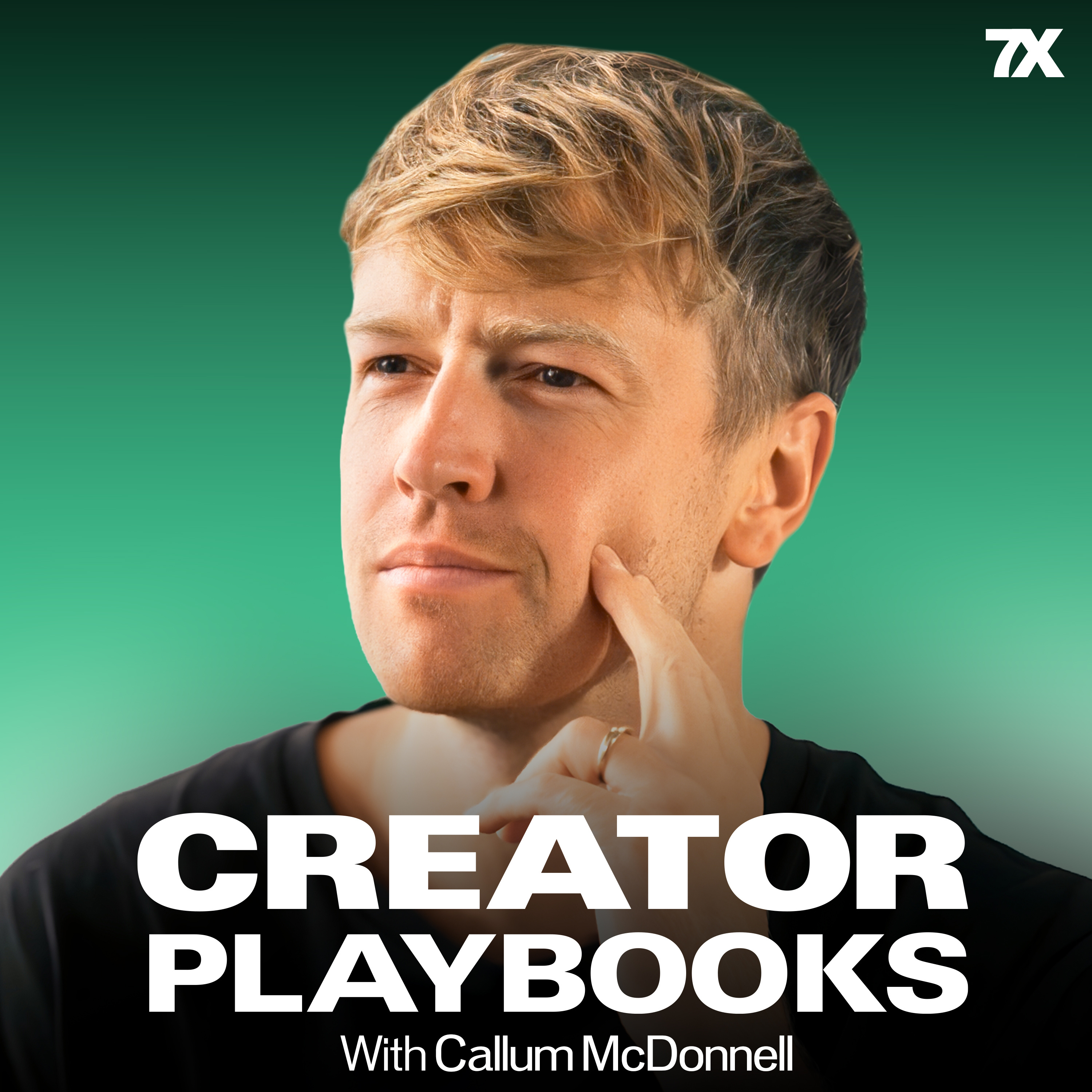

- Podcasts
- Creator Playbooks
- Chris Williamson’s Producer Reveals His YouTube Strategy
Creator Playbooks8 Oct 2026 · 11m · 3 chapters
Chris Williamson’s Producer Reveals His YouTube Strategy
In short
The episode is about how Chris Williamson’s team grew YouTube reach using a deliberate “medium-length clip” strategy. A former YouTube employee says Chris initially seemed to have no strategy—he was simply chopping podcasts—but the team later increased posting volume with quality and anticipation.
Key claims
Chris posted 15-minute-ish clips on Wednesdays and Fridays, then released the full episode on Monday; viewers rewatch/fast-forward, and comments asking for the full episode build demand. Clips were intentionally “scroll-stopping” pattern interrupts, e.g., Jordan Peterson reacting to Elon Musk (“my mind is a storm”) and Eric Weinstein asking about Kamala Harris during the election. The producer also describes pre-episode prep: sweeping news, studies, and edgy tweets, plus “sweating assets” by extracting multiple clips.
Guests
Ben (the producer/host) and an unnamed ex-YouTube employee; examples reference Mr. Beast, Colin and Samir, Jordan Peterson, Elon Musk, Eric Weinstein, and Kamala Harris.
Written by AI. May contain mistakes.
Chapters
0:45
The Strategy Behind Medium Length Clips
Discussion on how medium length clips have transformed content strategy.
“And I sometimes get asked, why are you posting clips from the podcast, but the clips are still in the podcast.”
4:40
Leveraging Content for Maximum Reach
Exploring how to repurpose podcast content for greater visibility.
“Like before a big episode, Chris would always send me to do a sweep of news.”
8:13
Channel Strategy and Audience Diversification
Debate on whether to maintain a single channel or separate shorts content.
“And for Chris, it was always keeping it in one source of truth.”

Ask about this episode
Get the gist, explore an idea or ask about something said.
 Claude
On Creator Playbooks, what are the key points of this episode?
Searching your listeningTranscript
Automatic transcript. May contain errors.
0:00I spoke to an ex-YouTube employee recently who said, yeah, I remember being in the YouTube office and we were like, what is Chris Williamson doing with these medium length clips, these kind of 15 minute things? They hadn't seen it before. Of course, Joe Rogan had been doing it for 10 years. However, there was no real strategy to it. He was just chopping up the podcast and putting it out. I think what Chris was doing was different and really helped us massively increase that volume because now we were posting quality content every single day. And actually something that people, something that I still don't think people do, or maybe they don't recognize it is Chris is posting a medium length clip on the Wednesday and a Friday before the episode of that clip is released on the Monday.
0:50And I sometimes get asked, why are you posting clips from the podcast, but the clips are still in the podcast. So you've already watched some of it and it's like, yeah, well, they'll watch it again or they'll fast forward it. However, what you've done is you've made someone want to watch more. If you go on them, the amount of comments you get that are like, where's the full episode of this? And they would have to wait for it. And that building of anticipation was, I think, key to building our brand and getting that inflection point. So you've got the introduction of short form, you've got the guest appearances and Chris's personal notoriety increasing.
1:31You've got medium length clips. They were massive. And what I'll say, Callum, is, and we've talked about this, is the medium length clips were intentional. And when we were on in-person shoots, I would be sat live timestamping an episode as it's going. And Chris, there are obviously sections of it that are just amazing that weren't necessarily planned, but will be taken as a clip. But I think a lot of the clips, especially our most popular ones, are intentionally put in there, especially when you see Jordan Peterson's opinion of Elon Musk. Chris has that quote, Elon says, my mind is a storm. What do you think of that, Jordan?
2:17He knows that's going to be a fantastic clip, and it's not necessarily part of this natural conversation. It's put in there. It's a scroll stopping moment. It's a pattern interrupt. Same for asking Eric Weinstein during the election about Kamala Harris. He knows what he's doing there. And those clips just are massive. So that was really exciting to do those. And he's been doing that for several years. And I think that's something that he always did really well. So the volume was massive. Chris was always massive also. This is probably the final point I'll bring up on this is he would send us the interviews like with Mr.
3:00Beast on Colin and Samir. And I think a principle he really liked was Mr. Beast's reinvestment into each next video. So Mr. Beast explains how the money he made from this episode, he will then put into his next video fully and he'll be broke and then he'll go on to the next. And I think Chris always liked that sentiment from Mr. Beast. So we weren't ashamed of saying, yeah, we've definitely taken inspiration from creators like Mr. Beast and tried to transfer it to podcasting. And I think you see that in the cinema shoots, like Chris spent far too much money on some of those cinema shoots, but it really made us stand out.
3:43So that reinvestment piece, I think, is massive as well. Like Chris putting everything he has cognitively, financially, physically into these podcasts. Like I saw how worn out he was after some of those shoots. And I admired it. It was great to watch a legend in person. And you knew he was like, I worked with Chris for four and a half years. I spoke to him every day. And yet I was still there at the start of it thinking, yeah, I'm working with a legend here. I'm working with a genius. There's so much to unpack there, Ben. the mid-length clips are so underrated in my opinion i think they are genius for so many reasons so let's just unpack a few things there so the first is that you're saying that kind of as part of the conversation and the brief you've kind of pinpointed what would be the most interesting kind of five ten minute answer that our audience would like to hear from this guest so you're kind of like pre-planning that as a segment or chris is pre-planning as a segment and then you're releasing it before the episode comes out to kind of create interest in the full episode that's that's that's essentially what's going on there as well as kind of just picking out like the best kind of substantive 5 10 15 minutes on a topic from an episode um yeah yeah we're setting ourselves up for success.
5:19Like before a big episode, Chris would always send me to do a sweep of news. And we kind of had 10 to 15 trusted websites where we would find news stories that felt aligned to things. They were usually just funny things, but funny things that were really relevant at the moment. And then there were websites that kind of had articles and op-eds written about new psychological studies and a lot of academic stuff as well. And I'd be sending kind of a few days before an episode so that Chris had time to prep. I'd be sending him a doc with kind of 20 insane or very relevant or crazy tweets, news stories, articles, studies, blog posts from blogs that he liked and often gleaned things from.
6:14And he'd get all those things. So you've got this wealth of, of current, um, current and funny and edgy stuff to throw in there as well, as well as, you know, asking about Elon Musk, that's like guaranteed. Um, and it's all stuff that the audience loves as well. You know, um, that's, we're not going to do it if it's irrelevant. Um, but it's stuff that our audience loves to hear as well. Yeah. I mean, we've run this this this this playbook on uh high performance which is a show that we work on and we're running it with man alive which is a show that you you produce now and the other aspect i love of it about it which i think most people don't do is like you've spent two hours recording a conversation and you've probably been trying to book this guest for weeks or months or years and then you've invested in the studio or the set and you just post it once I mean it's just insane you know if you can then get like let's say minimum two but let's say you get five good clips from it then you just are like sweating that asset and giving that episode a chance multiple chances multiple shots on goal so I think it's so interesting and I know we've also had experience of actually even just putting out the same clip multiple times and repackaging it and and getting more life out of it or when something topical comes up in in the world kind of six months later with that guest and then putting out like something there so i i love this because a lot of times i see people put out an episode and they it doesn't meet the expectations you know it it underperforms um but it doesn't mean it's a bad episode it just means that uh the way it was packaged or the way we started it you know maybe wasn't wasn't as good as it could have been but there's like probably some great sections in there that actually can get seen by tens or hundreds or millions of people um if you if you give them another chance so i i love it where do you stand on on having a separate channel because i know like lex friedman he has a separate channel um dire of a ceo the team there if you speak to them they they say don't put shorts on your main channel don't put 10 minute clips on your main channel you know just keep it to people who are interested in long the long-form conversation whereas chris kind of completely bucks that for the 10 minute i don't know if you put shorts on the main channel do you have any view on like the right or wrong there or yeah we i guess it's never been a a right or wrong.
9:03It's, it's what you want to do. And for Chris, it was always keeping it in one source of truth. And, and that was always the case. And I know he's got, we've got friends like, like Alex O 'Connor, who does kind of a theology philosophy podcast. And, and he was kind of asking advice of us of, Oh, I'm not sure whether I should put clips on my own or there. And there are different ways of doing it. I think if you want pure volume to put stuff out, then definitely go there. But for us, I think we were too protective of the quality of our output to just create a clips channel and have loads of stuff going in there.
9:43And if you're not going, having tons of stuff over there, then what's the point? And if you're making such good stuff, then keep it on your own channel. And we want to drive the traffic there. I think a big part I think a big part of the mid-length clips when done well is to diversify the audience that you're reaching on YouTube, right? So the same people who consume your podcast via the actual podcast, the long form, are not the same people who maybe will click on this. But well, actually, in many cases, it anticipated a coming episode, so they were excited about it. But for the people who would never naturally just click on a two hour podcast with not much context, then they're a great gateway to exploring the podcast.
10:33So if you want to implement some of these frameworks and get a copy of them for free, I'm going to put a copy of all of them in my next email newsletter. Sign up at the link in the description.
From the publisher
Get a FREE breakdown of Ben's 9 podcast growth principles in my newsletter: https://bit.ly/4rBd4NI
Start or grow your own Podcast with me: https://bit.ly/4hA1wpi
Ben Hancock was one of the first hires at Modern Wisdom, where he spent four and a half years working alongside Chris Williamson as the show grew from 150,000 to 4.3 million YouTube subscribers.
In this clip, he breaks down the YouTube strategy behind Modern Wisdom, including the mid-length clips that even people at YouTube hadn't seen before.
This is a YouTube growth masterclass.
We get into:
• Why going from two to three episodes a week was massive
• How mid-length clips released before each episode built anticipation
• How Chris plans scroll-stopping moments into his interviews
• The MrBeast reinvestment principle Chris brought to podcasting
• Why Modern Wisdom keeps everything on one channel
Follow Ben: LinkedIn: https://www.linkedin.com/in/benjamingaryhancock
Instagram: https://www.instagram.com/benhancock98
YouTube: https://www.youtube.com/@forallthesaintspod
Produced by 7xContent: make your own podcast with us: https://www.7xcontent.com/home#apply
Follow Callum:
Instagram: https://www.instagram.com/thecallummc
LinkedIn: https://www.linkedin.com/in/callummcdonnell
Timestamps:
00:00 The inflection points on Spotify and YouTube
01:06 The mid-length clips YouTube hadn't seen before
02:46 Planning scroll-stopping moments
04:05 MrBeast's reinvestment principle
06:28 The news doc Chris reads before big episodes
07:52 More shots on goal from every episode
09:39 One channel vs a separate clips channel
11:06 Why mid-length clips reach a new audience
More from Creator Playbooks
All episodesWe use cookies.They keep VO running smoothly and help us improve it. Privacy policy