
 Ask ChatGPT
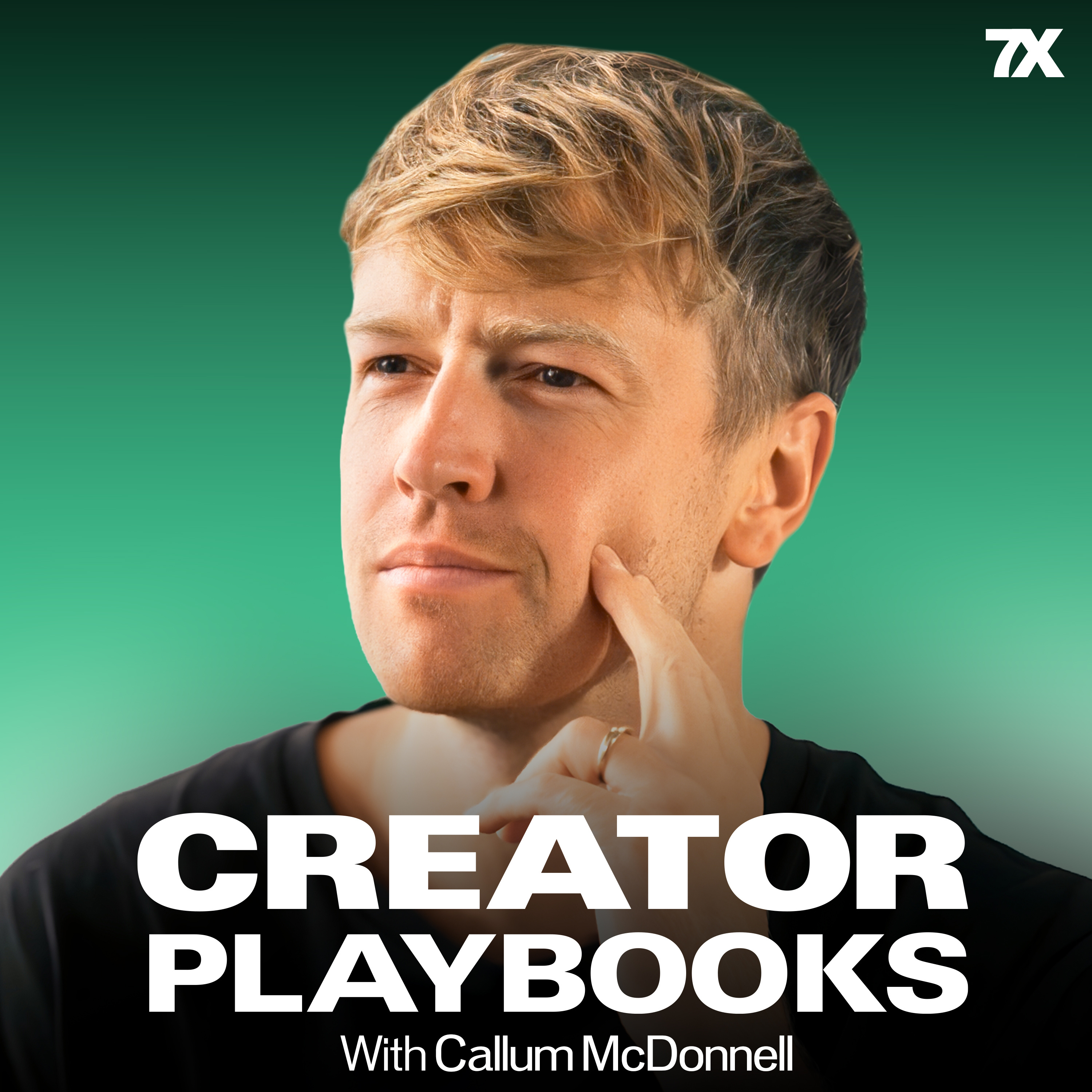

- Podcasts
- Creator Playbooks
- I Asked Steven Bartlett’s Team How To Build A $400M Podcast
Creator Playbooks14 Oct 2026 · 35m · 13 chapters
I Asked Steven Bartlett’s Team How To Build A $400M Podcast
In short
How Steven Bartlett’s Diary of a CEO team grew a top global podcast/YouTube channel to 20M subscribers using mission-first content, trailer innovation, YouTube conversion tweaks, and constant experimentation (thumbnails, titles, short-form editing, guest selection, and first-hour optimization).
Guests
Grace Andrews (Diary of a CEO marketing director; focuses on mission/community and short-form strategy). Anthony Smith (trailer editor; created breakthrough promotional trailers, including the Israel Adesanya trailer). Tom Lewis (collaborator who helped run Meta paid-ad thumbnail/title tests pre-release). Mentioned internally: Grace Miller (head of failure/experimentation).
Key claims
Define a clear “inspire, motivate, engage” mission and only publish content that meets it. Use semantic satiation logic to avoid stale CTAs; move subscribe CTA to just after the trailer for ~300% subscriber lift. Test 20–100 thumbnails and run pre-release Meta ads to reduce guesswork. Short-form should reach new people without hard-selling long-form; clips must have a complete story and strong first seconds. Validate guests via ads to your follower audience; optimize for the first hour on YouTube and track retention, not just views.
Notable examples
10-second YouTube CTA change; Israel Adesanya trailer; thumbnail testing on Meta before episodes; DOAC Clips daily output experiment (failed); moving subscribe CTA from mid-episode to front; using guest affinity testing via ads.
Written by AI. May contain mistakes.
Chapters
0:45
The Mission Behind the Podcast
Exploring the clear mission that drives the success of Diary of a CEO.
“with your own podcast or YouTube channel.”
3:37
Innovative Promotion Strategies
Discussing unique promotional strategies that set the podcast apart.
“The second principle is the reason why the Diary of a CEO grows at a rate so much faster than all other podcasts.”
6:28
Effective Call-To-Action Techniques
How strategic call-to-action placements boost subscriber numbers.
“The principle here is if someone's heard something over and over again, the science shows that they, through this process called semantic satiation, the word and the phrase loses its meaning.”
8:10
The Role of Experimentation
Highlighting the importance of experimentation in podcast growth.
“And it's one of the key reasons it's grown so quickly to 20 million subscribers.”
9:48
Optimization Through Data Analysis
Discussing data-driven decisions for improving podcast performance.
“So Stephen appointed this head of failure and experimentation, Grace Miller, and her job was exclusively to test little experiments like this.”
14:00
Thumbnail Testing Strategies for Podcasts
Learn how to optimize podcast thumbnails for better engagement and click-through rates.
“Stephen and his team realized that creating YouTube thumbnails and putting them out when an episode was released only gave them so much opportunity to tweak and optimize the thumbnail to make it as clickable as possible.”
17:34
Leveraging Short Form Content
Discover effective short form content strategies to grow your podcast's reach.
“We're not kind of pushing it down their throats that they need to go and see the long form because actually short form is a visual art in itself that people are consuming more and more and more.”
21:21
Guest Selection and Audience Engagement
Understand how to choose the right guests based on audience interests for better performance.
“It must be so valuable that they save it.”
24:20
Optimizing Launch and Early Engagement
Learn the importance of initial engagement and quick adjustments after publishing episodes.
“Hope you get, hope you go into the algorithm.”
28:04
Understanding Video Retention Metrics
Learn how to analyze viewer retention metrics to enhance your video content.
Show all 13 chapters
29:54
Crafting Effective Trailers for Podcasts
Discover key principles for creating engaging podcast trailers that hook listeners.
“You can check out my podcast agency 7x content at the link in the description for more details.”
30:53
Building Emotional Connections Through Podcasting
Understand the importance of emotional storytelling in fostering audience connections.
“You want people to feel like they can leave the trailer having learned something as well.”
33:58
Shifting Focus from Sponsorship to Ecosystem Building
Learn why podcasters should prioritize building an ecosystem over chasing ad revenue.
“and yes, Stephen makes up to 40 million a year through sponsorships for the podcast, It's actually these bigger things that enable him to build a company worth over$400 million in Stephen.com.”

Ask about this episode
Get the gist, explore an idea or ask about something said.
 Claude
On Creator Playbooks, what are the key points of this episode?
Searching your listeningTranscript
Automatic transcript. May contain errors.
0:00So Steven Bartlett's Diary of a CEO just hit 20 million subscribers on YouTube and is a top 10 podcast globally. It's no surprise to us that the podcast is growing at the rate it is. I've been lucky enough to follow the podcast journey and get to know its team behind the scenes since it had just 10 ,000 subscribers. It is one of the most challenging roles I've ever had. Along that journey, they've shared with me the tactics and breakthrough moments that led to this extraordinary growth. Storytelling is the ultimate goal for us. Every single trader follows four different compartments. Let's hook them first, then let's retain them, then let's get them to ****.
0:39Every episode there's like 20 thumbnails being tested. A hundred. So in this video I'm going to share them with you so that you achieve some of that success with your own podcast or YouTube channel. Some of these tactics are really easy and some of them are quite advanced. So there's a particular 10 second change we made, which had a 300 % impact on the amount of subscribers we get. And tactics three, six and nine in particular led to massive breakthroughs for the podcast. We're always staying ahead and staying one step in front of the curve because as soon as you get complacent, you're done. Let's get into it.
1:17The first point is one that most podcasters skip and Stephen hasn't actually ever spoken about publicly. but the Diary of a CEO, Marketing Director, Grace Andrews, explained to me is critical to all of this success and that's to have a really clear mission for your podcast. We want to inspire, motivate and engage with as many people as we possibly can on important topics. So we have to keep that front of mind that this is for the community. So we focus on them at the forefront of every single thing we do. Every clip, every post, even the long form episode itself, we're going, is this serving our audience?
1:52is this catching the attention of someone who doesn't care yeah if you unlock that you're like into the magic yeah i think that's why yours works um because if you look at it from like the what perspective it doesn't make any sense it's like is if you were starting a podcast and you spoke to a podcast kind of expert they would say pick a niche stick to it you know business talk to the best entrepreneurs sport talk to the best sports people and DOAC has like evolved and it's been a journey but like if you were to say speak to all these different people from different fields you might think that doesn't make sense but because you've got that why and like what you're trying to get from every conversation and then demonstrate that for every piece of content you create I think that's what makes it so special we want people to finish an episode finish watching an episode listing leaving having gained something yeah that's our that's our mission it's no surprise that the dharma ceo has had such massive success when it has such a big goal and it's so important because they can assess every episode and every single piece of content that they create through that very same lens will it inspire motivate and engage as many people as possible on an important topic.
3:13If an episode isn't going to do that or a social clip isn't going to do that, then it doesn't go out. So make sure you're super clear on the mission and goal for your podcast and then you can assess every single piece of content through that lens. If you want a breakdown of all of these Diary of a CEO frameworks, I'm going to put them in my next newsletter. You can get a copy completely for free at the link in the description. The second principle is the reason why the Diary of a CEO grows at a rate so much faster than all other podcasts. And Stephen's trailer editor, Anthony Smith, explained this to me.
3:48When Stephen asked Anthony to come and join the team to create trailers, he briefed him specifically like this. Stephen Bartlett came to me and just said, we want to find a way to promote this podcast that's not been done before so I then worked with them essentially to just what we think would make a great promotional asset for the podcast and Steve just said to me I think one of the first projects I worked on like the next day was for Israel Adesanya and he just came to me and said don't watch any other podcast don't look at any other promotional asset I just want you to make what you think suits DOAC and what um um what we what you think will drive engagement and ultimately it ended up with the trailer that we've got for Israel um which when I look back on I hate it and um I learned so much just in that first trailer and then I learned even more in the second trailer and it's sort of growing and growing and growing from there but the podcast prior to that was very much a clip of the episode it was what they thought was the most interesting part of the entire podcast about 60 seconds 90 seconds long post it and pull it out and it just sort of seemed a little bit like a wasted opportunity especially for something like the diver ceo where steve really goes into like the emotional moments with the guests and their ups and their downs and that's what humans have done for years and years and years is told stories and listen to stories if you can create a narrative strong enough to hold your audience then you'll have them at the beginning at the middle and at the end and that's a huge challenge especially on social media these trailers were a massive breakthrough nobody else in the space was doing them and so when audiences saw them they were fresh and different and the podcast really cut through.
5:46We see this approach to innovation across the diary of a CEO. They went video first, they created a unique set, they were the first to use social and did so many things that other podcasters just never considered. The trainers are now super popular and every podcast out there tries to copy them. But Anthony has told me the three secrets behind them that most people miss and I'll come on to explaining them a bit later. Number three was a huge growth breakthrough for to the show on YouTube, and Stephen has only spoken about this at a couple of private events before. So there's a particular 10 second change we made to our podcast on YouTube, which had a 300 % impact on the amount of subscribers we get.
6:29The principle here is if someone's heard something over and over again, the science shows that they, through this process called semantic satiation, the word and the phrase loses its meaning. So if I said to you, um, father, father, father, father, father, father, father, father, father, father, eventually that started to sound like a sound and the meaning had come out of the word. And with certain words like warning, warning, warning, warning, warning, warning, because they're a little bit more neurologically curious, the meaning stays in the word longer. So the 10 second thing that I was saying is whenever you have a call to action, just make sure it's not something that the brain hasn't already turned into wallpaper.
7:07And as creators, we all say the same things. We all say the same things. But they've shown through history, like the word revolution first appeared in a magazine. It was like 60, 70 years ago. And it was describing like wars and like civil unrest. And then they went through this magazine 50 years. And by the end of it, it was used to describe sofas. Like this revolutionary new sofa. The word has lost its meaning over time. So its efficacy, its ability to get people to click, to subscribe, to move, has lost all of its power. So stay away from cliche is the principle. What's really interesting is how protective his team are of this approach and yet how simple it is and easy to copy.
7:48What Stephen and his team noticed was that subscribers on YouTube led to massive growth in the show, but that they weren't converting many new subscribers in each episode. So they did something really simple and that's moving the call to action to subscribe from midway through an episode to right at the front just after the trailer. And it's one of the key reasons it's grown so quickly to 20 million subscribers. Most podcasters out there don't even have a call to action to subscribe. And the ones that do tend to have it buried later in the episode. A lot of creators and podcasters feel cringe when they put these calls to action into their podcast episodes.
8:31But if you don't, you're leaving significant growth on the table. Quick one, I'm trying to get this channel to 20 ,000 subscribers. So if you're enjoying this episode, please make sure you subscribe. It would help me more than you know. Now let's get back into this episode. I mean, experimentation is the key to growth. If you're not experimenting on social platforms, you best believe you're going to be starting to decline in your reach and your growth and your performance. Because the platforms are evolving, the audiences are evolving, and the content trends are evolving at the speed of light.
9:04So experimentation is the key to success in terms of a lot of marketing channels, but especially in organic socials. When I think about experiments that we've run, I mean, A-B testing podcast titles and thumbnails was the biggest eye opener to us. I mean, when I say we're obsessed with experimentation, we've just hired a full time experimentation manager who actually got taken from my team, which is very devastating because she's incredible. But I'm going to let her flourish in her new role, who is dedicated to executing and analysing experiments within every team to ensure we're always staying ahead and staying one step in front of the curve.
9:43Because as soon as you get complacent, you're done. Tactic four is make learning someone's job in your team. So Stephen appointed this head of failure and experimentation, Grace Miller, and her job was exclusively to test little experiments like this. I think one that was really interesting is we have a DOAC Clips channel, which is still horizontal clips on YouTube, but it's shortened versions. So there's not shorts. It's yeah, it's not shorts, it's clips. We call them clips and then it gets confusing with long short form social media. but it's 10 to 30 minute cut downs of the podcast. Okay. And we experimented, we actually put one out every day and we experimented with doubling output.
10:32So we thought, okay, if we put two out every day, we'll double views. Right. Basic hypothesis. And I think with experimenting, it can be as simple as that to see does it or does it not work. We put it out and it was a massive failure. So the measure of success for this experiment, because that's a very, a lot of people are like, oh, let's try this. And they're like, great. what's your hypothesis? What, you know, how are you measuring success? And a lot of people are like, oh, well, I was just trying an experiment. It's like, it's not an experiment unless you define the criteria. But your measure for success was total views on the channel?
11:01Yes. So not views per clip necessarily. No. Yeah, we thought, okay, in a 30 day period, how many more views can we get? And does that equate to the time or effort that's been put into creating these clips? And so making sure it balances out that the views are justified by how much more work is going into it. And it didn't work at all. So total views in the 30-day period stayed flat or went down? Stayed flat. But they didn't increase. Yeah, our hypothesis was double and they did not get to anywhere near double. And then so for that to be the case, views per clip went down pretty substantially. Yeah.
11:41Okay. Do you have a theory on why? I actually think it's something to do with the algorithm and maybe posting multiple clips a day. I know other channels can do that. But seeing the growth of our current Clips channel, then going to two Clips a day, it's finding its place in the algorithm, I think. And when you look at the YouTube algorithm, how many times, if you actually really delve into it, very nerdy, but how many times do you see a video in your feed from the same creator over and over? So you're almost cannibalizing your own content if you're posting multiple a day. The reason this is important is because so many creators treat content as art.
12:21You create something and put it out there and hope for the best. But Stephen's team turned it into a science. The podcast is a piece of software where you can go in and tweet little things each week to see if it increases performance. This is so important when we know that the key metrics on YouTube are average view duration and click through rate. and that you can improve these by running small experiments over time. I've seen your Facebook ads library for the thumbnails. So just talk people through that. Every episode, there's like 20 thumbnails being tested. 100. 100 thumbnails being tested.
13:01So, I mean, it's no secret. If you go look in the back end, you're going to see it all and you may have been subbed them before. So say episodes coming out on Thursday, a week before, we are running 100 thumbnails using three different facial expressions and iterating it kind of three times across those those facial expressions we'll then run them for a week up until kind of the day before to understand what is the most engaging title what are people clicking through to also it serves as a fantastic way to build up our subscriber base because the call to action is to go to subscribe so that when the episode comes out you're ready and waiting and we'll look at all the data we'll look at the click through we'll look at you know cpc we'll look at everything to understand what are the key points people want to talk about and we've actually taken it a step further and i don't think anyone's in the team maybe even steve hasn't spoken about this yet but we are now doing a pre-research testing phase so our researchers will establish the 20 30 topics that they want steve to talk about in the conversation they're kind of the topics that no one else has spoken about before the research they've uncovered and investigated and well then we're now running those as thumbnails to understand the topics that people are more interested in and more inclined to talk about or get engaged with or get involved with so that that can dictate the conversation Steve leads with and also the assets we lead with in post-production no one sees any of this unless you're looking an example of an experiment that completely changed the trajectory of the podcast is thumbnail testing on Meta as ads.
14:40Stephen and his team realized that creating YouTube thumbnails and putting them out when an episode was released only gave them so much opportunity to tweak and optimize the thumbnail to make it as clickable as possible. They questioned the convention. Why do we have to wait until the episode is published before we do our testing. So they partnered with my friend Tom Lewis to run tests on Meta as paid ads before an episode came out. This meant they could run 10 title variations, 10 thumbnail text variations, different face variations, different colors, and really optimize their thumbnails so they were the most clickable when an episode came out.
15:24Whatever it is that you're looking to measure, so if it is, let's say, a book title, don't change anything about the creative other than the book title right a lot of people they'll run a book title the other one will have like a brown background and then another one will have a red background and something else will change about the creative right and at that point you're you are essentially making even harder for yourself right because you don't know exactly what's caused something to get a spiked or an increased click-through rate so make sure that when you're running these tests and experiments you keep everything else the same about the creative other than that variable that you want to test whatever that may be there's no there's no exact science to to this this whole thing it's it's very much a case of if you weren't going to run the experiment you're just going to guess right it's going to give you no proof or valid data well there's going to be very little proof of valid data for what you're making that decision on but by running this this paid experiment you're you're getting a good read a lot of the time on you know whether an asset or whatever it is you're testing is it's going to perform better A good example of how I know this is true is whenever we run a set of thumbnails for the Diary of a CEO for an episode that ends up completely out of the trajectory in a positive way of what the standard Diary of a CEO episode sort of views and whatever follows.
16:43I can preempt almost when that's going to happen. Whenever I talk to the team behind the scenes at the Diary of a CEO, they constantly say this thing to me. Let's try and eliminate the guesswork as much as we can. And that's a key principle in their thumbnail testing. So if you've got a podcast, you can run this same test on Meta or in a lowify way. Just run your titles and thumbnails on Instagram stories, YouTube community posts or within Slack channels with your team. create more variables and test what is your audience most likely to click on before you record an episode and then before you press publish.
17:24I've now run this experiment across multiple different podcasts and it always increases click-through rate so see if you can give it a go yourself. Six is the short form strategy and this is one of the tactics that the Diver CEO is most well known for. They have a phenomenal amount of social accounts across TikTok, Instagram, Facebook and YouTube and they are pumping out a huge number of clips but there's a few things that most people don't realize they're doing and that are actually really easy for you to copy and replicate no matter what size of resource or team you have for your show. The first is a mistake that most people get wrong with short form and grace explained this to me let's talk through some of those kind of breakthrough bits and chunks there's the short form video yeah how do you approach that our short form video strategy is all focused around how we can reach new people and keep them engaged for as long as possible we're actually not super interested in directing them to the long form piece of content so we'll let them know where it is but we're not selling which i think is really important.
18:35We're not kind of pushing it down their throats that they need to go and see the long form because actually short form is a visual art in itself that people are consuming more and more and more. Eventually they might talk about it offline and you might develop these warm needs that then turn into people who go and watch, but we're not pushing it down their throats. That might surprise you, but it's really important because it means short form is about reaching as many people as possible. Whilst most podcasters are trying to convert viewers from short form to long form, the Darabu CEO are taking a completely different approach.
19:06They realize the value of these audiences on social and they trust that at some point they might convert over to the long form. There's a famous Google study that says you need to spend seven hours with someone across 11 different touch points on four different platforms before you convert or build real trust with them. And this approach is very much brought to effect with the Dariva CEO short form approach. They're trying to reach you and touch you when you're scrolling on LinkedIn, when you're in the office, when you're on Instagram later at home and maybe then on YouTube. You might finally see an episode and click and convert and the faces and the brand will be familiar.
19:54The key thing is they are playing a long term game. Grace also highlights to me the biggest mistake most short form editors make, and that's not editing the clip properly. One, the best hook possible, which might not be the start of the clip. You might be dragging the middle to the start so that you get those people in. Those first three seconds, as we all know, those first one and a half, two seconds are the most pivotal to your watch time. if you can get them in for that you're probably going to hook them for 5 10 15 which means your content is going to get shown to more people so that's why that's so important and then to come back to your story arc has it got a beginning middle and end is it serving a point do you finish the clip going cool I learned something or that was interesting or that felt complete and I think that's really missing from a lot of people's content at the moment and we're testing stuff all the time from the the subtitle style are we doing dynamic subs are we doing colorful subs are we moving the hook from the middle to the start because actually that's more engaging are we trying 10 minute clips are we trying 10 second clips we're just constantly trying new things because it's the only way we can learn what's what the sticking points are right now and i say right now because i'll probably change in three months the platforms change the trends change so it's all about just constantly trying new things analyzing seeing what works seeing what didn't and doing more of what did what we've also started to do is create a short form first strategy which is challenging when you're working with a long-form piece but what we're always looking for is kind of the before the podcast starts and the after the podcast starts those moments those behind the scenes moments those intimate moments that no one gets to see where you're off camera or it's happening kind of out of the podcast environment perform unbelievably well it needs to be a first thought and it needs to be prioritized because podcasts aren't organic growth platforms you don't get external uh search and you know search views through like Spotify or Apple podcasts you kind of do through YouTube but not everyone's even filming their podcast still so you need those external platforms to be driving views into those platforms those are those those are your reach platforms and they go hand in hand this is so important you're competing on these platforms with creators who are creating specifically for Instagram or TikTok and so your podcast clip must be better than what they are creating.
22:20It must tell a complete story. It must make them feel something. It must be so valuable that they save it. So many people don't work hard enough on their clips. They just take 30 or 60 seconds of direct conversation. That is not good enough. I currently work with five top 10 podcasts globally. And when smaller podcasts or struggling podcasts come to me, it nearly always comes down to this tactic. Point seven, the guest strategy. Tom broke it down for me. If you've got 10 ,000, 20 ,000 plus followers on your sort of creator page, you can actually utilize that audience to understand what topics or what kind of ideas your audience likes by running ads specifically to those people and those people only, maybe with different guests that they might want to see, right?
23:11And these guests might not be the ones that you've booked for your podcast or whatever, but actually by running it towards these people who are your biggest fans and are following your page already, these 10 guests, you could decide to pick, you know, guest A or guest B when actually they're at the bottom of the list of affinity to your audience. and instead guest, you know, C or D, or I can't remember what I said now, but guest C or D actually has a higher affinity to your audience. So actually maybe it'd be better to put your time and effort into booking them instead because your audience and maybe people who aren't necessarily audience yet, but are likely to be similar to your audience are going to want to watch that type of content.
23:43So that's a, there we go, a test that you could run for, you know, any podcast. This is so powerful because rather than guessing which guests are going to perform well and which topics might perform well with their audience. They have pre-validated with data from other shows who might be of interest. Nearly every time I see a podcast that is failing, it's because they don't pick the right guests. They pick guests who have never been on podcasts before and they pick topics randomly rather than based on interest for their audience. Eight is the exam principle. and grace explained this to me we're doing something interesting at the moment which involves engaging with the target communities that we want this to reach whether that's a demographic a country a community prior to the episode to get them engaged in order to share as soon as the podcast is released so we're almost kind of working to build like a network per topic per guest type who would ordinarily share organically but if we can speed up and reduce that gap between going live and them sharing means that we get that first hour rush and the first hour on YouTube is pivotal the first 10 minutes are pivotal the first hour is instrumental to the performance of that episode yeah there's things that can come in later algorithm shifts it can get recommended after a different podcast but how can you hack the algorithm you optimize for that first hour which is why the audio goes live at six we don't promote the episode until eight because eight is when it goes live on youtube and the trailer and all the visual assets lend you to wanting to watch because it creates that kind of emotional connection and because it has become more of a show so it's not like everything has to happen before and then it's and you put it out there and you go, you know, good luck.
25:44Hope you get, hope you go into the algorithm. It's all the things before. And then it's all the things in that first hour, those first 24 hours, those first 48 hours. And we are, I mean, if I leave this, it's a Thursday morning, I'll go and check and we have a podcast channel. We have multiple podcast channels on our Slack. There will be 10 people who've screenshot by the 10 minutes, the, the watch time, the view rate, is it performing better? Is it performing worse? What can we do to change? What can we tweak? how can we get this performing the top in our last 10 if it's sitting at the bottom what are some things we can change and experiment with and try and figure out to get it in front of the right audience and the youtube algorithm is really interesting and it's worth there's some great explainer videos on youtube that you know i won't do it justice but it really is about matching up who they believe the video is intended for and how and who you want to reach with this audience with with this long form piece of content and if you get that over the closer you can get those dots to overlap the more chance you're going to get sprung into the algorithm and that means um on the recommended uh side which if you get in you're you're off to the races and at the end of other people's content so there's some strategic things you can do keywords topics making sure there's overlap but there's also stuff that people aren't thinking about physically putting your podcast in front of those audiences so that they're drawn in and you're overlapping.
27:11I love this principle so much because when you look into the data behind the Dara CEO you can see on YouTube that in the first 24 hours after a video is published they make multiple changes to their title and the thumbnail. Not only have they done all this testing beforehand but now it's live, they're validating what's resonating with their audience. So with your podcast, make sure that the first 24 hours after publishing, you're really making sure that the episode is resonating and that your guest has shared it with their audience. Sometimes this is when your biggest breakthroughs will happen.
27:47Another big breakthrough for the Diary of a CEO was when they stopped judging podcast episodes on views. this is actually the wrong metric to be looking at i know on youtube obviously it's important to get that retention in the first kind of you know if people watch the first three seconds they may be hooked but then they start to watch the rest of it and they're like you know i'm bored now or you know this doesn't resonate with me or whatever yeah and and further to that as well past 15 seconds you can actually start to understand um on meta you can see if you're running let's say a 90 second trailer you can start to see how many people have watched 25 percent of my video 50 percent of my videos 75 95 and 100 of the video wow 100 is probably going to be very little right because by that time they've clicked off in a good way because you know they've wanted to watch the episode or you know they've maybe skipped through to the start of the episode if you know they've already watched that so the trailer on socials or you know whatever but that will give you a really good benchmark to understand actually how many people are watching you know halfway through 90 seconds so you know 45 seconds how many people are watching through 45 seconds of my video then you can start to understand okay out of these 10 different assets that i've tested with maybe 10 different bodies which a little bit more lift in terms of actually effort to you know produce almost 10 different trailers but which one is getting people to watch through more of the uh of the trailer and realistically the longer people watch the more likely they are to click um the none of that matters if you don't hook them so that's the most important part of the the video is obviously the hook and i'm not the first one to say that and i won't be the last one to say that but the hook matters obviously the most and then from the hook once you've got people hooked in that's that tends to be when people almost forget about the rest of the metrics but actually they're super important because really it's hook and then click what we want to be looking at is retention when you look at this data you'll get a real sense of are you valuing your audience's time are you delivering value really quickly are you delivering on the promise of your title and thumbnail and very often it might be something slightly wrong with your format quick one if you want to grow your podcast like the Diary of a CEO, I actually work with five top 10 podcasts globally and I'm looking to work with a couple more.
29:54You can check out my podcast agency 7x content at the link in the description for more details. It's no secret that the Diary of a CEO trailers were a big breakthrough for the podcast. They're incredible at hooking, retaining and telling a story whilst giving reasons for you to stay and listen to the full episode. But there are two principles that Anthony has told me about that most people just don't understand when they try to copy them. Storytelling is the ultimate goal for us. And then from there, it's how can we condense a two and a half hour podcast into 90 seconds. So every single trader that we make follows four different scenarios or compartments and it would be your hook, a life lesson or a lesson taught, the emotional roller coaster and ultimately always leaving wanting more.
30:49And if you achieve all those four things you've grabbed your audience. The hook is obviously what entices people in. You want people to feel like they can leave the trailer having learned something as well. This is so important because we know the first 60 seconds of a video on YouTube, we need to win the trust of our viewer and make them feel good about clicking. The mistake most people make is just annoying their audience by using cliffhanger after cliffhanger after cliffhanger and not actually providing any value to the viewer. we're it's quite known for the cliffhanger and we find that if every single aspect of the trailer was a cliffhanger it would just end up pissing people off to the extent where they probably don't want to find out the answers anymore but if they learn something from the trailer and then feel like they can learn something else that's provided value to them so they'll want to click on more the emotional roller coaster our everyday lives we go through emotional roller coasters we're never always happy we're never always sad and so mimicking that sort of flow of how an audience and how people live their lives really sort of has that relatability to the trailers and then always leaving wanting more is sort of what we become known for which is the cliffhanger and that is ultimately because it's a trailer it's not a clip where you everything's condensed into one and that's it the trailer the primary goal is to make you go and watch a two-hour podcast so how can we provide enough value that it makes you want to entice but enough of a cliffhanger and enough of wanting even more that we actually drive you to the main to the main product 11 is possibly the most misunderstood thing about the diary of a ceo it's that the podcast is not actually the product.
32:40What's interesting is the podcast is actually a success for Stephen from day one when he has a few thousand subscribers and that's because it does more for him than just generate advertising revenue. People buy from people right and the reason that you know this old adage the old saying is because people buy from connection and from feeling and from a place of vulnerability. If you're posting about your product online trust me no one cares about it as much as you do how do you get them to care you've got to show that feeling and emotion and build connection on that level that's beneath the surface so that when you do release the products or you do bring anything out people are there to buy because they're so eager and they're so desperate to get involved because they've built that established connection and we're seeing more and more in socials that that connection that community piece is so pivotal and important that warm-up process that build up that tease that bringing the kind of user journey on the bringing the user on the journey and the build is so pivotal.
33:40The real wins for Stephen are this flywheel that it creates. He meets incredible founders and entrepreneurs and invests in their companies like Huel, Whoop and Zoe. And it builds him an audience who he has a relationship with and who trust him that he can market products to. Whilst most podcasters are chasing advertising revenue, and yes, Stephen makes up to 40 million a year through sponsorships for the podcast, It's actually these bigger things that enable him to build a company worth over$400 million in Stephen.com. And I think there's an important lesson in there for most podcasters that I see come to me.
34:18Very often they're chasing sponsorship revenue when actually they'd be better off building an ecosystem and selling their own products. That means that the podcast can be a success from day one and doesn't need to build a huge audience to hundreds of thousands or millions of people. I'll put a copy of all of the frameworks in my next newsletter. You can get a copy for free at the link in the description. If you enjoyed this episode, check out my conversation with Grace Andrews, who joined the Diver CEO at 10 ,000 subscribers. And if you want more podcast growth videos like this, then subscribe to the channel.
From the publisher
Get a FREE breakdown of the 11 DOAC growth rules in my newsletter: https://bit.ly/4z4uoNw
Start or grow your own Podcast with me: https://bit.ly/4zbvKq5
The Diary Of A CEO just hit 20 million YouTube subscribers and is a top 10 podcast globally. I’ve followed its journey and got to know the team behind it since the show had just 10,000 subscribers.
In this episode, I break down the 11 rules Steven Bartlett’s team shared with me, with insights from Grace Andrews (former Marketing Director), Anthony Smith (the editor behind the trailers) and Tom Lewis (Steven’s paid media partner).
This is a podcast growth masterclass.
We get into:
• The 10-second change that had a 300% impact on subscribers
• Why DOAC tests up to 100 thumbnails before every episode
• The clips experiment that backfired when they doubled output
• Why their short form isn’t built to push people to the full episode
• The four-part formula behind every DOAC trailer
Produced by 7xContent: make your own podcast with us: https://www.7xcontent.com/home#apply
Follow Callum:
Instagram: https://www.instagram.com/thecallummc
LinkedIn: https://www.linkedin.com/in/callummcdonnell
Timestamps:
00:00 Introduction
01:13 Rule 1: Have a really clear mission
03:38 Rule 2: Don’t copy other podcasts
06:10 Rule 3: The 10-second change behind 3x more subscribers
09:47 Rule 4: Make learning someone’s job
10:02 The clips experiment that backfired
12:21 Rule 5: Testing 100 thumbnails before every episode
14:32 Testing packaging on Meta ads before release
16:46 The golden rule of running experiments
17:32 Rule 6: The short form strategy
19:58 The biggest mistake short form editors make
22:47 Rule 7: The guest strategy
24:19 Rule 8: Win the first hour after publishing
27:47 Rule 9: Stop judging episodes on views
29:59 Rule 10: The secrets behind DOAC trailers
32:29 Rule 11: The podcast is not the product
More from Creator Playbooks
All episodesWe use cookies.They keep VO running smoothly and help us improve it. Privacy policy