
 Ask ChatGPT

- Podcasts
- Creator Upload
- Dhar Mann’s Disney-Sized Ambitions
In short
Advertising Week and creator economy shifts, centered on Dhar Mann’s Adweek role and his planned “creator city,” plus LinkedIn creator growth, YouTube “creator discovery” data access, and Meta’s child-exploitation ad detection; ends with Mark Rober’s Class Crunch Labs investment.
Guests
No specific guests are interviewed in this transcript; hosts are Lauren Schnipper and Joshua Cohen. Mentioned figures include Dhar Mann (CEO/founder of Dhar Mann Studios; “chief creator officer” at Adweek; runs in-house agency Fifth Quarter), Sean Atkins (Dhar Mann Studios CEO; prolific LinkedIn text creator), Sam Barris (“Sambucha,” ex-Barclays analyst turned creator), Cameron Dallas, Tyler Dank (Beehive), Gary Vaynerchuk (Gary Vee), and Mark Rober.
Key claims
LinkedIn is attracting creators building businesses “in public.” Adweek is trying to make creator-brand deal flow happen via a $100M creator challenge. Dhar Mann’s creator city could reshape brand-creator production dynamics. YouTube’s creator discovery tab may expose anonymized demographic data of other channels. Meta says it removed 33.2M child-exploitation items in H1 2026, 97% before user reports.
Notable examples
Old Navy partnership; Jordan Matter/Minions deal; Cash App + 100 Thieves “compound”; YouTube Space Halloween soundstage with Guillermo del Toro; GM Creator Lab brand-set activations; Class Crunch Labs (Google $2.5M; grades 3–8; 34 languages).
Written by AI. May contain mistakes.
Chapters
0:45
Advertising Week Insights
Discussion about the significance of Advertising Week in NYC.
“So what used to be a Foot Locker is now a presentation from advertising execs about the future of the industry and the ecosystem.”
1:57
LinkedIn Creators Spotlight
Exploration of LinkedIn as a platform for creators and the evolving content landscape.
“I attended this LinkedIn dinner where there were just 40 of the most high profile people possible at this event, including myself.”
3:57
Dhar Mann's New Role
Discussion on Dhar Mann's role as chief creator officer and his impact on Adweek.
“I mean, shockingly, like the men I know.”
6:39
Creator City Announcement
Details about the new creator city being built by Dhar Mann and its implications.
“Well, like you said, Lauren, Darman has this internal agency and he's facilitated deals with big brands that incorporated other creators before.”
9:33
The Future of Creator Collaborations
Exploration of how brands and creators will collaborate in the new creator city.
“Walt Disney kind of a, you know, I don't want to say character, but person in terms of how he thinks of innovation.”
14:00
YouTube's Creator Discovery Tab
Explore YouTube's new features aimed at enhancing creator analytics.
“I just meant like the production process or they want to own the environment and then give creators free reign in an environment.”
15:00
Implications of Shared Data
Discuss the ramifications of YouTube sharing creator data and demographics.
“But there's a lot of people out there that like, you know, make it their job to find these things.”
18:18
Meta's New AI Tools Against Exploitation
Meta's AI efforts to combat child exploitation on its platforms.
“I've got what seems like an upload, but I think it's a download.”
21:51
The Advertising Landscape on Social Media
Examining the challenges and concerns in social media advertising.
“And like normally I go to a bunch of these events and you hear people talk about how fantastic YouTube is, how great it is to advertise on these other platforms.”
23:30
Mark Rober's Educational Innovations
Highlighting Mark Rober's Crunch Labs and its educational impact.
“are going to have a little bit of a renaissance in the same way.”

Ask about this episode
Get the gist, explore an idea or ask about something said.
 Claude
On Creator Upload, what are the key points of this episode?
Searching your listeningTranscript
Automatic transcript. May contain errors.
0:00Dhar Mann: This week on Creator Upload, we talk about Adweek. Josh actually went to Adweek. We talk about LinkedIn creators and we talk a lot about Dhar Mann, what he's building and the fact that he announced at Adweek a huge creator city that he is building. Welcome to Creator Upload, your Creator Economy podcast. I'm Lauren Schnipper. And I'm Joshua Cohen. Lauren. What? Happy Advertising Week. Do you celebrate? Oh, thank you. I'm starting to. I'm seeing the light and I'm starting to. But tell you, I've been, you've been a convert for a while. Tell me more. It is Advertising Week in New York City where thousands of advertisers descend upon what used to be the Manhattan Mini Mall.
0:36Did you ever go to that?
0:37Dhar Mann: I don't think so. It's this mall in the middle of Manhattan. It's like a 33rd between 7th and 8th, 6th and 7th. Sounds familiar. It's been converted basically into this event space, which Advertising Week takes over. So what used to be a Foot Locker is now a presentation from advertising execs about the future of the industry and the ecosystem. them. But that's like a lot of malls are being, you know, transformed into like experiential type of things. But I gotta say, I mean, I still go to malls and there's people there. I don't know. I love a mall. Love a mall. Let me tell you, in northern New Jersey, especially Bergen County.
1:12Dhar Mann: Forget it. Oh my God. Retail has never been better. Never. It's like, what's the problem? You can't find a parking space at the mall on Friday or Saturday. So I made a really bad choice over the summer. I went to Legoland in an inappropriate pair of shoes. I don't want to talk about it. So I had to like quickly find somewhere outside of Orlando to like get a pair of shoes. And I went to what is probably the saddest mall in the world. Like it was it was one of those like nine out of 10 stores were closed. It was not pretty. I found a pair of naturalizer sneakers. Looks like a pump. Feels like a sneaker sneakers that I love.
1:44Dhar Mann: But I'm just saying like I have been to the sad mall. I'm sure everyone in our audience is very excited to hear about that story. You can tune into the after show to hear more about Lawrence Footwear. But for now, getting back to advertising week. Right. Sorry. Go on. I attended this LinkedIn dinner where there were just 40 of the most high profile people possible at this event, including myself. And talked about the industry at large, advertising, what the future of B2B looks like. And with that in mind, I've been paying more attention to LinkedIn, especially the creators on LinkedIn. So there have been creators on LinkedIn for a while.
2:20Cameron Dallas of TikTok fame and more has been on LinkedIn for a couple years talking about his entrepreneurship.
2:27Dhar Mann: He was really like a Viner and then there was some musically involved. Right. Sorry. Yes. Okay. Go on. I just conflated TikTok and Vine in my mind. But yes, Viner. Thank you so much for that. And so now creators are really seeing an opportunity to go on LinkedIn because that's where the people they want to connect with as they build their businesses are. The latest example is Sam Barris who goes by Sam Bucha online. And he started posting on September 15th. He said, quote, you probably know me as Sambucha, 30 billion views across 4 ,000 videos and a 10 million plus dollar per year media business.
3:00I was making six figures as a banking analyst at Barclays before getting fired. Here's the story of how I got here. He goes into the story of how we got there. And then he wrote about how he is starting to post on LinkedIn because this is the audience that he really wants to reach as he becomes more of an entrepreneur, still a creator, but builds out his business. I think there's just a huge opportunity, like this building in public idea has been something that's been top of mind for entrepreneurs for the past several years. Started on Twitter with a lot of people getting famous on that platform because of it, and then has migrated over into LinkedIn.
3:36But it's been mostly for this entrepreneurial set, these people that are creating different types of products. Tyler Dank of Beehive is a fantastic example. And now more and more creators are adopting that as they build out their businesses.
3:47Dhar Mann: Well, there's also like LinkedIn native creators. And there's also, have you noticed though, there's like a trip, my husband gets surfaced. He's a lot shocking and he sends them to me. There's like hot corporate girl, like LinkedIn influencers. I mean, yes. Yes. I mean, shockingly, like the men I know. And he's not searching. He's not searching for that. No, no, no, no, no. But like corporate Natalie is an example. She didn't start on LinkedIn, but she's blown up on LinkedIn especially. So I think there's also like there's that there is like there is a sort of more, you know, you're talking creators in the sort of OG sense.
4:15Dhar Mann: But I think there is like sort of these B2B, like I would say like Gary Vee is like a LinkedIn creator. Obviously, he's big elsewhere. But there's those kind of like folks that are really, really. And I know LinkedIn is trying to cultivate those folks. So like, you know, LinkedIn creators. I'm assuming, do they talk about any of those in your dinner? Yeah, they talked about LinkedIn creators, but I think those have just been around for a while. Like people know that those exist. Yeah. But then you have people like Dhar Mann and Sean Atkins and Sambuca now who are creators first and foremost on other platforms.
4:46Dhar Mann: Sean Atkins is a creator. Wow. Sean Atkins giving him a shout out. Here he is. You are a creator. Working for a creator. I love that for him. These people are creators who work at companies that are creators. Sean Atkins famously, he is the CEO of Dhar Mann Studios, but he has become very prolific as a content creator. Somebody who posts a lot on LinkedIn, a lot of content. But it's not video. I mean, it's mostly. Sure. But I think there's this new wave of creators who didn't start on LinkedIn, who haven't been prevalent on LinkedIn at all, who are still treating these other platforms as their main bread and butter, who are now utilizing LinkedIn like they would have used Twitter in the past, but they're just reaching a different audience now with it.
5:26Dhar Mann: Well, Josh, I'm just hoping that they had enough gluten-free and dairy-free options for the dinner, but it sounds like it was a very interesting company. It was. Great food, too. Well, up next, speaking of Dhar Mann, he's the first ever chief creator officer of Adweek. Adweek has been around for over 20 years. And of course, it's just like a conference where, you know, advertisers come together and they're making deals and all sorts of stuff. And the big signal here in sort of giving Darman this title chief creator officer of Adweek is that he is basically put in place to help shape the event programming to actively like really broker deals between creators and sort of advertisers.
6:04Dhar Mann: And so as a result of this, he's announced this. It's really a hundred million dollar challenge, right? Trying to make sure that this amount of money in deal making happens as a result of his kind of being there. And I know Darman actually has like an in-house agency called Fifth Quarter, where he is also as a part of that trying to like get brand deals to creators. So this is actually like part of his business. And so it makes a lot of sense that this is like, you know, something that he's doing. He's really coming out there to try to connect brands with creators. And so I think this is really interesting.
6:33Dhar Mann: What do you think about this challenge? I mean, do you think this is I think this is where obviously signaling where the money is going. We know this. Do you think this is fluff? Do you think this is real, Josh? Well, like you said, Lauren, Darman has this internal agency and he's facilitated deals with big brands that incorporated other creators before. He did a big partnership with Old Navy where he had... I just did one with Jordan Matter and the Minions. That was a huge one. Yeah, so he's really utilizing his space and stature within the ecosystem and his production studios and facilities to congregate creators, bring brands in, and hopefully create a lot of deal flow in this ecosystem.
7:10I think this pledge, this goal, this ideal of deploying$100 million to creators throughout the next year is great to have. It's lofty. It's a big, shiny number with lots of zeros that I think gets people in the industry at least talking about this ecosystem. It's also a big play by Advertising Week because that conference convention has not been a place where you traditionally associate it with deal flow or making deals. That's more something you think of like with CanLion or with the upfronts or new fronts. These moments in time where brands come together with publishers or creators and more and try to get contracts done and deal signed.
7:57Advertising Week has traditionally not been that. I'm sure there is a lot of deal flow and it's a great place to meet people. It's been more about presentations from different companies, congregating of people. It's like a trade show for the ecosystem.
8:08Dhar Mann: Josh, I'm sure deals have been getting done in Adweek forever. I'm sure they have too, just like in any congregation of like-minded people. When they get together, I'm sure some deals are going to come of that. But this is from Digiday, Alyssa Mercante, and Seb Joseph. Quote, quote, still man's$100 million benchmark is a lofty one for Advertising Week New York, which isn't typically associated with inking contracts, but it's more about what that benchmark represents, end quote. So it's not thought of in the ecosystem like a place where these kinds of things happen. And I appreciate that they want these kinds of things to happen there.
8:40If Advertising Week New York can establish itself as a moment in time where creators are getting deals and meeting these big brands and agencies, that's going to be their sustainability ticket for the future.
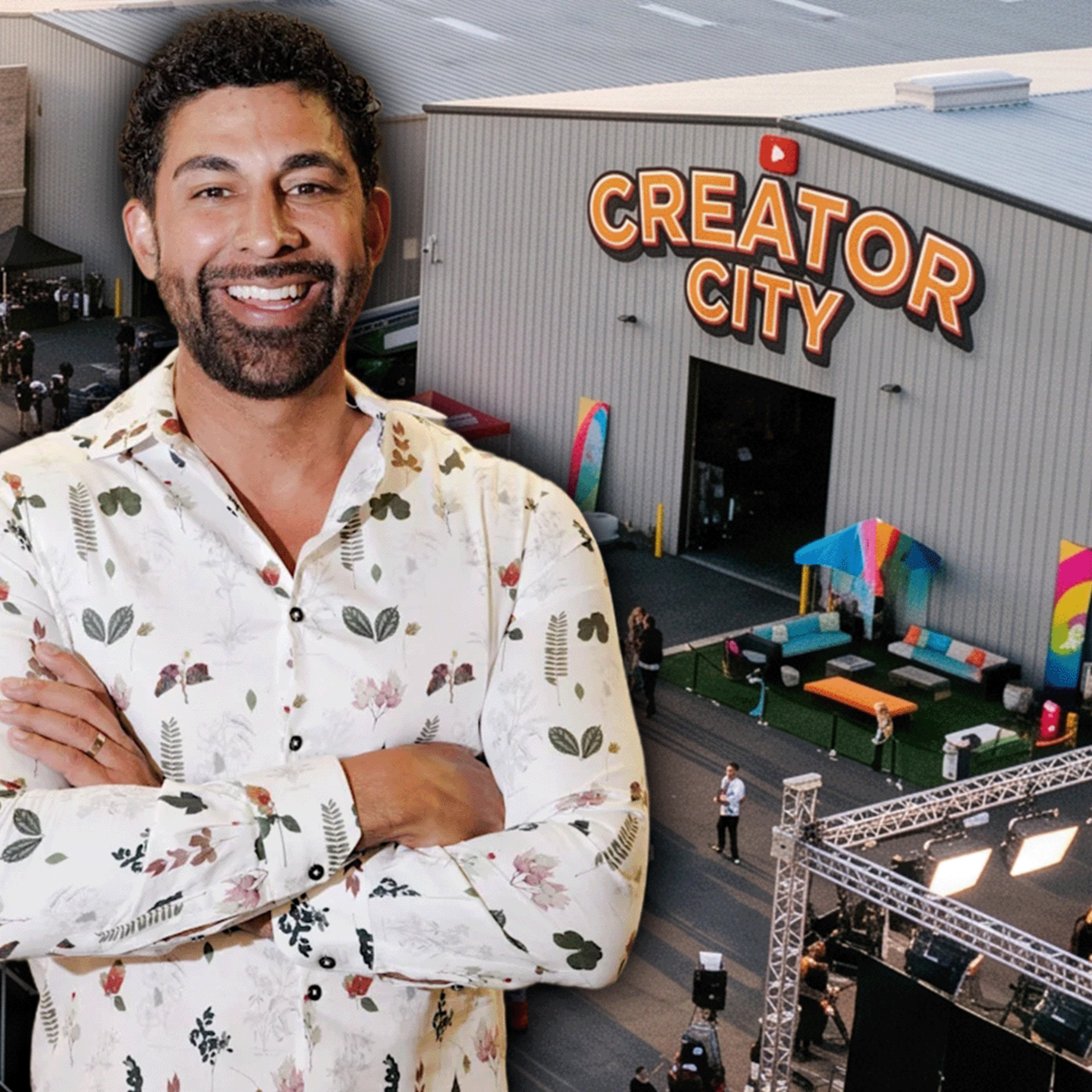
8:53Dhar Mann: Well, I also think something else that's really interesting, speaking about Dartman and Adweek, is that they announced at Adweek that they are opening this creator city, which is going to be a several acre campus somewhere in Los Angeles, where it's going to be everything you can imagine, like a bunch of studio space and all that sort of stuff. And he, I guess, Dart did sort of like a keynote there. And I think other than the fact that we can dive into what that sort of is going to look like, and I invite the Sean Actons of the world to come back on the podcast to discuss that because I've gotten an inkling.
9:24Dhar Mann: I've got a little tease of what it's going to be and it's going to be pretty amazing. I just think it's really interesting to think about what the relationships with brands are going to look like as it relates to what Dara is building. If he fancies himself, as I've heard, some sort of a Walt Disney kind of a, you know, I don't want to say character, but person in terms of how he thinks of innovation. You know, if you think about the Disney model and how they're working with brands, I just I don't know. I just I want to see how this evolves. I think it's going to be very interesting to see like is a brand going to set up shop it's creator city and then you know a creator can come in and you know shoot there and every time they shoot there there's going to be the brand in the back i don't know i just think it's very interesting it's all new this is kind of you know there's been other attempts at this like from what i understand about creator city it might even like be reminiscent of what the youtube space looked like back in the day which now thinking upon it it was really ahead of its time but i think we're in a different place right now we're like this is going to be really really interesting and seeing how creators are going to use this and the relationship with the brands and how they're going to sort of get in and up creator content.
10:20I think you could go a couple ways here. There have been these big buys from brands into creator spaces in the past, normally around headquarters. For instance, in 2020, Cash App branded the 15 ,000 square foot, 100 Thieves Cash App compound in Los Angeles, which served as the headquarters and offices for this lifestyle and gaming brand and also was kind of like a mini campus where they could shoot and do more there. And it was all branded cash app. They had these great aerial shots when they first announced the thing, this big cash app logo on it. So you could just see it branded like that in some capacity.
10:56Otherwise, I could see brands coming in and installing themselves there for several months or a quarter and more. That's what used to happen at the YouTube space. Like Universal would be coming out with this big Hollywood movie for Halloween. And so then in July, they would bring a bunch of creators into the YouTube space with this decked out soundstage that was all Halloween for the movie.
11:22Dhar Mann: Can I guess? So my friend Pearl Weibel was in charge. She was at Legendary. She's been at Legendary forever. And they used to, like, I remember Guillermo del Toro. They had some big movie with him come in and they took their giant soundstage there and they just like built these crazy sets that were very Guillermo del Toro-esque. And then basically it gave creators effectively free reign, go and shoot in air. and like use these sets. And it was such a cool thing. Like it was just like a giant monster or whatever, you know what I mean? And then it's like, use this however you want. It was really, really interesting and very, very cool.
11:54Dhar Mann: Again, kind of ahead of its time, yeah. It satisfies the needs of these two different camps. One is these marketers that obviously want to get their content out into the world and two, these creators that need a lot of content. Do you think this is going to be like the SoFi Stadium? and it's going to be like the SoFi creator campus or creator city or whatever. Like, seriously. Perhaps it could be. I mean, I think that's, the day that that happens, I feel like, I don't know, do we go on vacation? Do we like take a nap? Like when you get like a giant brand that just like goes like, you know what, I'm owning this for the next 10 years or something like that.
12:28Dhar Mann: You know what I mean? It could be incredible. I like props to Sean Atkins and Darmann if they're able to do it. Yeah. I'm interested to see how the, what the like value exchange is with these kinds of things moving forward. So I wonder if those types of activations, like the one you were talking about with Guillermo del Toro and his movie, would work now or if creators would want to get paid for that or if they would want to have special kinds of access and more. At that time, it was just cool to be able to go shoot in a real soundstage and have great content. But now I think the dynamics have changed a little bit.
12:58One more note on this. I think that this could be a really cool concept. I think it also could potentially compete with the brands themselves. so we've seen different brands come maybe not with dedicated spaces but creating these environments where creators can come in and shoot gm creator lab did this for instance where they built these theme sets and each set was uniquely paired with a specific vehicle they had this miami art deco scene for the corvette a canyon campground for the silverado uh glam bot set for the Escalade and more. And then they brought creators in as part of a contest to film content in and around and with those cars in those sets.
13:40I could see Darman Studios being a place for these types of brands to go have those activations. And I could see like more and more brands want to take ownership of the total creative process and production. So I could see this competing with a little bit of the brands too in the future.
13:56Dhar Mann: Do they want to take more? I think the whole hour we've been just talking about this whole thing where brands actually giving, if anything, a little bit too much leeway to creators. I don't know if I agree with that. That's true. I just meant like the production process or they want to own the environment and then give creators free reign in an environment. All right, Josh, moving on from ad week. So it looks like there's been, you know, these like, you know, these sleuths out there that like sort of detect new product rollouts because, you know, I'm sure people are aware of this, but a lot of times when new product features are potentially going to be rolled out in on platforms, they might just roll it out to a subset of users and they may never roll it out to everybody and then maybe that's space.
14:34Dhar Mann: I've overheard people speak at, I've overheard engineers talk about, and I think PR people at events like Maidon talk about how there's thousands of tests being engaged in with the platform on YouTube at any given time. Literally thousands. Yeah, yeah. And like people, you have an experience that is different than mine and it's just, it's totally random. And like so many thousands of those never you never see the light of day after like a little bit of, you know, a little bit. But there's a lot of people out there that like, you know, make it their job to find these things. So one of these is this creator discovery tab on YouTube.
15:07Dhar Mann: So apparently you can search certain channels and see their back end data. Unique viewers, watch time, audience, age and gender in top countries. What do you think about this, Josh? So this came from a tweet from vidIQ and I think it shows kind of YouTube's aspirations in the creator world where YouTube has made the studio. It's evolved from this place where you can just upload and distribute content, where then you can edit content, where now you can ideate around content, you can optimize content and more. It's really looking to be the go-to place for you being a creator to have all the tools at your disposal to not only distribute the content, but make the content, make it better and engage with more audiences.
15:47Now engage with more brands and dollars, etc. So as it expands that scope and encompasses more and more of kind of creators workflow, an interesting thing to think about is kind of like competitive analysis and intelligence here. So YouTube said at the Maidon event that they are releasing this feature, not this feature we're talking about now, but a similar feature that lets you see what your audience is watching on other channels and shows you what your audience is engaging with other channels and shows you the high-performing videos of those other channels too so that you can come up with different ideas, you can understand your audience a little bit better and program accordingly.
16:27But this takes it to another level and I think it's, YouTube never before has given you access to other creators, quote, private data. You can go look at other creators' data. You can see their view counts, their subscribers, their comments, et cetera. But they haven't given you access to things like demographic information. And that's seemingly what this does. Is it anonymized?
16:49Dhar Mann: Do we know? Or is it telling you specific? No, like you can see this other creator, at least according to the screenshots that are available. You can see this other creator and you can see kind of the demographics that engage with the other creator and more, which I see can be useful for creators. I'm assuming one's going to have to opt into this because historically this is considered private information, right? Totally. And maybe that's OK. And maybe a bunch of creators will be totally cool with it. It does. It is something that YouTube hasn't done in the past. But I think I think these this is like the more I think about it, it's like a little product change that actually like hasn't really big ramifications, because one of the things that I think has been just historically like behind kind of a wall, a black wall is, you know, unless you're doing a brand deal with a creator and you're insisting upon it, you can't really get the demographic.
17:39Dhar Mann: You can't get the information written like, you know, without getting permissions. And so the idea that this is going to be just available is for public consumption is very interesting. it's really interesting it's changing philosophically it changes how like everybody's thought of data right well youtube has released more of this data too through their brand connect apis and other apis they have on the platform they're giving influence for marketing agencies media companies companies and more easier access to some of this kind of information this is the first time they've shown other users on the platform other creators on the platform this kind of info from another channel i know i think this is very it's actually like philosophically like a big change.
18:17Dhar Mann: Let's take a moment. Yeah, totally. You okay with this? Like, I don't know. Yeah, I think it's interesting. We'll see if creators dig it. Okay, let's do uploads and downloads. I've got what seems like an upload, but I think it's a download. I'm going to glass half empty this one. Meta announced on Wednesday that it took action against 33.2 million pieces of child sexual exploitation content on Facebook and Instagram in the first half of 2026. And then it said this at the same time they made the announcement that the company's rolling out new AI tools to find ads and accounts that may be used to secretly direct people to illegal child abuse material.
18:52Dhar Mann: And so basically they said more than 97 % of the content Meta acted on was found by its systems before users reported it. And that in India specifically, Meta acted on 5.3 million pieces of child sexual or exploitation content during the same period with more than 98 % detected before users reported it. So basically what this is all about is like you can put an ad on Meta that looks like, you know, all fine and good. You click on it and it's basically taking you to like a website that does like child sex trafficking or something horrible. Right. And, you know, historically, their tools have not been able to sort of catch this in time.
19:28Dhar Mann: And they're sort of saying that like they they're able to catch this and they're saying 97 percent of it, they're getting it before even users open it. I mean, on its surface, this seems like a good thing. It opens up this Pandora's box revealing, not that we didn't know this, but how easy it is to place ads on these platforms, not just Meta, about anything. And how there's just so historically little checks and balances around this, as long as they're getting paid and they're, you know, playing by those kinds of rules. And it's just really, it's very upsetting. And I think this is, you know, not a coincidence that this work is being done now that Meta's like lost a bunch of lawsuits around this.
20:09Dhar Mann: And like, I'm glad that this is happening now, but why is this even a thing? I mean, there's a reason. This is the part where you're just sort of like, well, television's not so bad because these things would never land on television, right? There's a lot of checks and balances on ads that go on TV and on the internet. There's basically none. And this is just incredibly alarming. It reminds me, it's not the same at all, but back when I was at Facebook, there was no way to monetize on the platform in my first several years if you were a creator, other than doing brand deals. And so what you had was a lot of these clickbait kind of farming companies coming to these creators, particularly a lot of Viners, and saying, hey, if you post this link, we'll pay you$10 ,000 a month.
20:49Dhar Mann: And the links went to garbage sites. They weren't sexploitation kind of sites or whatever, anything like that, but they were just like garbage sites. And what would happen is that it would downgrade their content, right? So, like, the creators would come to me and say, like, you're downgrading my content because I'm posting these links. And so but and then we're saying, well, we have no other way for you to really monetize. And it was this sort of rub. Well, I then found out that somebody and I remember it was in like one of our Canada offices, one of their biggest clients was one of these companies that that that we and our policy were downgrading.
21:21Dhar Mann: downgrading. So there was no internal about like this guy was selling and is making all his money selling ads to that company that in our policy, if you were posting those links, just like from organic content, it made your content. I mean, it was just so backwards and like it was just it was a mess. It was a mess. And this is 10 years ago, probably now. So it just there were a lot of competing, call it priorities within the company, the walls of the company. And so I don't know, I just this is this this to me highlights just such larger issues with with advertising on platforms. Huge issues. And like normally I go to a bunch of these events and you hear people talk about how fantastic YouTube is, how great it is to advertise on these other platforms.
22:06And this is the future. And everybody who doesn't think so has their head in the sand. And then I heard this really interesting counterpoint at one of these events from an executive at a big media buying company who said YouTube and all of these entities are great. But television, you can still get on the phone with someone at NBC. And you can get on the phone with someone at NBC and you can talk about where your ads are being placed, how they're integrated into the show, how it looks and feels. And you understand and there's a trust around that human relationship with that person, around the team at NBC, around their pedigree, and around these standards and practices that these television stations have.
22:45So I think it's just interesting in the context of that.
22:48Dhar Mann: And you can't do that at the platform. Right. And you can't really do that at the platforms. Unless you're spending a certain amount of money. You can't. Yeah. Well, there are ways you can do that at the platforms for sure. But I don't think you can solely do that at the platforms. And in order to do that at the platforms, you have to spend a lot of money doing other stuff. A lot, a lot of money. Yeah. Yeah. And I wonder if there's like, you know how with the advent of AI, people talk a lot about trust and how there's so much AI slop on the Internet. and creators are this source of kind of trust and accountability and a relationship with their audience.
23:23So they're going to perform in the future and that's going to be more valuable. We don't have to worry about AI. I wonder if television or some of these other platforms are going to have a little bit of a renaissance in the same way.
23:34Dhar Mann: Well, I mean, I think that it already in some ways it's heading that direction as we, you know, just with the whole connected TV, as we know is, you know, YouTube's fastest growing surface. So So it's an opportunity for television to have a moment because I don't think the eyeballs are going away from big screens. So I think everything is cyclical, Josh. What's old is new again. You know, I don't know. Do you have any uploads for this? Lauren, quick upload for you from our good friend Mark Rober. His class Crunch Labs is getting more underway and secured a$2.5 million investment from Google. Mark Rober's Class Crunch Labs, he famously revealed it to us, you and I, on this very podcast.
24:15Dhar Mann: He did. He 100%. Almost like a year ago at Adobe Max last year, he did reveal that he was getting a huge investment into this. And so, I mean, it was an exclusive. I don't know what to tell you, Josh. And he's invested$55 to$60 million of his own money into this curriculum for grades 3 through 8 that's going to be available in 34 languages. It's built with the National Science Technology Association. It's accredited for use in schools. And I just feel like I know, Lauren, you're not necessarily an advocate of more screens in the classroom. I am 100 percent not. I am not. But to the extent that you could be and that people are, I feel like Mark Rober has that trust with his audience, really cares about education and science and can make this stuff cool.
25:01Like he said, like he said, when you talk to us, he tries to make the vegetables tasty. And if we can get more kids interested in this kind of science and technology and engineering and mechanics, people sometimes call it STEM, programming. People do. Steam, go on. And just these subjects as potential courses of learning or careers for these kids in the future, I think more power to all of us.
25:25Dhar Mann: Yeah, no, I think, listen, I'm a huge fan of Mark Rober. It's one of the few, you know, as you know, I'm limited with what the kids can watch on the YouTube, by the way. with as limited as I am, do you know what my nine-year-old asked me the other day? What's an F, boy? Because he found that on one of the, he saw that on one of the, yeah, that was a fun conversation. Anyway, moving on. Thank you, Ben Alazart. Is that how you say his name? What did he say his name? Azalert? Sure. Azalert. Thank you, Ben Azalert for that one. Anyway, I do, I think Mark Rober makes great content. I appreciate that.
25:58Dhar Mann: I think there should be less screens in schools and the kids should learn from teachers that are in the classroom. And if this is going to be in the classroom, it should be independently peer reviewed to make sure that it's passing all of Muster. But I do love I love his intentions and big fan. All right, Josh, I think we did it. Well, I think that's it. I'll see you cooking up something you're going to produce at Darman's new creator campus. I can't wait for the brand right behind me. If not there next week on Creator Upload. Today's show is produced by Lauren Schnipper, Joshua Cohen. That's me and Adam Conner.
26:28It's edited by Adam Conner to original music is by London Bridge. You can check them out on Instagram at London Bridge Music. Make sure you subscribe to Creator Upload right here on YouTube, on Apple Podcasts as well, Spotify or wherever you're listening. While you're there, give us a rating and leave us a comment. If you want to talk, hit us up at info at creatorupload.com. If you like our show, recommend it to a friend. If you love it, just tell everyone.
26:48Dhar Mann: Thanks for listening to Creator Upload and we will be back next week.
From the publisher
On the show today: we break down the latest news shaking up the industry, including Dhar Mann's massive $100 million pledge to bridge the gap between creators and brands. We also dive into his upcoming "Creator City" campus, discuss why creators are flocking to LinkedIn, and explore YouTube's controversial new "Channel Search" testing.
00:00 Introduction & Welcome to Creator Upload
00:17 Advertising Week in New York City
02:14 The Rise of LinkedIn Creators
05:45 Dhar Mann’s $100M Adweek Challenge
08:52 Announcing Creator City in Los Angeles
10:29 Brand Activations & Studio Spaces
14:10 YouTube’s New Creator Discovery Tab
18:31 Meta’s Action Against Exploitative Ads
24:13 Mark Rober’s $2.5M Google Investment
26:26 Episode Wrap-Up & Outro
Creator Upload is your creator economy podcast, hosted by Lauren Schnipper and Joshua Cohen.
Follow Lauren: https://www.linkedin.com/in/schnipper/
Follow Josh: https://www.linkedin.com/in/joshuajcohen/
Original music by London Bridge: https://www.instagram.com/londonbridgemusic/
Edited and produced by Adam Conner: https://www.linkedin.com/in/adamonbrand
More from Creator Upload
All episodesWe use cookies.They keep VO running smoothly and help us improve it. Privacy policy