
In short
Spotter’s “Creator TV” pitch at the Spotter Showcase, the economics of long-form creator deals, the “creator middle class” reality, and TubeFilter’s “kidslop” trend on YouTube Shorts; plus quick updates on Instagram “Shop the Look” and National Geographic “creator cohorts.”
Guests/backgrounds
Sam Gattel (TubeFilter charts/YouTube ecosystem research). Lauren Schnipper and Joshua Cohen host. Mentioned creators/figures include Spotter partners (Jordan Matter, Ryan Trahan, Dude Perfect, MrBeast, etc.) and Liquid IV/Pearson as an example.
Key claims
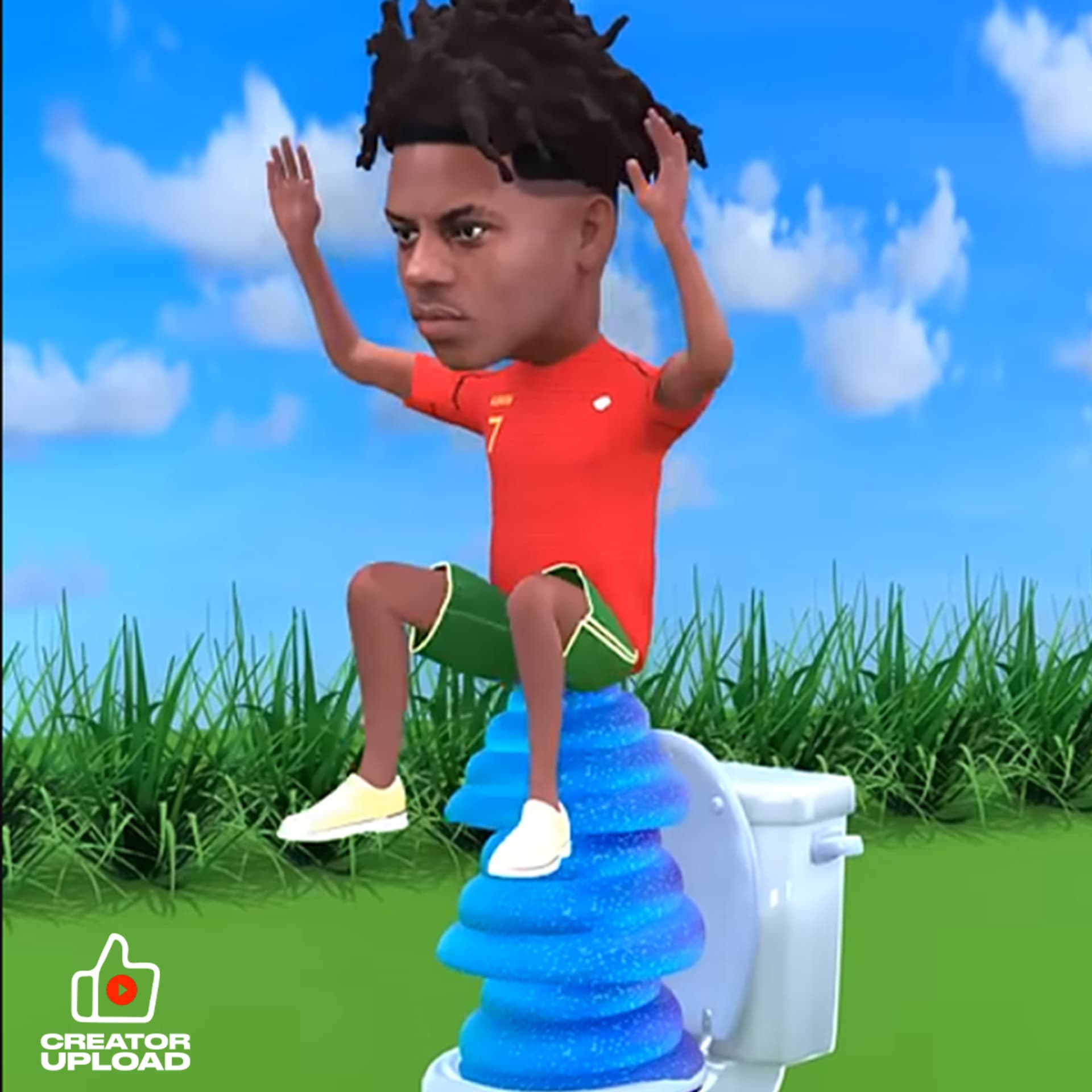
Only ~7,000 creators meet Spotter’s “Creator TV” definition (long-form episodic, 22+ minutes, 12+ pieces, 100k+ views). These creators drive massive viewership and are valuable to media buyers. Creator income skews small-to-lower-middle class (45.6% earn $10k–$100k). “Kidslop” is nonsensical kid-targeted IP “soup” on Shorts, often paired with funk tracks.
Notable examples
Pearson x Liquid IV buyout; “G.S. Vines” mixing MrBeast/Ronaldo/brain-rot; Duolingo owl as a kidslop character; TMNT revival; Roblox brain-rot leaderboard content; Instagram Shop the Look AI shopping feature; Nat Geo creator cohorts (e.g., Maya Haeg, Page Tingley, Dr. Tenninger Kellenberger).
Written by AI. May contain mistakes. Listen to the episode to check what was said.
Chapters
Tap a time to open that second in VOSpotter Showcase Event Overview
0:46 to 2:46
Discussion about the Spotter Showcase event and its significance.
“This year, similar vibes, but with a distinctly different message.”
Understanding Creator TV
2:47 to 3:54
Exploration of the concept of Creator TV and its metrics.
“I'm not mad at these stats because I think people just talk about how big this universe is, but it means a lot of different things.”
The Importance of Long-Form Content
3:55 to 6:52
Analysis of long-form content's value and its role in the market.
“I mean, we say it all the time, the fastest growing service on YouTube is connected TV.”
Spotter's Evolution and Creator Relationships
6:53 to 11:01
Insight into Spotter's business model and its impact on creators.
“And those kinds of relationships can exist in a few different ways.”
2026 Creator Economy Report Insights
11:02 to 12:30
Key findings from the 2026 Creator Economy report on audience demographics.
“A couple of very interesting findings from there.”
Challenges Facing Creators Today
12:31 to 14:00
Discussion on the current challenges faced by creators in the industry.
“On TikTok, 76 % of creators average fewer than a thousand views per video, while 3 % average 10 to 50 ,000 views.”
The Hard Reality of Content Creation
14:00 to 16:58
Exploring the challenges and metrics of success in content creation.
“And I think that, you know, when you hear in, you know, to that.”
Introducing TubeFilter and Its Charts
16:58 to 17:50
An overview of TubeFilter's insights into the YouTube ecosystem.
“So Lauren, moving on to our next segment here, I want to introduce you to something that we came up with, the TubeFilter.”
Understanding Kid Slop in Content
17:50 to 24:44
Discussion on the concept of 'kid slop' and its implications on content.
“So Sam Gattel, it's a pleasure to have you back on the platform.”
IP Opportunities in Kid Slop
24:44 to 27:35
How intellectual property holders can leverage the kid slop trend.
“Is this all shorts or is this long form as well?”
Show all 14 chapters
Instagram's AI Shopping Feature Controversy
27:35 to 28:00
Analyzing the backlash against Instagram's new shopping feature for creators.
“Josh, do you have any uploads or downloads?”
Issues with Instagram's Shopping Feature
28:00 to 29:39
Learn about the shortcomings creators face with Instagram's shopping functionality.
“Instagram users the ability to then shop the look, to then go click out to those brand stores and then buy whatever was in the photo or video.”
The Importance of Ownership in Content Creation
29:40 to 30:10
Discover why creators need to be aware of platform ownership and data control.
National Geographic's Creator Cohorts Initiative
30:11 to 30:59
Explore how National Geographic collaborates with creators for unique content creation.
“And they're going to do activations, integrate National Geographic programming and storytelling.”
Transcript
Automatic transcript. May contain errors.0:01Josh Cohen:Welcome to Creator Upload, your Creator Economy podcast. I'm Lauren Schnipper.
0:05Sam Gutelle:I'm Joshua Cohen. Lauren. Yes. Your boy got out and about in the town last night.
0:10Josh Cohen:Again. First of all, I saw you last week, IRL. Everybody was uncomfortable with us like staring into each other's eyes. It was just so funny because we were doing interviews separately and it was fine. And then when you and I had to sit down to do our stuff, I was like, I don't like this camera position. I'm not into that. What is happening? poor Adam our producer was like it's been like this all day like nobody had a problem with it and then I had to like stare at you and I was like I can't handle this anyway what were you
0:36Sam Gutelle:talking about where were you I was out and about in New York City last night tell me where tell me everything for the spotter showcase event spotter what are those crazy kids in spotter doing now so Lauren this is the second iteration of the spotter showcase event their first time they did this was last year was a little bit later in March people equated it to the upfronts or digital content new fronts back then because that's kind of what it was in that they have a bunch of creators that spotter works with high profile creators jordan matter ryan trahan dude perfect canigra dion rebecca zamolo mr beast colin and samir etc that were then pitching their products
1:13Josh Cohen:to a room full of advertisers products you mean videos videos correct their videos their series
1:20Sam Gutelle:their slate, et cetera. This year, similar vibes, but with a distinctly different message. And that message was creator TV.
1:29Josh Cohen:What does that mean, Josh?
1:30Sam Gutelle:I'm so glad you asked that question. Thank you.
1:33Lauren Cohen:I was waiting for you to do it.
1:34Josh Cohen:That is why they pay me the big bucks. Go on.
1:36Sam Gutelle:So creator TV is this messaging that Spotter really wants to make happen. And I am interested for your take on it. So here's how they presented it. Basically, the top five platforms generate 200 trillion views per year across 4 billion uploaded episodes.
1:54Josh Cohen:Okay. Okay.
1:55Sam Gutelle:If you filter all of that content down to just the content that's 60 seconds long or more and gets 100 ,000 views or more, you're left with only 242 ,000 creators.
2:09Josh Cohen:242 ,000 creators that do... Okay, got it. I'm with you. That do that. Okay.
2:13Sam Gutelle:Now, if you further narrow that...
2:15Josh Cohen:This is a cross-platform, so like not just... YouTube. Right.
2:19Sam Gutelle:If you further narrow that and then you're looking at creators who have produced at least 12 or more pieces of content that are 22 minutes or longer. Okay. That get 100 ,000 views or more.
2:37Josh Cohen:Oh, what are we talking? What's that number?
2:39Sam Gutelle:Do you want to guess?
2:40Josh Cohen:10 ,000.
2:41Sam Gutelle:Very close. 7 ,000 creators qualify.
2:44Josh Cohen:I figured it was pretty small relative. Totally small. I'm not mad at these stats because I think people just talk about how big this universe is, but it means a lot of different things. So keep going.
2:54Sam Gutelle:Totally means a lot of different things. And so those 7 ,000 creators represent, according to Spotter, 0.02 % of social video. Yet they drove over 148 billion views in the U.S.
3:06Lauren Cohen:in 2025.
3:07Sam Gutelle:And so this is what Spotter says is creator TV. This is how they're defining the terms. So 22 minutes or longer. 12 episodes or more in 2025, 22 minutes or longer, 100 ,000 views or more. Got it. And that's what they're defining as creator TV. Okay. They also have a tagline for it. They're calling it always on long form episodic programming. What do you think about this so far?
3:28Josh Cohen:I think these are interesting stats. I'm just not sure where Spotter fits into this. I mean, Spotter's historical, like, you know, you know, sole business was back a catalog licensing. And then they got into this sort of tech game where they had this product that they wanted creators to use to make their content. Now they're talking about creator TV. So I'm anxious to hear how they fit into that. We'll give it to them a sec. We'll give it to them a sec.
3:51Sam Gutelle:But I'm interested first to hear what your thoughts are initially after hearing this definition of creator TV.
3:58Josh Cohen:I mean, we say it all the time, the fastest growing service on YouTube is connected TV. I was listening to the Town podcast actually this morning. It was all about our friend Rich Greenfield was on it talking about, you know, of course, the Warner Paramount deal. And they were talking about in total, you know, Warner, all of Warner's assets. And if I'm not if I'm not mistaken, and Paramount's assets make up on linear television kind of 8 % or maybe it's streaming, it would be streaming 8 % and YouTube makes up like 26%. That might be a little bit wrong. The math but the messaging is that YouTube's, it was like 20 something percent for YouTube.
4:38Josh Cohen:So like to that end on, if you're talking about connected TVs, you need longer form content historically, probably, right? You're probably watching more longer form content on connected TVs versus like shorts. So by that very definition, especially when you're talking about these behemoths, historical behemoths that are kind of like consolidating, YouTube is bigger than them combined. That's a, that's huge. So then those folks that are making that longer content are so much even more valuable than even the numbers sort of would suggest. Assuming that those 10 ,000 folks are probably mostly on YouTube, I would imagine.
5:10Josh Cohen:But yeah.
5:11Sam Gutelle:Lauren, totally agree with you. And just to put those numbers in perspective, YouTube is actually 12.5 % of total television viewing. Paramount is around 2.3 % of total television viewing. Warner Bros. is 1.4 % of total TV viewing. That's according to Nielsen's Gage Reports from January. But if you look at the percent of streaming viewership, YouTube occupies 26.6 % of streaming viewership, Paramount at 4.9%, and Warner Bros. Discovery at 3%. So of the streaming viewership pie, Paramount plus Warner Bros. Discovery is only one-third, one-fourth of YouTube. So yeah, pretty staggering difference there.
5:53Josh Cohen:Yeah, yeah. So how this relates to the longer-form content makers, I think, is pretty significant. Again, like I think those folks are going to be seen as more and more valuable to especially the people that were historically like TV buyers.
6:05Sam Gutelle:100%. And that's what Spotter is betting on, too. I think that's why they're trying to make this framing and this vocabulary and this creator TV idea happen, because that's who they're talking to. They're talking to a room full of now media buyers, not the influencer marketing agencies, not the people that solely handle the influencer relationships at these brands, although that's some of what these people might do. But mainly people who are in charge of big media budgets for big companies. And that's who Spotter is going after. And their whole pitch was around their ability to not only find these types of creators that are producing creator TV at high quality levels.
6:44Sam Gutelle:But also the data they have around these creators to know kind of which kind of brands are going to be best fits for them. The relationship they have with these creators. And from a creator's POV, Spodder has access to these brands that they can bring to these creators so they can produce really high quality programming together. And those kinds of relationships can exist in a few different ways. One is integrations of the brand products into the creator programming itself. Another is the creator producing creative for the brand's ads. And then that creative running on the creator's channel. So this is one of the examples.
7:23Sam Gutelle:You're on a Pearson video, and you're watching one of her incredibly popular installments of the series. I had the smallest suitcase, and I went to X place. So she partnered up with Liquid IV.
7:36Josh Cohen:Is she using the vacuum seal? Because I'm using those now, and they're amazing.
7:42Sam Gutelle:No, it's like a little toy suitcase that you would get on like Timu. Oh, sorry.
7:47Josh Cohen:Go on. Or like Build-A-Bear. things not cheap like 80 bucks for two with a vacuum it's genius just pack less just no i don't have to anymore i don't have to anymore go on okay not need us you want to lug because you want to
8:02Sam Gutelle:lug like a blow dryer or a vacuum cleaner out every time you have to pack listen this doesn't just happen keep going so she partnered up with liquid iv through spotter and they came up with this creative for these ads where she was going to make like the tallest drink of liquid iv liquid iv is a supplement you pour into your drinks it gives you hydration etc and then liquid iv bought out her channel and all the ads or presumably many of the ads a vast majority of the ads that were running on her channel over that time frame were these liquid iv ads and these ads were apparently incredibly effective a rep from liquid iv said that they had a 37 7 % higher VTR that stands for view through rate than custom ads.
8:46Sam Gutelle:And that they saw when these ads were running, like every piece of their marketing funnel, their numbers increased in a positive way. So that's the kind of relationship that Spotter wants to have with not only her, but all of these creators who are producing creator TV.
Read the full transcript
9:01Josh Cohen:Where does Spotter fit into this equation?
9:04Sam Gutelle:So like you said before, I think Spotter has been many things and had many different evolutions since their inception several years ago. first they were buying creators back catalogs then they were doing that and also funding creators then they started this platform to help creators be better creators they've since closed down public access to that platform and they just use it internally to provide better data for themselves for this like kind of brand matchmaking service that they're doing they're some they're a marketing agency i think influencer marketing agency kind of even the creators in the room would bristle at that a little bit because they like to think of themselves as creators and not necessarily influencers that are doing this like at scale with kind of anybody.
9:42Sam Gutelle:It seems a little bit more selective and refined, hence the creator TV branding and vocabulary that they want to get out into the world. But I'd essentially say they're a marketing agency or this facet of them as a marketing agency.
9:55Josh Cohen:And are the creators seeing results? Like, is it performing for them?
9:58Sam Gutelle:So talking with creators about these kinds of buyouts on YouTube, they can be incredibly lucrative. So if your normal kind of like CPM on YouTube is anywhere from like$3 to maybe in the teens or 20s, when a brand comes in and buys out your inventory, that can be like a$60 CPM, which is like a$40 RPM for these creators. That's what they're seeing. So for every million views that these creators get, when a company buys them out, they can be seeing upwards of$40 ,000 or more, Which if they're producing videos a few times a month, they get a few million views. That can start to add up very quickly.
10:37Josh Cohen:Very quickly.
10:38Sam Gutelle:And that's just on the media that these companies are buying on those channels. That doesn't go into the integration costs. That doesn't go into any money that's given to the creator for the creator making the creative. For that brand to have rights to that creative to use on other platforms and more. So I think these deals can become very lucrative very fast.
11:01Josh Cohen:Okay, Josh, I want to talk quickly about this 2026 Creator Economy report that was published by the Influencer Marketing Factory. A couple of very interesting findings from there. So they worked in tandem with Hype Authority, and they found a few things I want to highlight. So first of all, 25 to 34-year-olds are the largest audience segment across YouTube, TikTok, and Instagram, meaning zillennials and younger millennials. Jesus Christ. What are we calling them?
11:26Sam Gutelle:I can't.
11:26Josh Cohen:80 % of brands increased or maintained influencer marketing budgets over the past year. Creators are now viewed as primary media sources, which is, I think, kind of piggybacking off of what you were just talking about with Spotter. Like, I'm hearing more and more, to your point about it not being just influencer marketing budgets, that these are coming out of, the budgets for creators are coming out of the media buys, which is really exciting in the sense where it's like real dollars coming into this, even bigger dollars are coming into this sort of ecosystem. them um 41 of gen z use social platforms as their primary search and engine which is uh very interesting 62 of creators have been creators for three years or less which means we are like not even the grandpa and grandma of creators we're like literally like we should be dead at this point um in creator years but the majority of creators and this goes again i think again off of your spotter stats, the majority of creators are small.
12:21Josh Cohen:So on Instagram, most accounts have fewer than 10 ,000 followers and only 13.5 % exceed 50 ,000 followers. So there's a ton of small creators. So while this industry is large, sort of the whales are very few and far between. On TikTok, 76 % of creators average fewer than a thousand views per video, while 3 % average 10 to 50 ,000 views. And then 45.6 % of creators earn between 10 and 100k annually, which I guess you could say is about a sort of like the creator lower to middle class. So, you know, I think there was a ton of talk several years ago about this sort of creator middle class. And I think the most of creators are in a bit lower than like a middle class tier.
13:03Josh Cohen:There's like, there's not a huge middle class to me. This is what this is saying.
13:06Sam Gutelle:So Lauren, that last point that the study from the Influencer Marketing Factory found that creators making between$10 ,000 to$100 ,000 a year has reached 45.6 % of creators. That figure is only slightly smaller than the percentage of creators who make under$10 ,000 a year. So combined, people making less than$100 ,000 a year is like 92, 93 % or so. Yeah, yeah. Which is like there is somewhat of a middle class there, but it still feels like a barbell more than a... Well, and to be honest,
13:39Josh Cohen:I feel like I would love these stats to be more public because I think because of the giant whales that everybody thinks and talks about, people think it's easier than it is. People think they deserve more than what I don't even know deserve means. But like, you know, I always point to there's a Wall Street Journal article a few years ago about these sort of TikTokers that were like, you know, working hard and they weren't making a lot of money and they were really mad about it as if they deserve something. It's like nobody deserves anything. You earn it or you don't. And I think that, you know, when you hear in, you know, to that.
14:13Josh Cohen:Like, I think that's amazing because there's all these opportunities, but it's also like, it's like harder than being an actor. Like, it's like just a traditional actor as it was, you know, that was always the thing that, you know, quote unquote parents were always like nervous about, but it's like, it's, this is, this is really hard and the chances of success are, are not very high. And what does success mean? Right? Like, you know, if there's one thing we learned last week at SoCom is that, you know, subscriber counts do not matter. It's engagement an audience and how your audience converts.
14:40Josh Cohen:And on the panel that I did, when I went sort of down the line and asked folks, like, what are the metrics and what are the platforms that they're looking at to see sort of signals as to whether or not their creators convert? Not one of them mentioned TikTok. If anything, it was Substack. It was email openings. It was owned and operated websites. Are they completing videos? And of course, YouTube. Like, it wasn't Instagram even, really it was it was it was and again it certainly was not tiktok like i just feel a little bit you know people that listen to this podcast know my feelings about tiktok generally speaking chinese listening device in your pocket but more than that i think it's sort of um you know done great marketing to make people feel like they can sort of be huge and you know make all this money and be a creator and share their voices and it's not it's the hardest platform to do it on yeah anything
15:29Sam Gutelle:I think that was a theme of the event last night with Spotter 2 where they had creators like Jordan Matter, Colin and Samir, Iraq, Michelle Corre come up on stage and a kind of like overarching theme, especially when Colin and Samir were up there. We're just there's so much content now. Yeah. And there's so much stuff to consume. And monoculture doesn't exist in the same way it did before. And so these creators that have this relationship with their audience, that get this kind of viewership over a prolonged period of time, are really rare. And you want to work with them to the best of your abilities.
16:07Josh Cohen:What's really interesting about that is like, you know, with those creators that have a really kind of close relationship with their audience, historically they would need like a conference or something to sort of find their audience. And now they don't really need that. You've got Colin and Samir making their own sort of conferences. You've got Jordan Matter with 87 ,000 people showing up to the opening of the product that they launched. Like these people have such, those creators, those few creators that have those really, really loyal, dedicated audiences are building not just like companies, but like these whole ecosystems around them.
16:35Josh Cohen:It's very unique and like very difficult to do. But when they can do it, it's really quite amazing.
16:41Sam Gutelle:Yeah. Especially now there's way more competition than there was before. So easy to be a creator. It's so easy to post stuff online, which is great. and there are opportunities in the niches that are developing for sure. But to have the stratospheric level of creator, I think it's going to be more and more rare going forward. So Lauren, moving on to our next segment here, I want to introduce you to something that we came up with, the TubeFilter. You know how we cover the ecosystem exhaustively. And we also have these TubeFilter charts that are powered by our very own gospel stats that look at the YouTube ecosystem.
17:14Sam Gutelle:So we see the top 50 or 100 weekly and monthly, most subscribed and most viewed channels on YouTube. And there seems to be like a lot of growing consistency between some of those top performers on the platform. You have the Mr. Beast. You have some of your other regulars there. And you also have a lot of interesting content. One that our very own Sam Gattel knows intimately because he's the one that writes up these charts and is just in-depth into the ecosystem. And wanted to bring him on to talk about this idea of kid slop. So Sam Gattel, it's a pleasure to have you back on the platform.
17:54Josh Cohen:Good old Sammy. Come on. I'm back. Thank God.
17:57Sam Gutelle:Tell us about there's AI slop, there's kids programming.
18:00Lauren Cohen:We now think there's kid slop. Tell us all about it. So slop is just a shorthand term, obviously, that is most commonly applied to AI. but I think what we're thinking of as kid slop is sort of adjacent to the AI slop that gets talked about a lot in the media. And these are videos. They're almost always on YouTube shorts or other short form platforms. They're clearly intended for children under a certain age. You know, I mean, like this stuff is too random for a 17 year old to be interested in. So we're talking about real kids here, which is a whole nother story that we could get into. What we're seeing is just videos that just, to us adults, they just don't make sense.
18:44Lauren Cohen:And these videos are all over the top 50 most watched YouTube channels of the week. Stuff that is nonsensical just for the sake of being nonsensical. And it usually involves a soup of IP with different pop culture characters, creators.
19:02Josh Cohen:A soup of IP. Go on.
19:04Lauren Cohen:So I actually brought an example. Oh! It's a channel called G.S. Vines that we had in the top 50 a few months ago. Great. Now, first of all, the name G.S. Vines, obviously a reference to Vine. Sure. And that's already sort of mining a form of nostalgia, you know, that Gen Z has for Vine. But then who are the characters on G.S. Vines? It's not people from Vine. It's Mr. Beast. It's Cristiano Ronaldo. it's Tunak Tunak Tun from the brain rot you know that guy Josh? Lauren's deeply familiar too.
19:41Sam Gutelle:Everybody does.
19:43Josh Cohen:Who doesn't? Weird. Go on.
19:45Lauren Cohen:So it's any character or real person that whoever made this video thinks this is going to be hot in the Gen Alpha algorithm they love Mr. Beast they love Ronaldo and they love these brain rot characters that you might find on Roblox or elsewhere. You stick them all together, and then you're just favored in the algorithm. And that's how these channels end up getting millions of views, even though, again, to someone of our age, it seems like complete and utter nonsense that you would never understand why anyone is watching it at all. And there was an article recently in the New York Times
20:23Sam Gutelle:that then we picked up as well, this idea of funk music being the background to all this. Yeah, funk is a really interesting thing.
20:32Lauren Cohen:I'm not going to try to sing any funk tunes because I have self-respect. I'm sorry.
20:38Josh Cohen:Okay.
20:39Lauren Cohen:Sure. This is an electronic music genre, sort of adjacent to trap, adjacent to southern hip-hop, adjacent to dubstep. Just kind of loud, distorted electronic beats, many of which are coming out of Brazil, which is kind of the hotbed of funk. And you can imagine a music genre that is random, that is in your face, that is loud, that is in a sense nonsensical. It's the perfect soundtrack for these types of videos, which is how we found that recently the top funk producers are getting more YouTube hits than Taylor Swift.
21:17Josh Cohen:But these are effectively compilation videos. So in terms of a monetization, there's like they can't monetize these, right? like whoever's putting these together because if you're talking you're telling me there's clips from beast and all these other folks like well this is not licensed stuff right am i missing
21:30Lauren Cohen:something well they're not supposed to be monetizing perhaps but whether or not these videos are actually being monetized is a whole different question i think there's also a fair use argument to consider as well and lauren sometimes these are re-edited in a certain way
21:44Sam Gutelle:with different types of visual effects sometimes it's ai generations that would be that would be
21:49Josh Cohen:the fair use argument that sam just mentioned go on sometimes it's ai generations of these videos
21:54Sam Gutelle:sometimes people dressed up not quite in like spider-man and elsa era youtube these people aren't doing any nefarious acts or engaging in any type of content that would seem like you wouldn't want your kid to watch for uncouth reasons but they are sometimes dressed up in demon hunters costumes or in costumes from spongebob squarepants and those kinds of things
22:21Lauren Cohen:sonic is one we've seen recently especially like chinese creators there's been a lot of like a big trend of dressing up like sonic and trying to just harvest that that sonic the hedgehog algorithm which is apparently back and it's not the only uh animation touchstone from the 90s that's being revived on YouTube Shorts. And then these tracks that are set to these YouTube Shorts
22:46Sam Gutelle:get billions of views because as YouTube counts the number of times these songs have been listened to, it's counting all these Shorts views goes into that total in some capacity. And so that's how you get producers like ATLXS and their Paso Ben Soltel track becoming one of the most listened to, if not the most listened to song on the biggest video sharing platform in the world.
23:11Lauren Cohen:My guess is it would just be pronounced Atlas because this is a thing I've noticed in Funk where they just put random Xs where vowels should be. We have the X for you. I'm glad we do.
23:21Sam Gutelle:And then Sam, we've also kind of noticed this trend where it seems like this could actually be an opportunity for IP holders to tap into this in a meaningful capacity. Tell us about that.
23:32Lauren Cohen:Absolutely. And you already see some of those IP holders doing exactly that. I mean, this really started honestly with like Duolingo, like the Duolingo owl became one of these kid slop characters. You would see the Duolingo owl with Mr. Beast and Ronaldo and these weird videos for kids. And, you know, if the Duolingo owl can do it, why not the Teenage Mutant Ninja Turtles, for example? and that's why we're now seeing a revival of TMNT on YouTube with YouTube content they're not making kids slop themselves but you can imagine if they get more attention going towards the turtles then maybe the algorithm likes it more those become kids slop characters and now all of a sudden kids are as excited about TMNT as they are about Sonic powering these top 50 channels on YouTube
24:22Sam Gutelle:yeah it's providing this really interesting opportunity for brands with IP that kids could like to get into this ecosystem. And Sam, like you said, this soup and supercharge their basically brand awareness through just being kind of meme-ified in this kids' love content.
24:44Josh Cohen:Is this all shorts or is this long form as well?
24:47Lauren Cohen:This is all on shorts. I mean, some of these channels haven't even uploaded a single long form YouTube video.
24:52Josh Cohen:And who are the producers of this? Is it just random channels until now we've never heard of? Or who's doing this?
25:02Lauren Cohen:The intersection between existing creators and this new stuff is happening in Roblox. You're seeing Roblox creators embrace brain rot as a way to move up the leaderboard on shorts. And some of these top Roblox games are kind of IP soup in their own ways. I mean, steal a brain rot. It's basically just we're going to name drop every brain rot character within the context and the gameplay of this game. I think one thing that's interesting about TMNT specifically is colors. Like bright colors, you know, rainbow patterns are a huge driver of this type of short form viewership. Because, again, we're talking about, in some cases, preschoolers here.
25:45Josh Cohen:Well, it's so funny when I hear bright colors now, this is a little bit of a tangent. but like there's this whole movement in branding right now where it's like back to the 90s with like bright bright bright colors whereas like the last 10 years have been about simplicity and lines and clean lines or whatever and now that seem that has seemed to the kids if he seems very like old school and ew and like whatever and they just want like colors like they want like brand slop basically just like all like rainbows and i was reading or seeing some video i don't know about that and it totally makes sense you go to the store right now you're like oh yeah all the young brands are just like it's so it's all color it's fascinating yeah i mean i think it's
26:22Lauren Cohen:in many ways it's the divide between gen z and gen alpha you know gen z was always thought about as being vibey as you know think about your typical emma chamberlain vlog has very subdued colors yeah then you see gen alpha kind of take the reins of these digital platforms and they're really going more back to like what it was when my millennials were that age you know just loud, bright, as you're saying, very 90s, very Lisa Frank, that whole vibe. So I do think that it's the generational shift that we're seeing on YouTube shorts.
26:58Sam Gutelle:Raised on Cocomelon, fueled by Prime. We're here for big, bright colors.
27:04Josh Cohen:Wow. That's a, oh God, sometimes he comes up with a real good nugget. That's a good one. Sam, this is fascinating.
27:10Sam Gutelle:Thank you so much for coming on. Love to have you here.
27:13Lauren Cohen:You can check out the charts at 2filter.com,
27:16Sam Gutelle:as well as Sam's other writing there, diving into more kids' lap as we move forward. And keep in mind,
27:22Lauren Cohen:here is in a half shell, Turtle Power Baby. Totally. Totally.
27:29Josh Cohen:Sam, that was great. Love to have you as always. Go Turtle Power? I don't know. Something. Josh, do you have any uploads or downloads?
27:37Sam Gutelle:Lauren, quick download for you. So Instagram... You know what you love it. ...is getting a little bit of heat by influencers and creators and just the general public who's on Instagram. And it's because they released this test feature called Shop the Look. Basically, it was using AI to evaluate what kind of clothes were in influencers' posts. And then it was giving consumers, viewers, Instagram users the ability to then shop the look, to then go click out to those brand stores and then buy whatever was in the photo or video.
28:09Josh Cohen:Sounds easy, sounds obvious. So what's the problem, Josh?
28:12Sam Gutelle:The problem is one, it's not that great yet. So it was not being entirely accurate on what the look actually was. Two, it wasn't offering any commission to these creators or these influencers or these people that were posting these.
28:26Josh Cohen:Did they opt into this?
28:27Sam Gutelle:I'm sure they opt into it through some kind of obscure, we're going to test features for Instagram, but not specifically this test. So that can mess up the brand deals that they previously have in place. If they have any other type of affiliate marketing they're doing in those posts and more. and like we just kind of said, they didn't ask anybody to do this in the first place. Creators don't like it when you, one, mess with anything in their videos, two, mess with any ways they're getting money and three, especially don't like one and two when you don't talk to them about it beforehand.
28:59Josh Cohen:And they don't like it when the products are not the actual products. It's not like the actual... Totally too. Yeah, so I would see that as problematic.
29:07Sam Gutelle:I know this is all rented real estate on these different platforms, but I think the powers that be at these companies need to realize when you're going and you're messing with someone's feed or posts in any capacity whatsoever, it's basically like going into their home and just like moving some stuff.
29:23Josh Cohen:But I think to your point, it is rented real estate, though. Right. And I think that's what everybody forgets all of the time. And I think that like there's been a movement, as we've seen a lot in the last couple of years of people building out their own businesses or owned and operated because people did start to realize that. But then we all forget you don't own this platform you don't own this data and ostensibly you know per their terms of service like they can do all these things but you know but then at the same time if folks really don't like it um they will have a problem if everybody sort of leaves the platform because of that so you you have to
29:59Sam Gutelle:also listen to your audience but it's um but you want to have like a good landlord like you can be
30:04Lauren Cohen:but there are many bad landlords that sure there are yeah quick upload for me nat geo's uh
30:11Josh Cohen:doing getting into the game of creator cohorts which i think is really cool like you know best by starbucks ulta beauty home depot have done these things as well and they're working with a few creators and one of the coolest things about this is that they get to um travel and create content from locations around the world and i just think that's really cool and there's about 10 creators i think um including maya haiga and adventure photographer page tingley archaeologist Dr. Tenninger Kellenberger. Very cool. And they're going to do activations, integrate National Geographic programming and storytelling.
30:48Josh Cohen:I love this for an ad geo. I feel really good about this one. It made me really happy.
30:51Sam Gutelle:If I was a 20-something year old and had any type of social following online, this would be like a dream job. Dream. Sounds amazing.
30:58Josh Cohen:Beyond. Totally agree. Okay, Josh, I think we did it.
31:02Sam Gutelle:Lauren, I think that's it. I'll see you practicing your turtle power catchphrases just start with like cowabangas
31:09Josh Cohen:I mean that was a good one
31:10Sam Gutelle:we're not there next week on creator upload today's show is produced by Lauren Schnipper Joshua Cohen that's me and Adam Connor it's edited by Adam Connor too original music is by London Bridge you can check him out on Instagram at London Bridge Music make sure you subscribe to creator upload right here on YouTube on Apple Podcast as well Spotify or wherever you're listening while you're there give us a rating and leave us a comment if you want to talk you this up at info at creatorupload.com if you like our show recommend it to a friend if you love it just tell everyone
31:36Lauren Cohen:Thanks for listening to Creator Upload and we will be back next week.
From the publisher
Today: a new era of "creator TV" and the rising trend of short-form "kidslop" content. Lauren and Josh Cohen break down Spotter's new pitch to media buyers, and dive into a new report from the Influencer Marketing Factory revealing the harsh realities of the creator middle class. Plus, Tubefilter's Sam Gutelle joins the show to explain the wild world of "kidslop" content -- IP soup, Roblox inspiration, and why Brazilian funk music is dominating the Gen Alpha algorithm. Finally, the hosts discuss Instagram's controversial new AI shopping feature and National Geographic's new creator cohort.
What you’ll learn:
-- How Spotter is defining the new "Creator TV"
-- The staggering stats behind creator earnings in 2026
-- Why "kidslop" channels are getting billions of views on Shorts
-- Why creators are angry about Instagram's "Shop the Look" test
00:00 Introduction & IRL encounters
00:52 Spotter Showcase & Creator TV
03:17 The stats behind Creator TV
06:52 How Spotter connects creators & brands
11:07 2026 Creator Economy Report
13:17 The truth about the creator middle class
17:51 Sam Gutelle explains "kidslop"
20:57 Funk music & the Gen Alpha algorithm
23:31 Opportunities for IP holders
27:48 Instagram's controversial AI shopping test
30:22 NatGeo's new creator cohort
Creator Upload is your creator economy podcast, hosted by Lauren Schnipper and Joshua Cohen.
Follow Lauren: https://www.linkedin.com/in/schnipper/
Follow Josh: https://www.linkedin.com/in/joshuajcohen/
Original music by London Bridge: https://www.instagram.com/londonbridgemusic/
Edited and produced by Adam Conner: https://www.linkedin.com/in/adamonbrand
