
In short
Tubi’s partnership with TikTok to create and promote long-form series made by TikTok creators, plus a broader “newfronts”/advertising and social-media accountability discussion.
Guests
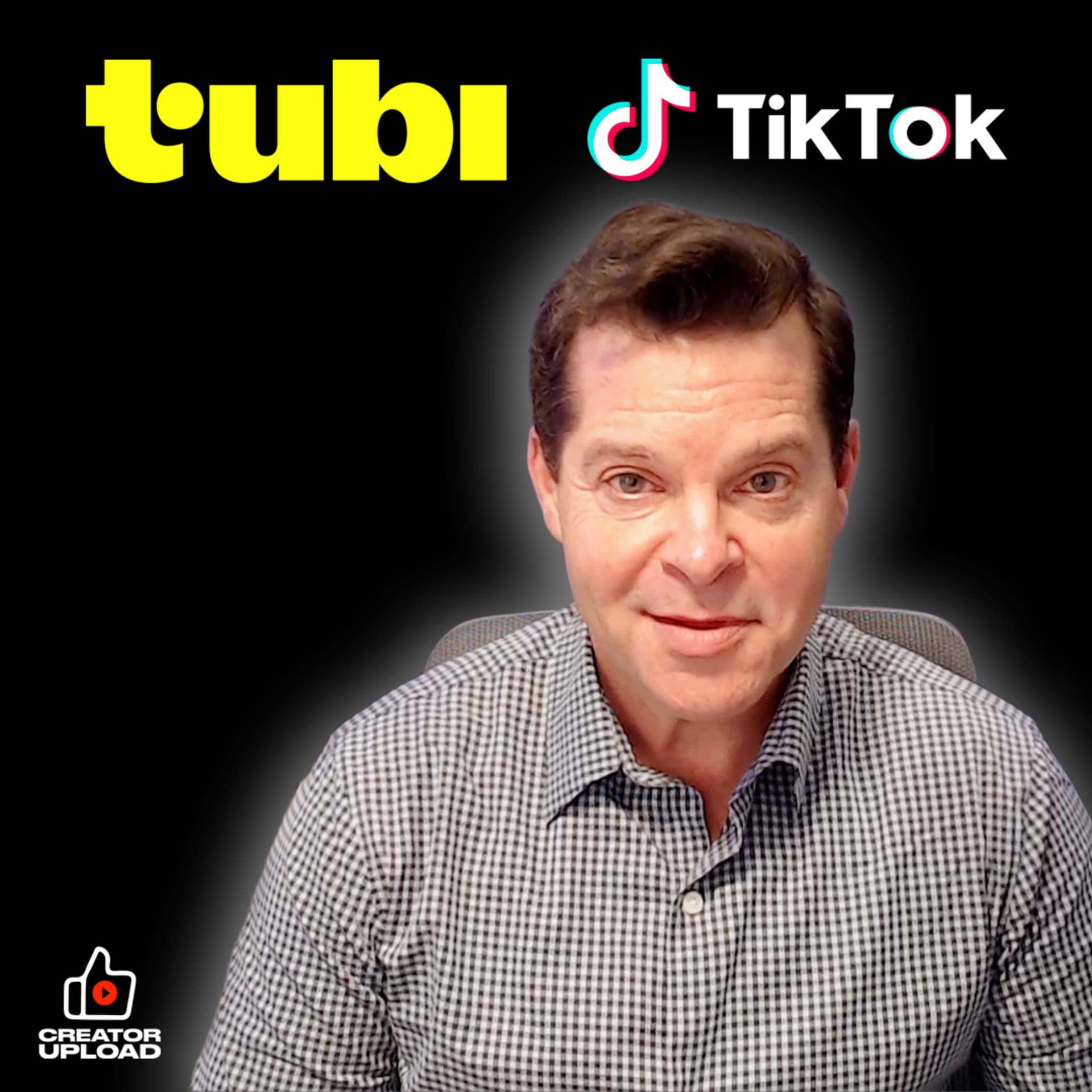
Rich Bloom, GM Creator Programs and EVP Business Development at Tubi (creator/streaming business executive).
Key claims
- Tubi and TikTok will collaborate to select creators for long-form series for Tubi; TikTok will use Spotlight and marketing tools to promote.
- Success is driven by engagement and reach, not follower count.
- Creators keep IP; Tubi funds production and uses a rep-share model; TikTok takes no monetary cut.
- Tubi reports program momentum: 200+ creators, 16,000+ episodes, ~20 exclusive series/movies launched or announced; new viewers retain better and by weeks 3–4 watch a mix of creator and Hollywood content.
Notable examples
- Keelan Campbell’s TikTok-to-film “Terry Joe,” launched as a Tubi original and reached #8 on streaming originals charts.
- Nabella Noor’s upcoming exclusive long-form series on Tubi.
Written by AI. May contain mistakes. Listen to the episode to check what was said.
Chapters
Tap a time to open that second in VONew Fronts Week Excitement
0:45 to 1:01
Hosts discuss the buzz around New Fronts Week in NYC.
“And Lauren, I'm excited to tell you about it.”
Interview with Rich Bloom
1:01 to 2:24
Rich Bloom discusses Tubi's TikTok partnership.
“This week, hot off the press, you announced a really interesting partnership with TikTok, unsurprisingly, because, of course, Kudzi.”
From Short-Form to Long-Form
2:24 to 4:24
Rich shares examples of TikTok creators transitioning to Tubi content.
“I was going to say, what is the examples of TikTok creators on Tubi?”
Engagement vs. Follower Count
4:24 to 6:40
Discussion on the importance of audience engagement over follower count.
“So with Keelan Campbell, you were saying that, like, you're seeing this major success with his sort of longer form content.”
Collaboration with TikTok
6:40 to 10:40
Rich explains how Tubi collaborates with TikTok to identify creators.
“So we're really focused, but we will provide more support than we have been to creators that are already creating long form content.”
Financial Aspects of the Partnership
10:40 to 12:54
Discussion on funding, revenue share, and creator incentives.
“to help creators get these opportunities outside of TikTok.”
Program Updates and Growth
12:54 to 14:00
Rich provides updates on the growth of Tubi's creator program.
“launching we just started launching exclusive titles uh in the end of october and we already have a few creators that launched in that first group where we're doing multiple projects with them.”
Tubi's Growth in Creator Content
14:00 to 21:20
Learn about Tubi's successful partnerships and expansion in exclusive creator content.
“Any other general sort of like to be news that we should sort of be breaking here or talking about before I let you go?”
Predictions for Tubi's Future
21:20 to 21:41
Hear predictions on Tubi's upcoming developments and content offerings.
“I am excited to take him up on and see if he is correct in his prediction of they're going to have like a dozen of these kind of things going on within a year.”
Understanding New Fronts
21:41 to 24:25
Discover the history and evolution of the New Fronts event in the digital advertising space.
“All right, Josh, it's your time to shine.”
Show all 17 chapters
Trends in Digital Advertising Events
24:25 to 28:00
Learn about the current trends and themes in advertising events and how platforms are engaging advertisers.
“And so when new fronts came around, especially like 2015, 16, 17, it was a big deal.”
Evolving Shopping Experiences on TV
28:00 to 29:20
Explore how platforms are enhancing shopping directly through television interfaces.
“and partner with creators in ways that they have before, but they're making it easier and up-leveling it now.”
Timing and Readiness in Digital Innovation
29:20 to 31:00
Discuss the factors influencing the timing of digital content innovations and market readiness.
“We talked a lot about in my interview with Richard timing because like it's not as if the folks have not attempted these shopping kind of integrations prior.”
The Shift in Content Quality and Market Demand
31:00 to 34:10
Analyze how the quality of digital content has improved and its impact on market demand and advertising.
“And they've been available at certain degrees of efficacy and ability.”
Legal Accountability in Social Media
34:10 to 37:00
Examine recent court rulings against social media giants for user safety and mental health.
“It's fascinating how fast things have changed.”
Algorithm Accountability and Future Changes
37:00 to 42:01
Explore the implications of recent rulings on algorithm accountability and the future of social media platforms.
“either unwilling or unable to do at the cost of sort of growth.”
Impact of Changing Social Media on Education
42:01 to 43:02
Explore how evolving social media trends may influence education and productivity.
“There was some instance where people's watch periods on these platforms decrease.”
Transcript
Automatic transcript. May contain errors.0:00Welcome to Creator Upload, your Creator Economy podcast. I'm Lauren Schnipper. And I'm Joshua Cohen. Lauren. Yes. Are you getting out and about in your neck of the woods? Because I am just all over the place in New York City this week. I mean, tell me all about it, Josh. It's New Fronts Week. I know we have an interview we want to get to, but I'm stoked to tell you all about the dog and pony shows that these platforms are presenting to major advertisers and media holdcos right here in New York City. I'm so excited. Particularly, I want massive sort of granular details on what you described called me right after the LinkedIn party.
0:33And basically we're like, Lauren, it's like the tech scene before the COVID. It's like I was like lobster tails. You were like a sushi station. And I was like pissed I wasn't there, like beyond everything. Excited to get into that, Josh. And Lauren, I'm excited to tell you about it. Very excited to first get to an interview with Rich Bloom, Tubi executive, to talk about this TikTok-Tubi partnership, bringing long form of TikTokers to Tubi. We're going to get all into it. Let's get right to it. Welcome, Rich Bloom, GM Creator Programs and EVP Business Development of Tubi. Welcome back to Creator Upload.
1:07Thanks, Lauren. It's great to be back. Oh, my gosh. Well, I'm very excited. This week, hot off the press, you announced a really interesting partnership with TikTok, unsurprisingly, because, of course, Kudzi. the famous couldsies on your team who was at TikTok for a long time. So, you know, it's very, it seems very innovative, but also like very natural, very excited. So can you tell us kind of the high level of what the deal is with TikTok? Yeah. So we just entered this partnership with TikTok. The idea behind it is we're going to collaborate with TikTok to choose creators to make long form series for Tubi.
1:42Okay. And then on TikTok, using Spotlight and other marketing tools they have, we'll actually collaborate with the creators and with TikTok to promote those shows. So it's really exciting. It really comes from success we're seeing with short-form creators from TikTok on Too Big. So as we talked about when I was on the show months ago, we really started with a focus of working with long-form creators who are already in that space where we could help elevate them. And now we always intended that a second step would be to focus more on all. In addition to that, helping short form creators who we thought had the tools to do it, make the transition a long form.
2:23And we had seen we have like a couple of amazing examples of TikTok creators. I was going to say, what is the examples of TikTok creators on Tubi? Yeah. So one great recent one is Keelan Campbell, who this creator whose primary home is TikTok, made a feature film with us as part of the studios program, which is something we had launched in 2024, where we helped short form creators make long form content. And it was really a pilot where we made four projects. Key Lons was the last one. And it's a full on movie called Terry Joe. Taking popular characters from TikTok and turning it into a full feature length movie.
3:06And that movie has been amazingly successful. It launched at number eight on Illuminate charts for streaming originals. And he really brought his audience. And the interesting thing there is, you know, he's big on TikTok, but by a lot of like the numbers aren't these crazy numbers that you see. He's got about three million followers on TikTok. Sure. But they're really passionate, engaged fans. So his fans came out in droves to watch it on Tubi. And then it also really connected with our audience of over 100 million monthly active users. And we brought a lot of new fans to him. Sure. There is that example.
3:45And then one other example of something that we just recently announced but isn't live yet is a new series with Nabella Noor, who I would say is sort of like a millennial Martha Stort, who has been really focused on short form content on TikTok, has this really passionate built-in audience. And we just announced that we're going to do her first long form series exclusively on Tubi. So we had seen this talent and we had seen success with studios. And this is really an effort to create a more scalable way for us to help TikTok creators make that transition from short form to long form. OK, so I have so many questions I want to dive into.
4:25So with Keelan Campbell, you were saying that, like, you're seeing this major success with his sort of longer form content. But like you said, it wasn't it's not like he has the most followers on TikTok. So what were the indicators such that you thought that he was somebody who had this engaged audience? And I bring this up on the heels of just being at SoCom, where I moderated a panel, you know, all about affiliate and consistently. And I wouldn't just say just in my panel, but consistently, you know, everybody there, I would say the drumbeat was like subscriber count doesn't matter. It's engagement of audience.
4:54Right. Like in fact, I would argue that they would say that TikTok is not is arguably not an indicator of success on TikTok, not an indicator of whether or not you can convert. Because what you're really talking about is conversion, right? And so what made you feel like he would be somebody that would have this engaged audience? What were the indicators? I would say it was a combination of qualitative and quantitative factors, right? So on the quantitative, it was, and this is in general the way we're looking at creators. And I agree, in some ways, it's more straightforward on YouTube than TikTok.
5:29But we're really looking at engagement. We're looking at reach, right? Like you said, for us, the subscriber number is sort of like an initial very top line filter to give some directional information. But we're really looking at views, comments. We also are able to tap into our social team to look at mentions of the creator across different social platforms and even outside of social. so and we're we're also looking a lot at the trajectory sure and and looking a lot at creators where their their reach is really on on the rise um so we saw all that with kian and then his content also was just hilarious sure and really strong so we also just qualitatively saw that you like the content was i mean because this is like by the way what you're talking about and I'm going to put words in your mouth, is like, the content's got to be good.
6:26Just because it's popular, it might not make sense for long form. Like, is this somebody who's like talented, you know, has talent and could be good? So are you guys providing the development resources to develop the projects? Like, how's it to be? Or how's that work? With this program, we're not providing the development resources, at least not the first cohort. So we're really focused, but we will provide more support than we have been to creators that are already creating long form content. So we're going to give them access to our originals team who typically do development to help give them guidance.
7:02And we're going to give them support through our internal team who typically make originals to give them advice and will be there for them. But we are choosing creators that we feel have the ability to make the leap into long form. And then for things that do really well, our program in general, those creators might have the opportunity to take the next step of potentially doing original with Tubi. But out of the gate, we're actually going to be betting on creators that we believe can make the transition with some help, but primarily on their own. And then in terms of the creative direction, that is driven completely by the creator.
7:45And we're already we've already been doing pitches from creators. We've actually already greenlit the first few objects. OK, so this is moving like everything else we're doing. We're moving quickly. So how are you sort of like, you know, it's not like in this announcement, it did not include like in order to qualify or to apply here or like. So how are you and TikTok collaborating to surface these folks and what can creators potentially do to get surfaced to you or in TikTok? So we certainly heard from a lot of creators, especially from a lot of his old friends. Yes, yes. Um, TikTok is really, it is suggesting creators to us.
8:28Um, and we've now had a lot of back and forth where they have a better sense of the types of creators we're looking for. We're really interested in creators that either like Keelan have a existing characters where it makes sense to take what's working in short form and, and bring that to long form or like in a Bella where they have a format that works really well in short form that we think could be. expanded upon and taken into long form. You know, it's generally creators that there's not like a hard line, but it's generally creators that have, you know, fairly significant reach. But we are looking for a mix of established creators and more emerging creators that are on the other side.
9:12So, you mean, for all intents and purposes, this is like in somewhat a traditional kind of development process. You're just, you know, TikTok is just helping you kind of, you know, know, surface this pool of because there's so many, obviously, creators on TikTok and that that partnerships team is going to have a sense of the folks you're really utilizing their partnership team. And so which is, I think, sort of brilliant on that note, what is in it kind of for TikTok, right? Like, obviously, this is an offering for their creators, which as a former partner manager at a platform, love that. But like what what sort of is and I guess to that end, like who kind of like you make this movie, who kind of owns it?
9:45Does TikTok have a piece of it? You guys have a piece of it. The creator has a piece of it. Is there any sort of monetary kind of deal with TikTok? There's not. So like what we're doing with creators in general, the creators are the creative force behind it and they own the IP. And we will have an exclusive window on the content. And there's this collaborative relationship to really leverage. TikTok is such an amazing platform for us already as a way to market projects. and engage audiences. So we're going to get the benefit of that. I don't want to speak too much for TikTok, but you've seen some other things they've done, like the deal they just announced with iHeart.
10:29And it seems like there's a real desire there to... TikTok's an amazing place for developing talent. And so I think it's really a concerted effort to help creators get these opportunities outside of TikTok. to help them grow their career while keeping their base on TikTok. So I'll say the quiet part out loud because I don't think you can say it, but I think what TikTok historically is known for, to your point, is discovery. Once you're discovered, it's a little bit like a button and then what? And so what oftentimes happens is these creators then go to YouTube and they do their stuff there. So my guess is that, you know, and again, we're all speaking for TikTok, but I can do it more than you because, you know, I have no skin in this game.
11:11But like, it's like, you know, it's an effort for them to see, like continue developing and being on TikTok and look, we'll give you other opportunities, whether it's with iHeart and podcasts or to be in developing longer form. And then you'll still feel like this loyalty to TikTok and always sort of debut here and start here first, which I think it's actually really brilliant in the sense where most platforms want to keep everything in in-house, walled garden. And so that is for sure. And it's not like what we're not hearing is TikTok is not starting their own long form division, right? Which is definitely something that could happen.
11:45Like you could, there's that's, that wouldn't surprise me if that, you know, did happen. I don't know that it would be the right choice. And so they're saying, listen, at this, where we are in this sort of playing field right now is there's a lot of folks out there that I'll do things that we do, we don't do and do it better. So why start as let's partner. And I, it's like, you know, I have a lot of critical things to say of TikTok, but I think these kinds of deals are really brilliant, truly, in order to keep that sort of affinity to the product. So I love this for you guys. So what a year from now, what does success look like for you guys for a partnership like this?
12:16Like, you know, what and I want to look at it from the point of view from like how does TikTok keep this relationship going, but also how do creators sort of, you know, keep getting excited about this and want to sort of put their stuff on TV? Yeah, I mean, I think looking at a year from now, it's, you know, that we have a pipeline with a significant volume, significant number of shows that come through this program. um a few big breakouts where there's you know our our model is really when we see a creator be successful uh with exclusive content on to be we do multiple projects and just you know since launching we just started launching exclusive titles uh in the end of october and we already have a few creators that launched in that first group where we're doing multiple projects with them.
13:10So it would be, you know, a hope that out of this program, some of those emerge. And that, you know, we really, we, we, we think we're going to get some really unique content and a really engaged fan base. But it's something where we're all about, you know, scale. So it would really be, you know, that there's dozens or more of titles coming through this program. And I'd say for the creator that they're, you know, that we're really helping them take that next step in their career. Dozens in a year. That's a lot. Okay. You guys have got work to do. I love it. Well, I'm saying a year from now, I would hope that that's where we are.
13:53No, I know. But dozens in one year is a lot. So that's really... And are you guys, I know you said you're not, obviously you're providing the funding for the the development and you know i'm assuming like you guys then will recoup that and then there's some sort of split with the creator or is there a can you get into any sort of the financial deal in in in general um for exclusive content we're helping to fund the production and then there's in in everything we do with creators uh there's generally a rep share so that creators are um incentivized and have skin in the game um and this generally follows that that that model that we have for creators.
14:34This is awesome. I'm so excited. Any other general sort of like to be news that we should sort of be breaking here or talking about before I let you go? I would just say in general, we spoke in the earlier days of the program. I can just give you a quick update that since launching this program around nine months ago, we now have over 200 creators on the platform, over 16 ,000 episodes of content, and we're continuing to scale bringing on, you know, that will increase to hundreds of more creators pretty quickly. And we are also, you know, we when we last spoke, we had, I think, our first couple of exclusives that had launched or were about to launch.
15:15We've now launched almost 20 exclusive series and movies with dozens coming over the next few months. And, you know, it's been a really big success so far. We're seeing a lot of new viewers coming to Tubi. We're seeing it really resonate with our existing viewers. We just had our new front a couple of days ago, and we just announced these really exciting new partnerships to get exclusive series from Jester and Destroying for the World Cup. So we had Kinegar Dion on stage. We just had an exclusive series from her, and we're a few months away from having her first feature film. So overall, you know, we have a lot more work to do, but we're really excited about the progress in a relatively short amount of time.
16:02And you mentioned, like, I think you mentioned the last time you were on that a lot of folks, oftentimes, one of the reasons this program, you were in this company, is that, like, people would kind of come on for the creator content and stay for, like, other sort of, you know, non-creator kind of, you know, viewing. Is that still something you're seeing? Sort of, like, people will, like, come for creators, stay for more? to stay for other stuff. Yeah. And it's even more important now because now that we have exclusive content on the platform, that's driving a larger percentage of new viewers to the platform.
16:32And we're continuing to see that those new viewers come to the platform actually retain better than our typical viewers. They're younger. They spend around the same amount of time viewing content. And then in the first week, they're watching primarily creator content. But by week three or four, they're watching an almost equal mix of creator content and traditional Hollywood content. So that's been really validating to see that trend continue. And to us, it really confirms that viewers want a mix of creator content and Hollywood content in one place. And just one more thing I'll add is we actually, Tubi does this study every year about streaming audiences.
17:22And two of the things that really stood out for me on the creator side was 63 % say that watching creator content on a streaming platform feels no different than watching a TV show. And 67 % say creator content feels more original than traditional TV. that. Wow. I think it's, well, to me, what this says is that media is media and that if you were not, so to me, it's not about like, it's, you know, and we're getting there. We're not quite there, but we're getting there in the sense where like, this is a spoke of media. So if you are a media company and you are not working with creators and developing content, you're simply just missing like a leg on the stool at this point.
18:01It's not about not doing quote unquote traditional. It's about doing a mix of it. And then, you know, thou that shall not be mentioned, YouTube is the fastest growing service for YouTube is connected TVs, which is a huge thing that still people don't necessarily realize. And so to me, what that says, again, content is content, media is media. You've got to have all of it. We want all of it. And so I think it's just to me, what I find really fascinating and just like about what you guys are doing is the success is very valid, but you're also your timing is really perfect like you know what i mean you could not be doing what you were doing right now five years ago like there just wasn't enough kind of maturity i think in the creators out there to do these kind of projects to do this kind of development because by the way we saw folks try it platforms tried it other independent platforms tried it like it's not necessarily that they were doing it wrong it just wasn't the timing you guys are doing this at the perfect time.
19:00So, um, and your strategy is brilliant and you guys are great in the whole thing. Your time was amazing, but you know what I'm saying? Like, it's just like, sometimes it's about right time. Like that timing sometimes has a huge, you know, piece of it. And it's like, it's really fascinating to me because I, I have, I, and I will say this as my, for myself, like I've been a little bit ahead of things too early. Like my story that I've told 95 times, I'm going to tell it right here was that like, I was at, you know, VidCon with Shane Toss and call it in like 2011, 2012, saw a selfie stick for the first time.
19:31I was like, oh my God, Shane Dawson, who I would argue is the Mr. Beast of his day, who I was his producer and manager. So I, through channels, get on the phone with Canon to say like, we need to do like a package of a camera package for this cohort, right? Like a selfie stick, a shitty camera, we just put it together. And they were like, we don't service. We don't do that. And instead of pushing, I was blaming myself. Instead of pushing and being like, no, you're wrong. I was kind of like, I guess I'm wrong. Like, I don't I'm not the expert here. Cut to a couple of years later, Canon has the biggest booth at VidCon.
20:02Right. Now, I have since given myself cut myself a little slack because the truth of the matter is, is it was too early. The only way I could have done that at that time is if we did like a Kickstarter and developed our own thing. It just was it was too early. And so I'm brilliant is what I'm saying. I'm just a little ahead of my time sometimes. You're too brilliant for your own time. You brilliant and good time. timing you're winning okay it it is it yes the timing is really good things have changed you know i joined to be in april of last year so a little bit less than a year ago and just in the time when i started talking to to be a few months before i started until when i started that there that was when new friends started happening and there was suddenly this huge huge shift where there every streaming platform to some extent was starting to work with creators 100 for now our our value proposition our approach is still unique and we're really conscious about the timing is good right now but like we're continuing to really be focused on moving fast and i think it's smart uh continuing to expand on the initial position we've staked out and we still have a long way to go but really excited about the progress so far well i am excited too rich thank you so much for coming on and everybody go check out all the Tubi content, the Tubi creator content.
21:23Thanks, Laura. All right, Josh, that was awesome. I am excited to take him up on and see if he is correct in his prediction of they're going to have like a dozen of these kind of things going on within a year. I'm like, that's a lot. But I believe them. They're moving quite quickly. Announced this deal with already some things in motion, which is always the smart thing to do. And yeah, we'll see what happens. All right, Josh, it's your time to shine. It's the moment we've all been waiting for. Give us your detailed graphic new fronts takeaway. I mean, they're new fronts from everybody and their mom is doing a new front these days.
22:00I should do a new front. Just me. LinkedIn, Meta, Tubi, Google, all the things. So Josh, tell me what you've seen, what you've done, all the things. So basically, just to zoom out for a sec, the new fronts started in 2013, originally started by this agency called Digitas. It was eventually taken over by the IAB, Interactive Advertising Bureau, which is this consortium of companies that aims to standardize, bring legitimacy to and forward the needs, wants and desires of this digital ecosystem. Sure. So they put on these new fronts, which is an answer to the upfronts, which has been going on in television for the last 70, 80 years, where all of these advertisers would go congregate in New York City.
22:47The platforms or back in those days, the networks would have this big dog and pony show where they would bring out their biggest stars on stage. Parade is probably the right word. Parade. Parade out. I was searching for that. And then advertisers would be like, oh, my God, Seinfeld's amazing. I want to spend X amount of million dollars on NBC this year. So traditionally, like 75, 80 % of the television budgets for the year were decided within kind of that two, three week time frame in and around the upfronts. When digital video started becoming a thing, they're like, we need an answer to this.
23:24We can do this too. We're starting to get major budgets. So in 2013, this started and initially it started as this time in a year where these digital platforms would have their own parade of their famous celebrities and stars that they were doing programming in and around with the hopes of getting sponsorship dollars invested into those different types of programs. That like didn't work too well. I think just it was too early to say like, hey, these digital creators are creating these digital shows and you should be a part of it. Just the audience wasn't there. The market wasn't ready for it. Sure.
23:53So it's transitioned now into some of that, but way more so. I'd say 95 % of the announcements that are coming out on stage at these different Newfronts events are about new ways that advertisers can engage with the platforms. Right. New types of advertising units, new ways that brands can show up in and around content. So it's like product. It's almost like product announcements, a lot of it. Totally. It's product announcements geared towards the advertising ecosystem. 100%. And so when new fronts came around, especially like 2015, 16, 17, it was a big deal. These different platforms would spend a lot of money at these events to make these advertisers happy, to entice them to come.
24:39I remember I was at an AOL new front. This was like 2013, 2014, where Tim Armstrong gave away a car to someone in the audience. They also had these huge concerts on a pier in New York City. It was so big that even at TubeFilter, we would cover the New Friends events and write articles just about the food at these different parties. I mean, again, if we could get to the LinkedIn party, I think we might need an article on that. Go on. And that, by and large, doesn't happen anymore. It hasn't happened for the last several years, especially post-pandemic, especially in this era where lots of these big tech platforms are having different rounds of layoffs at different times.
25:22They don't want to throw a big party in the face of that. But now I feel like with this idea that's permeating culture too, and it's just in the zeitgeist of this like return to IRL and people want to do big events again and have community and be around one another, it feels like it's way back. and that's manifested in a few different ways. One is LinkedIn had its after party at Tao, which is this swanky bar. I feel like, I mean, last time I was there was 15, 20 years ago, but I'm out of the Target demo by far. Yeah, it's like in the early aughts, it was like Asian fusion, like it was like French Asian fusion, giant warehouse restaurants like Tao and what were they?
26:08Budokan. Budokan. and like all of it. So hot. Like the place to go. Yeah. It's funny. Tao has come up a little bit, not just in this party, but like somebody else was telling me they went to town in New York. I like, it's kind of having a moment again, I feel like. Oh, totally. It's at the Maritime Hotel. It's in a great location. And LinkedIn had a baller party there. Sushi bar, potstickers. Great. Lo-Mame. A day later, TikTok had their new friends event at the Ziegfeld Ballroom where Lilly Singh was a host. And - That's an unexpected. choice totally unexpected choice tick tock event yeah and she initially came out with a lot of energy that i think the advertising ecosystem wasn't ready for within the first five minutes i think totally won everybody over it was very cool to see google had their new front at their pier 57 which they own which is next to their office building in chelsea in new york city youtube is having their new fronts there too so it does feel like there's an up leveling of the in-person experiences for all of these and these organizations are willing to spend some more dough especially than they have in the past couple years to get advertisers to these events and make sure everybody has a good time and in terms of announcements i feel like the overarching themes of all of these is basically like every platform says we're the home for culture cultural moments happen on our platform google says that youtube says that snap says that tiktok says that meta says that and they say you can find culture and culturally relevant themes ideas and community on our platform.
27:38And here are the multitude of different ways to tap into that from an advertising perspective. We'll give you the ability to have your ads alongside the creators you want that are popping just at the time you want, that are trending around the tent poles of the year that you're most interested in. One of the other themes is creators in this too and giving brands the ability to put their content and partner with creators in ways that they have before, but they're making it easier and up-leveling it now. YouTube, for instance, introduced this whole new YouTube creator marketplace where they're giving advertisers and marketers the ability to query which creators they should partner with through this real language search powered by Gemini.
Read the full transcript
28:23And YouTube says it's giving marketers the ability to search for these creators by different parameters like tone, subject, aesthetic, and audience. That seems to be a theme throughout all of these different platforms too. And one more big takeaway from this, Lauren, is I think everybody's really interested in the ability to enhance your shopping experience, especially on televisions. So Walmart wants your TV login to be your shopping login. Samsung is putting an add to cart button on your remote powered by Amazon. They're integrating into these advertiser ecosystems too. So you can now buy Samsung ads through Amazon's advertising marketplace and then have the ability to purchase those products directly from your Samsung TV or have it be texted to you so you can purchase later.
29:14So it's trying to make this shopping a little bit more seamless and interactive from a lean back experience. It's just so interesting. We talked a lot about in my interview with Richard timing because like it's not as if the folks have not attempted these shopping kind of integrations prior. I'm sure there's some new things like putting the button on the remote, which I think is just like so dangerous. First of all, with kids, like, I mean, there's got to be like, like, you know, just pushing the button like 25 times. I'm sure we're going to hear some stories about that. I mean, I'm sure. And like, they're going to put protections, but like they're going to like maybe not do that initially.
29:44And then all of a sudden it's like, you know, but it's just, I feel like timing, I'm starting to appreciate timing so much more with our ecosystem because I think it's hard because I think you and I have been doing this for so long and seeing the potential for so long and wondering why all this stuff has not happened yet. But like, you know, there's a lot of moving pieces that have to be put into place for the ecosystem and the sort of general, the public, the advertisers, the brands, everybody to sort of be ready for this. And there's a lot of, you know, stuff that had to like not work to get to where we are now.
30:18I'm not saying that all this is going to work, but like, you know, it's just, you know, I think about a LinkedIn, which I think is, you know, it's one of my favorite platforms, but like, you know, arguably like very delayed in a lot of their product updates and they're finally kind of getting on the page with a lot of the things that they're doing. And so it's just, it's kind of like why now? It's a little bit like one of the dominoes is falling and now every, I guess maybe that's a bad analogy because the falling indicates maybe a bad thing, but like, it's just sort of like one thing moves and then the whole ecosystem is starting to sort of move.
30:47And it's just really interesting because I don't know, I just keep going back to what you're, all the things you're saying don't seem that innovative to me, but it just seems like it's finally time that people are ready for this. Does that make sense? 100%, yes. All of these things people have been talking about for years and years and years. I mean, we certainly have been. And they've been available at certain degrees of efficacy and ability. There's been starts and starts in this innovation to get to these end goals. But to your point, they've definitely been there. Just the ecosystem is aware that this digital content now is where they need to be because there's overwhelming evidence that this is the case, especially from these people's own personal experiences.
31:29I think that's really what it is. It takes this generational shift for people who grew up with this to be now in positions of power and decision-making roles at these big advertisers, brands, media hold codes, etc. And for those people, even if they have been in those positions for 20, 30 years and didn't grow up with this digital content, they're at least now watching way more of it than they have before. Well, I mean, it's what we're, you know, we're talking about a lot. It's just like, you know, if you're not, it's all media. And it's just about like, are you working with like, are you missing an entire leg of the stool, which is the creator part of the media?
32:06Or are you not? It's not about one or the other. It's just like this is taking up a big portion of what is now all media, you know? And I just think, you know, we talked about it in my Rich interview, but it's like timing again. Like, it's like what they're doing it to be, I think, is awesome. I don't think it could have been done even like two years ago. Like now there's enough TikTokers on there that you can find folks that you can reasonably make sort of better long form content with. That didn't that didn't you know, people are all angry that that wasn't, you know, these opportunities weren't presented.
32:34And the truth is, like quiet part out loud, it's like the content wasn't good yet. There wasn't enough, you know, and like now, folks, it's we're in a just much more sophisticated era of the sort of creator ecosystem. Not to say all content is good, not saying what who defines what good is. I don't know. Everybody calm down. but like the point is is like you know it when you see it you know yeah it's like and there's more of it now it's just that's the bottom line you know it's like we're not there yet like everybody just calm down like we're not going to see a bunch of creators winning oscars or being nominated tomorrow that's just it's not going to happen there's a certain level um but we're get we're going in that direction much more now you know lauren i totally agree with you just the up leveling of content has been honestly astounding i was watching the u.s open this was back in the fall and we were watching highlights of ariana sabalenka and again on youtube so once the video ended it just started playing a vlog of ariana sabalenka going around new york city to all these restaurants and kind of a pre-game ritual yeah that vlog six years ago would have been the best thing on youtube or one of right it was like the production quality was so good yeah the editing was so good, the pacing and everything else.
33:44Yeah. It would have been like top tier content on YouTube six, seven years ago. Yeah. And now it's just the norm. Yep. And I think that goes to show you to your point that this up leveling of content is meeting this market demand at the same time. And these kinds of announcements wouldn't have made as much headway or be received by the advertising community with as much enthusiasm even like six, seven months ago. Yeah, no, 100 percent. It's fascinating how fast things have changed. Speaking of how fast things are changing, huge, huge week in terms of trials against social media sites. So this week, two major court decisions sort of came to fruition.
34:27Number one, in New Mexico, a jury ruled against Facebook saying that they violated state law by failing to safeguard users of its apps from child predators. and the jury decided on Tuesday that Meta should pay$375 million in that case. So effectively, like that was, to zoom out a little bit, just to make a tip for context, I think it's really important to note that like historically, platforms have hid behind Section 230. What is Section 230? Effectively saying that like platforms are not responsible for the content on their platform. So like your kid watches really harmful content on the platform.
35:01It's not Facebook's fault. It's not YouTube's fault because it's like they didn't do it. analogy, which I think doesn't really, really work. But the analogy is that like the phone companies are not responsible for what we say on the phone lines, right? They're just the highway, like you drive how you drive, right? Obviously, a private conversation is very different than a social media platform. Or, you know, YouTube would argue that they're not a social media platform, or a distribution platform such that, you know, people can see this content millions of people over. So New Mexico said that Meta is liable for this.
35:34Now, what's interesting is the other case that was decided on this week was out of California. Much smaller kind of award in terms of monetary, but much potential bigger impact. So basically, a California jury on Wednesday found that Meta and Google were to blame for the depression and anxiety of a woman who compulsively used social media as a small child, awarding her$6 million in a rare verdict, holding Silicon Valley accountable for its role in fueling a youth mental health crisis. And so again, what's unprecedented about this is that they're arguing, the argument is about the product, and it is about the algorithm, and it is about the platform.
36:14They're not talking about the, they're saying as a result of that, those products, this content was surfaced to this person over and over again. And why people are saying this is like a bellwether case is that there are literally thousands of other cases like this against not just, you know, Meta and Google. And it should be noted that Snapchat was also a defendant in this and they settled why that was. We can speculate, but it is just what is what it is. So there's a lot of people are speculating what this is going to mean. It's going to mean likely Facebook and Meta and Google and these places are going to try to settle a lot of these lawsuits because they're seeing how the juries are finding.
36:51But folks might decide that they're not willing to settle. And so they might be you might be seeing more of these court cases. What I think is going to very likely happen is it's going to kick off a major product changes on social platforms that they are thus far been either unwilling or unable to do at the cost of sort of growth. I think something else to note is that like, you know, I was talking to somebody about this and the woman who sued, her full name is up and revealed, but she's like roughly in, I think, her early 20s now. And it's like, you know, she talks about how she was on, I think, YouTube since she's six, Instagram since she's nine, which is, by the way, wait, you know, you're not supposed to be on these platforms at that point, which currently the platforms are not, even though they say that this is ruled, they're not accountable for enforcing this rule in this country and other countries they are.
37:34And that she was spending hours and hours of her, you know, ridiculous amount of time on this. And, you know, I was talking to somebody else and they were like, how could the parents let them do this? And I want to just note that like, even like people are very aware that I'm pretty limited with social and in terms of in video with my kids. But here's the dirty truth. Five years ago when my kids were probably, you know, three and five or whatever, four and six, whatever they were. What are they? Don't make me do that. The point is we would go out on Friday nights to dinner and we would give them our phones and let them watch YouTube Kids for like an hour.
38:09I would never do that now. But even me, there's been so much education even just in the last few years around this content and what's going on. And I have a niece and nephew who are of the age of this woman who was in this trial. And I remember talking to my sister back in the day about like social media and the kids. And all people were talking about really at that time was privacy, like making sure the Instagram accounts were private. These conversations were not going on. And what this is effectively saying is that like meta, you knew that this algorithm, you knew the content that was potentially going to be surfaced was harmful.
38:43There's internal memos such that you were saying that. You did not disclose that to the public. So parents were doing the best with the information that they have. And so we now know so much more that even in the last couple of years, the idea of me just sticking a phone in my child's face for over an hour just to associate them is like, it's not to say I never let them use screens. It's not like I'm not some, you know, Pollyanna. Like it happens. They watch content. They watch TV. They watched a half an hour of YouTube yesterday, but I'm much, much more cognizant and aware of it because we now know that you can go on YouTube Kids, people can self-identify as a kid content creator and upload an animated porn.
39:23And like that will probably eventually be caught by their AI, but it might not be caught right away. You know what I mean? And so it's just so fascinating to me. So like, is this the equivalent of before foods had product labels? I think so. I think it's that. But I think more kind of the better analogy is the tobacco industry. Like now, you know, it says very big on tobacco products, like this is going to kill your babies. This is very harmful. Nicotine is addictive. You know what I mean? And that's what it's going to be like. They're going to have to be much more open about the potential harms of this product, of their products, and make changes as a result.
40:00And I just think, talk about, you know, changing in the industry. We're talking about the new fronts. Like, Like this is a there's been we now know so much that we didn't know. I mean, like there's there's companies like Roblox, which is now known as like a cesspool for like child predators. Like in there. I mean, I know your kids are on it nonstop. I get it. Sure, there are on there. I wouldn't say it's a cesspool for them. There definitely are people on the platform. It's bad. I mean, it's bad. But I'm just saying, like, the point is, is like, I think where I really have I do I look at this, you know, I've read a lot about this case, the one in California.
40:31And I'm like, I look, I'm how was this woman on social media, this child at like very young age doing all this stuff for so long. But like we didn't know any better. Like you didn't really think that this was worse than just sticking your kid in front of the TV for a few hours. Like, you know, that's what it was. And so but they knew. The point is, is that the jury found that they knew based on internal documents, emails, that they were using words like this is addictive and we know. And like effectively, they're saying that they didn't do anything about it or care. And I just think this is I am fascinated to see what happens.
41:05I would love to see some type of bar you can move on your algorithm to make it more or less addictive up to a threshold. Here's the thing with constraints comes innovation. There is they can do a thousand things. Once these platforms internally say this is a goal, they've got the smartest people in the world working at these places for better or worse. They can do anything you want. Have they built the things yet? Not really, but they can. You know what I mean? And so I'm excited to see it because the truth of the matter is there's a lot of really great content out there that I wouldn't mind my kids watching.
41:40There's a lot of great YouTubers out there that I very selectively am like, okay, you can watch Jesser. You can watch Mr. Beast. You know what I mean? I'm not mad at – I love Mark Rober. I'm a huge fan. We know. Fangirl all day every day. But like I don't trust the platforms to surface that the content of my kids at this point. I have to be on top of that right now. It's just it's and I'm not having fun. It's not fun. There was some instance where people's watch periods on these platforms decrease. They're like viewing section session time decrease because maybe they were a little bit less addictive.
42:14Maybe the advertising rates would go up. People did pretty well on TV for about 100 years. You know what I mean? Like, it's who knows? I just think it's actually really exciting because we're going to see people being platforms being held accountable, forced innovation, people being more educated, not being flippant. You know, and this is this, by the way, the next phase of this is going to be ed tech. Like ed tech has invaded our schools during COVID and convinced all these school districts that like every kid needs to be on an iPad nonstop, which is like categorically not true. The data is showing they learn better from books and like that's going to be like the next wave.
42:50But this is like very excited and I'm very heartened by it because I still have young kids who don't have phones yet. And hopefully like a lot of this stuff is going to be like in a better place by the time that they do. Fascinating. Excited to see what happens as a result of this. Obviously, they're going to appeal. We'll see how that goes. All right, Josh, we did. This was a lot. I think we've done it today. Lauren, I think I think we did, too. I'll see you just trying to calculate exactly how old your kids are. And if not doing that, next week on Creator Upload. That was funny. Today's show was released by Lauren Schnipper, Joshua Cohen, that's me, and Adam Conner.
43:25It's edited by Adam Conner too. Original music is by London Bridge. You can check him out on Instagram at London Bridge Music. Make sure you subscribe to Creator Upload right here on YouTube, on Apple Podcasts, as well as Spotify or wherever you're listening. While you're there, give us a rating and leave us a comment. If you want to talk, hit us up at info at creatorupload.com. If you like our show, recommend it to a friend. If you love it, just tell everyone. Thanks for listening to Creator Upload and we will be back next week.
From the publisher
This week: we sit down with Tubi's Rich Bloom to break down their massive new partnership with TikTok. We dive into how they identify short-form talent like Kelon Campbell to create feature films, and how creators retain ownership of their IP.
Plus, Josh gives us the inside scoop from the NewFronts in NYC. From LinkedIn's swanky party to YouTube's AI search announcements and the rise of shoppable TV.
Finally, we discuss the monumental legal verdicts against Meta regarding algorithmic harm to youth and what it means for the future of social media.
What you’ll learn:
-- How Tubi and TikTok transition short-form stars to long-form content
-- The inside details on IP ownership and revenue sharing for creators on Tubi
-- The biggest trends from NewFronts, including shoppable TV and AI creator search
-- What recent court rulings against Meta mean for the future of social algorithms
00:00 Welcome to Creator Upload
01:05 Rich Bloom on Tubi & TikTok
02:40 Terri Joe's Tubi Success
04:25 Picking Creators for Long-Form
07:40 IP Ownership & TikTok's Strategy
13:50 Tubi's Funding & Rev Share
16:16 Hollywood Meets Creator Content
22:07 NewFronts 2026 NYC Recap
28:36 Shoppable TV & AI Integration
34:18 Major Meta Lawsuit Verdicts
40:20 Will Algorithms Change?
43:28 Wrap Up & Outro
Creator Upload is your creator economy podcast, hosted by Lauren Schnipper and Joshua Cohen.
Follow Lauren: https://www.linkedin.com/in/schnipper/
Follow Josh: https://www.linkedin.com/in/joshuajcohen/
Original music by London Bridge: https://www.instagram.com/londonbridgemusic/
Edited and produced by Adam Conner: https://www.linkedin.com/in/adamonbrand
