
 Ask ChatGPT


 Daily Tech News Show
21 Jun 2025 · 20m · 10 chapters
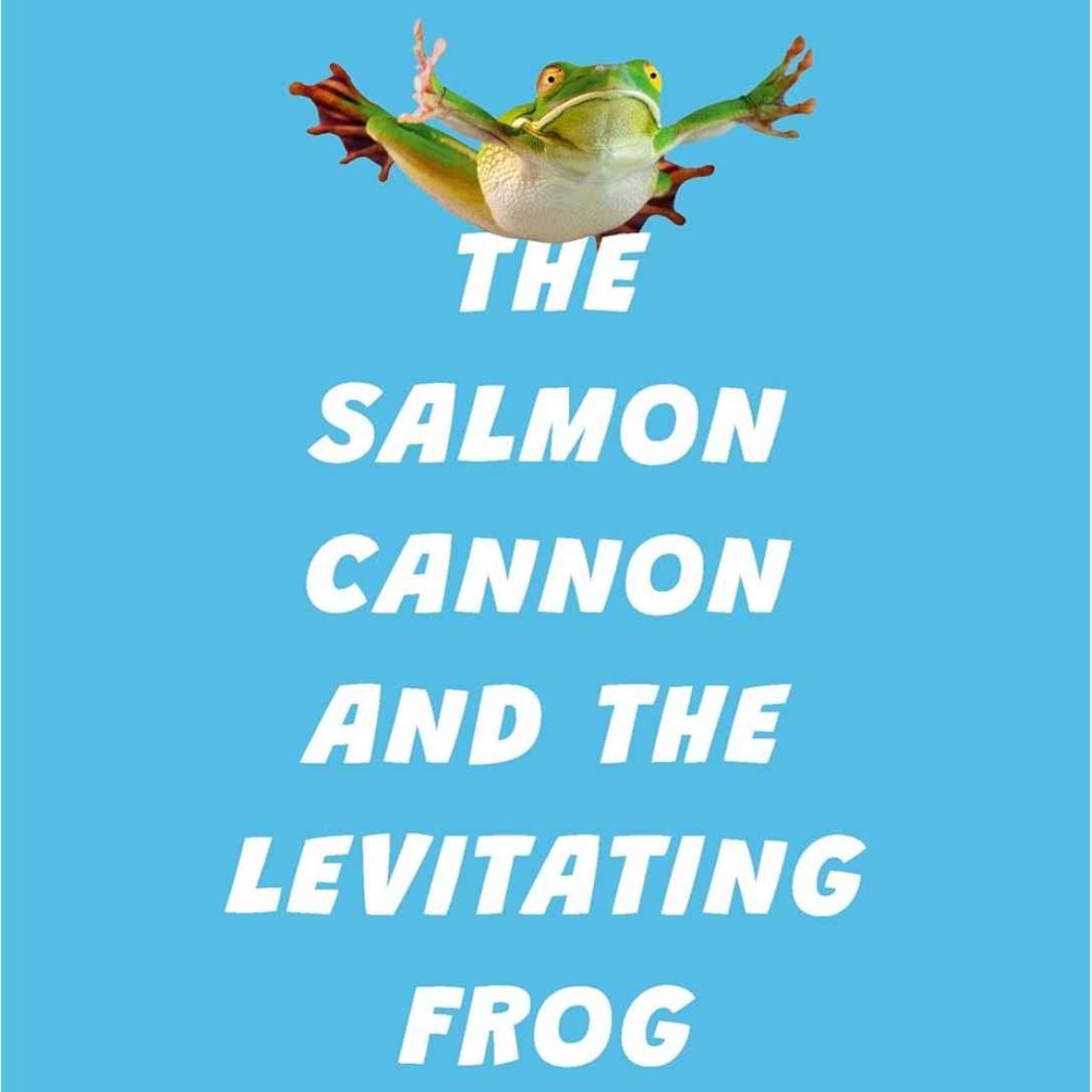
Interview with Dr. Carly-Ann York about her new popular-science book The Salmon Cannon and the Levitating Frog, which compiles “silly science” anecdotes and the real research behind them. A major theme is “wastebook” politics: Golden Fleece-style attacks on curiosity-driven research as “wasteful,” despite its long-term payoff.
Dr. Carly-Ann York, researcher/writer; previously did squid sensory physiology. She discusses interviews with scientists involved in “wastebook” controversies.
Basic, curiosity-driven research leads to major downstream inventions; applied-only approaches shrink the knowledge pool. Funding skepticism often comes from misunderstanding how grants and science work.
the shrimp treadmill; CERN’s failed particle accelerator fixed by training a ferret (Felicia) to clean tubing; hero rats detecting tuberculosis and landmines; cockroach biomechanics inspiring small robots; “flying” snake locomotion ideas for search-and-rescue.
Written by AI. May contain mistakes.
Dr. Carly Ann York shares insights about her new book and its themes.
“When demand slowed for HydroJug, Amazon Ads rising star Hayden Wadsworth pivoted.”
Dr. Carly Ann York shares insights about her new book and its themes.
“We're here to talk about your book, your brand new book that launched yesterday, I want to say, The Salmon Cannon and the Levitating Frog.”
Discussion on the importance of curiosity-driven research and wastebooks.
“I feel like I've been talking about it for forever.”
Exploring the political implications of funding and science perceptions.
“And so these waste books, it's this kind of political way to, I want to say, put down science.”
Sharing amusing anecdotes and examples from the book related to silly science.
“So William Proxmire, he I think he went until around like 2000 and then it started to get picked up by different senators.”
Sharing amusing anecdotes and examples from the book related to silly science.
Discussing the intersection of technology and biomechanics in research.
“drive, get pre-approved for financing, and estimate trade in value.”
Explore how studying animals like cockroaches and snakes informs robotics.
“So this was done by a researcher who was studying the biomechanics of cockroaches and basically how squishable they were, how they fit through those itty-bitty tiny little cracks and how they're able to move so fast.”
Hear the intriguing story of a ferret that helped solve a major engineering issue.
“But what they found was that in construction, they had left some metal shards in the tubing and that was causing their magnets to fail.”
Learn about the surprising capabilities of trained rats in detecting landmines and tuberculosis.
“But this one, I'm like, it's again, it's like my favorite stuff.”

Get the gist, explore an idea or ask about something said.
 Claude
On Daily Tech News Show, what are the key points of this episode?
Searching your listeningAutomatic transcript. May contain errors.
0:00Dr. Carly York: This episode is brought to you by Capital One. Capital One's tech team isn't just talking about multi-agentic AI. They already deployed one. It's called Chat Concierge and it's simplifying car shopping. Using self-reflection and layered reasoning with live API checks, it doesn't just help buyers find a car they love. It helps schedule a test drive, get pre-approved for financing, and estimate trade-in value. Advanced, intuitive, and deployed. That's how they stack. That's technology at Capital One. 500 orders a month was manageable. 5 ,000 is madness. Embrace intelligent order fulfillment with ShipStation, the only platform combining order management, warehouse workflows, inventory, returns, and analytics in one place.
0:43Dr. Carly York: What used to take five separate tools, ShipStation does in one. Automate fulfillment and rate shopping to ship up to 15 times more with up to 90 % savings. Go to ShipStation.com and use code AUDIO to try ShipStation free for 60 days. If you felt stuck trying to lose weight, you're not alone. Enter Weight Loss by HERS. It's designed to support you in reaching your goals. And HERS now offers access to an affordable range of FDA-approved GLP-1 medications, including the Wegovi pill and the Wegovi pen. Even better, with a range of affordable GLP-1 options, HERS makes it simple to find an approach that fits your needs and your budget.
1:21Dr. Carly York: If eligible, you'll get a treatment plan personalized to you and unlimited dosage changes as needed. It's weight loss designed to work with your life. Ready to reach your goals? Visit 4hers.com slash eligible to get personalized, affordable care that gets you. That's F-O-R-H-E-R-S dot com slash eligible. 4hers.com slash eligible. Weight loss by HERS is not available in all 50 states. Wegovi is the registered trademark of Novo Nordisk AS. To get started and learn more, including important safety information, We go for clinical study information and restrictions. Visit ForHers.com. When demand slowed for HydroJug, Amazon Ads rising star Hayden Wadsworth pivoted.
2:02Dr. Carly York: When our bank account hit near zero, my brother Jake and I had one last shot to save HydroJug. So we engineered the Traveler, a leak-proof, cup holder-friendly Tumblr.
2:12Dr. Nicole Ackermans: Amazon Ads enables a business to be able to expand their product shelf because of the visibility and the reach you can get.
2:19Dr. Carly York: Each week, our new-to-brand customers make up about 95 % of all of our sales. Watch HydroJug's story at advertising.amazon.com slash rising-stars.
2:32Dr. Carly York: Hey, welcome to the Daily Tech News Show weekend edition. We got a special one for you this time. You might have heard our segment earlier in the week where Dr. Nikki told us about a book about silly science from Dr. Carly-Ann York. Well, Dr. Nikki was able to sit down and chat with Carly Ann York a little bit more about this. So take it away, Dr. Nikki.
2:54Dr. Nicole Ackermans: Dr. Carly Ann York, welcome to the show. We're here to talk about your book, your brand new book that launched yesterday, I want to say, The Salmon Cannon and the Levitating Frog. I gave the listeners a bit of a sneak peek about it the other day, but we have you here to talk about it now. So welcome. Thank you. Thank you for having me. congratulations by the way for writing an entire book um having read through like half of it there's a ton and a ton of research that has gone into this i can tell so um how has that experience just been in general just living this this life it's it's been really cool um so the book just came out yesterday um my husband and i took a little trip to a barnes and noble to go and um like see it in person and it was there and um so yeah it's weird it's weird um it's one of those like giant life things where you feel like you should like feel different afterwards but then you actually don't really feel different i mean how long have you been working on this project oh gosh it was i probably signed the contract to start it a little over two years ago yeah so long time coming and it's nice relief now it's nice to finally be able to share I feel like I've been talking about it for forever.
4:13Dr. Nicole Ackermans: Yeah, well, we met in January at the Society for Integrative Comparative Biology, and we were talking about it then. And that's how I found out about it. And it is really right down my alley of stuff that I like about science. The stuff that I cover on DTNS is this quote-unquote silly science, which we call this segment, which is way more than just silly science, which is what the whole book is about. But all these anecdotes about how people think this is maybe not very interesting, like I was just saying, like the seals that play video games. But it turns out we learn a ton about it in the long run.
4:47Dr. Nicole Ackermans: And so this book is basically a compilation of all the fun anecdotes and the cool science behind it, which is just what I live for in science. So I guess that's how we connected. Yeah, it was really, really fun to do the research on that book. I was going to ask about this. Did you do a ton of interviews or did you just like deep dive into the Internet? How did you find all this information? Both. I did a number of interviews. So, oh, gosh, I would say more of the stories than not came with an interview. If it was someone doing research now. Yeah, because this isn't the stuff that gets published in the publication.
5:28Dr. Nicole Ackermans: Right. Right. Backstory. Right. Right. So I definitely spent some time with Sheila Paddock and David Hu and Patti Brennan talking about their whole experience with being wastebooked, what that means. Yeah. Do you want to develop on that and kind of tell the listeners about this whole wastebook idea? Is the wastebook thing what really launched the idea of the book? Yeah. Oh, gosh, I'm so sorry. That was my email. We don't hear anything. Okay. Yeah, yeah, it was. And it was also just kind of like a personal need to justify my research to myself. I felt like I didn't have good answers when people asked me why this kind of work matters.
6:13Dr. Nicole Ackermans: Like, I knew it intuitively in my soul. And what kind of work were you doing? At the time, I was doing squid sensory physiology. So I was studying how they respond to predators. And I just wasn't good at articulating why this kind of research is important. So this was really helpful for me to sit down and like organize my thoughts on this and have a much better conversation about it in the future. And so these waste books, it's this kind of political way to, I want to say, put down science. And really, this is very, we're in a really special time for that kind of stuff right now, where a lot of people are trying to claim that science is wasteful, we're wasting government money.
7:01Dr. Nicole Ackermans: So I, unfortunately, but also fortunately, for your book, you're right smack dab on topic for that. So how does this kind of stuff work? Oh, man. So the wastebook tradition, it got started in the 1970s, and it was actually started by a Democrat, William Proxmire from Wisconsin. It's bipartisan. and a few things, right? And he started the Golden Fleece Awards, which were awards he gave to wasted government funding, at least perceived wasted government funding. And it wasn't just science projects. It was other funding situations as well. But a lot of it ended up landing on curiosity-driven research projects, because those are pretty easy to twist and sound silly if you don't know why the bigger picture of that kind of research matters.
8:01Yeah.
8:01Dr. Nicole Ackermans: Yeah. The, the, uh, one of the examples that I love is the shrimp treadmill, which is like famous from this. And of course you'd think, well, there's a shrimp on a treadmill. Why would we be paying for that? But if you sit and think for like five seconds about it, at least in my mind, like, yeah, we're studying locomotion. This is important. And also it turns out, like you say in your book, spoiler alert, the treadmill was like$50. So it's not that much of a waste. Right. Yeah. I think a lot of it, there's a few different layers of this very stinky onion with the politics. And part of it is not understanding how funding works and not understanding how science in general works.
8:43Dr. Nicole Ackermans: I think there's people out there who see like, oh,$300 ,000 to study duck penises i bet they went out and got a fancy car or something with that money and you're like that's not how it works that's not um how these grants go or like seriously uh accountable for how every time gets spent yeah and you're not and you see that even right now i mean this is a story that that when was the waste book it was like a decade ago or so right yeah so it's still Well, it's an ongoing thing. So William Proxmire, he I think he went until around like 2000 and then it started to get picked up by different senators.
9:23Dr. Nicole Ackermans: So I feature some in there. Senator Jeff Flake and Senator Tom Coburn. Those have been biggies, but there's been other ones, too. It's as recently as I want to say last week when there were those NIH hearings, one of the senators said that we should have a competition for getting grants. And that is, in fact, how the system works. But they're just not quite informed about what's going on. But, yeah, this comes out at a time, hopefully. Well, those people are probably not going to read it, but hopefully they get their hands on it and people can see that. Like, I don't know. For me, the silly science is the stuff that brings me joy and that makes me want to do the actual work.
10:00Dr. Nicole Ackermans: All the nitty gritty stuff is less interesting. But do you have some fun examples of some tech based silly science in your book?
10:11Dr. Carly York: Episode prep gets messy when research slack threads and script trackers are all in different places. That's where chat GPT work comes in. Give it the goal and connect to the tools where work happens, like apps and files, and it can help pull the pieces into a draft you can review without you having to re-explain the project at every step. For example, ChatGPT work can gather team feedback from Slack and use it to suggest updates to a project brief in Google Docs. You stay in control reviewing the draft and deciding what moves forward. Put ChatGPT to work on your most ambitious ideas and projects.
10:46Dr. Carly York: Get started at chatgpt.com by selecting work mode. Available on Plus and Pro plans. I used to be the person who hunched over my laptop mid-meeting, typing furiously to catch every word, and missing half the conversation because I was too busy transcribing it. That's the problem Granola fixed for me. Granola is an AI-powered notepad that makes your meeting notes useful. It captures what happens in your meetings and turns it into clean, structured notes with decisions and action items pulled out and made easy to find. And the best part? It integrates seamlessly with how you already work. No setup, no configuration, no friction.
11:21Dr. Carly York: Before Granola, my post-meeting routine was triage. 20 minutes after every call decoding my own shorthand, figuring out who owed me what. Now the notes are just done. Organized action items pulled out before I've even closed my laptop. You get better notes in one place and you get to actually stay present instead of typing the whole time. Once you try it on a first meeting, it's hard to go without. You can try it totally free. Head to granola.ai slash daily tech. That's granola.ai slash dailytech to get your time back. Go to granola.ai slash dailytech and try it on your next call.
12:15Dr. Carly York: drive, get pre-approved for financing, and estimate trade in value. Advanced, intuitive, and deployed. That's how they stack. That's technology at Capital One. If you felt stuck trying to lose weight, you're not alone. Enter Weight Loss by HERS. It's designed to support you in reaching your goals. And HERS now offers access to an affordable range of FDA approved GLP-1 medications, including the Wegovi pill and the Wegovi pen. Even better, with a range of affordable GLP-1 options, HERS makes it simple to find an approach that fits your needs and your budget. If eligible, you'll get a treatment plan personalized to you and unlimited dosage changes as needed.
12:52Dr. Carly York: It's weight loss designed to work with your life. Ready to reach your goals? Visit ForHERS.com slash eligible to get personalized, affordable care that gets you. That's F-O-R-H-E-R-S dot com slash eligible. ForHERS.com slash eligible. Weight loss by HERS is not available in all 50 states. WeGovi is the registered trademark of Novo Nordisk AS. To get started and learn more, including important safety information, WeGovi clinical study information, and restrictions, visit ForHERS.com. Therapy's biggest impact doesn't show up in some dramatic breakthrough. It shows up in the smallest moments. You bite your tongue instead of escalating.
13:32Dr. Carly York: You put your phone down instead of firing off that text. You say what you actually mean instead of what would hurt someone else the most. Nobody applauds those moments, but they quietly change your life. That's what growing feels like, and that's exactly what Grow Therapy is here for. Grow is therapy that works, covered by insurance. Sessions average$21 with insurance, and some pay as little as$0 depending on their plan. There are no subscriptions, no long-term commitments. You just pay per session. Grow connects you with thousands of high-quality, licensed therapists across the U.S., offering both virtual and in-person sessions, nights and weekends.
14:11Dr. Carly York: You can search by what matters, like insurance, specialty, identity, or availability. And you can book a therapy session in minutes and begin in as little as two days, not the national 48-day average. See if you could pay as little as$0 for therapy in seconds at growtherapy.com slash ACAST. That's growtherapy.com slash ACAST. growtherapy.com slash ACAST. Availability and coverage vary by state and insurance plan.
14:43Dr. Nicole Ackermans: I think my favorite stories that lend themselves well to a tech conversation come from the biomechanics standpoint. I just read that chapter. The cockroach one? Yes, the cockroach. I'm so glad we're talking about this. I think that's my favorite one. So this was done by a researcher who was studying the biomechanics of cockroaches and basically how squishable they were, how they fit through those itty-bitty tiny little cracks and how they're able to move so fast. And it turns out they have pretty unique anatomy in that shell that we think is just a shell actually has joints in it and it allows it to be really smooshable.
15:28Dr. Nicole Ackermans: and that surprisingly ends up being a good model for an itty-bitty little robot that could potentially go in very small spaces like in like a search and rescue situation rebel going through that kind of stuff so the the cockroach lends itself to that and then also the the snake locomotion as well that's another one where like search and rescue robots potentially came into play since snakes can, you know, slither and climb and apparently fly. Yeah, flying snakes. Yeah. Yeah, I, I, when we're like, it's, it's difficult to see it from the other side, because like you said, you work on squid biomechanics or squid sensory systems.
16:19Dr. Nicole Ackermans: I work on headbutting goats, like initially, when you hear the story, oh, it's funny, But like, why would we do that? And for us, it may be a little bit more instinctual to be like, oh, obviously, this is going to have some applications. But like, we're not we're like 30 years away from those applications or like I'm not a biomechanic person. Someone else can do that part. But for the general public, this is not something that's pretty obvious. And the fact that we're having so many funding cuts, I've been bringing it up on the show. So like, yeah, maybe you don't think about the NIH or the NSF every day, but the Internet comes from them.
16:54Dr. Nicole Ackermans: And like, you know, a lot of, you know, electricity and like all things like this are things that the NIH and NSF have invested in. And if you don't get to the root of those like basic science findings and you don't maybe get the future applications like your search and rescue cockroach. Yeah, absolutely. Like it does require you to trust that knowledge will pay off in the long run. And it has. Historically, it absolutely has. Like I have a stat in there that's like for medical research, if you look back at the origin of most drugs, like 80 % of them started with some kind of a basic research project that had nothing to do with a medical application at all.
17:43Dr. Nicole Ackermans: I also bookmarked this line that says that about 30 % of the U.S. gross national product is based on inventions that come from this kind of basic type of science. Right. Yeah. Yeah. But it doesn't. We don't know it. We don't know. We don't know it until we know it. And if we had started working the other way around, it maybe wouldn't work. Like if you start out saying like, I want to study this to get a better helmet, which is a lot in the case of my research. And that research doesn't pan out because they're not thinking about the stuff they don't know yet. Right. Exactly. Yeah. And if you switch to like simply applied research trying to solve a problem at hand, your knowledge base is just it's going to keep shrinking and shrinking.
18:31Dr. Nicole Ackermans: Like the pool of information that you have to solve that problem in the long run, it's going to keep shrinking. And we've seen historically that sometimes the solution to that problem is just so out in left field. Like you just never, you never would have looked there. It just happened to happen. And I love that in a lot of these stories, the diversity of the scientist plays a role. For example, someone will have this like background of, oh, yeah, I saw this cockroach or whatever. And it inspired this robot. I mean, there's a ton of stories like this. You probably know the examples better. But yeah, I love that some of these examples do really come out of left field.
19:11Dr. Nicole Ackermans: Is there – which one of the tons of examples and stories that are in your book just like blew your mind the most or maybe your favorite one?
19:19Dr. Carly York: Oh, man. Well.
19:23Dr. Carly York: This episode is brought to you by Capital One. Capital One's tech team isn't just talking about multi-agentic AI. They already deployed one. It's called Chat Concierge and it's simplifying car shopping. Using self-reflection and layered reasoning with live API checks, it doesn't just help buyers find a car they love. It helps schedule a test drive, get pre-approved for financing, and estimate trade in value. Advanced, intuitive, and deployed. That's how they stack. That's technology at Capital One. If you felt stuck trying to lose weight, you're not alone. Enter Weight Loss by HERS. It's designed to support you in reaching your goals.
20:00Dr. Carly York: And HERS now offers access to an affordable range of FDA-approved GLP-1 medications, including the Wegovi pill and the Wegovi pen. Even better, with a range of affordable GLP-1 options, HERS makes it simple to find an approach that fits your needs and your budget, if eligible. You'll get a treatment plan personalized to you and unlimited dosage changes as needed. It's weight loss designed to work with your life. Ready to reach your goals? Visit ForHERS.com slash eligible to get personalized, affordable care that gets you. That's F-O-R-H-E-R-S dot com slash eligible. ForHERS.com slash eligible.
20:37Dr. Carly York: Weight loss by HERS is not available in all 50 states. WeGovi is the registered trademark of Novo Nordisk AS. To get started and learn more, including important safety information, WeGovi clinical study information, and restrictions, visit ForHERS.com.
20:54Dr. Nicole Ackermans: my favorite one to write up was uh the chapter felician friends have you gotten to that one yet i don't think i've gotten there yet this is about the ferret that um okay so the story is yeah um in like 1970 they were working on building the largest particle accelerator that had been built to date and it kept failing. This is CERN, right? The Swiss one? Yeah, yeah. But what they found was that in construction, they had left some metal shards in the tubing and that was causing their magnets to fail. But this thing was like four miles long, so you can't just snap it apart and back together and clean it easily.
21:42Dr. Nicole Ackermans: yeah and they decided they had actually brought someone on specifically for keeping them in budget and keeping this project going because they were like hitting some hard deadlines oh yeah um and he suggested a ferret um he was he's from england and they use them when they're rabbit hunting they'll like go down burrows so he was like yeah uh so they got a little ferret Her name was Felicia, and they trained her to run through the tubing. And they basically put a little harness on her that was attached to a string. And then behind her, there was a cleaning rag. So she just, like, cleaned as she went.
22:28Dr. Nicole Ackermans: And she had a little diaper on. And, yeah, it ended up, like, saving the project. It was really successful. She did it a few times, and then they found a less fun way to get it done. But she saved that project. Yeah. And then I also in there talk about the hero rats, which I think my absolute favorite thing to write about. So these are rats that are trained to sniff out landmines and tuberculosis. um yeah they're really good at detecting tb um oh so you you have a probably a chapter in common with uh john green and everything is tuberculosis book probably i actually haven't read it yet but it's also on my tbr anyway anyway we're not talking about that book we're talking about your book yeah oh so these are giant pouched african wraps so they're like three feet long they're really big And they train them to be really discriminatory in their sense that they pick up.
23:40Dr. Nicole Ackermans: And they're really sensitive to begin with. And it turns out they're much better at detecting TB in samples than even our best technology is. Yeah. And it's way cheaper to train a rat to detect these than it is to get the most current equipment and to maintain it. It's like, yeah, magnitudes of thousands cheaper to train the rat. So hopefully they're developing tests based on the rat noses or something. Yeah, it's really cool. And then the landmine part is fascinating as well because they're trained to sniff out these landmines. And they're the perfect animal to do it because they're not heavy enough to actually trigger the landmine.
24:30Dr. Nicole Ackermans: So like a dog, that wouldn't work so well. But they're just light enough. And they do like weekly weigh-ins to make sure that they stay underneath that goal. That's incredible. Yeah, I love them. This book overall has actually gotten me out of this rut. I love popular science books, but I never end up like I buy them and then I never end up reading them because I get home after work after reading science all day and I don't want to read them. But this one, I'm like, it's again, it's like my favorite stuff. It's all these fun stories. So it's gotten me out of that rut of reading popular science books.
25:03Dr. Nicole Ackermans: I'm very thankful for that. I'm so glad. Has the book changed how you view things? Like, are you always thinking like, oh, did this bagel come from an invention from some science thing? Yeah, totally. I mean, like, you can look around at anything and just, you know, be that annoying little kid that's like, yeah, but why? Yeah. Why? But why? Like, how did we even get to this point? And the questions are, you know they're endless they're bottomless um but it's a really fun way to like go through the world too like being curious and um also just recognizing how incredible the technology that we have today actually is like i i can't really even totally wrap my mind about what we've been able to do with the knowledge that we have now.
25:56Dr. Nicole Ackermans: It's incredible. And all that is little grains of people's contributions who had brains who are able to be like, well, why don't we make humpback whale fins into wind turbines? Why not? Let's go. Oh, I love it. And I think if you're the type of person who loves sharing fun facts about science, which is literally, if you've met me, almost the only way that I talk, I just speak in fun facts. um this is the book this is the book for you so i highly encourage everyone to buy it and um yeah i don't know anything else you want to say about the book that that you want to share i i hope that people will find it fun um mostly educational but also fun because i my my um pedagogy i guess is is really that you can get a lot of information into fun things without it being so painful and so i just i hope that people can enjoy it while they're absorbing stuff that's a really good point the writing is really accessible it's it's a it's not like you're reading a manual or like a an academic paper or or like big book it's like casual i read this over breakfast um and i just like i'm loading my brain with all of these fun facts so it's great And I'm so happy we got to talk to you about it on the show.
27:21Dr. Nicole Ackermans: Where can people find you and where can people find your book? The book is available pretty much at all the major places online. Barnes & Noble, Amazon, probably your local independent bookstore. In terms of me online, I am active on Blue Sky. I am at Carly. Oh, wait. Nope. That's not it. At Biology Carly there. And I'm also Biology Carly on Instagram and the app formerly known as Twitter as well. Even though I'm not particularly active on there, I still do exist. Okay. And once again, that is the Salmon Cannon and the Levitating Frog. And I highly recommend it. Thanks, Carly. Good luck with your book.
28:10Dr. Nicole Ackermans: Thank you. We appreciate it.
28:12Dr. Carly York: Big thanks to Dr. Nikki for doing that. And thank you, Dr. Carly Ann York, not only for writing that book, for talking with us as well. Thanks again for that. That is it for the Daily Tech News Show weekend edition. We'll be back on Monday with a regular show. Thanks for being a patron. If you're not a patron, get these shows ad free. Patreon.com slash DTNS. Talk to you soon.
28:37Dr. Carly York: The DTNS family of podcasts. Helping each other understand. Diamond Club hopes you have enjoyed this program.
28:49Dr. Carly York: This episode is brought to you by Capital One. Capital One's tech team isn't just talking about multi-agentic AI. They already deployed one. It's called Chat Concierge and it's simplifying car shopping. Using self-reflection and layered reasoning with live API checks, it doesn't just help buyers find a car they love. It helps schedule a test drive, get pre-approved for financing, and estimate trade in value. Advanced, intuitive, and deployed. That's how they stack. That's technology at Capital One. Hey, I'm running out to drop off a stack of letters and packages. Need anything shipped while I'm gone?
29:24Dr. Nicole Ackermans: Save the gas. Stamps.com lets you print postage and schedule pickups right from your desk. Sync your contacts into the address book, get detailed accounting insights, and get notified the moment your certified mail is delivered.
29:36Dr. Carly York: all from my desk all from your desk join the 4 million businesses using stamps.com right now with code podcast and get your free welcome gift stamps.com code podcast taxes and fees apply
This weekend, Dr. Nicole Ackermans talks with Dr. Carly York about her new book The Salmon Cannon and the Levitating Frog, exploring how seemingly silly experiments reveal serious scientific breakthroughs.
Featuring Dr. Niki and Dr. Carly York.
Hosted on Acast. See acast.com/privacy for more information.