Ask ChatGPT
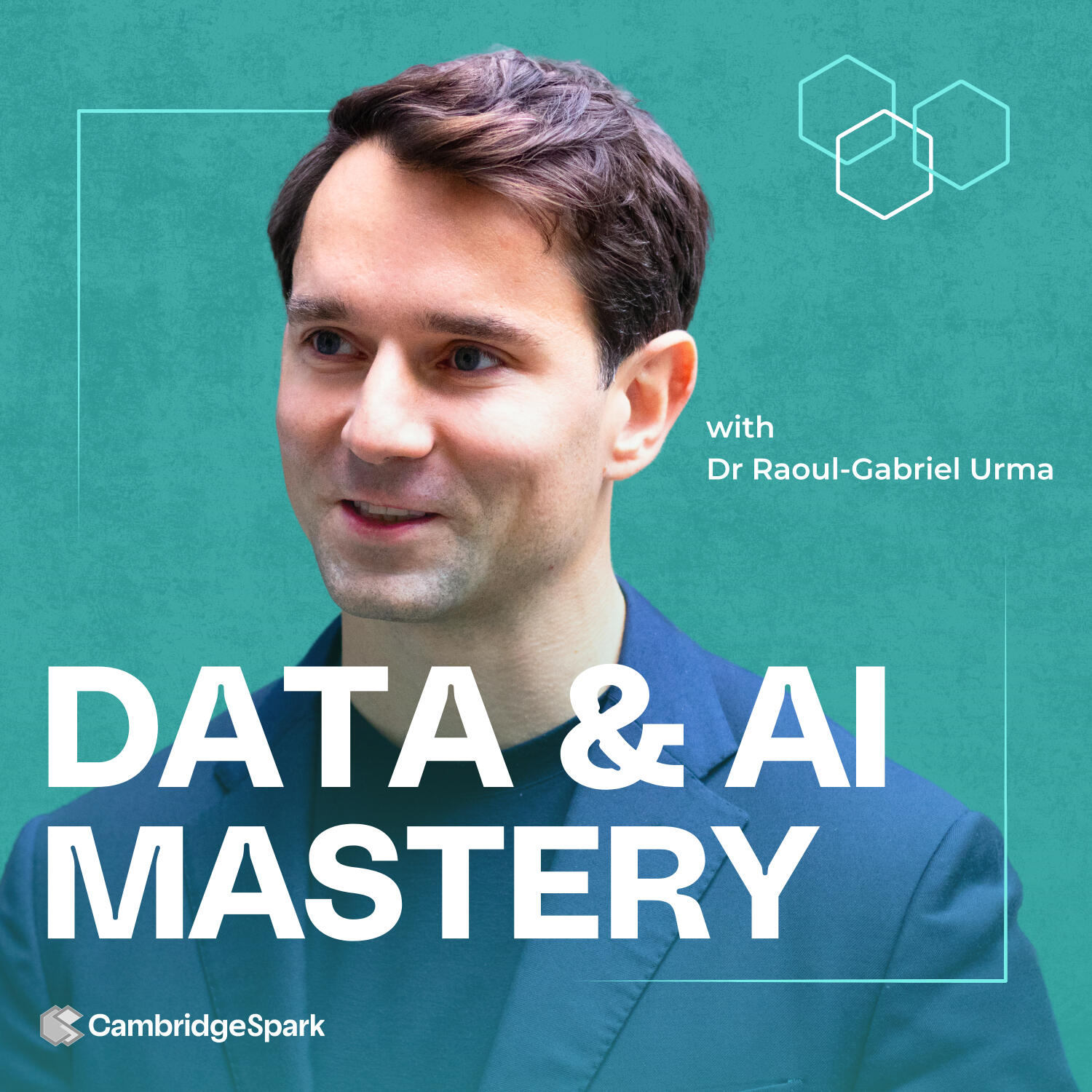
 Data & AI Mastery
25 Jun 2025 · 33m · 17 chapters

Global data privacy and data governance for enabling analytics and GenAI while managing regulatory, security, IP, confidentiality, and brand risks.
Without knowing what data you have and where it is, analytics is “going in blind.” Data governance is both “insurance” (catastrophic fines) and a “beacon of hope” (insight, cleaner architecture, lineage, faster data products). Quick wins include data retention to cut storage costs. Ownership/stewardship: data owners make risk-based decisions; stewards implement and improve data uses. Privacy notices matter for transparency and defensibility.
Sam Smith, qualified UK solicitor turned data privacy professional; VP Global Data Privacy & Governance at Merlin Entertainments; spent seven years building expertise in information compliance; works across global regulations.
GDPR fines (up to 4% global turnover/€20M) and EU AI Act fines; AI education using children and comfort with what they input into tools like ChatGPT; privacy notice “nobody reads them” but companies rely on them.
Written by AI. May contain mistakes.
Host introduces Sam Smith and the unique topic of data privacy and governance.
“I'm your host, Raoul Gabriel-Urmer, founder of Cambridge Spark, the leader in transformational data and AI upskilling, career development and progression.”
Sam shares her career path from law to data privacy and her passion for it.
“So I'd love to find out a little bit, Sam, what does it entail?”
Discussion on the difficulties of selling data governance to businesses and the importance of ownership.
“Because you said you're really passionate about it.”
Sam explains the significant fines associated with non-compliance in GDPR and AI regulations.
“So it's not a case of saying we're here to tell you what to do with data.”
Exploration of data governance as both an insurance policy and a pathway to innovation.
“So it feels almost like an insurance policy.”
Discussing the need for high-quality data for effective decision-making in organizations.
Sam provides definitions for data ownership, stewardship, and privacy.
“So for example in a large organisation customer data may sit with the chief marketing officer because it's the customer record drive sales so the business may decide that this is them.”
Explore the tension between the need for data to increase revenue and the constraints of privacy regulations.
Discuss the importance of educating users about AI and their data rights, especially for younger generations.
“tool so chat gpt brilliant example i'm guessing everybody's seen those barbie doll animations that were all on the social media feeds not so long ago.”
Examine the complexities of data ownership and stewardship in the context of AI models and their implications.
“and privacy, but instead of data within the realm of models and AI.”
Learn about the considerations for investing in data and AI governance teams based on company size and strategy.
“You know, let's say here's a couple of scenarios.”
Discuss optimal organizational structures for data and AI governance to maximize efficiency and compliance.
“Or it could be under the CIO, if you think more broadly about, you know, AI governance and maybe data could be a subset related to AI, depending on what the business does with AI, as you mentioned.”
Sam Smith shares rapid insights on AI concerns and strategies for staying updated in an evolving landscape.
“So, you know, be close to the data teams where all the action is happening.”
Learn how to remain informed about changing laws and regulations in data governance.
“It's not easy and you cannot act in isolation.”
Discover the ROI of data governance and its dual benefits of compliance and efficiency.
“It's quite a lot to reflect on and some really interesting nuggets, right?”
Explore the key roles of data owners and stewards in maintaining data integrity.
“So that was quite an interesting conversation.”
Understand why AI literacy is crucial for all business functions in today's environment.
“AI is not the business of the legal department or the marketing department.”

Get the gist, explore an idea or ask about something said.
 Claude
On Data & AI Mastery, what are the key points of this episode?
Searching your listeningAutomatic transcript. May contain errors.
0:00So if you don't know what data you've got or where it is, then you're kind of going in blind to trying to do any sort of analytics to improve your business efficiency. So, yes, there is a big scary stick that you can smack people with to say you could get this wrong. It's not going to be good. But there's also this really like beacon of hope. If you get this right, you're going to have such insight into what the business can do, what it's doing, where the room for improvement is. and more importantly, where the data is.
0:33Welcome to Data & AI Mastery, the podcast where we bring you cutting-edge insights, practical advice and inspiring stories from the leaders shaping the future of data and AI across the globe. I'm your host, Raoul Gabriel-Urmer, founder of Cambridge Spark, the leader in transformational data and AI upskilling, career development and progression. In each episode, I will be diving into real-world case studies of companies harnessing the power of AI to drive innovation, reduce costs, and create new business opportunities. So whether you are an aspiring data scientist, AI engineer, or seasoned executive, this show is designed to give you the tools and knowledge to stay ahead in a world where data is transforming every aspect of business.
1:18Stay ahead, stay inspired, stay masterful. Welcome to Data and AI Mastery. Hi, Sam. Great to see you. How are you? Hi. Great. Thanks for you. Wonderful. And I'm super excited for our conversation because it's quite a unique topic, the topic of data privacy and governance, something that is not talked about enough. So I'd love to dig into this topic with you, Sam.
1:47So you're the VP, Global Data Privacy and Governance. So that's quite a unique job title. So I'd love to find out a little bit, Sam, what does it entail? And how is it that you started your career in the legal field? So you're a qualified UK solicitor and you're now in the data space. Tell us a bit more about this. Yes. So I qualified as a solicitor seven years ago now, and I always had a keen interest in commercial and corporate law. So I spent a lot of time in high street law firms, working with organisations to help them with their, all things business really. And then upon qualifying, I fell into commercial property.
2:25And it was at that point I realised that that type of law just wasn't for me at all. I just could not, you know, it was a very much process driven kind of checklists and the same thing over and over, which just didn't really appeal to me. So I literally fell into data protections. I'd briefly touched on it throughout previous jobs, but not in depth. And then I saw a role for an information compliance solicitor. So I just applied for it and got it and basically found where my passion was. So I've spent the last seven years building on my knowledge. It's quite interesting because when you speak to other lawyers, they're all in property, commercial, corporate, probate.
3:11you very rarely come across a data privacy lawyer. A lot of data privacy professionals, but not many lawyers, unless you go to your big four kind of firms. So it is a bit of a niche, but I absolutely love it. What do you find exciting about it? Because you said you're really passionate about it. What's the appeal? No two days, I know it's really cliche, but no two days are the same. The laws are changing every day. My role is global, so it's not just UK or EU laws that we have to look at. It's literally everywhere. And although you see GDPR is kind of in the news a lot and there's a lot of noise around huge fines, it's not just Europe that have these regulations.
3:49Every single country around the world has their own approach. So you can kind of take one steer for one country and when you look at the laws of another, it's not quite the same. So it's always changing and there's always something new to learn.
4:08great great so if we take a step back and you know talk broadly about data governance and the issue of of privacy being a component of it can you tell us a little bit what are the key success factor to you know run a robust data governance you know process within within an organization what would you say is important to factor in? Sure. So data governance is a hard sell to businesses because you can't always give a return on investment at the beginning. It's all kind of like ideology and it's all going to be great if we do this. Actually, how do you think about return investment with data governance before we dig into it?
4:51It's tricky. It's not an easy conversation to have because when you ask for your budget and your people, you're kind of saying, if we get this wrong, there's an effect. And it's really difficult without having it in place to be able to demonstrate how good it can be. So things like, a really good example, data retention, storage costs. If you've not got appropriate retention periods, 100 % guaranteed the organisation is paying for more storage than it needs. Because, you know, nobody's taking that action to, it's usually automated now, automatically delete data after a certain period. so it's really the way i've always approached it is find a few quick wins so things like storage you could easily say we can reduce the storage by x by implementing this and that will save you y across three years and then you can say this is data governance this is a real life example of data governance it's not just a team you know sat in the background playing with tooling this is this is real life impact on the business.
5:58I think a really key component to be successful with data governance is your ownership and stewardship. So it's not a case of saying we're here to tell you what to do with data. It is you're empowered to do what you need to do with your job. You're responsible for this data domain and these are the guardrails that you need to think about when people in your team or people in the data team come to you with questions. this is what we expect of you to be able to to manage things in line with the strategy so it is a really really tricky area so with privacy really they're not they're not sexy subjects at the board want to talk about and the the impact if you get it can be catastrophic for an organization so it's really important to have these conversations how bad can you get actually so there's some huge fines now gdpr is four percent of global turnover or 20 million euros whichever is greater potentially that's for the huge and really bad non-compliance interestingly the euai ads is actually higher than that which i think has gone you don't see that in the headlines the euai act has kind of quietly come into legislation with absolutely huge huge huge fines for getting it wrong not read a lot about it so i think organizations moving forwards will be really you know having to give a bit of attention to the ai act because that has an even more financial impact if you get get that one wrong that's super fascinating because you know if i play this back you know in terms of selling the idea of data and ai governance so if we kind of think broadly about it you've mentioned there's some tactical initiatives that potentially to look at such as you know sort of cost savings due to storage retention and so on so this kind of feels like there's a checklist of quick actions to to to do quick wins that the organization might benefit but the broader picture and don't shoot the messenger sam it feels like it's a bit of a an insurance policy in some way is that you know there's all these big fines and we don't want that So, you know, in exchange for not wanting to be there, actually investing in stronger governance ensures that, you know, you're safe, you're robust and you're not going to potentially fall into trouble.
8:22So it feels almost like an insurance policy. Would you describe it differently? To an extent, it's an insurance policy, but I also think it's the only way that you can get the best out of your data. so if you don't know what data you've got or where it is then you're kind of going in blind to trying to do any sort of analytics to improve your business efficiency so yes there is a big scary stick that you can smack people with to say if you get this wrong it's not going to be good but there's also this really like beacon of hope if you get this right you're going to have such insight into what the business can do what it's doing where the room for improvement is and more importantly where the data is so you know some organizations grow at such a rapid speed and there's lots of different organizations all across you know different entities doing different things different processes without data governance you can't benefit from from data in the little silos that you might not be aware of so it's kind of 50 50 50 percent insurance 50 innovation i'd say yeah so the so the carrot is by investing in data governance you're forced to have a clean data architecture have strong data lineage which helps comprehension of your data assets which then increase velocity of bringing data products to to your teams which then helps you know potentially with analytics and shipping products that's kind of like the train of thought absolutely so data dashboards of what you know senior management want to see and what goes into those data dashboards essentially you know if it's if you've got rubbish data going in you've got nonsensical data coming out and if you want to make data driven decisions you really do need to make sure that the data is cleansed and of a good quality before it even reaches your senior managers because the last the new one is is them looking at numbers that aren't right yeah great so you've mentioned a few technical terms which i think the audience would benefit to have a bit of a definition from so data ownership data stewardship data privacy would you mind just giving a short definition for each of these terms for the audience sure so data ownership relates to a single point of contact within the organisation who has responsibility for making decisions around risk to that data and use of that data.
10:47So for example in a large organisation customer data may sit with the chief marketing officer because it's the customer record drive sales so the business may decide that this is them. When it comes to your HR data could sit with your chief people officer or your head of HR business partner, whatever terminology the organisation uses. But the data owner ultimately makes the call on whether they're happy with initiatives based on the risk profile to go forward. So lots of people feed in before the data owner makes the call. There's lots of teams that would give advice and opinions. And then that data owner would be the one who says yes or no.
11:30A data steward is a little bit closer to the data. So they would be working with the data, understand the data, probably understand your systems that use the data as well. And they would be making recommendations to that data owner. So they'd probably be going to all your working groups and data working groups, data compliance working groups, talking about the real life uses of the data that the data owner may be a little bit detached from. And the data steward would come up with the brilliant ideas of how to improve that data. So how they want to use it going forward. It's like a new marketing campaign, going back to the customer record example they would come up with if we collect date of birth as well as name and address we could generate more sales because we'll be able to offer a birthday initiative or incentive so they then go up to the data owner and you know pitch the case of all of the revenue driving and all of that and the data owner would assess it and say yes or no happy happy for the data to be used in this way and off the back of that all of your compliance checks would then come in with your data privacy team so data privacy relates to personal data can be called data protection data privacy very much same of the same but privacy is actually a human right so we all have we all have the right to it but it relates only to personal data so only the things that people can be identified by and we all know that there's a lot of data related to ourselves all over the internet social media collects all sorts now so privacy teams are more important than ever I'd say like I've certainly noticed over the last five to seven years people asking more questions about their data it's kind of questioning why things are being collected especially in lockdown when we had to go to restaurants and when you got to the reservation desk and they would ask you for your name email home address mobile number all for the contact tracing why do you need all of this yeah people were going people were texting me going so i've just been out and they wanted my my home address to eat at you know this restaurant don't give it they don't need it so it's it's really interesting to see you know even my friends family are starting to say oh you're working privacy don't you what why did they ask me this And I love it personally.
13:54Being a privacy geek, I love that people are kind of questioning that because I think historically there has been this mindset of collect as much data as possible. For what reason? We're not sure. interesting thank you those are great definition perspective so for what reason at the end of the day it boils down to making money right all those companies want to collect data because they can monetize it and part of the business model having a deeper understanding of your customer enables you to to sell more so how do you think about this dilemma right on one side we want to sell more and increase revenue and for that we need the more data the better because we can personalize the approach to its customer on the other side is this tension that actually you can't collect all the data you want right how do you marry the two together is it even possible it's the the crux of most of my conversations at this level so data is a company's biggest asset probably the most valuable asset that's why you have to be so so careful with it so i am all for collecting all the data that you can justify as long as you are telling people what you're collecting so privacy notices are the are the transparency obligation they are in place to tell people we're collecting your birthday because we want to contact you and off for you who reads the privacy notices you know it's kind of like one of those just yeah accept move on okay yeah but you should is my advice you really really should because that's where all of the the information is about what an organization or company is doing with your information and that is what organizations can rely upon to say oh you didn't if somebody complains and says i didn't expect to receive this from you a company would point you back to the privacy notice to say ah but you accepted the privacy you you were provided with the privacy notice at your time booking or purchase here's the information so i know nobody reads them and they are way way too long in my opinion but there is what choices do people have you know because yeah you want to use the product everybody's using the product there's a lot of value from the product and you have no choice but accept it otherwise you miss out right we're seeing that a lot now with llms right chat gpt clode and so on you've got to use the product because everyone is on it you get amazing productivity but you have to give up you know all your all your queries everything you've been searching for so how do you balance that out yeah it's interesting so with ai particularly it's really important that somebody remains comfortable with what they're putting into the tool so chat gpt brilliant example i'm guessing everybody's seen those barbie doll animations that were all on the social media feeds not so long ago.
16:51So they were based on the information that people were putting into them. So the more information you gave away, the better your doll was or the more relatable your doll was. And that's based on the fact that you provided the tool with more information about yourself, which it's then learning from. I think there's a huge, huge, huge education piece to do. I mean, we started to see countries now. I think it was somewhere in UAE they're actually starting to teach children of four about AI and I think it's it's quite interesting that at that age they're going to be exposed to these kind of tools to learn from and to teach and there's a huge kind of ethical kind of on the fence with it I think it's brilliant because they're going to need to be able to use it that's the way the world is going but also we need to be we need to be teaching them how to use it properly we need to be teaching people you know if you don't feel comfortable giving your name date of birth favorite meal you know medical conditions to ultimately a technology that is going to learn from it and you know you could end up in somebody's search response ultimately because these tools aren't that mature yet.
18:10They're still learning and they're still collecting as much data as they can to then produce the end product, whatever that may be. But this is kind of the beginning of AI. It's been around for a long time. This is the time when people are actively engaging with it now. So it's learning at a really, really fast speed. So that leads me to the i guess the related topic we've talked a bit about ai and you were mentioning these ideas of ownership stewardship and privacy now that generative ai has literally exploded and we've got so many models that feed off all the data they can consume right internally and externally how do you think about those concepts you know of ownership stewardship and privacy, but instead of data within the realm of models and AI.
19:02Are they different? Are they related? What does it mean for large global organizations? Yeah, not an easy question. Not an easy question. I'm not sure anybody's actually got it right yet. So I think when it comes to AI ownership, there needs to be recognition that it's a business initiative. So it doesn't just sit with data. It doesn't just sit with the compliance teams, not just your legal teams. Why should it be a business initiative? So the business ultimately is going to be using it in so many different ways. And there's so many different risks across. So you've got privacy risks. You've got security risks.
19:38You've also got things like IP risks. You've got confidentiality risks. You've got brand reputation risks. There's this huge complicated web of hazards with using Gen AI. Many ways to get it wrong. Many ways to get it wrong. get it right and you can make a fortune so it's really really important that all of the right people get in a room and you know understand what the business wants to do with it so for me use cases are imperative like if you haven't got an example of how the tech is going to be used in practice there's not much point having the conversation because you can't understand it you can't apply the principles of privacy or security to a theoretical use of a technology you need to understand operationally what what you want to achieve in terms of ownership i think i've read quite a lot of articles recently where people said oh it should sit with marketing oh it should sit with legal it should sit with the data privacy officer and you just think it could sit with all of them if somebody analyzed it from a different viewpoint you get a different answer each time so personally i think you need somebody a very senior level to kind of have general oversight somebody with an understanding of commercial value and strategy as well as should it be the ceo if the data literacy is there potentially potentially i mean i think it's really important that whoever makes the call collectively or as an individual on ai use and risk needs to understand technology understand commercial strategy and understand a little bit of law because it's all changing all the time and it's not an easy job it's not an easy call i mean it yeah to be in the seat where it's on you to make that decision would be would be tricky it's hard to be a senior leader today when you've got transformative technology like ai there's an expectation that you know you need to know it all and all the subtleties you've mentioned a lot of the things that one ought to think about the low the security risk just broadly data risk and so on but yet you have to stay commercial that's tough you need a good team you need a great team so that's a great hook for the next question right so at what stage of company do you think you should start investing in a data and AI governance team and what that might look like?
22:18You know, let's say here's a couple of scenarios. I'd love to get your inputs. Let's say, you know, you're maybe an SME, a few hundred employees. What should it look like? Or maybe you're a global organization with, you know, 20 ,000 employees. Any guidance on like, what should an investment look like for for the data and your governance team yes there was definitely no one size fits all it depends again coming back to your commercial strategy data governance needs to fit into that not be a blocker for that so if you are a very data-driven small company you probably want to give it a little bit more focus than if you are a larger organization that perhaps isn't so focused on data isn't collecting masses of data but you know is is large in size when it comes to global organizations i think it is invaluable to have a team that understand regulation globally so local experts that can provide input into all of your different regional operations to make sure that the team doesn't become a blocker because unfortunately we can't just ignore the law it is there for a reason so having people in place that can support by understanding the business strategy can then facilitate things ahead of time we've all been in those situations where you have to go to external counsel and explaining why you're doing what you're doing and the counsel saying well you shouldn't really do that or the law says this and you get your legal legalese answer back and it's just like no if you're actually in the organization you understand the strategy and you understand all the nuances around why the business is doing what it's doing you can then take kind of more of a holistic look and understand ah the law says this perhaps we could do it this way perhaps it would be a different option to consider maybe not doing it in the way the business would like to do it but you've got the ability to understand the operational side to make a recommendation that is compliant or is more compliant less risky and I think that from my personal experience working in this field that has just been an absolute game changer for organisations when you get your team in place and people trust your team you will be invited to the meetings early you will be involved in those important conversations it can get very expensive and very very long if you are always trying to explain to an external party what you're trying to do with data and can you please advise us on it it will it's it's it's very very very difficult i can imagine and in that case what would you say is the best reporting structure organizational structure to facilitate that so in other words you know where does data and AI governance set because you know i've seen organization where they've achieved data officer and you know and data governance would fall under the CDO.
25:20Or it could be under the CIO, if you think more broadly about, you know, AI governance and maybe data could be a subset related to AI, depending on what the business does with AI, as you mentioned. Or it could be with the COO or your, you know, your general counsel. So how do you think about it? I've seen all of those already. Great. I'm correct. from experience there to me it doesn't really matter where they sit as long as you've got one I found it most beneficial sat in the data team personally because you're a lot closer to that data operational side you get to see what the data engineers are doing you get involved in the team meetings you just hear things in the office if you're setting legal you're kind of a little bit too detached in my opinion because legal is generally the commercial legal team unless you've got specialists within that team people will generally come to you for you know the contract reviews or legal advice on a HR matter and you can be a little bit too far away from the data team to to have the input that you that you need when it comes to things like COO COO you're kind of in the right meetings you might have to just try a little bit harder to get closer to the data team but I've also seen it sit within the CTO role you know under the systems and technology sphere of work and I think there's benefits to all I think you know it comes down to character a little bit as well I'm always that person that will say I'll come to that meeting if it's an hour out of my day to sit and listen if that means that I then hear about something that's going to save me the pain of trying to fix it six you know six weeks later when it's gone live and it's not got all of the controls I'd expect I'll do it you have to have that kind of willingness to listen, willingness to learn and ability to kind of put your foot in the door and get into the right conversations.
27:19Great, that's a great guidance. So in other words, you want to be close to the action. So, you know, be close to the data teams where all the action is happening. That seems to be like the right place. Fantastic.
27:36great so sam i'd love to move to our quick fire round question where i ask you a couple of questions love to get your kind of perspective on different topics how does it sound yep let's go for it super i mean i'm excited by this one given our conversation what is a concern view you have in in the industry i would say that ai is a legal problem i think ai is an everybody problem every every article i read ai seems to be kind of passed over to the legal team though i don't think that's right i think everybody needs to understand it and make the call on it super and you've mentioned a lot that clearly the industry is moving fast right different regulations different subtlety how do you stay up to date as a leader how would you recommend other leaders keep up?
28:26It's not easy and you cannot act in isolation. I have a fantastic team in place and they're regionally based so anything on the ground, any local laws changing, they'll communicate that to the rest of the team. So we're all upskilling all of the time. I think it's really quite naive to think that you can do this job on your own. You need to know what's changing in technology law, what's changing in data laws, what's changing in your security laws and you need to be so close to those teams so you can all collaborate and lean on each other to understand half of it because it gets very very complicated but networking is a huge huge benefit understanding people with other people's challenges within your your space is is really important next a couple of maybe more personal questions so what was your favorite subject at school?
29:21I've always loved words, so that's why I went into law. And final question. What's your favourite music genre? Ooh, that's a good one. Dance. Great. Thank you, Sam. Really enjoyed speaking to you today. Thank you very much.
29:43Great conversation with Sam today. It's quite a lot to reflect on and some really interesting nuggets, right? So we're talking about data governance, which essentially encompasses policy processes to ensure that you've got effective management of your data asset in the organization. And also specifically in the context of a global environment where there's lots of regulations that you need to think about. So we talked about what's the ROI of that, right? So that was quite interesting because it's not an easy sell, but it's important to think about it as a carrot and a stick. You've got a stick, which is, you know, there's clearly regulations, so you can get fined if you do it the wrong way.
30:24So that's kind of the stick approach. But there's also the carrot. There's benefits you can get out of investing data governance, some tactical benefits that we talked about. There's some cost efficiency and saving related to data storage and usage. And also through the process of investing in data governance, you're kind of forced to invest in strong. data assets, strong data lineage, really a good understanding of your data architecture that ultimately increases velocity of data products, which then benefits, you know, different business teams on how they consume the data so they can go faster to market, get those insights and so on.
31:04So that was quite an interesting conversation. Then we also talked about some key principles to think about this idea of owners versus stewards. So data ownership, you know, really about defining the policy, the risk frameworks, typically sat with a senior stakeholder, like the CMO that might be the owner of your consumer data that sits in your CRM. But we'll also talk about the idea of the stewards. The stewards are, in a nutshell, the implementers, right? Like they make those policies real by maintaining data quality controls, integrity, and so on. So those are kind of two concepts that you might want to think about for your business.
31:44And finally, it's super clear that because we're in such a fast moving environment, organizations are having to invest big time in AI literacy, which is really the core of Cambridge Spark mission. AI is not the business of the legal department or the marketing department. It's the business of everybody, every business function in some words. As a result of that, we live in this world where to keep up, everybody is having to educate themselves, right? So investing in AI literacy is vital in order to achieve business outcomes, but also to help your workforce understand the risk implications of using AI tools and adopting AI more widely across the organization.
32:33And at Cambridge Spark, that's what we're all about. So thank you, everybody. Thank you for tuning in and see you on the next episode.
32:43Thank you for tuning into this episode of Data and AI Mastery. If you found value in today's discussion, make sure to subscribe so you never miss an insight from the leaders driving the future of data and AI. And if you're a data and AI leader looking to upskill your workforce with the fundamental data and AI skills to transform your business, Cambridge Spark is here to guide you every step of the way. Be sure to reach out to us on LinkedIn or on our website, cambridgespark.com. Until then, be sure to keep pushing the boundaries of what's possible with data. And remember, mastery comes with continued learning and action.
33:19Until next time, stay ahead, stay inspired and stay masterful.
Want to unlock the full potential of data & AI across your organisation? Visit cambridgespark.com to explore how we help enterprises upskill their workforce with cutting-edge, industry-relevant training programmes that drive real business impact.
In this episode of Data & AI Mastery, host Dr. Raoul-Gabriel Urma sits down with Sam Smith, VP of Global Data Privacy and Governance at Merlin Entertainments, to explore how privacy and governance are the unsung heroes powering innovation in data-driven businesses.
Sam shares her fascinating career shift from solicitor to data leader and unpacks what it really means to build effective global data governance strategies. They discuss how to demonstrate ROI from data governance, the carrot vs. stick of compliance, and the practical challenges of AI regulation in a hyper-connected world.
Whether you’re a privacy professional, business leader, or data practitioner, this episode offers real-world insights on embedding privacy by design, aligning legal and commercial goals, and why AI literacy is now a business-wide mandate—not just a legal issue.
If you found this episode valuable, don't forget to subscribe, rate, and review.
Chapter Markers:
(02:00) Samantha’s journey: From law to data privacy
(04:30) Why data governance is a hard sell—and how to frame ROI
(08:30) Data governance as both insurance and innovation
(10:30) Key terms explained: Ownership, stewardship, and privacy
(14:00) The ethics and strategy behind collecting personal data
(18:00) What happens when AI tools go too far?
(25:00) Where AI and data governance teams should sit in your org
(27:45) Quick-fire questions: Industry views, lifelong learning, and favorite tunes
(29:30) Raoul’s reflections: Why AI literacy matters now more than ever
Useful Links:
Connect with Sam Smith on LinkedIn
Visit the Merlin Entertainments Website
Follow Raoul for more AI insights on LinkedIn
Explore Cambridge Spark’s AI upskilling programs at cambridgespark.com