Ask ChatGPT
 Data & AI Mastery
11 Jun 2025 · 28m · 13 chapters
Designing better colleague experiences with AI at Barclays, balancing efficiency gains with ethics, data governance, and user-centered design across 43 regions and diverse roles.
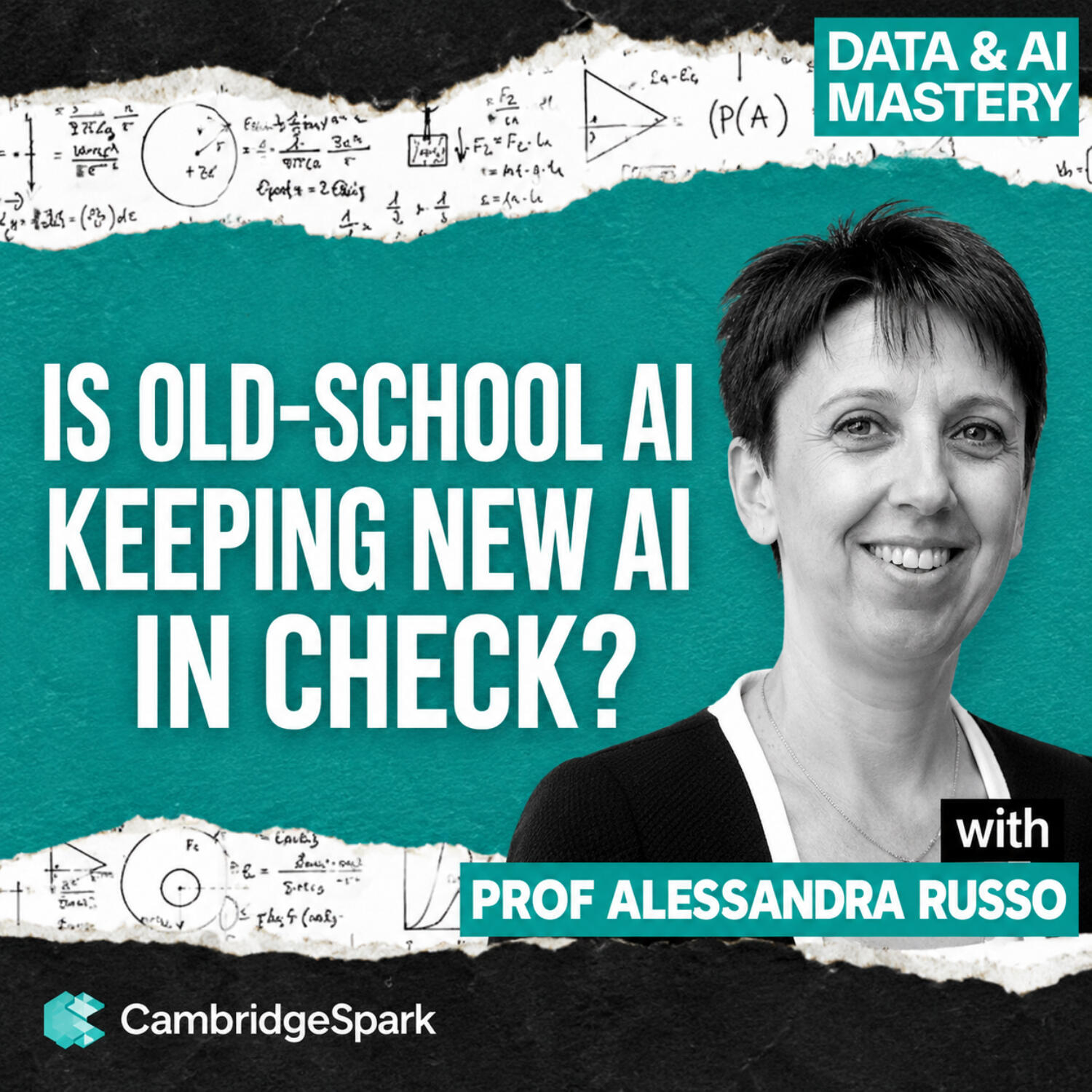
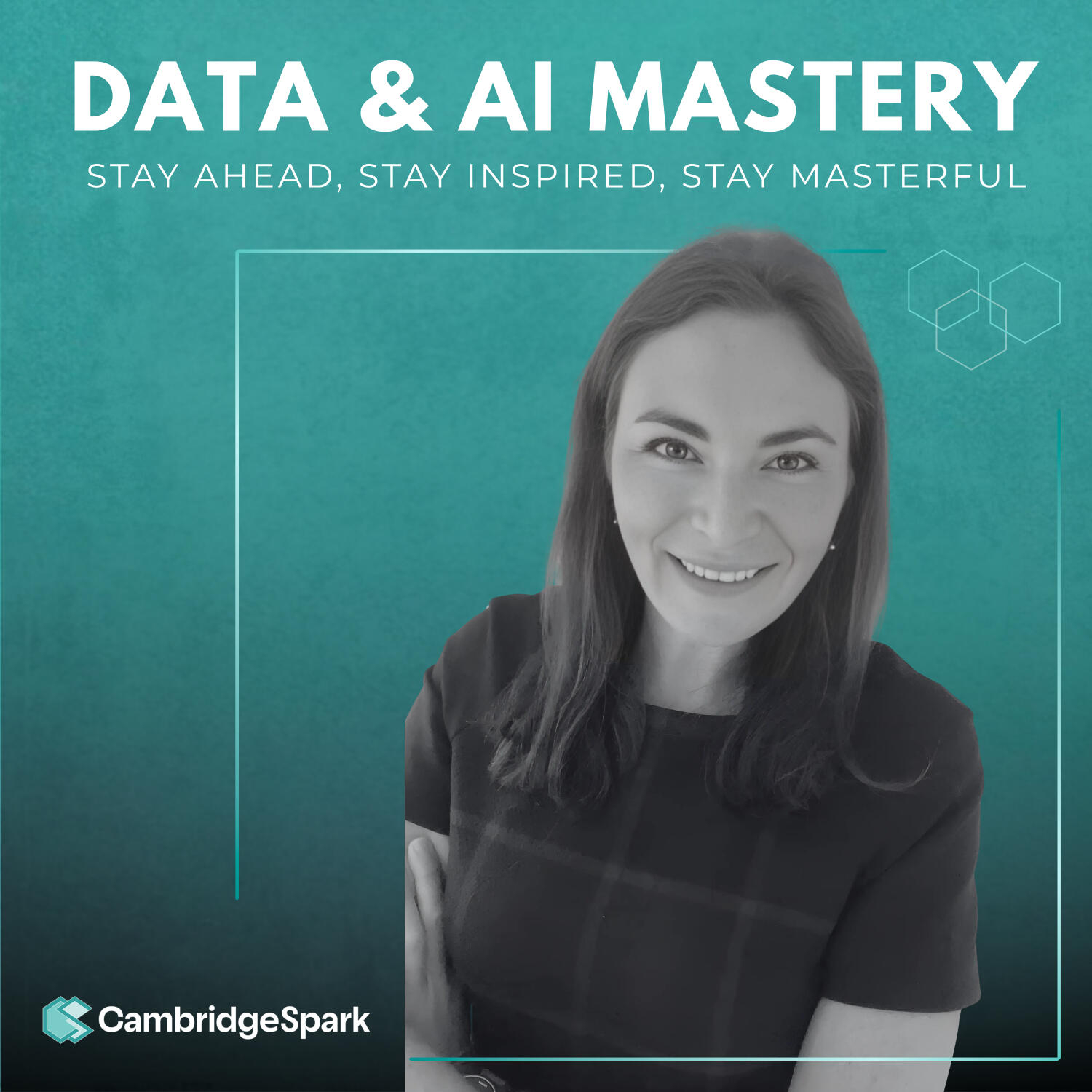
Roxane Heaton, MD; currently Managing Director of Digital Colleague Experience at Barclays. Previously Director of Digital Data Technology at the UK Cabinet Office and CEO at Macmillan.
AI won’t remove freedom to think; it should make people think more. Start with “passive data” and guardrails before using “active/personal data.” Co-pilot should shift from basic admin time-savings to changing how teams frame questions and solve problems. Success requires measurable process impact plus trust via transparency.
“Betty” persona in UK branches; time-and-motion style measurement; retail forecasting analogy (ice cream in Barcelona vs Yorkshire); ONS as a model for aggregating data sources; references to MNS comms about getting AI wrong and learning lessons.
Written by AI. May contain mistakes.
Discover how technology enhances our ability to think critically.
“So a contrarian view that I've got in the industry is that technology isn't going to take away our freedom to think, it makes us think more.”
Introduction of Roxane Heaton and her impressive background.
“I'm actually super excited for our conversation today.”
Roxane shares her journey in the tech industry and user-centric focus.
“So maybe to kick us off, I thought it'd be great to get your perspective on what drew you in the technology industry in the first place.”
Insights into Roxane's role optimizing the colleague experience at Barclays.
“So if I take you to your current role, so you're the MD of Digital Colleague Experience.”
Exploration of how data and AI can improve colleague interactions and experiences.
“by by business function and i assume by uh awareness and fluency of utilizing technology so that must be quite a difficult job at hand.”
Discussion on measuring success and impact between employees and customers.
“of course we can measure impact in my old world.”
Roxane explains the distinction between active and passive data in AI use cases.
Exploration of co-pilot tools and their potential to enhance employee creativity.
“It's helping people have more time to walk their dog at home.”
Discussion on the need for investment in AI education and ethical considerations.
“Let's use the tools, kind of see what happens.”
Explore the challenges of ethical AI use and the importance of proper investment in AI tools.
“And that kind of maybe leads us to the ethics question.”
Learn about the crucial aspects of data lineage and governance in AI implementation.
“Some organizations do, and some countries, do use cases a lot better than others.”
Discover why design thinking is essential for leaders in today's fast-paced environment.
“able to describe the opportunities to bring people on a journey and you know celebrate that success but at the same time balance it out with a fairly good understanding of the risks involved with that technology.”
Get quick insights from Roxane Heaton on her views in the tech industry and personal preferences.
“Well, let's move to a quickfire round question.”

Get the gist, explore an idea or ask about something said.
 Claude
On Data & AI Mastery, what are the key points of this episode?
Searching your listeningAutomatic transcript. May contain errors.
0:00So a contrarian view that I've got in the industry is that technology isn't going to take away our freedom to think, it makes us think more. So the use of AI will make us think more.
0:16Welcome to Data and AI Mastery, the podcast where we bring you cutting edge insights, practical advice and inspiring stories from the leaders shaping the future of data and AI across the globe. I'm your host, Raoul Gabriel-Urma, founder of Cambridge Spark, the leader in transformational data and AI upskilling, career development and progression. In each episode, I will be diving into real world case studies of companies harnessing the power of AI to drive innovation, reduce costs and create new business opportunities. So whether you are an aspiring data scientist, AI engineer or seasoned executive, this show is designed to give you the tools and knowledge to stay ahead in a world where data is transforming every aspect of business.
1:01Stay ahead, stay inspired, stay masterful. Welcome to Data and AI Mastery.
1:10Hi Rox, great to see you. How are you today? I'm really well and are you well safe? Fantastic. I'm actually super excited for our conversation today.
1:23So you were Director of Digital Data Technology at Cabin Office, CEO at Macmillan and now an MD at Barclays. So I'm amazed. So what a wonderful background. So maybe to kick us off, I thought it'd be great to get your perspective on what drew you in the technology industry in the first place. It's a really interesting question when people look at my background. They think I've done a bit of flip-flopping, but to me, the user's been at the centre of everything that I've done. And the user actually is more important to me than the technology. Technology I find really exciting. I love to solve wicked problems, and I can do that with talented teams on the ground and with execs and selling the future vision.
2:09I see this huge opportunity. but to me getting into tech was about doing things better doing things better for the users that use it and for the impact that we're trying to have in society so that was what motivated me I do think there's lots of and when I'm back to privilege I really recognize on the privilege wheel I tick a lot of boxes but I tick a lot of others where I'm not so privileged for example and I really recognise that it's very personal. And so there's always a personalised need that's always kept me alive. It's back to your point about what's got me into this and keeps me sustained is driving towards there's never going to be a single solution for everyone and to maximise the opportunity to make it better for everyone and make it more equitable for everyone as well.
3:09Wonderful, wonderful. So if I take you to your current role, so you're the MD of Digital Colleague Experience. Could you help the audience understand a bit what does it entail? So it's a really exciting role where we are optimizing the colleague experience, clues in the title, and from a digital perspective, clue in the title. But it's absolutely not just about digital. It's the online and offline blend. What's really important is that a colleague anywhere in Barclays can interface with the different experiences that we want them to in the most joined up and simple manner. And that sounds simple at the face of it, but we're in 43 regions.
3:50We have very different ways of working. We have everything from branches in the UK. So my grandma, she passed away recently, she's called Betty. I always use her as a persona with everyone. betty in a branch is time poor is not sacked glue to her phone but is dealing with probably somebody who needs to be served and she needs the betty needs the information to serve that that that customer in the best way possible and be curious and confident in the data that she's seeing and the systems and tools that she's what she's learning from then over the other spectrum and everyone in between we've got the investment bankers who have a very different day and way of working it's same sort of time poor etc etc um but we need to serve all those colleagues and as mentioned before they're all serving our stakeholders um and they're all that they're they're adding to the bottom line so my job and our job in the teams is to help optimize all those different new experiences um with our our peers across the bank and make things better wow so i must be hugely challenging especially as you've mentioned because you've got so much diversity in uh in colleagues not only region geographically but by departments by by business function and i assume by uh awareness and fluency of utilizing technology so that must be quite a difficult job at hand.
5:21So how do you think data and AI can support the colleague experience and I guess how do you define success because it sounds like part of the success is every employee ultimately is interacting with stakeholders and we want to serve relationships to be successful but is there anything you can measure before that outcome is actually evidenced? Yeah, it's a great question. And it's a bit of chicken and egg. And we've done a lot of benchmarking. So if anyone's got the answer, please do reach out. Because it's a really invisible line, intangible line between the colleague and the customer. But it's definitely there.
6:05And so in terms of impact, of course we can measure impact in my old world. I'm trying to create things you can see. so in my old world time and motion studies i used to watch people literally they're not quite um going around a supermarket so and you'll see this next time you go to supermarket if you haven't already the the colleagues who um are solving your queries or putting stock out in the bathroom or getting stock for you they're all moving around and it takes minutes hours and replications across all different sites and stores that a branch will have it'll be hundreds of thousands of wasted effort a year you can do the same in a more intangible space but absolutely you can make it tangible about processes that you do every day and this is where design thinking and service design and using the data um of what of what you're doing is is really exciting and it's helping people understand that be it the supermarket or a coffee shop and you're flowing a coffee shop and seeing the pain points in the coffee shop which is the typical service design great great example you can bring to life anything in a new way and help people realize that we work in an even more systemized world now with all data and ai um the opportunities but don't just rush into things um because we can see the issues when we do about as everyone knows the lack of transparency the lack of ethical decision making so for me the opportunities from data and ai is like any industry i work in the financial sector but and which is heavily regulated but so are other sectors but from different perspectives but where you can use data and the opportunities with data and ai is actually the same across anything to do with clearly forecasting and a content optimization and then moving to the right hand side when you've got your the right ethical considerations you can use it for more things um from a colleague perspective um because there's huge opportunities like farm skills and you want to use it for things people care about first as opposed to things people think that there's been a lot of cases recently hiring that can be really controversial that wouldn't be my first use case for example for the use of of of ai over what I call active data which is virtually a personal data um but I use passive data through through the yin yang to bring people on on journey that's things that will not change like policies let's use it for things and and and and an experiment in that space and then let's use it for um activity in the active space once we've got all the guardrails in place with things that users want to know and what can benefit them such as skills and and finding new opportunities in different areas of of the organization um so there's lots i could delve into um but but lots yeah we've been using the more retail world 10 10 years ago data for forecasting to get you your ice cream in barcelona where it's sunnier and not so much uh in yorkshire where it was probably raining because you know it you can abrogate different data sources in the same way let's do it for more things um that are safe for colleagues and bring people on journey i love the old david rock scarf model about the motivational practices the sustain people um so and it's i always look to that to go what would i want if i was a user of this system to know what's ethical what's rich for me that i can get benefit from and what will i be what i then trust and use more more ai in the colleague systems that I get served in in future great thank you I love what you said about the distinction between active data and passive data and if you're getting started you're better off looking what the passive data side put a safeguard in place because it's kind of like safer before you open up the box of personal data which comes with more risk if you do it wrong so I think that's a nice kind of perspective to think about it which I guess I'd love to hear your guidance for you know other organizations out there if there was one use case or one area that you you're seeing today that adds a lot of value uh internally for for colleagues what would you say it's worth focusing on because you know we live in a world where you know it's all about generative AI now there's a ton of co-pilot type of tools is this an area to look into or is there actually other use cases that you're excited about um I don't want to be a bore and say that it is a exciting area but it is an exciting area um to me making things more efficient is really important so we'll never get the colleagues who want to care about doing more stuff unless they're freed up from doing the stuff that they're doing already so it may be less exciting but some of the process automation work is really really exciting to get on skin off obviously it makes um a tangible benefit to the bottom line and i think increasingly we're moving to a space where people's time isn't just being freed up to walk their dog more but it's being freed up if we can measure it um by actually putting it back in the system so the co-pilot roll rollouts um i had one senior leader say to me it was actually that that that that that dog example which is the use of co-pilot isn't helping me with my bottom line.
11:36It's helping people have more time to walk their dog at home. And what we need to do is move the opportunity because it was just doing basic admin tasks and freeing up some time for the user. We're now moving into a bit of an era where finally we're actually starting to think about how we can use it in a different way. So not only process automation, we've got lots of opportunities to use different tools that we can optimize processes, but co-pilot for colleagues and making assistants smarter. But actually what was more exciting for me is the user on this journey, using it less for make my minute note, my minutes, or whatever else for co-pilot, but actually thinking differently, thinking about the questions that they're going to ask the assistant and the agent as we go forward.
12:27We're just about to do a trial where we actually only need two people in a team to have a co-pilot license, a team of eight, because what's more important to me and us is that people come together on the problem statement and think differently and recognize that co-pilot is actually only the tool to make that happen. Absolutely recognize the excitement around pressing the buttons and seeing it happen and measuring the impact. But what has changed in those users to help them be more curious and confident in thinking differently and evolving their thinking to address more and more problem statements.
13:01So yeah, assistance and process information, I think, are on the cusp of even more. I resonate with that a lot because what I'm hearing from many organizations is, you know, typically everyone gets excited about the technology bandwagon. You know, let's buy all those licenses. Let's use the tools, kind of see what happens. and some of the immediate quick wins that you always see described is the meeting notes, the email summary, or kind of like, you know, but that's just maybe freeing up 10 to 20 % of the admin task. And then it raised the question of what else can we do? But to unlock that next step, I'm hearing you need to invest a lot in education, right?
13:45Like to help people think about what's possible, play around with tools. Maybe it's marketing to create the graphics, create the content, create the video. Maybe it's sales to support research. Maybe it's HR, actually, to look at the screening of multiple CVs. And that kind of maybe leads us to the ethics question. But ultimately, the next phase is reimagine your job a little bit with those tools and help you be a bit more creative. Definitely. And you mentioned invest more there. And something that I've really read up recently is, obviously, we talk about upskilling. and I think there's some study out there that's excellent a quoting from me 92 % of people plan to invest more in terms of AI but only 1 % of senior leaders actually do and what is that the case you think?
14:35well I just don't know is it lip service or do they assume it will just happen or is there just so much to do and I think obviously in younger generations are definitely using it more and i definitely think that that um we don't put the guardrails in place people will get well we're using the wrong ai tools and we want to be able to help them so i think the ambition is recognized it's the understanding of what's needed and i think it's linked to we're moving so fast in this ai world what actually is needed there's some foundations needed and i know you mentioned ethics i mean i'm on on on that topic um but also it's knowing stuff so do you know your data lineage if you own something in organization do you understand yourself the data lineage end-to-end of where where the data is flowing what system is it in what it's touching and if it's on on-premise or cloud and what models of it is it touching and where is it going?
15:38So custom to generic ALMs, what's it going to mean? And we've seen all the cyber attacks recently. Will it mean that everyone's going to lock down their systems and actually become less open source or less transparent? I think there's a lot of less tech, but more like what's the world coming to? But what's happening in your world if you own something? So some sort of data value, do you understand it? and where do you want to go with it and do you understand the opportunity or risks and the excitement to me is vast but how does someone who owns that who doesn't even know how to get into those conversations even start um and that's where i think the investment there's lots of investment to get to go to various places it's not really on co-pilot upskilling which like something out the box should just be as easy as something out the box it's on all those other topics um i think are really exciting to get into that's fascinating i i resonate because it's easy to get excited about technology ai and and let's invest but it's a lot harder to deliver a change a transformation bring people along the journey and think about you know all the problems that may you know happen along along that journey right you know there's a ton of risks like you mentioned and if you get it wrong it could be reputational damage for the organization uh so and you know ethics so you mentioned you're really hot on the topic so i'd love to hear from you what are considerations that you think uh leaders should keep in mind when when they apply ai internally so some of those topics i just mentioned like knowing where your data is so don't just sign anything off don't just sign a proof concept because um because easy so understanding what data is being being used for understanding how people are being told the story about their data and being transparent on that.
17:34Some organizations do, and some countries, do use cases a lot better than others. So I'm half Kiwi-Aussie. And when I sit in my old grandma's room and listen to the local news one night, hearing from central New Zealand a story about a community using AI, spoken by the person in the community, saying I'm using AI with the support of to improve my health etc etc fills me with great joy but also surprise that we don't tell stories in i say the uk the same way so ai is used to something like something scary which it is if you if you don't don't do it right but it's a huge opportunity we don't talk about the opportunities of ai we don't talk about how it's improving um i mentioned societal impact so uh knowing where we can treat disease better or how it's actually at the forefront of of what of of diagnosing or in my very old world UK UK hydrographic office they were monitoring where sea kelp grew so example the health track the development of more biofuels so telling stories about AI in more tangible real ways for people brings it to life and then when you get on the personal um info sort of side of things leaders so leaders not only should be telling more stories about the opportunities and less less balanced with with the risk but also understanding for that user the personal impact of that data and jumping on it when it gets wrong the comms for example from mns was was highlighted as a really good example from this and i think that's another use case so don't to sit on bad news and openly learn lessons, I think is really important.
19:18But also understand how you're storing that data, who's a data controller, who's a data processor, and if these terms are new, go and find out because they're hugely exciting to know and when you do it right, you're improving the services people. so for leaders i'd say get involved to experiment and to understand some of the basic terminology that um that's out there and go and find some great use cases to share with people great great so it sounds like a key skill that you describe is the art of storytelling so be able to describe the opportunities to bring people on a journey and you know celebrate that success but at the same time balance it out with a fairly good understanding of the risks involved with that technology.
20:11In particular, it sounds like you said, data governance is an area that, especially in large organizations that are regulated, that's one you really need to be on top of. Yeah, absolutely. All of that. Great. Well, so on the topic of skills, in today's world, again, fast moving, what's the skill or mindset you encourage every colleague you know in any organization to develop? Design. Design's my answer because design thinking will never go away and will always be needed. People think service design for example is a once and done actually that's not service design it's designing for the user will always continue so being at the cusp of how to think in a more inclusive and equitable way is always going to be valuable.
21:01So that. Fantastic. Design thinking, one skill to invest in. Why is it so important? Is it because ultimately that's how you get closer to your user and customer and you can really figure out the value to generate for them? Yeah, I also went on a bit of an easy one there with regard to, I know it encompasses a few other things. So it absolutely encompasses as I mentioned before like knowing what what infrastructure is touching knowing the data governance around it having data literally being properly the data literate and and hungry so where are people like looking at the qual and quant data looking at where the data is not in a journey um and uh that I find that really exciting as well and looking where you can aggregate those different data sources and I always look at ONS as a great role model for this because they aggregate different data sources and come up with outcomes that as a single user you would never see yourself so and so i i love those stories where you can bring together um for them for example geographic populations and then understanding say there's some people haven't have pat lunches and what that means and what you can do to change things and then what's so what so to me that that design thinking isn't just about the design thinking it's about how we're using our knowledge of data, basically what's in the system to do better things.
22:29So yeah, lots of things that I've put under the umbrella of design.
22:39Well, let's move to a quickfire round question. So I've got a few questions maybe to ask you and love to get kind of like maybe a short response to it. Are you up for it? Yeah, sure. Yeah. So what's a contrarian view you have in the industry? you say short and I'm going to think so a contrarian view that I've got in the industry is that what I mentioned before actually that technology isn't going to take away our freedom to think it makes us think more so the use of AI will make us think more I love that that's a very controversial one actually because you hear a lot of people saying actually with AI or cognitive ability are declining because we're depending on the system to do all the thinking.
23:31But you're arguing that actually it gives us an opportunity to go deeper and think harder perhaps. So how do you stay up to date as a leader in this environment? What's your ways to do it? Staying curious and also recognizing you can't know everything or do everything, having a good network who you know you can lean on because not only will they be able to pass the baton to them and make them shine, enable them to shine, because you don't need the expert. They can be the expert. But also they can be the energy ladder for you. So when things get hard, you can bounce ideas. So having the trusted networks.
24:10Super. I've got a couple more personal questions now. And I have a feeling I might know the answer to the next question, but I'll see. what's your favorite programming language
24:25that's what I was about to say you know what it's it's a really funny one I remember the first lesson I was in back back back to uni where I learned how to code hello world and that first moment that you press that button and something happens you'll never you'll never forget and I think so and knowing then how to make it better. I know that was only two words, but yeah, and I also know where I was not very good going around and asking people for favors around the university hall. Cool. My next question is, what was your favorite subject? That's cool. So I was thrown out of art because I wasn't very good at it.
25:05Okay. So that's where I'm, but I actually quite enjoy like trying to get on the skin of why I was not so good at it. Probably something like maths. Again, I like to solve things. um again i wasn't very good at it but um i don't think you need to be good at something to actually enjoy it so my last question you see i'm building this kind of like data set of uh favorite music genre from senior technology leaders so what is your favorite music genre rocks my favorite music genre oh goodness um well i did see kylie recently big fan of kylie so anything that's got a good beat I have to go not genre but anything that's got a good beat and a good moral in the story I think that's also important Fantastic Thank you Rox, it's been an absolute pleasure to have you on the podcast today Thank you very much, it's been delightful See you soon
26:08I really enjoyed our conversation with Rox today what a charismatic person such a rich conversation and a couple of things stood out one when i asked her you know what's a fundamental skill that is needed in this world of ai and she said design thinking design thinking is very much a human-centered approach to problem solving when you keep users are really at the core of what it is that you're looking to develop innovative solutions for and if we take this perspective of caring about your user in large organizations that are multinational it's extremely difficult because you've got different geographies different culture so users they're set in different countries but also you may have users that sit across multiple business function you know somebody in the marketing team or somebody in hr or somebody that sits in a local branch will all have different needs and might think about AI in different ways.
27:13So it makes it hugely challenging to get the most value of AI. It's not as simple as you know AI can really empower your workforce. You actually have to go many levels deep in order to generate the best value for your users. In this case in our conversation colleagues in the organization. thank you for tuning into this episode of data and ai mastery if you found value in today's discussion make sure to subscribe so you never miss an insight from the leaders driving the future of data and ai and if you're a data and ai leader looking to upscale your workforce with the fundamental data and ai skills to transform your business cambridge spark is here to guide you every step of the way be sure to reach out to us on linkedin or on our website cambridge spark.com Until then, be sure to keep pushing the boundaries of what's possible with data.
28:08And remember, mastery comes with continued learning and action. Until next time, stay ahead, stay inspired and stay masterful.
Want to equip your workforce with the data and AI skills they need to drive real transformation? Cambridge Spark partners with global organisations to build high-impact, scalable training programmes that deliver measurable business outcomes. Learn more at cambridgespark.com.
In this episode of Data & AI Mastery, Dr. Raoul-Gabriel Urma speaks with Roxane Heaton, Managing Director of Digital Colleague Experience at Barclays, about what it means to design digital systems for real people—at scale.
Roxane shares her unique journey across the public and private sectors, from the Cabinet Office to Macmillan and now at Barclays, and brings an unshakable focus on user-centered innovation. In a world obsessed with digital transformation, Roxane challenges conventional thinking by arguing that AI doesn’t replace thinking—it deepens it.
Whether you're a digital leader, HR strategist, or AI practitioner, Roxane offers an inspiring and grounded vision for inclusive, impactful transformation.
Tune in to discover how to unlock human potential through data-driven design.
Chapter Markers:
(05:46) How to Measure the Impact of Digital Tools
(08:32) Using Passive vs Active Data in AI Design
(10:47) Automation, Copilots & Rethinking Workflows
(13:07) Why Upskilling Requires More Than Just Tools
(16:33) The Role of Ethics and Data Governance
(19:51) Storytelling as a Leadership Skill in the AI Era
(20:21) Why Design Thinking is the Must-Have Mindset
(26:01) Raoul’s Reflections
Useful Links:
Connect with Roxane Heaton on LinkedIn
Visit the Barclays Website
Follow Raoul for more AI insights on LinkedIn
Explore Cambridge Spark’s AI upskilling programs at cambridgespark.com