Ask ChatGPT

 Decoder with Nilay Patel
15 Oct 2026 · 1h 2m · 18 chapters

Ben Jordan argues the backlash against Flock Safety (automatic license plate readers) is really about broader surveillance overreach enabled by private “private network” databases, weak security, and government secrecy. He says Flock’s PR posture made it a target, but competitors (Axon, Motorola) use similar models. He also argues surveillance tech is often not tested for crime reduction and can relocate crime rather than reduce it.
Ben Jordan is a musician, YouTuber, researcher, and investigative journalist. He lives in Atlanta (where Flock cameras are dense) and became a prominent critic after investigating Flock’s security and testifying before the Senate Judiciary Committee’s Crime and Counterterrorism subcommittee.
Flock’s network lets agencies search shared ALPR data across states with 30-day retention without the warrant process used for NCIC sharing. Flock and similar systems lack basic security controls (e.g., no MFA), have exposed interfaces/credentials, and are vulnerable to account compromise and device takeover. He frames the core problems as (1) uncontrolled private databases and (2) insecure deployment by startups.
dark-web Flock credentials from a Russian vendor; camera admin interfaces exposed to the internet; ability to delete/watch 30-day footage; police officer logging in from non-station Wi‑Fi; crime-relocation analogy (cameras shifting theft elsewhere).
Written by AI. May contain mistakes.
Ben discusses his journey investigating Flock and the implications of surveillance.
“towards real, tangible solutions to surveillance overreach, rather than part of a crusade to tear one single company down.”
The discussion focuses on public pushback against Flock cameras and local politics.
“And about two years ago, I started noticing, you know, I noticed them.”
Ben analyzes Flock's PR failures and the broader implications of surveillance politics.
“not, whereas this way I'm paying for this already.”
Ben explains the technology behind Flock cameras and their implications.
“I know you've talked to a lot of people pushing back on surveillance.”
Learn about the Flock camera technology, its implications, and how it differs from traditional ALPR systems.
“One of the things that I want to do with you on the show, most importantly of all, is just describe what a Flock camera is and what the technology behind the hardware does that makes it new.”
Explore the argument that increased surveillance might not effectively reduce crime rates and could lead to crime relocation.
“And the argument he would make is if you put enough cameras into certain neighborhoods, you will zero out crime.”
Dive into the security issues related to Flock and the broader implications of surveillance systems.
“And one of the most important tradeoffs that you have brought to light repeatedly is that these devices are not secure.”
Explore the security flaws identified in Flock's surveillance technology.
“And so now that you have this, it's like, yeah, the person on this entire network with the worst security hygiene is going to be as secure as the entire network will be, right?”
Discuss the responsibilities of legislators in protecting privacy from tech.
“And they're usually like bifocals and are really smart.”
Hear about the experience of testifying before the Senate regarding Flock.
“So you recently testified in front of the Senate Judiciary Subcommittee on Crime and Counterterrorism.”
Understand the public's view and misconceptions regarding surveillance technology.
“And, you know, I think a lot of Republicans remember COVID and they remember mask mandates and stuff, and they probably imagine what a flock camera would do in that situation.”
Analyze how privacy concerns have changed with technological advancements.
“And if people knew the average amount of data that this data broker has about them that's being sold and traded constantly, I feel like their anger about Flock would be completely eclipsed by it.”
Discuss potential legislative solutions to address privacy and security concerns.
“The last thing is, and it would be costly.”
Discussion on the implications of surveillance and the need for policy changes.
“My Apple Watch might just make transcripts of all the meetings without anyone's permission.”
Exploration of societal assumptions about surveillance and potential solutions.
“One of the things I've been thinking about a lot is the widespread assumption that surveillance does exist.”
Explore the complexities of being a journalist when your work can harm the subjects you're covering.
“they actually are, and actually listening to people and maybe working on a solution.”
Learn how maintaining nuance in content can set you apart in a noisy media landscape.
“my viewers decide how they feel about that.”
Understand how viewer reactions shape content direction and personal growth as a creator.
“Brendan Keefe from Atlanta News First is a great example where, you know, I would almost consider him a mentor at this point because he's extremely rigid with his with his nuance and with his ethics.”

Get the gist, explore an idea or ask about something said.
 Claude
On Decoder with Nilay Patel, what are the key points of this episode?
Searching your listeningAutomatic transcript. May contain errors.
0:00Nilay Patel: Support for the show comes from CrowdStrike. It's not a huge stretch to say that AI is the next major computing platform. Every platform shift changes the way we build software, and it changes security, too. CrowdStrike is defining cybersecurity in the AI era with AI Detection and Response, or AIDR, a solution for seeing, monitoring, and securing AI across the enterprise. Learn more about how leading companies are turning to CrowdStrike to secure AI and secure their business at CrowdStrike.com slash decoder. Maybe that late night ping is an urgent email from your CEO. Or maybe it's a deep fake targeting your business.
0:42Nilay Patel: Doppel is the AI native social engineering defense platform fighting back against impersonation and manipulation. As attackers use AI to make their tactics more sophisticated, Doppel uses it to fight back. Automatically dismantling cross-channel attacks, building team resilience, and providing agentic email protection. Doppel, outpacing what's next in social engineering. Learn more at doppel.com, D-O-P-P-E-L dot com.
1:15Company spending is complex. Managing it should be simple. This is Amex Corporate, a single platform connecting cards, expenses, and payments to streamline the way you work. Flexible controls for when priorities shift, support around the clock. All backed by American Express, so you can stay focused on what matters most. Built to simplify, designed to scale. This is Amex Corporate. Get started at go.amex slash Amex Corporate. Terms apply.
1:51Nilay Patel: Hello and welcome to Decoder. I'm Neelai Patel, Editor-in-Chief of The Verge, and Decoder is my show about big ideas and other problems. Today I'm talking with Ben Jordan, musician, YouTuber, researcher, and investigative journalist. You might know Ben from those first two titles. He's got a prolific discography of experimental music dating back decades. But in the last couple of years, Ben's become a high-profile face in the creator and media world for his work investigating Flock Safety, the maker of automatic license plate readers and the software that powers them. Ben recently testified in front of Congress at the Senate Judiciary Committee's Subcommittee on Crime and Counterterrorism at a hearing dedicated to Flock and other ALPR systems.
2:27Nilay Patel: To me, this hearing felt like the culmination of months and months of growing criticism and bipartisan backlash against Flock, all of which is taking shape similar to the pushback against AI data centers. This has led to major fallout for Flock. Hundreds of cities, counties, and other local governments have begun canceling contracts, and Flock is now under investigation by Republican Senator Josh Hawley. Last week, Reuters reported that Flock plans to cut about 18 % of its workforce. So of course, I wanted to dig into all of that with Ben. Not just because he played a role in it, but because he's also become in some ways the face of a new front in a broader debate about surveillance and privacy.
3:00Nilay Patel: The point you'll hear Ben make is that he doesn't actually hate Flock as a company. He thinks its posture towards critics has been a colossal PR failure that made it low-hanging fruit, while competitors like Axon and Motorola have quietly built the same kind of networks. Ben actually now talks to Flock directly, including to its CEO Garrett Langley, and reports security vulnerabilities to the company when he finds them. By the way, we've invited Garrett Langley onto Decoder. Garrett, if you're listening, we would love to have you. Ben says his outreach to the company is an olive branch, as part of his goal working towards real, tangible solutions to surveillance overreach, rather than part of a crusade to tear one single company down.
3:33Nilay Patel: That's a theme you're going to hear throughout this conversation, that Flock and other high-profile names in surveillance are just part of the problem, that our real focus should be on the interlocking relationship between private industry, government, and law enforcement that prioritizes secrecy over transparency. We never voted for an insecure network of cameras in every street corner, and we're certainly not being asked if we're comfortable with access to this network being given to police officers with a penchant for abusing it. So Ben sees his work on YouTube and with other researchers, civil rights groups, and journalists as an accountability function that forces the conversation to the forefront.
4:06Nilay Patel: And so far, it's working. Okay, Ben Jordan on flock, privacy, and the new surveillance backlash. Here we go.
4:25Nilay Patel: Ben Jordan, you're a musician, you're a YouTuber, you're a researcher. Lately, you've been an investigative journalist. You are a witness in Senate hearings. Welcome to Decoder. Thanks for having me. I'm a huge fan of yours. It's just a delight to have you here. I think a lot of people in the Verge audience know you as a musician, but lately you have been relentlessly focused on Flock cameras, automatic license plate reader cameras. You recently testified in front of a Senate hearing on those cameras and the surveillance they enable. Give us a sense of your background. For people who don't know you, haven't been following you for years, where did Ben Jordan come from and how did you end up being the person who makes videos about Flock?
5:04I started with, I mean, I've been a musician my entire life, pretty much. And I've also always been kind of a hacker or somebody who type of person always takes stuff apart. Or, you know, if I get a product that wants me to pay for a service that's already in the product, then that's like a puzzle that I want to solve. And I get actually kind of excited about it. But, you know, a lot of times that blends into the investigative journalism as well. And so with the flock stuff, it's just I live in Atlanta, which is has more flock cameras than anywhere else per square mile. And about two years ago, I started noticing, you know, I noticed them.
5:43I thought there were traffic cameras or something like that. Then I started looking into what they were actually doing and then started looking into things like security vulnerabilities. And more than anything, I think that everything that's happening right now in the public and in the news has to do with people just figuring out that these have existed the entire time. And I think a lot of my focus now is on the lack of transparency from the government because you can, you know, companies are always going to make money and try and make as much money as they can, especially if it's from taxpayer money.
6:17But in this case, I feel like our government kind of missed it. And that's where we're at.
6:24Nilay Patel: There's a question that's been rattling around my head. The entire time, we've been having what I would call the modern privacy and surveillance debate. And when I say modern, what I mean is it feels like we woke up sometime in the last year and everything is recording us all the time and everything is watching us. And the glasses have cameras in them. And Mark Zuckerberg is like, phones don't have a light. And that is meant to end a conversation. That's the argument. Phones don't have a light. No further questions. And the Apple Watches are going to start doing automatic transcriptions. And everyone was like, wait, hold on.
6:53Nilay Patel: No, thank you. We actually don't want this to happen. But my personal experience of this is that my political coming of age was the war in Iraq and the Patriot Act. And this is the stuff that people were talking about 25 years ago. Like don't do warrantless wiretaps. don't make the databases all connect to each other so you can take the metadata and de-anonymize people at will. What is it about this time that has made everybody so angry? Because we could have been angry 25 years ago. I'm always trying to get people more informed on the information that's being collected about them every time they go to a website, every time they sign up for something, every time they check into a restaurant online, every time they use their phone.
7:38In this case, I think one of the reasons that people are really upset about it is that you can't opt out, right? That's the first thing is I can't say, hey, I don't want these these flat cameras or axon cameras or whatever they are tracking my every move and giving it to law enforcement. I have no option to do that. I was never given an option on whether to vote for them or vote for somebody who was in favor of them. They just kind of happened. And, you know, people weren't told about them. So that would be the first thing is like you can still install a separate OS on an Android phone or you could turn off Wi-Fi and Bluetooth or just leave your phone at home.
8:15Whereas you can't actually go to the grocery store without somebody tracking your vehicle. And the second thing is that, and this is kind of related to opting in and opting out, I can pay for a new AI smartwatch or I can pay for an Amazon Echo device or something like that or I cannot. not, whereas this way I'm paying for this already. Like this is just my property taxes are going up and I'm paying for surveillance, which in some ways is the same as the NSA, but I feel like it's much more local now.
8:48Nilay Patel: You don't get to go to the town board meeting and yell at the NSA. Although maybe you should. Honestly, that might be good for everyone. That part of it, and you've certainly been at a bunch of local town board meetings. I've watched a lot of videos of you talking to them and helping other people articulate their concerns. That, to me, is one of the more fascinating aspects of all this. Flock went from a company that was selling cameras to everyone. And the idea that adding Flock cameras would increase the safety of your town went from all but assumed to, hold on, we all have a lot of questions.
9:19Nilay Patel: And now this company is struggling a little bit. They're losing contracts. They are retrenching. Their communication strategy has changed. What do you make of that? Is that just the power of local democracy in action or is there something else? It definitely is democracy in action. And I think that that's the good news and the best news out of anything that's happened with both Flock and data centers. It's two things that have made people actually look up who their mayor is and who their city council members are and show up to meetings and then get involved in those local politics because those local politics affect your life way more than national politics.
9:56They just don't make the headlines. So we're not as involved like your day to day following what Donald Trump is doing is likely not going to make that big of a difference other than, you know, what you argue about over Thanksgiving. Whereas local politics, that's that's straight up in the next year. That's going to have a big a big effect on your life. And so people getting involved in that and then in cases like Asheville, North Carolina, where it's actually changing the political landscape. Like people are so dissatisfied with the surveillance policies of their local politicians that it looks like they may have a new mayor as a result of it, who also comes with a bunch of other interesting and progressive ideas that would probably help the city a lot more than the current mayor has.
10:40And so that's a big deal right there. The other side, the part that discourages me a little bit or the part that I find a little disappointing is that like flock has become this buzzword. But a lot of people don't look beyond that. And just I mean, I just heard in our Georgia, the race for governor in Georgia. I mean, I just heard like the Democratic candidate yesterday talk about getting rid of flock cameras and being anti-flock when this is somebody who as mayor of Atlanta brought flock, you know, welcomed flock. And so you see a lot of that happening now, too, where where they just say bad flock and then they go sign an Axon contract or they put Vercata cameras everywhere, Motorola cameras.
11:23In my research, Flock has been like the low-hanging fruit just because they were kind of the loudest and most defensive, whereas every other company was just kind of taking a step back and taking cash in the checks.
11:33Nilay Patel: One of the pieces of the puzzle here that I think is just fascinating is Flock is a startup, essentially. They're a new company. They have a new go-to-market strategy. They talk a big game about what AI can and can't do and what they as a platform should and should not enable. Your Axons and your Motorola's are government contractors. They are not companies that are meant to have a personality. And there's something about Flock where Garrett, the CEO, had a personality. He would go on TV and deride any critics as left-wing terrorists, and that did not work. And there's something about surveillance in that case where that strategy didn't work.
12:10Nilay Patel: There's something about data centers where that strategy didn't work. We just ran a big piece about the people of Utah pushing back on Kevin O 'Leary, who called them all Chinese terrorists. And they're like, what are you talking about? And that cut across party lines. But again, you've been out there. I know you've talked to a lot of people pushing back on surveillance. Is it just that Flock had a personality and that enabled bipartisan pushback or is it surveillance more generally? In terms of the media getting attention, I think that Flock had, I mean, Flock had a lot of personality and they were very defensive.
12:42And they, I'm not sure. The thing is, is I've met a lot of the people from Flock who are so villainized and they don't seem at all the way that they've seemed in the clips that I've covered in my content, right? It's very different. And so you would assume that there's a publicist behind a lot of this. And I think in especially in something that serves law enforcement where you would maybe have a publicist that's used to dealing with Republicans and right wing things. They just tell you to keep repeating the same thing over and over again and take a firm stance and dig your heels in. And most people who aren't Donald Trump when they do that get wrecked.
13:21Right. And I think Flock got wrecked. They denied security vulnerabilities or they used clever ways of reframing or redefining words. And people picked up on it. And now they are the villain. Whereas, yeah, companies like Axon, they're not as sexy for a journalist. They just aren't. And that's probably intentional on their part. Any company that's taking your tax dollars or trying to court your government to give your tax dollars to them probably wants to be out of the spotlight.
13:57Nilay Patel: We've covered Axon before. They do not want to be a company with characters. They are as anonymous as they can be. One of the things that I want to do with you on the show, most importantly of all, is just describe what a Flock camera is and what the technology behind the hardware does that makes it new. Sure. Because from watching all the videos that you make, they're just putting a bunch of Android phones around town. And it's actually the database and the AI that makes it more dangerous than usual. But describe what the actual Flock hardware is and then how that connects the system that makes it as controversial as it is.
14:33So ALPRs have existed, I believe, since the 1970s. And I think they started getting used in the United States in like the late 80s and 90s. And one of the classic ways that they would be used in the 2000s is they would be mounted on a police car. And if a police car wanted to run someone's plate, that way they didn't have to type it in while they're driving and they could run a plate over to dispatch. I personally don't have any problem with that. I think that makes sense. That's a decent use. So, however, you would have issues where you would get plate misreads and then people would get taken out of their car at gunpoint as a result.
15:05Flock is a lot different. Flock basically started a private nationwide network where any police department or city that's using Flock's network, they can opt into it and share their data with it. And then police departments across the country can run a license plate with 30 days of retention on everywhere someone's been anywhere in the country as long as they're sharing data. So you would have someone in Texas being able to search somebody's movement through New York or Atlanta or something like that. And they were doing this, they are doing this without a warrant, whereas any type of ALPR data sharing previous to Flock had to go through the National Crime Information Center, which does require a magistrate judge to look at the overall context of a situation and then issue a warrant to allow tracking.
15:57Nilay Patel: So that's the innovation here, right? They built the private network, the private database. They convinced a bunch of law enforcement agencies to buy their system and they could opt in. And there's some kind of legal innovation here where by making it a private database, they could just sort of excuse themselves from the warrant process. But the actual hardware of the cameras is not all that impressive, right? There's something about that that I really just want to hone in on. The idea of the Flock camera being the problem is secondary to the Flock network being the problem. Yeah, absolutely. I mean, one way that I think of it, a lot of the defense of Flock cameras, even outside of Flock themselves, is that it's all happening in public.
16:39So this is all in public view. So it's generally the same as you're allowed to take a picture anywhere in public. So why can't they do this? My argument would be that if you were to have a police officer follow someone or go through public traffic cams, which are all over the country, Go through every single public traffic cam and wait for your car to come and then write down when that was there and do that for 30 days. That's generally like a serial killer situation. Like the amount of, you know what I mean, the amount of resources that you have to dump into that, you would have to justify that expense with a very serious crime.
17:14But doing that for somebody who, you know, stole steaks from a Kroger is very different. And I think, you know, what worries me about it is that you might end up with police officers being able to get a lead on a case much easier that doesn't necessarily need police for society to become safer in a better place, like a nonviolent crime or, you know, something that's not a huge deal, rather than investigating on more serious crimes.
17:43Nilay Patel: The argument that Flock makes, that proponents of this technology make, we had Jamie Siminoff from Ring on the show. And the argument he would make is if you put enough cameras into certain neighborhoods, you will zero out crime. That is a thing that he has said to me in the context of Ring doorbells and floodlight cams. It's the same argument that proponents of Flock make. We put up all these cameras. We can catch criminals. Thus, we will deter criminals. The crime rate will fall. Do you buy into this? I don't because, first of all, we've never tested this. We've never had a city in a vacuum where we put in a bunch of cameras.
18:18And then because one of the metaphors I like to use is if you have a supermarket and you put one camera in one aisle where you think that things are going to get stolen, like that will probably increase theft in other aisles rather than just assuming that every shoplifter is just going to become a plumber instead. You know, just like, you know, I'll be a doctor instead of a shoplifter like that doesn't actually deal with the overall problem. And then if you have a Walmart that has cameras all over it and then you have a neighborhood store that can't afford all of those fancy cameras, then maybe the shoplifters and people who would hold up a store will go to that place instead.
19:01And you have the same thing with cities. Like you have crime relocation happening. So yes, of course, if you put a camera above a street, it's less likely that a car on that street within the view of the camera will get broken into. But does that make it more likely that a car a block over where there is no camera will get will get broken into? And this is something that has been observable by criminologists, like crime relocation is a real thing. And a lot of times effective policing just moves criminals elsewhere. So, yeah, selfishly, you could say, well, yeah, in my subdivision, we have less crime and I don't care about anything other than that.
19:39But over time, over the next decade, it doesn't really work out that way. You end up with more crime overall or you end up with bigger problems in society. Also, we've seen that ring cameras don't really reduce crime all that much, do they? Like, you know, you end up being able to see somebody stealing a package off your porch or you end up being able to see somebody breaking into your house. But do they actually increase clearance rates? I've not seen any evidence that they do.
20:08Nilay Patel: Well, you've got to connect them to the nationwide database of license providers. Right, yeah. If you put a camera everywhere, you can't relocate anywhere. This is the argument. It's the end point of the argument that they are making, which is, OK, if putting up some cameras would move the crime, putting cameras everywhere would make that impossible and there will be no crime. I mean, with a lot of that stuff, it's just like, well, if you're worried that you're going to have a porch pirate, if you're worried that your house is going to be broken into, I'm not sure why you would jump to put cameras all over your house.
20:37Same thing with cities. Like, why wouldn't you just increase your insurance, you know, increase your insurance payout, something like that happens, because that actually will get you new things. And, you know, the other one will just get you a police report with evidence that the police might not even be able to handle or will not be able to connect to any sort of criminal. Because even if that criminal gets caught, it's not like they just save all the money to pay back their victims, right? So it's figuring stuff like that out. But I think another thing that I don't like about surveillance in general, especially things like ALPRs, is that they're not solving crime with embezzlement.
21:13They're not solving crime with corruption. They're not solving bigger crimes. They're really honing in on things like car theft and things like shoplifting out of a Lowe's parking lot and then them sharing that data with the police and then the police tracking the car two days later and pulling it over. Most of the time, those crimes actually have solutions that are in broader public policy, right? Like if somebody's shoplifting from Lowe's, I would assume they probably either have a drug problem or they have a problem with poverty because I don't want to shoplift from Lowe's. I have no desire to do that.
21:50It's not like a crime of passion. It's a crime of necessity. And so, yeah, I would say that like along the lines, like even if the clearance rates were improving, which I've not seen evidence of, what does that mean? Does that just mean that we're putting more nonviolent offenders in prison or through the justice system? Does that actually make society safer?
22:19Nilay Patel: Support for the show comes from CrowdStrike. AI is already fundamentally changing how companies build products and run their businesses. If you listen to the show, you probably already know this. But while AI drives innovation, every new model and agent also creates new cybersecurity vulnerabilities. That's why CrowdStrike built AI detection and response. or AIDR. AIDR helps organizations discover where AI is being used, monitors AI activity at runtime, and helps teams detect, investigate, and respond to threats involving AI systems. As companies adopt AI, security has to be built in from the start.
23:00Nilay Patel: More than 70 % of the Fortune 100 trust CrowdStrike to protect their businesses. Now CrowdStrike is helping secure the AI era. You can learn more about AI detection and response at crowdstrike.com slash decoder.
23:38Nilay Patel: today. No taxes, no fees, nothing down. Pass it on. Hey Mickey, pass it on! iPhone 18 Pro has the most advanced iPhone camera ever. Pass it on. At T-Mobile, you can get iPhone 18 Pro for nothing up front. Pass it on. At T-Mobile, get$1 ,000 off the amazing iPhone 18 Pro with no trade in needed. With 36 monthly bill credits when you switch to T-Mobile on a qualifying plan. If you cancel entire account before receiving all bill credits, credit stop and balance and required finance agreement is due. Example,$1 ,199.99 iPhone 18 Pro 256 gigabytes. Bill credits in if you pay off device early. Qualifying credit, new line, port in and service.
24:14Nilay Patel: $85 more per month with auto pay plus taxes and fees required. $35 device connection charged due at sale. Visit T-Mobile.com. Support for the show comes from OutShift, Cisco's incubation engine for frontier technology. You can find multi-agent AI in every enterprise roadmap right now. But here's the problem everyone's facing. Agents can pass messages, but can't think together. These systems silently underperform through cognitive failures, misreadings, unverified claims, false consensus, and conventional monitoring can't detect them. Outshift by Cisco is building the fix with their new comprehensive resource, the Internet of Cognition.
24:52Nilay Patel: It's an open source guide that's a foundation for building multi-agent systems from design to production. The goal is to give agents shared context, shared memory, and guardrails, all to drive the results we actually expect from AI. You can lean on this resource to understand agentic AI's evolution and how it's shifted from isolated agents to orchestrated superintelligence. You can gain insights for how to future-proof your business by tackling complex challenges with multi-agent systems. You can read the paper, experience the demo, grab the code from outshift.com. That's O-U-T-S-H-I-F-T dot com.
25:39Nilay Patel: We're getting into the tradeoffs of using technology to solve social problems. And one of the most important tradeoffs that you have brought to light repeatedly is that these devices are not secure. So even if you solve the problem of you should get a warrant, or even if Flock responds to the public pressure and says, we ought to make people type case numbers into the system before they start searching, which was – that was their big concession recently. Even if you get to, okay, we're going to control the system a little bit better. The devices themselves are insecure. The network is insecure.
26:12Nilay Patel: And that means anybody can do almost anything they want with it. You're a security researcher. Describe how you started digging into the security problems here and what the response has been to that. I mean, starting out, I found out that they didn't have at the time in early 2025, they didn't require multi-factor authentication. And I also witnessed a police officer logging into Flock from a Wi-Fi network that wasn't at a police station. And so immediately, like, you know, had you told me those things, I wouldn't believe them. But witnessing it happening made me go, oh, OK, this is something that needs more looking into.
26:46So I started, I'm like, OK, well, it's probable at that point because now you have human error. And you have, if all of these police departments are sharing data with one another, then it could just be the dispatcher, somebody who's not even deputized, that has a Flock account at, I don't know, a rural Louisiana police department. and that person could sell their account or that person could click the wrong link in an email and whatever. So I started looking for Flock credentials on the dark web and I found some and they were coming from a Russian vendor. And then I started thinking, okay, well, how exactly did that happen?
27:24That's when I met John Gaines, found that there was a lot of, at the time, there was a lot of hardware vulnerabilities in the camera where you could get them to open up a Wi-Fi access point and then you could get complete control over the Android device and you could root it and have it do whatever you wanted in a way that would be undetectable because it's happening outside of the Flock ecosystem on the device. I had found a bunch of Flock cameras that were just, their administrative interfaces were open on the internet. So you could just type in the IP address and then delete footage, watch footage from 30 days ago.
27:56You could even like put files on the device, look at all the logs. on all in all these situations we found a lot of uh plain text credentials things that shouldn't have been there and yeah and so i mean at first the pushback from the company was that i'm a youtuber and i was doing magic tricks and i'm not a serious security researcher um i think that me reading their statement about having never been hacked through a camera through a flock camera and then downloading it on on my own machine kind of made that indisputable you know that they still disputed it for a while, but it was, I think that is what really got like the media involved in, and I'm finally paying attention to it.
28:37Since then, it's been like smaller things that I've found, but more so the bigger deal here is that no matter if you're using Flock or Axon or whatever it is, because now you have Axon and Motorola also launching their own private networks outside of the NCIC. And so now that you have this, it's like, yeah, the person on this entire network with the worst security hygiene is going to be as secure as the entire network will be, right? That's the big problem. If I were to have it my way, police officers would not have access to flock at all. Like, I mean, if I were to have it my way, you wouldn't have this level of surveillance.
29:15But if I were to have it my way on security policy, a police department would have one person who is trained and has a lot of security hygiene and privacy hygiene and things like that is trained to look up flock searches for police officers. Right. But what we're seeing is like a lot of police chiefs who have flock accounts. It's like, why would a police chief ever even need to use a service? Like it's their job to manage the department.
29:37Nilay Patel: In the action movie, the person with access to the surveillance tool, you know, the cops have to bribe them with like cookies and news to run a search. And they're usually like bifocals and are really smart. So, yeah. Like we've been conditioned to be like, that's how it should work. At the very least, there should be some light bribery involved, not free access. I am not a security expert by any means. I've been covering tech for a long time. And there's just some – it just strikes me that there are some very basic concepts about security that Flock in particular missed. The idea that we have open access, there are no access controls, that they were practicing what is called security by obscurity.
30:15Nilay Patel: And you could just drive a truck through it and they would deny it. All that seems very basic. Is that just they're a startup and they didn't know any better? I think they knew better. And I think, but they didn't have to do anything about it, you know, because nobody made them. Because somehow across America, police departments and city councils and senators and your federal government allowed these cameras to be put up everywhere without any type of security test or any type of security protocol, any type of triage for what to do if something goes wrong. Like none of that exists. And so, you know, circling back when I'm actually sitting there in front of Senate, I'm not going to say, wow, I can't believe how bad Flock is.
31:01Like Flock's a for-profit tech startup. Of course, they're going to do whatever they can to stay competitive. That's their job that we give them as a society. The job of a legislator is to protect us from that. Even when we yell at police for the privacy stuff, it's like, well, you wouldn't consider a police officer or a police department to be Fourth Amendment defenders. They would be on the other side of that argument. So we need somebody on the side that actually defends people's privacy. And our government has been utterly asleep at the wheel, and especially when it comes to security vulnerabilities.
31:33But that's across the board. Like, that's everywhere. Like, right now, it's actually a really terrifying time that we're in.
31:37Nilay Patel: So you recently testified in front of the Senate Judiciary Subcommittee on Crime and Counterterrorism. There was a hearing about Flock. That subcommittee is chaired by Josh Hawley, who is a Republican. He opened a probe into Flock. I'm curious about that experience, preparing for that testimony, what message you wanted to send. But I just want to note that it is remarkable that a Republican is holding hearings into law enforcement technology and whether or not it's appropriate. And that's happening across the country. What do you make of that, that it's this bipartisan? Is it everyone's just woken up to civil liberties, convenient punching bag, everyone hates tech?
32:15Nilay Patel: How do you see the shape of that? Any politician at Senate level, you know, there's going to be theater, right? It's like, I don't consider that to be a meeting where there's going to be a solution at the end of it, you know, at the end of that meeting. But what I did do there, like in full transparency, is I wanted to testify with the C-SPAN cameras on in front of a Senate committee explaining that things like FISA 702 or CORCA, these things that a lot of these politicians, even some people on that subcommittee, co-sponsored, that those are massive risks to privacy and security. Because you can't say that they didn't know when an expert witness who's a hacker told them in a testimony.
33:01That's ultimately why I went to Washington, D.C., because I knew that it would be basically just a bunch of people proudly saying that they're angry at Flock because everybody's angry at Flock. I think what Hawley did is, I mean, I think a lot of the things in his proposals are things that Flock is already kind of doing in their own defense, which, you know, which is good news. It's not to choose one over the other. Like, I think both are actually taking positions that are big compromises from, you know, where they probably stood a year ago or two years ago. It was a wild experience. It was strange.
33:36I think they expected me to just talk about how bad Flock was, though. And I really didn't really didn't see a perp. Like if I wanted to scream about how bad Flock is now, I would just contact somebody at Flock and be like, hey, we need to talk about this. I'm really mad about the security vulnerability because they do talk to me now. And if I find a security vulnerability, I tell them about it and they take it seriously. Of course, it took a lot of damage for them to take me seriously. But, you know, but yeah, if I'm standing in front of Senate, I'm I'm going to say, hey, why don't you do something?
34:08Because this is your job and this is what we voted for you to do. As far as the partisan stuff, I'm really happy about it, honestly. I think it's great. I think it's awesome to see our country agree on anything as a whole right now. I think that's wonderful. And, you know, I think a lot of Republicans remember COVID and they remember mask mandates and stuff, and they probably imagine what a flock camera would do in that situation. You know, it might might automatically send them a ticket or an arrest warrant for leaving their house during lockdown or, you know, who knows. But I think that that is all very like privacy risks and and authoritarianism is all very real in their memory.
34:50And so I think it is but it is interesting to see like them. A lot of politicians take the side of ICE and take the side of National Guard driving into a city where when that the police department doesn't even want there. and then also be anti-flock or anti-surveillance. It's an interesting time.
35:08Nilay Patel: There's something there. One of my early career rookie mistakes was I covered telecom companies and ISPs as a baby blogger at AOL. And I got it into my head that I should testify in front of Congress to talk about how the ISPs were charging everybody too much money. And I called the general counsel in the policy office at AOL and I said, can you get me in front of Congress? And they said, about what? And I said, because the ISPs are bad. And they went, you know, we're an ISP. Yeah. And that was the end of that conversation. Yeah. A lot of a lot of things. Yeah. I mean, you definitely need a lawyer if you're going to testify in front of Senate.
35:41There's a lot of legal expenses involved. It's it's it's pretty stressful all in all. Like, I feel like a lot of people think it's like a lucky thing, but it's like, no, it's kind of it's a very stressful two weeks of your life.
35:52Nilay Patel: You are in the in the center of that swirl. It is bipartisan. I would put it up as surveillance and data centers are the issues that are uniting Americans today. Are you hearing from both sides? Do you sit with Republican senators individually? I'm sure you hear from regular people on both sides of the aisle. Is it really, we don't want the government to spy on us, so we're going to yell at these cameras, or is it bigger than that? What I hope is that when people discover what's going on with the Flock and what's going on with other police surveillance technology, that they don't immediately go to misinformation, because that's what a lot of people do.
36:27A lot of people will hear about the Flock cameras, And then they'll go, how is Israel involved in this? And then they immediately go down that rabbit hole on X or whatever, 4chan, and then build this conspiracy that's completely not in parity with the actual problem that we're trying to solve. What always entertains me so much about those types of conspiracies is that reality is just as crazy. It's just as wild. There's just as much outrage in reality. So but somehow conspiracies are more attractive, even though in many, many occasions are not even as interesting as reality. Like LexisNexis, for example, it's like a it's it's a data broker that police use, that your car uses, that your devices sell data to constantly.
37:14And if people knew the average amount of data that this data broker has about them that's being sold and traded constantly, I feel like their anger about Flock would be completely eclipsed by it.
37:29Nilay Patel: Can I connect those dots? I've been thinking about this a lot. You know, five years ago, we could confidently write a story debunking the notion that Instagram was listening to you. You know, Adam Masseri, this poor man, has to make a video once a week insisting that he is not listening to you. And part of the reason that five years ago we would be confident in writing that story is that the technological cost of listening to every Instagram user and figuring out what they had said to serve you ads was actually very high. And it was much cheaper to be like, look, you're on your friend's Wi-Fi network.
38:01Nilay Patel: Six months ago they searched for vacations. We're going to serve you the ads. And the coincidence will be astounding. and you will believe that we're listening to you. But it's actually just a bunch of like data matrix synthesis, right? And that's going to be very effective. And so we could write that story and be like, actually, like you were in the same place at the same time. There's no way they're listening to you. It would be too expensive. Here in 2026, I'm not sure I can make that claim anymore. Everyone wants to listen to you all the time. And the amount of databases that we are synthesizing have like skyrocketed.
38:33Nilay Patel: Yeah. All the way to I've seen all the license plates on all the highways at all times and the police chief has that data. How do you regain a sense of privacy? Like there's a part of me that says so many people believe their phones are listening to them that you can never claw your way back, that you can never end the conspiracy theory. The phone listening to you thing is so interesting to me because it's one of those perfect examples of conspiracy versus reality, where if somebody is having a discussion about, I don't know, they want to get a horse. Weird example. I was thinking about learning how to ride a horse.
39:10You have that discussion with your partner, and then later on that day, you get a suggestion or an ad for horse riding lessons on your phone. And so the conclusion and the conspiracy is my phone is listening to my conversations. So that's pretty reasonable until you find out that it's very inefficient for them to do so. So the crazy part is you've been giving subtle hints to Meta, to Google, to all these companies, and they have an algorithm that can figure out that you're going to want horse riding lessons. And so when you feel like your phone's been recording your conversations, it's almost like this glitch in the matrix where you have a moment to realize how powerful the algorithm actually is at predicting what you're about to think.
39:59Like, that is scary. And that's not a conspiracy. That's actually how it works. So that always boggles my mind like that. Like, I'm just like, wow, wow, wow. Look at the real thing happening because it's so much crazier than the conspiracy is. Like, of course, yeah, they could listen to you. There are a lot of devices that listen to you that say that they're using your data to self-improve the self. I mean, Tesla listens to you. Like, there's a lot of different services and products. But the scary part is, is that listening to your conversation is one of the least efficient and invaluable things it could do because it already has so much more important information.
40:39Like what you're communicating verbally is usually not nearly as valuable as just your subtle patterns.
40:46Nilay Patel: Your transaction history. I guess what I'm getting at is, again, five years ago, I would say some version of that all the time. They're not listening to you. It's actually the real thing is way scarier and listening to you isn't valuable. And it's costly. I would say this. The last thing is, and it would be costly. You got to store all this audio. You got to process it. You got to figure it out. And now it feels like actually it's not costly. It is happening all around us all the time. And if I look at Flock, the problems break down into two buckets. One, the very idea of a private database that anyone can search without controls is bad.
41:23Nilay Patel: and we should legislate a bunch of controls around that thing. And then two, letting a startup kind of YOLO that technology into the world without any security best practices equally bad. And these are two different problems that have come together to create a privacy disaster. But even if you think Axon and Motorola will have better security, you've got the first problem, which is you need controls around these private networks. All that in my mind is right next to the conspiracy style thinking you're describing where it's technologically plausible that all the bad things are happening. Like I can't rule them out anymore.
42:02Nilay Patel: My Apple Watch might just make transcripts of all the meetings without anyone's permission. The loophole you describe, right, in our legal system for years, the idea that you don't have privacy in public has been a lodestone. It is just foundational and now people don't love that anymore because the idea that you don't have privacy in public enables a bunch of people to do a bunch of things people don't like. And maybe we should rethink that as a moral, ethical and legal matter. But we're nowhere close to that. And it just feels like all that is pouring fire on the conspiracy theories in a way that you're in the center of the storm here.
42:37Nilay Patel: I'm wondering if you can find a rational set of policy outcomes here that tamps down on those flames. So like a year ago or a little over a year ago when my first video on Flock came out, if the company's response and the government's response to it was, okay, audit logs are now going to be open and they're going to exist on an immutable – something that uses immutable data storage. Like could be blockchain, could be worm, could be something like that. Anybody can look at them. Anybody can own them. Nobody can change them. So that's the first thing. Like if they said that and then immediately went and fixed all of the security vulnerabilities and you just had like a smarter way of looking at these things.
43:25and also one thing that would have been really really interesting around them is to be able to go to your DMV and show them your license and opt out and and you know say hey I've not been convicted of a felony I've not done anything wrong I don't want to be tracked and then now all of a sudden when a flock license plate reader detects your plate it says says opt out unless a cop puts you on a hot list because you've murdered someone or you know something like that like I think these are all reasonable compromises that could have been made with relatively little expense. But now, a year later, who's going to trust anybody who makes those compromises?
44:03Like now there's no trust anymore because Flock dug its heels in so much and because police departments constantly gaslit everybody over and over again. There's no abuse. There's no record of abuse. We're checking it. We're checking these audit logs constantly. It makes you safer. If you take these cameras down, your kids are going to go missing. Like just that, that type of thing. Now, how can you fix this? Like now people are just destroying cameras, right? And now people are just threatening executives of these companies because that's, that's what they do when they get taken this far out. And so that's my big problem now is I'm trying, like really, if I have any goal in this or any dog in this fight, I'd like to bring people back towards solutionism because, Because, you know, I don't want surveillance at all, but we don't live in Ben-Jordistan.
44:50We live in a democracy. And a lot of people are okay with it to some degree. Most people are not okay with it from polling I've done. Most people are not okay with it if it doesn't involve a warrant. But yeah, I think that somewhere along there, there's a solution where nobody's happy, but everybody's content. And I'd like if I could do anything right now, it would be bringing people back towards a path where a solution can be found.
45:26Nilay Patel: Support for the show comes from PipeDrive. Sales teams spend up to 50 % of their time on admin work rather than selling, building relationships, and closing deals. They could really use a tool that covers all the admin stuff. That way, sales teams could actually focus on the work they were hired to do. That's where Pipedrive comes in. It's an intelligent, AI-powered sales CRM loved by growing sales teams. Their new meeting intelligence features, like an AI note-taker, are built right into the CRM. Pipedrive automatically pulls deal history, email records, and previous conversations. You can walk into a call already briefed.
46:02Nilay Patel: During meetings, Pipedrive's AI note taker records and takes notes. Then it turns those notes into accurate auto-drafted CRM updates, ready for you to review and approve. The end result? Less admin, more selling. Switch to a CRM built by salespeople for salespeople and join the over 100 ,000 companies already using Pipedrive. Our link gets you an exclusive 30 days free instead of the usual 14-day trial. No credit card or payment needed. Just head to Pipedrive.com slash decoder to get started. That's Pipedrive.com slash decoder. And you could be up and running in minutes. Why can't we get AI to production?
46:44Nilay Patel: Our competitors are all ready. How do we keep data secure? When do we actually see ROI? All this talk about AI. But talk doesn't transform businesses. AWS AI cuts through the noise, making AI easier to securely deploy and scale. With ready-to-use agents and the broadest set of AI tools and services, you can build, buy, or partner your way. Stop overthinking. Start building. AWS AI is how. Support for the show comes from Quo. You know when you're juggling five things at once, and your business phone rings, and you just let it go? That call might have been your next best customer. That's why today's episode is brought to you by Quo, spelled Q-U-O, the business phone system built so you never miss a call.
47:32Nilay Patel: All your calls, texts, and voicemails live in one place so anyone on your team can pick up a conversation, see the full history, and respond fast. More than 90 ,000 businesses rely on Quo to stay reachable and look professional every day. Setup takes minutes, and you can keep your existing number and add teammates as you grow. Quo's optional built-in AI agent handles after-hour calls, answers questions, and even books appointments, even when your team is offline. Money is on the line. Always say hello with Quo. Try Quo for free, plus get 20 % off your first six months when you go to Quo.com slash decoder.
48:13Nilay Patel: Spelled Q-U-O dot com slash decoder.
48:26Nilay Patel: One of the things I've been thinking about a lot is the widespread assumption that surveillance does exist. And when there's some high-profile crime, the assumption that there will be cameras that will show us something about this crime actually kind of redounds in favor of the surveillance companies. So, you know, Ring had the ad at the Super Bowl about tracking lost dogs. They got in a lot of trouble over what are we going to do with this surveillance network. I think it was a week later that Savannah Guthrie's mom was kidnapped and Jamie was on every news network in town being like Ring cameras are going to solve it.
49:02Nilay Patel: Whether or not even the footage that we saw was from Ring cameras. Right. There was this notion that the surveillance would help. That is a real pendulum swing back and forth. Right. The cameras are the solution during one time and the abstract concept of the cameras make people mad because why are you passively surreiling me? You're talking about solutions. How do you thread that needle? Most of the things that are being promised by people like the CEO of Flock, Garrett Langley, and Jamie Siminoff, the CEO of Ring, they're sales tactics, right? These CEOs or executives or anybody from any company, they're not actually going out and doing this research in a way where they're not cherry picking data and looking for statistics that support their product.
49:43And yeah, you could say that's unethical. You could say that's wrong, but that's what you expect from a tech company, right? Like nobody believes that a tech company would all of a sudden become a humanitarian while they're still representing their company, right? So we can take that and we can isolate that. And then we say, okay, so research needs to be done. And research is very, very complicated for this. Like sociology, criminology, we don't even understand if increasing police reduces crime. as a society. We've not even proven that. So putting cameras up, that's a really big ask. And so I think we just need to be asking these questions a lot more, more carefully about putting these cameras up.
50:22Like what will they actually help? And then if we could find something that actually helps, like if we could say, okay, this, we have a lot of cars being stolen in this neighborhood. Hey guys, how do you feel about an ALPR that has 24 hours of retention time coming up in this neighborhood and everything that we search on it will be in an immutable audit log that you'll be able to see every single day. How do you feel about that? Like, I feel like a lot more people would say, yeah, I don't want my car stolen. They would maybe edge on the side of trying something to reduce a crime problem rather than the police just behind closed doors signing, you know, a multimillion dollar contract to put cameras up all over the city without asking anyone.
51:04I think that that's like one of the first solutions. And I think like transparency in general. You know, if I were running Flock in some weird parallel universe, you know, a year ago, when Have I Been Flocked came out, the website that allows you to search your own license plate. In my parallel universe version of me running Flock, I would have immediately partnered with them. I would have said, oh, yeah, here. Here's all our data. Thank you for running this. Let's give you some money so you can keep this server running fast. Because I want everybody to not be mad at us. I want everybody to understand what's going on.
51:41I think about it comes down to quantifying things at a local level to see what people want. Maybe even having referendums in certain places. I feel like referendums are usually really tricky. And, you know, you have your like Brexit situations with referendums, but these sometimes are also useful. But I think for a general person watching this right now, one thing that I strongly urge is find out who's voting for this stuff. Find out who actually signed the paperwork to spend the money on it without any form of security vulnerability check, without any sort of special license or any sort of audit data, without going through anything else.
52:25Because that person is typically a city council member or a city council, and you can run and be one of those quite easily. It's not that difficult. Like most city council members that I've met are just like me, just like my viewers. They're not these prestigious politicians. It's something that most people could do if they have a few friends helping them campaign.
52:47Nilay Patel: You said immutable record again, and it reminded me that earlier you earned the distinction of being the only person on Decoder to ever suggest the blockchain as a solution for something in a way that did not immediately imply that you would make a bunch of money. So I want to congratulate you for that. I think it's interesting that all of this ALPR stuff blew up at the same time that crypto and blockchain and NFTs blew up, yet nobody ever thought like, hey, we could use like a proof of stake network, like one that's not using, one that's not actually, you know, scorching the earth to solve Sudoku puzzles.
53:22Like, we can actually use a highly efficient proof of stake network to immutably store data for these audit logs. But it's not too late. These things still exist. And you don't have to use blockchain. There's IPFS, which is a decentralized file system. There's Worm, which is write once, read many. That's like a thing that IBM, I think, invented, but it's kind of used everywhere. There's a lot of ways to do immutable data, but it being democratized data is what's the most important part.
53:49Nilay Patel: We're not using the GPUs for Sudoku puzzles anymore. We're running them red hot for other stuff. Don't worry. We switched those over. You mentioned working with the companies. You mentioned the idea that Flock partnering with some of its critics would have helped them early. They have invited you in. One of your strongest calls is for external auditors, researchers to evaluate these systems. It's one of the things you said was needed in your congressional hearing. They've invited you in. You're now a third-party reviewer with Flock. What is your relationship with Flock like now? And do you think it's changed how you view and evaluate the company?
54:24I mean, I think there are certainly people at the company who really dislike me. And then there are people at the company. I mean, I've spoken to the CEO. I've spoken to a couple of the executives. There are people at the company who are absolutely willing to have a conversation and figure out, you know, what would be what a solution actually looks like. And unfortunately, and I say unfortunately, because, you know, throwing poop is really easy, but cleaning up the room so people could sit in it again without smelling poop is really hard. And most people are only willing to do the throwing poop part.
55:00But I think one thing that happens in our society all too often is when we have a big controversy, especially on social media, there is no remediation at all. Like there's no allowance for remediation. Like if you think about somebody getting canceled or something, one thing I always think about is like, well, what do you want them to do? What should they do now? Do you have any ideas or should they just die? Because that's not a solution. Like we can't just snap our finger. Like, you know, if in the next month, Flock just said, we can't do it anymore. We're going out of business. We quit. We're going to make, you know, toys or something else.
55:36We're going to just leave. Yeah, Axon and Verkata and Palantir and all these other companies would just step in and do the exact same thing and they would learn from Flock's mistakes and do it more efficiently. So I think we're in a place right now where having Flock not have their heels dug in, not only be listening to press strategies that make them seem more confident than they actually are, and actually listening to people and maybe working on a solution. It's going to be rough, and I'm going to get a lot of hate for even suggesting that that's a thing. But if we actually want to solve this problem, we have to do that.
56:16You have to have an olive branch. You could still hit back. You could still wear a boxing glove in one hand, but you have to have an olive branch in the other one. Otherwise, I can't fix this myself as a YouTuber. So I think one of the more powerful things, and this is a while ago now. I mean, this is almost two months ago. Someone high up at Flock said, yeah, we want guardrails. Give us some guardrails. Just tell us what to do. Tell us what to do, and we'll make the changes we need to do it and stay in business and grow that way. But we need those guardrails. And unfortunately, the people who make those guardrails are just saying, I don't like Flock.
56:54Flock is bad. You know, they're not actually setting these guardrails up. So and then you also have just, you know, a lot of different bills being passed around election time. And I just wish a lot of these people would get together in one room with Flock and make a decision on what they think would be best to move forward.
57:12Nilay Patel: You've made some very aggressive YouTube videos about Flock. One of my favorites was you went to the Flock Forward convention. They banned you. They canceled your hotel room. And then you set up Wi-Fi scanners and Bluetooth scanners outside. You figured out who was there. This is like perfect stunt journalism. I watched that video and I went, why don't – I should stop running this fussy web magazine and I should just do this. It was like a great video. Super aggressive posture towards Flock. Yeah. Can you still be in that mode when you're in the company trying to help do solutions? I mean, I think it's a great question and it's one that I think about all the time.
57:50And it's really difficult to be a journalist in that type of situation where you're talking to the company and you're producing things that harm the company at the same time or harm the company's public image. Really, at the end of the day, you just can't lie. You know, you just have to be as honest as possible, you know, which is one of the reasons I'm even saying that I've spoken to Flock CEO and stuff like that is because I just want to have a 360 degree understanding, find out as much information as I possibly can, and then let my viewers decide how they feel about that. And maybe the only thing I really want to guide them towards at this point is away from things like violence, is away from things like just threatening the sea, because that actually makes us less safe as a society.
58:37And that also makes cops more likely to put cameras up everywhere. It's very it's not a very good way of dealing with the issue. And also, you know, just threatening or harming terrorizing people's families is just something that like that's not a solution for anything. That's a great question. It's one that I think about constantly because it's really, really hard to navigate this ethically, knowing that your next story might hurt the person you just had a conversation with or vice versa, that the person you just had a conversation with might actually make your audience think less of you or judge you in some way.
59:11But I truly do believe that if you hang on to nuance as much as possible, and if you're always sort of letting nuance guide you, that in the long term, it'll be very bumpy, but in the long term, you'll be rewarded for it, right? And I think that's maybe why my channel gets the views it does. I hope, or I like to think that maybe it's egotistical to think that, but I think it's because I always try to hang on to nuance to some extent. I always say, well, to be fair, and then look at that side because otherwise I'm just making content that's telling people how to think. Whereas I feel like people want to be led on a mission to discover things and learn about things and then come up with their own opinion afterwards.
59:52Nilay Patel: I'm glad you brought this up because I wanted to end with a little bit of you as a YouTuber, as a person who tries to gain audience on these platforms. You know, one of my longstanding jokes on the show is every YouTuber gets their wings when they make a video about how mad they are at YouTube, about the algorithm or demonetization or whatever YouTube thing. Marques Brownlee just made a video about how mad he is at YouTube about A-B testing. And it's like, oh, it took a long time, but here we are. You're describing succeeding on an algorithmic platform with nuance, with data, with journalism. I look at the algorithmic platforms and I'm like, that doesn't exist.
1:00:27Nilay Patel: What's your relationship like there? If you're a self-described YouTuber, are you on the road to becoming Mr. Beast? Can you fight the fight? I don't try to analyze it. If I get a video that doesn't have a million views or something, I don't say, oh, that video is a failure. I think, oh, that video really worked probably for the demographic that watched it. And then it didn't work for another slice of demographic. In terms of nuance and stuff, I mean, I think that enough people are exhausted being told how to think and they feel like they're being worked nonstop when they're on social media and when they're when they're watching things.
1:01:04So I think that maybe that the nuance helps my channel provide some form of relief from that. And I try to do better and better. And it's interesting because I, you know, maybe my content will be less exciting as I get more if I try to be more and more nuanced. But I speak to a lot of journalists. Brendan Keefe from Atlanta News First is a great example where, you know, I would almost consider him a mentor at this point because he's extremely rigid with his with his nuance and with his ethics. Right. So like a good example is that Flock Forward thing that you mentioned. Before that, I had found the entire guest list.
1:01:42I had opened up, I downloaded the app and then decompiled the app and probed it and found the entire guest list and a bunch of information about all of the guests who were going to flack forward. So this is like valuable info, right? This is like police officers. This is senators. This is people who, and most of these guests are tax dollars paid for them to fly to Atlanta to come to this event. And so immediately I'm like, yeah, I told a couple of journalists and they're like, oh, yes, yes, give it to me. And I thought to myself, like, no, like this is wrong. I need to report this to the company if I want to actually have principles.
1:02:13If I want to stay on this side of things, if I want to be able to tell police that they can't search their wives because it's personal information that they're not supposed to see, then I also can't release breach data. Right. Like that's and so it's those types of things that are really hard. And like that would have been a banger video for me to release that guest list. But I feel like in the long run, I feel like that that actually pays off. people just watch your content and feel like you're more trustworthy, which is the number one area where people struggle with YouTube or any sort of social media is because you have to somehow say, hey, I actually have standards and ethics and I'm going to try and tell you the truth in this crazy noise.
1:03:00And I think that's what I'm trying to do. And I don't know if I'm going to achieve it, but that's a big goal of mine.
1:03:06Nilay Patel: I can't agree with that more. I think anybody who listens to our other show, The Verge Cast, knows that I prattle on about our ethics policy all the time. I think in this media environment, you actually have to make the subtext text and say, I made this information this way. This process generated this outcome. And it's the process that you actually are buying from me, not the headline. And there's something about that that I think is very challenging on a platform like YouTube. That's why I asked about it. Because you can see what the platform naturally wants to reward. And you've managed to grow a lot with very in-depth coverage about very wonky topics that our elected officials would maybe prefer not to know about.
1:03:44Nilay Patel: And that's a success. And I'm just wondering if you fight the platform's dynamics like openly, explicitly if you think about them or you're just riding the wave. I mean, I think my goal with most of my videos, or my ultimate wish, which, you know, unfortunately isn't going to come true, but my ultimate wish is that I can make a video about unitary robots, let's say, and then, you know, find a security vulnerability, find a backdoor, which I did. And then my viewers, some of my viewers actually take that research and improve on it and make it better and then continue doing that. And then that actually results in something bigger.
1:04:23And then me being able to just move on to something else entirely. It doesn't work that way. I'm still talking about Flock. I'm still talking about data centers. I'm still talking about storing an image in a bird, right? So all these things, I'm still constantly connected to them. But yeah, I think maybe looking past just the views and retention and looking towards like the reason I made that Flock Ford video was because a lot of my viewers saw that and said, whoa, whoa, whoa, whoa, what is that? An SDR? You can listen to that stuff? How do you do that? And now it's like now they're into radio, which is crazy.
1:04:57There's so many more interesting things than listening to a bunch of Flock employees talking on a wireless microphone with radio. Yeah, and so things like that. It encourages people to sort of explore with tools that they could pretty easily obtain. And yeah, I mean, I hope that that results in more people doing more interesting things in collecting and processing data in ways that actually helps the world.
1:05:23Nilay Patel: Well, I can't think of a better place to leave it than there. Ben, thank you so much for being on Decoder. Like I said, this was a delight. I'm a huge fan. Oh, thank you for having me. Appreciate it. To get new episodes every Monday and Thursday, subscribe to our YouTube channel at DecoderPod and find us on TikTok and Instagram under at DecoderPod for more fun stuff we put out almost every day. If you enjoyed this episode, please send a link to it to someone you think you might like it. It really helps us grow the show. You can also subscribe wherever you get your podcasts. Decoder is a production of The Verge and part of the Boxing Good Podcast Network.
1:05:52Nilay Patel: The show's producers are Greg Ott, Kate Cox, and Nick Statt. This episode was edited by Ursa Wright. Our editorial director is Kevin McShane. The Decoder Music is by Breakmaster Cylinder. We'll see you next time.
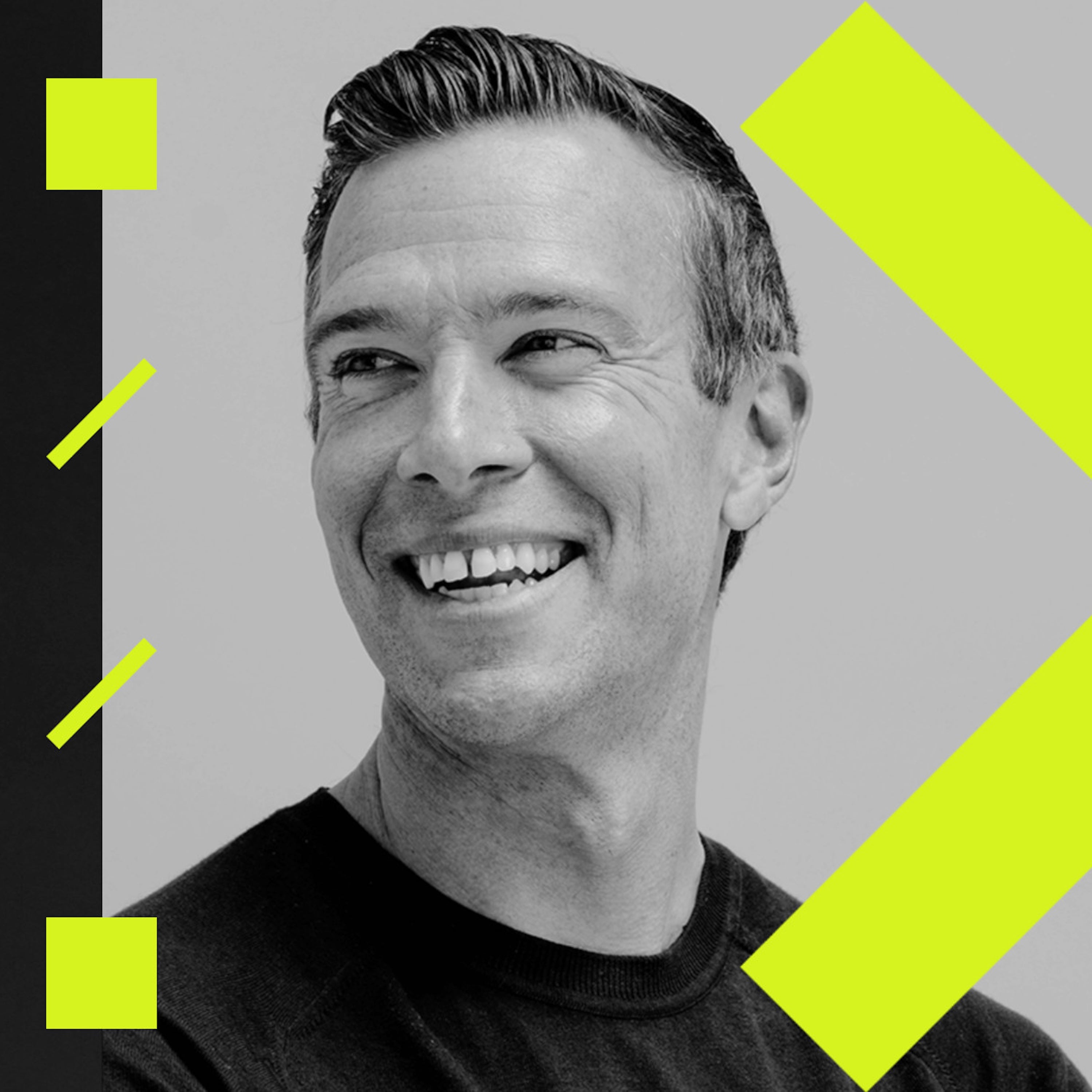
Today, I’m talking with Benn Jordan, musician, YouTuber, researcher, and investigative journalist. In the last couple of years, Benn has become a high-profile face in the creator and media spaces for his work investigating Flock Safety, the maker of automatic license plate readers and the software that powers them.
Benn recently testified in front of Congress at a hearing dedicated to Flock and other ALPR systems. So of course I wanted to dig into all of that with Benn, not just because of his role as a Flock critic, but because he’s also become in some ways the face of a new front in the broader debate about surveillance and privacy.
Links:
Benn Jordan testifies in front of Senate | Benn Jordan (YouTube)
Flock values their privacy. Oh well | Benn Jordan (YouTube)
We Hacked Flock Safety Cameras in under 30 Seconds | Benn Jordan (YouTube)
Lawmakers introduce multiple laws to curb Flock | 404 Media
The fight over Flock and other ALPRs | The Verge
Sanders, AOC, Merkley propose bill to ban Flock cameras | Politico
Cities terminate Flock contracts at record pace in August | Ars Technica
Flock to cut several hundred jobs amid backlash | Reuters
Subscribe to The Verge to access the ad-free version of Decoder!
Credits:
Decoder is a production of The Verge and part of the Vox Media Podcast Network.
Decoder’s producers are Greg Ott, Kate Cox, and Nick Statt. This episode was edited by Ursa Wright. Our editorial director is Kevin McShane.
The Decoder music is by Breakmaster Cylinder.
Learn more about your ad choices. Visit podcastchoices.com/adchoices