In short
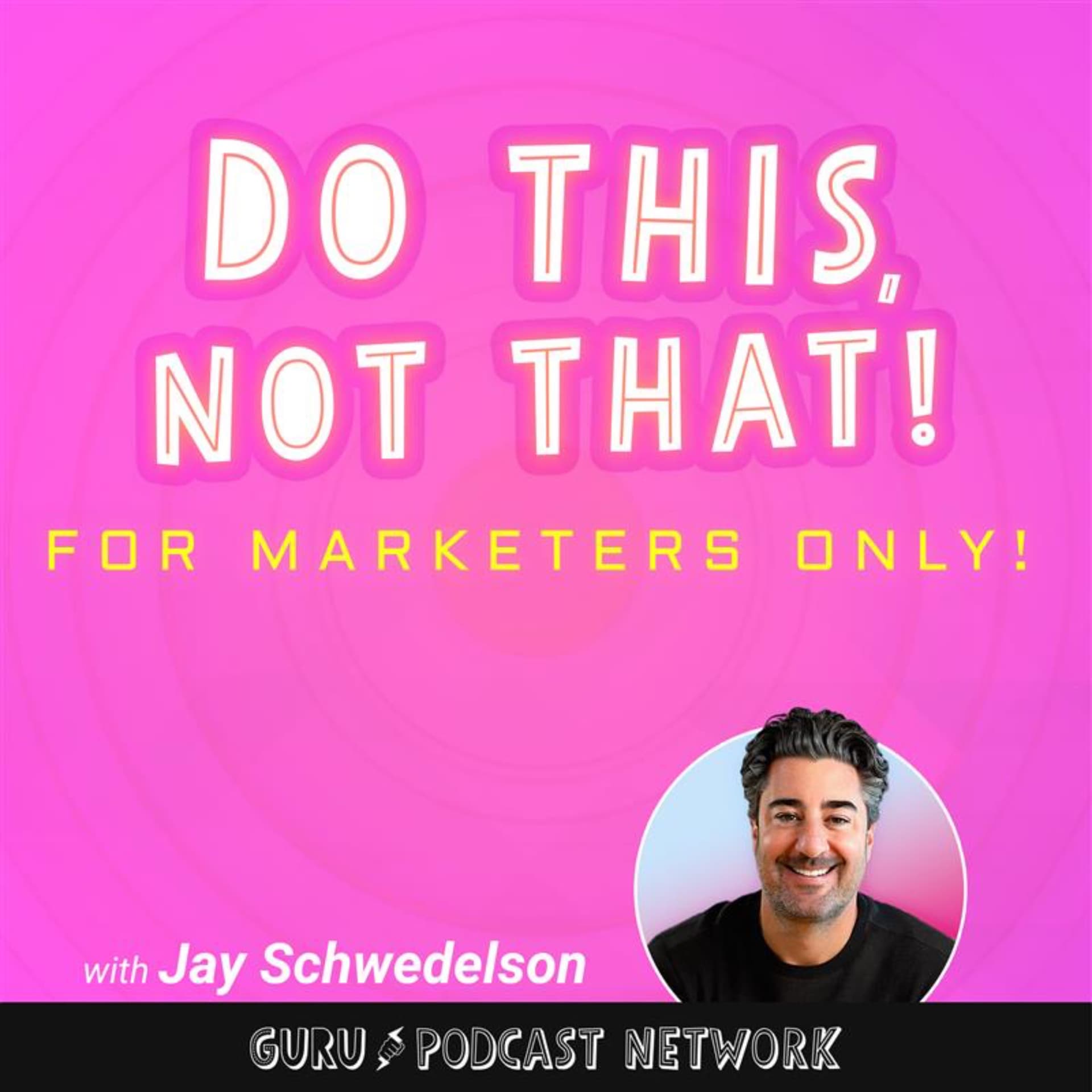
Podcast Episode Summary: Do This, NOT That: Marketing Tips with Jay Schwedelson - Episode 328
Episode Title TARIFF Impact: Use Brain Science Marketing in Uncertain Times 👉 Nancy Harhut’s Shortcut to Double Response 💥
Episode Overview In this episode, host Jay Schwedelson welcomes Nancy Harhut, co-founder of HBT Marketing and bestselling author of *Using Behavioral Science in Marketing*. The discussion centers around leveraging cognitive shortcuts in marketing to enhance response rates, especially during uncertain economic times.
Key Participants
- Jay Schwedelson: Host of the podcast and marketing expert.
- Nancy Harhut: Co-founder of HBT Marketing and author specializing in behavioral science in marketing.
Main Topics Discussed
- Marketing in Uncertain Economic Times
- The current economic climate causes uncertainty among both consumers and businesses, affecting spending decisions.
- Jay and Nancy discuss strategies marketers can employ to navigate this uncertainty.
- Autonomy Bias
- Definition: A psychological principle where individuals have a deep-seated desire to exert control over their environment.
- Application: Marketers can enhance conversions by providing choices rather than a single option.
- Example: Instead of offering one product, provide two or three options to empower decision-making.
- B-Y-A-F Technique
- Acronym: "But You Are Free."
- Effectiveness: Adding this phrase after a request can double the likelihood of compliance by reinforcing the idea that the decision is ultimately up to the consumer.
- Magnitude Encoding
- Explanation: The way prices are displayed affects perception.
- Location on the page (top vs. bottom) influences perceived value; top placement makes prices seem higher.
- Physical Space: The size and space a price occupies can affect how expensive it seems.
- Smaller representations of prices can make them seem less significant.
- Pricing Strategy
- Price Presentation:
- Always list the original price before the sale price, ensuring they are physically spaced apart to create a larger perceived difference.
- Example: Showing a $200 original price followed by a $100 sale price with sufficient space enhances the perception of savings.
- Reciprocity Principle
- When businesses provide favors (e.g., samples), consumers feel compelled to reciprocate by making a purchase or opting for a more expensive option.
Actionable Takeaways
- Provide Choices: Always offer multiple options to empower and engage consumers.
- Use Behavioral Phrases: Implement the B-Y-A-F technique to increase compliance rates.
- Strategic Price Placement: Position prices thoughtfully on marketing materials to manipulate perception.
- Leverage Reciprocity: Use favors to create a sense of obligation in customers.
Conclusion Nancy Harhut's insights into behavioral science provide marketers with innovative strategies to enhance consumer engagement and response rates, particularly during periods of economic uncertainty. By applying these principles responsibly, marketers can improve their outcomes and connect more effectively with their audiences.
Additional Information
- Nancy Harhut's Book: *Using Behavioral Science in Marketing* is recommended for deeper insights into the application of these principles.
- Connect with Nancy: Follow her on social media or visit HBT Marketing's website for more resources and insights.
Resources
- Podcast Links: [Listen on Podcast Platform](#)
- Nancy Harhut's Book: [Purchase on Amazon](#)
- Event Links: [Eventastic](https://www.eventastic.com/Registration), [Guru Conference](http://www.guruconference.com/)
- Social Media:
- [Jay's YouTube Channel](https://www.youtube.com/@schwedelson)
- [Jay's TikTok](https://www.tiktok.com/@schwedelson)
- [Jay's Instagram](https://www.instagram.com/jayschwedelson/)
Written by AI. May contain mistakes. Listen to the episode to check what was said.
Transcript
Automatic transcript. May contain errors.0:08Welcome to Do This Not That, the podcast for marketers. You'll walk away from each episode with actionable tips you can test immediately. You'll hear from the best minds in marketing who will share tactics, quick wins, and pitfalls to avoid. We'll also dig into life, pop culture, and the chaos that is our everyday. I'm Jay Schwetelson. Let's do this, not that.
0:40We are back for Do This, Not That podcast presented by Marigold. And we have one of my favorite human beings on the planet here today. I am so excited. Nancy Harhut is here. If you don't know Nancy, I don't know what's going on with you. She is a co-founder of HPT Marketing. But more than that, she's also a bestselling author. I know a lot of people are bestselling authors, but no. So Nancy has written this book, Using Behavioral Science in Marketing. If you don't have it, you should stop listening. You should go get it. It will change your view about how marketing works, about brain science. After you hear Nancy today, you're like, oh, my God, I don't know anything about how marketing works because there's all this stuff going on that we don't realize.
1:24Okay, so Nancy is going to be here today, and we are going to get into some cool stuff. Nancy, welcome to the podcast. Jay, thank you so much. I am delighted to be here. I love it. All right. So let me ask Nancy to come on for a specific topic. I don't want to just hear about adding$1.99 to your pricing and that's a good idea to trick people that's not$2. No. What I want to talk to Nancy about is we are in uncertain times right now. I'll never talk politics on the show. I don't care about any of that. But no matter what anybody cares about the political stuff, it is uncertain right now. People feel unsure about spending money.
2:01Businesses feel unsure about products inventory, feel unsure about their budgets. There is this unease about the economy and where it's all headed. And in marketing, there's going to be a huge impact. There's an impact already. And there are little things that Nancy can share with us about how we reframe our marketing that can radically change whether you're a business or a consumer marketer, the outcomes. So Nancy, do you agree with that? And what can we be doing? Yeah, no, absolutely. I'm hearing from clients as well as just reading in the media that people are feeling uncertain. They're hitting pause is kind of the phrase that people are using.
2:41They're just not sure because you don't know what's going to happen. Every day, it could be something new. And because you don't have a sense of what's going on, you don't feel comfortable planning. And so you hold back a little bit and you're a little cautious. Although we all need to stay in business. We all need to continue to make money to pay our employees, you know, so we have to figure out how to make that happen. We have to figure out a way forward, even though it's only human to feel a little cautious and a little uncertain right now. But I think there are some things that brands, companies, marketers can do to increase the likelihood that their audience feels more comfortable buying from them, right?
3:18And one thing they can do is tap into something known as autonomy bias. And the way behavioral scientists define autonomy bias, they say that it's this deep-seated desire that humans have to exert some kind of control over themselves and their environment, right? They want to feel like they're in control. And one way to make people feel that they're in control is to give them choices. So The one thing that we can do right now especially, I mean, it's fine to do this always, but one thing that's particularly potent right now is to give people choices. Instead of saying, here's the one product I picked out for you or the one service I'm recommending to you, give them two or possibly three.
4:01Don't give them too many because that's going to overwhelm them, but give them a couple. If you're quoting a job, don't just quote it one way. Say, here's the A version and the B version. right? Give people choices because choices make people feel in charge, right? We feel that if we're presented with choices, we're the one who's choosing from one of those choices. And so as a result, we feel empowered. We feel like we're calling the shots. We don't feel out of control. We don't feel like we're being pushed into doing something that we don't want to. And here's a really interesting add-on to that point.
4:33Behavioral scientists, Jay, have identified something called the B-Y-A-F technique. B-Y-A-F stands for but you are free. And what they found is we can tell people what we want them to do as marketers, right? We can ask them to do it. And then if we follow that request with a phrase like, but you are free to choose or the choice is yours or it's up to you or it's your call, it can actually double the likelihood that people will do what we want them to do. And the reason behavioral scientists have found is because it makes it really top of mind for people that they're not being forced into something.
5:09They are coming to the decision of their own volition. It's their choice. It's their decision. And it sounds a little counterintuitive because you've just kind of sold your heart out, right? You've explained why somebody should do something and now you've asked them to do it. And it almost seems like, why would you then say, but you know what, it's up to you, but it actually works. There's a ton of research on this. And on average, it will double the likelihood that people will want them to do. So you want to give them some choices and you want to use that magic phrase, you know, but it's your choice.
5:38It's up to you. It's your call, you know, just reminding people that they're the ones in charge. I feel like you're like the David Blaine of marketing or whatever, or you should have titled your book like Marketing Voodoo, because now I'm going to get all this marketing stuff, but you're free to choose. I'm like, oh, I can make the choice, but really, the choice has already been made for me. I am getting, I can't believe I'm getting tricked. All right. Well, give me some other David Blaine stuff. With all this uncertainty, is there any other things that marketers can be doing to incorporate that can also do some sort of crazy growth like that?
6:11Absolutely. And it's not really – you're not tricking people. You're just tapping into the way the human brain works. But I want to – I always like to point that out because we want to use these techniques honestly, responsibly, ethically because what we're doing is we're working with the way the human brain works as opposed to fighting that uphill battle of working against it. Wait, we did another session together and I said something was a gimmick in the best possible way. And Nancy then interrupted me and she goes, no, no, no, it's not a gimmick. It wasn't a gimmick. This is like a tactic. It's proven out, whatever.
6:40I always say the wrong. I always like it's a trick. It's a gimmick. And it's like, no, no, no, don't belittle this entire field of marketing science, you big dummy. Anyway, sorry, go ahead. No, it's not. I just wanted to, you know, I mean, their tips, their tricks, their tactics, their techniques, you know. But I think my, you know, the thing that I want to underscore is we should use them for good. And I don't want people to kind of go, I'm fooling people because we're not fooling people. We can't make people do something they don't want to make, but we can make it more likely that they'll do something that they would like to do by working with the human brain.
7:13So in this case, we know people like to feel they have a choice, so let's give them a choice. We're not forcing them to make a choice, but we know that when they have a choice, they're more likely to take advantage of it. The other thing we can do is we can think about our pricing, right? Behavioral scientists talk about something called magnitude encoding effect. This is really interesting. What they found is how we show prices influences how big or small people perceive them to be. So you can have the same price. Something's$100, right? If you show that$100 in the top left of your screen or your page, it just feels like a higher number than that same$100 positioned in the lower left of the page of the screen where it simply feels like a lower number.
7:58It's the same$100, but where it is on the page, how high or low it appears on the page, influences how high or low we think it is. That is crazy. Wait a minute, wait a minute. So if you see a price on the top right-hand corner, and another A-B test of that, another one had the bottom left corner, like a scroll down, you're saying it feels more expensive on the bottom? No, and it feels more expensive on the top. Okay. It feels like a higher price when it's at the top. It feels like a lower price, that same$100 lower on the screen. Wow. I know. It's amazing. And these are, you know, they're small differences.
8:37But as people kind of are cruising along on autopilot, which we often are doing, not always, but we often are, it just, you know, behavioral scientists have found that if it's higher on the screen, it just, we just think of it, it feels like a higher price. When it's lower, it feels lower. The same thing can be said for just the amount of physical space a price takes up. So again, let's stick with the$100 example. You could show a$100 price as$100, decimal point, 00. That's$100. Or you could say, you know, you could show$100. That's also$100. Or you could make your$100 sign about half the size of your numerals.
9:17So half size dollar sign and then 100. So each of those takes up progressively less physical space on the page. Because you got rid of the decimal point in the two zeros that you showed the first time, it makes that$100 look smaller the second time we show it because there's no decimal point in two zeros taking up more space. What researchers have found is the less physical space a price takes up, the smaller we think it is. We kind of equate the physical space to the monetary value. So if you're taking up less space, you seem like a smaller price than if you're taking up more space. So when you want to position your prices, you don't necessarily have to change your prices.
9:58You don't have to lower them. But when you're showing them, you want to show them in such a way that they look smaller. When you're talking about your competitors' prices, you want to reference those in such a way that they look bigger. If you're going to have a sale, you always want your original price on the left and your sales price to the right. But the further apart they are physically, the further apart they seem monetarily. So again, maybe it was$200 and now it's$100. So you say$200, dot, dot, dot, now$100. Or you could say$200, dot, dot, dot, dot, dot, dot, now$100. The further apart they are on that horizontal plane, right, the further apart they seem from a monetary perspective.
10:40So it's just interesting, you know, these reactions that we have to the position and the space that a price takes up. So without even changing your prices, you can influence how people perceive them. And if you are going to have a sale, you can maximize the impact of that sale by putting the two prices a little bit further apart than normally, by always making sure that you lead with the original and follow with the sales price as opposed to leading with the sales price and then saying, oh, by the way, it used to be this. All right. I've always wanted to know something. So when you are out in the world, you're just being regular Nancy.
11:19Okay. You open up a menu. You see an ad on TV, whatever. are you able to function like a regular human or are you constantly analyzing, oh, they're using the blah, blah, blah technique from 1642? Like, are you able to be a regular human or do you only see brain science when you're out in the world? It's funny. So the answer is yes and no, honestly. So a lot of times I do notice it because, you know, I love this. This is what I do. You know, I do it for my clients. I've written a book on it. You know, so I like this. And so I'm often on the lookout for examples, you know, out in the real world.
11:55So I can say, oh, there's someone who's doing it. I can write about it. I can show it in my presentations, you know, but that doesn't mean I'm immune to it because, you know, I'm a person just like everyone else is. And for the most part, we cruise along on autopilot. And so there are times when I'll, you know, at the end of the day go, I know I bought that, you know, but in the moment I, you know, I bought it. I sat down at a bar once. I wanted a glass of wine. I look at the wine list and the wines were, you know, they all looked good, but they didn't look like anything I'd had before. I didn't recognize any of them.
12:26So I kind of glanced at it and I said to the bartender, I want a red. I want something that's, you know, got a little leather, a lot of, you know, tannin to it. And he says, oh, OK, great. I recommend, you know, blah, blah, blah. And so I took a quick look and it was the most expensive glass of wine on the wine by glass, you know. So I said, listen, something to myself, I don't know if I'd spend that on a bottle, you know. I'm not going to buy a glass. So I said, that looks a little expensive. What else would you recommend? I was just honest with him. And he said, oh, okay, no problem. And he said, then I would recommend this other one.
12:54I said, I'll have that. So he comes back and he gives me a taste of each of them. I did not ask for a taste of each of them, but he comes back with two glasses, a little bit in each, and I taste them both. And they both tasted good, but it's true that the more expensive one did taste a little better. And I thought to myself, well, you know, Nancy, you are on vacation and you know what? You can splurge, you know, treat yourself. You deserve it. You've earned it. And I ordered the more expensive glass and I enjoyed it. And I got back to my hotel room that night and I was like, oh my God, I know exactly what happened.
13:25Behavioral scientists talk about something called the reciprocity principle, where when somebody does a favor for you, whether or not you ask for it, but when they do a favor for you, when they give you something, you feel compelled to return the favor. You feel obliged to reciprocate. He brought the two tastes. I didn't ask for them. Now I felt like, ah, you know what? I should buy the more expensive wine, give them a better tip. And that's exactly what I did. And in the moment, I told myself I was doing it because I deserved it. I was on vacation. When I got back that night and thought about it, I'm like, I see exactly what happened.
13:55So that was a long answer to your question. But yes, sometimes I see it. Sometimes I don't see it right away. You're like a real person, like the rest of us. You take off your superhero costume. All right. So everybody, listen, I'm not just saying this. I'm going to put in the show notes. But if you don't have Using Behavioral Science and Marketing, Nancy's book, it is the only book you should ever read. This is it. This is the one book. If you're illiterate, figure out how to read. Read this book. It's amazing. Also, Nancy is going to be speaking at Eventastic, which is the world's largest event about events.
14:26It's virtual and free. Eventastic.com. She can be talking about all things related to events and behavioral science. Nancy, though, but beyond that, how do people find you? How do they follow you? What can they do? Thank you very much for those kind words about the book. I really, really appreciate it. And for the kind words about me. You can find me on the socials. I'm on Twitter X, Blue Sky. You know, I'm on Facebook. I'm on LinkedIn. You can find me at HPT Marketing, which is the company that I co-founded. It's hbtmktg.com. We kind of abbreviate marketing on our website and our URL. But HPT Marketing, and you can contact me there.
15:05You can also find some interviews and some articles and lots of these great tips and tactics and tricks about behavioral science. And I'd love to hear from any of your listeners. You know, connect with me on social or pop me an email because email is great. And, you know, maybe we can answer some questions or share some ideas or get some work done. So absolutely. And the book, the book is available online. Kogan Page is a publisher. Amazon, Barnes & Noble, Target. Recently, it debuted in Japan, and it's about to come out in Chinese. Oh, konnichiwa. Amazing. That's amazing. I will not be buying those versions, but I love hearing that.
15:48And also follow Nancy on LinkedIn. She's my favorite follow on LinkedIn. It's Nancy Harhut, H-A-R-H-U-T. And I find her there. Nancy, thanks. As always, you're the best. Thank you. It's been a blast, Jay. You did it. You made it to the end. Nice. But the party's not over. Subscribe to make sure you get the latest episode each week for more actionable tips and a little chaos from today's top marketers. And hook us up with a five-star review if this wasn't the worst podcast of all time. Lastly, if you want access to the best virtual marketing events that are also 100 % free, visit guru events.com so you can hear from the world's top marketers like Damon John Martha Stewart and me guru events.com check it out
From the publisher
In this episode of Do This, Not That, host Jay Schwedelson welcomes Nancy Harhut, co‑founder of HBT Marketing and bestselling author of Using Behavioral Science in Marketing. Nancy unpacks cognitive shortcuts—like autonomy bias and magnitude encoding—that marketers can leverage to lift response rates even in shaky economic times.
====================================
Best Moments:
(00:40) Introduction of behavioral‑science expert Nancy Harhut
(01:50) Marketing during uncertain economic times
(03:25) Autonomy bias—why giving choices boosts conversions
(04:39) BYAF (“But You Are Free”) technique can double response
(07:27) Magnitude encoding: how price positioning shapes perception
(09:20) Physical space the price takes up influences value perception
(10:18) Correct placement of original vs. sale prices for max impact
(13:24) The reciprocity principle—favors that compel customers to repay
(14:35) Where to connect with Nancy and grab her book
=================================================
Check out our 100% FREE + VIRTUAL EVENTS! ->
EVENTASTIC - The worlds LARGEST event about EVENTS! June 5-6 2025
Register HERE: https://www.eventastic.com/Registration
Guru Conference - The World's Largest Virtual EMAIL MARKETING Conference - Nov 6-7!
Register here: www.GuruConference.com
=================================================
Check out Jay’s YOUTUBE Channel: https://www.youtube.com/@schwedelson
Check out Jay’s TIKTOK: https://www.tiktok.com/@schwedelson
Check Out Jay's INSTAGRAM: https://www.instagram.com/jayschwedelson/
=================================================
AND don’t miss out on this awesome FREE upcoming Quick Hit!
Marigold: Should I Switch Email Platforms? 5 Truths & Myths!
May 30th 11am – 12pm ET.
Register HERE: https://www.linkedin.com/events/7325947932031991808/comments/
=================================================
MASSIVE thank you to our Sponsor, Marigold!!
Email chaos across campuses, branches, or chapters? Emma by Marigold lets HQ keep control while local teams send on-brand, on-time messages with ease.
Podcast & GURU listeners: 50 % off your first 3 months with an annual plan (new customers, 10 k-contact minimum, terms apply).
Claim your offer now at jayschwedelson.com/emma.