In short
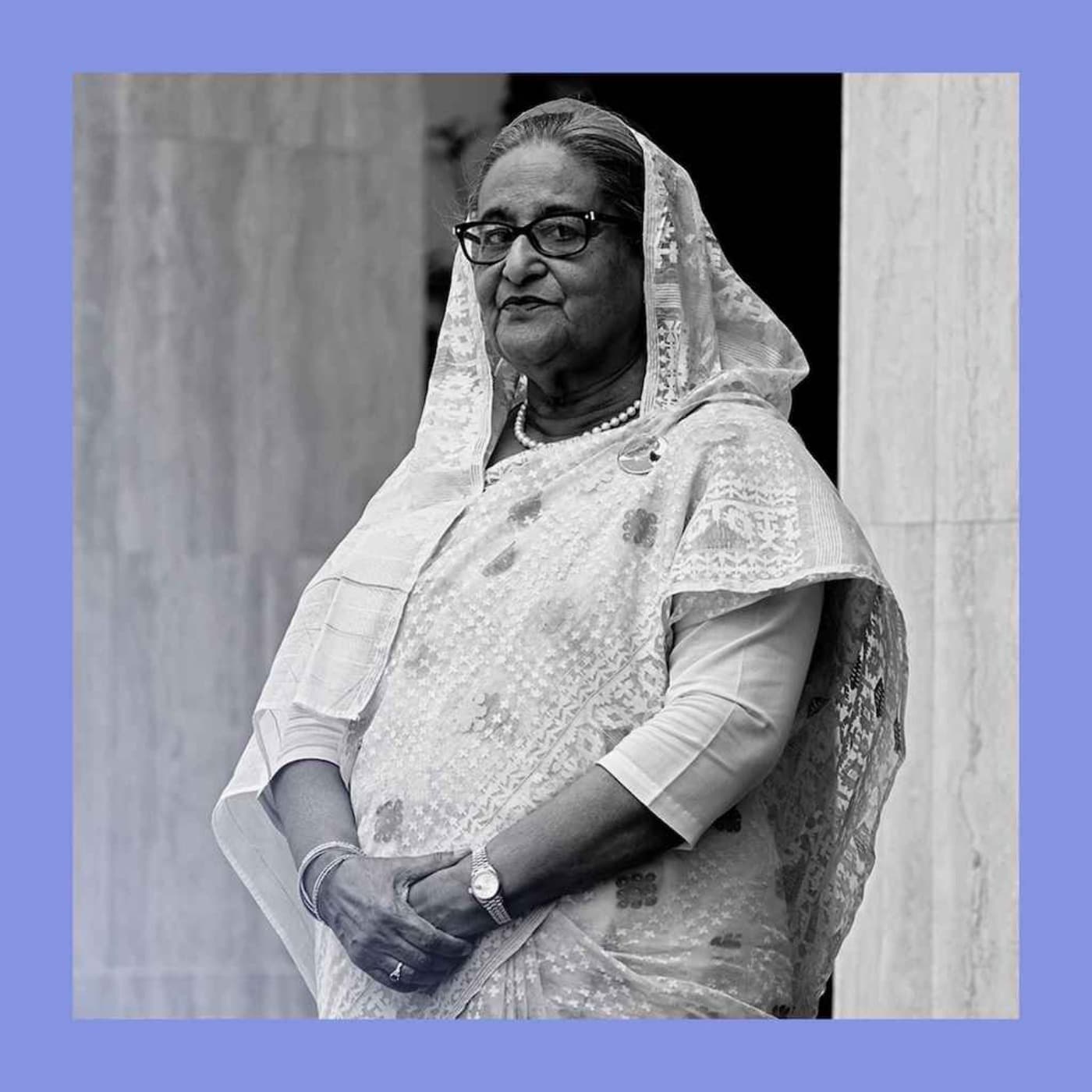
The episode is a three-part Economist “Intelligence” roundup. First, Asia correspondent Vishnu Padmanabhan reports on Bangladesh after Sheikh Hasina: she was found guilty of crimes against humanity and sentenced to death by the International Crimes Tribunal in absentia in India, with evidence including phone conversations and video. The unrest followed a 30% government-job quota for freedom-fighters’ children; about 1,400 protesters were killed in the crackdown. Reactions are broadly positive among many, but Amnesty and rights groups criticize due process; Hasina’s Awami League calls it politically motivated. Key next steps: possible extradition from India, February elections, and whether the interim government’s July Charter reforms pass. Second segment: Annie Crable explains US furniture reshoring pressures from Trump tariffs, housing slowdown, labor shortages, and why many firms keep importing (e.g., shifting production to Vietnam). Third: Lane Green reviews Danny Bate’s “Why Q Needs You,” tracing alphabet history and the Great Vowel Shift.
Guests
Vishnu Padmanabhan (Asia correspondent), Annie Crable (news editor), Lane Green (senior digital editor/language guru).
Written by AI. May contain mistakes. Listen to the episode to check what was said.
Chapters
Tap a time to open that second in VOSheikh Hasina's Conviction
1:36 to 2:30
Overview of Sheikh Hasina's death penalty verdict and its implications.
“Donald Trump thinks America should start making chairs again.”
Background of the Protests
2:30 to 4:36
Explanation of the protests that led to Hasina's downfall.
“was found guilty of crimes against humanity and handed the death penalty.”
Public Reaction to the Verdict
4:36 to 5:43
Discussion of the mixed reactions in Bangladesh to Hasina's verdict.
“military weapons in a sort of a systematic targeting of unarmed civilians.”
Controversy of the Trial
5:43 to 6:32
Examination of the trial's fairness and international perspectives.
“and it has called for a national shutdown to protest against the verdict.”
Future of Bangladesh's Politics
6:32 to 8:00
Speculation on the political future of Bangladesh post-verdict.
“This is such a political moment, Vishnu.”
India-Bangladesh Relations
8:00 to 8:54
Analysis of how Hasina's extradition could impact relations with India.
“that will really strengthen Bangladesh's democracy.”
India-Bangladesh Relations
10:12 to 10:28
Analysis of how Hasina's extradition could impact relations with India.
“with your first AG1 subscription, an$82 value.”
Furniture Industry Challenges
10:28 to 14:01
Exploration of the challenges facing the American furniture industry.
“and I can see now why they call it the furniture capital of the world.”
The Challenges of the US Furniture Industry
14:01 to 16:53
Learn about the impact of tariffs and labor shortages on the US furniture industry.
“So they're seeing their costs go up, whether it's from these industry-specific tariffs or country-level tariffs, their business has already been harmed.”
The Importance of Language and the Alphabet
16:54 to 17:17
Explore how we take the alphabet for granted and its historical significance.
Show all 12 chapters
The Evolution of the English Alphabet
17:18 to 21:02
Discover the fascinating journey of the English alphabet and its development.
“It can be easy to take the alphabet for granted.”
The Evolution of the English Alphabet
21:03 to 21:44
Discover the fascinating journey of the English alphabet and its development.
“That's it for this episode of The Intelligence.”
Transcript
Automatic transcript. May contain errors.0:00With no fees or minimums on checking accounts, it's no wonder the Capital One Bank Guy is so passionate about banking with Capital One. If he were here, he wouldn't just tell you about no fees or minimums. He'd also talk about how most Capital One cafes are open seven days a week to assist with your banking needs. Yep, even on weekends, it's pretty much all he talks about. In a good way. What's in your wallet? Terms apply. See CapitalOne.com slash bank. Capital One N.A. member FDIC.
0:32This Economist podcast is sponsored by Bill. the intelligent finance platform that helps businesses and accounting firms scale with proven results. With AI-powered automation, Bill isn't just moving money. They're simplifying financial operations for nearly half a million customers. Bill has securely processed over a trillion dollars in transactions. That's proven infrastructure. Ready to talk with an expert? Visit bill.com slash proven and get a$150 gift card as a thank you. That's bill.com slash proven. Terms and conditions apply. See offer page for details.
1:09The Economist
1:16Hello and welcome to The Intelligence from The Economist. I'm your host, Rosie Bloor. Every weekday we provide a fresh perspective on the events shaping your world.
1:31America used to manufacture a lot of things, including furniture. Most of that has moved offshore. But guess what? Donald Trump thinks America should start making chairs again. After all, the US is the seat of power. And we learn our ABCs extremely young. But why is the alphabet in the order we know it? Our correspondent takes us on a whistle-stop tour of history, language and something known as the Great Vowel Shift.
2:09But first...
2:16We have decided to inflict her with only one sentence, that is sentence of death. Yesterday, Sheikh Hasina, Bangladesh's former prime minister, was found guilty of crimes against humanity and handed the death penalty. Vishnu Padmanabhan is our Asia correspondent. She was tried in Amsatia because she had fled to India last year after massive protest brought down a government. Some of her supporters were angry by the verdict and took to the streets. But many others celebrated the ruling. In fact, police in Dhaka had to use tear gas to disperse protesters who had gathered at Sheikh Hasina's family home, hoping to raise it down.
3:04Today, the situation remains tense. Whether Sheikh Hasina will be extradited to Bangladesh from India remains unclear. But regardless, the ruling could reshape the country's political future as it heads towards elections in early February next year. Okay, so let's start with a bit of a recap. Remind us what happened last year. Sure. So before last year, Sheikh Hasina had been in power in Bangladesh for 15 years, but was ruling the country increasingly in an authoritarian way. And so she wasn't popular. But what triggered unrest and protests across the country last year was when the Supreme Court implemented a 30 % quota in government jobs for the children of freedom fighters who had fought in Bangladesh's War of Liberation in 1971.
3:50And they were mostly supporters of the Awami League, the party to which Sheikh Hasina belongs. So this decision sparked huge protests across the country, and especially in Dhaka, the capital. But things really escalated when the government led by Sheikh Hasina clamped down on these protest. So around 1 ,400 protesters were killed by police and armed forces. More than 20 ,000 people were injured. Many were permanently disabled. And what's she now been found guilty of? So she's been found guilty of various crimes against humanity, all of which she has denied. And specifically, this court presented evidence based on phone conversations and video footage to show that Sheikh Hasina was guilty of ordering the deployment of lethal force during these protests last year.
4:33She was claimed to have directed the use of drones, helicopters and military weapons in a sort of a systematic targeting of unarmed civilians. And the verdict also said that unless Sheikh Hasina surrenders and returns to Bangladesh and is arrested within 30 days of this judgment, she cannot appeal the verdict. And how has that verdict gone down in Bangladesh? Well, on the whole, it's been received quite positively. Sheikh Hasina wasn't popular at all. And for the interim government, which replaced the Awami League last year, the verdict fulfills a key promise it made. It would rebuild the country and bring justice against the perpetrators of the assaults that happened during the protests last year.
5:08So the interim government has called the ruling and verdict historic, but it's also urged citizens to stay calm and avoid any violence and said that anyone that attempts to sort of create disorder would face strict punishment. But among other political parties, the reaction has also been very positive. The Bangladesh Nationalist Party, which is the main opposition to the Awami League, welcomed the verdict. and it said it marks the end of all forms of dictatorship in Bangladesh. But the Avami League itself, Sheikh Hasina's party, claimed that the verdict was politically motivated and it has rejected the rulings and said the trial was not fair and it has called for a national shutdown to protest against the verdict.
5:46And was it a fair trial? So interestingly, the trial was conducted by International Crimes Tribunal, which was a court originally set up in 2009 by Sheikh Hasina's own government to try war criminals during the 1971 war of liberation in Bangladesh. But the tribunal has always been controversial ever since it's been established. Rights groups and legal experts have argued that it lacks due process in previous trials. There haven't been sufficient defense witnesses. And so it has always been a controversial court. And some critics say that those criticisms still hold for this trial as well. The chief prosecutor insists that the tribunal meets international standards and the trial has been fair.
6:23But for example, Amnesty International has released a statement condemning the verdict of the debt penalty and has raised concern about how the trial was conducted. This is such a political moment, Vishnu. What happens next for Bangladesh? The big uncertainty is what happens to, I think, Sheikh Hasina and her party, the Awami League. The Awami League may be banned, but it still enjoys significant support. A recent survey by Innovation, a local consultancy in Bangladesh, found that among people who are willing to reveal who they vote for, around 20 % would still choose the Avami League in upcoming elections.
6:55So it is unclear how this support base is going to react to this verdict. So Dhaka was already on edge yesterday, and police are still out in force. And even over the past year, Bangladesh has remained volatile and prone to burst of violence under the interim government. And then looking further ahead, there's the big question is also what happens in the election, which is due to take place in early February. The favorites right now, according to polling data, is the Bangladesh Nationalist Party. But as I said earlier, Awami League still enjoys some support, but they're banned and they cannot contest these elections.
7:25And then the other sort of longer term question for Bangladesh's future and the health of its democracy is what happens to the July Charter, which is a sort of a reform blueprint produced by this interim government in which they've outlined several reforms to strengthen Bangladesh's democracy, like by giving the judiciary more independence, imposing a limit on the prime minister's terms, increasing women's representation. And so now that charter is also going to be put up to vote during this election in early February 2026. And it remains to be seen whether the charter will be accepted by the people.
7:56But that's also a really important question on whether these reforms will take place that will really strengthen Bangladesh's democracy. And as you said, Sheikh Hasina is in India. She's not in Bangladesh. So presumably this is a pretty big test of India-Bangladesh relations. I mean, relations haven't been great. So Bangladesh, after the verdict, has requested India to extradite Sheikh Hasina. And there is a treaty between the two countries, but it's unclear whether India will cede to Bangladesh's request. So far, India's foreign ministry has said it has noted the verdict, but it has reiterated the support for peace, democracy and stability in Bangladesh, but has not yet committed to any extradition.
8:35And I think the big question is what happens after the election, when the next government comes in, and whether it pushes hard for Sheikh Hasina's extradition. And that would really increase pressure on India if a democratically elected government in Bangladesh is asking for Sheikh Hasina's extradition. And that would really add pressure and strain to the relationship with Bangladesh. Vishnu, thank you very much for talking to me. Thanks for having me, Rosie.
9:08This Economist podcast is sponsored by Bill, the intelligent finance platform that helps businesses and accounting firms scale with proven results. With AI-powered automation, Bill isn't just moving money. They're simplifying financial operations for nearly half a million customers. Bill has securely processed over a trillion dollars in transactions. That's proven infrastructure. Ready to talk with an expert? Visit bill.com slash proven and get a$150 gift card as a thank you. That's bill.com slash proven. Terms and conditions apply. See offer page for details. Summer can throw off even the best routines, but AG1 makes it easy to keep one healthy habit consistent.
9:48AG1 is a daily health drink that combines a multivitamin, pre and probiotics, superfoods and antioxidants in one scoop mixed with eight ounces of water. From late nights to long weekends and everything in between. AG1 offers a simple way to add consistent nutritional support to your day, wherever the morning begins. Visit drinkag1.com slash theintelligence to get a free morning person hat and a free AG1 sampler in your welcome kit with your first AG1 subscription, an$82 value. That's drinkag1.com slash theintelligence.
10:28I'm at the High Point Furniture Market. and I can see now why they call it the furniture capital of the world. Annie Crable is a news editor at The Economist. All the real estate in this whole town is given over to these showrooms. This town feels, you know, everything is freshly painted. It feels nice, but these are showrooms by appointment. I just walked by a theater. They kept some of the kind of architectural bits, the staircase, the railings, the production room. But it's not over to the public just for these two markets every year.
11:10High Points Market in North Carolina is one of the biggest furniture fairs in the world. Recently, I joined 75 ,000 wholesalers, retailers, and designers to see what it was like. But North Carolina is no longer the furniture-making powerhouse it once was. In the 1990s, the industry employed 90 ,000 people in the state. Then at the start of this century, Chinese imports began flooding the American market. Then came the Great Recession. So now that number is just 28 ,000. So Annie, what's happened? Why has the seat fallen out of the chair and other furniture markets? So it's kind of a weird time for the furniture industry in America.
11:53A huge boom during COVID when everyone was cooped up in their houses and staring at their own furniture. But since then, demand has fallen. Furniture, as the people in the industry explained it to me, is a cyclical business. So it's really tied to building houses. You build a house and you want to buy a nice sectional for it. The latest data from August shows that housing starts, which is new construction on houses, are at a two-year low in America amid high interest rates. Plus, you have inflation. So rising furniture prices are already putting off would-be customers. Now, Donald Trump is trying to use tariffs to return American furniture to better days.
12:39But his move could actually make things worse. So explain how tariffs will affect things. Trump is trying to, he says, protect and restore America's domestic furniture industry by making imports more expensive. So just before High Point's market in October, he imposed tariffs on upholstered wooden furniture, vanities and kitchen cabinets. And then those rates will go even higher in January. So in theory, these levies give American manufacturers a leg up. And some people are well-positioned and they're happy about these tariffs. I spoke to Gat Caperton. He has a small factory in West Virginia. He harvests his wood locally and he builds custom furniture there.
13:28We're going to try to really do what we do and continue to do it well. And I think a lot of the industry is a wholesale change. It will take time. I really hope it happens. You know, we could double what we do in a couple of years. we could double it again. That's a lot of business. For a town like Berkeley Springs to have a factory be able to double in their employment, that's a home run. But then there are many others who are not happy at all with the rising costs of imported materials. I spoke to some people who already have domestic business. They manufacture in North Carolina even, and they still import wooden sofa legs, fabrics.
14:04So they're seeing their costs go up, whether it's from these industry-specific tariffs or country-level tariffs, their business has already been harmed. And then, of course, the across-the-board complaint is the uncertainty that Trump's ever-changing, chaotic tariff strategy is imposing. So it's making it hard for the industry to plan, to make decisions. I was talking to buyers at the High Point Market who said that they were being quoted prices that would only hold for a couple of days. Presumably, it's not just about materials or even price. It's also about the furniture makers. Does America have those?
14:42That's where a lot of the skepticism that you see from the industry is about this kind of reshoring effort. So most of the people I spoke to said, you just don't have enough trained workers in America. You don't have the people who can or want to do this kind of work. I met a guy named Simon Lichtenberg. He is a Beijing-based retailer. He sells his furniture in the United States at stores like Costco and online at Wayfair. And he said that he moved his production from China, which has really been hit with really steep tariffs by Trump, to Vietnam. But he has no plans to actually move that manufacturing business over to the United States, he still sees the business of importing as a better solution.
15:34First of all, you can't find people to do it. And you also can't find the skills. So even at 30%, 50%, Asia is still a better deal for the rich. So it's not really realistic to expect the furniture industry then to move back to the US at all? Not entirely. I mean, it depends on what you're looking for. So there still is furniture made in America, but it's largely high-end and custom furniture, not the kind of mass production, cheaper stuff that someone would use to furnish their first apartment, for example. And people are thinking about how to adapt in the United States. I spoke to someone named Stuart Kent.
16:14He runs a local woodworking program called the North Carolina Furniture School. He thinks that the kind of narrative around furniture making as a low-skilled business needs to change. He trains his students, for example, in computer-assisted design. And he thinks that the future of the industry is smaller, more efficient factories with high-skilled workers. He thinks it's totally naive to think that we're just going to go back to the days of 1998 when North Carolina's furniture industry was booming. And it's that sort of vision, and not these blunt tariffs that could keep High Point's market thriving.
16:52Annie, thank you very much. Thank you, Rosie.
17:18It can be easy to take the alphabet for granted. Lane Green is a senior digital editor at The Economist and our in-house language and style guru. As children, we memorize it before really knowing why it matters. Then, before we know it, we're getting familiar with the sounds of different letters and we're reading for ourselves. Many never again really wonder why the alphabet is organized in the order that it is. They never think about the different sounds the letters C or G can make, or why the letter H lacks the very H sound in its name, H. A new book by Danny Bate called Why Q Needs You answers these questions about the alphabet and many more.
18:02Each of the 26 letters gets its own chapter, but the book is also a kind of biography of the English language and even an intro to linguistic science, all told in entertaining short stories.
18:20The Egyptians invented a complex writing system where symbols stood for whole words or parts of words or grammatical categories. The Phoenicians then stripped this down conceptually so that one symbol would stand for just one sound, and they simplified it graphically by, for example, turning an ox's head into a very simple line drawing. The Greeks then modified these symbols further and they added vowel sounds. The Etruscans then nabbed that Greek invention for their own language in northern Italy, and their southern neighbors borrowed that and adapted it so successfully that thousands of years later, these squiggles are still called the Roman or the Latin alphabet.
19:01that.
19:06So how and why did English deviate from this sensible principle of one sound per letter? Well, Danny Bate tells this story letter by letter. For example, medieval scribes added the letter B to words like debt and doubt to reflect the Latin etymology of those words. It was never actually pronounced in English. The so-called great vowel shift, which roughly spans the time of Chaucer to that of Shakespeare, changed all of the long vowels until the letters represented quite different sounds to their continental equivalents. This is how the letter A went from representing A, as it was in Old English and still is in almost every continental language, to having the sound A as in the word name.
19:55The soft G and C sounds were the result of sounds like A and E, bringing the tongue high and forward, which gradually weakened the preceding consonant.
20:11And to the point addressed in the book's title, Why Q Needs You, well, it starts with the Phoenicians who had a letter that was used only before O and U sounds, and it was pronounced in the back of the mouth as those vowels are. Well, the Greeks had an archaic letter called kapa that they also used only before O and U. And that's why the Romans used Q before their letter U, as in words like quad. Well, in Old English, there was no need for a Q-U, so the female monarch was someone called a quain, written C-W-E-N. But when the Normans came and conquered Britain, they didn't like that habit very much, and so they brought their own Latin-derived habit of writing Q before U, giving us the modern Q-U-E-E-N, Queen.
20:58And you can read Lane's review of Why Q Needs You by Danny Bate in The Economist's Culture section.
21:24That's it for this episode of The Intelligence. We'll see you back here tomorrow.
21:44This Economist podcast is sponsored by Bill, the intelligent finance platform that helps businesses and accounting firms scale with proven results. With AI-powered automation, Bill isn't just moving money. They're simplifying financial operations for nearly half a million customers. Bill has securely processed over a trillion dollars in transactions. That's proven infrastructure. Ready to talk with an expert? Visit bill.com slash proven and get a$150 gift card as a thank you. That's bill.com slash proven. Terms and conditions apply. See offer page for details. With no fees or minimums on checking accounts, it's no wonder the Capital One bank guy is so passionate about banking with Capital One.
22:27If he were here, he wouldn't just tell you about no fees or minimums. He'd also talk about how most Capital One cafes are open seven days a week to assist with your banking needs. Yep, even on weekends, it's pretty much all he talks about. In a good way. What's in your wallet? Terms apply. See CapitalOne.com slash bank. Capital One N.A. Member FDIC.
From the publisher
Sheikh Hasina, Bangladesh’s former prime minister, has been sentenced to death for crimes against humanity. The country is at a pivotal moment as it heads towards parliamentary elections next year. Donald Trump hopes tariffs will return furniture making to America. And why English speakers use their alphabet so oddly.
Listen to what matters most, from global politics and business to science and technology—Subscribe to Economist Podcasts+
For more information about how to access Economist Podcasts+, please visit our FAQs page or watch our video explaining how to link your account.
Hosted on Acast. See acast.com/privacy for more information.