 Ask ChatGPT
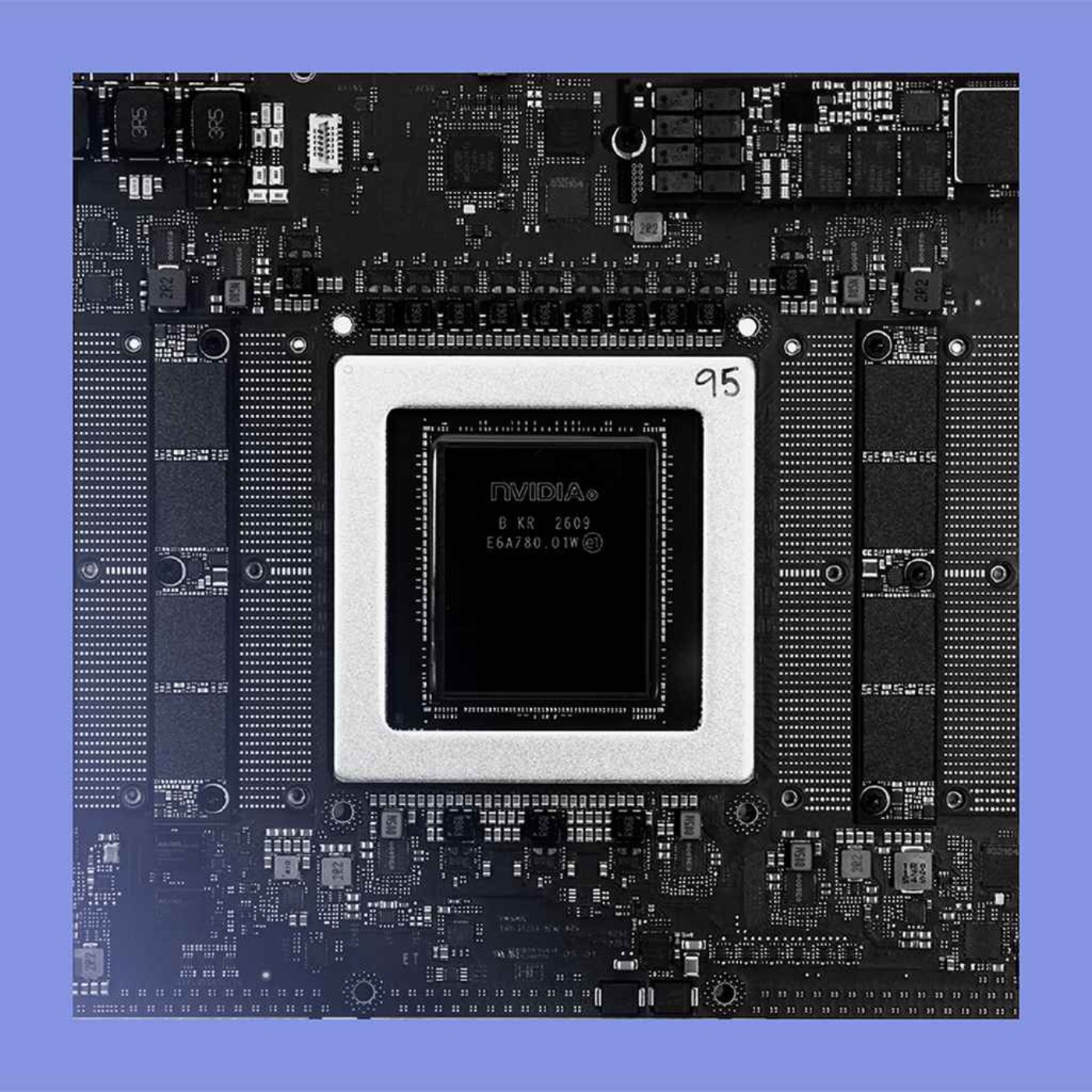

The episode of The Intelligence from The Economist covers three topics. First, Anthropic’s expected IPO: it’s projected to raise about $81 billion and value the company around $1.5 trillion, potentially ahead of OpenAI’s $1.25 trillion private valuation.
Anthropic’s strategy is more focused on business use cases (e.g., Cloud Code driving “token maxing” among engineers), while OpenAI pursues both enterprise and consumers (ChatGPT ads/subscriptions, plus robotics and a smart speaker).
Goldman Sachs forecasts $53B revenue for Anthropic vs $35B for OpenAI; OpenAI’s Codex growth is cited as catching up.
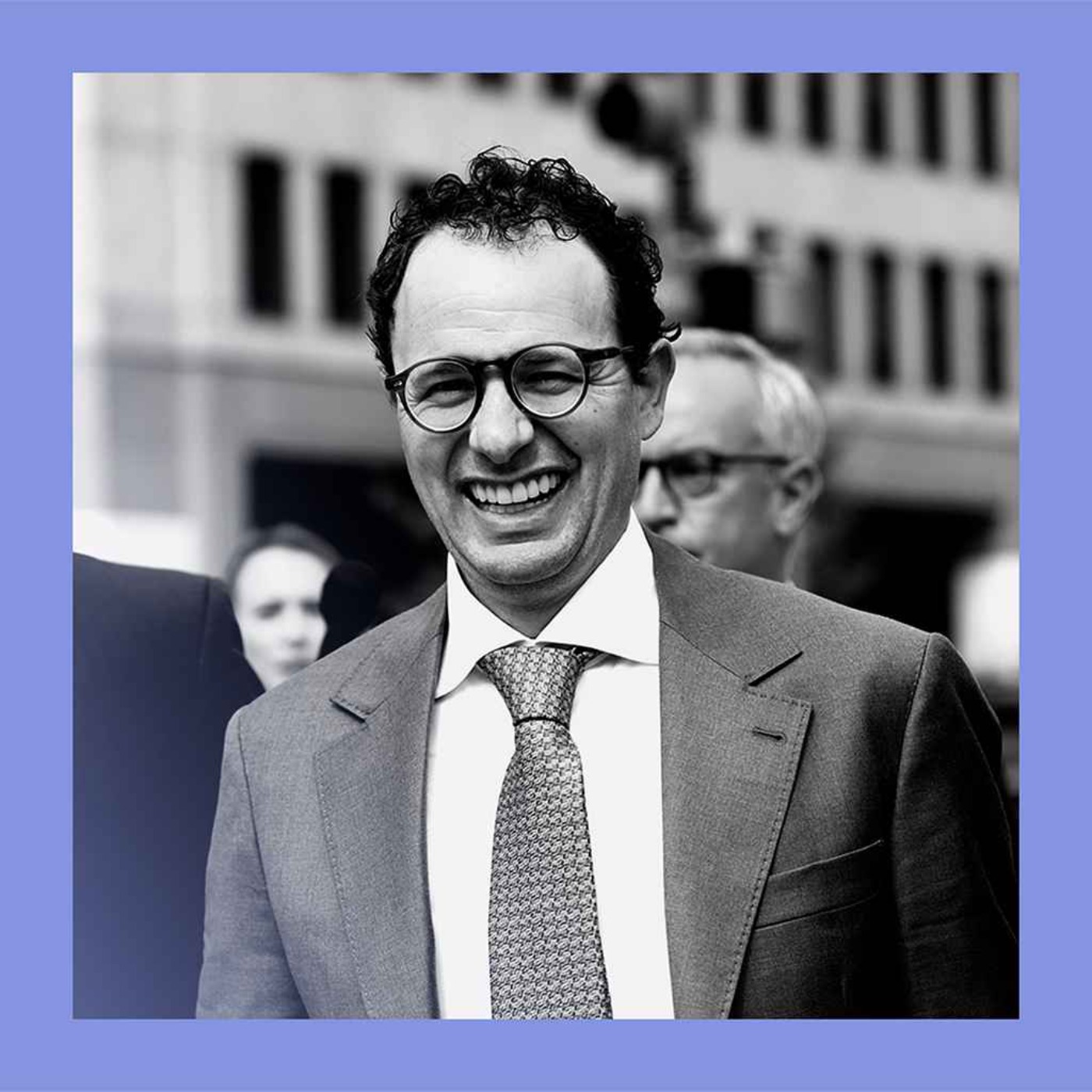
Miles Krupa, The Economist technology correspondent.
Second, a critical minerals “race” between the US and China: China controls key tungsten supply; Trump-era tariffs spur overseas mining. Examples: DRC (copper/cobalt/lithium investment), Brazil’s Serra Verde complex, Kazakhstan’s KazCove tungsten project.
Kerrion Richmond-Jones, The Economist international economics correspondent.
key claim is that health effects are weaker than assumed; amylose content and processing (e.g., parboiling) matter more than color.
Benjamin Sutherland, The Economist science writer.
Written by AI. May contain mistakes.
Discussion of a significant moment from the Insider segment related to global politics.
“It's happy to collaborate with these things and it has very pragmatic and not at all morally squeamish leaders.”
Introductory remarks by the host and outline of major topics to be covered.
“Read the report to learn more about this trust gap and the crucial actions needed to close it.”
Discussion on Anthropic's upcoming IPO and its implications in the AI market.
“Hello and welcome to The Intelligence from The Economist.”
Exploration of the competitive landscape between Anthropic and OpenAI.
“but so is the level of investment that's needed to stay ahead in the AI race.”
Analysis of revenue expectations and market positioning of Anthropic and OpenAI.
“They pursue frontier AI research and try to turn that into products.”
Insights into how AI companies are strategizing for future growth and market share.
“OpenAI is kind of taking an all of the above approach to developing AI and turning it into products and generating revenue from those products.”
Discussion on whether the timing is right for Anthropic's IPO and the implications of going public.
“So I think anthropic strategy is just a bit more focused and that will serve it well over the next few years.”
Overview of the competition for critical minerals between the US and China.
“China's been tightening its grip on the global tungsten supply.”
Explore the implications of rising competition for critical minerals between the US and China.
“Now, the speculation is that that could lead to a new commodities supercycle, a big surge in commodities prices.”
Discover the nutritional debate surrounding rice types and health implications.
“Pretty much everyone eats rice, but there's some divide when it comes to which colour people prefer.”
Learn how different rice types affect blood sugar levels and health outcomes.
“Nutritional law tends to favor brown rice.”

Get the gist, explore an idea or ask about something said.
 Claude
On Economist Podcasts, what are the key points of this episode?
Searching your listeningAutomatic transcript. May contain errors.
0:00I'm Zannie Minson-Bedos, Editor-in-Chief of The Economist. Before your podcast begins, I want to share a moment from the insider. In this week's show, our editors discuss the much-hyped first trilateral meeting between Donald Trump, Xi Jinping and Vladimir Putin, as well as the growing threat from the four countries that we're calling the Axis of Malice. These are not ideological allies, even. They're not trying to spread one revolution. These are four rogues who want to live in a world where the global policeman cannot bring them to heel. So in that kind of context, they love the idea that they can't be isolated, can't be sanctioned.
0:37It's not fair to call them all rogues. There's three sort of homicidal dictatorships. And then there's one country, China, which is much more ambiguous because it's opposed to America. It's happy to collaborate with these things and it has very pragmatic and not at all morally squeamish leaders. Insider is included with a subscription to The Economist. Watch on our app or website.
1:22Economist Enterprises' new research supported by Brembo provides a practical roadmap for making our systems safer and more trustworthy. Read the report to learn more about this trust gap and the crucial actions needed to close it. Search safety in motion to explore the research. To grow beyond limits and even beyond your aspirations, you need the London Business School MBA. Ranked fourth in the world by the Financial Times, the programme delivers academic excellence and unlocks access to leading global businesses and a network of over 58 ,000 professionals 86 % of the most recent class accepted a role within three months of graduating and the returns continue beyond today Search Discover London Business School MBA to find out more
2:14The Economist
2:21Hello and welcome to The Intelligence from The Economist. I'm Aure Ogunbeyi.
2:30Today on the show, what the critical minerals race might mean for a handful of countries And is brown rice really any better than white rice?
2:44But first.
2:54Today is the big day for Anthropik. The leading AI lab is expected to raise the largest sum ever via an initial public offering. a haul of$81 billion. When its shares start trading later, the company will be worth around$1.5 trillion. That's more than the$1.25 trillion at which its rival, the still unlisted OpenAI, was valued in a recent private funding round. The sums of money are vast, but so is the level of investment that's needed to stay ahead in the AI race. Anthropic and OpenAI have been locked in this heated race for the past four years. Miles Krupa is a technology correspondent for The Economist.
3:44OpenAI got out to this huge lead with the release of ChatGPT and captured the first phase. But we're now on the cusp of another phase where it seems that Anthropic is in the lead and perhaps about to extend its lead by going public and being able to raise a ton of capital well before OpenAI is able to do the same. Okay, so anthropic bosses might then be feeling confident, but how is OpenAI feeling? OpenAI is also projecting confidence. I think they're feeling a lot better about their business than they were in the first half of the year, which Greg Brockman, OpenAI's president, has admitted was a difficult period for the company.
4:28Now they're on much better footing and their business is growing a lot faster than it was previously. Can you explain the difference between how these two companies operate? In many ways, they're very similar. They pursue frontier AI research and try to turn that into products. The backdrop is that ChatGPT was released about four years ago, and that really kicked off this generative AI boom. People started using ChatGPT as a search tool. Revenue took off. Then early last year in 2025, this new product from Anthropic came out called Cloud Code. And that really kicked off the second phase of competition in AI and caused Anthropic to grow revenue very, very quickly.
5:17So Goldman Sachs now expects Anthropic to pull in about$53 billion of revenue this year, which is more than 10 times the figure a year before and comfortably ahead of OpenAI, which expects$35 billion. But traditionally, Anthropic has been seen as the company more concerned with AI safety. And perhaps because of that, more interested in selling to businesses rather than everyday consumers. And what about OpenAI? OpenAI is kind of taking an all of the above approach to developing AI and turning it into products and generating revenue from those products. Anthropic got off to a pretty substantial lead in the coding market starting this year when it seemed like every engineer in Silicon Valley started using Cloud Code and doing what people call token maxing.
6:15So using it as much as they could for as many tasks as possible. OpenAI has since caught up quite a bit with its own product called Codex that has had very strong growth in recent months. More importantly, both are now looking to the future and thinking about where the next big source of revenue will be. And both are sort of pushing into what we might call knowledge work. So AI for lawyers, for doctors, for consultants, basically looking at the whole range of services, highly paid professions and thinking, how can we build AI for each of these? It should be noted as well that OpenAI is not just betting on that, but also betting on growth in its consumer business.
7:03It wants ads to be a big part of ChatGPT and wants to keep growing subscriptions for ChatGPT. It's not just going after businesses. It's also going after consumers. It wants to do robotics. It wants to build a donut-shaped smart speaker. It kind of wants to pursue every potential business line coming out of this AI boom. Do you think we'll see an OpenAI IPO anytime soon? If I were a betting man, I would say OpenAI goes public sometime in the first half of 2027. One of the reasons that Anthropic is going public is so that it can more easily raise funding, especially debt in the public debt markets.
7:48OpenAI will have a similar need. And I don't think it wants to be too far behind in that capital raising race. I think also it will be in a better place business-wise by the end of this year, once that growth from Codex and the enterprise business is baked into its financials. So two quite different strategies here. Which do you think will win out in the end? I think Anthropic has been smart to focus narrowly on business use cases, and that is fed back into its research pipeline, which is more narrowly focused than open AI and perhaps more efficient in how they use computing power to advance research.
8:34So I think anthropic strategy is just a bit more focused and that will serve it well over the next few years. Miles, in your view, what is the current state of the AI race? Taking a step back, both of these are huge businesses and businesses of this size that we haven't seen coming out of private markets before. So we should not forget that. I think both will be pretty competitive on the frontier of AI with Anthropic maybe maintaining a slight edge that allows it to charge higher prices for its models. And beyond that, the next few years are really going to be about how do you sell this and how do you package it into products?
9:18And I think there's still a lot of room for creativity from both companies on that front. We've mostly spoken about OpenAI and Anthropic, but what about the other Frontier Labs? It feels increasingly like a two-horse race in Frontier AI and the business of Frontier AI. Google is still a strong competitor, but I've seen data showing that its market share in AI models for companies has been going down. it certainly feels like Google is trying to catch up on the coding front. And so when I look to the future and try to forecast which AI labs will continue to be important, it seems certain that OpenAI and Anthropic will be important, but it feels a bit less clear who will be kind of the third behind them.
10:14We're talking about the stock market, but it's been a tough few weeks for AI-related firms. I mean, even before the volatility that came from the allegations and the departure of the NVIDIA boss, Jensen Huang. Miles, is this the right time for Anthropic or any rival to be floating? Well, there's almost never a perfect time for a company to go public. There are certainly times when the market is more favorable, but I think in some ways it's admirable that Anthropic is pushing ahead and not waiting. It shows that it has this dedication to get public and perhaps become a slightly more transparent company as a public company.
10:59And I think of all of the big AI companies to go public at this moment, Anthropic is the one that is most likely to be able to pull it off. It has the highest quality business. It has the business that is getting closest to profitability between it and OpenAI. So in some ways, investors and people who are invested in AI should feel fortunate that Anthropic is the company going public now and not some other lab.
11:31Miles, thank you so much for joining us. Thank you for having me.
12:02Thank you.
12:10or through their platform customers. Head to airwallux.com slash go global to get started. That's airwallux with an X dot com slash go global. Airwallux US LLC is a licensed money transmitter in most states and not a bank. Terms and conditions apply. This episode of The Intelligence is sponsored by VantageScore. For years, credit scores have been generated with just a snapshot. And that snapshot left millions of people out of the picture. So VantageScore is modernizing the whole process. They use 400 % more credit report and alternative data than legacy models, bringing more people into the credit economy, like 5 million more mortgage-eligible people.
12:51So all the banks win, but so do all the francs, the lenders and the borrowers, the Lindas and the Olivers. When you build credit scores the right way, everybody wins. That's the power of VantageScore. Get started at VantageScore.com.
13:09We begin the day with a U.S.-led effort to limit China's monopoly over much of the world's supply of critical minerals. China's been tightening its grip on the global tungsten supply. What China's really doing is reminding us that it has the ability to flex its muscles and it can impact... America and China are locked in a race to secure the critical minerals that will power the technologies of the 21st century. From AI to electric vehicles to clean energy. For poor but mineral-rich countries, this could mean a significant payday. Ever since Donald Trump decided that he wanted to build American supply chains of critical minerals from copper to tungsten, America and China have been courting the same small group of countries.
13:57Kerrion Richmond-Jones is our international economics correspondent. Now, the speculation is that that could lead to a new commodities supercycle, a big surge in commodities prices. The last time there was one of those, the fortunes of poor countries were transformed almost overnight. Angola's GDP doubled in six years. Why is the race for critical minerals heating up again? Really, to understand this, you've got to go back to Donald Trump in May 2025, when he put a wave of tariffs on China and China controls the global supply of these seven minerals. They go in everything from fighter jets to computer chips to solar panels and windmills.
14:41And what China basically did was say to Trump, well, you can put these tariffs on, but if you put these tariffs on, we're going to use our control over the global supply of these very critical minerals for your economy. that made Trump so angry that what he spent the last sort of 18 months doing really is trying to build in a huge rush America's own supply chains for these minerals in 2024 American mining spending abroad was almost nothing in 2025 according to some officials that I spoke to from the Trump administration America spent about 15 billion dollars on foreign mines they've also committed to far more this year.
15:22So one figure that Trump is bandying about and that the administration constantly wants to quote is that they're exploring up to$40 billion worth of projects. What that's done is send China's spending soaring. So also last year, China spent upwards of$30 billion on mines abroad. And together, that's much higher spending than we've seen basically any time since the early 2000s. And you mentioned foreign mines. Where are they focusing their money on? About 80 % is going to five countries. So the DRC, Brazil, Kazakhstan, and then to a lesser extent, Zambia and Canada. The most obvious winner, surprisingly, actually, is the Democratic Republic of Congo.
16:07Often when you go to mining conferences, people will say, oh, we would never invest in the DRC because it's not particularly safe. There are all these governance challenges, but Trump is really doubling down. American investors have bought a copper mine, a cobalt mine. It's a private company called Cobalt that's exploring a huge lithium field out there. And China has expanded copper investments this year as well. And really because the DRC is so poor, that is already enough to transform the economy. Mining investment in 2025 was about 8 % of the DRC's GDP. That's a huge amount for a single industry.
16:44But apart from the DRC, you mentioned other places as well, Brazil, Kazakhstan. What are America and China doing over there? So these are places that are a little bit richer, a little bit bigger in terms of their economy. So we can't see the macroeconomic impact of American and Chinese interest yet. But it's very, very clear in the projects that we're seeing that these are big places of interest. in brazil america's main focus is a five billion dollar mega complex called serra verde and this is the only mine that produces at scale those seven minerals that we were talking about that china currently controls that's outside of china's supply chain so all the other mines basically in some way can be controlled by the chinese state or by chinese companies this complex is what america has decided is its best bet of being able to produce these minerals independently independently.
17:38And then in Kazakhstan, the focus is a little bit strange. It's quite surprising. It's raising eyebrows in DC. It's tungsten, which is kind of an important mineral, but the situation in terms of shortages is way less pressing. But the project that's being built, which is called KazCove, is developing two deposits. And it's about a billion, two billion dollars worth at the moment, has deep interest from people very close to the Trump administration. So in short, you've got America and China competing for resources and for influence in the same countries. Are the governments of these mineral rich countries being pushed to pick a side?
18:15It's interesting because this is what we assumed was going to happen when at the beginning of the year, Trump started really pushing on this and used to go into meetings with Trump officials and everybody's assumption was that these countries would eventually be forced to pick a So in 10 or 20 years, you would have countries that supplied America, countries that supplied China. And it looked like actually, as kind of conditions to these loans, America was going to force places to do this. There are reports of deals being held up in various African countries because politicians also wanted to take Chinese money.
18:54And so that's what we expected. But actually, the complete opposite has happened. American and Chinese interest has been concentrated in the same very small group of countries. Karian, do you think that this super cycle will translate into lasting prosperity for these countries? In some countries, it's already translating into a short term, big boost. But also the story is quite complicated. Really, in order to have the same effect as we've seen in places like Saudi Arabia or Angola, which are places that were transformed by oil, you'd need this boom to last much longer than the 18 months that it's been going.
19:34And of course, the problem is, is that Donald Trump isn't going to be in office much longer. So without him pushing, are we really going to see the same pace of activity? So it feels like everybody's very much holding their breath. But there's a chance that if it does continue, if this is the beginning of a kind of 10 or 20 year mega cycle of investments in critical minerals, in copper for data centres, in lithium for batteries, then you could see the economies of much bigger places, places like Kazakhstan, places like Brazil, also really being positively impacted by what's happening here. Kerriann, thank you so much for coming on the show.
20:09Thank you ever so much for having me.
20:25Pretty much everyone eats rice, but there's some divide when it comes to which colour people prefer. White rice, specifically the basmati variety. I prefer brown rice. I think it's nicer and healthier and so I feel good about it. My boyfriend is trying to get me to eat brown rice because it's better for me, and it's really upsetting when it turns up on the table, actually. I prefer white rice. I tend to agree. Brown rice makes a terrible jollof. But even if you don't enjoy it, there's that general consensus that brown rice is healthier. Is that actually true, though? Nutritional law tends to favor brown rice.
21:08Benjamin Sutherland writes about science for The Economist. And there are indeed some striking findings that would seem to support that. But if you look closer, the evidence is a lot less strong than it might seem. Tell me a bit more about this evidence. What does it tell us? Rice is rich in starch, and the risk is that if the body struggles to control the release of that starch, which creates blood sugar, you can get a spike. And over time, that can lead to the development of type 2 diabetes. And so the idea is that brown rice has fiber in the bran that slows down the breakdown of starch and so reduces spikes in blood sugar.
21:51And you also have nutrients in the bran and germ. These include magnesium, B vitamins, vitamin E, that's an antioxidant. And these can all help the body regulate blood sugar. The brown rice camp got a really big boost in 2022. There was a huge review of observational studies that was published. The researchers had tracked the diets and health outcomes of about 577 ,000 people. And they calculated that beyond two daily servings of white rice, each additional serving was associated with a 13 % higher risk of developing type 2 diabetes. So that was a pretty dramatic finding. Correlation doesn't always mean causation, right?
22:40Exactly. And this is a good example of that. In fact, the people who tend to prefer brown rice are also more likely to smoke less, exercise more, have overall diets that are just healthier. And in fact, the authors of that review stated that, in fact, these healthier lifestyles could be skewing the results of the study's headline finding. But there was another study published also in 2022. And what they did is they looked at randomized controlled trials. These are the gold standard in such research and working with more than a thousand participants. And they instructed them to eat brown rice. And in fact, there was no statistically significant benefit to their control of blood sugar.
23:29and there wasn't either any clear evidence that brown rice improved their sensitivity to insulin and in fact their blood pressure didn't improve either. So those were pretty robust findings. Well it sounds like the color of my rice doesn't really matter then. Is there any way that I could make a healthier choice? Yeah in fact the color of the rice really is secondary at least when it comes to blood sugar, what really matters is the rice's content of a starch called amylose. And that depends not on the rice's color, but on its variety. For example, longer grain varieties of rice like basmati tend to contain more amylose.
24:13And amylose is good because it slows digestion and that reduces these problematic spikes in blood sugar that can be hard for the body to manage. And then you have a whole nother matter, which is how a rice has been processed. You have parboiling, for example, which is when rice is soaked and then steamed before it is milled. That matters a lot. So in fact, there was a study published in the journal Nutrition, and it found that parboiled white rice raised blood sugar less than ordinary, i.e. not parboiled brown rice. I'd also point to a simple kitchen hack. If you refrigerate cooked rice, ideally within an hour, that also alters its starch, making it harder to digest.
25:04That's probably worth keeping in mind the next time you have a healthier than thou scold tell you that brown rice would obviously have been a better choice. Well, good news is that I can keep making my Joloff Rice with White Rice. Benjamin, thank you so much for joining us. Thank you. Always a pleasure.
25:40That's all for this episode of The Intelligence. We'll see you back here tomorrow. Thank you.
26:17global businesses and a network of over 58 ,000 professionals. 86 % of the most recent class accepted a role within three months of graduating, and the returns continue beyond today. Search Discover London Business School MBA to find out more. Nine in 10 of us are confident in our day-to-day travel, reassured by the mobility systems in place, but only 45 % of the engineers, policymakers, and operators behind those systems feel the same way. Economist Enterprises' new research supported by Brembo provides a practical roadmap for making our systems safer and more trustworthy. Read the report to learn more about this trust gap and the crucial actions needed to close it.
27:00Search safety in motion to explore the research.
The leading AI lab is expected to raise over $80bn, the largest sum ever raised at an initial public offering. Where does this leave its rival OpenAI? The countries profiting from China and America’s battle for the world’s critical minerals. And why the colour of your rice might not matter
Guests and host:
Topics covered:
Listen to what matters most, from global politics and business to science and technology—subscribe to The Economist.
Hosted on Acast. See acast.com/privacy for more information.