 Economist Podcasts
17 Nov 2026 · 22m


 Add vo to ChatGPT or Claude to ask about everything you hear
vo listened to this episode to put together the overview and transcript, so there may be the odd mistake.
The episode covers three linked stories: (1) NVIDIA’s “aftershocks” from a spy scandal and the resulting political and regulatory pressure, including tightened US export controls on AI chips that restrict shipments to Southeast Asia (Malaysia, Thailand, Singapore) where firms like Megaspeed operate. It also looks ahead to NVIDIA’s quarterly earnings and closed-door congressional testimony, and debates whether CEO Jensen Huang should return.
Silicon Valley supporters cite stock collapse and Huang’s unique ability to “take NVIDIA to the next level”; Washington (Scott Besant) wants a CEO outside the company due to “broken” culture. Export controls are framed as a pendulum shift toward “China hawks,” closing a loophole allowing Chinese AI firms to rent leading-edge chips via cloud access abroad.
Megaspeed; the cloud-rental loophole via Malaysia/Singapore/Australia; AMD and hyperscalers (Google) as competitors. (2) Britain’s migration “reckoning”: net migration is set to fall to tens of thousands, possibly negative, driven by post-lockdown timing and visa liberalisation reversing.
Shailesh Chitnis (global business writer, on NVIDIA); Duncan Robinson (Britain political editor, Badger column, on migration). (3) A Bond casting segment: Robert Pattinson as the next James Bond, discussed via Catherine Nixey (Britain correspondent).
0:00This podcast is supported by NordLayer AI Scout. You can't secure, govern, or measure what you can't see. NordLayer AI Scout makes AI usage visible first, so you decide where controls are needed, instead of blocking blindly. The first step to AI governance is visibility. See every AI interaction. Decide what happens next. Learn more at nordlayer.com slash ai-scout slash economist. Everyone's talking about AI, running pilots, chasing results. But most generic AI tools fall short. They're neither built nor trained for the job. GEP's AI-native procurement and supply chain platform with embedded intelligence and deep domain expertise is trained on decades of real-world experience and know-how.
0:50AI with procurement and supply chain DNA. Real results. Real impact. Real ROI. GEP.com.
1:05The Economist.
1:12Hello and welcome to The Intelligence from The Economist. I'm Jason Palmer. And I'm Aura Okanbe.
1:21Today on the show, the reckoning to come in Britain as migration heads towards zero and the new Bond, James Bond.
1:36First up, though.
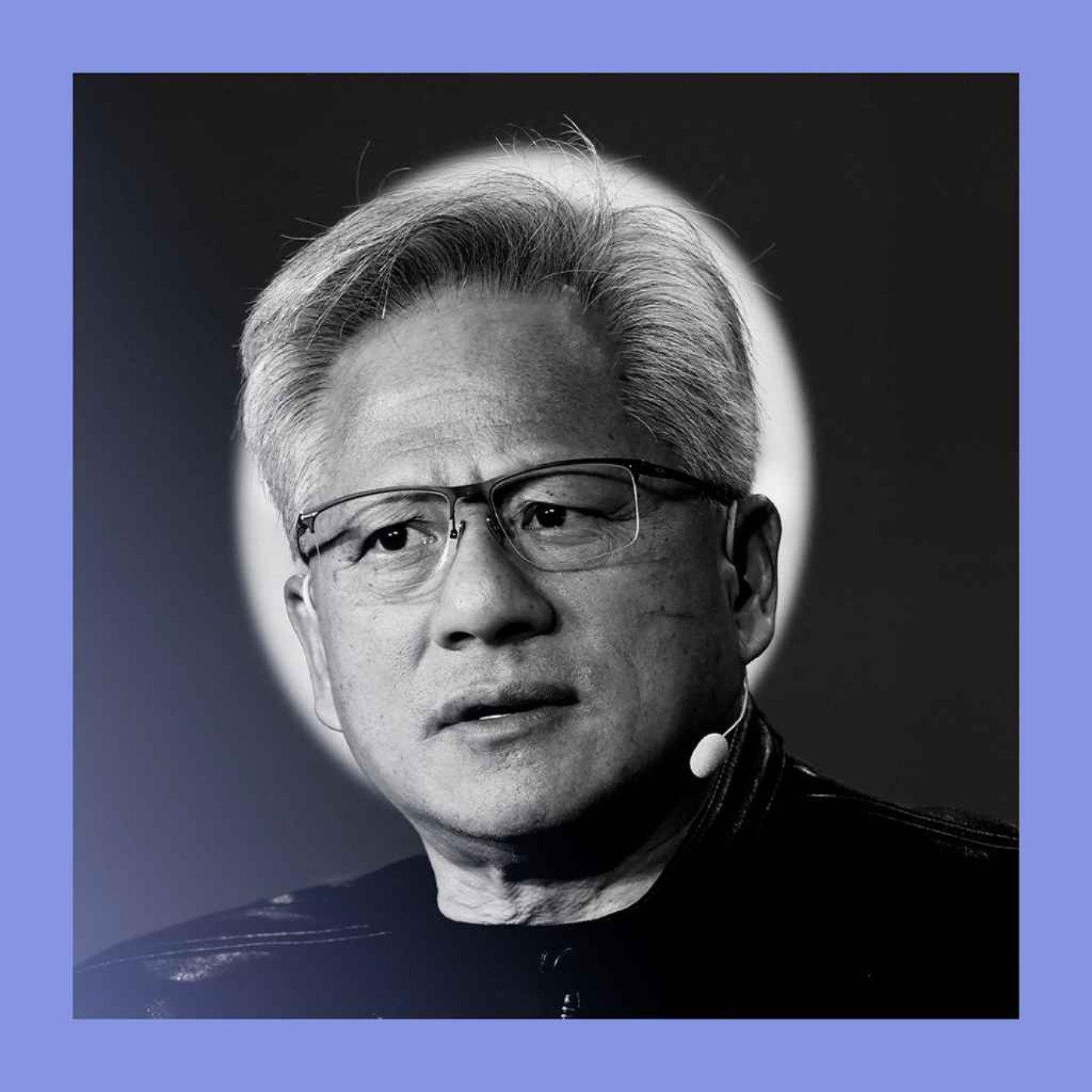
1:45It's tempting to follow the latest drama of NVIDIA by thinking about Jensen Huang, his fall from grace, and whether he might conjure some kind of redemption story. the seeming disconnect between President Trump and Treasury Secretary Scott Besant about whether Mr. Wong should return to the helm. But that is probably focusing on the wrong thing. Look instead to the American administration's move yesterday to tighten export controls on AI chips. The rules crimp shipments of the fanciest chips to Southeast Asian countries, such as Malaysia and Thailand, and Singapore, where a certain NVIDIA client called Megaspeed is based.
2:25That speaks to a tightening in AI tech that had long been in the air but left unresolved. And of course, there are still plenty of loose ends from last week still to tie up. Quite a lot of things have happened since the last book. Shailesh Chitnis is our global business writer. There has been a groundswell of support, particularly in Silicon Valley, from people like Elon Musk asking that the board reinstate Jensen Wang. Even Donald Trump has weighed in saying that it certainly isn't a bad idea if he returns. But having said that, I think there are some important milestones that are coming up just in the next few weeks.
3:01So first and foremost, today, the company reports its quarterly earnings. That's going to be a pretty big deal because investors are going to be looking for signs that the company can proceed without Mr. Wang. So that's going to be a very important test for the current interim CEO, Colette Kress. And Jensen Wang is scheduled to speak in front of a closed door session in Congress about this whole affair. So there are quite a few things coming up that will play out how this whole saga unfolds in the coming weeks. And just quickly, the assessment last week was that it wasn't good to have a CEO who was under investigation by Congress and perhaps the FBI.
3:39What's the basis for everyone's desire for him to return? I think the people who are calling for his return are pointing to the performance of the company's stock, which is basically cratered since this news broke. And their point is that Jensen Huang is a unique individual who has the ability to actually take NVIDIA to the next level. It was a$5 trillion company before this whole scandal happened. he had a target to take it to 10 trillion and they believe that he's the only person who's actually capable of doing that based on his abilities to make bold bets, to look around corners, to see where tech is going and then bring the entire supply chain to bear to actually make that happen.
4:19They don't believe there is a replacement for Mr. Wong. Without prejudice to the fact that he has recently and could again be an agent of chaos. Well, I think what I've heard from many folks is people make mistakes, he's learned his lesson and it's time to move on. Now, that is one view from Silicon Valley. But if you look at the other side, on the other coast, Washington is not too happy. Specifically, Scott Besant has made his views very clear. In fact, he has gone so far as to say that NVIDIA's next CEO should be outside the company because the company's culture is quite broken. And as for the company's current CEO, you're looking for signals in the earnings call that's coming today.
4:56What should we be looking out for? Yeah, I think first and foremost, to set expectations, the earnings the company will report will be for the quarter that Jensen Huang was the CEO. So it's not going to be a reflection of her tenure. And I think most expect it to be another blowout quarter based on everything I've seen. Now, what the investors will actually be looking for is how Colette Kress deals with questions that the investors will be asking, particularly hard questions around how the company plans to retain talent, how it plans to compete against some of the bigger or I think now more ambitious competitors that it has, including AMD, hyperscalers like Google.
5:34These are all things that were there before when Jensen Huang was there. But I think these questions become a lot more important. And finally, I think also investors will be concerned around the liability or the fallout from the spy scandal and what that means for the company in terms of distractions. And do you think good answers will emerge after the congressional testimony that you mentioned? I think it's a closed door testimony, so it's hard to know exactly what we'll get, but I can guarantee there will be a lot of leaks. I think the closed door session is important just to get a pulse of how this whole issue is playing in Washington and how long it's going to continue because already the Democrats have made it clear that they will be calling for more hearings next year.
6:13So this is not the only hearing, but I think it's going to give us an early flavor of what's to come. And of course, it's not just Jensen Huang who's implicated in the scandal. I talked about Scott Besant. Scott Besant pointed a finger at Howard Lutnick and his Department of Commerce as being complicit by taking a very relaxed attitude towards chip exports and compliance. And so there are calls that Howard Lutnick should resign as well. And as for the export controls that were announced yesterday, how do you place those in this broader saga? Is this a knee-jerk response, something that was on the way, a sign of things to come?
6:45Yeah, I think export controls are a really important fallout from this whole scandal. For a while, China hawks in Washington were not happy with the easy access that NVIDIA had to the administration, as well as NVIDIA's ability to influence decision. So what we are seeing with this scandal is essentially the pendulum moving the other way and the China hawks having more for say. We saw the first sign yesterday where the Department of Commerce, under pressure from Scott Besant, moved to close essentially a loophole which allowed Chinese AI companies to rent cloud computing access for leading-edge chips outside of China in places like Malaysia, Singapore, even Australia.
7:24So that was the first indication. There are a lot more bills on the table which seek to codify some of the export controls as well as ramp up restrictions on chip making tools that are in the works. So one view of where things are now is that this is a correction in the industry that perhaps needed to happen, answering some questions that had been punted to an indefinite future. Do you think broadly all of this chaos is to the good for the industry? Yes, so that's a glass half full way of looking at it, because I'm sure most in the industry would not have wanted a reckoning to come this way. But seeing as we are here already, some folks I've spoken to in the industry say that this may not be such a bad thing for a couple of reasons.
8:07First and foremost is the fact that just the deal-making binge that NVIDIA was on in terms of engaging in many different creative financing mechanisms to fund new clouds, different AI labs, such that they could turn around and buy NVIDIA's chips. That was starting to unsettle a few people and investors as well. The second is NVIDIA's gross margins of almost 75 % are way higher than the industry norm. And so NVIDIA was capturing a disproportionate share of the profits. And overall for an industry, it's not such a bad thing if there is more competition, prices come down, all these things. But having said all of that, this chaos is certainly not good for the industry because it creates a lot of questions.
8:50Washington gets involved and these are not things that the tech industry is comfortable with. Shailesh, thank you very much for your time and no doubt be speaking to you again soon about all this. Thank you for having me, Jason.
9:27Thank you.
9:33trust Airwallex, directly or through their platform customers. Head to airwallex.com slash go global to get started. That's airwallex with an x dot com slash go global. Airwallex US LLC is a licensed money transmitter in most states and not a bank. Terms and conditions apply. Everyone's talking about AI, running pilots, chasing results. But most generic AI tools fall short. They're neither built nor trained for the job. GEP's AI-native procurement and supply chain platform with embedded intelligence and deep domain expertise is trained on decades of real-world experience and know-how. AI with procurement and supply chain DNA.
10:19Real results. Real impact. Real ROI. GEP.com.
10:32When Reform UK leader Nigel Farage returned to British politics during the 2024 general election, he made a wild suggestion. Our aim is to get net migration down to zero. That is even more striking, given successive governments in the years before had been elected on a pledge to bring UK immigration down. David Cameron and Theresa May failed to deliver on that promise. Boris Johnson tried his luck with a novel plan to deport illegal migrants to Rwanda, a scheme that was abandoned before it even begun. By 2023, net migration had hit an all-time high of 944 ,000. And yet, a few years later, an astonishing turnaround.
11:23So at the end of this month, we're going to hit a pretty historic milestone, which is that immigration to the UK will fall to the tens of thousands in net terms. And that will be its lowest figure for about 30 years. Duncan Robinson is our Britain political editor and writes our Badger column. And more interestingly, some analysts are predicting that immigration will go negative. Basically, that Britain will become a country of emigration for the first time in decades. and considering Britain's just come out of a period of its highest ever period of immigration to suddenly slam on the brakes and end up with the opposite problem is really quite something.
12:09Before we get into why it's a problem, what has caused this dramatic change? Immigration peaked after lockdown so there was a few factors behind that. The main one was that there were sort of two years where Britain was locked down and no one could really move to the UK. So you had a vast amount of people come. And at the same time, the government liberalised a lot of visas. So they made it easier to work in the UK, they made it easier to study here, and a lot more people came than people expected. And the thing about immigration is that it is on the whole circular. So if you come to the UK, you tend to work for a few years and then leave.
12:41If you come to study, you obviously leave when your degree's done. And what we're seeing is basically that tide that came in is now going out again, but it came in further than people expected, and now it's going out further than people expected. When immigration hit an all-time high, basically every single party in the political spectrum panicked. So the Tories made getting a visa much harder to do, and Labour followed them. They've made it harder to settle in the UK. There was basically panic among the political class because immigration has basically been a new yeltsin issue in British politics for the past few decades.
13:11But what's happened is that they've essentially just slammed on the brakes too hard, and it's gone much further than people expected. So while they wanted immigration to fall quite a lot, they've created the opposite problem, which is that Britain's potentially becoming a country of immigration again. Tell me a bit more about why that's a problem. Immigration is a political problem rather than an economic one. So on the whole, there isn't really a sort of pro-migration caucus in the UK. There are people who are sort of comfortable with relatively low levels of immigration, and then there are voters who absolutely hate it.
13:41So there's basically a consensus across most political parties that immigration does have to come down. And every single government elected since 2010 has been elected on the manifesto pledge of we are going to bring down migration. And basically, until now, nobody's really managed it. And in fact, in the past few years, they've had the direct opposite. So people who voted for Boris Johnson in 2019, he again pledged to bring down immigration. And in fact, immigration hit an all time high. And so that led to a lot of discontent. And that led to parties like Reform, which is Nigel Farage's and Restore, which is a smaller but further right party, getting a much bigger foothold in British politics.
14:16There has been a gigantic demographic shift in Britain. So in 2004, which is the year that the EU expanded to include countries like Poland, it triggered the start of the current era of mass migration. About one in 10 people were foreign born in the UK. Now it's one in five. So there has just been a big, big demographic shift. And that has made some people uncomfortable. And so it is up to governments to manage that change while trying to maintain democratic consent. And no one's quite cracked it so far, which is why immigration is still a very new electric issue. You mentioned that it can be delicate for politics, but liberals argue that immigration is good for the economy.
14:53What do these figures leave Britain on that score? Essentially, the British government sees the economy as a simple machine. If you put immigrants in at one end, GDP comes out the other. And so if you have higher immigration, you get better fiscal forecasts, and that gives you more money to spend on public services in the short term. So there's a bit of an argument in the economics community about whether this particular wave of immigration will be as sort of economically beneficial as previous waves. So in the past few years, we've seen a lot of people come over for relatively low wage jobs like social cares, and that will almost inevitably mechanically have a smaller positive fiscal impact than people who come over and say if they're an investment banker.
15:31So there's some debate about how beneficial the current wave of immigration will be. But what's been particularly interesting with liberal opinion on immigration is that it did massively harden and become slightly more immigration sceptic when the numbers went very, very high. Because you were dealing with numbers where 1.4 million people came in one year. And that is a lot. And that meant people who are ostensibly very liberal, Remainers, liberal Democrats, people who vote for the Labour Party, became much more negative about immigration in that period. So there was basically a consensus that that level of immigration was completely unsustainable.
16:01The different parties have all been pushing for lower immigration. now that it's finally here, what might that mean for British politics? It means it's completely in flux for the first time in decades. I think you might see liberals sort of trying to make the case for things such as free movement, which is the idea that if you rejoin the EU, you'd be able to sort of move between countries. That's been an idea in British politics since we left the EU in 2016. But you might see that come back and people might become a little bit more rational when it comes to immigration because they do not feel like they're being flooded.
16:31At the same time, it might still just be a very messy debate because immigration is not always based on a realistic understanding of the numbers. There are some voters who are just unhappy at any level of immigration. And if you are dealing with smaller numbers, it means that certain types of migration take on a much bigger role. So there's been an issue with small boats crossing the channel where tens of thousands of people have done that any year. In a context where over a million people are arriving, that's a very, very small number. If far fewer people arriving, that becomes a much bigger proportion.
16:59and those concerns don't go away. And if anything, they become an even bigger part of the debate. And do you think these lower numbers are here to stay? Basically, people don't know. That is the main debate at the moment. Some people think it'll barely go negative. Some think it'll go quite negative, sort of tens of thousands of people leaving a year. Some people think it'll last for maybe a year tops. Some people think it'll be a sort of sustained period of emigration for two or three years. The funniest part of this is that basically Britain is returning to the type of country it was for much of the 20th century, which was a country of emigration rather than immigration.
17:32We haven't been a country of immigration for very long. It's a relatively recent phenomenon that only happened in the past 30 years or so. Before that, it was pretty normal for Britons to leave. They would go to Australia, they would go to Canada, they would just set up new lives elsewhere to the point where it was a huge political problem. And in the 1940s, you had Winston Churchill basically begging people to try and stay and fix Britain. And that is just a fundamentally different country to one that feels like it's being overwhelmed. But in general, it is better to be a country that people want to come to rather than people want to leave.
18:03Duncan, thank you so much for coming on the show. Thanks for having me.
18:23The name of his spy was what mattered. Catherine Nixie is a Britain correspondent for The Economist. In 1952, an undistinguished journalist and birding enthusiast called Ian Fleming sat down at his desk to write The Spy Story to End All Spy Stories. Fleming knew some things about his book. He knew he wanted his hero to be manly, his heroines to be comely, and his income to be vast. But what he did not know was the name of his spy. Then he caught sight of a book on the shelf above his desk. Its title, Field Guide to the Birds of the West Indies, was dull. Its pages, which contained a lot about the pie-billed grebe, were duller still.
19:12Its author's name was dullest of all. Fleming described it as brief, unromantic, Anglo-Saxon, and yet very masculine. The name was Bond. James Bond. Yesterday, one more name was announced. That of the actor who will play the British secret agent in the 26th official Bond film. The new name is, like the original, fairly unromantic and masculine. It's Robert Pattinson. Pattinson is, in some ways, a surprising choice. The actors chosen to play Bond are usually fairly unknown. Patterson, meanwhile, has been a box office draw since 2008, when he starred as a sultry vampire in the Twilight franchise.
19:59This year alone, he has sunk his teeth into four major film roles, but he perfectly fits the physical description. Like Bond, he is tall, dark, and square-jawed. Also like Bond, he has a dash of both the hero, in Harry Potter he played a gallant prefect, and villain, as he showed in this year's Odyssey adaptation. Pattinson matters because Bond does. The Bond franchise is huge. It is made up of 14 original books, dozens of continuation books, and 25 films which have between them grossed an estimated$23 billion. It is thought that half the world has seen at least one Bond film. And for Britain, Bond matters psychologically too.
20:46Now, just as when the books were written, Britain feels like an international has-been. Britain's army might be puny, its economy shaky,
20:58but it still has a man who knows how to get the baddies and to mix a martini. His casting is therefore treated as something of national import, as if one were casting not Bond, but Britannia. This choice feels particularly loaded now that Amazon MGM, an American studio, has taken creative control of the franchise.
21:21Every literary character brought to the screen belongs to two eras. The one that produced the book and the one that produces the film. The art is to serve both while betraying neither. Adaptations that succeed, think of Andrew Davis's version of Pride and Prejudice in 1995, do this. Mr Davis left Austen's dialogue all but unchanged but added some very 20th century smoulder. The stage directions for the famous lake scene read, Darcy has an erection, not an original Austin line. Bond is in many ways harder still to remake, because he belongs to three eras. The third is the wartime age that produced Fleming himself.
22:08Fleming based his characters on the tough commando types he met in British naval intelligence. This was a beguiling age of heroes and eccentrics. M, the fictional head of MI6, Britain's foreign intelligence service, is thought to have been inspired by Maxwell Knight. He was one of the founding heads of Britain's Secret Service Bureau, and he was a man who said his male hires should be able to make notes on their shirt cuff while riding on horseback. His female hires, by contrast, should have good legs.
22:42Bond is a little of all of these figures, as well as of Fleming himself, who was a notorious womaniser and a perfunctory one. As one former girlfriend put it, women were like fish cakes for Fleming. He was, she said, mind you, very fond of fish cakes, but he never pretended that there was any mystique about eating them. Bond duly consumes a lot of women, often in a tasteless fashion. In Casino Royale, Bond savours the, quote, sweet tang of rape.
23:16The world, however, has changed. Today, the real-life head of MI6 is a woman. She appears to have issued no instructions on the horsemanship or legs of her underlings. She looks unlikely to be amused by adolescent pillow fantasies. Bond, as Judi Dench's M tells him in GoldenEye, feels today like a sexist, misogynist dinosaur. Still, despite its flaws, the Bond franchise is much loved. Reinvention is thus desirable and impossible. Almost everyone has an opinion. Pattinson may be a dependable choice, but many will complain, just as they did when Sean Connery and Daniel Craig were cast. Change Bond too little, and you will offend modern mores.
24:00Change Bond too much, and you will offend the traditionalists. As with Bond himself, the scriptwriter's hands are tied. As with Bond, everyone will watch anyway.
24:49This show is supported by Odoo. Business software is expensive. And when you buy software from lots of different companies, it gets confusing, slow to use, and hard to integrate. Odoo solves that because all Odoo software is connected on a single affordable platform. Save money without missing out on the features you need. There are no hidden costs and no limits on features or data. Check out Odoo at odoo.com. That's odoo.com. I thought, what if I've scaled businesses? What if I scaled my philanthropy? What if I did as much in one year as I've done in my whole life? See how your wealth could have even greater meaning at creativeplanning.com slash impact.
Jensen Huang probably is not coming back to lead Nvidia. We look to other signals of what lies ahead for the AI juggernaut, from earnings calls to export controls. Britain’s politicians have long promised lower or even zero migration. What would happen if that came to pass? And examining Robert Pattinson’s fit in the storied past of James Bond.
Guests and host:
Topics covered:
Listen to what matters most, from global politics and business to science and technology—subscribe to The Economist.
Hosted on Acast. See acast.com/privacy for more information.
Scan the code with your iPhone camera
Listen in the app.