 Ask ChatGPT


The episode of The Intelligence from The Economist covers two main stories: (1) the “absurd return” of Jensen Huang to Nvidia after Donald Trump allegedly intervened to reinstate him following his resignation amid investigations; and (2) the re-establishment of measles transmission in the US, with America losing elimination status, plus what it would take to eliminate measles again.
Shailesh Chidnis is the show’s global business writer covering Nvidia’s leadership crisis; Slavea Csankova is the healthcare correspondent explaining measles epidemiology; Max Richter is a composer discussed in an interview; Brooke Unger is a senior digital editor for The Economist.
Trump/administration pressure reversed Nvidia’s board decision; measles is now endemic due to vaccination gaps and misinformation; measles causes severe complications and “immune amnesia.”
measles in 45 states, 5,000+ cases, 11 deaths; Nvidia stock up 30% and market value up nearly $1T; Richter’s “On the Nature of Daylight” and “Sleep,” plus “While the Flood Rages.”
Written by AI. May contain mistakes.
Exploring the circumstances surrounding Jensen Huang's return to Nvidia.
“Today on the show, the absurd return of measles to America and meeting with Max Richter, a wildly popular composer.”
Analyzing the implications of measles cases rising in the US.
“So, for example, there have been videos circulating around where he entered NVIDIA's headquarters yesterday, hundreds of employees just clapping and shouting Jensen.”
An exploration of the resurgence of measles due to declining vaccination rates and misinformation.
“So it's no longer sporadic outbreaks that are just, you know, an imported case starts an outbreak.”
Discussion on the achievable elimination of measles despite current challenges.
“Slovea, thank you so much for joining us.”
A deep dive into Richter's creative influences and the themes present in his music.
“Sleep, his eight-and-a-half-hour-long composition, has been streamed more than two billion times.”

Get the gist, explore an idea or ask about something said.
 Claude
On Economist Podcasts, what are the key points of this episode?
Searching your listeningAutomatic transcript. May contain errors.
0:00Do you snore? Did somebody hand you a CPAP and did you quietly stop using it? The mask that never quite seals? The hose tugging at you every time you roll over? A machine sitting abandoned in a closet? it. ExciteOSA works a different way. It treats a root cause instead of managing the noise, and you use it while you're awake. 20 minutes a day, while the coffee brews, while you set your fantasy lineup. An FDA-cleared prescription device for primary snoring and mild obstructive sleep apnea. Then you go to bed like a person, nothing strapped on, nothing plugged in. In clinical studies, 90 % of patients saw a reduction in snoring.
0:44No sleep study required. Prescribed online, shipped to your door. ExciteOSA at springsleep.com slash sleep20. Code sleep20 for 20 % off. ExciteOSA is an FDA-cleared prescription-only device for primary snoring and mild obstructive sleep apnea. Not for everyone. Individual results vary. Risks and benefits at springsleep.com. Hi, this is Elise Hugh from TED Talks Daily brought to you by Okta. As organizations rush to deploy AI, agents operating in the dark create massive security blind spots. To bring them out of the shadows, Okta answers four critical questions. Where are my agents? What can they do?
1:29What are they doing? And how do I respond if they go rogue? Okta secures AI. Learn more at Okta.com.
1:49Hello and welcome to The Intelligence from The Economist. I'm Jason Palmer.
1:54Ọrẹ Ogunbiyi: And I'm Aura Ogunbi.
1:59Today on the show, the absurd return of measles to America and meeting with Max Richter, a wildly popular composer.
2:14First up, though.
2:24Life comes at you fast, doesn't it? Especially if you are the guy most associated with the hottest technology on the planet.
2:31Ọrẹ Ogunbiyi: Donald Trump says the FBI is investigating the head of NVIDIA, one of America's most valuable and vital AI tech companies. It was and is as juicy a story as they come, a swashbuckling chief executive's extramarital affairs, now in the alleged plural. There has been a groundswell of support, particularly in Silicon Valley, from people like Elon Musk, asking that the board reinstate Jensen Wang. Jensen Wang was out. Talk of spycraft intensified. Investigations opened. Questions multiplied.
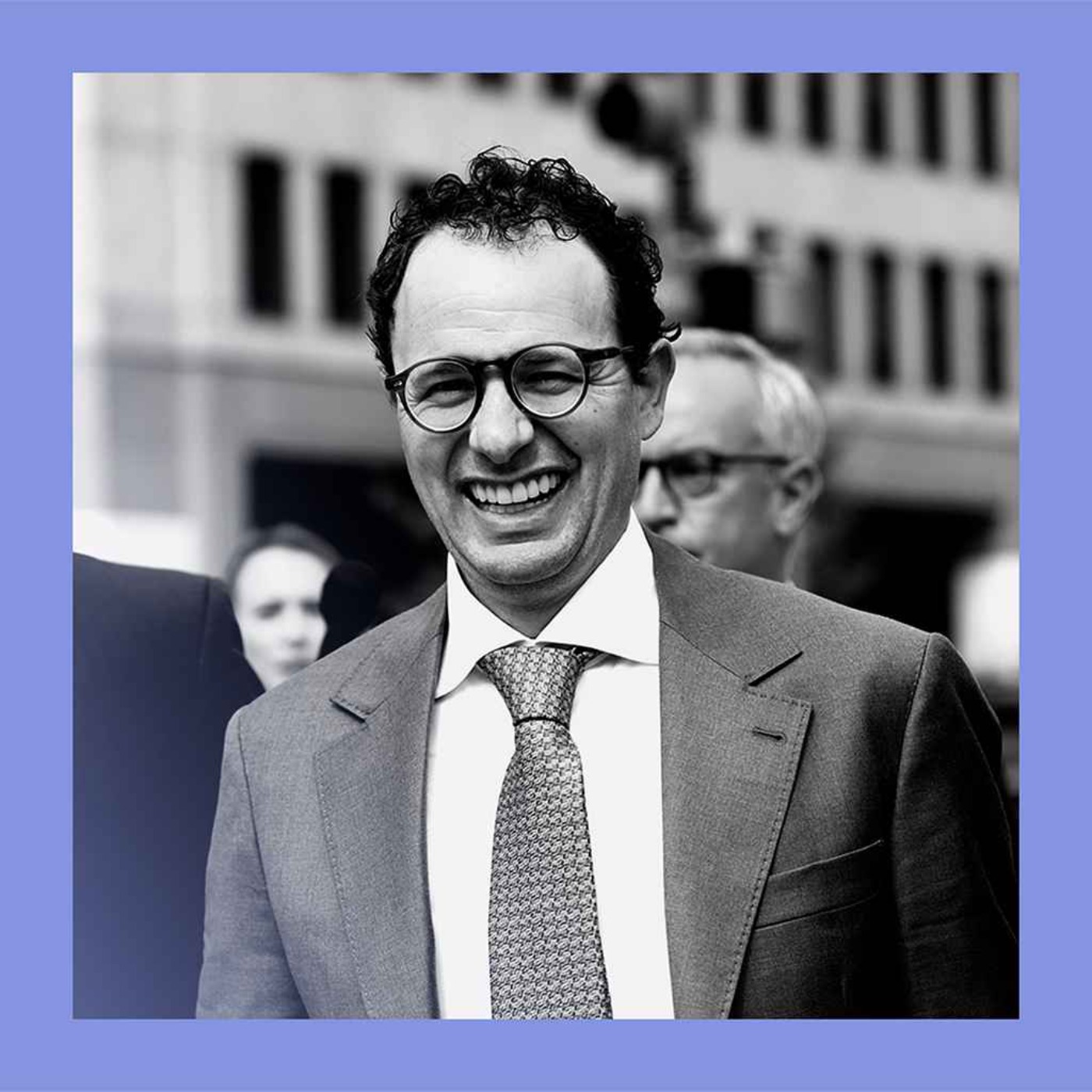
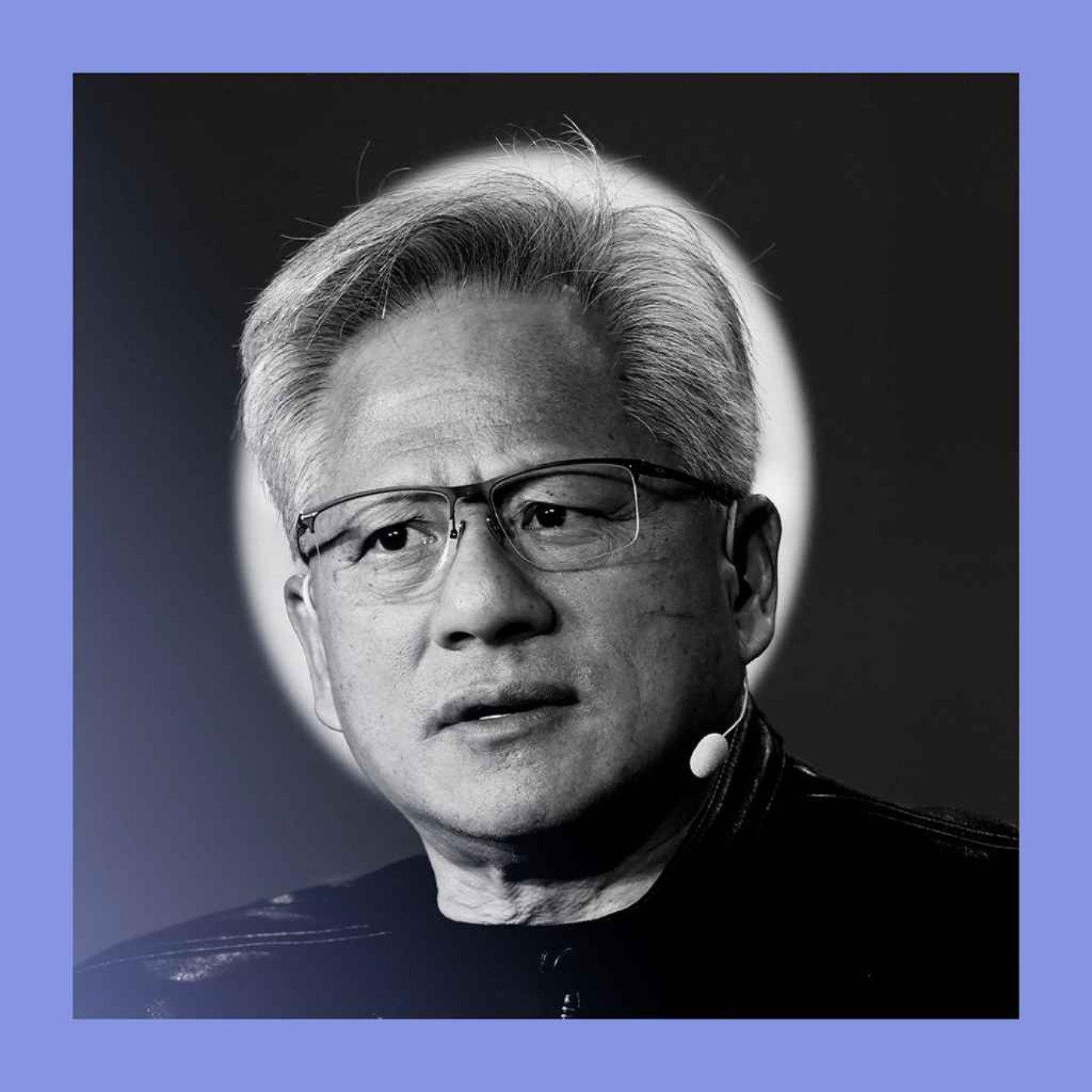
3:13The market has been ecstatic, to say the least. Shailesh Chidnis is our global business writer and has been very much on this wild ride from the start. The Nasdaq jumped over 6%. The Nvidia stock itself was up by more than a third yesterday. And by close, it had added close to a trillion dollars in its market valuation. I know we are numbed by these numbers now, but these are massive moves in the market. I think the key thing to take away from this is just how big of a shock this was to everyone. Nobody expected this to happen, certainly not so soon. What we heard shortly after his resignation was that the board said it had no intention of rehiring him.
3:54It clearly changed its mind. Absolutely. And I think it's also important to remember that the board gave that response in response to Jensen Huang saying he would be willing to return to NVIDIA just five days after he resigned. And so this whole thing has been quite bizarre in that sense. The board publicly said they were going to look for a long-term successor and they started the search and several names were floated around. And so it seems like they were well along that path when this intervention happened. When you say intervention, what do you mean? So I think we should talk about that. I think it's pretty clear now that President Donald Trump intervened directly.
4:26He's admitted that he's spoken to the board to get Jensen Huang back. But it's not just Trump. I think few outlets are also reporting that J.D. Vance, the vice president, had been in touch with a lot of Silicon Valley types, investors, founders who made the case for Jensen Wang to return. And apparently Jensen Wang spoke directly to J.D. Vance. So it's been very clear that the administration has a hand in this, essentially overruling the board's position from a week ago. And why do you suppose that is? Why do you think the administration, Mr. Trump in particular, feels so strongly about this? Well, it's hard to know what goes on inside Donald Trump's head.
4:59As ever. But if I were to guess, I think there is a sense in this that he wants to do things that no one else can, particularly something like this is so unprecedented that I think there is some joy in that to him as well. But there is also the group of people around him, his advisors, which have been made up of a lot of Silicon Valley founders and entrepreneurs. And I think they have a big say and a huge influence in how Donald Trump sees AI. And one of the reasons I think Silicon Valley is so enamored with the fact that Jensen Wang should come back is they believe he's one of a kind. And the entire AI economy or infrastructure can be attributed to his efforts.
5:36And if he goes away, the US AI boom takes a big hit. That's been their position. And so a lot of them have said that, yes, he's made mistakes, but he can learn from that and we move on. So that's been their position. But about the mistakes, there are, if anything, more questions now than there were before about what exactly has gone on. Absolutely. And none of the investigations have even been completed. It's so early. There have been multiple affairs with subordinates within the company, which is one set of quote unquote mistakes. The other mistake is his relationship with Alice Wong, who is an executive at Megaspeed, which is a Singapore based cloud provider that has been accused of funneling chips into China.
6:16And so that has been very problematic because questions have been raised around national security concerns for the US. Did Jensen Huang know what was going on? Did the Chinese intelligence have a hand in something like this? So very serious questions. But again, I'd come back to the fact that the board said in its statement, and we just have to parse what they've said because that's all we have to go by. They've said that they've been assured by senior officials in the U.S. government that there was no national security risk. And some of that will become clearer when he speaks to Congress. A congressional investigation has been open already for some time.
6:47Yes, and I think the first test he faces is on December 1st when he speaks to a Senate committee. And after that, there's just a whole host of different hearings that are going to happen just in December. But I think the key thing to remember is in January, the Democrats take control of both the houses. You can be sure that there are going to be a lot more investigations to come because they have highlighted this as a case where the Trump administration has very close ties with the industry. Putting all that aside for the moment, the Jensen Huang of today is not the same one of a few weeks ago.
7:14How do you think he can now operate within NVIDIA with all of this baggage? It's difficult to say. So, for example, there have been videos circulating around where he entered NVIDIA's headquarters yesterday, hundreds of employees just clapping and shouting Jensen. So I think there's that. They've seen their portfolio value go up 30%, which is great for them. So, but there's that. But I think there's also a more cautious side within a lot of employees I've spoken to. I think there's a sense of disappointment and disillusionment because he was looked upon as this singular figure, very different from a lot of Silicon Valley billionaires.
7:45And he sold himself as that. And I'd spent time with him in June chronicling just that, which is his everyman persona. I think that has just been battered now. There is no going back from that. I think the serious question remains around how much of his role as an AI spokesperson can he retake? He speaks to governments. He speaks to business leaders talking about investing in AI infrastructure. And he's been very successful as that. But it's easy to imagine that a lot of government or business leaders may not be rushing to see themselves on stage with Jensen Wang right away until the investigation is over.
8:17So that part of his role is quite questionable. And the hard-nosed question of business itself, NVIDIA's clients? So I think I would break it into short-term and long-term. I think short-term, the company is extraordinarily healthy. They've essentially sold out a lot of their production for the next few quarters, and they anticipate they're going to grow the next year 75%. So that's huge. I think longer term, there is a real question. couple of things, which is whether the suppliers see this as a risk in terms of their dependence of NVIDIA and they start to look at alternatives as well to hedge themselves.
8:49I think the second thing is the customers themselves. For a long time, customers have been looking for alternatives to NVIDIA, but have been wary of poking the bear too much because if they move away from NVIDIA, they were worried about Jensen Huang not allocating the chips to them. I think you can say that now some of that fear will go away because there are legitimate business reasons for customers to de-risk. I think within the US, it's also clear that there are few alternatives to NVIDIA, particularly at the leading edge. So in defense contracts or things like that, I don't see much of a challenge.
9:19I do see a lot of challenge going forward on exports, particularly to China or China-based demand, whether Chinese companies are accessing it through the cloud in Malaysia or Singapore. I think that's going to come under a lot of scrutiny. And to be clear, that part of demand is not trivial. It could be anywhere between 10 to 20 percent of the company's overall demand. And so how the company navigates that and how Jensen Huang navigates that is going to be very important to watch. But what we've seen even in this short time is what in fact a lot of people are saying about this is, oh, NVIDIA is just simply too big to fail.
9:51What do you make of that assertion? I think it's true. Unfortunately, given where we sit, we would like to believe that no company is too big to fail, no businessman is too hard to replace. But I think what we've seen in just the last 24 hours is unfortunately that's true. And the bigger question is what this does to corporate governance. particularly when we are talking about large tech companies and their role in the overall economy. In the future, if we have any, maybe not issues similar, but other types of issues with companies, what happens at that point? Because what has happened at NVIDIA is probably going to set a template for what's to come.
10:24Shailesh, thank you very much for your time. And no doubt, see you again soon about this one. Thank you for having me.
10:40Airwallex moves money at agentic speed. Take an e-commerce startup that just went viral, orders land in pounds and yen, and Airwallex pays the Toronto factory in Canadian dollars at bank-beating FX rates and flags anything over the startup's spending limit. That's an Airwallex agentic global business account in action. More than 675 ,000 businesses already trust Airwallex directly or through their platform customers. Head to airwallux.com slash go global to get started. That's airwallux with an X dot com slash go global. Airwallux US LLC is a licensed money transmitter in most states and not a bank.
11:20Terms and conditions apply. Are you sure we don't want to do gifts this year? Yeah, don't worry about me. Bombas. Sorry, did you just say Bombas? No. Bombas cozy socks. Totally. Bombas slippers. Size 8. Wow, so you're just... Pilates socks. Underwear. Okey-doke. Got it. Bombas. The perfect gift for when you're not doing gifts. Visit bombas.com slash audio and use code audio for 20 % off your first purchase. That's B-O-M-B-A-S dot com slash audio. One purchased equals one donated. Always.
12:01Ọrẹ Ogunbiyi: It's nothing to be proud of. and it was completely avoidable. The commission concluded that the endemic measles transmission has now been re-established in Bolivia, Mexico and the United States. The Pan-American Health Organization announced in recent days that America has lost its elimination status for measles, something it had held for more than a quarter of a century. Measles cases have spread throughout the country this year, reaching 45 states. You don't have to look far to find one reason. President Donald Trump, not a doctor, earlier this year signed an executive order recommending that the measles, mumps and rubella vaccine be split.
12:48You have the MMR. We want it in three separate vaccinations, given at separate times. Together, there could be a possibility they're quite lethal. and separately it looks like they are not at all lethal but just very effective.
13:04Ọrẹ Ogunbiyi: That is not true. The MMR vaccine is not lethal. But measles is. And 11 people have died from it in the US this year alone. This is a stunning step backwards and an embarrassment for America. But not at all surprising, really. Slavea Csankova is our healthcare correspondent. There were just three measles deaths in total in the US from 2000 until last year. But this year, there have been more than 5 ,000 cases in the country, the most for decades. And it will be really hard to stop this outbreak. What exactly does it mean for a country to lose its elimination status? Basically, it means that chains of transmission of measles have been going on for more than one year.
13:59And it's a sign that the disease is now circulating continuously. So it's no longer sporadic outbreaks that are just, you know, an imported case starts an outbreak. It's contained quickly. The virus is now endemic in the country. And how did we get here? The reason why we are here is that in America, there are lots of pockets, neighborhoods or schools where vaccination rates are way below the 95 % coverage needed to stop the spread of a disease as contagious as measles. In the 2024 school year, two thirds of counties had vaccination rates that were too low. So we are seeing that now playing out in these outbreaks everywhere.
14:44And the reason why this has happened is that vaccination rates have declined over the years, but there was a real dip during the pandemic, partly because vaccination services were disrupted. But also there was an increase in just anti-vaccine sentiments in general, and there was never a recovery of vaccination rates from that. So it has been kind of like a slow trend over the years, really got worse during the pandemic. And here we are. And the reason why it's happened is, you know, people haven't seen measles around. You know, many people have never seen it in their lifetime. So they just think of it as a mild illness and there's a lot of misinformation out there.
15:29Ọrẹ Ogunbiyi: So for people who haven't seen measles, I surely haven't. Tell me a little bit more about the disease and just how severe it can get. So most people think it's a relatively mild childhood illness. You get a bit of a rash and, you know, flu-like symptoms, which is the case, you know, in most cases. But in maybe about one in six children, it gets really severe. They have to be hospitalized for complications such as pneumonia or in some cases even brain inflammation. And even in cases that appear to be mild and children recover, measles casts a long shadow because it causes something called immune amnesia.
16:12It wipes out antibodies that you've developed against common pathogens. So for a few years after a measles episode, children would be quite susceptible to infections. And there are some really bad complications too. there is a kind of like a fatal brain condition that can occur with a delay. So years after a child has recovered from measles, it's quite rare. But, you know, in children who get infected before the age of one, it's probably one in 600. So it's not a mild disease, really. Tell me a bit about how it's spreading in America now. So in the past, big outbreaks would usually start in religious or insulated communities, which were really under-vaccinated, partly because they don't interact with the mainstream healthcare system, so Amish, Mennonite, Orthodox Jewish communities.
17:02And these outbreaks would normally be contained, but in recent years, they haven't been contained. So we have hundreds of cases and people travel, so they seed outbreaks elsewhere. And because it's become so hard to contain these outbreaks and because there are so many communities, those counties that they just said, you know, with really low vaccination rates all over the map of America. Now it's much easier for these big outbreaks to spark new ones. And that's what we are seeing now. Measles is in 45 states. It's pretty much everywhere. Some outbreaks are big, some are small, but it's becoming increasingly hard to contain outbreaks.
17:46And that's why we're seeing this continuous transmission.
17:48Ọrẹ Ogunbiyi: You're painting a really worrying picture here, But America has beat this before. What will it take for it to do that again? So America achieved its measles elimination status in 2000. And the way it happened was basically vaccinating children. Because in the 90s, when that elimination campaign kind of got seriously going, many adults were immune. They've had the disease as children. So all you had to do is vaccinate children. The program for free vaccines for children was established. vaccination rates really went up, measles disappeared. Doing that today will be much more difficult, first of all, because there are lots of unvaccinated adults.
18:3230 to 40 percent of measles cases in the last few years have been in adults. So finding children is much easier to vaccinate them. Finding adults who are not vaccinated out there will be a much more difficult task. It's very expensive. By one estimate, it's about$40 ,000 per case to contain an outbreak. So massively expensive. The federal government has allocated about$100 million for measles, but that's far below what experts think would be required to achieve elimination status again. What is the government doing about all of this? The CDC has been really gutted. It has lost about 30 % of its staff.
19:17since the beginning of 2025, and that includes many of its measles specialists who would normally lead such efforts. They would help states with big outbreaks and so on. So the starting position for any new push to eliminate measles is not very strong right now. And of course, we have as a health secretary, someone like Robert F. Kennedy Jr., who's a well-known vaccine skeptic. His policies have really been harmful. He urged President Trump to sign this executive order about the MMR vaccine. So just a lot of misinformation coming from the very top, which is not helping. It's absolutely possible to achieve the elimination status again.
20:04The way it can be done is known. The public health departments out there in the States, They know what they should be doing. It's just going to be a very difficult task that is going to take years. And this is a tragedy because this was completely avoidable.
20:23Ọrẹ Ogunbiyi: Slovea, thank you so much for joining us. Thank you.
20:43That feels like two tunes. Max Richter is one of the most popular composers alive. I spoke to him at a studio in the Cotswolds, and at one point during the conversation, he relocated from the sofa to the piano to demonstrate that a falling sequence of notes from his new album, While the Flood Rages, is reminiscent of the music of Johann Sebastian Bach.
21:09Ọrẹ Ogunbiyi: Brooke Unger is a senior digital editor for The Economist. Max Richter's music seems to be everywhere. His 2004, soulful, six-minute composition for string quintet On the Nature of Daylight heightens emotions in at least a dozen films and television programs, including My Brilliant Friend and Arrival. It transforms millions of commutes into occasions for reverie. He's also on screens. His soundtrack for Hamnet, which includes tracks like Of Agnes, was nominated for an Academy Award this year.
21:51And he may well be in your bedroom. Sleep, his eight-and-a-half-hour-long composition, has been streamed more than two billion times. Born in Germany and brought up in Britain, Richter studied at the Royal Academy of Music in London, and with Luciano Berio, an Italian modernist. His record label is Decca, among the most storied in classical music. But the genre would confine Richter if he did not bend it. Kraftwerk is an influence alongside American minimalists such as Philip Glass. The piano in his studio keeps company with banks of vintage synthesizers, which you can hear on tracks such as the genesis of poetry from Wolfworks, a ballet.
22:36I'm not a Luddite. You know, this studio looks like mission control, doesn't it? It does. So I'm all for appropriate use of new tools. As is fashionable, he deems the conventional distinction between classical music and other sorts to be bizarre. Well, a sound is a sound. Things bouncing around, you know, molecules bouncing around in the air. I mean, honestly, it's miraculous when you think about it that it even adds up to anything. But, you know, we're lucky enough that we have this incredible thing, music. I think the way we apprehend those sounds is culturally conditioned, isn't it? You know, you can have the same sound existing in a bit of Mozart or a hip-hop track, but we're going to come to it a little differently.
23:23But it's still the same atoms, if you like. Richter's medley of influences and instincts have landed him in a musical sweet spot. While the Flood Rages draws from music he wrote for a ballet, Matt Adam, which in turn is inspired by a post-apocalyptic trilogy by Margaret Atwood, teller of The Handmaid's Tale. His music has an emotional directness that gives it much wider appeal than that of most living classical composers. Audiences tend to be younger than at conventional classical concerts. To some listeners, the sweet spot is too sweet. Some think his partnerships with brands such as Krug Champagne and Christian Dior, which you're hearing now, are evidence that his art lulls rather than challenges.
24:09However, many of his works deal with explicitly political themes.
24:14Ọrẹ Ogunbiyi: Everyone is entitled to all the rights and freedoms set forth in this declaration. Voices from 2020 incorporates texts from the UN Human Rights Declaration. Daylight comes from an album that opposes America's war in Iraq. Yet most of the time, the strife seems to be happening in the distance. While the flood rages, considers the aftermath of apocalypse, environmental vandalism, and corporate greed, Richter says the music is more highly colored than what he normally composes, echoing the stylistic omnivorousness of Atwood's writing. But Richter's sensibility, which you hear, for example, in the final track, Now We Can Sing, as the last word.
25:03Piano, strings, and a church-like choir, sometimes in counterpoint with eriar music, seem to suggest that something good will prevail. The listener, unsettled at first by the album's dystopian theme, may come away consoled. That is often the effect of Richter's music. Other than depict evil, he imagines alternatives to it. We're flooded with negativity, with negative images and negative storytelling, just because that's what drives the algorithms. I'm looking to sort of celebrate and elevate the things that are not that, which are ordinary sort of human qualities, which have been with us forever and will continue to be with us, but are easy to overlook.
25:52While floods rage, Richter offers audiences a life raft on tracks like Horizon Variations. No wonder he's so in demand.
26:17That's all for this episode of The Intelligence. We'll see you back here tomorrow.
27:01Transcription by CastingWords place so you can invest your way. Visit schwab.com to learn more. Outdated technology isn't going to improve a disconnected healthcare system. So what will? At Optum, we wake up every day and work for better. We call it healthy optimism. It's how we use insights and technology to help providers focus less on paperwork and more on patients. Will we fix it all overnight? No, but we'll wake up trying again and again until healthcare works as one for everyone. That's healthy optimism. Learn more at Optum.com.
And just like that, and just before markets opened, he was back. We take a look at how things will not and cannot be the same at the company Mr Huang leads once again. America has lost its measles-elimination status, thanks to wrong-headed public-health policy. And an interview with Max Richter, a wildly in-demand composer.
Guests and host:
Topics covered:
Listen to what matters most, from global politics and business to science and technology—subscribe to The Economist.
Hosted on Acast. See acast.com/privacy for more information.