
In short
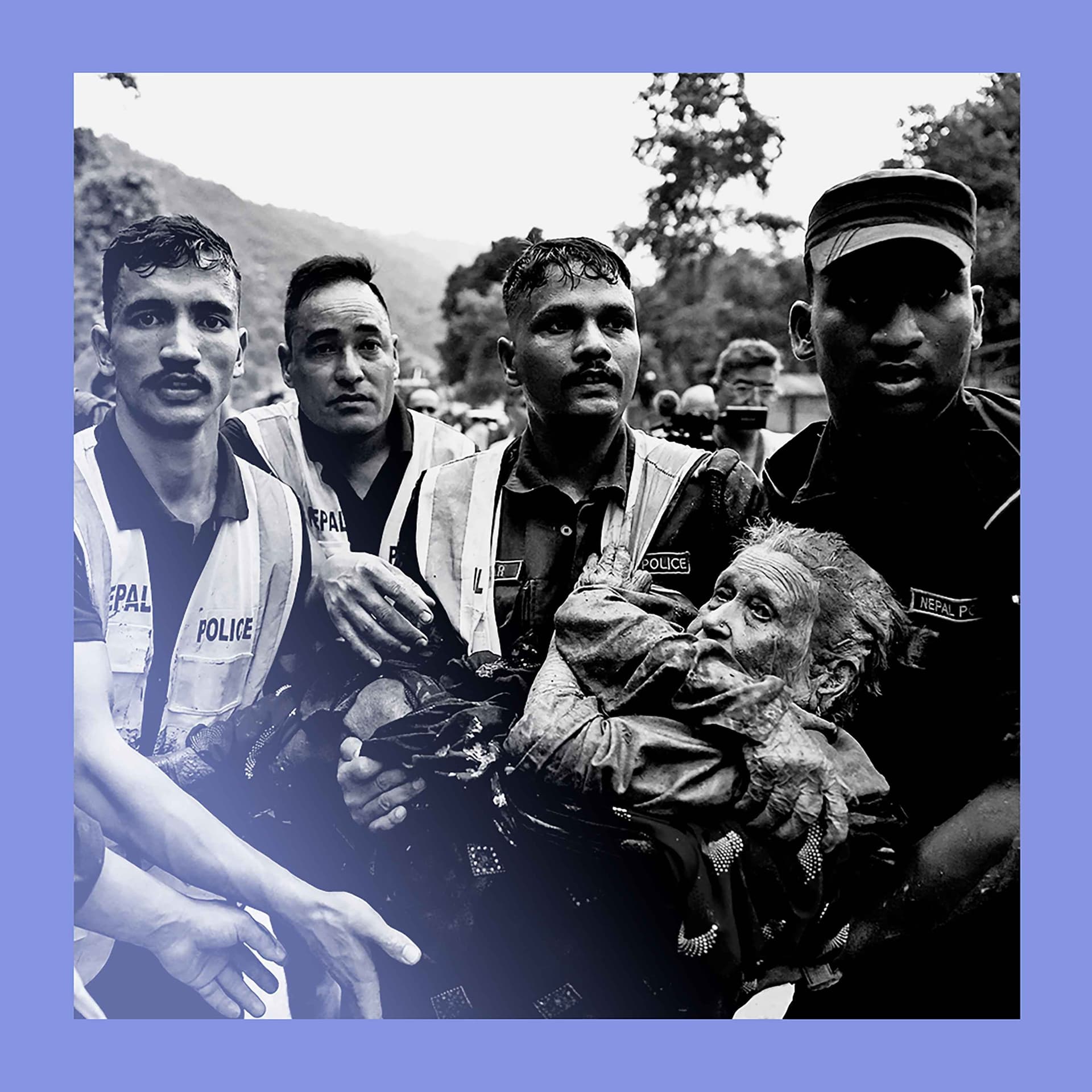
The episode covers three main stories. First, Nepal’s flood disaster recovery: rescuers are still searching for hundreds trapped in hydropower tunnels after August 26 floods triggered by a Tibet glacier/ice-rock avalanche that dammed and then breached the Lenda River. Reported impacts include about 1,000 dead and around 4,000 missing, with nearly 600 missing foreigners.
Key claims
Nepal’s disaster risk is rising due to faster glacier melt (“Earth’s third pole”), climate change, and unpreparedness; recovery could cost up to $5 billion.
Notable examples
villages swept away, a suspension bridge destroyed, and hydropower plants stacked along single rivers. Second, AI and kids: a Graphic Detail study of 27,000 Chinese students found AI users spent ~20 minutes less per homework and scored ~18% higher on homework, but scored ~20% lower on exams; take-home message is implementation matters. Third, Japan’s music cafes: “ongaku kissa” inspired listening bars like Space Talk, with strict listening rules and curated audio experiences.
Guests
Kira Huyu (Economist Asia correspondent) and Michelle Hennessey (Graphic Detail lead).
Written by AI. May contain mistakes. Listen to the episode to check what was said.
Chapters
Tap a time to open that second in VOIntroduction to Energy Challenges
0:00 to 0:30
Learn about the pressures on the global energy system and consumer concerns.
“The global energy system is under pressure, from climate change to rising costs and energy security.”
Nepal's Ongoing Recovery Efforts
1:19 to 1:46
Explore the desperate recovery efforts in Nepal following devastating floods.
“And why Japan's music cafes are striking a chord abroad?”
Casualties and Impact of the Flood
1:46 to 2:29
Understand the scale of devastation and the human toll of the floods in Nepal.
“Rescuers are still searching for hundreds of people trapped in hydropower tunnels since the giant floods last Wednesday.”
Causes and Context of the Disaster
2:29 to 4:51
Learn about the geological and climatic factors contributing to Nepal's vulnerability.
“It's already one of the costliest natural disasters it has seen in modern times.”
Nepal's Preparedness and Recovery Challenges
4:51 to 7:03
Examine Nepal's current government response and the challenges it faces.
“This is the second major flood on the same river tributary in 14 months.”
International Aid and Future Preparedness
7:03 to 8:07
Discuss the international response to the disaster and future preparedness strategies.
“generation was knocked out in a matter of hours when the floods hit.”
Wrap Up of Nepal Discussion
8:07 to 8:21
Conclude the conversation on Nepal's flood challenges and future outlook.
“But ultimately, the planet is heating up and Nepal is currently one of the biggest victims of something that is not of its own making and a crisis that it doesn't have the capabilities to deal with.”
AI's Impact on Student Learning
10:03 to 14:00
Investigate the effects of AI on students' learning and homework.
“I think a lot of adults use AI for shortcuts, so adult parents and teachers are well aware and increasingly concerned about how many corners kids are cutting with chatbots these days.”
AI in Education: Balancing Benefits and Discipline
14:00 to 14:52
Explore the benefits and challenges of using AI in education, emphasizing proper implementation.
“certainly not all, but some old-school ways might actually be best.”
The Rise of Listening Bars: A Cultural Shift
15:06 to 18:24
Discover the concept of listening bars and their cultural significance, inspired by Japan's ongaku kisa.
“Aaron Coltate is our head of newsletters.”
Transcript
Automatic transcript. May contain errors.0:00The global energy system is under pressure, from climate change to rising costs and energy security. New research from Economist Impact shows consumers want more affordable energy and are open to sustainable technologies, but 65 % worry renewables may drive prices even higher. The Empowering Energy Consumers Barometer, supported by Kraken, explores how to enable consumers to participate in the shift to cleaner, more resilient energy without losing out. Search Empowering Energy Consumers Barometer to find out more. Who says Halloween only lasts one day? With Wayfair, one night of Halloween becomes a whole season at home.
0:36From larger-than-life yard decor and moody lighting to festive accents for every room in the house, Wayfair has what you need to make Halloween feel like magic all in one place. Because the best Halloween memories aren't made in just one night. They're made all season long. Shop Halloween decor now at Wayfair.com. Wayfair, every style, every home.
1:09Hello and welcome to The Intelligence from The Economist. I'm Rosie Bloor. And I'm Jason Palmer.
1:18Today on the show, does AI stop kids learning? And why Japan's music cafes are striking a chord abroad?
1:33First up, though.
1:42In Nepal, the desperate recovery effort continues. Rescuers are still searching for hundreds of people trapped in hydropower tunnels since the giant floods last Wednesday.
1:59Engineers are pumping air into those tunnels Many of which filled with mud after the waters crashed through Entire villages were swallowed In a surge that reached up to 180km an hour Devastation wrought in a flash Now the long aftermath Nepal has witnessed an unusually vicious disaster, which might be on its way to becoming the deadliest flood in the nation's history. It's already one of the costliest natural disasters it has seen in modern times. Kira Huyu is our Asia correspondent. Entire villages have been swept out. The morgues are overrun with mangled bodies. and at the same time, unfortunately, such tragedies are only about to get much less unusual just at a time when Nepal becomes less ready to face them.
2:57Kiri, we're nearly a week on now from the first flood. At the time, there was a bit of uncertainty about what happened. What do we now know for sure? At 8.37 in the morning on August 26th, We had a collapsing glacier, an ice rock avalanche that crashed down into a valley in Tibet and dammed the Lenda River. Three minutes later, the dam breached. It released a torrent of water and rock and mud and ice down the Bortekwashi and Trishuli rivers in the Rasuwa district of Nepal.
3:36One of our reporters spoke to Shibu Giri, a local, who at 9 o 'clock in the morning watched the wave sweep away an entire suspension bridge. And by the time that wave tossed up his truck, he had escaped into the forest. And Mr. Giri is one of the lucky ones. He slept in a cave, survived and collected rainwater and a handful of picked berries. And then the following afternoon was picked up by an army helicopter. And just how big a disaster is this? Any footage that you see out of Nepal looks like the apocalypse has arrived. We know that around 1 ,000 people have lost their lives and around 4 ,000 are still missing.
4:22Those numbers for the dead are likely to go up and up in the days to come. This includes almost 600 missing foreigners, among them lots of pilgrims, especially from the Indian side on sacred treks across the country. Kira, as you said, this is on its way to becoming Nepal's deadliest flood. But of course, Nepal has had other disasters recently too. Why is that? That's right. This is the second major flood on the same river tributary in 14 months. And another flash flood, which was paired with a landslide, killed 244 people just under two years ago. And in 2015, there was a 7.8 magnitude earthquake, which to date is the deadliest natural disaster in Nepal's history.
5:13Now, some of this is down to Nepal being geographically very unlucky. It sits where the Indian and Eurasian tectonic plates grind against each other. and where a hot, wet monsoon breeze collides with the freezing winds and unstable slopes of the Himalayas. And that means that Nepal is one of the most disaster-prone places on the entire planet. But those disasters will also now get deadlier and more common. And that's because the country is nestled within the Hindukush Himalaya, which is a vast and an increasingly erratic climate region, which is also known as the Earth's third pole. That region is heating faster than the rest of the world, and its glaciers are melting twice as fast as they did back in 2000.
5:58But it's not entirely just about Nepal being unlucky. The country is also unprepared for such events. You say it's unprepared. What has its response been like? Nepal is overwhelmed. Cost of recovery is piling up. It could go up as high as$5 billion. dollars. And all of this is happening while Nepal's ability to weather such crisis is waning. So it's already among the poorest countries in the world. It's also recently been very unstable. Almost exactly a year ago, Nepali youth burned down their parliament building and overthrew the government and then later made the 36-year-old rapper and former mayor of Kathmandu, Belendra Shah, prime minister.
6:44Now the inexperience of that new government is on show. The devastation is also compounded by some bad policy choices. Nepal has been stacking too many hydro plants along single rivers instead of spreading them out. And as a result, about 10 % of Nepal's power generation was knocked out in a matter of hours when the floods hit. And what about the international response? The floods arrive at the end of the age of aid and that is really on show. America has pledged an absolute fraction of what it pledged back in 2015 for the earthquake. The UN Climate Fund is completely overwhelmed with financing requests that it can't service and so as the costs get higher, Nepal's ability to rely on international aid has diminished greatly.
7:39Kira, you've painted a pretty apocalyptic vision. Is there anything that Nepal can do to be better prepared? There are some things like climate-resistant infrastructure, better coordination and monitoring mechanisms across the Himalayan nations, who are famously bad at sharing water resources. China could stop treating hydrological flow rates as a national security secret so that Nepal would have some warning before the floods hit its borders. But ultimately, the planet is heating up and Nepal is currently one of the biggest victims of something that is not of its own making and a crisis that it doesn't have the capabilities to deal with.
8:19Kira, thank you very much. Thank you for having me.
8:57Thank you. Watch Empowering Energy Consumers Barometer to find out more. This is Rick Burgess from The Rick Burgess Show. I want to talk to you for a second about something most of us put on autopilot, car insurance. If you're just letting your policy auto-renew year after year without shopping around, I'm telling you, you are probably throwing money away. Rates change all the time, and staying loyal to one company can end up costing you big time. That's why you need to go check out Insurify. I went to Insurify.com to test it out myself, and I was blown away by how easy it is. In about two minutes, totally free, you can compare actual real-time quotes from over 100 top insurance companies all side-by-side in one place.
9:38No endless phone calls, no pushy sales pitches. Here's what I really love. Insurify doesn't just help you once and walk away. They actually keep monitoring your rates in the background and alert you whenever prices drop so you never miss out on a better deal down the road. Millions of drivers have already used Insurify to stop overpaying, and there's no reason you shouldn't too. Do yourself and your wallet a favor. Go see what you could save right now at Insurify.com. That's Insurify.com.
10:13I think a lot of adults use AI for shortcuts, so adult parents and teachers are well aware and increasingly concerned about how many corners kids are cutting with chatbots these days. Michelle Hennessey leads Graphic Detail, our online data journalism section. The question is, are students relying on chatbots in a way that's enhancing their learning or replacing their learning? Are they having the chatbot do everything for them? I mean, imagine having such a powerful tool when we were at school. I was admittedly always looking for creative shortcuts to my schoolwork. But firm, hard evidence of how kids are using AI on a big scale beyond a few examples had been lacking.
11:00But now there is a little more in the pool. So one of our data journalists pitched this study to me for a graphic detail, and I thought it was fascinating. It covers 27 ,000 students in China, a country where we know AI adoption has been fast. Some of those students reported using AI, and the study compared their outcomes with those who didn't. So over a six-month period, the students who did use AI suddenly had a lot more free time. They spent about 20 minutes less per homework assignment, and yet their average scores jumped by 18%. Okay, so the story so far is pretty good. They've saved time and scored higher, dot, dot, dot.
11:42Right, but come exam time, the results completely flipped. So the students using AI scored 20 % lower on tests than their classmates who didn't use it. And that's a really fascinating trend because it used to be that high homework scores predicted high test scores. So it was a useful gauge of how a student was doing before exam time and potentially identifying kids who were falling behind. Now that's possibly reversing. The kids doing best on their homework are using AI, perhaps not really learning this stuff for themselves. and then flunking exams. Well, this isn't hugely surprising. If we're talking about the shortcuts you and I used back in the day, they were the sorts of things that made us perhaps not learn things as well as if we had really put in the hard yards.
12:27Right, but you have to define how they're using it. In some settings, it can be useful to education. We did a separate graphic detail on this last year, actually. There was a pilot program in Nigeria where a chatbot helps students make nearly two years worth of school progress in just six weeks. It was phenomenal. And that was actual progress measured in tests using pen and paper long term. And similarly, in this latest study, the drop in exam scores was concentrated particularly among the students who rushed their homework. But those who are using AI and still spending 75, 80 minutes on homework, they're not really paying a penalty when it comes to exam time.
13:09So the fact that they're still spending so much time on assignments suggests they're using it, you know, as a tutor or a way to enhance their understanding while still doing the work themselves. And as you say, this is a big question at a societal level. What do you think the take-home message here is for parents, for educators? Well, there's a massive panic, isn't there, about tech in schools. Certainly over here where I am in New York, and I'm sure you're hearing similar concerns in London, I think a lot of parents and educators think that schools should be completely screen free, right? I'm not sure the data point to that being the right approach.
13:43I spoke to one of our senior writers, actually, who's covered education for us for years. And he pointed out that, yes, a lot of schools adopted tech too quickly, especially during the pandemic. Yes, some tech used the wrong way can slow learning. Yes, more and more people are realizing that some old-fashioned ways of schooling, certainly not all, but some old-school ways might actually be best. But there's really no reason to think that AI used appropriately can't help students. I sort of think of it like the workbooks that we used to have, you know, as kids, where all the answers would be at the back and it would be so tempting to just have a little peek.
14:22It would take an enormous amount of discipline for kids to not have AI think for them and feed them the answers. But there is evidence to suggest that it can be used effectively. It's all in the implementation and how it's used. And I think that's the lesson for everyone who uses AI, not just kids. Love your work. Also love the harking back to the black and white times. The good old days of the 90s and early 2000s. Cliff's Notes. Anybody got Cliff's Notes? Michelle, thanks very much for your time. Thank you.
15:05Space Talk takes music seriously. Aaron Coltate is our head of newsletters. The bar opened in 2024, and before it opened, its owner enlisted an architect, a designer and a sound engineer to create the perfect listening environment. I went to the bar recently and had a couple of cocktails. The first thing I thought was that it resembles the deck of a wooden spaceship. In its ethos, Space Talk is one of many spots around the world loosely inspired by Japan's ongaku kisa, music cafes. These venues are commonly known as listing bars or hi-fi bars.
15:48The first ongaku kisa opened in Japan during the 1920s. Visitors would drink tea or coffee as music, which was often classical, tango or swing. played through huge old gramophones. In the decades after the Second World War, cafes devoted to jazz grew popular. Imported records and audio equipment were expensive, and Jazzkisser offered a place for enthusiasts to hear the latest album by Miles Davis or John Coltrane. They were places for quiet, reverential listening.
16:18Owners of these bars would, and still do, display a fussy attention to detail. High-quality speakers are a must. The nerdiness often extends to amps, turntables, styluses and other electronic equipment. The gramophones may have gone, but vinyl is still very much in vogue. The music is not merely for ambience. The act of listening is central to the experience. Many kisser ask visitors to remain silent when they visit.
16:49Listening bars have sprung up in the West, South America and Africa, most of which have opened in the past decade or so. These spots really have stringent rules on chit-chat. Space Talk, for example, has not banned chatting, but it has implemented a no photos or videos policy, which I quite liked. There is a venue in New York called All Blues, which politely asks visitors to let the music do the talking. Some bars host dedicated events where guests can hear an album in full or listen to music tied to a particular artist or theme. I think there are three reasons why the Ngaku Kissa model has succeeded as a cultural export.
17:26One is Japan or mania. 43 million foreign holiday makers visited the country last year. That's a record. Over the decades, Japan has established itself as a trendsetter and tastemaker in everything from video games to fashion and design, meaning that where the Japanese lead, the others follow. The second reason is that listing bars and ongakukisa offer an appealing alternative to nightclubs, which are in decline. These bars provide a relaxed, stylish environment for retired ravers and youngsters alike. Here, enjoying music need not mean enduring punishing opening hours or punishing hangovers. The third reason is that these bars offer a distinctive, curated experience to suit a wide variety of tastes.
18:07They are very popular with couples out on dates, for example. They create a unique listening environment. At a listening bar, even an old track can find a new groove.
18:24Roll, shake, bounce, drop, roll, shake, bounce that, drop that, work that thing.
18:41That's all for this episode of The Intelligence. We'll see you back here tomorrow.
19:22We'll see you next time. Just one night. They're made all season long. Shop Halloween decor now at Wayfair.com. Investing with Schwab is like spending a Saturday at a great farmer's market. You can fill your reusable tote with a bit of everything. Maybe you go for some free-range, self-directed investing. Or perhaps you pick up a few farm-fresh trades while you peruse. You can even get help from a dedicated advisor. That's full-service wealth management. Mix, match, and change your mind whenever you want. because at Schwab, you can invest your way. No matter your goals or appetite for investing, Schwab has everything you need, all in one place.
20:02Visit schwab.com to learn more.
From the publisher
After the devastating flash flood last week, our correspondent explains why the country is so ill-equipped to deal with the crisis. Does AI stop children from learning? And why Japanese ongaku kissa, or listening bars, are so popular abroad.
Guests and host:
- Kira Hiju, Asia correspondent
- Michelle Hennessy, graphic detail editor
- Aaron Coultate, newsletter editor
- Rosie Blau, co-host of “The Intelligence”
- Jason Palmer, co-host of “The Intelligence”
Topics covered:
- Nepal, flood, climate change, glacier, hydropower
- AI, education, exams
- Japan, listening bars, ongaku kissa
Listen to what matters most, from global politics and business to science and technology—subscribe to The Economist.
Hosted on Acast. See acast.com/privacy for more information.