In short
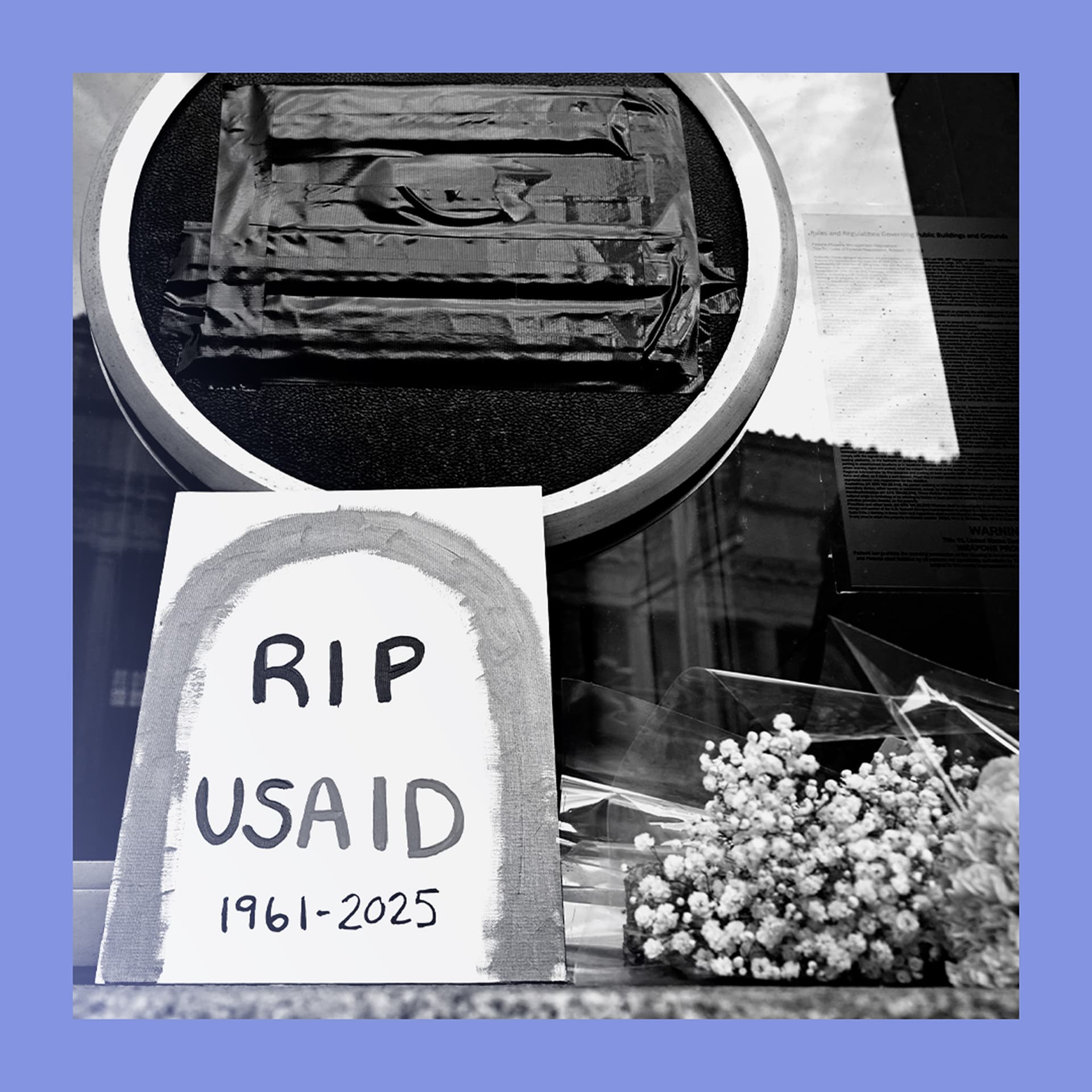
The episode of The Intelligence from The Economist covers two main stories. First, it argues that Donald Trump didn’t end US foreign aid so much as “weaponize” it: USAID was permanently closed in July and its functions moved to the State Department under Marco Rubio, with conservative staff repurposing funds. It highlights new/expanded aid-style lenders: the Millennium Challenge Corporation (reopened, shrunk, State Department control) and the International Development Finance Corporation (aimed to grow from about $10B to $250B total lending).
Key claims
aid will go to Trump-friendly countries, to lure partners away from China (e.g., telecom/telecom influence in Vietnam, fishing deals in Pacific islands), and to strengthen hard-power supply chains via minerals and strategic components. Notable example: a $20B Argentina swap-line bailout, described as unprecedented and risky. Second, it examines Ukraine’s drone and missile campaign against Russian oil refineries, estimating about 20% of Russia’s refinery capacity knocked out, causing petrol queues, export curbs, and rationing.
Guests
Kerry and Richmond Jones (international economics correspondent; discusses Trump’s aid restructuring) and Matthew Simons (economist contributing editor; analyzes Ukraine’s impact on Russia’s oil and war-funding).
Written by AI. May contain mistakes. Listen to the episode to check what was said.
Chapters
Tap a time to open that second in VOImpact of Ukraine on Russian Oil
1:28 to 2:14
Examine how Ukraine's actions have affected Russia's oil supply.
“on Russia's oil refineries and its fuel distribution system.”
Trump's Shift in International Aid
2:14 to 10:49
Explore how Trump's approach to foreign aid has evolved and its implications.
“America's policy on international aid used to be about alleviating poverty and making allies by doing so.”
Closing Remarks
10:49 to 11:37
Hosts wrap up the discussion and provide final thoughts.
“86 % of the most recent class accepted a role within three months of graduating, and the returns continue beyond today.”
Closing Remarks
11:41 to 14:02
Hosts wrap up the discussion and provide final thoughts.
“tech team isn't just talking about multi-agentic AI.”
Impact of Fuel Shortages on Russia
14:02 to 19:14
Learn about the effects of fuel shortages on Russia's economy and military efforts.
“And it may be that that 20 % figure is now going up.”
Introduction to Wetherspoons
19:14 to 19:47
Discover the history and cultural significance of the Wetherspoon pub chain in Britain.
“You can watch on our website or our app.”
Challenges and Adaptations of Wetherspoons
19:47 to 24:16
Explore how Wetherspoons has adapted to challenges in the pub industry and its economic strategies.
“Witherspoon is one of Britain's most popular pub chains.”
The Democratic Spirit of Wetherspoons
24:16 to 25:19
Understand how Wetherspoons embodies a family-friendly atmosphere and social gathering place.
“There will be photographs of the road outside from the 1910s with horse-drawn carriages and people in bowler hats.”
Transcript
Automatic transcript. May contain errors.0:00To grow beyond limits and even beyond your aspirations, you need the London Business School MBA. Ranked fourth in the world by the Financial Times, the program delivers academic excellence and unlocks access to leading global businesses and a network of over 58 ,000 professionals. 86 % of the most recent class accepted a role within three months of graduating, and the returns continue beyond today. Search Discover London Business School MBA to find out more. With no fees or minimums on checking accounts, it's no wonder the Capital One bank guy is so passionate about banking with Capital One. If he were here, he wouldn't just tell you about no fees or minimums.
0:40He'd also talk about how most Capital One cafes are open seven days a week to assist with your banking needs. Yep, even on weekends, it's pretty much all he talks about. In a good way. What's in your wallet? Terms apply. See CapitalOne.com slash bank. Capital One N.A. Member FDIC.
1:05The Economist
1:12Hello and welcome to The Intelligence from The Economist. I'm Rosie Bloor. And I'm Jason Palmer. Every weekday we provide a fresh perspective on the events shaping your world.
1:27In recent months, Ukraine has inflicted massive damage on Russia's oil refineries and its fuel distribution system. In parts of the country, there are now long queues for petrol. We explore the impact. And at a time when many British pubs are closing, the Weatherspoons chain is going gangbusters. Its outlets tend to be surprisingly bright and surprisingly cheap. Good thing, as our correspondent felt duty-bound to drink a pint in one to report this piece.
2:05But first...
2:14America's policy on international aid used to be about alleviating poverty and making allies by doing so. Cash was doled out via charities and agencies, as well as the IMF and World Bank, backed in large part by American contributions. In Donald Trump's second term, that changed. Swiftly, inefficiently, in many cases, cruelly. But all that funding, that interest in the international community, it didn't go away. Our international economics correspondent, Kerry and Richmond Jones, says it's just being repurposed. Donald Trump has totally destroyed international aid over the course of the past nine months he's destroyed the world's biggest aid agency to lots and lots of controversy that's left children in Africa without bed nets it's affected democracy charities in Poland and he said that he's doing this because basically it doesn't help America so you might think that he's totally stopped sending cash abroad, but actually he's transformed the system instead.
3:17Donald Trump is still going to do aid. It will just be weaponized, and that's becoming clear. So much of what you said there hinted at the shuttering, the kneecapping of USAID, USAID. What's happened since then? In July, when USAID was permanently closed, it didn't just die. What was left? The programs in global health, disaster relief, even some government lending, was handed over to the State Department under Marco Rubio. And Marco Rubio has put a very small team, mostly made of conservatives who used to work at the State Department, in charge of finding new uses for the cash that kind of aligned to Donald Trump's America First approach.
3:58It wasn't just USA that was closed, kneecapped in the first few months. It was lots of other things as well, from international media to infrastructure lenders. And one of those organisations is the Millennium Challenge Corporation. It was set up by George Bush 20 years ago to basically build infrastructure in poor countries. And it was closed and we really thought we'd seen the last of it. But Trump has reopened it. It's shrunk. It's put under State Department. It's very much had its wings clipped, but it's still going. So that's the second organisation that Donald Trump has kept. And then the third one is the International Development Finance Corporation.
4:34Most people haven't heard of this, right? At the moment, it's a development bank that lends to poor countries, but lends to their firms rather than their governments. But Trump wants it to lend more than USAID ever did. Last year, it lent about$10 billion. Trump wants to supersize this fund, so it will be lending$250 billion in total. That could be$50-60 billion a year. These are the new organisations that are going to spearhead Donald Trump's aid agenda. And where's the money going to go? The best way to think about this is there are three groups, and it's becoming clear what Trump plans to do with each of them.
5:12The first group of countries are effectively ones that Donald Trump likes, leaders that he gets on with, that he really wants to support, because he's isolationist by instinct. But also, you can't go it totally alone. and his enthusiasm for regimes like Javier Malaise in Argentina is beginning to cost him quite a lot of money at this point. Trump bailed out Argentina,$20 billion in a swap line. So effectively, the US agrees to lend Argentina$20 billion and in return, the US theoretically can get$20 billion worth of pesos. That's the biggest bilateral bailout of a country by America in 30 years.
5:53it's kind of unprecedented what he's doing there it's replacing the imf it's also a huge huge huge risk precisely because argentina's economy is in such a mess that probably the 20 billion dollars of pesos that are in america's treasury or will be in a few weeks are eventually going to be worthless i spoke to quite a few treasury officials who said that argentina's bailout could be the first of several equivalent bailouts the slight problem when you really press them on that and these are the people who are designing this policy, was they didn't quite know who it would end up going to. Donald Trump likes a very, very small portion of the world's leaders and a very small portion of the world's countries.
6:31So a lot of his allies have a lot of sympathy for a country like Poland. But very few of them seem to be close to going bust like Argentina. Okay, so group one, chumps, friends, ideological allies, brothers in arms. What's the second group? The second group are countries that Trump thinks it's worth luring away from China. So China has become the world's biggest bilateral creditor. It's lent more than a trillion dollars at this point to other poor countries. And for a long time, there's been this sense that America is kind of letting the rest of the world slip away and just surrendering it to China's influence.
7:05Trump wants to change that. And the ideas that he has already approved to do so are kind of wacky, wide and affect more or less every region of the world. So another motivation behind the Argentina bailout is that it means that Argentina doesn't have to take any more cash from China. It's taken quite a lot so far. But then also there's a discussion that the Development Finance Corporation could buy a telecoms company in Vietnam because China has quite a lot of control of telecoms in and around neighbouring countries. Trump wants to try and combat that. Another one is fishing in the Southern Pacific.
7:40A lot of Pacific islands rely quite heavily on China for business, for exports, for imports. Trump has already agreed a treaty with those nations to try and get them fishing using American firms. And he might even dole out finance for it. So essentially funding as bait to lure people away from China. OK, fair. What is the third group? A lot of previous American aid was trying to really massage America's soft power. So if America could be seen to be benevolent, be saving the world, be helping lots of poor people, that was the thinking goes really good for its soft power. Trump now is very focused on hard power and the last priority is the best example of that.
8:19Trump is willing to pay for things that he thinks that the American economy lacks. Strategic shortages such as semiconductors and complicated electronics that at the moment are only made in say Taiwan or other bits of East Asia. He's willing to pay these companies to access their components because being able to access their components is much better than the components being owned by a Chinese company in China. He's also very willing to pay for critical minerals. So minerals that go in things like electric vehicles, tanks, AI chips that at the moment America doesn't really produce. But how does all of this square with Mr.
9:01Trump's stated ambition to, you know, stop throwing money around abroad, especially as you say, as it may now be more than once went through organizations like USAID? I mean, it is slightly surreal that Trump has wiped away 60 years worth of development aid on the idea that it's not really worth it for the taxpayer. And now he might be spending even more than the system that he cut back. And really his goals, they're different, but they're no more tangible, right? How much easier is it to measure if your fishing treaty really does contain China's influence than it is to measure whether a bed net in Malawi makes the Malawian government more sympathetic towards America?
9:44It's incredibly difficult. As opposed to that, I'd say that at the diplomatic table, you can see who your friends are or are becoming, right? If you have exclusive mineral rights deals in Zambia, that's better than when you don't. That's Donald Trump's best case reality. And maybe it will happen. But we do know that it's going to be incredibly expensive. If he's really committed to that, if he's really committed to securing a US supply chain for these critical minerals, that is not only going to be billions and billions and billions of dollars in places of the world like the DRC, Greenland, Latin America.
10:18It's also going to take a couple of decades, which is how long it takes to get a commercial mind going. If he's really serious about rivaling China, China at this point since 2016 has sent more than half a trillion dollars of loans abroad. Even the new beefed up institutions probably couldn't rival that. And very, very critically, Trump definitely has no chance of doing either while spending less than USAID did. Thanks very much for your time, Karian. Thank you so much for having me.
10:54Thank you.
11:23work of over 58 ,000 professionals. 86 % of the most recent class accepted a role within three months of graduating, and the returns continue beyond today. Search Discover London Business School MBA to find out more. This episode is brought to you by Capital One. Capital One's tech team isn't just talking about multi-agentic AI. They already deployed one. It's called Chat Concierge, and it's simplifying car shopping, using self-reflection and layered reasoning with live API checks, it doesn't just help buyers find a car they love. It helps schedule a test drive, get pre-approved for financing, and estimate trade-in value.
12:01Advanced, intuitive, and deployed. That's how they stack. That's technology at Capital One.
12:14In the Russia-Ukraine war, energy supplies have long been a battleground. By some counts, Ukraine is currently operating at around a third of its pre-invasion generating capacity Now, Russia's oil infrastructure is a focus of Ukraine's deep strike campaign On Monday, Ukrainian drones caused a fire at an oil terminal in Crimea The second such assault in a week Ukraine is also attacking facilities far from the front line Last month, it battered Russia's largest fuel processing plant, 200 kilometers from Moscow The objective is clear, to dent Vladimir Putin's ability to sustain the war. The question is, will it work?
12:55There's been a very concerted number of drone attacks on Russian oil refineries and oil storage and oil pumping since the beginning of August. Matthew Simons is an economist contributing editor. This is not the first time that Ukraine has gone after these targets. What's changed is the scale, the number and the frequency of the attacks. Between the beginning of August and now, it looks as if about 16 out of 36 or 37 major refineries have been hit. Several of the larger ones have been hit about three times. And that's important because the more times refineries actually hit, the more likely it is to be taken out permanently.
13:49Matthew, you say that the scale and frequency of attacks has increased. What impact are they ultimately having on Russia? It looks as if about 20 % of Russia's refinery capacity is pretty much out all the time. And it may be that that 20 % figure is now going up. And that is having a significant effect on Russia's ability, particularly to feed export markets with petrol and with diesel. It's beginning to have quite a significant effect on the home market as well. We've seen huge queues outside filling stations, more than a kilometre long in half a dozen different regions of Russia. And Russia actually announced that it was not going to be making any petroleum exports, at least until the end of the year.
14:43And there's a partial ban on diesel exports as well. Other effects are that petrol rationing is coming in in some places, particularly Crimea, where you can only get 30 litres of fuel at a time, which is less than a half tank of petrol or diesel. And also prices are going up, although the authorities are doing their best to control through supply rather than actually putting out prices where possible. But they've gone up by about 10 % to 15 % over the last three months. And what's Russia doing to try and stop these attacks? It's extremely difficult for them because there's a huge target set, nearly 40 refineries.
15:25Then you've got all the other oil-related targets as well. So pumping stations in ports, storage depots. And, you know, Russia's a huge country as well. It's not like Israel where you can have air defences which cover a relatively small area. In addition to which, Russia's air defences have been significantly eroded through three years of war, and a lot of them have been taken out by the Ukrainians anyway. So it's almost impossible for Russia to mount an effective defence against this campaign. Matthew, isn't Russia doing something similar to Ukraine? We had the recent attack on energy infrastructure there.
16:05Well, Russia has always gone after Ukraine's energy infrastructure. Normally, the attacks start around this time of year, in the hope that the winter will be harsh and Ukrainians will have a horrible time. In the past, they've gone very much after the power grid. At the moment, they are attacking gas installations in the west of the country. And something like 60 % of Ukraine's gas capacity appears to have been taken out in the last couple of weeks. And that means that Ukraine is going to have to import a lot more gas, and that's going to cost, and it's going to need the help of Europe to pay for it.
16:45It's also worth noting one other difference between what Russia is trying to do with its strategic air campaign and what Ukraine is doing. Ukraine is very precisely targeted on refining and other aspects of the oil industry. They're not going after civilian targets. There is very little indication that ordinary Russian workers or civilians are being killed by this, whereas Russia really doesn't care who it hits. And indeed, when it is not going after energy infrastructure targets, it's very happy to wage a terror campaign against ordinary Ukrainians in their apartments. Where does any of this leave Russia's capacity to fight the war and continue to push on in Ukraine?
17:38Well, I don't think it brings the Russian economy, which is already in quite a poor shape, to a sort of screeching halt. But it clearly is causing difficulties. It's causing significant loss of income from exports because now Russia is essentially having to export more crude oil, which there isn't necessarily an appetite for, rather than refined products which carry a significantly higher premium. so there is a direct effect on Russia's ability to pay for the war which is only going to get more significance as time goes on. Ukraine is now capable of producing the drones which are doing most of the attacking in large numbers.
18:27The FP1 drone which has done about 60 % of the attacks they're producing those at about a rate of 100 a day only costs about$50 ,000. dollars. So it's a very cheap way of doing a lot of hurt. In addition to which now Ukraine is using its own heavy cruise missile, the FP5, carrying a much more powerful warhead than the drones do, about 10 times as powerful, and it can fly 3 ,000 kilometers. This is not only a highly effective campaign, but it's one that is likely to increase in intensity, which Ukraine is able to continue indefinitely, I believe. Matthew, good to talk to you. Thank you so much.
19:13Thank you, Rezi. For more on the war in Ukraine, do check out Inside Defence, the latest episode of our subscriber-only TV show, in which Defence editor Shashank Joshi talks to the head of NATO, Mark about Putin's ambitions and the West's response. You can watch on our website or our app.
19:46£6.20 for two pints. There we go. I routinely pay more for one pint. Cheers. Yeah. J.D. Witherspoon is one of Britain's most popular pub chains. Sunny Lochman writes about Britain for The Economist. Everything inside is solid, grained woodwork, and the clientele is a mix of pensioners enjoying an early pint and young parents dragged in for a Pepsi. The pub is among Britain's most successful cultural exports. British-style boozes can be found from New York to Mumbai, and tourists will cross oceans to visit an authentic British pub. But what that means is not immediately clear. Country pubs, sports bars, gastropubs, micropubs and microbreweries all have their own take on what it is to be a pub.
20:35It's a spectrum that ranges from dingy bars to overpriced restaurants. During the Middle Ages, ale houses were so proliferous that one Anglo-Saxon king attempted to place a limit on the number that any one village could have. But several centuries later, in 1870, there were some 115 ,000 pubs in Britain. But King Edgar may finally be getting his wish. Last year, that number fell to 45 ,000, an all-time low. Rising costs, changing tastes and the COVID pandemic have accelerated closures. At current rates, Britain will be public in just 25 years.
21:17No venue is immune to these pressures, but J.D. Weatherspoon has managed to absorb these blows particularly well. What started as a single pub in 1979 has grown into a chain some 800 strong. That puts Weatherspoon's ninth in the list of Britain's biggest pub owners. But last year is one of only three chains to post over£2 billion in revenue. The other two, Green King and Michelin Butler's, own over 3 ,600 pubs between them. And though Weatherspoon's has spent the last decade shutting down its least successful sites, Since then, sales per pub are up more than 50%. And after posting record sales of£2.1 billion this year, it plans to open 20 new pubs by the end of the financial year.
22:03Spoons owes much of its success to Sir Tim Martib, the chairman's economic populism. Across Britain, the price of a pint has increased 12-fold since Wetherspoon's founding in 1979. But even in London, where prices regularly approach the£7 mark, Weatherspoons will sell you a pint for as little as£2. This is especially important in an era of inflation. Pub owners blame much of the industry's woes on rising costs, be it taxes, wages, rents or produce. High-end gastropubs can pass these on to wealthy customers, happy to pay a premium for the service. Value chains like Weatherspoons, with their vast economies of scale, can absorb them, while attracting customers keeping a careful eye on their wallets.
22:44Your average pub doesn't have those privileges, and some blame the big chains for undercutting the traditional independents that struggle the most. But Wetherspoon's greatest strength is also its greatest weakness. It is so famously cheap that it's become infamously cheap, and is seen by many as a mere bargain boozer. That wasn't helped by Tim Martin's foray into politics. He was an ardent Brexiteer, donating£200 ,000 to the Vote Leave campaign. And for a short while, Wetherspoons renamed their Jagerbombs Brexit bombs. That dented Spoons' popularity among liberal, middle-class types. But there's some snobbery in those who deride Spoons.
23:20If you look beyond the caricature, Wetherspoons is often ahead of the times. The chain pioneered non-smoking areas before it was legally mandated. It had on-app table service three years before the pandemic made such things banal. And free refills have made coffee and tea its two biggest sellers. Spoons is always quick on fads, be it smashed avocado or flavoured gin.
23:46Wetherspoon strikes a delicate balance between trendiness and tradition, particularly when it comes to design. Many of the pubs are housed in grand buildings built before the turn of the last century. The walls are adorned with grandfatherly decor, and each venue boasts a bespoke carpet designed to reflect the history of the local area. This old-school uniform gives Wetherspoons an instantly recognisable aesthetic. They have what one journal article described as a historical motif of local exceptionalism. But Every Spoons will also have plaques on the wall detailing the history of the building.
24:19There will be photographs of the road outside from the 1910s with horse-drawn carriages and people in bowler hats. And that equilibrium between character and conformity turns Every Spoons into a corporate approximation of the local, another archetype of the pub. This idolised species of pub is not a high dining experience Nor is it a boozing shop given over to riffraff Above all, it's a family gathering place Spoons embodies this democratic spirit Go at 8pm on a Saturday And Wetherspoons may edge towards the boozing shop end of the spectrum But during the week, gossiping grandparents And pram-pushing mothers make up much of the clientele
Read the full transcript
25:18That's it for this episode of The Intelligence. We'll see you back here tomorrow.
25:33Thank you.
26:03graduating and the returns continue beyond today. Search Discover London Business School MBA to find out more. This episode is brought to you by Capital One. Capital One's tech team isn't just talking about multi-agentic AI. They already deployed one. It's called Chat Concierge and it's simplifying car shopping. Using self-reflection and layered reasoning with live API checks, it doesn't just help buyers find a car they love. It helps schedule a test drive, get pre-approved for financing, and estimate trade in value. Advanced, intuitive, and deployed. That's how they stack. That's technology at Capital One.
From the publisher
After cancelling much of America’s international development funding, President Donald Trump is now using that money to boost friends, allies against China and buy goods and influence. Ukraine is striking Russia’s fuel infrastructure deep inside the country. And why JD Wetherspoon is not just a British bargain boozer.
Listen to what matters most, from global politics and business to science and technology—Subscribe to Economist Podcasts+
For more information about how to access Economist Podcasts+, please visit our FAQs page or watch our video explaining how to link your account.
Hosted on Acast. See acast.com/privacy for more information.