In short
Whether books can change the world, and which specific titles (science, religion, fiction, economics) have had real-world impact—sometimes through ideas, sometimes through misreading, and sometimes even without being widely read.
Guests and backgrounds
- Catherine Nixey (author of A Darkening Age; Economist culture correspondent; Britain writer).
- Oliver Morton (author of The Moon, A History for the Future; senior editor at The Economist).
- Josie DeLapp (Middle East editor, Economist).
- Shailesh Chitnis (global business writer, Economist).
- Rachel Lloyd (Deputy Culture Editor, Economist).
- John Fasman (senior culture correspondent, Economist).
- Henry Kerr (economics editor, The Economist).
Key claims and notable examples
- Books as world-changers: Bible, Aristotle/Lucretius rediscovery, Darwin’s On the Origin of Species, Mary Shelley’s Frankenstein (science fiction foundation; shift from God-creators to human creators).
- Galileo’s Il Saggiatore as a model of measurement and scientific method (debated which Galileo text matters).
- Darwin’s impact filtered through culture (including “survival of the fittest” misuses).
- Woolf’s A Room of One’s Own: women need “a room of one’s own and some money”; concrete barriers (grass/library access, exclusion).
- Austen’s Pride and Prejudice: treats women’s domestic/economic choices as consequential; dialogue-driven delight.
- Vikram Seth’s A Suitable Boy: distinctive Indian voice post-independence; huge, ~1,500 pages.
- Harry Potter: massive publishing impact; world-building; books as “vials” carrying ideas; also discussed alongside Rowling/trans debate.
- Lord of the Rings: argued as a Silicon Valley “hobbit”/countercultural avatar vs a reactionary, anti-industry reading.
- Piketty’s Capital in the 21st Century: inequality “returning” and rising; propelled left populism (Sanders, Corbyn) and put inequality on the political agenda.
- Debate: books are inert, but ideas delivered via compelling forms can change politics and society; also concern that shorter media may reduce deep reading.
Written by AI. May contain mistakes. Listen to the episode to check what was said.
Chapters
Tap a time to open that second in VOBooks That Changed the World
1:31 to 2:16
Exploration of whether books can truly change the world.
“Every Christmas, we ask our correspondents to talk about books that fit a particular theme.”
Frankenstein as a World-Changer
2:16 to 3:43
Oliver discusses how Mary's Shelley's Frankenstein reflects societal changes.
“I think almost nothing other than books change the world.”
Science Fiction's Broader Impact
3:43 to 6:04
Catherine questions how science fiction impacts scientific thought.
“And science fiction has subsequently gone on to change how people think about the future and, indeed, how people make the future.”
Galileo and Darwin's Transformative Works
6:04 to 7:07
Discussion on Galileo's Il Sagittarii and Darwin's On the Origin of Species.
“Published in 1623, Il Sagittarii followed a fierce dispute between Galileo and Orazio Grassi.”
Cultural Shifts Through Darwin's Ideas
7:07 to 9:00
The cultural implications of Darwin's theories are examined.
“There was a huge cultural element to what Charles Darwin was writing about, too.”
Religion's Response to Scientific Change
9:00 to 12:42
Catherine discusses how religious authorities reacted to Darwin's ideas.
“Because Galileo is such a figure in our lives because we know that he challenged the received wisdom on how the world worked and also challenged the religious order.”
Virginia Woolf's Impact on Literature
12:42 to 14:02
Catherine shares how Virginia Woolf's A Room of One's Own changed women's literature.
“Ruskin writes of saying that he wants to believe, but he keeps hearing the damn hammers of the geologists every time he opens the Bible.”
Virginia Woolf on Women and Fiction
14:02 to 18:00
Explore Virginia Woolf's insights on the challenges women face in writing fiction.
“And this is one of the things I love about Wolfe.”
The Impact of Jane Austen
18:23 to 19:30
Discuss the significance of Jane Austen's 'Pride and Prejudice' and its portrayal of women's issues.
“move it to your own wallet whenever you want.”
Romantic Adventures in Austen's Works
19:30 to 23:08
Analyze how Austen portrays the romantic and social dynamics of women in her novels.
“Catherine, you've brought us beautifully to fiction.”
Show all 23 chapters
Exploration of Indian Literature
23:08 to 26:35
Discuss Vikram Seth's 'A Suitable Boy' and its unique perspective on Indian society.
“by Pride and Prejudice should not be set at naught.”
The Global Influence of Harry Potter
26:35 to 28:00
Examine the transformative impact of the Harry Potter series on literature and culture.
“So we're talking about publishing sensations and it feels like it would be remiss not to mention Harry Potter, which was suggested by another of our colleagues.”
The Role of Books in Society
28:00 to 28:48
Explore how books shape ideas and their importance in the world.
“are being produced than ever, people have become more flustered by words.”
Harry Potter's Unique Appeal
28:49 to 29:48
Discuss the progression and world-building aspects of the Harry Potter series.
“And I think the Harry Potter books, I don't think they're particularly well written.”
Frankenstein and Trans Issues
29:49 to 30:39
Analyze the parallels between Frankenstein and contemporary debates on trans issues.
“One is it's about the creation of a child and the growing up of a child.”
The Broader Impact of Harry Potter
30:40 to 32:15
Reflect on the cultural phenomenon of Harry Potter and its adult readership.
“against what he sees as terrible and other.”
John's Recommendation: Lord of the Rings
32:16 to 32:54
John shares insights on how Lord of the Rings changed publishing and inspired Silicon Valley.
“For the next part of the show, we're joined on the line by John Fasman, our senior culture correspondent.”
Diverging Views on Tolkien
32:55 to 35:19
Engage in a debate about the interpretations of Tolkien's work and its relevance today.
“But the reason I chose it is I'm fascinated by its purchase in Silicon Valley.”
Power of Misinterpretation
35:20 to 36:35
Discuss the implications of misinterpreting books and their effects on society.
“I feel this is probably the right moment to fess up that I've never read Lord of the Rings.”
Henry's Economics Book Recommendation
36:36 to 38:01
Henry discusses Piketty's Capital in the 21st Century and its societal influence.
“some science fiction, some fiction, some essays.”
Emotional Contexts in Literature
38:02 to 39:13
Explore how emotions resonate in different literary eras and their societal implications.
“Catherine, what do you think of Henry's suggestion?”
The Changing Landscape of Reading
39:14 to 40:06
Discuss the decline of reading complex texts and its potential consequences.
“Do you think that books can change the world?”
Food for Thought: Books and Ideas
40:07 to 42:02
Engage in a discussion on the weight of ideas from books and their material influences.
“There's a book by someone called Neil Postman that says, it's called Amusing Ourselves to Death.”
Transcript
Automatic transcript. May contain errors.0:00The best podcasts give you the sharpest view of the world. Adio is the AICRM that gives you the sharpest view of your business. It instantly builds your pipeline by connecting your email, calls, product data, and more. Then ask Adio to prep for a meeting, spot a deal at risk, or find out where your pipeline stands. It's the AICRM that keeps you 10 steps ahead. Ask more from CRM. Ask Adio. Get 10 % off at adio.com slash intelligence. A-T-T-I-O dot com slash intelligence. With no fees or minimums on checking accounts, it's no wonder the Capital One bank guy is so passionate about banking with Capital One.
0:37If he were here, he wouldn't just tell you about no fees or minimums. He'd also talk about how most Capital One cafes are open seven days a week to assist with your banking needs. Yep, even on weekends, it's pretty much all he talks about. In a good way. What's in your wallet? Terms apply. See CapitalOne.com slash bank. Capital One N.A. member FDIC.
1:05The Economist.
1:13Hello and welcome to The Intelligence from The Economist. I'm your host, Rosie Blore. And today we're discussing my very favourite thing, books.
1:31Every Christmas, we ask our correspondents to talk about books that fit a particular theme. Last year, we talked about books that predict the future. And this year, we thought we're going to go one bigger. We want to talk about books that have changed the world. To help me leaf through the pages, I'm joined in the studio by Catherine Nixie, who wrote A Darkening Age and is our culture correspondent and also writes for the Britain section. Hi, Catherine. Hi, Rosie. And I'm also joined by Oliver Morton, who wrote The Moon, A History for the Future, and is also a senior editor at The Economist. Nice to have you, Olly.
2:07Nice to be here, Rosie.
2:12Catherine, Olly, my first question is, can a book change the world? I think almost nothing other than books change the world. I mean, the obvious one is the Bible, of course. It's impossible to run a counterfactual on what the world would have been like had that a book. Books, it's really a library rather than a book. Not happened. But I mean, you go through history and again and again, the great turning points will come from books, from the rediscovery of Aristotle, from the rediscovery of Lucretius in the Renaissance to more obvious modern books that have changed the world, like On the Origin of Species.
2:41Do you think that the Bible would have changed the world without the operation of divine grace? A curveball right at the beginning. well i don't believe in god so for me yes okay but the interesting thing is that for most of the people for whom the bible has changed the world or to change their world it's changed that because they do believe in god no yeah well no i think it's changed it because christians took control of the roman empire but that they did that because they believed in god okay i'm gonna pass in here because funnily enough although i think we would all agree that the bible the quran and lots of important books there that we could spend our entire time discussing.
3:22I wanted to have a think about some more surprising titles that we might think have changed the world. Olly, I believe you're not recommending the Bible. Tell us what your chosen book is. The book that I would say changed the world, and it's partly, I think we may find this in many of these discussions, partly because it changed my world, is Frankenstein by Mary Shelley. It's a book that changed the world in part because it is a book about how the world is changing, about a turning away from the old knowledge of Paracelsus and the alchemist towards the new knowledge of science, a turning away from God as a creator to humans as creators, a turning away from the individual to the dyad as one of the ways in which we understand society and human nature, the idea of a shadow double.
4:09And for all that, as well as that, it's, according to the great British science fiction author and literary figure Brian Aldiss, it's the foundation of modern science fiction, and it's certainly as good a call as any as you would have for that. And science fiction has subsequently gone on to change how people think about the future and, indeed, how people make the future. Definitely some biblical elements there. Oh, well, yeah, I mean, you know, this is a woman who's writing a book while her husband is reading Paradise Lost aloud to her, you know. Yeah, absolutely. Catherine, what do you think of that choice?
4:45Well, look, I have to say science fiction is water off a duck's back to me. I read almost none of it. And what I'd be interested in asking Ollie is how does science fiction change the world by changing science? To some extent. the definition of science fiction given by Darko Suvin, a literary critic, that it's about the introduction of the novum. The novum is a novelty in science fiction that has to be understood through science and which changes the world of the book. And that makes it a very powerful way of thinking about change in general. So sometimes you can say, yes, it so happens that all three of the people who independently worked out how rockets could be made to go into space and orbit the earth.
5:24All three of them are influenced by Jules Verne. But there's also a broader sense that the future becomes a knowable and yet at the same time strange place, which I think is really not present in 18th century, almost 19th century literature, which you can find not just in genre science fiction, but in all sorts of fiction in the 20th century. Okay, I think we should go from science fiction to actual science. One of our colleagues, Matt Kaplan, had two recommendations. Let's listen to them. The two books that I want to recommend are Il Sagittarii by Galileo Galilei and Origin of Species by Charles Darwin.
6:04So, Galileo first. Published in 1623, Il Sagittarii followed a fierce dispute between Galileo and Orazio Grassi. The two of them were going back and forth about whether or not these bright comets were in fact going around the Earth or whether they weren't and that the Earth wasn't the center of the universe, which was a rather hot topic with the church at the time. Galileo made the extraordinary move to fight back against Grassi by pointing out that his methods sucked. And he eviscerated him politically by saying, look, you're just basing this on belief and faith as opposed to actually measuring anything with a telescope.
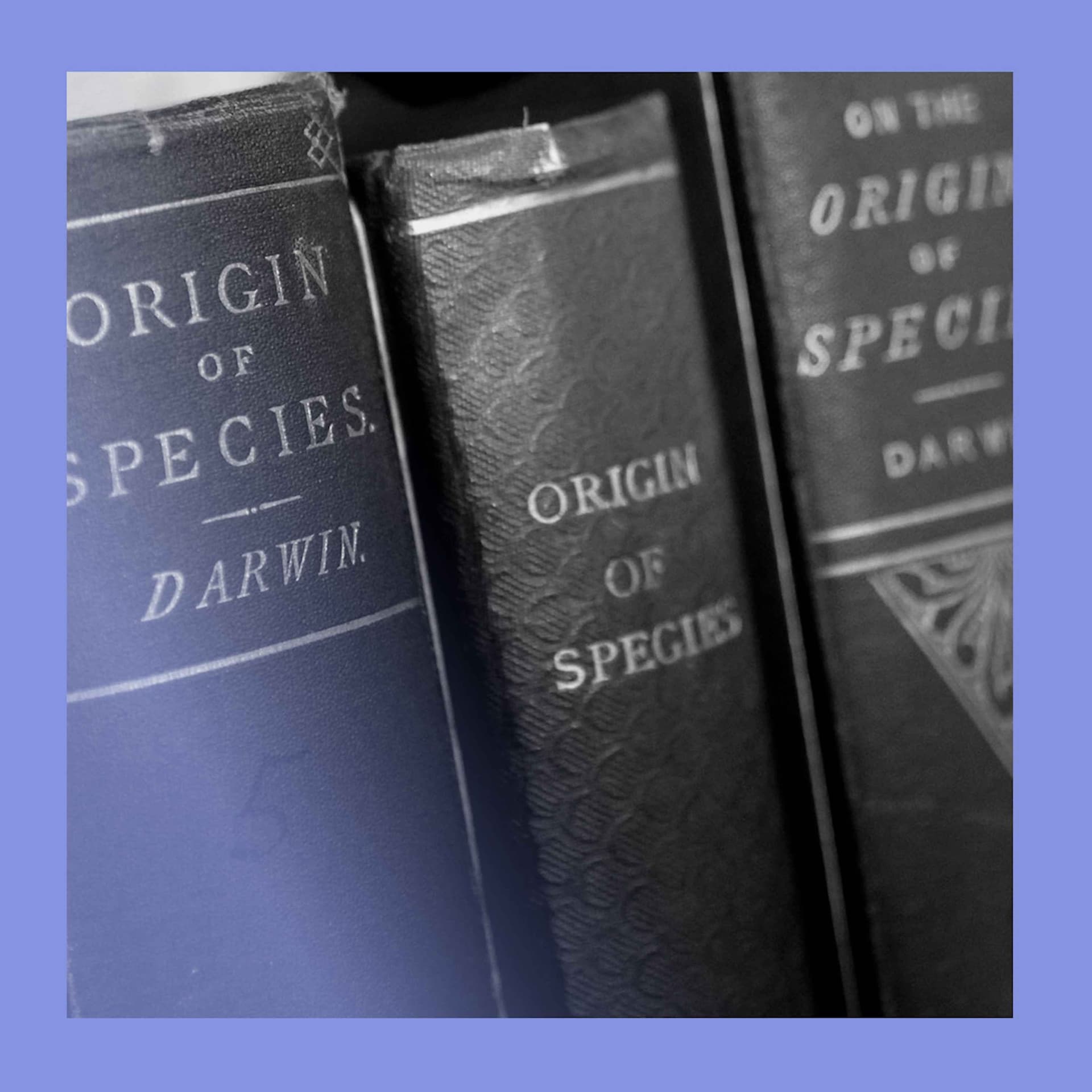
6:41And it transformed everything we did in science from that point forward. Darwin did some very similar stuff. He shook up science in a big way by pointing out that life evolved over time and explaining that that occurred because of natural selection. He also did a lot of the same stuff by backing himself up by getting a lot of expert advice from other scientists who were going to protect him when he came out with his pretty revolutionary ideas. There was a huge cultural element to what Charles Darwin was writing about, too. And that's because Charles Darwin's ideas were taken by human cultures to mean, oh, wait a minute.
7:17So it's not that one species is dominant over another and therefore it evolves and dominates an ecosystem. What if human societies are the same way? So for better or for worse, his book really changed the world in some pretty substantial ways. Oli, I can see a thought brewing. Oh, many thoughts. Go on, what do you think of that suggestion? Well, I think Sagittarius, it's a very interesting book, but it's not about the earth not being the centre of the universe. It's explicitly not about that. You can see this by the fact that the book is dedicated to the Pope. And it's also not that novel in its notion of the scientific method, because, you know, there's lots in there that Bacon or Gostet would be absolutely happy with about the mathematical book of nature, as well as the book of Revelation, the Bible.
8:03But it is interesting, given the way we're talking today, though, that the way to make nature seem like the word of God was to analogize it to a book. So that's a very interesting point, but it's not original to Galileo. On The Origin of Species, Matt's, of course, completely right. It is a world-changing book in that it says something new and true about the world that hasn't been said before. And I think that it's actually more important in some ways for what it says about the world than for what is then done with it by Herb Spencer, who indeed worked at The Economist and others, with notions such as survival of the fittest.
8:37So I think there's no doubt that of the 19th century books which aren't Frankenstein, I would say on The Origin of Species and, you know, either Capital or The Communist Manifesto would definitely be high up on the list. But isn't Galileo a perfect example of the fact that you can change the world even if no one reads your book or indeed doesn't necessarily interpret it correctly? Because Galileo is such a figure in our lives because we know that he challenged the received wisdom on how the world worked and also challenged the religious order. So at the time, that was very striking. And that's what he, for me anyway, represents.
9:15I've definitely never read the book, and I'm never going to. I still think you could make the case that that book changed the world. But you can't because it's not that book. It's the dialogue on the two new sciences, which changes the world in the respect that you're talking about. Isn't it written in the form of a play? No, it's written in the form of a three-corner, whatever a three-corner dialogue is. It's 19th century people go around bigging up the whole idea that these were people like Galileo or even more Giordani Bruno were heroes of science persecuted by the church? Really not so much.
9:47I mean, Bruno was bitterly burnt at the stake, but it was for saying, but it was for saying, I salute your revisionist attempts. But it was for saying not that the earth goes around the sun, it was for saying that the earth goes around the sun and we should worship the sun. You see, that's the difficult thing. That is a rather difficult position. I feel you're slightly angels on pinheads. If you spend the rest of your life... No, 19th century people, there's a huge thing we can come into this about Darwin. There's an urge by 19th century scientists to show themselves as vanquishing religion, which is sort of like self-serving.
10:23Catherine, you write about religion. I'm interested in how the religious authorities responded to Darwin's work. Well, religious authorities were quite... dispersed by that point. I mean, there is the index of prohibited books, which was still going, which if you were brought up as a Catholic in the first half of this century, you would have gone to school and your library books would have been stamped with the imprimatur sign of the Catholic Church. My father had this at his Catholic boarding school, meaning let it be printed. This book is acceptable reading for Catholics. So the religious authorities in some senses had a huge impact on what was printed in Europe and America until relatively recently.
10:59But I think the way that religion changes things is much more subtle than that. I think one of the things with Darwin, as I understand it, is that he hesitated and havered and was worried about publishing it. His wife was very Christian. He himself had been Christian and he has a huge internal wrestle. He doesn't see himself as the sort of flaming sword of truth that's going to kind of decapitate the church. He begins life religious and it's not an easy thing for him to be removed from his religiosity. There's a wonderful account of him finding out about this wasp which reproduces by laying its eggs in the stomach of another animal and then it eats the animal but it eats the animal from the inside out which is no fun for that other animal and he said I cannot believe that a divine all-powerful creator would have created this wasp but that I think is how religious it doesn't work almost always oppression of any kind people think it comes from being burnt at the stake and obviously that's a bit off-putting if you are.
11:59But mostly it comes through the modern equivalent is being flamed on Twitter. It's through feeling socially excluded from your peers. It's through feeling you might hurt people that you love. You put the barriers on your own mind in anticipation of what the other barriers are going to be. So I think that's how religion changes it. And also that with every book that opens a world, another world is closed. So that the Christianity in the Victorian era responded to Darwin, of course, and there's the famous debate with Wilberforce. But if you read books of this era, there's a sense of loss too. People are really sad to have the thing, the comfort, the sucker of religion removed from their lives.
12:41You know, Matthew Arnold on Dover Beach, the long withdrawing rule. Ruskin writes of saying that he wants to believe, but he keeps hearing the damn hammers of the geologists every time he opens the Bible. There are victors in this great game of books and we're talking about them and there are losers and we all lose a little every time with the losers too.
13:05Catherine I feel like you've given us the perfect segue there you talked about barriers in one's own mind and of course they're not always in our mind tell us about your recommendation what book changed the world? So I've chosen Virginia Woolf's A Room of One's Own which changed my life definitely. It was like a thunderbolt when I read it and it has changed women's literature, it has changed women's fiction without a doubt. I mean, Woolf would have done anyway. For those who haven't read her, she was a great modernist of the 20th century, arguably the greatest modernist of the 20th century. Oliver is raising his eyebrows.
13:43I object to having my eyebrows brought into this. I will speak from my diaphragm, not from my forehead. But what's interesting about the book is that we're going to talk, we are talking, we have been talking in quite highfalutin ideals, and her book, A Room of One's Own, is very concrete. And this is one of the things I love about Wolfe. Today, when people talk about feminism, they will use words like patriarchy and structural this and nonsense that, words that I can never, I don't really like writing about things that I can't touch. And I feel that this is what Wolfe absolutely nails in this book.
14:17She is asked to write on women and fiction, and it's a very grand thing. And she says, well, maybe I should offer some thoughts on Jane Austen, or maybe I should say a little bit about Charlotte Bronte. And in fact, what she says is, to write fiction, a woman needs a room of one's own and some money. And that's the really interesting thing, because literary people don't talk about money. Money is sort of beneath literary concerns. I was reading a history of literature, and it had, in the index, it had everything. It had women in literature, dragons in literature, ogres in literature. But money, you would assume that books had just been made by goodwill and brimming hearts that were just eager to take words off the page.
14:55But money matters and it matters to women. And this book is nitty gritty and always concrete all the way through. And it has these wonderful vignettes. It opens with her in Cambridge and she wants to go to a library. And she's walking along the banks of the river and she's thinking about what she's going to write. and just at the moment when she thinks she's sort of a fish of thought has swung through her stream of consciousness she realizes a man is approaching at her and shouting at her and he comes up to her because she's walking on the grass now if any of you have visited Oxford and Cambridge you know it's peppered with signs saying keep off the grass in capitals and she's flustered and she gets off the grass and he says only scholars and fellows can go on the grass and so she says the gravel is the place for me and it goes on like that she goes to the library she's barred from the library she goes to a lunch at a man's college there's drink there's port there's lamb and there's great conversation she goes to a woman's lunch and there's prunes and custard and she says what what do we learn from this about women and fiction and and in fact these are these are nothings being told to get off the grass being not allowed into a library is a bit bigger but eating prunes for lunch why does this matter and she in the course of six chapters tells you exactly why it matters and it's everything.
16:09And she's good on discouragement. We mentioned discouragement earlier. But how small things have big impacts on your life, like discouragement, like not being able to do anything because a little child is coming up to you. And this is the one where she famously talks about Shakespeare's sister. What if Shakespeare had had a sister? And I think that's how many people will remember this essay, but it's full of these wonderful, tiny, yet huge details. It is undoubtedly, from the way you portray it, which is wonderful, one of the great examples of the modern tendency to check your privilege. But she absolutely knows that she does have a room of her own.
16:47Yes, yes. And she's saying, you know, I can't just think my grand thoughts. I have to think about the material circumstances which allow me to have these thoughts. I think that's wonderful. Yeah, and she's very open about how she gets it as well. And she also writes about how much she has paid, which writers don't usually, like often because they're not. But she talks about how much she gets for her first review from the Times Literary Supplement, which I think is probably about the same as you get for a review now from the Times Literary Supplement. But this matters and it matters to writers.
17:15And you can't think if you're not fed. You can't think if you're worried about bills. You can't think if a child is tugging at your apron strings. And I think it meant a lot to me. I mean, I've written a couple of books and both of them I wrote while also looking after small children. and I remember there's an illustration in some books of Gulliver's travels of a picture of Gulliver lying down in the Lilliputian land and he's tied over by a thousand tiny tiny ropes and each rope is tiny yet the overall effect is that he can't get up and I think for those who are struggling this can be what it's like and you need to be free to write.
17:55The best podcasts give you the sharpest view of the world. Adio is the AICRM that gives you the sharpest view of your business. It instantly builds your pipeline by connecting your email, calls, product data, and more. Then ask Adio to prep for a meeting, spot a deal at risk, or find out where your pipeline stands. It's the AICRM that keeps you 10 steps ahead. Ask more from CRM. Ask Adio. Get 10 % off at adio.com slash intelligence. A-T-T-I-O dot com slash intelligence.
18:47move it to your own wallet whenever you want. It works more like real money and less like something locked in an account. For a limited time, new customers can get$10 added to their balance. Just use code CashApp10 when you sign up. And don't forget this part. Send at least$5 to a friend in the first two weeks. Terms apply. CashApp is a financial services platform, not a bank. Banking services provided by CashApp's bank partners. Bitcoin services provided by Block, For additional information, see the Bitcoin disclosures at cash.app.legal.podcast.
19:30Catherine, you've brought us beautifully to fiction. And when we asked colleagues for recommendations of what books they thought had changed the world, one name came up a lot. So to discuss that, I think we're joined on the line by Josie DeLapp, our Middle East editor. Josie, hi. Hi, Rose. You've been listening in, I think. I have, yes, with great enjoyment. I'm amazed you didn't butt in. Tell us about your choice, Josie. Well, as you said, I think Catherine brings us perfectly. It is Pride and Prejudice by Jane Austen. It's the 250th anniversary of Jane Austen's birth this year. So I think there is a lot of attention on it but it is just truly a great book and I think actually a lot of what Catherine was talking about in relation to Virginia Woolf ties in with Jane Austen.
20:19Pride and Prejudice is the story of the Bennet sisters and their romantic and marital adventures and the effect that all of this has on their fortunes. And I think what's so striking about Pride and Prejudice is the way that it takes seriously, although always with a very light touch, the domestic concerns of people, but predominantly women. She sets women up not just as trophies to be exchanged by men, to be won on the battlefield or between rulers, but as actors whose choices have consequences and for whom marriage was understandably the most important thing in their life. That the impact of this choice, which wasn't all about romance, though that was clearly a part of it, but was this incredibly important social and economic institution.
21:21And I think she took that seriously in a way that changed how people think about marriage as an institution and how people think about women's place in society and the significance of their concerns. And of course, it's beautifully written. It's gorgeous. Which is actually surprisingly something that hasn't come up in our discussion about books is that you've got to want to read them. And I'm sure that aside, as you say, from the social commentary and the sort of intimacy of the book. It's also just still a fantastic read. Right. She's funny and she's witty and, you know, she can make your toes curl when Mr.
22:03Collins proposes to Lizzie. You just sit there with, you know, feeling like you just can't wait for it to be over. And she does it with such brilliant dialogue. You know, I think that's one of the reasons why, I mean, Pride and Prejudice in particular, but so many of her books have translated very well to the screen. This is what I was amazed at when I read them. I think I saw Pride and Prejudice before I read it. Yeah. And I thought Andrew Davis, the famous Andrew Davis, Colin Firth, Jennifer Ely adaptation. And I had thought that Andrew Davis was a master of dialogue and then I read it. No, exactly.
22:38He's a master of crossing out the narration. I mean, it must have been like the world's easiest adaptation to do. Her books are more or less plays, aren't they? and they're very, very, very dialogue heavy. Totally, totally. And they're sort of so different from the work of somebody like Thomas Hardy where you have those long descriptions of bleak fields and misery. They just sparkle. I think, though, you've got to speak also to Rose's point, which is that in terms of changing the world, the sheer amount of delight that has been afforded to people for 200 years by Pride and Prejudice should not be set at naught.
23:13No, no, no, it's true. Joy is a much underrated. I remember rereading it in a hotel room in Tokyo and just being absolutely delighted. Josie, stay with us for a minute because I'm interested to know whether you've read another book that a colleague suggested, which begins with a wedding. So it slightly recalls Pride and Prejudice, but very different setting. Here's Shalas Chitnis, who's our global business writer. The book I've picked is called A Suitable Boy by Vikram Seth. I read this as a young student in college for the first time. And on surface, it's a pretty simple story. It's about an Indian mother who wants to find a suitable boy, as the title suggests, for her daughter.
23:55It paints a very vivid picture of India at a time when the country had just gotten independence. And I think it does in a very beautiful way. I think before suitable boy, at least from my perspective, whenever I read English Indian literature, a lot of it was with reference to the West or how the West perceived it. So even though India is probably one of the largest English speaking countries in the world, For a long time in terms of English literature, it took its cues either from Britain or America in terms of how things need to be written. I think two books really broke that mold. One is A God of Small Things by Arundhati Roy and the other is A Suitable Boy by Vikram Seth, the book we are talking about right now.
24:32And I think the reason it was important is because it had a very distinctive Indian voice. And it was set in India that a lot of Indians themselves could identify with, not really an outsider in perspective. So that's the reason I thought it was really interesting. It was also, as I remember, an absolutely giant book. I think it's one of the longest books ever published. It's nearly 1 ,500 pages. I remember it's a whopper, isn't it? That's the thing. I have not read it. That is the sad thing. I have not read it for exactly the same reasons. But Shalesh makes it sound like maybe I really should read it.
Read the full transcript
25:01I wish he was actually with us because I'd like to ask him about Midnight's Children. Yeah, that was a book that came exactly to my mind. Why it doesn't fit in with Set and with Arundhati Roy. And so we'll just have to reconvene next year and find out about that. I will. I had a thought about that as well. But Josie, have you read The Suitable Boy? No, for exactly the same reason. The sheer heft. But as you say, Shailesh makes it sound extremely appealing. And I'm struck by the description of the story and the universality. I think we probably wouldn't talk about Jane Austen and Vrit Mseff very often together.
25:35But, you know, the centrality of the themes of things like marriage and how much they feature in the books that we're talking about. It is a very brilliant book. And it's very kind of satirical and sharp. And it's got this extraordinary backdrop of post-independence India. But you referred to Salman Rushdie there. I mean, I think one of the reasons why Vikram Seth is interesting is because it really does take us into the heart of India. Whereas I think the Satanic Verses was also greatly unread, but was a huge controversy because, of course, of the fatwa. and I think that actually Vikram Seth was one of the early books where we've had such a flourishing of literature from South India that's absolutely set there that hasn't been controversial because someone said this about that it's because it's fantastic literature it is interesting and it does touch on the point of I mean Rushdie said this himself that most people who hated his book had not read his book perhaps for ideological reasons but how books can change things even when no one's read them.
26:35So we're talking about publishing sensations and it feels like it would be remiss not to mention Harry Potter, which was suggested by another of our colleagues. I'm Rachel Lloyd. I'm the Economist Deputy Culture Editor and I would like to offer the Harry Potter books, yes, the whole series rather than just one book, as the books that change the world. And there are many obvious ways in which these books change the world. They've sold more than 600 million copies at the basis of a multi-billion franchise. Harry Potter changed publishing itself. In its wake, umpteen authors tried to find that same magical recipe that J.K.
27:11Rowling had, and very few succeeded. Catherine, why do you think Harry Potter has been quite so successful? It's really interesting. I think books gain a momentum. I mean, they are very good, well-written children's books. They've got a bit of a hammering, actually, as far as I remember, a critical hammering by some when they first came out for saying that they were a mishmash of C.S. Lewis and The Worst Witch and various other like pick your boarding school stories. But I think more recently they've changed the world because she has become an enormously influential, as everyone says, uncancellable figure and has in a time when everyone has been getting conniptions over almost everything, has shown that you can just sort of stick your ground and say things and the sky does not fall in, the world does not collapse.
27:55People can have differing opinions. And I think that is important, actually, for books. In a sense, when more words are being produced than ever, people have become more flustered by words. Perhaps that's natural. And there is a sense of people being more frightened by books. And Oliver was talking earlier about how we shouldn't talk about books, its ideas, but I think they're utterly inseparable. Milton said a book is like a chemical vial into which a person is poured. And that's true. The person matters, but the vial matters too. If the vial is smashed, if you don't have the vial, if you don't have the way of transporting books, you have no ideas.
28:29They will just be dissipated. We would be a totally different world if things were not being held between the pages of books and things that are disagreeable to many. I think that's very true. And indeed, the idea of a person being poured into a vial is a very sort of like pensive type Harry Potter-ish sort of idea. And I think the Harry Potter books, I don't think they're particularly well written. I think they are beautifully plotted. And I think they also have something which is very attractive to people in science fiction and fantasy, which is world building. You can imagine the world. So they are great plots in a fascinating world.
29:05They're also oddly, unusually for children's literature, a progression. I think the only other boarding school books I've ever read have been Jennings and Derbyshire. And as far as I can remember, they stayed the same age. Just Williams stays the same age. These kids actually grow up And I think knowing that one of my beloved nieces grew up at exactly the right age for the books. Yes, it's true. She and Philip Pullman both did the thing that hitherto, that all children's books had existed, a bit like Evelyn Moore says of P.G. Woodhurst, that they're in a world that's pre-fall. They exist in a world where they are perpetually children and no adult kind of sexuality emotions come into them.
29:43And they do come into Harry Potter. And that was a change. And of course, that takes me back to Frankenstein, which I think is useful here for a couple of reasons. One is it's about the creation of a child and the growing up of a child. The other thing is that thinking about J.K. Rowling's attitudes to trans people, I'm very struck by the similarity to the sheer visceral dislike of the idea of a man-made creature. that is the thing that motivates Victor is his repugnance at the idea of this person who we see in the book is a perfectly decent, honourable and good person having been created and having been somehow wrong.
30:21And I think a lot of the attitudes on J.K. Rowling's side of the trans debate are that sort of like visceral sense of wrongness misapplied. I think we might have to agree to disagree on this. On her views, I think, are more about protecting women rather than about what the other side is doing. But that is exactly what Victor is trying to do. He's trying to protect humanity against what he sees as terrible and other. And it seems to me an unavoidable reading that these are people who have been created by men and are in some way usurping a feminine role. I think the reading is inescapable. Josie, I know we're going to have to say goodbye to you in a minute, but did you have any thoughts on this?
31:02I think one of the things that was amazing about Harry Potter it they started coming out when I was well into my teens maybe a little bit older and there are some children's books and the Philip Pullman ones I think fall into the same category that do seem to transcend you know ages I read them happily you saw many adults reading the Harry Potter happily on trains and buses and And so I think what felt particularly striking to me about that series of books was that it wasn't one that either children read to themselves or that parents read to children and then immediately put away. It was one that somehow spread much more widely.
31:43There's a lovely thing in one of the reviews of, I think, one of the first ones or the first or second, a reviewer said that people of a certain age in the future will use words like muggle and see who recognizes them within the room and know that they were another bookish child. And I think that's just wonderful. Apprehension that, yeah, something was happening here, but of no sense of what the scale of the thing would be. No, no, no. But also that Josie touches on something, which is that there is a joy to reading as child, which is sometimes lost in adult books. There is a sense in which those books and Philip Pullman can remind you that books should be fun, which can be forgotten.
32:23Josie, thank you so much. It's been great to have you with us. Thank you, Rosie.
32:39For the next part of the show, we're joined on the line by John Fasman, our senior culture correspondent. Hi, John. Hi, Rosie. Okay, John, tell us what your recommendation is. I chose Lord of the Rings, and I did that for a couple of reasons. The first is that it obviously changed the world of publishing in the sense that it was this sort of popular, secular, pilgrim's progress that laid the groundwork for all the fantasy stories that were to follow. But the reason I chose it is I'm fascinated by its purchase in Silicon Valley. You have companies that have been named for objects from Lord of the Ring like Palantir and Anderil.
33:17And it just struck me that the book's power is that it structurally lets anyone imagine themselves to be the hobbits. Meaning the hobbits were these avatars of pre-industrial Britain who just wanted to be left alone. They were doughty, good-hearted farming folk. And the book, when it came out, was taken up by the sort of countercultural 60s. The counterculture has shifted rightward with the populist right, and it's found enormous purpose there. And so you have these people in Silicon Valley who clearly believe that they are beleaguered by regulation. They're beleaguered by their employees believing different things than they do.
33:55And so it allows people to read themselves into the hero role, even when that reading is plainly absurd, right? Silicon Valley Titans are not beleaguered in any actual sense. They have immense power, but they believe themselves to be persecuted. And this book sort of lets them do it. It gives them a framework for doing that. I'm absolutely sure that Ollie's going to have views on this. Ollie, what's your view on... I disagree with John quite a lot on this. I don't think everyone can identify as hobbits because hobbits are so grounded. It's also absolutely clearly not what people like Peter Thiel identify with.
34:29They identify with the grand sorcery, and frankly, I think they identify quite strongly with Saruman. They know that Mordor is industry and changing the world, and that's what they want. They are pro-Mordor people. It's a book that I'm very, very fond of. I've read it a number of times. I've read chunks of it out loud. It's a wonderful book, but it is also a fundamentally reactionary book. It's really interesting that if you put it into the 1930s debates in Oxford. This is standing with Jan Smuts, who's just invented the idea of holism, that there is a right place for things, that the whole world should be properly organised.
35:06It's not a very disruptive book, and I don't understand their reading of it. Tolkien is so anti-industry, so anti-world changing, and they are so world changing, I do not begin to understand how it is they think themselves into and out of these worlds. I feel this is probably the right moment to fess up that I've never read Lord of the Rings. I've never read The Hobbit. I'm sorry. But you have read Harry Potter. I have read Harry Potter. Which is just as long and much less interesting. John, I'm interested in what you think about what Ollie's just said. If people misappropriate books, does that matter?
35:42Aren't they still changing things? Doesn't matter at all. I think what a book does when it gets out into the world is entirely in the hands of those who read it. And misreading can be just as powerful as reading it in line with the author's intentions. I have one last thought on Lord of the Rings, and it might be a sin to say this on a show dedicated to books, but the movies really are better. I'm going to go with the movie. I read Lord of the Rings when I was 14 and loved it. It was, as Catherine was talking about, it was pure reading pleasure. I tried to go back to it and read it to my own kids, some 20 years later and found it slow and ponderous and overwritten.
36:22And the Peter Jackson films were just brilliant. See those. Okay. Just to tell you... John and I will have a conversation about this later. Okay, well, we've done a big whip round of the great religious works, some science fiction, some fiction, some essays. We are at The Economist, and it would feel appropriate to recommend an economics book that's changed the world. I'm Henry Kerr and I'm the economics editor for The Economist. And it's only fitting that my choice for a book that changed the world is an economics book. It's Thomas Piketty's Capital in the 21st Century. This book was released in 2013 in French and then in 2014 in English.
37:04And after that, it was an overnight sensation. It went to the top of the Amazon bestsellers list in the US, including fiction books, which for an economics book is extraordinary. and what it argued was that the rich world especially was returning to an age of inequality comparable to what prevailed at the beginning of the 20th century and moreover that inequality would rise inexorably as wealth grew greater than income. It attracted a lot of controversy, a lot of economists argued it was wrong. I disagreed with it in large part, particularly the inevitability of inequality rising but there's no doubt in my mind that that book propelled the growth of left populist politicians like Bernie Sanders and in the UK Jeremy Corbyn and really did contribute to that leftward shift in many quarters in the 2010s.
37:56So it was a really important book and had extraordinary influence for an economics book and that's why I picked it. And I think it probably put inequality much more squarely onto the political agenda. Catherine, what do you think of Henry's suggestion? Well, I have to confess that economics is not my strong suit. But I'm struck by both in his book and its effects and in what John said about Lord of the Rings, that emotions have eras. So we think of the Victorians as being sentimental, rightly or wrongly. But there is the feeling of being beleaguered that John said about Lord of the Rings that is picked up by commentators on Henry Kerr's Thomas Piketty.
38:34The emotion of being beleaguered is a very popular one at the moment that if you went back to certain eras would just be almost totally absent you absolutely really do not get that in classical literature for example and this is something that Nietzsche goes on about he blames Christianity for it but the eras can have their presiding feeling whether for good or for ill and it feels like that that is one of ours that I wrote a piece recently about Peter Thiel who feels beleaguered by regulation poor thing. And he attributes that to the Antichrist. And if you take Antichrists as a sort of join the dots through the centuries, because you can look at what each era sees as its own personal Antichrist, you can get a real sense of how people feel wronged in every period.
39:16John, you've been listening in to us. Do you think that books can change the world? Yes, of course they can. Books themselves are inert, but books contain ideas and ideas can change the world and books can deliver ideas in palatable and compelling forms. Books can change the world in the same way that speeches and words can change the world. And I mean, it's an interesting thing that John says there about speeches can change the world. We are, of course, living in an age where people are actually reading less and less complex things. So I'm wondering, are we going to be talking in the future, you know, our TikTok, the TikToks that change the world?
39:51Well, this is the great fear. I mean, we did an analysis of the sentence length of books, and it's dropped by, I think, a third since in 100 years. Yes, of course, the medium is the message and the medium is now speech. People will be able to speak into their phones, they won't read. There's a book by someone called Neil Postman that says, it's called Amusing Ourselves to Death. And the idea is that everyone worries about Orwell. But in fact, the real analogy that we should be drawing is Huxley, Huxley's Brave New World, where you don't have to forbid people from reading books. Nobody's going to be reading books because they're all too busy basically watching telly.
40:28And what's your problem with that? Well, I think it does change things. I think books are... But books change things too. Just changing things isn't a bad thing. No, change is not per se a bad thing. No, of course, we're at The Economist. We are pro. I don't think that anything about my views can be taken from the fact that I work at The Economist. I'm surprised you say it of yours. But I think there is something about a slow, laborious thought formed in your own head, in solitude, with a book that cannot be replicated from the fast food, fast feeding. I feel the analogy is almost with food. In the middle of the 20th century, we realised we can mass produce food and everyone thought, great, yummy, and ate it.
41:11And then we all got fat and realised that actually food is not food. Words are not words. Yeah, but we didn't realize that. We were taught that by people using advertising to try and sell us things that would make them more. It wasn't like we all made a decision. And I think this is what I find difficult about the idea that you and John have, that it's ideas that make the world. Ideas are part of what make the world, but there's an awful lot of material and economic substrata to what makes the world. One of the interesting things about Piketty is the way in which he actually draws out, for instance, the fact that money is an important point in Jane Austen.
41:43It's a large part of his first analysis. At the same time, for a book that's changed the world, someone did an analysis some time ago about the most highlighted passages in various books. And for The Hunger Games, there were highlighted passages right through the book. But for Piketty, they're all in the first two chapters. I think we've well acknowledged that even though there are books that change the world, it doesn't necessarily mean people actually read them. So thank you, Ollie, in the studio, Catherine in the studio, John down the line and earlier Josie down the line. It's been great to have you all here.
42:18I hope that you listening will have some time for that slow, laborious process of reading a book on your own at some point in this holiday period. Thank you very much. Great to have you here. Thank you for having us. Very nice to be here.
42:47Well, that's it for this episode of The Intelligence. Thank you so much for listening. The show's editors are Chris Impey and Jack Gill, and our deputy editor is John-Joe Devlin. Our sound designer is Will Rowe, with help this week from Mark Burrows. Our audio correspondent is Sarah Larniuk. Our senior producer is Rory Galloway. And our senior creative producer is William Warren. Our producers are Henrietta McFarlane and Jonathan Day. Our assistant producer is Anne Hanna, with extra production help this week from Emily Elias and Benji Guy. We'll all see you back here for The Weekend Intelligence tomorrow.
43:31The best podcasts give you the sharpest view of the world. Adio is the AICRM that gives you the sharpest view of your business. It instantly builds your pipeline by connecting your email, calls, product data, and more. Then ask Adio to prep for a meeting, spot a deal at risk, or find out where your pipeline stands. It's the AICRM that keeps you 10 steps ahead. Ask more from CRM. Ask Adio. Get 10 % off at adio.com slash intelligence. ATTIO.com slash intelligence. With no fees or minimums on checking accounts, it's no wonder the Capital One bank guy is so passionate about banking with Capital One.
44:09If he were here, he wouldn't just tell you about no fees or minimums. He'd also talk about how most Capital One cafes are open seven days a week to assist with your banking needs. Yep, even on weekends, it's pretty much all he talks about. In a good way. What's in your wallet? Terms apply. See CapitalOne.com slash bank. Capital One N.A. Member FDIC.
From the publisher
So many books are published each year; few stand the test of time. Today we devote our whole show to asking which works have shaped the way we behave and how we think. Picks include “Frankenstein” by Mary Shelley, “Pride and Prejudice” by Jane Austen, “A Suitable Boy” by Vikram Seth and “Lord of the Rings” by JRR Tolkien.
Full list of books mentioned in the show:
The Bible
The Koran
“Pride and Prejudice” by Jane Austen
“The Hunger Games” by Suzanne Collins
“On the Origin of Species” by Charles Darwin
“Il Saggiatore” by Galileo Galilei
“Two New Sciences” by Galileo Galilei
“Capital in the Twenty-First Century” by Thomas Piketty
“Amusing Ourselves to Death” by Neil Postman
The novels of Philip Pullman
The Harry Potter series by J.K. Rowling
“The Satanic Verses” by Salman Rushdie
“Frankenstein” by Mary Shelley
“A Suitable Boy” by Vikram Seth
“Lord of the Rings” by J.R.R. Tolkien
“A Room of One’s Own” by Virginia Woolf
Hosted on Acast. See acast.com/privacy for more information.