
In short
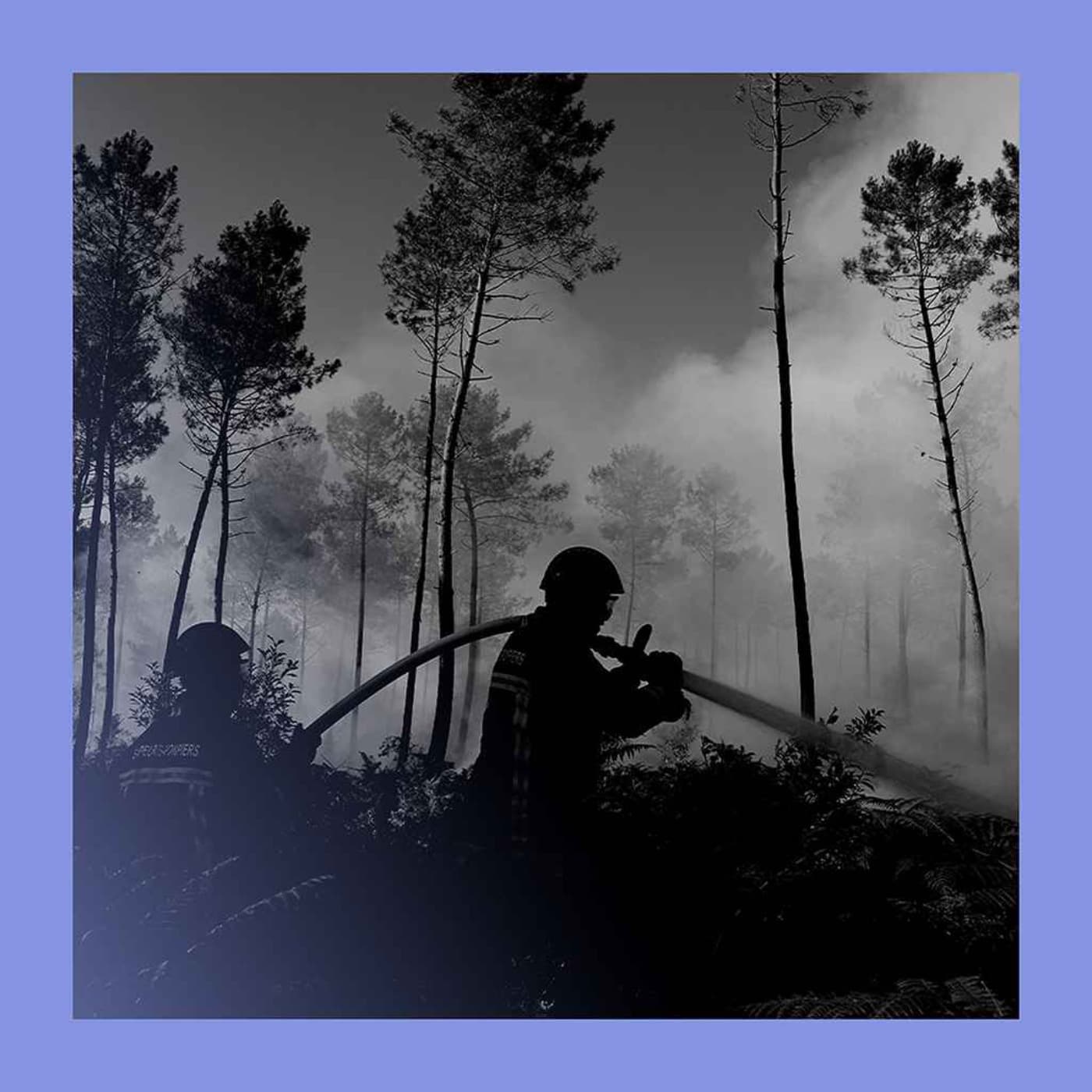
The episode of The Intelligence from The Economist covers three “burning” themes: (1) wildfires and why the world is becoming more fire-prone, (2) “leaning out” in women’s careers and the stalled progress on gender equality, and (3) cities rethinking nightlife regulation through “nightlife mayors.”
Guests and backgrounds
Oliver Morton, Planetary Affairs Editor at The Economist; Vingero Makandawiri, News Editor at The Economist; Daniela Raz, U.S. correspondent.
Key claims
wildfire seasons are lengthening and “extraordinary fires” are increasing; smoke—not just flames—drives most deaths. Women’s workforce progress is stalling (“lean out”), with fewer women seeking promotions and widening pay gaps. Nightlife mayors act as mediators and policymakers to balance residents’ concerns with legal nighttime business.
Notable examples
France/Spain wildfire “unprecedented” scale; Australia’s Black Summer; Canada’s 2023 fires releasing ~4x CO2; Los Angeles record insurance damage; Indonesia slash-and-burn amid El Niño; Goldman Sachs and JPMorgan leadership shifts; U.S. mother participation drop; Boston’s Corinne Reynolds; New York nightlife economy estimated at ~$35B/year.
Written by AI. May contain mistakes. Listen to the episode to check what was said.
Chapters
Tap a time to open that second in VOThe Unprecedented Wildfire Crisis
1:50 to 3:55
Exploring the alarming trends of increasing wildfires and their global impacts.
“It's a word that people, including Francis President Emmanuel Macron, keep using to describe rampant wildfires.”
Smoke Effects and Casualties
3:56 to 5:40
Understanding how wildfire smoke contributes significantly to health issues and deaths.
“the speed at which they spread or the amount of damage that they do.”
Feedback Loops of Fire and Climate
5:42 to 9:16
Analyzing the feedback effects between wildfires, CO2 emissions, and climate change.
“carbon dioxide released in Canada, for example.”
Strategies for Fire Prevention
9:19 to 11:02
Discussing effective methods for wildfire prevention and firefighting improvements.
“And the problem is that if the fires are getting worse and worse, that effort is harder to find.”
The Lean-In Generation's Shift
12:20 to 14:00
Investigating the decline in ambitions among women professionals and its implications.
“had one note, tell listeners it only takes minutes to build an agent.”
The Stalling of Women's Progress in the Workforce
14:00 to 19:12
Explore the recent decline in women's professional aspirations and the factors behind it.
“What is new is the stalling of progress after decades of forward momentum and improvement.”
The Role of Nightlife Mayors
19:12 to 22:31
Learn about the emerging role of nightlife mayors in managing urban economies after dark.
“In the roaring 20s, if more than three people wanted to dance at a bar in New York, they might have been ordered to stop having so much fun.”
Challenges Facing the Nightlife Industry
22:31 to 25:42
Discuss the evolving challenges of the nightlife industry and the push to combat social isolation.
“So she's definitely a night owl, even if she's not necessarily a party animal.”
Transcript
Automatic transcript. May contain errors.0:00With no fees or minimums on checking accounts, it's no wonder the Capital One bank guy is so passionate about banking with Capital One. If he were here, he wouldn't just tell you about no fees or minimums. He'd also talk about how most Capital One cafes are open seven days a week to assist with your banking needs. Yep, even on weekends, it's pretty much all he talks about. In a good way. What's in your wallet? Terms apply. See CapitalOne.com slash bank. Capital One N.A. Member FDIC.
0:32This intelligence podcast is sponsored by Backmarket, the leading global marketplace for refurbished tech. When the kids need phones, laptops, or tablets for school, buying refurbished tech makes sense for families trying to save money without sacrificing quality. At Backmarket, tech costs up to 50 % less compared to new. All devices have been professionally refurbished and come with a one-year warranty and 30-day return policy. Start saving money. Visit Backmarket.com or the Backmarket app to shop now.
1:05The Economist
1:12Hello and welcome to The Intelligence from The Economist. I'm Jason Palmer.
1:21Today on the show, the lean-in generation appears to be leaning out and the American cities rethinking what happens after dark.
1:36First up, though.
1:50Unprecedented. Unprecedented. It's a word that people, including Francis President Emmanuel Macron, keep using to describe rampant wildfires.
2:04Yesterday, Mr Macron said the situation France is dealing with is the toughest since the Second World War. In Spain, near Madrid, the situation is just as tough.
2:22Each use of the word unprecedented in each new country, in each passing year, makes the direction of travel worryingly clearer. More fires, worse fires, more fire-related deaths. As of this morning, the 28th of July, the situation seems extremely, finally balanced. Oliver Morton is our planetary affairs editor. The Spanish authorities have talked about the next few hours being absolutely crucial because in the coming days we're expecting to see an increase in temperatures as things get back into true heatwave territory. And that could be very bad for the Fasnia, Bordeaux, and those west and northwest of Madrid and Spain.
3:08So put this in context for me, because we have spoken about wildfires on the show lots of times before, but this does seem to be at a different scale. Can you put some bounds on this for us? Well, it's at a different scale for the places where it's happening. These aren't wildfires that would necessarily get noticed all that much in, say, Australia or Canada. But it's illustrating a point that is actually applicable more or less all around the world, which is that fire seasons are getting longer, the number of days of intense fire proneness, a very high fire weather index, are also going up. And that means that you're going to be seeing more fires and bigger fire seasons.
3:49But you're also seeing an increase in what some people sometimes call extraordinary fires. Fires that leap out along one dimension or another, their sheer intensity or their size or the speed at which they spread or the amount of damage that they do. So in 2019-20, we saw these extraordinary fires in Southeast Australia mainly, but also across a lot of the rest of Australia, which were called the Black Summer fires. There were the extraordinary fires of 2023 in Canada, where the burning forest gave out four times as much CO2 as Canada produces by burning fossil fuels in a year. And then last year, the fires in Los Angeles did more damage as recorded by insurance companies than any other fires that I think the world has ever seen.
4:40But the actual physical damage, property damage, is really only one dimension of it. Absolutely. The way in which fires kill most people is through the smoke. And this is something that I think people are only really beginning to catch on to now, partly because the world was watching the eastern seaboard of the United States when the World Cup was on. And so when the world's looking at you and you're covered in smoke, that's a way of thinking that the smoke effects really are quite large. And some estimates suggest that a quarter of a million people every year die of the smoke effects of fires.
5:17Something like a billion people a year have an air quality event due to wildfire smoke within their houses for at least one day. And this really does rack up the casualties, and it's something where we're facing a double acceleration because the people most at risk of this are older people, and the world's population is aging, and also the amount of the world that's burning seems to be going up. But in terms of additive effects, you mentioned also about the carbon dioxide released in Canada, for example. Doesn't that create a feedback loop that basically the causes of the fires are released by more fires and so on?
5:52Yeah, as you say, fires release CO2 and that heats the atmosphere further and that's an effect that lasts for centuries unless someone develops a way to take the CO2 out of the atmosphere. They also, of course, produce smoke and that can often have a cooling effect and the degree to which wildfires in the boreal forests of Canada and Russia may be slowing the warming of the Arctic or even slightly cooling the Arctic is an area of active research. It's possible that the extraordinary black summer fires in Australia may have contributed to the conditions that kept the Pacific in its La Nina state for three years on the trot straight afterwards.
6:32These are extraordinarily large things at the top end of the fire range and they can have effects that verge on the global. They also have biological effects. After the black summer fires there was a huge bloom of phytoplankton in the Pacific downwind of them where the smoke was fertilizing the seas and the seas were coming alive in response. And that might slightly reduce the carbon dioxide buildup. The earth is, as I believe we discussed, Jason, a pretty complicated system. Which makes a discussion of where we should expect worse effects even more complicated, I suppose. You mentioned not just that places that get fires are getting worse fires, but places that don't normally get fires will start to get them.
7:13Is there something of a map in your mind as to where to watch for as this gets worse? The next thing to worry about, I think, is probably Indonesia, because there the fires are not necessarily of the same sort. They're often deliberately set because of slash-and-burn agriculture. And we have two seemingly unrelated things happening. One is that the misbegotten war in the Gulf means that demand for biofuels, biofuels, which drive some of the slash and burn, is going up. And at the same time, we have an El Niño effect, the opposite of La Niña, which is drying out that part of Southeast Asia. And so people worried about Indonesian wildfires are looking at a very bad second half of this year.
7:56There's also the risk, as there always is, that there'll be something quite dramatic in Australia. The situation isn't quite like the one that brought about the 2019 wildfires, and fire seasons can be very sensitive to the initial conditions, but you'd look at the objective facts of there being an El Nino going on and what appears to be a positive direction for one of the other big climate markers called the Indian Ocean Dipole, and you worry about the coming fire season in Australia. But as you say, you shouldn't be worrying just about the places where you're used to this, and when you up the amount of fuel by putting in carbon dioxide, which makes plants grow faster, and you also increase temperatures, then bits of the world that like to burn like to burn even more.
8:41Okay, so let's try to simplify then. What could be done under these seemingly worsening conditions to prevent fires? Not fight them, but just prevent them. Well, the first answer is you have to really care about preventing them. And there are lots of things that people know how to do in terms of both landscape management and in terms of trying to control people's behaviors within those landscapes and trying to alter those landscapes with fire breaks and things like that. All these things are not unknown, but how to do them best is not necessarily clear. And they take time and they take real effort.
9:19And the problem is that if the fires are getting worse and worse, that effort is harder to find. What about then in the moment, fighting the fires? What could be done better or what will we need more of? Well, I think one of the things that's rather striking is that satellites do allow you to detect fires very, very quickly now. And in some circumstances, that might be really useful for being able to get to a fire before it gets too big, because after the fire that you stopped from getting started at all, the fire that you stopped when it was still very small is the best kind of fire. Better modelling of how the fires are actually likely to spread, though no one wants to bet the farm possibly quite literally on the model of a fire because they are capricious creatures.
10:00It's possible that if you buy into some thinking about a new golden age of aviation with electrically powered aircraft which we were writing around the paper last week and with drones that don't need to worry about the smoke effects or just the sheer danger of taking people around you might be able to imagine there being some parts of the world by which I I mean, mainly the rich parts of the world, where that could also make a difference in the firefighting. But when I say the different parts of the world, I think one of the crucial things that may be missing at the moment is that there aren't very good mechanisms for places in the world learning from each other.
10:36Many places are seeing increased fire risk. I'm not sure that the question of what best practice is, is being well enough hashed out. And so that's always something to look for. And people's motivation when it comes to fire is pretty high. So I think that we could see just taking best practices from different places could give firefighters in lots of different areas a real edge. And they're going to need it because the task is getting harder. And so they're going to need every advantage they can get. Oliver, thanks very much for your time. Well, I'd say it was a pleasure to be here, Jason, but the circumstances slightly forbid it.
11:14Still, always good to talk to you.
11:48Thank you. Terms apply. See CapitalOne.com slash bank. Capital One N.A. Member FDIC.
12:20had one note, tell listeners it only takes minutes to build an agent. So, minutes. Create your own AI agent today on Monday.com.
12:34At the turn of the millennium, a patient seeing a doctor in the UK was twice as likely to see a man. But last year, the number of female physicians exceeded those of men for the first time.
12:46Rosie Blau:Vingero Makandawiri is a news editor at The Economist. Recently, though, things have started to shift. It seems that the most highly qualified cohort of women in history is starting to lean out. Vingero, what does lean out mean? Well, when you dig into the data on women at work, several indicators are beginning to move in the wrong direction. So in 2024, a study by S &P found that the share of new female executives at American listed companies fell for the first time after nearly 20 years of uninterrupted growth. Progress on boards has also leveled off. Women secured fewer board seats than they did in previous years.
13:31And that's been falling every year since 2020. We're also seeing challenges with retaining senior women. I found that at Goldman Sachs in the last round of partner promotions in 2024, the share of new female partners slipped for the first time in a decade. And a year later, the share of female managing directors fell too. And at the same time at JPMorgan, another Wall Street bank, you've gone from having two women considered frontrunners to succeed Jamie Dimon, the CEO, to now having an exclusively male lineup for the top job. These are not new problems. What is new is the stalling of progress after decades of forward momentum and improvement.
14:14So for years, we watched this progress and possibly mistook it for permanent change.
14:20Rosie Blau:You use the term lean out, which appears to give women agency. How do we know it isn't just a resurgence of sexism? I think it depends on the indicators that you're looking at. We've seen that ambition is shifting as well. So that's women themselves in surveys telling us how much they want promotions, for instance. McKinsey and Lean In, the non-profit started by Sheryl Sandberg, have both tracked that women now want promotions at far lower rates than men. And that's also reversing another decade-long trend. PwC have tracked similar changes in their surveys. So what do the stats show on men? Are fewer of them leaning in too?
15:01No, actually, the share of men wanting promotions has continued to increase. Women's professional aspirations no longer appear to match men's. And that's because at one point, their aspirations were both increasing. But by 2025, it had risen to nearly nine in 10 men wanting promotions. But it remained flat for women. So, for instance, for entry level women, just 69 percent of them say that they want to be promoted. That's compared with 80 % of men at the same level. And a similar pattern was reported by PwC, and that's women self-reporting.
15:37Rosie Blau:So where does this fit into the fuller picture of female participation in the workforce? Well, I'd say that we're seeing progression in the workplace levelling off as well as participation levelling off, and they're feeding into each other. So across the OECD, the share of women in full-time work fell. It was about 78 % in 2023 to 76.8 % a year later. That's a small dip, but it is notable because it's the first one since PwC started tracking the data 15 years ago. But nowhere was that more evident than in the U.S. last year, where hundreds of thousands of women left the workforce. And that amounted to the sharpest drop in participation by mothers with young children in four decades.
16:23That's quite a striking data point. Does this have anything to do with trad wives? Well, it's really interesting that trad wives are going viral online at this very peculiar moment in history. I mean, few women, I think, truly aspire to the aesthetic endorsed by trad wives. But researchers at King's College in London wrote a report on how they think the online appeal of homemade bread and linen aprons actually reflects women's frustration with the demands of modern work. It's less an ideological return to tradition and more a plea for balance. So they think it is a nostalgia. It's actually a warning sign.
17:05Rosie Blau:So talking of warning signs, what's all of this doing to the gender pay gap? When it comes to the gender pay gap, that's opening up again. In the US, the gender pay gap widened for two years in a row in 2024 and 2023. The gap has occasionally suffered annual setbacks, but this marked the first consecutive two-year decline in 60 years. It's also widened in Canada, it's widened in France, in Switzerland, and in the UK, the gap widened for women in their 40s. So why is all of this happening? We've talked a bit about leaning out the possibility of sexism as well. Are there other reasons at play as well?
17:46Well, COVID is partly to blame. The pandemic did set women back on equal pay. So disproportionate numbers of low-wage female workers losing their jobs during the pandemic may have artificially narrowed the gender pay gap. And some of that reasoning widening of the gap may reflect those women piling back into the workforce. But the gap's expansion half a decade after lockdowns ended suggests that there's something else at play. So the difficulty finding childcare is another potential culprit. But we talk a lot about the cost of childcare, but not enough about the quality or availability, particularly if you're dealing with log waiting lists and staff shortages.
18:28Germany, for instance, is considered to have affordable childcare, but it still lacks more than 300 ,000 nursery places for children under three. And at the same time, many companies are dismantling diversity, equity and inclusion policies. Does anyone care? I think women and mothers have clearly noticed. So from an economist's perspective, this many women leaving the workforce represents a potential loss of productivity that's bad for the economy. But it also tells us that despite all these years of progress, the balance between career advancement and family life remains a juggle that corporate environments are still grappling with.
19:11Rosie Blau:Vindgero, depressing stuff. Thank you. Thanks for having me.
19:34Rosie Blau:In the roaring 20s, if more than three people wanted to dance at a bar in New York, they might have been ordered to stop having so much fun. This was the prohibition era, and the cabaret law meant that entertainment venues had to fork out for a costly license. If not, doing the Charleston could turn out to be costly. That arcane law was revived in the 1990s, when Mayor Rudy Giuliani wanted to tackle crime. It pushed much of New York's nightlife underground. Yet these days, New York and many other cities are trying to get things going again and have appointed nightlife czars.
20:19So the nightlife mayor is essentially a bridge between those nighttime economy businesses, clubs, bars, restaurants, and residents who live around them. Daniela Raz is a U.S. correspondent. There are about a dozen or so U.S. cities that have essentially a nightlife mayor. Sounds like a pretty fun job.
20:46Rosie Blau:You say a lot of cities are appointing these nightmares. Who's doing that? And what are they actually supposed to be doing? Yeah, so we're seeing it from big cities like New York City, Boston, all the way down to much smaller cities like Syracuse, which is kind of a college town, and Iowa City. They have multiple parts to their job. One is to just help advocate for these businesses that exist at night. What things do they need? What red tape exists that is kind of stifling their business? and also sort of serving as mediators that help resolve the sort of natural tension that crops up between businesses that exist at night and the people who live around those businesses or use the city during the daytime.
21:31Rosie Blau:And you recently met one of these mayors, right? Can you tell me about them? Corinne Reynolds is, she's officially Boston's director of the nighttime economy. me. She sort of has this job that's equal parts mediator, policymaker, regulator, and also kind of a troubleshooter. And so she described to me some of the stuff that she can be found doing. She describes it as R &D, research and development. If there is an issue with a bar at night that's not really managing their crowds well, she'll go at 2 a.m. and sit and just observe, kind of like and anthropological thing, observe how they're managing crowds spilling into the street and what they could be doing better.
Read the full transcript
22:13You know, if residents complain about noise, she may be nearby with a decibel meter kind of to measure actually how loud is that noise, what needs to be done about it. And then she advocates for all sorts of regulatory positions and policies that would help the nightlife thrive. And she's the first person in Boston to hold this job.
22:31Rosie Blau:So she's definitely a night owl, even if she's not necessarily a party animal. How important is the nighttime economy to cities like Boston or New York? It varies a lot. There are cities like New York, which have a obviously massive after dark scene. And then there are the smaller cities that I referenced, like Syracuse and Iowa City, that want to kind of create more of a nighttime economy, more of a nightlife scene. In New York, they estimate that the nightlife economy generates something like$35 billion a year, supports thousands of jobs. Obviously, it also attracts a lot of visitors. What problem are these nightmares really trying to solve?
23:14Rosie Blau:Is it that cities want to generate more money or is it that there are some people who hate the nightlife and they're trying to deal with the anxiety over the complaints it generates? it's a bit of both i think a lot of it is the latter that nightlife is kind of seen as this thing that you need to control um that you need to punish people who are you know doing illegal things at night the police need to be involved and that's not always the best way to manage nightlife and so these nightlife mayors have kind of come in and tried to rethink how we police and regulate all the activities that happen after dark many of which are you know perfectly legal and good for people's social life and something that we should encourage.
24:00Doesn't the U.S. have quite unusual liquor laws as well? Yeah, so after prohibition, basically, in a classic American style, a patchwork of different state-level laws emerged. So you have some states that are more restrictive, some that are less, but in many you have what are essentially quota systems, where the state government at some level decides that there is a quota on the number of liquor licenses that they will approve. That can be at the municipal level, town level, entire state level, and that really limits access.
24:33Rosie Blau:Daniela, this seems like a surprising time to have these nighttime czars come in. All we seem to hear about these days is that people aren't going out anymore. Definitely. So the nightlife czars, they're not trying to resolve just complaints anymore and noise complaints anymore. They're also trying to, I guess you could say, coax people off of their couches. I spoke with someone who's a nightlife industry consultant, and she described her industry as being in a war against the couch. And you can really see that, at least in the U.S. So between 2003 and 2023, the amount of time that young Americans spent socializing fell by over a third.
25:14And so that kind of means that these nightlife stars now have to think beyond bars and clubs and, you know, sort of traditional nightlife. I think they kind of have to be bigger problem solvers of like, how do you also treat what many policymakers would say is a loneliness epidemic? How do you get people out of their homes, off of their phones, and doing things and socializing and building community, whether that happens at night or during the day?
25:42Rosie Blau:Daniela, thank you very much. Thank you so much.
26:42We'll see you next time. Even on weekends, it's pretty much all he talks about, in a good way. What's in your wallet? Terms apply. See CapitalOne.com slash bank. Capital One N.A. Member FDIC. Monday AI agents took over my work. And I absolutely love it. Chasing deadlines, writing status reports, updating stakeholders. Agents handle the daily grind now. They live inside Monday.com, so they see the full picture. My work, my team, the whole company. and I don't have to worry about the data. It's safe, which means I'm free to focus on the big stuff, knowing everything runs smoothly in the background.
27:20It's completely shifted the way we work. Create your own AI agent in minutes on monday.com.
From the publisher
Wildfires in France and Spain are only growing worse by the day. We examine what can be done as a future of more fires, and worse ones, becomes more assured. A dig into data on women at work shows several indicators starting to move in the wrong direction. And the American cities rethinking how to handle their after-dark economies.
Guests and host:
- Oliver Morton, planetary affairs editor
- Vinjeru Mkandawire, Britain correspondent
- Daniella Raz, US corespondent
- Rosie Blau, co-host of “The Intelligence”
- Jason Palmer, co-host of “The Intelligence”
Topics covered:
- fires, France, Spain, fire ecology
- women in the workplace, equality
- America, night-time economy
Listen to what matters most, from global politics and business to science and technology—subscribe to The Economist.
Hosted on Acast. See acast.com/privacy for more information.