
In short
The episode has three parts: (1) a grim update on the siege turning into mass violence in El Fasher, Sudan; (2) how AI may reduce “rip-off” information asymmetry in consumer markets; (3) why questionnaire/survey response rates are falling and what questionnaires historically changed.
Guests/backgrounds
John McDermott, The Economist chief Africa correspondent; Callum Williams, senior economics writer at The Economist; Catherine Nixie, culture correspondent at The Economist (used in a “questionnaire” segment).
Key claims
El Fasher’s RSF takeover marks a de facto partition of Sudan and is linked to evidence of mass murder; AI can help consumers negotiate and file complaints more effectively, but may hallucinate and sellers will counter with their own AI; questionnaires are declining in popularity, with UK survey response rates dropping sharply.
Notable examples
RSF sand-and-dirt walls blocking supplies; UN estimate of 60,000 displaced in 48 hours; WHO says ~500 hospital patients were massacred; Gen Z “upload car contract to ChatGPT”; AI-assisted used-car/rental negotiation experiments; UK Labour Force survey response rates falling from ~70% to ~20%.
Written by AI. May contain mistakes. Listen to the episode to check what was said.
Chapters
Tap a time to open that second in VOCurrent Situation in Darfur
0:56 to 2:48
A look into the humanitarian crisis escalating in El Fasher, Darfur.
“The information onslaught of the early internet did a lot to banish what's called information asymmetry between sellers and buyers.”
The RSF's Control and Strategy
2:48 to 4:00
Discussion on RSF's tactics and implications of their control in Sudan.
“Yesterday, aid agencies called on both sides in the conflict to allow more aid to enter the region.”
Political Landscape and Future of Conflict
4:00 to 7:10
Analysis of the political situation and potential outcomes in Sudan.
“So much so that the RSF had actually built these walls made of sand and dirt, making it hard for people to get out and hard for supplies to get in, including food and fuel and rearmaments for the military there.”
Lessons from Past Atrocities
7:10 to 9:10
Lessons learned from past genocides in Darfur and the world's response.
“There have been multiple efforts over the years and none of them have come close to fruition.”
Apathy and Global Attention
9:10 to 10:22
Discussion on the world's fractured attention to ongoing crises.
“And I would argue that we're doing so with an even more fatalistic attitude than we did in the mid-2000s.”
Understanding Market Distortions
11:07 to 14:00
Exploration of information asymmetry and its impact on consumers.
“What every one of us here at The Economist hates?”
The Role of AI in Consumer Empowerment
14:00 to 17:56
Explore how generative AI tools are changing the dynamics between consumers and producers.
“And your argument that in some way, AI, generative AI is just going to solve all this for us.”
The Evolution of Questionnaires
17:56 to 19:13
Understand how questionnaires have developed and their impact on society and data collection.
“Thanks very much as ever for your time, Callum.”
Historical Perspectives on Surveys
19:13 to 22:48
Dive into the historical use of questionnaires and their influence on modern thought and policy.
“Catherine Nixie is a culture correspondent for The Economist.”
Critique of Questionnaires in Society
22:48 to 24:19
Examine the criticisms surrounding the use of questionnaires and their effect on individual identity.
“asking them about their thoughts on their capitalist owners.”
Transcript
Automatic transcript. May contain errors.0:00You want to get your backyard summer ready, but you don't want to break the bank? Wayfair gets it. Planning on dining al fresco or relaxing poolside? Wayfair has everything you need to prep your space. Shop now and save up to 70 % off during Wayfair's 4th of July clearance. Score huge deals on outdoor furniture, area rugs, and more. We're talking thousands of products for every style and budget. Plus, surprise flash deals July 6th. Don't wait. Shop Wayfair's 4th of July clearance now through July 6th at Wayfair.com. Wayfair, every style, every home.
0:35The Economist
0:42Hello and welcome to The Intelligence from The Economist. I'm your host, Jason Palmer. Every weekday, we provide a fresh perspective on the events shaping your world.
0:56The information onslaught of the early internet did a lot to banish what's called information asymmetry between sellers and buyers. Now artificial intelligence is making consumers even more informed. Welcome to the end, the rip-off economy. And information flows the other way. Consumers and citizens are endlessly asked to answer questionnaires. But they're clearly losing enthusiasm for the quizzing. We look at surveys as a literary genre, one that is apparently dying a slow death.
1:34First up, though.
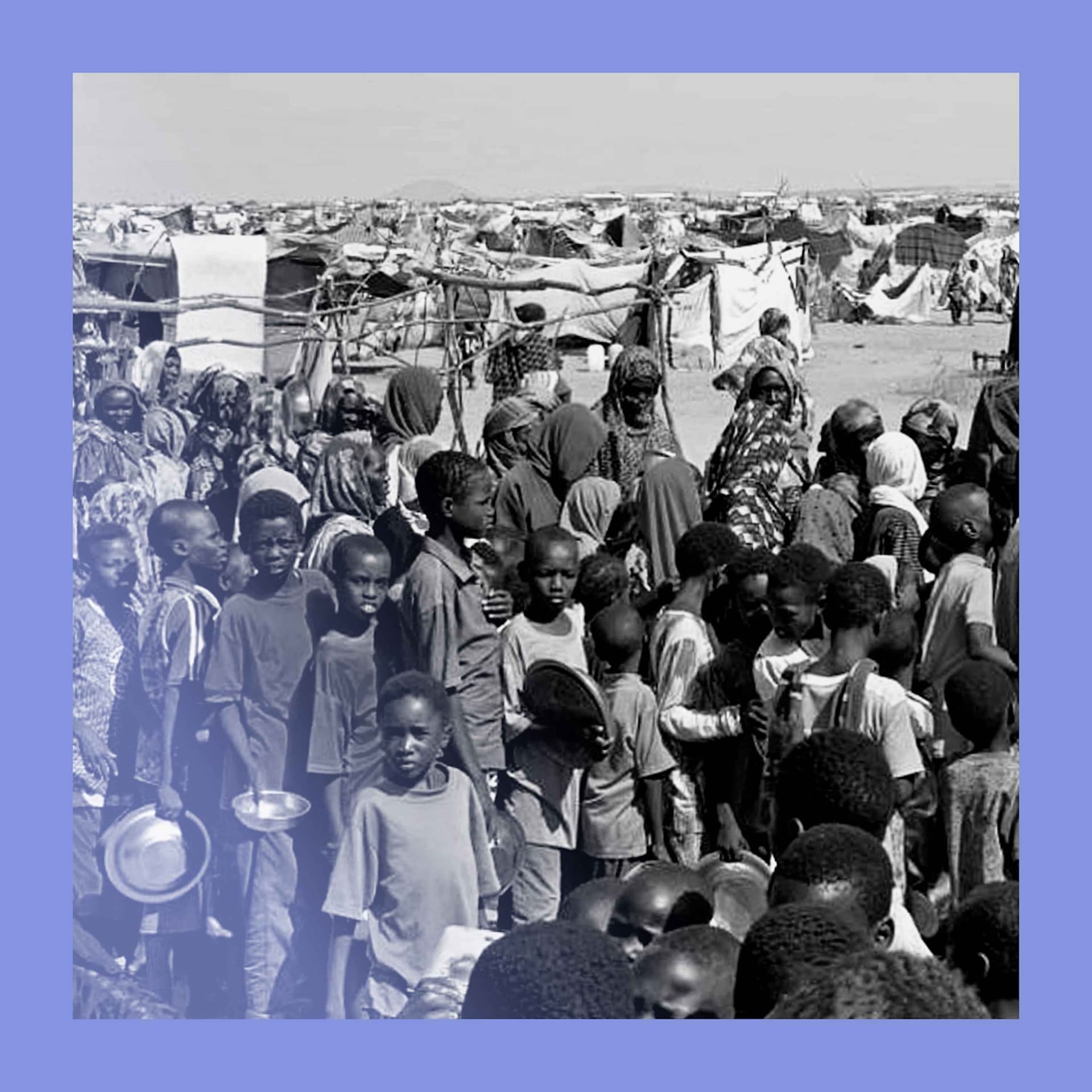
1:45In El Fasher, the capital of Sudan's western Darfur region, a brutal year-and-a-half-long siege has now turned into brazen massacre. Last week, the Rapid Support Forces, or RSF, a paramilitary group, finally drove out the last remaining troops of the government's Sudanese Armed Forces, or SAF. As they did, thousands of residents of Al-Fashur fled to camps further afield.
2:15One woman escaped with her two-month-old grandchild after her daughter and son-in-law were killed in the onslaught. A spokesperson for the United Nations estimated that in the course of just 48 hours, more than 60 ,000 people were displaced. Our humanitarian colleagues tell us that North Darfur state remains catastrophic with ongoing attacks against civilians, humanitarian access to El Fasher cut off, and desperate people continue to flee towards Tawila and other towns seeking safety. Yesterday, aid agencies called on both sides in the conflict to allow more aid to enter the region. This should sound familiar.
2:57Siege, starvation, wanton violence, alleged war crimes. The world watched and recoiled when it all happened in Darfur two decades ago. This time, so far, the international response has been very different. The atrocities happening in and around El Fasha are the most horrific of an already horrific war. John McDermott is our chief Africa correspondent. They mark a turning point in the conflict, which has raged since April 2023. But they also represent a humanitarian emergency. So just bring us up to the present moment, John. What do we know about what's going on in El Fasher? For the past 18 months, the Rapid Support Forces, or the RSF, have been tightening a noose around the city.
3:47El Fasher has around a quarter of a million people. And it's been the last place in the west of the country, in Darfur, that the conventional army, the SAF, has had a base. And then over the past few months, there's been an escalating siege. So much so that the RSF had actually built these walls made of sand and dirt, making it hard for people to get out and hard for supplies to get in, including food and fuel and rearmaments for the military there. And essentially what happened last week was that the SAF decided to pull out. It said to spare civilians. I think it's more likely that they were trying to save themselves because since that evacuation and the RSF's formal seizure of the city, there's been growing evidence of mass murder.
4:40And there's still a lot we don't know about the scale of the violence, But from satellite imagery, from phone videos that RSF fighters have taken, and from eyewitness reports of people who have managed to flee the city, it looks like there are mass summary executions, especially of men, but also just indiscriminate shooting of anyone trying to flee certain exit points. I think in one of the most chilling pieces of evidence to date, the World Health Organization has said that almost 500 people, essentially every single patient in one of the remaining functioning hospitals were massacred after the RSF took the city.
5:18So there's still a lot we don't know, but everything we do know is grim and getting grimmer. So what is it that the RSF is actually trying to achieve here, John? It's a good and very relevant question. Their seizure of L-fascia marks the de facto partition of Sudan into a west around Darfur and some of the Kordefans run by the RSF and the Allied militia, and then the east, including the capital Khartoum, controlled by the conventional army. And some people have suggested that the only good thing that could potentially come out of the taking of this city is that it simplifies the conflict. But my understanding is that the RSF is not merely satisfied with controlling Darfur, this landlocked, mostly desert part of Central Africa, but aspires to national relevance.
6:11So I still think that you will see a push by the RSF to take more territory, even if they're not going to try and retake Khartoum, which fell earlier this year to the army. they will at the very least use the bloodshed that they've caused as a negotiating tactic as they try and reach a political settlement that favors them. But from what you're saying, it sounds as if the conventional forces, the SAF, essentially abandoned Al-Fashir. Are they just sort of giving up that Western part of the country now? What's next for the actual army? It's unclear. The army says they haven't given up trying to fight for Darfur.
6:49But on the battlefield, I think the next thing to happen is that you'll see intensified fighting in the Kordofans, which is the region to the east of Darfur. But ultimately, I think you also have to consider what's going on politically. You have these two major belligerents who have shown absolutely zero interest thus far in coming to the table and trying to form not just a beast deal, but even a simple ceasefire. There have been multiple efforts over the years and none of them have come close to fruition. As it happens, just as the RSF was about to unleash its terror on al-Fasha, there was a meeting of the so-called Quad of Countries, led by the United States, also involving Egypt, Saudi Arabia, and the United Arab Emirates, who were meeting for the first time in Washington with delegations of both the RSF and the SAF.
7:41Now, it's easy to think that those negotiations will now collapse because of what's happened in al-Fasha, and perhaps in the short term they will do so. But ultimately, it's very hard to see either side being entirely victorious militarily. So there will have to be some political solution at the end of the day, albeit one that's going to come after an incredible loss of life and suffering. As we saw 20 years ago in Darfur, the contours of the battle are different this time, but the situation is getting on towards the same. Are there any lessons to be drawn there? Many, many lessons. Listeners may have heard of Darfur because of the genocide meted out by the mostly Arab Janjaweed on the mostly Black African population of Darfur in the mid-2000s.
8:29And the RSF is a kind of mutated version of the Janjaweed, which initially was commissioned by the then Sudanese dictator Omar al-Bashir to quell the population in that part of the country and is now this paramilitary force having briefly taken power in Khartoum alongside the army that it's now fighting against. So in many ways what we're seeing is the same patterns of genocidal violence committed by the same group albeit in a slightly different political era. But there's another point when you bring up the past and Darfur in particular it's that we as a collective of humanity have allowed this to take place again.
9:12And I would argue that we're doing so with an even more fatalistic attitude than we did in the mid-2000s. Despite the fact there is satellite images literally showing pools of blood on the ground in El Fasher, there's been essentially silence from both the administration in Washington and ordinary people. The United States is relatively less powerful and certainly less interested. I think there's also potentially a second difference with the mid-2000s, which is that, albeit belatedly, what was happening in Darfur triggered the collective outrage of humanity, especially in the West. You may remember George Clooney and other celebrities trying to highlight the issue.
9:52There were street protests against what was happening by the Bashir regime and the gingerweed. This time, I feel that our collective attention is so fractured and spread across many different conflicts, it's all too easy to just kind of scroll down on your phone to see the next atrocity. What's happening in El Fasher should shock us, it should provoke us to action, but the tragedy is, or some people are calling the alarm, nobody appears to be listening. John, thanks very much for your time. Thank you, Jason.
11:00We'll be right back. Rise Flash deals July 6th. Don't wait. Shop Wayfair's 4th of July clearance now through July 6th at Wayfair.com. Wayfair, every style, every home.
11:16You know what I hate? What every one of us here at The Economist hates? Market distortions. And one of the most enduring, most pervasive, most distorting is information asymmetry. A seller knows the quality of the product and what it's probably worth, or how well they're going to perform a service. Buyers? Buyers get lemons. They get leaky plumbing or crappy financing. But maybe one of the upsides of the artificial intelligence revolution is that that will happen less and less. The rip-off economy. This is something that has existed ever since the world started buying and selling things. Callum Williams is a senior economics writer for The Economist.
12:01Looking back at the medieval period, grocers in England used to use fake scales to give their customers less food than they thought they were getting. At least apocryphally, pubs would put salt in the beer to make their patrons thirstier and therefore buy even more beer. The internet did make it harder for companies to screw over their customers. Lots of data, lots of reviews. And so that means that, for example, running a tourist trap restaurant today is a lot more difficult than it was back in say the 1980s it's much more difficult today to get kind of screwed over by a taxi driver who pretends not to know the right way so there's been progress in that sense but what is clear is that there are plenty of ripoff industries that remain our argument is that with ai the days of those ripoff industries may be numbered so when you say ripoff industries remain which ones are we talking about.
12:57So there's loads that you could point to, but a classic example might be the building trade. Let's say you're getting a renovation of a house or something in your house has gone wrong and you need to get a build around. Most people don't know the first thing about HVAC or paint or plumbing. And that means that you're at the mercy of a bad actor who can say, oh yes, this repair should cost $10 ,000 or£20 ,000. You don't really know if they're telling the truth or not. There's lots of other examples. So estate agents will lease or sell houses with issues that only become apparent once you've actually moved in.
13:30Lawyers provide loads of bad advice. It's very hard in the moment to know whether it's good or not. Doctors often recommend the most expensive treatments. And then the public sector has this problem too. So bureaucrats will make loads of decisions that affect your life very directly that are very difficult to understand. So the IRS will give you a tax penalty that you didn't expect. Planning officers will reject a planning application for reasons that are, again, a bit tricky to understand. Our estimate in the US is that it amounts to hundreds of billions of dollars a year as an effective tax on consumers.
14:01And your argument that in some way, AI, generative AI is just going to solve all this for us. We just run it through chat GBT and all the advice is good and all the plumbing is going to be sweet. Well, I mean, I think it will solve a lot of what we're talking about. So for example, there is now this meme among people in Gen Z that if you go and buy or lease a new car, the first thing you have to do is to take a photo of the contract and upload it to ChatGPT. And that will tell you if there's any issues with the contract. Because of course, often car dealerships make a lot of money from the financing of the car rather than selling the car to you itself.
14:34So that's one example. Look at the building example. If your tap is leaky or not working properly, yes, I have personally used ChatGPT to help me to understand what the fundamental issue is. And so when the plumber comes around, you're much less liable to be taken for a ride. There are actually now companies that use AI to give you an advantage in the market. So one example would be a company that monitors refundable hotel bookings. And basically, if the hotel that you've booked becomes cheaper, the company will cancel your hotel and rebook at the lower rate. So what we're seeing is the beginnings of a shift where the playing field is becoming a little bit more level between consumers and producers.
15:12And as far as we know, so far, putting Gen AI to use actually does give the consumer the advantage. There is a little bit of research that looks at this question. And yes, it does appear to be quite effective if used appropriately. So there's a study, for example, that looks at negotiations in an experiment where people are negotiating over buying a used car and then also doing a rental. And yes, the experiment shows that people who interacted with an AI model that gave them advice did a lot better than people who didn't. And there's another paper that looks at complaints that people make to the Consumer Financial Protection Bureau in the US.
15:46And what you find is that people who use AI to help them to write their complaint are more likely to see a successful outcome to their case than people who don't. So yeah, I mean, it's early days, but it is actually quite encouraging. Well, what you said there was if used appropriately, I think there's probably a lot of complexity in there now since, well, not least because the AI isn't always right, I guess. Right. So the trick is to be able to use AI in a way that educates you rather than simply parroting what the AI tells you. As we all know, AI can hallucinate, they can miss the point. And so the best thing is to use it as a learning tool.
16:21So that's the first thing. And again, there is some experimental evidence that suggests that people are actually quite good at using it in that way. I think another thing to bear in mind is that sellers will probably start to fight back with their own AI tools. So you could have a situation, for example, today, where if you use ChatGPT with your plumber, the plumber will be slightly cowed by your use of the technology and will give in to you. But say in a few years' time, the plumber may have his or her own AI tool that tells them something that is counter to what your AI tool is telling you. So it will become a kind of battle of AIs rather than a battle of people.
16:56So I'm going to have to settle on a price with the plumber by letting our AI bots just chat about it. Theoretically, yes. Or there could be some company that plays a sort of trust pilot role where both sides agree that the AI is fair and acts as a kind of arbitrator. I don't think that's unrealistic. Of course, you do have to think about not only the question of is the AI hallucinating, but also is the AI being honest? Now, there is this growing interest among advertisers in so-called generative engine optimization. This is kind of like the search engine optimization, but for AI. And the idea is that you want to be able to provide information to the internet in such a way that it comes up in the results of AI chatbots.
17:39If that becomes more sophisticated, then you could have a situation where you actually don't know whether the AI is being totally honest. So yes, still at an early stage, but I think there is a reason to believe, not least because of what the internet did, that the playing field between consumers and producers is going to become a little bit more level. Thanks very much as ever for your time, Callum. Thanks, Jason.
18:29If the AI bubble is about to burst and what it would mean if it did, we'll be chatting through all the new developments together and showing you tech demos in our new video studio in London. Our first show is out tomorrow for full subscribers and you can watch it on demand anytime afterwards on the economist app or website. Then we'll be back every month. It's all very exciting. Well, we're excited, Alex. So we hope you'll join us in the future.
19:03The Questionnaire, as questionnaires tend to, began simply. What, asked question one, is her name? Catherine Nixie is a culture correspondent for The Economist. Then, because witches can be tricky types, the questions on this 17th century form took a tougher turn. Question 28 asked, when did she first keep the company of the evil enemy? This was followed by queries on whether she'd crippled anyone, question 68, did help exhume children, question 71, and, of course, whether she shapeshifted, question 75. While question 77 asked bluntly if she did regret this advice. Questionnaires have always been a trial, but in early modern Europe, more literally so than usual.
19:55The questionnaire is a largely ignored literary form, but it has changed the world. Interest rate decisions are in part based on them. GDP is calculated using them. Sexual revolutions have been spurred on by them. There are insistent inquiries. Are you M or F? White, black, Asian or other? And so on. It's hard now to buy a product or run a country without one. Britain currently questions its citizens on everything from their religious habits, to their sexual ones, to their drugs ones. One national survey asks, thinking only about the last time you took drugs, which drug did you take? Or at least, Britain tries to survey its citizens.
20:46Britain is currently suffering from what is widely being called a crisis in survey response rates. Responses to Britain's Labour Force survey, which helped central bankers to set interest rates, have fallen from around 70 % in the late 1990s to around 20 % now. Response rates to surveys on the cost of living, crime and health have also declined precipitously. Quite what is causing this crisis is not clear. A fall in civic-mindedness is one possibility. A fall in attention spans, some surveys take 45 minutes, is another. What is very clear is that the questionnaire is in trouble. This would little surprise their earliest users.
21:30The witch trials died out. The format did not. By the 18th and 19th centuries, English Enlightenment ideals, if not always enlightened travellers, were spreading across the world. And with them went lists of questions that were used to quiz everyone from farmers, to northerners and, of course, foreigners. Quite when such lists of questions gain that air, and their scientific air, is debated. Most credit the one sent in 1874 by Francis Galton, a polymath and eugenicist, who would later survey where the prettiest women in Britain were. London, he thought, and the most hideous. Aberdeen, apparently.
22:13But first he surveyed the English men of science on their nature and nurture, asking them about everything from their education, to their energy levels, to the measurement of the inside rim of their hat, which some of those men of science found slightly distressing. Charles Darwin said that answering such questions was impossible. But such distaste did not matter. The prospect of studying mankind en masse was too tempting a tool for intellectuals to ignore, though respondents still remained reticent. In 1880, Karl Marx sent 25 ,000 copies of a questionnaire to the workers of the world, asking them about their thoughts on their capitalist owners.
22:52The workers of the world, who were presumably far too busy working, did not respond.
23:01In America alone in the 1940s, Gallup used the questionnaire to ask, what is the common man thinking, thus laying the foundations of modern opinion polling? Alfred Kinsey, a biologist, asked the American Mail about premarital petting, premarital intercourse with companions, and about animal contacts, thus laying the foundations of modern notions of sexuality, and some quite odd ideas about bestiality. While Isabel Briggs Myers, a novelist, asked people whether they A. eat to live, or B. live to eat, thus laying the foundations for a lot of nonsense. Daniel Medina, an academic I spoke to, says that questionnaires have changed how we view ourselves.
23:44Not always, many felt, for the better. Humanity, having put itself into boxes, promptly felt boxed in by them. In 1945, the British poet W.H. Auden was sent to Germany with the United States Strategic Bombing Survey to, as his fellow surveyor put it, go round and ask the Germans how they felt about being bombed. Not good, was the short answer. Ordon was repelled by the process of sifting and organizing humanity. Thou shalt not answer questionnaires, he later wrote in a poem. Britons, it seems, are now listening to Ordon. Whether they will feel better without questionnaires is, to say the least, questionable.
24:34That's all for this episode of The Intelligence. We'll see you back here tomorrow.
25:22We'll be right back. Wayfair's 4th of July clearance now through July 6th at Wayfair.com.
From the publisher
The paramilitary Rapid Support Forces have at last taken El Fasher, the capital of Darfur. Reported atrocities are sharply rising, in a chilling echo of what happened in the region two decades ago. Artificial intelligence is narrowing the information asymmetry between sellers and buyers, spelling an end to the “rip-off economy”. And why the literary genre of questionnaires is fading.
Get a world of insights by subscribing to Economist Podcasts+. For more information about how to access Economist Podcasts+, please visit our FAQs page or watch our video explaining how to link your account.
Hosted on Acast. See acast.com/privacy for more information.