
In short
Economist Podcast Summary
Podcast Title
Economist Podcasts
Podcast Description
Every weekday, a global network of correspondents makes sense of the stories beneath the headlines, covering trends and tales from around the world including current affairs, business and finance, as well as science and technology.
---
Episode Title
Chapo, Mayo, Mencho: another Mexican kingpin falls
Episode Description
The targeting of El Mencho, a leader of one of Mexico's largest gangs, has led to an anticipated wave of violence. The episode explores the implications of this event alongside insights into the changes in Russia after four years of war and unexpected tips for marathon training.
Guests and Host
- Sarah Birke - Mexico City Bureau Chief
- Arkady Ostrovsky - Russia Editor
- Tim Cross - Senior Science Writer
- Ainslie Johnstone - Data Journalist
- Jason Palmer - Co-host of “The Intelligence”
---
Key Topics Covered
- Mexico: Cartels and gang violence
- Russia: Economy and the impact of the Ukraine war
- Running: Training techniques for marathons
---
Detailed Notes
Section 1
The Fall of El Mencho
- Overview:
- El Mencho was the leader of the Jalisco New Generation cartel, one of Mexico's most powerful and brutal gangs.
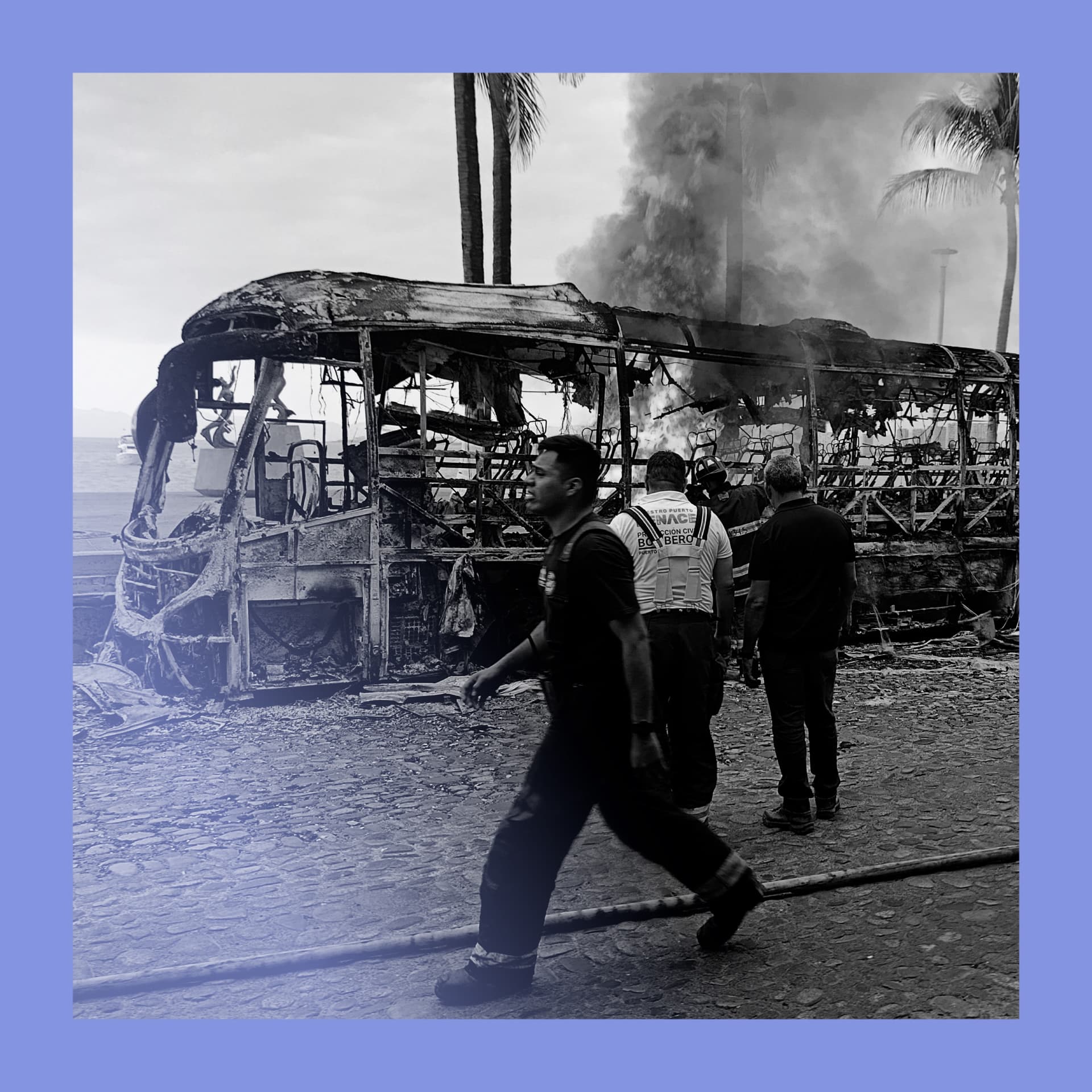
- His capture led to immediate violence across at least 15–20 states, including roadblocks and attacks on public transport.
- Long-term Implications:
- Historical patterns suggest that the removal of cartel leaders often leads to fragmentation and internal conflict, potentially escalating violence.
- The Mexican government faces pressure from the U.S. to address gang violence amidst the upcoming World Cup, which will be co-hosted in Mexico.
- Government Response:
- Claudia Sheinbaum, Mexico’s president, has prioritized security since taking office, leading to increased intelligence and law enforcement initiatives.
- Despite the capture being a tactical success, experts caution that the lasting impact on security and stability remains uncertain.
Section 2
Changes in Russia Post-War
- Daily Life Impact:
- Urban Russians attempt to maintain normalcy despite the war, coping with disruptions in travel and communication due to sanctions and military actions.
- Many people have begun to rely on VPNs for internet use due to increased surveillance and restrictions.
- Economic Conditions:
- The Russian economy is bifurcated into a military-focused sector and a struggling civilian sector.
- Widespread asset redistribution has destabilized property rights and hindered investment.
- Social Dynamics:
- Returning veterans face difficulties reintegrating into society, with many employers reluctant to hire those with military backgrounds.
- There is a growing sentiment of despair and uncertainty about the future among ordinary Russians.
Section 3
Marathon Training Insights
- Training Findings:
- Contrary to common belief, training for marathons effectively can involve running at slower paces more often rather than focusing solely on speed.
- An observational study indicated that elite marathon runners log significantly more miles than slower counterparts, primarily at a low intensity.
- Key Training Concepts:
- Lactate Threshold: The point at which fatigue sets in, important for endurance.
- VO2 Max: The maximum rate of oxygen consumption.
- Running Economy: Efficiency in running mechanics.
- Training Recommendations:
- Runners should focus on increasing volume through slower runs and allow for tapering before races to enhance performance.
- A well-structured training plan should include gradual increases in distance while maintaining a low-intensity focus.
---
Conclusion This episode offers a profound look into the multifaceted challenges facing Mexico and Russia, highlighting the immediate chaos that follows a significant gang-related event in Mexico and the deeper societal and economic shifts in Russia caused by the ongoing war. Additionally, it provides valuable insights into effective training strategies for marathon runners, emphasizing a balanced approach to endurance training.
Written by AI. May contain mistakes. Listen to the episode to check what was said.
Chapters
Tap a time to open that second in VOEl Mencho's Capture and Its Aftermath
1:40 to 4:40
Explore the implications of El Mencho's capture and the resulting violence in Mexico.
“the simple aim is to get faster and faster when training.”
Understanding the Jalisco New Generation Cartel
4:40 to 7:40
Learn about the structure and operations of the cartel led by El Mencho.
“And tell me more about the gang that El Mancho headed.”
Political Pressures and Security Strategies
7:40 to 9:30
Discuss the political pressures facing Mexican leaders and their security strategies.
“We should not read anything into the fact it's tailed off or not too much.”
Future Implications for Mexico
9:30 to 14:03
Analyze the potential long-term effects of cartel fragmentation and violence in Mexico.
“www.warbyparker.com materials like impact-resistant polycarbonate and custom acetate.”
Economic Challenges in Russia Amid War
14:03 to 18:47
Explore the complexities of the Russian economy and societal impact of the war.
“growth figures is not something that is useful for ordinary Russians or that's something that can be counted as investment in Russia's future.”
Putin's Trap: Stagnation and War
18:47 to 19:16
Understand how Putin's choices are ensnaring Russia in a cycle of war and despair.
“big changes come later than you think and earlier than you expect.”
Optimizing Running Performance
20:35 to 25:55
Discover how different training regimens impact running efficiency and performance.
“Okay, so Ainsley, you did the data deep dive for this Well-Informed.”
Transcript
Automatic transcript. May contain errors.0:00Jason Palmer:That new thing? Yeah, we've got it. The Drop by GNC, bringing you all the newness that matters. Handpicked by the pros who actually know what's up and what's proven to work. We keep you on top of the trends and dialed into what's next. Whether you're crushing it at the gym, leveling up your game, or thriving every day, The Drop by GNC is where the latest solutions in health and wellness land first. Non-stop innovation and fresh finds daily. Explore what's new and what's next on The Drop by GNC. If you work in university maintenance, Grainger considers you an MVP because your playbook ensures your arena is always ready for tip-off.
0:38Jason Palmer:And Grainger is your trusted partner, offering the products you need all in one place, from HVAC and plumbing supplies to lighting and more. And all delivered with plenty of time left on the clock, so your team always gets the win. Call 1-800-GRAINGER, visit grainger.com, or just stop by Grainger. For the ones who get it done.
1:05Sarah Birke:The Economist
1:12Sarah Birke:Hello and welcome to The Intelligence from The Economist. I'm your host, Jason Palmer. Every weekday, we provide a fresh perspective on the events shaping your world.
1:26Sarah Birke:After a look yesterday at the impact of four years of war on Ukraine, today we get a rare look inside Russia. And we have some surprising advice for runners. You might think that if you want a good marathon time, the simple aim is to get faster and faster when training. We dig into piles of data to find a more nuanced plan.
2:04Sarah Birke:First up, though.
2:13Sarah Birke:A Mexican journalist can't even get the question out before President Claudia Sheinbaum cuts in with the answer.
2:28Sarah Birke:What guarantees are there that the World Cup will happen at this venue? All of them. All the guarantees, she replies. It's a fair question. On Sunday, a notorious drug lord named Nemesio Rubén Oseguera Cervantes, and known simply as El Mencho, was captured and mortally wounded. In scenes that Mexico has seen before, that sparked grotesque violence on the streets. Not the kind of press that one of the World Cup host countries wants right about now, and Ms. Sheinbaum wants to calm nerves. But even though things seem to have quietened down for the moment, experience suggests that the violence is not over.
3:10Ainslie Johnstone:Elmenger was the head of the Jalisco New Generation cartel, which is one of the two biggest cartels in Mexico. And it's in fact the one with the biggest national spread, most brutal and incredibly diversified in terms of what it's into.
3:24Sarah Birke:Sarah Burke is our Mexico City Bureau chief.
3:26Ainslie Johnstone:He was a 59-year-old former policeman who has headed this cartel since the start and probably Mexico's most wanted person. But this killing threatens to have a very long-term impact on the country for good or potentially for bad as well.
3:41Sarah Birke:Well, the for bad for now is that there seems to be widespread violence since his killing.
3:46Ainslie Johnstone:He was captured and died on Sunday and immediately violence broke out after that. So at least 15 to 20 states, there was roadblocks, there was torching of buses, airlines had to cancel flights. People who were visiting the tourist resort of Puerto Vallarta, which is in Jalisco state where he was captured, were told to shelter in place. So a huge amount of violence across the country. By Monday, things had calmed down quite a lot. And by Tuesday, things were getting somewhat back to normal. But the concern is this is not over yet, because what happens and we've seen in the past in Mexico and in other countries is that when you take out the head of a cartel, often you get fragmentation, internecine conflict, and that ends up generating more violence.
4:29Ainslie Johnstone:So while everyone thinks this is a huge success taking out Il Mencho, which undoubtedly it is, I mean, it's a huge coup for the Mexicans and also pleases the Americans, this could generate a lot more violence.
4:40Sarah Birke:And tell me more about the gang that El Mancho headed.
5:10Ainslie Johnstone:violence, incredibly well armed and equipped. It has things that can shoot down military helicopters from the sky. And it uses drones as well to dump explosives in areas. So this cartel is an amalgam of affiliated groups up to around 92 by some estimates. And it was a very vertical command structure because Almentra was very good at keeping everyone in order, particularly because of just his complete utter ruthlessness in terms of using violence. But that makes it also very prone to fragmentation. So if there is no succession plan, or if the people who were killed alongside him happen to be part of that succession plan, what you might see is this fragmentation.
5:49Ainslie Johnstone:Just to give you another idea of this group and the challenge it poses to the Mexican authorities, in 2020, it tried to assassinate in broad daylight in a very rich district of Mexico City, the then city security chief, who is now the federal Security Minister Omar Harfouche. It failed, but it was something that people didn't think could have happened before.
6:10Sarah Birke:And so if you say this is a group that's particularly prone to fragmentation, and it is that kind of fragmentation and inter-Necine fighting that leads to the violence, why take out El Mancho at all? Why go about it that way?
6:22Ainslie Johnstone:I think there are two reasons for that. Claudia Sheinbaum is very serious about security. Since she came to power around 18 months ago, she has really made it clear that she is going to do something about the dire security situation in the country, which is a break from her predecessor. So she's boosted intelligence capability. She's appointed a very professional, good security minister who she also worked with in the city. And the second thing is she's under a lot of pressure from her American counterpart, Donald Trump, to do more to tackle criminal groups in the country. And he's threatened to carry out unilateral American strikes if she doesn't do so.
6:56Ainslie Johnstone:So the Mexicans are under a huge amount of pressure on this. I also think this is a security team that knows what they're doing. So while they have taken out a kingpin and this might cause them immense problems, this isn't necessarily the start of a return to the kingpin strategy, which Sheinbaum herself has on numerous occasions criticised. And I think everyone within Mexico and beyond is aware of the dangers. But I think she might have been pushed into this because it was such a valuable target. It's one that the Americans were really after. And indeed, it shows the capabilities that the Mexican forces have.
7:27Ainslie Johnstone:Everyone across the political spectrum is very impressed by this operation.
7:31Sarah Birke:And you said what started as quite a sharp spike in violence has already kind of tailed off. Do you think that's the end of this episode or just the end of this chapter?
7:40Ainslie Johnstone:We should not read anything into the fact it's tailed off or not too much. What you see is often there's a lull of a few weeks, sometimes even months, as groups figure out what they're going to do, arm themselves, make the alliances they need. We saw this when one of the big leaders of the Sinaloa cartel was arrested and taken to the US in summer 2024. And there was a bit of violence and then there was a calm or more or less a calm. And then in September, war in Sinaloa state broke out between the two factions of the cartel. And that violence continues to this day. And the government, despite having sent thousands of troops, is unable to quell it.
8:17Ainslie Johnstone:So there is still a huge risk of this, one that in fact, the security minister mentioned in a press conference a couple of days ago. And they're going to have to be very alert to any sense of anything breaking out, because if you don't immediately tamper down the flames, that can threaten to become an epidemic of violence. And this all matters and comes at a very crucial time for Mexico. This is not just about Ms. Sheinbaum and her legacy, which she has staked on security, but it's also about the economy. Jalisco Estate is an extremely important business hub and investment hub. But moreover, or more interestingly, the World Cup is going to be co-hosted by Mexico, the US and Canada in just four months time.
8:56Ainslie Johnstone:And one of the matches at least is scheduled to be played in Guadalajara, the capital of Jalisco. So if there is any form of huge, violent fallout from this, it's very likely to affect Mexico in many, many different ways, including affecting the World Cup. So what happens between now and then is really crucial. And not just Mexico, but the world's eyes will be on it.
9:20Sarah Birke:Sarah, thanks very much for joining us.
9:22Ainslie Johnstone:Thanks for having me, Jason.
9:49Jason Palmer:www.warbyparker.com materials like impact-resistant polycarbonate and custom acetate. And they start at just$95, including prescription lenses. Get glasses made from the good stuff. Stop by a Warby Parker store near you. When you manage procurement for multiple facilities, every order matters. But when it's for a hospital system, they matter even more. Grainger gets it and knows there's no time for managing multiple suppliers and no room for shipping delays. That's why Grainger offers millions of products in fast, dependable delivery, so you can keep your facility stocked, safe, and running smoothly.
10:27Jason Palmer:Call 1-800-GRAINGER, click grainger.com, or just stop by. Grainger, for the ones who get it done.
10:46Sarah Birke:The narrative in a country that's been invaded is clear-cut. Terrible, but clear. The narrative for the invading country can be a lot more subtle. In Russia, no one voted for the war in Ukraine. They were told it would be quick and righteous and, in its way, glorious. They now know better. Our Russia editor, Arkady Ostrovsky, has been speaking to people on the ground, including a network of local reporters, to get a sense of how the war is affecting day-to-day life and how that has changed over four long years.
11:20Tim Cross:If you're in a big city like Moscow or St. Petersburg or Yekaterinburg in the Urals, you have a very strange experience. experience. On the one hand, you see posters, advertising, recruitment, but on the whole, you don't see any presence of the war. But you experience it and life has changed in the way people travel, in the way people communicate, in the way people fear, in the way they cover up their phones. So actually look closer and the war is everywhere.
11:51Sarah Birke:Let's talk about people who live in the cities who are being told to pretend as if the war isn't happening. What ways has the war changed life for them?
12:02Tim Cross:Most Russian people are trying to live their normal life because they never chose this war. They never wanted this war. The vast majority wants this war to end as soon as possible. So they're kind of trying not to let it impinge on their life. And war is impinging. Let's say you get into a car and you have to drive somewhere and you have a set nav in your car. You can't really use it because the spoofing, which is aimed to confuse Ukrainian drones, makes it impossible to use navigation. So your navigator might show you you're 50 miles away from where you are. Airports do get shut down a lot because of the drone threats.
12:41Tim Cross:Flights get cancelled. Travelling to Europe, which is what a lot of urban middle class Russians used to do, is now really a forgotten experience. There are no direct flights. You can get to Turkey, you can get to Georgia, Armenia, you can fly to Dubai, but you can't fly to Paris and you can't fly to Berlin. And even flying within Russia can be hazardous and risky because sanctions means that servicing and maintenance and spare parts are hard to get. And of course, perhaps the most immediate thing is communicating with each other. When I was in Moscow before the war, very few people used VPN. Now for socially mobile, Russians, VPN is just a fact of life.
13:24Tim Cross:But all these things, of course, create the sense of isolation and create the sense of abnormality, even if you've adapted to them.
13:33Sarah Birke:And what about on the business side of things? How have things changed there?
13:37Tim Cross:Russian economy effectively consists now of two parts, money that's been thrown at war and into military industrial sector. That's what generates growth that you see in the figures, although that growth has now slowed down. That part of the economy produces stuff that is designed to be destroyed. All that stuff which shows up in the increased output and therefore in economic growth figures is not something that is useful for ordinary Russians or that's something that can be counted as investment in Russia's future. The second part of the economy, it's the services, it's the restaurants, it's the clothing, it's timber, it's metal constructions.
14:20Tim Cross:That part of economy is doing a lot worse now. Because what's happening is that the first part of the economy, the military industrial sector, is sucking out resources from the civilian economy. Now, the resilience of Russian business is quite extraordinary. It lived through crisis to crisis, It's learned to deal with a corrupt legal system, learned to navigate in all sorts of ways. But what's been happening lately, I think, exceeds all of this. The biggest problem is complete lack of property rights. Russia, since the beginning of the war, has been going through one of the biggest redistribution of assets in its modern history.
15:01Tim Cross:And it started with foreign companies that left Russia and their assets been just grabbed and redistributed to cronies and to people close to Putin and close to the war. And then it went on to Russian businesses. Some 500 Russian companies have been effectively expropriated under all sorts of excuses. You know, something can be strategic. The Domodedovo airport I used to fly in and out of, that's been grabbed from its owner. In that environment, investment just doesn't make any sense.
15:31Sarah Birke:And one thing we haven't talked about, which must be very present for people on the ground in Russia today, is the veterans, the people who are coming back from the front as much as the ones who are not.
Read the full transcript
15:41Tim Cross:So if you're in a big city, or you go to an airport, or you're on the train, you're very likely to bump into somebody who is wearing camouflage, who's a participant in the special military operation, which is how the war is known. You don't so much see them hanging around in bars or restaurants. They keep to themselves. You can see how ordinary Russians are actually trying to avoid any contact with them. They're trying to avert their eyes. If basically what you're trying to do is not to let the war into your life, then this unwelcome reminds us. And people are scared of this man. They don't see them as heroes.
16:21Tim Cross:They come back and they're having difficulty finding jobs because a lot of employers don't want this man. They didn't have many skills before they went to war and the skills they had in the war, they're not needed now.
16:32Sarah Birke:It's not a good advertisement for any sort of onward recruitment drive, right? There is still a grand need for more people to go to the front, go into what you've called many times the meat grinder.
16:42Tim Cross:Yeah. And that's still going on, although getting people is harder. As one foreign diplomat put it to me in a very crude but true terms, Putin has found the way to monetize desperately poor and, in his view, useless lives. He's created this deathonomics. If you sign up, you get a one-off bonus, which is about 35 ,000 euros, plus you get about$2 ,000 a month, which is a lot. Russia now spends nearly two and a half percent of its GDP, the equivalent of the entire Russian budget deficit on getting this man. And it's getting more expensive and it puts pressure on the economy, but it's struggling to replenish the losses because it uses a lot of this man just as cannon fodder.
17:33Sarah Birke:All of this, Argadi, speaks to a kind of unsustainability on the recruitment, on the robustness of the economy, around business being able to be done, around the sheer number of men available to throw at the front. This doesn't sound like it can carry on.
17:46Tim Cross:I don't think this is very sustainable for a long time. What you see in Russia is now a contradiction, and people are realizing that something is just not right. And the hardest thing that people have described to me when I talk to them is this sense of complete lack of future. There is a Russian word for it, and the word is безвремение. And it means literally the absence of time. That's when time goes on, but your own lifetime has been frozen, unable to plan, unable to think what comes after, unable to imagine it. And for now, at least, the best thing that people can do is defending their normal life against all the stuff that Putin has inflicted on them.
18:33Tim Cross:In four years, I haven't seen a mood quite as dark as it is today since the very beginning. And this is not a prediction. But sometimes in Russian history, as somebody once said to me, big changes come later than you think and earlier than you expect. Those are not necessarily changes for the better.
18:56Sarah Birke:Arkady, thanks very much for joining us. Thank you for having me. As Arkady was hinting at there, the one man who could put a stop to this war is resolutely choosing not to. In a way, he can't. That's the topic of the latest episode of Insider, our subscriber-only video series. Arkady joins our top editors and correspondents to discuss how Vladimir Putin is stuck in a trap of his own making. Find Insider on our app every week.
19:36Ainslie Johnstone:Okay, so I'm here to tell you about marathon training. The surprising thing about marathon training is I think most people think you've got to train really, really hard if you want to do well. But the finding from this huge scientific study is that actually the best way to race fast is to train very slow.
19:57Sarah Birke:Very slow. Yeah. Now, Ainsley, you are not only a data journalist at The Economist, but apparently a running enthusiast.
20:04Ainslie Johnstone:Yeah, I've done a couple of marathons, some trail marathons as well, just to spice things up a little bit. But most of what I've learned for this piece has definitely come from the literature rather than from my own experience.
20:18Sarah Birke:And Tim Cross here in the studio with us too. You're our science correspondent, but you also write the Well-Informed newsletter, often edit the Well-Informed pieces, this strand of science articles tackling real-world questions about how to live better or run better, I guess. You're also an enthusiast.
20:32Arkady Ostrovsky:Wouldn't say I was an enthusiast. I do a couple of runs a week to keep fit, but it's not my favorite sport.
20:37Sarah Birke:Okay, so Ainsley, you did the data deep dive for this Well-Informed. What did you find?
20:43Ainslie Johnstone:So probably the first thing that's useful to think about is what actually makes you good at running. There are three things, all of which you can train, but there's also a genetic component. So the first is your lactate threshold. So that's the point at which lactate builds up in your muscles faster that it can be cleared away. The feeling tired stuff. Yeah, you physically feel that. What that actually means is a little bit complicated, but yeah, it's basically that point that you can feel the real burning in your muscles. The second is VO2 max. So that is the rate that you can actually use oxygen.
21:17Ainslie Johnstone:You can actually take it in and get it to where it needs to go. And then the final part is running economy. So that's basically just how efficient you are at traveling a certain distance in a certain time. That depends a lot on your physiology. So, you know, the length of your legs, the calf to thigh ratio, all of that's very important. But it's also about your technique as well.
21:38Sarah Birke:So those are the things that we're trying to optimize. How did you get into them?
21:43Ainslie Johnstone:Yeah, so the question, I guess, is what works best? What's the training regime that really is best for improving all of these three things? And that's actually quite a difficult question to answer from the data that's out there. There aren't really any good randomized control trials.
22:01Sarah Birke:But Tim, you're a long-term man of science. You must have seen studies looking into exactly these questions before, how all of that relates to running performance.
22:09Arkady Ostrovsky:Yeah, so the best studies in a given field tend to be randomized control trials. So ideally what you would do is you would take some large number of people and give them training plan A and some large number of people and give them training plan B and see who end up running faster at the end of it. That hasn't really been done in running. We have small studies that look at maybe a few dozen people, but nothing really big. One of the things that we did manage to find, though, was a very big observational study that looked at data on Strava, which is one of these exercise apps where you can log all the training you do.
22:40Arkady Ostrovsky:they managed to get hold of information from about 120 ,000 runners looking at the 16 weeks before they ran a marathon. So what that lets you do is look back in time and you can divide the people into people who ran the marathon quickly and people who didn't run quite so fast and see what the differences were in their training plans. And that might tell you something about how well those training plans work. Giant pile of data.
23:03Sarah Birke:This is where the data journalist comes in.
23:05Ainslie Johnstone:Yeah, well, it wasn't my number crunching, but I got to dig into the paper that was written by some of these academics. What they found was that comparing the fastest marathon runners, so that was people who were running the marathon in about two to two and a half hours. Goodness. Very quick. Serious. To the slowest people. They found that the fastest runners were running around three times more distance each week in their training. So really a lot more. They also had more sessions per week, which I guess makes sense to fit all that in. But crucially, what they found was that most of this additional time, almost all of this additional time that these runners were spending and running these distances was done very slow, just a really low intensity, jogging easily.
23:50Sarah Birke:Running an absolute ton, but not really going very hard at it. Why might that be?
23:55Arkady Ostrovsky:Yeah, so I wonder if there are several things going on here. One is we know generally from exercise that volume matters, right? The more you do, the fitter you get. we also know that intensity matters but the problem with that is it's just not physically possible to train really hard day after day after day after day because what the training does is it makes you tired it fatigues you and it sends a stimulus to your body saying okay we need to improve things we need to build more mitochondria in our muscles we need to have more capillaries to get oxygen there and so on it's when you're resting that you're actually getting fitter and
24:23Sarah Birke:stronger so take home message here is i should be running as far as i can each time as often as i can each week and kind of taking it easy.
24:32Arkady Ostrovsky:Yeah, I think that's essentially right. One twist, I guess, is that if you're training for a race, as the race starts to loom when it's a few weeks away, you probably want to be running less and less. You want to taper, as they call it. The training sends the stimulus, but it's the rest that actually makes you fitter.
24:48Ainslie Johnstone:Yeah. Yeah. There's some numbers actually that came up in my research that were pretty amazing. So increasing your taper from just one week to three weeks, so starting to come down on the training volume three weeks before, can increase your performance by 3%. So improve your time in a marathon by 3%, which if you're trying to get a PB, that can make a really big difference.
25:10Sarah Birke:Personal best for the amateurs out there. So what if I follow all this advice to the letter, how much faster will my notional marathon be?
25:21Ainslie Johnstone:It's going to obviously vary on your experience in running, but if you want to try and run the best marathon you possibly can, it's definitely worth just getting out there for another extra run.
25:31Sarah Birke:And Tim, as for well-informed more generally, what else is coming down the pipe?
25:35Arkady Ostrovsky:So we've got a piece coming out soon looking at the RFK diet.
25:40Sarah Birke:Raw milk is in there, I'm sure.
25:41Arkady Ostrovsky:Beef is in there. Beef and butter and cheese. Lots of beef and butter and cheese is in there.
25:45Sarah Birke:I may unwittingly already be on the RFK diet. He's very keen on protein. And I should point out that other burning questions of listeners and viewers should be sent to wellinformed at iconist.com. And Tim, you will help to tackle them for now. Thank you both for joining us and, well, see you out on the pavements, I guess.
26:00Ainslie Johnstone:Thank you, Jason.
26:00Sarah Birke:Thanks, Jason.
26:20Sarah Birke:That's all for this episode of The Intelligence. We'll see you back here tomorrow.
26:37Jason Palmer:If you work in university maintenance, Grainger considers you an MVP because your playbook ensures your arena is always ready for tip-off and Grainger is your trusted partner. Offering the products you need all in one place. From HVAC and plumbing supplies to lighting and more. And all delivered with plenty of time left on the clock. So your team always gets the win. Call 1-800-GRAINGER, visit grainger.com, or just stop by. Grainger. For the ones who get it done. That new thing? Yeah, we've got it. The Drop by GNC. Bringing you all the newness that matters. handpicked by the pros who actually know what's up and what's proven to work.
27:19Jason Palmer:We keep you on top of the trends and dialed into what's next. Whether you're crushing it at the gym, leveling up your game, or thriving every day, The Drop by GNC is where the latest solutions in health and wellness land first. Non-stop innovation and fresh finds daily. Explore what's new and what's next on The Drop by GNC.
From the publisher
The targeting of “El Mencho”, the leader of one of the country’s two biggest gangs, has resulted in a predictable spate of violence—more of which is virtually assured. We take a rare look inside Russia to see how four years of war has changed the country. And some surprising advice on how to get your best marathon time.
Guests and host:
- Sarah Birke, Mexico City bureau chief
- Arkady Ostrovsky, Russia editor
- Tim Cross, senior science writer
- Ainslie Johnstone, data journalist
- Jason Palmer, co-host of “The Intelligence”
Topics covered:
- Mexico, cartels, gang violence
- Russia, economy, Ukraine war
- Running, training, marathons
Get a world of insights by subscribing to Economist Podcasts+. For more information about how to access Economist Podcasts+, please visit our FAQs page or watch our video explaining how to link your account.
Hosted on Acast. See acast.com/privacy for more information.