In short
The episode of The Intelligence from The Economist covers three segments. First, COP30 in Belém, Brazil: Indigenous activists protested the lack of Indigenous voices; 10 protected territories were demarcated to reduce deforestation; a fire disrupted the Blue Zone.
Key claims
the US formally snubbed COP30 (historically responsible for about a fifth of emissions), many countries missed submitting updated 2035 emissions promises (over 70, including India), and the final text avoided mentioning fossil fuels. Notable example: negotiators failed to start a fossil-fuel phase-out roadmap despite COP28 commitments. Second, Bitcoin: Mike Bird says bullish catalysts may be exhausted; Bitcoin’s price fell from about $126k to low $80k; correlations with tech stocks raise spillover/contagion risk. Third, sperm whales: researchers (Cetacean Translation Initiative) found whale “codas” resemble human vowel formants, using AI trained on human languages; whales may intentionally produce discrete “vowel-like” sounds and diphthongs.
Guests/backgrounds
Katrine Bragg (Environment editor, The Economist); Mike Bird (Wall Street correspondent, The Economist); Lane (in-house language expert, The Economist). Hosts: Rosie Bloor and Jason Palmer.
Written by AI. May contain mistakes. Listen to the episode to check what was said.
Chapters
Tap a time to open that second in VOCOP30 Context and Overview
0:30 to 0:54
An overview of COP30's setting in Brazil and its significance.
“Our focus across infrastructure, energy, real estate, private equity, and credit is helping to build the backbone of the global economy.”
COP30 Context and Overview
1:27 to 3:17
An overview of COP30's setting in Brazil and its significance.
“When Bitcoin was launched almost 17 years ago, it sounded like a mad idea.”
Challenges Faced at COP30
3:17 to 4:47
Discussion of the challenges faced during COP30, including absence of key players.
“and implementation is proving trickier than pledges.”
COP30 Outcomes and Implications
4:47 to 6:47
Analysis of the outcomes from COP30 and their implications for climate action.
“whether indigenous people can maintain their way of life as their environment changes, or whether they're going to be forced into cities like Belém, and whether those cities will be able to accommodate them.”
Successes and Failures of COP30
6:47 to 8:27
A look at the successes and failures of COP30 in addressing climate change.
“But the data has shown that we're really quite far off the mark on these targets.”
The Future of Climate Policy
8:27 to 10:47
Exploration of the future of climate policy and the role of COPs.
“But what you really want to see right now is stuff that's going to put the brakes on global emissions.”
The Future of Climate Policy
12:23 to 12:48
Exploration of the future of climate policy and the role of COPs.
Bitcoin's Rise and Impact
13:45 to 14:00
A discussion on Bitcoin's journey and its current position in global finance.
“Mike Bird is our Wall Street correspondent.”
The Rise and Challenges of Bitcoin
14:00 to 21:22
Explore Bitcoin's evolution, its mainstream acceptance, and the emerging issues it faces.
“It's made itself the predominant cryptocurrency.”
Whale Communication and Linguistics
21:22 to 27:23
Delve into the fascinating study of sperm whale sounds and their resemblance to human language.
“The Web of England The clicking sounds you're hearing now are from sperm whales.”
Show all 11 chapters
Reflections on Impact and Philanthropy
28:00 to 28:31
Explore the speaker's thoughts on scaling businesses and philanthropy.
Transcript
Automatic transcript. May contain errors.0:00To grow beyond limits and even beyond your aspirations, you need the London Business School MBA. Ranked fourth in the world by the Financial Times, the program delivers academic excellence and unlocks access to leading global businesses and a network of over 58 ,000 professionals. 86 % of the most recent class accepted a role within three months of graduating, and the returns continue beyond today. Search Discover London Business School MBA to find out more. At Brookfield, we invest in the thing behind the thing behind the next big thing. Our focus across infrastructure, energy, real estate, private equity, and credit is helping to build the backbone of the global economy.
0:42We combine deep operational expertise with disciplined long-term investing, uncovering value, and partnering alongside clients to shape tomorrow's economy today. Brookfield. Own what's next. Learn more at brookfield.com. This is not an offer to sell or investment advice. Investing involves risks, including loss of capital.
1:05The Economist
1:12Hello and welcome to The Intelligence from The Economist. I'm Rosie Bloor. And I'm Jason Palmer. Every weekday we provide a fresh perspective on the events shaping your world.
1:27When Bitcoin was launched almost 17 years ago, it sounded like a mad idea. Now it's widely accepted. But some investors have got a little jittery of late. Could crypto have run its course? And the effort to make sense of the vocalizations of whales has thrown up an intriguing finding. They use vowels. We discuss what that means for them and for our ability to understand them.
2:04First up, though.
2:12Most inhabitants of Berlin were too busy to care about the 30th edition of the United Nations Annual Climate Conference, or COP. Alessandro Ford writes about Brazil. In an Uber ride into the Brazilian city, my driver grunted when I asked what he thought. We passed people queuing for buses, hurrying to work, or wolfing down a quick pastel de queijo, cheese pasty, and goiaba juice at the popular food trucks. Yet the decision to hold COP here was a strategic one. It is at the forefront of the climate crisis. Hot and steamy, every day the rains crash down. Every winter, the Guamá River breaks its banks, and some 40 % of the city sits below sea level.
2:59Some locals worry the waters will one day swallow the city whole. There was lots of hope for this COP, Brazil having birthed the first UN Environment Summit in the 1990s. But as with the last few COPs, there's a growing sense that the process is no longer working. Many governments' appetite for action has waned and implementation is proving trickier than pledges.
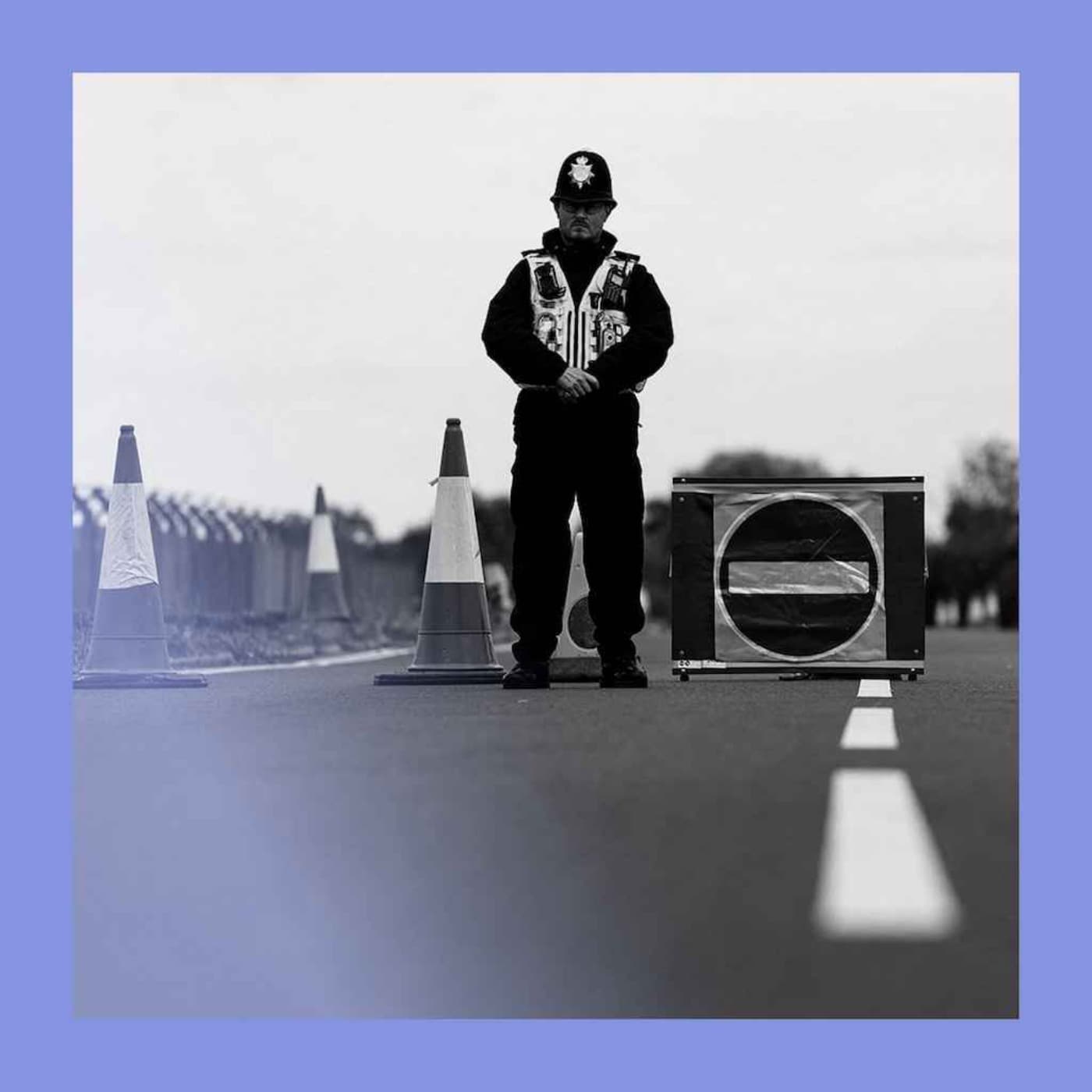
3:30In certain quarters, frustration has boiled over into violence and security staff were on high alert.
3:39Last weekend, a group of Indigenous activists tried to force their way into the conference's exclusive Blue Zone, protesting the absence of indigenous voices from proceedings. Many indigenous peoples flocked to Belém from all over Brazil. This has led to the demarcation of 10 new protected territories, a strategy that is proven to reduce deforestation rates in Latin America. But one of the biggest stories from COP30 was who was not present, Barring a handful of unofficial shadow delegates, almost all Democrats, the United States formally snubbed the conference. The country is responsible for a fifth of the world's historical emissions.
4:22Because of that, financial commitments have lagged and Brazilian diplomats struggled to get countries to step up. Negotiators scraped over whether to even start creating a roadmap to transition away from fossil fuels, a commitment which had both already been made at COP28 two years ago, and which almost all scientists and observers agree is painfully necessary. Others were trying to wrestle with the concept of climate adaptation, whether indigenous people can maintain their way of life as their environment changes, or whether they're going to be forced into cities like Belém, and whether those cities will be able to accommodate them.
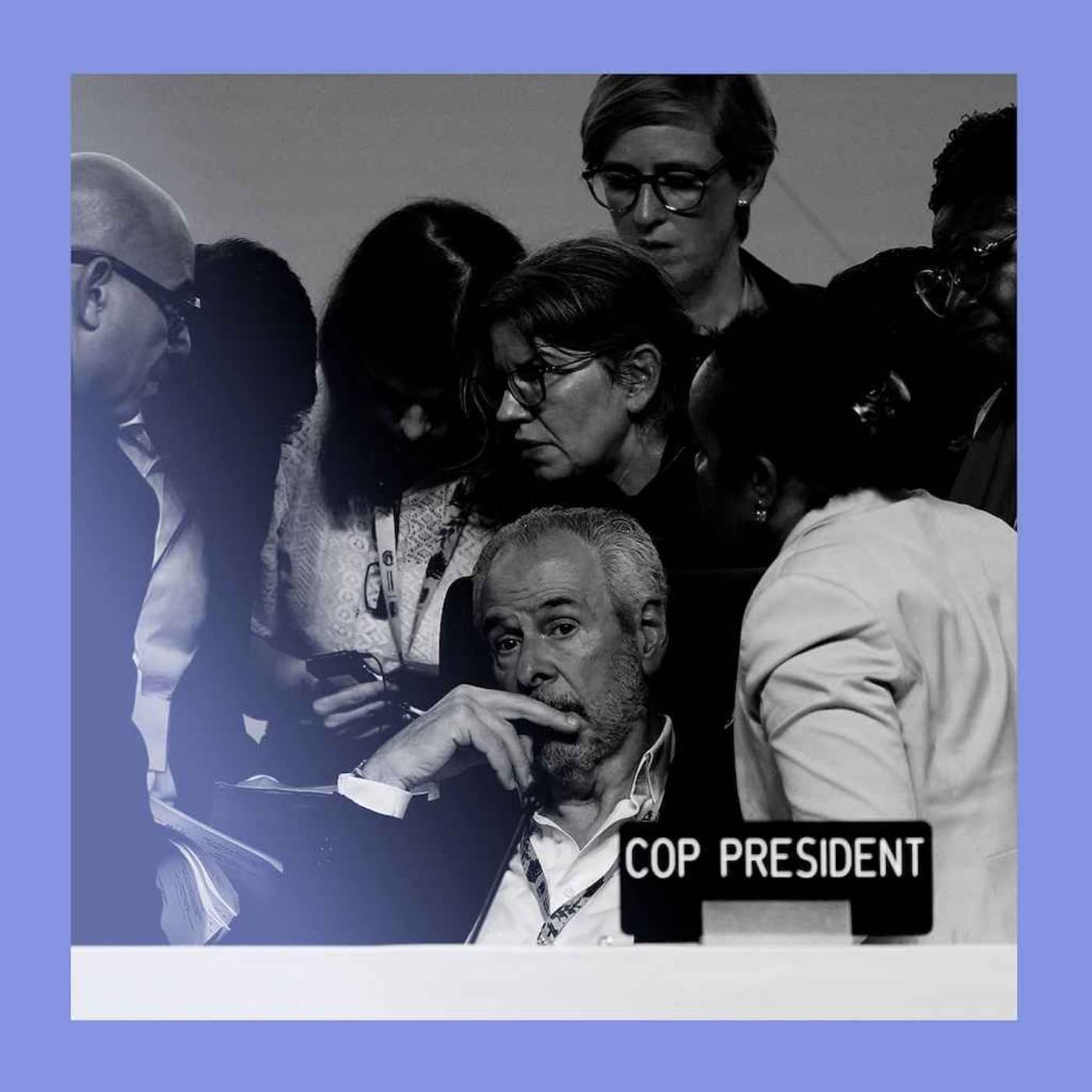
5:07As I was leaving for the airport a few days ago, a large fire tore through the blue zone, forcing delegates to evacuate and interrupting negotiations for a whole day. It seemed prophetic. In the end, COP30 concluded with a modest text which made no mention of fossil fuels. The sense among many was that the UN's climate summits are increasingly falling short, even as the world breaches ever more environmental tipping points. It was a difficult year for climate multilateralism. Katrine Bragg is our environment editor. The United States was missing in action, and no one really was stepping up to take the lead in pushing ambition to tackle climate change.
5:50There were some successes, for instance, a new structure to reward countries for saving their forests, some fresh promises of money to help poor countries adapt to climate change. But really, there were some quite notable failures as well. And I think overall, this is probably not going to go down in the history books as one of the most successful cops. And maybe some of that could have been predicted. I mean, talk me through the context of the meeting, the run-up to the meeting. These talks are important to look at in some historical context. It's been 10 years since the Paris Agreement was made.
6:27And that was frankly quite a remarkable piece of legally binding text under which 195 parties agreed to limit global warming to one and a half degrees above pre-industrial temperatures. They also agreed to peak emissions and to drop emissions down to net zero around mid-century. But the data has shown that we're really quite far off the mark on these targets. And notably, we now know, without really any doubt, that the 1.5 degrees Paris target is going to be passed. In fact, the science shows us that that's going to happen probably in the next five years. A second real setback is that this year's countries were meant to arrive with renewed promises to drop their emissions, this time by 2035.
7:15And once again, we were off the mark there. I think by the time everybody arrived in Bel-Em, there were more than 70 countries that had failed to submit the renewed promises. And that includes notably India, which is a major emitter. Now, COP, it's the one setting where governments get together to agree on how they will reduce the impacts of climate change for their citizens. Because this is a classic tragedy of the commons, You need governments to all come together and show that they are pulling in the right direction. So you do need the cops to get everyone working together to fix this problem.
7:52But you mentioned at the start that there had been some success, some governments getting together and pushing things through. What's in the substance of what emerged from this cop? There was some good news in the shape of the Tropical Forest Forever facility, the TFFF. So this is a new financial package which will aim to build an$125 billion pot to pay countries for every hectare of tropical forest that they preserve. And there were also promises to triple money flows from rich to poor to help them adapt to climate change. And that tripling is meant to happen by 2035. All of that is good news if it comes to pass.
8:29But what you really want to see right now is stuff that's going to put the brakes on global emissions. So you need bigger political promises to reduce national emissions. We did not get that. And ideally, many people would like to see some kind of text that really starts to set a roadmap for phasing out fossil fuel consumption. This is something that has been brought up in previous COPs. And the Brazilian presidency of these talks was really pushing for what they termed a roadmap. So not just promises to do this, but actually how are we going to do that? I think that was a good effort. It was backed by the European Union and many other countries.
9:18But in the end, there was a massive pushback from petrostates. and no mention of fossil fuels is in the final text. And you mentioned that America hadn't sent a delegation to this COP. How much of a difference do you think that made? I mean, what I'd say on America is it's definitely a bit of a challenge. It's not a challenge that's a new challenge. America has been in and out of these talks over the years. I think it becomes a little bit more difficult as the rubber starts to hit the road on things like the 1.5 degree target. and we're really in a position now where if multilateralism is going to win the day, you need some kind of leadership and people are looking either to European Union or ideally China to step into that position.
10:01Unfortunately, we didn't really see that in this edition of the COPs. And what about the suggestion, and Alessandro hinted at this, that the COP process itself is coming up short here, that this is not the way to solve problems of this magnitude? So I don't think you can rule out multilateralism entirely from the gargantuan task of dealing with climate change. And that's just the nature of the problem. This is a global problem that everybody can't handle within their own borders. It's also still worth noting at the catastrophic cops that were held in Copenhagen in 2009, climate modelers found that those talks had set the world on track for three and a half degrees of warming.
10:44Today, we're looking at 2.3 to 2.5 degrees of warming. That's a massive decrease in projections. So the COP process has had an impact. Can it continue to have an impact when we are now right up against this one and a half degree target? And by many projections, the two degree target is looking a little bit iffy as well. I think it needs to, but it's not the be all and end all. So you are going to have a lot of stuff happening outside the COP process. We already have. We've recently written about the remarkable renewable energy revolution that's happening in China. It's driving the transition to renewables in the rest of the global south.
11:26These two tracks within COP and outside COP are going to continue happening in parallel. Perfect example of that is the fact that in Belém, the Brazilians said that although they were not able to get their roadmaps into the formal COP text, they're going to take those on over the next 12 months outside the formal COP process. So there will be discussions about two roadmaps over the next 12 months, one to end deforestation and one to phase out fossil fuels. is worth remembering that for all the dooming gloomery of the cops, these are meant to be technocratic meetings. The real action is happening outside the cops, and it is happening.
12:05It's not happening fast enough, but it is happening. Katrine, thank you very much for your time. Thank you, Jason. Always a pleasure.
12:23summer can throw off even the best routines but ag1 makes it easy to keep one healthy habit consistent ag1 is a daily health drink that combines a multivitamin pre and probiotics superfoods and antioxidants in one scoop mixed with eight ounces of water from late nights to long weekends, and everything in between, AG1 offers a simple way to add consistent nutritional support to your day, wherever the morning begins. Visit drinkag1.com slash theintelligence to get a free morning person hat and a free AG1 sampler in your welcome kit with your first AG1 subscription, an$82 value. That's drinkag1.com slash theintelligence.
13:04This Economist podcast is sponsored by Bill, the intelligent finance platform that helps businesses and accounting firms scale with proven results. With AI-powered automation, Bill isn't just moving money. They're simplifying financial operations for nearly half a million customers. Bill has securely processed over a trillion dollars in transactions. That's proven infrastructure. Ready to talk with an expert? Visit bill.com slash proven and get a$150 gift card as a thank you. That's bill.com slash proven. Terms and conditions apply. See offer page for details.
13:44So almost 17 years ago, Satoshi Nakamoto, the pseudonymous founder of Bitcoin, unveiled the cryptocurrency to the world. Mike Bird is our Wall Street correspondent. It has cemented itself in global finance faster than any other asset. It's made itself the predominant cryptocurrency. And it's gone in the past decade especially from being widely mocked to being broadly accepted and a part of the wallpaper of global markets. In October, Bitcoin's value hit a record high of$2.5 trillion. But all of its successes, all of its adoption, now pose a little bit of a problem for crypto's most popular asset.
14:40Okay, Mike, before we get to the problems, let's go back to the beginning. Bitcoin just seemed the maddest idea. How did it get so big? So if we start really early on, there was a wave of interest from people who really loved the idea of a decentralized private asset like Bitcoin. It's a purely speculative asset. It provides no income, doesn't earn anything. It's worth as much as someone else will pay for it. And basically, the growth of it is a story of the currency becoming more mainstream. So most of its swings in price have been bound up with optimistic stories about the asset. In 2020 and 2021, you saw a boom in price, mostly attributed to lockdown policies.
15:36People had a lot more spare time. They were doing a lot more financial trading of all types. At the same time, you had increasing adoption of crypto trading by both big crypto trading platforms and by mainstream investment brokerages. In 2023, you saw another wave of hope, which was around the launch of exchange traded funds, which would make it even easier for ordinary investors to get involved. And then Donald Trump's election victory was another wave of optimism because it meant that you would get a regulatory architecture. You get a bunch of people into the government who are very pro-crypto.
16:13And so you've seen these huge increases in price around these bullish optimistic narratives for Bitcoin. So it's now, as you say, part of the wallpaper of global markets. It's widely accepted. Absolutely. It's easier than ever to get your hands on Bitcoin. If we go back 10 years, it was actually relatively complicated. You needed to set up a wallet or use an exchange and you weren't sure whether the exchange was trustworthy. But now it's a matter of going to your bank or your broker. It's incredibly easy. They have some regulatory certainty around them so you know they're not going to disappear overnight or you hope they're not going to disappear overnight.
16:52We've also seen banks and asset managers launching their own crypto products, whether that's sort of tokenized dollar deposits. They're thinking about launching their own stablecoins. Stablecoins now have regulatory certainty from American lawmakers. These are crypto assets that are pegged to the value of another asset, usually the value of$1. So they're meant to have a one-to-one relationship with the US dollar. So it's grown enormously. What that has also given it is tighter links with other parts of finance. It used to be an asset that people said, whatever happened in other markets, something different was happening in crypto.
17:29That's not really so true anymore. And you said there's a problem. It sounds like you've just hinted at it with the link to other markets. Absolutely. So Bitcoin prices right now are going through another one of their sort of negative trends. This is a consequence of something speculative that goes up very sharply in value. Sometimes it also can come down very sharply in value. Prices recently have gone from an all-time high, about$126 ,000 per Bitcoin in early October, to as low as the low 80 ,000s in the last few days. There seems to be an absence of a sort of new bullish optimistic narrative or a new wave of investors getting involved in this.
18:14You have seen a lot of interest from retail traders in the last five years. But groups like central banks have really eschewed Bitcoin. They've gone for gold in recent years instead. Institutional investment, not that extensive. The problem with the links with other markets is that you start to see a flow between what is happening in other markets and what is happening in Bitcoin. So negative sentiment in Bitcoin. If you're a person who owns, say, a lot of tech stocks and you also own a lot of Bitcoin, Bad news in one market is bad news for the other market. And because Bitcoin and tech stocks in particular are both seen as quite high risk investments, we've seen this correlation emerge between the two of them.
18:57When Bitcoin is doing badly, tech stocks are usually doing badly and vice versa. It's a little bit similar to what we're seeing at the moment. So if Bitcoin's value was to crash, how bad would it be? How much damage would it cause? We shouldn't be too explosive on this because it's still a relatively small asset in the grand scheme of global finance. But it is much more considerably linked than it used to be. And you would expect larger effects in mainstream markets from a downturn in Bitcoin. What you get during the upturns is sorts of behavior emerge as if the growth in the price of Bitcoin is never going to end.
19:37If you think your Bitcoin portfolio is down by 30 % or 40%, you're not willing to take risk everywhere. You're anti-risk. You may be selling your tech stocks. Even though Bitcoin is more volatile, you do see this relationship with tech stocks. You're going to see spillovers between different asset classes. And the contagion can go in either direction. You know, once things have started going badly in Bitcoin, they may go badly in tech stocks, which may reinforce the sell-off in Bitcoin. you can see these sort of negative spirals. And I think what we've seen in the last few days, which is tech stocks performing quite poorly, is worth watching in this context.
20:15So, Mike, you've been nicely hedging here, but where do you come out on all of this? Has Bitcoin run its course? If I were to say that, I would be the latest in a long line of financial journalists making a confident prediction about Bitcoin, most of which have turned out to be completely wrong over time. I will say most of the obvious catalysts for really big Bitcoin rallies, I think, are probably exhausted. We have seen a level of acceptance of Bitcoin in finance and government that would have been unimaginable even five years ago. And I don't know how many of those big steps are now left. One thing that could help, and it's not something I'd expect for sure, but it's a possibility, is that the government might buy Bitcoin outright.
21:00Right. We saw the setting up of the strategic Bitcoin fund earlier in the year. If that were ever actually funded and the government set about purchasing Bitcoin, that would obviously be a huge upside catalyst. I'm not expecting that, but you can't rule out surprises in this market.
21:19Mike, thank you so much for talking to me. Thank you for having me.
21:52The Web of England The clicking sounds you're hearing now are from sperm whales.
22:07Females use them to communicate, and recently researchers at the Cetacean Translation Initiative discovered a rather human-like feature in whale communication. Scientists call the clicking noises whales make codas, and they reckon that these sounds can resemble vowels found in human speech.
22:31Lane, you are our in-house language expert. Let's just start with the basics here. How do vowels actually work in speech? Vowels are free-flowing sounds generated by the vocal cords that vibrate through your vocal tract. And the way you position things like your mouth, your tongue, your lips, and other parts of the vocal apparatus can amplify certain frequencies. The lowest frequency is perceived as the pitch, and that can be determined by your sex and your body size. But those other parts of your mouth create what are called formants, and these formants are concentrations of sonic energy at specific higher frequencies.
23:15So the formants' relationship to each other determines which specific vowel you hear. For example, whether you hear an ah or an e. So what does that actually mean when it comes to speech? Is it that it makes words understandable or it makes them sayable or it means we can breathe or what? It makes them understandable. The distance between the formants essentially allows you to make a quite clear mental distinction between an ah or an e sound, and that makes the difference between bot and beat, for example. We hear those as categorically distinct. They're not just a continuous distinction between the two different sounds.
Read the full transcript
23:56So it basically enables us to make more different sounds. It allows us to make more different sounds, but crucially, they are discrete, meaning they are quite clear from each other. And that's how you can have two fundamentally different words. There's not a sort of intermediate word between bot and beat. So, Lane, the suggestion is then that these sounds are also made by sperm whales. That's right. So these sperm whale codas don't sound like pitches at all to our human ears. The clicks are far too infrequent. You can hear individual clicks when we listen to them. And they're also irregular, so they're not a regular beat as the human vocal cords make.
24:35So distinct pulses of sound begin to blur together into what we hear as pitch at certain frequencies, somewhere around 20, 30, 40 cycles per second. But when you take these whales' codas and you remove the silences in software, the researchers could start to hear them as pitches nevertheless, a little bit like our human pitches. And they could start then to look more closely at their other qualities to see what qualities they share with human speech. And what did they find? The researchers used an AI system that was trained to learn human languages to examine these whale codas. And as the lead author of the latest paper told me, the AI system tipped them off to look into what he calls spectral properties in these sperm whale vocalizations.
25:22That is to say the range of frequencies with higher and lower energies. When the researchers dug further into this, they found that the codas included two distinct spectral patterns that resembled those in the human valve formants. These are at much lower frequencies, so the vibrations are much slower than they are with human valves. But what's really interesting is that the codas are also discrete rather than continuous, which suggests that the whales are able to control them and that they intend them to be distinct from each other, just like human vowels are. The researchers also found that whales can produce diphthongs, which are two vowels that glide quickly from one to another, as in when we say the vowel ride and time, which are essentially an ah and an e put together.
26:13The important thing is that whales seem to be able to do this intentionally. And whales apparently communicate quite a bit back and forth, females in particular. And what they do is something that researchers even call conversation. Lane, I don't know if you heard the fantastic episode of Babbage earlier this year. There was a two-parter on what AI can help us understand about how animals communicate. But what we really want to know here, of course, is what are the whales saying? That's right. I did hear the Babbage earlier this year, and it was a fantastic episode. I think that episode and what I would tell you now have the same lesson, which is that we need quite a lot of data for AI to learn.
26:51It needs inputs and outputs. And so what we'd ideally need is quite a lot of observations of the whale's behavior, how they are interacting before and after a communication. And then we need lots and lots of these recordings as well. And with thousands or many thousands, you can start to put together which vocalizations tend to correlate with which behaviors. And that would start to give us an answer as to the question, what are they doing? What are they saying? What do they mean? We're not there yet, but it's something that is in principle possible. Lane, great to talk to you. Thank you so much.
27:24Thank you, Rosie. And if you want to hear our two-part series of Babbage on animal communication, the link is in the show notes for this episode. You'll need to be a subscriber to listen.
27:48That's all for this episode of The Intelligence. We'll see you back here tomorrow.
28:31Thank you. of graduating and the returns continue beyond today. Search Discover London Business School MBA to find out more. I thought, what if I've scaled businesses? What if I scaled my philanthropy? What if I did as much in one year as I've done in my whole life? See how your wealth could have even greater meaning at creativeplanning.com slash impact.
From the publisher
It is telling and troubling that the annual climate talking-shop’s outcome did not even mention fossil fuels. We ask whether the COP process is still fit for purpose. Cryptocurrencies could be heading for an almighty fall: what would they take down with them? And the revealing vowels and diphthongs of whale communications. (Hear much more on animal communication in our series on “Babbage”: part 1 asks whether animals truly have language, and part 2 whether AI could translate it.)
Additional audio courtesy of Project CETI.
Get a world of insights by subscribing to Economist Podcasts+. For more information about how to access Economist Podcasts+, please visit our FAQs page or watch our video explaining how to link your account.
Hosted on Acast. See acast.com/privacy for more information.