
In short
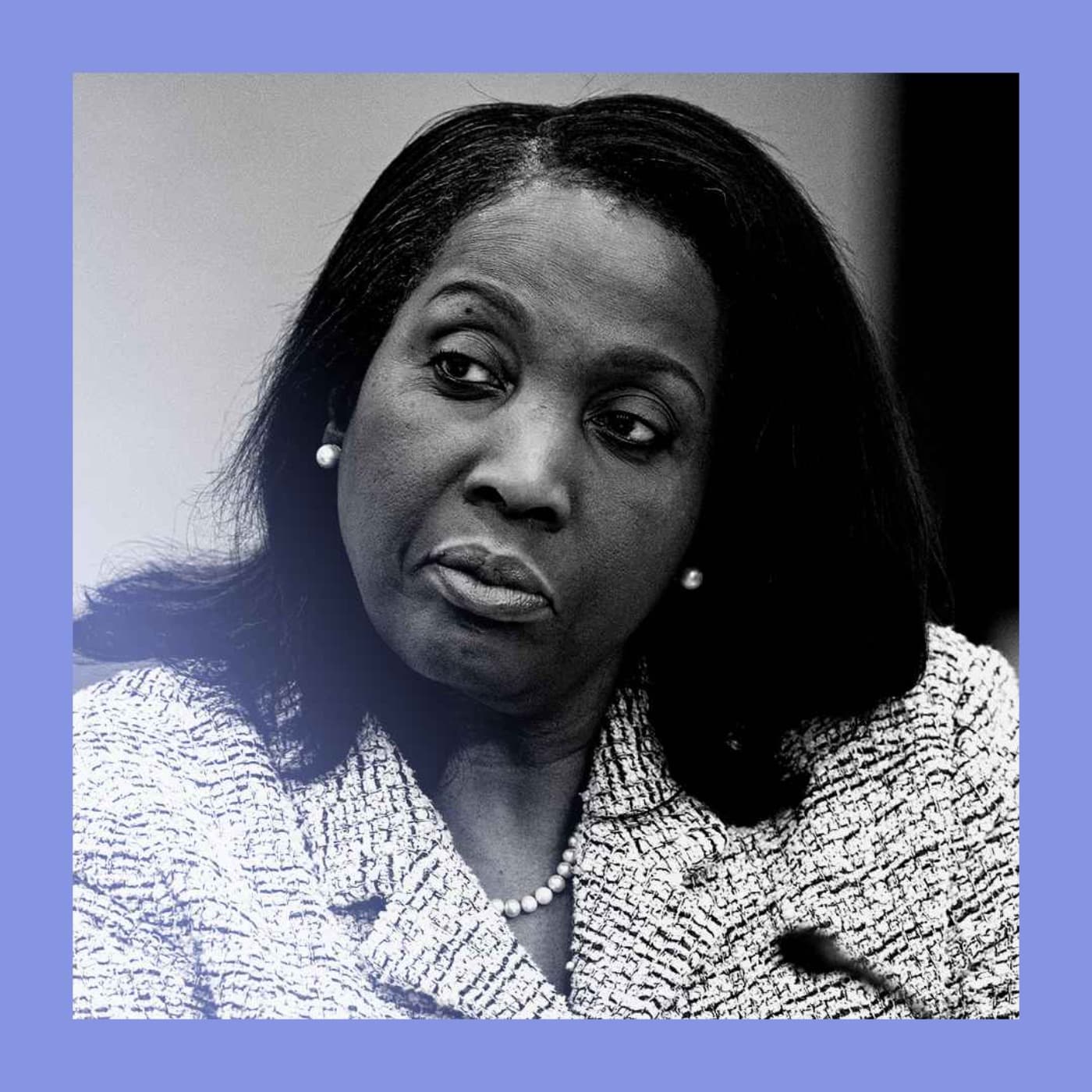
The episode covers three stories: (1) whether Donald Trump can legally fire Federal Reserve governor Lisa Cook over alleged mortgage-application misstatements, and what that means for Fed independence and interest-rate policy; (2) Uruguay’s proposed assisted-dying law, including who would qualify and likely opposition; (3) Germany’s Schützenvereine (shooting clubs) as community institutions, their traditions, and concerns about far-right infiltration.
Guests
Rachna Shambhog (Economist business affairs editor) discusses the Fed case with Rosie Bloor. Kinley Salmon (Latin America correspondent) reports on Uruguay’s assisted-dying bill. Tom Nuttall (chief Germany correspondent) reports from a Schützenverein festival. Interviewees: Pablo Canepa’s family; Archbishop Daniel Sturler of Montevideo; shooting-club members (e.g., Linda Keck).
Key claims/examples
Supreme Court precedent says Fed governors can’t be dismissed at presidential whim; Cook says Trump lacks authority and the “cause” standard is vague. Allegations (via Bill Pulte) involve claiming two properties as primary residence; DOJ is investigating. Uruguay’s bill passed the lower house Aug 13 with no terminal-time limit; requires two doctors to assess psychological fitness; excludes minors and advance directives. Opposition is mainly religious; polls suggest about two-thirds support legalization. Schützenvereine trace to medieval village militias, function as social glue, and may face red-tape burdens and far-right attempts; one club joined an “Against Extremism” campaign.
Written by AI. May contain mistakes. Listen to the episode to check what was said.
Chapters
Tap a time to open that second in VOUruguay's Liberal Policies
0:56 to 1:41
Discussion on Uruguay's history of liberal laws regarding social issues.
“It was one of the first countries in Latin America to allow abortion and also same-sex marriage.”
Trump's Interest in the Fed
1:41 to 3:00
Analysis of Trump’s interest in Federal Reserve appointments and policies.
“Donald Trump has made no secret of wanting interest rates to come down.”
Allegations Against Lisa Cook
3:00 to 4:24
Details on the allegations against Federal Reserve Governor Lisa Cook.
“What exactly are the allegations against Lisa Cook?”
Implications of Trump's Actions
4:24 to 5:41
Exploring the potential consequences of Trump's actions on the Fed's independence.
“decide that this is sufficient cause if it is the case that she's done what she's alleged to have done.”
Long-term Consequences for the Fed
5:41 to 7:49
Discussion on the possible long-term effects of politicizing the Federal Reserve.
“Yeah, for decades, Federal Reserve independence has been the norm in American politics.”
Uruguay's Assisted Dying Bill
7:49 to 14:00
Coverage of the proposed assisted dying legislation in Uruguay.
“So what are those longer term consequences?”
Legal Assisted Dying in Uruguay
14:00 to 17:46
Explore the current status and implications of a new law on assisted dying in Uruguay.
“Well, on August 13th, the lower house in Uruguay passed it with really a thumping majority.”
Traditional German Shooting Clubs
17:46 to 24:12
Discover the cultural significance and community impact of shooting clubs in Germany.
“We just want people to have the freedom to choose.”
Transcript
Automatic transcript. May contain errors.0:00This intelligence podcast is sponsored by Backmarket, the leading global marketplace for refurbished tech. When the kids need phones, laptops, or tablets for school, buying refurbished tech makes sense for families trying to save money without sacrificing quality. At Backmarket, tech costs up to 50 % less compared to new. All devices have been professionally refurbished and come with a one-year warranty and 30-day return policy. Start saving money. Visit Backmarket.com or the Backmarket app to shop now.
0:33The Economist
0:40Hello and welcome to The Intelligence from The Economist. I'm your host, Rosie Bloor. Every weekday, we provide a fresh perspective on the events shaping your world.
0:55Uruguay has a long history of liberalism. It was one of the first countries in Latin America to allow abortion and also same-sex marriage. Marijuana is fully legalized too. Now a bill is up for review on assisted dying. And shooting clubs in parts of Germany go back to the Middle Ages. They were originally militias formed to protect villages. These days, they're one of the many types of community club that are thriving in the country. Our correspondent took a shot and went along.
1:32But first...
1:41Donald Trump has made no secret of wanting interest rates to come down. For months, he's berated the Federal Reserve for dithering. We have a guy in there that, with the stroke of a pen, could lower interest rates and save us hundreds of billions of dollars a year, but he's a stupid person. In July, the president toyed with firing Fed Chair Jerome Powell and then backed off. Now another member of the Fed is in his sights. Lisa Cook is a governor on the Federal Reserve's board. She was appointed in 2022 by Joe Biden and was the first African American woman to be appointed to the role. Rachna Shambhog is our business affairs editor.
2:26On Monday, Donald Trump posted an extraordinary letter on his social media platform saying that he would sack her. And this relates to an allegation that was made last week that she misstated details on her mortgage applications. This is the first time that a governor at the Federal Reserve has been fired for cause. Cook alleges that Trump has no authority to do so. This will ultimately have to be fought in the courts. and it's a move that could threaten the independence of the central bank. So let's just take this step by step. What exactly are the allegations against Lisa Cook? Now, Rosie, there's still a lot that we don't know.
3:08Lisa Cook has not been formally charged with anything. These are allegations. The allegations are that she misstated some of the details on her mortgage applications and claimed that two properties were her primary residence. So that's what's been alleged by Bill Pulte, who's the head of America's housing regulator. The Department of Justice says that it's investigating. Ultimately, it will be for the courts to decide. Now, the Supreme Court back in May confirmed that a Federal Reserve governor cannot be dismissed at the president's whim. It has to be for cause. But as I've said, this is totally untested and will come down to the courts to decide.
3:51So what you're saying is that Trump doesn't necessarily actually have the authority to sack her? Well, this is what Cook and her lawyers are saying. The wording around cause when it comes to the Federal Reserve is vague. There is no explanation of what that might mean. And because it hasn't happened before, we're not entirely sure what counts as a reasonable grounds for dismissal. What we know is that these alleged misstatements on the mortgage applications happened before Lisa Cook became Fed governor. But she is a financial regulator and the courts may decide that this is sufficient cause if it is the case that she's done what she's alleged to have done.
4:32So what's really going on here then, Rachna? Why is Trump going after Lisa Cook? This isn't really about the president wanting to uphold the law on mortgage fraud. He's made no secret of what he wants from the Federal Reserve over the years, really, and that's lower interest rates. He thinks the Fed has dithered. He thinks it's made mistakes, that it should have lowered rates. He wants lower rates for America's Treasury. He wants lower rates on mortgages. He has trumpeted this from the rooftops, really. And earlier in the year, he flirted with firing Jerome Powell, the chairman of the Federal Reserve, who's been the target of a lot of his ire.
5:09And it seems that this alleged mortgage infraction has given the administration a pretext to try to appoint their own nominee onto the Fed's board. And actually, what was interesting was that yesterday, the president crowed that they could have a majority on the Fed's board shortly. So that, I think, reveals what it is that he's looking for. Fed independence has been virtually sacrosanct until now, hasn't it? Is there anything to stop Trump turning it into a political entity? Yeah, for decades, Federal Reserve independence has been the norm in American politics. The memory of Richard Nixon intimidating successfully the chairman of the Federal Reserve at the time into keeping rates low really scarred a generation of politicians and policymakers and meant that no politician really wanted to take on the Fed or even opined on what the Fed was doing.
6:11Donald Trump has broken that norm. What prevents it from becoming politicised? So in the short term, there are still some protections, I think. One is that whoever he nominates to replace Lisa Cook, if she eventually needs to stand down, will have to go through a Senate confirmation process. And in the first term, at least, that was a check because Trump tried to nominate Judy Shelton. He tried to nominate Stephen Moore. Neither of them made it through the Senate confirmation process. Now, imagine that a nominee makes it through. They are still setting interest rates as part of a committee. And Trump Trump is not as close to having a majority on the committee as he says he is.
6:55For a start, the two governors that he selected in his first term, Chris Waller and Michelle Bowman, are not presidential stooges. They are respected economists who make their decisions based on the health of the economy. So it's a mistake to think that they're partisan. The other is that Jerome Powell, who is currently the chairman and whose term as chairman expires in May next year, can carry on being governor. His term as governor itself doesn't expire until 2028. The norm is that he would step down when his term as chairman ends, but he could stay on for longer and effectively be another independent voice on the board.
7:37and that would mean that actually it won't be as politicised in the short term as the president hopes. I think in the longer term I'm gloomier though about what this means for America's economy and America more broadly. So what are those longer term consequences? The independence of the Federal Reserve has been as you say so sacrosanct and now its politicisation is something that's being countenanced by politicians. And I think that will contribute to an erosion of the credibility of the central bank. So the Fed's commitment to keeping inflation low is so widely believed by investors and financial markets.
8:17But now you see the combination of attacks on the Federal Reserve and the fact that America is running a really wide fiscal deficit, contributing to a sense of doubt. So even though the economy has weakened a little, long-term bond yields have sort of stayed elevated. And that seems to suggest that there's a little bit of doubt that inflation will truly come under control, that inflation may still be a little volatile in the long term. So there's small signs of a slight erosion of America's credibility here that are creeping in. The other is political. I think Donald Trump has a way of shifting the consensus to nearer his position.
9:02And once it becomes politically countenanced that the Fed can become politicized, I worry that the Democrats too or more mainstream Republicans might also fall into this trap of wanting to stack the Fed in a certain way or demanding that the Fed keeps rates low because ultimately America does have this growing debt problem. And one way the government can try to keep its interest rates low is to lean on the Fed. So I worry that it might just become normal to lean on the Fed. The other thing to point out is this method of politically motivated investigations into certain officials. Lisa Cook is the third person to be pulled up on this alleged charge of mortgage fraud.
9:50And funnily enough, they're all people that the administration doesn't like. So again, is that something where America's descending into this lawfare that can only spell bad things for the polarisation and politicisation of the economy and society in the long term? Ratchna, thank you so much for talking to me. Thanks, Rosie. and there'll be further discussion about the fed and its future on this week's episode of money talks our weekly business and finance show which is out tomorrow economics editor henry kerr will be reporting from the annual get-together of bankers at jackson hole to listen you'll need to be a subscriber this economist podcast is sponsored by bill the intelligent finance platform that helps businesses and accounting firms scale with proven results.
10:45With AI-powered automation, Bill isn't just moving money. They're simplifying financial operations for nearly half a million customers. Bill has securely processed over a trillion dollars in transactions. That's proven infrastructure. Ready to talk with an expert? Visit bill.com slash proven and get a $150 gift card as a thank you. That's bill.com slash proven. Terms and conditions apply. See offer page for details.
11:14For three years, Pablo Canepa has been lying, staring at the ceiling, unable to move his limbs in pain. He is stuck in his room in Montevideo, the capital of Uruguay. And as he lies there, his muscles wither. He suffers periodic panic attacks from the sensation of being trapped inside his own body. Kinley Salmon is our Latin America correspondent. I sat down in the next room with Pablo's family who told me that up until as recently as March 2022, he was a normal, healthy 35-year-old Uruguayan.
11:56That month he was taking a shower. He suddenly felt a little dizzy. Frankly, he thought little of it. But within just four months, he was bedridden, unable to walk, and really unable to do much else at all.
12:17Pablo's brother Eduardo and his sister Lucila now often have to speak for him because even speaking is exhausting.
12:28On top of all that, there's no true diagnosis. There is a fancy Latin name that doctors give him, but all it really means is that he has irreversible brain damage that has no known cause. So now, you know, once vibrant 35-year-old is locked in his own body. His mind, though, is lucid. He knows exactly what has happened and exactly what he's lost.
12:56Pablo has told his family many times that he wants to die.
13:05Pablo has been saying this since early 2023, but under Uruguayan law, assisted dying has been illegal. However, that could soon change under a new proposed law. So, Kenley, what's in this law? Well, it's strikingly liberal, actually. Compared to Britain, where assisted dying would be limited to those with a terminal illness who will die anyway within six months, Uruguay's bill, its proposed law, imposes no such time limits. It would be open to people with terminal illnesses, yes, but also open to people with an incurable illness that generates unbearable suffering, even if it's not terminal. Of course, there are still important constraints on what would be allowed in Uruguay.
13:49And what sort of constraints are those? Well, mental conditions, for example, such as depression, are not explicitly ruled out, but patients need at least two doctors to determine that they're psychologically fit to make the choice to die. Minors are also clearly excluded, and so are directives, which in some countries are allowed, whereby people who are in good health can leave instructions to be helped to die in the future, should they become so ill that they're unable to communicate. So what stage is this law actually at? Well, on August 13th, the lower house in Uruguay passed it with really a thumping majority.
14:25A similar bill trying to do this did get stuck in the Senate back in 2022, but this time it's widely expected to pass, given some changes in who is dominant in the Senate. And many expect it to happen before the end of this year. Legal assisted dying would be a remarkable continuation of a very long liberal tradition in Uruguay. If this came through, it would put it among just a handful of countries in the whole world to have legal marijuana, gay marriage and assisted dying. Do other Latin American countries have this kind of legislation? They don't have this kind of legislation. Uruguay would be the first in the region to pass this kind of fully comprehensive law and a law that makes it kind of clear what the processes and limits are.
15:07And that in turn makes it more widely available. Colombia and Ecuador have decriminalized assisted dying, but that was through court battles. and Cuba sort of recently passed a general declaration making it legal too but none of these countries has a kind of comprehensive law to regulate it so its application is often very limited even in Colombia which is probably the most advanced of those three it's still bafflingly complicated for people to be able to access and others in the region are watching Uruguay too advocates in Chile which does have a sort of full bill in process aiming to do this but that bill's got stuck in the Senate.
15:43So they're watching to see what they can learn from Uruguay to get something similar passed. And where might opposition come from to this bill in Uruguay? Well, of course, it is a difficult debate, and there are a variety of sources of opposition, but chiefly they are from people who are religious. I sat down with Daniel Sturler. He's the Archbishop of Montevideo. And he told me he worries that together with legal, Legal abortion, assisted dying is creating what he called a culture of death.
16:21He warns of a mindset when life is disposable. And what about the general public? What's the view there? Well, strikingly, that religious view is quite at odds with popular opinion. Posts reckon about two-thirds of Uruguayans favour legalising assisted dying, and perhaps even more remarkably, a solid majority of Uruguayan Catholics back it as well. And this really, I think, comes out of this sort of secular and liberal tradition of the country that's quite unique in the whole region and dates back to early political leaders. Uruguay back in 1877 declared that state schools would be free and obligatory, but also secular.
17:01It was the first country in Latin America to fully legalize divorce. For example, an extraordinary 97 years before nearby Chile did the same. More recently, it was one of South America's first countries to legalize abortion and also same-sex marriage. And it was the very first country in the world to fully legalize marijuana. And what would this mean for someone like Pablo and his family, who you spoke to at the beginning? I asked Eduardo and Lucila Pablo's siblings about that. And they said, look, if this passes, this isn't a matter of celebration, but it would be a huge matter of relief. These are tragic and difficult, extraordinarily difficult things to go through.
17:42And so they said, you know, we would feel relieved. We don't want people to die. We just want people to have the freedom to choose. Kinley, thank you. Thank you.
18:05A few weeks ago, I travelled from Berlin to a small town in the Sauerland region of Germany called Arnsberg.
18:16One of the local shooting clubs, and there are many of them, was holding its annual summer festival. And this is basically the biggest event for this club all year. And I wanted to see what was going on. Tom Nuttall is our chief Germany correspondent Everybody dresses up in quite a strict uniform Green jackets, feathered caps One day you wear black trousers, the next day you wear white trousers At an order from the hulked man, the leader of the group They line up and they march, not with particular discipline Through the streets, they shout greetings at well-wishers and then they arrive at a hut where the evening's festivities begin.
19:08Being the good, earnest, inquiring journalist that I am, I was asking some people at the event to explain what the tradition was, what the whole thing meant. And one woman lent in and said, Beer! Almost as if she had been summoned to attention, Another woman came over, took me by the hand, yanked me back indoors inside the hut and informed me that she was going to teach me a dance called the Disco Fox, which I subsequently learnt was a dance craze in Germany and some other European countries in the 1970s.
19:45This is one of many Schützenverein or shooting clubs that you have in particular parts of Germany. They go back to the Middle Ages. They come from militias that were formed in villages as sort of self-defense. Now, there's not a lot of shooting that takes place in them. They are partly about partying, as I learned, but perhaps more importantly, they're very strong community associations that help connect the present to the past, help bind communities together, and also do a lot of important community work. For me, this was all part of a bigger enterprise, which was to write not only about the shooting clubs, the Schutzenvereine, but about Vereine in general, because they're a very important and perhaps not particularly well-known feature of German civic life.
20:32Vereine kind of exploded in Germany in the 19th century. You had clubs for everything, for political discussion, for sport, for obscure hobbies. The Schutzenvereine, the shooting clubs, are a very particular sort of Vereine, traditional, Catholic, rural, rooted in tradition, forming a kind of a through line from the past through to the present. Some of these Wachiner actors are kind of social glue.
21:05Edmund Burke, the old Tory philosopher, spoke of little platoons. And I think some of these Wachiner are the kind of German equivalent of these, the difference being that they are enshrined in law, they're enshrined in Germany's civil code. So if we take the one that I was at in Arnsberg, I spoke to a lot of the members there about what they were for, how they worked, why they mattered.
21:31As I saw with my own eyes, they provide a place, particularly for younger people, to party and have a good time and to hang out with each other. It is a lot of fun because we are having a lot of fun at events and a lot of music, party. quite a lot of drinking yeah and it's i mean it's also um worth also drinking but i mean it's also happening quite often that people meet their partner like their future wife or husband at the at the schutzmannverein or schutzmann fest so that's also one part of socializing so when i went down to ansberg my kind of babysitter as it worked was a very friendly and helpful woman called linda keck who's been involved in the club for a while her father was involved in it which is very typical, it's often handed down through the generations.
22:18And she spoke to me at the summer festival about what happens there. It might sometimes seem that we are very organized or that we have a lot of rules, but there is definitely no political direction we are going to. So in general, we are open for everyone and every opinion. Everyone can join us and there is no political direction we are supporting. There are some concerns about the future for some Vereiner. Lots of them have to deal with an excess of red tape. It's particularly difficult, as I was told, in Arnsberg for some of the people who are involved in managing them to find younger people to take on these responsibilities because a lot of it can be extremely time-consuming.
23:03But there's also a separate challenge, And that comes from attempts by the far right in Germany, including the Alternative Germany Party, now Germany's second most popular party, to infiltrate these clubs, use their structures and their modes of organisation as a means to propagate their own messages. The Schuttenverein in Arnsberg were very clear to me that they don't like to talk about politics. When they get together, they want to talk about their lives. But last year, they did actually make an exception. and they got together with some of the other local clubs for a campaign called Against Extremism because they had these concerns about the growing strength of the far right.
Read the full transcript
23:41But then when I was back in the shooting hut in Arnsberg, these sorts of concerns felt a very long way away. I asked a long-standing veteran of the club how he'd be spending his time if there wasn't any shooting club. And without missing a beat, he said, I'd start one.
24:11That's it for this episode of The Intelligence. We'll see you back here tomorrow.
From the publisher
What does Donald Trump’s attempt to sack Lisa Cook, a Federal Reserve governor, mean for the institution’s independence? Uruguay may soon legalise assisted dying. And why shooting clubs – and other community associations – are thriving in Germany.
Listen to what matters most, from global politics and business to science and technology—Subscribe to Economist Podcasts+
For more information about how to access Economist Podcasts+, please visit our FAQs page or watch our video explaining how to link your account.
Hosted on Acast. See acast.com/privacy for more information.