
In short
The episode covers two main stories. First, Britain’s Labour government is proposing major asylum and immigration restrictions, inspired by Denmark, aiming to reduce claims and regular visa applications. Key proposals include replacing the current five-year refugee status path to citizenship with temporary protection in 30-month blocks, potentially delaying citizenship for up to 20 years and requiring people to leave if their country becomes safer. The episode argues the shift is driven by fear of Reform UK and a “social harmony/control” rationale from Home Secretary Shabana Mahmood. Notable example: Denmark’s post-2015 temporary protection and confiscation of asylum seekers’ jewellery, which academics say acts as “negative nation branding.” Second, it explains why military balloons are returning: aerostats and high-altitude balloons for surveillance, radar, communications relays, and possibly drone delivery/targeting, with costs lower than aircraft.
Guests
Joel Budd (The Economist social affairs editor) and Sam Beale (The Economist international correspondent).
Written by AI. May contain mistakes. Listen to the episode to check what was said.
Chapters
Tap a time to open that second in VOThe Role of Balloons in Modern Military
1:27 to 2:06
Explore how military balloons are being revitalized in defense strategies.
“you might think balloons are the military technology only of the past.”
Britain's Immigration Policy Shift
2:06 to 3:19
Discuss the recent changes in Britain's asylum system and their implications.
“Britons seem to be obsessed with immigration.”
Reforms Inspired by Denmark
3:19 to 4:50
Analyze the reasons behind Britain's new immigration reforms inspired by Denmark.
“It's a curious choice because Denmark is in many ways much worse at doing immigration and immigration integration than Britain is.”
Impacts of New Asylum Policies
4:50 to 7:21
Examine how new policies might affect asylum claims and the perception of immigration.
“But the government has also made a second argument, an intriguing argument, which is that great restrictions on immigration and asylum are necessary in order to maintain social harmony in the country.”
Integration and Employment of Immigrants
7:21 to 8:13
Learn about the employment rates and integration of immigrants in the UK.
“about applying for a teaching job in Britain, applying for a care home job in Britain.”
Public Sentiment on Immigration Numbers
8:13 to 10:16
Explore the British public's expectations regarding immigration numbers and policy effectiveness.
“One way you can see that is in employment.”
The Evolving Use of High-Altitude Balloons in Military
14:03 to 16:28
Explore how high-altitude balloons are being integrated into military strategies.
“And the real thing is that they cost a lot less than traditional warning and control aircraft, which is what militaries have used to do the job up until now.”
The Evolving Use of High-Altitude Balloons in Military
18:25 to 18:46
Explore how high-altitude balloons are being integrated into military strategies.
“With your first AG1 subscription, an$82 value.”
A Journey Through History: Gillian Tindall's Legacy
18:46 to 24:33
Delve into the life and works of Gillian Tindall, exploring her connection to London's past.
“If you walk across London's Millennium Bridge from the North Bank to the South, you'll see before you a little run of three houses that look very old, wedged in between the Globe Theatre and the Tate Modern.”
Transcript
Automatic transcript. May contain errors.0:00The best podcasts give you the sharpest view of the world. Adio is the AICRM that gives you the sharpest view of your business. It instantly builds your pipeline by connecting your email, calls, product data, and more. Then ask Adio to prep for a meeting, spot a deal at risk, or find out where your pipeline stands. It's the AICRM that keeps you 10 steps ahead. Ask more from CRM. Ask Adio. Get 10 % off at adio.com slash intelligence. A-T-T-I-O dot com slash intelligence. To grow beyond limits and even beyond your aspirations, you need the London Business School MBA. Ranked fourth in the world by the Financial Times, the programme delivers academic excellence and unlocks access to leading global businesses and a network of over 58 ,000 professionals.
0:4886 % of the most recent class accepted a role within three months of graduating, and the returns continue beyond today. Search Discover London Business School MBA to find out more.
1:05The Economist
1:12Hello and welcome to The Intelligence from The Economist. I'm Jason Palmer. And I'm Rosie Bloor. Every weekday, we provide a fresh perspective on the events shaping your world.
1:26In an age of satellites and cutting-edge aircraft and drones big and small, you might think balloons are the military technology only of the past. Nope. They too have had high-tech makeovers, and armed forces are using ever more of them. And Gillian Tindall was a historian who believed that by illuminating the lives of ordinary people, she illuminated so much more. She saw the layers of the past all around her, in the streets she walked, in the houses she visited. Our obituaries editor remembers her.
2:05But first…
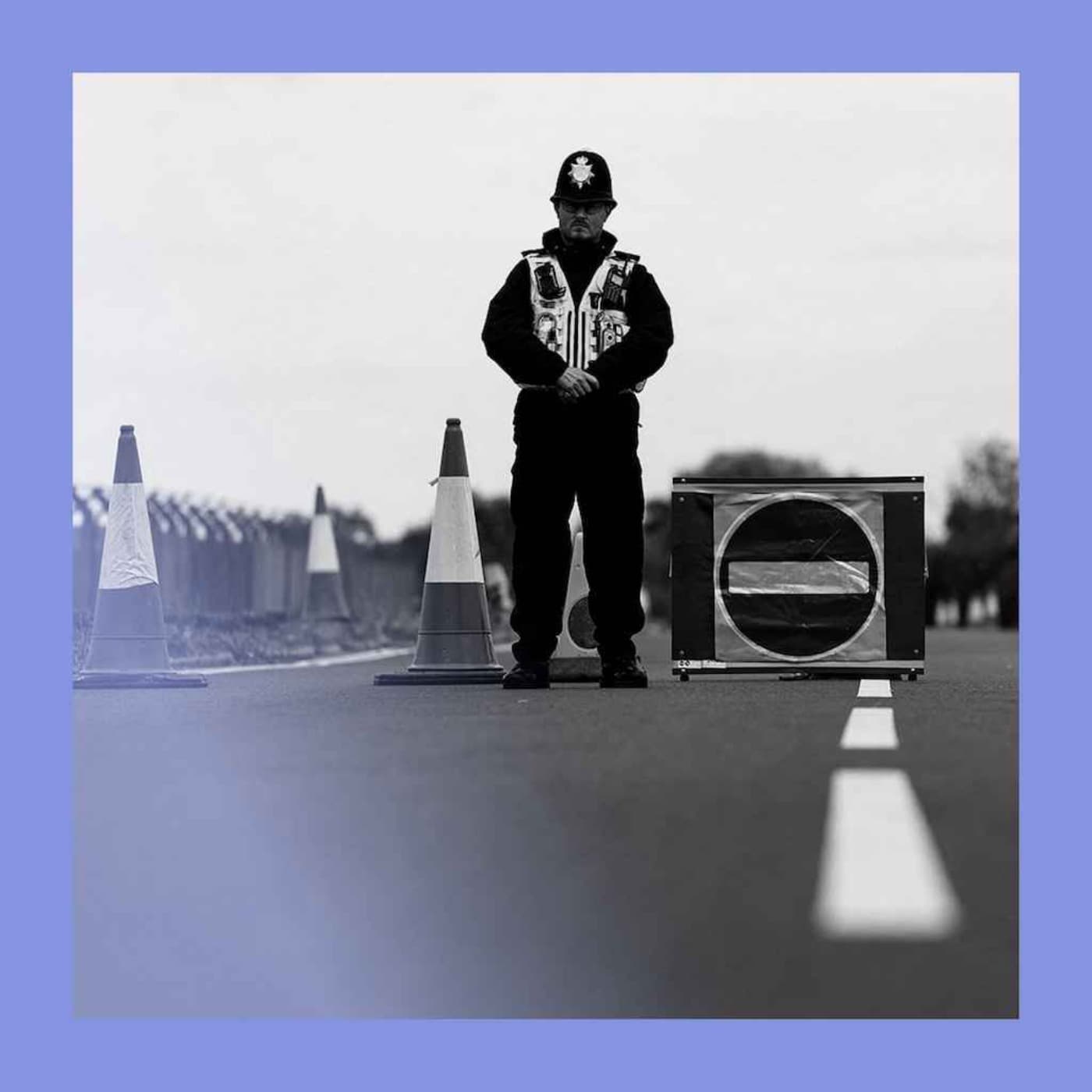
2:09Stop the books! Stop the books, GB. Stop them! Quiet, I. Hi, hi. Britons seem to be obsessed with immigration. In recent months, there have been protests and even riots about housing asylum seekers in hotels. Regular migration provokes strong reaction too. Not to mention the rise of the Populist Reform Party. Many attribute its success in part to its hardline approach on migrants. All of which spurred Britain's Labour government this week to unveil its own reforms that represent a dramatic shift in Britain's stance on asylum and immigration. I wish it were possible to say that there isn't a problem here, that there's nothing to see and that it is all in fact just extremist right-wing talking points.
2:59But this system is broken and it is incumbent on all members of Parliament to acknowledge how badly broken the system is and to make it a moral mission to fix this system so that it stops creating the division that we all see. This week, the British government announced some big changes to its asylum system, which are inspired by Denmark. Joel Budd is our social affairs editor. It's a curious choice because Denmark is in many ways much worse at doing immigration and immigration integration than Britain is. Joel, as you say, this is a big shift in policy. What has actually been proposed? There are several changes, all of which make life harder for asylum seekers.
3:41But the most important change is that instead of being granted refugee status for five years and then being able to go on to apply for citizenship, which is the case at the moment, in future, people who receive protection in Britain will only be given it for 30 months. and they can then go on to apply for another 30-month term and another 30-month term and another one after that. But if their country becomes safer in the meantime, they may well be told that they need to leave Britain. And some of them, at least, will not be able to become citizens for 20 years. And what about the other migration paths, so people applying with visas to come and work or study?
4:23Yesterday, the government announced some changes to the regular immigration system for workers and so forth, which are also quite radical. And they point in the same direction. In that area too, Britain is proposing to withhold permanent residency and citizenship from migrants, especially low paid migrants, for much, much longer than it does at the moment. Britain has been relatively open compared to many countries. Why this shift? Well, I think the main reason for the shift is that the Labour government is absolutely terrified of a party called Reform UK, which is a populist right-wing party overwhelmingly focused on immigration and the evils of immigration.
5:07But the government has also made a second argument, an intriguing argument, which is that great restrictions on immigration and asylum are necessary in order to maintain social harmony in the country. The Home Secretary, Shabana Mahmood, who is the daughter of immigrants from Pakistan, said that she has experienced racism and she blames this racism on British people feeling a lack of control over immigration, that there's been too much immigration, British people have panicked, and the racism comes from that sense of panic. And so therefore it's important to restore control over immigration, calm everybody down and shore up multiculturalism.
5:51And what is it about the Danish solution that apparently will solve our problems too? Well, Denmark started to develop very tough asylum laws in the early 2000s, and by about 2002 or 2003, had some of the toughest asylum laws in Europe. Then in 2015, we had the Syrian refugee crisis and a large number of applications in Denmark. And immediately afterwards, the Danish government said, right, we're going to introduce some new measures, including only giving temporary protection. But the Danish government also promised to confiscate asylum seekers' jewellery in order to defray some of the costs of accommodating them.
6:35That is known to academics as negative nation branding. The idea is that a government tries to make its country sound as unattractive as possible, broadcast a message to the rest of the world that they really should not try to come to this country. And the number of asylum claims in Denmark dropped quite quickly. So I think the British government is looking at that and saying, well, if we have similarly tough policies, we might get the same good result. Would these reforms in Britain do what the British government now claimed they want to, which is cut asylum claims, cut visa applications? I think it's quite likely that the reforms to regular visas will reduce applications, yes, because Britain is simply making itself less attractive to people who make considered decisions about applying for a teaching job in Britain, applying for a care home job in Britain.
7:31On asylum seekers, it's a little bit less clear because Britain is quite appealing for asylum seekers in ways that the British government either can't control or doesn't want to control. Britain is really very good at turning immigrants of all kinds into productive, well-educated members of British society. Denmark is much, much less good at that. It may possibly stem from the fact that Denmark, after the war, had a guest worker scheme and implicitly promised to Danes that anybody who arrived in the country was only going to be temporary and contingent. Whereas Britain drew on its former colonies and brought in people who thought of themselves as British and allowed them to stay and make homes and so on.
8:22One way you can see that is in employment. Immigrants have employment rates in the UK that are almost identical to the natives, and they earn slightly more than the natives. In schools, immigrant children do almost exactly as well as the children of native British people. Denmark, on the other hand, does not do very well, in common with other continental European countries like Germany. So I think there is a possibility that in moving towards a Danish-style immigration system, Britain will also accidentally import Danish-style immigrant integration, which would not be good. And Joel, if the ultimate problem that the Labour government is trying to fix is the boost in support in Britain for reform and the collapse of their own support, will this fix that?
9:15Well, first of all, we would need to have asylum numbers at the very least coming down, and especially a reduction in the number of people coming across the Channel in small boats. It's really hard to know whether that's going to happen or not. I don't think the changes that were announced will have a very large effect because asylum seekers are not terribly aware of British policies towards them. It's not as though they're sitting in refugee camps in Turkey, reading British policy papers. They tend to try to get to Britain because their cousin is here, or they're aware that Britain has some colonial history in their country, or for an unusual reason, which is that Britain essentially cannot return asylum seekers to other European countries.
10:03So their numbers may not reduce, but it's very, very, very hard to tell. But I think that the British people are now looking for actual changes in asylum and immigration numbers. I think that the government has talked so much about immigration and introduced so many policies, and it's even very hard for me to keep up, and I study this stuff for a living, that everybody is extremely confused and has become weary. And I think the only thing that will really impress the British public is an actual change in the numbers. Joel, thank you very much. Thank you.
11:08Transcription by CastingWords came for the preacher's family too. The preacher's son remembers the violence, the isolation, cold fear. His father, the preacher, wouldn't compromise. And his son had to live with that. He still bears the scars. Now, decades on, he's gone back. Listen to his story tomorrow. You'll need to be a subscriber.
11:39Back in February 2023, you might remember an airborne mystery, a giant balloon floating over America. All right, well, good afternoon, everyone. Thank you for taking some time to be here today. In a press briefing, officials at the Pentagon revealed what it was. U.S. North Comp continues their recovery operations in support of the recent takedown of the Chinese high-altitude surveillance balloon. A spy balloon, but like a big one, a body the size of a bus, packed with sensors and cameras and left floating along for days until it was popped by a fighter jet. Again, we remind members of the public, if you come across debris, please do not handle it, but call your local law enforcement to facilitate...
12:21This was not the first of its kind. In fact, there's more interest in military balloons now than there has been in generations. Military ballooning really flourished sort of in the late 1700s when the French Revolutionary Armies tethered a hydrogen balloon above the battlefield to spy on Austrian manoeuvres below. Sam Beale is an international correspondent for The Economist. And they've been used since then in the American Civil War where both sides spied on each other and then in the First World War where they both used large balloons to snoop over the enemy's trenches. But after that, they came out of fashion, partly because you had the appearance of airplanes and satellites to do that reconnaissance mission.
13:06But after decades in the wilderness, military balloons are really taking off again. Why is that? Why are they back in fashion? So they tend to come in two forms today, aerostats and high-altitude balloons. Now, aerostats are large, tethered blimps, essentially, that fly at about three to five kilometers up in the air. and often these are used to do radar surveillance so you can sling a radar underneath it and it can pick up low-flying objects that usually leak through traditional radar coverage these tend to be fixed and they stand around for weeks on end but they can't move anywhere and that's where high altitude balloons come in these are large untethered balloons that are a lot lighter that can fly into the mid stratosphere that's about 30 kilometers up and they often drift around any battlefield.
13:52And they too can use a variety of sensor suites such as radar, communications relays, and even perhaps dropping drones over enemy battlefields. And the real thing is that they cost a lot less than traditional warning and control aircraft, which is what militaries have used to do the job up until now. So it sounds like they're doing a number of jobs sort of in the middle ground or the middle air, as it were, but also, as you say, on the cheap. Yeah, exactly. And I mean, the Malm forces are learning a lot from other agencies. So America's Customs and Border Protection Agency have a handful of these blimps festooned along the border with Mexico to survey drug smuggling routes as well as people smugglers.
14:33And that's the same case in Puerto Rico, where there's a huge blimp that is looking over the Caribbean Sea to detect ships varying drugs. But you were hinting that there's more than just sort of eyes in the skies to this. they may do something more active in combat. Yes, exactly. Basically, one idea that the American armed forces are modeling is using large, high-altitude balloons as part of a network to identify targets and guide munitions to them. Another idea is to use these balloons to ferry and drop armed drones behind enemy lines. And the money is really beginning to flow towards that end.
15:09In the big, beautiful bill signed in July, Congress is remarking about$15 million for experimental stratospheric balloons that would be used by special operations forces. What you've mentioned so far is largely American, but all of these same advantages surely stretch to other jurisdictions. Yes, exactly. I mean, the biggest factor behind the newfound zeal for ballooning is China. In February 2023, an immense Chinese-based balloon carrying equipment drifted across America for days until it was popped by an F-22 fighter jet. And that's what really caught the attention of American defense planners in recent years.
15:43Other American allies are also looking into balloons, including Poland, which is buying a handful from the United States, as well as Israel, which has festooned them along its border with Lebanon to detect incoming rocket fire. And in the war on Ukraine, Ukraine is using them as communications relays to allow their drones to fly faster. And other countries like Russia are also using them for innovative uses, like dropping drone nets to try and ensnare drones. So the way this is going, they are, I suppose, adding to these various arsenals rather than replacing anything within them. Yeah, exactly.
16:17I mean, high altitude balloons and aerostats aren't without their limits. One of the big problems is that steering them at high altitudes is particularly tricky. They've also got big constraints on what they can do. Most of them are powered by a small solar panel, which limits the sophistication of the sensors that they can put underneath. So the communications equipment or the radars. And in a big war with China or Russia, there would be a blanket of electronic warfare and jamming, which would probably make these quite susceptible to degradation and jamming of their communications. And the biggest issue is when these are shot down over enemy countries, they tend to cause big diplomatic kerfuffles, as the United States and China can attest to.
17:00But that's still better than shooting down a spy plane. So nearly 300 years after the French Revolutionary Armies tried to use hydrogen balloons to spy on enemies, their invention is really coming of age. Sam, thanks very much for joining us. Jason, thank you very much for having me.
17:22This Economist podcast is sponsored by Bill, the intelligent finance platform that helps businesses and accounting firms scale with proven results. With AI-powered automation, Bill isn't just moving money. They're simplifying financial operations for nearly half a million customers. Bill has securely processed over a trillion dollars in transactions. That's proven infrastructure. Ready to talk with an expert? Visit bill.com slash proven and get a$150 gift card as a thank you. That's bill.com slash proven. Terms and conditions apply. See offer page for details. Summer can throw off even the best routines, but AG1 makes it easy to keep one healthy habit consistent.
18:02AG1 is a daily health drink that combines a multivitamin, pre and probiotics, superfoods, and antioxidants in one scoop mixed with eight ounces of water. From late nights to long weekends and everything in between, AG1 offers a simple way to add consistent nutritional support to your day, wherever the morning begins. Visit drinkag1.com slash theintelligence to get a free morning person hat and a free AG1 sampler in your welcome kit. With your first AG1 subscription, an$82 value. That's drinkag1.com slash the intelligence.
18:46If you walk across London's Millennium Bridge from the North Bank to the South, you'll see before you a little run of three houses that look very old, wedged in between the Globe Theatre and the Tate Modern. Anne Rowe is The Economist's obituary's editor.
19:10Two of these are in red brick and one is a bit taller and that's faced with white stucco.
19:19The two red brick houses were reconstructions of old houses after the Second World War but the White House is the genuine article. It was rebuilt in 1710 and its address is 49 Bankside. Next door to it is a little alleyway called Cardinal's Cap Alley which is said to be the narrowest in London. It's hard to go past these three houses without thinking how wonderful it would be to live in that White House to look out of your windows directly at the Dome of St Paul's.
20:03When Gillian Tindall did this walk, she did more than dream. She actually went and got in touch with the owners and wrote an entire history of the house called The House Beside the Thames. And there she went inside. I, she minutely examined where the fireplaces were and the staircases and rebuilt the way the house had changed its orientation over the years. It had been built on the footprint of a medieval pub called the Cardinal's Hat. And in those days, Bankside was a quite different place. It was full of rowdy bargemen of Flemish whores and the stink of tanneries.
20:50Gillian Tindall couldn't walk down a street or go into a house without being incredibly aware of the people who had been there in the past. She thought of London Earth as being not only clay and gravel, but also compounded of the dust, of the bones and the thatch and the wood, of everything that had been built before and all the people.
21:18she noted in Kentish Town which was her own rather battered part of North London that the modern roads followed the track of rivers and of hedgerows and when she stood in Sainsbury's she was aware that she was on the site of a medieval chapel of ease and so she was standing where people had stood before whose bones she was now standing on and they were people who'd wanted milk and bread just as she did. Her first non-fiction book after she'd done a run of novels was called The Fields Beneath because on a local house on the lintel she saw the phrase inscribed The Fields Lie Sleeping Underneath.
22:00That was very much her attitude to everywhere she went. Her own house, which had been built in 1828, particularly intrigued her because she felt she shared space in it with everybody who'd been there before, particularly a family called the Pikes, who'd been warring with their neighbours. There was a particular scar in the banister rail going up to the bedrooms, which she somehow associated with the Pikes.
22:35she'd become intrigued by old communities and the fate of old houses when she was just down from Oxford in 1963 and went to work for the Stepney Welfare Association going to interview aged widows in the East End who were about to be moved out because there was a tremendous Greater London Plan, as it was called, which was going to regenerate the whole of the East End. And she was very shocked when she went there and taught these women in their rather neat sitting rooms in run-down houses, but they were perfectly solid. You could have lived in them. She was shocked to think that this community was being destroyed.
23:17And from then on, she had a particular a love for any threatened community, especially her own, and she could not forget that Kentish Town had been such a pleasant bucolic place before it had been bisected and more or less destroyed by the London Midland Railway. She wasn't against all large-scale projects, the big crossrail line, now the Elizabeth Line, in London. She rather liked because it took a route that was ancient and it gave her fodder for another book.
23:58She was also hardened one night when she was baby-watching and she heard her little son Harry singing London Bridge is Falling Down as he went to sleep. She liked to think that children would go on singing about London Bridge. They would go on remembering it. and that the house at 49 Bankside would go on standing long after she herself had joined the crowds of the unknown going to the unknown.
24:33Anne Rowe on Gillian Tindall, who has died aged 87.
Read the full transcript
24:49Thank you.
25:19is William Warren. Our producers are Anne Hanna and Jonathan Day, with extra production help this week from Benji Guy. We'll all see you back here for the Weekend Intelligence tomorrow.
25:41The best podcasts give you the sharpest view of the world. Adio is the AICRM that gives you the sharpest view of your business. It instantly builds your pipeline by connecting your email, calls, product data, and more. Then ask Adio to prep for a meeting, spot a deal at risk, or find out where your pipeline stands. It's the AICRM that keeps you 10 steps ahead. Ask more from CRM. Ask Adio. Get 10 % off at adio.com slash intelligence. A-T-T-I-O dot com slash intelligence. To grow beyond limits and even beyond your aspirations, you need the London Business School MBA. Ranked fourth in the world by the Financial Times, the program delivers academic excellence and unlocks access to leading global businesses and a network of over 58 ,000 professionals.
26:3086 % of the most recent class accepted a role within three months of graduating, and the returns continue beyond today. Search Discover London Business School MBA to find out more.
From the publisher
Britain’s home secretary Shabana Mahmood proposed a big shift in immigration policy this week. Our correspondent explains Labour’s reforms – and the reasoning behind them. Why military spy balloons are making a comeback. And celebrating historian Gillian Tindall, who illuminated ordinary lives to bring the past to life.
Listen to what matters most, from global politics and business to science and technology—Subscribe to Economist Podcasts+
For more information about how to access Economist Podcasts+, please visit our FAQs page or watch our video explaining how to link your account.
Hosted on Acast. See acast.com/privacy for more information.