In short
The Intelligence from The Economist episode links Britain’s budget to the country’s chronic low growth/low productivity, arguing Rachel Reeves’ Labour budget raises taxes and spending but misses reforms to boost growth; it also profiles Uttar Pradesh chief minister Yogi Adityanath as a possible future for India’s politics, mixing economic pragmatism with Hindu nationalist religious politics.
Guests
Tom Carter, Britain economics correspondent for The Economist; Robert Guest, deputy editor of The Economist.
Key claims
Britain’s productivity growth has flatlined since 2008; tax rises and spending are costly given weak growth prospects; bond-market reaction was muted, but the budget is “tax and spend” with delayed taxes and election-timed uncertainty.
Notable examples
scrapping the two-child welfare limit; disability benefits and welfare spending staying high; 62% marginal tax rate encouraging part-time work around £100,000. For India: UP infrastructure gains (national highways 8,500 to 12,000 km; airports 6 to 18) and crime drops (murder rate 2.2 to 1.4 per 100,000) alongside critics’ concerns about encounter killings and anti-Muslim rhetoric/vigilantism.
Written by AI. May contain mistakes. Listen to the episode to check what was said.
Chapters
Tap a time to open that second in VOBritain's Economic Challenges
0:30 to 0:41
Overview of Britain's low growth and productivity issues.
“Taxes aren't something you can only think about once a year.”
Britain's Economic Challenges
1:22 to 2:14
Overview of Britain's low growth and productivity issues.
“Like Prime Minister Narendra Modi, he's another muscular Hindu nationalist type, but in holy robes.”
Budget Analysis: Rachel Reeves
2:14 to 3:18
Discussion of Chancellor Rachel Reeves' budget and its implications.
“Britain's Chancellor or Finance Minister, Rachel Reeves, would love to blame that on the previous Conservative governments.”
Economic Backdrop: Productivity Concerns
3:18 to 4:04
Exploration of the poor productivity growth affecting Britain's economy.
“This budget was a classic Labour tax and spend budget.”
Budget Spending vs. Growth
4:04 to 4:50
Critique of how the budget's windfall could have better supported economic growth.
“And it makes any spending very expensive.”
Market Reactions to the Budget
4:50 to 5:26
Examination of market reactions to the budget and its perceived success.
“So she spent it on getting rid of the two-child limit on welfare payments, which is probably good.”
Missed Opportunities for Growth
5:26 to 6:28
Analysis of missed opportunities in the budget to enhance economic growth.
“Now, given that in the past, budgets have caused, let's call it, violent market reactions, has this one?”
Long-term Implications for Labour
6:28 to 8:38
Implications of the budget for the Labour Party's future and electoral prospects.
“British spending is the highest for a long time, barring the pandemic, at 45 % of GDP.”
Crime and Governance in Uttar Pradesh
14:00 to 19:00
Explore the governance and crime issues in Uttar Pradesh and their impact on investment and public safety.
“And a lot of villages have been connected with two-lane roads and reasonably reliable but somewhat expensive electricity.”
Interview Techniques and Their Impact
19:00 to 23:30
Learn about unique interview questions that reveal candidates' personalities and cultural fit.
“You've spent hours rehearsing for every question you think you're going to receive.”
Transcript
Automatic transcript. May contain errors.0:00Yogi Adityanath:To grow beyond limits and even beyond your aspirations, you need the London Business School MBA. Ranked fourth in the world by the Financial Times, the programme delivers academic excellence and unlocks access to leading global businesses and a network of over 58 ,000 professionals. 86 % of the most recent class accepted a role within three months of graduating, and the returns continue beyond today. Search Discover London Business School MBA to find out more. This message comes from Jackson. Taxes aren't something you can only think about once a year. With investments, planning for tax days year-round.
0:37Fortunately, Jackson offers tax-efficient products. Visit jackson.com for more information on how our products can make your tax bill a little bit less painful. Jackson is short for Jackson Financial Incorporated, Jackson National Life Insurance Company, Lansing, Michigan, and Jackson National Life Insurance Company of New York. Purchase New York.
1:00The Economist
1:07Hello and welcome to The Intelligence from The Economist. I'm your host, Jason Palmer. Every weekday, we provide a fresh perspective on the events shaping your world.
1:21We pay a visit to India's most populous state, Uttar Pradesh, and meet its leader. Like Prime Minister Narendra Modi, he's another muscular Hindu nationalist type, but in holy robes. And he might be a sign of India's politics to come. And job seekers pay attention. We've gathered up some of our readers' best interview questions. It's the simplest ones that turn out to be the most disarming.
1:59First up, though.
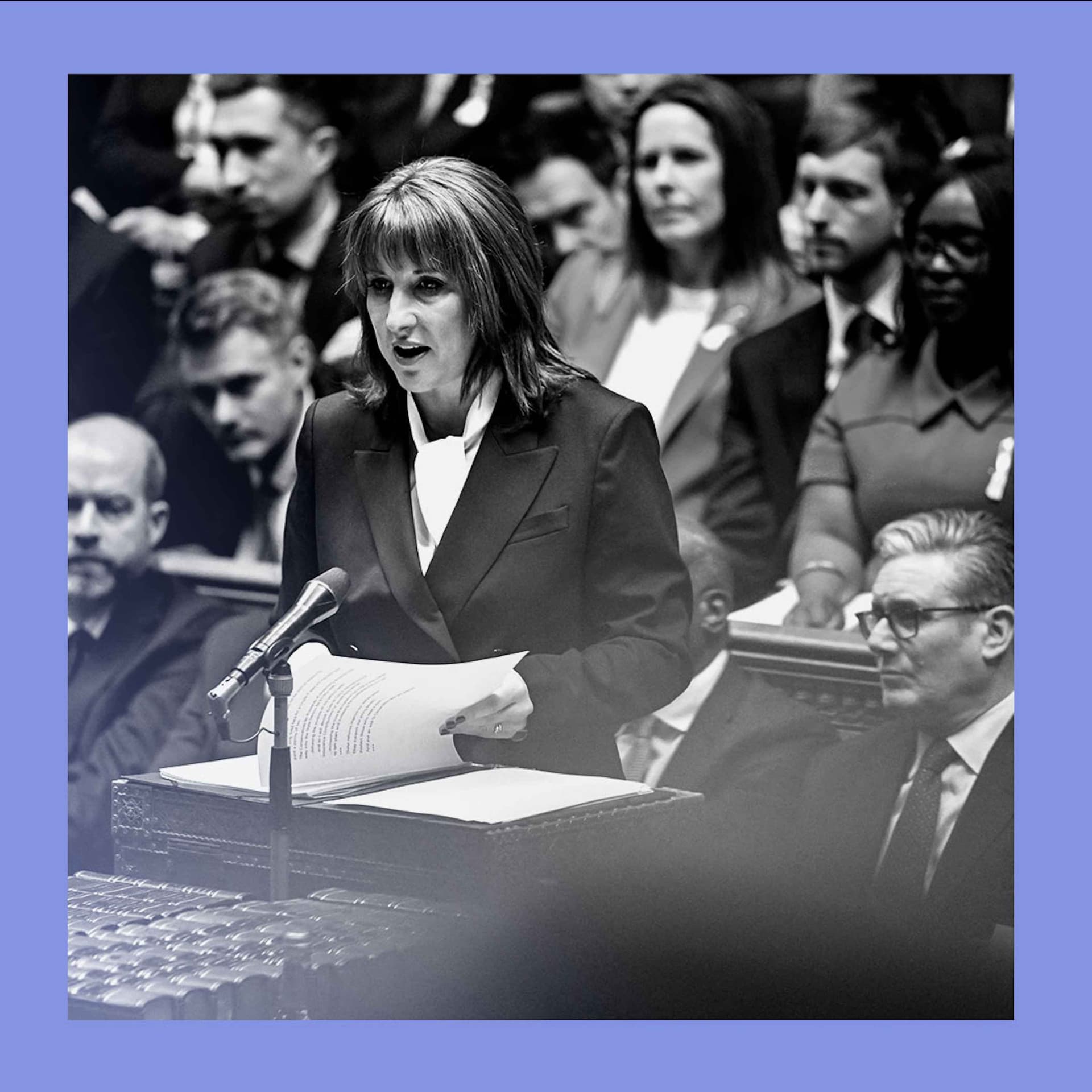
2:07We've been telling you for some time that Britain's biggest ailment is its low growth and low productivity. Britain's Chancellor or Finance Minister, Rachel Reeves, would love to blame that on the previous Conservative governments. This is not about the last 14 months. It is about the previous 14 years. the legacy of Brexit and the pandemic, and the damaging decisions by the party opposites. So when she presented her much-anticipated budget yesterday, her main job was clear. Today's budget builds on the choices that we have made since July last year. To cut NHS waiting lists. To cut the cost of living.
2:50And to cut debt and borrowing. She announced£26 billion,$34 billion worth of tax rises on wages, on pensions, on housing. I do recognise that I was asking ordinary people to pay a little bit more. But where was the tune-up to the growth engine? That service doesn't appear to have been performed. And that is dangerous for Britain and eventually for Ms Reeves' Labour Party. This budget was a classic Labour tax and spend budget. Tom Carter is our Britain economics correspondent. It was squarely aimed at short-term political survival and satisfying left-wing critics, but it did very little to actually promote growth in the economy.
3:33So before we get into the actual details here, paint us a picture. What is the economic backdrop? Probably the biggest part of the backdrop is the fact that we, as a country, have had significantly bad economic growth. And the big driver of that is poor productivity growth. So that is basically how much output each worker produces in a given hour. that has flatlined since the global financial crisis in 2008. And at this budget, the independent forecaster just doesn't think it's going to recover that much in the coming years. And so that makes it quite bad to raise tax because there's just not much of an economy to raise tax from.
4:05And it makes any spending very expensive. Having said that, there is a better news in this budget than there was expected, which is that although that productivity growth impact was bad, it won't necessarily be as bad for the public finances as previously thought. And that created a bit of a windfall for the government. But your suggestion is that windfall wasn't put to especially good strategic use. Yes, exactly. So what she should have done if she wanted to grow the economy, which she claims is her number one mission, is used it to blunt the impacts of any tax rises, make sure that people don't feel too burdened because that weighs on private investment and that weighs on businesses and that stops growth, and potentially use some of the money to make some difficult reforms needed to grow the economy, including changing the perverse incentives within the tax system.
4:49Instead, what she spent it on were things to please her own party. So she spent it on getting rid of the two-child limit on welfare payments, which is probably good. It will probably reduce child poverty, but it contributed to public spending being extremely high. Public spending is five percentage points of GDP higher than it was pre-pandemic. The spending is not just high. The problem with the tax rises in this budget is they don't kick in for a while. Some of them don't kick in until 2029, but that is when the next general election is, so we don't even know if they will happen. That means that this budget basically means more spending now, more borrowing now, and maybe a bit of taxes later.
5:26Now, given that in the past, budgets have caused, let's call it, violent market reactions, has this one? I don't think so. Previous budgets, for example, the mini-budget of Liz Truss, announced massive tax cuts, which caused the bond market to completely panic that the UK was on an unsustainable fiscal course. This budget didn't do that. The bond market reaction on the day was pretty muted, if anything. Bond yields went down as bond traders felt that actually there were no nasty surprises in this budget. It was kind of as expected. It built a little bit more buffer against the fiscal rules that the Chancellor was trying to meet.
6:02So no, this was not the worst budget in the world. But just because the bond market doesn't crash on the day, as you're indicating, does not mean this was a good budget. Exactly. It's a sorry world we're in. if avoiding a bond market crash is the best mark of success. If you actually take a step back and you think about what this budget is trying to achieve, she could have done so much more of it. I've talked already about the abysmal growth prospects for the United Kingdom, and she could have taken some steps to improve those. But instead, she did the opposite. British spending is the highest for a long time, barring the pandemic, at 45 % of GDP.
6:32She could have taken some difficult decisions to get that down, to bring the welfare bill down, especially on things like disability benefits, which are running out of control. but instead she just spent more money on welfare. She also could have reformed the tax system. She could have made it less disincentivising of work. At the moment lots of people choose to go part-time when they earn about£100 ,000 a year because they have a 62 % marginal tax rate. She could have tackled that. She didn't. But perhaps the thing that is worst about this budget is she missed lots of opportunities to boost growth in other areas.
7:05She claims that growth is the biggest mission of her government. And yet we just don't see that rhetoric played out in reality anywhere. She said Brexit was bad for growth in the speech, nothing on how we can improve relationships with the EU in it. She recognised that migration played a role in boosting growth. And yet the government's immigration policy has made it actually hard to get permanent residency here. And then there are other parts of what the government is doing that are actively anti-growth. They're passing a new employment rights bill, which is actually going to make it harder to hire and keep people, which again is not great for growth.
7:39So is this a government that actually cares about growth? I don't think so. Given all that you said about not only the budget, but what the government is doing, where does this budget leave Labour? I think in the short run, the Chancellor and the Prime Minister will see this budget as a success. It will have got the left-wing backbenchers who are not happy with them off their backs by giving them these scraps like the increased welfare spending. But let's think a little bit more about the long term. And I think the picture is much less rosy there. What we've seen is Labour is on less than 20 % of the polls, the radical right, the radical left are both rising.
8:09And what Labour really need to do is they need to do something big, they need to do something bold, which actually takes back control of the centre ground and says, look, we can deliver for the British people. Yet, we just didn't see that in this budget. What we saw in this budget was nothing to really promote the growth in the economy. But growth is the one thing, if you can get more money in people's pockets by the end of the parliament, that is the one thing that might tempt people away from these populist polls and towards voting for the Labour Party again. And I don't think we saw anything in this budget that made that more likely to happen.
8:40Tom, thanks very much for your time. Thank you very much for having me.
8:54Yogi Adityanath:To grow beyond limits and even beyond your aspirations, you need the London Business School MBA. Ranked fourth in the world by the Financial Times, the program delivers academic excellence and unlocks access to leading global businesses and a network of over 58 ,000 professionals. 86 % of the most recent class accepted a role within three months of graduating, and the returns continue beyond today. Search Discover London Business School MBA to find out more. With no fees or minimums on checking accounts, it's no wonder the Capital One bank guy is so passionate about banking with Capital One. If he were here, he wouldn't just tell you about no fees or minimums.
9:35He'd also talk about how most Capital One cafes are open seven days a week to assist with your banking needs. Yep, even on weekends, it's pretty much all he talks about. In a good way. What's in your wallet? Terms apply. See CapitalOne.com slash Bank. Capital One N.A. Member FDIC.
10:08For most of his life, Yogi Adityanath has been a monk, wearing saffron robes, renouncing worldly possessions, getting up early in the morning to pray, meditate, and feed sugary treats to the cows at a temple in Ghorakpur, which I visited earlier this month. The cows love it very much. And if I give them a little lump, I get very excited. Robert Guest is a deputy editor of The Economist. For the past eight years, he's also been one of the world's most powerful politicians. He's the chief minister of the Indian state of Uttar Pradesh, which has a population of 240 million people. So if it was a country, it would be the world's sixth largest.
10:50He represents the two most important strains in Indian politics, muscular Hindu nationalism and economic pragmatism. To the people who praise him, they talk about the roads that he's built, the electricity getting better, his crackdown on crime. But to his critics, he's a man who tramples on human rights and Muslims. Any time people are talking about who the person who might eventually succeed the Prime Minister Narendra Modi might be, He's always one of the three names that comes up. Now, without wanting to put odds on that, he represents one possible future for India. Now, Robert, you visited Uttar Pradesh and interviewed Mr.
11:29Adityanath yourself. Tell me about him. What was he like? So Tom Sass, our new Delhi bureau chief, and I interviewed him in Lucknow, the state capital. He was in a big high-ceiling room. He was smiling disarmingly. He was flanked by Hindu icons. Now, I heard from a colleague who had interviewed him way back when he was just an MP that his flunkies had tried to make him kneel before the holy man to do the interview. He's kind of cast off that kind of stuff, and we were just allowed to sit in chairs. So is this more like meeting a religious leader or more like a chief minister? It's a bit of both.
12:06He's the actual head of a religious order, so a lot of people revere him as a holy man. At the same time, when he's talking to outsiders, he wants to emphasize the economic pragmatism. So the entire interview, he said he just wanted to talk about economic development, about how the GDP of the state had gone up on his watch, about how many miles of roads he'd laid, about how the electricity supply was getting better. Of course, to different audiences, he'll emphasize different things. But his pitch about Uttar Pradesh is that it is doing very well and significantly better under him. Yes, absolutely.
12:40That's his pitch to the outside world and the secular bits of India and to the Hindus as well. He tends to exaggerate the numbers a bit. He told us that it would be a trillion dollar economy by 2029, which is flatly impossible. That would imply that the economy would treble in size in the next four years, which no large economy has ever done. But he does have a serious, quite impressive growth story to tell. The state was for a long time a disaster. It steadily shrunk as a proportion of Indian GDP per head because it was incredibly badly run and overrun by organized crime. And it's turned around somewhat.
13:24The process did start before he became chief minister, but overall growth rate has been better than India for the past three years. And remember that India is growing quite fast. So UP Uttar Pradesh from a very low base has started to look much more decent. And how much of it is the miles and miles of roads he likes to tout? Well, a lot of it is about getting the basics more right than they were before. The roads used to be absolutely terrible. Under him, the state now has about 12 ,000 kilometers of national highways, up from 8 ,500 in 2016, just before he took over, and 18 airports up from six, even though many of them still lack scheduled services.
14:04And a lot of villages have been connected with two-lane roads and reasonably reliable but somewhat expensive electricity. So this is stuff where it's a lot of state investment. It's a lot of asking the central government for investment to put in the state. And it's made a difference. According to the Economist Intelligence Unit, our sister organization, thanks to things like deregulation, the business environment has improved faster in the past five years to Pradesh than in any other Indian state. But there's more to it than just infrastructure. As you said, there were governance issues, there were crime issues.
14:38Yeah. The other big thing that people talk about is crime. Under previous administrations, there was a sort of incestuous relationship between organized crime and politicians. It's clearly gotten better under him. He firstly seems to have broken the power of some of the organized criminals. And the other thing is public safety. And while he's been in office, the murder rate per 100 ,000 people has fallen from 2.2 to 1.4. That's quite a big change, and it's better than what we've seen in India as a whole. And you talk to people in the streets, you talk to people in offices, and they do say that they feel a bit safer going out.
15:14And that affects the investment environment. That affects people's lives. But how has he tackled the crime issue, the murder rate issue? You mentioned earlier that his critics say that it's through trampling of rights. He talks about zero tolerance for crime, and we've seen a significant uptick in what they call encounter killings, where the police shoot either dead or injure suspects who they say are resisting arrest or returning fire. And his critics say quite a lot of these things are not real, that they're just killing gangsters or people they suspect might be gangsters. I talked to a former cop who, first of all, said there's no way that any of these encounters are staged.
15:57Everything's done by the book. But then he says if any gangster twirls his moustache and goes around boasting that he's a gangster, let's see if he survives another 24 hours. So it's pretty clear what kind of a message the government is sending to voters here. That they're not going to be punctilious about the rules when they're stamping on crime. And what about the religious dimension of that, where that notion of the law intersects with the Hindu nationalist part of the agenda? Well, this is the most worrying thing about what Mr. Adityanath represents. He has repeatedly throughout his career said really incendiary things about Muslims.
16:37He kind of describes them as a threat, has talked about the supposed love jihad, which is this idea that Muslims are seducing Hindu women in order to forcibly convert them to Islam and get more Muslim babies so they can ultimately take over. And under him, there has been a lot of vigilante action against young Muslim men who might be dating Hindu women, risk being either beaten up or arrested and then beaten up. There's a feeling among Muslims that they are really, really frightened. They're worried that their neighborhoods might get bulldozed. They're worried that their mosques are going to be knocked down.
17:17The level of provocation towards Muslims is constant and it's frightening. And when I asked him if some investors are concerned about Hindu-Muslim relations, he just flat out denied there was any problem with Hindu-Muslim relations in Uttar Pradesh. But in speeches to other audiences, he plays up the Muslim threat all the time, as he did like on the day before we met him to a different audience. So there's a duality there. You said earlier you didn't want to put odds on the chances he would become prime minister, but as a thought experiment, what does it tell you that he's a plausible contender in today's India and what might an India under his leadership be like?
17:56It's an illustration of the currents within the ruling party. With Yogi Adityanath, he seems to be paying at least lip service to economic pragmatism, but you really feel that the passion and energy is in the religious fervor. And that's a very dangerous possible future for India. I've heard from ordinary Hindu nationalists in Uttar Pradesh that what they love about this kind of leadership is that Hindus can walk with their heads held high and Muslims keep their heads down. It's a very divisive form of politics. It's very dangerous for the future of the country. And there is a chance that the BJP can emphasize its more pragmatic side.
18:38And that would be a much better outcome for India. Robert, thanks very much for joining us. Well, thank you, Jason.
18:59Your palms are sweaty. You've spent hours rehearsing for every question you think you're going to receive. It's time to interview for a job. But then you get a question that throws you and sticks with you long after the interview is over. Andrew Palmer, No Relation, hosts Boss Class, our wildly successful podcast series about the world of work and management. What makes for a great interview question is something I asked the subscribers to my weekly newsletter recently. And I got a load of responses. So I've picked out a few of them. And we're going to hear them now. and I'll give you my reaction to them.
19:39First up.
19:44This is Tim Kilpatrick from Lancashire, United Kingdom. This is always my last interview question, which I have used probably more than 60 times in the past 10 years. The first time was by chance and seemed a logical next question, to me at least, but not to the candidate. The candidate was in full flow conversation, very confident, full of experience, both professional and personal. So I asked him, not including work or family, what is your biggest achievement? It floored him. He stopped, heard, awed, and turned into a wreck in front of me. So the fact that Tim's found that this question tends to jolt candidates out of their scripted flow is a mark in its favour.
20:30It does probably strip out the workaholics or the people who reach for the kind of trite answers about their family. That's useful. I have a slight doubt about it, which is that we're in a world where everyone is constantly running ultramarathons or picking up new hobbies and learning how to do jujitsu or whatever it might be. So it may be that lots of people can answer this really easily, in which case you're advantaging some over others. But nonetheless, his experience suggests that it might have utility. Moving on.
21:08Kate Civita from France. My favourite question towards the end of an interview. If we gave you a blank cheque and a free weekend, where would you go, what would you do, and who would you go with? The answers were always interesting and sometimes very revealing. I have a couple of reactions to this one. I definitely want to know what answers she got. And we had a couple of variations on this theme. Someone else wrote in and said, if you were in Las Vegas for a few hours, would you watch a show or go gambling? And those kind of questions, I think underlying them now is a desire not just to jolt candidates, but also to give a question which an AI isn't expecting, which where a prompt doesn't necessarily help them.
21:58So a couple of subscribers to the newsletter mentioned AI in particular. They wanted to ask questions where it was difficult for a candidate to prompt an AI helper mid-interview on the assumption that this was remote. So that is definitely going for it. I would worry about this question in some jurisdictions. You're sort of opening yourself up to potential legal liability, I would imagine, if you discriminated against people or made a decision based on this answer. It is, however, a very nice invitation to self-destruct. So a candidate has to pick through an answer which is both interesting and not totally self-incriminating.
Read the full transcript
22:36And finally, we got this voice memo.
22:42I'm Mickey Magyar, live in Boulder, Colorado. I've been on both sides of the desk for job interviews. And for me, a critical characteristic in either direction is a compatible sense of humor. So I would insert a reference to Monty Python or Hitchhiker's Guide or Star Trek and see what response it got. A grin was sufficient to let me know I would be comfortable working with that person or department. I have found that a lively sense of humor correlates pretty strongly with traits such as flexibility, curiosity, friendliness, and so on. If there's no grin, run away, run away! So I totally agree with Mickey on the importance of humour in the workplace.
23:30And what she's getting at there is the idea of culture fit, which is perhaps the most important thing that an interview is for. Do I want to work with this person for the next few years? And so lots of firms take a lot of time working out whether the values that they espouse are showing up in the candidates that they're interviewing. I actually think this is a really nice window into the real value of an interview. You know, obviously you've got to monitor for competence. You've got to make sure that people are able to do the job. But you're also trying to work out whether they'd fit in.
24:48Transcription by CastingWords
24:53Yogi Adityanath:Your aspirations, you need the London Business School MBA. Ranked fourth in the world by the Financial Times, the program delivers academic excellence and unlocks access to leading global businesses and a network of over 58 ,000 professionals. 86 % of the most recent class accepted a role within three months of graduating, and the returns continue beyond today. Search Discover London Business School MBA to find out more. With no fees or minimums on checking accounts, It's no wonder the Capital One bank guy is so passionate about banking with Capital One. If he were here, he wouldn't just tell you about no fees or minimums.
25:32He'd also talk about how most Capital One cafes are open seven days a week to assist with your banking needs. Yep, even on weekends, it's pretty much all he talks about. In a good way. What's in your wallet? Terms apply. See CapitalOne.com slash bank. Capital One N.A. member FDIC.
From the publisher
The tax-and-spend plan was fine-tuned to avoid immediate political jeopardy. But it will do little to help Britain’s chronic growth problem, and is likely to erode further the political centre. We meet with Yogi Adityanath, the leader of India’s most populous state and a harbinger of the country’s possible political future. And readers’ best—or most discombobulating—job-interview questions.
Get a world of insights by subscribing to Economist Podcasts+. For more information about how to access Economist Podcasts+, please visit our FAQs page or watch our video explaining how to link your account.
Hosted on Acast. See acast.com/privacy for more information.