
In short
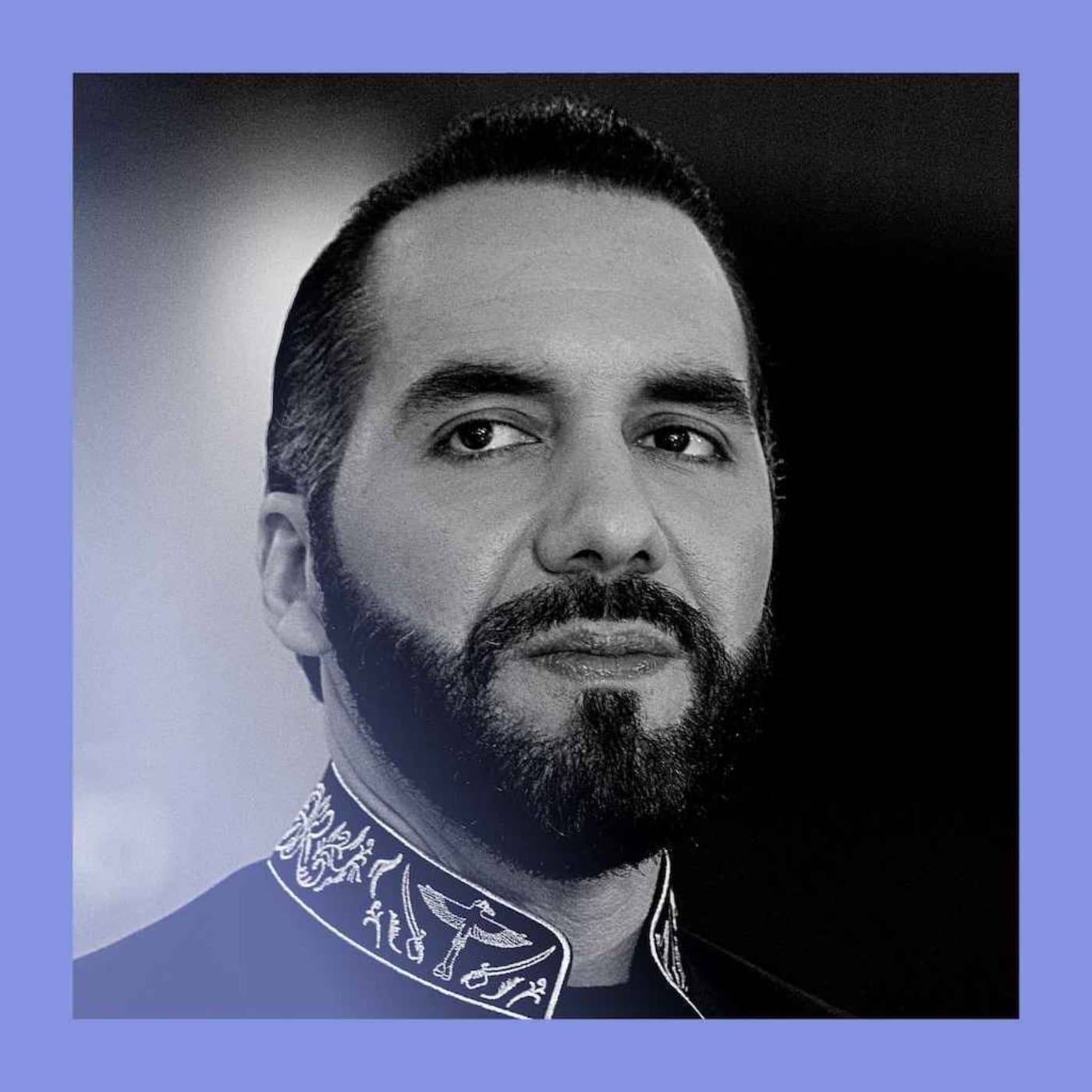
The episode of The Intelligence from The Economist covers three topics. First, El Salvador: President Nayib Bukele’s 2019 gang crackdown is credited with driving murder rates down (1.9 per 100,000 in 2023 from 51 in 2018) and extortion nearly disappearing, boosting approval to nearly 80% after his 2024 re-election.
Key claims
Bukele’s party used legislative and constitutional changes to remove presidential term limits, allow indefinite re-election, and win elections with a plurality; a state of emergency has jailed about 85,000 people without trials, with NGOs alleging torture and arbitrary detention; critics include anti-corruption lawyer Ruth López and journalists/lawyers.
Notable examples
alleged secret pacts with gang leaders (El Faro videos); a “foreign agent” law modeled on Russia’s.
Guest
Sarah Burke, Economist bureau chief for Mexico, Central America and the Caribbean. Second, US fertility: Carrie and Richmond Jones (Economist international economics correspondent) says birth rates fell most in historically high-fertility states (Utah, North Dakota, Alaska), challenging the “career delay” narrative; researchers lack a clear cause. Third, Provence: Sophie Petter (Paris bureau chief) argues Provence has become a lifestyle brand (hotels, rosé, Instagram), with tourism pressures on small villages.
Written by AI. May contain mistakes. Listen to the episode to check what was said.
Chapters
Tap a time to open that second in VOAmerica's Declining Fertility Rate
0:00 to 0:11
Discussing the alarming decline in America's fertility rates.
“SIBO DataVantage delivers real-time market data to help firms make informed trading decisions.”
America's Declining Fertility Rate
1:13 to 2:00
Discussing the alarming decline in America's fertility rates.
“The baby-making has fallen most in the places where it used to be the highest.”
Nayib Bukele's Rise to Power
2:00 to 2:52
Analyzing Nayib Bukele's presidency and his initial popularity.
“When Nayib Bukele won El Salvador's presidential election in 2019, he was young, popular, and both Salvadorans and neighboring Latin Americans could not get enough of him.”
Constitutional Changes in El Salvador
2:52 to 3:56
Exploring recent constitutional amendments affecting Bukele's presidency.
“The 44-year-old could be president of El Salvador for decades to come.”
Public Opinion on Bukele's Power Grab
3:56 to 4:52
Examining Salvadoran public sentiment regarding Bukele's consolidation of power.
“His New Ideas Party holds a supermajority and can very easily rewrite the Constitution as they've just done.”
Gang Crackdown and Its Consequences
4:52 to 6:28
The impact of Bukele's gang crackdown on crime and civil rights.
“Are they changing their feelings on him as it gets more and more apparent what he's up to?”
International Relations and Bukele's Policies
6:28 to 7:42
How Bukele's actions are perceived internationally, especially by the U.S.
“There are lots of corruption allegations that are swirling around.”
Economic Impacts of Bukele's Leadership
7:42 to 9:29
Discussing economic concerns in El Salvador under Bukele's rule.
“And it means that people or organizations receiving money from abroad have to apply for permission and pay a 30 percent tax on it.”
Shifting Birth Rates in America
14:00 to 18:34
Explore the changing birth rates across various states in America and the factors contributing to this trend.
“These are the places where historically women have had the fewest children.”
Introduction to Provence
18:34 to 18:58
Discover the allure of Provence, its landscape, culture, and growing lifestyle brand appeal.
Show all 12 chapters
Provence: A Lifestyle Brand
18:58 to 24:05
Learn how Provence has transformed into a lifestyle brand and the impact of tourism and media.
“It's August in France, and the bakers and the butchers in the capital have all shut for the month.”
Provence: A Lifestyle Brand
25:03 to 25:41
Learn how Provence has transformed into a lifestyle brand and the impact of tourism and media.
“Download our white paper at SIBO.com slash VIX Insight.”
Transcript
Automatic transcript. May contain errors.0:00SIBO DataVantage delivers real-time market data to help firms make informed trading decisions. That same data supports the development of indices and tradable products across global markets. Learn more at SIBO.com slash DataVantage. This intelligence podcast is sponsored by Backmarket, the leading global marketplace for refurbished tech. When the kids need phones, laptops, or tablets for school, buying refurbished tech makes sense for families trying to save money without sacrificing quality. At Backmarket, tech costs up to 50 % less compared to new. All devices have been professionally refurbished and come with a one-year warranty and 30-day return policy.
0:41Start saving money. Visit Backmarket.com or the Backmarket app to shop now.
0:50The Economist
0:57Hello and welcome to The Intelligence from The Economist. I'm your host, Jason Palmer. Every weekday, we provide a fresh perspective on the events shaping your world.
1:12America has a worrisome fertility rate, and the latest numbers show a curious pattern. The baby-making has fallen most in the places where it used to be the highest. And lots of people know that the south of France, and for whatever reason you have to say it that way, not southern France, is a delightful place to visit. But the region of Provence has become something more. It's not just a destination, it's a lifestyle brand.
1:49First up, though.
2:00When Nayib Bukele won El Salvador's presidential election in 2019, he was young, popular, and both Salvadorans and neighboring Latin Americans could not get enough of him. The President of the Republic of Salvador,
2:15the first vote. Mr. Pukele won the vote with his promise to crack down on El Salvador's gangs and lower the country's extremely high murder rate. Sarah Burke is the Economist's bureau chief for Mexico, Central America and the Caribbean. Now, swathes of gang members are locked up in prison and the country has a murder rate that's lower than that of the United States. You might call his two presidential terms an unmitigated success, but recent changes the legislature has made to El Salvador's constitution suggest that Mr. Bukele has got a taste for power. The 44-year-old could be president of El Salvador for decades to come.
2:58So tell me more about the constitutional changes you mentioned there. So at the end of July, El Salvador's legislative assembly, which is dominated by Mr. Bukele's political party, voted to remove presidential term limits from the constitution. Now that means Mr. Bukele can seek re-election indefinitely as many times as he likes. He's been eroding checks on his power since 2019, so in some ways this just seemed like the logical conclusion and many people had been expecting it. In 2021, for example, a Supreme Court vote reinterpreted a constitutional ban on consecutive presidential terms to allow him to run for a second time.
3:37So, you know, this is not the first time he's shown that he'd like to stay in power. The Constitution being able to change it to get rid of any bar to seeking re-election was only because in January they passed legislation to make it much easier to make constitutional changes. So essentially, Mr. Bukele now can do whatever he likes. His New Ideas Party holds a supermajority and can very easily rewrite the Constitution as they've just done. Which means that maybe just re-election isn't the only thing on his or his party's mind if they have free reign. So they're also making it easier for him to actually win.
4:12There's not much opposition anyway, but there's now a change to how the presidential elections will actually be run. It can be won with a plurality in the first round of voting. There's no need for a runoff between the top two candidates if neither one wins more than 50 % of the vote. they also changed the date of the next election, bringing it forward from 2029 to 2027. Now, they say this is because it coincides with other polls, such as for the Assembly. It also makes it harder for the opposition to get their act together and find a candidate and prepare for these elections. Now, we've been talking a long time about how Mr.
4:49Bukele has been doing this kind of power grab stuff and how much Salvadorans don't seem to mind. Are they changing their feelings on him as it gets more and more apparent what he's up to? It's hard to tell, Jason. There are some polls and they still show he's incredibly popular, although some people are scared of actually saying what they think. And it's true that for the most part, people are willing to overlook a lot of his power grab because he's given them a benefit. His crackdown on gangs, which he started in 2022, has changed the lives for many, if not all, Salvadorans and made him understandably hugely popular.
5:21So he spoke about the success of this gang crackdown on the day of his re-election in 2024. He claimed that El Salvador was on the cusp of winning the war against the gangs. We started to win our biggest evil. And we're about to win the war against the gang. That had gone from being the most dangerous country in the world to being the most secure in all of the Western Hemisphere. We've been going to be, literally, literally, Literalmente, no es una exageración, es un hiperbole. Literalmente, pasamos de ser el país más inseguro del mundo. And we can see that from the statistics. El Salvador's murder rate fell to 1.9 per 100 ,000 people last year, and that's down from 51 per 100 ,000 in 2018.
6:09Now, that's lower than the rate in the United States. Extortion has almost disappeared, and that was something that really was a plague on people's lives. When Mr Bukele was re-elected in 2024, his approval ratings were nearly 80%. But I was there a couple of months ago, Jason, and it's definitely true that some are growing disillusioned. There are lots of corruption allegations that are swirling around. One example is that in May, El Faro, which is a news outlet, published videos, interviews with two gang leaders describing the secret pacts they'd made with Mr Bukele. Now, Mr Bukele dismisses these allegations.
6:44But for the people who do still approve of him, it is largely on the back of the gang crackdown that we've spoken about before. How is that going? Is it much the same now as it was even years ago? He's been ruling now under a state of emergency, which suspends many constitutional rights for over three years. And this is renewed every month by the legislature. Now, about 85 ,000 people have been jailed under this and none of them have been tried in court. They've just been shoved behind bars. And the idea is to do mass trials, but those haven't happened yet. NGOs such as Human Rights Watch and local NGOs have documented cases of torture in prison, as well as arbitrary detentions and kidnappings.
7:23And more recently, Mr. Buckelia has become even more openly authoritarian, shall we say, using this state of emergency to round up human rights defenders, journalists and lawyers, not even really on the pretense anymore that they're criminals. In May, Ruth Lopez, who's a very well-known anti-corruption lawyer, was arrested. And then a couple of days after, the legislature passed a foreign agent's law, which was really similar to one that Vladimir Putin in Russia passed. And it means that people or organizations receiving money from abroad have to apply for permission and pay a 30 percent tax on it.
7:57So it's really strangling any form of civil society. And El Salvador has been locking up deportees from America. Does that give Mr. Bukele cover from the Trump administration as he goes through all of this? Yeah, I mean, I think that's a significant part of it. And I think also the Trump administration admire Buckele and the control that he has over the country. So Donald Trump has called Mr. Buckele a great friend. It's an honor to have a friend of mine because we... But also, you know, Mr. Trump is obsessed with crime in the United States. And Mr. Buckele has obviously done a very authoritarian job that has proved to give results in El Salvador.
8:34We're very eager to help. We know that you have a crime problem, a terrorism problem that you need help with. And we're a small country, but if we can help, we can do it. In a statement last week, the State Department said it was completely fine that El Salvador had eliminated any restrictions on presidential terms. But it's unclear how this might play out among U.S. companies and Bitcoiners. So some appear to be growing increasingly wary. El Salvador had really turned itself into this hotspot with crypto enthusiasts because Bukele had legalized and made legal tender Bitcoin and also with some big tech companies and tourists, including surfers.
9:16Companies like Google had opened doors in El Salvador. But the prospect of him being president for the next 40 years and the sort of chill that's been cast across the country with the recent moves have caused some to start speaking out and changing their minds. Some Bitcoiners have left the country. It's a sign of perhaps some growing discontent. And this doesn't bode well for the economy either, Jason, which is something that Salvadorans are now very worried about, more worried about than any other issue. The IMF says that growth will be 2.5 percent in 2025, which is lower than the previous forecast of 3 percent.
9:51This might change how Salvadorans feel about their precedent. But right now, it seems like even if they do change their mind or he does become unpopular, they're probably stuck with him, like it or not. Sarah, thanks very much for joining us. You're welcome, Jason.
10:28of downside. More at SIBO.com slash VIX Insight. Review important risk disclosures and disclaimers at SIBO.com slash US underscore disclaimers. Global payroll is a headache when you're juggling multiple vendors. We get it. Companies like Shopify and Revolut are scaling effortlessly across borders with Deal. Revolut manages over 450 employment contracts across 26 countries without setting up separate local entities. And KLM pays 189 employees across 12 countries, all from one system. Build your global team with Deal. Visit deel.com slash intelligence and start expanding your business today.
11:1325 years ago, when people who are having children now were growing up in Salt Lake City, it was likely that their parents were religious, married very young, and stayed together much longer than other couples in America. These people had an average of four siblings and potentially grew up in one of the largest families in the US. Some, most, were Mormon. Carrie and Richmond Jones is The Economist's international economics correspondent. While Mormonism is becoming increasingly popular in Utah, having children is somehow going the other way. Utah was once hailed by policymakers as a glowing example of a high-fertility state, where women were still having a lot of children, bucking the trend of falling American birth rates.
12:03The fertility rate in the U.S. has dropped to an all-time low from 2023 to 2023. Listen to this. The birth rate in the U.S. is dropping and actually hit an all-time low in 2024. Well, U.S. fertility rates reach a historic low, marking the second year in a row of decline. In a new report, the CDC says... But in the past decade, it's seen a far more dramatic decrease in the number of children being born. And Utah is far from the only state to experience this trend. So this is going on all over America? It's absolutely not just Utah. America's fertility rate is really low at the moment. In 1960, the countrywide total fertility rate was 3.6 children per woman.
12:44By 2022, it was 1.66 children per woman. and by 2024 it was 1.6. That's the lowest fertility rate on record. This data has really worried researchers. It's lower than people are expecting. It's new data released by the CDC. Women in every state are having fewer children but when I dug into these numbers after the CDC brought them out I found something really surprising that isn't often covered by the media or by researchers and that is that birth rates are dropping most drastically in states which have historically had the highest fertility or where women have had the most children. So when you say historically, what are the runners and riders, the top and bottom of the list?
13:28So think about places where you think about big families in America, more women who stay at home, who end up raising children full time. Rural religious places like Utah, North Dakota and Alaska are probably going to come to mind. And you're right, these are the three highest fertility states, or at least they were in 2014. Conversely, think of the places where women have been having fewer children, where there's this idea that women perhaps have really important careers. They spend a lot of time in college. They might be doing PhDs, going to law schools, places like New York, Massachusetts, Connecticut in the Northeast.
14:03These are the places where historically women have had the fewest children. But the relationship is now flipping, which is really interesting. What do the numbers say about that now? On average, the national birth rate dropped in America by 12 % between 2014 and 2023. That's the same as going from 62 children in 2014 for every thousand women of childbearing age to 55 in 2023. But in those three highest fertility states, Utah, North Dakota, Alaska, the birth rate has fallen by about 20%. That's almost twice the drop of the average state. And it's the same for states a little bit lower down the list, like Texas and South Dakota as well.
14:46Whereas the Northeast has experienced a pretty small drop, really, in fertility. We're looking at single percentage points for most states. So New Jersey, in that decade, the number of births has only dropped by 2%, basically. In Pennsylvania, which people often think has a really high birth rate, it's quite a poor urban industrial state. Births have decreased by just 5%. So what's going on here? Why this change in particular in the places that used to be high fertility? One thing that's really important to realise is that researchers actually have very little solid idea exactly why birth rates are cratering in America.
15:23There's some suggestion that it could be a temporary thing, that people could just be delaying childbirth and in the next few years we'll see it tick up. And you can tell a little bit from the demographic groups. What they really reveal is that the traditional narrative that we've come up with for why women are having fewer children. They're spending lots more time in college, they're more professional. Doesn't really stack up to the women that are having fewer children. So mostly births have collapsed among women under 25, not professional college educated women. It's poor women who are having mostly fewer teenage pregnancies.
15:55And so you'd expect that to show up right in the states where people are having more children because they also tend to have them earlier. So in 2005, most children born in Utah had mothers under 25. Now less than a quarter do so it makes sense that that's where the drop would be. Another thing that has changed in America is religion which often gets the blame because religious women tend to have quite a lot of children, they're associated with traditional more conservative family values and it is indeed the case that in some of these states such as North Dakota people are getting a lot less religious So in America overall, the amount of people who identify as religious has gone down from 78 % to about 62 % since 2000.
16:38But that doesn't really square the circle here because states like Utah are getting more religious. They've become Las Bastians, havens of religiosity. The Mormon population alone in Utah has increased by about a tenth since 2000. But it's still having far fewer babies. I mean, taking the issue in its totality, is it a problem? The first thing to understand is that researchers in America definitely think it's a problem. Donald Trump is absolutely obsessed with bringing up the birth rate again. He's floated lots of ideas. There's this big consultation going on in the White House that we keep on hearing about, which effectively means that Trump says he's going to come out with some set of policies, maybe to do with IVF.
17:21He's floated baby bonuses. We will support baby bonuses for a new baby boom. How does that sound? That sounds pretty good. I want a baby boom. But they're really not going to have much success if they're telling New Jersey to be more like Utah when actually most of the drop has been in places like Utah. The other thing to bear in mind is that we have actually seen American fertility dip before. So in the 1970s, the fertility rate dipped for a few years to about 1.7 children per woman. And at the time, there was a very similar feeling that this was about women in the workplace getting bigger professional careers and having less time to devote to children in the home.
18:04And similarly to today, that actually turned out to be not what was going on at all. So those women did have the time to devote, wanted to have families, just wanted to have them in their 30s rather than their 20s. And in the 1980s, we saw fertility kick up again to almost replacement level, actually almost 2.1. And so the question is, could something similar happen this time, or has the dip gone too low? We just don't know, and we won't for a few years. Karian, thanks very much for your time. Thank you ever so much for having me.
18:58It's August in France, and the bakers and the butchers in the capital have all shut for the month. Even the government is on holiday. It's the perfect time to leave Paris and head for the pine forests, cicadas, and the warmth of one of the country's most famous regions, Provence. Sophie Petter is our Paris bureau chief, but she enjoys the occasional field trip in the service of journalism.
19:26To most people, Provence is a region of France. Strangely, it doesn't exist as a standalone administrative area. But you know Provence when you're there. It's the landscape, the olive trees and vineyards. It's the dialect which you can see on road signs that display the village names in French as well as in the Provençal language. And it's a living culture. Locals are playing pétanque, the regional version of Bourg. But Provence is not just a destination these days. Increasingly, it's a lifestyle brand.
20:05I visited the Hotel Erel Gordes La Bastide, which features in the Netflix series Emily in Paris. It's a dreamy place of hanging gardens and honey-colored stone in a hilltop village. The hotel used to have a very formal, fine dining restaurant, situated on a terrace overlooking the Louberon Valley. This year, it was rebranded to lend it a more informal and Provençal feel.
20:34To attach the word Provence to a name or to a place is to hitch the humdrum to understated chic. Marseille's international airport is now called Marseille-Provence. American brands are jumping on the trend too Provence Beauty is an American product line based in Los Angeles Georgetown, Aire de Provence olive oil is cold pressed and infused with lavender, rosemary and thyme and promises to transport you directly to the French countryside And when it comes to food Well, Provence is about street markets and local produce. The tomatoes are fat and wonky. The garlic is plump and purple.
21:32Provence gets its name from the Romans, who called it Provincia. During the medieval period, Provence reached across a vast region of southern France, from the Riveronne to Nice on the Med and as far north as the Alps. Its borders fluctuated with wars and empires. Provence was annexed by the French crown in 1487. It hasn't always been a valued destination. Early British and American visitors preferred the Riviera, which the French call the Côte d 'Azur. That's the coastal strip of famous resorts on the Mediterranean. In the 19th and 20th centuries, it was French painters and writers who turned eyes away from the Med and towards the charms of the hinterland.
22:16The British travel bestseller A Year in Provence by Peter Mayle was not published until 1990. The emergence of brand Provence is about taking life slowly, cooking with local ingredients, enjoying simplicity. The lifestyle has a certain glamour too. Hollywood stars including Brad Pitt and George Clooney have bought up wine estates in the region. In fact, bottles of pale pink rosé have a lot to do with turning Provence into a lifestyle brand. Exports of Provence rosé have nearly tripled over the past decade. Most of it ends up in the bars and dinner tables of America and Britain. Some of those brands are famous and glitzy.
22:59Others focus more on the rural sense of place. I visited a wine estate in Villegroze, which produces a rosé with a picture of a tractor on its bottle. The lifestyle is in many ways a counterpoint to the stresses and scrolling of the Instagram era. It's a sort of regional detox. Paradoxically, of course, the brand is also dependent on images shared on the small screen. On Instagram, hashtag Provence features on over 7 million posts. This brings pressures that threaten to undermine all this tranquility. Only 1 ,600 people live in the hilltop Provencal village of God. Yet one million tourists crowd into its narrow streets each year.
23:46Of course, in all this bottling and pampering and posting, Provence gets purified. Poverty and farming hardship also stalk the rocky land. But in August at least, Provence sets the rhythm for those who live there and those who want a slice of that life. and with a glass of rosy in my hand and a summer holiday around the corner santé and à bientôt
Read the full transcript
24:23That's all for this episode of The Intelligence We'll see you back here tomorrow
24:33Thank you.
25:03Download our white paper at SIBO.com slash VIX Insight. There are risks associated with SIBO company products. Review the disclosures and disclaimers at SIBO.com slash US underscore disclaimers. Global payroll is a headache when you're juggling multiple vendors. We get it. Companies like Shopify and Revolut are scaling effortlessly across borders with deal. Revolut manages over 450 employment contracts across 26 countries without setting up separate local entities. And KLM pays 189 employees across 12 countries, all from one system. Build your global team with Deal. Visit deel.com slash intelligence and start expanding your business today.
From the publisher
First he came for the gangs; then, for his critics. Now Nayib Bukele has come for El Salvador’s constitution, and there is little to stop him staying in office indefinitely. America’s paltry fertility numbers show a counterintuitive pattern: births are falling fastest where they were once highest. And France’s Provence region becomes a brand unto itself.
Get a world of insights by subscribing to Economist Podcasts+. For more information about how to access Economist Podcasts+, please visit our FAQs page or watch our video explaining how to link your account.
Hosted on Acast. See acast.com/privacy for more information.