In short
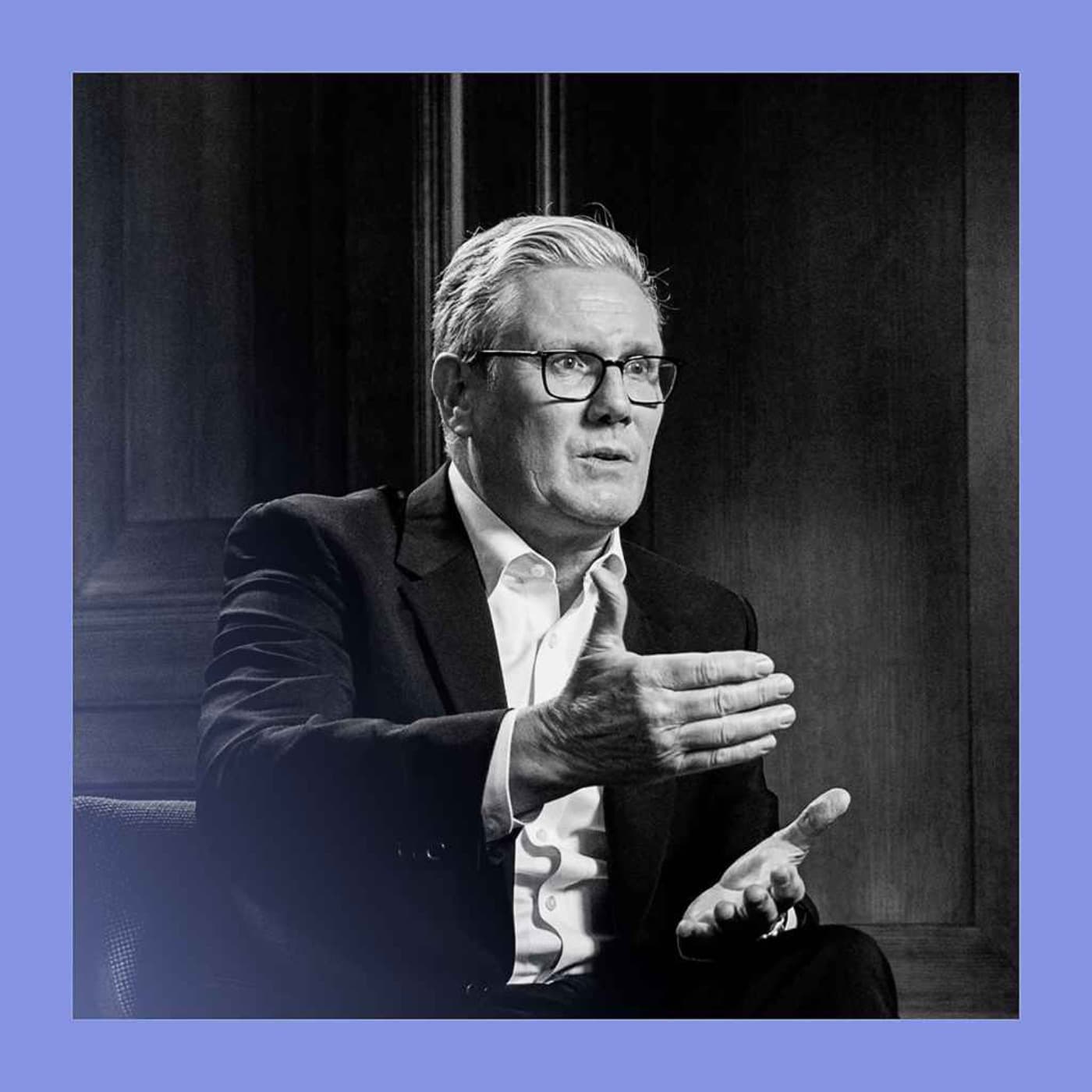
This episode of The Intelligence (Economist) is a three-part news and culture roundup. Topic 1: UK politics—Editor-in-chief Zanny Minton-Beddoes and Britain political editor Duncan Robinson interview Prime Minister Keir Starmer.
Key claims
Starmer is unusually aggressive toward Nigel Farage’s Reform UK, accusing it of being effectively pro-Russia and warning it would “rip apart” society and trash the economy. Robinson says Labour is trying to make the next election a Labour-vs-Reform “cordon sanitaire” face-off, despite Reform polling strongly. Takeaway: Starmer diagnoses high stakes but lacks a coherent, bold domestic plan; Labour’s policies are “small” and growth/public services needs deeper reform. Topic 2: US death penalty—Southern correspondent Rebecca Jackson reports Florida drives a surge in executions.
Key claims
executions are rising despite declining public support; Supreme Court changes under a more conservative bench allow fewer emergency stays. Examples: a firing squad missed the inmate’s heart; nitrogen gas execution caused suffocation over ~40 minutes. Topic 3: Tom Stoppard—Russia editor Arkady Ostrovsky profiles Stoppard’s life and work, including The Coast of Utopia, Rosencrantz and Guildenstern Are Dead, Arcadia, Leopoldstadt, and his Russian-stage ambitions.
Guests
Zanny Minton-Beddoes; Duncan Robinson; Rebecca Jackson; Arkady Ostrovsky.
Written by AI. May contain mistakes. Listen to the episode to check what was said.
Chapters
Tap a time to open that second in VODiscussing Executions in America
0:00 to 0:22
Exploring the rise in executions in the U.S. and declining support for the death penalty.
“What if you had a room where no one interrupts?”
Discussing Executions in America
0:53 to 1:06
Exploring the rise in executions in the U.S. and declining support for the death penalty.
Discussing Executions in America
1:21 to 1:59
Exploring the rise in executions in the U.S. and declining support for the death penalty.
“yet support for the death penalty is declining.”
Interview with Keir Starmer
1:59 to 10:38
Analysis of Keir Starmer's interview, his challenges, and Labour's agenda.
“When Sir Keir Starmer became Britain's Prime Minister last summer, he promised to enact a wide-ranging agenda to address the country's challenges.”
Rise in Executions and Political Climate
11:44 to 14:00
Examining the factors contributing to the increase in executions in Florida.
“Tonight, once more, we gather because our hearts refuse to look away.”
The Death Penalty: Trends and Court Influence
14:00 to 16:52
Explore the declining public support for the death penalty and its implications.
“increasingly less interested in the death penalty.”
Tom Stoppard: A Life in Theatre
16:52 to 23:02
Learn about the life and works of playwright Tom Stoppard and his unique approach to storytelling.
“It was a warm summer day in 2003, and Tom Stoppard was strolling around the mostly ruined estate of Primukhina.”
Tom Stoppard: A Life in Theatre
24:03 to 24:13
Learn about the life and works of playwright Tom Stoppard and his unique approach to storytelling.
“Taxes aren't something you can only think about once a year.”
Transcript
Automatic transcript. May contain errors.0:00A BetterHelp ad. Hold on. One second. I just need to...
0:11What if you had a room where no one interrupts? No notifications. No expectations. Just space to talk. With BetterHelp, therapy happens in a space that's yours. Visit betterhelp.com slash randompodcast for 10 % off your first month of online therapy. If you've got a teenager, it's time to have the talk. You know, about investing. With the new Schwab Teen Investor account, teens can gain hands-on investing experience and build positive money habits. It's an account co-owned by you and your teen, so you can monitor and engage with the account while your teen learns how to invest and manage money.
0:49Learn more at schwab.com slash teens.
1:06Hello and welcome to The Intelligence from The Economist. I'm your host, Rosie Blore. Every weekday, we provide a fresh perspective on the events shaping your world.
1:20The number of people executed in America this year is the highest for nearly two decades, yet support for the death penalty is declining. The surprising surge is partly about politics, and just one state is responsible for most of the deaths. And he was one of Britain's most brilliant and challenging writers. Our correspondent spent more than 20 years translating his works into Russian. Now he celebrates the life of playwright Tom Stoppard.
1:58But first...
2:05When Sir Keir Starmer became Britain's Prime Minister last summer, he promised to enact a wide-ranging agenda to address the country's challenges. Our country has voted decisively for change, for national renewal, and a return of politics to public service. His centre-left Labour government was elected on a large majority, ejecting the Conservative Party from Downing Street after 14 years in power. But a year and a half on from Labour's win, Britain is still in bad shape. And Starmer's poll numbers have collapsed. This week, The Economist's editor-in-chief, Zannie Minton-Beddoes, interviewed Starmer for our new video show, Insider.
2:53Also present was Duncan Robinson, our Britain political editor and Badger columnist. So Keir Starmer doesn't normally say very much in interviews. He's normally extremely cautious in what he puts on tape. But this time, he really let rip. I want a Labour government. I'm leading a Labour government. I'm proud of the change Labour governments bring about. But if there is a Conservative government, I can sleep at night. If there was a right-wing government in the United Kingdom, that would be a different proposition. Basically, Keir Starmer foresees a crisis coming in British politics. He fears that a reform government is potentially coming.
3:30And he thinks that that would be extremely bad for Britain. So, Duncan, what were some of the big takeaways from interviewing the Prime Minister? The surprising thing about the interview with Keir Starmer was just how aggressive he was against Nigel Farage's party reform. He was much tougher than he is previously. He basically accused the party of being effectively pro-Russia. He said they would rip apart British society and he said that they would also trash Britain's economy. And that's part of a much broader strategy that Labour are now pursuing to make the next election simply a face-off between the Labour Party and reform.
4:07And it boiled it down to a simple question of who do you want to be prime minister? Do you want Keir Starmer to be prime minister or do you want Nigel Farage to be prime minister? It's absolutely astonishing to hear a Labour prime minister say that he would sleep well at night if there was a Tory in Downing Street. What's going on there? So it's part of that broader strategy to make reform seem to be beyond the pale of normal British politics. And that means, strangely, being nice to the Conservative Party. But that is the sort of attempt by the Prime Minister to build what people call a cordon sanitaire around reform, that they are fundamentally almost un-British and abnormal within the context of British politics, which is quite a risky strategy.
4:45And it's not a crazy prospect, is it, that polls are showing that reform is doing remarkably well? Reform are very likely to be the next government of the UK, and that is quite a shock. This is a party that barely existed a few years ago. Nigel Farage was a significant but small player in British politics. And now most people are getting used to the idea that this man might well be prime minister in a few years. So if Keir Starmer is recognising that the stakes are extremely high, what's he actually done since coming to power? Therein lies the problem. So Starmer's got this quite good diagnosis of just how high the stakes are.
5:25He knows what the problems are, but he doesn't really know how to fix them. So he thinks that Britain is a pivotal moment. It's in 1945. It's in 1979. And yet his proposals do not quite match the seriousness of that diagnosis. So Labour are doing plenty of things, but they're often quite small. And even the bigger things that they've been working on, such as making it easier to build in the UK, they're smaller than they could be. So even where they do have quite a clear governing agenda, they're not quite meeting the moment. And a lot of that just stems from Keir Starmer himself. And is that really a lack of policy or is it a lack of us hearing about it?
6:04There's plenty of policy, but it's often rather shallow. And it's also not quite what Britain needs. So somewhere where Labour have been relatively bold and things like employment rights and they're making it much harder to fire people early on. They're rolling back anti-trade union laws, but that's not necessarily going to fix the sort of demographic issues that Britain faces. It's definitely not going to help improve growth. And so again, it's a mismatch. He knows that growth has to be higher. He knows that Britain public services need to be solved. He knows that he can't just throw money at them, but there's still not that much deep thinking going on.
6:37But Britain isn't unique here, is it? I mean, other European countries and further afield are seeing a rise of the popular right and a sort of haunting of what do the old parties do to respond? Oh, completely. Britain is a relatively normal European country. If you go to any European country, you'll find a country with bad demographics, low growth and a populist right that is at least nipping at the heels and sometimes really quite beating up centrist parties. Where Britain does stick out is that some of its problems are just relatively self-inflicted. We did decide to leave the EU 10 years ago, we do make it very hard to build power stations in this country.
7:16We do basically vote to make ourselves a little bit poorer every now and again. And on foreign policy, under Keir Starmer, Britain has carved out a relatively useful post-Brexit role, which is something that people didn't necessarily think was inevitable a few years ago. So Britain's a relatively hawkish figure when it comes to Russia, and Britain can play a very useful role in Europe when it comes to security. Britain is broadly half of Europe's military capability. It's one of only two nuclear powers. It has a seat at the Security Council at the UN. It does, in a European context, matter. So it sounds like on foreign policy, Starmer has made something of an impact.
7:57But as you say, now is the moment. Keir Starmer's in power. Is he ready? Is he going to do enough? Foreign policy has sort of become his comfort zone, almost. He finds those sorts of problems more straightforward to deal with than the more nebulous, but fundamentally from a long-term perspective, probably more important problems such as Britain and Europe's very low growth. Keir Starmer's problem is that he doesn't have a simple sweeping explanation of what his government's actually for. So Clement Attlee did in the post-war era when he was rebuilding Britain after the war. Margaret Thatcher did when she was fundamentally reshaping the British state in the 1980s.
8:34But Keir Starmer, when asked for what his vision is, will reply with what is basically a lot of waffle. If Thatcher was break the mould, what is the Starmer bumper sticker? We have to be absolutely clear and determined on our mission of national renewal, renewing our country, understanding our country for what it is, which is a society of reasonable, pragmatic, compassionate people who would actually help each other out if they had half the chance to do so. So while other leaders are able to eloquently explain what their government stands for, Keir Starmer falls back on Starmer ease, which is sort of a mixture of gobbledygooks put through LinkedIn.
9:17But if now is the moment at home where the stakes are really high, is Keir Starmer ready to tackle the challenge? My impression of having sat through that interview is that broadly he's not got a particularly coherent vision or plan of how to fix those problems, which is a shame because structurally the potential for the solutions was there. This was a government that won a very large majority. It has five years of what should have been relatively stable government to put through the necessary but sometimes painful reform that Britain needs to its tax system, to its welfare system, to making it easier to build.
9:56And Labour has really disappointed on all those fronts. So this is quite painful irony to Keir Starmer in that he does know that something needs to be done, but he doesn't really know how or what to do about it. Duncan, thank you very much. Thank you. You can watch our full interview with Britain's Prime Minister, Sir Keir Starmer, on Insider, our new video offering, which you can find on The Economist's website and on our app. You'll need to be a subscriber.
10:32On tomorrow's weekend intelligence, another beleaguered leader, for quite different reasons. A giant corruption scandal has engulfed Ukraine, the biggest in the country's history. In recent days, it even took the scalp of President Volodymyr Zelensky's closest confidant. And the investigation isn't over. Our correspondent has been following it long before it hit the headlines. Tomorrow, he takes us inside Operation Midas, hunting out the rot inside Ukraine at what is already a perilous moment in the war. And as the push for peace continues, you'll need to be a subscriber to listen. And if you are, you can also check out our fantastic back catalogue in the new Weekend Intelligence feed.
11:22If you've got a teenager, it's time to have the talk. You know, about investing. With the new Schwab Teen Investor account, teens can gain hands-on investing experience and build positive money habits. It's an account co-owned by you and your teen, so you can monitor and engage with the account while your teen learns how to invest and manage money. Learn more at schwab.com slash teen.
11:56Tonight, once more, we gather because our hearts refuse to look away. Florida faith is... At twilight on November 20th, about four dozen church members from Our Lady of Lourdes Daytona Beach shuffled off a bus onto a bare field in front of the Florida State Prison. Rebecca Jackson is our Southern correspondent. They were there to pray while an execution was happening. This group comes from Daytona Beach about a two-hour drive down the coast every time someone is executed in Florida. Last year, they came once. This year, they came 17 times. We are here because we believe every life carries irreducible worth.
12:42Without apologies. By the end of December, America will have executed 47 people. That's the most in nearly two decades, and about double the number that were executed last year. And no one is beyond the reach of transformation.
13:03Becca, why is there such a big rise in executions? So Rosie, a couple of southern states, which had stopped executions for a few years, are now resuming. But Florida is really responsible for the surge here. And it seems that Florida's top politician is behind it. Ron DeSantis, the governor, had ramped up executions when he was running for president. And then when he dropped out of the race, he stopped. So he seems to really think that killing people is good politics. And he definitely has ambitions for higher office. And there's also pressure coming from the top. When Donald Trump came into office, he urged states to clear out the death throes and said that his administration would help them with any hurdles in doing so.
13:40So execution as good politics, is that right? Do people support the death penalty? That's one of the odd things, is that this uptick in killings is coming at a time when support for the death penalty is actually at a 50-year low. And jurors, Americans sitting on grand juries who actually decide whether to issue indictments for capital cases, are increasingly less interested in the death penalty. Since 1996, convictions for the death penalty have plummeted. Lawyers say that the reason for this is that people understand that the death penalty doesn't deter crime and states are historically not very good at putting the right people to death.
14:19Since 1973, which is the modern era for executions, over 200 death row inmates have been exonerated, meaning that they were fully innocent of the charges that brought them there. So if there isn't the popular support, then what's driving this surge in executions? One thing that I heard again and again when reporting this piece is that the Supreme Court has basically allowed for this surge. A decade ago, the court would routinely block executions in the 11th hour. They would issue these emergency stays that would say to states, this person needs another hearing. They need another chance. Their appeal should go forward.
14:54Or that the state couldn't execute them with a particular method because it was just too cruel. That changed with this court. when Donald Trump appointed a more conservative leaning bench during his first term, that court decided in 2019 that they were basically going to step back and allow executions to go ahead. We've seen that play out pretty dramatically in the last couple of years. And this past year, they didn't issue a single stay, meaning that they're letting states do whatever they want when it comes to their death row inmates. Not only do they not issue stays to stop executions, but they haven't even interfered in cases where there is obvious suffering.
15:31This year, a three-officer firing squad firing at an inmate from 15 feet away missed a man's heart, causing him to die much more slowly than he should have. And a man in Alabama who was put to death with a new experimental method suffocated for 40 minutes on nitrogen gas. Becca, with extraordinarily inhumane situations like that and declining support for the death penalty, are we still going to see cases continue to rise? It seems like at some point there has to be a reckoning, but Americans also have to be paying attention for that. And the death penalty is no longer such a politically fraught issue that comes up in elections.
16:09I will say that there is no real indication that the Supreme Court seems inclined to stop states, and states are clearly testing them more and more. The Attorney General in Florida has made it clear that he wants to change the law. Years ago, the Supreme Court declared that only murderers could be put to death, not rapists, and not even child rapists. Last month, the Attorney General charged a nanny who had molested children with capital punishment. He said that he was doing so specifically to get the Supreme Court to revisit the case and allow the state to do more killing. The troubling thing here is that the court might let them do that.
16:46But Americans no longer seem to be paying any attention. Becca, thank you very much. Thanks for having me on, Rosie.
17:11It was a warm summer day in 2003, and Tom Stoppard was strolling around the mostly ruined estate of Primukhina. Arkady Ostrovsky is our Russia editor and worked with Tom Stoppard for 23 years, translating his plays into Russian. The crumbling walls covered in graffiti were once an idyllic estate and home to the family of Mikhail Bakunin, a 19th-century Russian anarchist. This was also where Tom Stoppard had set the first act of The Coast of Utopia, a trilogy about Russian thinkers. The play begins with a family gathering over a meal, the women talking about Pushkin, then still alive, and affairs of the heart, the young man arguing arduously about German philosophy and Russian literature.
18:01As he wondered, Stoppard recognised a pond where Belinsky caught his carp and the site of the family bonfire party. Yet, he'd never been here before, except in his mind's eye.
18:16Visiting a place while writing about it was no more useful or necessary for him than travelling to Denmark while writing Rosencrantz and Gilderstern a Dead, the play which in 1967 made him famous. What he needed were his London library books, not the places, to imagine his characters and their world. He had gone to Primukhinna not to learn, but to feel something. What interested him was not abstract ideas, but how non-abstract lives were determined by the challenges of the time. His characters were not vehicle for ideas. They were driven and sometimes run over by those ideas.
19:00Normally, he didn't particularly care where his plays were staged. But with the Coast of Utopia, he indulged in a dream of bringing his characters to the Moscow stage, speaking Russian. He was fascinated to see them interact with a country that had rejected their ideas of freedom and social justice. How free will and chance fitted in with history, which Hertzson declared had no purpose, was a running theme of both his work and his life. Rosencrantz and Gilderstein opens with two minor characters from Hamlet playing chance, tossing a coin that always lands on the same side. Their fate is already known, even from the title page.
19:39Yet, in the face of what seems inevitable, they jest with each other as if they can escape.
19:49He was born Thomas Straussler in Zlin, Czechoslovakia in 1937 to a secular Jewish family. Tom put on England like a coat, a coat made of cricket, endless summer days and evenings. His play Arcadia, a melange of ideas and mathematics, Byron, sex and gardening, was set in a perfect English idyll, the fine Georgian house, in which he himself lived. The English language was already his, and he soon passed on his wit to his characters, including Jan in Rock and Roll, the play that took him back to what could have been his life in Czechoslovakia. Jan jests that, to be English would be my luck, moderately enthusiastic, moderately philistine, and a good sport.
20:37Astonishingly, he didn't go to university. Instead, his enthusiasm for journalism took him to a Bristol paper, where he wrote about funerals and flower shows. He had a feel for a story, though. In plays, the form was also the story.
20:58Both parts of the word playwright had equal weight for him. Constructing plays was a craft. He wrote them in longhand and fountain pen on unlined A4 sheets, then spoke them with punctuation stage directions into a dictaphone. The job of the actor was to ski freely, playfully, down the piece he had made for them. Style he didn't mind about. What he dreaded was to think of them trudging through the snow with one ski on their shoulder. Fame didn't blind him and his modesty was not false. He was knighted and won an Oscar for his screenplay Shakespeare in Love. That was all very nice, but neither helped with his main preoccupation, writing the next play.
21:44Ideas and topics were not a problem. It was how to get into them. That was like trying to pick a log without thinking about the log.
22:00Except for playing a triangle at seven in Darjeeling, he was not musical, but his plays were. and none more so than Leopoldstadt, his symphonic last play. This was the story prompted by his late discovery of his own Jewishness. The play is set in Vienna and begins with a large gathering in Christmas 1899 and ends in 1955, when most of its members were merely names and photos in an album. The play went into rehearsal in Moscow in 2022, just as Russia invaded Ukraine. On opening night, Stoppard appeared on Zoom to greet his actors. His final days found him trying to unpick yet another lock, a play about philosophy students at Oxford in 1939-1940.
Read the full transcript
22:47In his mind, it was about ethics and morality as objective and real. As he told his Russian director over Zoom, he had barely scratched the surface of the paper. Akari Ostrovsky on Tom Stoppard, who has died aged 88.
23:20That's all for this episode of The Intelligence. The show's editors are Chris Impey and Jack Gill. Our deputy editor is John-Joe Devlin. and our sound designer is Will Rowe. Our audio correspondent is Sarah Larniuk. Our senior producers are Henrietta McFarlane and Alizé-Jean-Baptiste and our senior creative producer is William Warren. Our producers are Jonathan Day and Anne Hanna with extra production help this week from Emily Elias and Benji Guy. We'll all see you back here for the Weekend Intelligence tomorrow.
24:02This message comes from Jackson. Taxes aren't something you can only think about once a year. With investments, planning for tax days year-round. Fortunately, Jackson offers tax-efficient products. Visit jackson.com for more information on how our products can make your tax bill a little bit less painful. Jackson is short for Jackson Financial Incorporated, Jackson National Life Insurance Company, Lansing, Michigan, and Jackson National Life Insurance Company of New York. Purchase New York. If you've got a teenager, it's time to have the talk. You know, about investing. With the new Schwab Teen Investor account, teens can gain hands-on investing experience and build positive money habits.
24:39It's an account co-owned by you and your teen, so you can monitor and engage with the account while your teen learns how to invest and manage money. Learn more at schwab.com slash teen.
From the publisher
The Economist’s editor-in-chief Zanny Minton Beddoes met Sir Keir Starmer for “The Insider”, our new video offering. We bring you the analysis. Why executions in America are surging, despite declining support for the death penalty. And Tom Stoppard, one of Britain’s most challenging playwrights, is remembered by his Russian translator.
Listen to what matters most, from global politics and business to science and technology—Subscribe to Economist Podcasts+
For more information about how to access Economist Podcasts+, please visit our FAQs page or watch our video explaining how to link your account.
Hosted on Acast. See acast.com/privacy for more information.