In short
The episode of The Intelligence from The Economist covers three stories: (1) the end of the 43-day US federal government shutdown and what the stopgap spending bill actually does; (2) the release of Jeffrey Epstein-related emails and the political fallout; (3) Airbnb’s growth strategy, plus a science segment on lead exposure in ancient humans.
Guests/backgrounds
John Priddo (Economist U.S. editor; host of Checks and Balance) discusses US politics. Avantika Chilcotti (Economist global business correspondent) covers Airbnb. Matt Kaplan (Economist science correspondent) reports on lead in ancient teeth.
Key claims/examples
The shutdown ends via a bill reopening government until Jan 30, requiring rehires and back pay, but not extending healthcare tax credits. Epstein emails allege Trump spent time at Epstein’s house with a victim; Republicans released ~20,000 counter-emails; Congress may push DOJ to publish more. Airbnb is growing ~10% YoY but slower than before; it targets “experiences” and hotels-like stays, and uses AI cautiously. Lead was found in teeth up to 2 million years old; caves with lead-saturated mineralized water are proposed, and a human genetic difference may protect language areas from lead damage.
Written by AI. May contain mistakes. Listen to the episode to check what was said.
Chapters
Tap a time to open that second in VOGovernment Shutdown Ends
1:16 to 2:13
Analysis of the government shutdown and its implications.
“Every weekday we provide a fresh perspective on the events shaping your world.”
Political Outcomes of the Shutdown
2:13 to 4:34
Discussion on the political ramifications following the shutdown.
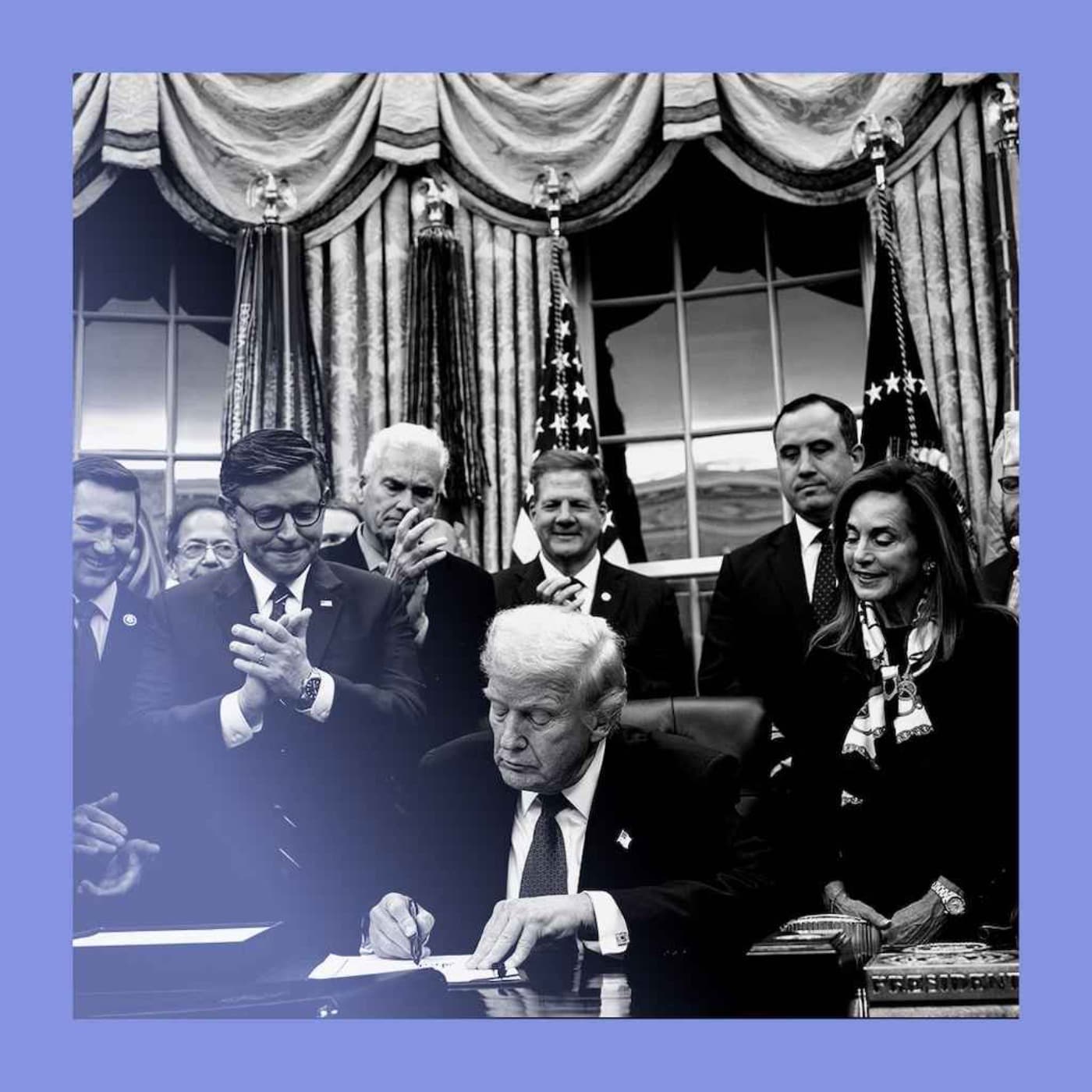
“Last night, President Donald Trump managed to end the longest federal government shutdown in history, 43 days.”
Democratic Strategy and Failure
4:34 to 8:00
Examination of the Democrats' strategy during the shutdown and its failures.
“John Thune, who's the Republican Senate majority leader, has promised a vote on extending the tax credits next month, but it's not clear that will happen.”
Epstein Emails Released
8:00 to 10:46
Discussion on the release of Epstein's emails and their implications.
“The party looks more united and the government is open again, which I think most Americans would be pretty happy about.”
Airbnb's Growth Challenges
10:50 to 14:02
Exploration of Airbnb's business model and current challenges.
“It's called Chat Concierge and it's simplifying car shopping.”
Airbnb's Expansion Strategy: Past and Present
14:02 to 18:20
Explore Airbnb's past rapid expansion, lessons learned, and current measured approach.
“Airbnb's brought out a new feature, book now, pay later.”
Neanderthals and Lead Poisoning: Uncovering Ancient Mysteries
18:21 to 24:40
Investigate how ancient humans and their relatives were affected by lead exposure.
“In the 16th century, women used makeup containing it.”
Neanderthals and Lead Poisoning: Uncovering Ancient Mysteries
25:43 to 25:53
Investigate how ancient humans and their relatives were affected by lead exposure.
Neanderthals and Lead Poisoning: Uncovering Ancient Mysteries
25:57 to 26:21
Investigate how ancient humans and their relatives were affected by lead exposure.
“It's called Chat Concierge and it's simplifying car shopping.”
Transcript
Automatic transcript. May contain errors.0:00With no fees or minimums on checking accounts, it's no wonder the Capital One Bank Guy is so passionate about banking with Capital One. If he were here, he wouldn't just tell you about no fees or minimums. He'd also talk about how most Capital One cafes are open seven days a week to assist with your banking needs. Yep, even on weekends, it's pretty much all he talks about. In a good way. What's in your wallet? Terms apply. See CapitalOne.com slash bank. Capital One N.A. member FDIC. This episode is brought to you by Capital One. Capital One's tech team isn't just talking about multi-agentic AI.
0:37They already deployed one. It's called Chat Concierge and it's simplifying car shopping. Using self-reflection and layered reasoning with live API checks, it doesn't just help buyers find a car they love. It helps schedule a test drive, get pre-approved for financing, and estimate trade-in value. Advanced, intuitive, and deployed. That's how they stack. That's technology at Capital One.
1:04The Economist
1:12Hello and welcome to The Intelligence from The Economist. I'm Rosie Bloor. And I'm Jason Palmer. Every weekday we provide a fresh perspective on the events shaping your world.
1:27Airbnb was a brilliant idea dreamt up by three friends to make a bit of cash by renting out space in their living room in 2007. But like many businesses, it's hit a few obstacles along the way. Our correspondent reports from the front line of the Bed Wars. And a new study suggests that lots of the forebears of the human species, going way back in time somehow had lots of lead in their diets. And it may be that a slight genetic difference in how modern humans deal with lead that gave them a leg up.
2:05But first...
2:12And it's an honor now to sign this incredible bill and get our country working again. Thank you. Last night, President Donald Trump managed to end the longest federal government shutdown in history, 43 days. So with all of that, I just want to tell you the country has never been in better shape. The House finally approved a new spending package after some Democrats crossed the floor to vote with the Republican majority. On this vote, the yeas are 222, the nays are 209. The bill is passed. The motion is adopted. Many federal employees are expected to return to work as soon as this morning. But the impact of this extraordinary standoff is far from over.
3:00The legacy of the longest shutdown in American history is, in one sense, a giant hangover in Washington. John Priddo is The Economist's U.S. editor and host of Checks and Balance, our weekly podcast on America. Everybody is pretty much back to square one. Democrats didn't get what they were asking for. We get to do this all over again in January. And I think a lot of Americans and people outside the country are wondering, why does America do this? Why is America the only big democracy that routinely shuts down its government in budget battles? And there's no really great answer, Rosie, I have to say.
3:41OK, John, let me throw just a slightly smaller question back to you then. What did this vote actually achieve? We've got a stopgap spending bill which keeps the government open until January 30th. That bill requires federal agencies to rehire workers who are laid off during the shutdown and guarantees employees back pay for that period. Because one of the wild things when the government shuts down is that lots of people who work for the federal government, including some air traffic controllers, don't get paid. The bill does not extend healthcare tax credits, which will expire at the end of this year.
4:18That was the key demand that the Democrats made. And without those extensions, lots of Americans who buy their health insurance in a particular way could see a big rise in their premium. So that's the sort of politics of all of this. John Thune, who's the Republican Senate majority leader, has promised a vote on extending the tax credits next month, but it's not clear that will happen. So Democrats did not get much here. So the Democrats haven't come out of standoff looking good. Why did they get dragged into this? They got dragged into this, I think, because of the demand in Donald Trump's second presidency to do something, to stand up to him.
5:00But the reality is, of course, that elections have consequences. And only about a year ago, Democrats lost the big national elections. That left them in a position where they were the minority party in both the House and the Senate. And when you're in the minority, you don't have a lot of power. But they wanted to do something to show that they were standing up to Donald Trump. And the way budgets work in America, the way legislation works in America, you need 60 votes in the Senate to pass something rather than 50. That's a convention, it's not written down anywhere, the filibuster, that gave the Democrats in the Senate a bit of leverage.
5:38And the party collectively came up with this strategy of trying to make the decision to reopen the government all about healthcare, which is the Democrats' strongest issue. So that was the political logic, but it hasn't worked for them. And instead, there's a lot of infighting in the Democratic Party. So you've partly answered it with the infighting, But why did they fail? They failed, I think, because Republicans weren't going to give them what they wanted. And they just didn't have the votes. You know, they're in the minority. They didn't have the power to do it. So I think they were caught between a demand from lots of Democrats in the House to do something, the senators, and a demand from their base and math of vote counting.
6:23And also, at a certain point, this government shutdown had gone on for a really long time. Democrats care about federal workers. They didn't want total chaos and air traffic control in the run-up to Thanksgiving. And so there was just a lot of pain. And eventually, a bunch of Democratic senators from more moderate states who are not up for re-election sort of bit the bullet and said, right, let's reopen the government. So lots of Democrats are now fighting among themselves, blaming the Senate Democratic leadership for not pursuing a more successful strategy for caving. But you could take a long view of this if you're an optimistic Democrat and say, well, the politics of this are not quite what they seem.
7:05Next year, health insurance costs for lots of Americans will go up. And around the time of the midterms, in a year's time, Democrats will be able to say, look, all these Republicans voted against this measure to lower your health care costs and run on that issue, which remains their strongest. So if Democrats wanted to be optimistic, They could say, well, actually, we were playing the long game here. But I think it's hard to avoid the inference that they went into this with a strategy that just wasn't going to work and it didn't work. Would you say that for the short term, at least, the Republicans have basically come out of this unscathed?
7:40I think that's right. They had a strategy which was not to buckle and they didn't buckle. Some Republicans in competitive districts voted against this measure and their opponents will campaign on that next year. So I definitely think for the moment, this looks better for Republicans than it does for Democrats. The party looks more united and the government is open again, which I think most Americans would be pretty happy about. John, we've slightly buried the lead today. The big drama of the last 24 hours isn't so much the end of the shutdown, but the release of the Epstein emails. Tell me what's been released and what the consequences might be.
8:20I like that the intelligence considers reopening the government and budget bills to be more important than the Epstein emails. And I think rightly so. But let me take you through this or attempt to. So yesterday, Democrats on the House Oversight Committee released documents from Jeffrey Epstein's estate. And those emails suggested that Trump spent time at the convicted sex offender's house with one of his victims. in one of the emails, Epstein, who killed himself back in 2019 in prison, allegedly claimed Trump knew about the girls. Quote, Donald Trump's denied knowledge of Epstein's sex trafficking in the past.
9:00And yesterday, the White House accused Democrats of creating a fake narrative around him and Jeffrey Epstein. And Republicans on that committee responded to the Democrats' release of emails by releasing about 20 ,000 emails that were in the files. and so people are trawling through them now to see what they can find. We've been doing that as well. I think so far nothing much to see here. This is the story that won't die. Donald Trump was friends with Jeffrey Epstein. They seem to have broken off their relationship quite some time ago but it has all the elements of a conspiracy theory and there is a real crime at the heart of it committed by a man who's now dead.
9:43And so this is not the last you will hear of this story. And the next step is that Congress will probably instruct the Justice Department to publish its own files on Jeffrey Epstein. So this is one we'll be talking about again, I suspect, too, Rosie. Many discussions for the future. John, thank you so much. Thanks.
10:16With no fees or minimums on checking accounts, it's no wonder the Capital One bank guy is so passionate about banking with Capital One. If he were here, he wouldn't just tell you about no fees or minimums. He'd also talk about how most Capital One cafes are open seven days a week to assist with your banking needs. Yep, even on weekends, it's pretty much all he talks about. In a good way. What's in your wallet? Terms apply. See CapitalOne.com slash bank. Capital One NA member FDIC. This episode is brought to you by Capital One. Capital One's tech team isn't just talking about multi-agentic AI. They already deployed one.
10:55It's called Chat Concierge and it's simplifying car shopping. Using self-reflection and layered reasoning with live API checks, it doesn't just help buyers find a car they love. It helps schedule a test drive, get pre-approved for financing, and estimate trade in value. Advanced, intuitive, and deployed. That's how they stack. That's technology at Capital One.
11:24Airbnb was dreamt up in 2007 by three friends who rented out airbeds in their San Francisco living room. It changed how we travel. And it now rivals the value of the world's biggest hotel chain, Marriott International. But is it running out of room to grow? Airbnb used to be the new kid on the block in travel. But what you've seen is that the growth seems to be petering off. So the shares have been pretty much flat this year. Avantika Chilcotti is our global business correspondent. When you look at the revenues, they're growing 10 % year on year, which sounds good. But this used to be double digits not that long ago.
12:06This year, the company turned 18. It sort of feels like it's a coming of age moment. And lots and lots of investors are asking, can the company keep growing at this pace? And what's the answer? Can it? Airbnb is making a massive push to try and drive expansion. So its biggest market is the US. And I think one of the best data points I went to meet the company was from the CFO. And she told me one in 10 nights spent away from home in America are already spent on Airbnb. So the company's trying two things to up that number. One, well, the other nine nights, most of them are spent in hotels. So trying to compete with hotels.
12:45Either that means bringing hotels on board. And if you use Airbnb nowadays for going on holidays or on a business trip, you'll see hotels pop up alongside private homes. And secondly, they're trying to provide users with some of the amenities that you might miss from a hotel that might make you think, I'd rather just stay at a hotel than a short let. So for example, they call it experiences. To me, these are the things that you might go to a hotel concierge to book stuff like a city tour. And there's stuff like services, which is a meal delivery or a personal trainer. So in their effort to try and get more of those 10 nights that people spend away from home, they're trying different expansion options.
13:25So, Avanska, just put this in some context for me. What's happening in the travel market generally? Is it growing? It's a really, really funny time for travel because between, especially when your biggest market is the US, between Donald Trump's tariffs, which make everyone feel a bit jittery about the state of the economy, with inflation quite high, jog markets wobbly, you have people putting off holidays, you have people putting off trips, immigration rules are not helping. But it's not that people aren't traveling altogether. They're just booking near the time of the trip. So for a lot of travel companies, they're having to manage that.
14:02Airbnb's brought out a new feature, book now, pay later. They're having to adjust to what seems to be an economic cycle that is changing how people book their trips. So what has Airbnb tried so far to expand its prospects? There's two phases of Airbnb's expansion plan. Ahead of the pandemic, they were expanding perhaps too fast. I interviewed the CEO, Brian Chesky, and he said this was sort of a mistake, but they were going into so many different things. At some point, they had a travel guide, they had a film studio. And back then, they'd started with the early version of what is now called Airbnb experiences.
14:40They were offering these additional products online. They were also going after the hotels business. They invested in Oyo, which is an Indian hotels group. They bought Hotel Tonight, which is a last-minute hotels booking site. And after that very rapid attempt at expanding beyond shortlets, the pandemic hit and all of those options ground to a halt. What we're in now is a second phase of expansion. They're bringing back things like Airbnb experiences, bringing back things like hotels, but it's much more measured. It's much slower, basically. Isn't the problem that Airbnb just charge a huge amount to those who are on the site so that those costs are passed on to consumers?
15:22The thing to remember is that Airbnb doesn't set the price of a night in any accommodation. The person who lists it does. What a lot of people did complain about was things like cleaning fees that add up, these little hidden charges. And again, during that COVID period where the company lost 80 % of its business within days, they worked really hard to change that so if you see there's much greater transparency now you don't just click through and suddenly find all these added line items so what does the future hold where are they going to find new opportunities now so if you ask analysts about this people are much more bullish about them offering experiences one thing you'll notice that if you book an airbnb you do end up opening the app quite a few times on your trip just to ask your host what the airbnb Wi-Fi password and stuff like that.
16:09So they have a captive audience. And if you offer me things like a cooking class or a walking tour, I might book that via Airbnb. There's some skepticism around services. You know, why would you not just walk out of your accommodation and find a haircut on the street rather than using the app? There's already a lot of online platforms, things like Viator, which are offering some of these services already. Of all these expansion plans, a thing that I think sounds most sensible, that sounds like it might actually lead to revenue growth, is the simple geographic expansion of their short lets business.
16:42You'll see what they did in Brazil recently. They did a lot of localization. They added payment options, which are more local. They changed their marketing to make it much more local. And they expanded hugely in Brazil. They're looking at other places like India, Japan. So Avantika, what does all of this tell us about the future of travel? One thing that is really changing travel right now is artificial intelligence. I mean, I know it's boring. AI is changing everything. But how people book, one of the first wide use cases of things like ChatGPT is help me plan a trip, help me plan an itinerary.
17:14And there are some platforms that are allowing users of, say, ChatGPT to automatically book via those AI platforms. Airbnb is very sure it does not want to be a data layer, as they call it, within ChatGPT, say. They are trying to apply AI within the company. say things like customer service agents, but not just make it possible that I book my Airbnb on another AI platform, which also means you lose your touch point with your customer. I think that it's a very high risk gamble, assuming that your users are going to come straight to Airbnb rather than the planning AI tool that they're using already.
17:56But the CEO, So Brian Chesky's view is that he sees Airbnb as a movement, that as AI becomes more widespread, we all crave these real world experiences, be it a trip, be it an in-person gym session when we come to Airbnb for that. I guess my question is just, do people want Airbnb to be a movement or do they want it to be an option where you can get cheap accommodation? Avantika, thank you so much. Thanks for having me, Rosie.
18:38In the 16th century, women used makeup containing it. All the way until 2021, you could find it added to petrol. The Roman habit of building pipes with it stuck. All over the world, you can still find it in municipal water supply lines. In fact, the chemical symbol for it comes from the same root that gave us the word plumbing. These days, we know just how dangerous lead can be. But the very history of our species may be tied up in what happened during the millennia that we didn't. Researchers at the University of California, San Diego, were looking at the teeth of ancient humans and their relatives to see what chemicals were found inside those teeth.
19:20Matt Kaplan is a science correspondent for The Economist. They looked at teeth that were as old as 2 million years old. And how do you mean they were looking at teeth? What were they measuring? So teeth are really good at storing chemicals. They have enamel over them, which stops the tooth from eroding over time when exposed to rain and snow. And so you can use a laser to shear off tiny little bits of tooth and vaporize what's inside it to look at what chemicals are stored inside the teeth. And what's really interesting is when you're a kid, the stuff you drink, whatever chemicals are in that food and water can get stored away inside the tooth.
20:01So by vaporizing away little bits of the teeth and looking at the chemicals, the researchers could work out not just what ancient people were eating and drinking, but they could work out what was inside that food and drink. And so what did they find? As they were going about their work and looking at vaporization from the laser in the teeth, they were able to work out that a whole bunch of these ancient humans had lead contamination deep inside their tooth. What's really interesting, Jason, is that this is not just Homo sapiens. So we're not talking about just you, me, and our relatives from thousands of years ago.
20:38We're talking about Homo erectus 1.5 million years ago. We're talking about Neanderthal. We're talking about Australopithecus, which came even before Homo erectus. These creatures, which are hominins rather than humans, actually have lead in their teeth. And there's no way they were using lead pipes or lead makeup. So how did it get there then? Well, that's the question, isn't it? So we don't really know for sure how they were doing it. There are a lot of theories, though. You get a lot of lead in the environment after a volcanic eruption, right? Volcanoes blow up, and you've got this molten rock, and the molten rock has metals in it.
21:20And ash from the volcanic eruption can lead to lead concentrating in soil and ending up on foods. But it's also possible to get lead from wildfires. So there are these ideas knocking around, but the researchers at University of California, San Diego, think there's something else likely going on. They think the lead is coming from caves. Go on. The theory is that as water drips into caves, it goes through the minerals in the caves, and those mineralized rocks are super saturated with lead. And so as the water drips into the cave and you drink that water, you're going to be highly exposed to lots of lead if you're drinking that water every day.
22:05Caves with water were very attractive. We know that people went to these kinds of caves because when we find human remains in caves in East Asia, a lot of those caves where there are human remains have lots and lots of lead in them. And the levels of lead that we're talking about, I mean, these are serious levels of contamination. We know that people exposed to one or two or three parts per million suffer brain damage, right? The folks in these caves were being exposed to as much as 50 parts per million of lead in the water. So the effect on people and their ancient relatives had to be big. Well, exactly.
22:45I mean, how did they even so much as survive it? Yeah. I mean, so that's a great question. What were they doing? How were they coping with this kind of lead poisoning? And the researchers at San Diego ran with this question and said, well, how do we find out? So you can grow little micro brains in the lab. We call them brain organoids. And you can study how they react to different types of chemical exposure. And so the researchers behind this work said, well, we know what a human brain looks like because we got humans. And spectacularly, we have some of the genetic material from Neanderthal brains.
23:25And we know that there were sections of their brain that were different genetically from ours. And so you can grow microbrains in the lab with the genetics of a Neanderthal and look at how the Neanderthal brain reacts to lead poisoning compared to how a human brain reacts to lead poisoning. And the upshot is no brains do well, but this is the real crux of it. the gene that humans have that is notably different from the Neanderthal gene prevents the language section of our brain from being damaged by lead exposure. So if you're drinking lots of water that's tainted with lead and you're human, yeah, okay, fine.
24:09You're going to have thinking problems and learning difficulties, but you can still speak. Neanderthals and anyone else before them that didn't have this critical genetic change that's present in humans. They lack that gene that protects the language center of the brain. Speaking is what makes humans so incredibly effective at what they do and is what allowed them to rise up and eventually develop lead pipes, lead for their cars and like makeup. Isn't that ironic? Matt, thanks very much for your time. Jason, it's been my pleasure. Thank you.
Read the full transcript
25:43Thank you. What's in your wallet? Terms apply. See CapitalOne.com slash bank. Capital One N.A. member FDIC. This episode is brought to you by Capital One. Capital One's tech team isn't just talking about multi-agentic AI. They already deployed one. It's called Chat Concierge and it's simplifying car shopping. Using self-reflection and layered reasoning with live API checks, it doesn't just help buyers find a car they love. It helps schedule a test drive, get pre-approved for financing, and estimate trade-in value. Advanced, intuitive, and deployed. That's how they stack. That's technology at Capital One.
From the publisher
Last night Donald Trump finally managed to end the longest federal government shutdown in history. But, amid a new release of emails relating to convicted paedophile Jeffrey Epstein, the political storm continues. Why Airbnb is searching for new beds in new markets. And the amazing role of lead poisoning in humanity’s success.
Listen to what matters most, from global politics and business to science and technology—Subscribe to Economist Podcasts+
For more information about how to access Economist Podcasts+, please visit our FAQs page or watch our video explaining how to link your account.
Hosted on Acast. See acast.com/privacy for more information.