In short
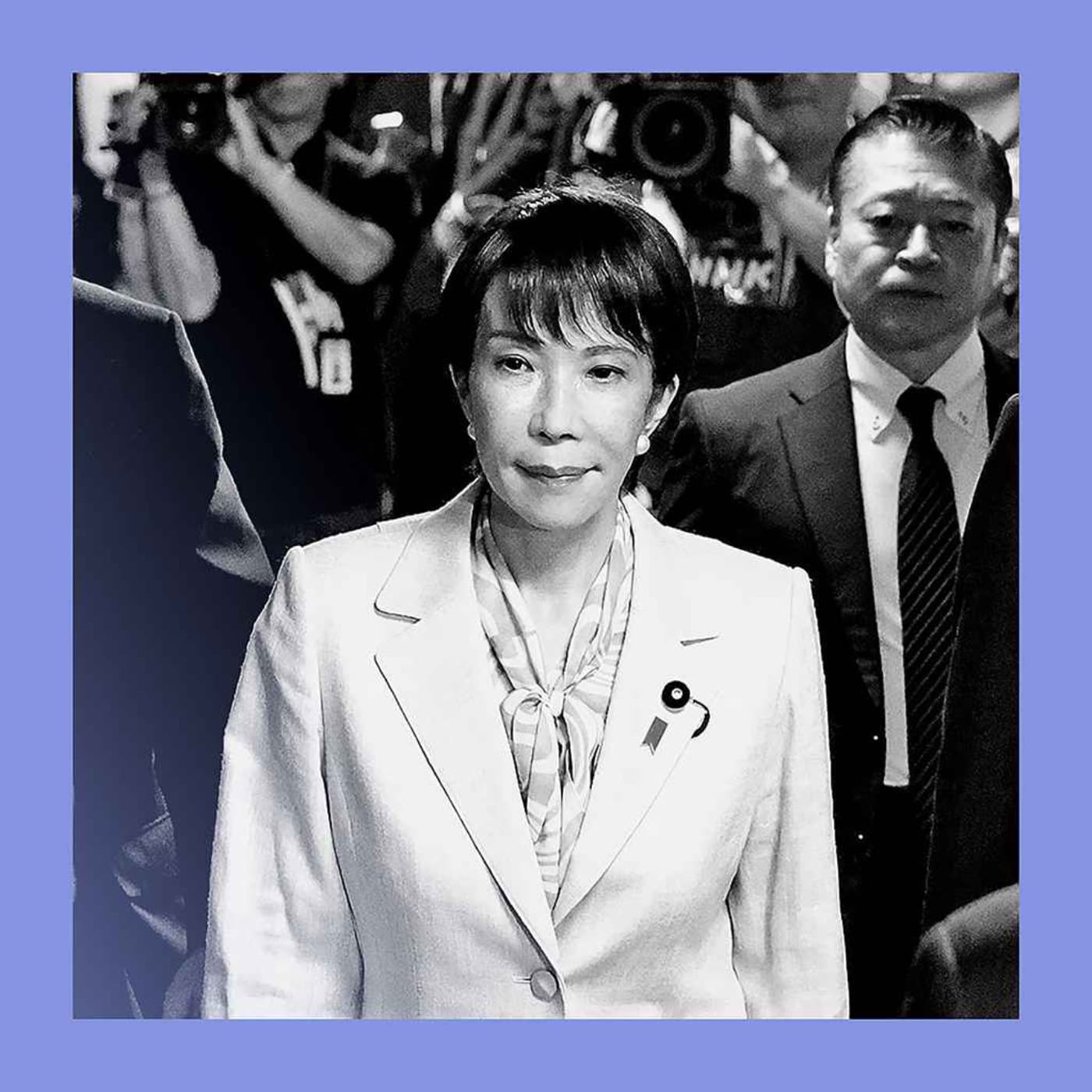
The episode covers three stories. First, Japan’s new prime minister, Shigeru Takaiichi (first woman PM), is profiled: she’s a conservative LDP “establishment” figure shaped by Abe Shinzo, with a hardline security agenda, loose “Abenomics”-style economics, and social conservatism (e.g., same-surname rule for married couples).
Key claims
her rise reflects an LDP crisis and voter demand for “change LDP,” but her rightward shift may destabilize the party and coalition; voters’ main concern is living costs and inflation relief. Second, the Trump administration’s “zero migration” policy is explained: sealed southern border, asylum/refugee curbs, and a proposed $100,000 H-1B fee; consequences include slower job creation and disruptions in construction/agriculture, with long-term innovation risks (immigrant researchers’ spillovers). Third, Germany’s Life Among People (LAP) coffee shops are reviewed: automated machines, very low prices (€1.50 espresso, €2.50 cappuccino), fast service, and community events; detractors cite gentrification.
Guests
Noah Snyder (East Asia Bureau Chief) and Archie Hall (US economics editor), plus Wendelin von Bredow (The Economist senior Germany correspondent).
Written by AI. May contain mistakes. Listen to the episode to check what was said.
Chapters
Tap a time to open that second in VOJapan's New Prime Minister
1:28 to 2:55
Discussing the election of Japan's first female Prime Minister, Takaiichi Sanaya.
“His zero-migration policy has been remarkably effective in stemming the inwards flow.”
Background of Takaiichi Sanaya
2:55 to 4:59
Exploring Takaiichi's unconventional background and rise in politics.
“She sounds like a slightly surprising choice for prime minister.”
Policies and Plans
4:59 to 6:56
Examining Takaiichi's ambitious plans for Japan's security and economy.
“She, at the same time, has said that her political role model is Margaret Thatcher.”
Foreign Policy Implications
6:56 to 8:39
Analyzing how Takaiichi's policies will impact Japan's foreign relations.
“For example, she's lined up on the conservative side of a big culture war issue in Japan, which is whether or not to allow married couples to keep separate surnames.”
Challenges Ahead for Takaiichi
8:39 to 10:27
Discussing the potential challenges and instability under her leadership.
“Noah, you and I have spoken on the show a number of times about Japan's political instability in recent months.”
Impact of Immigration Policies
14:01 to 19:18
Explore the consequences of Trump's immigration policies on the US economy and labor market.
“There's been both keeping people out and then also taking people already inside the country and pushing them out.”
The Rise of LAP Coffee in Germany
19:18 to 23:53
Discover the innovative approach of LAP Coffee and its impact on traditional coffee culture in Germany.
“Yeah, with regular milk and in the small cup rather than the big one.”
Transcript
Automatic transcript. May contain errors.0:00Takaichi Sanae:With no fees or minimums on checking accounts, it's no wonder the Capital One bank guy is so passionate about banking with Capital One. If he were here, he wouldn't just tell you about no fees or minimums. He'd also talk about how most Capital One cafes are open seven days a week to assist with your banking needs. Yep, even on weekends, it's pretty much all he talks about. In a good way. What's in your wallet? Terms apply. See CapitalOne.com slash bank. Capital One N.A. Member FDIC. You want to get your backyard summer ready, but you don't want to break the bank? Wayfair gets it. Planning on dining al fresco or relaxing poolside?
0:37Takaichi Sanae:Wayfair has everything you need to prep your space. Shop now and save up to 70 % off during Wayfair's 4th of July clearance. Score huge deals on outdoor furniture, area rugs, and more. We're talking thousands of products for every style and budget. Plus, surprise flash deals July 6th. Don't wait. Shop Wayfair's 4th of July clearance now through July 6th at Wayfair.com. Way fair, every style, every home.
1:05Takaichi Sanae:The Economist
1:12Hello and welcome to The Intelligence from The Economist. I'm your host, Rosie Blore. Every weekday, we provide a fresh perspective on the events shaping your world.
1:27America is known as a land of immigrants, but you may have heard that Donald Trump isn't so keen on them. His zero-migration policy has been remarkably effective in stemming the inwards flow. Question is, what impact will that have? And Germany has its fair share of traditional coffee houses, but a fast-growing chain of coffee shops is stirring things up. Life Among People has stark interiors and offers super-quick service. Crucially, it's also really cheap.
2:04But first...
2:10Takaichi Sanae:Takaiichi Sanaya, a conservative hardliner, has become Japan's 104th prime minister and the first woman to hold the job. Noah Snyder is our East Asia Bureau Chief. She was elected as the leader of the ruling Liberal Democratic Party earlier this month, and after a few weeks of political wrangling, she emerged in the Diet as the country's new leader today. Her confirmation marks a historic step forward for gender equality in one of the world's most patriarchal democracies. But Takaiichi, a security hawk, a fiscal dove, and an arch-social conservative, promises to shift Japan's political center of gravity to the right.
2:59She sounds like a slightly surprising choice for prime minister. How did she get to the top?
3:04Takaichi Sanae:She is an unusual choice for prime minister, Rosie. And I think it's the product of a moment of crisis for the LDP. In recent years, the party has lurched from scandal to scandal. They've lost their majorities in both the upper and lower houses. So now they're leading a minority ruling coalition. And they're seeing support seep to populist upstart parties across the political spectrum. And so the party was really looking for someone different. In fact, the slogan of this year's LDP campaign was quite literally hashtag change LDP. So they wanted someone who would break the mold and help to redefine the party's image with voters and hopefully reestablish its grip on Japan's politics.
3:49And what do we know about her background?
3:52Takaichi Sanae:So, Takaiichi hails from a middle-class family. Her parents were a police officer and a salaryman. She grew up in Nara, an ancient capital in western Japan. So she's not a political blue blood like many of Japan's leaders tend to be. She went to a public university. She, in fact, rode her motorcycle to classes. She played drums in a heavy metal band. And she's a big fan of hard rock and an avid singer of karaoke. And she even appeared on Japanese TV early in her career, singing a hit rock song.
4:33Takaichi Sanae:She worked briefly as a television anchor and even appeared in some commercials on TV in the 90s.
4:45Takaichi Sanae:She became a kind of acolyte and really a follower of Abe Shinzo, the late prime minister, long-serving Japanese prime minister. And they shared a vision for Japan focused on sort of national pride and a sense of revival, trying to essentially say Japan is back. She, at the same time, has said that her political role model is Margaret Thatcher. So she kind of fashions herself as an iron lady, if you will. And she has ambitious plans for her country. the question is really whether she's going to be able to implement them, how long she will last in office and how stable her government will be. So she sounds like something of a populist.
5:26Is that right?
5:27Takaichi Sanae:I think in stylistic terms, it might be right. She's kind of brash and polarizing and plain speaking. So she has the aesthetic of many other new conservative sort of populists that we've seen elsewhere in the world. But I don't think it's right to lump her in with the MAGA types or the Euroskeptic parties that have risen in the European Union. In many ways, those parties, those forces are anti-establishment. They want to overturn the status quo. But Takeichi is very much of the establishment. She's a longtime lawmaker in the longtime ruling party in Japan. And so she's more of a kind of an old school conservative in that sense.
6:05Takaichi Sanae:She wants to preserve the status quo. And I think the LDP turned to her really to fend off the challenge from the true populists who are emerging on Japan's political scene. So she's of the establishment but has ambitious plans, you say. What does that actually mean in practice? So I think her vision for the country owes a lot to her mentor and political patron, the late Prime Minister Abe. So there's three components to this. One is a more hawkish stance on security policy, beefing up Japan's defenses, spending more on the security forces. Second is a kind of reprisal of Abe's economic agenda, a new Abenomics, if you will, with loose fiscal and monetary policy and a kind of nebulous growth strategy.
6:47Takaichi Sanae:And finally, a hardline social conservatism. While she is Japan's first female prime minister, she's probably not going to be a feminist prime minister. For example, she's lined up on the conservative side of a big culture war issue in Japan, which is whether or not to allow married couples to keep separate surnames. she favors the status quo, which is that married couples should have the same surname. And you say that national security is important to her and she's going to be spending more on it. What does that mean for her foreign policy? I think there's a few elements to this, Rosie. One is spending more on Japan's self-defense forces, the armed forces, perhaps even more than the already existing plans, which Japan is pursuing to raise its share of defense spending to 2 % of GDP by 2027.
7:35Takaichi Sanae:The second has to do with her relations with America, Japan's key security ally, and a tricky relationship, to say the least, with President Trump in office. Takahichi bristles at the coercive trade and investment deal that Trump agreed to with her predecessor. At the same time, she knows that Japan needs America for its own security purposes. So pursuing more autonomy, a more independent stance at the same time as keeping America close. Again, a tricky dance. And the final piece has to do with Japan's neighbors. Part of Takeichi's hardline conservative worldview is a revisionist view of Japan's wartime past.
8:19Takaichi Sanae:A view that sees Japanese aggression in the first part of the 20th century as a response to Western colonialism. and is, in the eyes of many neighbors, unrepentant for the crimes committed by the Japanese imperial regime. So that could cause big problems in the relationship with South Korea and more friction in the relationship with China. Noah, you and I have spoken on the show a number of times about Japan's political instability in recent months. Is Takaichi the person to bring stability to the country? Well, the LDP certainly hopes she is. I think they see her as the best chance to stabilize the party and the country in this turbulent moment.
8:59Takaichi Sanae:The logic is that by turning to Takahichi and shifting the party to the right, they'll be able to win back voters who've been abandoning the LDP for these more populistic upstarts and essentially reestablish the party's base of power. The strategy, however, is risky. For one thing, there are big fissures between the LDP's more conservative and more moderate wings. And Takaiichi is viewed with deep suspicion by folks on the moderate side of the LDP. So those internal party tensions are likely to rise with her in office. There's also the question of the LDP's relationship to the other parties in Japan's political arena.
9:37Takaichi Sanae:Since Takaiichi's selection, the LDP's quarter-century coalition with Kometo, a kind of lay Buddhist party, broke down. Gometo essentially bristled at Takahichi's selection and many of the policies she stands for. The LDP managed to reinforce its coalition by bringing in a new, even sort of further right-wing partner. But the coalition politics under Takahichi are unlikely to be very stable. And finally, it's unclear whether voters are going to love this choice as well. Ultimately, I think for the Japanese public at this stage, The main concern is rising living costs and the pressure that inflation has put on Japanese households.
10:19Takaichi Sanae:And it's unclear whether Takaichi's economic policies will be able to deliver relief from those pressures for the Japanese public. Noah, thank you so much for talking to me. Thank you, Rosie, for having me as always.
10:43Takaichi Sanae:With no fees or minimums on checking accounts, it's no wonder the Capital One bank guy is so passionate about banking with Capital One. If he were here, he wouldn't just tell you about no fees or minimums. He'd also talk about how most Capital One cafes are open seven days a week to assist with your banking needs. Yep, even on weekends, it's pretty much all he talks about. In a good way. What's in your wallet? Terms apply. See CapitalOne.com slash bank. Capital One N.A. Member FDIC. You want to get your backyard summer ready, but you don't want to break the bank? Wayfair gets it. Planning on dining al fresco or relaxing poolside?
11:21Takaichi Sanae:Wayfair has everything you need to prep your space. Shop now and save up to 70 % off during Wayfair's 4th of July clearance. Score huge deals on outdoor furniture, area rugs, and more. We're talking thousands of products for every style and budget. Plus, surprise flash deals July 6th. Don't wait. Shop Wayfair's 4th of July clearance now through July 6th at Wayfair.com.
11:52America has always been known as a nation of immigrants. Donald Trump seems to have other ideas. Since his second term began, his administration has been pursuing a hard line.
12:07ICE, that's the Immigration and Customs Enforcement Agency, has conducted dramatic raids to hunt down illegal immigrants in several cities. It's becoming harder for foreign students to get visas too, as Stephen Miller, the president's border czar, has tried to justify.
12:22Takaichi Sanae:We cannot have a policy in America where every citizen of this country, whether looking for a job, whether looking for housing, whether looking for a government benefit in a time of need, has to compete with all of planet Earth. For nearly a century, more people arrived in America each year than left. Each year, that is, until quite possibly 2025. Trump administration's pursued zero migration with remarkable vigour. Archie Hall is our US economics editor. For all the attention on tariffs, the Fed, and all manner of pretty radical, pretty sharp economic policies the Trump administration is doing, setting migration in America to something pretty close to zero, give or take, might be the most dramatic of all this year.
13:09Archie, before we get to the consequences of this, why is Trump pursuing a policy of zero migration?
13:17Takaichi Sanae:Well, the Trump administration would say, and not without reason, that they were elected in large part on a mandate to get migration down. Migration had gone up a huge amount during the Biden administration, particularly unauthorized migration. So you can look at measures of encounters, which is when the border force actually apprehends or expels people who arrive at the border. And those surge during the Biden administration. They're running at around 200 ,000 a month, almost 300 ,000 a month at times, compared to under Obama or under Trump, where they're well under 100 ,000 a month, under Trump one, that is.
13:48Takaichi Sanae:So there was a real increase in the scale of migration under the Biden administration. And there was genuinely public backlash in 2024. You can see this in the polling, not just the presidential election results, that Americans were keen on lower migration. And how's it gone about achieving this? There's been both keeping people out and then also taking people already inside the country and pushing them out. So on the first of those, on keeping people out, they've effectively sealed the southern border. They've suspended asylum there. They've very heavily militarized it. And those measures of encounters that I was talking about beforehand have now fallen to the region of keep or take about 10 ,000, which is way, way lower than they were.
14:25Takaichi Sanae:They've also effectively stopped refugee arrivals. There are some exceptions, most notably for white South Africans. but by and large, they've stopped taking new refugees. And then elsewhere on the highest skilled end of the distribution, they've started going after some of the visas that import skilled workers to America. So particularly, most recently, they've gone after the H-1B visa, which is the main skilled worker visa in America, and said they're now going to charge a$100 ,000 fee on that visa. Now, there's a bit of an asterisk to that, which is that that fee probably legally can't apply to people who are already in the country and moving on to the H-1B from other visas, which is actually most of the H1B pool.
15:03Takaichi Sanae:So this might have a bit more bark than it does bite, but it's still probably going to affect a pretty decent number of people. You said this is one of the most dramatic policies of the Trump administration. What are the consequences going to be? Quite sharp. So you should separate out the consequences, I think, between the short term and the long term. And in the short term, we're already seeing a little bit of this and we're likely to see substantially more as it rolls on. But this is going to be tremendously disruptive. The thing people are already noticing is that the rate of job creation has slowed pretty dramatically in America.
15:34Takaichi Sanae:And that reflects the fact that America is an ancient society, the population is getting older. So a lot of those people who are actually available to take new jobs were migrants. And the slowing rate of migration, that's already been something that's visible. We're also likely to see and seeing early inklings of pretty appreciable disruptions in some of the industries that are most dependent on migrant labor. So those are things like construction, things like agriculture, where very, very large shares of the labour force are immigrants and often undocumented immigrants as well. That's also, though, a disruption of the sort that probably firms can cope with and deal with.
16:05Takaichi Sanae:And it will be inconvenient. It will hit economic growth. It's certainly not what you want to do if you're trying to gin up growth and trying to outweigh the other growth-damaging policies you're doing, like tariffs, attacking the Fed, and so on. Okay, so those are the immediate consequences. What about the longer-term effects? Immigration in general, most economists think, is pretty good for productivity. The thing it does of bringing in people who are complements to the existing labour force, bringing in people who are doing jobs that make the rest of the labour force more productive, is a really economically valuable thing.
16:35Takaichi Sanae:And that's true at the top end of the skill distribution, but also at the bottom end. Someone needs to be cleaning the operating theatre so the surgeon can operate, and that person disproportionately may well be an immigrant. But particularly the single most dramatic impact on productivity is the people at that higher end of the skill distribution. International postdocs coming in to work at labs at universities, or the tech workers coming in to work at big software companies. And there's some pretty compelling evidence that the impact those people have on American innovation is really, really impressive.
17:03Takaichi Sanae:There's one paper that looks at when immigrant researchers die prematurely, and they look at what happens to the research groups they were on and see how that drops off. And by using that attempt to causally estimate what's going on, they get the result that about a third of all innovation in America, that's measured using patents, is either down to immigrants themselves or just as consequentially often down to the spillovers those immigrants have on their native collaborators. So the way that they make natives of the US actually more productive themselves as well. So the idea that there's a potential threat to that huge motor innovation, I think is a really serious issue for America in the long term.
17:38So if the effects are so dramatic, could or might Trump actually reverse this?
17:44Takaichi Sanae:There's already been a fair amount of backlash, albeit no one wants to pick a bite openly with Trump, so often kind of slightly tacit or slightly behind the scenes from some of the affected industries. And so there was a bit of a back and forth over the summer of whether ICE would be able to continue workplace raids and things like agricultural companies or meatpacking companies. But so far, that business pressure hasn't done too much. The channel that seems more likely to have an effect is public opinion. People are back to saying that net America should have more migrants, that migration is overall a good thing for America.
18:15Takaichi Sanae:And so the notion that Trump was elected on a mandate to pull down migration might have been true in 2024, but whether it's a mandate for what he's doing right now, often flying in the face of American's expectations about how law enforcement treats people in the case of the ice raids, does seem to be engendering a backlash. And so far, there's no real indication that Trump administration's listening to that backlash, but they could well. Further down the line, could another administration reverse this policy and reverse the damage that's been done? I think it's highly plausible that at least chunks of this would get reversed under a future democratic administration, or frankly, even a future republican administration.
18:49Takaichi Sanae:The damage might be a tougher question, particularly if you're thinking of people who do have options to go elsewhere, postdocs who could go to university in Europe, just seasly in America, your software engineers who could start a company in their home country. The idea that America is somewhere that's extraordinarily good start of business may well remain. The notion that America's openness to migration is now something that's really aggressively under question could do a lot of damage over the long run too. Archie, thank you so much for talking to me. Thank you.
Read the full transcript
19:31Takaichi Sanae:Can I get a cappuccino? Yeah, with regular milk and in the small cup rather than the big one. Walking into one of LAP's coffee shops in Berlin with my husband, I found a very sparsely furnished place with tiny tables, just a few stools and basically not much else. Wendelin von Bredow is a coffee enthusiast and The Economist's senior Germany correspondent. In terms of service, it's fast. You know, we didn't queue for a long time. Look, there's a matcha white chocolate. Wow. And chocolate chip salt. There is a small selection of pastries on offer. And basically, you get your coffee, we had it to drink in, we had it there quickly, five minutes, and then we left.
20:20LAP stands for Life Among People, and it is a coffee shop that is making waves in Germany. Coffee culture in Germany has really evolved. Germans used to drink filthy coffee in the decades after the war. they had this very thin brew called Blümchencafé, which is so thin that you can see the little flowers painted inside the cups. Germans also, and they still do today, drink most of their coffee at home or at work. So they're not like in some southern cultures where going to a café is really sort of part of everyday life. That's not Germany or not yet, and certainly not everywhere.
21:06Why is LAP so special and why is everyone talking about it? Well, most of all, it's the price. It sells an espresso for just€1.50, a cappuccino for€2.50 and a flat white will set you back€3. Everywhere else in the neighborhood, they will charge nearly double. It's a big difference and it is one thing that makes LAP very popular. Their coffee machines are fully automated. The only thing that people behind the counter do is to froth the milk. And they really just provide essentials. No sauce or no spoon. They just try to eliminate all the extra costs of a coffee shop by just focusing on this one thing, which is to serve a good cup of coffee.
21:49It's very popular in particular with 20 and 30 year olds who just like the speed of it. Of course, they also like the price and they like the fact that LAP is life among people as they try to create life among people by hosting yoga classes, staging exhibitions for local artists, doing readings of new books. There's a DJ, sometimes they dance. So it's a place to meet. they try to create a community locally.
22:23But there are detractors of LAP, people who fear that this is turbo capitalism at work, that is promoting gentrification and of course undercutting the old coffee houses. There have been incidents where LAP staff have been insulted, graffiti sprayed on their premises, but generally it's been a huge success and one of the co-founders of LAP Coffee, he thinks that the people who are so critical have actually never been to a coffee shop. And if they were to come, they would overcome their prejudice and they would become fans.
23:02My impression of LAP Coffee is that I like the coffee. My cappuccino was maybe a tiny bit milkier than what I have normally, but it was very good. I would always go there for a quick coffee to go. I would never be even tempted to stay for longer because it's just not comfortable. And there are much nicer coffee shops in the neighborhood where you actually want to spend more time. So for certain moments when you just have a real need for caffeine and you want a good cup of coffee, it's great. But I actually mostly go to cafes to spend some time to meet a friend. And I wouldn't do that at an LAP coffee shop.
23:54That's it for this episode of The Intelligence. If you want to listen ad-free, you can do so on The Economist app. We'll see you back here tomorrow.
24:16Takaichi Sanae:With no fees or minimums on checking accounts, it's no wonder the Capital One bank guy is so passionate about banking with Capital One. If he were here, he wouldn't just tell you about no fees or minimums. He'd also talk about how most Capital One cafes are open seven days a week to assist with your banking needs. Yep, even on weekends, it's pretty much all he talks about. In a good way. What's in your wallet? Terms apply. See CapitalOne.com slash bank. Capital One N.A. Member FDIC. You want to get your backyard summer ready, but you don't want to break the bank? Wayfair gets it. Planning on dining al fresco or relaxing poolside?
24:54Takaichi Sanae:Wayfair has everything you need to prep your space. Shop now and save up to 70 % off during Wayfair's 4th of July clearance. Score huge deals on outdoor furniture, area rugs, and more. We're talking thousands of products for every style and budget. Plus, surprise flash deals July 6th. Don't wait. Shop Wayfair's 4th of July clearance now through July 6th at Wayfair.com.
From the publisher
Takaichi Sanae, Japan’s new prime minister, rode motorbikes and plays heavy-metal drums. Will her political ambitions be as bold? America, a nation of immigrants, is turning against new arrivals. Our correspondent explains the consequences. And a fast-growing chain of coffee shops creates a stir in Germany.
Listen to what matters most, from global politics and business to science and technology—Subscribe to Economist Podcasts+
For more information about how to access Economist Podcasts+, please visit our FAQs page or watch our video explaining how to link your account.
Hosted on Acast. See acast.com/privacy for more information.